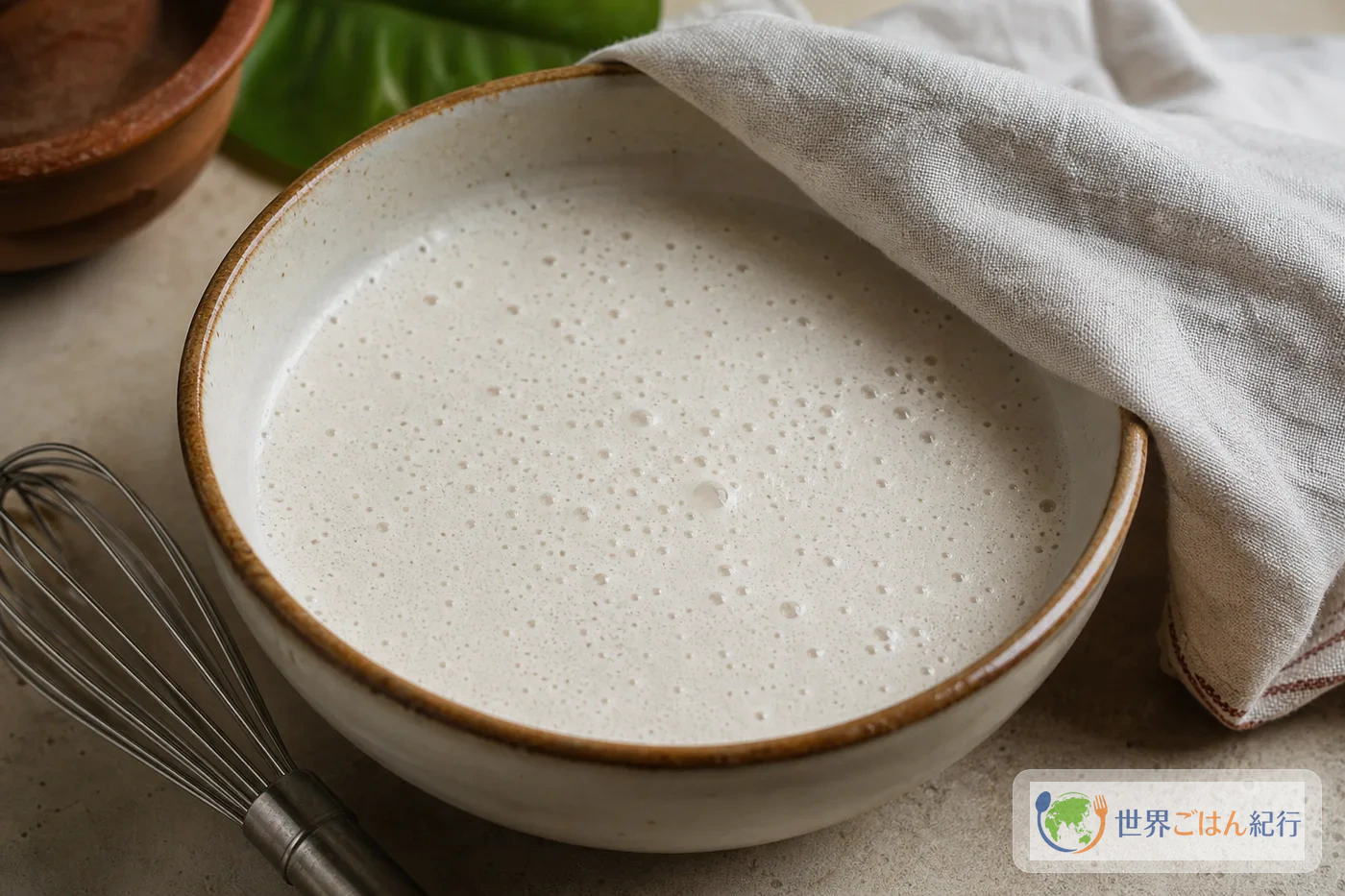
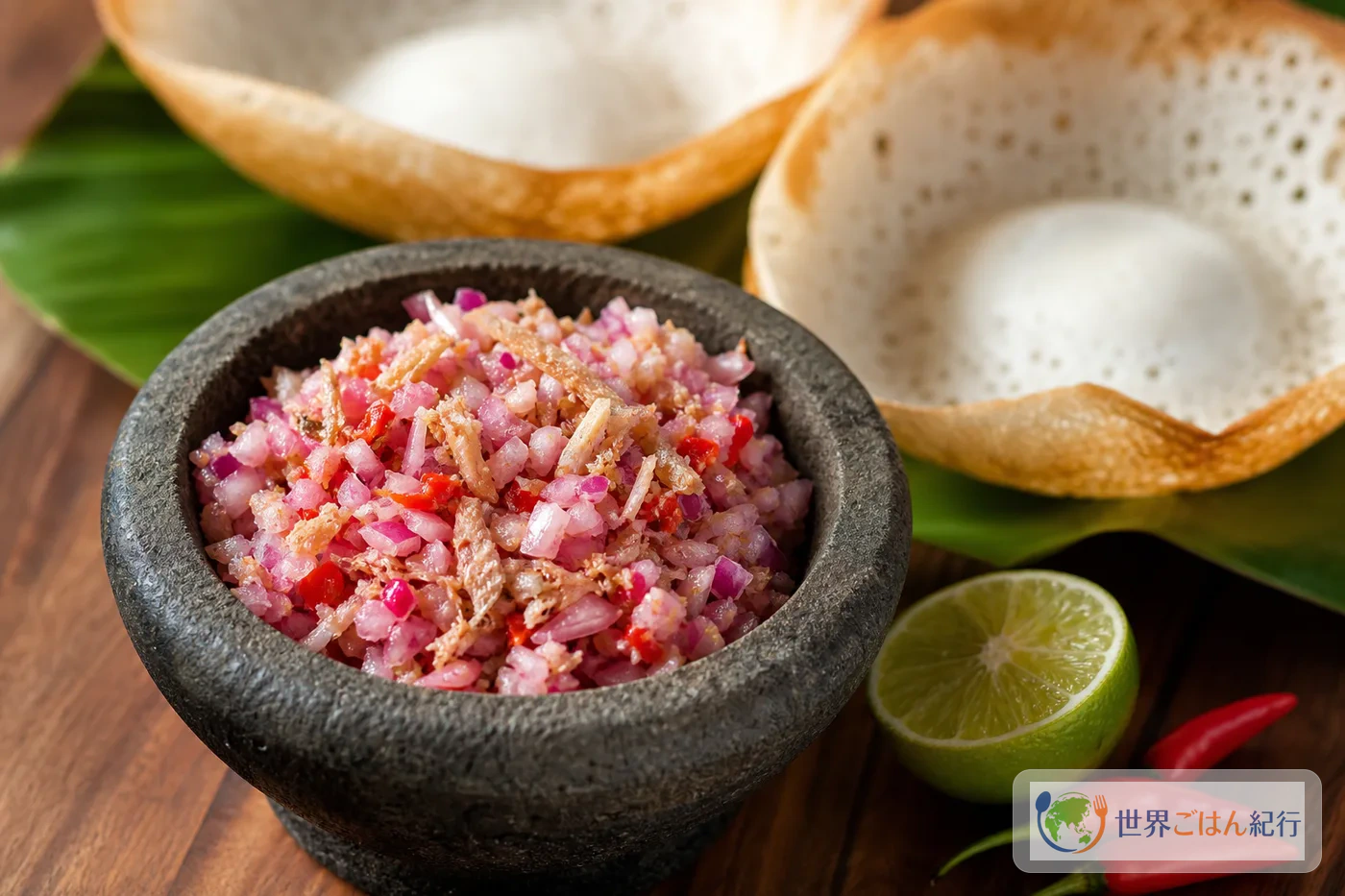
It starts in the kitchen, waiting for bubbles in rice batter
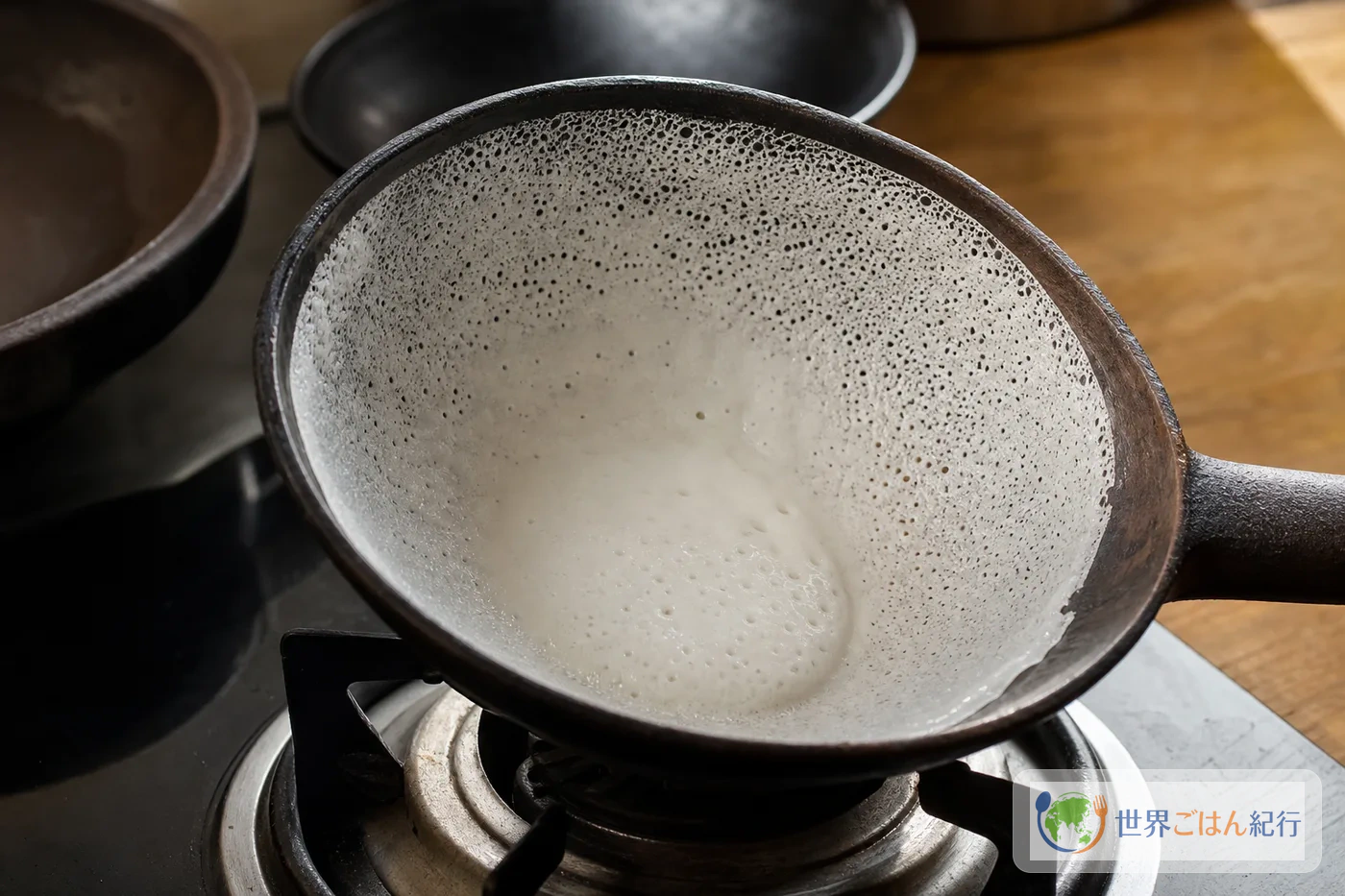
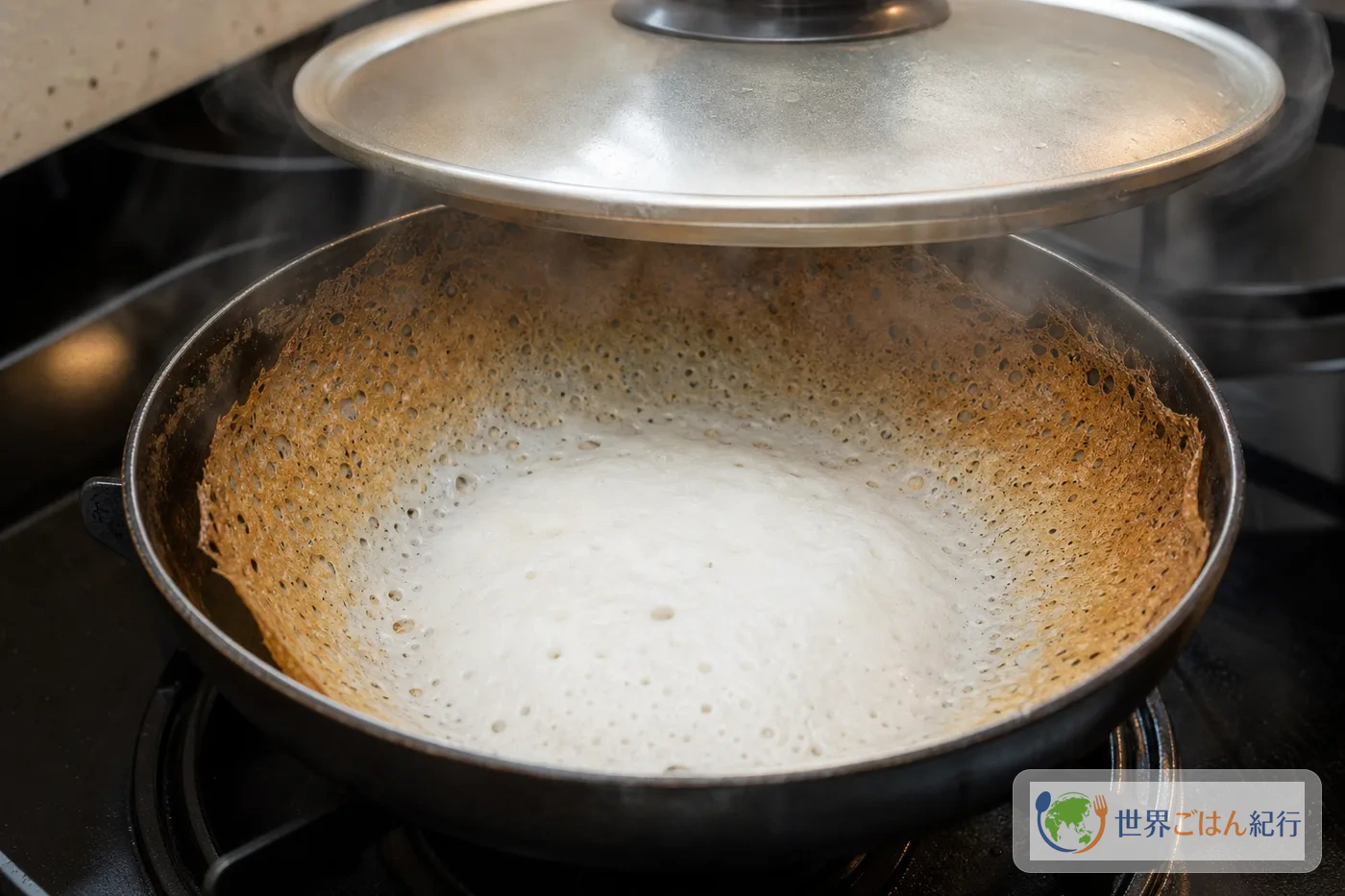
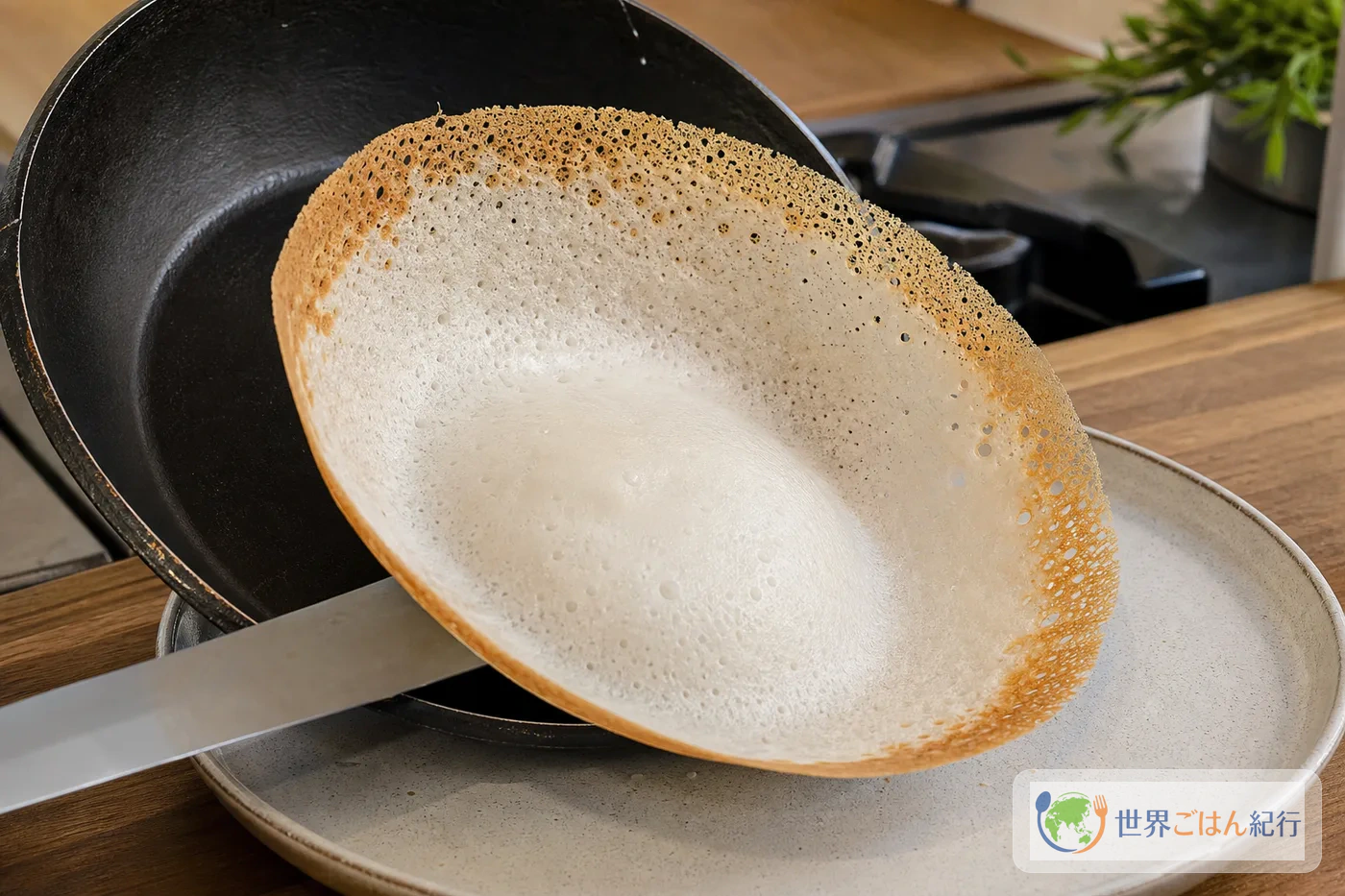
Mix a rice flour batter before bed, then lift the lid in the morning. If tiny bubbles are dotting the surface, your day has already improved a little. Hoppers are not a showy dish. But the moment you pour batter into a hot little pan and swirl it, the thin edge climbs the sides like lace while the center stays white and puffy. That is the fun of it.
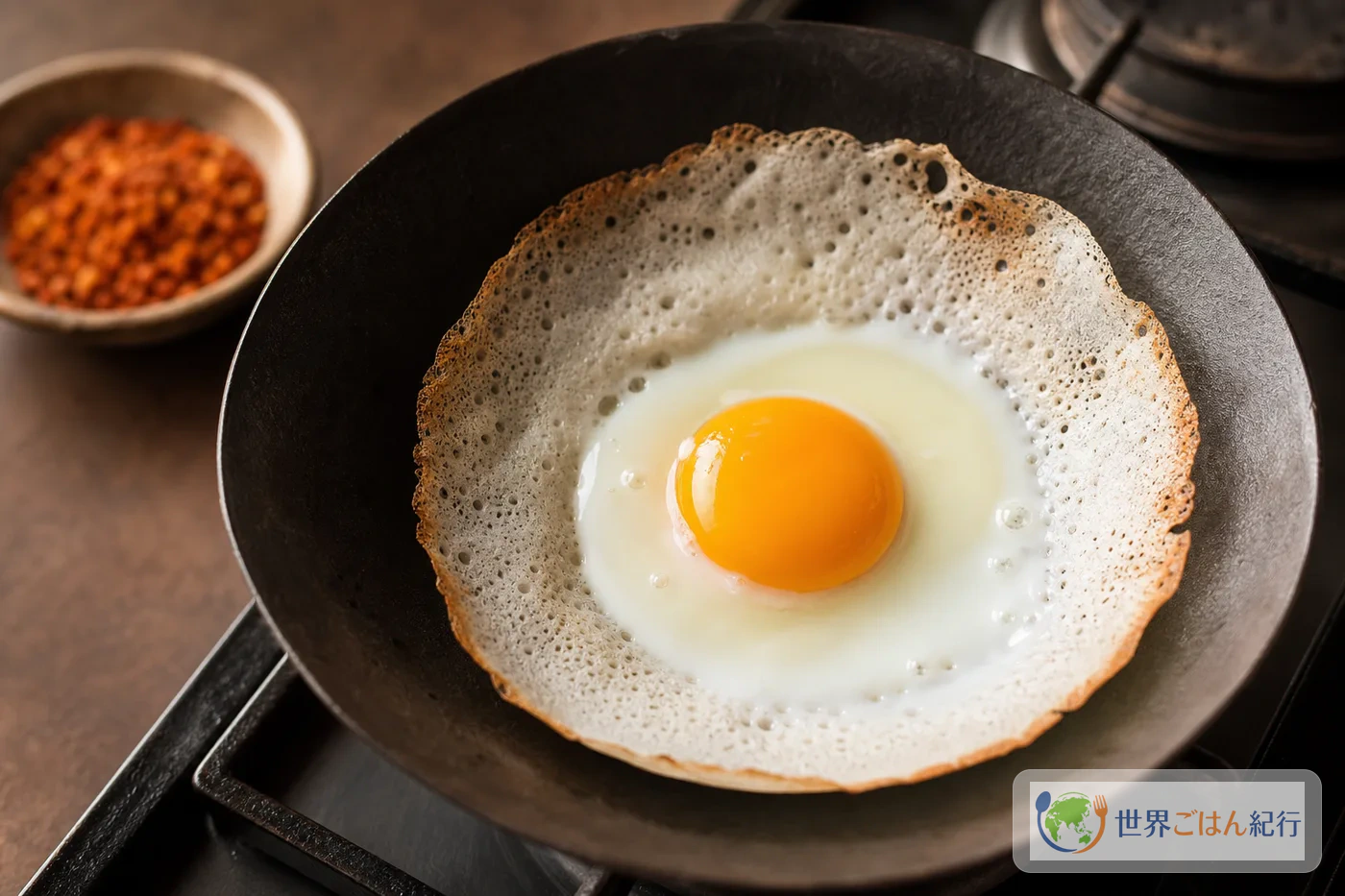
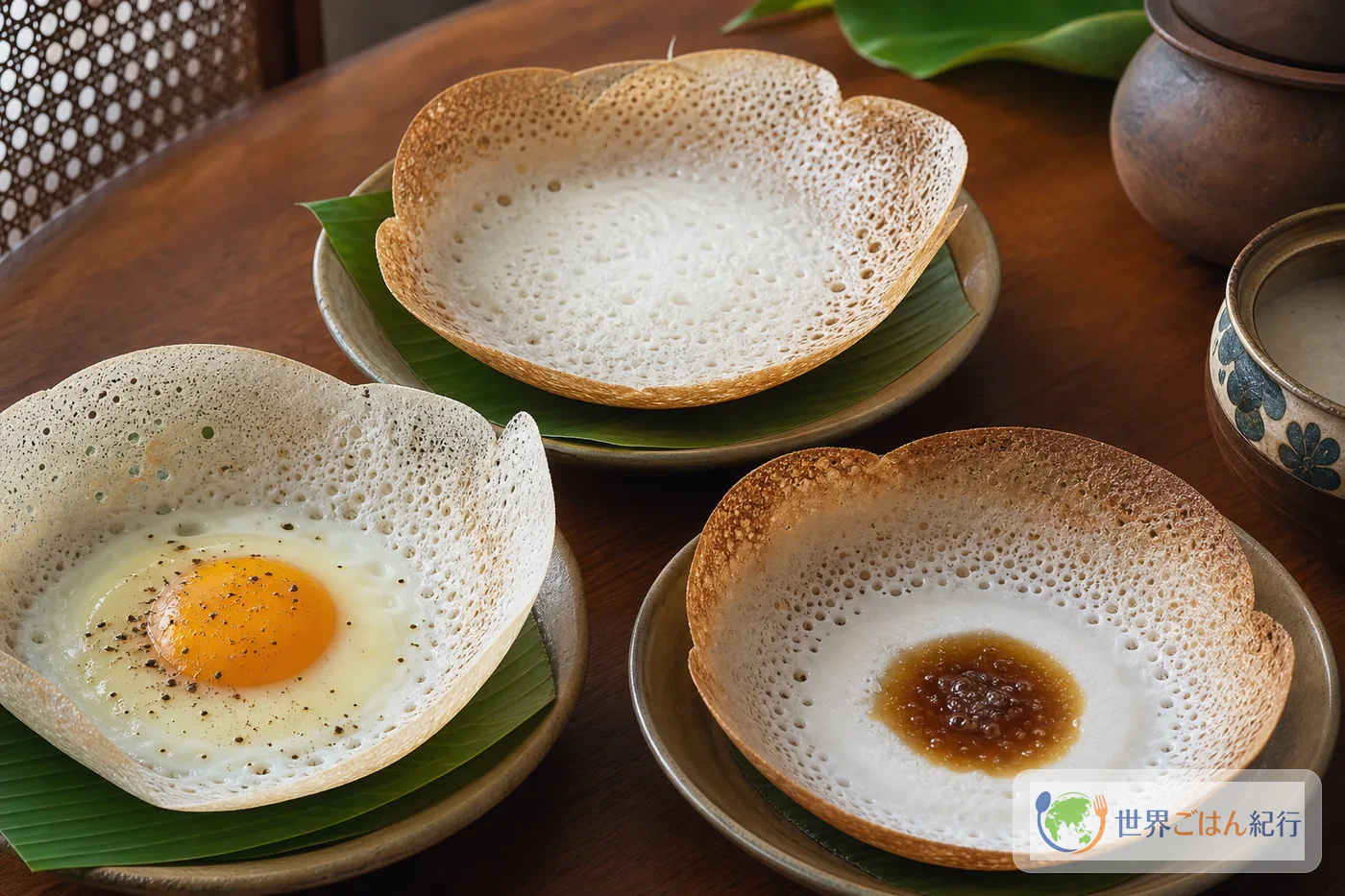
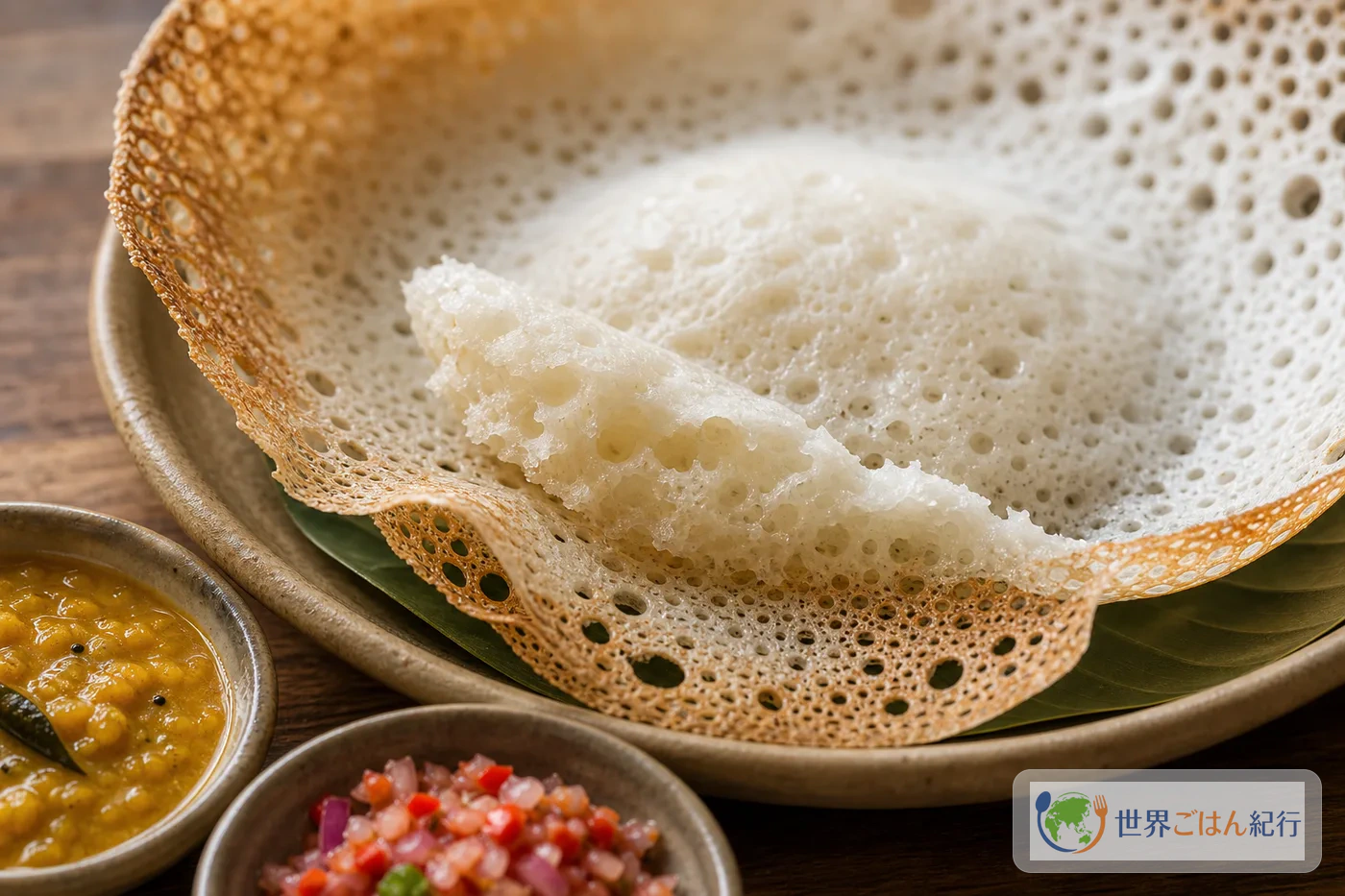
In Sri Lanka hoppers are called appa, and in Tamil-speaking regions appam. They are thin pancakes of fermented rice flour and coconut milk. They look like crepes, yet the edge is crisp and the center is soft like a steamed bun. Drop in an egg and you have bittara appa (egg hopper); pour sweet coconut milk in the middle and you have kiri appa. They turn up at breakfast and at dinner alike.
Outside Sri Lanka, the obstacles are the pan and the batter consistency, not the ingredients. The traditional appa chatti is a small round-bottomed pan, so an ordinary frying pan will not give you a deep bowl shape. Still, a small non-stick skillet of about 20 cm (8 in) or a wok will reproduce the lacy edge and the soft center very well.
This recipe uses fine rice flour sold for baking, not imported hopper flour. Some traditional households soak and grind rice, but starting from flour is more realistic for a kitchen where you want to keep cooking this. Hold on to three things: the fermented aroma, the sweetness of coconut, and the motion that spreads the edge thin. Do that and the plate will taste like a hopper.
If you are building a Sri Lankan meal, hoppers are the opposite of kottu roti, which is chopped on a griddle. Kottu is the sound of the night street stall; hoppers are the foam in a morning kitchen. For a bone-in chicken curry, try kukul mas curry, scented with coconut and curry leaves. Same rice-flour staple, a different center of gravity for the table.
This article uses "hoppers," the most familiar English name. In Sri Lanka you will hear appa in Sinhala, appam in Tamil and hoppers in English. An egg hopper is called bittara appa in Sinhala.
Background: how coconut and rice make Sri Lanka's light supper
The Sri Lankan table is built on a very strong pairing of rice and coconut. Beside the everyday rice-and-curry meal, a whole family of rice flour, grated coconut and coconut milk preparations has grown up. For a celebration, kiribath (in Japanese), rice set with coconut milk, is easy to understand on the same axis. Hoppers are the best-known example: a fermented rice batter spread thin, with the center steamed until soft.
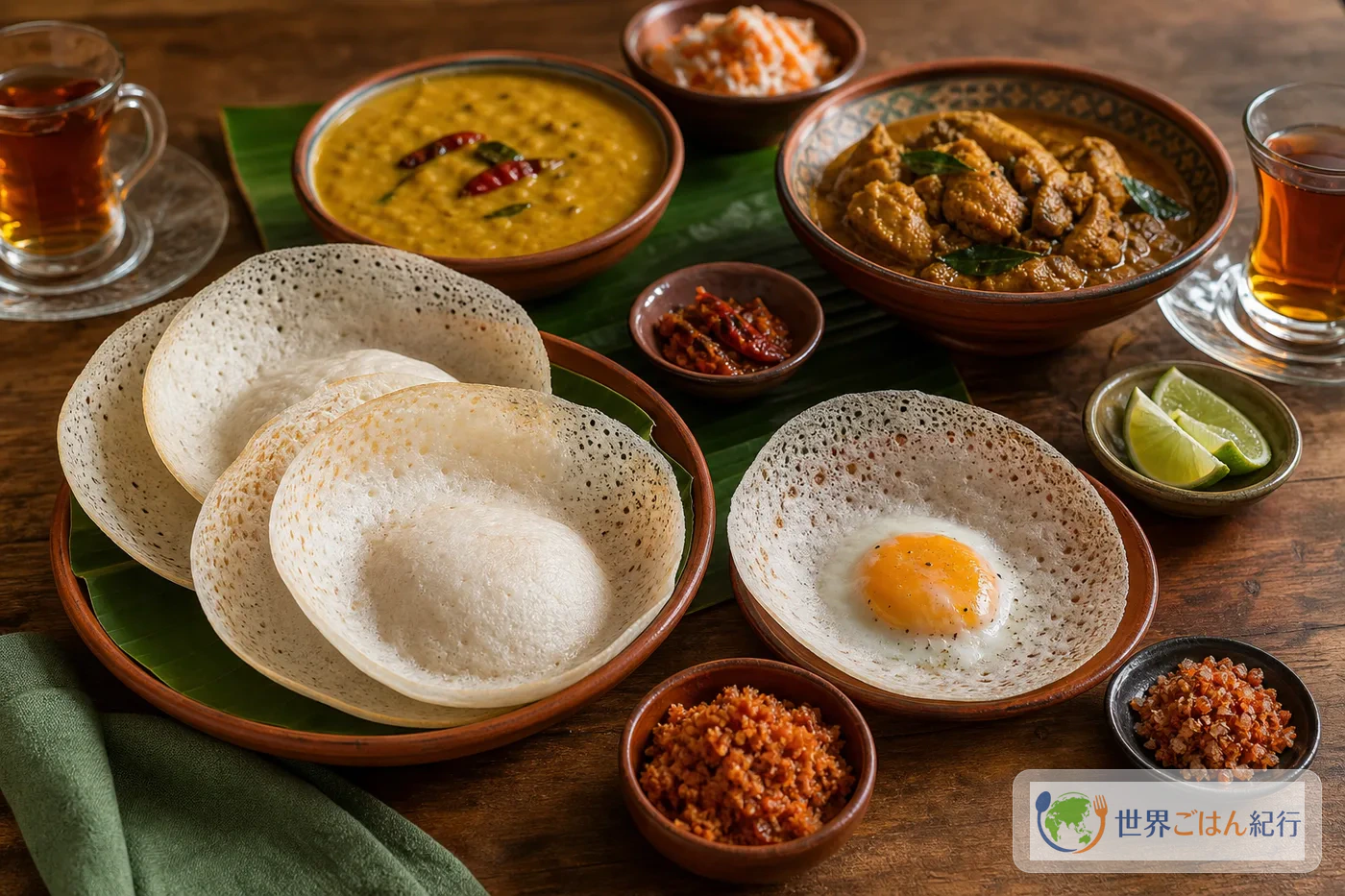
English-language Sri Lankan food sites present hoppers as a dish for breakfast or dinner. In the morning you drop in an egg and eat it as the main; in the evening you serve it with dal, chicken curry, lunu miris and pol sambol for a light supper. Think of a staple somewhere between steamed white rice and pancakes.
What is interesting is that the same name covers quite different things. Besides the hoppers cooked in a round-bottomed pan, as in this recipe, there are string hoppers, rice flour dough pressed into thin noodles and steamed. String hoppers are soft rice noodles that catch curry, with different equipment and a different method. This article sticks to the thin lace-edged hoppers.
South India has a close relative called appam, but what stands out on a Sri Lankan table is that hoppers sit beside fiery lunu miris, pol sambol and lentil dal. They are used less as a sweet pancake than as a vessel for curry. The way you break the edge and scoop, then let the center catch the sauce, is part of what makes a hopper a hopper.
| Type | Role in Sri Lanka | The hard part at home |
|---|---|---|
| Plain hopper | The basic one, for catching curry and sambol | Swirling the batter thin to build the edge |
| Egg hopper | A breakfast and late-night staple | Setting the white without scorching the edge |
| Milk hopper | A sweeter one with coconut milk left in the center | Heat that keeps the center from running |
| String hopper | A separate dish of steamed rice flour noodles | Needs a special press and a steamer |
In the past, fermented palm sap (toddy) was sometimes used to ferment the batter. At home, recipes also use leftover batter or bread as a starter. In a home kitchen, where availability and food safety matter, dry yeast is the easy and stable choice. The goal is not a perfect replica of tradition but a light sour note from fermentation and a clear rice flour aroma.
Sources differ on the origin of the name and the details of where hoppers began, so I won't state them as fact here. Just remember that the batter recipe and the way of cooking vary a little from home to home and region to region.
Many hopper articles stop at "mix and cook," but when you read recipes in English you see that most failures cluster around fermentation time, the shape of the pan and the thickness of the batter. The key feeling is to swirl the batter thin while leaving some thickness in the center.
Ingredients (serves 4, about 10 hoppers)
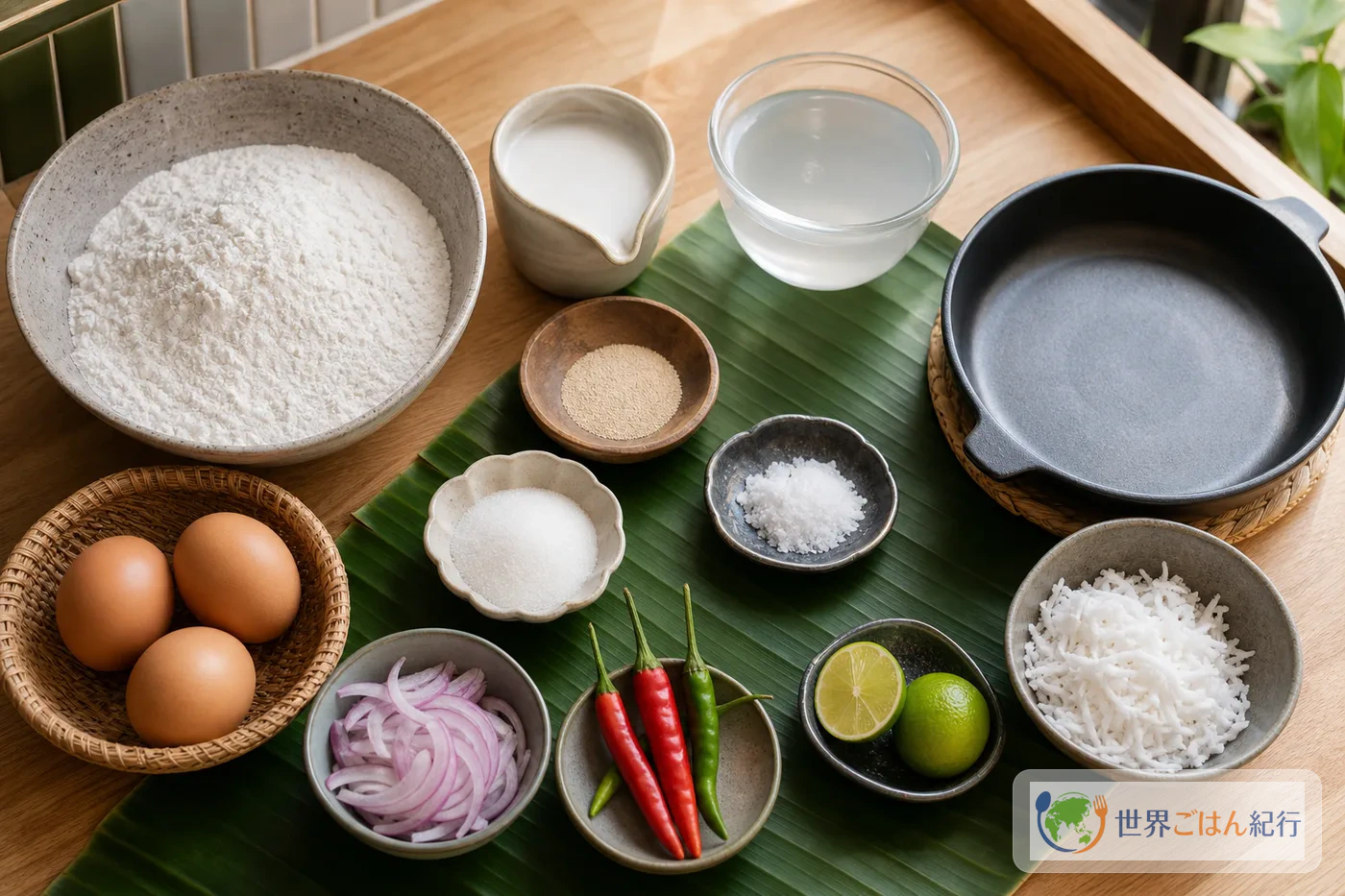
This makes 6 plain hoppers and 4 egg hoppers for 4 servings. For breakfast that serves four; for dinner with curry, there is a little to spare. Don't halve it the first time. With too little batter, judging the fermentation and adjusting the pan temperature get harder.
This recipe involves eggs, fish-based bonito flakes, and rice flour and baking powder that may be contaminated with wheat depending on the product. If you need to avoid gluten, check the labels on the rice flour and the baking powder. Cook egg hoppers until the white is fully set, and for children and older adults it is safer not to leave the yolk too runny.
What matters for this dish
What makes a hopper a hopper is rice flour, coconut milk and a small, fairly deep pan. You don't need dedicated equipment for all of them on the first try, but fine baking-grade rice flour is the one thing worth choosing carefully, since it prevents most failures.
Use canned coconut milk meant for cooking, not the thin coconut drinks sold in cartons. The fat makes the center puffier and the edge more fragrant.
If you don't have an appa chatti, you can practice with a small non-stick frying pan of about 20 cm (8 in), a rounded small saucepan or a small wok. A pan with a very wide base lets the batter spread flat and won't give you the bowl shape.
Method: ferment, swirl, then steam under a lid
Hoppers are closer to crepes than to pancakes in method. But you don't just let them cook: you swirl the pan to thin the edge, then cover it to steam the center. Write off the first two as practice. By the third, the pan temperature and the way the batter flows start to line up.
Hoppers will not be stable until the pan temperature is right. It is common for the first to be thick, the second to tear and the third to suddenly work. Use the first two to adjust the heat and the consistency, to tell whether the problem is the batter or the pan.
Choosing between traditional and practical options in a home kitchen
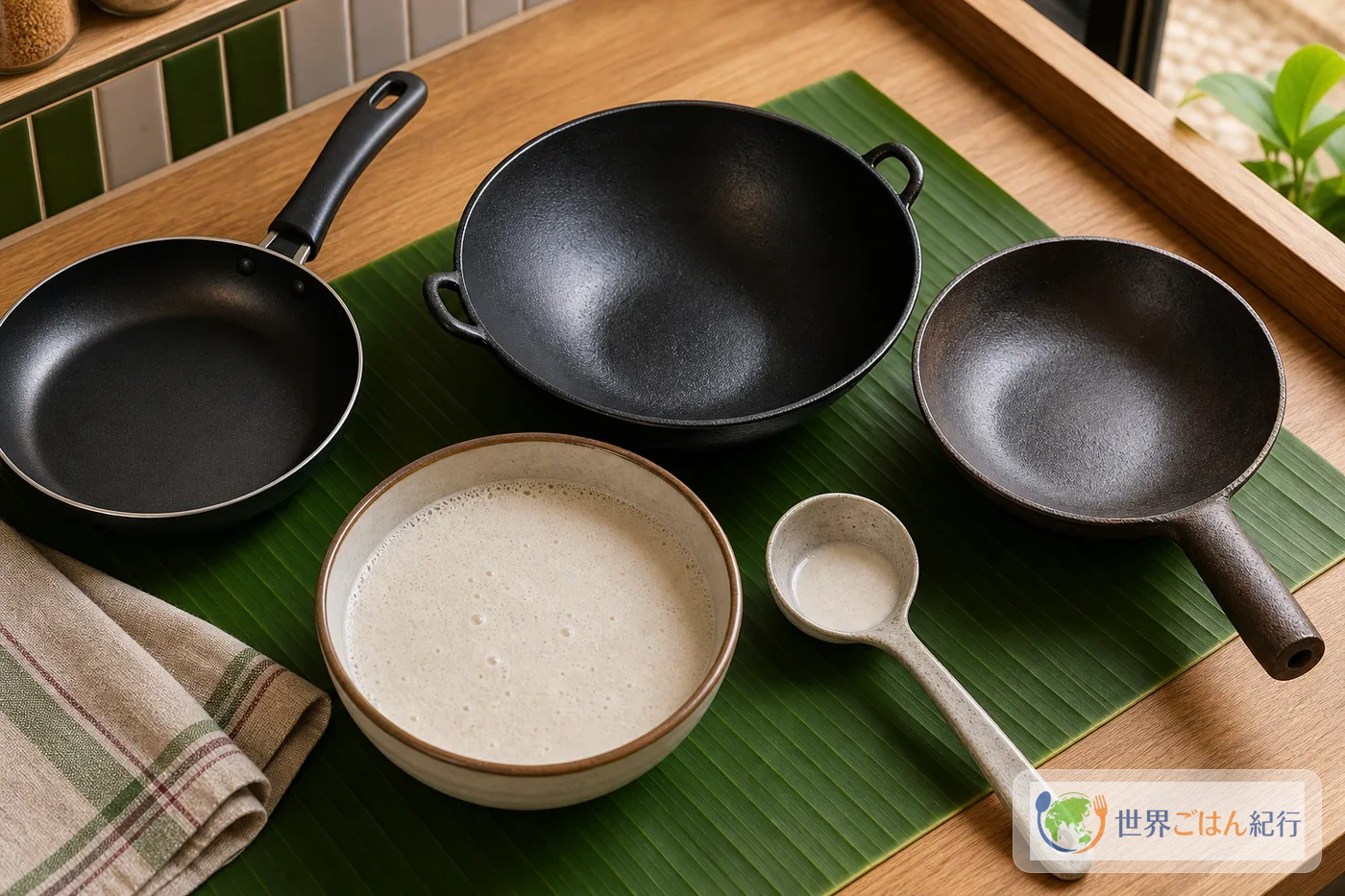
The more specialized tools and local ingredients you gather, the closer you get, but once you know where substitutions are fine, hoppers become much easier. Rather than making everything authentic, prioritize three things: the thinness of the edge, the aroma of fermentation and the heat you serve alongside.
When choosing a pan, look at how steeply the sides rise rather than at the diameter. A flat, wide pan is easy to handle but lets the batter spread thin all the way to the center, so you end up with a rice flour crepe rather than a hopper. A small wok or a rounded, deep frying pan keeps the swirled batter on the sides and makes it easier to leave a white, thicker center. Before buying a hopper pan, try the smallest, deepest pan you already have.
| What you're deciding | Closer to the original | Practical at home | Verdict |
|---|---|---|---|
| Pan | Appa chatti | Small non-stick frying pan, small wok | The rounder it is, the closer to a bowl shape |
| Rice | Soaked and ground rice, roasted rice flour | Fine rice flour for baking, joshinko | The finer the flour, the smoother the center |
| Fermentation | Toddy, batter from the day before | Dry yeast | The aroma is lighter, but it is stable |
| Coconut | Freshly pressed | Canned coconut milk | Shake well to even out the fat |
| Maldive fish | Dried fish chips | Bonito flakes, ground dried small fish, dried shrimp | Used as a helper for savoriness and salt |
| Accompaniments | Lunu miris, pol sambol, curry | Lunu miris, dal, ready-made bean curry | First build the pairing of heat and lentils |
The one thing you should not substitute is coconut milk. You can make thin pancakes with cow's milk or soy milk, but the sweet hopper aroma and the soft center change a great deal. Maldive fish, on the other hand, can be replaced very well with bonito flakes. If you use the savoriness of fish you already have in the kitchen, lunu miris comes together without strain.
On days when the egg hopper is the main dish, add a lentil soup as in Nepali dal bhat for substance. If you want a meat curry, a light chicken curry or dal lets the hopper's lightness shine more than a rich one like Pakistani nihari (in Japanese).
In a pan with a flat bottom, the edge will not climb high. In that case don't force the bowl shape; finish it as a thin pancake with a slightly thicker center. The flavor is still very close to a hopper, and with lunu miris and curry beside it, it works as a meal.
Why they fail: no lace, tears, a raw center
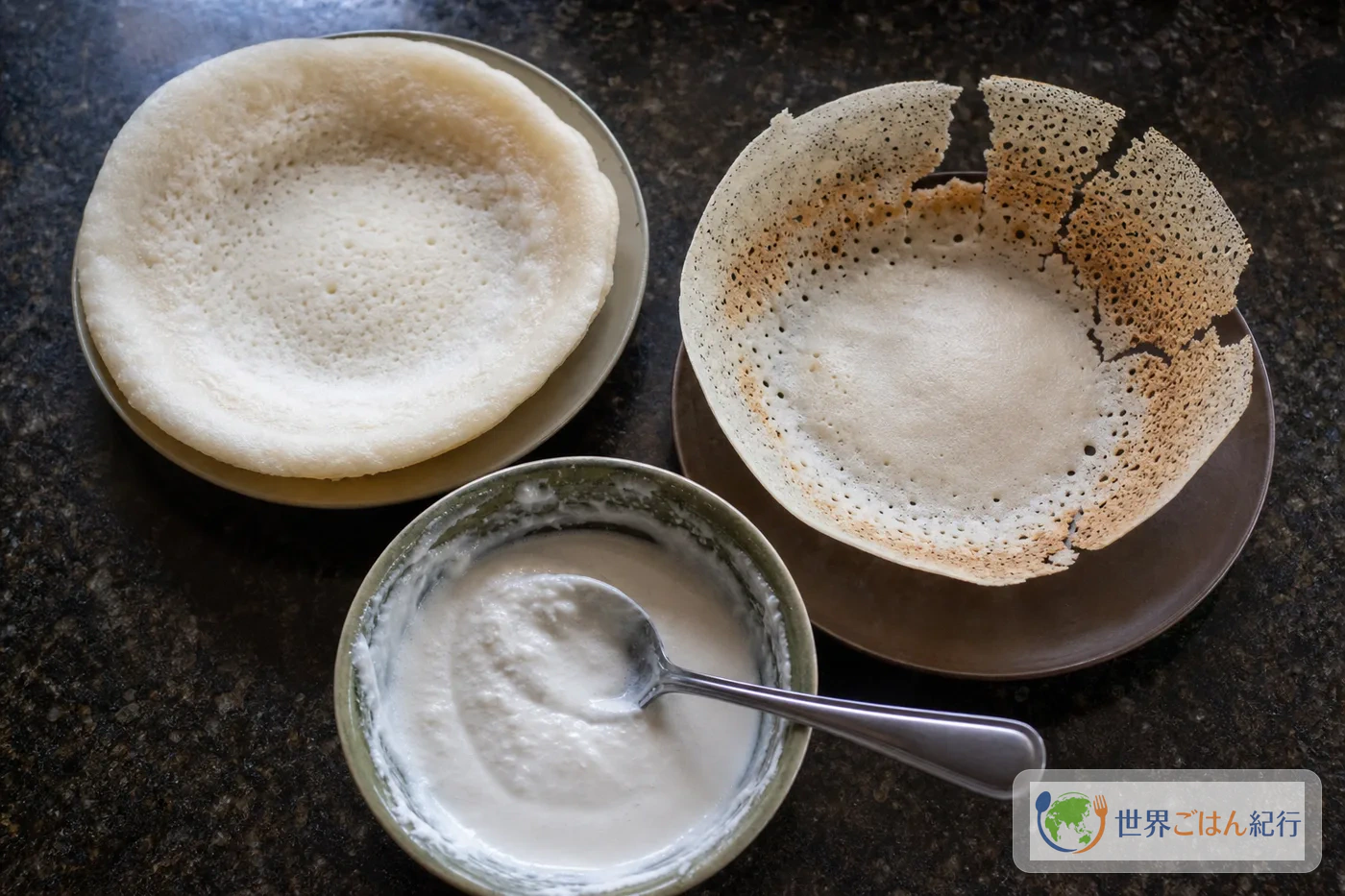
With so few ingredients, the causes of failure are easy to see in hoppers. When it goes wrong, look at the batter and the pan before changing the seasoning. The most common causes are cooking a stiff batter when the fermentation is weak, pouring batter into a lukewarm pan, and using too much heat for egg hoppers.
| Problem | Cause | Fix |
|---|---|---|
| The edge doesn't turn lacy | Batter too stiff, weak fermentation, pan not hot enough | Add 1 tbsp water and heat the pan well |
| Only the edge scorches | Heat too high, too much oil | Lower the heat and brush the oil on thinly with paper |
| The center is raw | Not covered long enough, batter too thick | Cover and cook 30 seconds at a time |
| It won't come off the pan | Not enough oil, worn non-stick coating | Brush on a thin layer of oil for every hopper |
| It tears | Batter too thin, taken out too early | Add 2 tsp rice flour and release it after the edge dries |
| Too sour | Fermented too long in a warm place | Next time ferment less, or move it to the refrigerator partway |
| The egg won't set | Heat too low, egg too cold | Bring the egg closer to room temperature and cover for longer |
Don't judge fermentation by time alone. In a summer kitchen two hours can be enough; in winter even three hours may leave few bubbles. What you want to see are bubbles on the surface, a light sour aroma and a slightly increased volume. If the smell is strongly sour or sharp with alcohol, or the color has changed, don't use it.
For pan temperature, a good guide is that a little batter dropped in sets thin right away and sizzles gently. If it is hot enough to smoke, only the edge scorches. If the pan is lukewarm, the batter spreads out sticky and no lace pattern forms. It is like the steaming of rice in biryani: a dish where you watch the state rather than the numbers.
A batter of rice flour and coconut milk spoils easily, so don't leave it out for long at midsummer room temperature. If you are not cooking right after fermentation, put it in the refrigerator and use it up the same day. Cooked hoppers should also not sit at room temperature; once the heat has gone, move them to the refrigerator.
Storing and serving: best fresh, then steam the rest back
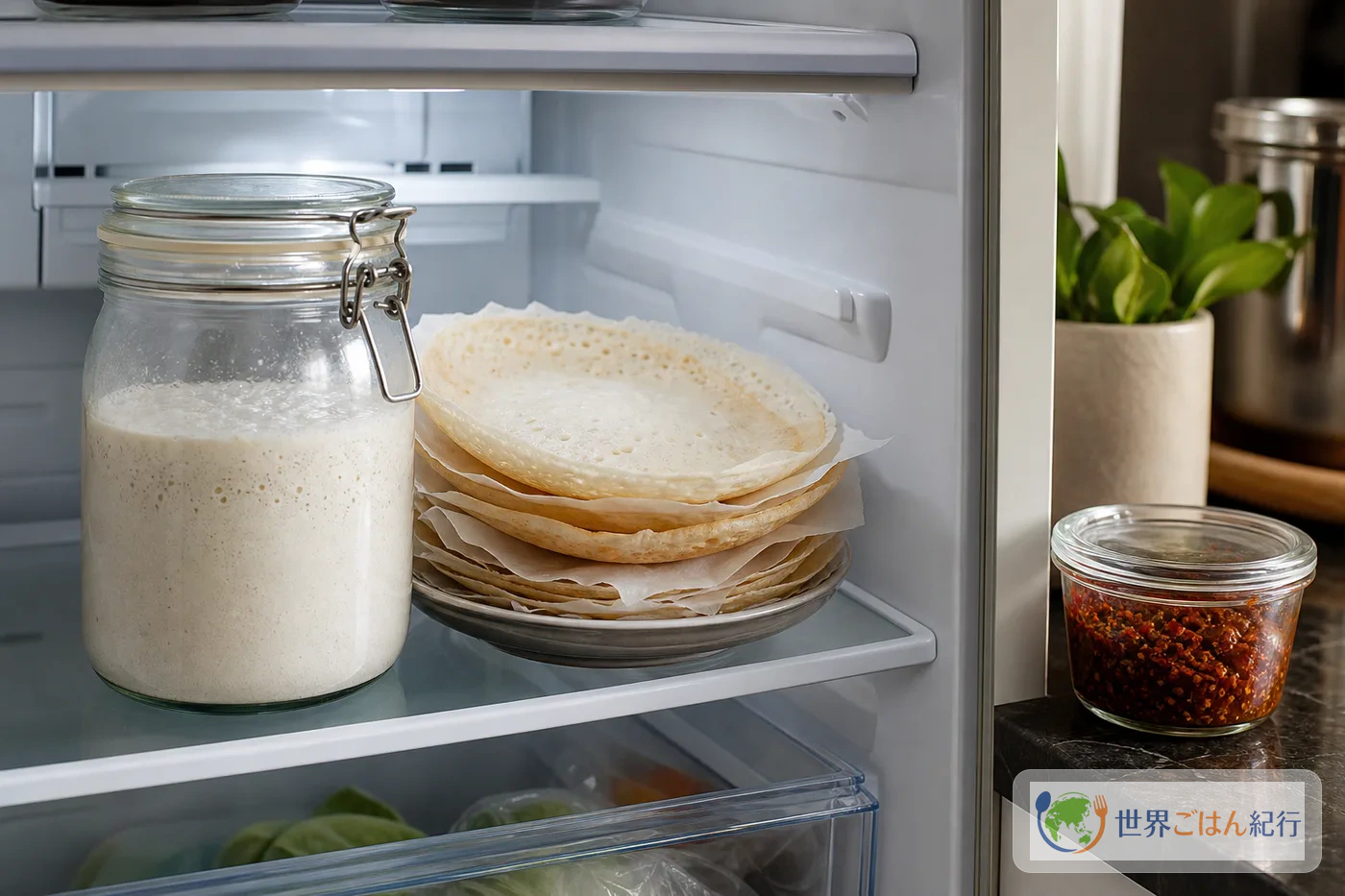
Hoppers are best freshly made. The crispness of the edge doesn't come back with time, so for guests it is ideal to make the batter ahead and cook right before eating. The cook is a little busy, but the lightness of a hopper straight from the pan is hard to replace.
To store batter, refrigerate it after fermentation and use it the same day. Chilled batter gets a little heavy, so stir it lightly before cooking and, if needed, add 2 tsp to 1 tbsp of water. For cooked hoppers, stack them with paper in between and keep them in an airtight container in the refrigerator for about 1 day.
Reheating only in a microwave softens the edge. Dampen the center slightly with a spray bottle, put it in a frying pan over low heat and finish with the lid on for 30 seconds. The center comes back, but the crisp aroma of the edge won't match a fresh one. Leftover hoppers are more natural eaten the next morning softly, with a little curry spooned over.
To eat, break the center slightly to catch the curry, and break off the edge to scoop up a bit of lunu miris. Too much heat erases the rice flour and coconut aroma, so a bit the size of a pinky tip is enough at first. With an egg hopper, break the yolk and mix in some lunu miris, and that alone becomes a whole breakfast.
If you keep cooking Sri Lankan food, moving on to Afghan kabuli palaw (in Japanese) or Sri Lankan kottu roti shows you how rice, flour and spices are used differently. Hoppers are a light entrance, but from there the table opens a long way.
FAQ
Q1. Can I use joshinko instead of rice flour?
Yes. But joshinko varies by product and can be coarse, which sometimes leaves the center a little gritty. For the first time, fine baking rice flour is easier to work with. If you use joshinko, rest the batter for 10 minutes after mixing and stir it well again; the floury taste is reduced.
Q2. Can I use milk instead of coconut milk?
You can make a thin pancake, but the hopper aroma gets weaker. Coconut milk affects not just the taste but also the softness of the center and the fragrance of the edge. If you really dislike it, milk cooks more easily than soy milk, but expect something closer to a different dish.
Q3. Do I need a dedicated pan?
No. A small, fairly deep non-stick frying pan works. The bowl shape will be shallower, but you can still make a thin edge and a soft center. If all you have is a wide-bottomed pan, use less batter and avoid swirling the pan too widely.
Q4. Can I prepare the batter the day before?
Yes, but don't leave it out at room temperature overnight. After fermenting for 2–3 hours until it bubbles, refrigerate it, and the next morning add the coconut milk and adjust the consistency. Fermentation weakens after refrigeration, so leave it at room temperature for 15–20 minutes before cooking to loosen it again.
Q5. What if the lunu miris is too hot?
Adding more onion, a little more lime juice or a pinch of sugar rounds off the edge. Rather than removing the heat entirely, serving it in small amounts suits hoppers better. If someone at the table dislikes heat, serve the lunu miris in a separate dish so everyone can add their own.
Sources
- SAVEUR: Hoppers (Sri Lankan Crepes with Onion Sambol and Egg) — https://www.saveur.com/article/Recipes/Hoppers/
- Sri Lankan Cuisine: Hoppers — https://srilankancuisine.org/2013/09/12/hoppers/
- Great British Chefs: Egg hoppers with garlic and red pepper chutney, onion relish and corn relish — https://www.greatbritishchefs.com/recipes/egg-hoppers-garlic-red-pepper-chutney-onion-relish-corn-relish-recipe
- NDTV Food: Sri Lankan Appam — https://food.ndtv.com/food-drinks/sri-lankan-hoppers-the-crispy-delight-with-a-rich-history-4231507
- Migrationology: Sri Lankan Hoppers — https://migrationology.com/sri-lankan-hoppers-funny-name-serious-pancake/