Naan Without a Tandoor: Bubbles and Brown Spots from a Hot Skillet
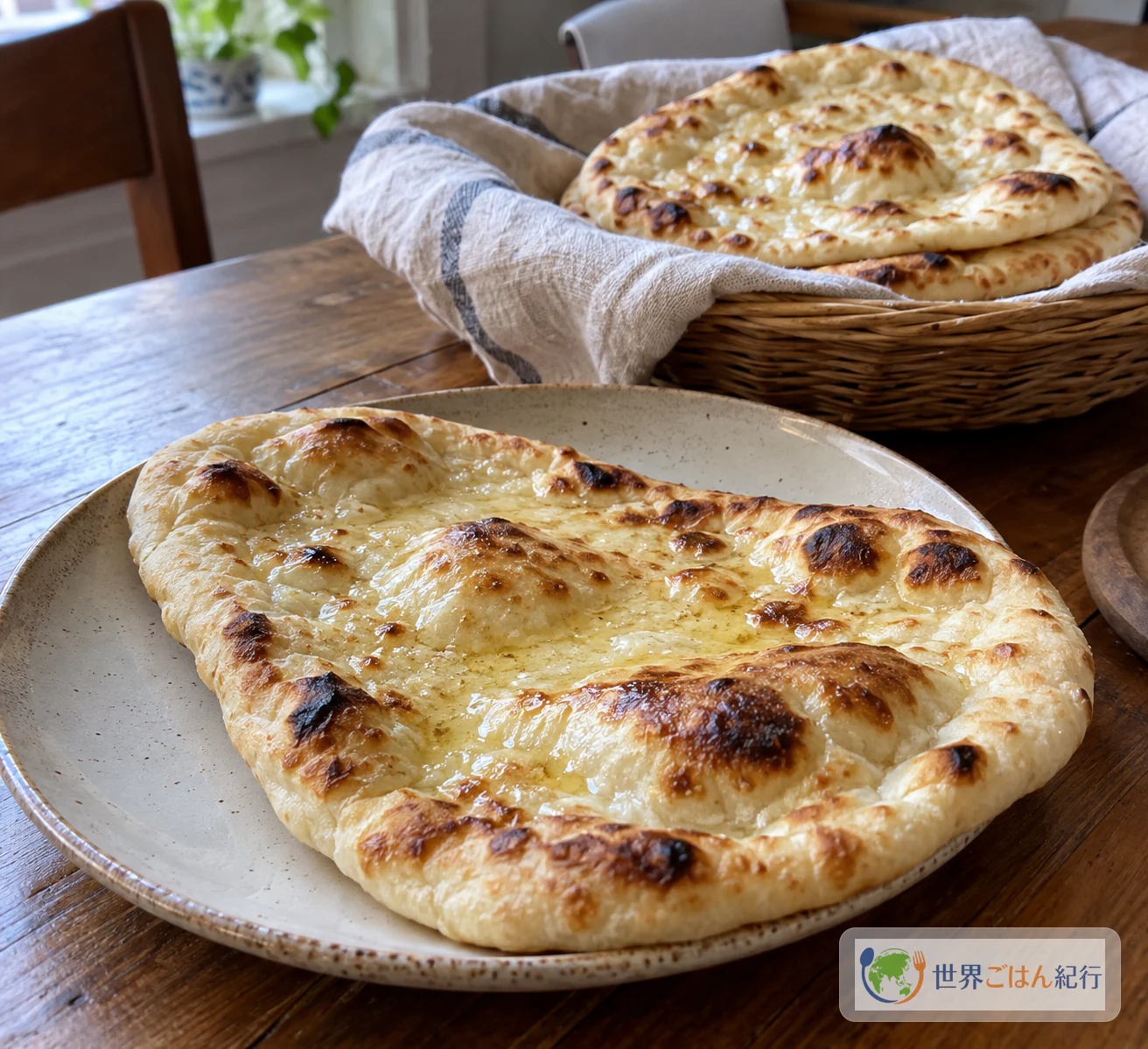
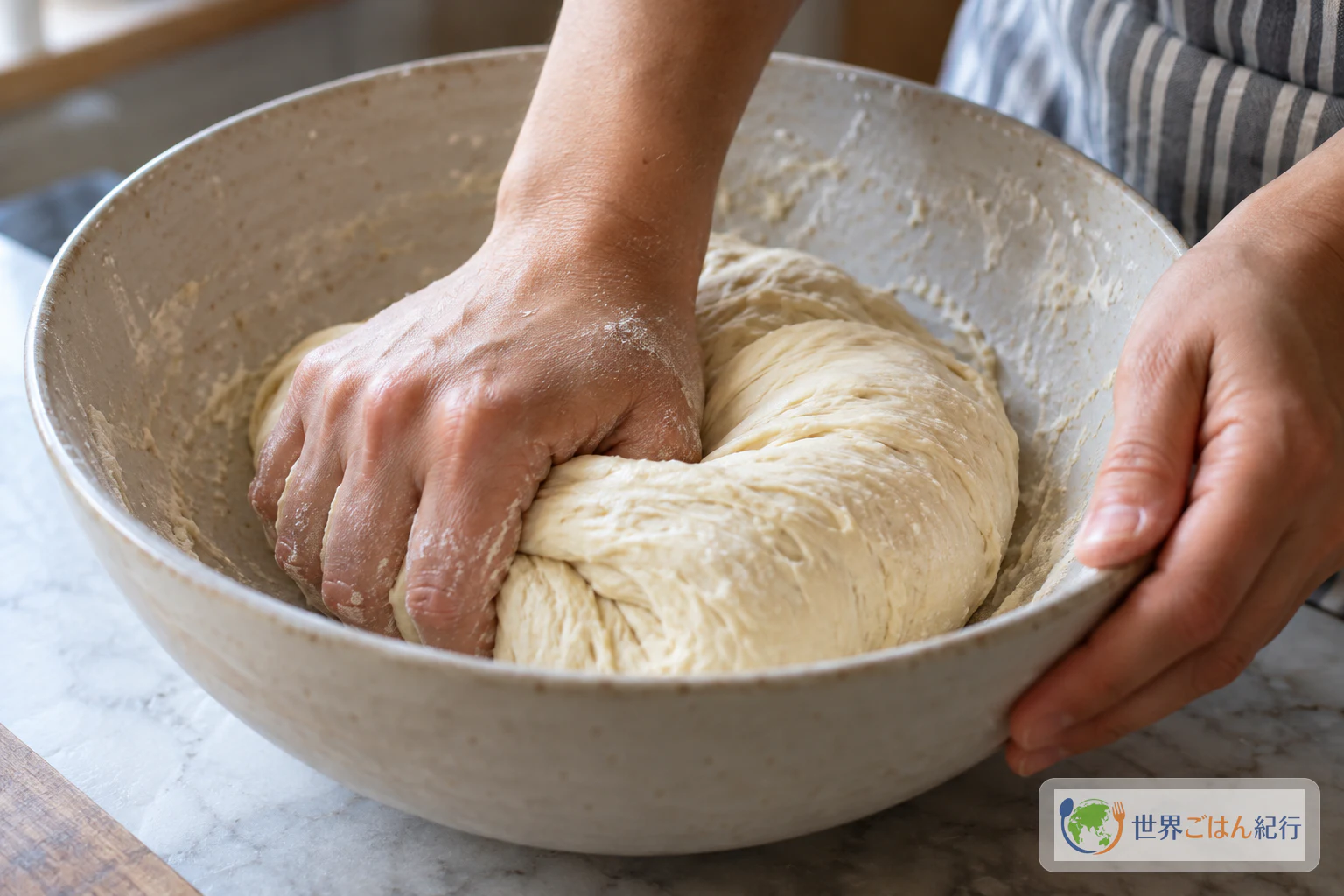
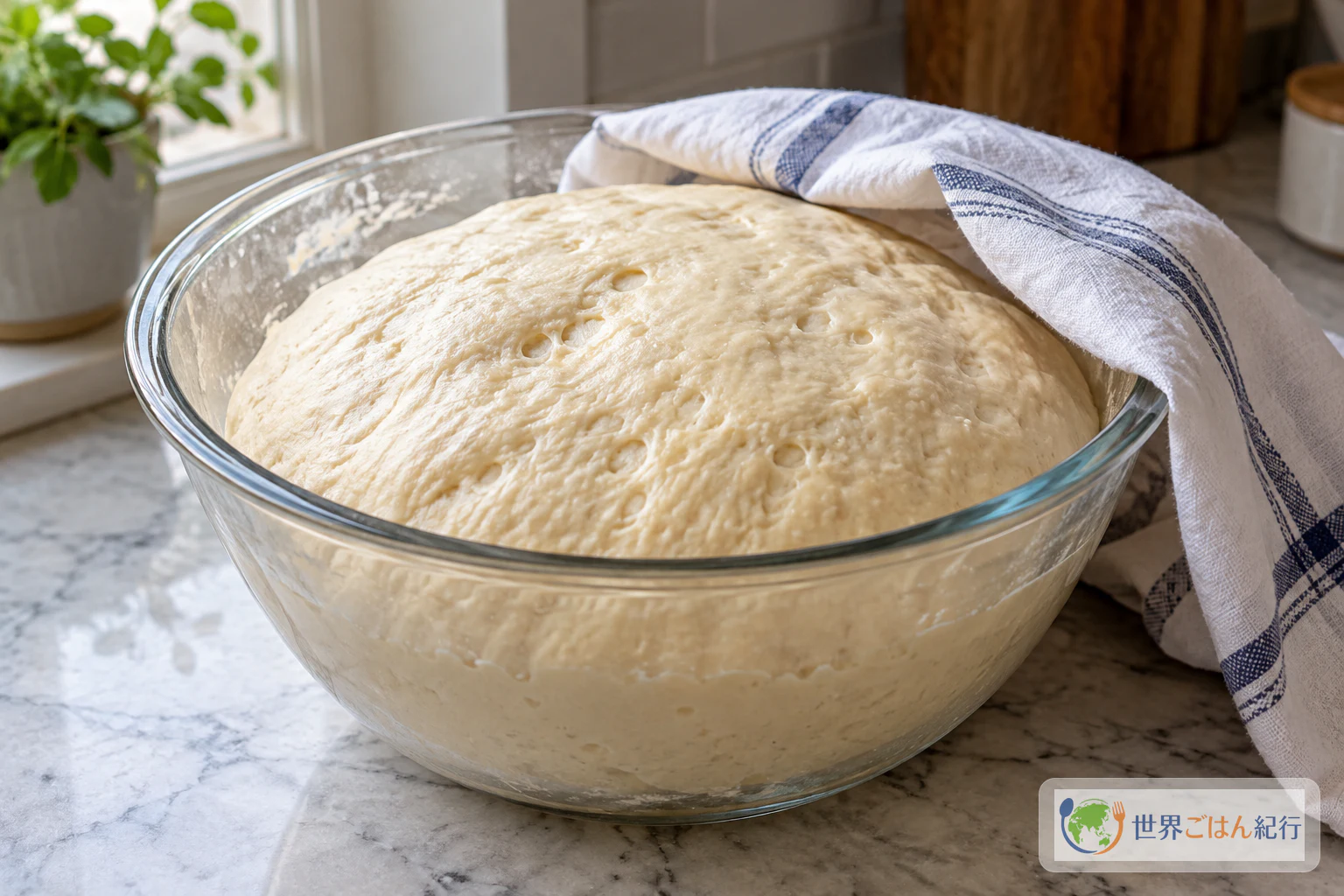
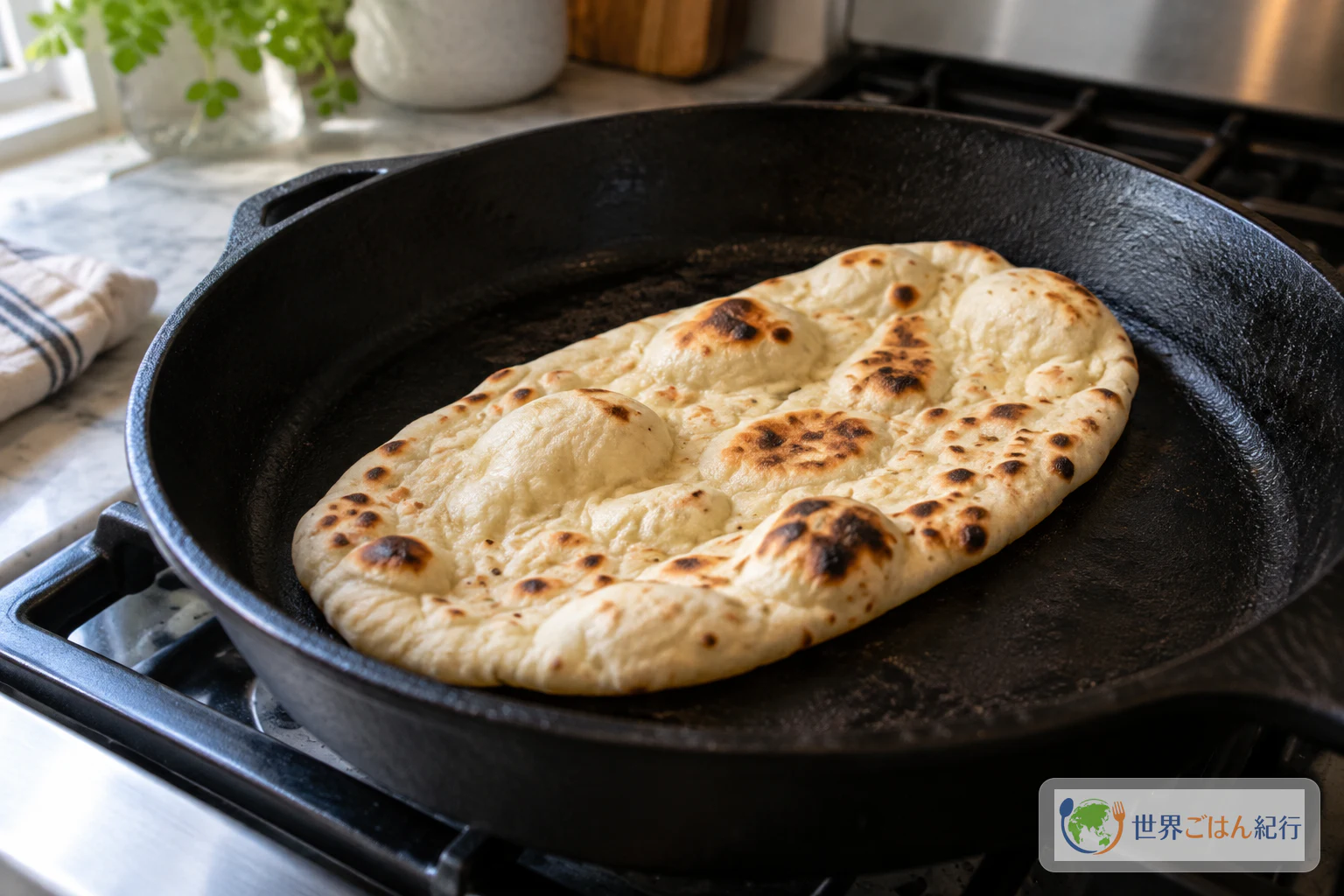
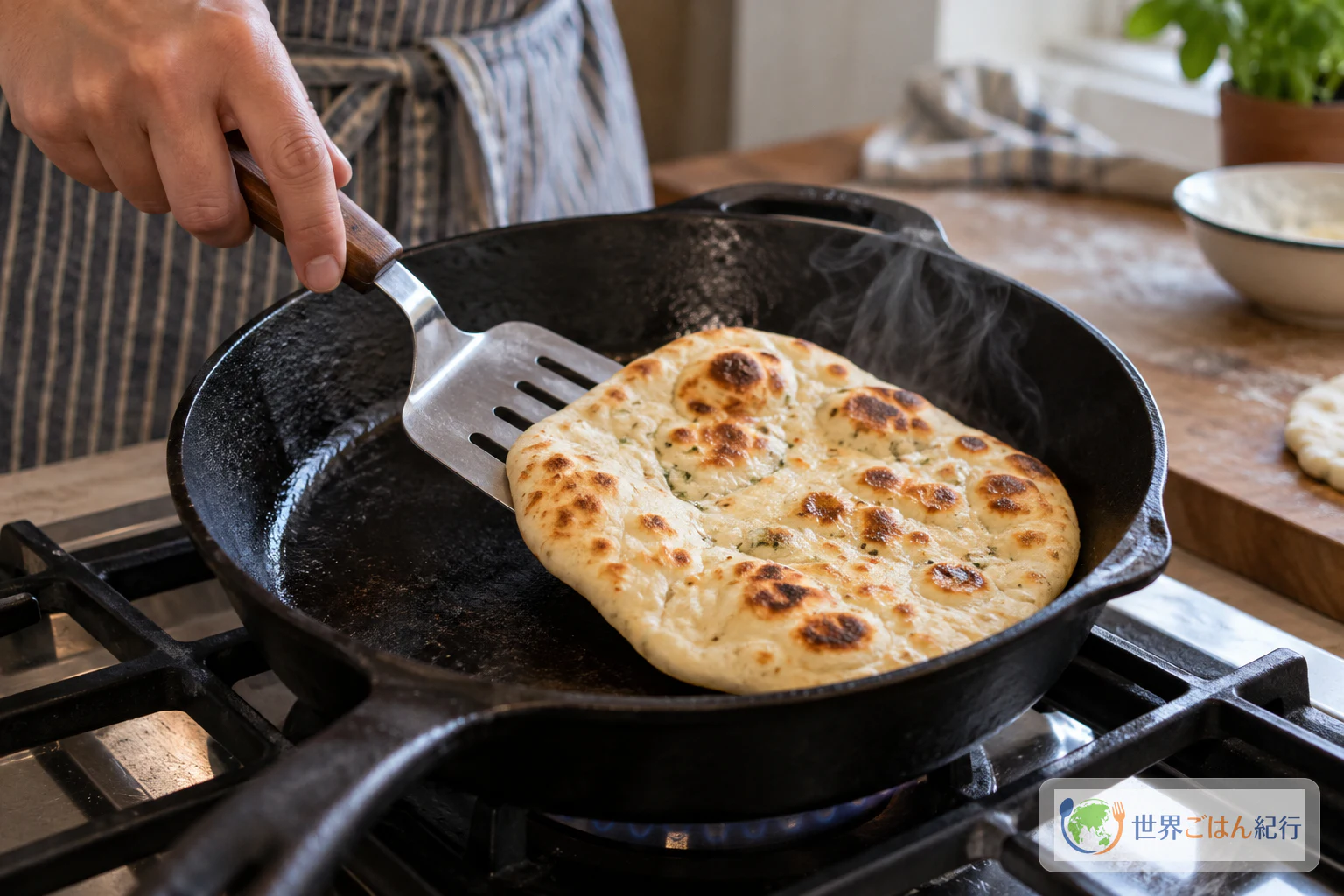
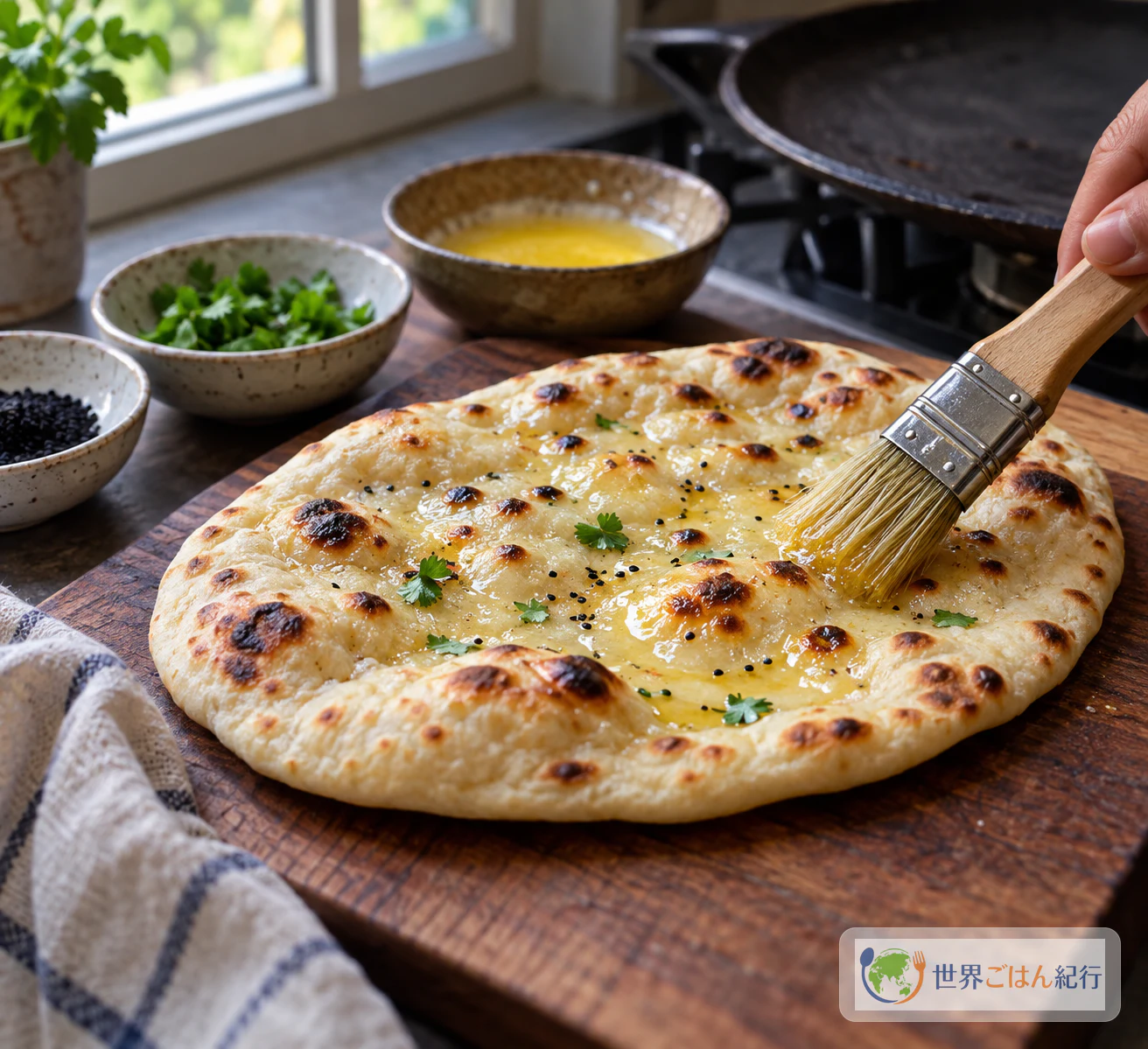
This is a home skillet adaptation of a bread traditionally baked in a tandoor. The goals are a soft, slightly chewy yeasted dough, a hot dry pan, and a short cook that raises bubbles and freckles the bread with brown spots. Then comes a brush of melted ghee or butter while the bread is still warm.
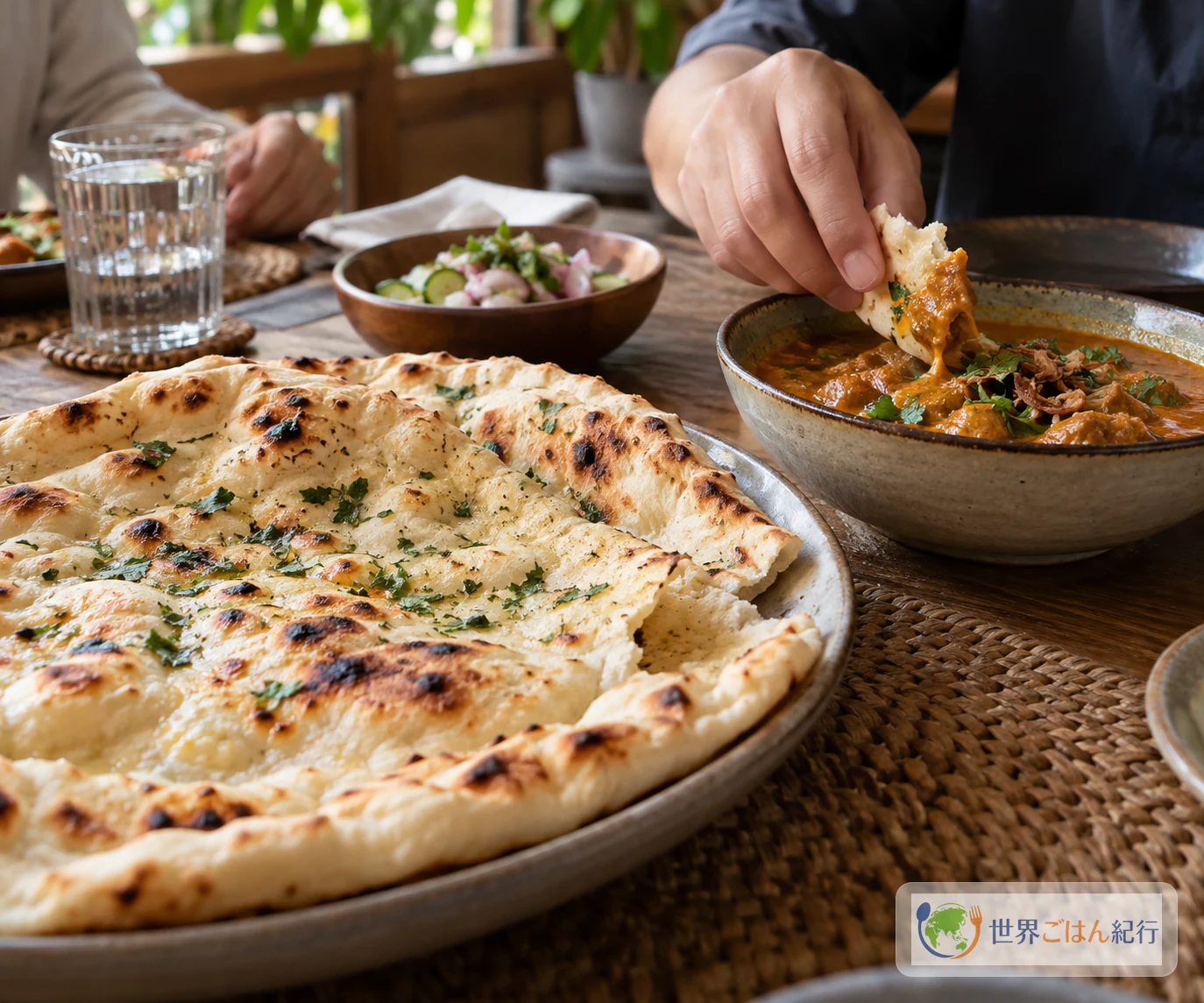
In its traditional setting, naan is slapped against the inner wall of a very hot tandoor oven. It comes away with a soft interior and a charred, blistered surface. Naan is a leavened wheat flatbread of South Asian cooking, and most home kitchens don't have a tandoor. A heavy cast-iron skillet or a griddle is a practical way to get close at home.
So the question this recipe answers is simple: can you make naan without a tandoor? You can make a good, recognizable naan this way, but it is a household adaptation, not tandoor baking. The pan cooks the bread from one side at a time. The tandoor surrounds it with heat. Expect bubbles, brown spots and a soft crumb, and treat any deeper char as something the tandoor does better.
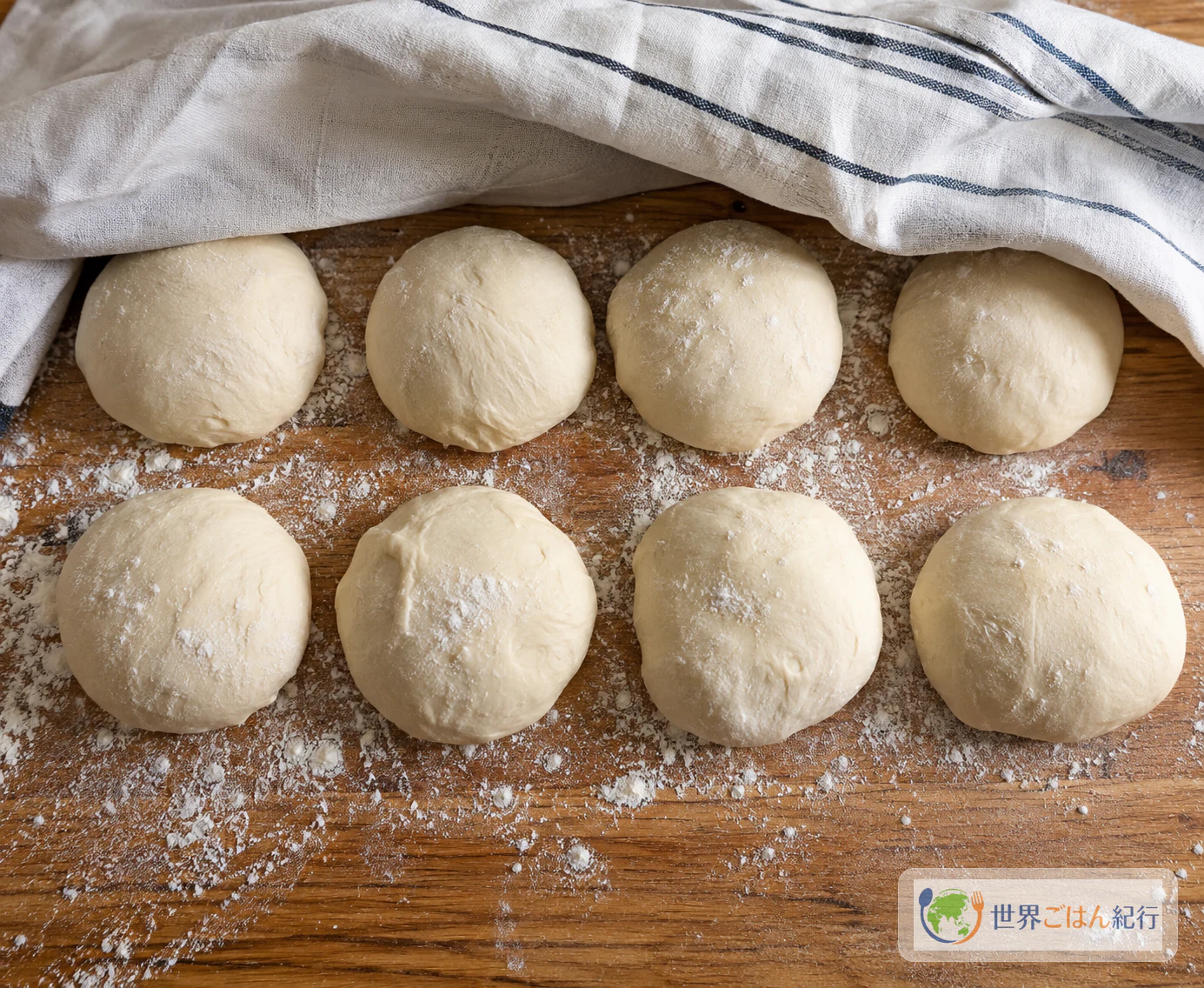
The formula here comes from a single published recipe by King Arthur Baking, and it makes 8 naan. All-purpose flour and bread flour share the work. Full-fat Greek yogurt softens the dough, and melted ghee or butter goes both into the dough and onto the finished bread. The source puts the whole process at about 2 hours, most of it hands-off rising and resting.
For more about the country's cooking, see India on Sekai Gohan.
Ingredients: One Formula for 8 Naan
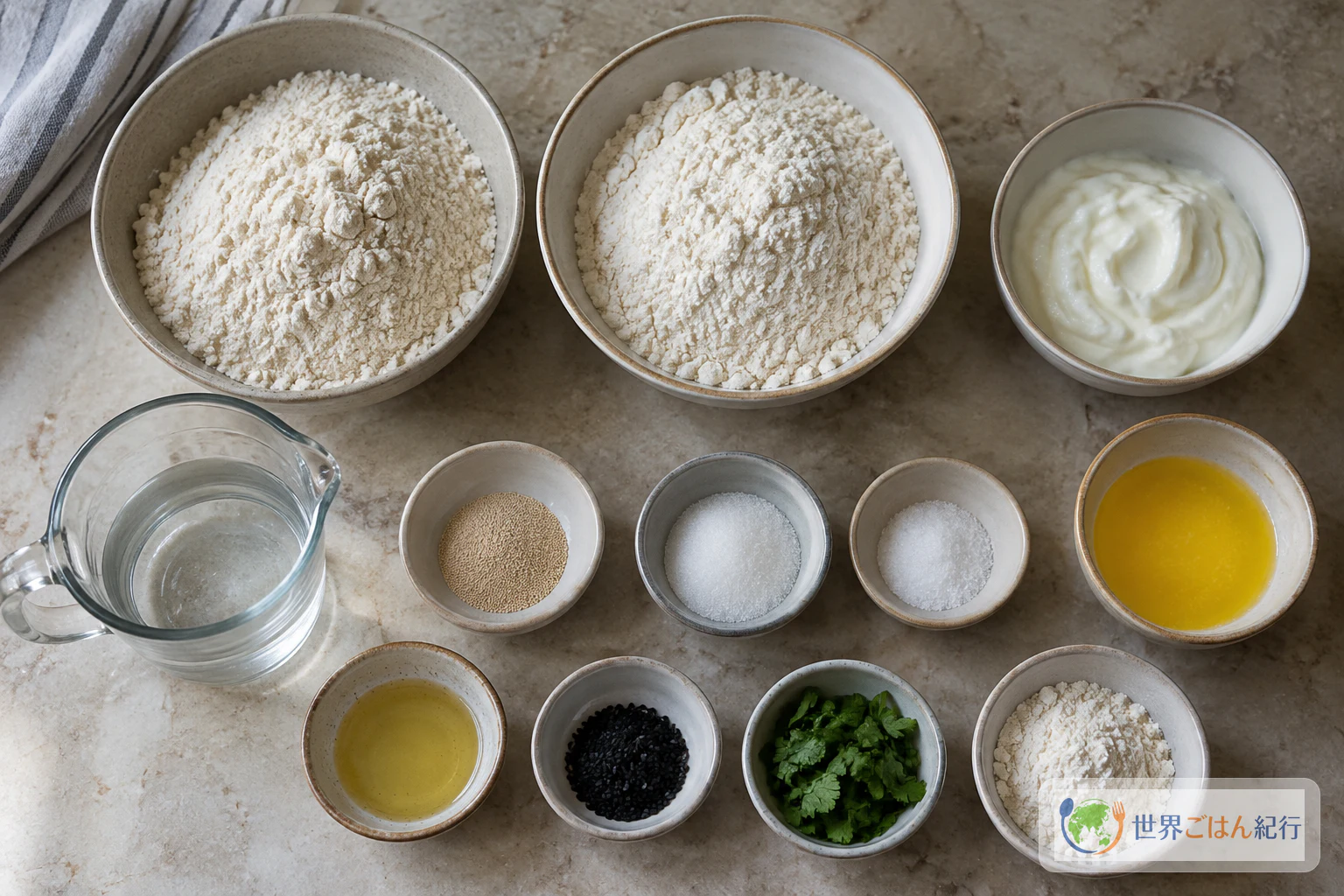
Where a weight is given, it is the more reliable measure. Yeast, sugar and salt are measured in spoons. Weigh the flour, water and yogurt if you can.
Volumes. In US cups and spoons, these are 1 1/2 cups all-purpose flour, 3/4 cup bread flour, and 1/2 cup + 2 tbsp warm water. They also include 5 tbsp Greek yogurt and 2 tbsp melted ghee or butter, both for the dough and again for brushing. If your cups and spoons follow a different standard, use the gram weights instead.
Flour outside the US. Flours sold as "all-purpose", "plain" or "bread" flour vary in protein from country to country. In Japan, local bread flour (kyōrikiko) is a candidate for the 90g bread-flour portion; local cake flour or medium-strength flour is a candidate for the 180g all-purpose-flour portion. Neither is identical to US flours. The dough may take up water differently and the texture may change, so treat local flour as your own adjustment.
Greek versus ordinary yogurt. Use thick, full-fat Greek yogurt. Thicker strained yogurt and looser yogurt change how wet the dough feels. Ordinary plain yogurt holds more liquid, so the dough will be softer and stickier. It is not an equivalent swap.
Yeast, sugar and salt. The recipe uses instant yeast. If you only have another type of dried yeast, check the product's own instructions for how to use it in place of instant. Leaving out the sugar or replacing it with honey changes the recipe. A spoonful of coarse or flaky salt is not the same amount of salt as a spoonful of fine table salt.
Nigella and cilantro. Nigella seeds are usually found at import grocers or online. The bread works without them. Black sesame is sometimes suggested, but its aroma is different, so it is not a stand-in. If you use salted butter for brushing, it will add some saltiness.
This naan contains wheat (gluten) and dairy (yogurt, and ghee or butter). This recipe does not offer allergy-safe substitutions; changing these ingredients changes the formula and texture. If you use packaged products, check their labels. Don't taste the raw dough.
Equipment
- A large mixing bowl, plus scales and US measuring spoons
- A work surface for kneading
- A lid, plate or clean cloth to cover the dough
- A rolling pin (optional; hands work too)
- A heavy cast-iron skillet or a griddle that can take high heat
- A pastry brush and a spatula
- A clean cloth or foil to keep the cooked naan warm
Method: From Soft Dough to Bubbled Bread
The times in each step are guides. Room temperature changes how fast the dough rises, and your stove and pan change how fast the bread browns.
Troubleshooting
| Problem | Likely cause | What to do |
|---|---|---|
| The dough is stiff and won't stretch | Not risen enough, too little rest, or a flour that absorbs water differently | Give it the full rest after dividing. Next time, add any extra flour only a little at a time and note how it differed from the formula |
| The naan doesn't puff | Tired yeast, an incomplete first rise, or a pan that wasn't hot enough | Check your yeast, let the dough roughly double, and preheat the pan thoroughly. Don't press the bread into the pan |
| The surface burns before bubbles form | The heat is too high | Lower the heat or lift the pan off the burner for a moment, then adjust with the next piece. The cooking times are guides, not fixed rules |
| The naan turns hard as it cools | It sat uncovered | Wrap each piece in a clean cloth or foil as it is done and serve warm |
This recipe gives no storage times for room temperature, the refrigerator or the freezer. Naan is best eaten warm, soon after cooking.
Variations
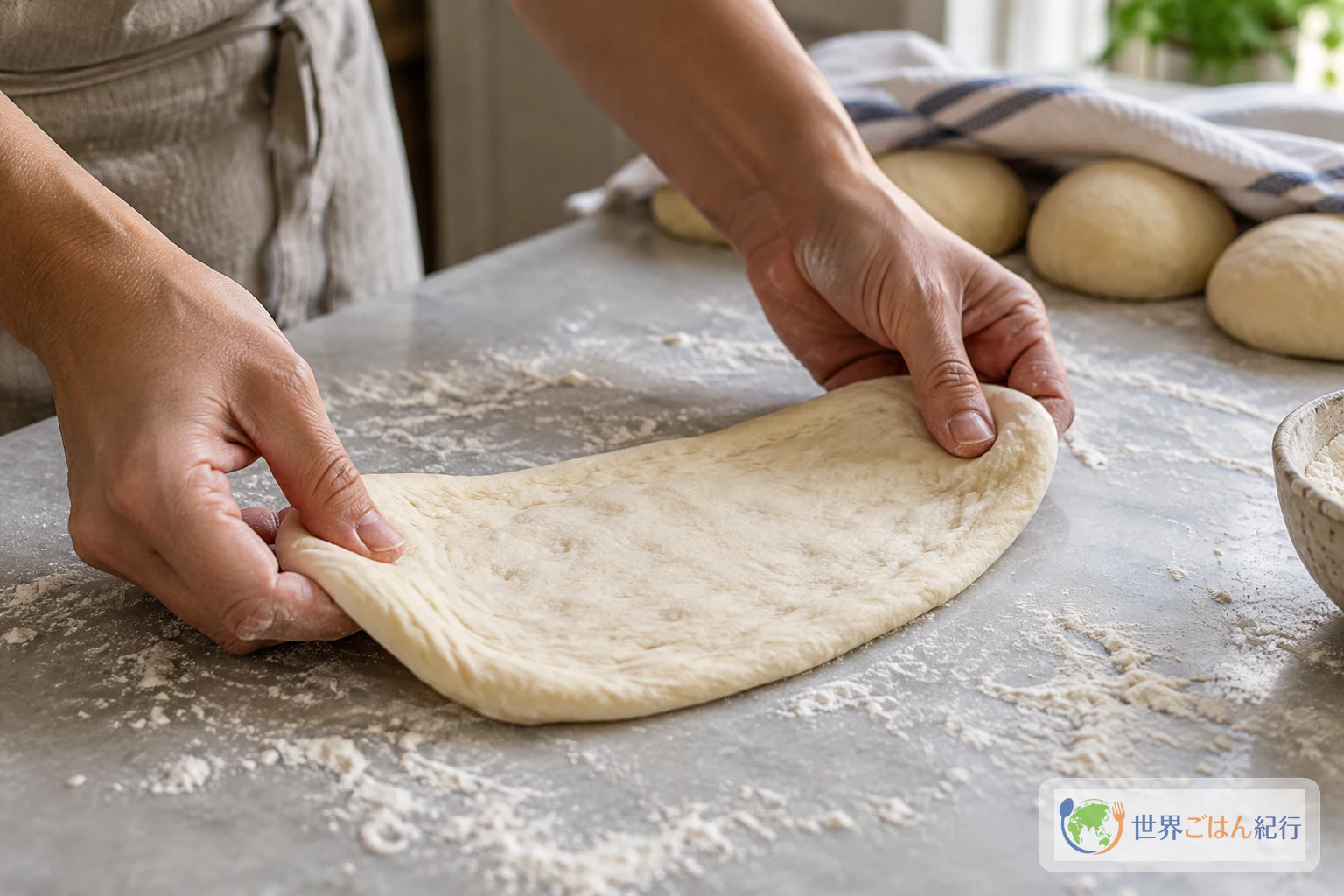
- Thick or thin. The source offers both shapes: about 15 cm round or 18 cm oval for thicker, softer naan, and about 20 cm round or 25 cm oval for thinner naan. Choose one style per batch so the pieces cook alike.
- Plain or topped. The bread is complete with just the brush of ghee or butter. Nigella seeds and cilantro are optional additions, not requirements.
- Ghee or butter. Either works in the dough and for brushing, as the source allows. Ghee and butter taste different, and salted butter makes the finish saltier.
- Restaurant variations. One Jakarta restaurant's menu, for example, lists plain naan, garlic naan and cheese naan alongside tandoori roti. Those are that restaurant's variations, and this article does not provide recipes for them.
- A different formula altogether. Naan recipes differ. A separate recipe by Anissa Helou, published by the James Beard Foundation, uses milk and water and no yogurt. It approximates tandoor char with a home oven or pan and a broiler. It is a different recipe and shouldn't be mixed with the ingredients or steps above.
What Naan Is: Tandoor Bread and Its Neighbors
Naan is a leavened wheat flatbread of South Asian cooking. In its classic form it is baked against the wall of a tandoor, which gives a soft interior and a charred surface. An Indian hospitality-education text lists naan among the country's many breads, beside tawa roti, tandoori roti, kulcha and lachha paratha. It describes naan as thicker and softer or richer than tandoori roti.
The word naan is related to the Persian word for bread. Beyond that, the bread's history and exact origins are contested. This article doesn't name a single place, date or story of invention.
Naan, roti and chapati: a practical comparison
| Naan | Roti / chapati | |
|---|---|---|
| Dough | Yeasted wheat dough (this recipe also uses yogurt and ghee or butter) | Generally unleavened |
| Thickness and texture | Thicker, soft, with bubbles | Generally thinner, everyday bread |
| Traditional cooking | Baked in a tandoor | Varies; tawa roti is cooked on a flat pan, tandoori roti in a tandoor |
These are broad, practical differences, not strict definitions. Breads vary by region and household, and one ingredient alone doesn't decide what a bread is called.
Naan in Indonesia
Naan is a South Asian bread, not an Indonesian one, but it can be found on some restaurant tables there. A 2023 report from Palembang described a naan shop whose owner said it employed an Indian cook and used imported atta flour. The shop served naan with curry and tandoori chicken. In Jakarta, Hookah Habibi Cafe's published Indian menu lists several kinds of naan alongside tandoori roti. These are examples from individual businesses. They don't show how widely naan is eaten across Indonesia, what it costs, or whether it is available at any given time.
Frequently Asked Questions
Can I really make naan without a tandoor?
Yes, as a home adaptation. A very hot, dry cast-iron skillet or griddle gives bubbles, brown spots and a soft crumb. It doesn't reproduce baking against a tandoor wall, so the result is closer to tandoor naan than identical to it.
Should I oil the skillet?
No. Cook the naan on a dry pan over medium-high heat. The oil in this recipe only greases the rising bowl, and the ghee or butter goes into the dough and onto the finished bread.
Can I use regular yogurt instead of Greek yogurt?
You can, but it is a change from the source. Ordinary yogurt is looser, so the dough will feel wetter and softer. Expect the handling and texture to differ.
How much does this make?
Eight naan. That is eight pieces of bread, not eight servings. How many people it feeds depends on your meal.
How long does the whole thing take?
The source puts it at about 2 hours in total. That includes a 50–60 minute rise, a 20-minute rest after dividing, and cooking the 8 pieces one at a time. Your kitchen's temperature and your stove will change it.
Can I store leftover naan?
This recipe gives no storage times. Wrap the naan as it comes off the pan to keep it soft, and enjoy it warm.
Sources
- King Arthur Baking, "Naan Recipe." The single formula used in this article: ingredients and amounts for 8 naan, the 50–60 minute rise, dividing and the 20-minute rest, shaping sizes, cooking in a hot pan for 30–40 then 40–50 seconds, and the ghee or butter finish. It is a US test-kitchen home adaptation, not a representation of every household recipe. https://www.kingarthurbaking.com/recipes/naan-recipe
- Pooja Makhijani, "Naan: A guide to this classic flatbread," King Arthur Baking. Naan as a leavened South Asian wheat flatbread; contested origins and the word's link to Persian; tandoor baking; the comparison with roti and chapati; cast iron as a home substitute; serving with curries and grilled meats. https://www.kingarthurbaking.com/blog/2021/03/23/naan-guide
- Uttarakhand Open University, "Regional Cuisines of India – II (BHM-602AT)." Indian bread traditions including tawa roti, tandoori roti, naan, kulcha and lachha paratha; naan as tandoor-baked and thicker and softer or richer than tandoori roti. https://uou.ac.in/sites/default/files/slm/BHM-602AT.pdf
- JPNN.com, "Tak Perlu Jauh-Jauh ke India, Roti Naan Kini Ada di Palembang." A 2023 report on one naan shop in Palembang, the owner's account of its Indian cook and imported atta flour, and naan served with curry and tandoori chicken. Evidence of that business only. https://www.jpnn.com/news/tak-perlu-jauh-jauh-ke-india-roti-naan-kini-ada-di-palembang
- Hookah Habibi Cafe, "Indian Menu." A Jakarta restaurant's own menu listing plain, garlic and cheese naan alongside tandoori roti. Evidence of that menu only. https://www.hookahhabibi.co.id/our-menu/indian-menu/
- James Beard Foundation, "Naan" (recipe by Anissa Helou). A separate naan recipe using milk and water and no yogurt, with a home oven or pan and broiler; served hot with curry or kebabs. Cited only to show that formulas vary; not combined with the recipe above. https://www.jamesbeard.org/recipes/naan