Fara: Plain Rice-Flour Sticks Finished in a Sesame and Green-Chilli Liquid
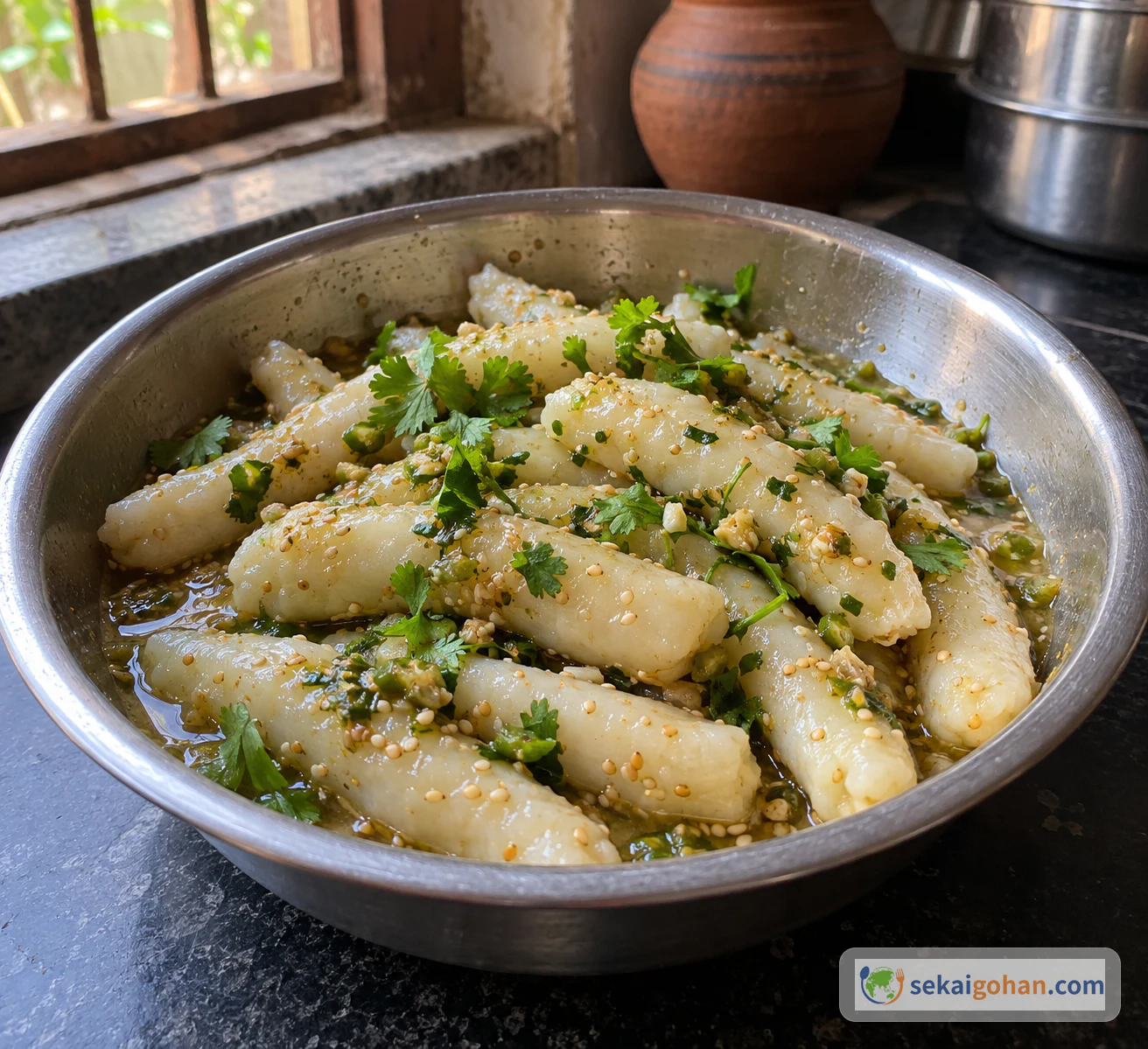
This is one Fara recorded in the Chhattisgarh section of a rice-food compilation from India's ICAR-Central Rice Research Institute. Rice flour is stirred into just-boiled water, shaped by hand into small sticks, and simmered in a liquid built from toasted sesame, crushed green chillies and garlic-coriander paste. There is no filling and no steamer.
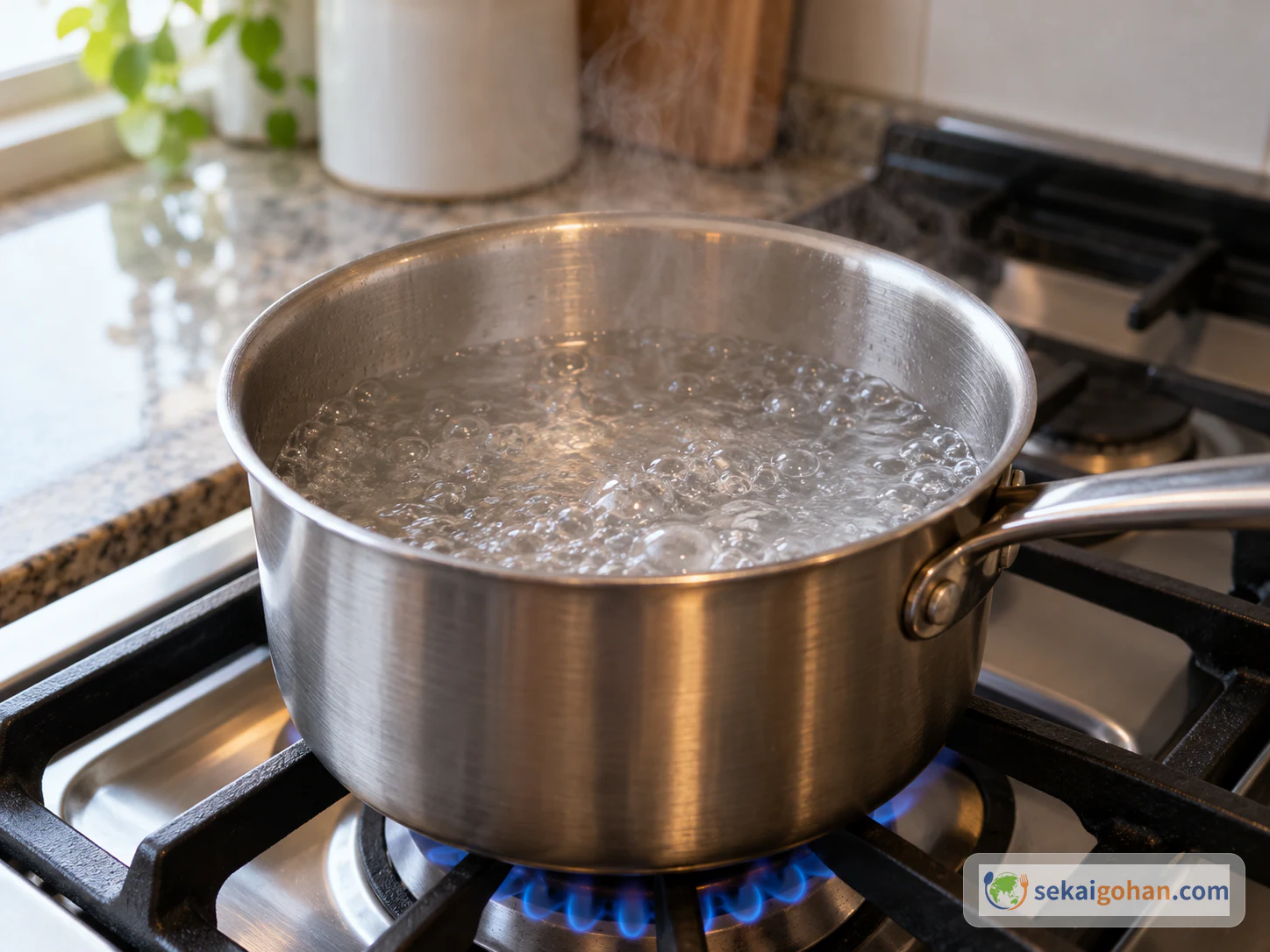
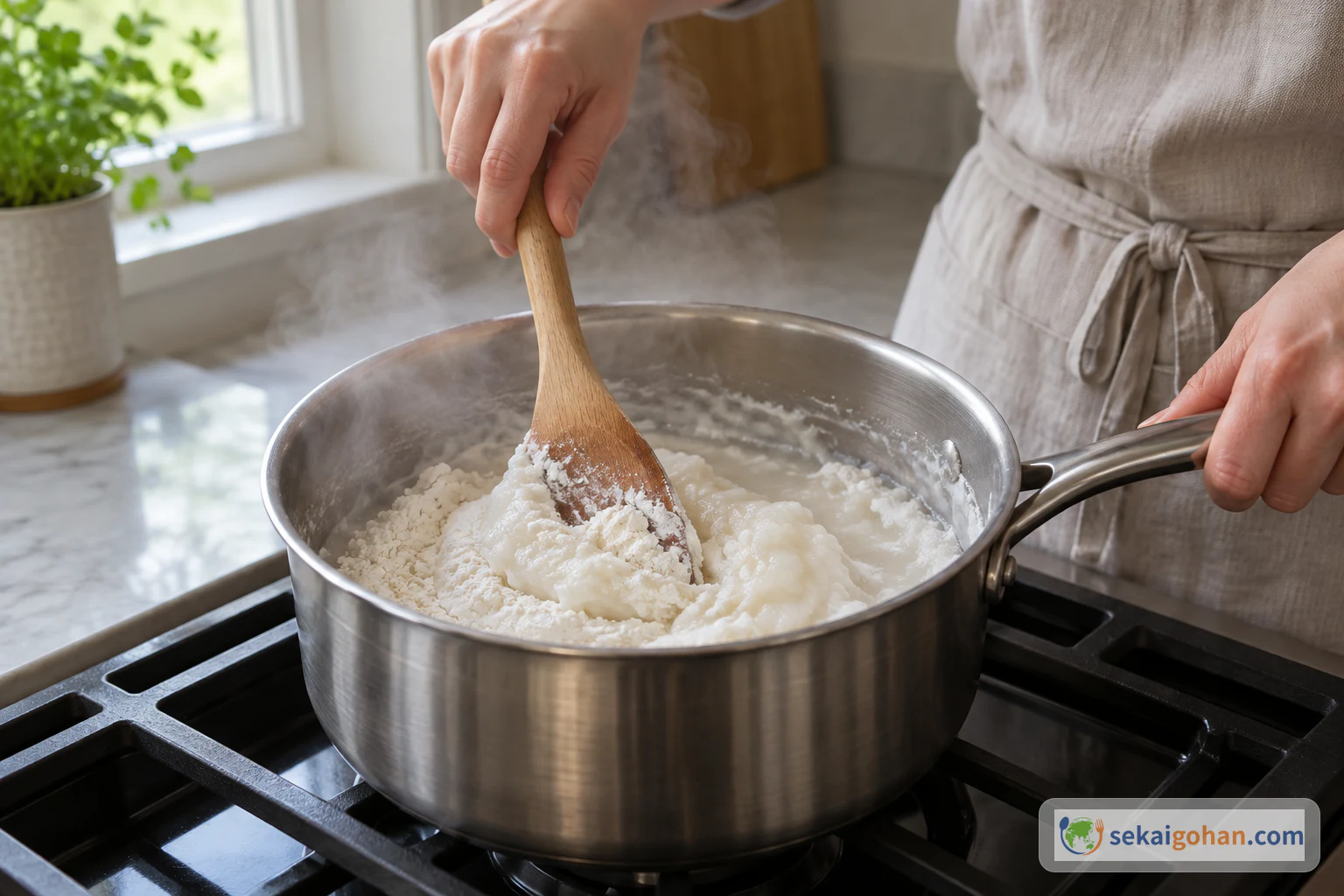
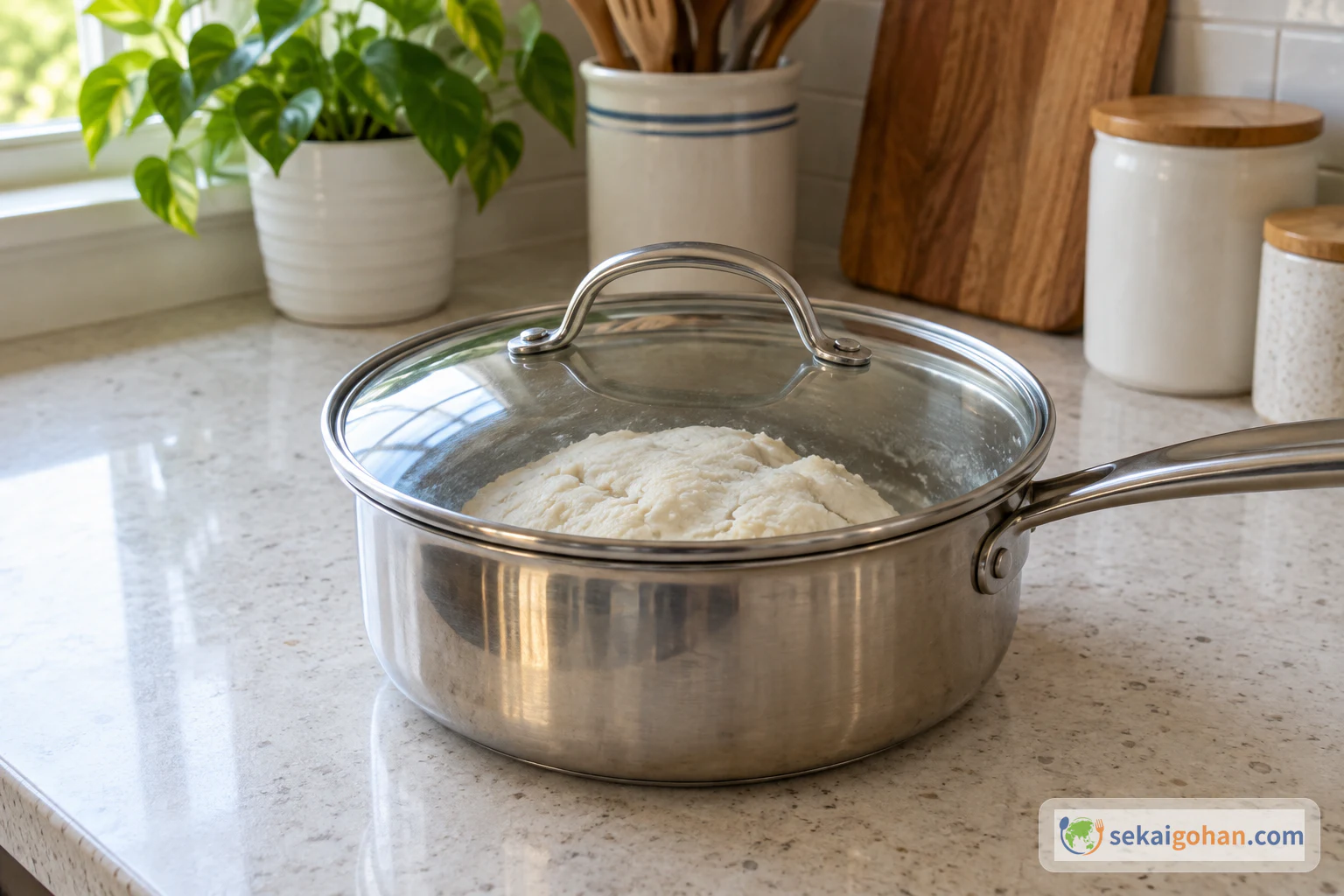
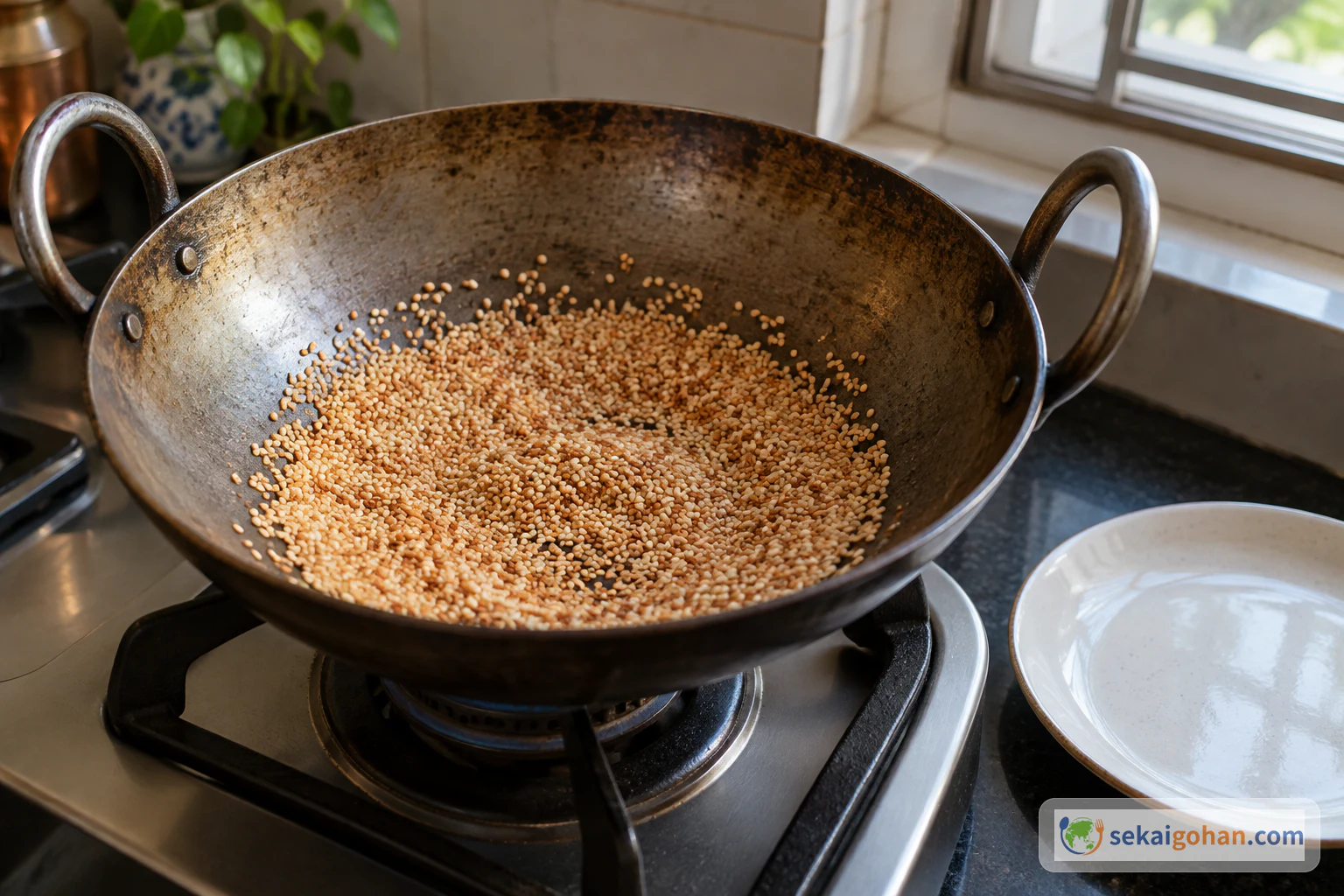
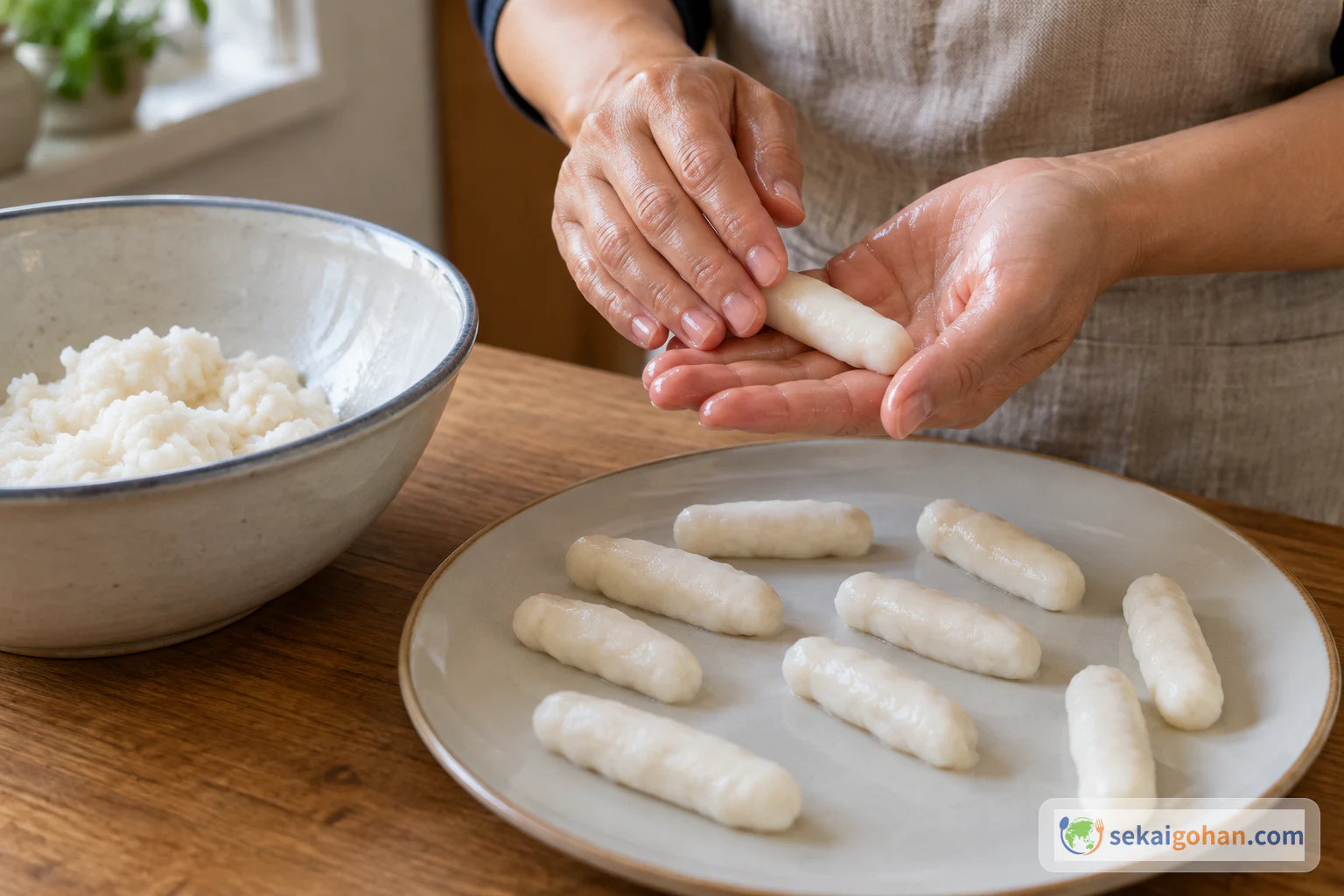
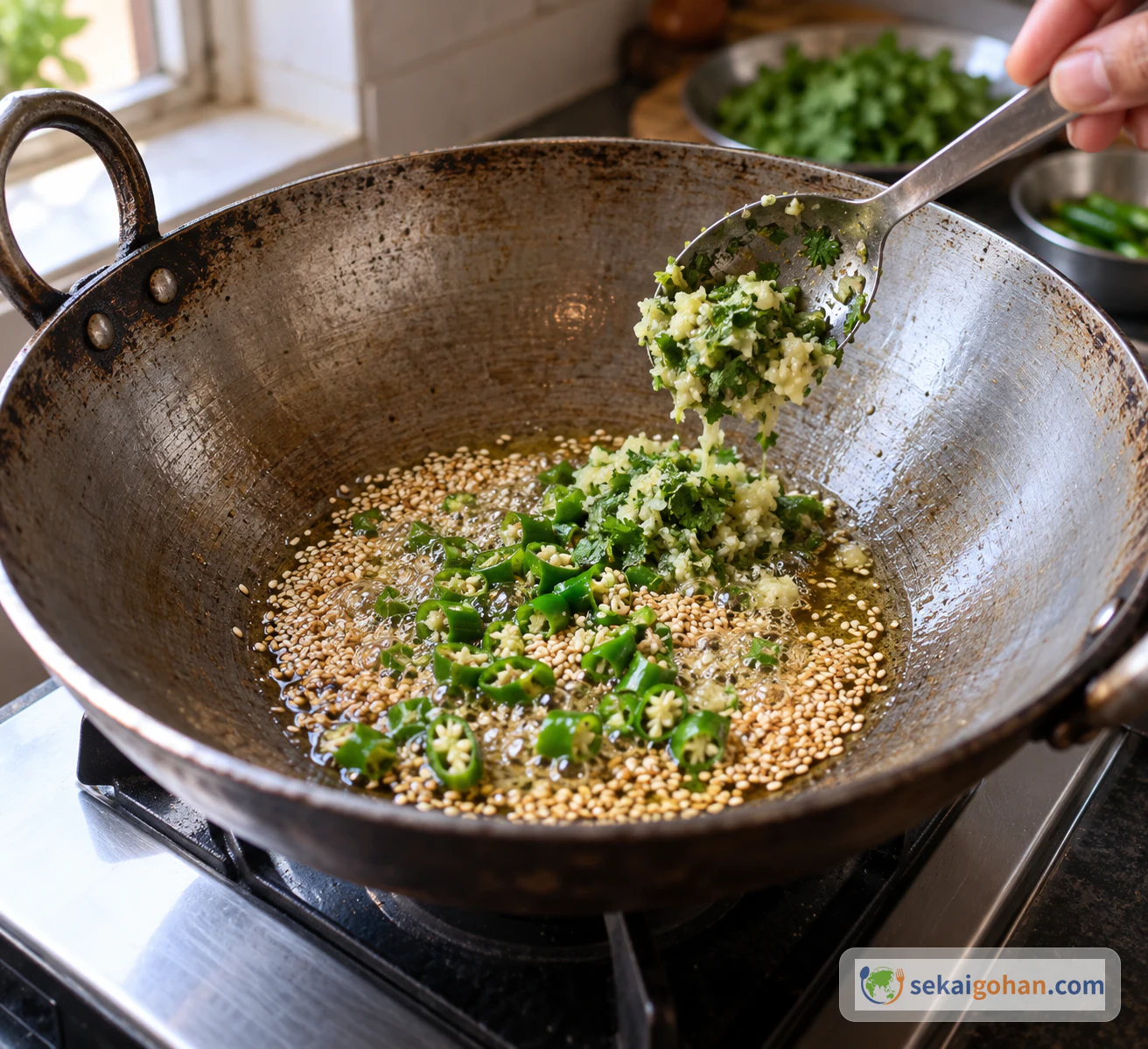
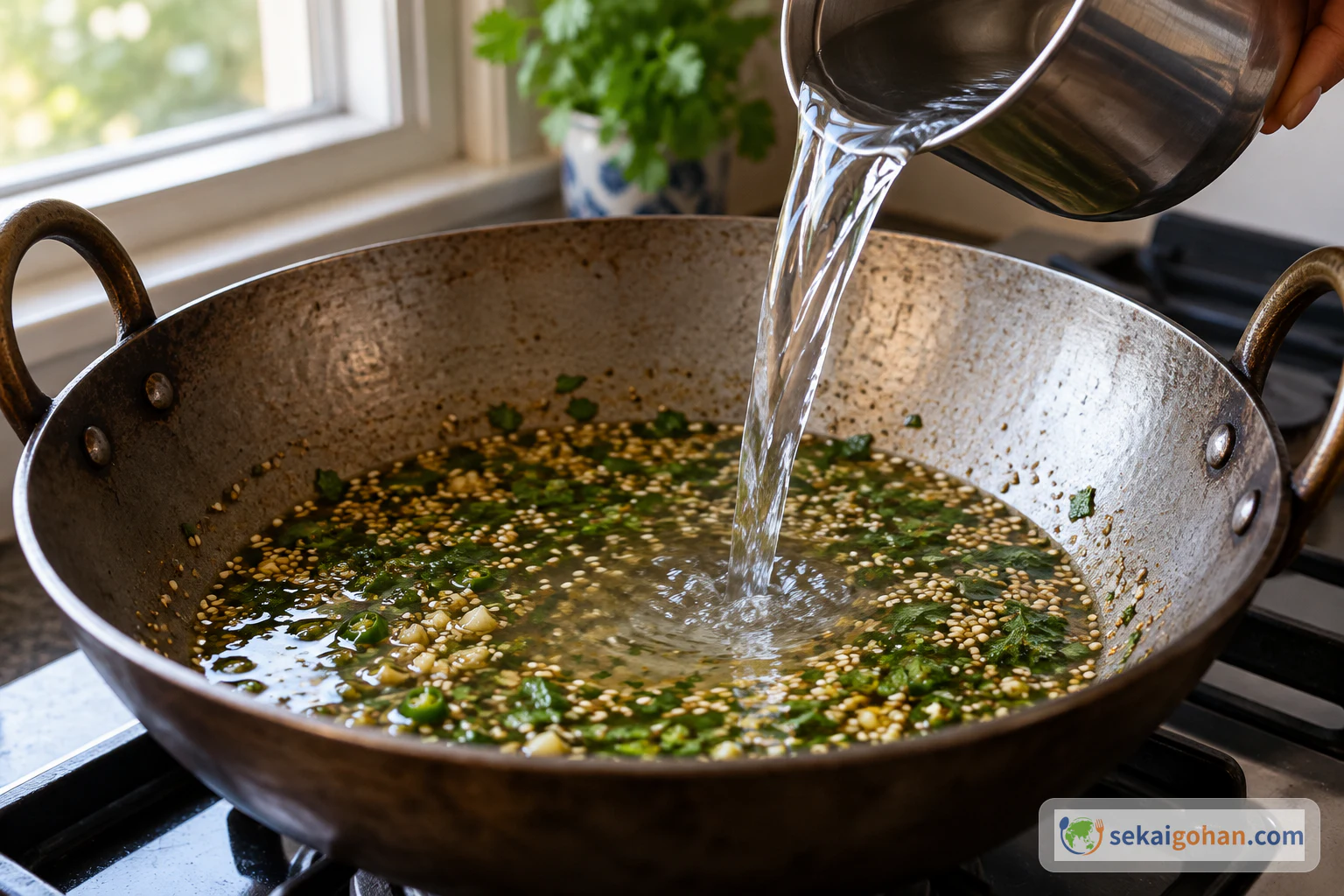
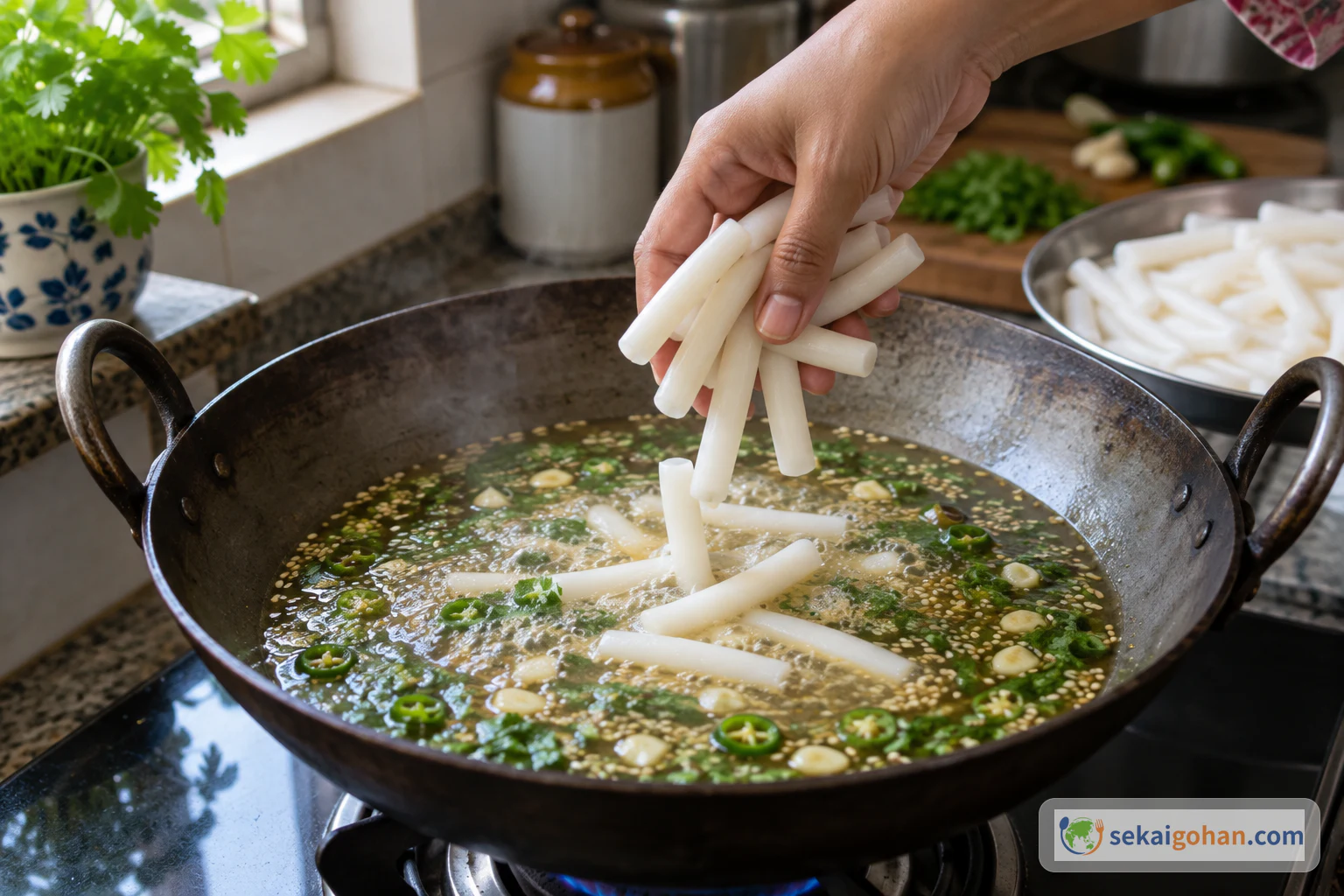
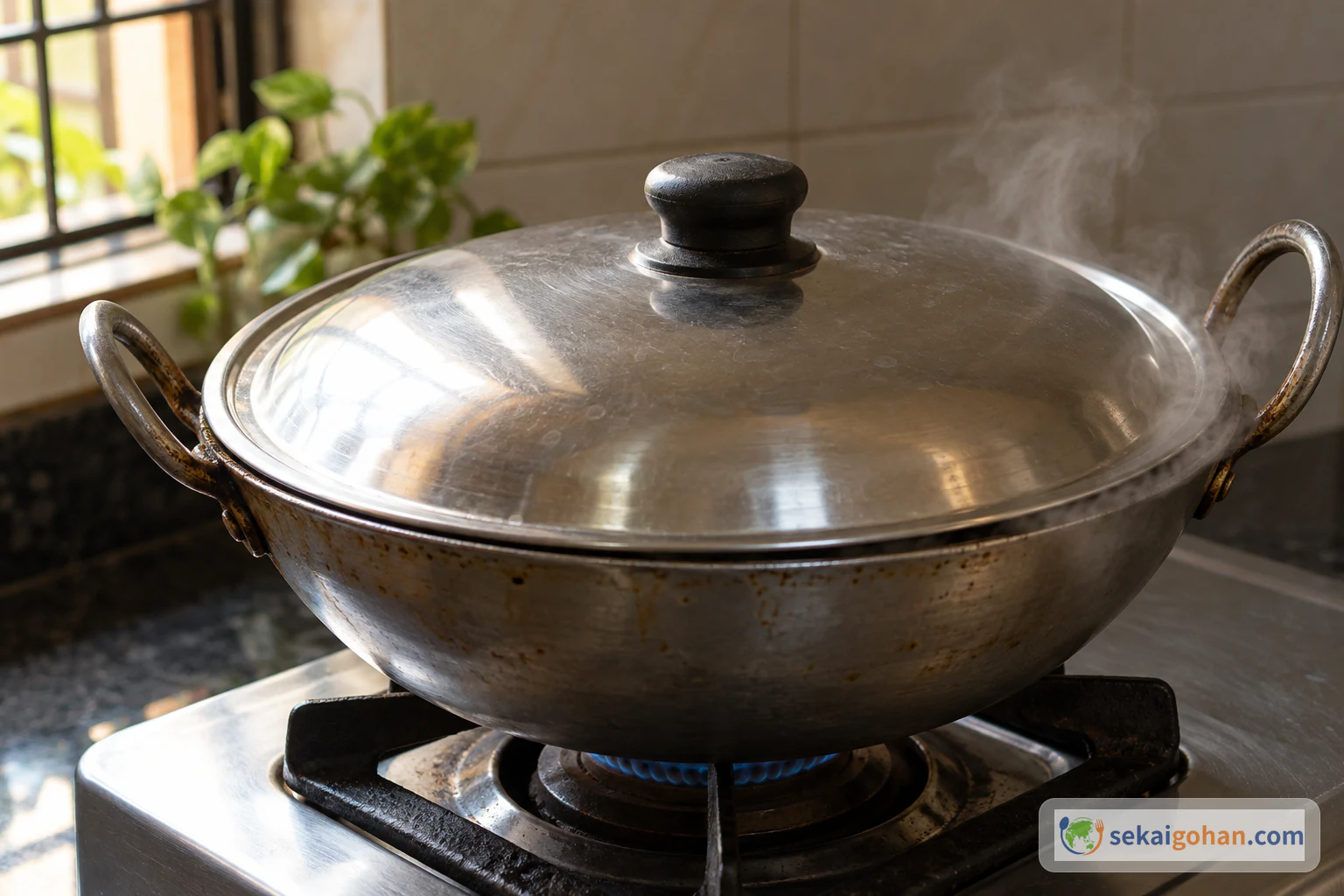
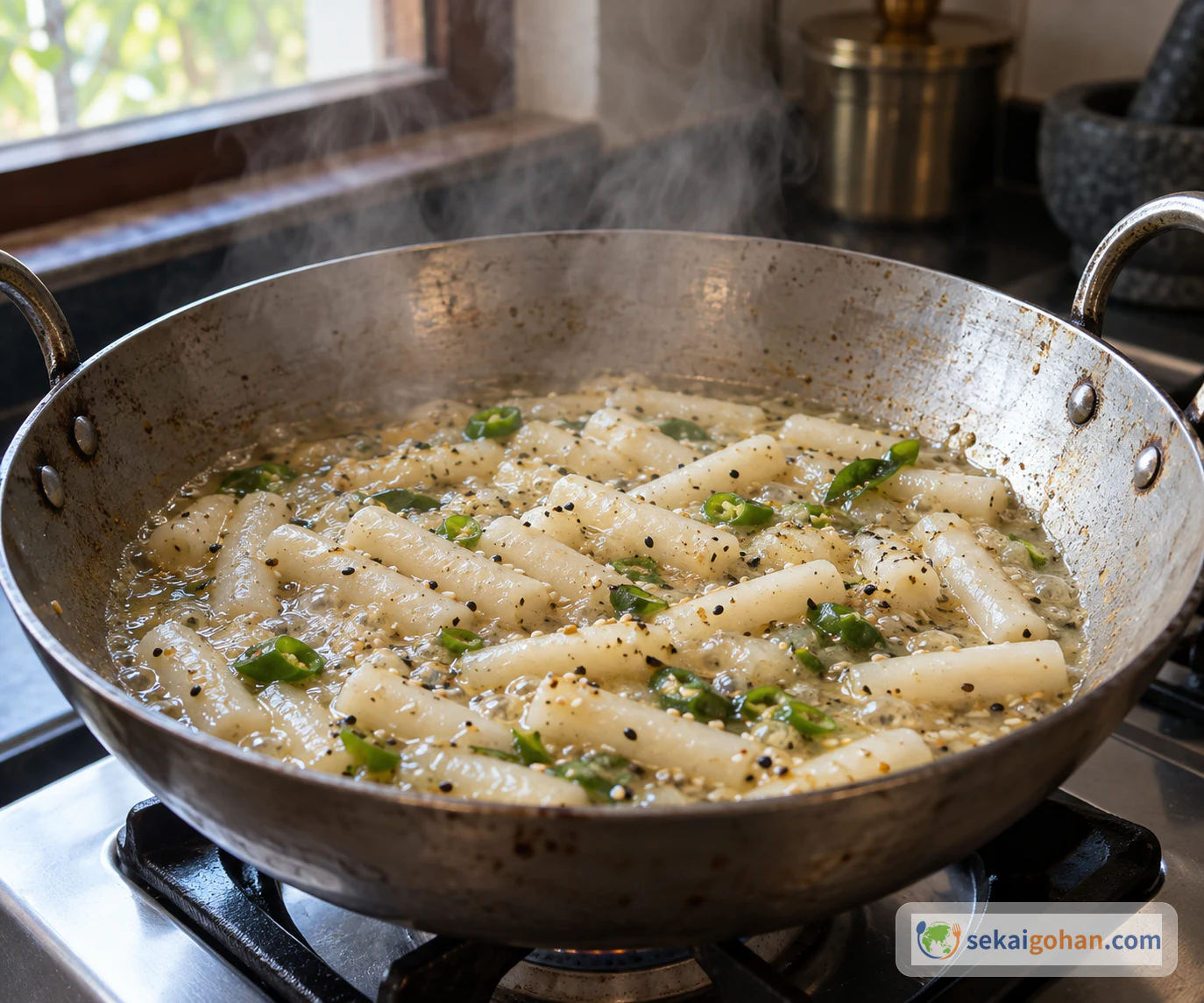
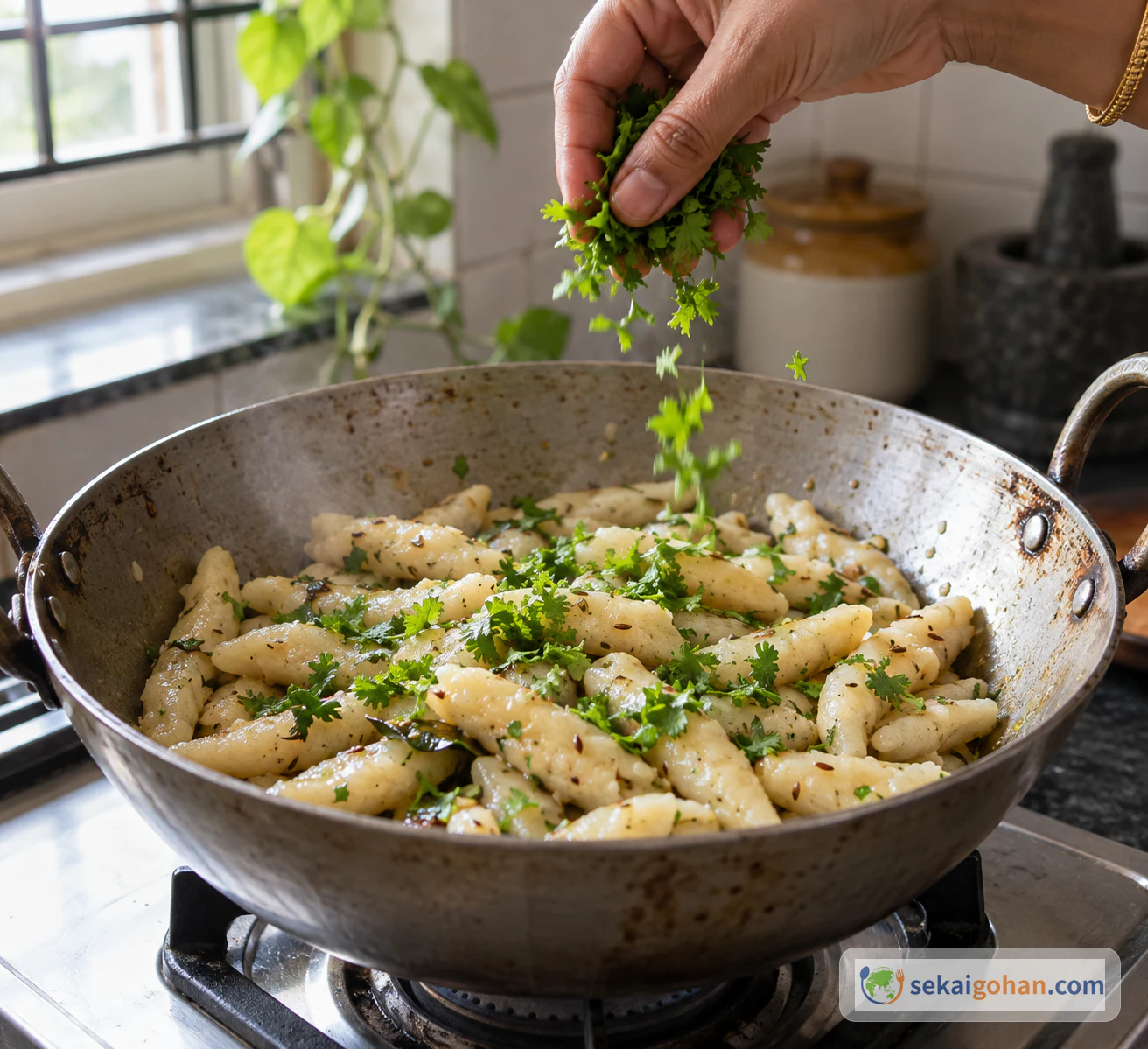
Salted water with 1/4 tsp oil comes to a boil, the heat goes off, and rice flour is stirred straight into the hot water. The pot is covered and set aside. Meanwhile sesame seeds roast in a kadhai until they turn reddish. With oiled hands, the rice-flour mixture is rolled into small sticks, and those sticks go into a seasoning liquid of toasted sesame, crushed green chillies and a paste of garlic and green coriander. A few minutes with the lid on, a few more with it off, and a scattering of coriander leaves finish the dish.
That is the whole of this Fara (फरा). It is recorded in Traditional Rice Foods: The Rich Heritage of India, compiled by Dr. Lipi Das and published by ICAR-Central Rice Research Institute in Cuttack in 2015, where it appears on printed page 40 under the heading Chhattisgarh. The book describes itself as a compilation drawing on primary and secondary sources, and it does not name a household contributor for this recipe. So this article presents it as one recorded regional version, not as the standard Fara of Chhattisgarh or of India as a whole.
Sekai Gohan has not kitchen-tested this recipe. The amounts and steps below follow the recorded version, and the points it leaves open are explained before the ingredient list rather than filled in by guesswork. For more dishes from the country, see our India page.
One Name, Several Forms: Steamed, Cooked-Rice, Dal-Filled and Wheat Fara
The name Fara covers noticeably different dishes, and the sources do not agree on a single form. It helps to see the range before cooking, so the version here is not mistaken for the only one.
Sahapedia's overview of traditional Chhattisgarhi cuisine, written by researcher Ashok Tiwari and commissioned by the Directorate of Culture and Archaeology of the Government of Chhattisgarh, lists Fara (spelled Phara on the page) among Chhattisgarhi snacks. It describes rice-flour dough, sometimes mixed with cooked rice, salted, shaped into finger rolls, steamed, and then tempered with sesame and chilli. That is a description, not a measured recipe, and it differs from the ICAR version in steaming the rolls rather than simmering them in the seasoning liquid.
Other authored recipes show more branches:
| Version | Labelled as | Dough and filling | Cooking |
|---|---|---|---|
| ICAR-CRRI compilation (this article) | Chhattisgarh | Rice flour only, no filling, small sticks | Simmered in sesame, green chilli and garlic-coriander liquid, covered then uncovered |
| Trupti Dev, Kalnirnay | Chhattisgarh | Cooked rice and rice flour, one bowl each, long shapes | Steamed 10–15 minutes (toothpick test), then a separate tempering of mustard, cumin, chilli, curry leaves and sesame |
| Chandra Bhushan Verma, Chhattisgarh Rajya | Chhattisgarh (Dal Fara) | Rice-flour wrapper around coarse chana-dal filling | Steamed 15–20 minutes, optional tempering or frying |
| Ruchi Pant, NDTV India | Uttar Pradesh | Rice flour with milk, chana-dal filling | Steamed 12–15 minutes |
| Garima Dublish, The Garus Kitchen | Dal Fara / Farra | Whole-wheat atta wrapper, coarse chana-dal filling, half-moon shape | Boiled in water, optional spice fry |
The Dal Fara author also uses names such as Farra, Gojha and Peetha, but that does not make all of those interchangeable with the plain rice-flour sticks here. Whether Fara and Dal Fara are separate dishes or branches of one wider family is not settled by these sources, so this article simply keeps each version attached to its own author and regional label. Their amounts and methods are not mixed into the recipe below.
Before You Measure: What This Recipe Leaves Open
The recorded recipe is short, and several things a cook might expect are not given. They are listed here so you know where you will need to use your own judgment.
- Cup and spoon standards. The recipe uses cups, tablespoons and teaspoons without saying which standard. The amounts are kept exactly as recorded, with no conversion to grams or millilitres.
- Water. The ingredient list gives 1 1/2 cups water. The method then separately adds 1/2 cup water to the seasoning, without saying whether that half-cup is part of the 1 1/2 cups. The two amounts are not added together here.
- Oil. The ingredient list gives 4 tbsp oil. The method uses 1/4 tsp in the boiling water, then oil on your hands, then oil in the kadhai for the seasoning, without dividing up the rest of the 4 tbsp.
- Rice flour. The grain type (non-glutinous or glutinous), variety and fineness of the rice flour are not stated.
- Paste and garnish. The garlic and green coriander paste is 1 tsp combined, with no ratio between the two. The coriander leaves for garnish appear only in the method, with no amount.
- Not given at all. Servings, number or size of sticks, dough texture, resting time, total time, heat level for the final simmer, storage, reheating and nutrition. The only times are about 5 minutes covered and 2–3 minutes uncovered.
Ingredients
Equipment
- A pot for boiling the water, with a lid
- A spoon for stirring in the rice flour
- A kadhai or wok
- A plate for the roasted sesame
- A plate or bowl for shaping the sticks
Choosing Rice Flour and Other Ingredients
Rice flour is not one product. It can be made from non-glutinous (uruchi) rice or from glutinous rice, and the milling and processing method changes how a flour behaves and what it is used for. Shiratamako, for example, is made from glutinous rice and is used for soft white dumplings. Which kind this dish needs has not been established.
A plain rice flour made from non-glutinous rice is a reasonable first thing to look for, but it is an untested starting point, not a confirmed equivalent. Glutinous rice flours such as mochiko or shiratamako should not be treated as a straight swap for the same amounts.
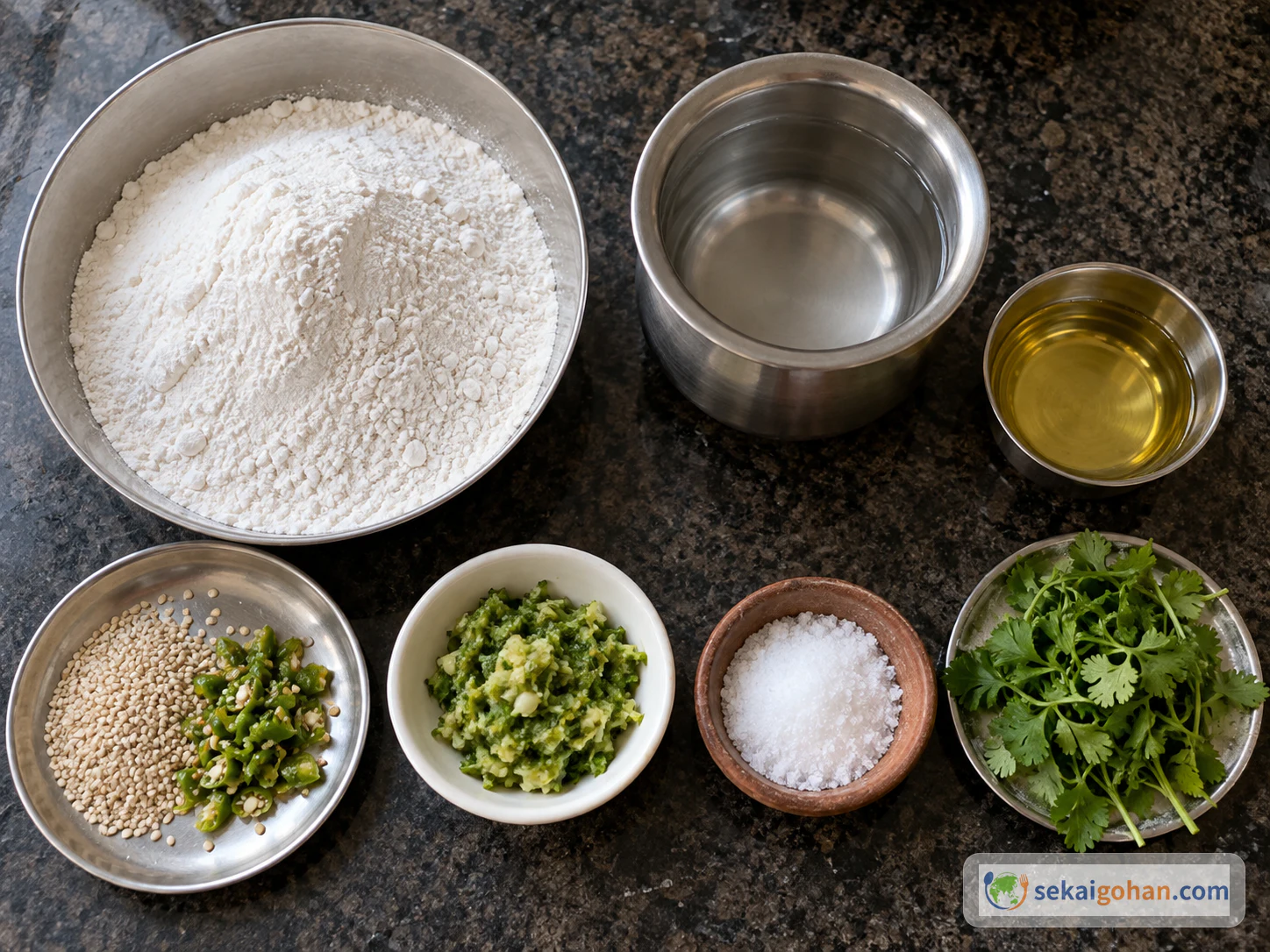
- Sesame seeds: 1 tbsp, roasted until reddish.
- Green chillies: 2, crushed. Peppers that differ in heat, moisture or shape are not offered here as a fixed substitute.
- Oil: an ordinary cooking oil.
- Garlic and green coriander paste: one combined paste. If you make it yourself, the balance of garlic to coriander is yours to choose.
- Kadhai: a round-bottomed Indian wok. A deep frying pan may work in its place, but that is an untested suggestion, and a different pan shape and heat can change how the seasoning and liquid behave.
Sesame is a common allergen. If you need to avoid gluten or other allergens, check the label of your rice flour and other products for cross-contact statements; this article does not claim the dish is certified gluten-free.
Method: From Hot-Water Dough to Simmered Sticks
The checkpoints in this recipe are few: the water boiling before you turn off the heat, the sesame turning reddish, the seasoning becoming fragrant, the liquid boiling before the sticks go in, and then about 5 minutes covered and 2–3 minutes uncovered.
Keeping to the Sequence: What Can and Cannot Be Fixed Here
Because the recipe is brief, most of what can go wrong comes from changing its order. The recorded version gives these cues, and nothing beyond them:
| Stage | Cue in the recipe | Why the order matters |
|---|---|---|
| Dough water | The water boils, then the heat goes off before the flour goes in | The flour is mixed into hot water off the heat, not cooked on the flame |
| Resting | The pot is covered and set aside | No resting time is given; the lid is the only instruction |
| Sesame | Roasted until reddish, then moved to a plate | The roasted seeds go into the seasoning later, at step 6 |
| Seasoning | Water goes in only once there is a nice aroma | The sesame, chillies and paste are cooked in oil first |
| Sticks | Added only after the liquid boils | The sticks start cooking in already-boiling liquid |
| Finish | About 5 minutes covered, then 2–3 minutes uncovered | These are the only cooking times given |
The recipe does not describe what the dough should feel like, how large the sticks should be, how hot the flame should be for the final simmer, or what to do if the mixture does not hold together. No extra water, extra flour or other fixes are added to the method here, because none are recorded. If you want a dependable, repeatable version, treat your first batch as a trial and note what you change.
Other Ways to Make Fara (Separate Recipes, Not Additions)
These are separate versions from other authors. Each belongs to its own recipe; none of their fillings, steaming times or spices are part of the ICAR version above.
- Steamed rice-flour rolls with a tempering. Sahapedia describes rice-flour dough, sometimes mixed with cooked rice, shaped into finger rolls, steamed and tempered with sesame and chilli. Trupti Dev's Chhattisgarh-labelled recipe uses cooked rice and rice flour in equal bowls, steams 10–15 minutes, and then tempers with mustard, cumin, chilli, curry leaves and sesame.
- Dal-filled rice-flour Fara. Chandra Bhushan Verma's Chhattisgarh-labelled Dal Fara wraps rice-flour dough around coarse chana dal (soaked 4–5 hours) and steams it for 15–20 minutes, with optional tempering.
- Uttar Pradesh Fara. Ruchi Pant's UP-labelled version adds 2 tsp milk to the rice-flour dough, fills it with soaked chana dal and steams it for 12–15 minutes.
- Whole-wheat Dal Fara. Garima Dublish's version wraps coarse chana-dal filling in whole-wheat atta, shapes half-moons, boils them and optionally fries them with spices.
Frequently Asked Questions
Does Fara have a filling?
Not in this version. The ICAR Chhattisgarh recipe uses plain rice-flour sticks with no filling. Other authors describe filled versions: Chandra Bhushan Verma's Chhattisgarhi Dal Fara and Ruchi Pant's Uttar Pradesh Fara both use chana dal, and Garima Dublish's Dal Fara uses a whole-wheat wrapper.
Do I need a steamer?
No. In this version the sticks are cooked in the seasoning liquid, covered and then uncovered. Sahapedia's description and Trupti Dev's recipe steam the rolls instead, but that is a different method from a different source.
Which rice flour should I use?
The ICAR recipe does not say which grain or milling it expects. Japan's Ministry of Agriculture, Forestry and Fisheries notes that rice flour can be non-glutinous or glutinous, and that processing changes its properties. A plain non-glutinous rice flour is a sensible first choice, but it has not been tested in this recipe, and glutinous flours such as mochiko or shiratamako should not be assumed to behave the same way.
How much water do I need in total?
The recipe lists 1 1/2 cups water and separately adds 1/2 cup to the seasoning, without saying whether the half-cup is part of the listed amount. This article does not combine them into a total.
How many people does it serve?
The recipe gives no number of servings and no number or size of sticks, so no yield is stated here.
Can I make it ahead or store leftovers?
The recipe gives no storage or reheating guidance, so this article does not offer storage times or reheating instructions.
Sources
- Dr. Lipi Das (compiler), Traditional Rice Foods: The Rich Heritage of India, ICAR-Central Rice Research Institute, Cuttack, 2015, printed p. 40 (PDF p. 51), Chhattisgarh section. The adopted ingredient list and the order of every step. It is a compilation of primary and secondary sources and does not name a household contributor; it does not state cup/spoon standards, servings, rice type, stick size, rest time, total time, or how the water and oil amounts are divided. https://icar-crri.in/wp-content/uploads/2023/05/final_book_ldas.pdf
- Ashok Tiwari, "पारंपरिक छत्तीसगढ़ी व्यंजन, Traditional Chhattisgarhi Cuisine," Sahapedia (content commissioned by the Directorate of Culture and Archaeology, Government of Chhattisgarh). A descriptive account of Fara among Chhattisgarhi snacks as steamed rice-flour finger rolls, sometimes with cooked rice, tempered with sesame and chilli. No amounts or full recipe. https://www.sahapedia.org/%E0%A4%AA%E0%A4%BE%E0%A4%B0%E0%A4%82%E0%A4%AA%E0%A4%B0%E0%A4%BF%E0%A4%95-%E0%A4%9B%E0%A4%A4%E0%A5%8D%E0%A4%A4%E0%A5%80%E0%A4%B8%E0%A4%97%E0%A5%9D%E0%A5%80-%E0%A4%B5%E0%A5%8D%E0%A4%AF%E0%A4%82%E0%A4%9C%E0%A4%A8-traditional-chhattisgarhi-cuisine
- Trupti Dev, "फरा | Chhattisgarh Fara Recipe: A Culinary Delight You Need to Taste," Kalnirnay Marathi 2024. A separate Chhattisgarh-labelled version with cooked rice and rice flour, steamed and then tempered; bowl size and seasoning amounts are not given. Used for comparison only. https://www.kalnirnay.com/blog/kalnirnay-marathi-2024/the-ultimate-guide-to-cooking-authentic-fara-snack-from-chhattisgarh/
- Chandra Bhushan Verma, "छत्तीसगढ़ी जायका: सेहत और स्वाद से भरपूर 'दाल फरा', जानें इसे बनाने की पारंपरिक विधि," Chhattisgarh Rajya. A Chhattisgarh-labelled Dal Fara with rice-flour wrappers and chana-dal filling, steamed. Used for comparison only; not evidence of a single regional formula or origin. https://chhattisgarhrajya.in/chhattisgarhi-flavour-dal-fara-full-of-health-and-taste-know-the-traditional-method-of-making-it/
- Garima Dublish, "Dal Fara Recipe | Farra Recipe | Whole Wheat Flour Recipe," The Garus Kitchen. A whole-wheat, chana-dal-filled, boiled version. Evidence for this author's own recipe, not for every use of the names Fara, Farra, Gojha or Peetha. https://thegaruskitchen.com/dal-fara-recipe-farra-recipe/
- Ruchi Pant, "Fara Recipe: मोमोज छोड़िए, घर पर बनाइए यूपी की फेमस 'फरा'," NDTV India. An Uttar Pradesh-labelled rice Fara with chana-dal filling and milk, steamed. Shows that the same name covers different forms; used for comparison only. https://ndtv.in/food/rice-fara-recipe-chawal-ke-atte-ka-fara-kaise-banayein-uttar-pradesh-u-p-dishes-11254912
- Ministry of Agriculture, Forestry and Fisheries of Japan, "米粉の利用" (Uses of Rice Flour). Rice flour can be made from non-glutinous or glutinous rice, and processing affects its properties; shiratamako is a glutinous-rice product. Supports the rice-flour buying notes only; it is not a Fara recipe and gives no tested substitution. https://www.maff.go.jp/j/syouan/keikaku/soukatu/okome_summary/08/rice_flour_charac_teristic_04.html