Balushahi: A Thin Sugar Glaze Outside, Soft Layers Inside
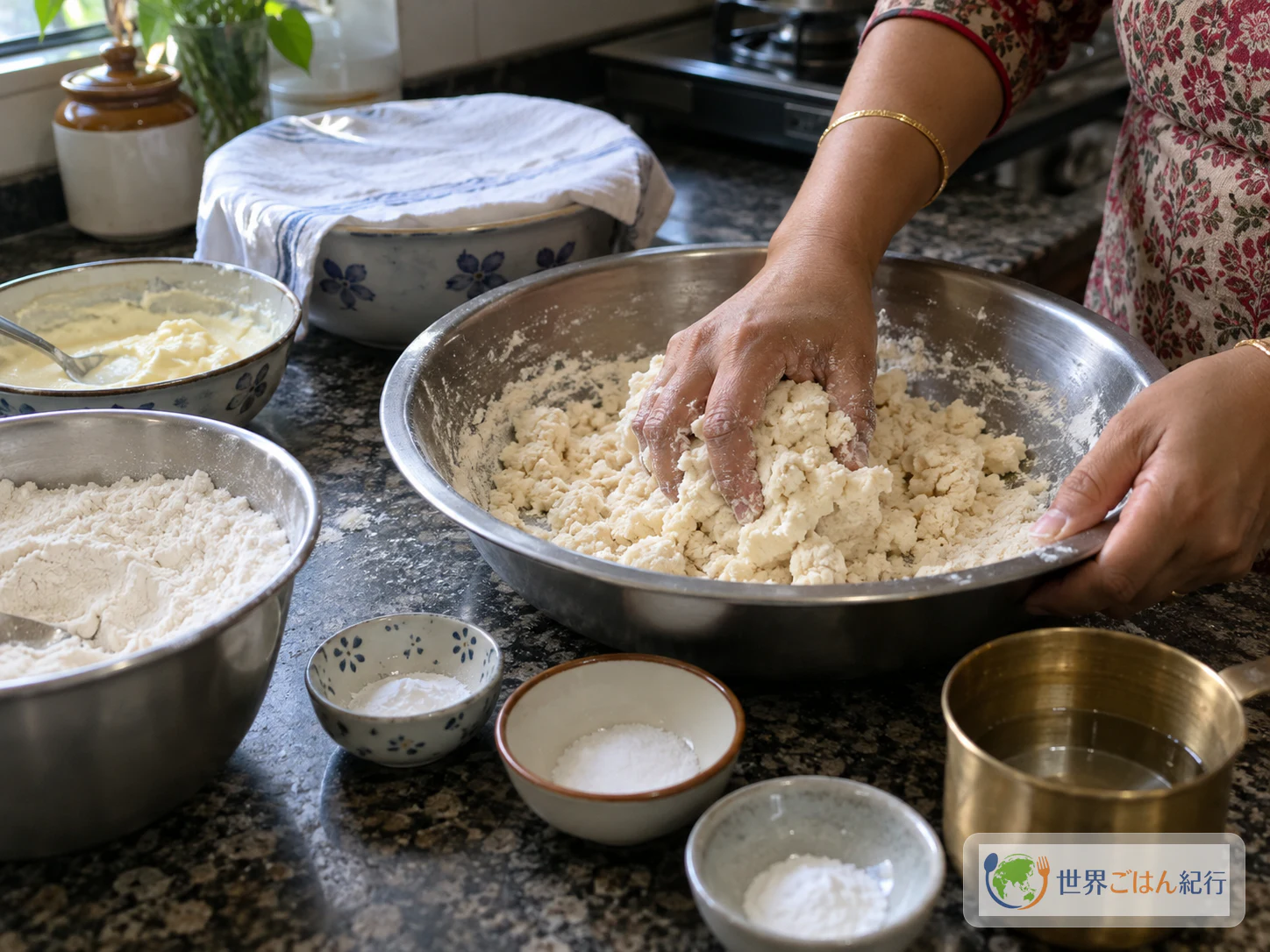
Bring the dough together gently without kneading, fry it slowly over low to medium-low heat until it is cooked through, and soak it while hot in warm syrup so that only a thin glaze sets on the outside.
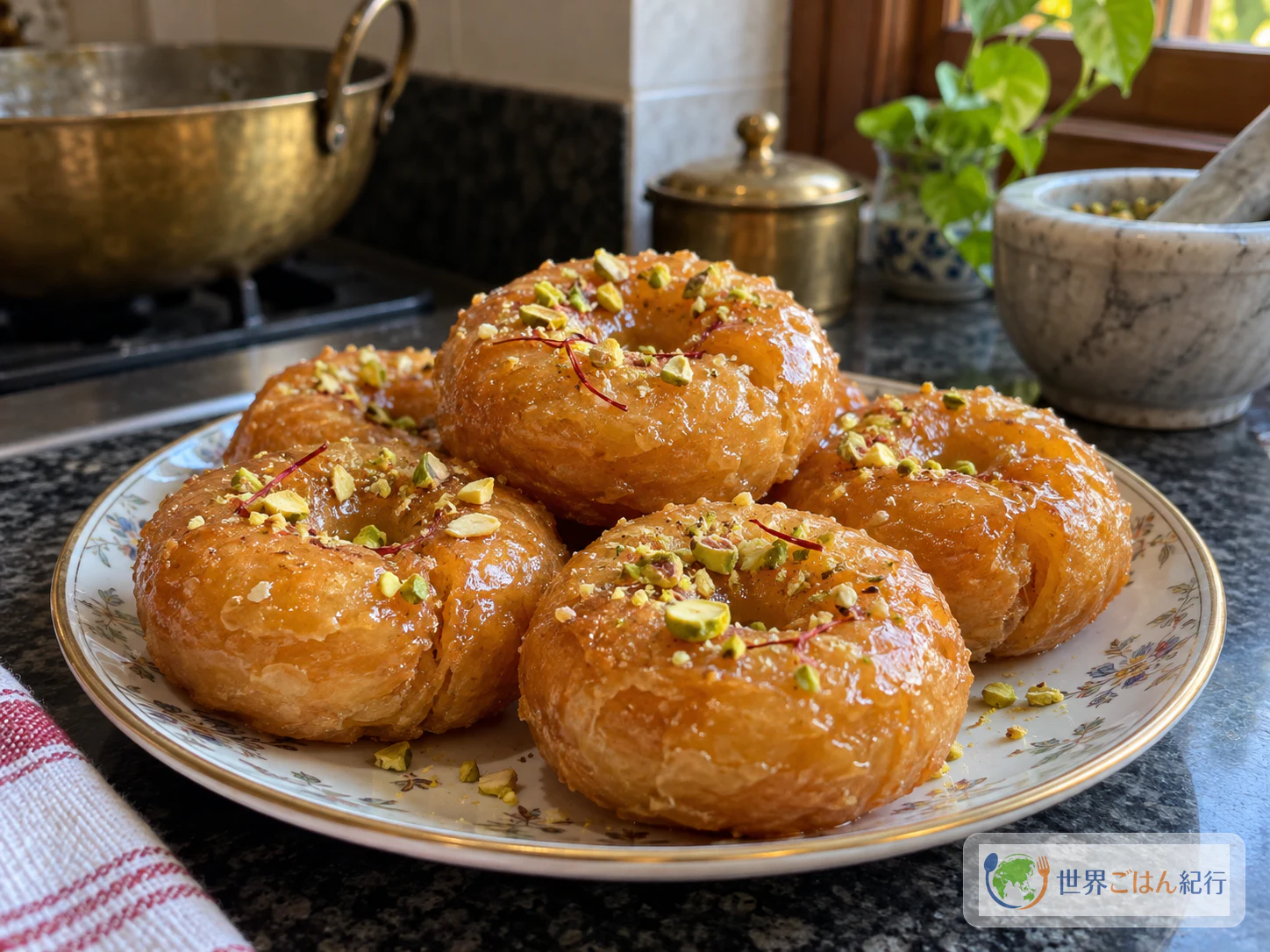
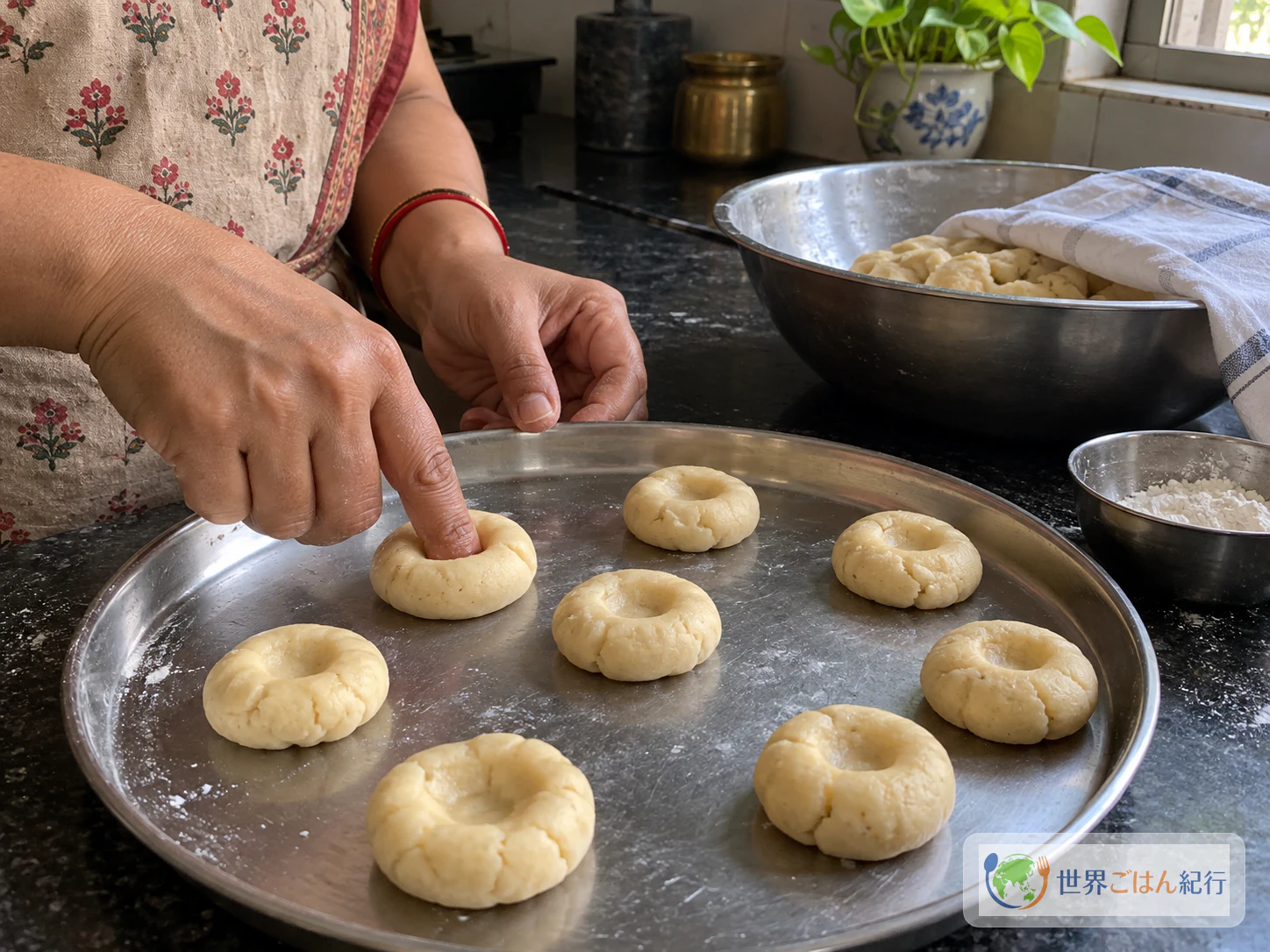
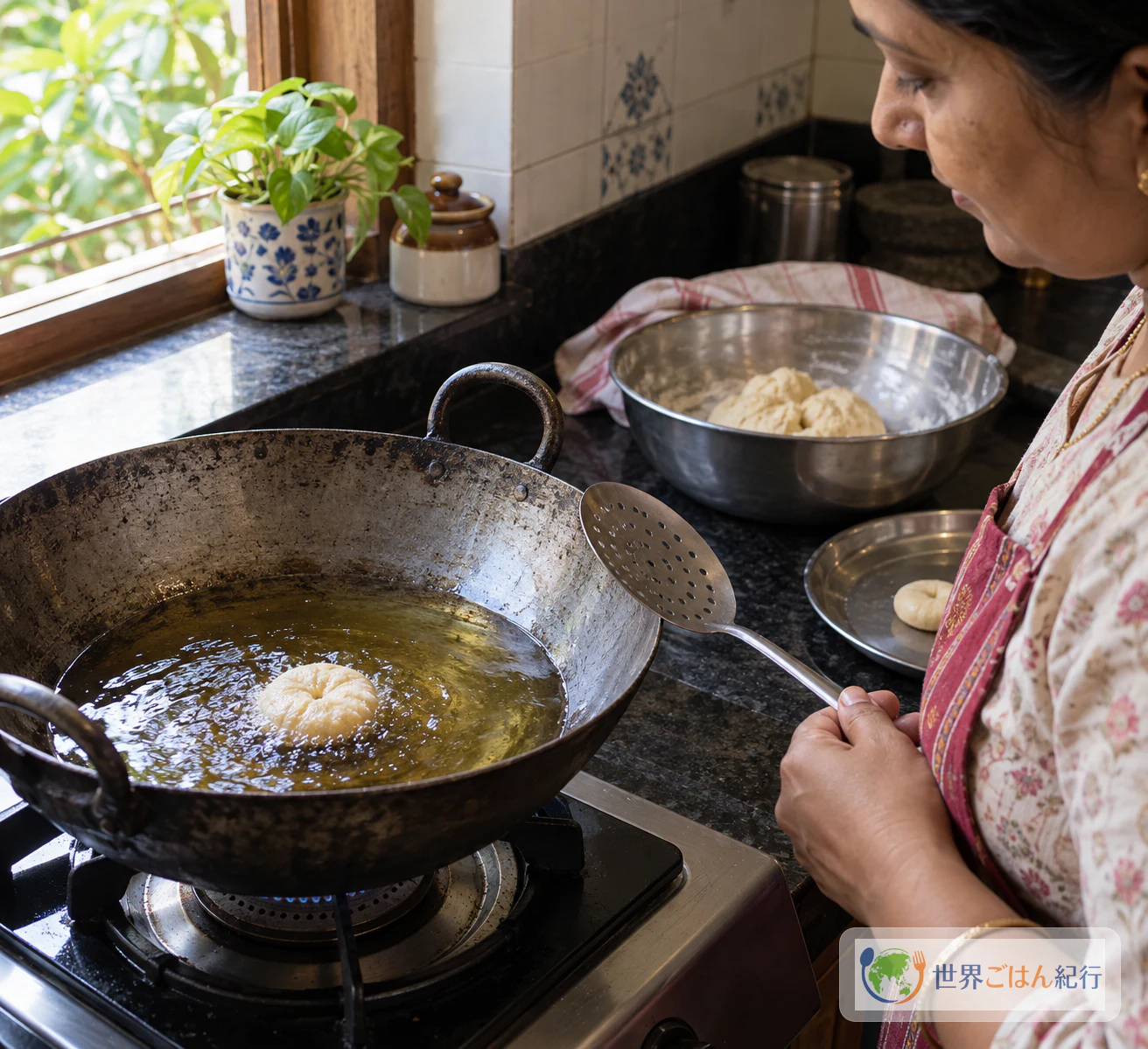
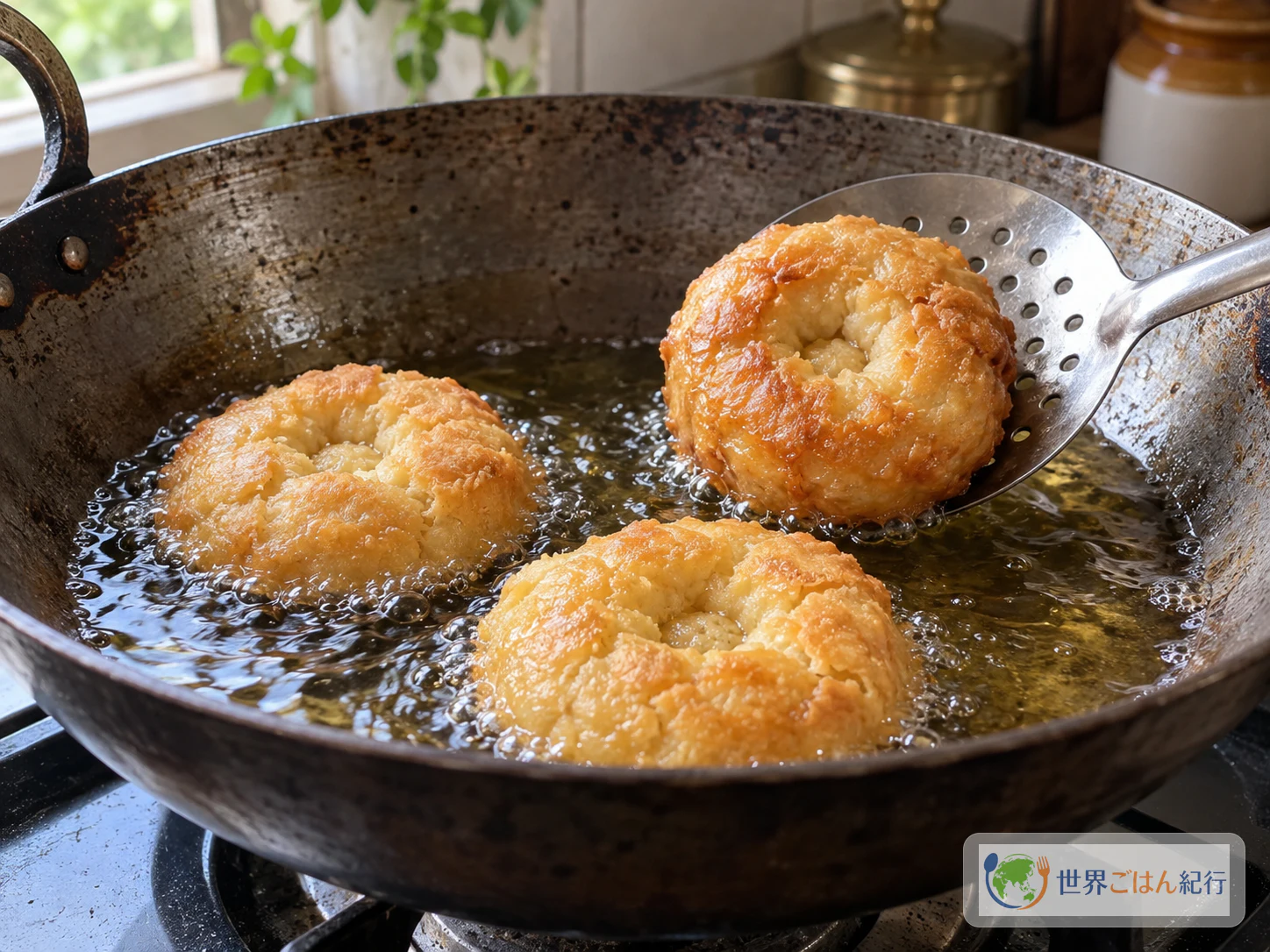
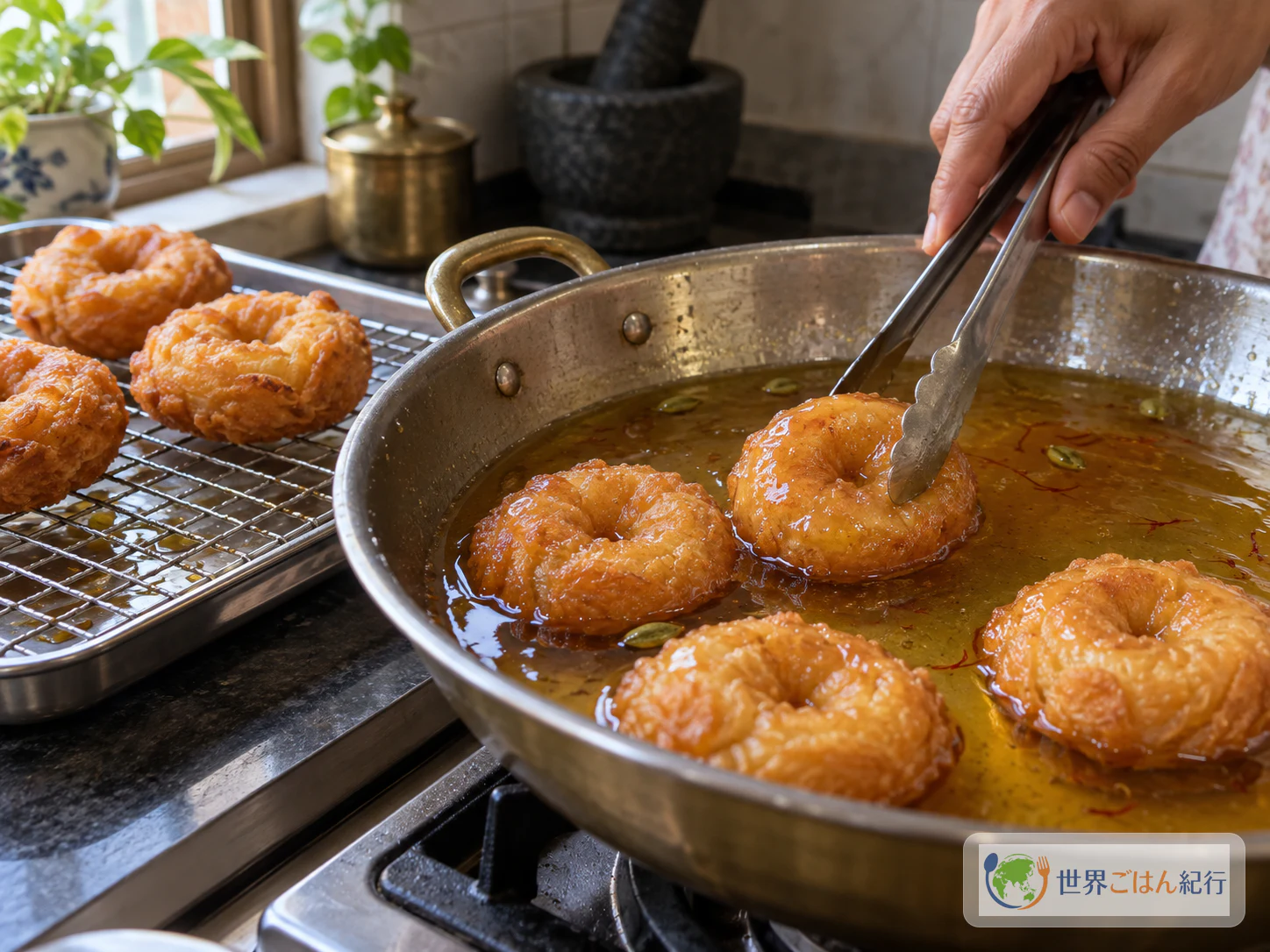
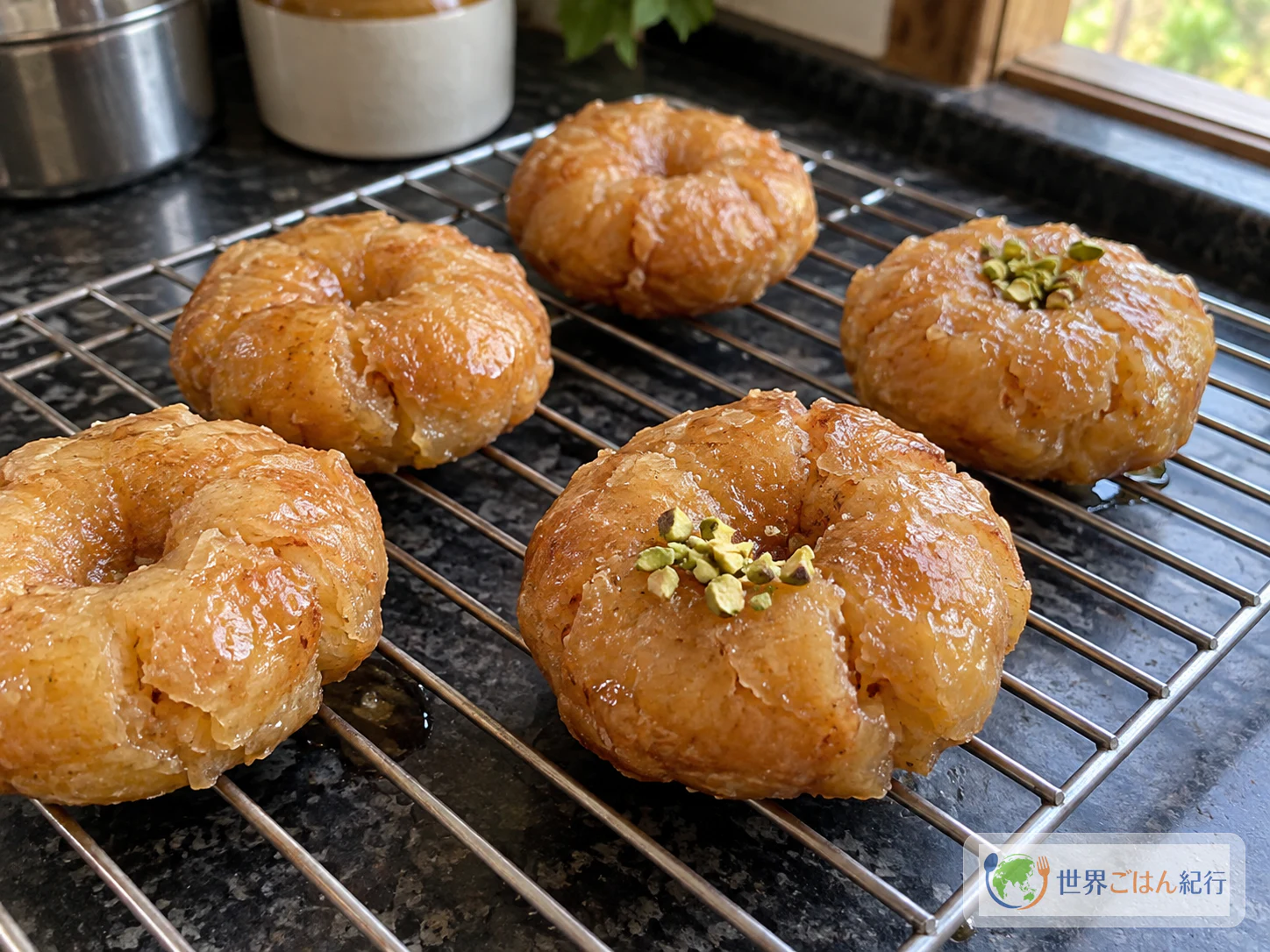
A small round of dough, pressed in the middle with a finger, slides into a pan of oil and slowly rises to the surface. Over a low flame it turns light gold, then a deeper gold, and then it goes into warm syrup scented with cardamom and saffron. As it cools on a rack, the syrup on its surface turns from a glossy coat into a fine sugar crust, and the outline of the sweet changes as the sugar sets.
That is balushahi (बालूशाही), an Indian fried sweet. Its shape, with a dent in the center, can look a little like a doughnut, but this version is something different. The dough is made of maida (all-purpose flour), semi-solid ghee and chilled dahi (yogurt). It is barely worked, fried slowly at low heat, and finished by soaking in a fairly thick sugar syrup. The aim is a crisp outside with a thin, crystallized sugar coating and a tender inside.
This recipe follows a single published formula and method from Dassana's Veg Recipes. Other balushahi recipes with different proportions exist, and they are introduced in the culture section below without being mixed into this one. For more dishes from the same country, see the India page.
This recipe has not been kitchen-tested by Sekai Gohan. The amounts, the 15-minute rest, the 12–15 minutes of frying per batch and the 14–15 minutes of soaking are the source recipe's own guides. Pans, burners and the size of each piece all change the result, so judge by color, firmness and how the dough behaves, not by the clock alone.
Ingredients for Balushahi
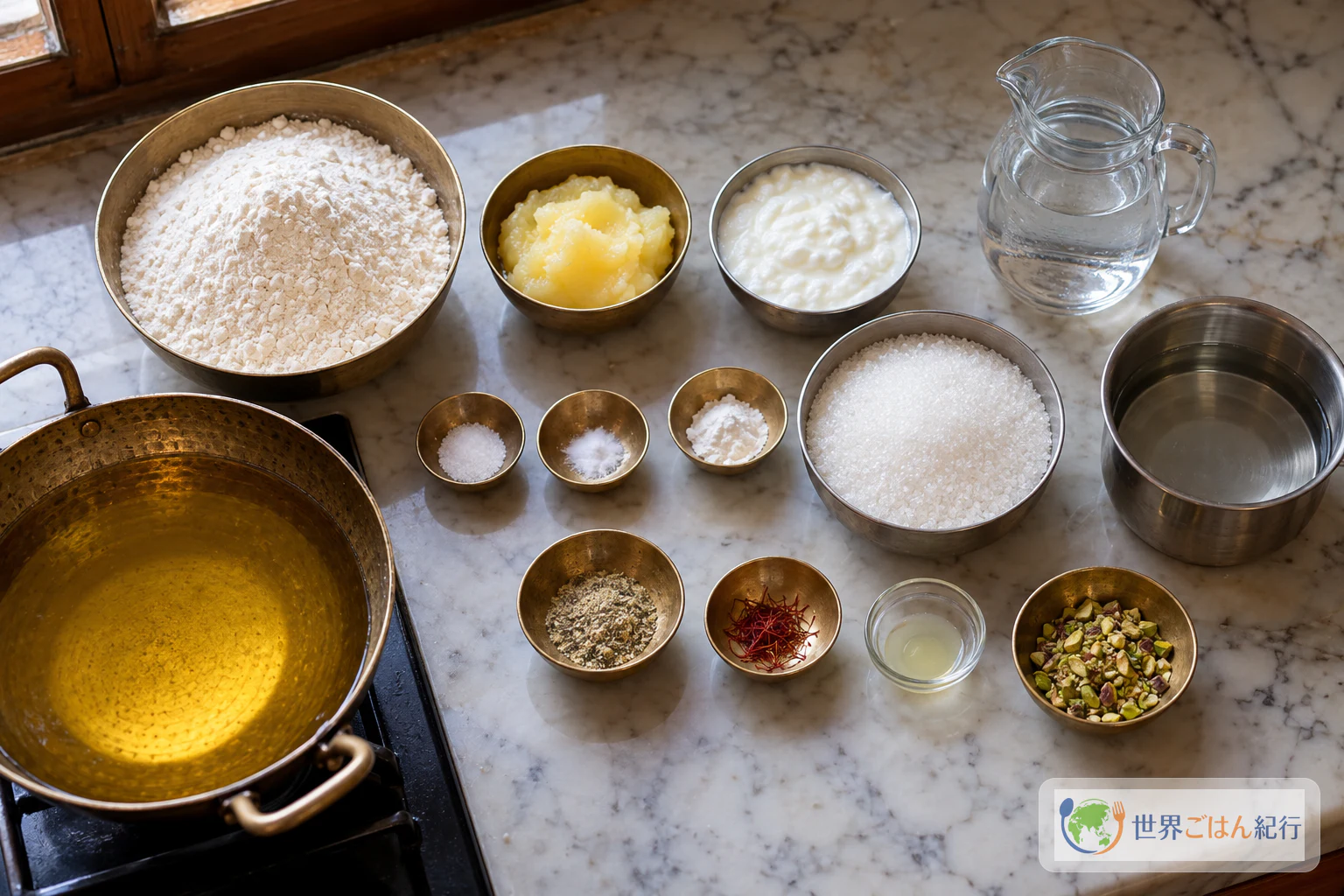
This makes about 17 pieces; that number has not been measured here. The cold water is a maximum guide, not an amount to pour in all at once.
This recipe contains wheat and milk (ghee and yogurt). If you use pistachios, it also contains tree nuts.
Nutrition values are not given for this recipe, because how much oil the sweets absorb and the finished weight have not been measured.
Choosing and Substituting
- Flour: Use maida (all-purpose flour). Avoid bread flour; a softer flour suits this dough better, but treat any other flour as an approximation whose texture may differ.
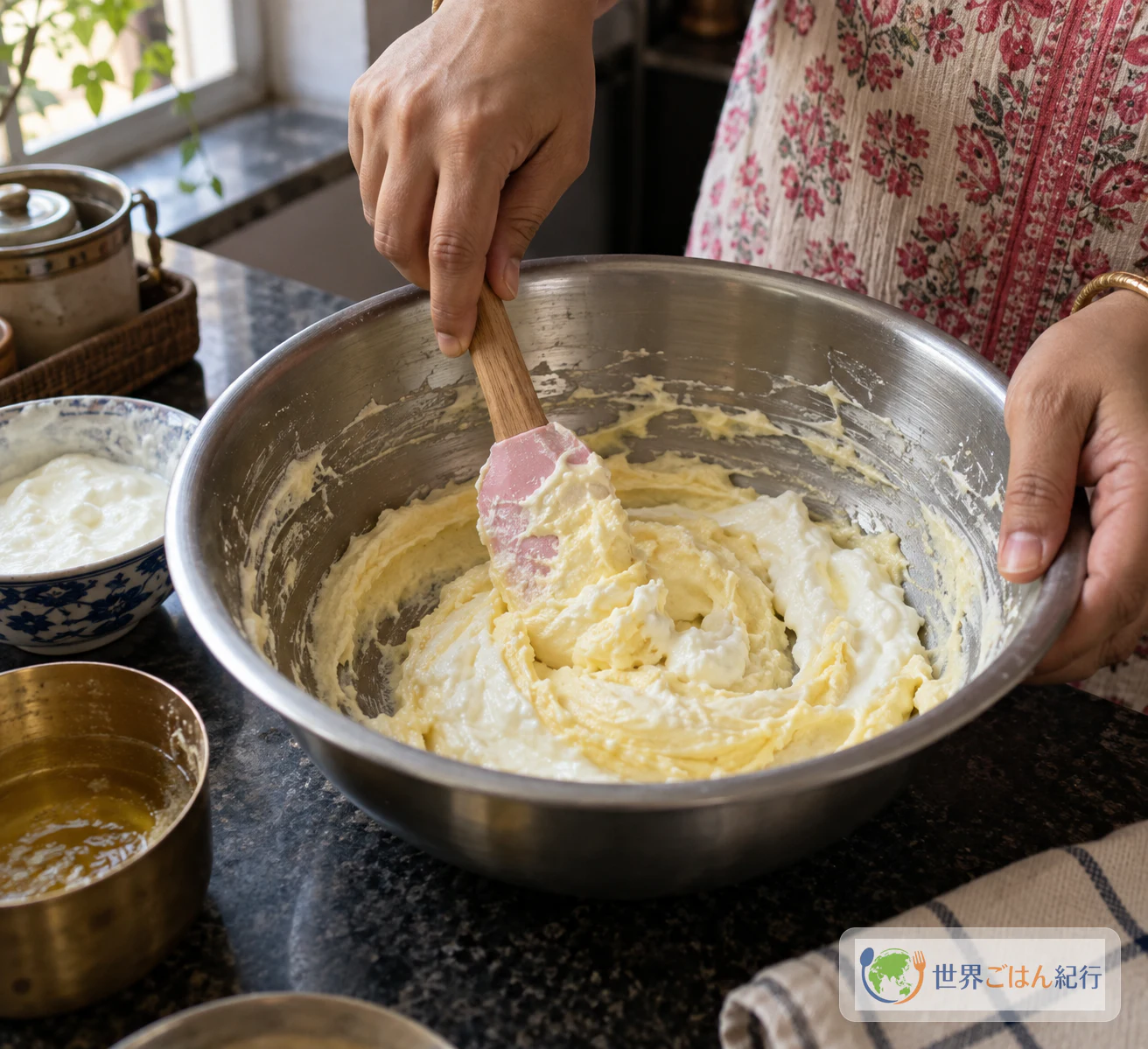
- Ghee: Use ghee that is semi-solid, soft enough to beat smooth but not melted. Unsalted butter differs in aroma and water content, so it is not confirmed as a same-weight replacement.
- Yogurt: Plain yogurt can stand in for dahi. How much whey it carries changes how much cold water the dough needs, which is why the water goes in a little at a time.
- Saffron: You can leave it out and keep the cardamom; the syrup will smell different.
- Frying fat: Use oil or ghee. A neutral vegetable oil gives a lighter aroma than ghee.
- Pistachios: Optional. The sweet is complete without nuts.
Equipment
- Mixing bowl
- Clean cloth or cover for resting the dough
- Small saucepan for the syrup
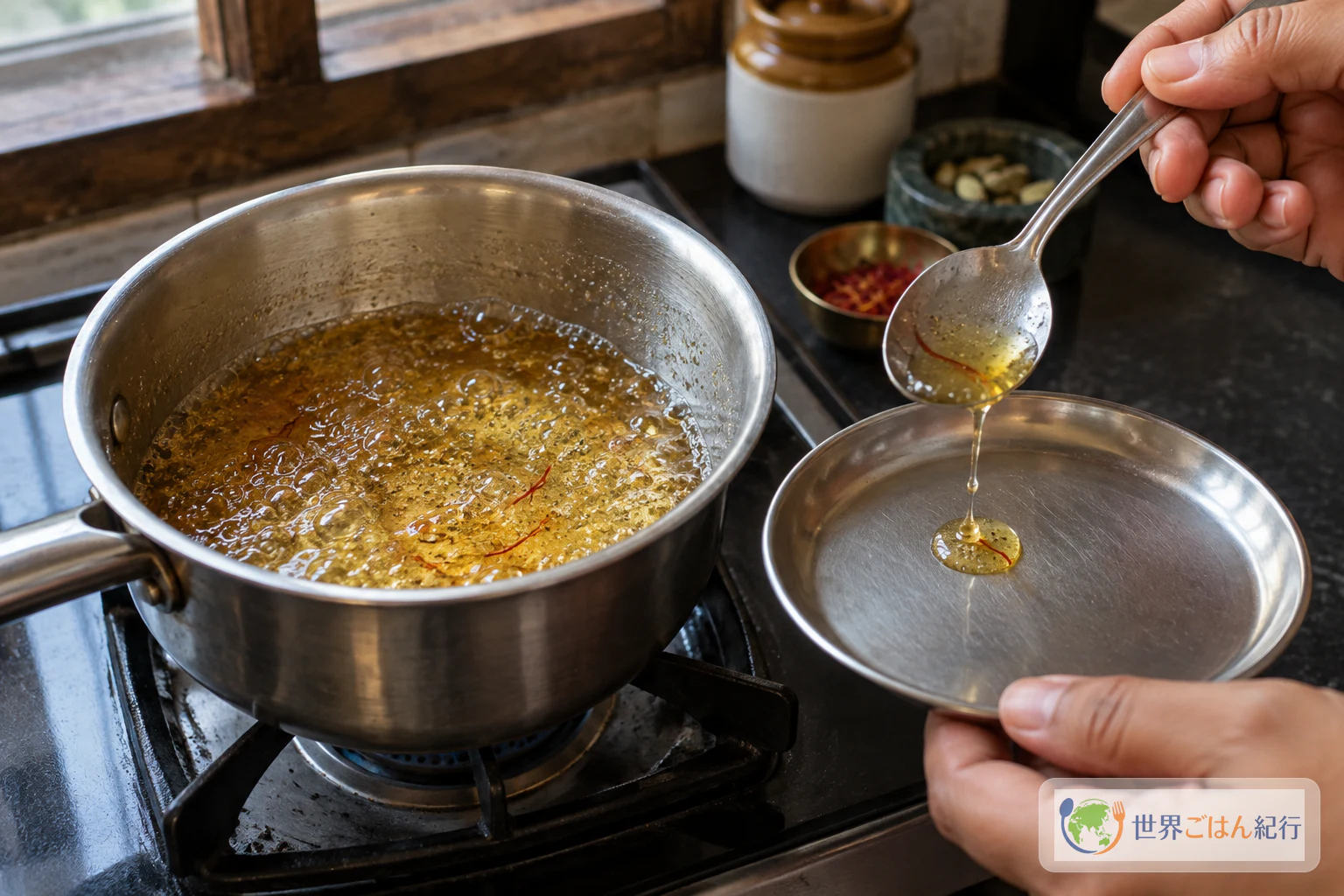
- Spoon and small plate for testing a cooled drop of syrup
- Kadai or deep pan for frying
- Slotted spoon
- Paper towels
- Wire rack or plate for cooling
Method: Gentle Dough, Slow Frying, Warm Syrup
Stop mixing the dough as soon as no dry flour remains. Keep the oil at a level where a test piece rises slowly. Put the sweets into the syrup while they are still hot.
The source page lists separate prep, cook and rest times, but they do not add up to its stated total, so no total time is given here. How long the whole batch takes depends on how many pieces you make and how many fit in your pan.
Troubleshooting
| Problem | Likely cause | What to do |
|---|---|---|
| The dough turned out hard | It was kneaded or pressed too firmly | Stop mixing as soon as no dry flour remains, and use light pressure |
| The dough is sticky | Too much water for the yogurt you used | Add water gradually next time; the source suggests adding 1–2 tbsp flour to fix it |
| The outside browned before the inside cooked | The oil was too hot | Use the slow-rising test piece and keep the heat at low to medium-low |
| The outside is sticky after soaking | The syrup was too thin, so the sweets absorbed too much | Cook the syrup until a cooled drop feels sticky between your fingers |
| The syrup crystallized in the pan | The syrup set before or during soaking | The source suggests adding 2–3 tbsp water and reheating over low heat |
| A white sugar crust formed as the sweets cooled | Expected result | This crystallized glaze is the finish the source describes |
Variations
- Cardamom only: Leave out the saffron and keep the cardamom. The source lists saffron as optional; the aroma and color will be different.
- No pistachios: Skip the garnish. The sweet is complete without it.
- Fried in oil instead of ghee: The source allows either. Oil gives a lighter aroma than ghee.
- Adjusting the water: Use less or more of the 8–9 tbsp cold water depending on how much whey your yogurt carries.
The chhena and semolina balushahi described below is a separate recipe, not an alternative formula for this one.
Balushahi, Badusha and Regional Versions
Balushahi is treated here as the North Indian name. Dassana's Veg Recipes describes a closely related sweet known as badusha in South India and explains that regional versions differ. Those differences are presented as that site's description; this recipe does not claim that every region makes the same sweet with the same proportions or texture.
The same name can also cover quite different recipes. The Department of Tourism of the Government of Bihar features the balushahi of Runni Saidpur, in Sitamarhi district, as a local sweet made from chhena (fresh curd cheese), flour and semolina and soaked in sugar syrup. The department calls it a "centuries-old tradition," but it gives no dates or historical records to support that, so it is not treated here as established history. NDTV Food publishes yet another version, in English and in Hindi, using 1/2 kg maida, 300g ghee, 1/2 kg sugar and 1/8 tsp baking soda, with no yogurt. That recipe fries over high heat before lowering it and soaks the sweets in one-thread syrup for 5–10 minutes. None of these is presented as the single authentic balushahi.
The origin and the meaning of the name balushahi could not be confirmed from these sources, so they are left open here.
Serving and Storage
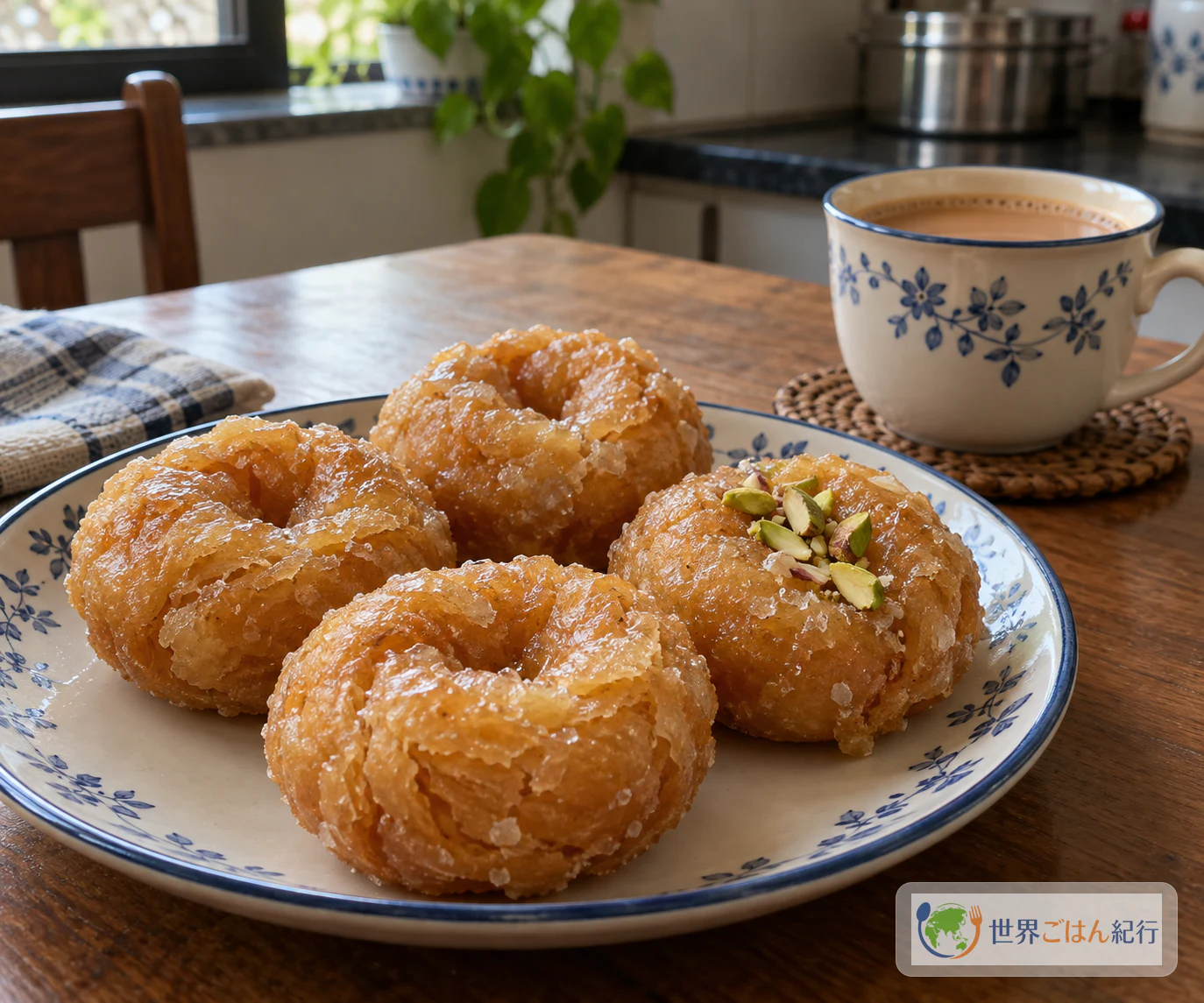
Serve balushahi once it has cooled to room temperature and the sugar glaze has set.
For storage, the source recipe's author suggests keeping balushahi in an airtight container at room temperature for 5–6 days. That is the author's own suggestion, not an independently confirmed food-safety guideline, and storage conditions vary. If you make them ahead, use a clean airtight container and check their condition before eating.
Frequently Asked Questions
How is balushahi different from a doughnut?
It can look similar because of the dent in the center, but this version is fried slowly at low heat and then soaked in syrup to form a thin sugar glaze. The dent is pressed in with a finger; it does not go all the way through.
Should I knead the dough?
No. Bring it together only until no dry flour remains, with light pressure, then cover it and rest it for 15 minutes. Working it hard tends to make the dough tough.
How long should I fry each batch?
The source's guide is 12–15 minutes per batch over low to medium-low heat. Also watch for one side setting and turning light gold before you flip, and for an even golden brown, crisp finish. Pans and piece sizes differ, so use color and firmness as well as time.
How do I know the syrup is thick enough?
The source aims for a half-string or one-string syrup. Let a small amount cool on a plate and check that it feels sticky between your fingers. Do not touch the hot syrup. If the syrup is too thin, the sweets absorb too much and the outside turns sticky.
Is badusha a different sweet?
Badusha is the name described for a closely related sweet in South India. The shared or overlapping name does not mean every region uses the same recipe.
How long does balushahi keep?
The source recipe's author suggests 5–6 days at room temperature in an airtight container. Treat that as the author's suggestion rather than a guarantee, keep the container clean, and check the sweets' condition before eating.
Sources
- Dassana's Veg Recipes, "Balushahi Recipe | Badusha Sweet." The main recipe used here: ingredients and amounts, handling of ghee and yogurt, the unkneaded dough and 15-minute rest, syrup consistency, low to medium-low frying for 12–15 minutes per batch, soaking for 14–15 minutes, the estimated yield of about 17 pieces, the author's storage suggestion, and the site's description of the names balushahi and badusha. https://www.vegrecipesofindia.com/balushahi-recipe-badusha-recipe/
- NDTV Food / Archana Umar, "Balushahi Recipe." A separate recipe with different proportions and no yogurt, cited only as an example of another version. https://food.ndtv.com/recipe-balushahi-219651
- NDTV Food, "बालूशाही रेसिपी: Balushahi Recipe in Hindi." The Hindi version of the same publisher's alternative recipe. https://food.ndtv.com/recipe-balushahi-hindi-951321
- Department of Tourism, Government of Bihar, "BALUSHAHI." The Runni Saidpur balushahi presented as a local sweet made with chhena, flour and semolina and soaked in sugar syrup. https://tourism.bihar.gov.in/en/experiences/food-and-cuisine/sweet/balushahi