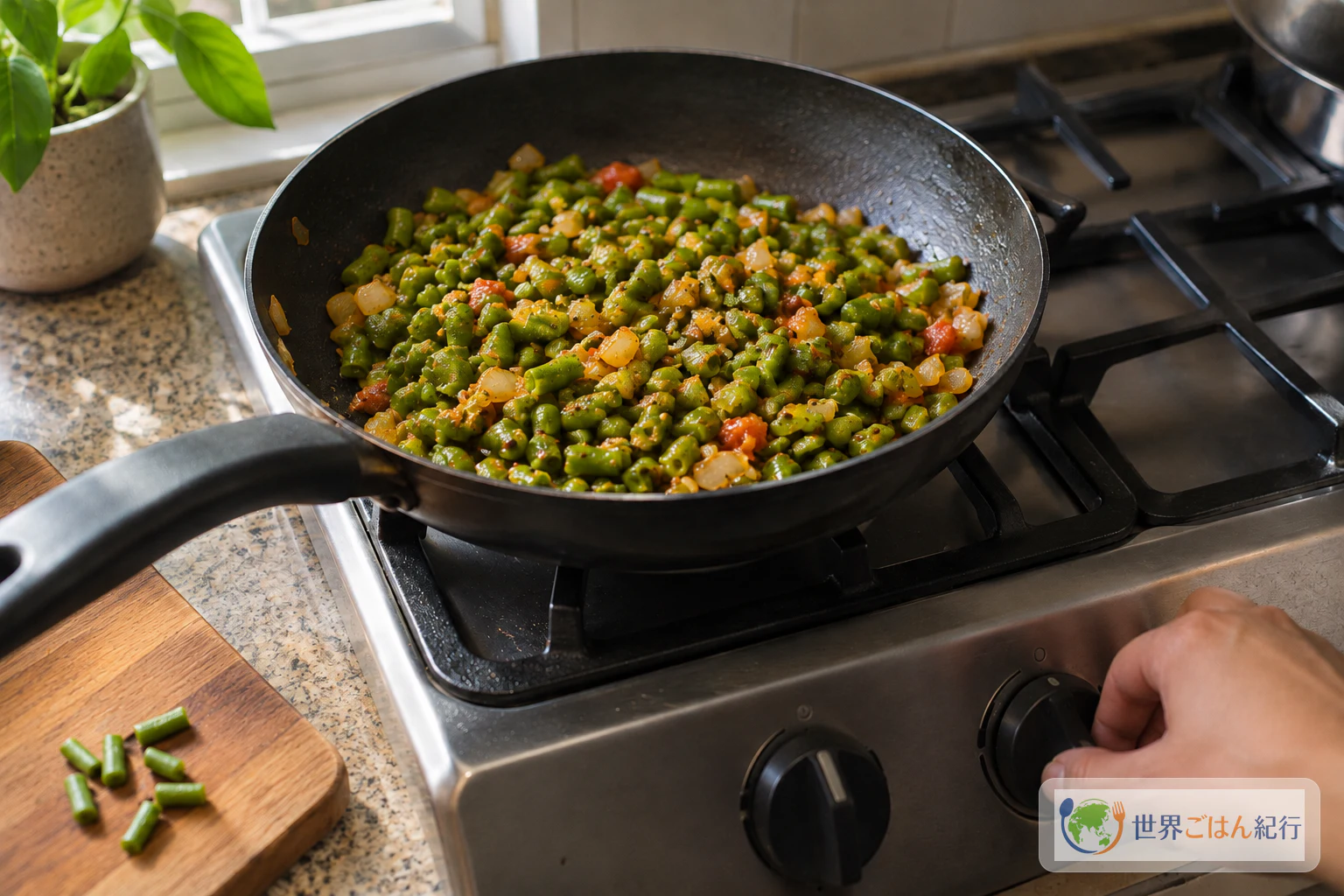
Beans Poriyal: Green Beans, a Spluttering Tempering and Coconut Added Last
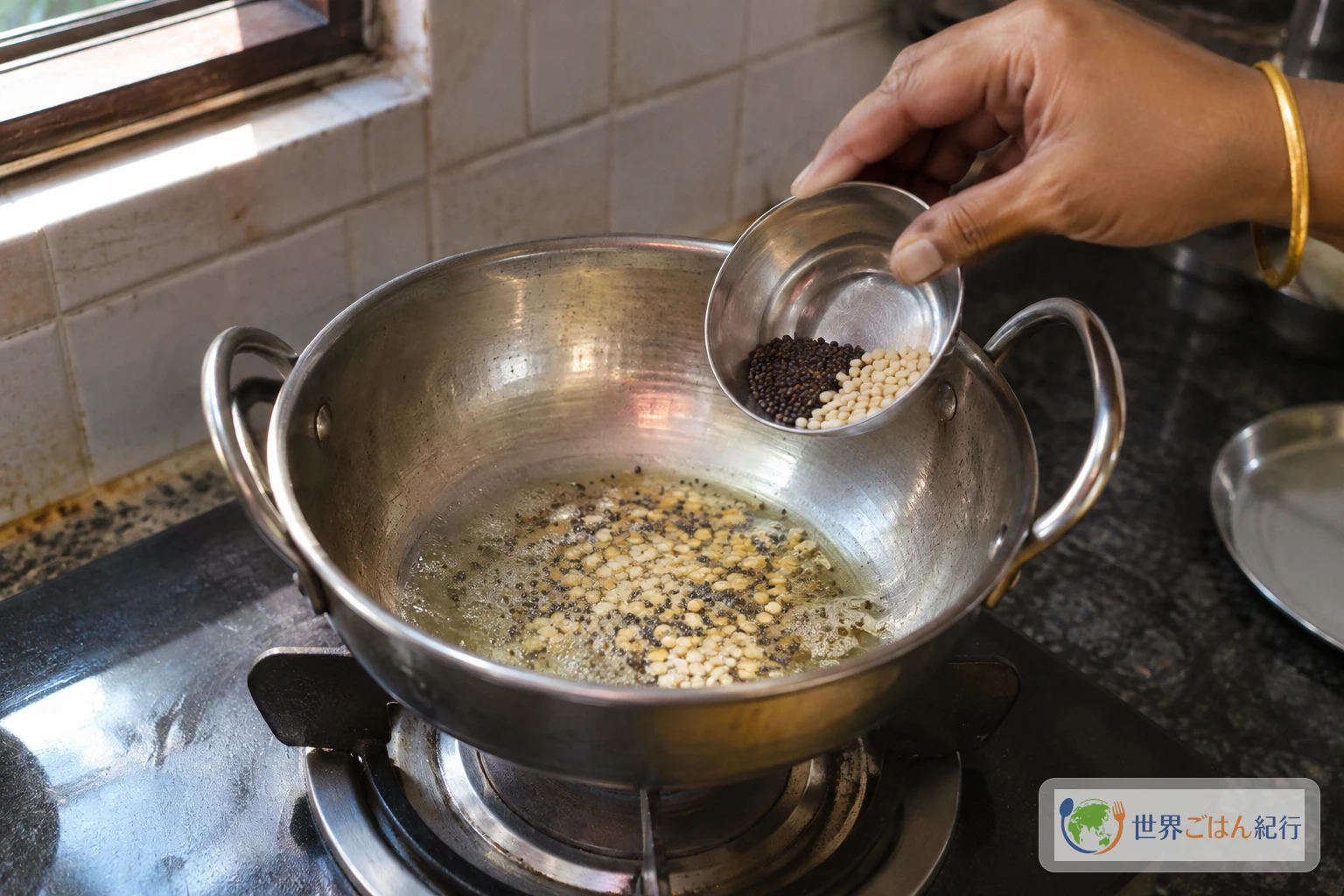
Temper the mustard seeds and urad dal on low heat without burning them, cook the beans until tender, and add the coconut only when no free water is left in the pan. Then mix and switch off the heat.
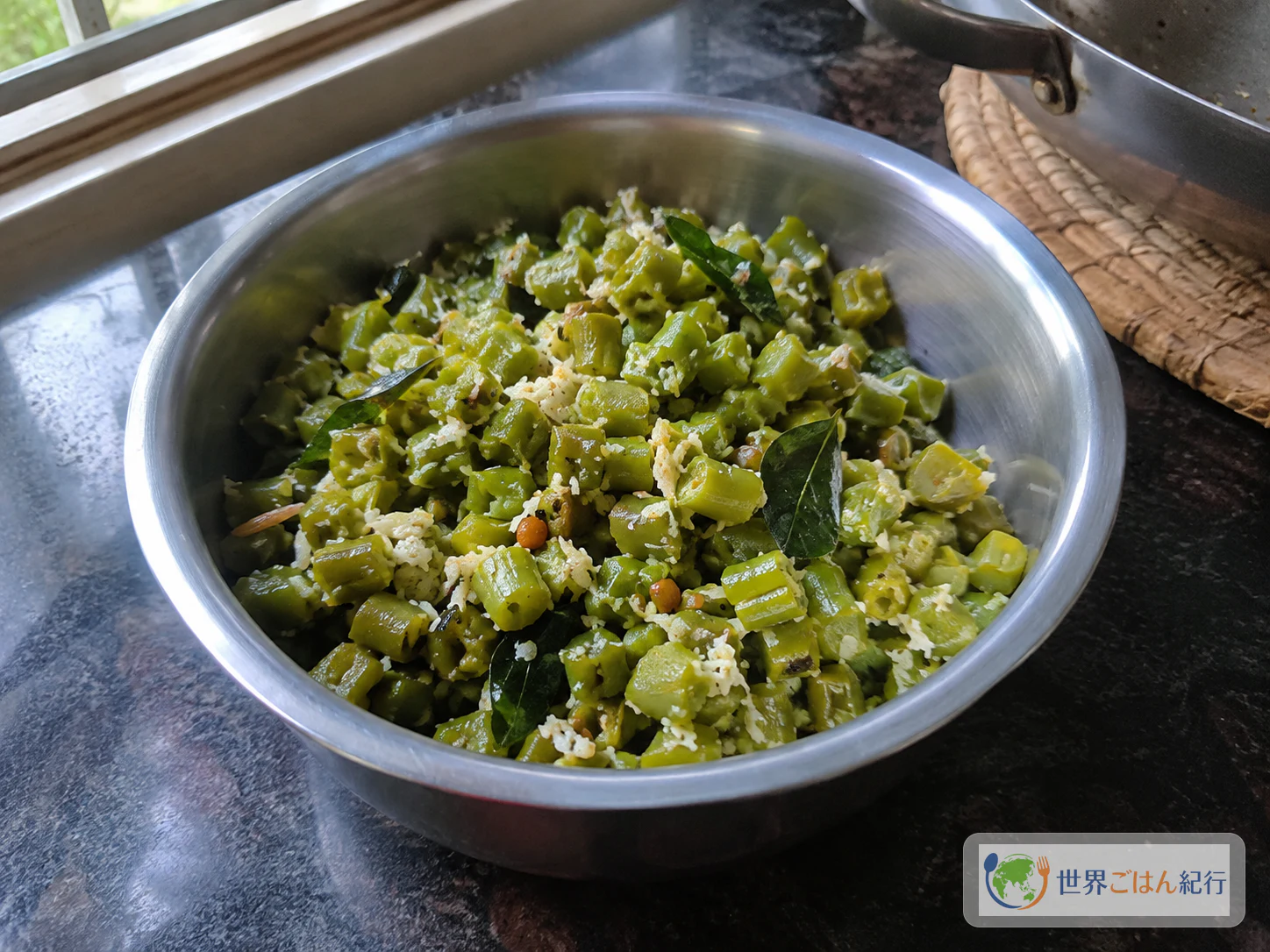
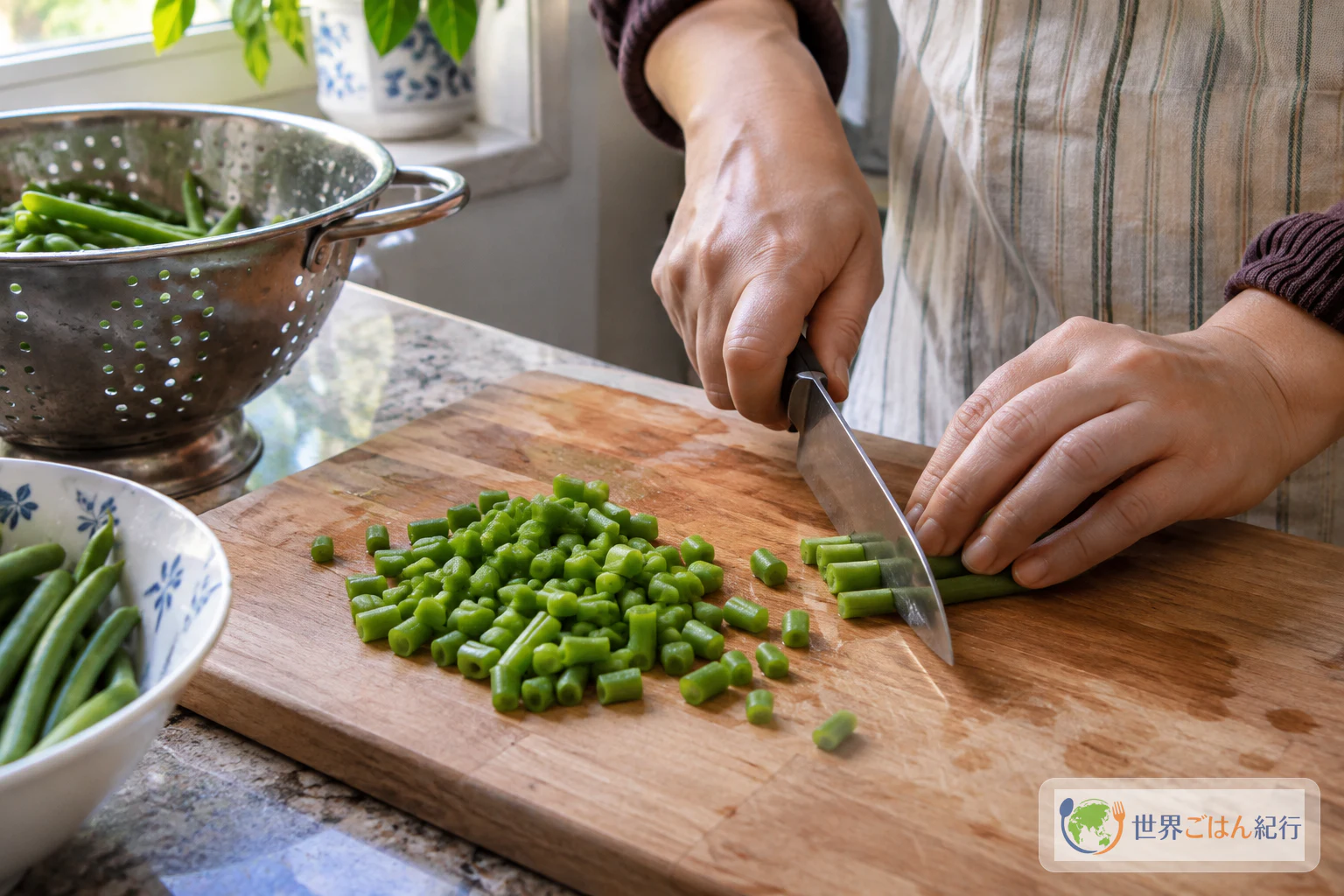
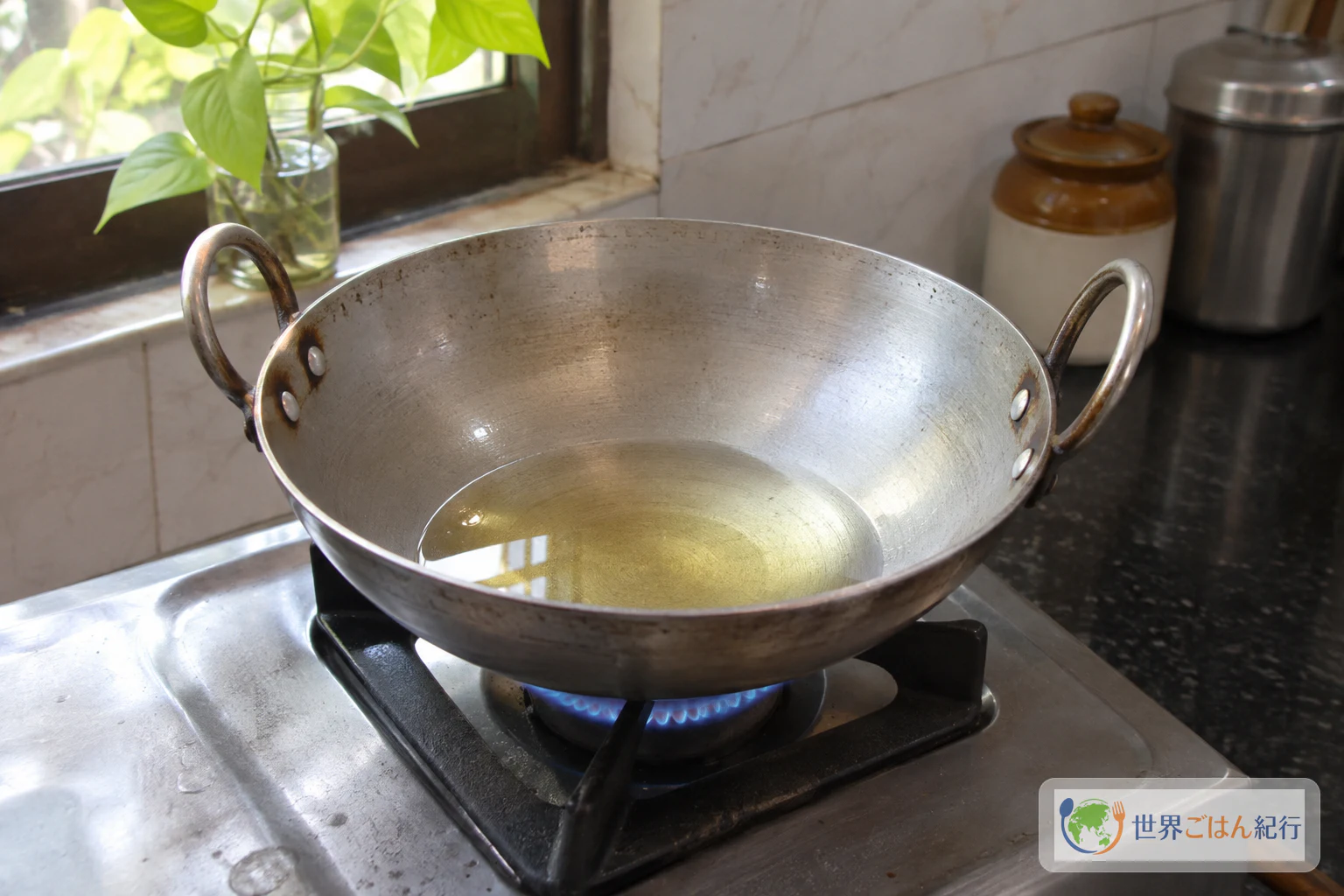
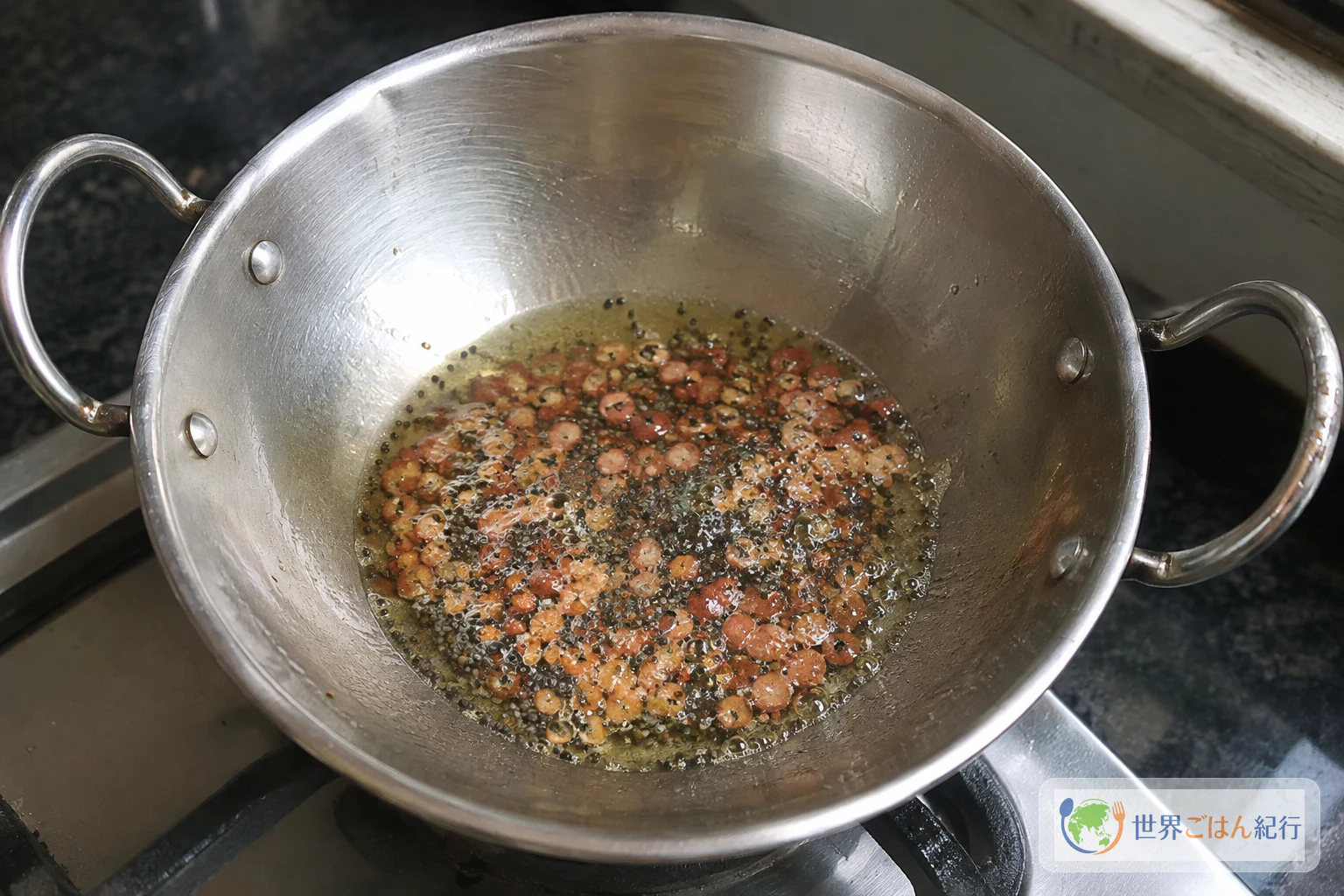
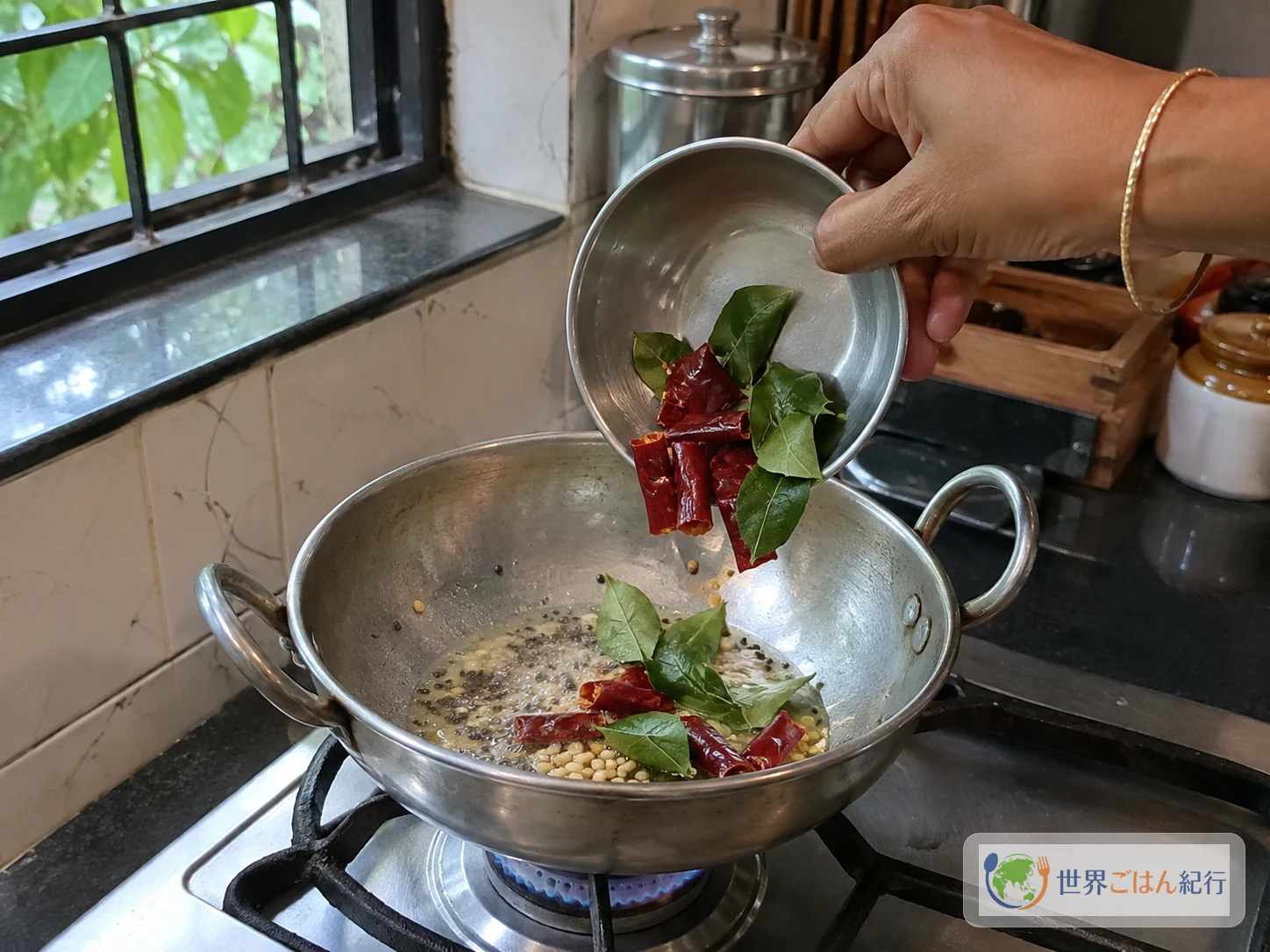
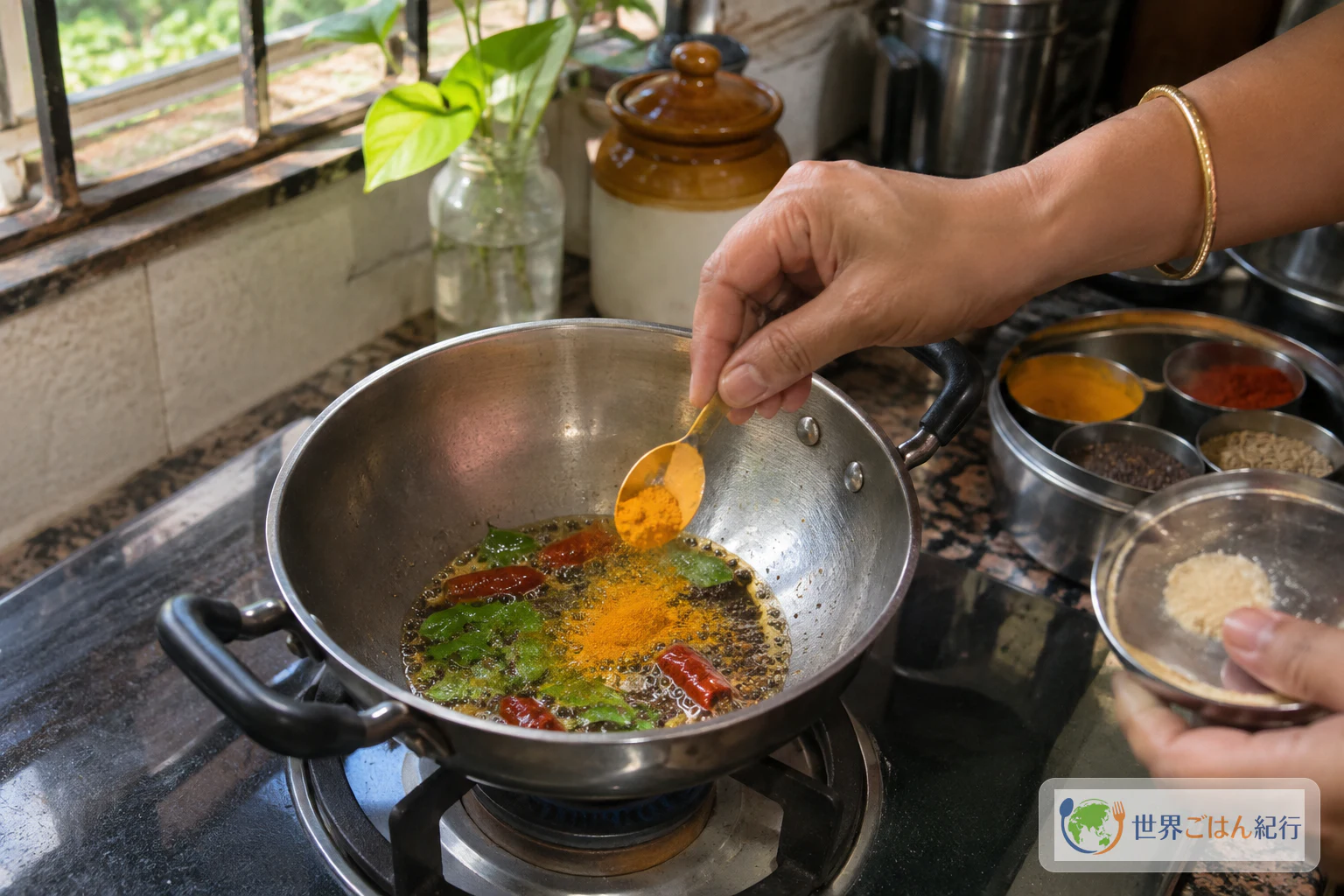
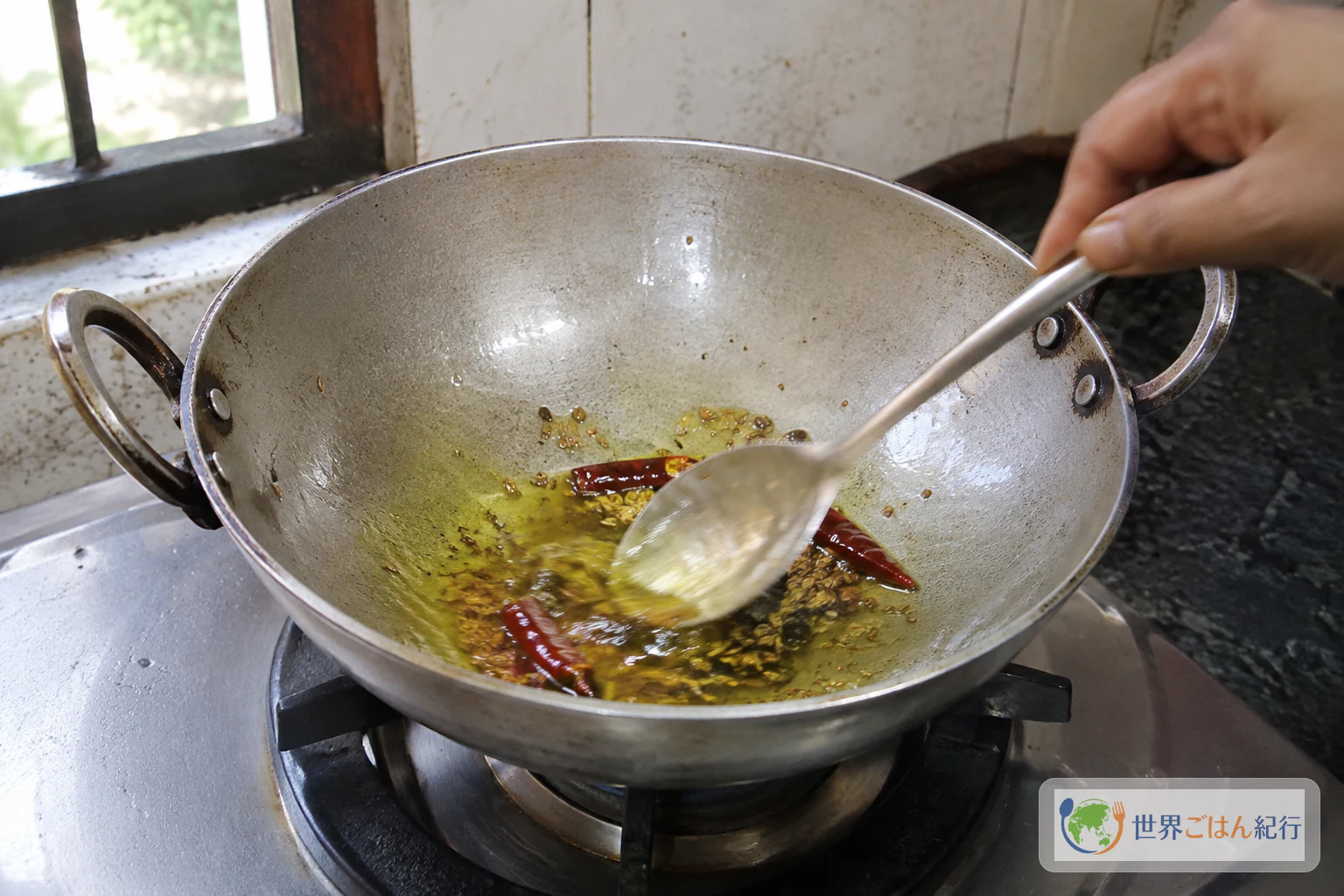
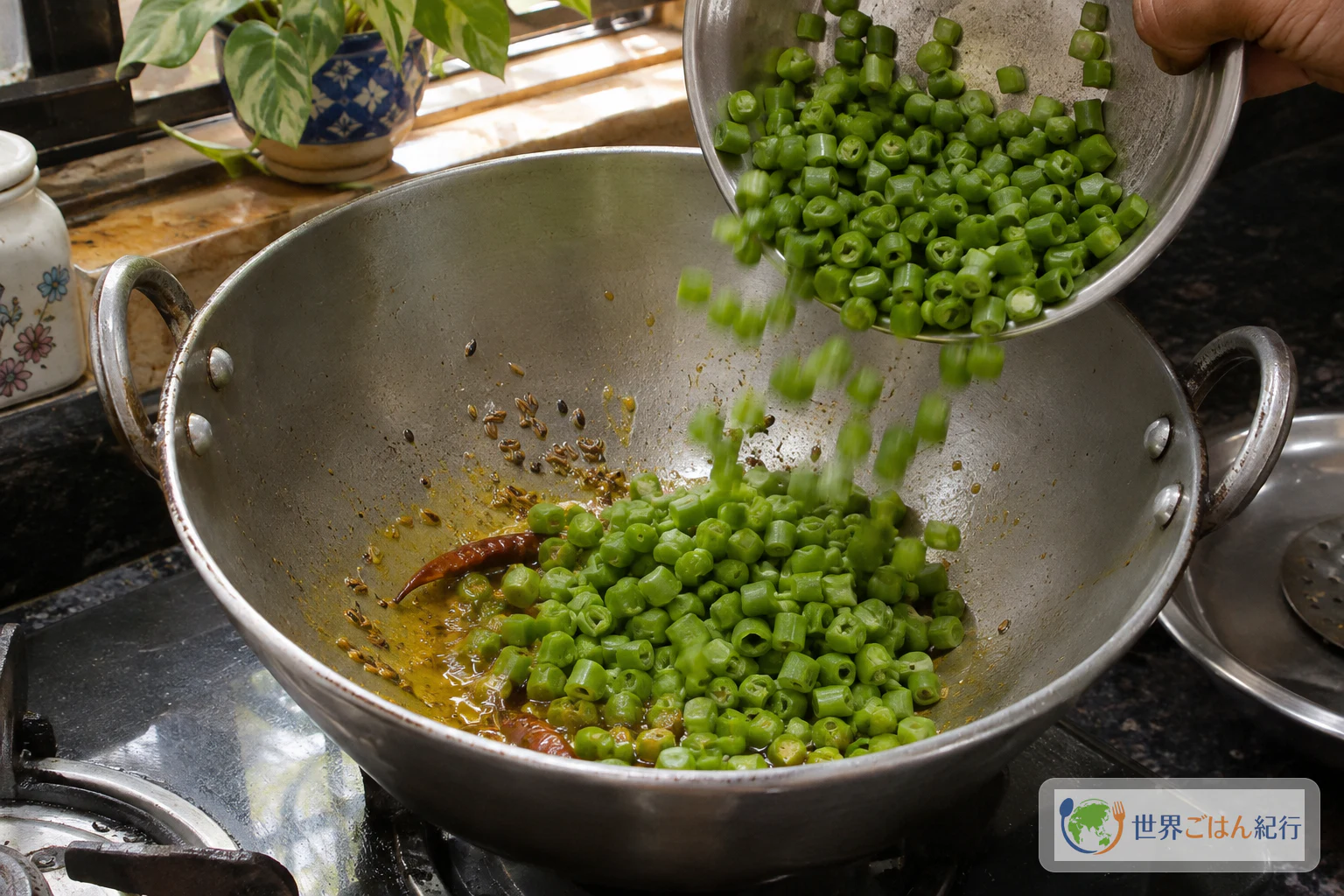
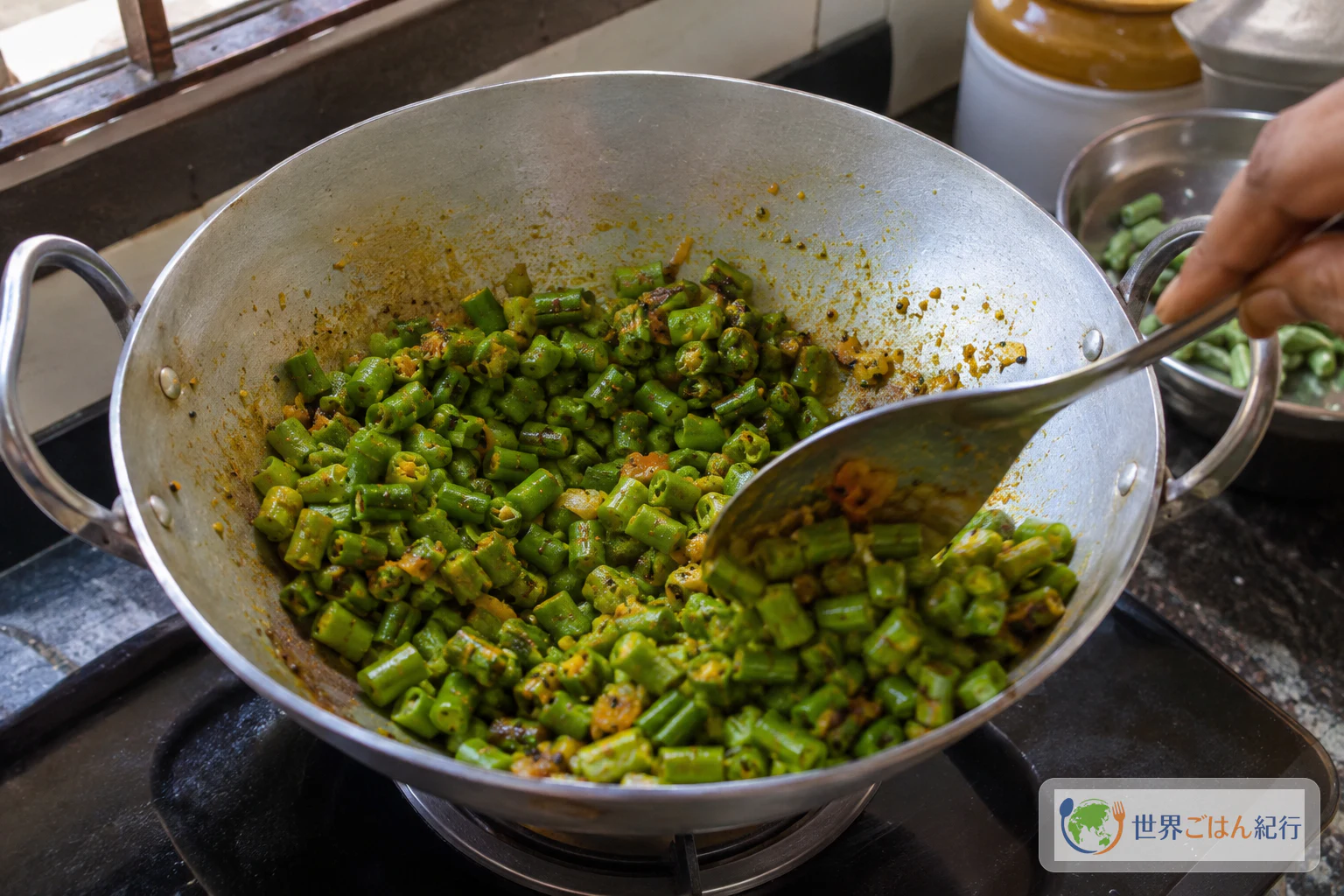
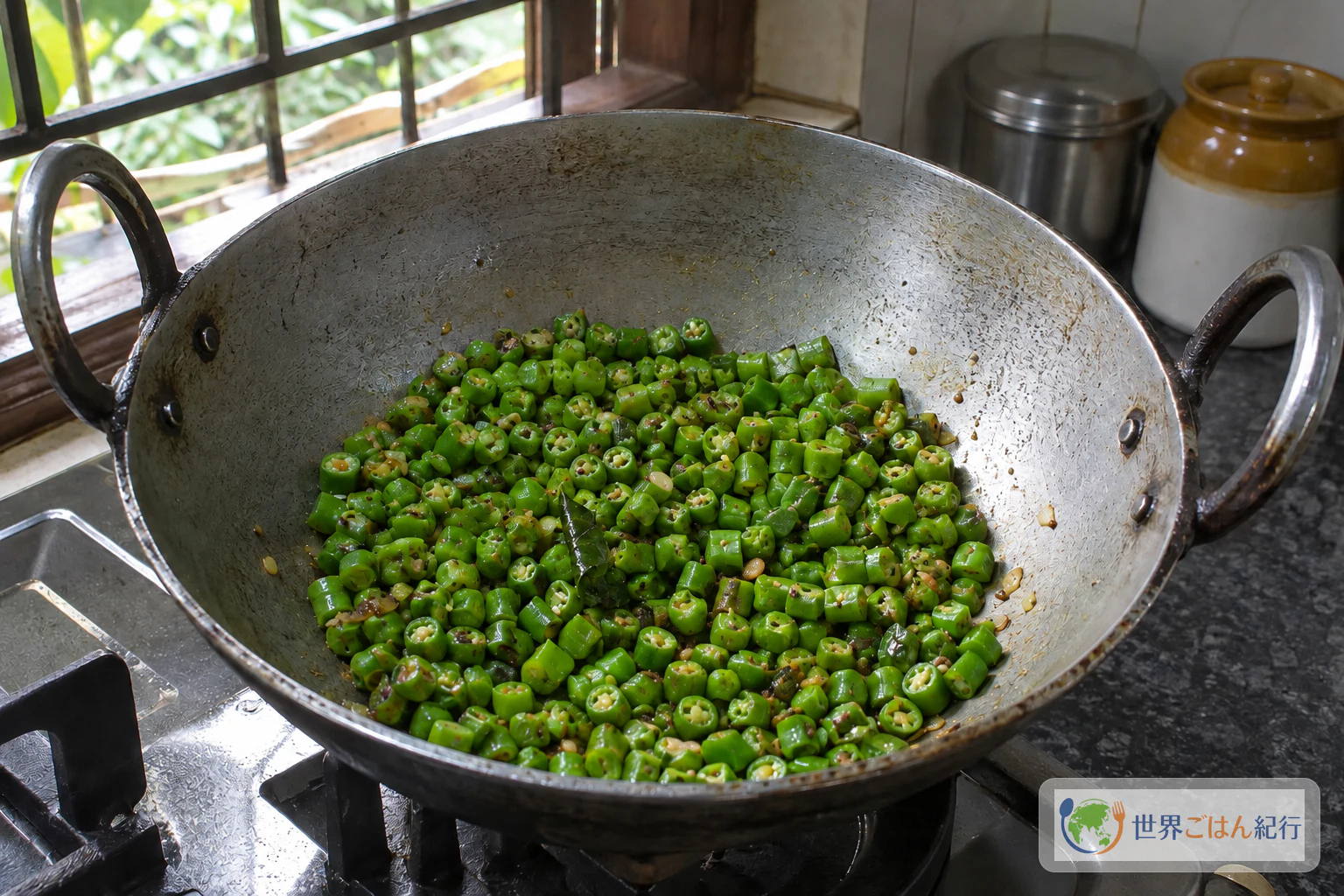
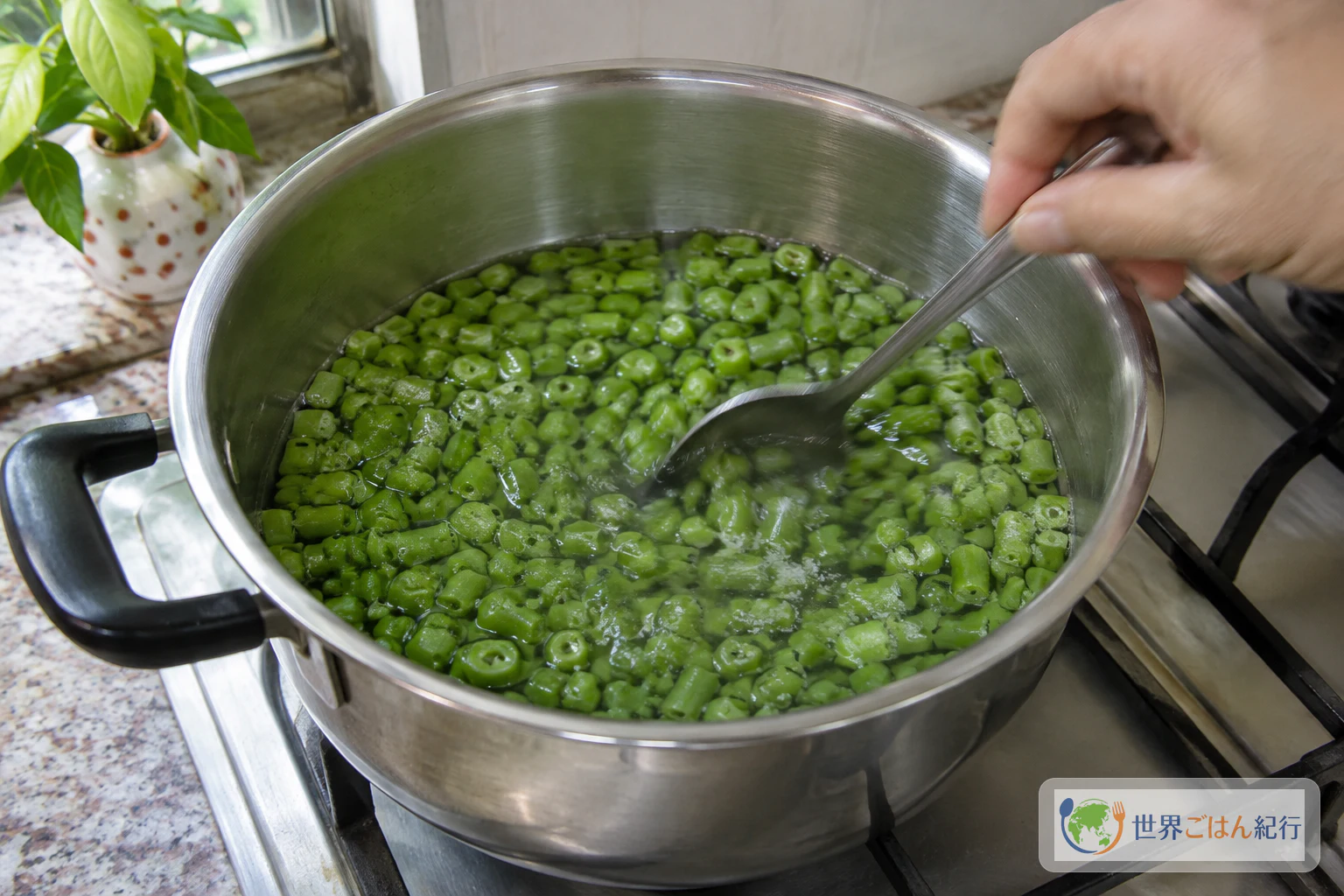
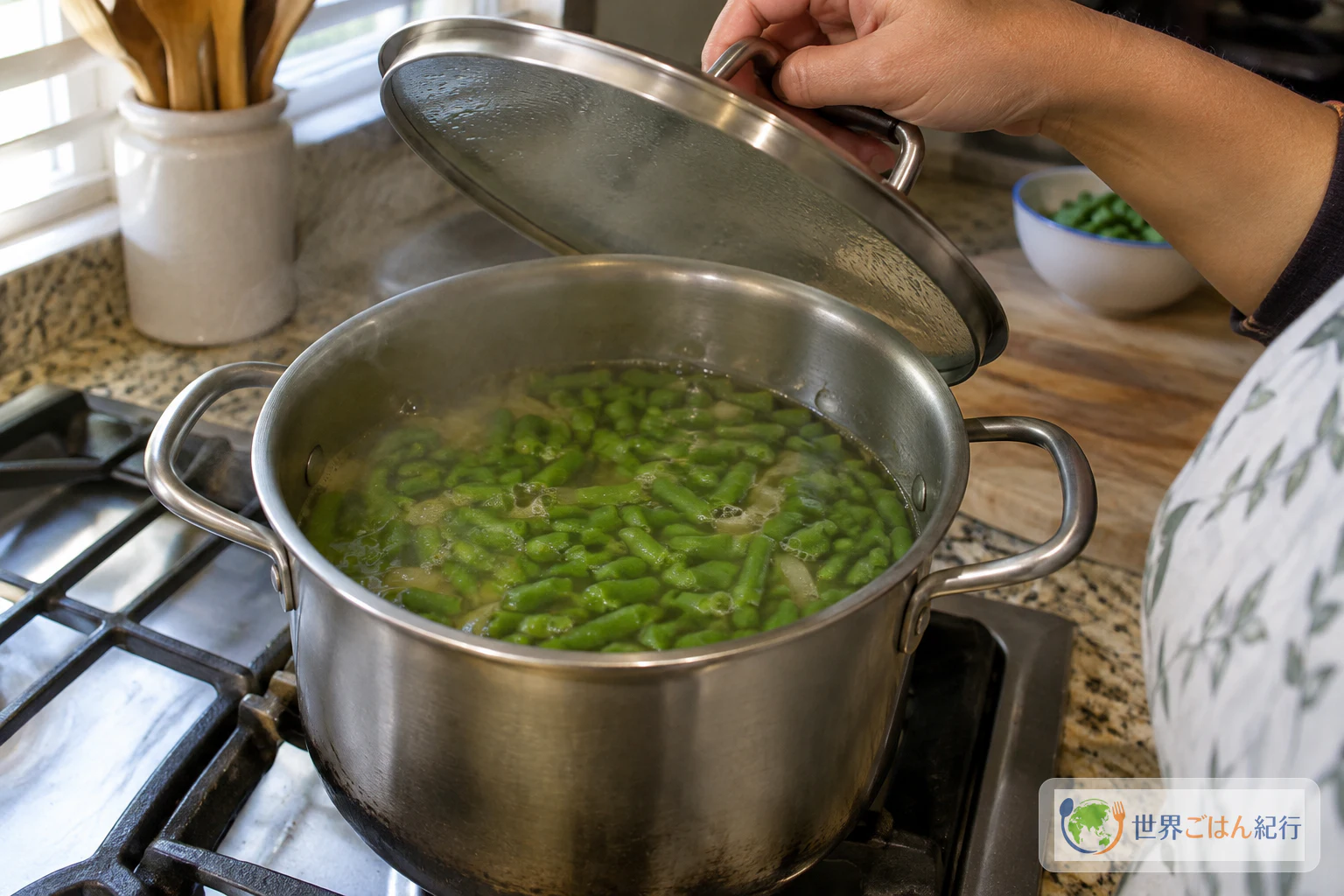
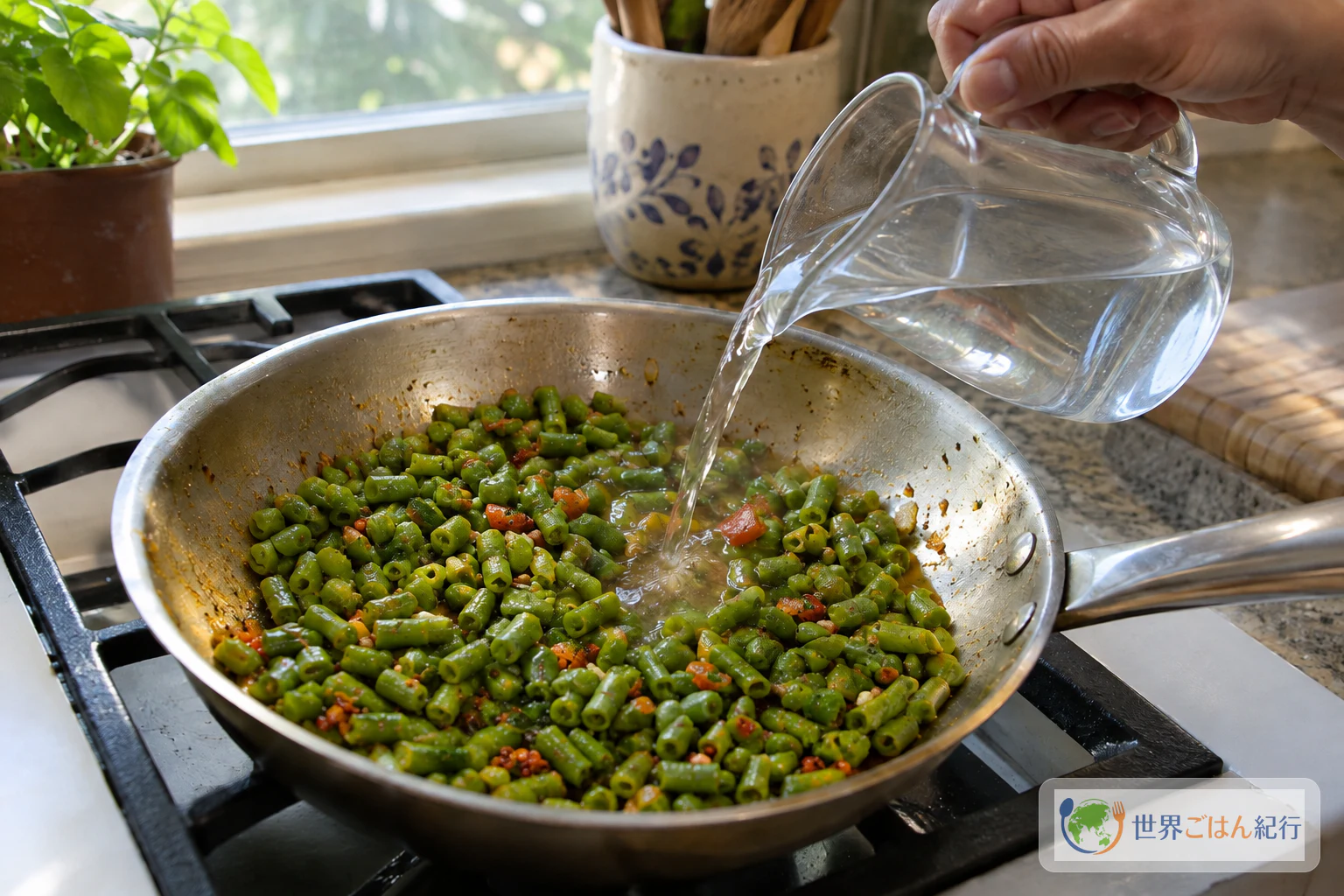
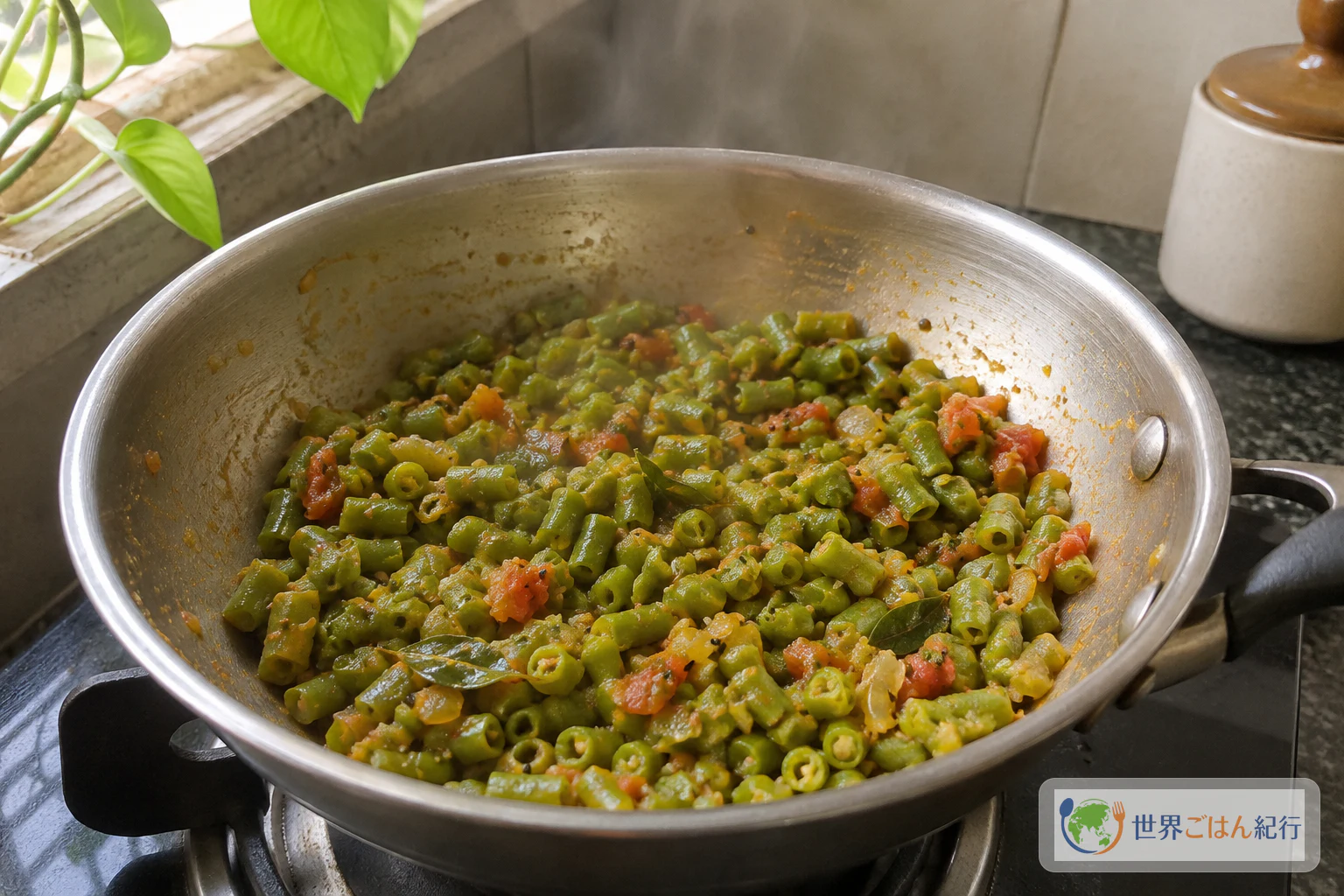
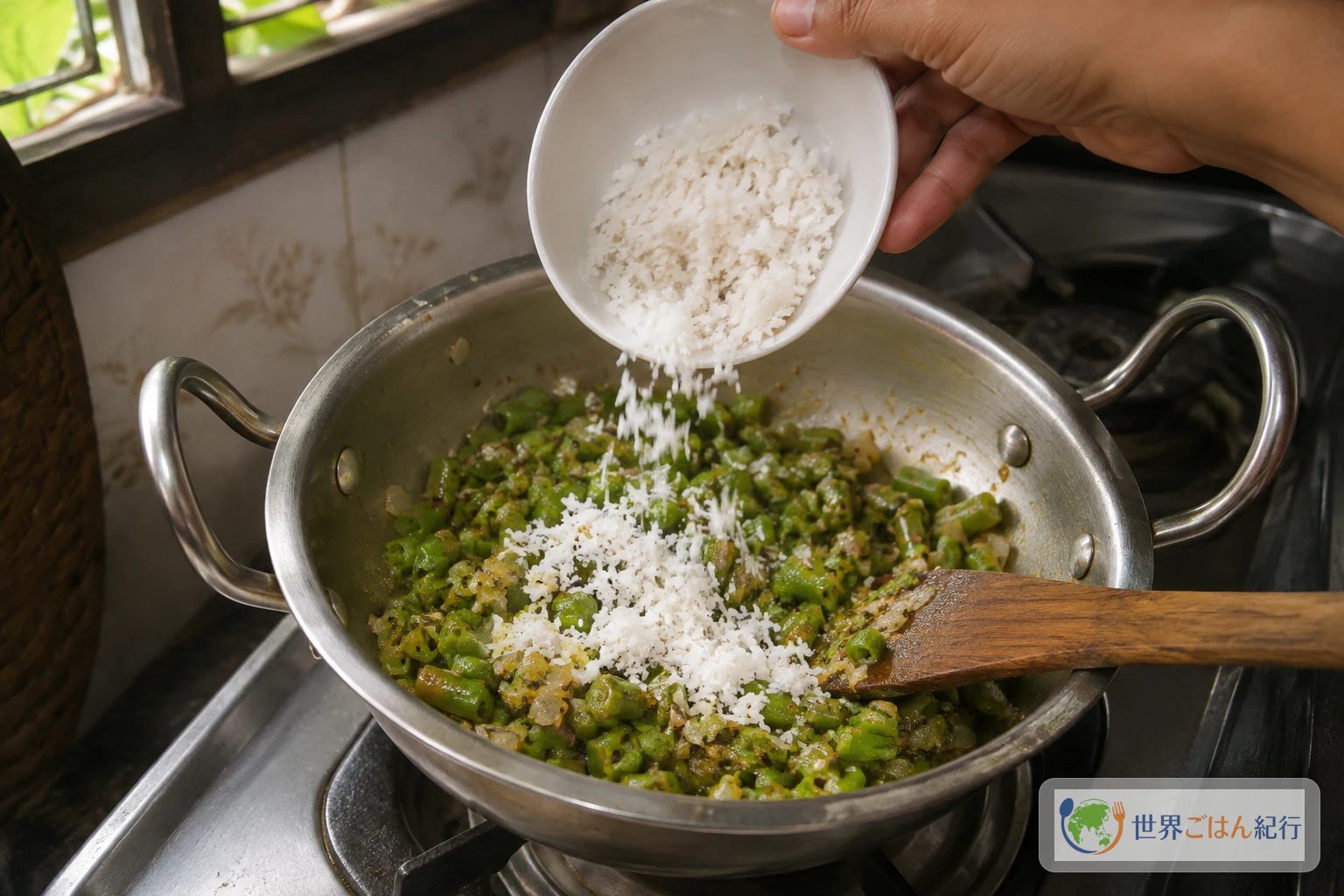
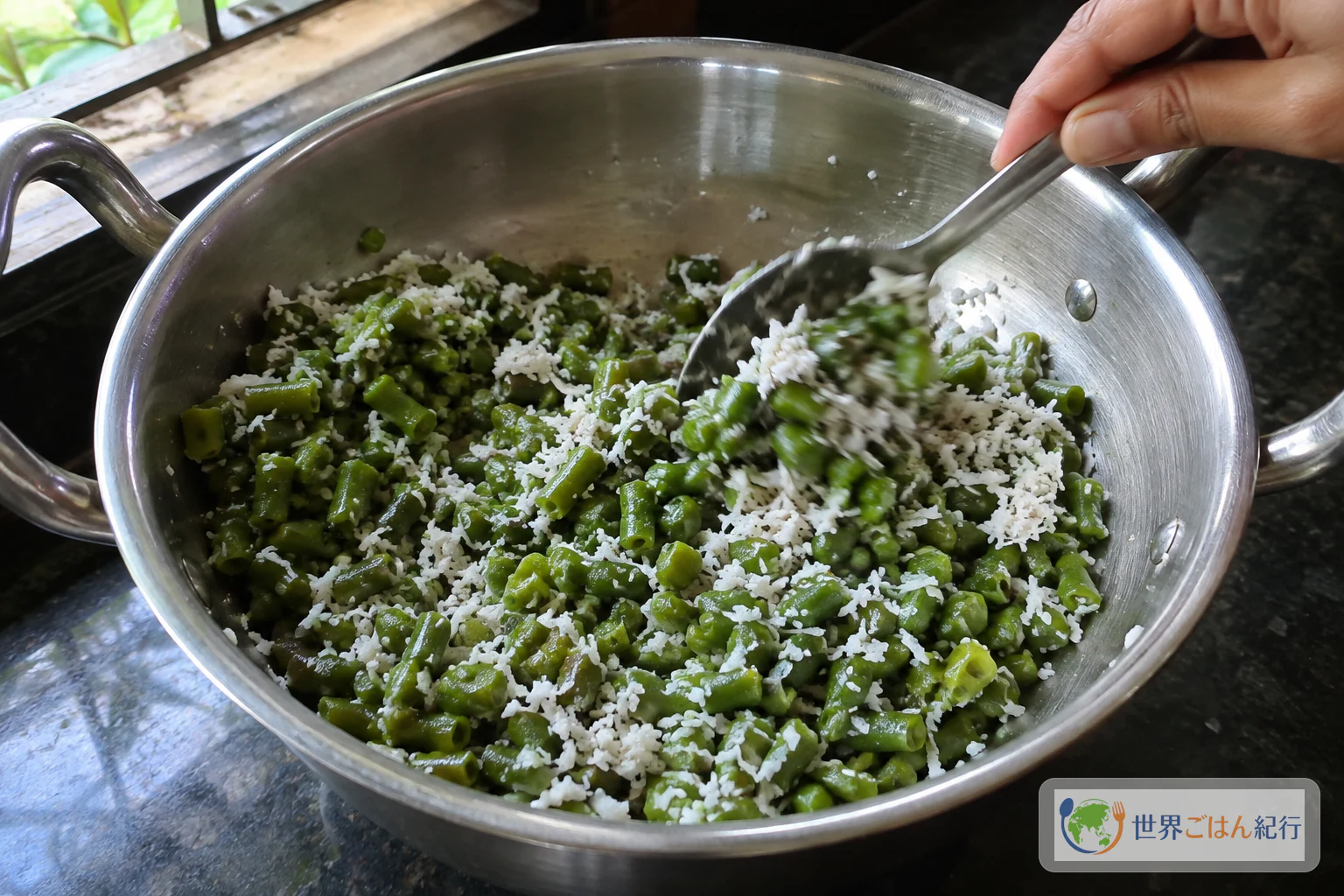
Mustard seeds splutter in a little oil over low heat while split urad dal turns a maroonish red beside them. Dried chillies and curry leaves go in, then turmeric and a pinch of hing, then a pile of finely cut green beans. After simmering under a lid until the beans are tender and no free water remains, 2–3 tbsp of coconut is mixed through, and the heat goes off right away.
This article follows one specific dish: beans poriyal, made with green beans or French beans. Dassana Amit's recipe on Dassana's Veg Recipes describes it as a South Indian side dish and describes poriyal as a dry vegetable preparation. Poriyal can be made with other vegetables, but the amounts and method here are for beans only. For more dishes from the country, see our India page.
The recipe is based on that published version, which allows neutral oil and desiccated coconut. Sekai Gohan selects commercial ready-to-eat unsweetened desiccated coconut for this version.
Sekai Gohan has not kitchen-tested this recipe. Dassana Amit's recipe card lists 10 minutes prep, 20 minutes cooking, 30 minutes total and 2 servings. These are published figures, not measured results or guarantees. The covered simmer has no fixed time, so go by how tender the beans are.
Ingredients for Green Bean Poriyal
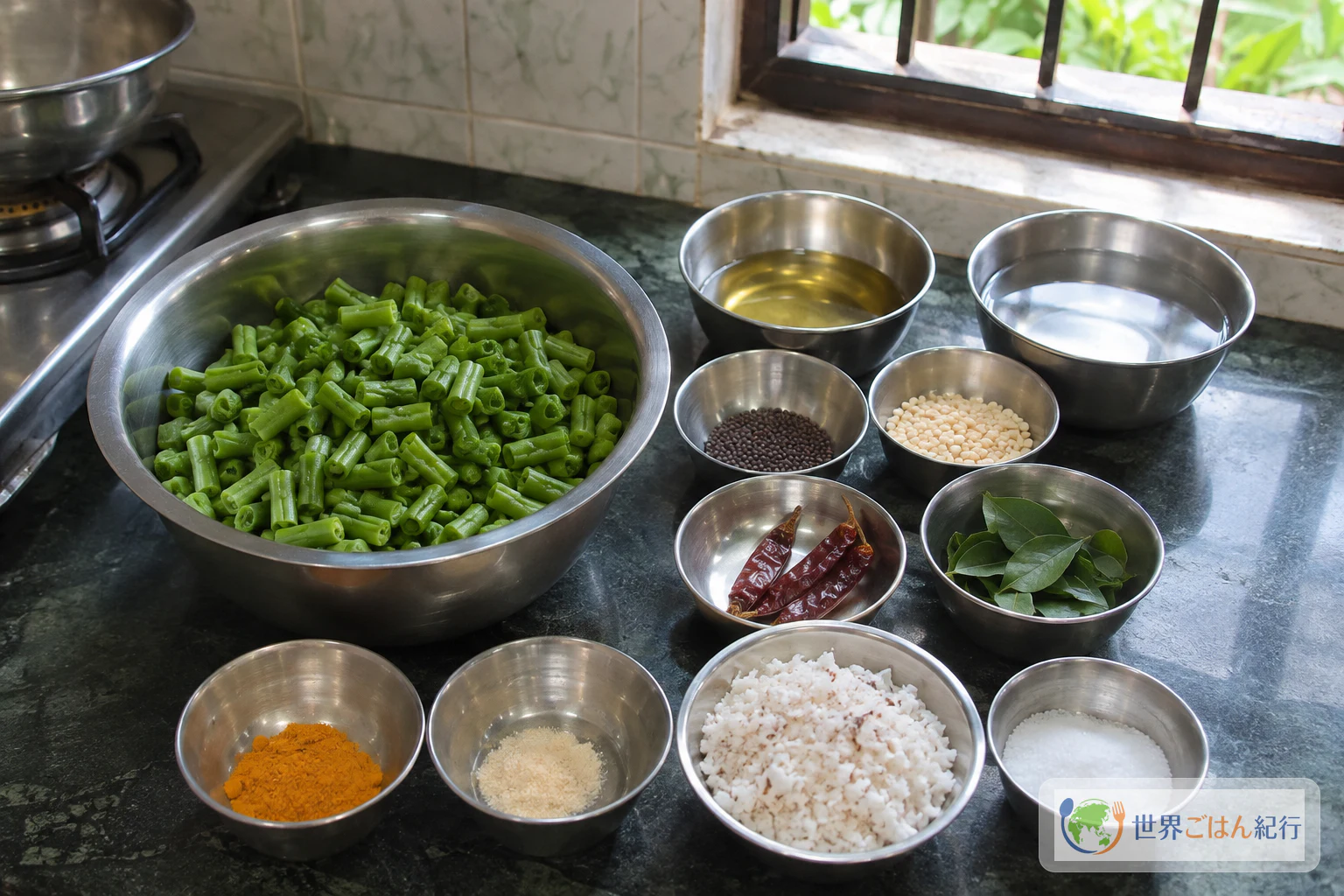
Choosing the Coconut, Hing and Other Items
Most of this list is simple, but four items may take some looking for: curry leaves, split husked urad dal, hing and unsweetened desiccated coconut.
- Coconut: Choose a food-grade product sold as ready to eat and unsweetened, and follow its label.
- Hing: Read the label on the product you buy, and don't assume it is gluten-free.
- Chillies: Use dried red chillies, broken open with the seeds removed.
This article cannot vouch for any brand or product. What you buy determines whether the coconut is ready to eat and unsweetened and what the hing contains, so rely on the label.
Equipment
- Colander
- Knife and cutting board
- Pot, pan or kadai with a lid
- Spoon for stirring
- Measuring spoons and a cup measure
Method: From Tempering to Tender Beans
Steps 19 and 21 apply only in the situations they describe. Skip them if your pan doesn't call for them.
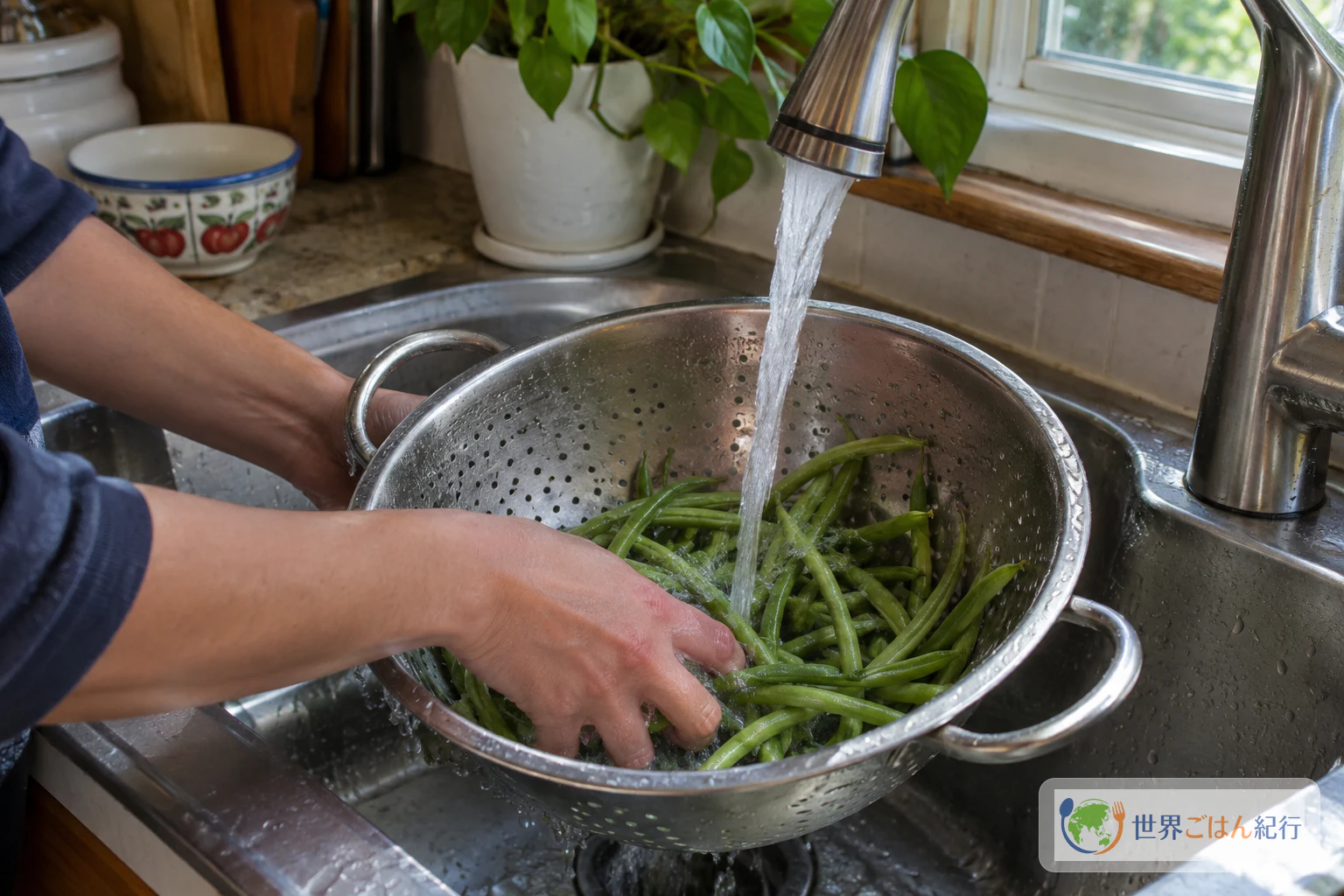
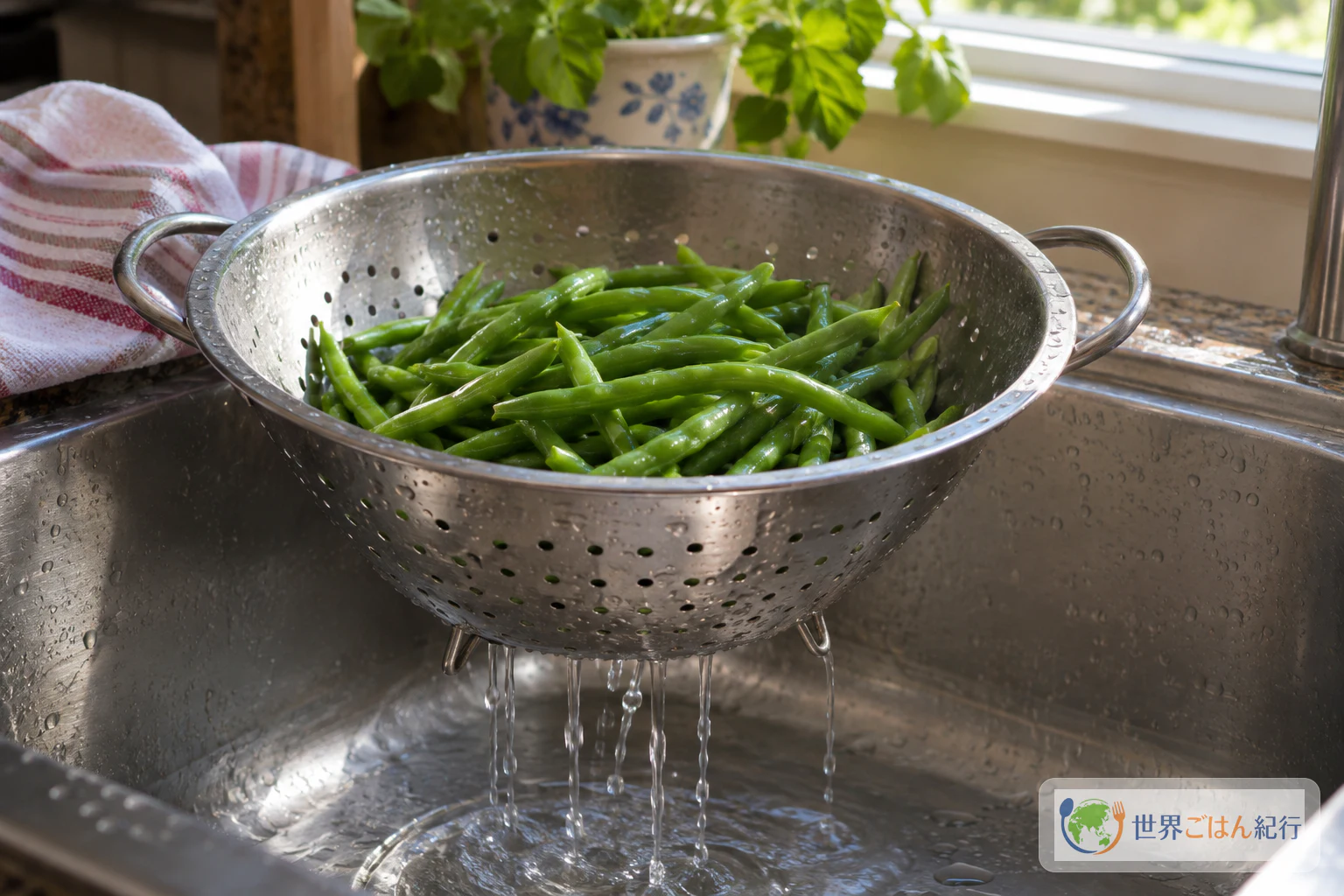
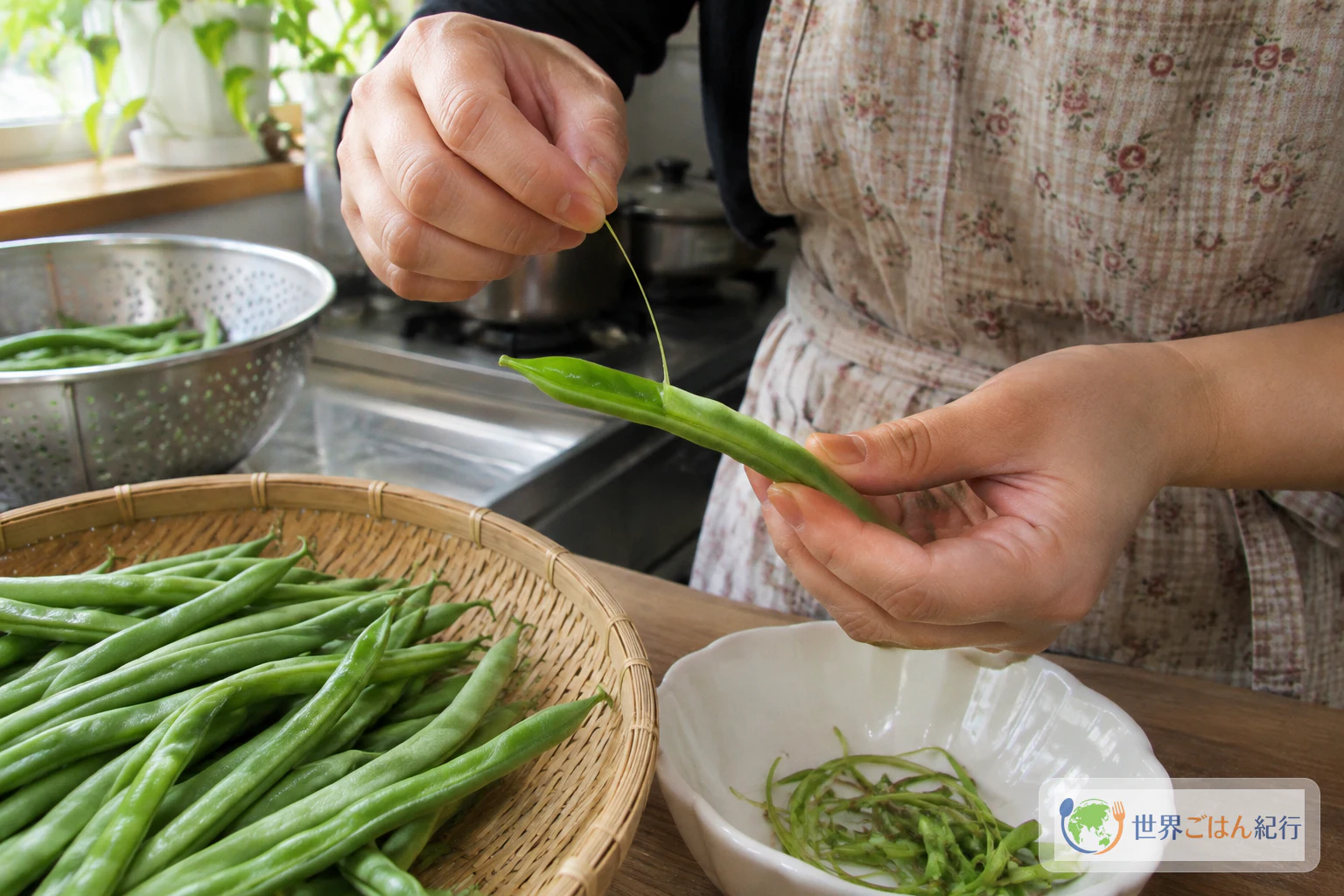
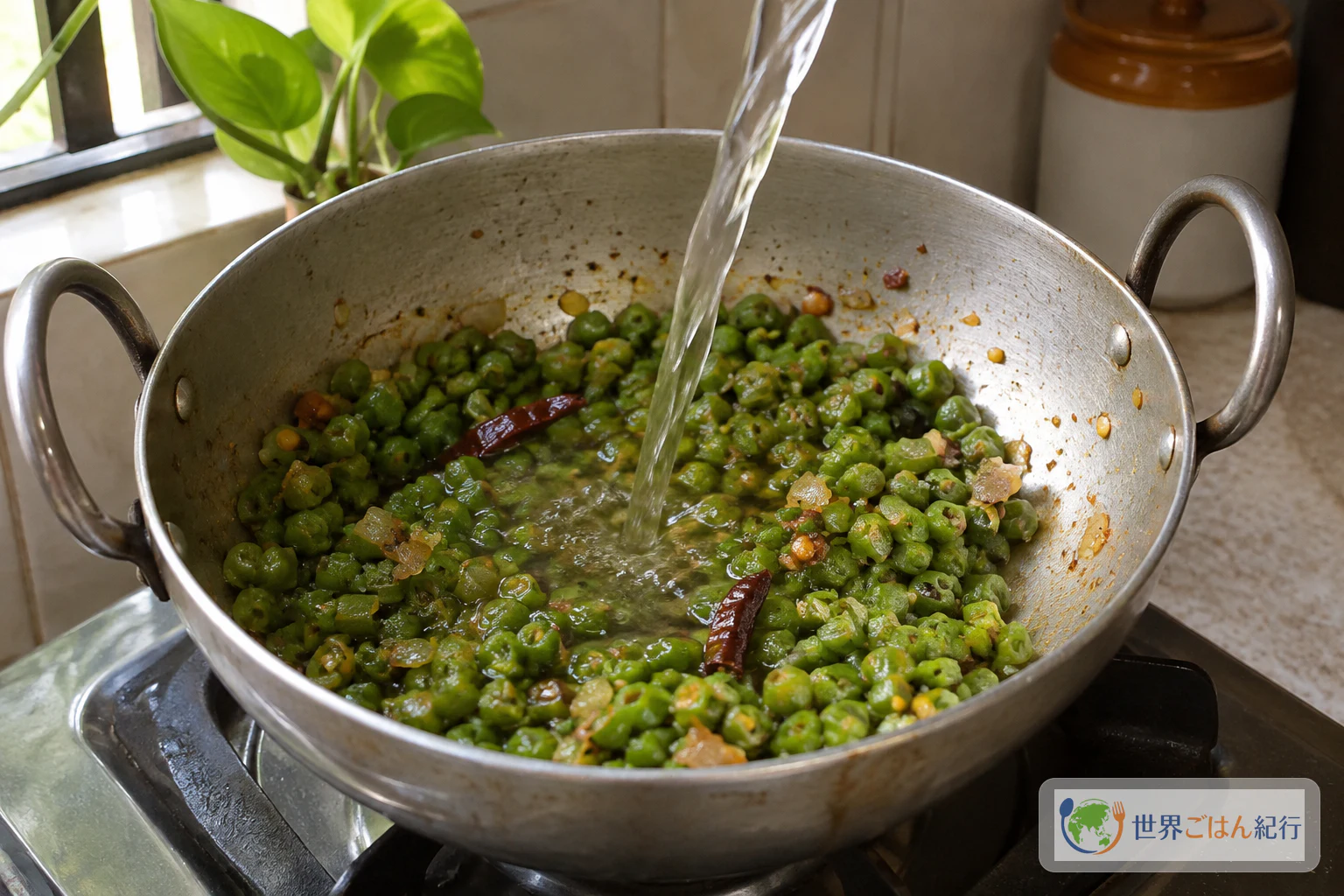
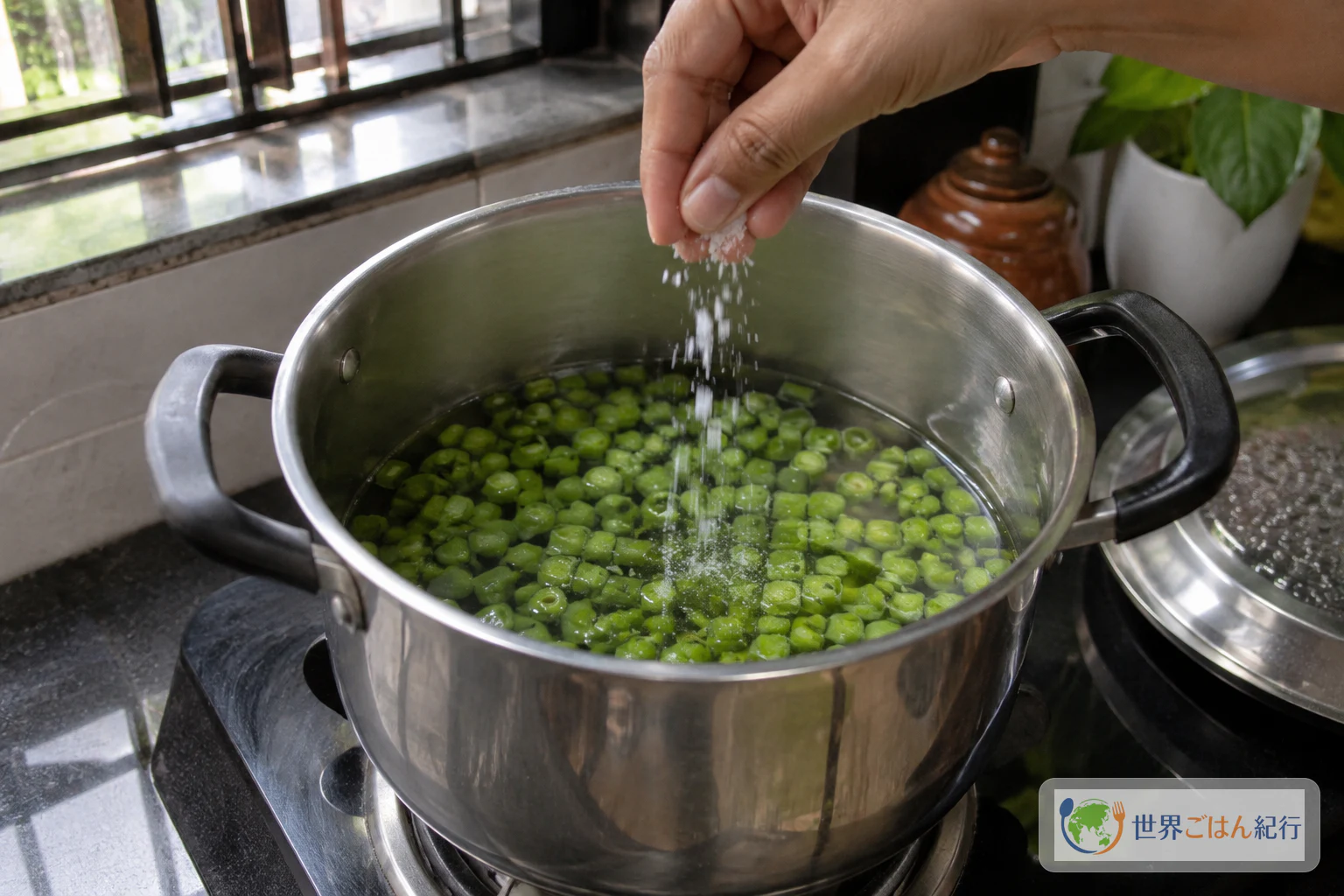
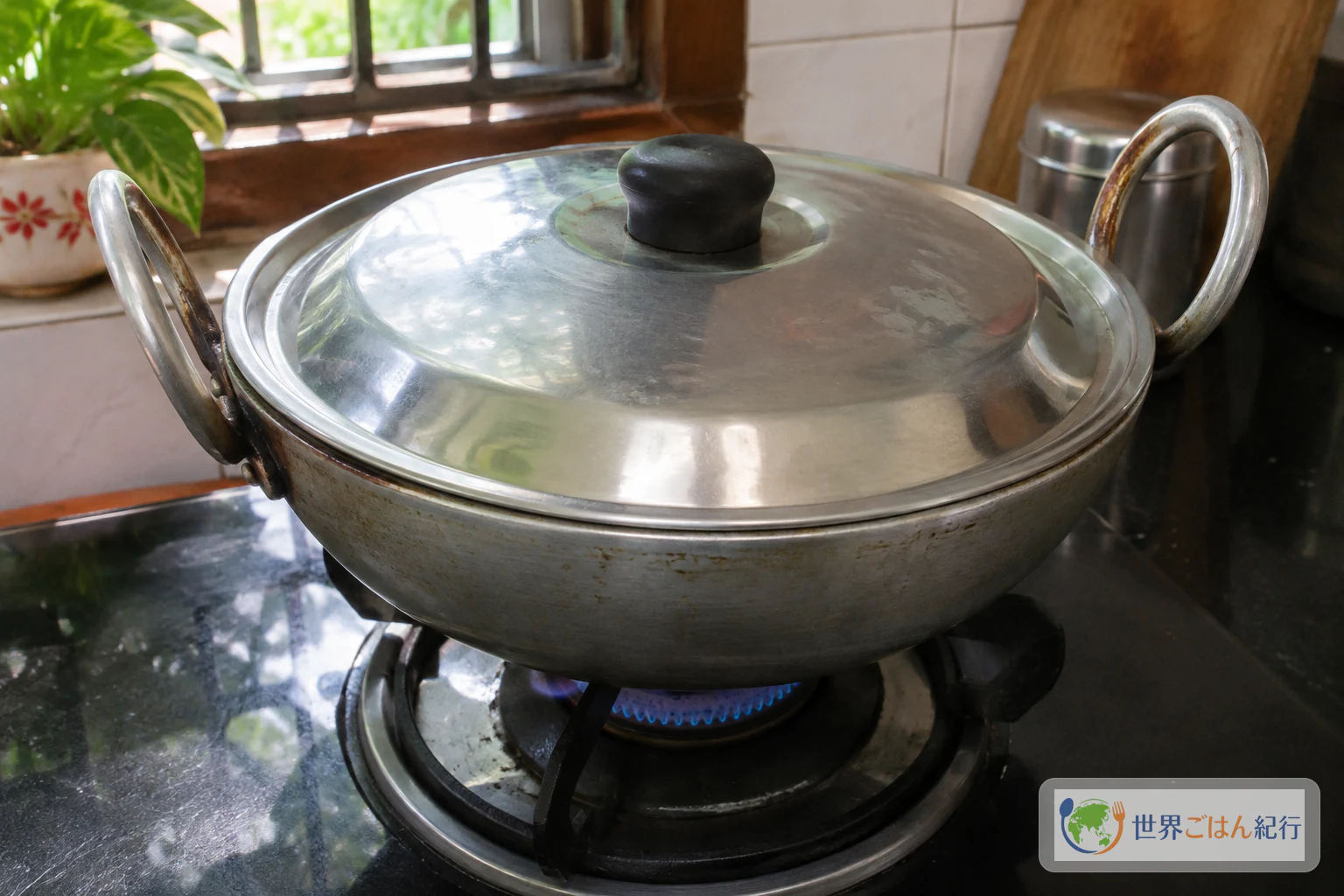
The images show each action. They don't establish amounts, sizes, times, temperatures, how tender the beans really are, or whether a product or dish is safe, so judge by what is in your own pan.
Serving
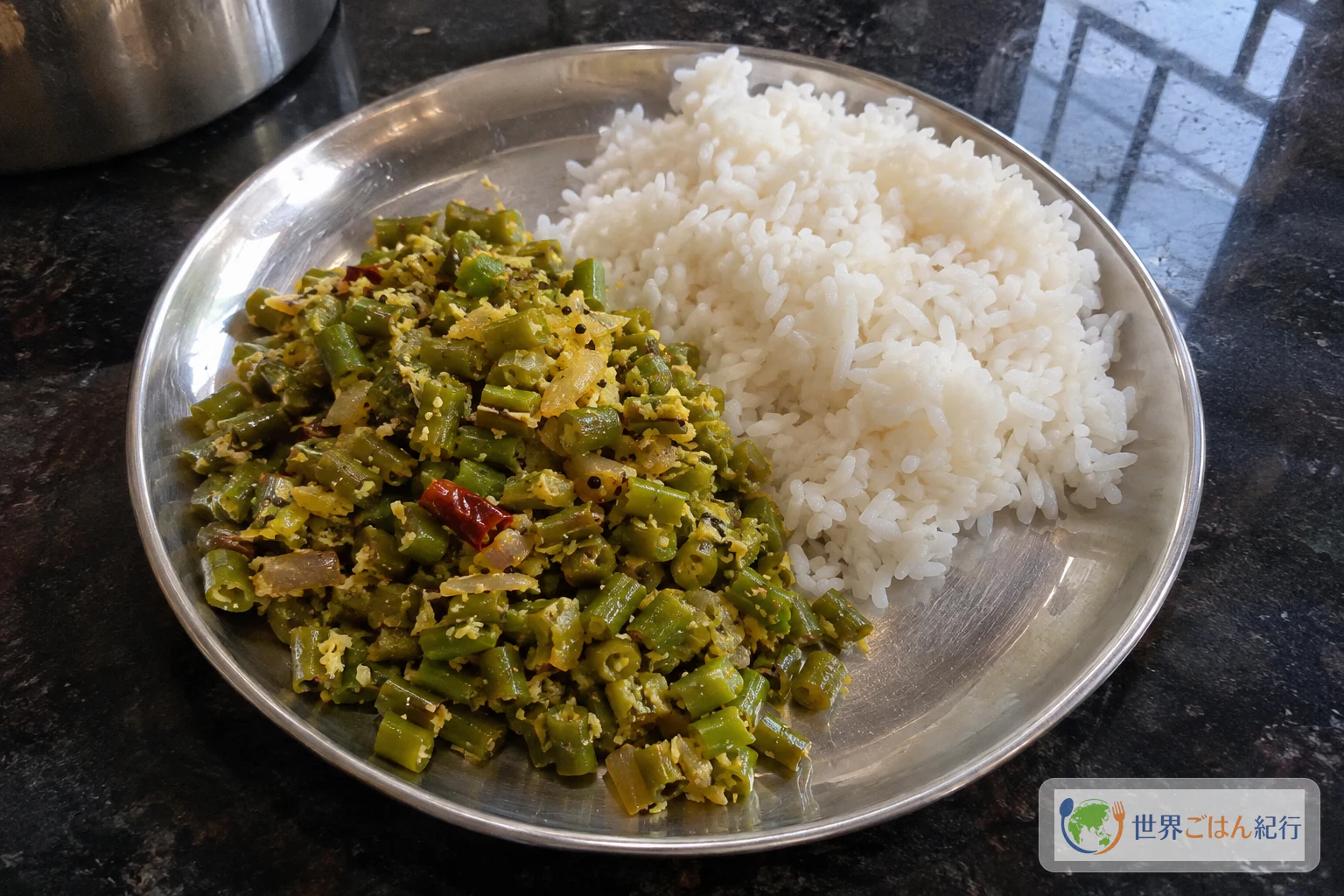
Serve the poriyal warm, right after cooking, as a side dish. It goes with rice alongside sambar or rasam, with roti or paratha, or with dal and rice.
Fixing Problems in the Pan
| What you see | What to do |
|---|---|
| The dal is darkening quickly | Keep the heat low and move on to step 8 as soon as the mustard seeds have spluttered and the dal is maroonish red. Don't let it burn |
| A bean's strings won't pull off easily | Leave them and go on to cutting |
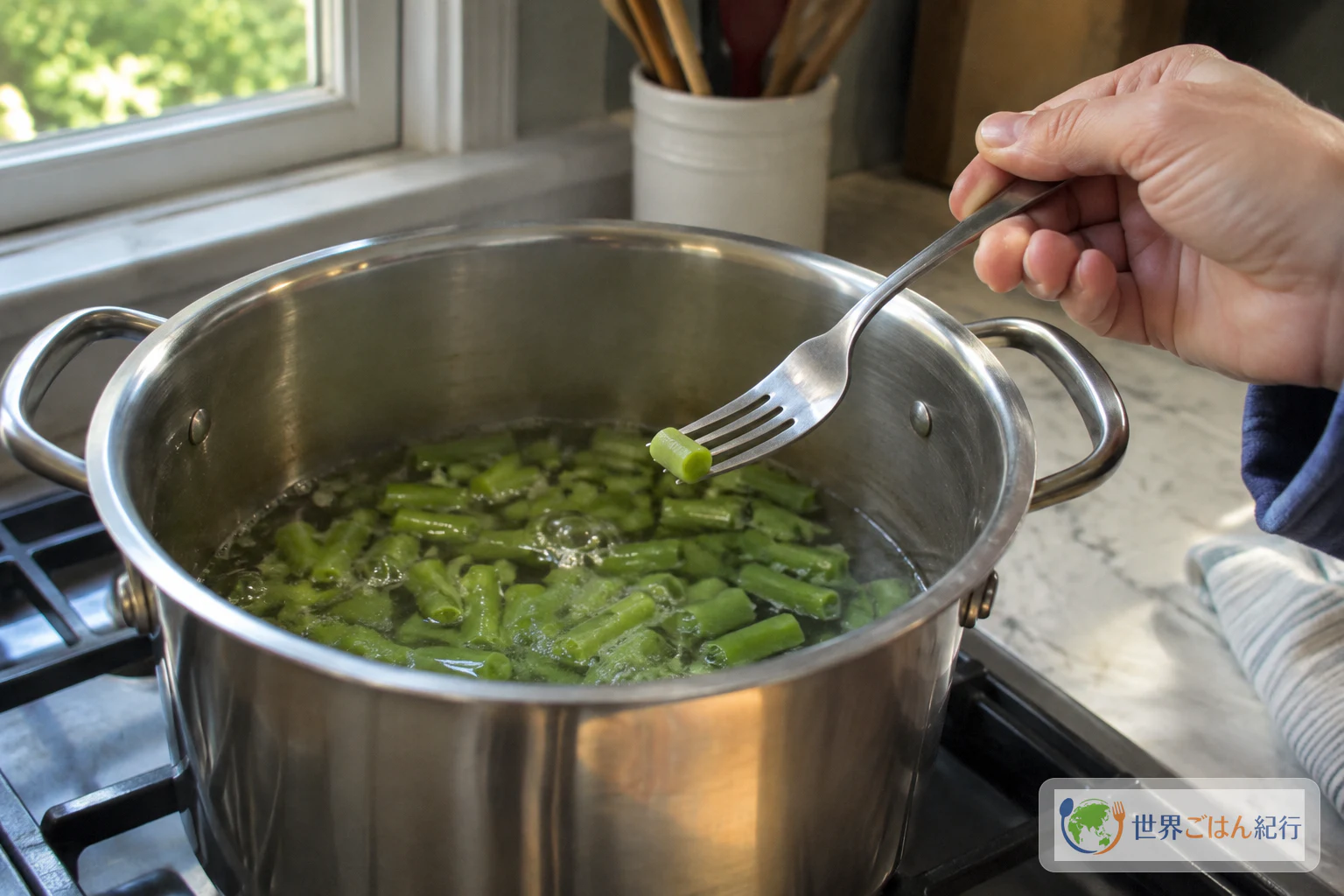
| The pan is dry and the beans are still not tender | Add water as needed, cover and keep simmering on low heat |
| The water is still there and the beans are not tender | Keep the lid on and continue on low heat. Don't add more water |
| The beans are tender and water remains | Take off the lid and let the water evaporate before adding the coconut |
| The beans are tender and the pan is already dry | Skip step 21 and go straight to the coconut |
Variations
These changes stay within the same recipe:
- Cut: Slice the beans diagonally or straight across, keeping them about 1/4 inch wide.
- Coconut: Use 2 tbsp or 3 tbsp, whichever you prefer.
- Oil: Use 2 tbsp coconut oil in place of neutral oil.
- Accompaniment: Choose from the rice, bread and dal pairings under Serving.
Poriyal in Context: One Recipe Among Several
The cultural description here rests on Dassana Amit's recipe, which calls beans poriyal a South Indian side dish, describes poriyal as a dry vegetable preparation, gives other vegetables as examples, and suggests the pairings listed above. That is a recipe developer's account, not an institutional cultural reference, so this article makes no claims about the dish's origin, history or festival use.
Other published recipes show how much a single dish can vary. These comparisons are for context only, and none of their amounts or methods are mixed into the recipe above.
| Recipe | How it compares |
|---|---|
| NDTV Food, "Beans Poriyal Recipe" | Same bean quantity and closely matching tempering ingredients, with 1/2 cup water or as required and salt as required. Its concise method runs from mustard and urad dal to chilli, curry leaves, turmeric and hing, then beans with water and salt until cooked |
| Times of India, "Beans Poriyal Recipe" | A different set of ingredients and technique, with no water or turmeric listed and a covered cook of 5–7 minutes for the beans |
Frequently Asked Questions
How much water will I need in total?
There is no fixed total. Dassana Amit's recipe card gives 1/2 cup or as required, and the method adds more if the pan dries before the beans are tender. Treat 1/2 cup as a starting point, not a limit.
How long does the covered simmer take?
No fixed time is given, because the endpoint is tender beans. The recipe card lists 20 minutes of cooking overall, but that is a published figure, not a measured or guaranteed time.
How should I cut the beans?
Cut them diagonally or straight across, about 1/4 inch wide. The bean size is given only in those units, so we haven't converted it.
When does the coconut go in?
Add it last, once the beans are tender and no free water remains. Mix it through and switch off the heat right away, with no extra cooking time.
Can I use fresh coconut?
This article covers only the version made with commercial ready-to-eat unsweetened desiccated coconut, so it gives no method for fresh coconut.
Can I use these amounts for other vegetables?
Not automatically. Dassana Amit's recipe mentions other vegetables as poriyal, but these amounts, water and doneness cues are written for beans. For another vegetable, use a recipe written for it.
Sources
- Dassana Amit, "Beans Poriyal Recipe (Green Beans with Coconut)," Dassana's Veg Recipes, page displayed as updated June 29, 2021. Main recipe: ingredients, amounts, cut size, method order, heat level, doneness, recipe card figures, poriyal vegetable examples, serving pairings and the option of desiccated coconut. https://www.vegrecipesofindia.com/french-beans-poriyal-recipe/
- NDTV Food, "Beans Poriyal Recipe." A separate beans poriyal recipe, used for comparison only. https://food.ndtv.com/recipe-beans-poriyal-957574
- Times of India (TNN), "Beans Poriyal Recipe." A separate beans poriyal recipe with different ingredients and technique, used for comparison only. https://recipes.timesofindia.com/recipes/beans-poriyal/rs68599406.cms