
Sour Steam That Calls for Rice
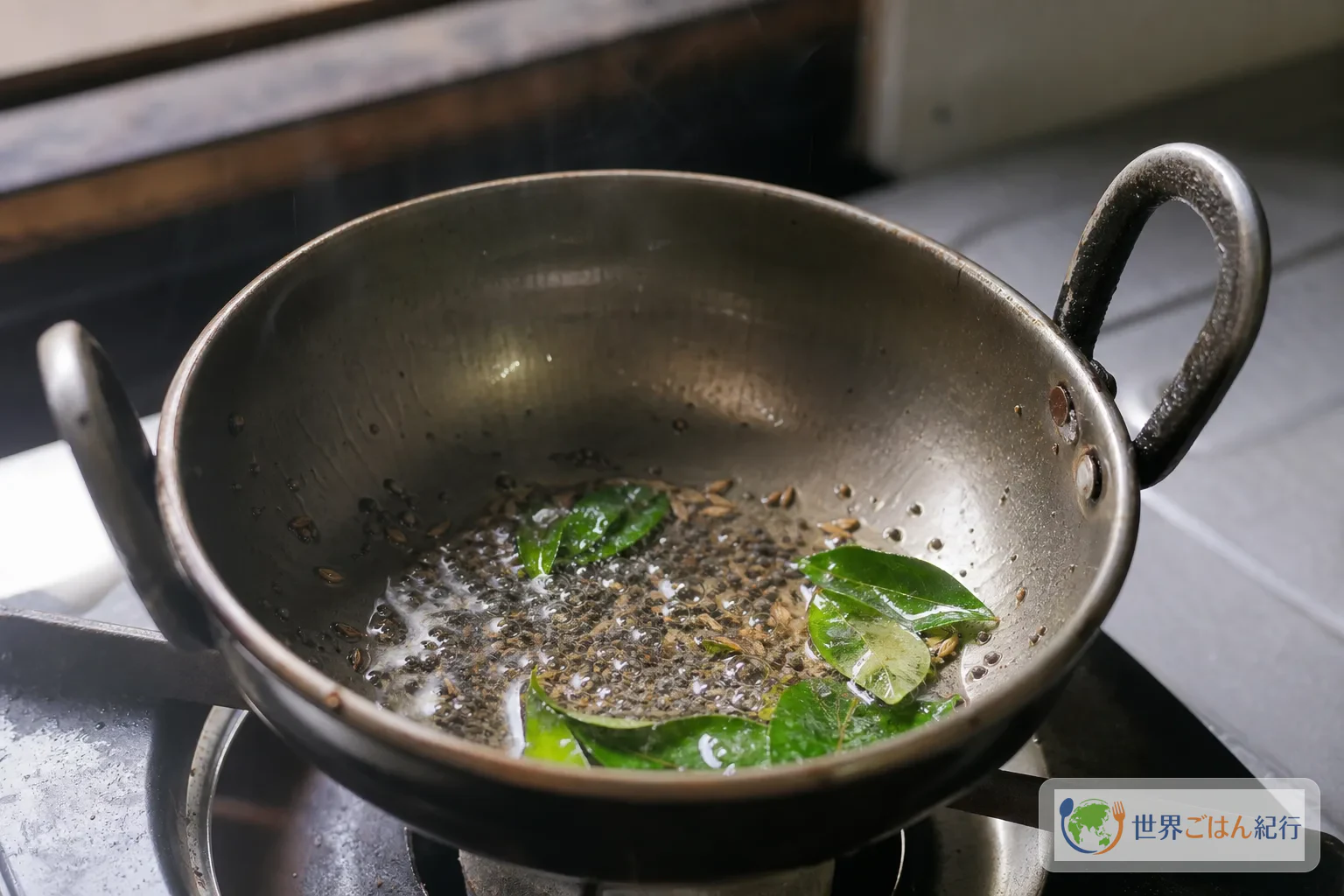
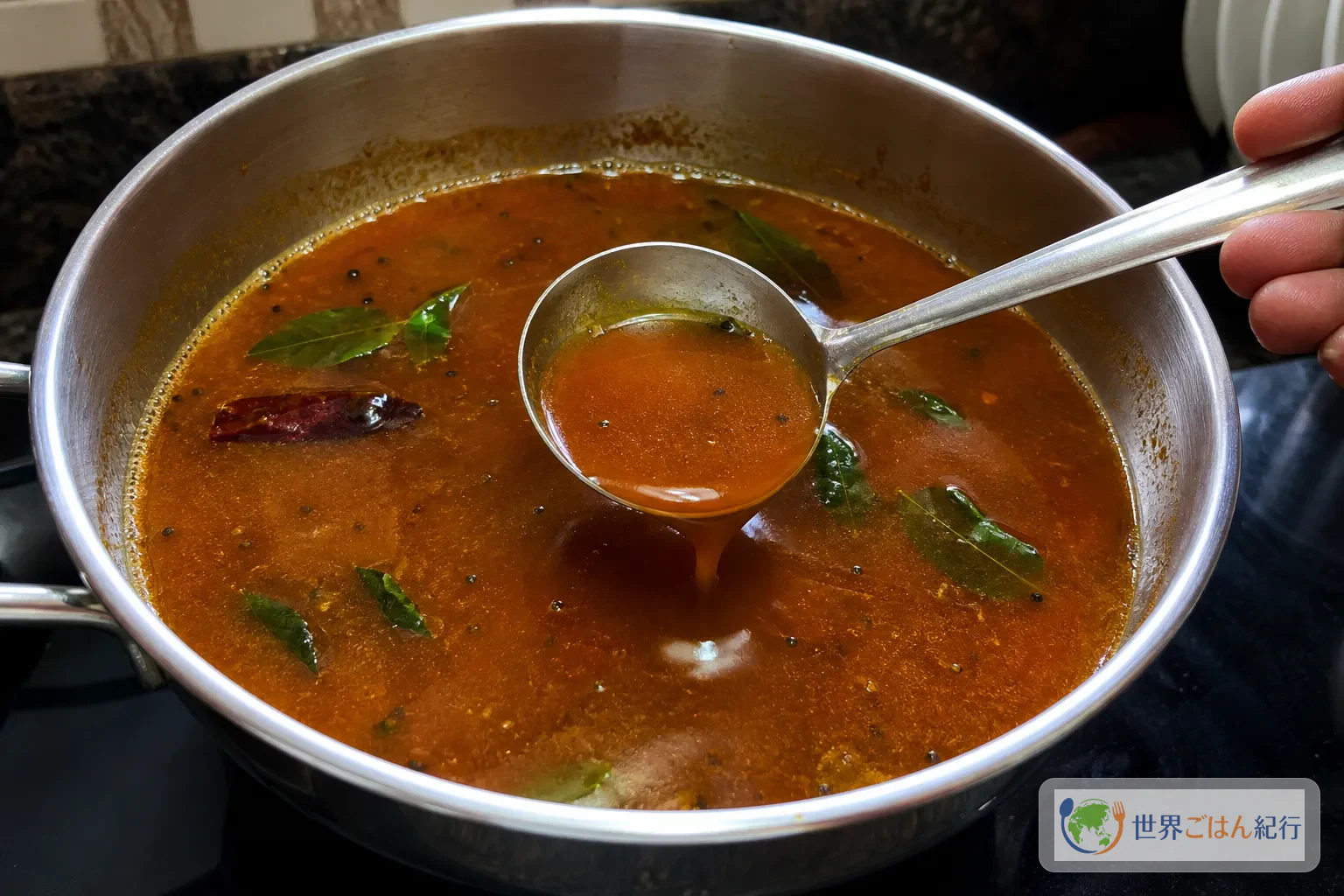
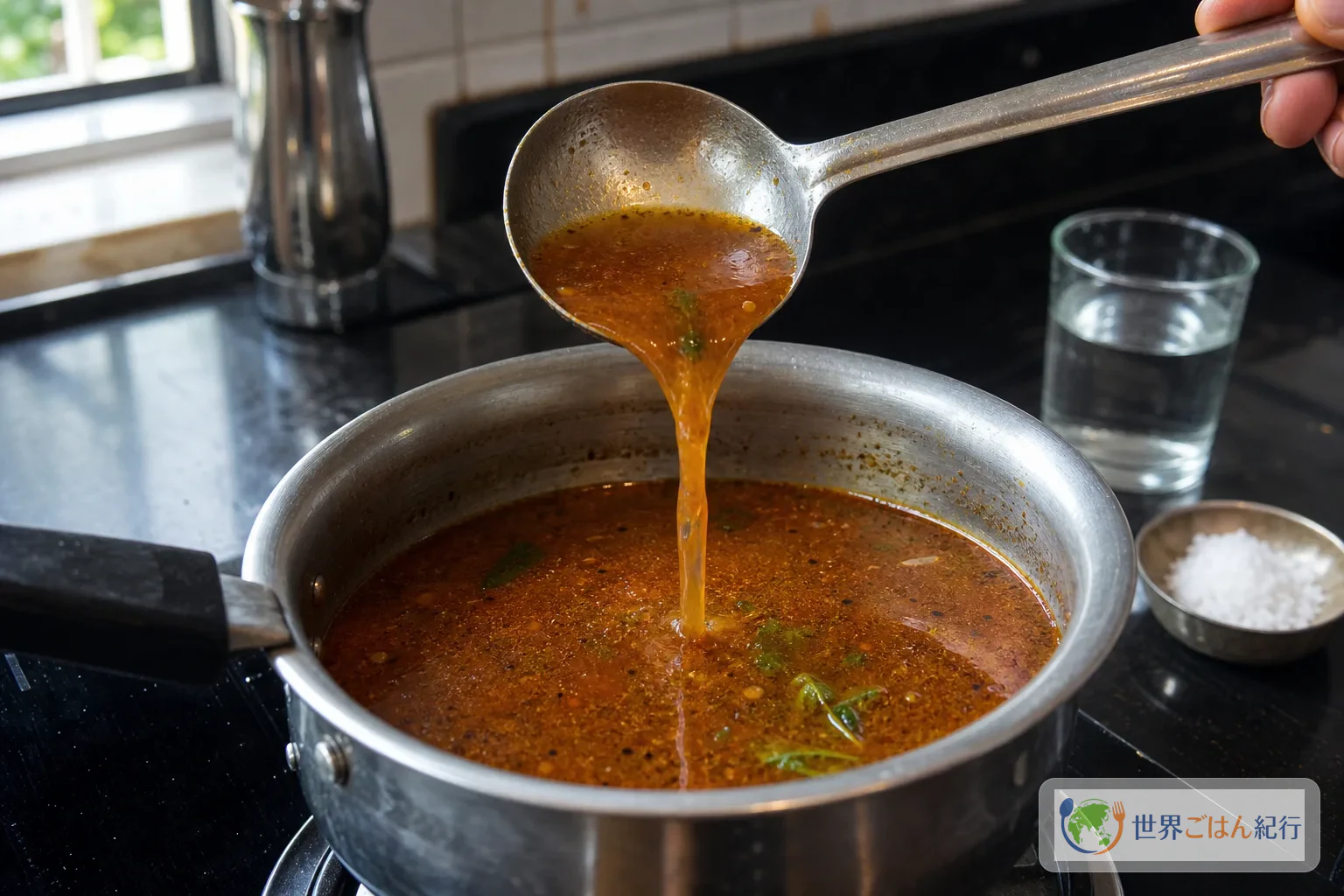
Drop mustard seeds into the oil in a small pot, and a few seconds later small pops follow.
When the curry leaves crackle and coarsely crushed black pepper and cumin loosen in the oil, pour in the reddish-brown liquid made by thinning tamarind.
The steam is sour and, at the back of the nose, a little hot.
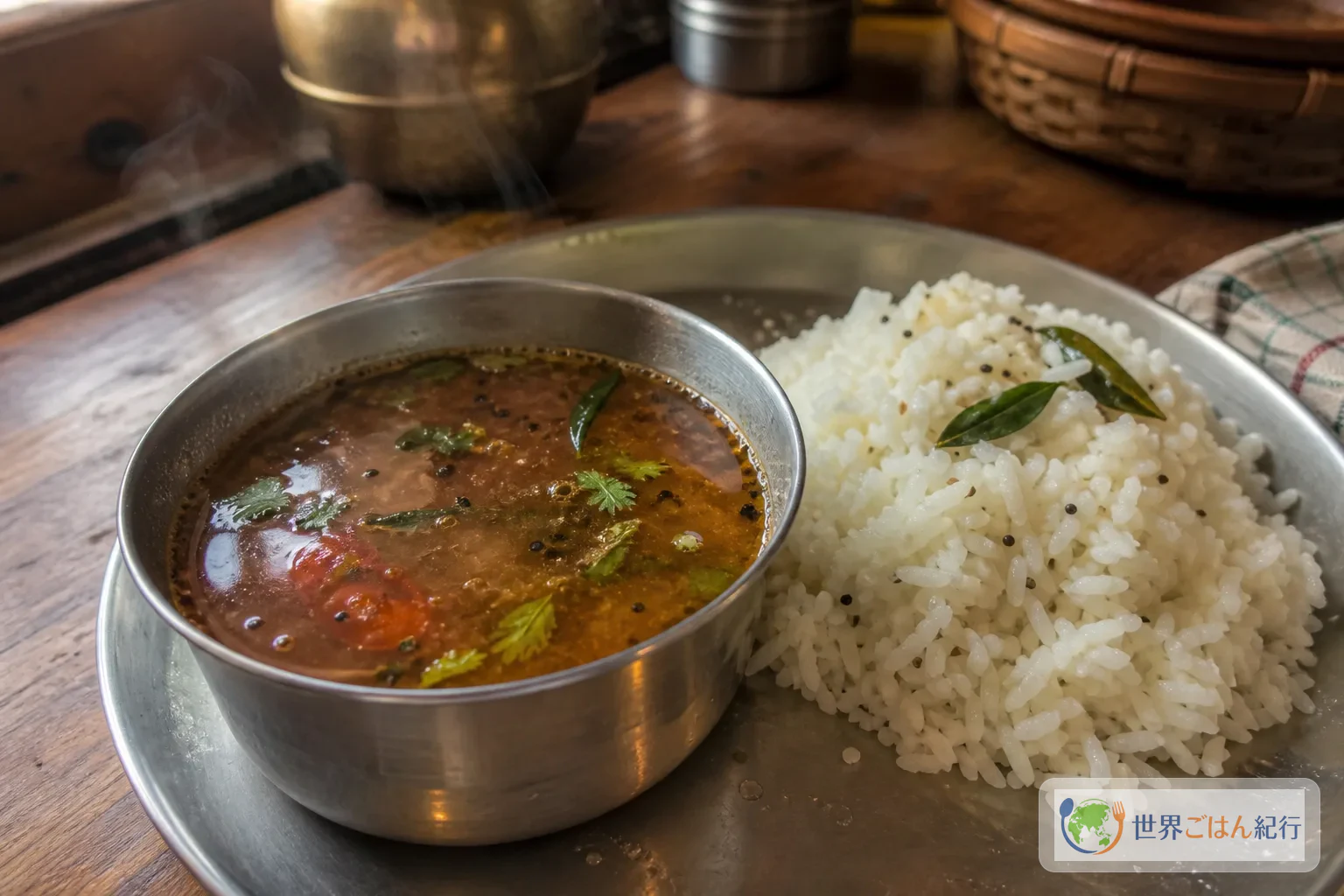
By looks alone, rasam is close to a thin tomato soup.
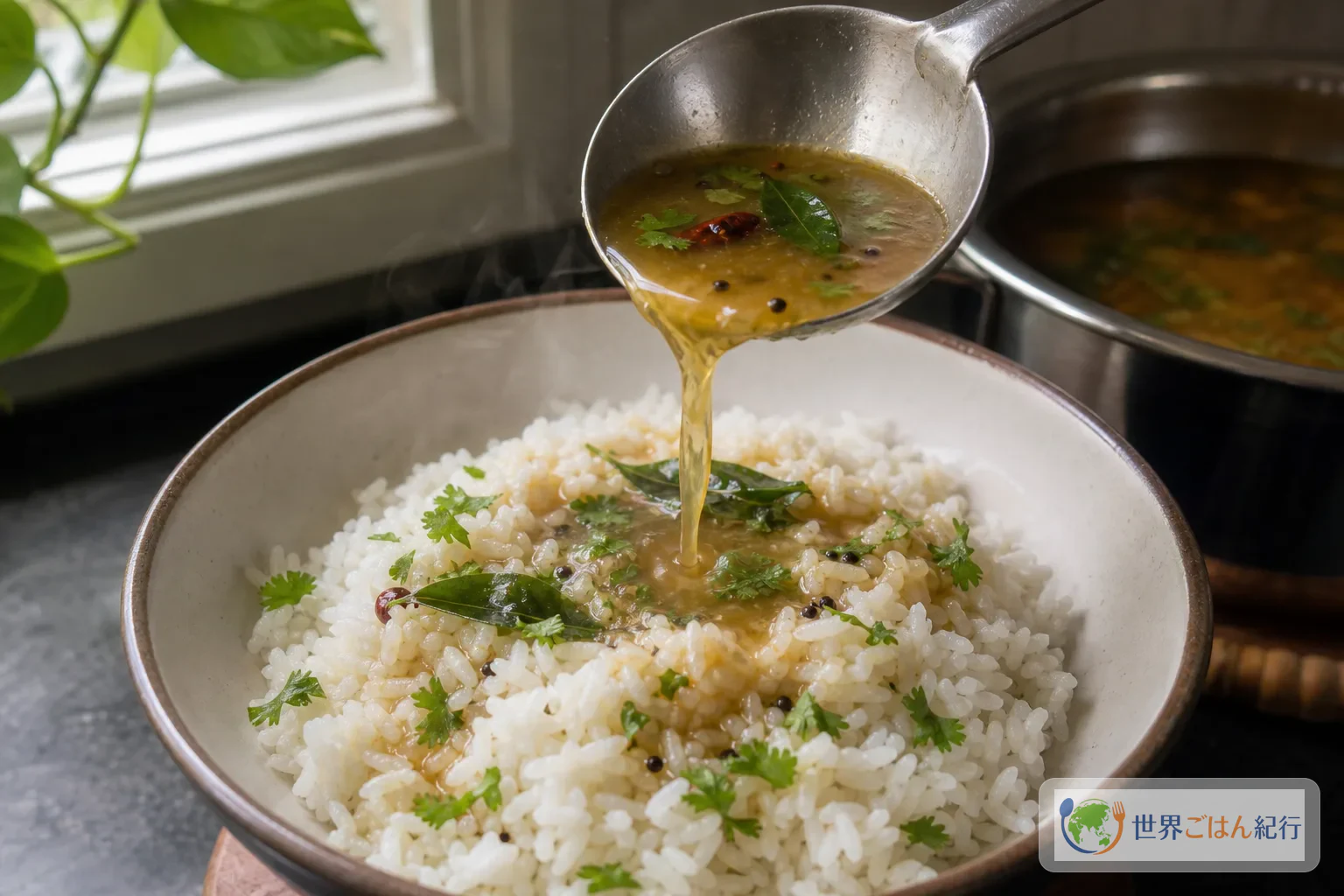
But boil the pot hard and the sourness is driven off, grind the spices to powder, and the outline when it goes over rice suddenly blurs.
The question "why does this thin soup make you keep eating rice" is answered by looking not at quantity but at where the aroma is placed.
Rasam is a South Indian soup built on sourness and spices, eaten with rice.
In Tamil-speaking homes it is called rasam, in Karnataka sometimes saaru, and in Andhra and Telangana sometimes chaaru, and the amount of ingredients and the use of lentils also vary.
Here it uses tamarind, tomato, black pepper and cumin, and serves 4 in 40 minutes.
What to decide first in a home kitchen is not how to thicken the soup.
It is how much sourness to keep, how coarse to leave the spices, and when to layer on the final tempering.
Where Rasam Sits at the Table
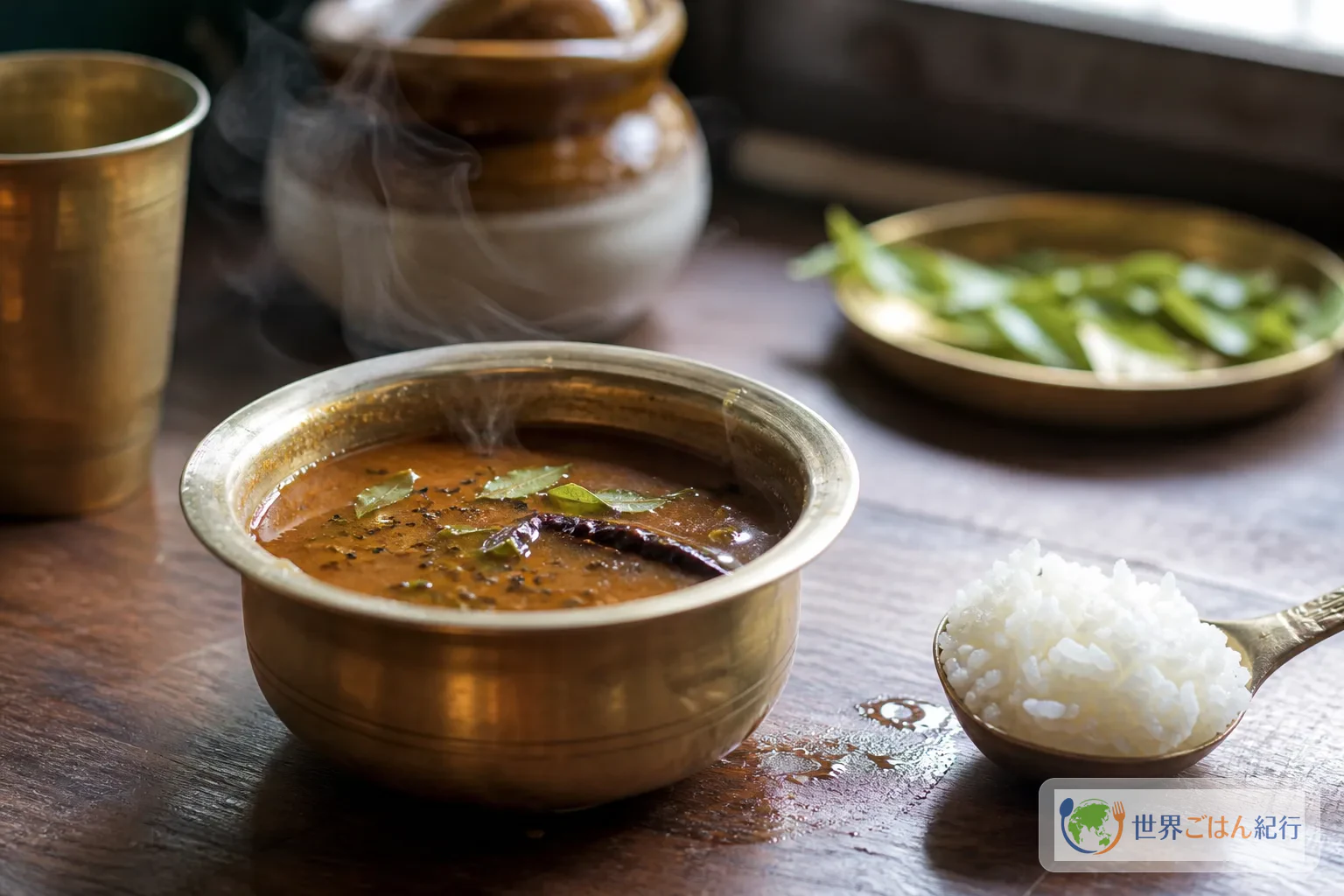
Looking at rasam on a South Indian table only as a stand-alone soup slightly misreads its role.
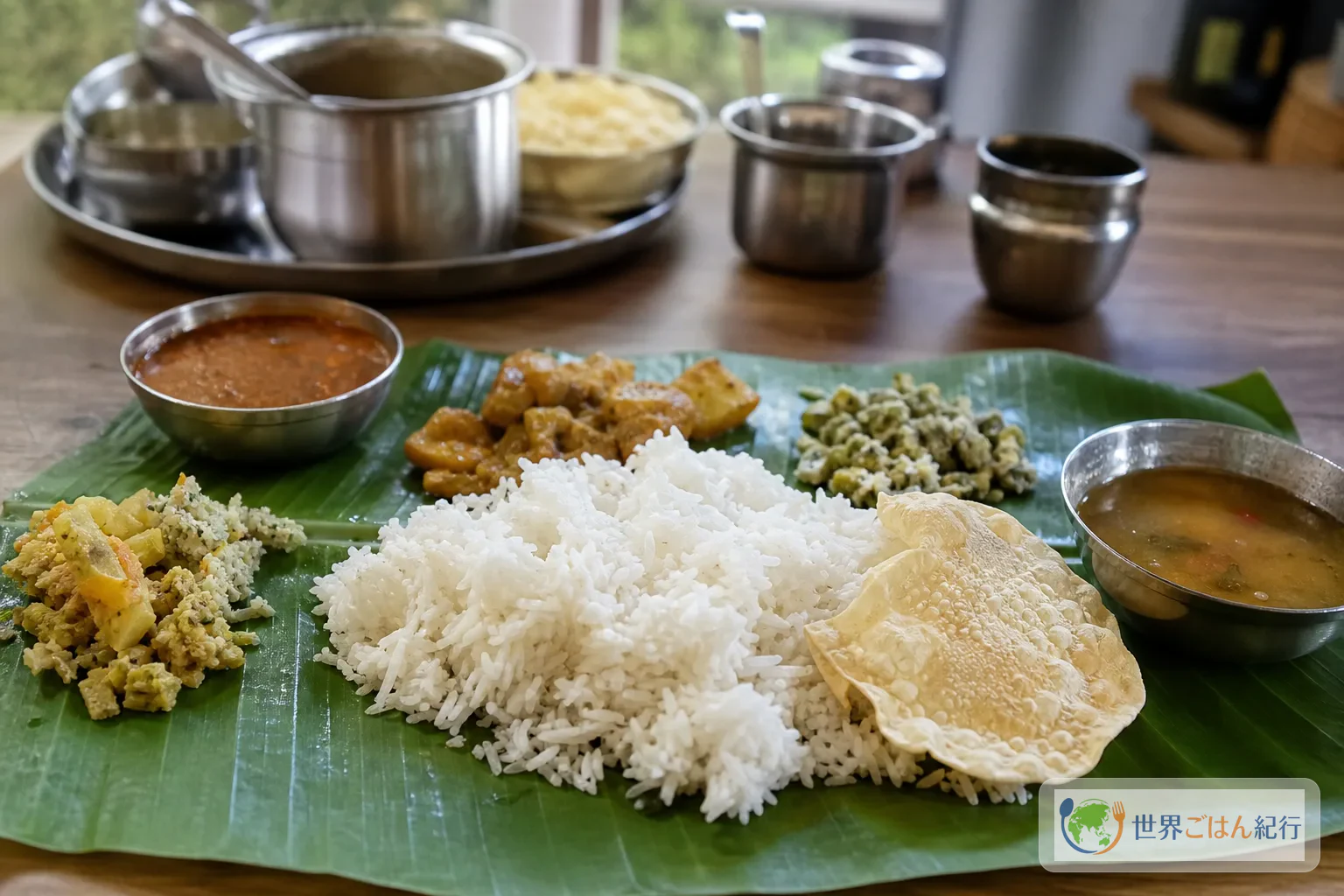
In a meal built around rice, with lentil and vegetable stews, vegetable side dishes, pickles, yogurt and sweets, rasam works to switch the palate.
At Kerala's festival meal, the Onam sadya, rasam also appears alongside rice, sambar, avial and more.
When there are many dishes on the table, instead of stacking on yet another rich dish, a light sour soup is worked into the rice.
Knowing this position, you see why rasam should not be pushed toward "a soup so loaded with ingredients that one dish satisfies."
The name also wavers by region.
In Tamil Nadu and Kerala you often see rasam, in Karnataka saaru, and in Andhra Pradesh and Telangana chaaru.
Even within South India, there are households that make tomato the star, ones that bring the tamarind strongly forward, and ones that add roundness with lentil cooking water.
Differences in ingredients are less a matter of right or wrong in a recipe than regional words and household taste left in the pot.
The English dish name mulligatawny also has a connection to rasam.
The Tamil "milagu thanni" is close in meaning to "pepper water."
It is explained that this taste traveled west through the colonial-era table and changed into a different soup with meat and vegetables added in the English-speaking world.
Tracing the journey of the name shows that rasam was never a monolithic dish from the start, but spread as an idea of layering aroma onto a thin broth.
Still, how households actually eat it is not one way.
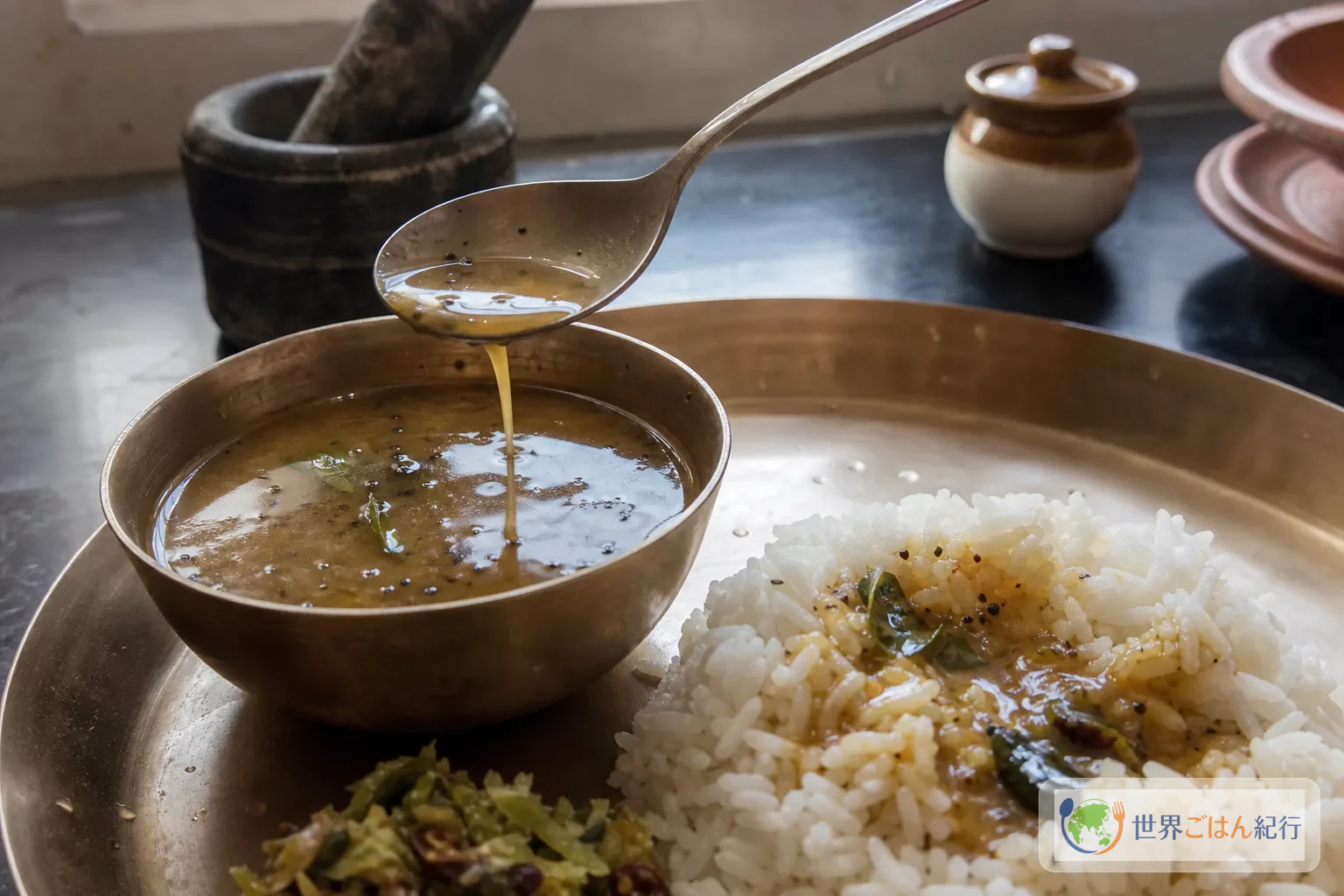
Some people drink the hot soup first, and others pour a little at a time over rice and eat it mixed with sambar and side dishes.
When you cook it elsewhere, it is easiest to follow if you prepare freshly cooked rice separately, ladle rasam into a small bowl to check the flavor, then pour it over the rice.
Thin, but Not the Same as Sambar
Rasam and sambar both use tamarind and spices and go with rice in South Indian cooking.
But the state each aims for in the pot is quite different.
| Compared | Rasam | Sambar |
|---|---|---|
| Thickness | A soup that flows freely | A stew with body from lentils |
| Center of aroma | Black pepper, cumin, curry leaves | Cooked lentils, vegetables, sambar powder |
| Ingredients | A little tomato and aromatics | Okra, eggplant, daikon-type vegetables, in good quantity |
| How it is eaten | Worked into rice, or drunk as a soup | Poured over rice or dosa |
| Cooking heat | Compact, short cooking for sourness and aroma | Lentils and vegetables simmered as one |
Sambar gets a thickness from lentils such as toor dal and vegetables, one that does not run off a tilted spoon at once.
Rasam does not need to be so thin that you can see the bottom of the pot, but the moisture that slips into the grains of rice remains.
Thinner than sambar, more aromatic than soup.
Aim for this middle, and you avoid both the failure of too much tamarind and only sourness, and the failure of reducing the tomato to a thick sauce.
Regional differences show up here too.
In Tamil Nadu, puli rasam, which brings the tamarind tang forward, and milagu rasam, which makes black pepper the star, are known.
Andhra's chaaru has households that add lentil cooking water, garlic and green chili.
There are rasams made with lime or lemon too, but the fragrance of citrus weakens with too much heat, so it suits a finish added after turning off the heat.
So there is no need to decide "it has no ingredients so it's not the real thing" or "it has tomato so it's something else."
For your first time elsewhere, a combination that is easy to handle is to build the base with tomato, set the angle of sourness with tamarind, and leave aroma by coarsely crushing black pepper and cumin.
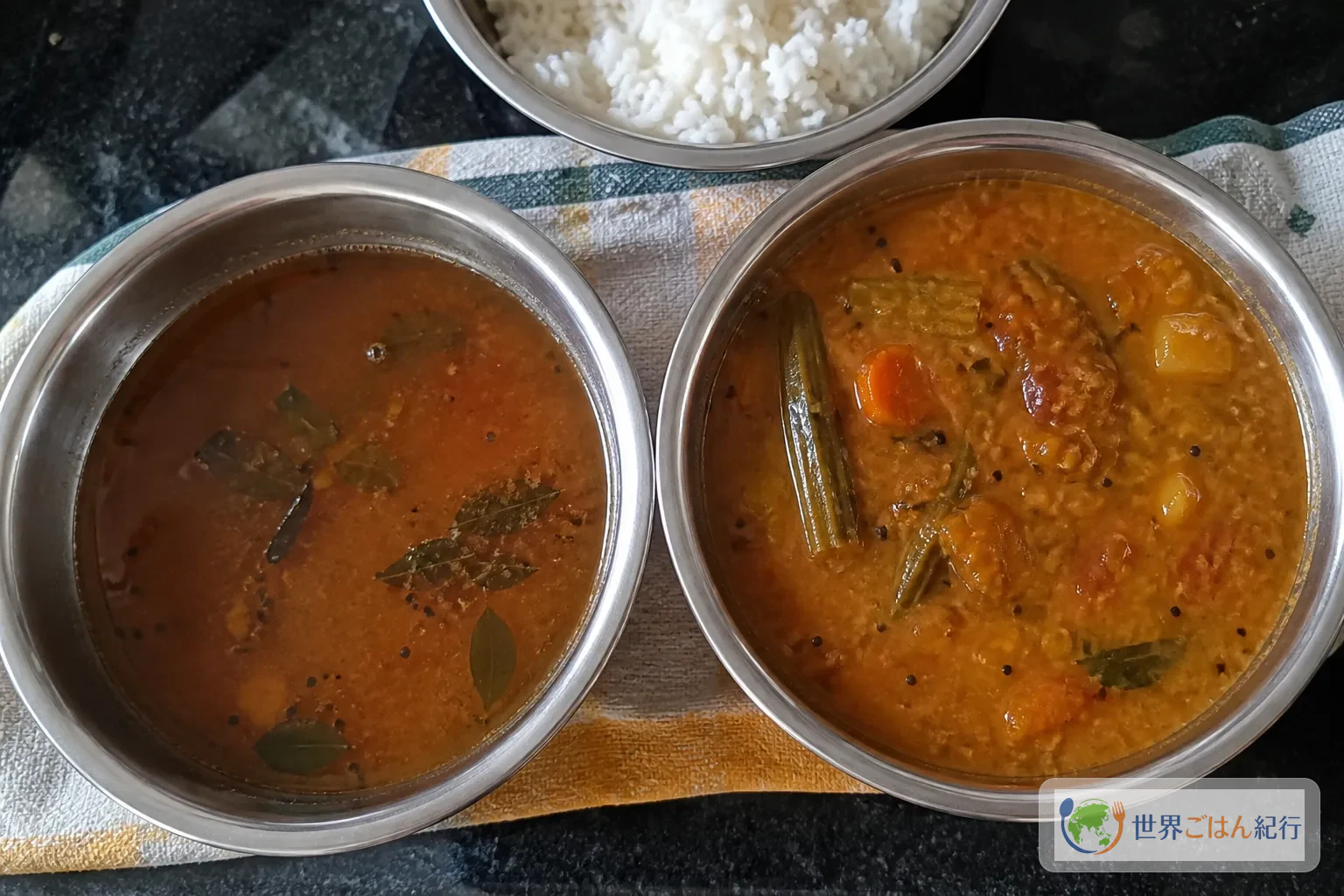
Ingredients (serves 4)
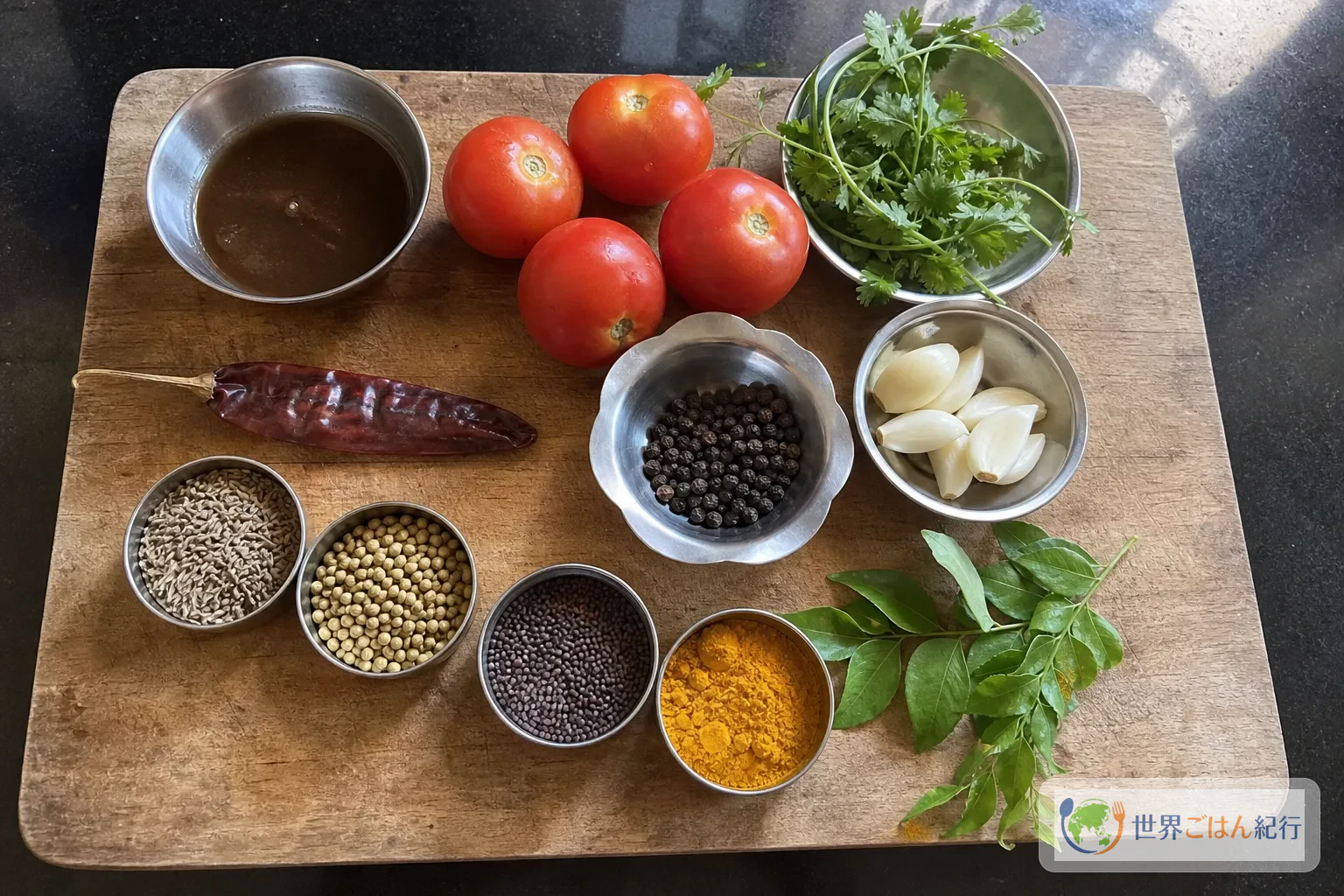
To avoid making the sourness too strong, do not put all the tamarind paste into the pot from the start; thin it first in 200 ml lukewarm water before use.
For roundness from lentils, wash 50 g dried toor dal and cook it soft in 250 ml water, then add 100 ml of the cooking liquid as part of the water.
Even when you add lentils, do not make the whole rasam thick like a potage; keep it to supporting the aroma with the cooking liquid.
In place of tamarind paste, you can soak 25 g dried tamarind in lukewarm water for 30 minutes, knead it and use the strained liquid.
If you replace it with lemon or lime, omit the tamarind, simmer, and add 1–2 tbsp juice after turning off the heat.
This substitution gives a brighter aroma for the same sourness and makes a rasam of a different line.
If you cannot get curry leaves, there is no complete substitute for the aroma, but adding a little more cilantro at the end still holds the table together.
Because it uses mustard and sesame oil, if you have allergies check the labels, omit the mustard, and replace the sesame oil with rice bran oil or sunflower oil.
If you do not normally use turmeric, rather than a tiny sachet, choose a container of about 80 g where you can check the ingredients and content, so it can go into dishes other than rasam.
Aromas to Protect and What to Change in a Home Kitchen
When making rasam with ingredients you can get nearby, you do not need to match everything to local ones.
Deciding the order of what to protect keeps the flavor from scattering even on days you cannot go to an import grocery.
| Priority | How to choose elsewhere | What changes |
|---|---|---|
| Sourness | Tamarind paste, or dried tamarind | Vinegar or pickled plums differ in aroma, so adjust from a small amount |
| Pepper aroma | Whole black peppercorns, coarsely crushed just before | Powder alone loses aroma quickly |
| Curry leaves | Prefer fresh or frozen | Dried is subtle in aroma |
| Oil aroma | Sesame oil or ghee | Rice bran oil is lighter, ghee gives a rounder aroma |
| Ingredients | Center on tomato | Without tomato the tamarind tang comes forward |
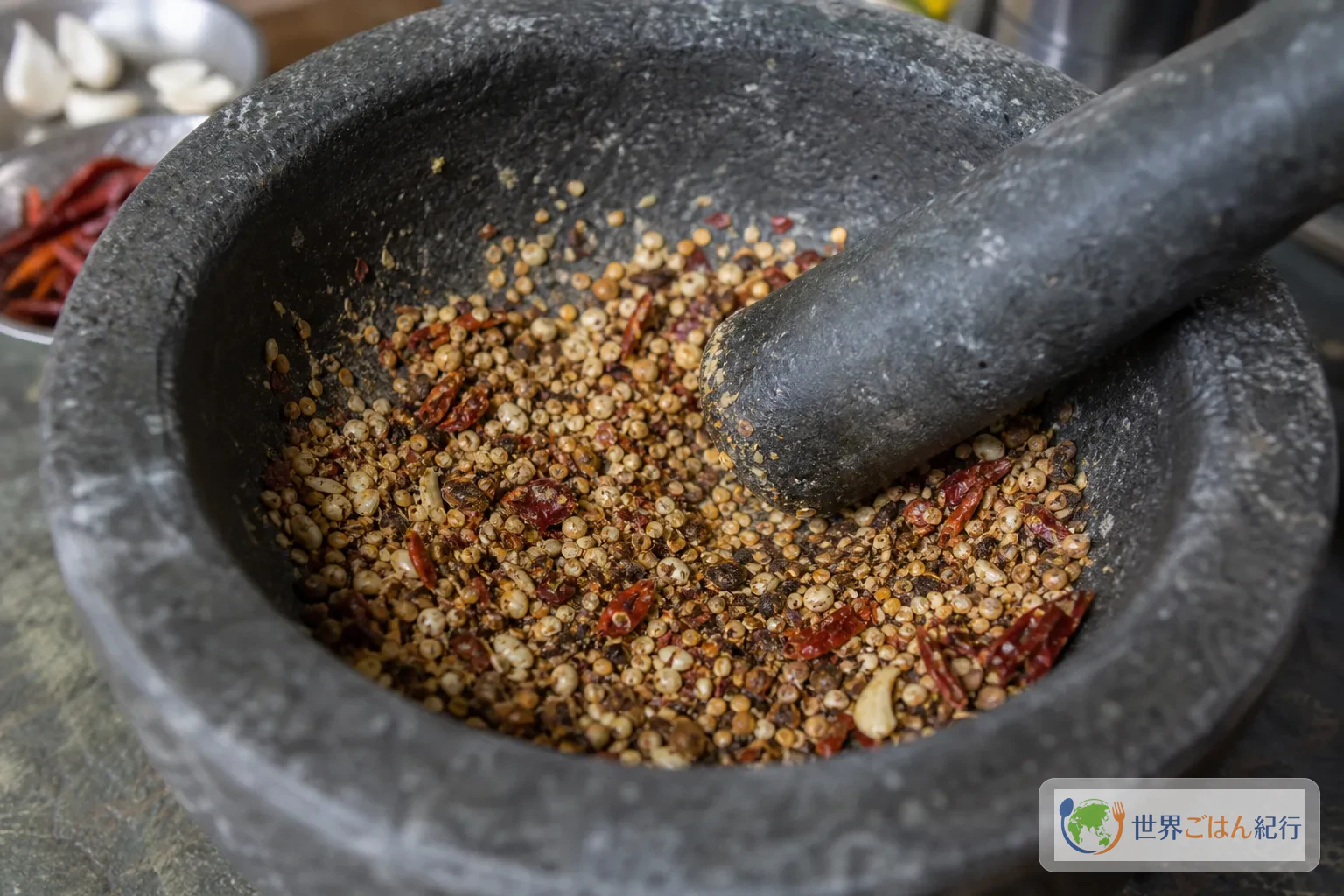
Do not grind the black pepper completely to powder in the mortar.
If grains of 1–2 mm remain, the aroma does not vanish all at once when you drink, but rises a little with each mouthful of rice.
On the other hand, grains that are too large tend to give only heat, so crushing it coarsely with the garlic is safe.
Tomatoes do not need to be peeled.
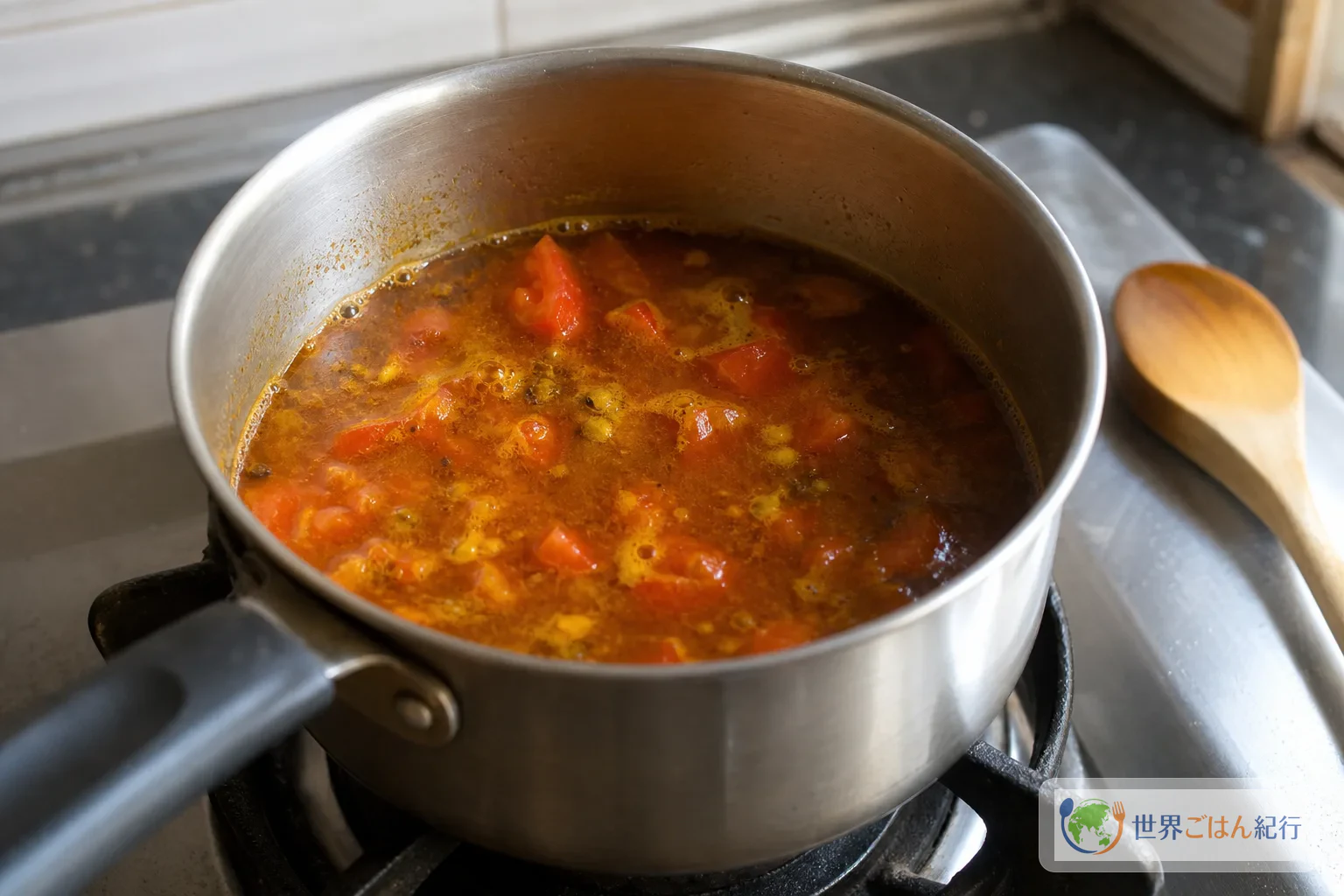
Chop them coarsely with a knife or crush lightly by hand to release the juice, and they break down naturally in the pot.
On days you want tamarind to be the star of the sourness, reduce the tomatoes to 1 and increase the water by 50 ml.
Conversely, when serving someone not used to sourness, reduce the tamarind to 15 g and add a little at a time at the end, which is easier to recover from.
The final tempering is less about adding flavor than about placing on the surface the aroma transferred to the oil.
Unlike spices simmered long in the pot, it leaves the impression of curry leaves and mustard right up until the moment it enters your mouth.
If you crush the spices only once, a mortar or a sturdy bag and a rolling pin is enough.
For people who make rasam and chutney often on weekends, a small food processor used in short pulses makes it easier to keep amounts even without over-grinding to powder.
But keep the blade running and the black pepper and cumin become a fine powder, changing how the aroma comes out.
If you make just one batch or do not want extra washing up, not buying one is fine.
Check the capacity and blade specs, and whether it suits short pulses rather than continuous running.
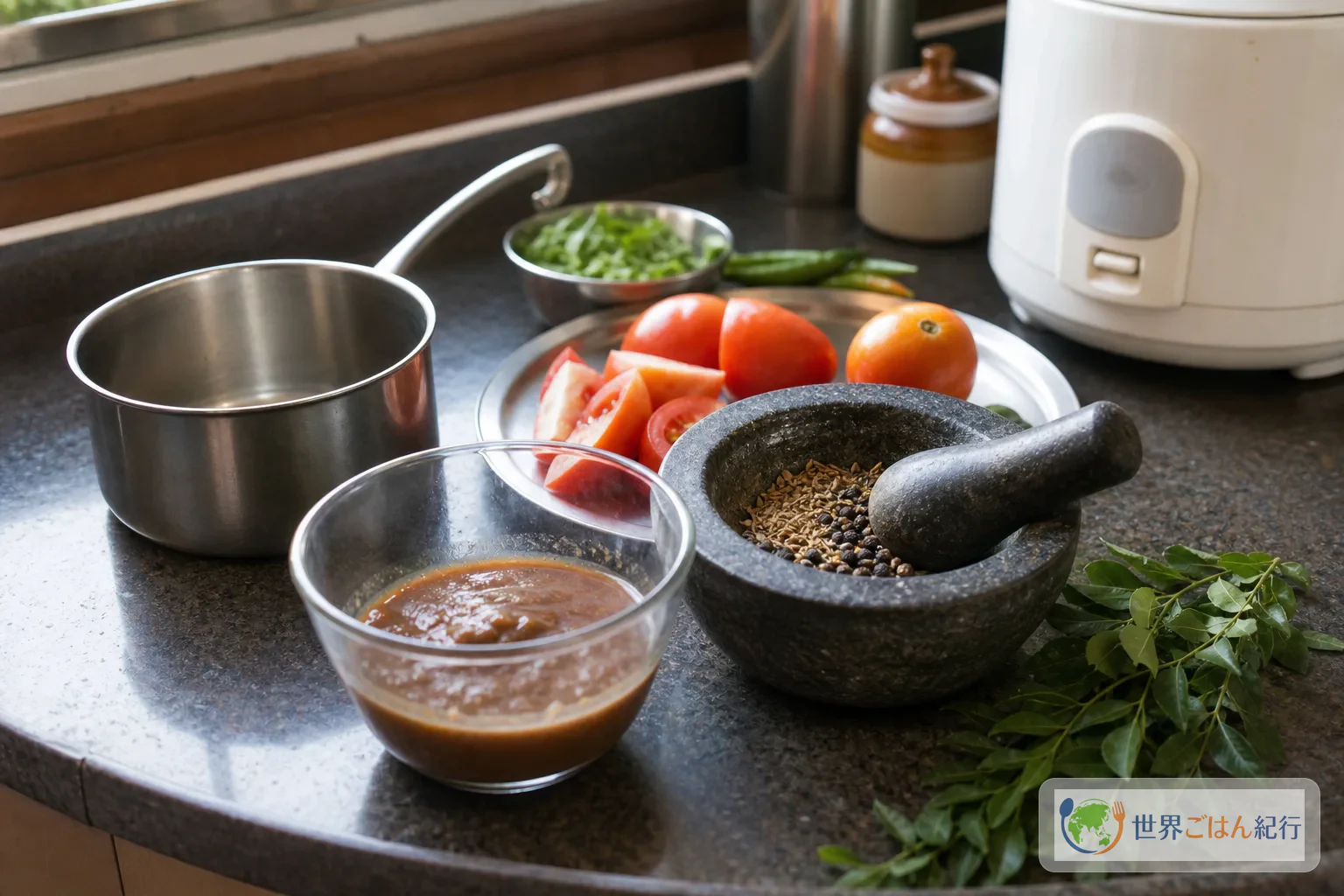
Where Shopping Gets Confusing
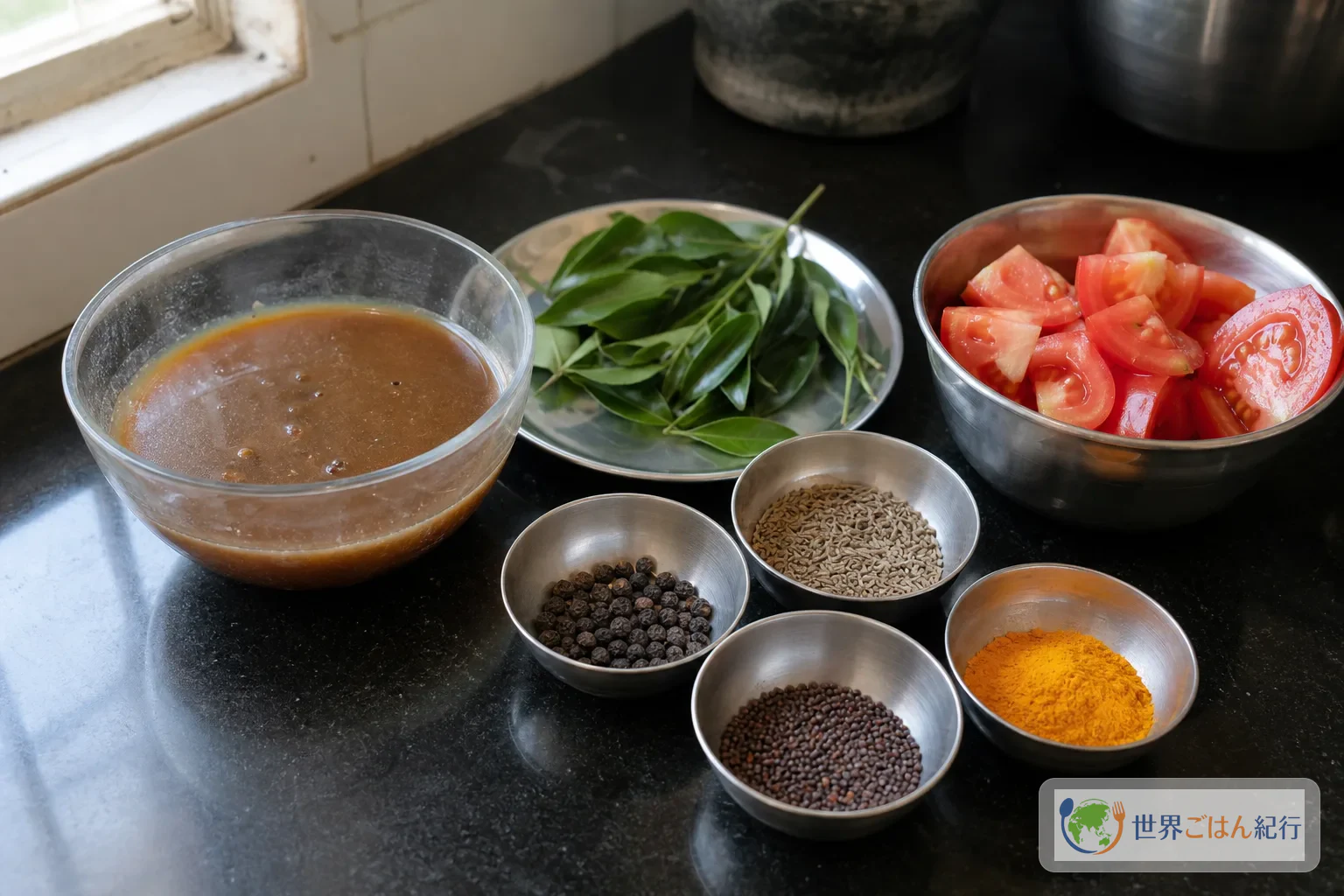
Tamarind is an ingredient with a clear reason to seek out and buy for making rasam.
Pickled plums or lemon can add sourness, but they do not give the sweet depth of the fruit or the distinctive aroma that remains when cooked.
For the first time, choosing paste saves the soaking time and the straining.
If you buy it, a product whose main ingredient is tamarind, with the content and solids shown on the label, is suitable.
If you can buy fresh or dried tamarind nearby, or plan to use it in other dishes, you do not need to add paste.
Check the content, such as a 200 g pack, and the ingredient label before choosing.
Method: Put the Sourness in the Pot, Then Float the Aroma at the End
It is not a dish where you keep the pot boiling.
Remove the rawness of the tomato and tamarind, lower the heat when the first bubbles come, and layer the aroma at the end.
Preparation
Chop the tomatoes into 1.5 cm dice, and chop the cilantro stems and leaves separately.
Dissolve the tamarind paste in 200 ml lukewarm water, and strain through a tea strainer if there are hard bits.
If using toor dal, cook it first and set aside 100 ml of the cooking liquid.
Where It Fails, Fix It by Condition, Not Flavor
Even though rasam seems to have many ingredients, the causes of failure mostly show in the state of the pot.
| What happened | Cause | How to fix it |
|---|---|---|
| Only the sourness is sharp | Too much tamarind, or too little liquid | Add water 1 tbsp at a time and adjust the salt a little |
| Bitterness remains | Scorched the cumin or curry leaves, or boiled too long | Remove the scorched tempering and thin with water and a little tomato |
| Weak aroma | Powdered the spices early, or simmered the finishing oil | Warm a little oil and cumin in a separate small pan, turn off the heat and add |
| Too thick to enter the rice | Reduced the tomato too far, or too much lentil | Add 50 ml boiling water at a time, and recheck salt and sourness |
| Gritty | Tamarind fibers or seeds remain | Pass through a strainer, add water if needed and rewarm |
| Too hot | Too much dried red chili or black pepper | Add a little tomato and water, and restore the outline with sourness and salt |
In particular, avoid raising the sugar all at once when the sourness is strong.
Sugar rounds the edge but does not reduce the amount of sourness itself.
In the order of thinning the pot, fixing the salt, and finally adding only a little sugar, you can make it easier to eat while keeping rasam's sour skeleton.
Conversely, if you cook it longer because the flavor is flat, the aroma goes and it gets flatter.
Skip the final tempering and only the sourness is left.
The reason for "thin, yet it makes you keep eating rice" that we heard at the start is recovered here.
Rasam's thinness is not weakness of flavor but the room for it to soak into rice and for the aroma to open in the mouth.
Six Rasams That Change Beside the Rice
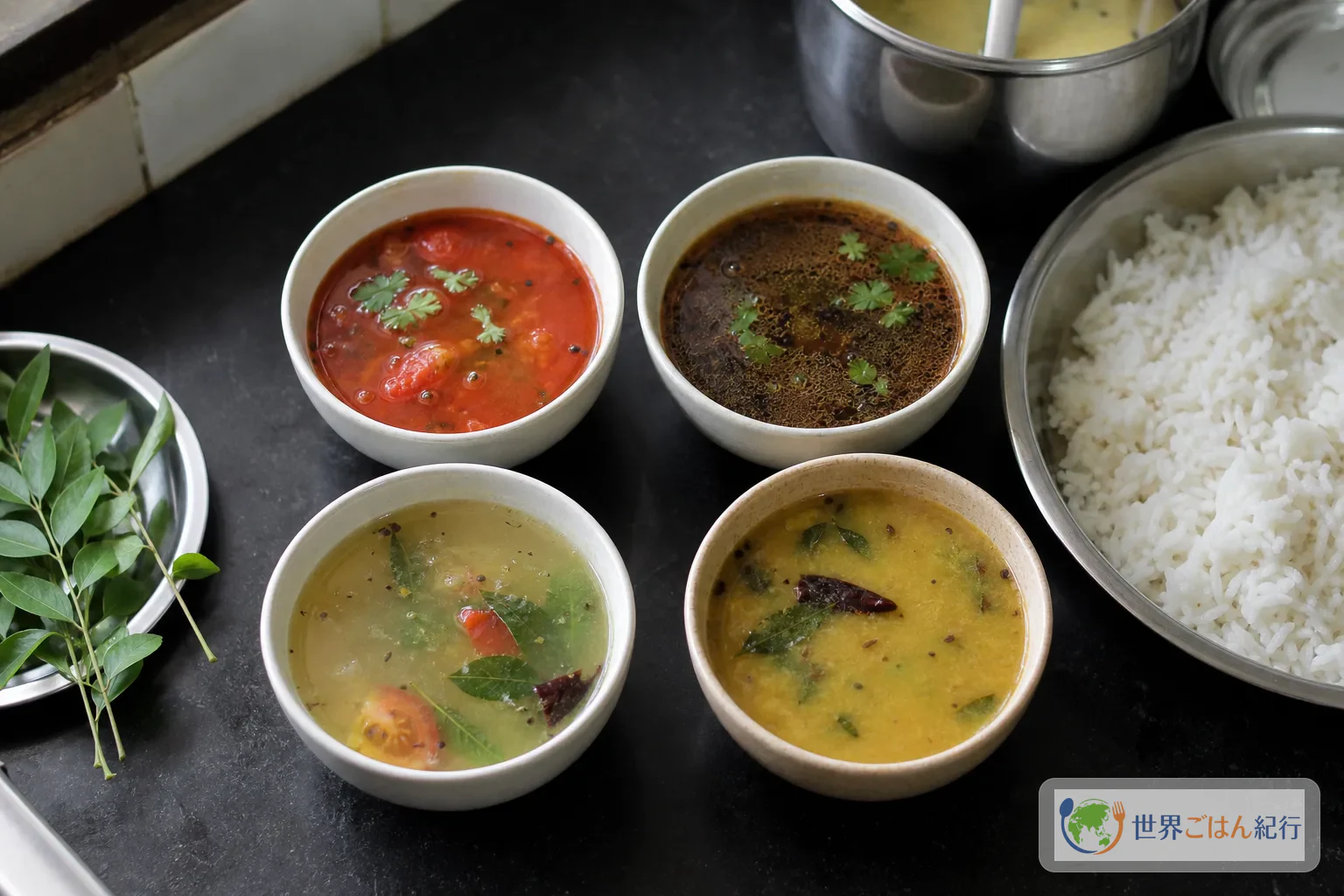
Once you can make the basic pot, changing the kind of sourness and the star of the aroma changes the impression of the table even under the same dish name.
Tomato-star rasam
Increase the tomatoes to 3 and reduce the tamarind to 10–15 g.
The sourness is rounder, a direction easy to serve to children and people not used to spices.
Milagu rasam with black pepper as the star
Use 1 tomato and increase the black pepper to 1 1/2 tsp.
The tamarind tang and the heat of pepper come forward, so pour a little at a time over rice.
Household style with garlic
Increase the coarsely crushed garlic to 4 cloves, and add 1 clove thinly sliced to the tempering too.
Turn off the heat before the garlic colors and a sweet aroma remains.
Lime-based, closer to chaaru
Do not use tamarind; simmer tomato and spices in water.
Turn off the heat and rest 5 minutes, then add 1 tbsp lime juice.
The aroma of citrus keeps its outline better when placed at the end than when simmered.
Rasam rounded with lentil cooking water
Use 100–150 ml of the liquid from cooking toor dal, adding the sweetness of lentils to part of the soup.
Increasing the lentils themselves moves the thickness toward sambar, so try the cooking liquid first.
When adding pineapple or vegetables
There are household styles that add a little sweet-sour fruit or green vegetables.
But the more ingredients you add, the more the lightness of rasam as a soup changes, so it is easiest to understand if you eat the basic pot first and add things afterward.
At the table, pairing it with the coconut roundness of avial, the lentil richness of dal tadka (see dal tadka, in Japanese) and the toastiness of dosa shows the difference in aroma.
A small amount of rasam beside a dish that gathers rice and lentils softly, such as ven pongal (see ven pongal, in Japanese), is also a good combination.
Storage and Reheating
Rasam lets the tamarind and spices blend better if rested about 30 minutes than right after cooking.
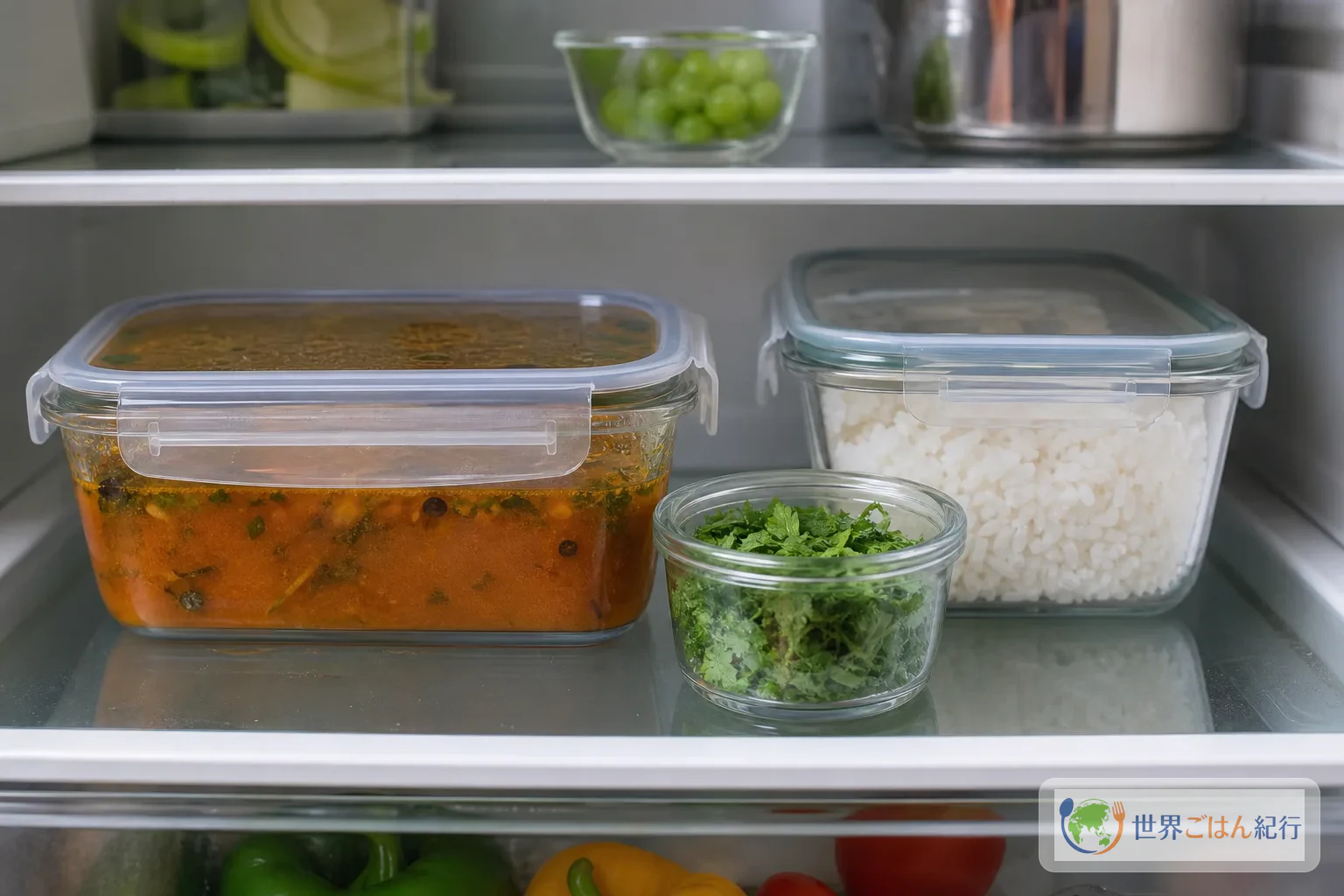
After it cools, move it to a clean airtight container and use it up within about 2 days in the refrigerator.
Do not store it mixed with rice or cilantro; chill only the broth.
To reheat, warm it in a small pot over medium-low heat only once, until steam rises from the center.
Boiling the whole pot hard thins the sourness and the aroma of the curry leaves.
If you freeze it, divide only the broth with few solids into single portions.
But after thawing, the aroma of cilantro and the tempering tends to drop, so warming a little cumin in oil and adding it on the day you eat makes it easier to restore.
Adding more salt to extend storage days spoils the flavor, so that is not recommended.
Frequently Asked Questions
Can I make rasam without tamarind?
Yes.
When using lemon or lime, omit the tamarind, simmer the broth, and add the juice after turning off the heat.
Vinegar or pickled plums change the direction of sourness, so keep to a small amount at first.
Can I use store-bought rasam powder?
Yes.
The ratio of black pepper, cumin, lentils and chili differs by product, so look at the label on the bag, add from 1 tsp, and adjust tamarind and salt afterward.
The way the aroma rises differs from a recipe like this one where you crush the grains yourself, but it is a realistic entry on a busy day.
Isn't it too thin without dal?
It is fine without it.
Rasam's thinness is not wateriness but a thickness for working sourness and aroma into rice.
If you want the roundness of lentils, adding it from the cooking liquid, not the lentils themselves, is easier to adjust.
What should I do if it is too spicy?
Add a little boiling water or tomato, and bring the salt back while tasting.
Hiding the heat with a lot of sugar breaks the balance of sourness and sweetness.
Next time, leave out the dried red chili and start with half the black pepper.
Can vegetarians or vegans eat it?
This recipe uses no meat or fish.
If you use ghee, replacing it with sesame oil or rice bran oil lets it suit tables that avoid dairy.
Some store-bought rasam powders and asafoetida list ingredients such as lentils or wheat, so check the labels as needed.
Which is correct, drinking it first as a soup or pouring it over rice?
Both exist.
In South Indian meals it is often eaten as a soup to go with rice and side dishes, but you can also taste the broth alone to check the aroma of the rasam.
Take the first mouthful from a bowl and the next over rice, and the meaning of the thickness becomes clear.
Sources
- The Journal of Ethnic Foods, “Vegetarian ethnic foods of South India: review on the influence of traditional knowledge” https://link.springer.com/article/10.1186/s42779-022-00156-1 Accessed and checked: July 30, 2026
- NDTV Food, “Rasam: All About South India's Favourite Comfort Food” https://food.ndtv.com/opinions/rasam-all-about-south-indias-favourite-comfort-food-1286956 Accessed and checked: July 30, 2026
- The Hindu STEP, “7 English Words Derived from Tamil” https://step.thehindu.com/blog/7-english-words-from-tamil/ Accessed and checked: July 30, 2026
- Sailu’s Food, “Rasam Recipe, South Indian Rasam” https://www.sailusfood.com/rasam-recipe-south-indian-rasam Accessed and checked: July 30, 2026
- Dassana’s Veg Recipes, “Tamarind Rasam Recipe” https://www.vegrecipesofindia.com/tamarind-rasam/ Accessed and checked: July 30, 2026
- NDTV Food, “What Is The Difference Between Sambar And Rasam?” https://food.ndtv.com/food-drinks/what-is-the-difference-between-sambar-and-rasam-your-guide-to-these-south-indian-stews-4763811/amp/1 Accessed and checked: July 30, 2026
- Kerala Tourism, “Onasadya” https://www.keralatourism.org/onam/ona-sadya/sadya Accessed and checked: July 30, 2026


