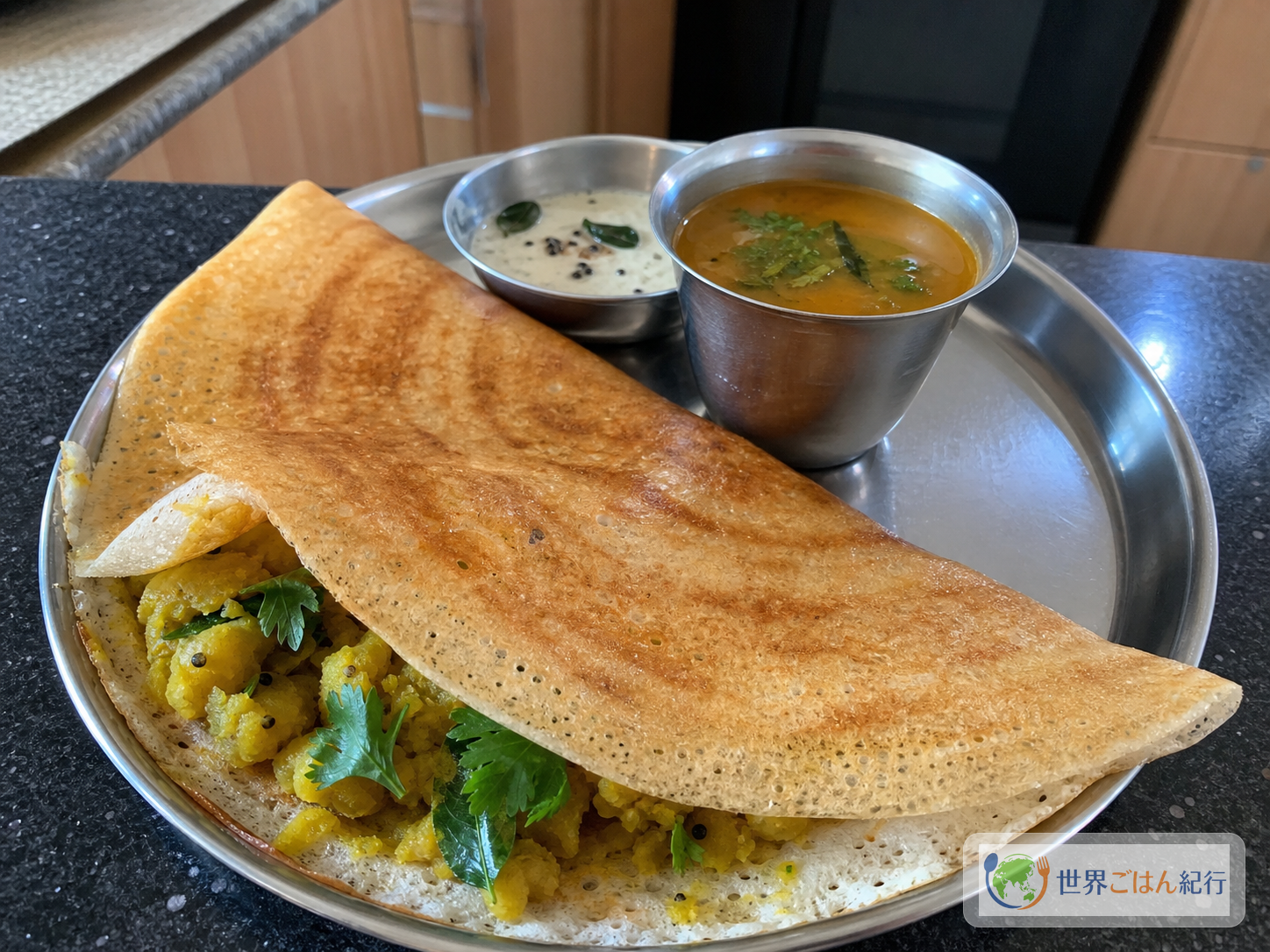
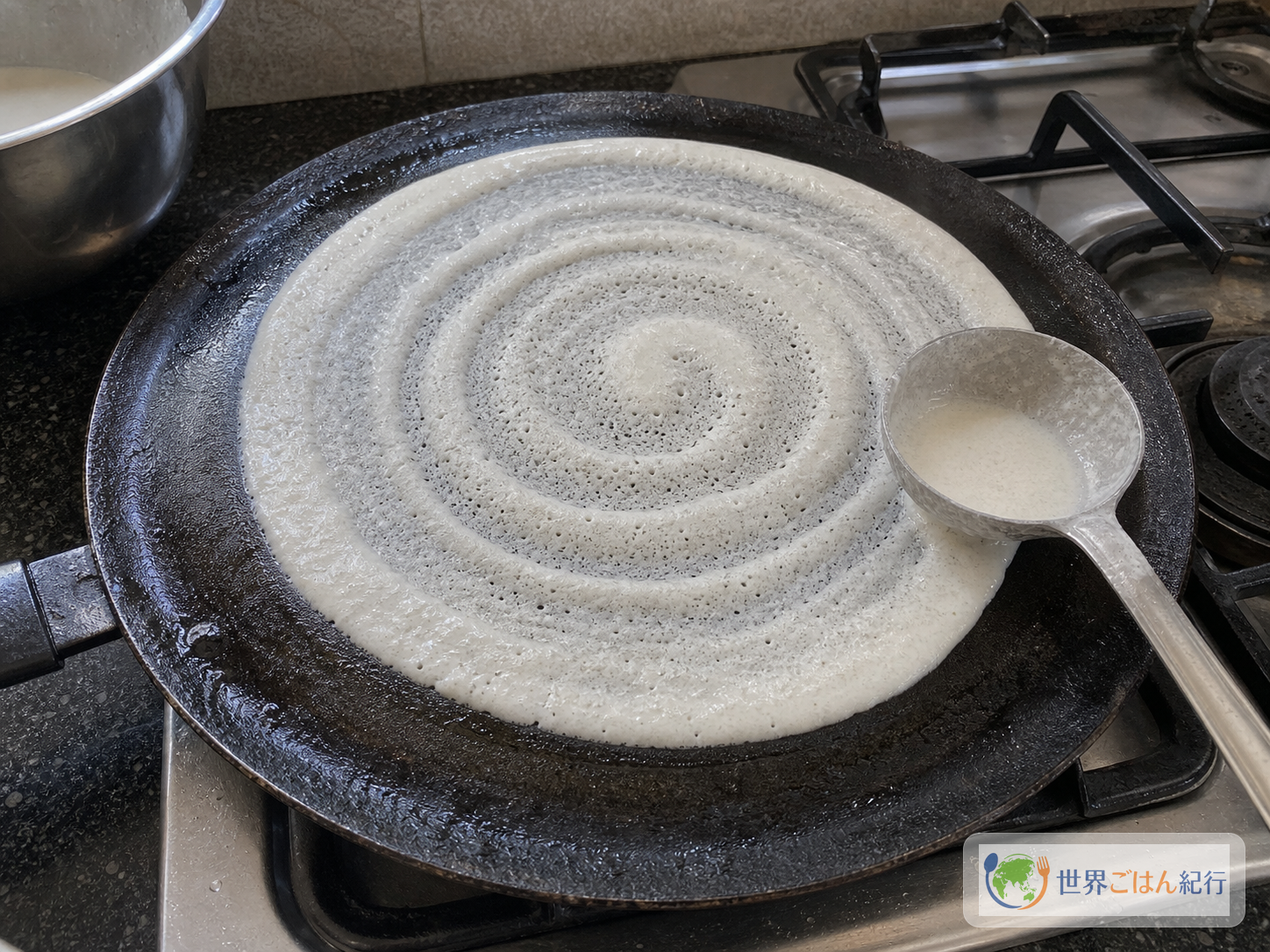
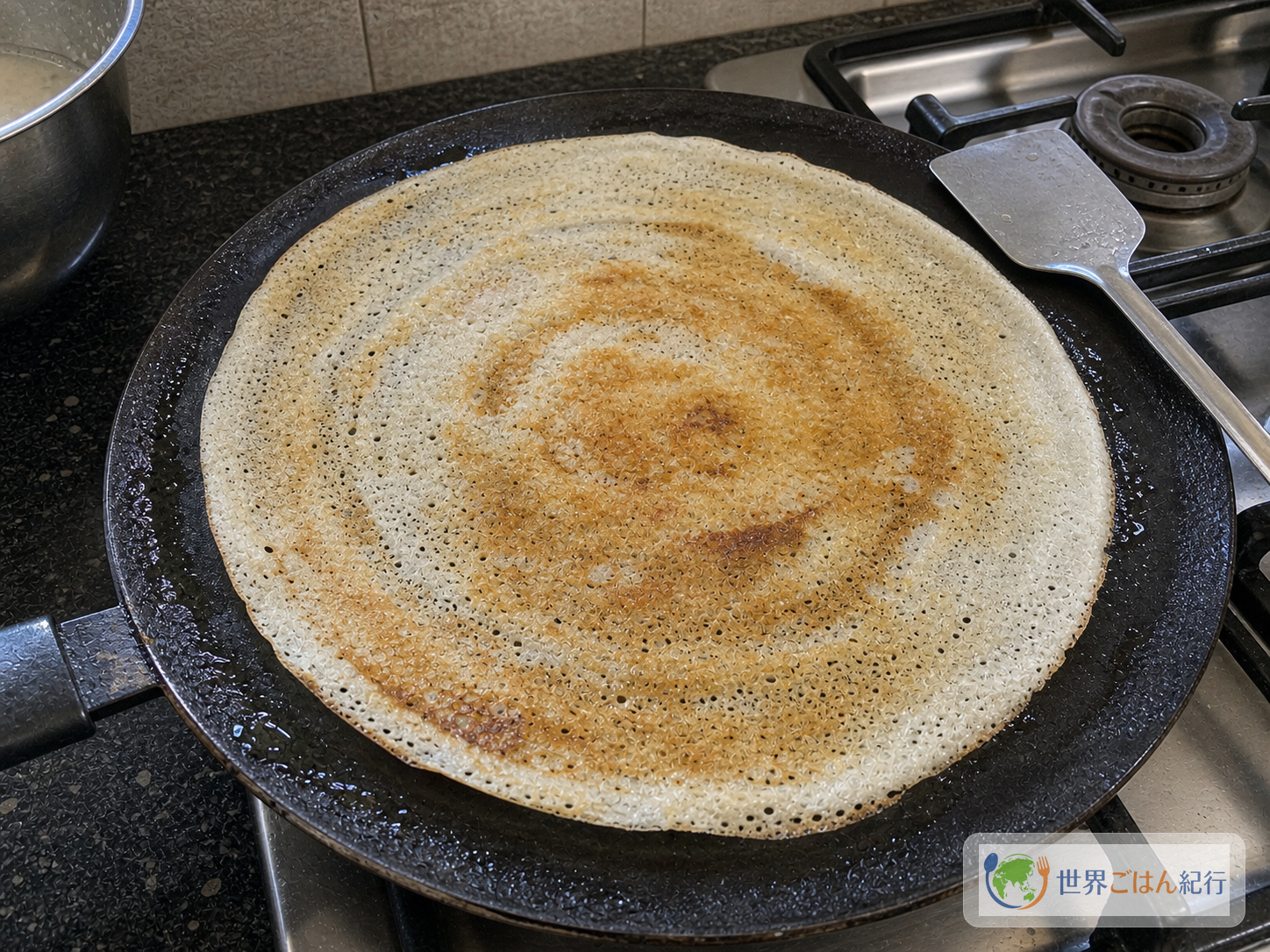
You drop the batter onto the pan and push it outward, round and round, with the curved back of a ladle. At first it's a pale, damp circle. Within seconds, tiny holes open up, the edges dry out, and the kitchen fills with the smell of fermented rice and lentils. If the heat is too low, the dosa turns chewy and heavy; too high and the center stays thick while it scorches. With so few ingredients, the fermentation and the temperature of the cooking surface are the flavor.
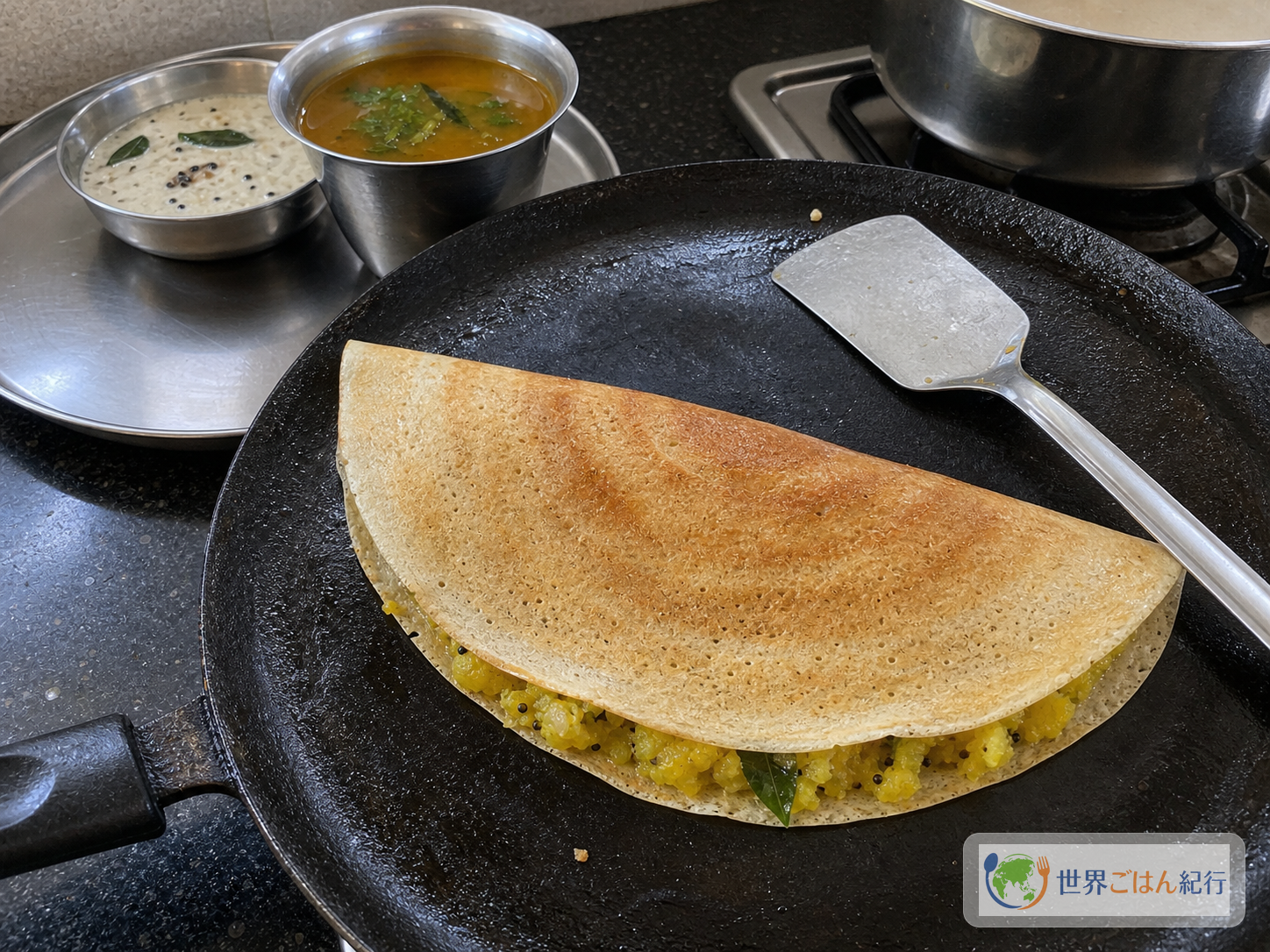
South Indian dosa is made by soaking rice and urad dal, grinding them, fermenting the batter and spreading it thin on a tawa (a flat griddle). It is written "ദോശ" in Malayalam, "தோசை" in Tamil and "ದೋಸೆ" in Kannada, and depending on the region or restaurant it comes thin and crisp, thick and soft, folded around potatoes as masala dosa, or spread paper-thin as paper dosa.
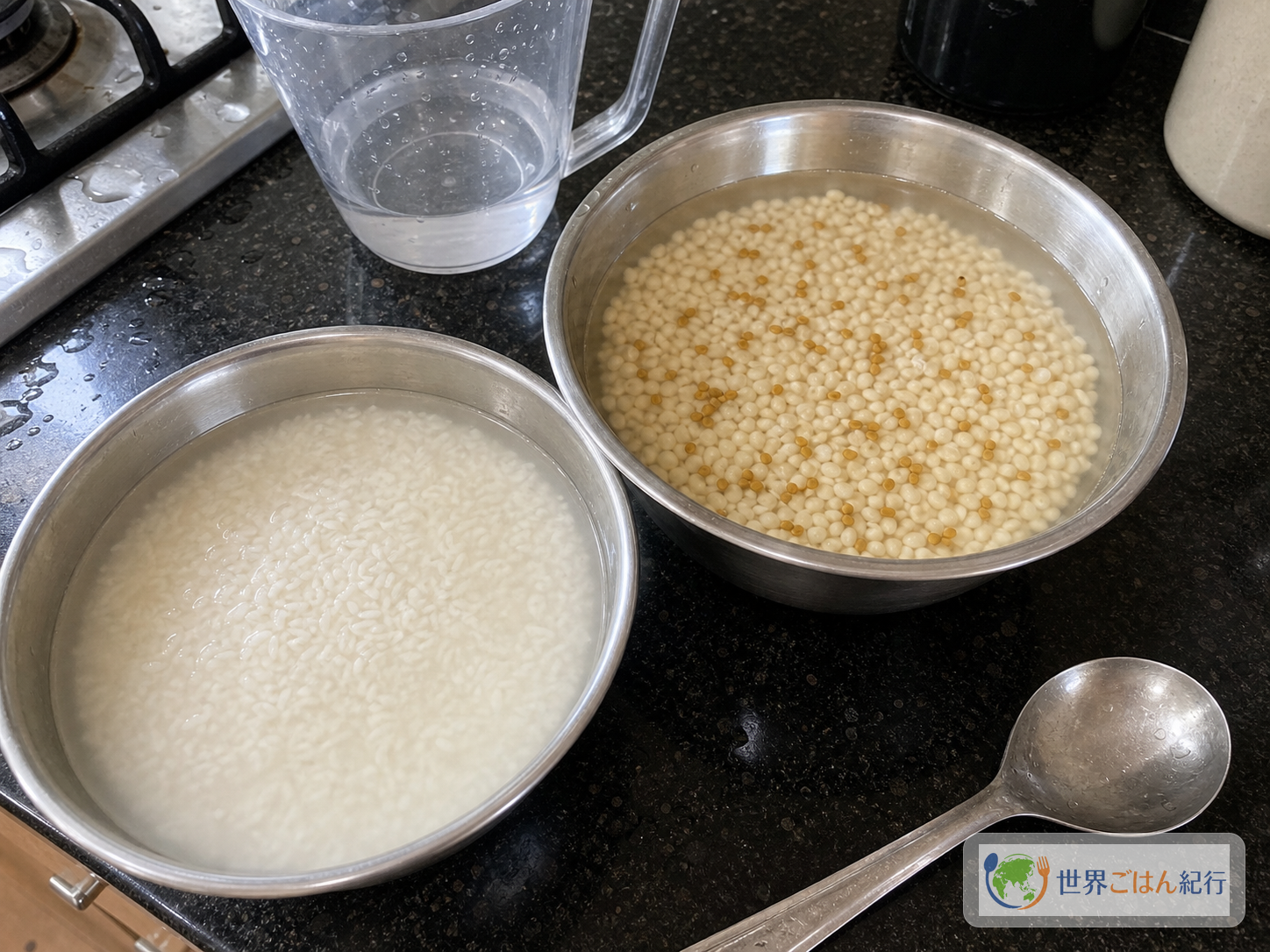
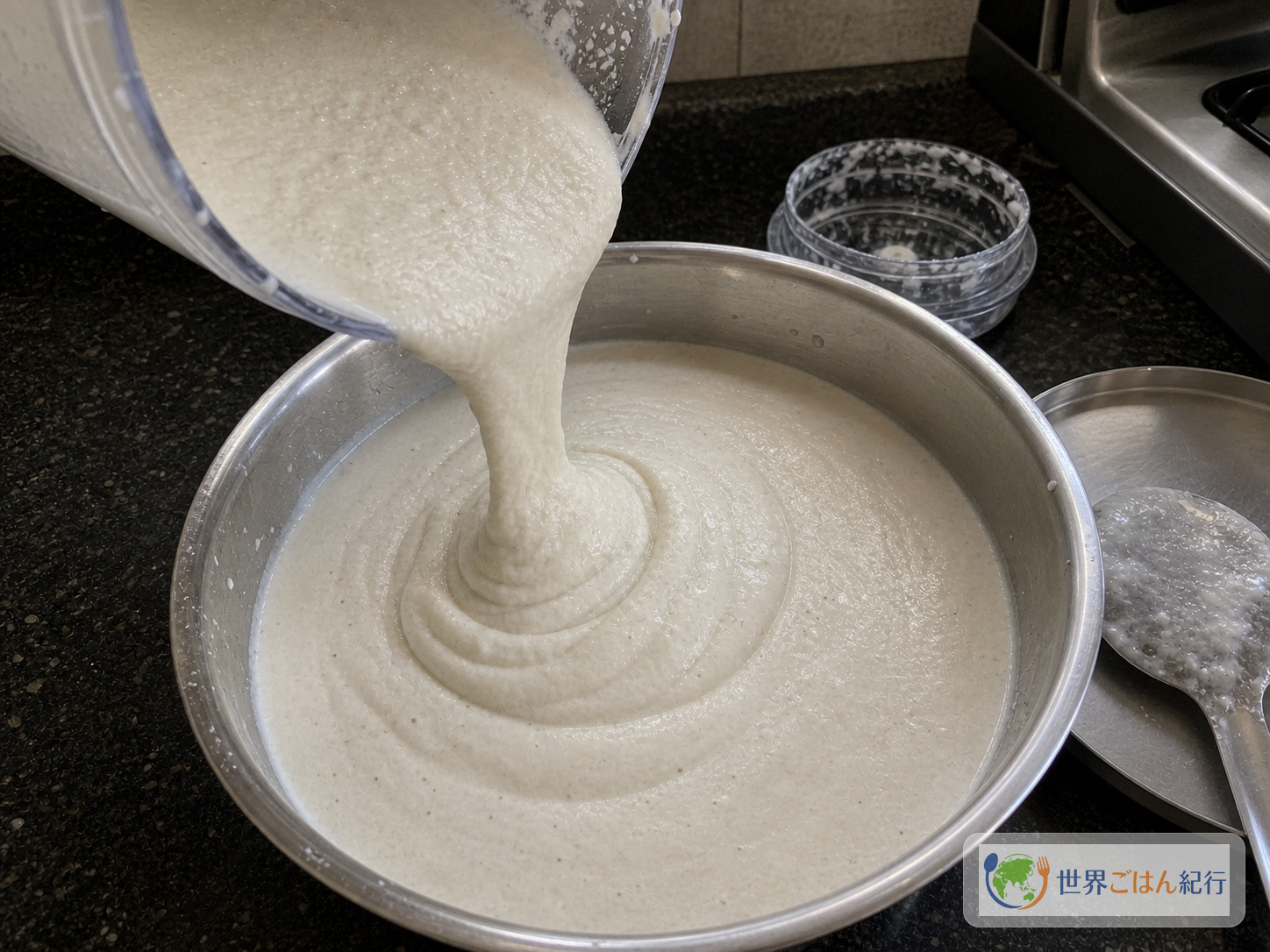
This recipe leans toward a ratio that works with ordinary rice and a home skillet, while keeping the essentials: urad dal, fermentation and a hot cooking surface. If you want dosa for breakfast, starting the night before usually isn't enough. The most reliable rhythm is to start soaking the morning or midday before, grind in the evening and cook the next morning.
Dosa at the table in South India, and how it varies
In English, dosa is often described as a "South Indian crepe." But it has nothing to do with a French crepe loosened with eggs and milk. The star is a fermented batter of rice and urad dal. The stickiness of the white lentils combines with the slight graininess of the rice, so the dosa cooks up thin and crisp on the outside and a little supple in the middle.
The classic method is to soak rice and white urad dal for at least 4–5 hours, grind them fine, ferment overnight and spread the batter on a tawa lightly coated with oil or ghee. The rice-to-dal ratio varies from home to home, but for a thin dosa, 3–4 parts rice to 1 part urad dal is an easy place to start.
Grinding rice and urad dal and fermenting them overnight gives dosa batter its gentle tang and light texture. Pour a similar fermented batter into molds and steam it, and you get idli, South India's steamed rice cakes.
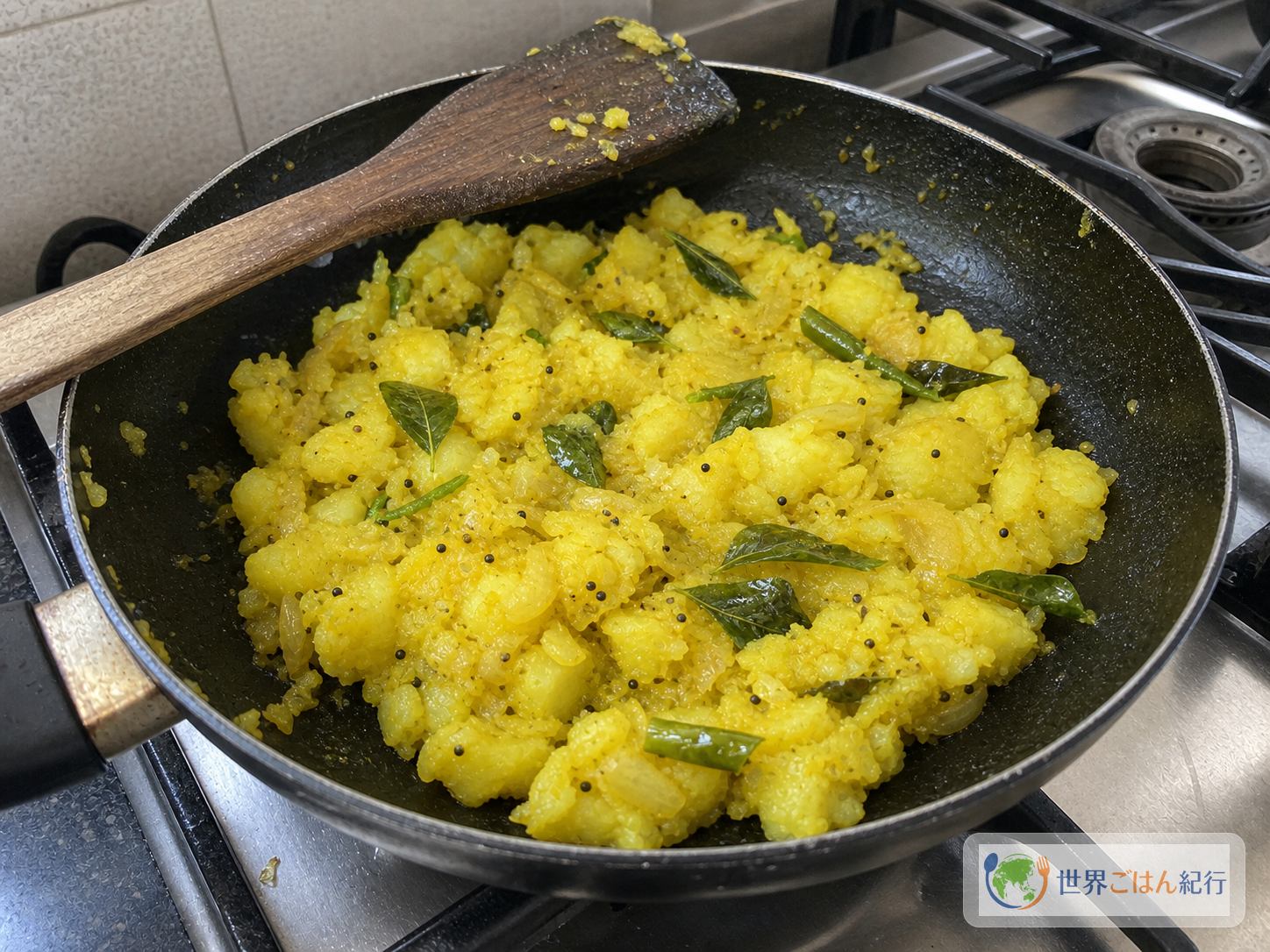
A breakfast plate in South India isn't just a dosa. It comes with coconut chutney, sambar, podi (a spice powder loosened with oil) and potato masala, and you use the thin dosa to scoop up the flavors. Making everything at once at home is exhausting, so this recipe makes the potato masala the centerpiece and leaves the chutney and sambar for days when you have the energy.
In South Indian eateries, dosa is less a special-occasion dish than everyday food that properly fills you up in the morning or late afternoon. A cook stands in front of a large griddle, ladles out the fermented batter and spreads dozens of dosas with the same motion. Sambar keeps warm alongside, and chutney comes in small stacked steel bowls. You don't need to match that pace at home, but it's worth keeping the sense that this is food to eat the moment it comes off the pan.
The name shifts a little from place to place. The Malayalam "ദോശ," the Tamil "தோசை" and the Kannada "ದೋಸೆ" are close relatives, all fermented rice-and-lentil batters cooked on a griddle, yet the thickness, the amount of oil and the color of the chutney served alongside differ. Some, like the neer dosa featured by Karnataka Tourism, are spread thin from a watery batter without a pronounced fermentation. Rather than pinning dosa to a single form, look at how the rice-and-lentil batter is spread and what it's eaten with, and the regional differences come into view.
| Setting | How it comes across locally | How to approach it at home |
|---|---|---|
| Masala dosa for breakfast | Folded around potatoes, eaten with sambar and chutney | Start like this recipe, with the masala at the center for a satisfying meal |
| Thin plain dosa | The batter and the toasty griddle flavor are the stars | Skip the filling, make them smaller and watch the fermented aroma and browning |
| Neer dosa | A watery batter spread thin, with a soft texture | Don't aim for it the first time; try it with a separate ratio once you're used to dosa batter |
| Leftover batter at home | The next day it's tangier and goes into idli or small dosas | Use within 2 days in the fridge; on very tangy days, make them smaller |
Ingredients
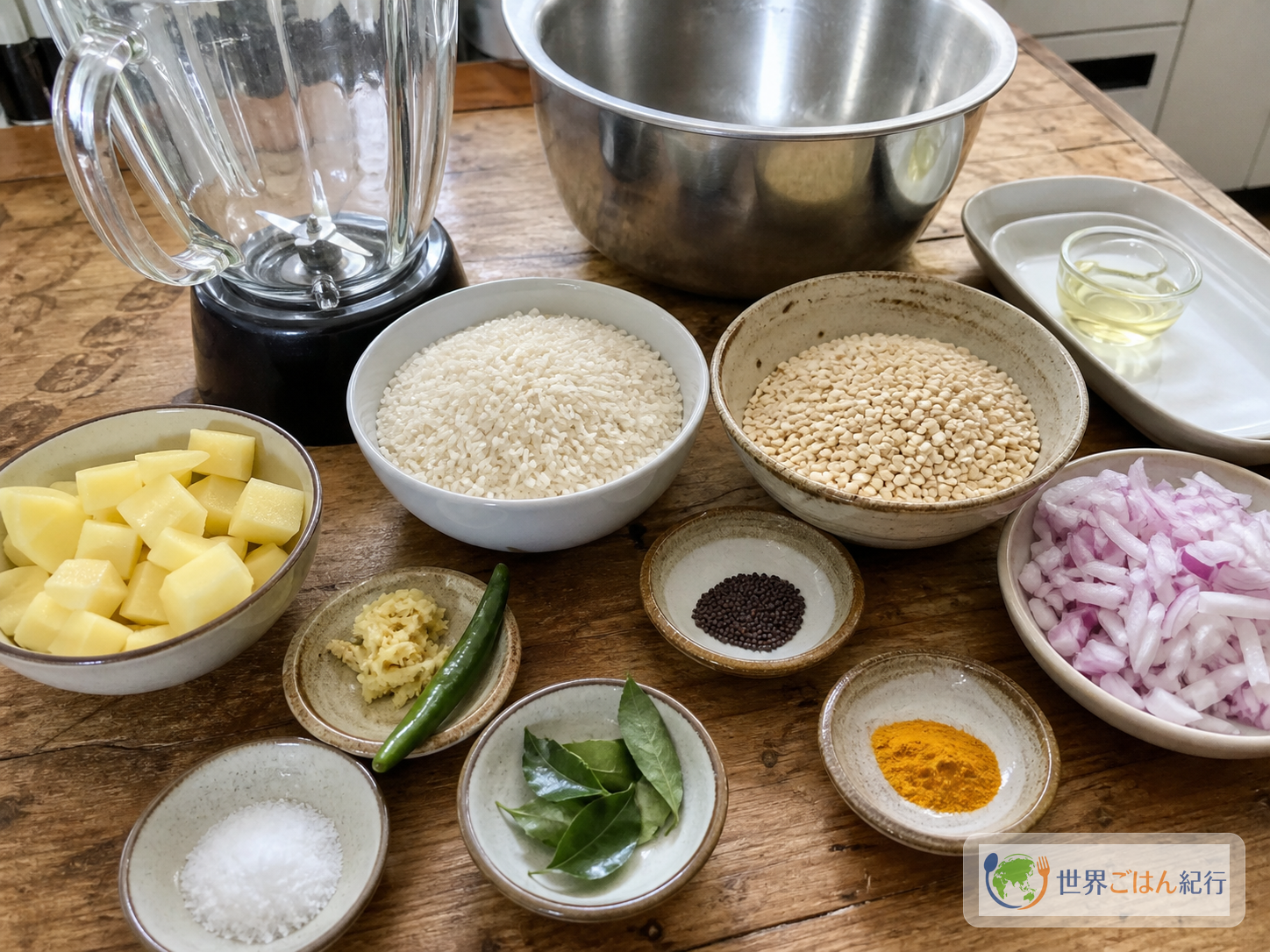
Serves 4 and makes about 8 dosas, 24–26 cm (9.5–10 inches) across. That's 4 people for breakfast, or 5–6 at dinner with a curry or side dishes.
This recipe uses legumes, mustard, dairy and coconut. Discard the fermented batter if it turns too sour, develops pink or black spots, or smells rotten. Keep the uncooked batter in a clean container and don't leave it sitting at room temperature longer than necessary.
What to keep and what you can swap at home
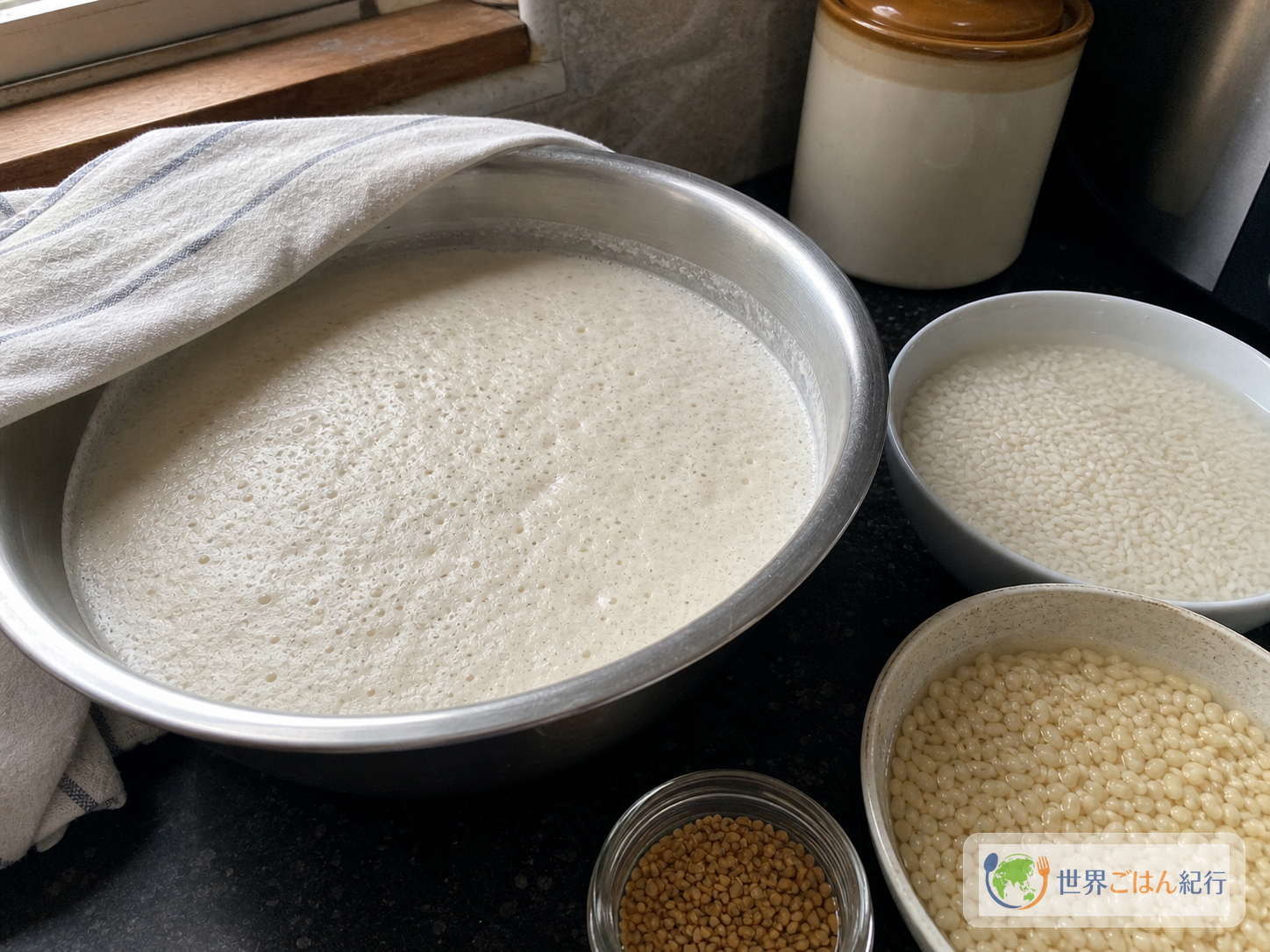
Dosa can look like a dish where "anything thin will do," but an instant crepe made from rice flour alone and a fermented rice-and-urad-dal batter differ in both aroma and surface texture. You don't need to buy every traditional tool for a home kitchen. Still, knowing ahead of time which swaps turn it into something else will save you a lot of failures.
| Item | Keep | Fine to swap |
|---|---|---|
| Lentils | The stickiness of skinned urad dal | Urad dal flour, with a little less water |
| Rice | Soaking raw rice and grinding it | Short-grain rice only, or half short-grain and half long-grain |
| Fermentation | Aim for 28–32°C to develop bubbles and tang | In winter, use a yogurt maker, the proof setting on your oven, or a warm spot such as near a rice cooker on keep-warm |
| Cooking surface | Preheat thoroughly and spread thin | A tawa, a carbon-steel or cast-iron skillet, or a heavy nonstick skillet |
| Fat | Drizzle a little oil from the edge to dry it out | Ghee, rice bran oil or untoasted sesame oil. The aroma changes, but it works |
If you can't find urad dal, buying skinned urad dal from an Indian grocery or online is a better bet than substituting red lentils or regular soybeans. Without the stickiness of the dal, the batter tears on the tawa and spreads into nothing but large, rough holes.
The ideal is the rice used for dosa in South India or parboiled rice, but they aren't always in the pantry. Short-grain rice alone works, but because it's stickier, use slightly more water, keep the cooking surface hot and spread quickly. Mixing in half long-grain rice makes the edges lighter.
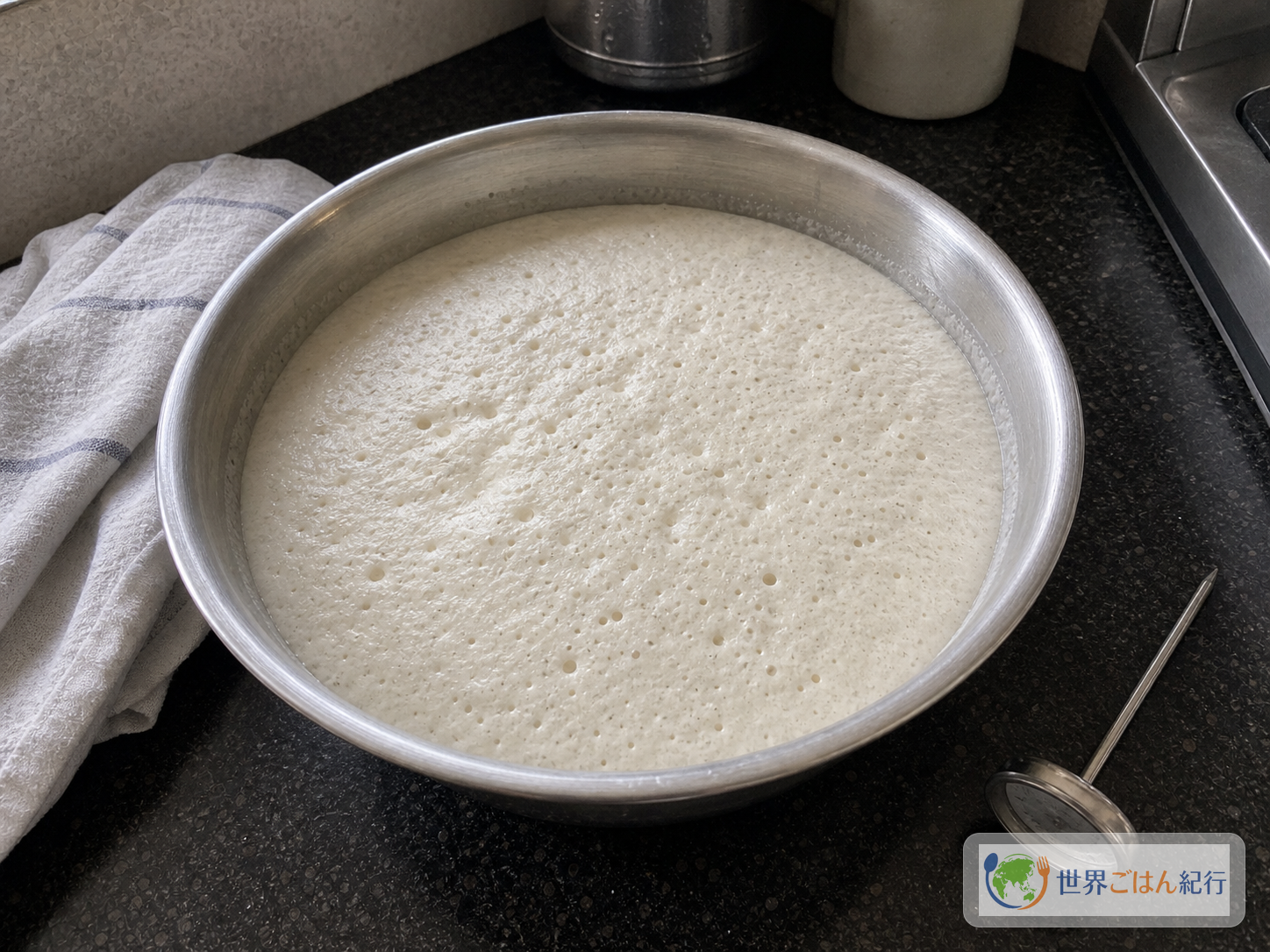
Fermentation is more reliable when you don't go by the clock alone. The same 8 hours progress differently in a summer kitchen and a cold, north-facing winter one. Look for three signs: it has risen a little, you can see fine bubbles, and it smells sour but not unpleasant.
| Environment | Where to put it | What to look for |
|---|---|---|
| Room temperature around 20°C (68°F) | Oven proof setting at 30°C (86°F), or a yogurt maker | If it's weak after 8 hours, add 2–4 hours. Don't cook it while there are few bubbles |
| Room temperature around 25°C (77°F) | A spot in the kitchen out of direct sunlight | About 1.3 times its volume in 8–10 hours. Move it to the fridge once it turns tangy |
| Room temperature around 30°C (86°F) | A cool room, or mix in half the salt first | Check at 6–8 hours. Refrigerate before it rises too much |
| Batter from the fridge | Bring it to room temperature 30 minutes before cooking | If it's thick, add water 1 tbsp at a time until it falls from the spoon as before |
Choosing specialty ingredients and tools
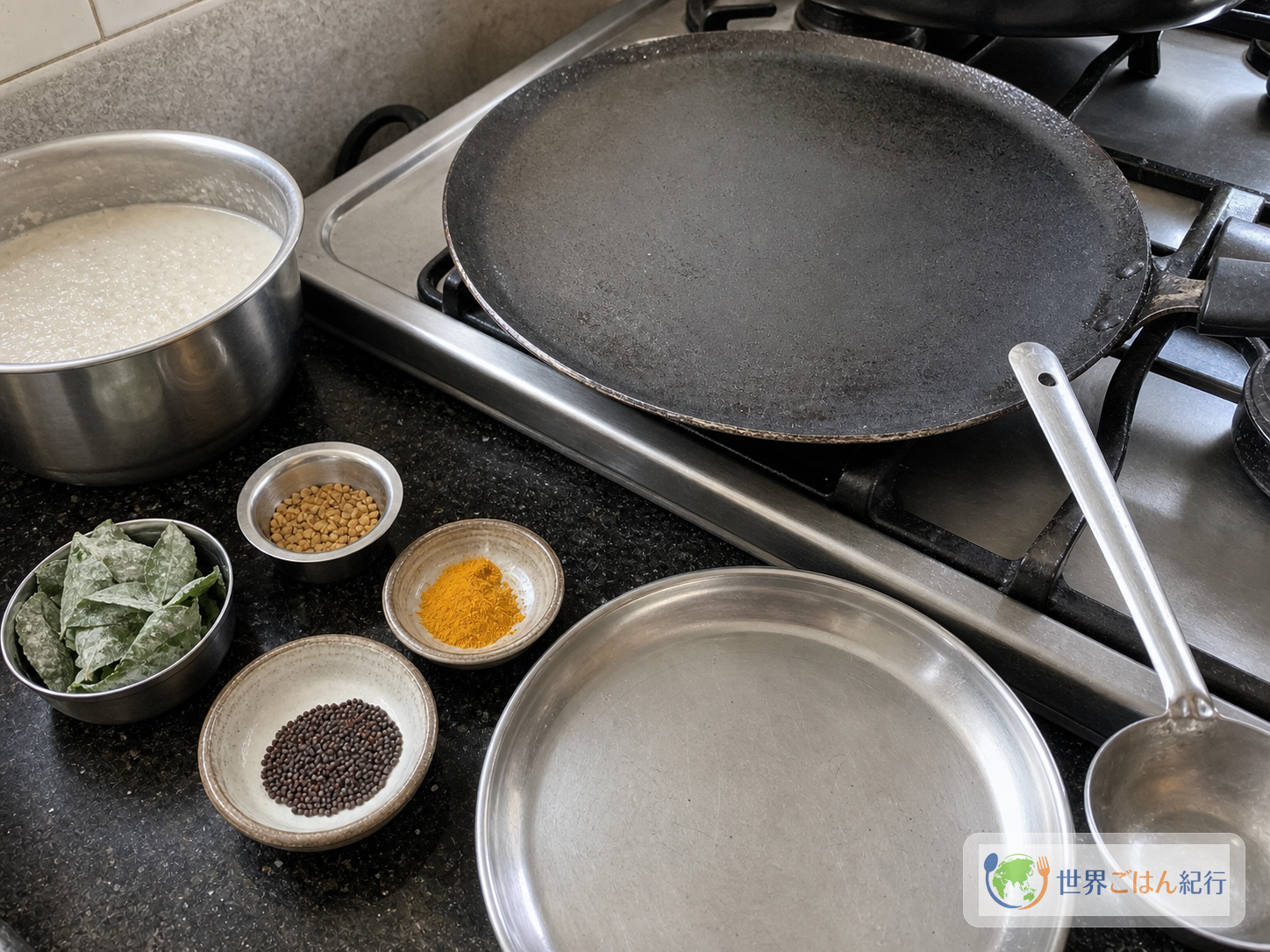
The hard-to-find items are urad dal, fenugreek, curry leaves and a flat tawa. A regular supermarket covers the rice, potatoes, onion and yogurt. For a first attempt, look for urad dal at an Indian grocery or online.
Shop in this order of priority: urad dal, fenugreek, a cooking surface, then the aromatic leaves. Turmeric and cumin are easy to cover from spices you already have, but urad dal is the one ingredient that changes the batter dramatically if you substitute it. Check the quantities in the ingredient list and buy only what you're missing.
| Priority | What to buy | Why |
|---|---|---|
| Top | Skinned urad dal | Creates the stickiness and the fermentation bubbles. Other lentils change the surface |
| High | Fenugreek seeds | A small amount supports the fermented aroma and browning. Leftovers go into curries |
| High | A flat tawa or heavy skillet | To spread the batter thin and even. A curved pan bottom makes it tear easily |
| Nice to have | Curry leaves | They instantly push the potato masala's aroma toward South India |
You only use 1/2 tsp of fenugreek, but it adds a faint sweet aroma to the fermented batter. Beyond dosa, it's useful for fermenting injera (in Japanese) and in Indian curries.
You can cook dosa in a heavy skillet without a tawa. If you're making many, though, a tool with a wide flat surface makes the batter easier to spread and the edges easier to dry thin.
Turmeric sets the color of the potato masala. A jar also covers chana masala (in Japanese) and dal bhat.
You can eat the dish without curry leaves, but they bring the green, distinctly South Indian aroma. They also go into avial (in Japanese) and Sri Lankan-style curries.
Instructions
The fermented batter can be made in one go and refrigerated. Soak in the morning the day before, grind and ferment that evening, and cook the next morning. In homes where the room is cold in winter, fermentation alone can take 12 hours or more.
Common problems
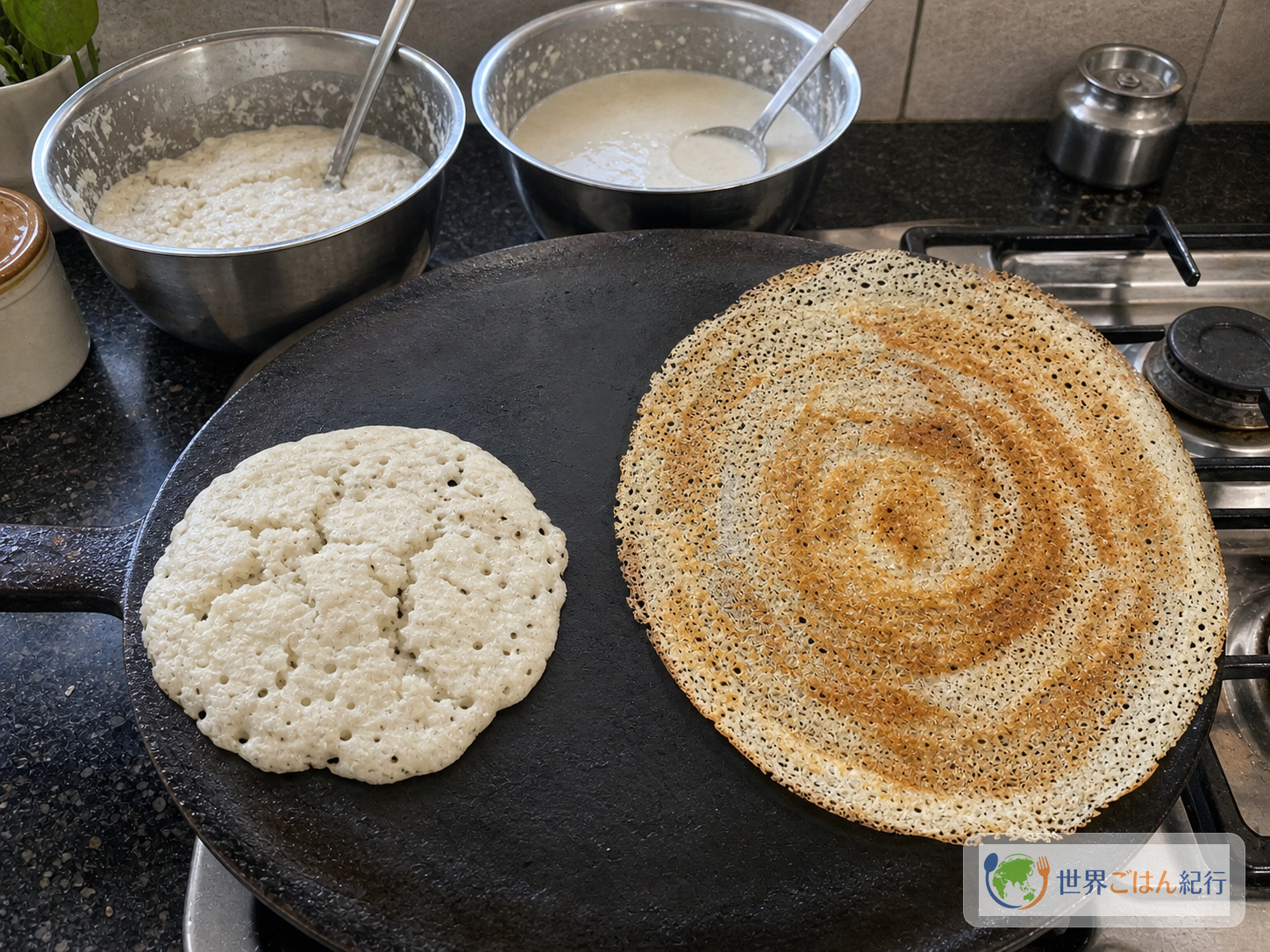
The usual sticking points with dosa are underfermentation, batter thickness and the temperature of the cooking surface. Even when you measure exactly, results shift with the type of rice, the power of your blender and the temperature of the room. Saying you have to listen to the batter may sound dramatic, but you can correct course by watching the bubbles, the smell, the way it falls from the spoon and the surface as it cooks.
It also helps not to count the first one as a failure. Even in South Indian eateries, cooks wipe the griddle with water or spread a thin film of oil until its temperature settles. At home, make the first dosa small and treat it as a test of how it spreads and browns. Decide then whether to thin the batter, lower the heat or wipe off oil, and only then spread them large.
Use the back of the ladle to spread the batter thinly in circles from the center outward. If the cooking surface is too hot, the batter sets before you can spread it, so cool it briefly with a damp cloth before pouring.
| Problem | Cause | Fix |
|---|---|---|
| The batter doesn't rise | The room is cold, the dal is ground too coarsely, too much salt | Add 2–4 hours at around 30°C. Next time, grind the urad dal smoother |
| Too sour | Overfermented, left out too long in summer | Add a little salt, refrigerate and cook it the same day. Discard if it smells strongly rotten or is discolored |
| Thick and won't spread | The batter is stiff, the surface is so hot it sets instantly | Add 2–4 tbsp water and cool the tawa once with a damp cloth |
| It tears | Underfermented, not enough urad dal, too much oil on the tawa | Ferment another 1–2 hours. Wipe off the oil and make the first one small |
| Pale and not toasty | Heat too low, cooked too briefly | Preheat well over medium-high heat, then dry it out over medium after spreading |
| Watery potatoes | Too much liquid, mashed too much | Cook off the moisture over medium heat for 2–3 minutes and add the lemon juice at the end |
If spreading them thin and large is hard, start with small dosas 16–18 cm (6–7 inches) across. In a home skillet, small dosas with toasty edges succeed far more often than trying for huge, paper-thin restaurant-style ones.
Storage and making ahead
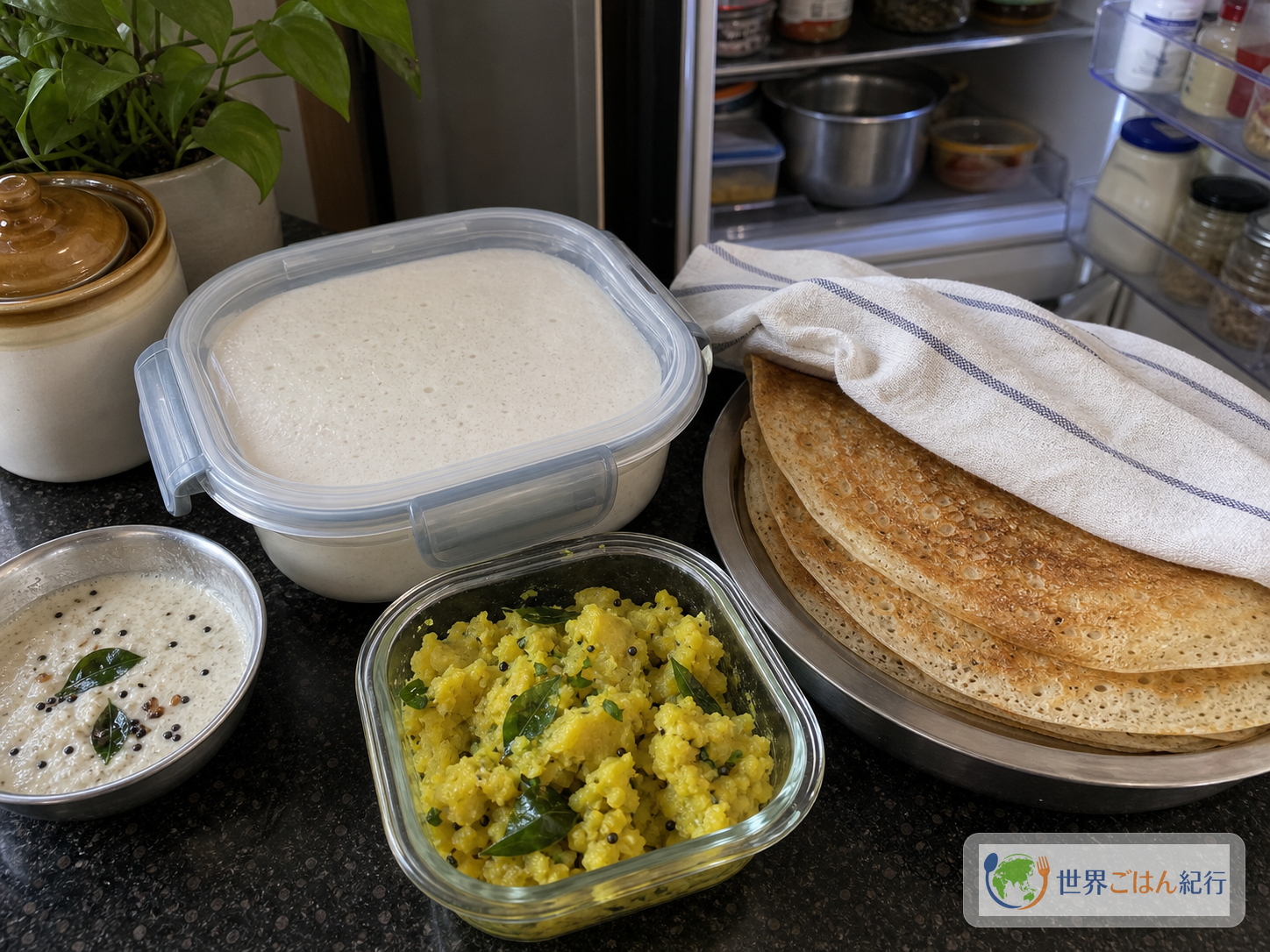
After fermenting, mix in the salt, transfer the batter to a clean container and use it within about 2 days in the fridge. It keeps slowly getting tangier while chilled, so the next day add a little water to restore the consistency, and if it's quite sour, season the masala and chutney a little more boldly. You can freeze it, but after thawing it tends to separate and is harder to spread thin.
Potato masala keeps 2 days in the fridge. To reheat, add 1–2 tbsp water to a skillet and loosen it over medium heat. Cooked dosas absorb moisture as they sit, so they don't suit making ahead. If you must keep some, layer them individually between paper and rewarm each side for 1 minute over medium heat in a dry skillet just before eating.
For breakfast: soak the morning before, grind the evening before, ferment overnight, then make the masala and cook the dosas in the morning. For dinner: soak the night before, grind and ferment in the morning, and cook in the evening. Fermentation is slow in winter, so judge by the bubbles and smell rather than the clock.
How to serve it
Start a masala dosa from the crisp edge to really taste its toastiness. Then tear off the center with the potatoes and add the cool tang of chutney and the warm lentil aroma of sambar. In South Indian restaurants it's mostly a breakfast or snack dish, but for dinner, add a lentil curry or a vegetable dish to make it a full meal.
Within Indian cooking, it pairs easily with chana masala (in Japanese) for lentil richness, the gentle rice dish khichdi (in Japanese), or avial (in Japanese), whose vegetable aromas are close to the masala's. On days you serve meat, make the dosas small and offer them as a side to tandoori chicken (in Japanese). When you don't have time for chutney, set yogurt-based raita (in Japanese) alongside to absorb the heat and oil.
The meal comes together better if you don't try to serve everything hot at once. Make the potato masala ahead, keep the chutney in the fridge and cook only the dosas at the end. Serving each one as it comes off the pan lets people enjoy the thin edges before they go soft. To explore South Asian cooking more broadly, see the regional guide to Indian cuisine (in Japanese).
FAQ
Can I make it without urad dal?
You can make a thin crepe from rice flour or wheat flour, but the texture will differ from the dosa in this recipe. Urad dal supports the stickiness and bubbles of the fermented batter, so rather than substituting, it's easier to buy skinned urad dal or urad dal flour. If you use flour, hold back a little water and replace the grinding step with mixing.
How sour a smell is still OK?
A light tang, a yogurt-like aroma and a sweet smell of rice and lentils are normal. Don't use it if it smells sharply rotten or moldy, has a strong alcohol-like bite, or shows pink or black spots. Fermentation is fast at summer room temperatures, so move it to the fridge once bubbles appear.
Can I use a nonstick skillet?
Yes. Nonstick is actually more forgiving at first. But too much oil makes the batter slide and resist spreading. Brush on a thin film and wipe it off, then cool the pan for a few seconds with a damp cloth before each new dosa for steady results.
Can I save time with rice flour?
Using rice flour and urad dal flour cuts out the soaking and grinding, but you still need the fermentation time. The shortcut version is convenient, but its aroma and texture are lighter than a batter made from soaked, ground rice. Start with raw rice first to learn the benchmark flavor, then move to the flour version.
Can it be vegan?
Yes. Swap the ghee for rice bran oil when cooking and the yogurt in the coconut chutney for unsweetened soy yogurt. The potato masala and fermented batter are plant-based to begin with.
How many dosas until they come out well?
At home the first one is usually a test. Use it to check the batter thickness, the amount of oil and the heat. If it's thick and won't spread, add water; if it has only large holes and tears, let it ferment a little longer; if it burns, cool the tawa. With these adjustments, they settle down from the second or third one.
Is it a meal without sambar?
Yes. A masala dosa with potato filling is satisfying with just chutney or raita. On days you skip sambar, salt the potatoes a little more and add 1 tsp extra lemon juice so the flavor doesn't go flat. Adding sambar or dal as a lentil soup on another day brings it closer to a South Indian breakfast.