
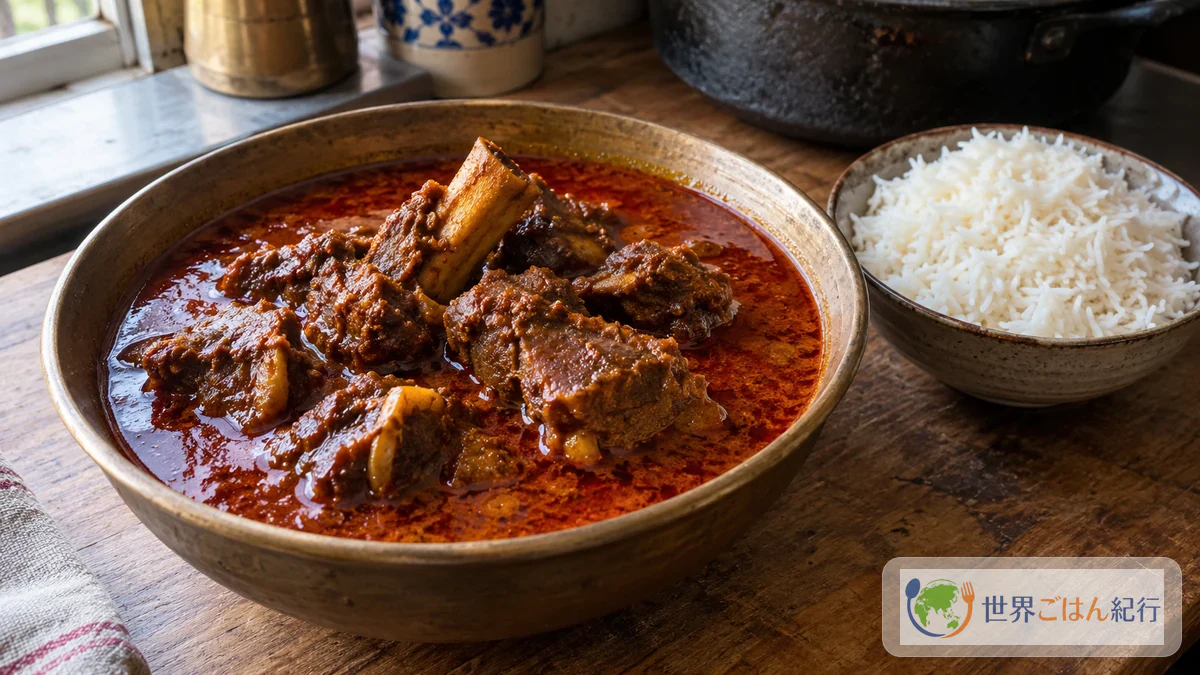
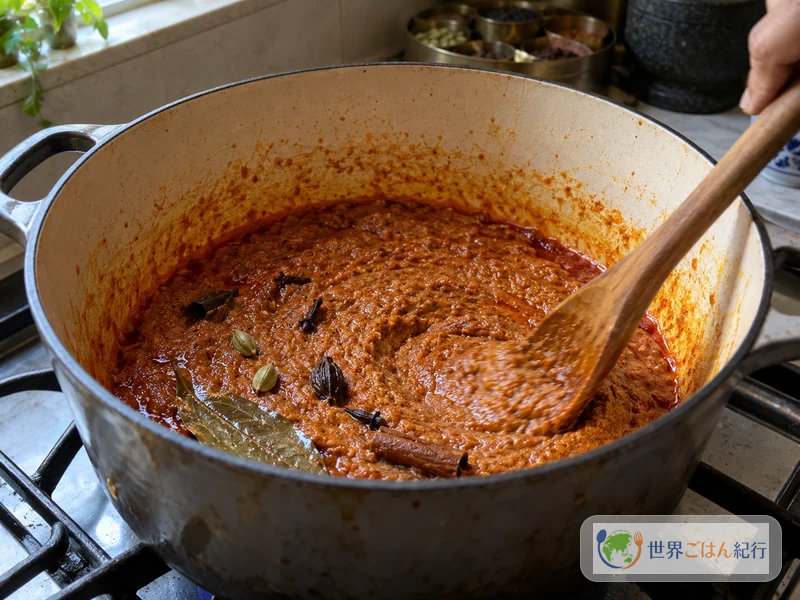
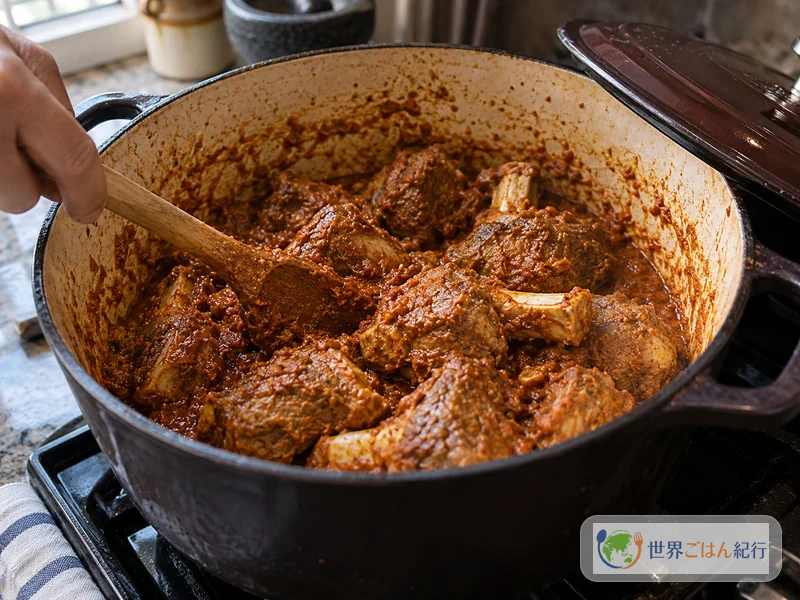
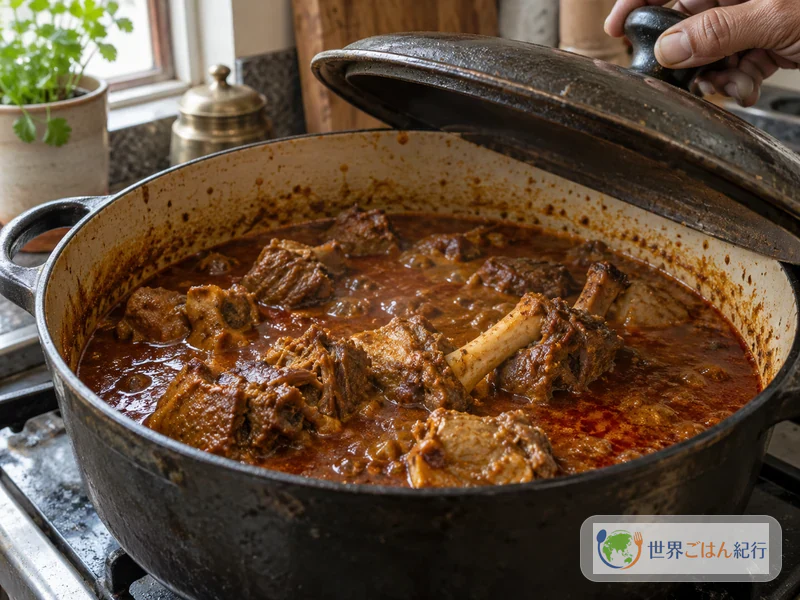
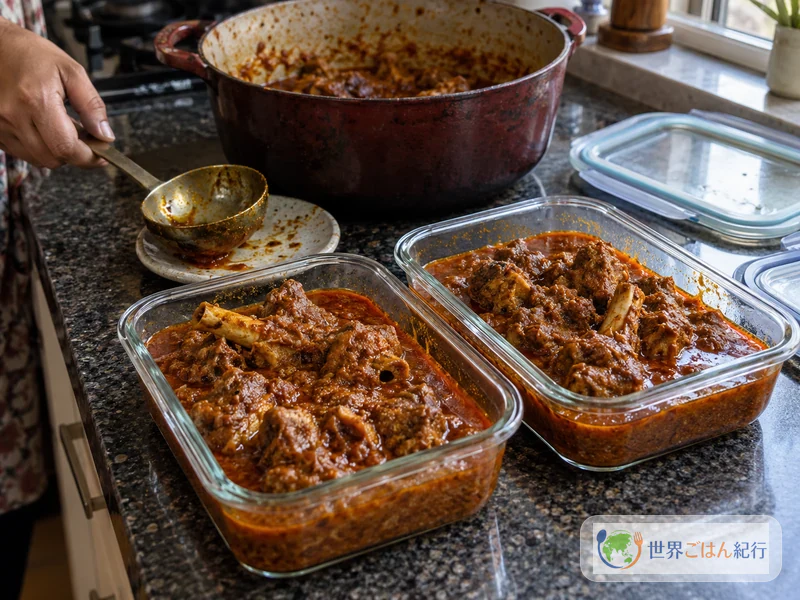
The oil in the pot has turned deep red. Yet in the mouth there is none of the sharp heat that stabs the tongue. What spreads is the sweet fragrance of fennel and the gentle warmth of dried ginger. Rogan josh, the meat dish of Kashmir, set in a Himalayan valley, surprises you with the gap between its vivid color and its mild taste. Bone-in mutton is simmered slowly with yogurt and spices until the meat falls off the bone.
A dish of the valley: red color, gentle heat
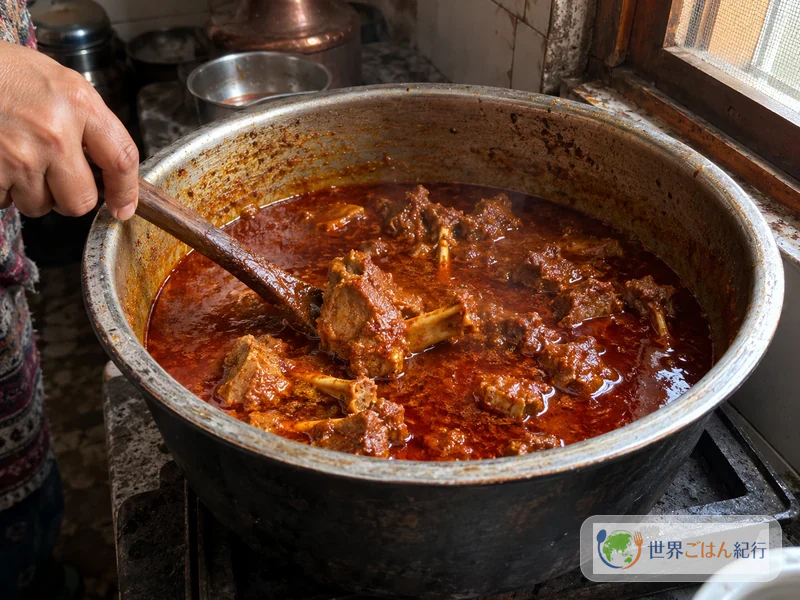
The red of rogan josh comes from Kashmiri chilies, known for their very vivid color and modest heat. Traditionally, the root or flower of a plant called ratanjot was also added to dye the dish an even deeper red. The quality of being red but not fiery depends on this chili.
The dish is said to have Persian origins, and one well-known account holds that it was originally a mildly spiced dish of meat browned in butter. The story goes that the Mughal Empire brought it to northern India in the 16th century, where it grew into a local dish in Kashmir. Chilies are originally a crop of the Americas and are said to have entered India in the early 1500s, when the Portuguese arrived in Goa. The red of rogan josh can be seen as the color at the end of that long history of trade.
There are several theories about the meaning of the name. One reads the Persian "rogan" (oil, ghee) and "josh" (stewing) as "something stewed in oil." Another holds that "rogan" means "red" in a Kashmiri word and that the dish was named for the color of the sauce. Which is correct is not clear.
In Kashmir, rogan josh is also known for being made differently by Hindus and Muslims. In the homes of the Kashmiri Pandits, the Hindu Brahmins of Kashmir, neither onion nor garlic is traditionally used. Instead the flavor is built from the sourness and richness of yogurt, fennel, and the strong aroma of asafetida (hing). In Muslim homes, local shallots called praan, onions, and garlic are used. Rogan josh also counts as one dish in the wazwan, the many-course feast served at celebrations in Kashmiri Muslim homes. Here we make the Pandit style, with no onion or garlic.
What to know when cooking it in a home kitchen
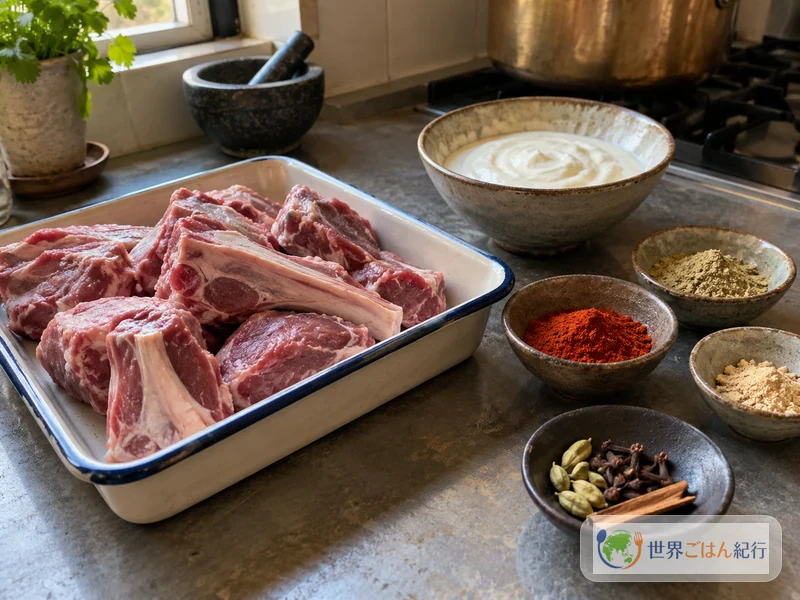
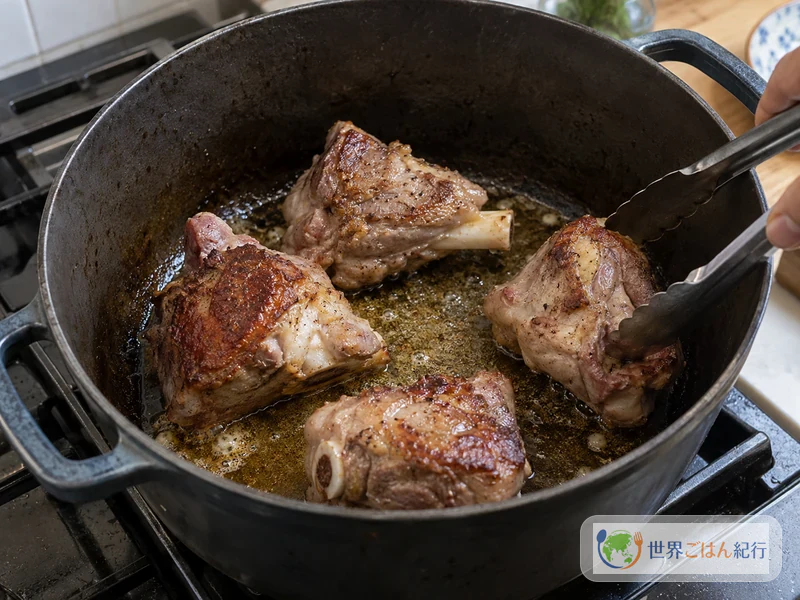
The dish is traditionally made with mutton (meat from adult sheep) or goat, and many households make it with lamb. Bone-in lamb (shoulder or chops) or frozen mutton is usually easiest to find. Choosing bone-in means flavor comes out of the bones as it simmers and gives the sauce depth. It also helps to choose a cut with some fat; the source of this recipe uses fattier mutton.
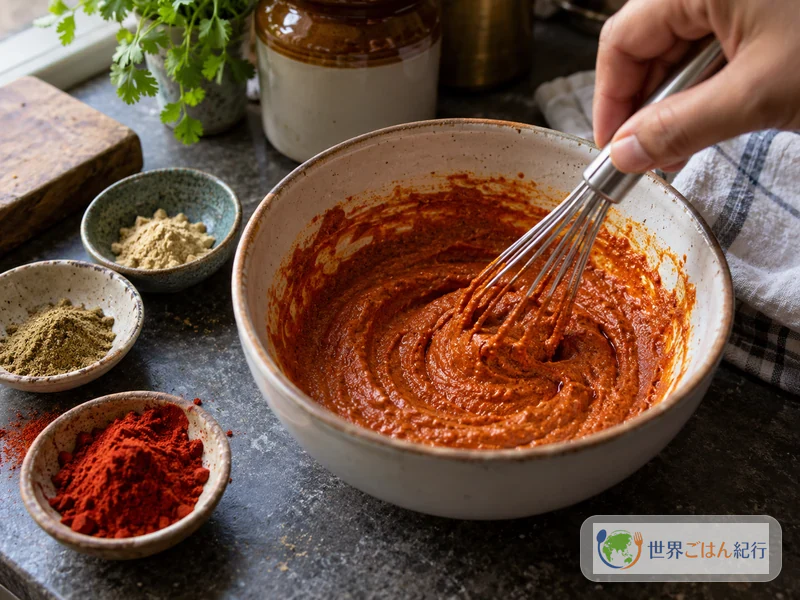
Kashmiri chili powder is the key to both color and flavor. You can find it at Indian grocery stores or online. Substituting ordinary chili powder or chili flakes makes it much hotter, so use paprika as the base and mix in just a little chili powder to get close to the color and heat of Kashmiri chili.
Asafetida (hing) gives off a strong sulfur-like smell as soon as you open the bag. It may startle you, but when heated in oil it turns into a savory aroma resembling onion and garlic. Because the smell transfers to other foods, store it in a jar with a tight lid.
Mustard oil is an oil with a pungent mustard aroma that is widely used in northern India and Kashmir. You can get it at Indian grocery stores or online; when buying, choose one labeled for culinary use. If you can't find it, you can make this with vegetable oil. The aroma is milder, but combined with ghee it still finishes well.
Ingredients (serves 4)
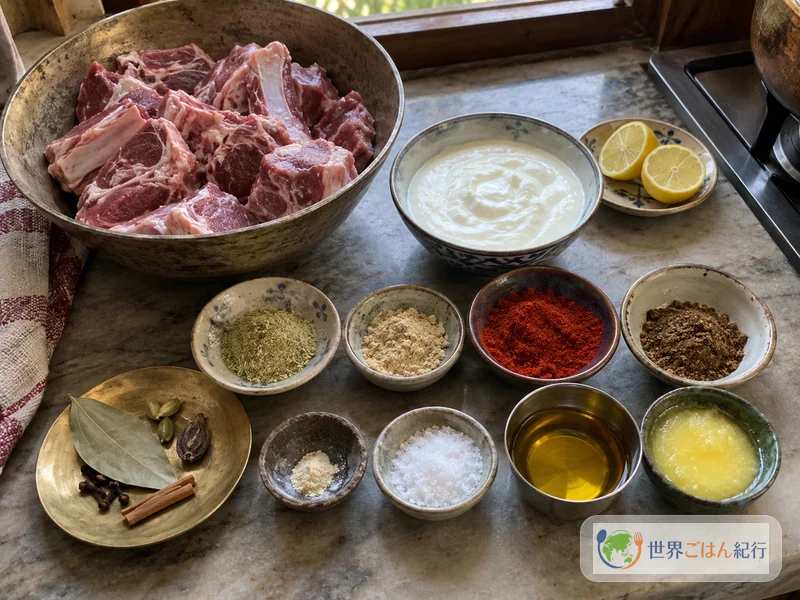
The amounts of fennel and ginger powder may seem large, but these two are the center of the Pandit-style flavor. Cut them back and it becomes merely red yogurt stew. Dissolving all the ground spices in the yogurt first removes any worry about scorching.
This dish contains dairy (yogurt, ghee). Some commercial asafetida is mixed with wheat flour to prevent caking. If you have a wheat allergy, always check the ingredient label.
How to make rogan josh
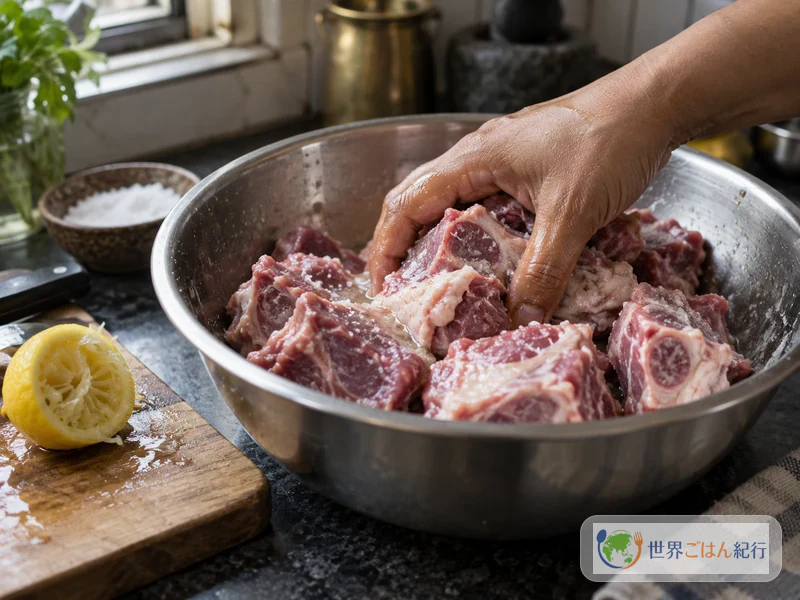
Allow 7 to 8 hours for seasoning the meat, about 30 minutes for preparation, and about 2 hours of cooking including the simmer. If you marinate the meat the night before, it comes together in about 2 1/2 hours the next day.
Oil spatters easily when mustard oil is heated or when yogurt is added to hot oil. Pour the yogurt mixture in gently from the edge of the pot, and keep your face away from it.
Yogurt tends to split into curds if added over high heat. If it splits, the taste is not greatly affected, but if you want a smooth sauce, always lower the heat before adding the yogurt mixture. Once the heat is down, keep stirring with the wooden spoon.
Serving and eating
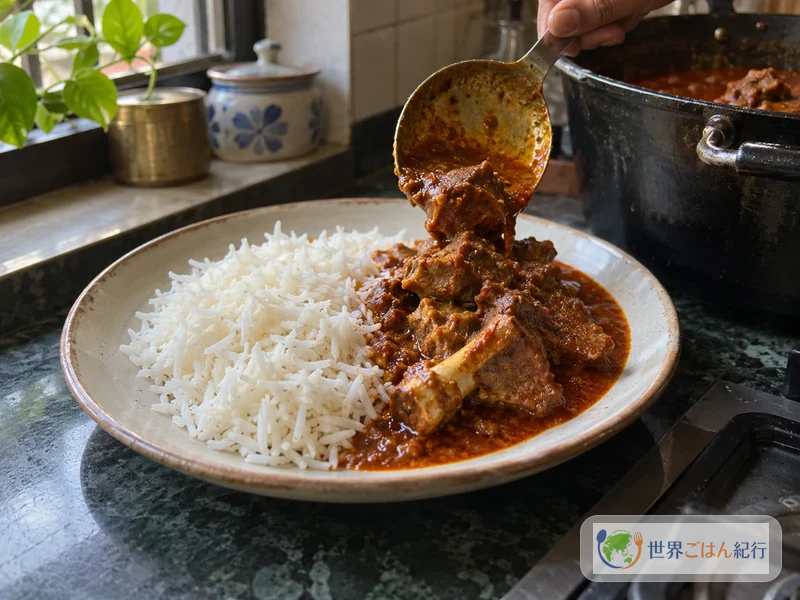
Plate the meat on the bone and ladle plenty of red sauce over it. The red oil floating on top is part of what makes rogan josh worth looking at. It is classically eaten with white rice, and mixing the sauce into the rice brings out the fennel and ginger. Cooking basmati rice brings it closer to a Kashmiri table.
It also goes with naan and chapati. With any staple, scoop up every bit of sauce to enjoy the sourness of the yogurt and the spice aroma to the last. If you want to cook another Indian meat curry, compare it with Dhansak (in Japanese), the lentil-and-meat stew handed down by the Parsis. Though both are Indian, the spices used and the way sourness is brought in are completely different.
Differences from the Muslim style, and variations
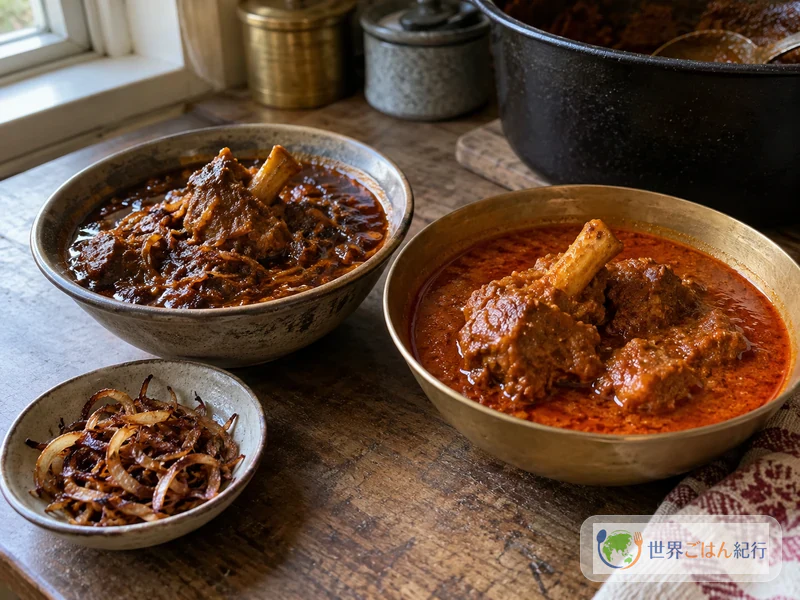
If you want to move toward the Muslim style with onion and garlic, after frying the whole spices in step 4, add sliced onion or shallot and fry until golden brown, add grated garlic, and then go on to the yogurt mixture. The sweetness of onion brings a friendlier flavor, closer to a Japanese-style curry.
Restaurants outside India also often serve rogan josh with tomato. Tomato makes it easy to get sourness and red color, but it is better thought of as separate from the traditional Kashmiri method. There is also rogan josh made with beef, for which brisket is said to suit. Beef takes different times to soften depending on the cut, so at the end of the simmer press it with chopsticks to check.
FAQ
Can I eat it if I don't like spicy food?
Kashmiri chili powder is vivid in color but mild in heat, so it is not as hot as it looks. If you are still concerned, reduce the Kashmiri chili powder to 1 tbsp and add 1 tbsp paprika, which keeps the color while lowering the heat.
What if I don't have time to marinate the meat?
Aim for at least 1 hour in the lemon juice and salt. If the marinating time is short, lengthen the simmer in step 6 and check that the meat is tender enough to come off the bone.
What if I don't have asafetida?
You can make it without, but in the Pandit style asafetida provides the savory note that onion and garlic would otherwise supply. Without it the flavor is a little flatter, so adjust at the end with salt and garam masala.
Can I make it ahead?
Because it is a stew, some people find it tastes better the next day. Once cooled, put it in the refrigerator promptly, and when reheating, bring the whole pot to a full boil. Removing the fat that has set on the surface before reheating makes it cleaner.
Sources
- Wikipedia, "Rogan josh." (accessed and checked 22 October 2026). https://en.wikipedia.org/wiki/Rogan_josh
- Kitchen of Debjani, "Mutton Rogan Josh," published July 2015. (accessed and checked 22 October 2026). https://kitchenofdebjani.com/2015/07/mutton-rogan-josh/
- Odisha Bytes, Satyanarayan Mohapatra, "The Josh Of Roghanjosh," published 28 March 2021. (accessed and checked 22 October 2026). https://odishabytes.com/the-josh-of-roghanjosh/


