
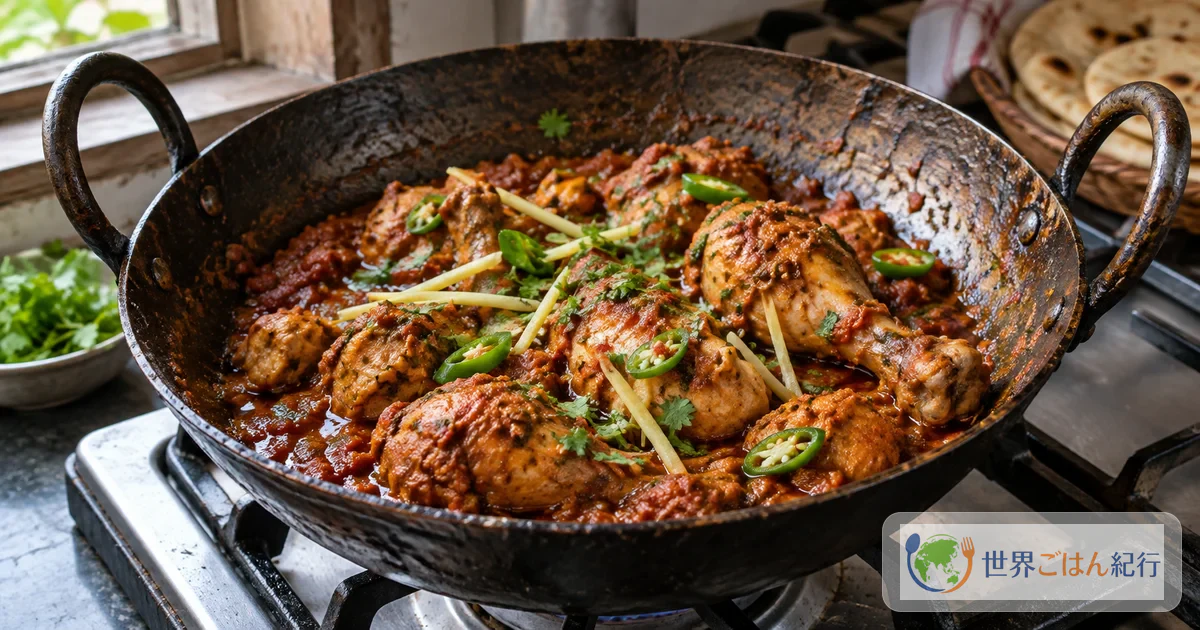
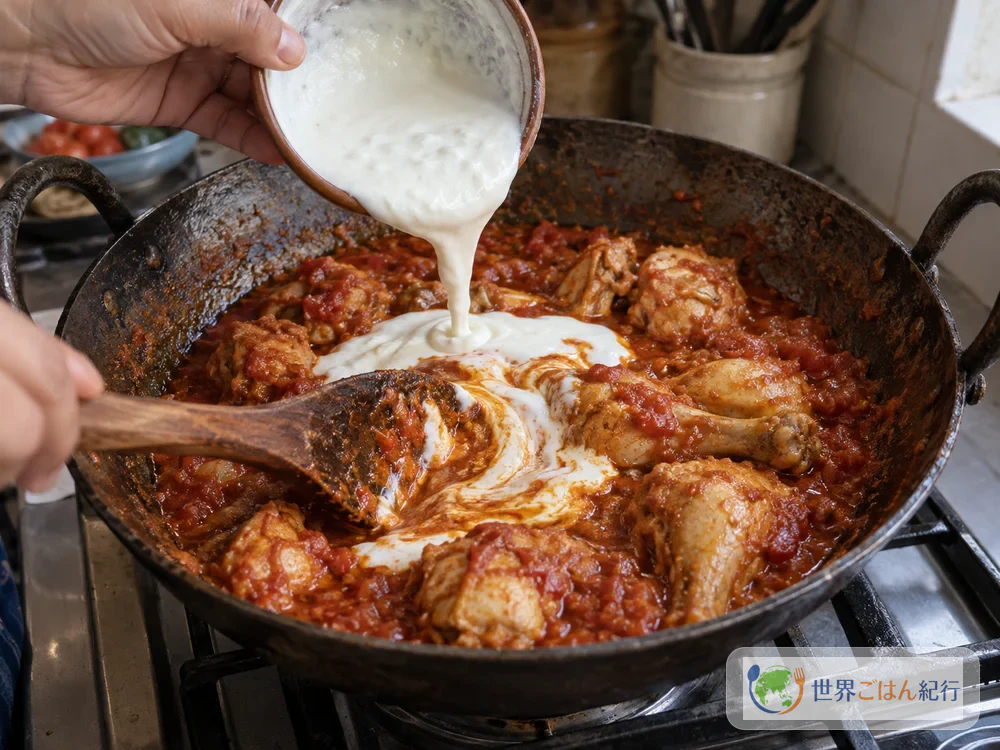
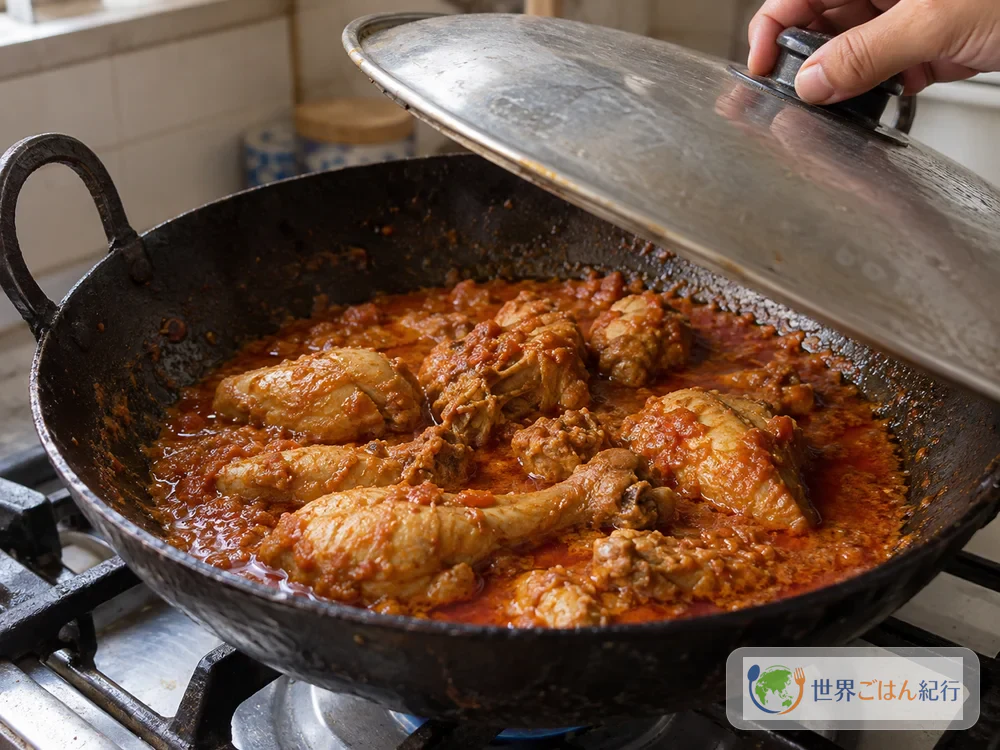
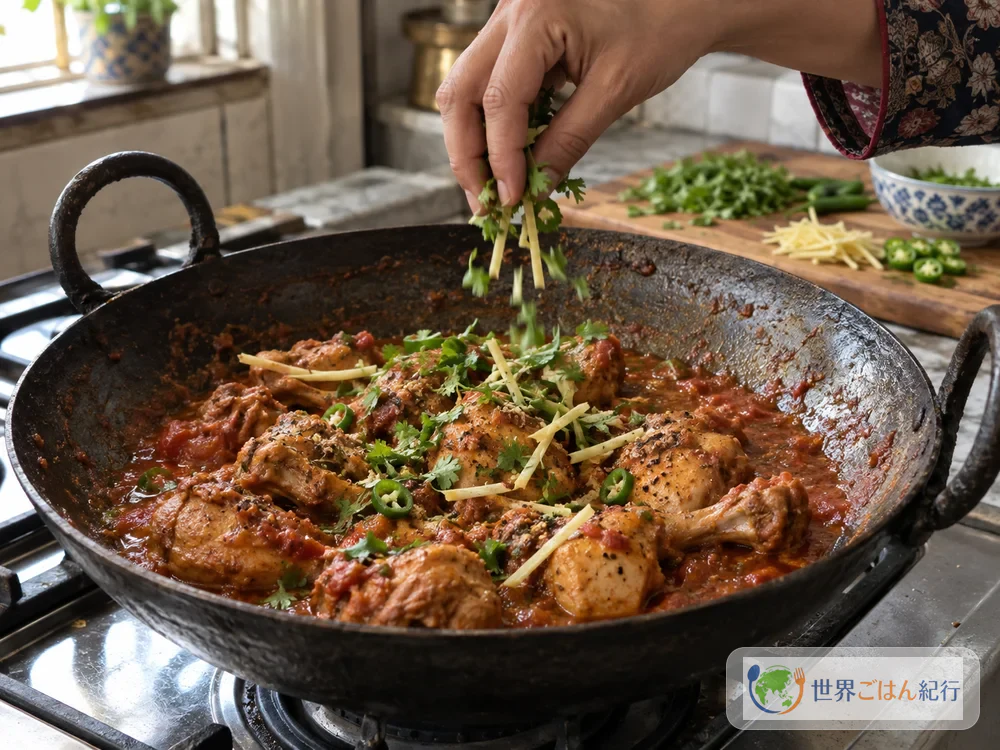
A cook puts an iron pot over high heat, tosses in bone-in chicken, and turns it briskly with a wooden spatula. Once the tomatoes go in, the pot turns into a red sauce before your eyes, and oil begins to bubble up on the surface. Julienned ginger and green chilies go on at the end, and the pot goes straight to the customer's table. The familiar chicken karahi of Pakistani eateries is a quick, bold chicken stew whose name is simply the name of the pot.
When the pot's name became the dish
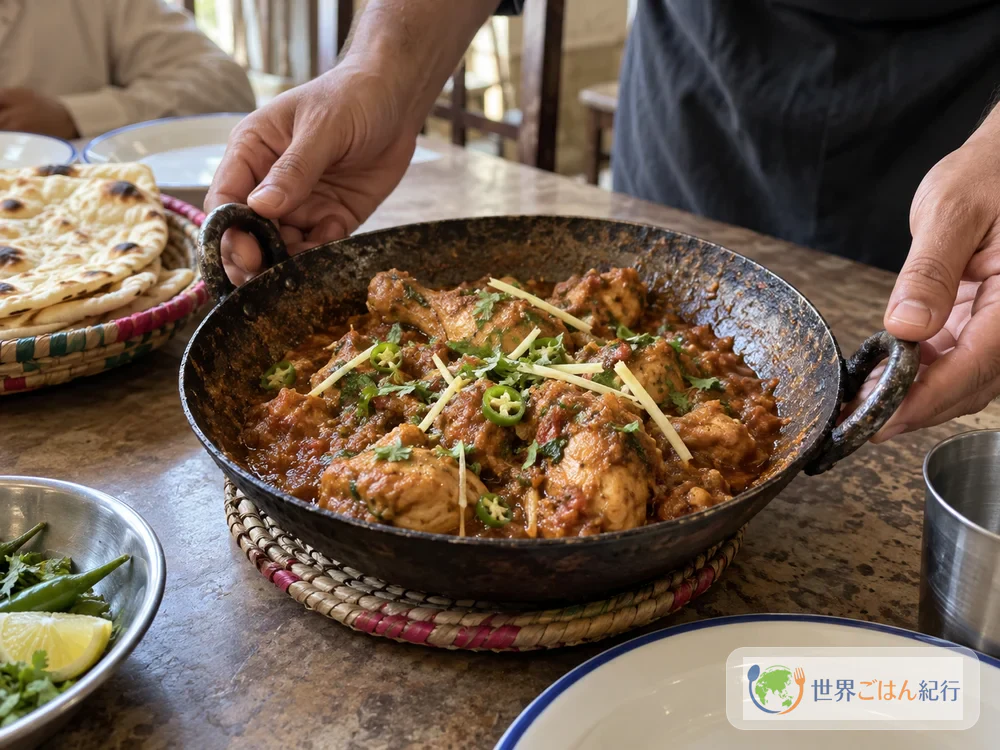
A karahi is a thick, round, deep pan, similar to a wok. Any curry made in this pan is called karahi: with chicken it is chicken karahi, with lamb or goat it is gosht karahi. The word is old; karahi in Hindi and Urdu is said to go back to ancient Indian languages. In India it is also written "kadai," and North Indian restaurants sometimes serve it under the name kadai chicken.
Chicken karahi is said to have originated in the Punjab, which spans Pakistan and India, and is best known as a specialty of Lahore, Pakistan's second-largest city. Gosht karahi, made with lamb or goat, is thought to have originated in the North-West Frontier Province of the British colonial era, today's Khyber Pakhtunkhwa. In any case, in Pakistani cities such as Lahore, Karachi, Peshawar, and Islamabad, it is a staple you will meet at any eatery.
While many curries begin by frying onions, chicken karahi is traditionally made without onions. The thickness and sweetness of the sauce come from plenty of tomatoes breaking down. Some versions add onions, but try it first in the onion-free form.
The heart of the flavor is ginger, garlic, tomatoes, green chilies, and cilantro. Because the tomatoes are broken down in one go over high heat and the chicken is coated in a rich sauce, the result comes together surprisingly fast for a stew, and it can reach the table in about an hour. This version follows a home-style method presented by a Pakistani-born cook who runs a Pakistani restaurant in Dubai.
What to know when you cook it at home
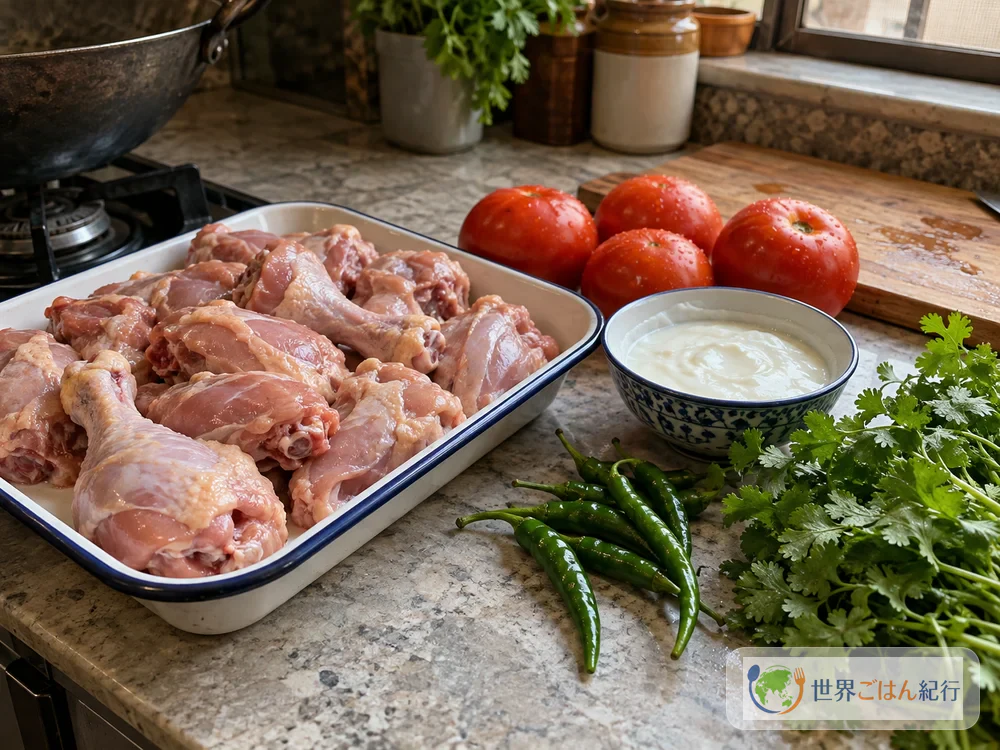
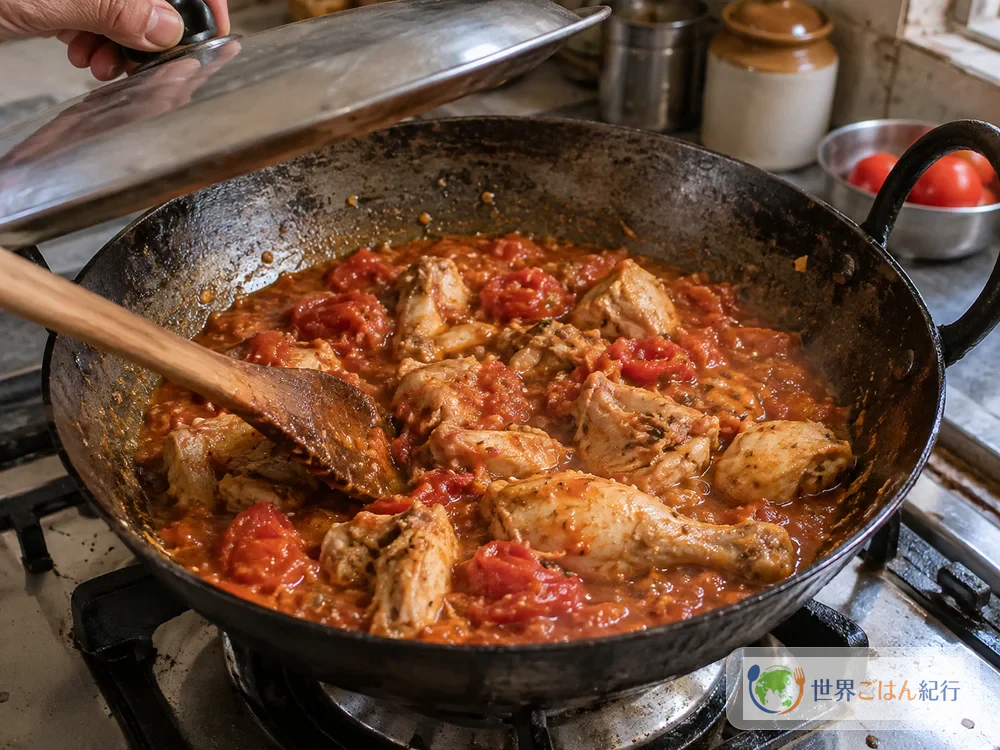
You can make this well in a wok or a deep frying pan even without a karahi. You need a lid, so choose a pan with a lid that fits snugly. The karahi's round, wide base is good for reducing the sauce quickly. If you use a frying pan, a wide one about 30 cm across, as the American magazine Milk Street tested, lets the tomato moisture cook off quickly.
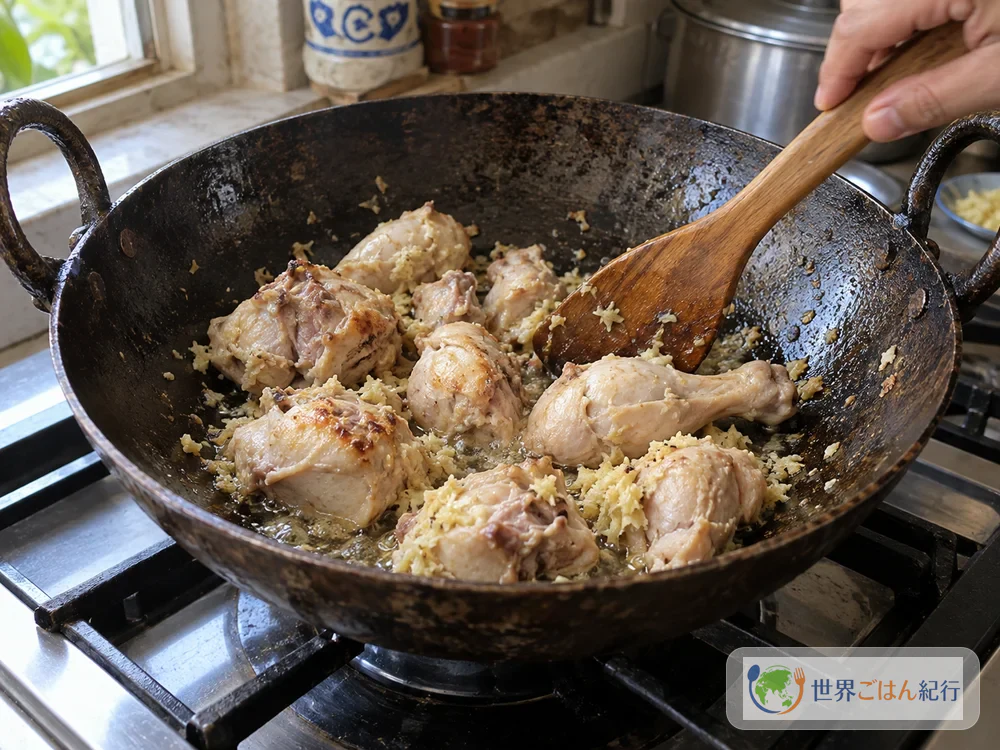
Use bone-in chicken. A combination of bone-in thigh pieces cut up and drumettes is easy. The savoriness from the bones melts into the sauce and brings the taste closer to a Pakistani eatery. You can make it with boneless thighs, but shorten the cooking time and watch so the chicken does not turn tough.
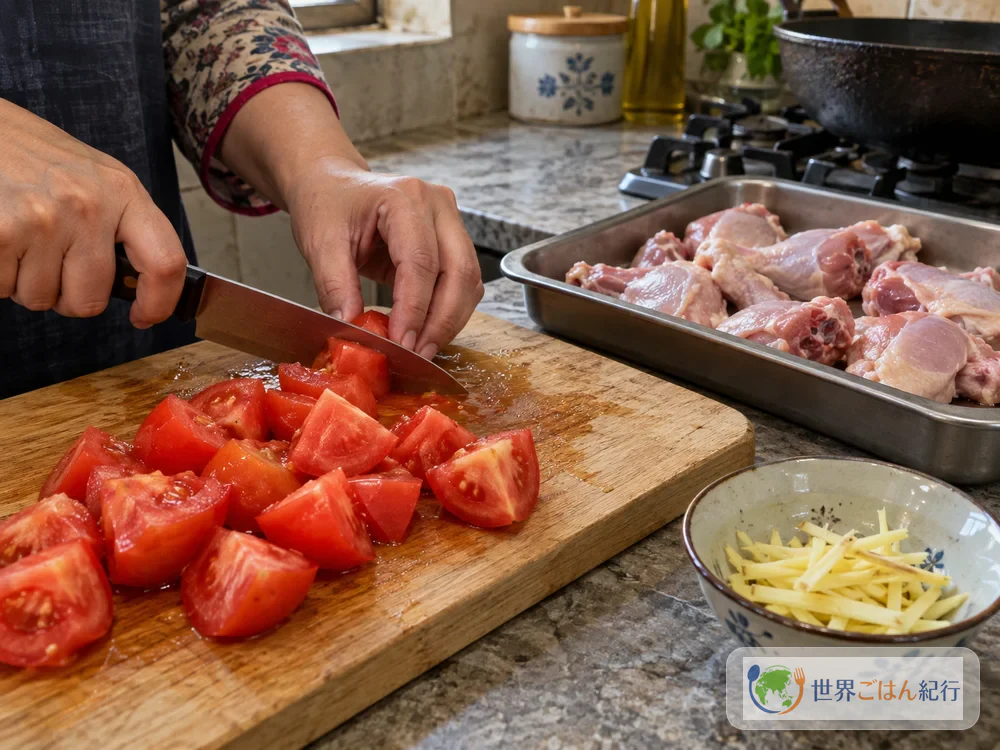
Use 1 tsp each of grated ginger and grated garlic. Tube ginger and garlic work, but freshly grated gives a much stronger aroma. For the julienned ginger at the end, cut it as thin as you can, and its sharp bite blends nicely into the sauce.
If you cannot find green chilies, shishito peppers with a little chili flakes can stand in. Cilantro is an essential aroma for the finish, so try to have it.
Ingredients (serves 4)
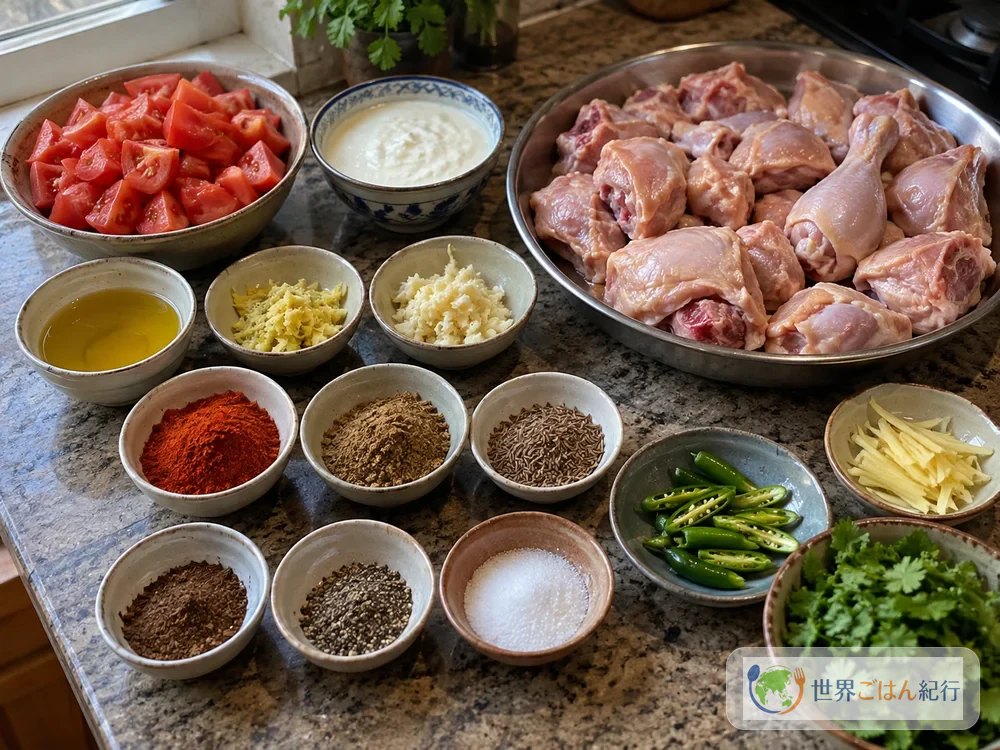
Measure the spices from the salt through the garam masala together on a small plate. The black pepper is used only at the end, so keep it on a separate plate and you will not add it at the wrong time.
This dish contains dairy (yogurt). If you have a milk allergy, leave out the yogurt and add a little extra water instead. The richness and mellowness of the sauce will be reduced.
How to make chicken karahi
Count on about 20 minutes of prep and about 40 minutes of cooking, about 1 hour in all. Once the chicken starts frying there are almost no pauses, so have everything cut and measured first.
Cook the chicken thoroughly to the center. The US FoodSafety.gov gives an internal temperature of 74°C (165°F) for chicken as the guide for safe cooking. Bone-in meat is slow to cook around the bone, so if you have a cooking thermometer, measure in the thick part of the meat without touching the bone to be sure.
If the bottom of the pot threatens to scorch in step 3, add 2 tbsp water at a time and scrape it up. When the tomatoes are low in moisture, the pot scorches more easily.
Serving and how it is eaten in Pakistan
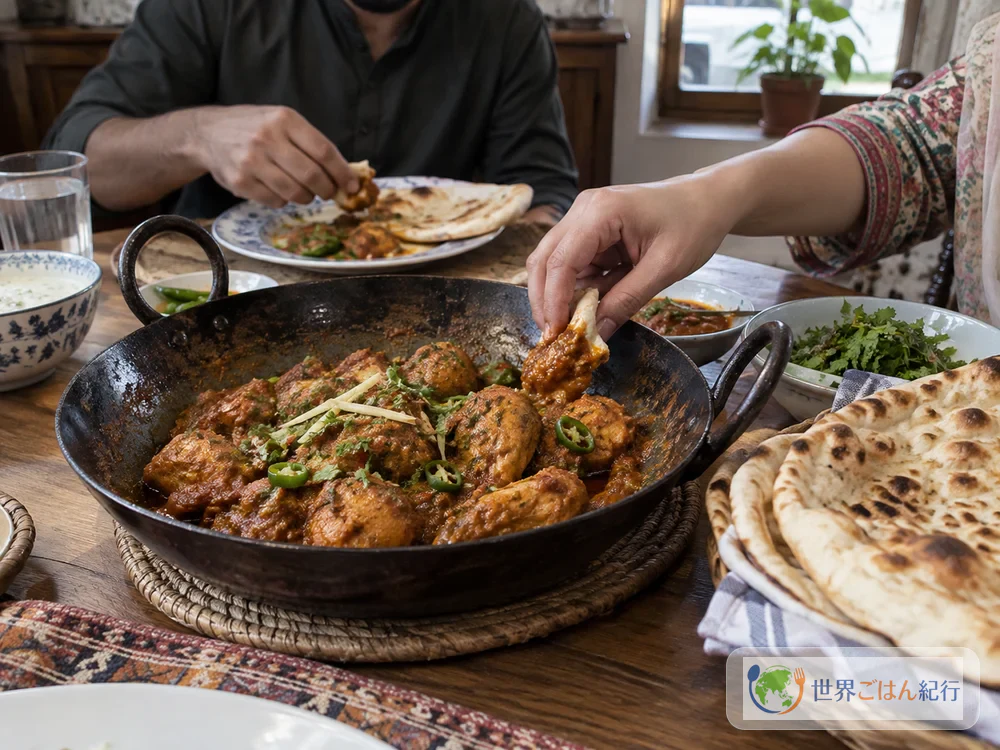
At Pakistani eateries, some places bring the dish to the table in the karahi it was cooked in. The standard way is to tear naan or roti, scoop up the sauce, and work the chicken off the bone as you eat. It is also good with plain white rice, and mixing the sauce into the rice brings out the taste of the tomatoes and spices.
If you want to enjoy more Pakistani meat dishes, try it against the slowly simmered nihari (in Japanese). Karahi, finished fast over high heat, and nihari, simmered over a long time, are both Pakistani, but they differ completely in their approach. To add another dish from the northwest, chapli kebab (in Japanese), flat-fried minced meat with spices, goes well too.
Ways to vary it
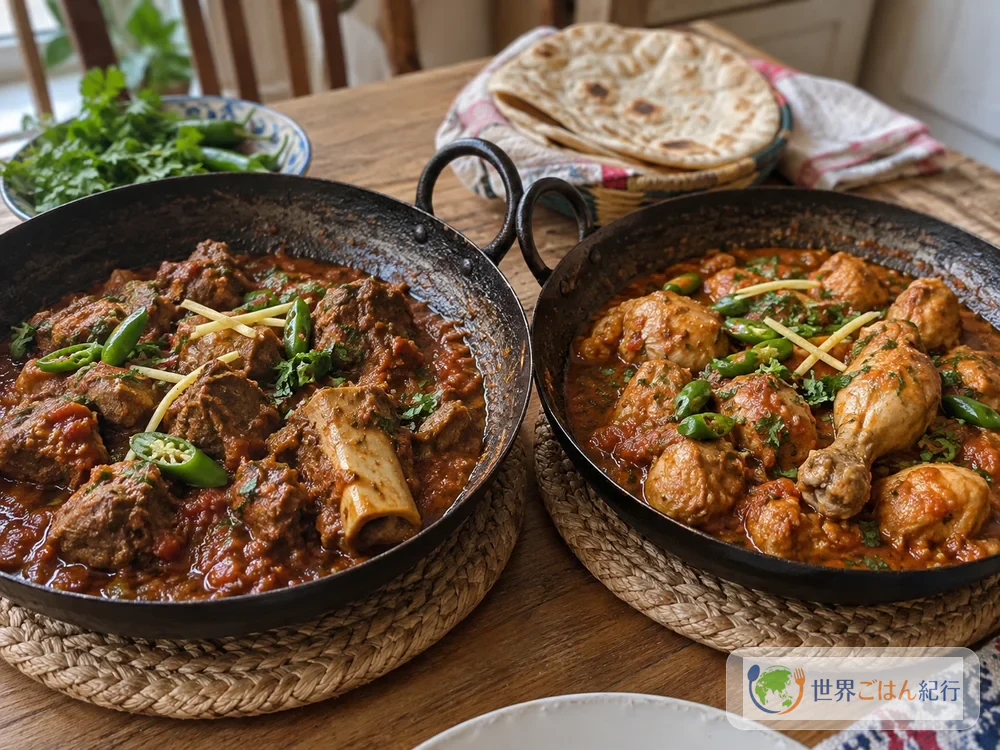
Swap the chicken for bone-in lamb or mutton and you have gosht karahi. Lamb takes longer to cook than chicken, so give the low-heat simmer in step 5 more time and keep watching until the meat is tender.
Adjust the heat with the chili powder and green chilies. If someone at the table dislikes spice, reduce the chili powder to 1/4 tsp and let everyone add green chilies at the table, so you can split the heat in one pot. There is also an onion version: before step 2, fry 2 chopped onions until golden and then add the chicken.
Frequently asked questions
Can I make it with boneless chicken?
Yes. Cut boneless thighs into large bite-size pieces, shorten the times in steps 3 and 5 slightly, and watch so the chicken does not turn tough. Always check at the end that it is cooked through to the center.
Can I use canned tomatoes?
You can use canned diced tomatoes in place of fresh. Canned tomatoes have more liquid, so in step 3 cook with the lid off and reduce until you have a thick sauce.
The yogurt separated.
Stir the yogurt until smooth before adding it and do not boil it hard afterward, and it separates less easily. Even if it separates, the taste is not seriously affected, so you can simply keep cooking and finish the dish.
Can I make it ahead?
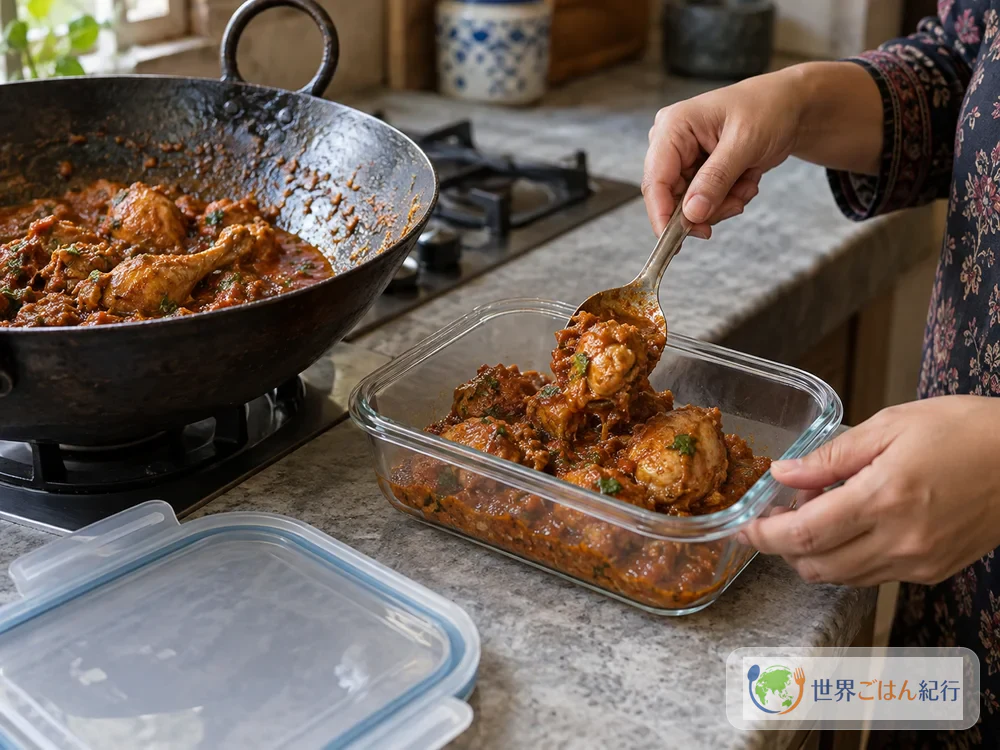
It is a cooked chicken dish, so the rule is to finish it soon after making it. If there are leftovers, let the heat drop, refrigerate promptly, and when reheating, heat in a pot until hot all the way through.
Sources
- Gulf News, Saira Ahmed, "Recipe for Pakistani-style chicken karahi," updated 2 May 2021. Accessed and checked: 22 October 2026. https://gulfnews.com/food/cooking-cuisines/recipe-for-pakistani-style-chicken-karahi-1.1614591652727
- Wikipedia, "Chicken karahi." Accessed and checked: 22 October 2026. https://en.wikipedia.org/wiki/Chicken_karahi
- Milk Street, "Pakistani Chicken Karahi (Spicy Tomato-Chicken Curry)." Accessed and checked: 22 October 2026. https://www.177milkstreet.com/recipes/pakistani-chicken-karahi-spicy-tomato-chicken-curry
- FoodSafety.gov, "Cook to a Safe Minimum Internal Temperature." Accessed and checked: 22 October 2026. https://www.foodsafety.gov/food-safety-charts/safe-minimum-internal-temperatures


