Put the white rice in the middle of a round tray
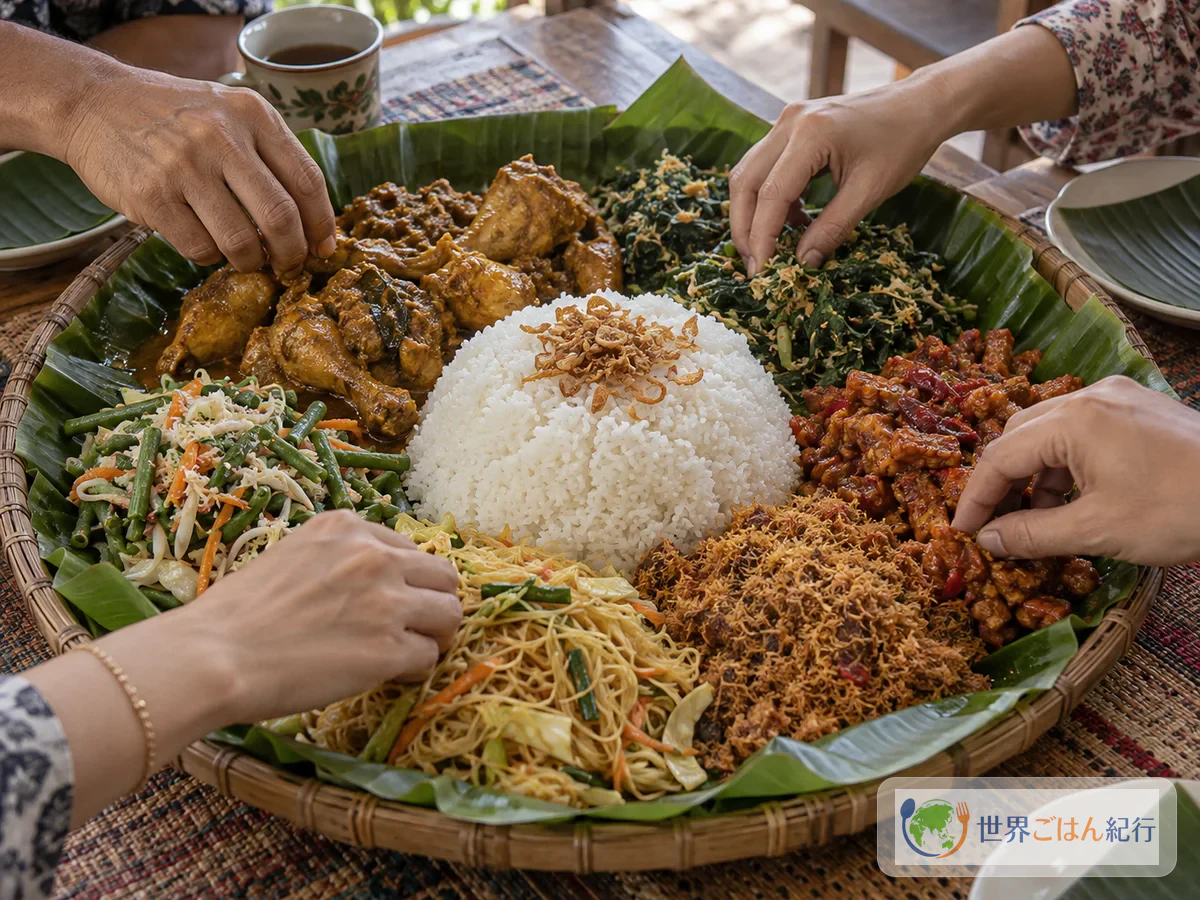
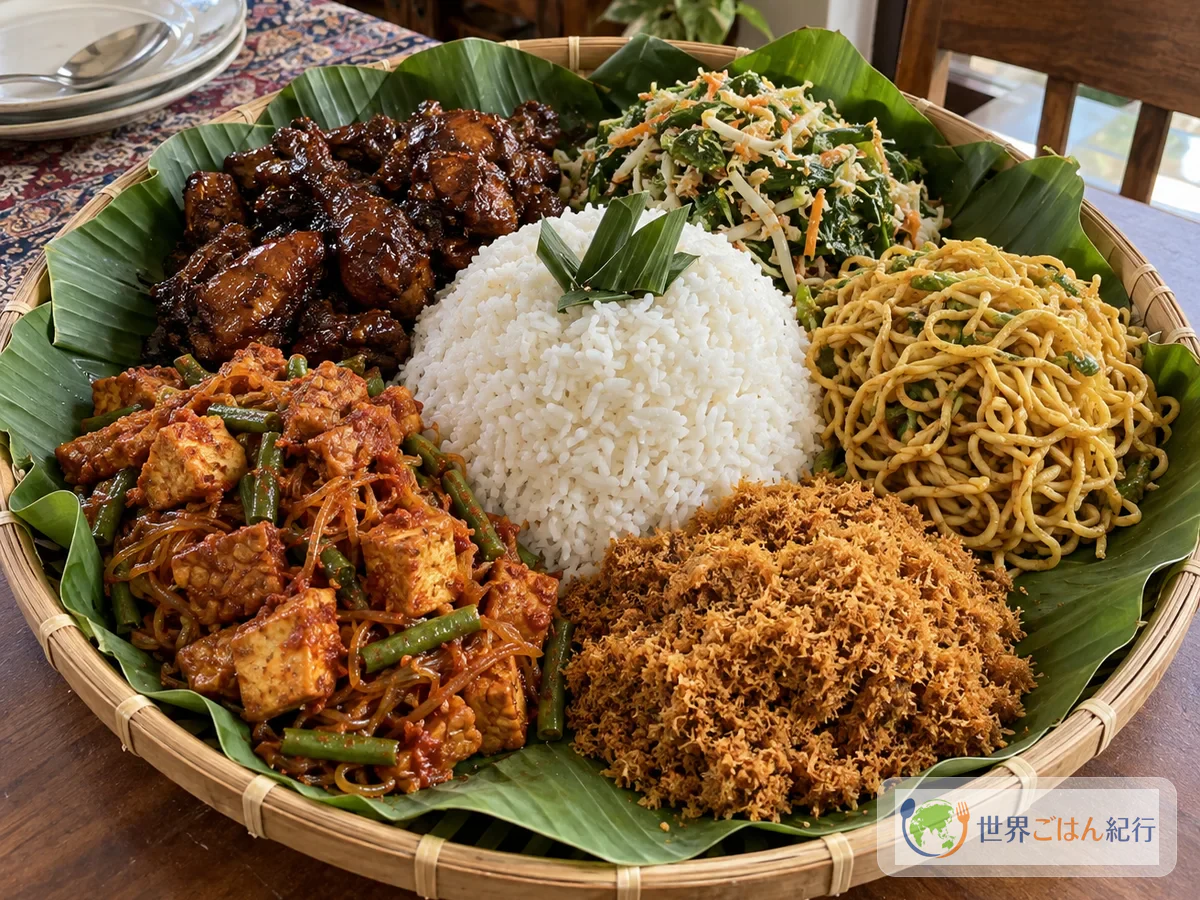
A large round tray lined with banana leaf is carried to the middle of the table. In the center of the leaf, white rice is heaped high, and around it sit sweet-savory braised chicken, sambal goreng, coconut serunding, vegetables, noodles and more. The combination changes by region and household, but the form is the same. Four or five people gather around a single tray, so this is not a single rice dish but a meal that includes who reaches in, and in what order.
Nasi ambeng is a Javanese-rooted shared meal. It is the name of a dish that puts white rice and side dishes on one tray, and also the name of a way of serving. It is not a recipe finished by cooking rice alone, but a platter in which several flavors and textures are completed at the same time. The core is arranging the dishes without mixing them. The chicken, vegetables, heat and coconut are not blended; it is each person eating who builds the flavors around the white rice. The first bite takes the sweet braising juices of the chicken into the rice, the next takes vegetables and coconut, and the flavor changes in your hand.
Using a Selangor-style arrangement as a guide, this article scales white rice, braised chicken, sambal goreng, serunding, urap and fried noodles down to a single plate for 4 to 5 people as a home design. There are many dishes, but you do not make them all at once. Finish the dry components first, and overlap the time for cooking rice with the time for braising the chicken. The shape of the shared platter stays, while hard-to-find ingredients are replaced by looking at their role in aroma, heat and texture. Note that the quantities are not a copy of the whole-chicken, large-batch specification in the original source, but an editorial cooking design scaled for the home.
The MICHELIN Guide distinguishes nasi ambeng as a shared dish on a round tray from nasi tumpeng, a cone-shaped rice dish. Both lay out rice and sides for an occasion, but nasi ambeng centers on sharing around a flat tray. The dish name and spelling differ by household and region, so its etymology or a single place of origin cannot be asserted.
A celebration dish that continues into the takeaway table
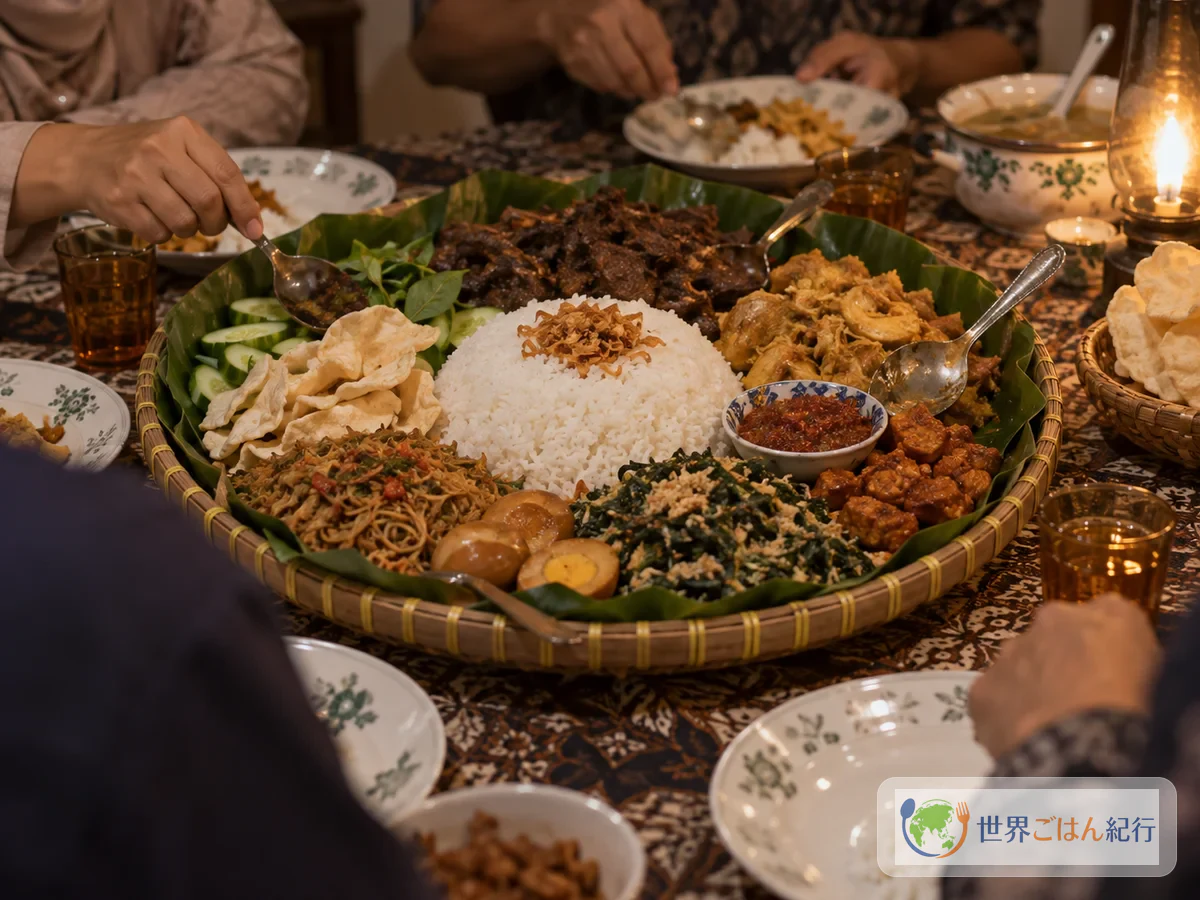
JKKN, a Malaysian cultural body, introduces nasi ambeng as a traditional Javanese dish. In Malaysia in particular, it is said to be popular as a communal dish of Selangor among the Javanese communities of Selangor and Johor. The explanation is that a large platter is carried to feasts, tahlil rituals and communal gatherings, and sharing food becomes a symbol of unity and cooperation. Singapore's Roots.gov.sg also links the dish to Javanese family occasions and to food culture and identity, as a dish carried to family events.
The story does not end when the tray is empty. In JKKN's description, there is a traditional practice in which four or five people sit around one tray and the leftover food is divided into four to take home. Roots.gov.sg also introduces the idea of Nasi Berkat, in which the divided food is taken home. Dividing the table's food for home is not just disposing of leftovers. It carries the same dish home and connects it to another table. This practice of dividing the rest into four is only a traditional practice described in the sources, and not every household or restaurant keeps the same way of dividing.
Today's nasi ambeng changes its form both at restaurants and at home. According to the MICHELIN Guide, it is also eaten at gatherings for graduations, weddings, births and reunions, and there are commercial versions served in individual portions. Roots.gov.sg also touches on commercialization from the late 1970s and its spread into broader Malay cuisine. Even as a dish that has become individual plates, the shared meaning of tasting several dishes together, nourishing and bringing people together, survives the change. As the dish spreads, the sides get swapped, so please read the table in the next section not as rules representing every household in a region, but as a comparison of arrangements that could be confirmed.
Sides change by region and household
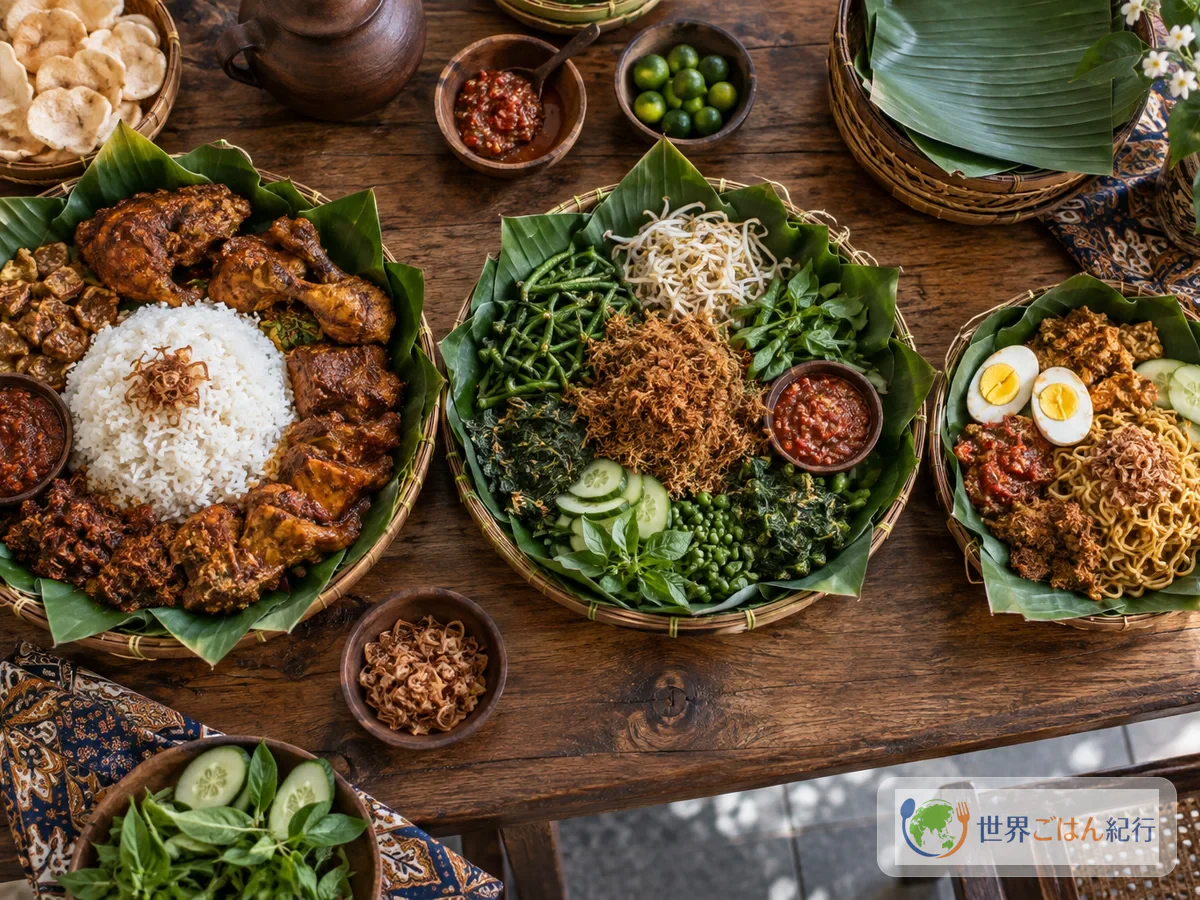
The center of nasi ambeng is the white rice and the shared tray; the side dishes around it are not a fixed list. JKKN's example arrangements list chicken kicap or opor, sambal goreng, serunding, noodles or glass noodles, urap, salted fish, potato patties, rempeyek and boiled eggs. The MICHELIN Guide's examples include rendang, ayam lemak, sambal goreng with tempeh, tofu and green beans, urap, serunding, and fried small fish with peanuts. Keep the rice in the center and change what surrounds it. Under the same dish name, there are many ways to enjoy the differences in texture among chicken, vegetables, coconut and noodles.
| Place or occasion | Example arrangement | How this article treats it |
|---|---|---|
| Javanese communities of Selangor and Johor | White rice, ayam kicap or opor, sambal goreng, serunding, noodles or glass noodles, urap, salted fish, rempeyek, eggs and so on | Using the Selangor arrangement as the axis, make braised chicken, sambal goreng, serunding, urap and fried noodles |
| Javanese family events and restaurants in Singapore | Braised chicken or beef, sambal goreng, tempeh, urap, serunding, fragrant rice and so on | Confirm the dish name and the meaning of the shared platter, and do not treat the home sides as one uniform Singaporean style |
| Celebrations and communal gatherings | Rice in the center and several sides depending on the number of people. Sometimes shared around a tray, sometimes in individual portions | Use a round tray that 4 to 5 people can sit around, and serve the heat and salted fish on the side to leave room for each eater |
| Home adaptation | 5 to 6 dishes sized to what can be sourced and finished | Keep the shape of the shared platter and the roles of fragrant rice, chicken, coconut, vegetables and noodles, with substitutes shown in a table |
You do not have to make every side listed in the official and cultural sources at once. What this article wants to keep on one plate is the softness of the rice, the sweet-saltiness of the chicken, the beans and tofu of the sambal goreng, the dry fragrance of the serunding, the green crunch of the urap and the cohesion of the noodles. In other words, the difference in texture matters more than the number of dishes. Salted fish and rempeyek add texture and saltiness, so the saltiness can be served on the side, which brings it closer to the local arrangement without adding work. The regional differences are not about "which is correct" but about the surrounding dishes being swapped to suit the ingredients at hand and the number of people gathering.
Compared with similarly named dishes
- Nasi tumpeng (in Japanese)
- Urap (in Japanese)
- Nasi uduk
English sources use both Nasi Ambeng and Nasi Ambang, and in Japanese it is written in katakana in more than one way. Whether the spelling differences reflect different etymologies cannot be asserted. When searching, using the English spellings together makes it easier to find.
Ingredients (serves 4 to 5)
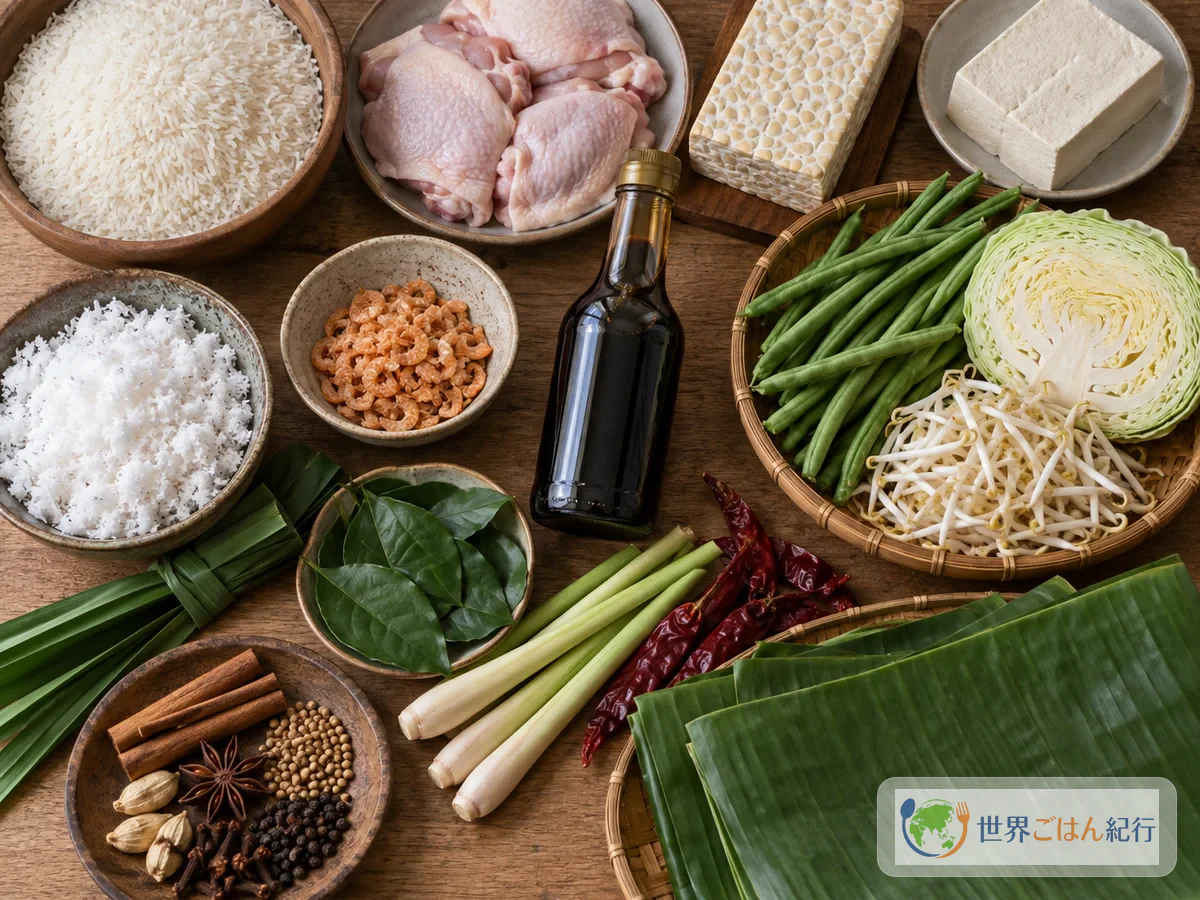
The ingredients are listed separately for rice, braised chicken, sambal goreng, serunding, urap, fried noodles and plating. Because six dishes are finished separately, the quantity looks large, but each dish on its own is a small-pot job. The quantities are a scaled-down home version for 4 to 5 people sharing; the whole-chicken, large-batch specification in the Rasa.my original is not used as it is, but replaced with cut chicken and small side dishes in an editorial design. When shopping, start by gathering the ingredients by their general names. First check whether you can get tempeh, kecap manis, salam leaf, banana leaf and dried shrimp, and if not, look at the substitute column in the table to keep the role of the aroma.
The core of the aroma is tempeh and kecap manis. The aroma of fermented soybeans and sweet thick soy sauce give the plate its outline. Salam leaf, pandan and banana leaf are not ingredients for which you cancel the dish when you cannot get them, but with them the aroma and appearance come closer to the original. Dried shrimp is layered across three places (serunding, sambal goreng and noodles), so if anyone has a seafood allergy, remove it from every step from the start.
Tempeh, tofu, kecap manis and noodles may contain soy or wheat. For dried shrimp, salted fish, peanuts and rempeyek, check the labels for seafood, shrimp and peanut. If someone is going to eat them, keep utensils and oil separate even if you serve them on the side. Ingredients and allergen labeling differ by product for commercial chili paste, coconut milk and dried goods, so do not assume safety from the ingredient name alone.
Finish each component separately, then gather them on one plate
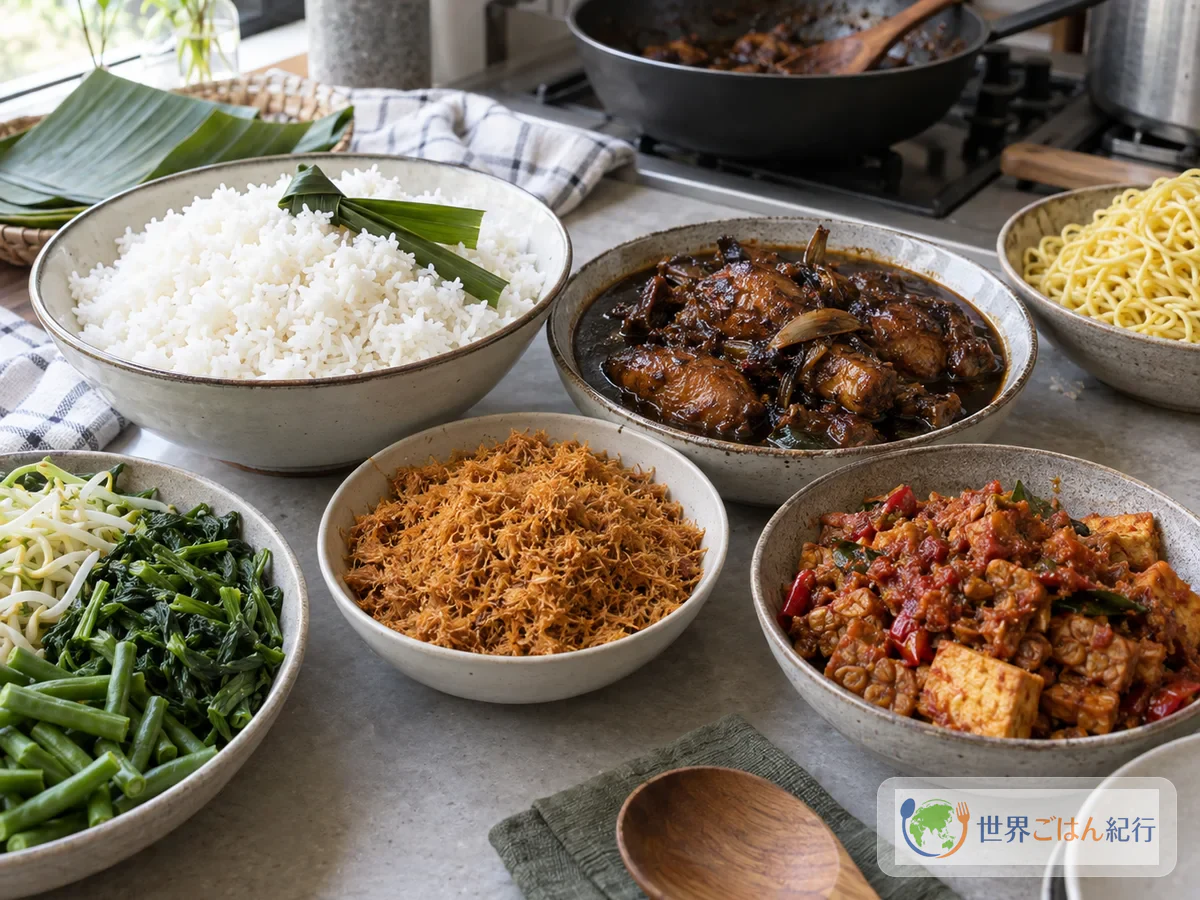
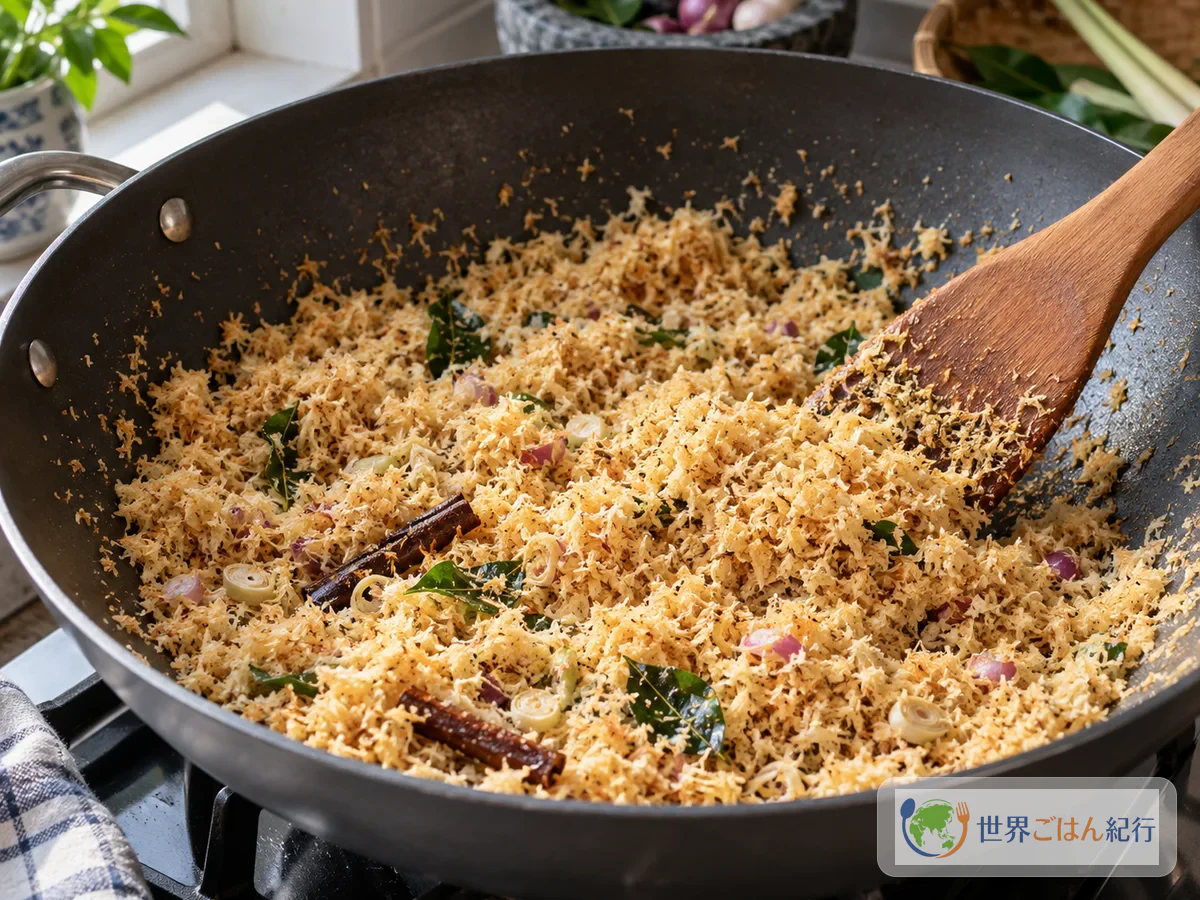
Here is the map of the sequence first. Dry-toast the serunding first, then braise the chicken. While the rice cooks, move on with the sambal goreng and urap, and stir-fry the noodles last. Dry coconut firms up in aroma and texture as it cools, and the vegetables are dressed after draining, so they can be finished early without the flavor going blurry. The chicken braise can sit over a low heat and so sets the pace to match the rice. Managing the liquids separately is the key to this dish, and the finished components keep their flavor in their pots or small plates, set aside unmixed. Then, only when you gather them on one plate at the end, do they move onto the tray.
Method
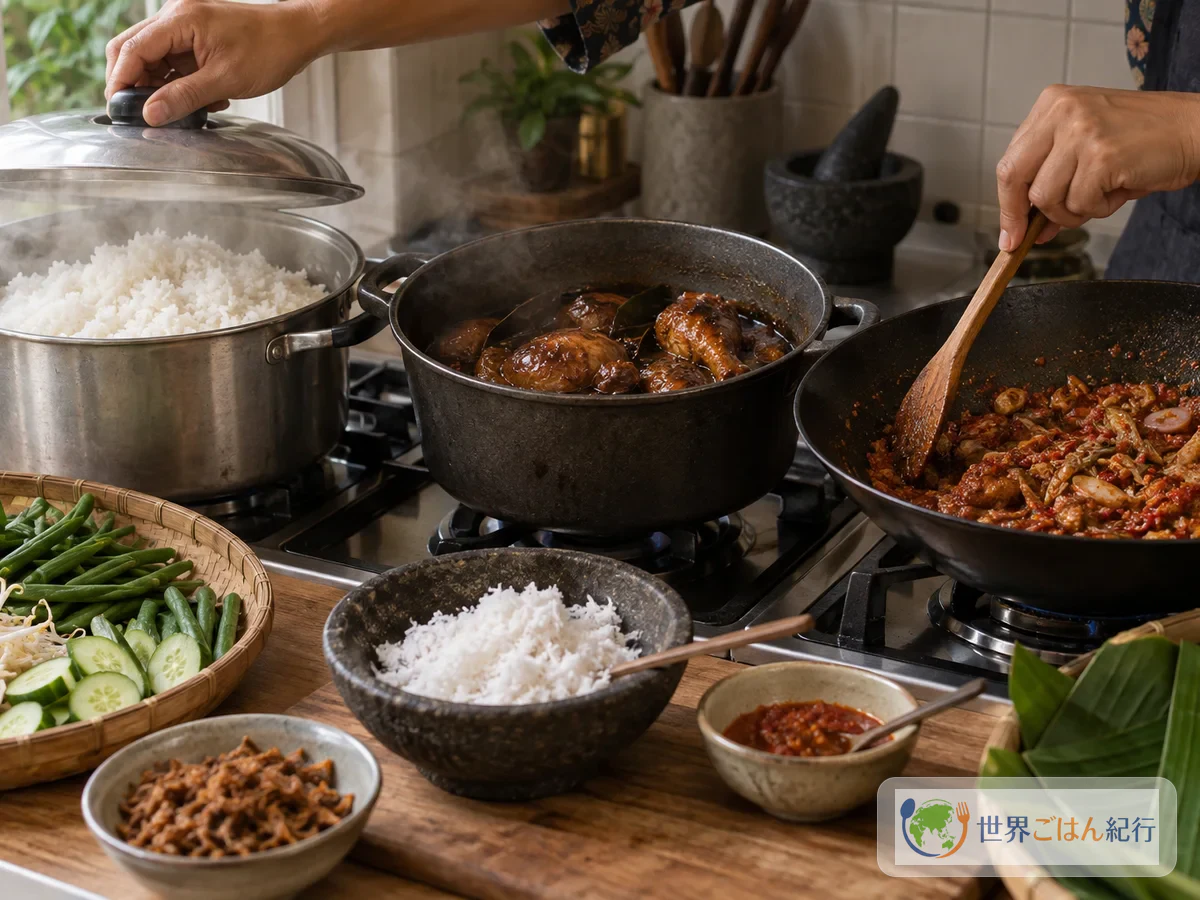
As a guide, prep is 55 minutes and cooking 1 hour 35 minutes, about 2 hours 30 minutes in total. It varies with the number of pots and the number of people working. The coconut for the serunding and urap is finished as coconut dried over low heat, whereas the chicken keeps some of its braising liquid, so even though both "reduce", the finished state differs. Also, do not reuse the knife, cutting board and tongs that handled raw chicken for the cooked chicken or for plating.
Each pot needs a different way to bring back its moisture balance. If the serunding turns damp, return it to a clean frying pan and dry it over low heat for 2–3 minutes at a time. You cannot fix it by adding water after it has burnt. If the sambal goreng has dried out, add water or coconut milk 1 tbsp at a time and loosen the bottom without breaking up the ingredients. The rule is never add water to scorched ingredients.
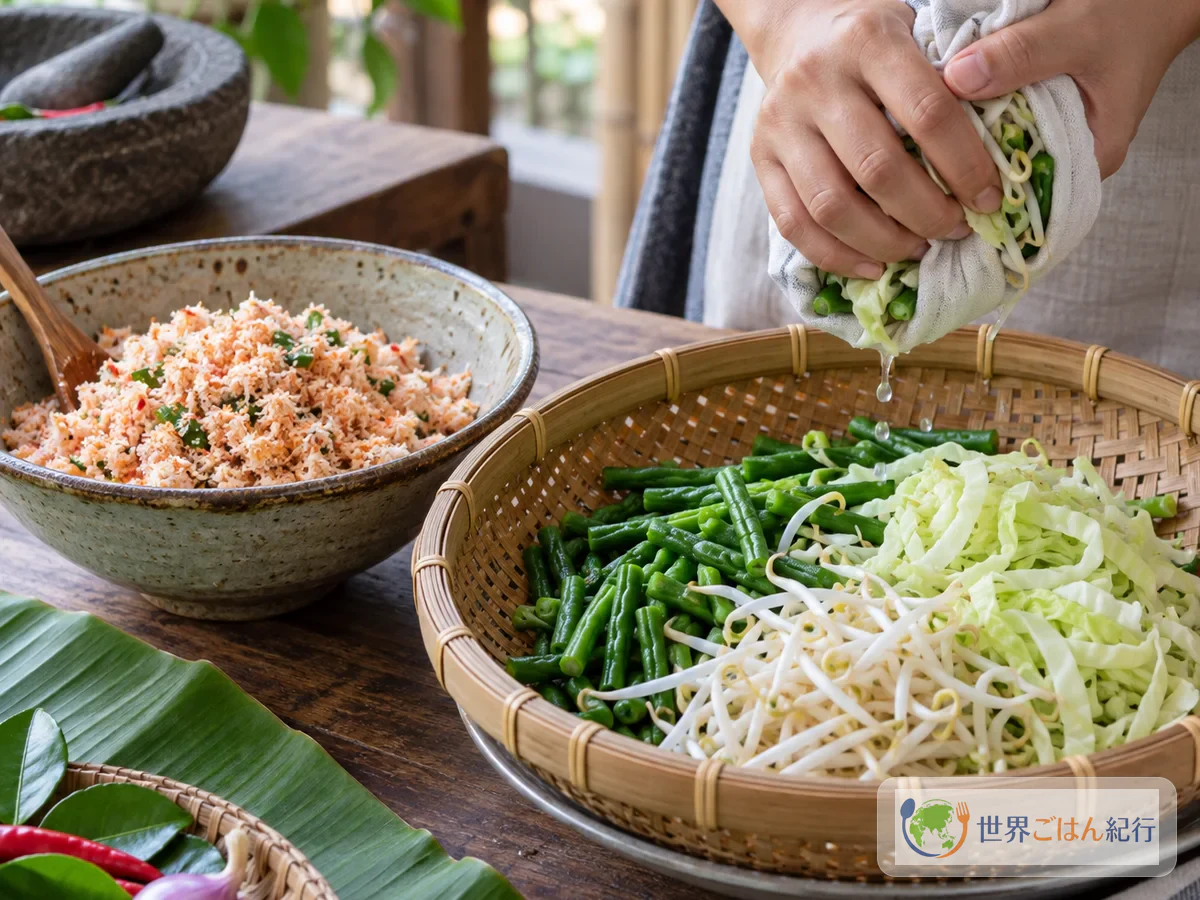
If the urap is watery, lift only the vegetables into a sieve and add a little cooled coconut. Do not just increase the salt or sourness. If the rice is too soft to heap, do not force it into a mold; plate soft rice flat. Spread it on a large plate lined with banana leaf and surround it with the sides, and it will be fine.
On the round tray, arrange the flavors without mixing them
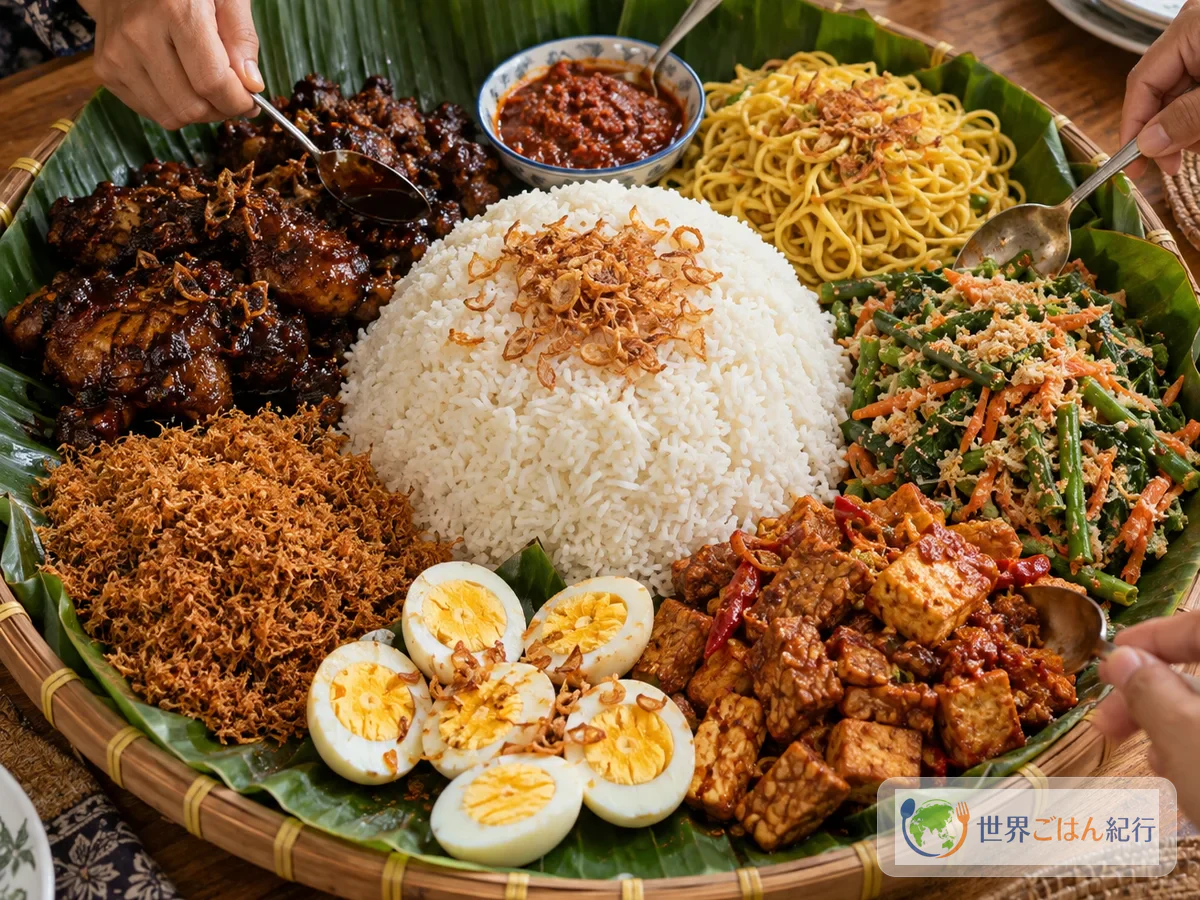
Line a round tray with washed and dried banana leaf and heap white rice in the center while still warm, in a mound about 20 cm wide. Around it, make separate mounds of the kicap-braised chicken, sambal goreng, serunding, urap and fried noodles, as separate flavors around the edge. Put only the soupy chicken in a shallow dish or at the edge of the leaf. Place the boiled eggs between the mounds, and put the salted fish, rempeyek and sambal on the side at the edge where eaters can reach them easily. Do not mix the dishes into one; eat by matching a little of each side to the rice.
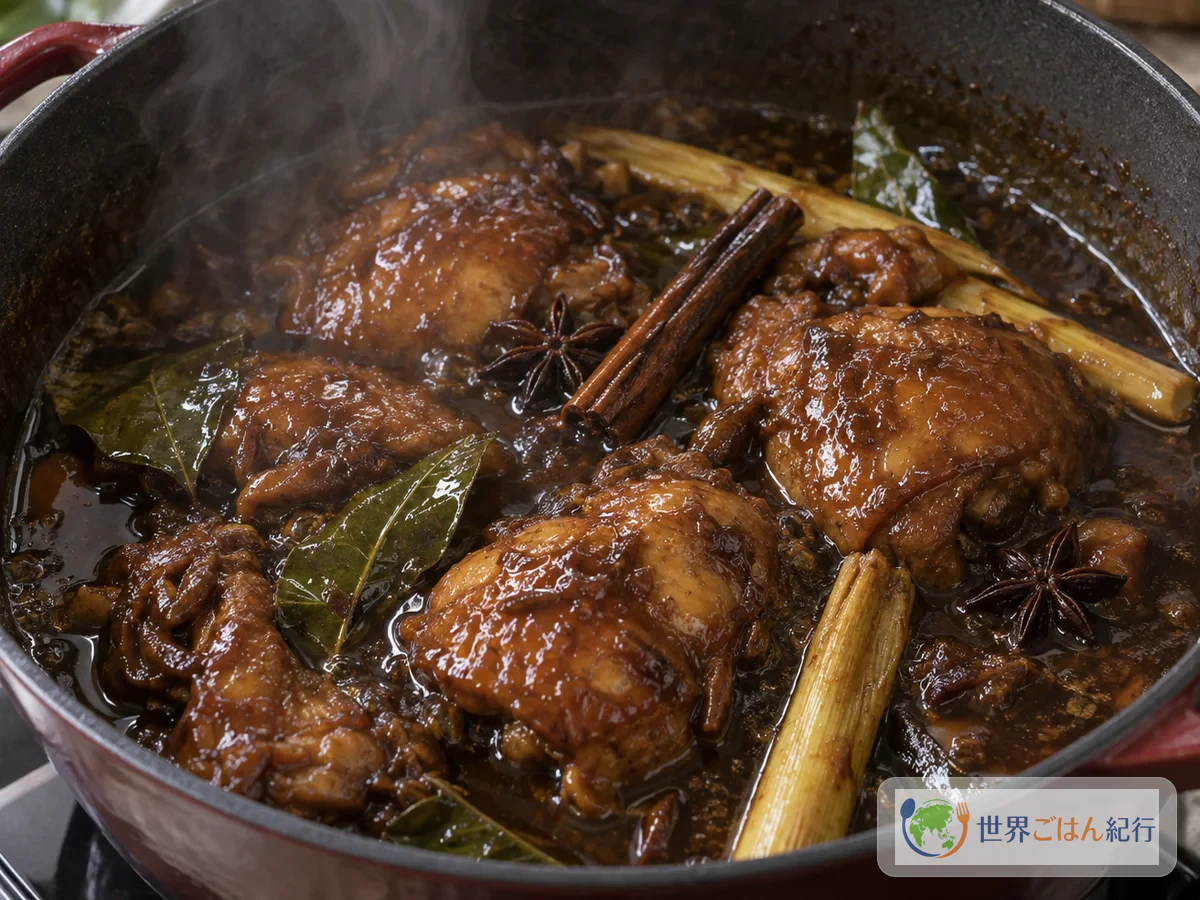
On the plate, color and texture change with each bite. The chicken is tender and sweet-savory, the tempeh, tofu and glass noodles of the sambal goreng have absorbed the sauce, the serunding is dry and toasty, the urap keeps its vegetable crunch, and the noodles bring a cohesive saltiness. Combining them bite by bite is the pleasure. Even when you serve into individual small plates from the start, arranging them so the roles of the rice and sides remain visible keeps the same pleasure. While referring to how the shared dish is eaten as described by JKKN and the MICHELIN Guide, choose between eating by hand and using chopsticks or a spoon to suit who is at the table. When taking leftovers home, do not leave them on the large platter; divide them into clean shallow containers so that each component cools separately.
| Dish | Role on the plate | How to combine when eating |
|---|---|---|
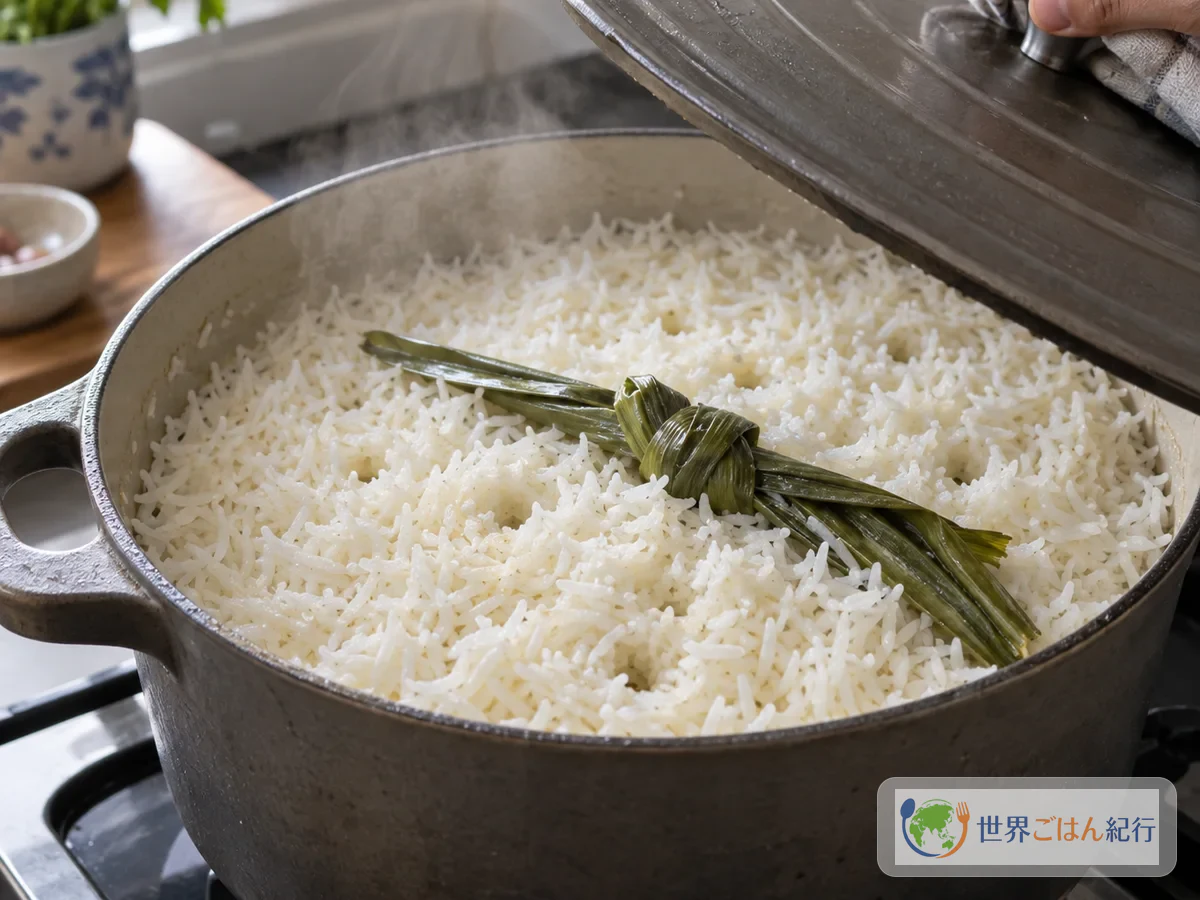
| White pandan rice | The center that receives every flavor | Match with a little chicken braising liquid or sambal at a time |
| Kicap-braised chicken | Sweet-saltiness and tenderness | Eat with rice, urap and serunding |
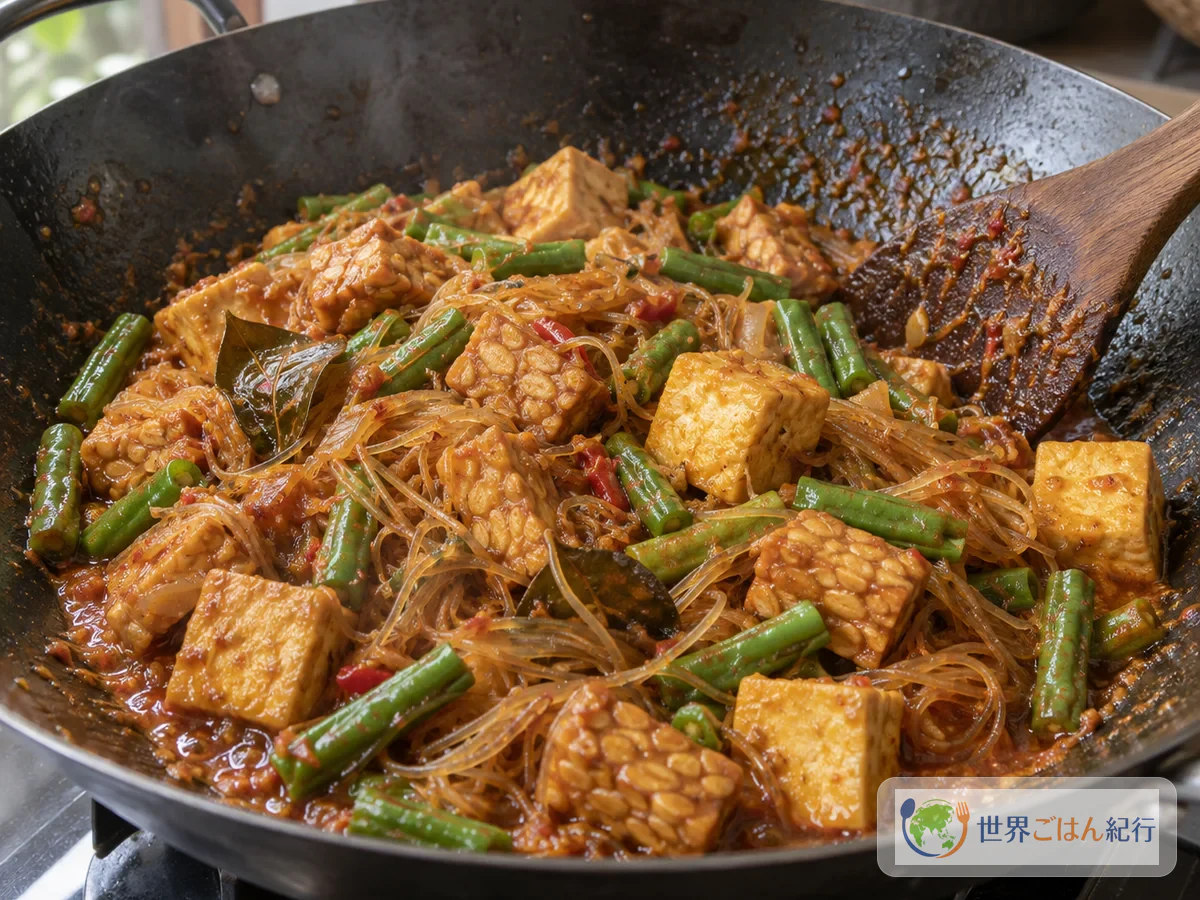
| Sambal goreng | A rich braise of tempeh, tofu and glass noodles | A little at a time over rice, with extra sambal if more heat is needed |
| Serunding | The dry aroma and loose texture of coconut | Sprinkle over chicken or rice |
| Urap | Green vegetables and sourness | Tuck in a little between the rich braises |
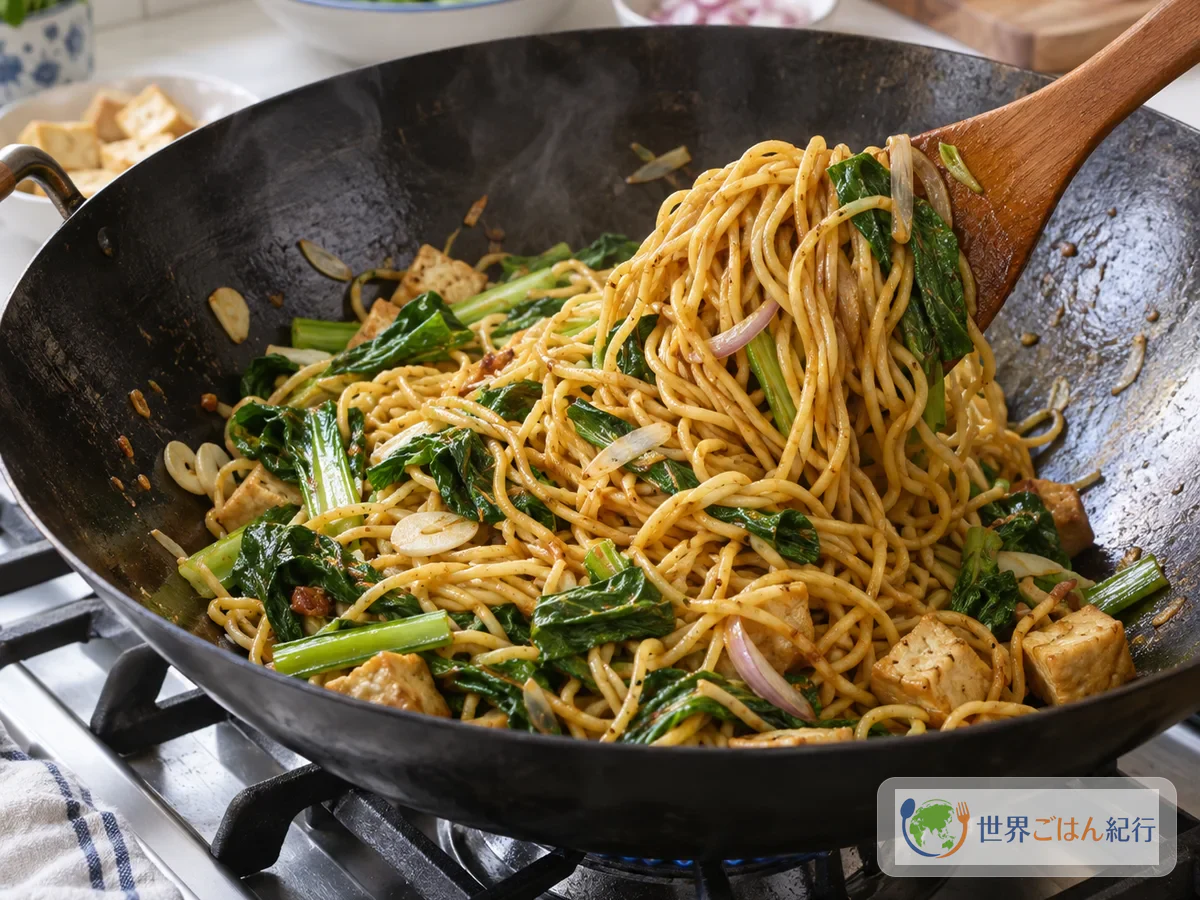
| Fried noodles, eggs and salted fish | The spring of noodles, the roundness of egg, saltiness | Each person takes from the open spots on the plate |
Choosing and substituting ingredients
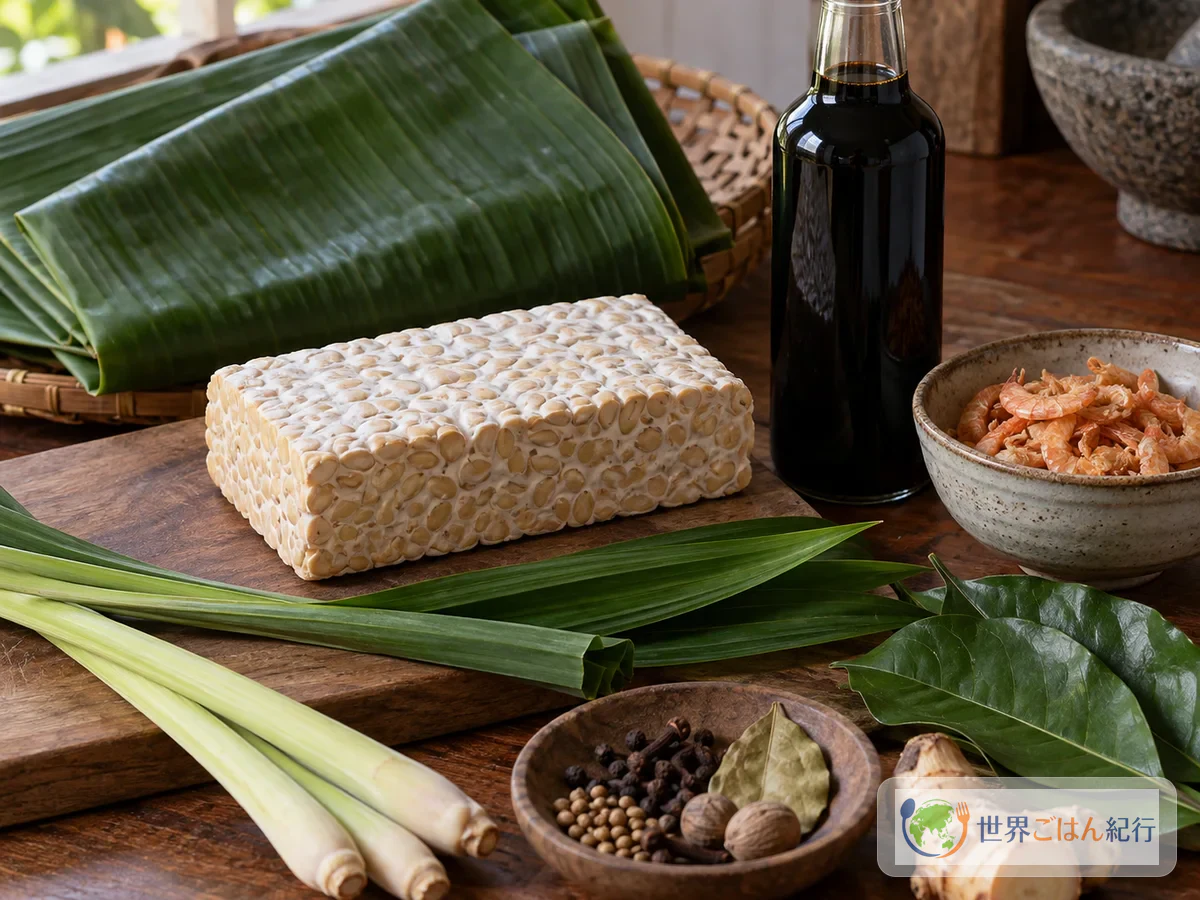
At an Asian or import grocery, or online, the three things worth looking for first are tempeh, which keeps the fermented aroma, kecap manis, the sweet thick soy sauce, and banana leaf, which gives the aroma and the look of a shared platter. Salam leaf and pandan leaf add layers of aroma, but the dish does not fall apart without them. Dried shrimp is used in small amounts in the serunding, sambal goreng and noodles. It is a candidate in households where people eat seafood, but if there is an allergy, remove it from every step. Rice, chicken, vegetables, pots and frying pans can be managed with the tools you have and local ingredients.
| Ingredient you cannot get | Substitute | What changes and how to adjust |
|---|---|---|
| Tempeh | Pan-fried thick fried tofu or firm tofu | The fermented soy aroma and loose texture weaken. Brown it more deeply and let it absorb the sauce |
| Kecap manis | Dark soy sauce with a little brown sugar or light brown sugar | The viscosity will not be the same, so reduce the sauce a little longer and adjust the salt at the end |
| Salam leaf | 1 bay leaf, or omit | It cannot fully replace the camphor-like aroma. Do not add more bay leaf and bring out bitterness |
| Pandan leaf | Omit | The aroma of the rice becomes lighter. Do not increase the aromatics in the rice or make the sides' aroma stronger |
| Banana leaf | Parchment paper | The edible aroma and appearance are reduced, but the shape of the shared platter is kept. Use it for plating, not for cooking |
| Dried shrimp | Omit | Do not simply make up the shrimp's umami with salt; finish without changing the amounts of kecap manis and aromatics |
Substitutes shift the flavor in particular directions, so knowing them in advance makes it easier to decide what to buy first. First keep the rice and the number of sides, and rather than gathering every specialty ingredient, secure three roles: tempeh or thick fried tofu, sweet soy sauce, and dry coconut. It is easier if you think of replacing aroma and texture separately.
In place of kecap manis, do not add too much soy sauce. It only becomes salty, so build the richness with sweetness and reduction. The parchment paper that stands in for banana leaf is not a substitute for aroma but a liner to gather the dishes on one tray.
Even for dishes eaten at Javanese tables, the kecap manis, chili paste, noodles and dried goods you buy do not automatically meet the same standards. When serving someone with religious requirements, check certification and ingredient labeling at each place of purchase, and also look at the labeling for pork-derived ingredients, seafood, shrimp, soy and wheat. Beyond separating the pot for people who avoid shrimp from the pot that uses shrimp, avoid sharing knives, cutting boards, cooking chopsticks and oil.
Frequently asked questions
Which dishes can I make the day before?
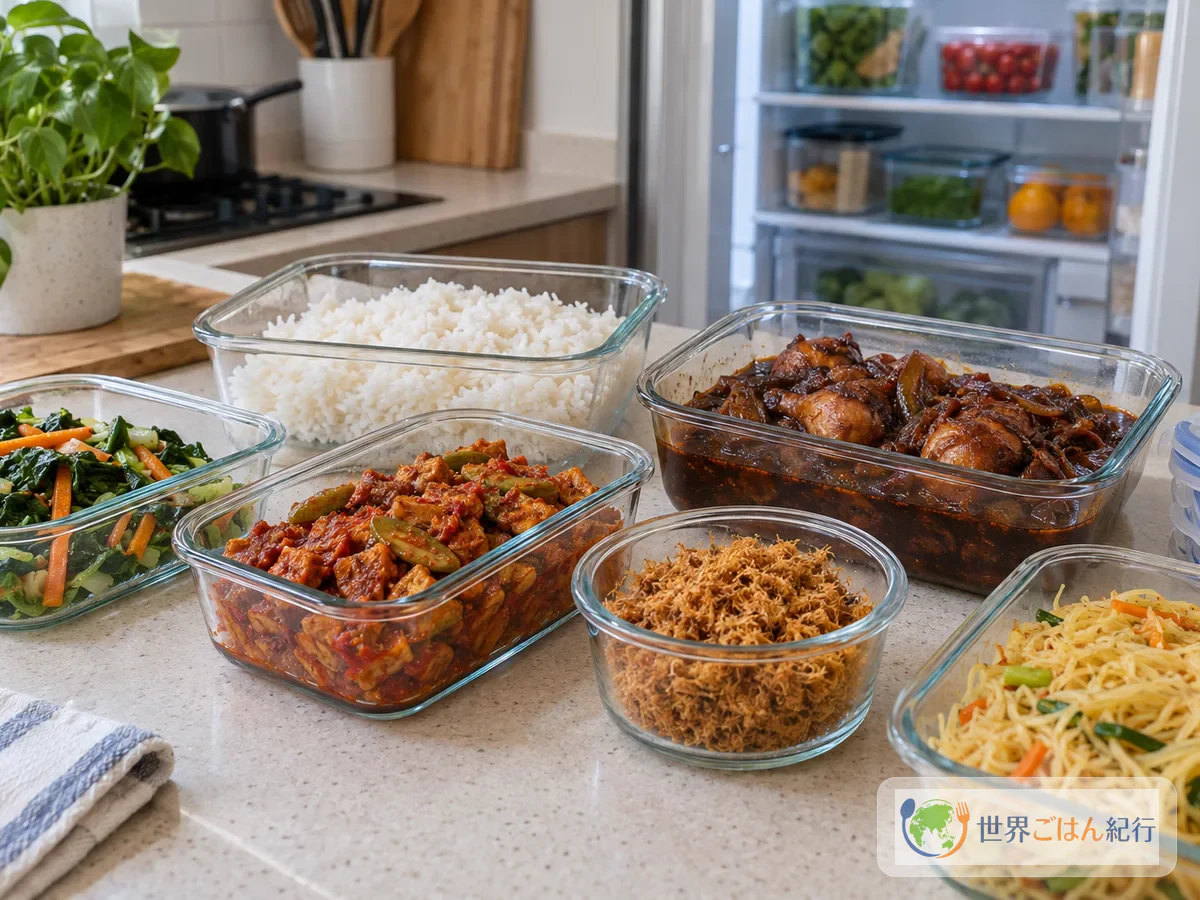
What you can make the day before is the serunding, kicap-braised chicken and sambal goreng. Take off the heat, then put them into clean shallow containers separately. Dry components the day before; rice and vegetables on the day. Do the rice, urap, fried noodles and plating on the day. That keeps the texture of the rice and vegetables and the moisture of the noodles. Take the previous day's chicken and sambal out of the refrigerator and reheat to the center, so you do not put cold components onto the rice.
Can I store the finished tray as it is?
Do not leave the finished tray at room temperature. The basic rule is do not refrigerate it on the tray; after eating, divide the rice, chicken, sambal, vegetables and noodles by component and cool them. According to FoodSafety.gov, leftover cooked meat and poultry keep for about 3 to 4 days at 4°C or below. Safety varies with your refrigerator's temperature, handling and the condition of the components. Reheat the chicken and sambal until hot to the center, and for aroma and texture make the vegetables and noodles fresh, only as much as you will eat on the day.
The serunding turned moist.
If it is damp because it was under-fried, not because you mixed in vegetable or chicken juices, return it to a clean frying pan and drive off just the moisture over low heat. Remove any part that smells burnt, so you do not spread bitterness by mixing in the black parts. Sealing it while the pan is still hot causes condensation, so spread it on a shallow plate and let it cool before storing.
I have no banana leaf.
If you line a round tray with parchment paper, you can keep the role of gathering the dishes onto one shared plate. If you do get edible banana leaf, wash it and wipe off the water, and use it for plating, not for cooking. Since the leaf's aroma is missing, do not force more pandan or salam leaf; take the flavor of the chicken, coconut and tempeh as the standard.
What if someone avoids heat or seafood?
If you reduce the chili paste and red chilies and serve the sambal on the side, you can divide the heat on the same plate. Set aside the sambal goreng and serunding made without dried shrimp first, separate from the pot, utensils and oil used with shrimp to avoid cross-contact. Dishes with tempeh and tofu contain soy, so even for someone avoiding seafood, other allergens such as soy and wheat must be checked. The labeling of commercial seasonings is not the same even for the same dish name, so the cook should check the ingredients.
Sources
- Nasi Ambeng — Jabatan Kebudayaan dan Kesenian Negara (JKKN) — accessed: 2026-10-03 / checked: 2026-10-03
- Tracing the origins of Indonesian-Malay Nasi Ambeng — MICHELIN Guide — published: 2020-07-30 / accessed: 2026-10-03 / checked: 2026-10-03
- Nasi Ambeng — Roots.gov.sg — accessed: 2026-10-03 / checked: 2026-10-03
- Nasi Ambeng, Sajian Warisan Negeri Selangor — Rasa.my — published: 2024-03-05 / accessed: 2026-10-03 / checked: 2026-10-03
- Campylobacter food poisoning prevention (Q&A) — Ministry of Health, Labour and Welfare (Japan) — accessed: 2026-10-03 / checked: 2026-10-03
- Cold Food Storage Charts — FoodSafety.gov — accessed: 2026-10-03 / checked: 2026-10-03