
Chopped aromatics, finished with hot oil: Bali's sambal
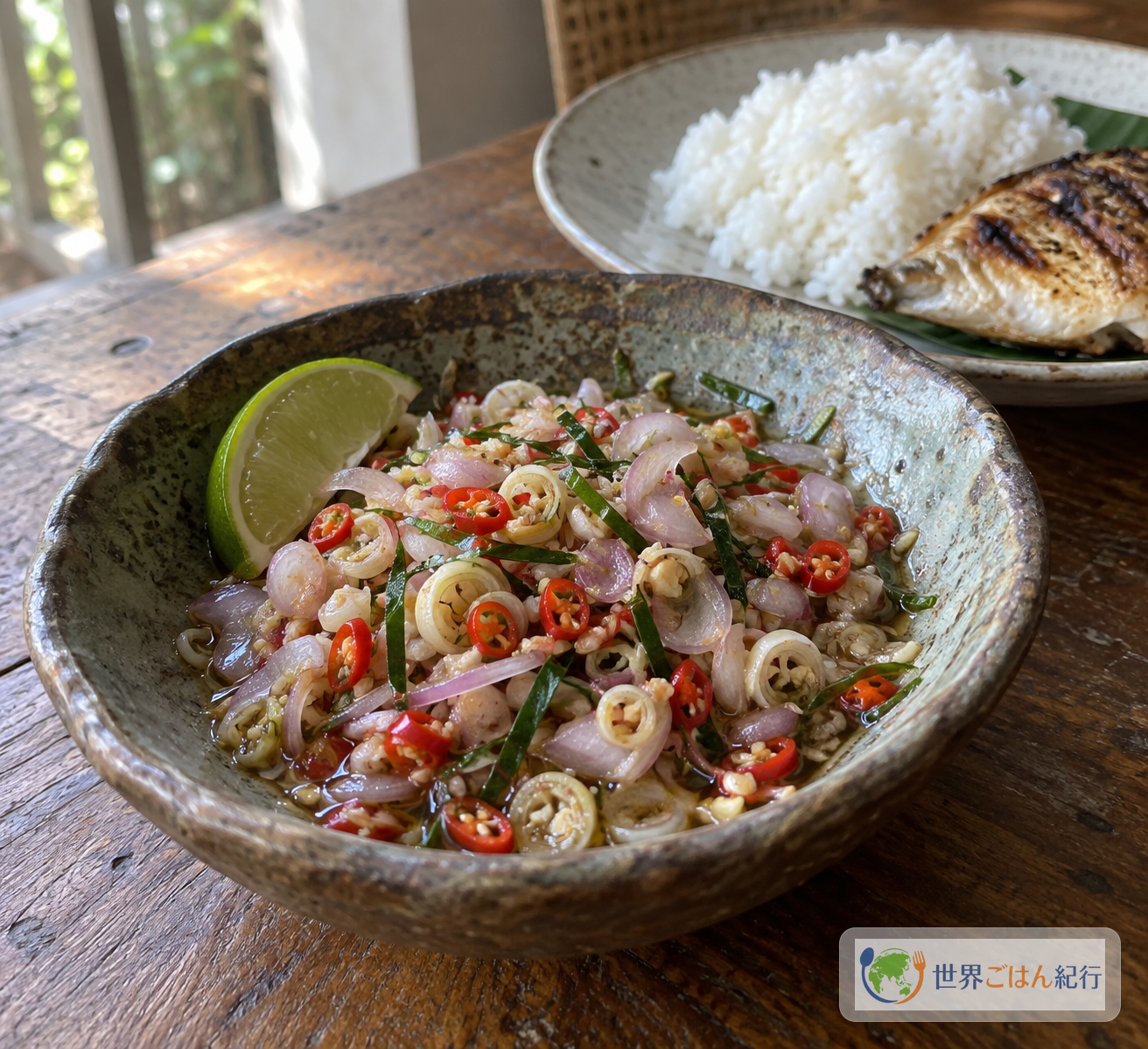
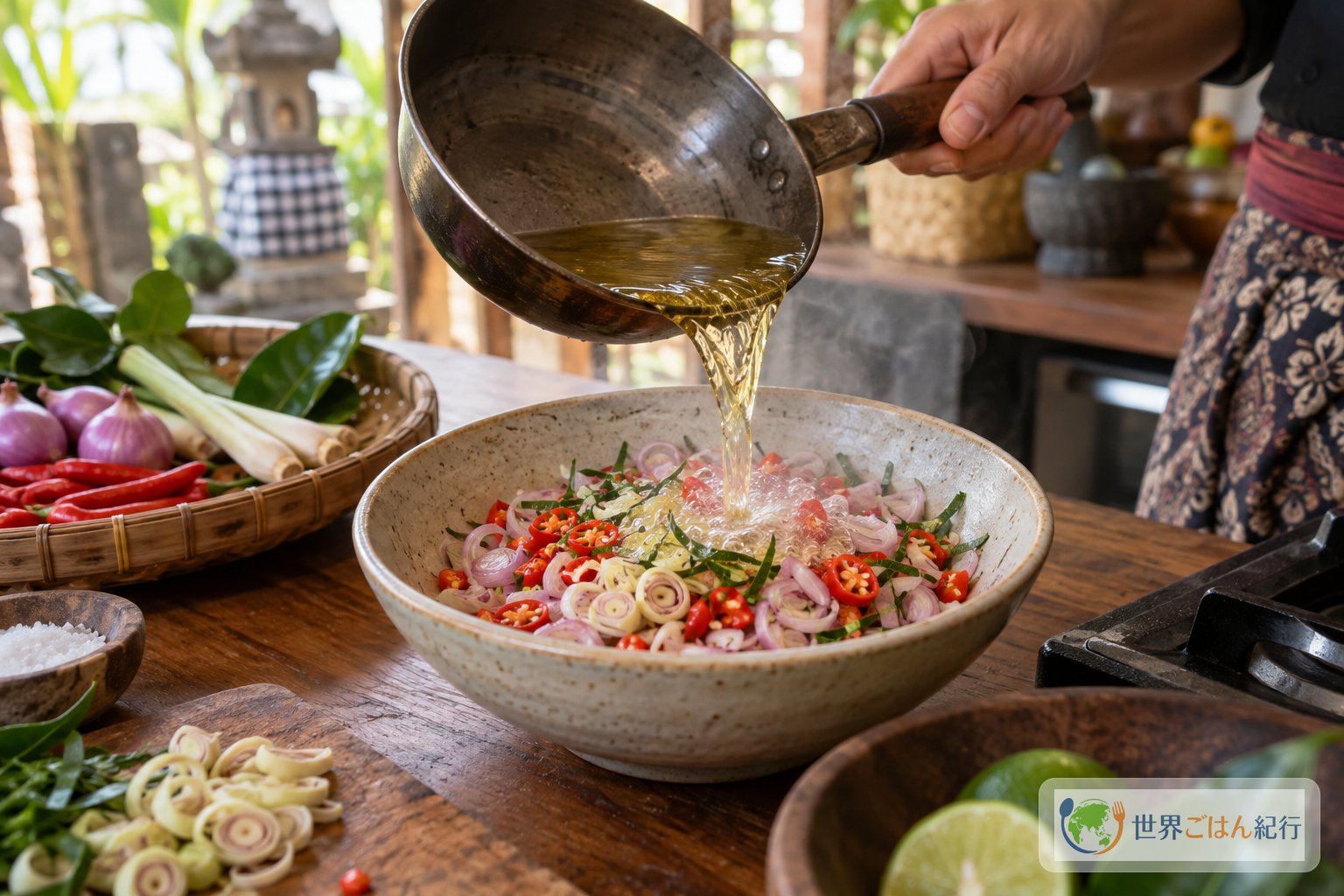
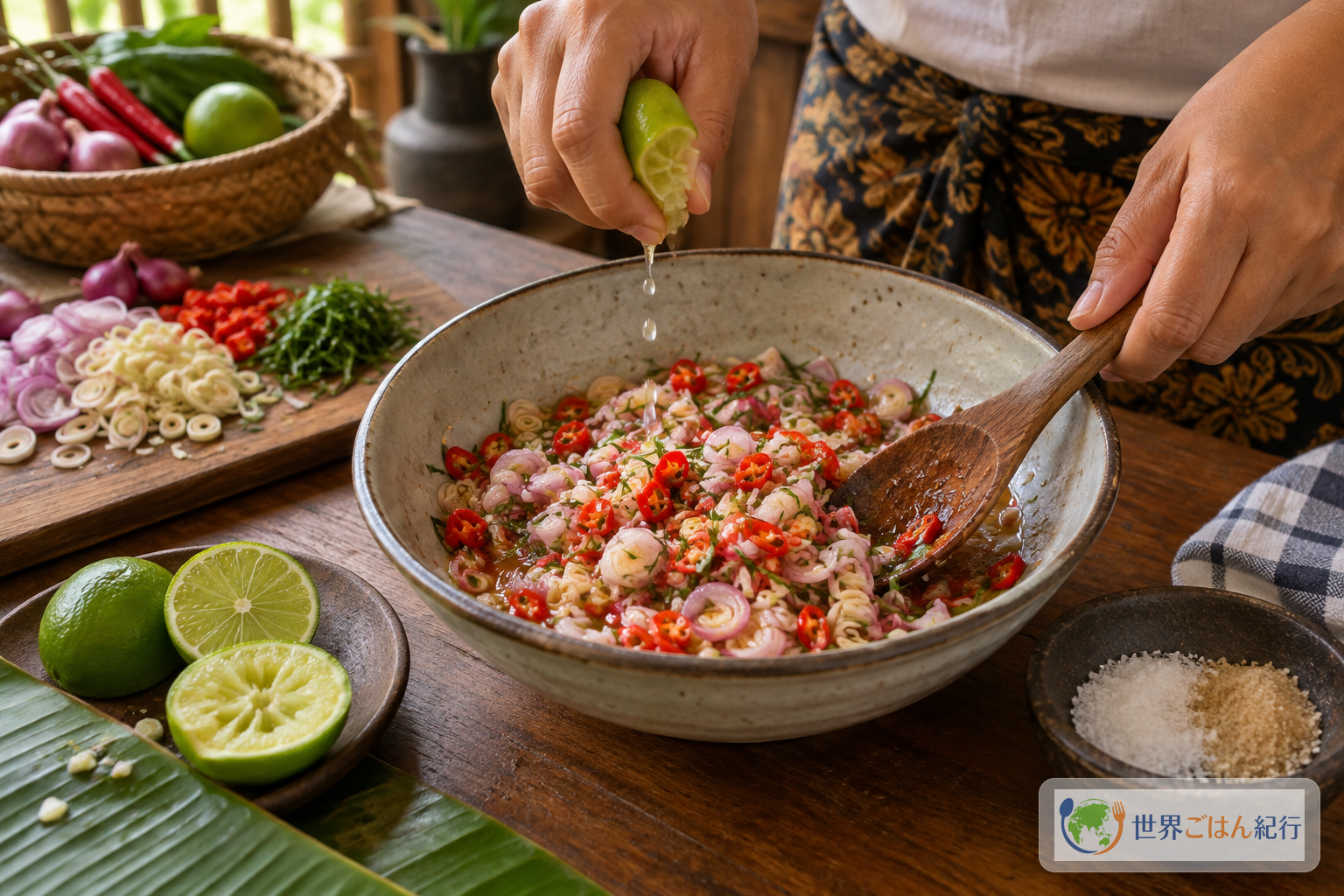
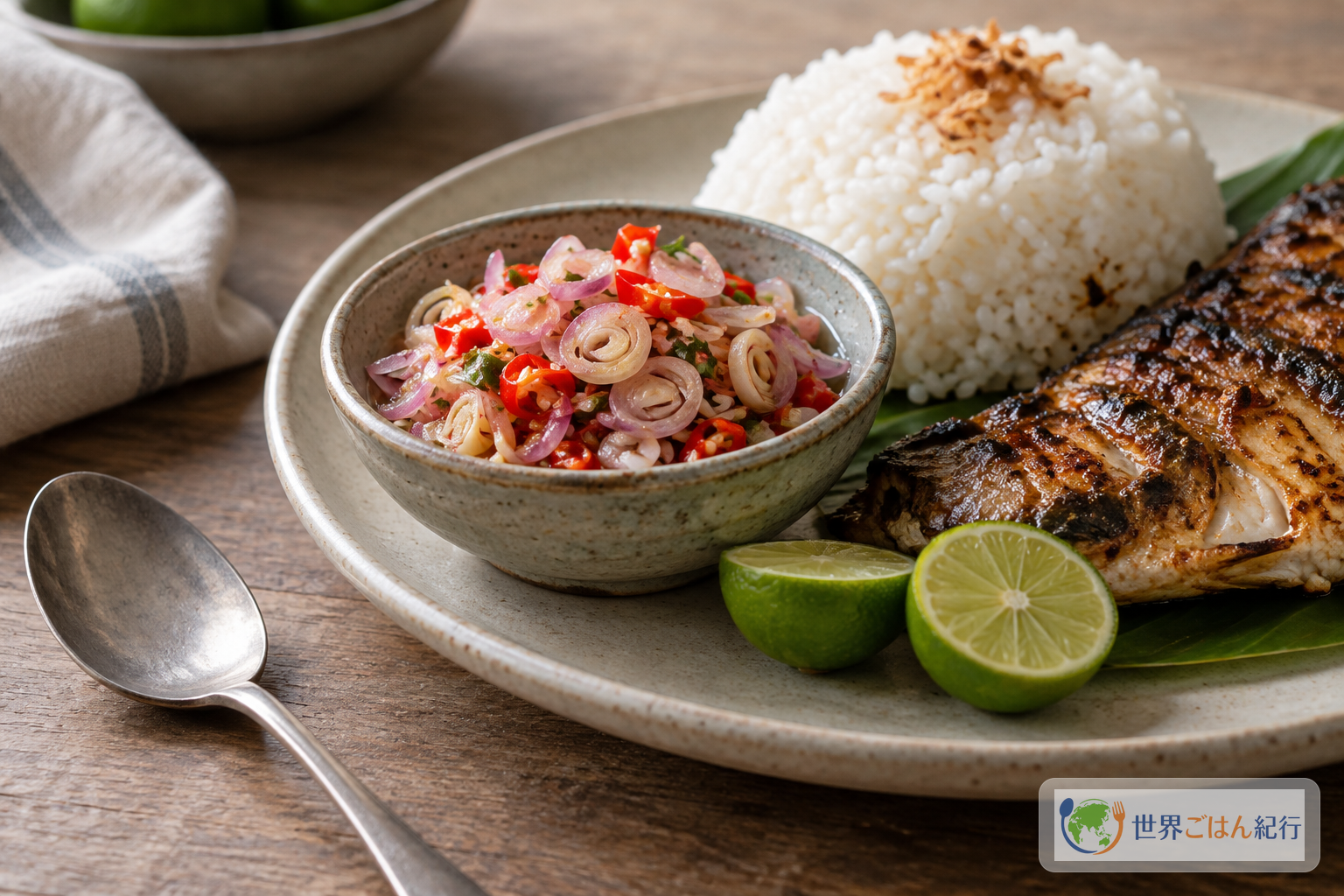
In the bowl, rings of red chili glisten, coated in oil. The shallots stay as thin rings and the lemongrass as tiny whorls, while only the makrut lime leaves turn into fine green threads. Squeeze lime over it and the roundness of the hot oil loosens, and the aroma that reaches your nose turns a shade brighter.
Sambal matah is the raw sambal eaten in Bali. The Indonesian tourism board describes it as a dish of chopped shallots, chilies, lemongrass and makrut lime leaves, dressed with hot coconut oil. Unlike sambals where the ingredients are ground smooth in a stone mortar, the whole point here is to keep the texture of the chopped pieces. The Indonesia Travel introduction also notes that it is finished without pounding or frying.
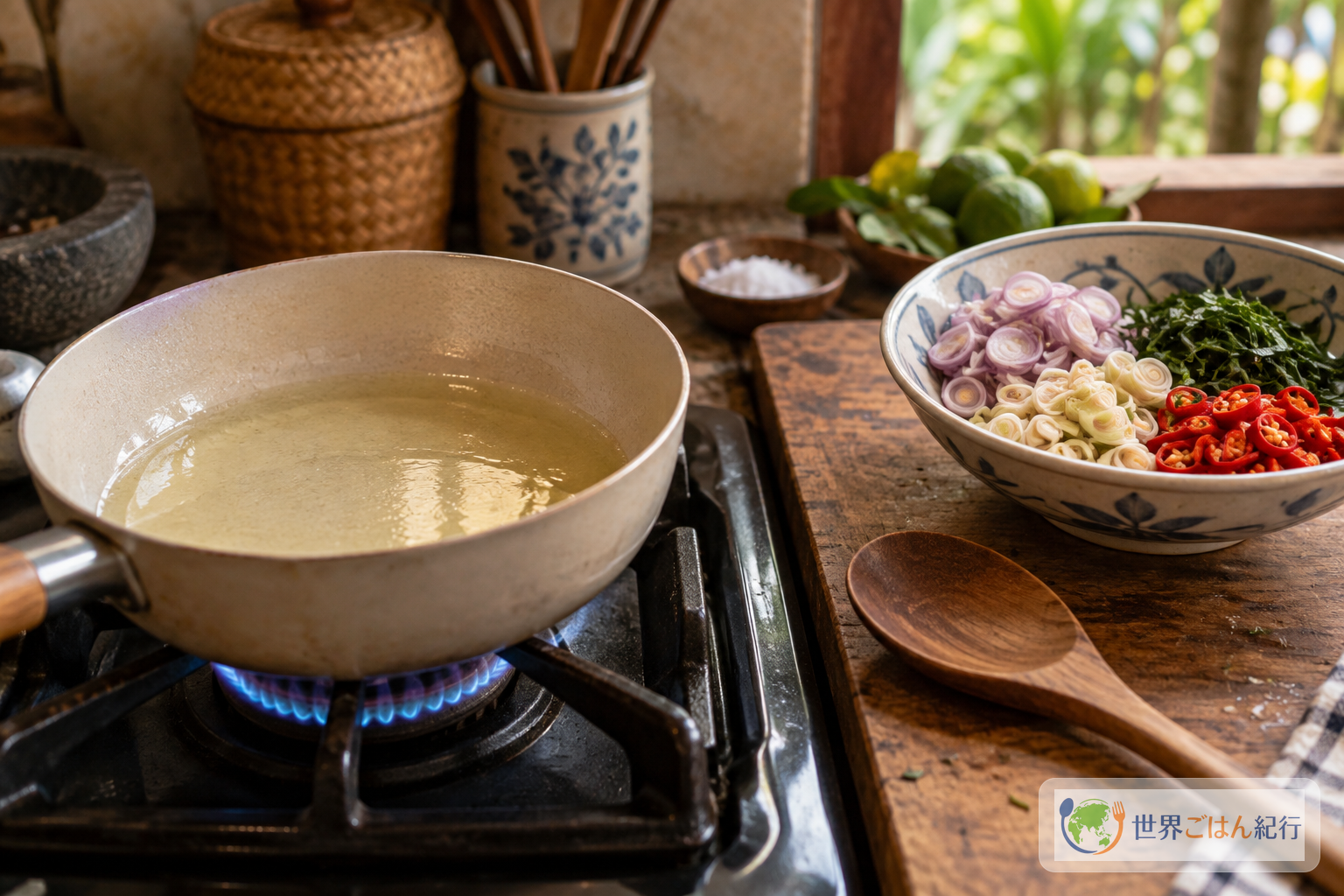
In a home kitchen, if you read only the word "raw" in the name and mix in cold oil, the toughness of the lemongrass and the bite of the onion come forward. Heat the oil until it smokes, on the other hand, and the green aroma of the leaves scorches and the whole thing drifts toward a stir-fry. What you want is a temperature that softens the edges of the chopped pieces just slightly. A small sizzle the moment the oil lands, the rims of the shallots turning translucent. And still some crunch left at the center. Once you find that edge, even if you cannot reproduce the dish exactly as it is eaten in Bali, you can get the way sambal matah's aroma opens up with ingredients you can find almost anywhere.
At a Balinese nasi campur, the rice is served with small portions of sate lilit, ayam betutu, lawar and so on, and sambal matah sits to the side. It does not blanket the main dish as a sauce; it adds heat, acidity and a green fragrance with each bite. So rather than pouring a lot on at the start, it works best to serve about 1 tsp beside the fish, chicken or rice and let each person decide the amount.
Ingredients (serves 4): choose authentic ingredients only for the core of the aroma
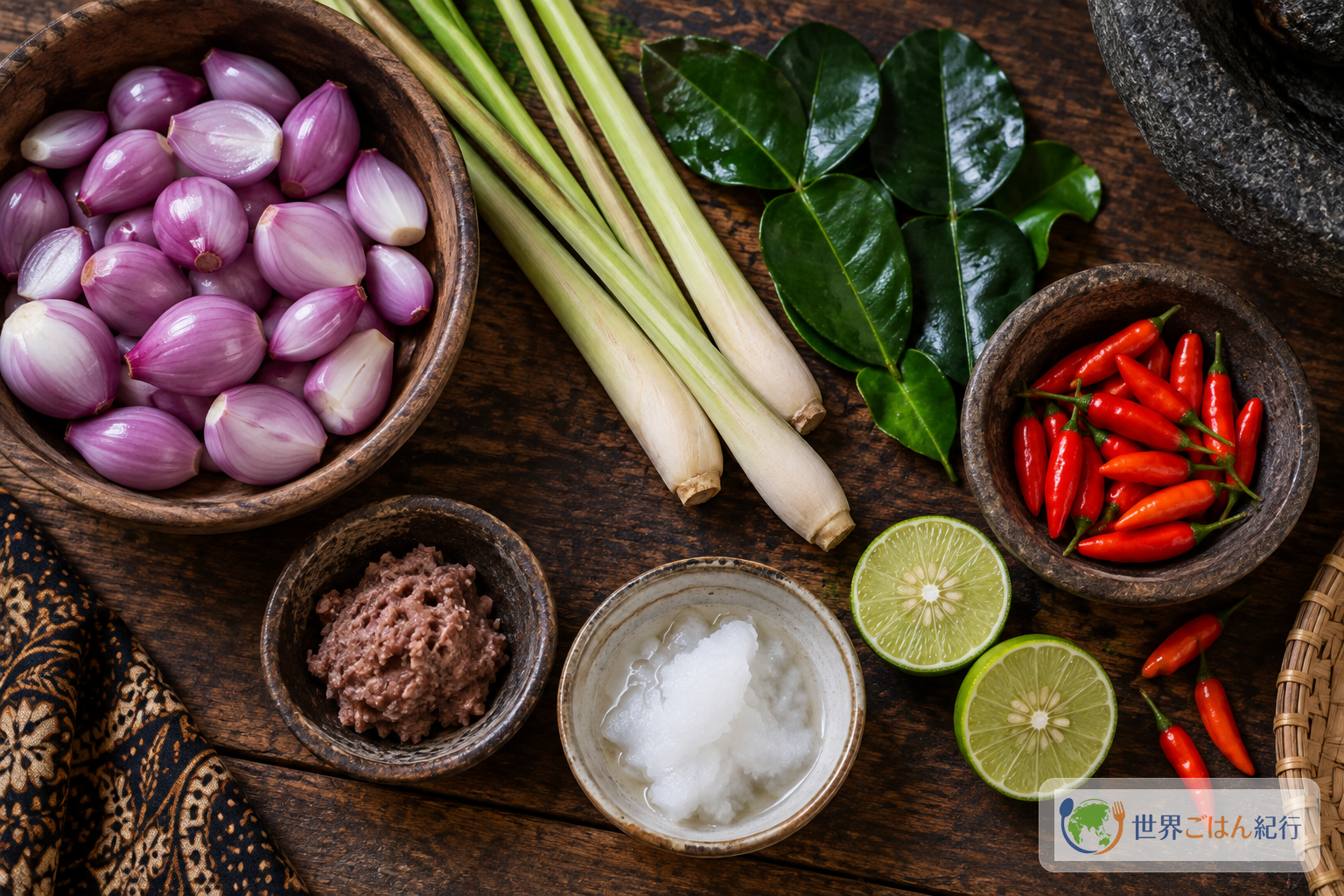
The mix of sambal matah varies from home to home and region to region. The amounts below are based on a recipe card from a university cooking module, rearranged into a size that is easy to handle for 4 servings at home. A survey paper also records a method of chopping shallots, chilies, lemongrass and makrut lime leaves and stirring shrimp paste into the oil before pouring it over. We cross-checked the Canrea Journal survey against the recipe card in the cooking module and adjusted the heat and salt for a home table.
The ingredients are listed below.
Makrut lime leaves are not there to add more sourness to the lime juice. When the chopped leaves touch the oil, they add a green citrus fragrance that is different from the juice. If you keep cooking Southeast Asian food, it makes sense to buy them frozen. If you are making just this one dish, you can skip the leaves and grate a little lemon zest to supply the brightness of aroma.
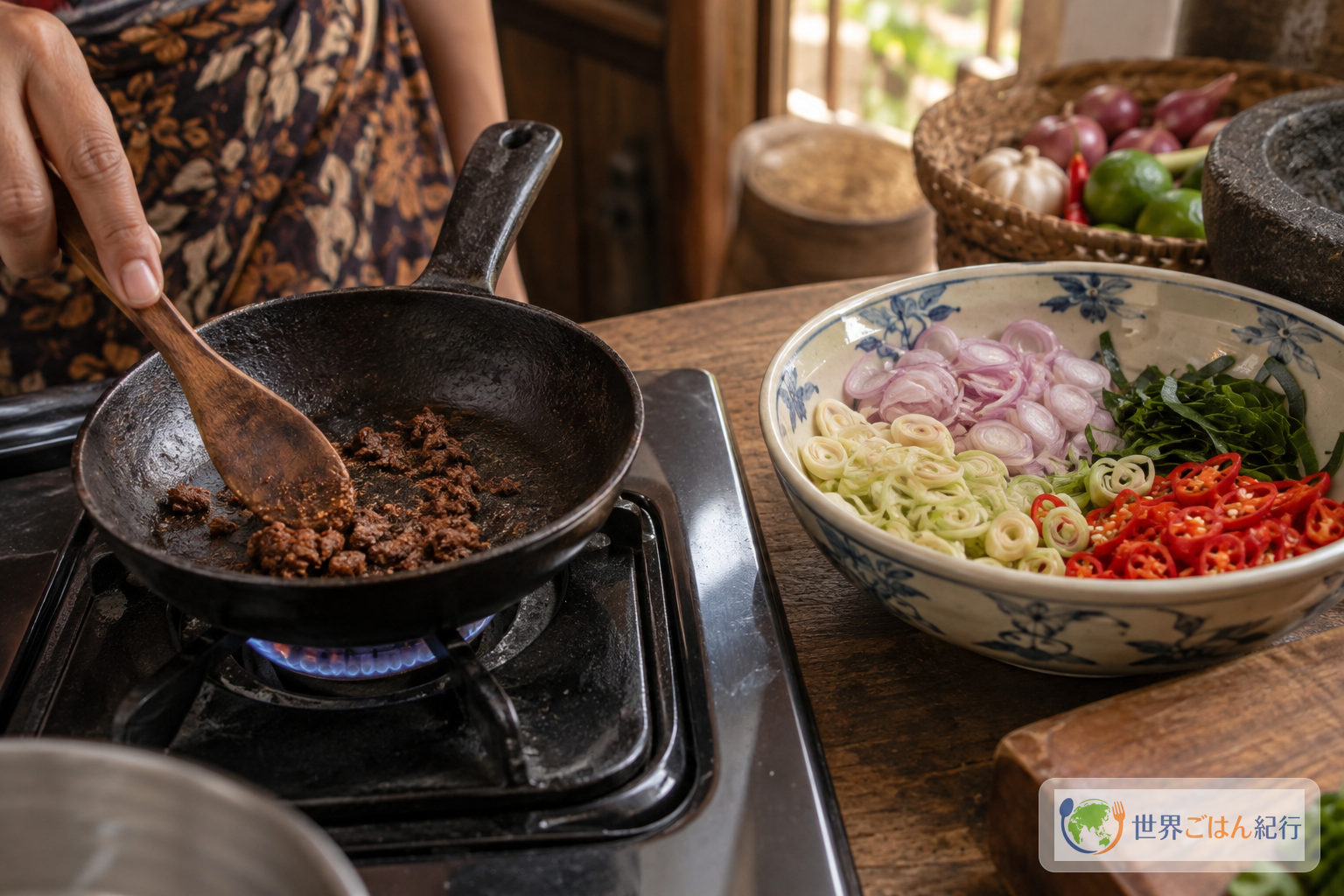
Terasi is warmed in a small amount in a dry pan to bring out its fragrance. It adds a seafood flavor, so leave it out for a vegan version, and do not increase the salt all at once; taste at the end. There are mixes that include garlic or terasi, but that does not mean there is one fixed family recipe. Even locally, the ingredients and the heat shift with what is at hand and with the tastes of the people eating.
If you cannot use up fresh red chilies, sambal oelek can stand in. It brings the roundness and saltiness of a fermented seasoning, though, so rather than swapping it one-for-one for the 20 g of red chilies, start from about 15 g and hold the salt until the end. Choose a jar whose label lets you check the ingredients, the net content and how to store it after opening.
If you use terasi or shrimp paste, check the label of the product for shrimp. If you avoid shellfish, wash utensils separately too; instead of adding a substitute to fill in the flavor, adjust the salt and acidity little by little for what you omitted.
Method: even cuts, and the oil goes on last, hot
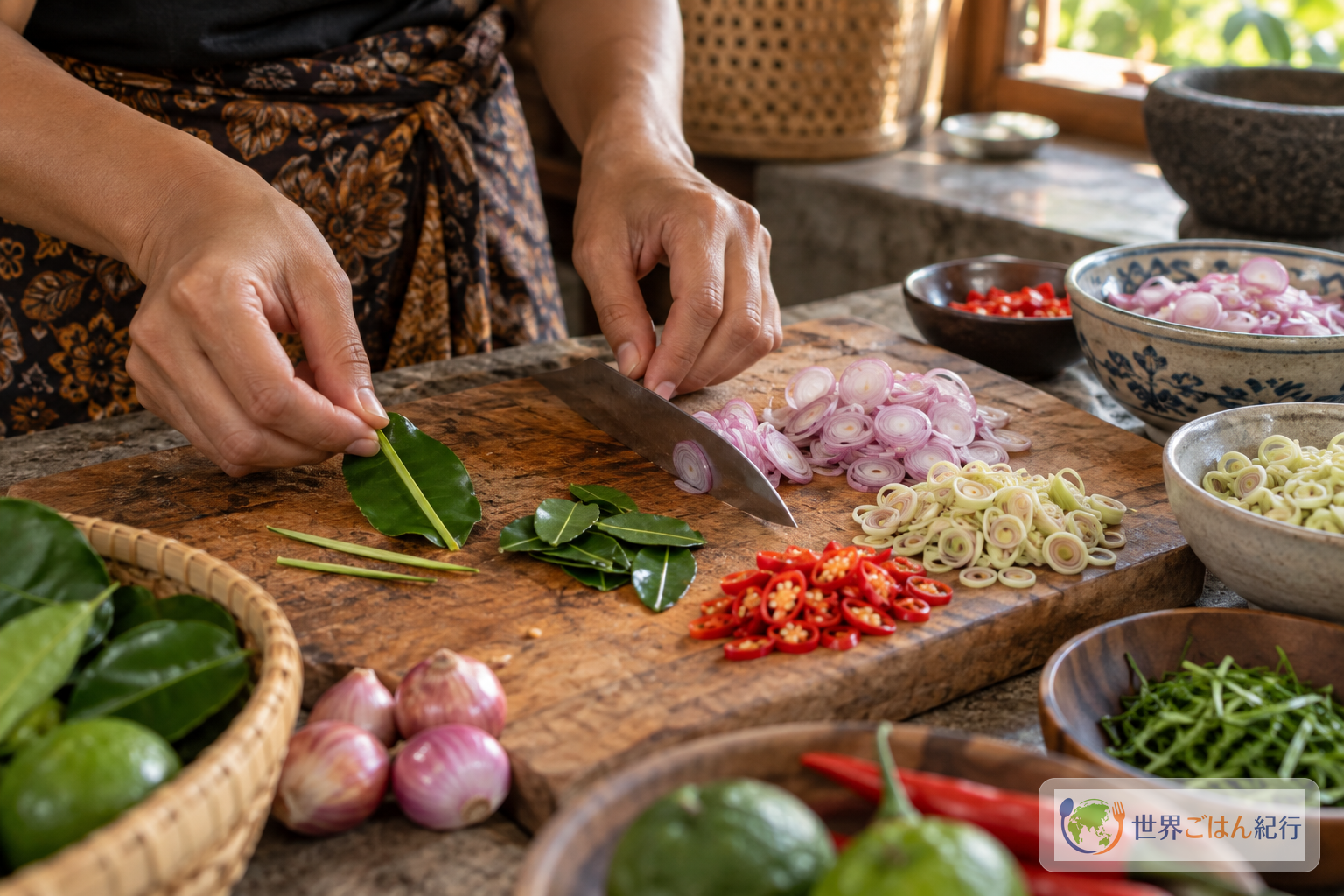
Separate the chopping from the work that needs heat. Blot the moisture from the ingredients with paper towels and keep the bowl cool until just before you pour the oil. Cut the lemongrass large and it is hard to bite through; run it too long in a food processor and it releases water and turns into a paste. A knife and thin slicing are the most reliable tools for this dish.
Three tips for keeping the aroma
1. Do not soak the onion in water; adjust with the cut
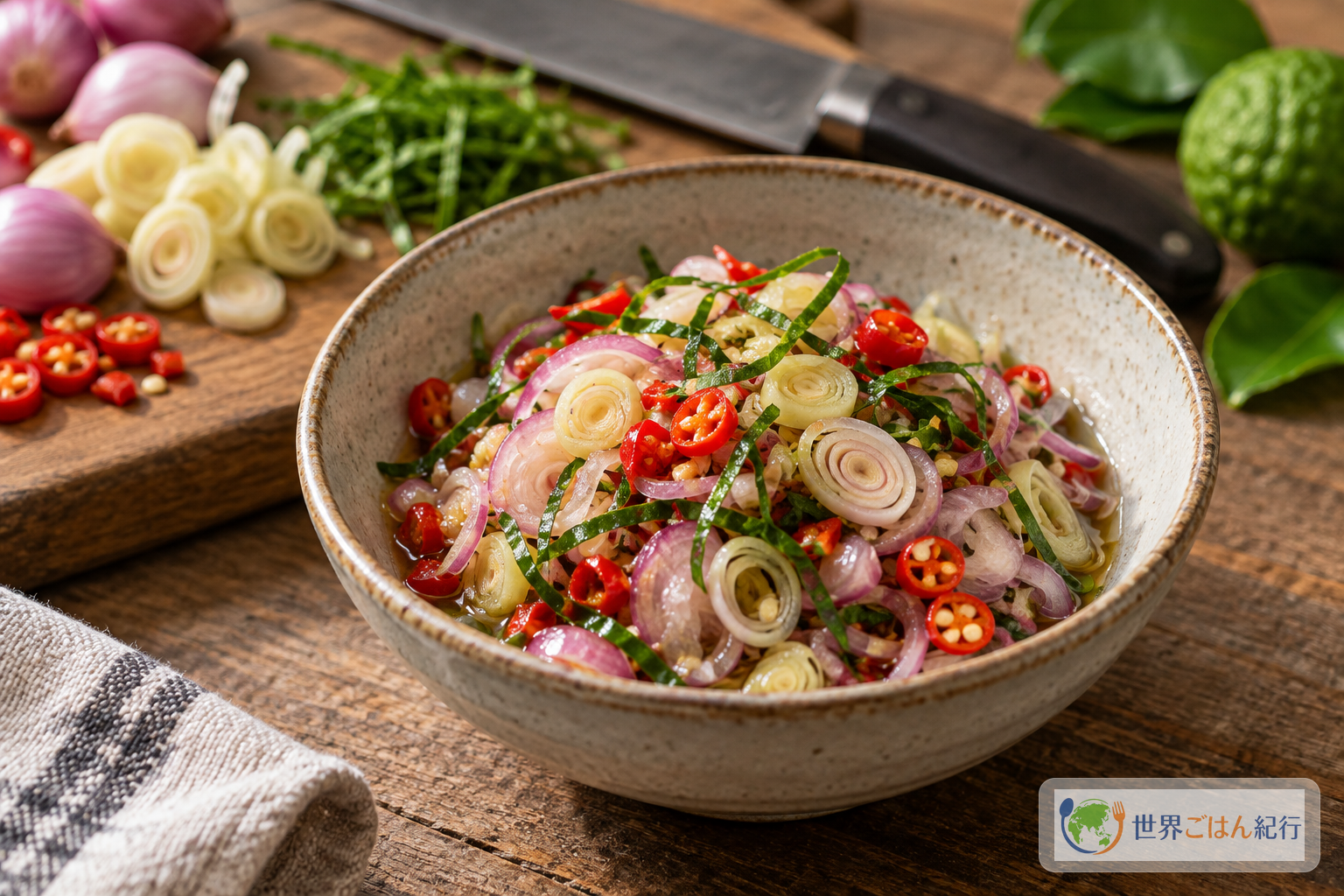
Red onions are larger than shallots and can release more water. Soaking them in water when the bite bothers you tends to wash out the aroma and the crunch too. First slice them thinner than 2 mm and blot the surface with paper towels. If it is still strong, add lime and let it rest for 5 minutes. Pour the oil over thin slices and only the sharpness is softened, while the crunch at the center stays.
2. Use only the base of the lemongrass
The white part of the lowest 2–3 stalks is tender and edible when sliced thin. If you force in the tough outer sheaths or dry tips, more fibers are left in the mouth. The parts you discard can go into soups or into the rice pot for fragrance. If the rings are too large, the heat of the oil does not reach the center, and the toughness cannot be undone.
3. Choose tools by how much you need to chop evenly
A knife is enough for these 4 servings. A small food processor shortens the time to make the aromatics even, but if you run it too long it releases water and the chopped texture of sambal matah disappears. Buy one not for a single dish but for whether you will use it for a batch four times this size or for other aromatic pastes. Check the capacity, the blade setup and whether the shape gathers a small amount toward the blade. If you only make small amounts of sambal, passing on it and using the knife you already own is the sensible choice.
If the aromatics turn watery, do not make it richer with more oil or salt. Add a little more chopped shallot and lemongrass to give the flavor more to cling to. If it is too hot, eat it with warm rice, grilled fish or unsalted cucumber, and do not add a lot of sugar to the bowl. Only when the oil was cold and the aroma stayed closed, warm a small amount of oil in a separate pan and add it over the top.
On the Balinese table, the same "raw sambal" changes the meal
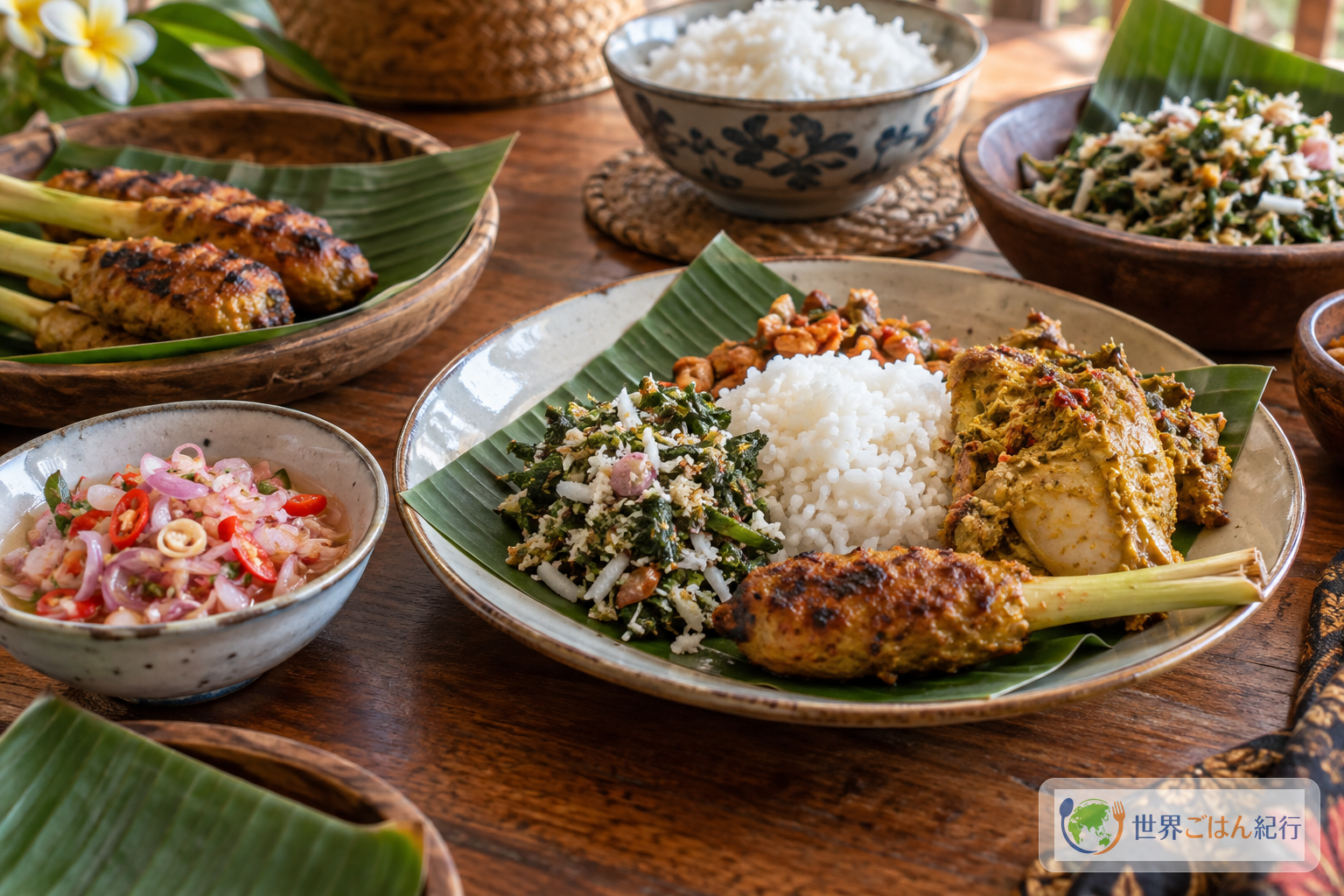
Sambal matah is not a dish that seasons and simmers meat or fish. It is placed in small amounts between the rice and the main dishes, with the role of adding aroma just before eating. The Balinese nasi campur introduced by Indonesia Travel also features a combination of sate lilit, ayam betutu, lawar and sambal matah in small portions around the rice. As the introduction to Bali's iconic dishes shows, it is easier to understand when placed where it links the flavors of several side dishes than when it is made to complete a plate on its own.
Spooned over grilled fish, it brings lime and chili into the savor of the skin; with chicken, it lightens the fatty parts. When you plan a menu at home, a side of sambal goes with both ayam betutu, which is steam-roasted with its aromatics, and sate lilit, where minced meat is wrapped around lemongrass and grilled. On days when you want another vegetable dish, pair it with the coconut sweetness of another Balinese side dish, urap, and the table does not rely on heat alone.
That said, Indonesian sambals cannot all be treated as the same thing. Sambals across Indonesia change shape with the local ingredients, the preferred heat and the dishes they accompany. Sambal matah is classed as Bali's chopped raw sambal, but dabu-dabu of North Sulawesi is a different raw sambal that uses tomato and lime. The summary in the Journal of Ethnic Foods also shows that ingredients and methods differ from region to region.
Records of Balinese food list, besides sambal matah, names such as sambal cantok, in which the ingredients are crushed, sambal nyuh, which uses coconut, and sambal sera, sambal embe and sambal bongkot, which are built on lemongrass. Rather than fix the origin of sambal matah to a single birthplace and a single set of amounts, it is more practical to see regional differences as showing up in the ingredients and in the dishes it is served with. So rather than fixing an "authentic answer" to one formula, it is easier to remember matah as a dish that keeps the chop, opens the aroma with hot oil and sits beside the meal, and that way you will not be lost when substituting ingredients elsewhere. A regional publication on Balinese food culture also has local cooking notes that distinguish these sambals.
Storage and serving: raw aroma the same day, leftovers by the next day
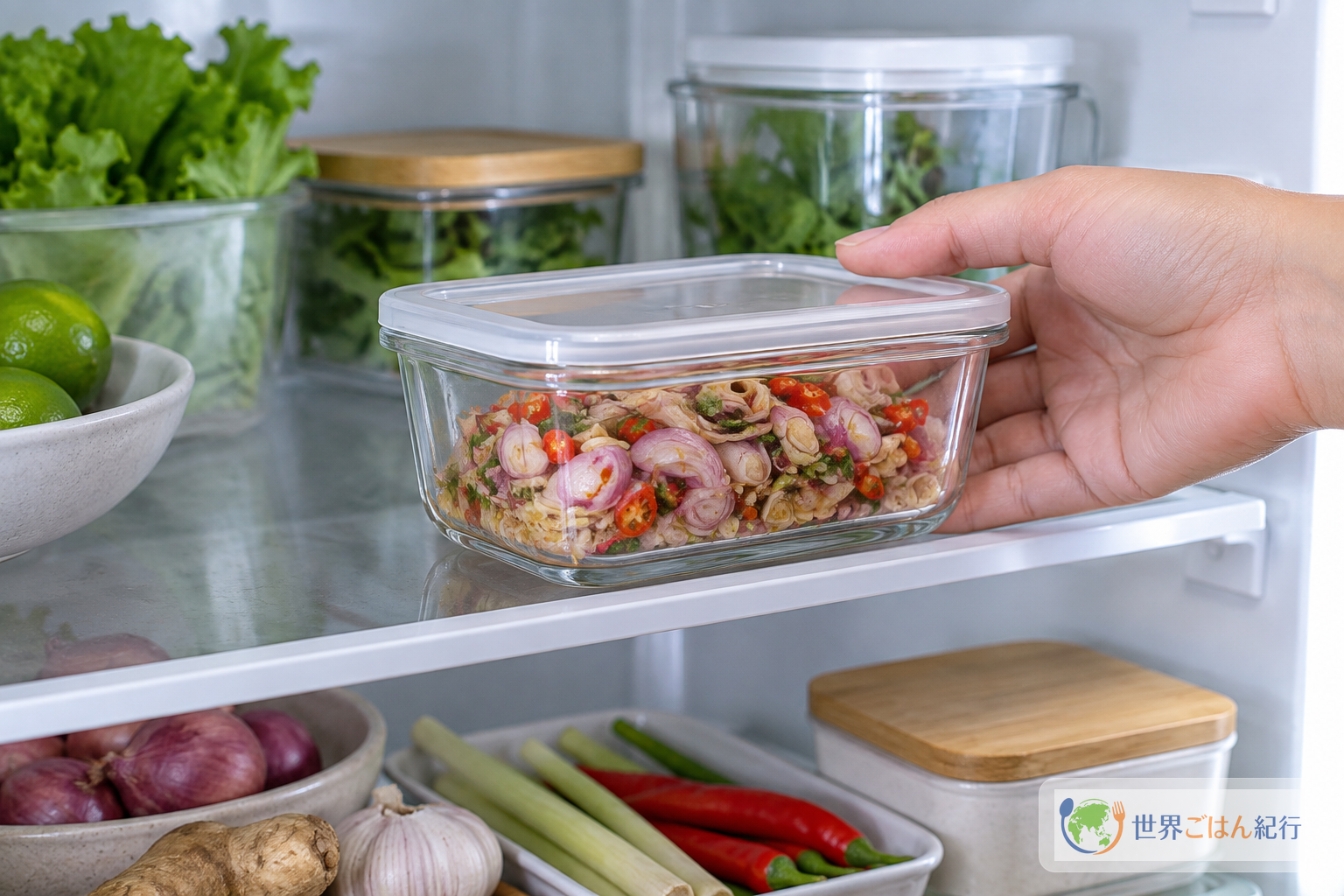
Sambal matah shows the outline of its aromatics best on the day it is made. If there is some left over, first set aside what you will eat, then move the rest to a clean, shallow, airtight container and refrigerate it. Water comes out of the onion and the lime, so if you carry it to the next day, stir once before eating and check the aroma and the texture. Freezing makes the vegetables release water on thawing and the chopped texture tends to collapse, so we do not recommend freezing this dish.
For food safety, the important thing is not to leave what you have made at room temperature. The USDA advises refrigerating leftovers within 2 hours at room temperature, or within 1 hour when the air temperature is above 32°C (90°F), and says refrigerated leftovers should be eaten within about 3–4 days. Following the USDA storage guidance, and bearing in mind that sambal matah loses quality quickly, plan at home to finish it the same day or by the next day.
With grilled fish or chicken, put the sambal on after the main dish has cooled a little, and the aroma of the makrut lime leaves and the lime will last. Rather than mixing it into a hot main dish from the start, combine small amounts on each person's plate, which also makes it easier to adjust the heat.
If there is an off smell, sliminess or any sign that it was left out of the container for a long time, discard it without tasting it. If you used shrimp paste, do not share the storage container or spoon, and do not serve it to anyone who avoids shellfish.
Frequently asked questions
Is terasi necessary?
It is not required. Terasi adds the savor of fermented seafood, but the center of sambal matah is the chopped aromatics and hot oil. If you avoid shrimp, leave it out and adjust the salt at the end.
Can I substitute dried makrut lime leaves?
You can, but the aroma is weaker than with frozen or fresh leaves, and dry leaves tend to stay in the mouth. If you use them, chop them finely and use less, and make up the core of the aroma with lemongrass and lime. Lemon zest can stand in for the brightness, but it will not give the same green fragrance as the leaves.
Can I chop it finely in a food processor?
For a small amount, use a knife. Run it too long and the onion and chilies release water, making a paste that separates from the oil. If you do use one, pulse in short bursts and stop while you can still see the lemongrass rings and the leaf shreds.
How do I make it less hot?
The easiest way is to use fewer chili seeds and chop the chilies while keeping the weight the same. To reduce the heat a lot, replace part of the chilies with red bell pepper, and finish with lime to tighten the flavor. If you use sambal oelek it adds salt too, so leave the salt for the final adjustment.
Is it all right to keep eating the sambal at room temperature?
Because this dish combines raw aromatics with oil, take out only what you will eat and refrigerate the rest early. Do not eat anything that has sat at room temperature for a long time or that smells or feels slimy. If you use shrimp paste, separate the utensils and the serving so that it does not get into dishes for people with shellfish allergies.
Sources
- Sambal Matah | Indonesia Travel (Indonesian tourism board). Used to check the ingredients, the chopping, the hot coconut oil and the dishes it is served with. Accessed and checked 2026-09-23 (JST)
- 10 Iconic Cuisine(s) That You Must Try on Your Next Visit to Bali | Indonesia Travel (Indonesian tourism board). Used to check nasi campur with sambal matah and the combinations in Balinese cooking. Accessed and checked 2026-09-23 (JST)
- Sambal: the ethnic identity of Indonesian cuisine | Journal of Ethnic Foods. Used to check regional differences among Indonesian sambals and the raw, chopped character of sambal matah. Accessed and checked 2026-09-23 (JST)
- The traditional Balinese spices: Sambal Matah and its chemical compounds | Canrea Journal. Used to check the ingredients, the chopping and the handling of the oil for Balinese spices and sambal matah. Accessed and checked 2026-09-23 (JST)
- Module Book FP 2 | Universitas Multimedia Nusantara. Used to check reference ingredients and amounts given in a cooking module for sambal matah. Accessed and checked 2026-09-23 (JST)
- Beautiful Bali 2022 | Universitas Dhyana Pura. Used to check the several sambals recorded as Balinese regional dishes and the place of matah among them. Accessed and checked 2026-09-23 (JST)
- A Study of Balinese Culinary Traditions | Atlantis Press. Used to check Balinese food culture and the dish classification that includes sambal matah. Accessed and checked 2026-09-23 (JST)
- Balinese Culinary Terms in Menus | Jurnal Kajian Bali. Used to check serving examples such as ayam sambal matah and fish dishes with sambal matah. Accessed and checked 2026-09-23 (JST)
- Leftovers and Food Safety | USDA FSIS. Used to check time at room temperature, refrigeration and storage guidelines for leftovers. Accessed and checked 2026-09-23 (JST)



