

The story of ayam betutu: Balinese chicken you can smell before the leaf is open
From the oven, the yellow scent of turmeric and the green scent of lemongrass slowly drift out. This isn't a dish that lures you in with smoke, like grilled satay. Ayam betutu seals its aromatics inside a banana leaf, and its fragrance is strongest at the moment the leaf is opened at the table.
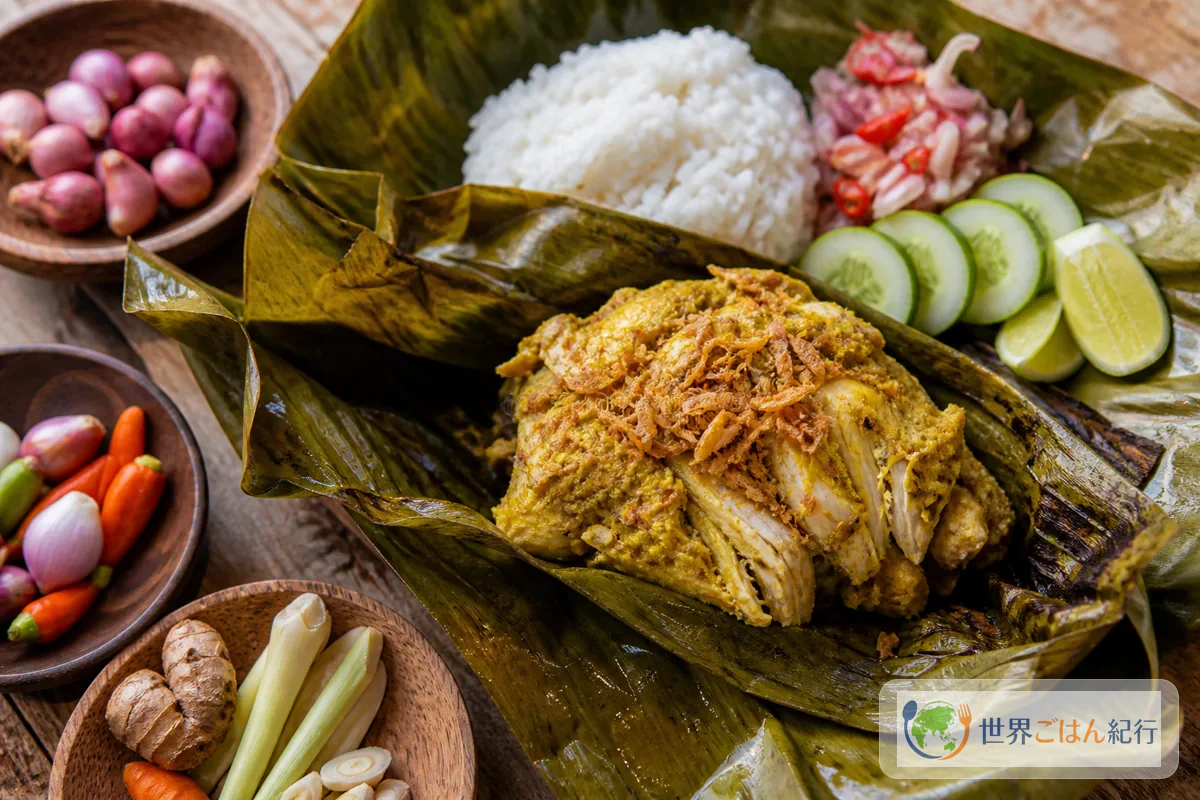
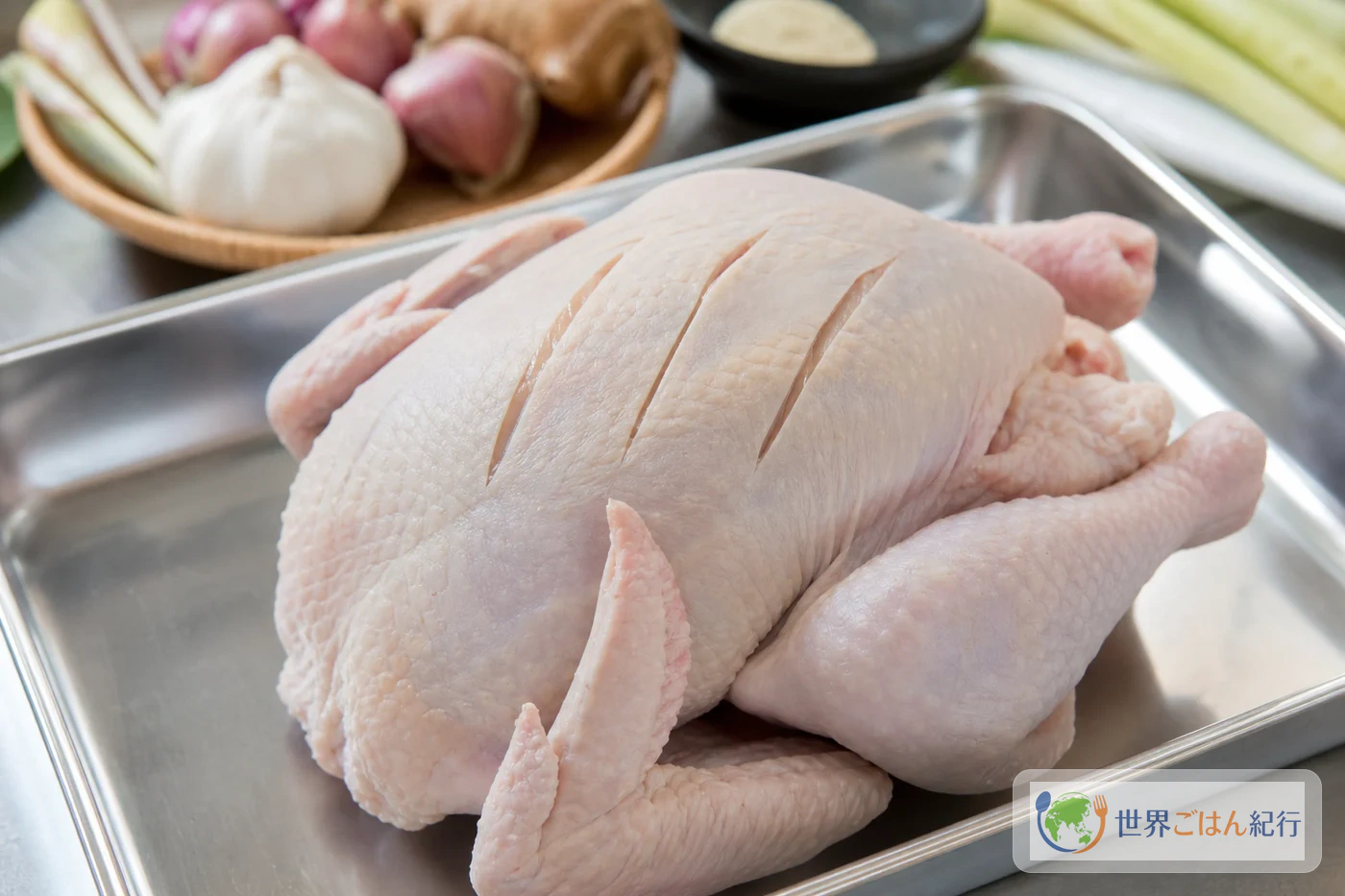
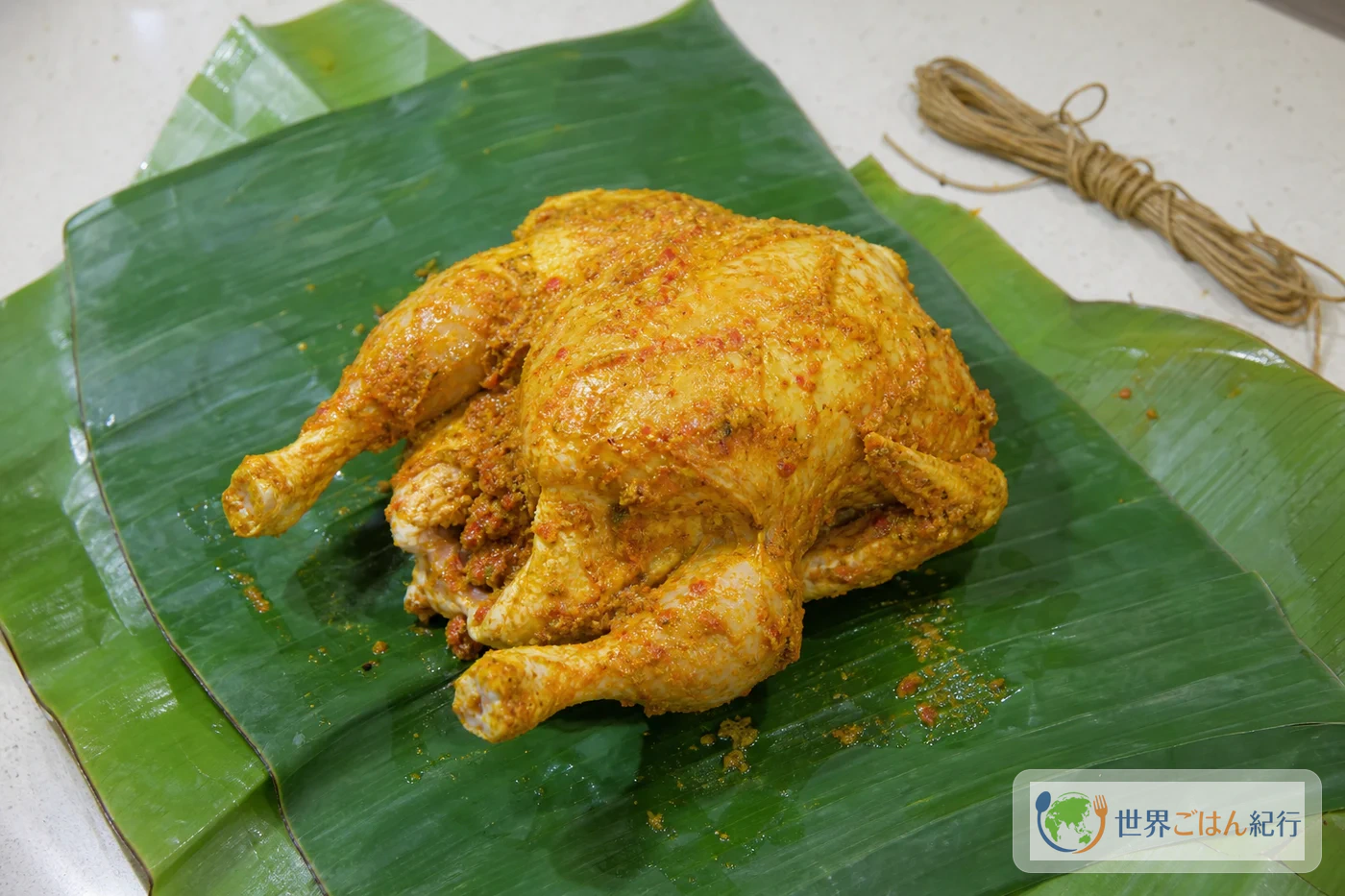
Ayam betutu is a spice-wrapped chicken dish eaten on Bali and Lombok. A whole chicken is coated with a dense spice paste called bumbu betutu, stuffed with more of it, wrapped in banana or palm leaves and cooked slowly for a long time. It's famous as a dish for visitors, but its roots lie in temple festivals, weddings and family tables where one bird is shared.
What makes it daunting at home isn't the whole chicken so much as the long list of ingredients: galangal, kencur, candlenuts, terasi, salam leaves, makrut lime leaves. Try to gather every one exactly as in Bali and the shopping alone wears you out. This recipe separates the ingredients you should keep from the ones you can substitute, and scales the quantities and cooking to a home oven.
Within Indonesian cooking, if nasi goreng (in Japanese) and mie goreng (in Japanese) build flavor fast over high heat, ayam betutu works its aromatics in at low heat. Instead of the glossy sweet soy of sate ayam (in Japanese), you enjoy layers of turmeric, galangal, lemongrass and makrut lime leaf.
In Indonesian, ayam means chicken, and betutu refers to a dish stuffed with spices, wrapped and cooked for a long time. Made with chicken it's ayam betutu; made with duck, bebek betutu. This article uses "ayam betutu" throughout.
Background: a bird between offering and feast
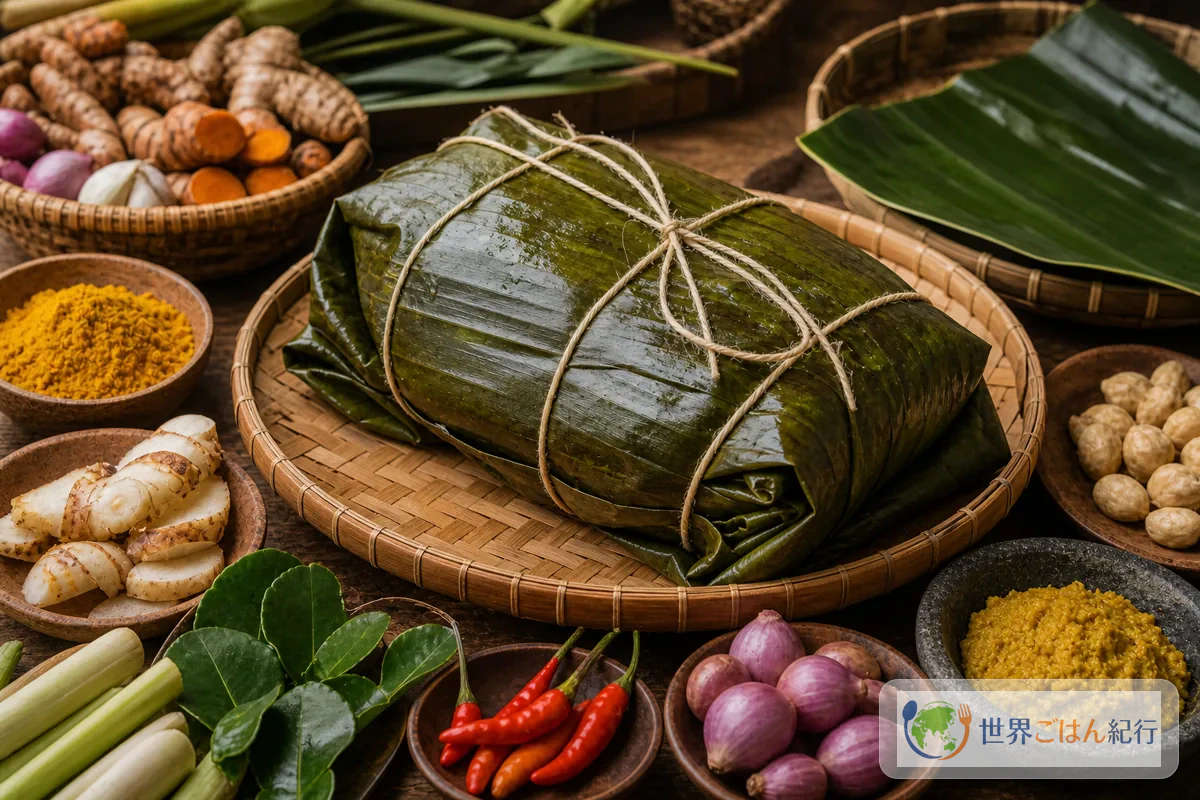
Indonesia's official tourism site presents ayam betutu as a signature dish of Bali and Lombok, describing it as a whole chicken with bumbu used inside and out, wrapped in banana leaves and cooked for a long time. It is eaten at celebrations and temple ceremonies, and today you can also find it at warung, small local eateries.
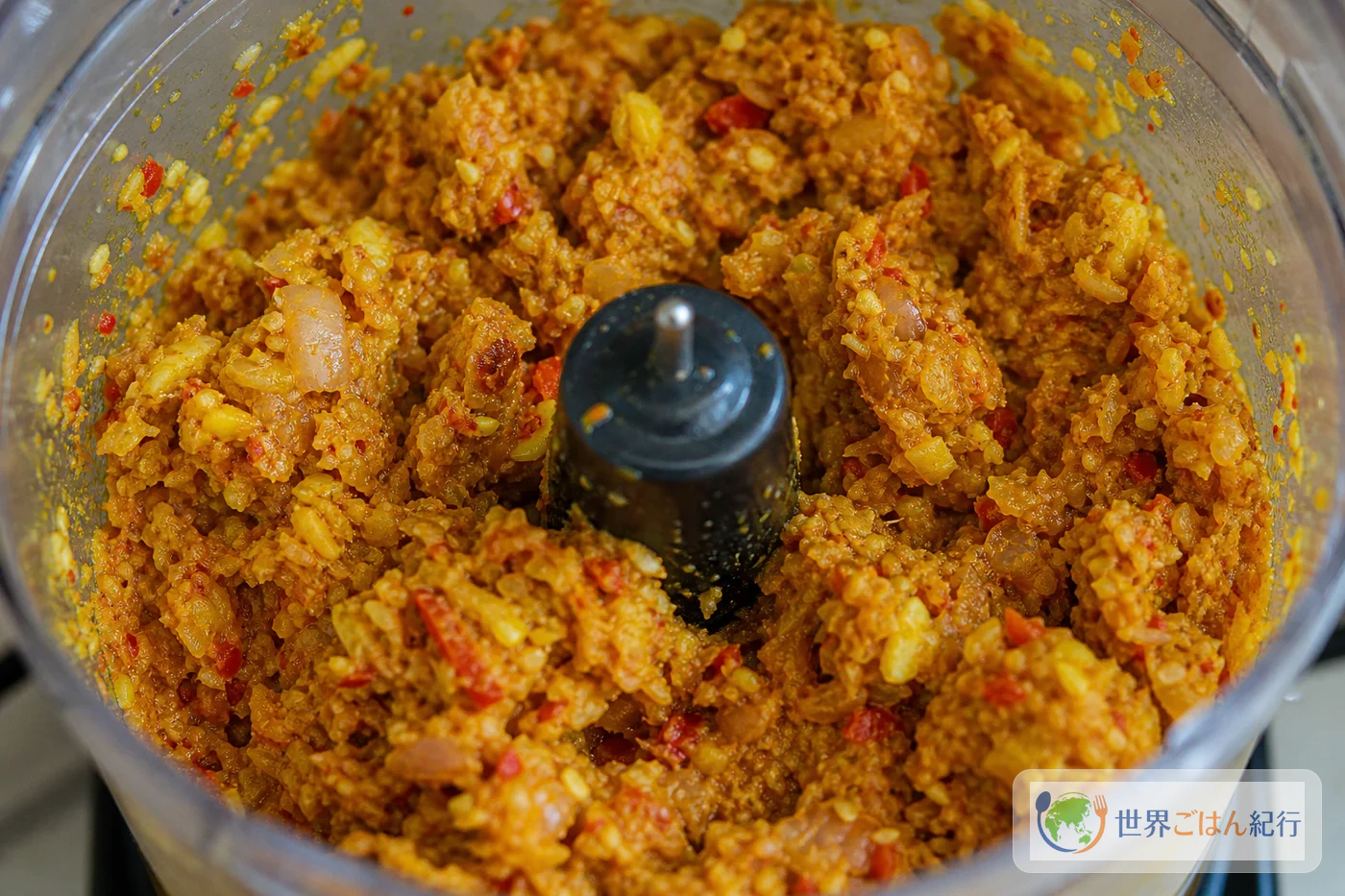
What matters is not simply making it hot. The point is getting the aroma of the bumbu into the chicken. Turmeric brings color and an earthy scent, galangal a sharpness close to pine and citrus, lemongrass a green fragrance, candlenuts body in the paste, and terasi fermented savoriness. Adding only more heat won't give you the depth of betutu.
In the Indonesia and Malaysia recipe materials published by the Culinary Institute of America, ayam betutu appears as "Roast Chicken in Banana Leaf," combining a whole chicken, cassava leaves, turmeric, kencur, galangal, red chiles, candlenuts, lemongrass, makrut lime leaves and banana leaves. The aromatics are ground to a paste in a stone mortar or food processor, the bird is wrapped in leaves, steamed and then moved to a low oven.
What's interesting in those instructions is that the paste isn't only rubbed on the outside; it's mixed with leafy greens and pushed under the skin and into the cavity. When home cooks handle a whole chicken, they tend to stop at seasoning the outside, but ayam betutu is meant to be fragrant from the inside too. This recipe uses komatsuna (Japanese mustard spinach) in the stuffing to stand in for the cassava leaves used in Bali, not to make the greens the star.
At the same time, some restaurants in Bali put the heat up front, as in the "Gilimanuk style," so the dish can't be explained by festival cooking alone. The plate visitors meet at an eatery leans on tenderness from long steaming and baking, strong chile and plain white rice to carry it. The quantities here keep the impact of the festival dish while bringing the heat down to a level a family can finish at dinner.
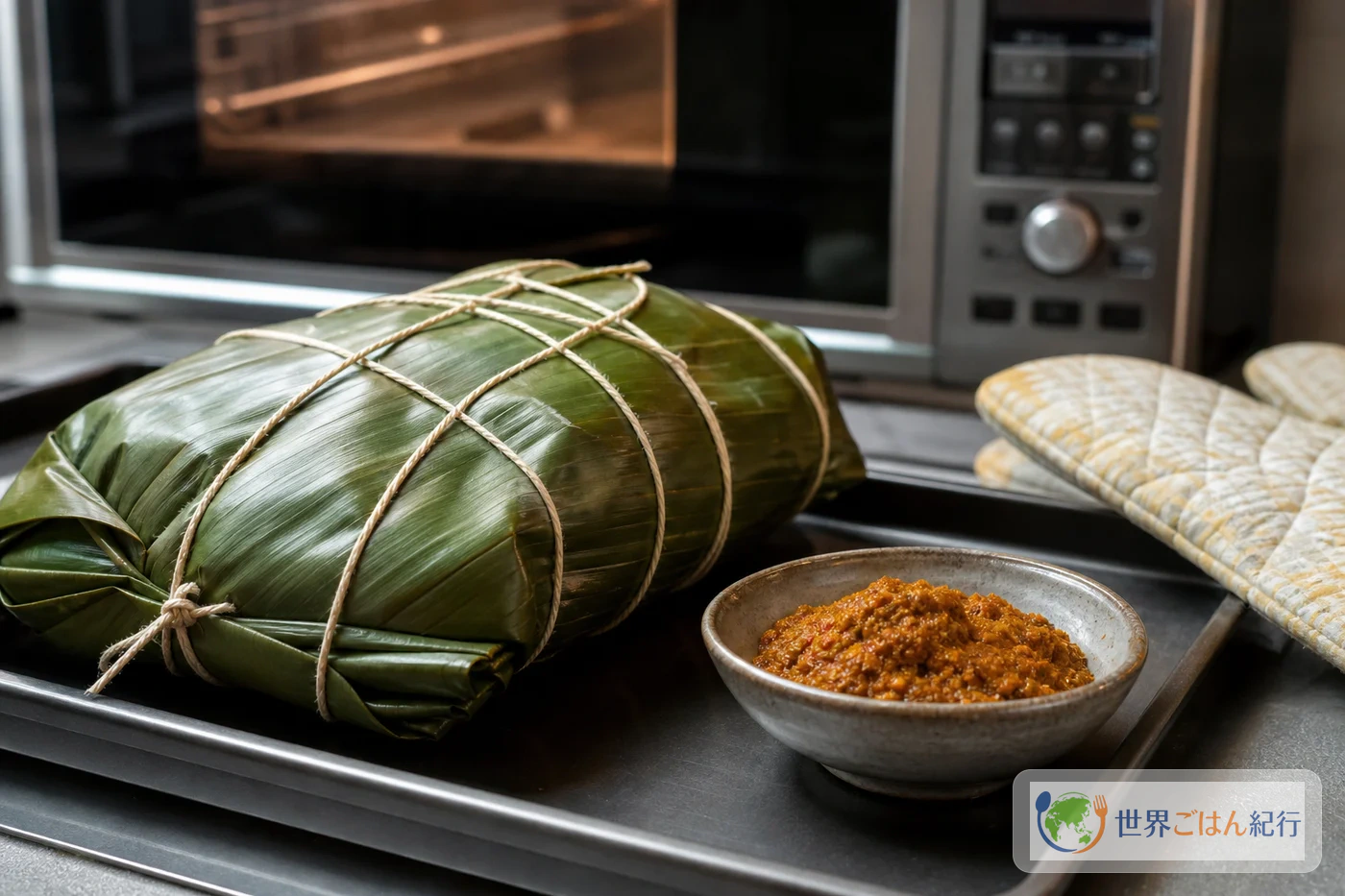
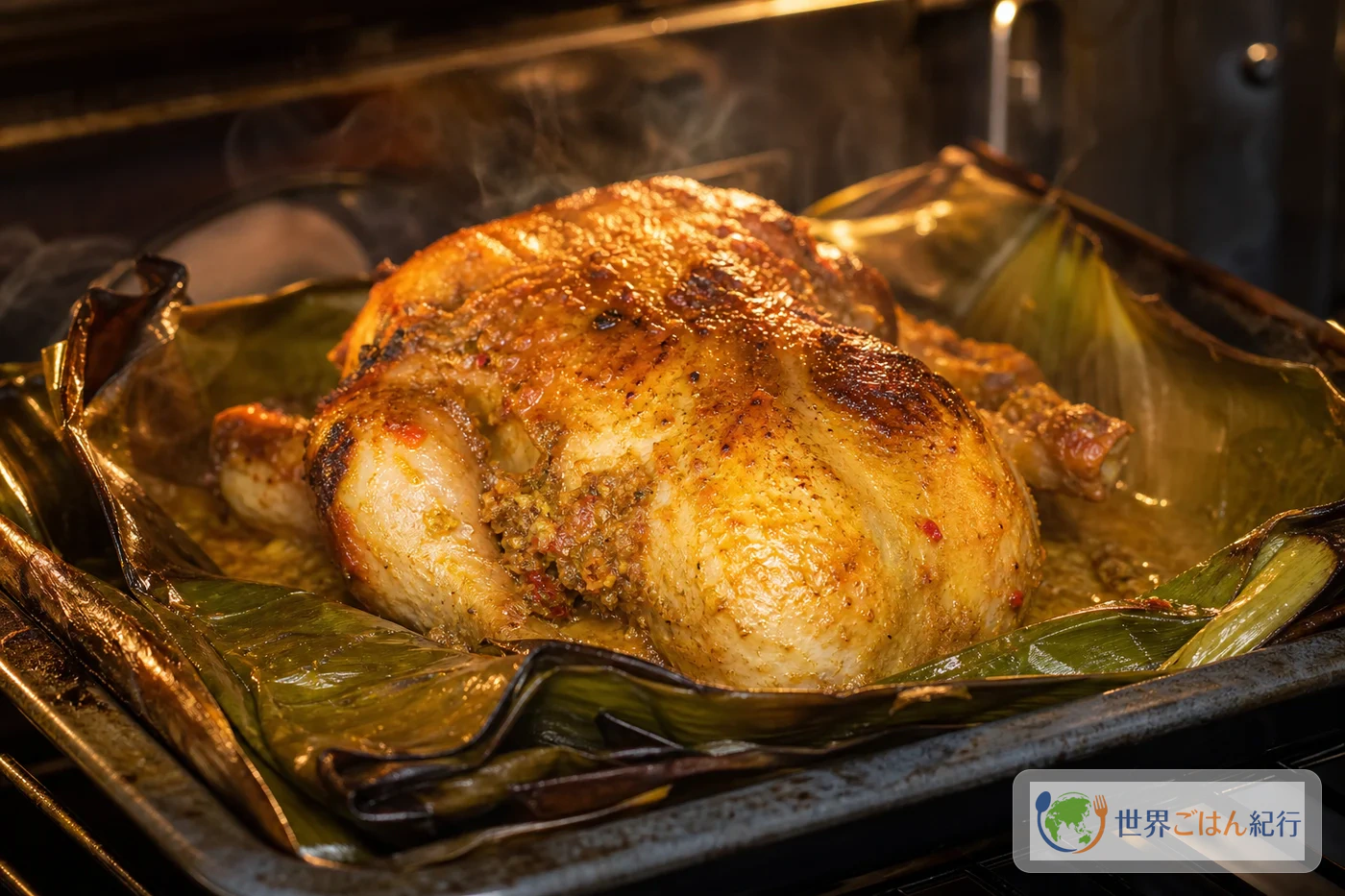
This recipe adapts the long charcoal fire or earth-oven cooking of Bali for a home kitchen. The chicken is wrapped in banana leaves, sealed with foil to hold in moisture, cooked gently in a 160°C (320°F) oven, and only at the end is the leaf opened to brown it. The method puts sealing in the aroma and cooking safely through first.
Ingredients (serves 4): decide the spice paste first
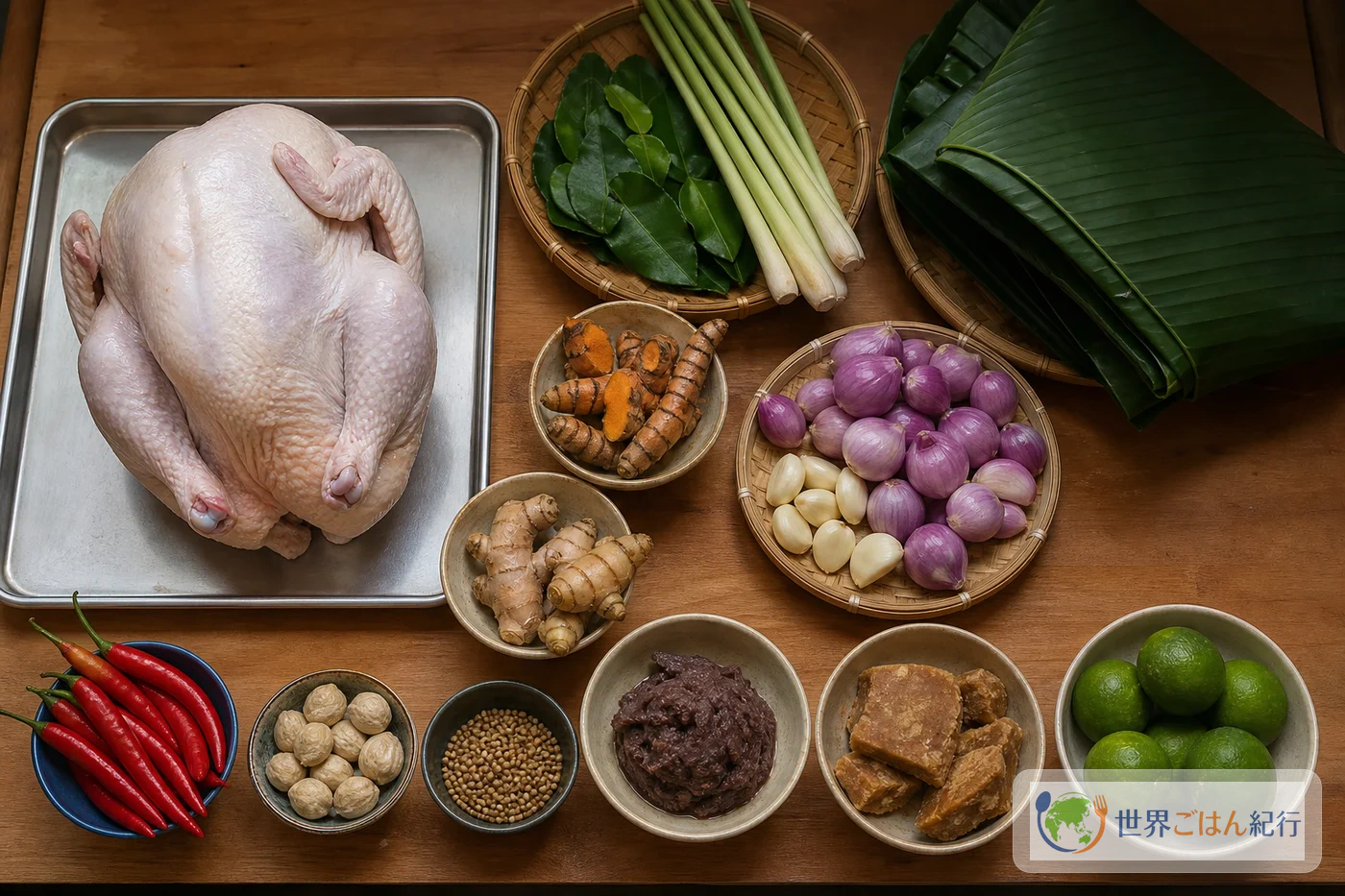
A whole chicken gives the most atmosphere, but it isn't always easy to find. Four bone-in chicken legs also work. In that case, make two parcels and shorten the cooking time a little.
This dish uses chicken, nuts and a fermented seasoning that may contain shrimp. If you are allergic to candlenuts, macadamias, terasi or dried shrimp, be sure to avoid them. Keep paste and utensils that have touched raw chicken separate before and after cooking.
Choosing the aromatics: put the effort into fragrance, not the chicken
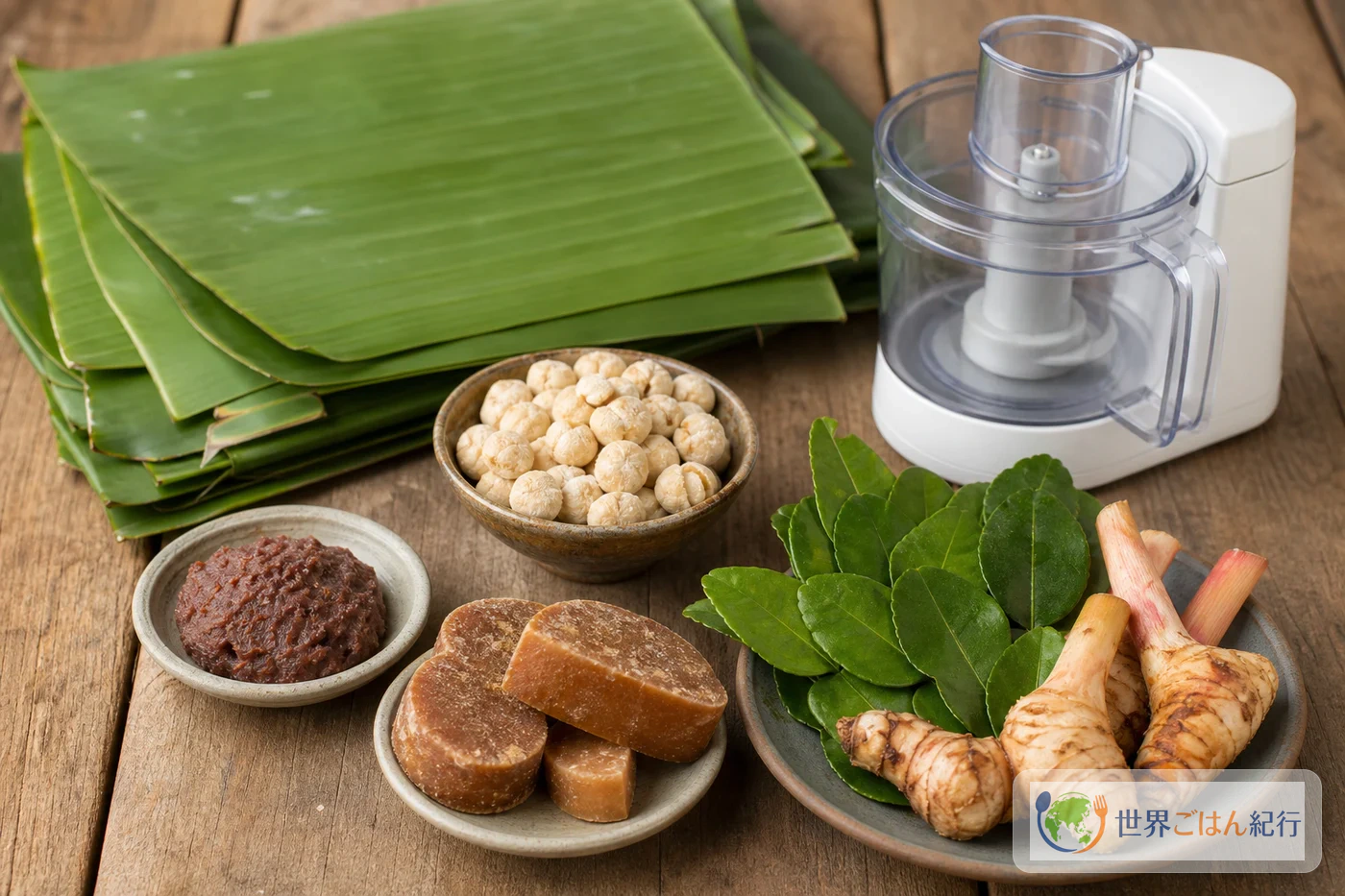
For ayam betutu, what's worth hunting down isn't the whole chicken but the aromatics. A butcher or regular supermarket is fine for the chicken. If you're buying extras, look for galangal, makrut lime leaves, a food processor and a sambal to serve the heat separately. If you keep cooking Indonesian food, they'll go into soto ayam (in Japanese) and nasi uduk (in Japanese) too. Southeast Asian grocers and online shops are the usual sources.
Galangal has a different aroma from ginger. Made with ginger alone, the dish leans toward a warm braise, but with galangal you get the hard, citrus-like fragrance typical of Balinese cooking.
Makrut lime leaves are powerful even in small amounts and, together with lemongrass, give betutu its outline. Leftovers can go into tom yum goong (in Japanese) or green curry (in Japanese).
Mincing all the aromatics by knife is a lot of work the first time. A small food processor that can stop at a coarse paste will also serve for the peanut sauce in gado-gado (in Japanese) and for a sambal substitute (in Japanese).
To let each person set their own heat, put a store-bought sambal in a separate dish. Making the whole bumbu fiery makes it hard for children or anyone sensitive to chile to eat.
Method: work the aroma in at low heat, open at the end
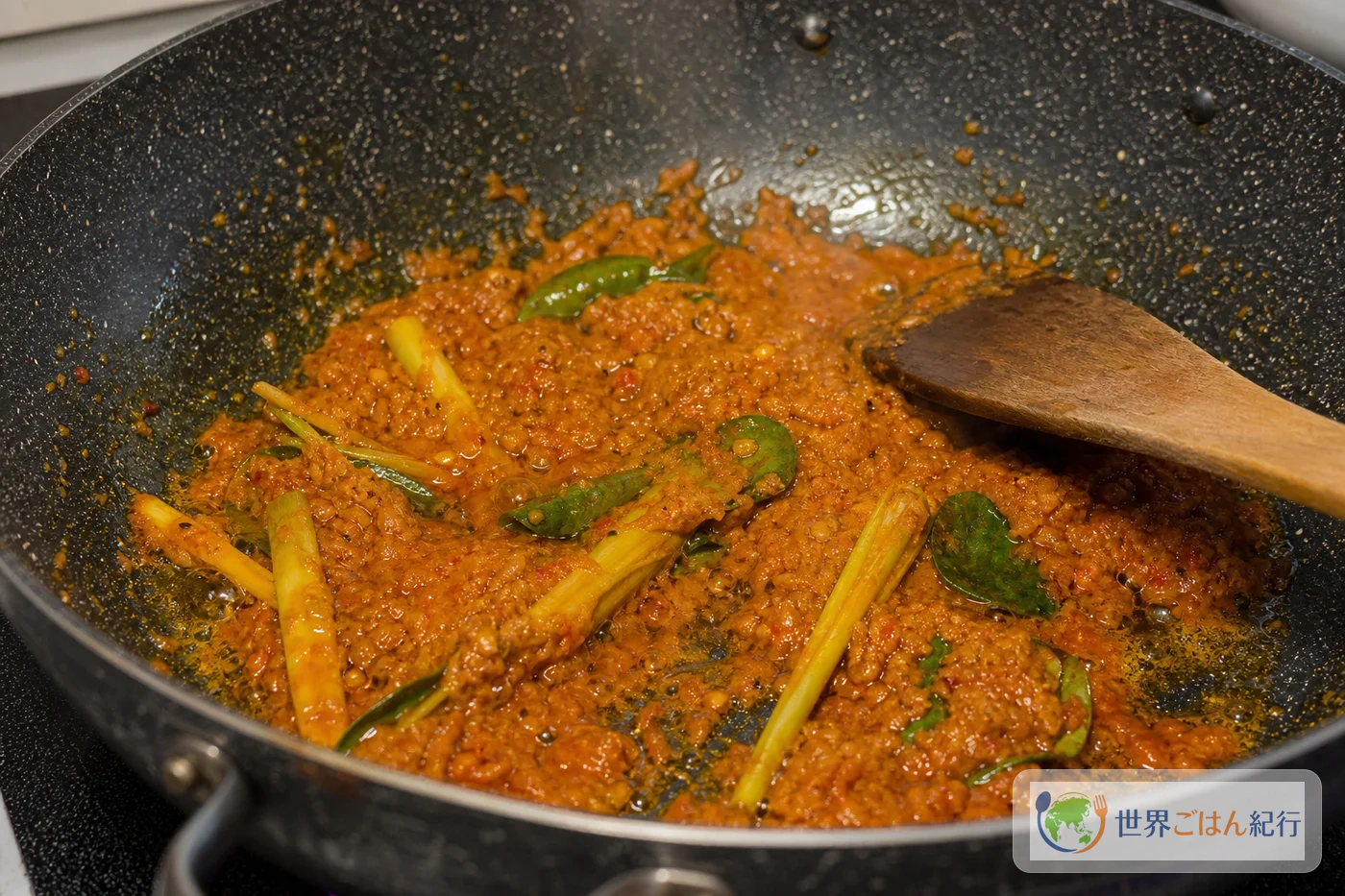
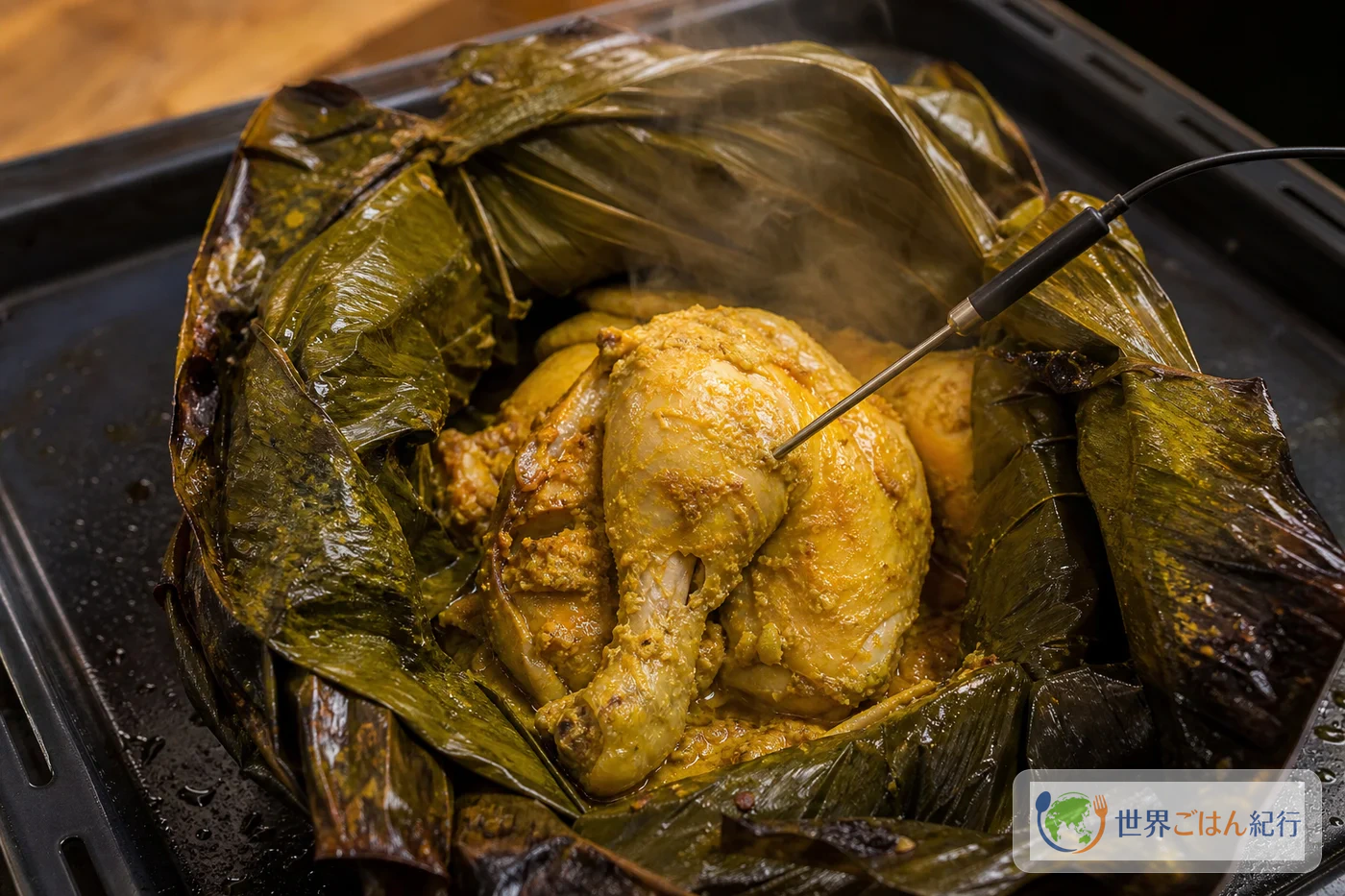
Rush ayam betutu and it becomes just spiced roast chicken. The goal is to wake up the paste's aroma in oil, let it move into the chicken inside the leaf, and only dry the surface at the end. For a whole chicken, the safe internal temperature target is 74°C (165°F).
With 4 bone-in legs, coat them all over with bumbu and divide them into two leaf parcels. Bake at 160°C (320°F) for 60 minutes, check for 74°C (165°F) inside, then brown at 220°C (425°F) for 6–8 minutes. It's more forgiving than a whole chicken and works for a weeknight dinner.
Getting closer to Bali in a home kitchen: a decision table
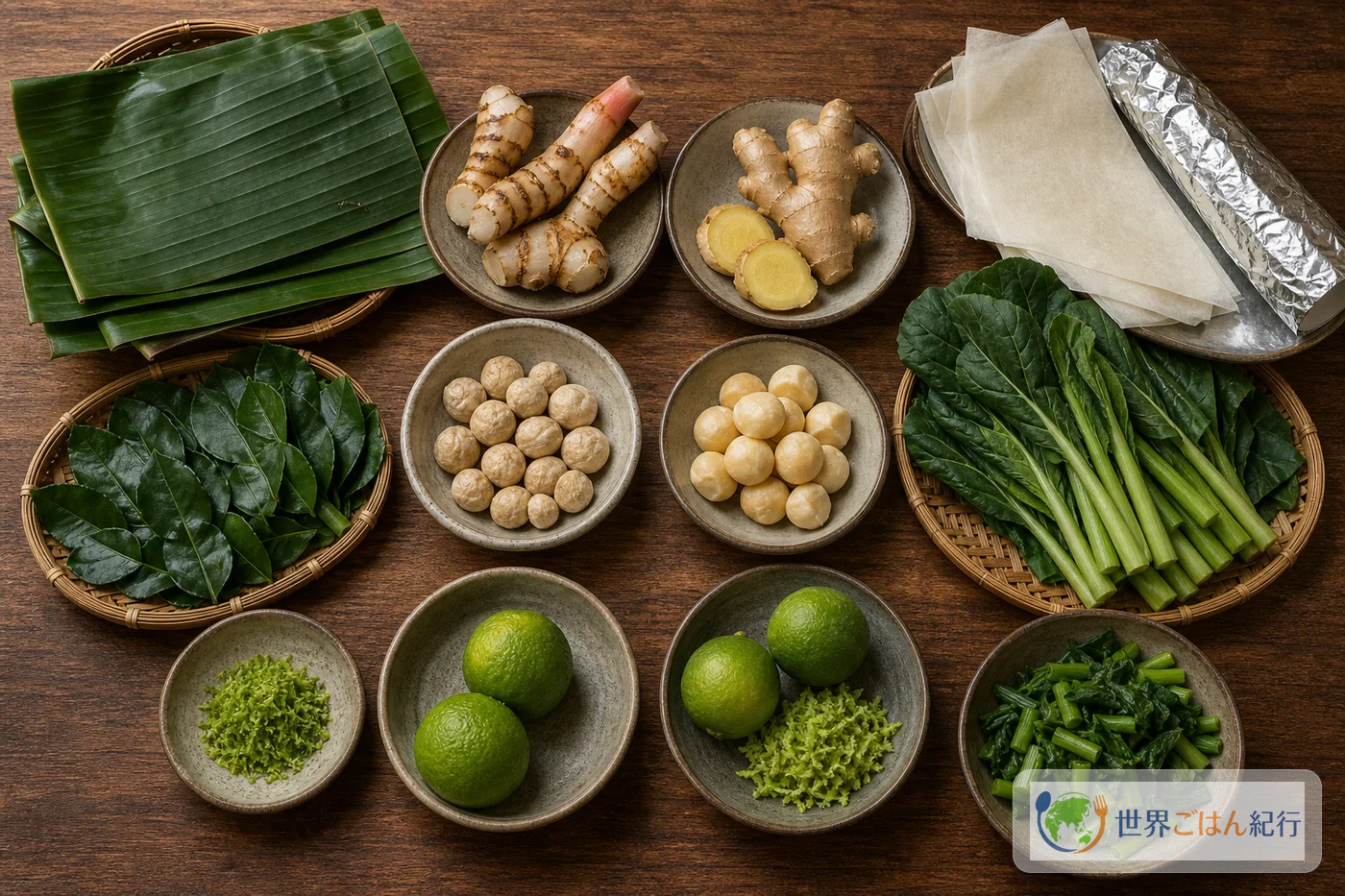
Ayam betutu isn't about collecting every ingredient; it's about keeping the pillars of the aroma. Rather than hunting down kencur or salam leaves for your first try, staying true to turmeric, galangal, lemongrass and makrut lime leaf is what keeps it from going wrong.
| Ingredient | Balinese way | Practical option | Verdict |
|---|---|---|---|
| Whole chicken | Wrap the whole bird | 4 bone-in chicken legs | Legs are fine for a first try |
| Banana leaves | Wrap directly | Parchment paper and foil | Less aroma, but the steam-baking still works |
| Cassava leaves | Stuff the cavity | Komatsuna, chrysanthemum greens, spinach | Komatsuna is easiest to handle |
| Galangal | lengkuas / laos | Frozen; otherwise a little ginger and lime zest | Leave it out and the aroma gets too round |
| Kencur | kencur | Omit, or add a little more galangal | Hard to find, so don't force it |
| Candlenuts | kemiri | Macadamias, cashews | Gives the paste body |
| Terasi | Fermented shrimp paste | Dried shrimp, fish sauce | Skip it with a shrimp allergy |
| Salam leaf | daun salam | 1 bay leaf | Too much makes it taste Western |
The nearly irreplaceable ones are turmeric and lemongrass. Without turmeric, both the color and the earthy aroma fade; without lemongrass, wrapping in leaves won't bring out the green fragrance. Galangal and makrut lime leaves are well worth adding if you can get them. On the other hand, you can make the dish without searching for kencur or salam leaves on your first try.
Terasi is powerful even in small amounts. If your household isn't used to it, warming it in a skillet for about 30 seconds before use takes the edge off the smell. If you really dislike it, finely chopped dried shrimp fried in oil is the safer route.
Common mistakes: separate wateriness, scorching and undercooking
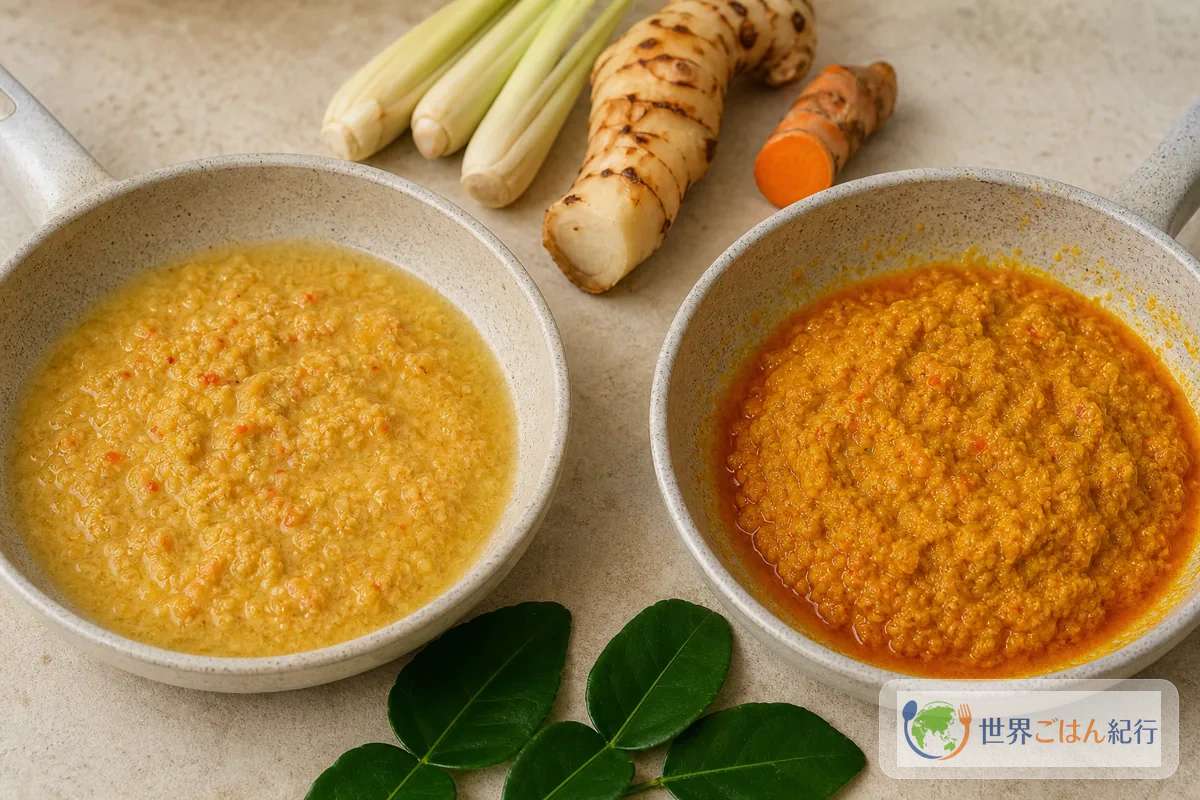
Problems with ayam betutu mostly fall into three groups: the paste is watery, the aroma inside the leaf is weak, or the surface scorches while you're unsure about the inside. Trying to fix all three at once gets confusing. Look at the causes separately.
| Problem | Cause | Fix |
|---|---|---|
| Watery paste | Moisture from the onion, not cooked long enough | Cook 3–5 more minutes over medium-low until the oil seeps out |
| Weak aroma | Lemongrass not chopped, not enough galangal | Chop the lemongrass base finely and add more makrut lime leaves |
| Too salty | Bumbu spread too thickly on the outside | Scrape off the excess paste on the skin and balance with rice and sambal |
| Only the surface scorched | Final high-heat stage too long | Remove the black parts, cover with the leaf and let it rest in residual heat |
| Unsure the inside is done | Large chicken, temperature too low | Rewrap and bake 10–20 more minutes at 160°C, then check the internal temperature |
| Dry meat | Loose wrapping, final browning too long | Spoon the collected juices over it; next time double the foil |
Always trace the fix back to a step. Watery means not enough sautéing in step 3; weak aroma means the chopping in step 2 and the wrapping in step 5; worry about undercooking means the internal temperature in step 6. Before adding salt or heat after tasting, look at which step let the aroma or moisture escape, and next time goes better.
Because this dish uses a whole chicken, it's important not to judge doneness by looks alone. FoodSafety.gov's safe temperature chart gives 165°F, or 74°C, throughout for poultry such as chicken and turkey. At home, a thermometer is the most reliable tool.
How it's eaten locally, and building a menu around it
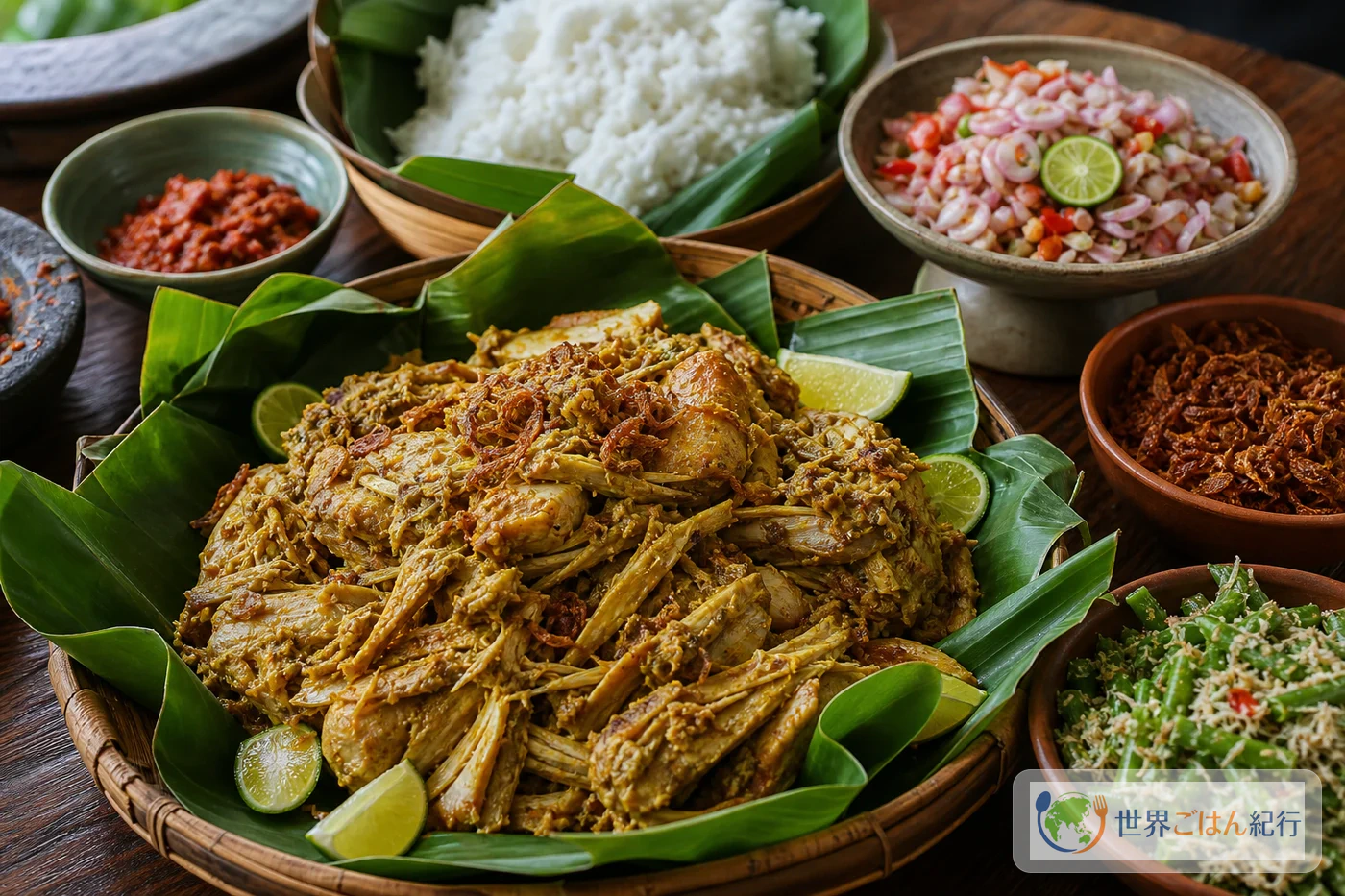
At the table in Bali, ayam betutu isn't a dish on its own. Rice, sambal matah, lawar-style vegetables, fried shallots and lime help the strongly spiced chicken stay easy to eat to the last bite. For a home dinner, the first time around, rice, cucumber, sambal and lime are plenty.
To build an Indonesian meal, make ayam betutu the main and serve nasi uduk (in Japanese) as the rice, and the table instantly leans Balinese. On days you want more vegetables, make a light gado-gado (in Japanese) with less peanut sauce. To let everyone set their own heat, serve the sambal substitute (in Japanese) on the side, so children and people sensitive to chile can eat together.
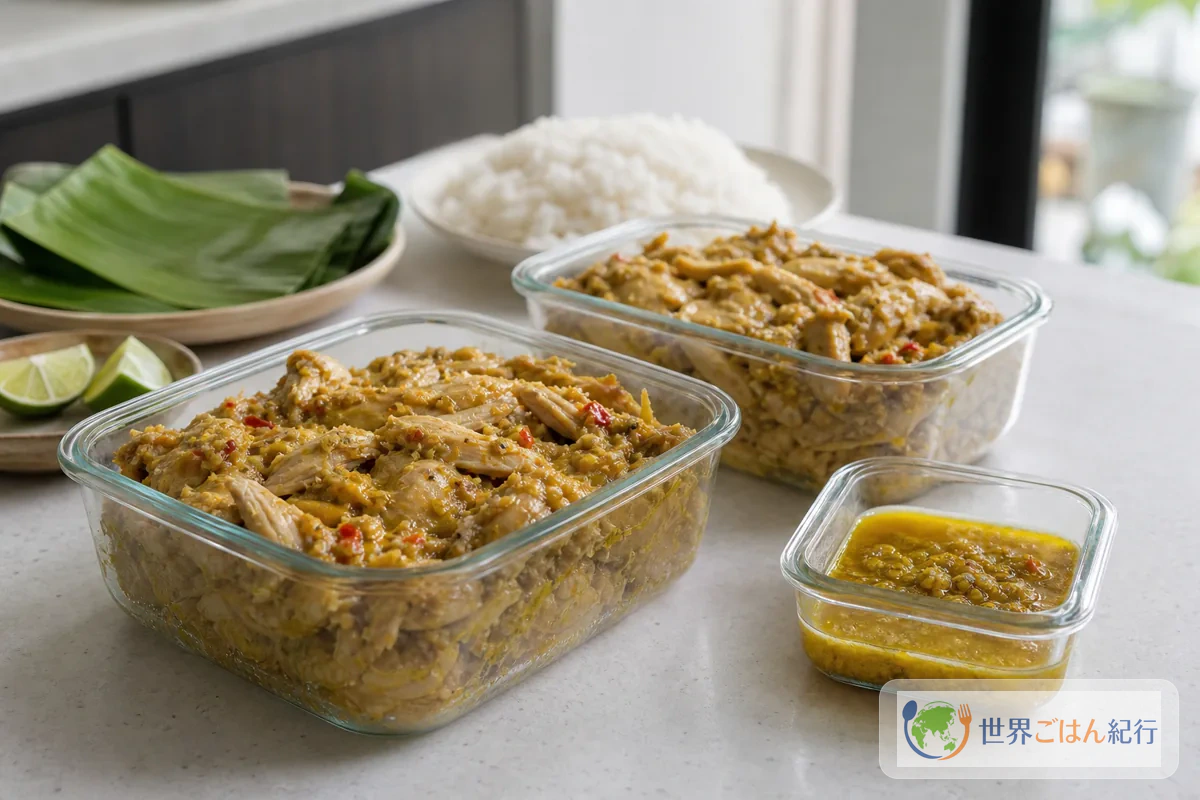
To store, take the meat off the bone, put it in an airtight container and refrigerate for up to 2 days. The leaf aroma fades with time, so re-steaming suits reheating better than the microwave: 8 minutes in a steamer over medium heat, or in a microwave-safe dish with its juices, loosely covered with plastic wrap, heated at 600 W in 2-minute rounds. To freeze, take the meat off the bone, portion it together with the bumbu and juices, and eat within 2 weeks.
The next day, the pulled meat is good mixed into nasi goreng. Combine 300 g rice, 80 g pulled meat, 1 tbsp leftover bumbu and 1 egg, and stir-fry over medium heat for 3–4 minutes. Even without adding kecap manis, the betutu aroma gives it plenty of flavor.
FAQ
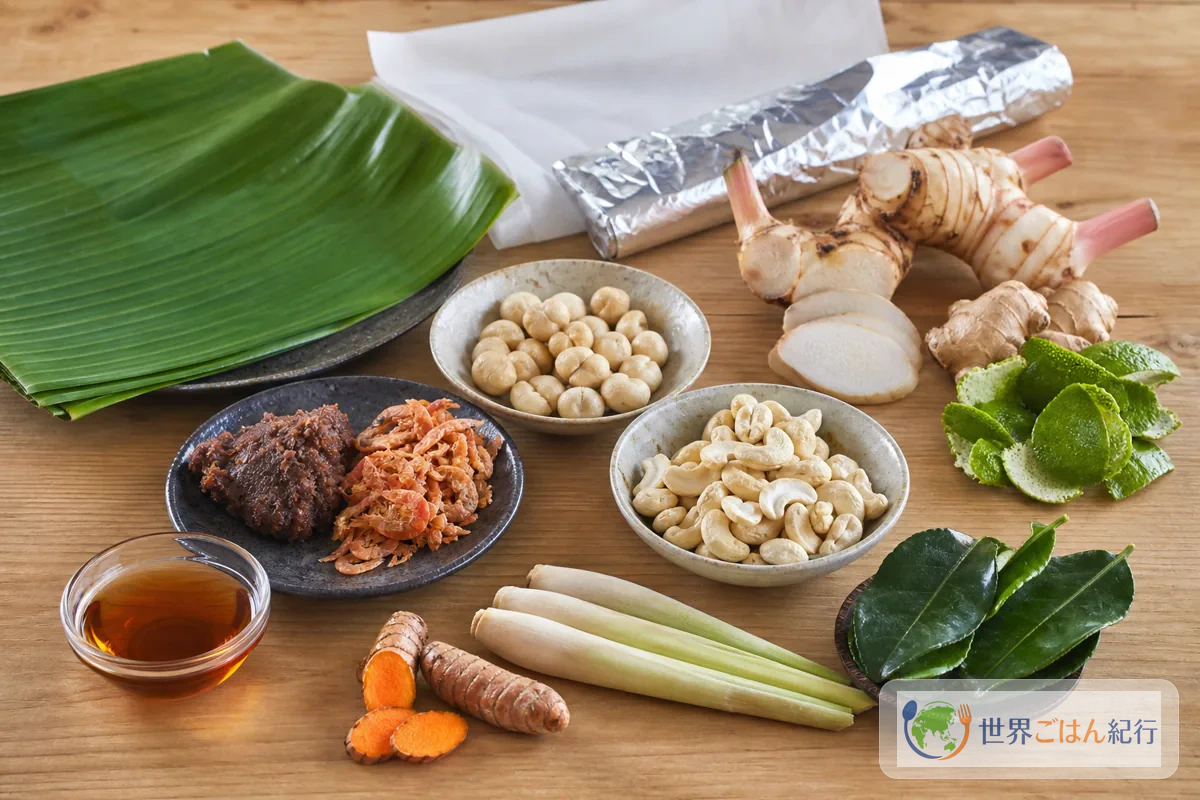
Q1. Can I make it without banana leaves?
Yes. The aroma will be weaker, but wrapping the chicken in parchment paper and then tightly in foil still creates the steam-baking setup. On days without leaves, add a little more makrut lime leaf or lemongrass to make up the aroma.
Q2. Can I use chicken legs instead of a whole chicken?
Yes. With 4 bone-in legs, make two parcels and bake at 160°C (320°F) for 60 minutes, check for 74°C (165°F) inside, then do the final browning. Boneless thighs alone cook through in about 40–45 minutes, but they won't have the festival-dish impact of a whole bird or bone-in pieces.
Q3. Can I leave out the candlenuts?
Leaving them out entirely weakens the body of the paste. Substitute macadamias or cashews. If you have a nut allergy, don't force them in; use a little more onion and sauté the paste thoroughly to drive off the moisture.
Q4. I don't like the smell of terasi.
1/2 tsp of terasi is plenty. Put it on a piece of foil and warm it in a skillet over low heat for about 30 seconds before using, and the aroma mellows. If you still dislike it, substitute 2 tsp dried shrimp or 1 tsp fish sauce. With a shrimp allergy, leave it out.
Q5. Can I make it ahead?
After baking, take the meat off the bone; it keeps for 2 days refrigerated or 2 weeks frozen. A whole chicken chills slowly in the fridge, so pull leftovers apart promptly. Reheat in a steamer or microwave until steaming hot all the way through.
Sources
- Indonesia Travel “Ayam Betutu”, Ministry of Tourism, Republic of Indonesia, accessed May 2026: https://www.indonesia.travel/gb/en/travel-ideas/gastronomy/ayam-betutu-balis-iconic-spiced-chicken-dish/
- Bosch Home “Ayam Betutu Recipe”, accessed May 2026: https://media3.bosch-home.com/Documents/MCDOC02693034_Recipes-Ayam_Betutu_1.pdf
- The Culinary Institute of America “World Culinary Arts: Indonesia and Malaysia Recipes”, Ayam Betutu / Roast Chicken in Banana Leaf, accessed May 2026: https://ciaprochef.com/wp-content/uploads/2024/04/WCA_IndonesiaMalaysia_Recipes.pdf
- FoodSafety.gov “Cook to a Safe Minimum Internal Temperature”, accessed May 2026: https://www.foodsafety.gov/food-safety-charts/safe-minimum-internal-temperatures



