
A bowl where coconut arrives before the noodles
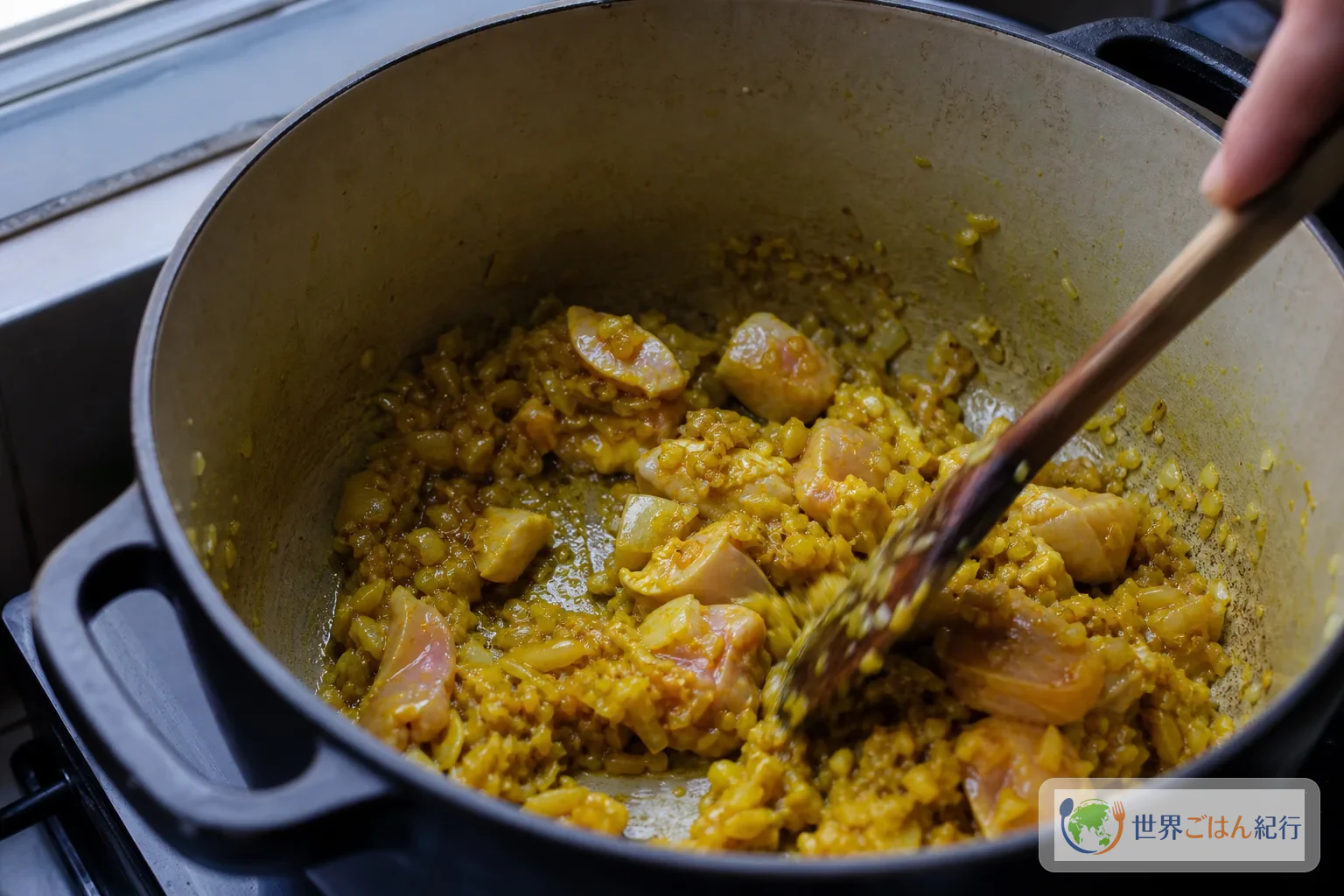
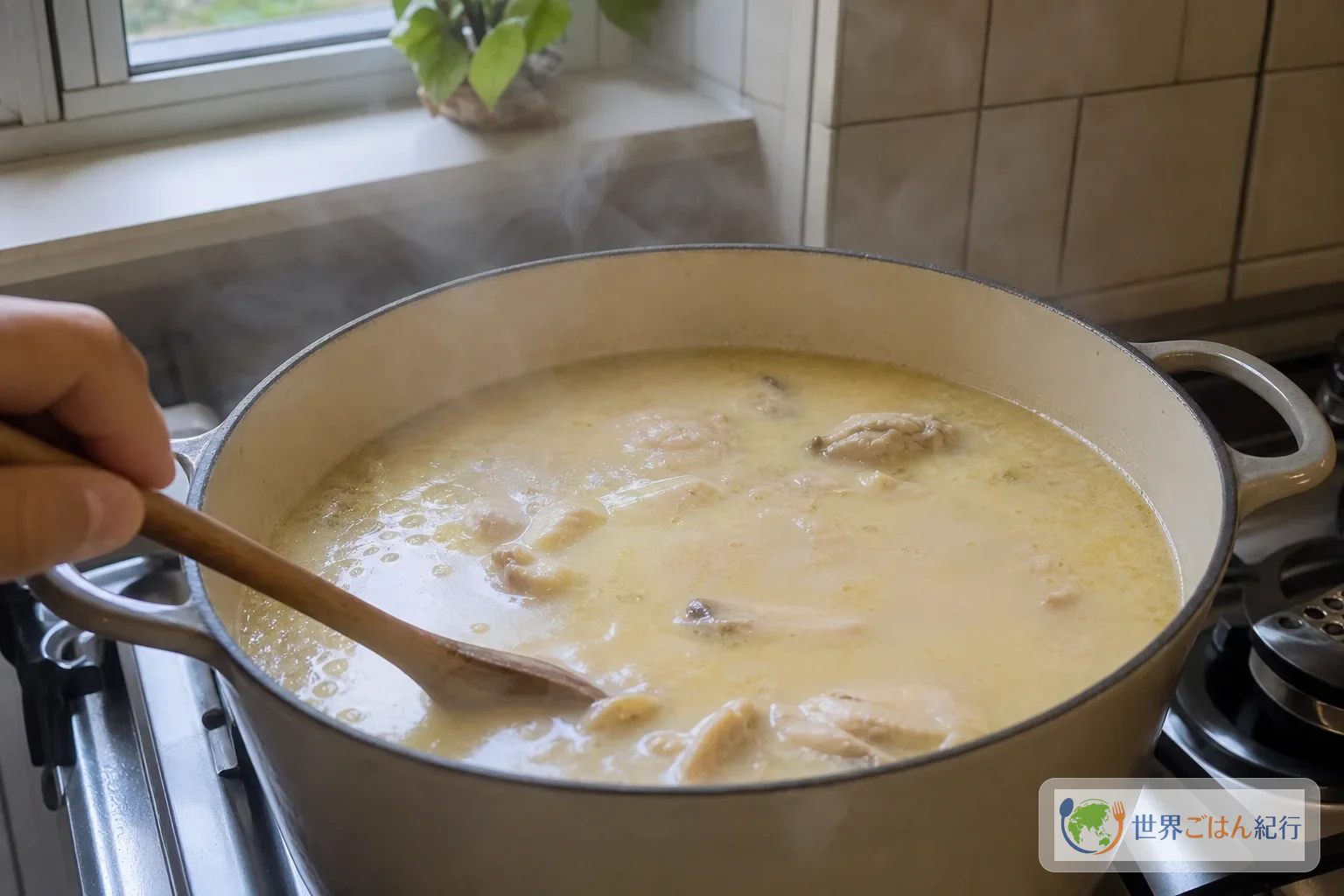
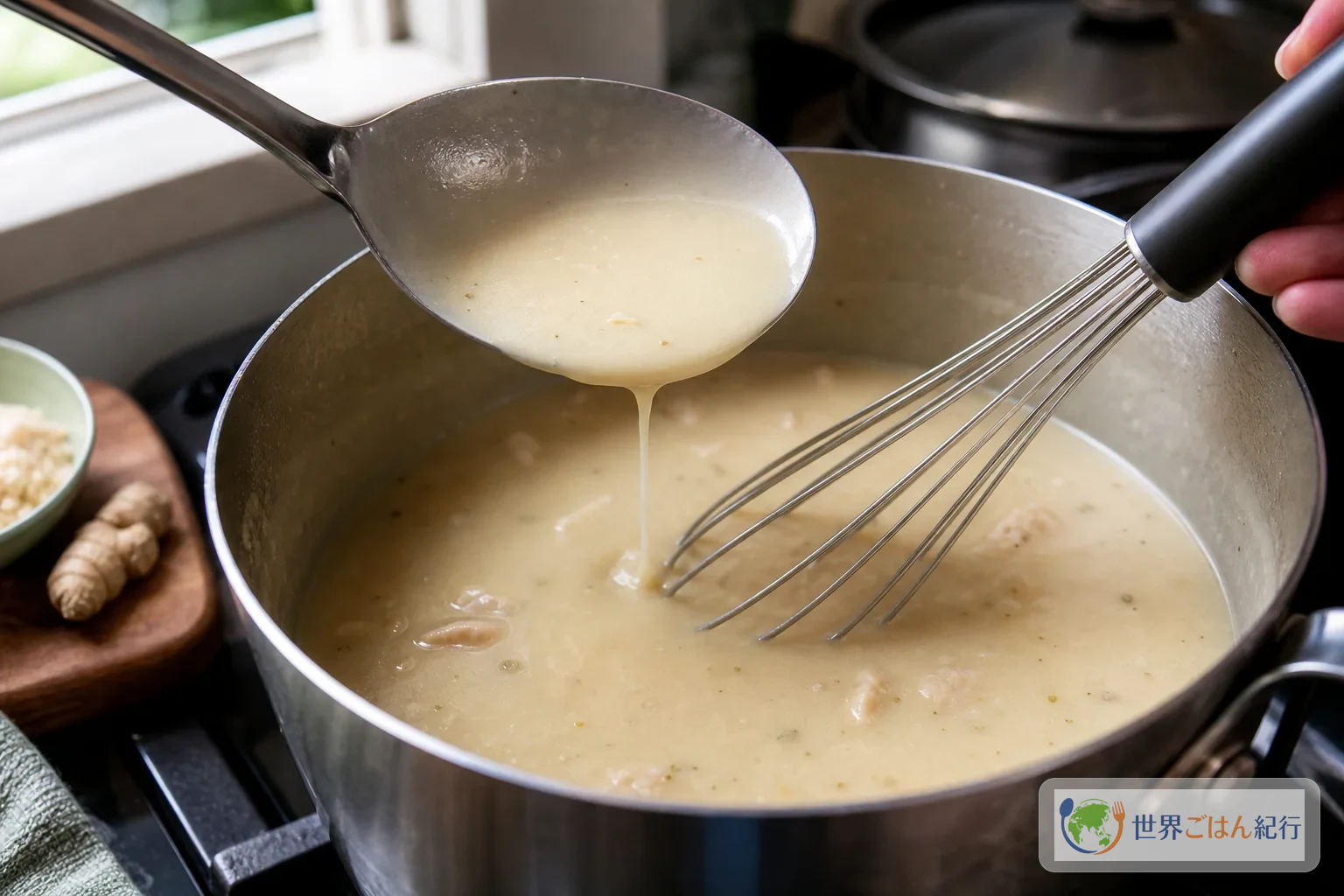
Picture it: noodles are being dipped in hot water on one burner, and in the pot next to them onion, garlic and ginger are slowly changing color in oil. The chicken goes in, and turmeric yellow spreads across the bottom of the pot. Then come chicken stock, coconut milk and a light thickening of chickpea flour, and the steam turns a little heavier.
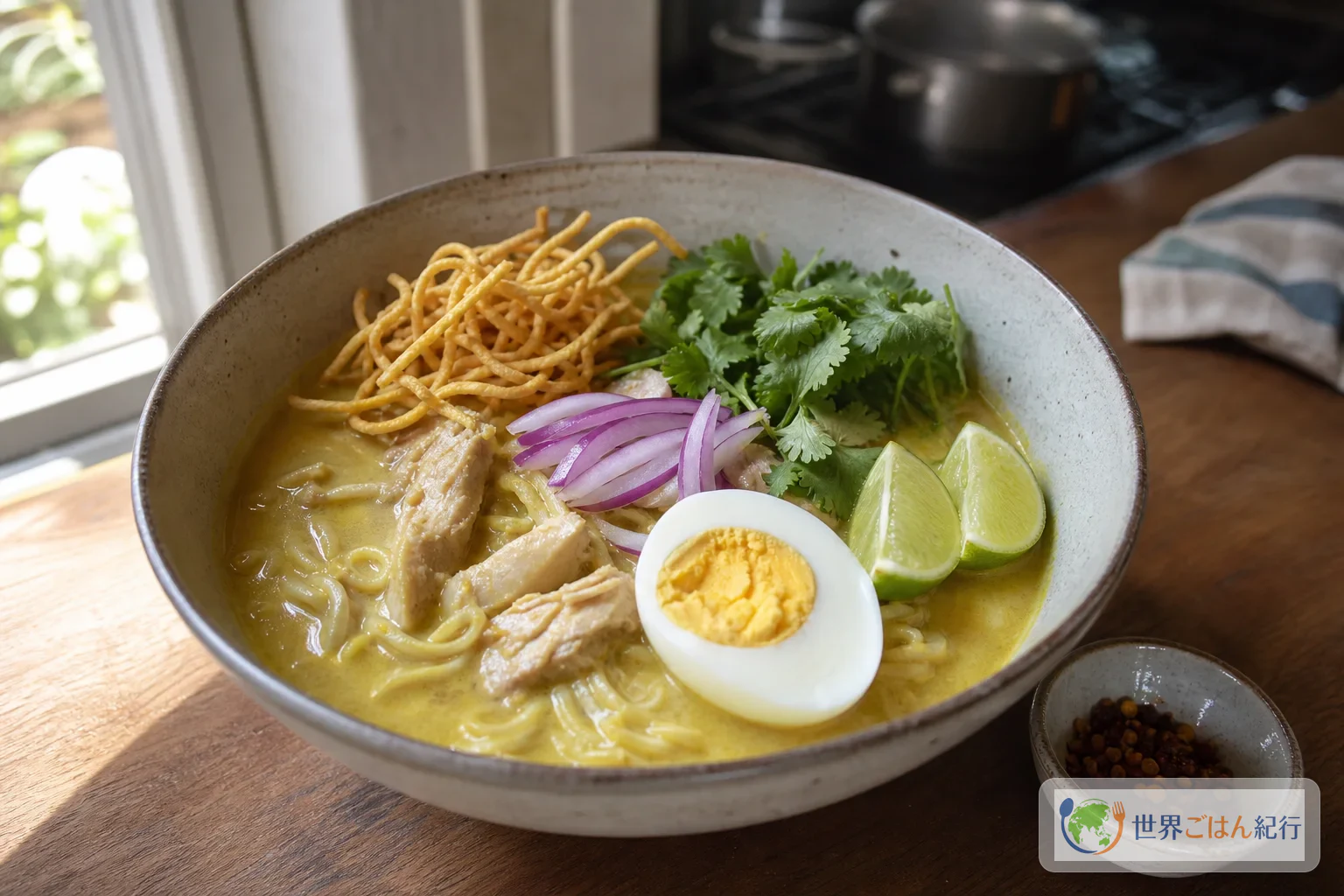
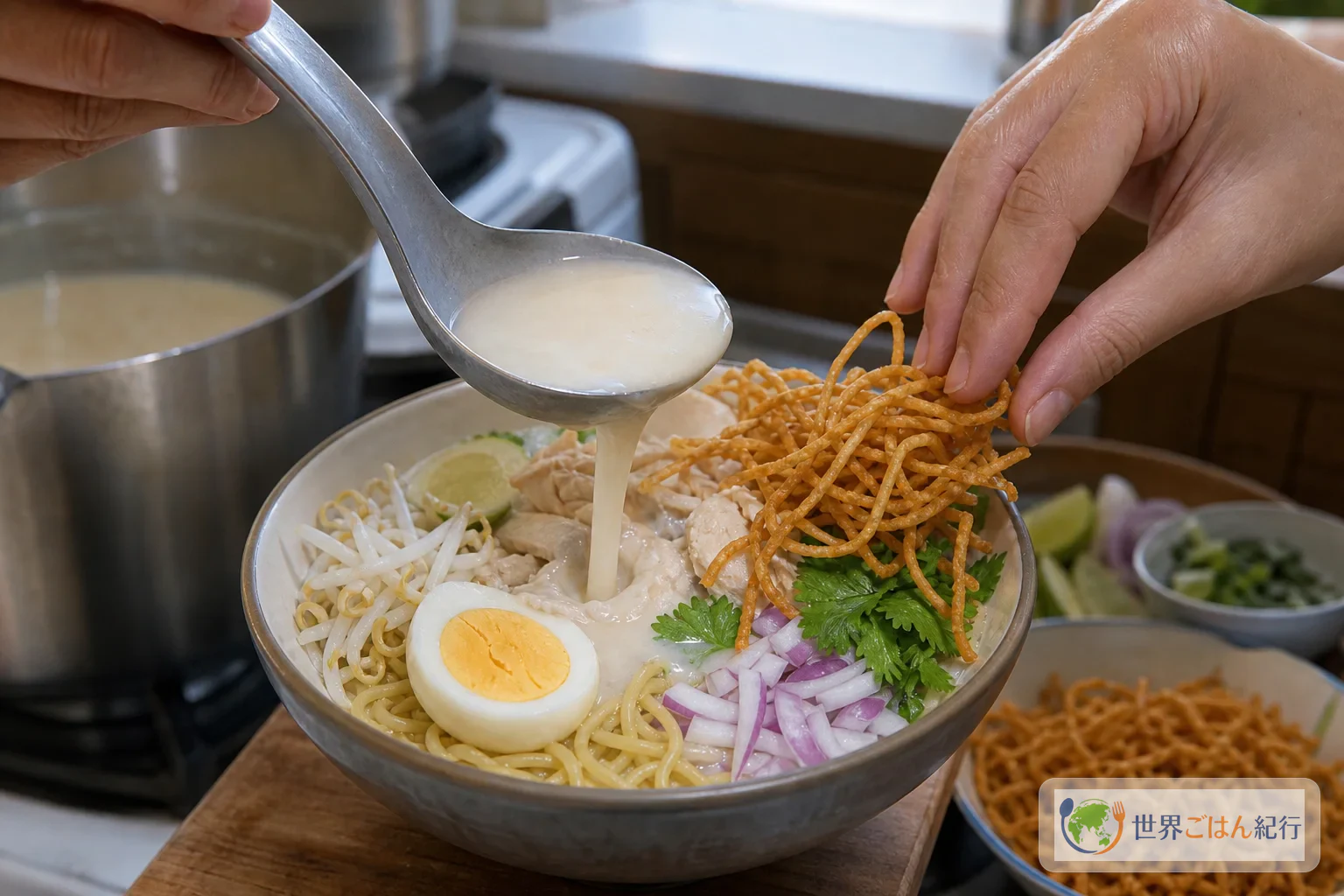
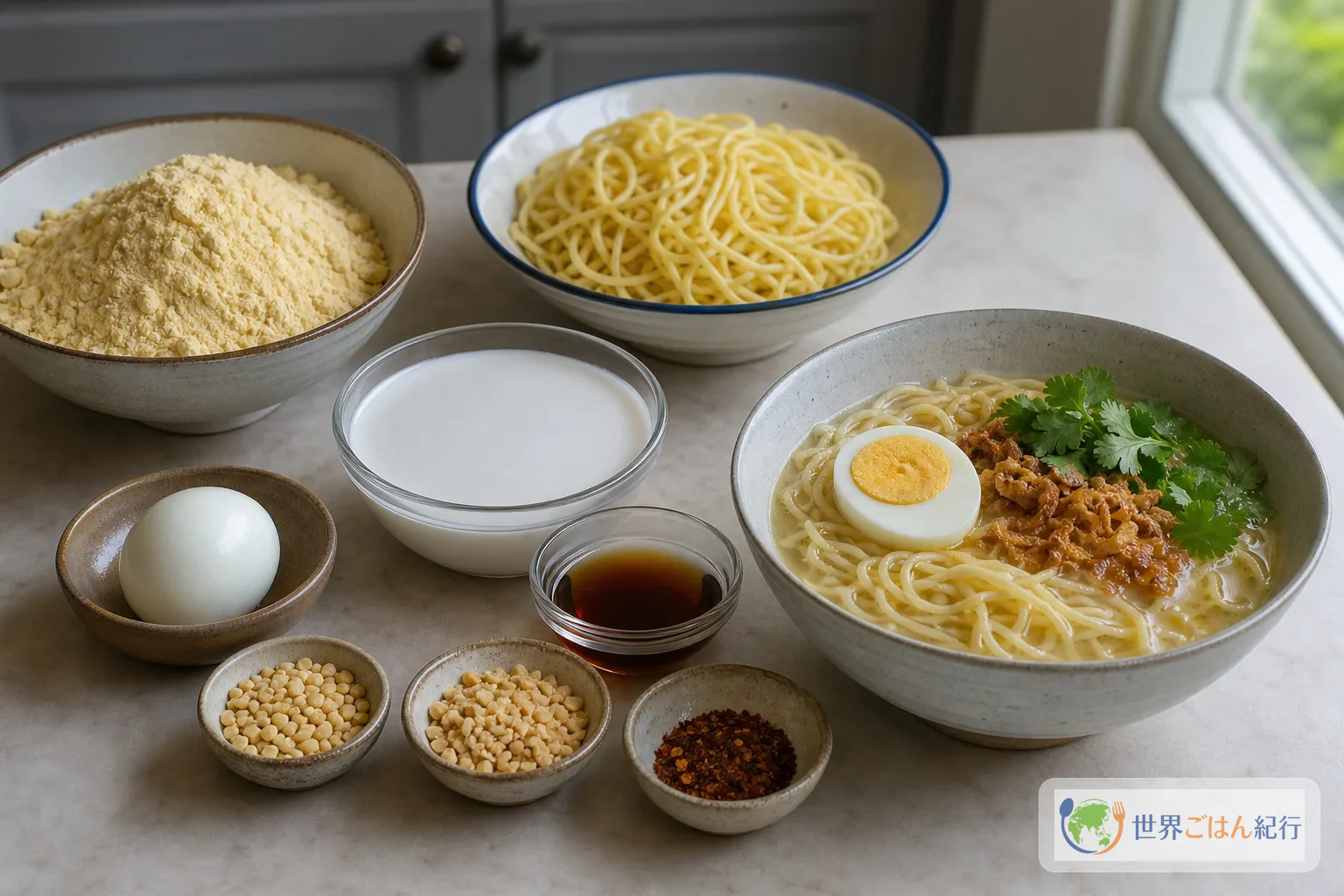
If you just put noodles in a bowl and ladle the white soup over them, it looks gentle. But add a handful of crispy fried noodles, a halved boiled egg and a squeeze of lime, and the whole bowl changes at once: soft noodles, silky broth, the dry crackle of fried noodles. The sourness and the chili aren't locked into the pot; each person adds them at the table.
This is ohn no khao swe, Myanmar's coconut milk noodle soup, which you'll also see spelled Ohn No Khao Swe, Ohn Nou Kao Swe and more. A Myanmar travel guide describes it as chicken, onion, garlic and a mild curry fragrance layered into a coconut milk broth, finished with crispy noodles, boiled egg, lime, chili and cilantro.
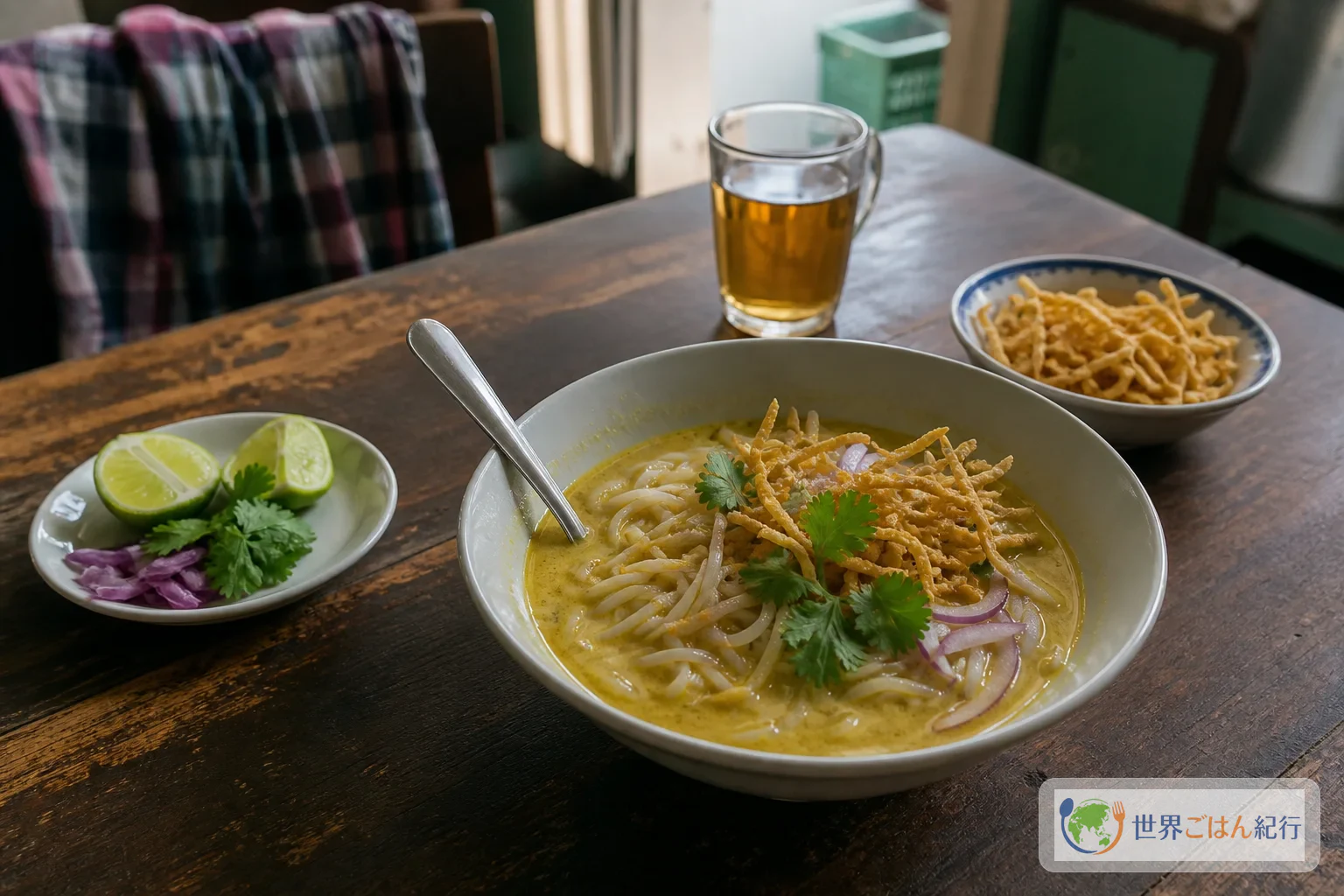
It starts from a different place than noodle dishes built on fish broth, like mohinga. Where mohinga (in Japanese) draws out the freshness of lemongrass and the savoriness of fish, ohn no khao swe builds on the roundness of coconut and the richness of chicken. It may look a lot like Thai khao soi (in Japanese), but binding the broth with chickpea flour and blooming the aromatics in oil make it a different construction.
What this recipe protects isn't a longer ingredient list. Keeping the soup from boiling hard and holding on to the toasty note of the chickpea flour is what keeps it light enough to be a noodle dish.
Chicken brings savoriness, coconut milk brings round richness, chickpea flour brings light body and a toasted-bean note, and lime keeps the finish light. Rather than making the whole pot spicy, letting everyone add chili to their own bowl makes it easier to serve a family.
The name, and the table in Myanmar
Even in English alone, the name wobbles: Ohn No Khao Swe, Ohn-No Khao Swe, Ohn-Nou-Kao-Swe. Search for them and they almost look like different dishes, but at the heart of the name is a plain description: "coconut milk noodles." Rather than settling on one spelling, knowing several makes it easier to find Burmese recipes and ingredients.
Trace the name back and you find two centers beneath it: coconut milk and noodles. Burmese Cookbook also describes the dish as coconut milk noodles, so the name itself is the way into the flavor.
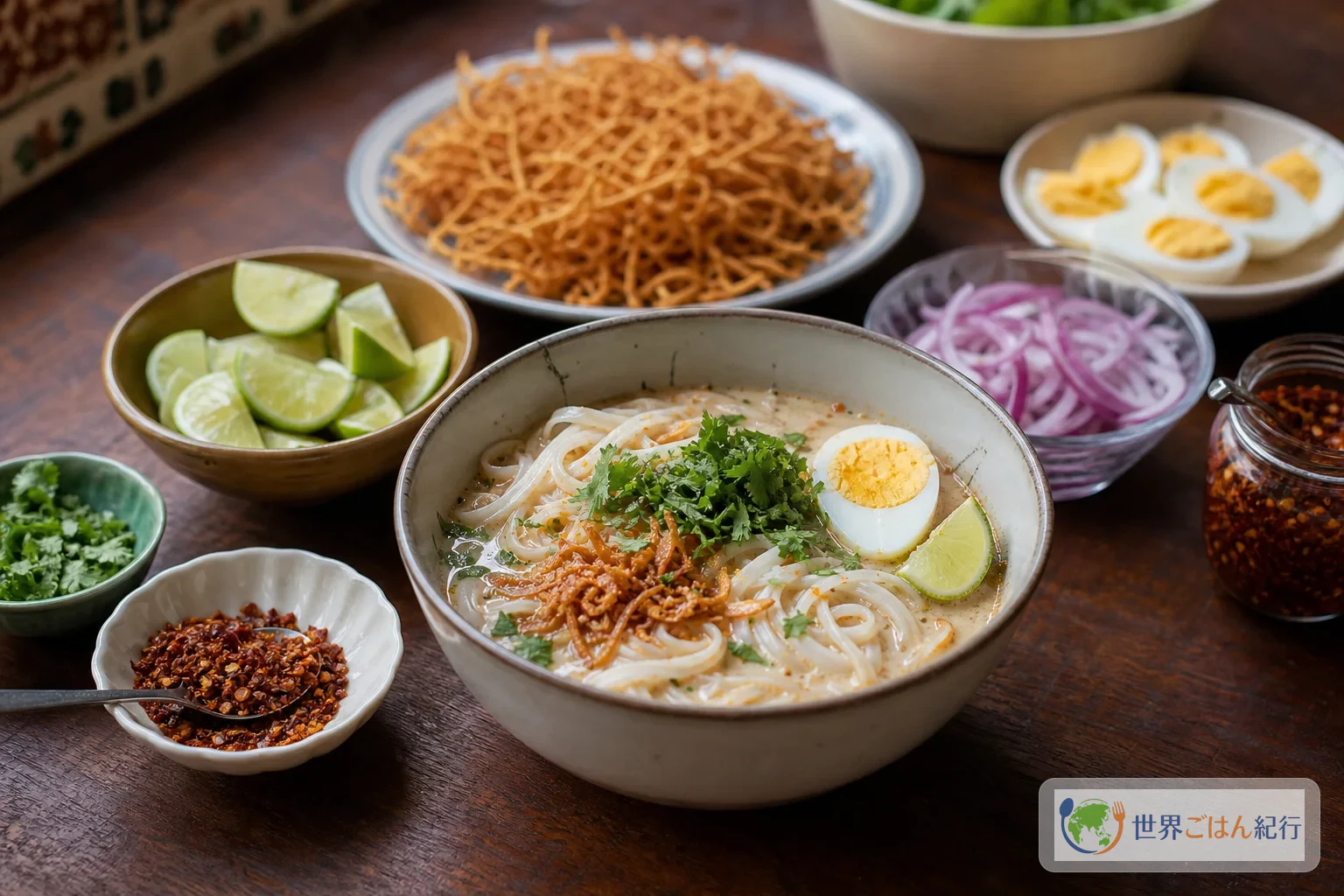
What makes this noodle dish interesting on a Burmese table is that the broth isn't the whole story. In the pot there's the silky richness of chicken and coconut; on top of the bowl go onion, cilantro, lime, chili, boiled egg and crispy noodles. Nobody fixes the order for you: you decide whether to add the sour first or save the crispy noodles for last.
Compare recipes from Myanmar and you'll see a range in how the chicken is cut, how much fish sauce goes in, which noodles are used, and whether crispy noodles or bean sprouts are added. That doesn't mean the dish is falling apart. It makes more sense to think of it as a dish whose final bowl changes depending on whether it's a home pot or a quick eatery pot, and whether someone at the table likes heat.
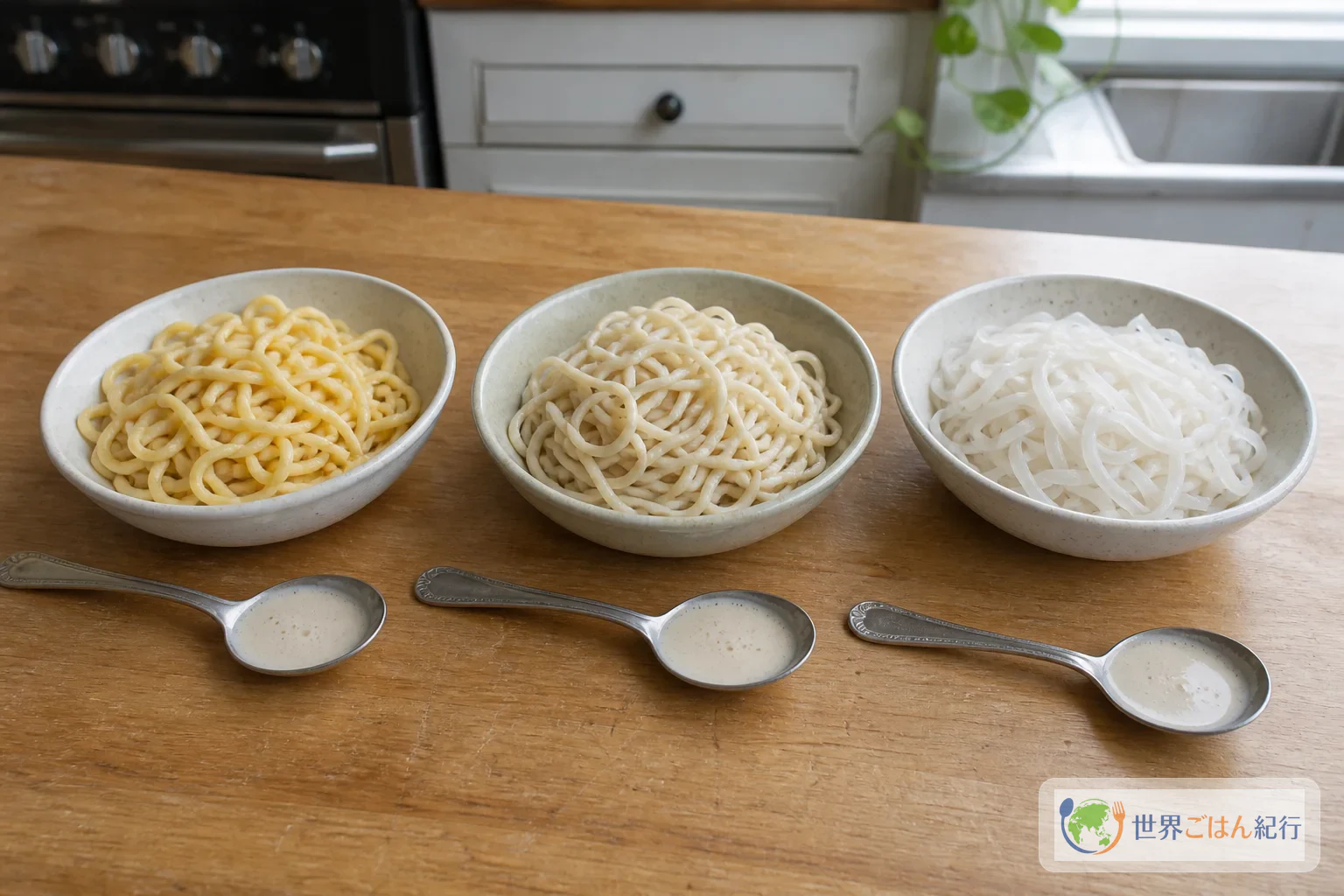
When you make it at home, the question isn't gathering every Burmese ingredient but deciding which differences you'll accept. If you can't find fresh egg noodles, Chinese-style egg noodles work. Without besan, rice flour will still thicken the broth. But switching to rice noodles makes it closer to mohinga's lightness, and switching to rice flour fades the toasted-bean note. Substitutes aren't for hiding mistakes; they're for knowing in advance which part of the flavor will shift.
Search not only for "ohn no khao swe" but also "Ohn Nou Khao Swe" and "Burmese coconut noodles." Chickpea flour is sold as besan, gram flour or chickpea flour. Whatever the brand calls it, a flour made only from chickpeas will do the same job.
Ingredients (serves 4)
The broth shouldn't be a thick sauce; aim for a consistency that clings thinly to the noodles when you lift them. For four people, it stays lighter if you use the chicken stock as the base rather than adding more coconut milk, then adjust with chickpea flour at the end.
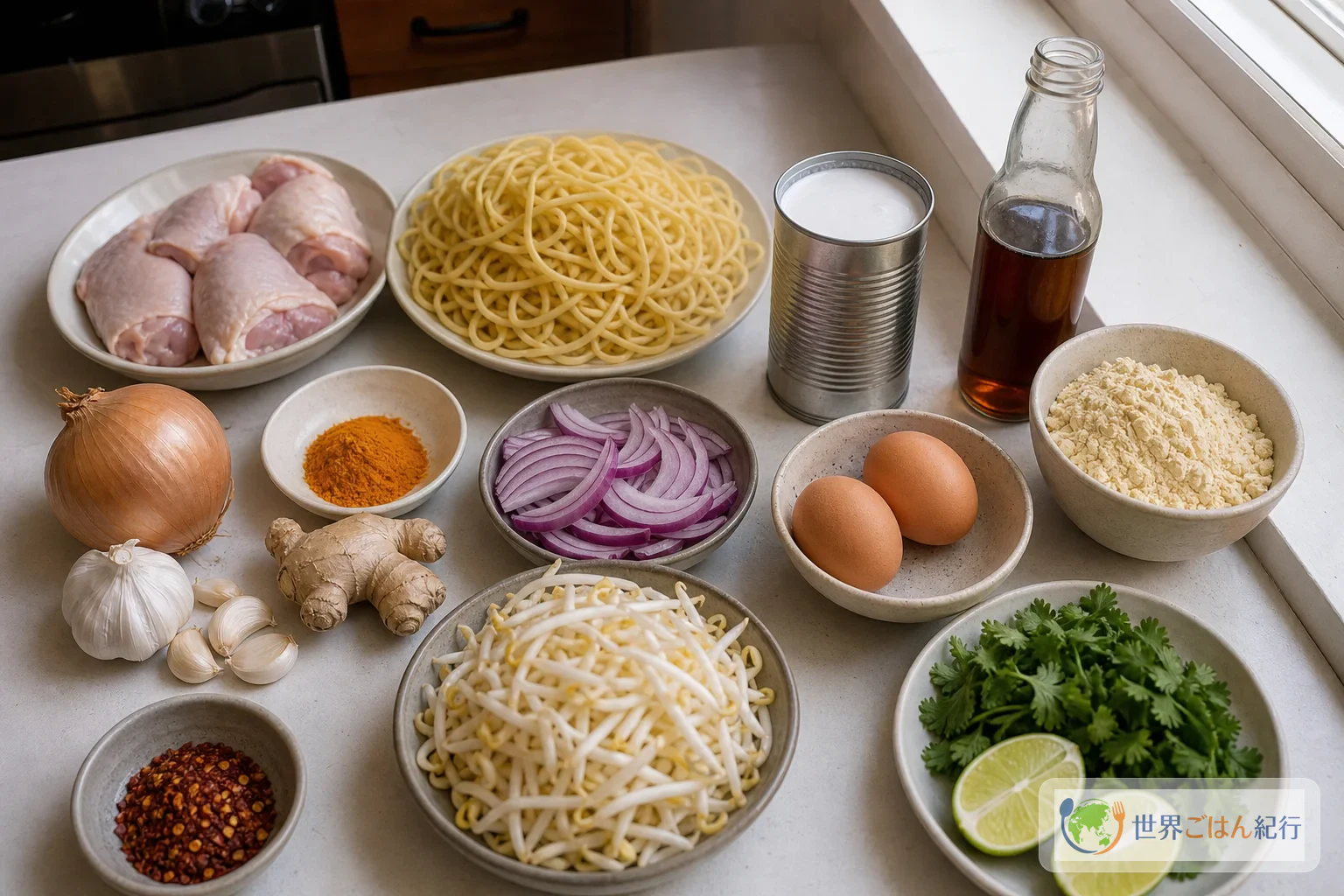
Don't substitute curry powder or potato starch for the chickpea flour. Curry powder makes the aroma too strong, and potato starch sets the broth into a clear gel. For your first bowl, the three things worth seeking out are besan, unsweetened coconut milk and fish sauce.
Egg noodles contain wheat and egg, and fish sauce contains fish. Chicken stock and Chinese-style noodles may contain soy, dairy or other allergens, so check the label before buying. If you want to keep the heat separate, leave the red pepper flakes out of the pot and divide the 1/2 tsp among the four bowls.
Coconut milk isn't there for liquid; it's what gives the soup the roundness that lingers on your tongue. For a first try, choose an unsweetened can meant for cooking, not a thin coconut milk beverage. Look for a can of around 400 ml whose ingredients list is unsweetened coconut milk. If someone at the table doesn't like coconut, you can use more chicken stock instead.
Fish sauce isn't just a salty liquid. Its fermented savoriness ties the sweetness of the chicken to the richness of the coconut, so switching to soy sauce softens the outline a little. If you'll use fish sauce for fresh spring rolls and stir-fries too, it's worth keeping a bottle; if you avoid seafood or don't want the smell in your fridge, light soy sauce and salt are enough.
Instructions
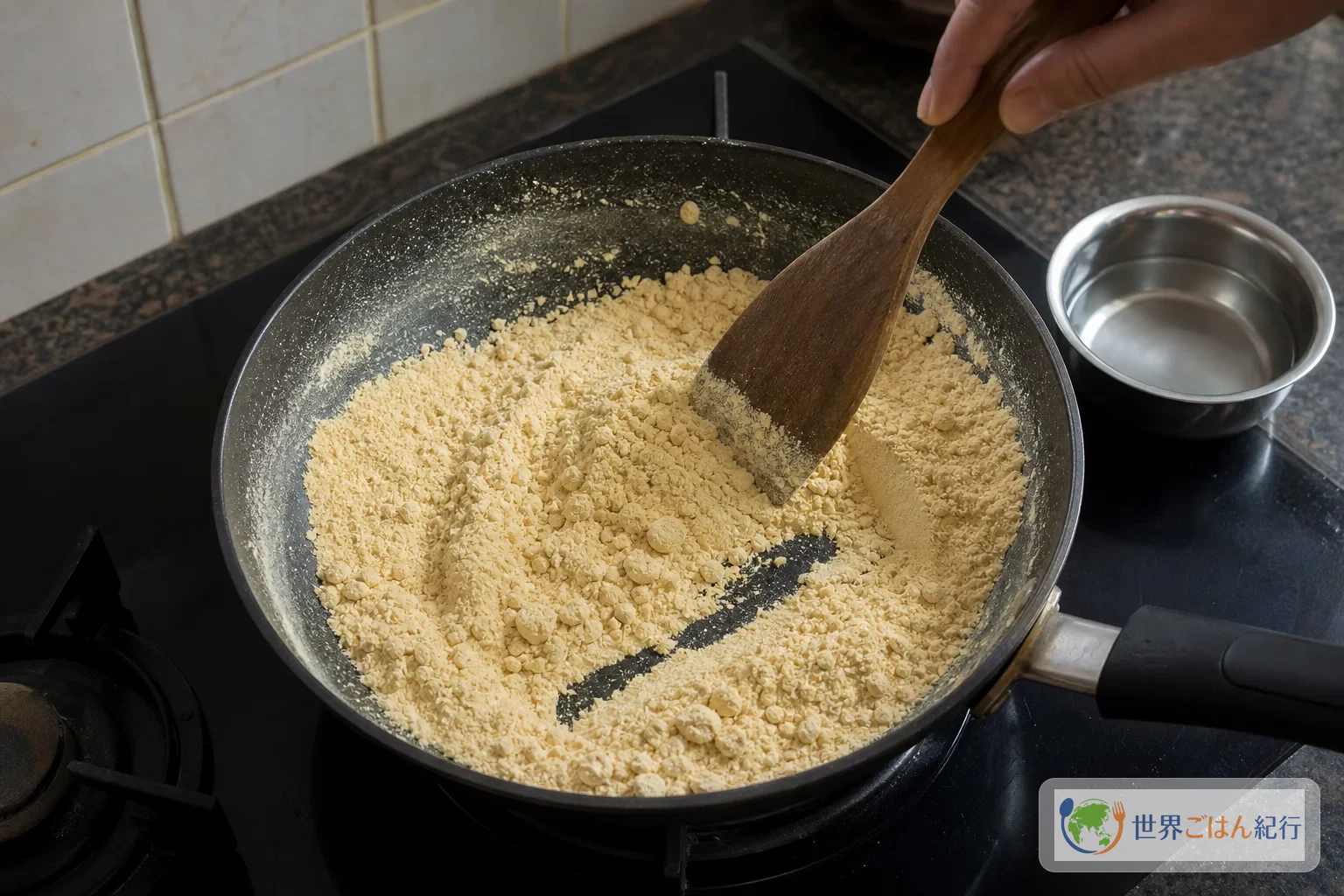
Rush the steps and the aromatics won't turn sweet, the coconut milk will separate, and the chickpea flour will clump. Mix the flour first and prepare the noodles and garnishes before you start the pot. Finish the boiled eggs and crispy noodles while the soup cooks.
Make sure the thickest part of the chicken has reached 74°C (165°F). Without a thermometer, cut open the largest piece and check that the center has no pink and the juices run clear. If you taste the soup partway through, take out just one piece to check, and don't eat any chicken before it has been checked.
The key: don't let the white broth get heavy
Ohn no khao swe isn't a dish you get closer to by pouring in more coconut milk. When the coconut fat takes over, the heaviness stays even after you squeeze in lime, and the toastiness of the crispy noodles gets buried. First set the salt and savoriness with chicken stock, then use chickpea flour at the end so the broth can hold onto the noodles. That order keeps the broth white and keeps the bowl from being tiring to eat.
Watch the edge of the pot. After the coconut milk goes in, if only the center is bubbling hard, the heat is too high. Stop at a row of small bubbles at the edge, where moving the spatula lets you glimpse the bottom of the pot for a moment. After adding the chickpea flour, go only until the soup coats the back of a spoon thinly. A curry-like thickness that holds a peak will feel heavy once the noodles go in.
For the crispy noodles, watch the time rather than the amount. Even if they're a little soft just out of the oil, they firm up as they cool. Don't fry them dark to add toastiness; stop at pale golden and leave them able to soften slightly in the hot soup. Squeeze the lime into the bowl, not the pot. The acidity cuts the richness and makes the next bite lighter.
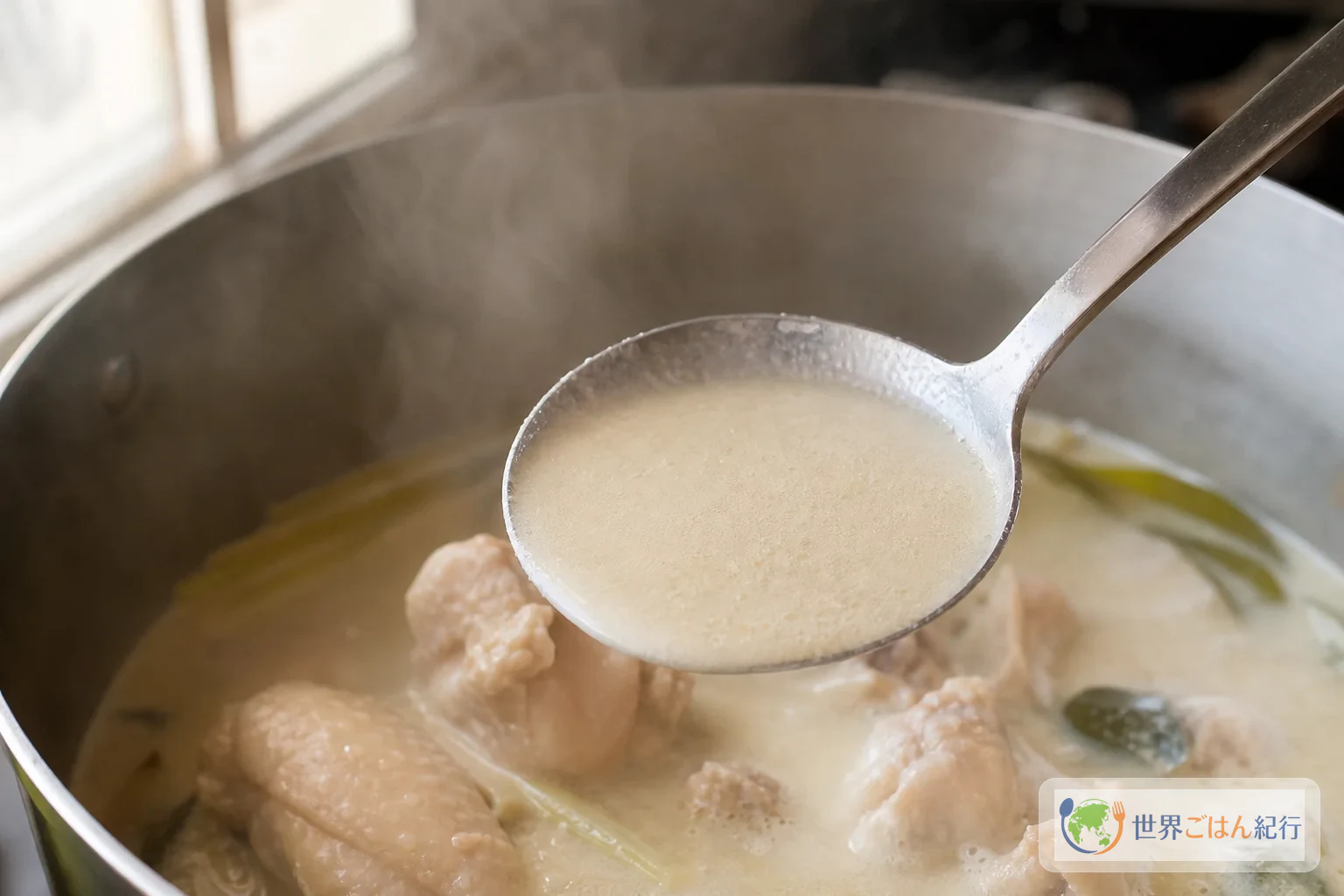
Fish sauce makes a big difference in how close you get to the real flavor. With fish sauce, the salt settles beneath the sweetness of the coconut and the chicken comes into focus. It's still good with light soy sauce, but you won't get the fermented fish aroma. It also works in fresh spring rolls, stir-fries and soups, so if you cook Southeast Asian food often, a bottle is handy to have.
Variations: decide on the noodle texture first
With Chinese-style egg noodles, the broth catches in the noodles' grooves. If you switch to dried noodles, don't overcook them, and rinse off the surface starch under running water after draining. You can switch to rice noodles, but the chickpea-flour body comes forward and the texture gets lighter. Unless you need to avoid wheat, Chinese-style egg noodles make it easier to get a feel for the dish the first time.
If you use chicken breast, cut it into 2.5 cm cubes instead of 2 cm, and shorten the simmering time in the stock to 7 minutes. Take it out once it's cooked through and return it at the end so it doesn't dry out. For a mushroom version, use 200 g shimeji mushrooms and 200 g fried tofu (atsuage) in place of the 500 g chicken, and swap the chicken stock for kombu dashi. Keep in mind that if you leave in the fish sauce it won't be plant-based, so switch to light soy sauce and salt.
Adjust the heat by where you add it rather than which chili you use. Put 1/2 tsp in the pot and everyone gets the same heat. If you add it in the bowls, kids can have just lime while adults take a pinch of chili. Lemon in place of lime makes the aroma sharper, so start with half the amount of juice.
If you'd rather not shop for more, you can skip the crispy noodles. You lose one layer of texture, but the soup and noodles still stand on their own.
Bringing the dish's background into a home kitchen
Ohn no khao swe is less a dish where the whole pot tastes the same for everyone and more a noodle dish that comes together in the bowl. The Myanmar travel guide's description lists the finishing elements: crispy noodles, boiled egg, lime, chili, cilantro and onion. It isn't just egg noodles sunk in coconut broth; something dry, something sour and something spicy are layered on afterward. That construction is what turns a soft soup into a meal.
The chickpea flour stands out, too. It carries a little of the toastiness of baked bread into the broth and ties the coconut milk to the noodles. Even without piling on spices, the aroma builds in layers: toasted flour, onion, garlic and ginger.
At home, it's fine to go lighter on the fish sauce, use lemon instead of lime, or scallions instead of cilantro. What you shouldn't change: sautéing the aromatics in oil before adding the liquid, never boiling the coconut milk hard, and mixing the chickpea flour with water before adding it. Keeping track of what each ingredient does matters more to the shape of the bowl than never missing a single Burmese ingredient.
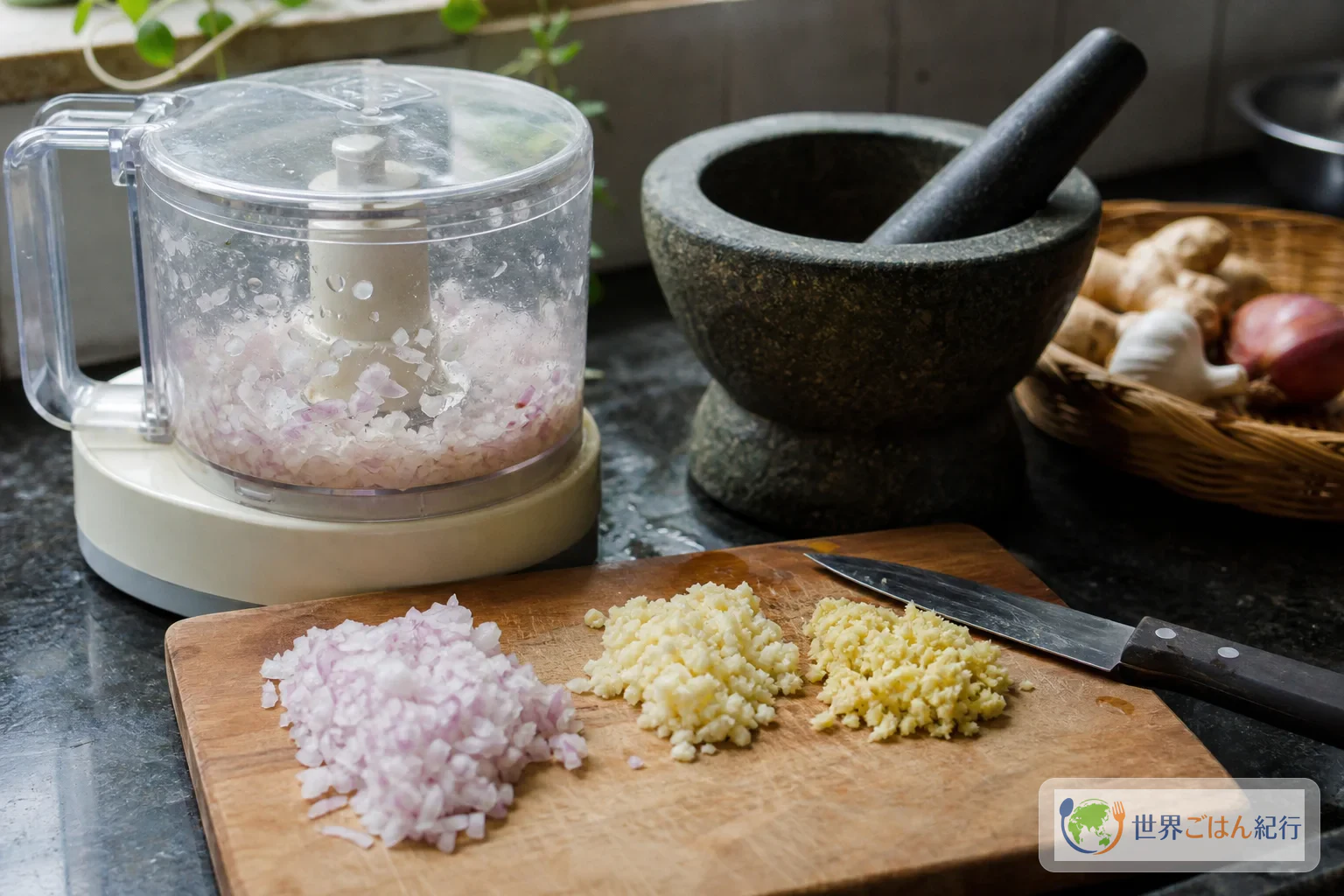
If you chop the aromatics by knife, you don't need any special tools for this amount. Leaving 2–3 mm bits of onion, garlic and ginger keeps the aroma from going flat.
To refrigerate, keep the noodles, soup, crispy noodles and garnishes separate. Cool the soup, transfer it to a shallow container, refrigerate, and plan to finish it by the next day. Noodles left in the soup absorb liquid, and by the next day the broth will be reduced and heavy. To serve, warm only the soup over low heat without boiling, and dip the noodles in hot water separately. Don't seal the crispy noodles while warm; once completely cool, put them in a dry container, and if they go soft, warm a small amount briefly in a toaster oven.
Frequently asked questions
Q1. I can't find chickpea flour. Can I use rice flour?
Yes: mix 30 g of rice flour with 120 ml of water. The broth will turn white and thick enough to cling to the noodles, but the toasted-bean aroma will be weaker. Swapping in the same amount of potato starch alone tends to thicken suddenly, so choose rice flour first and add it a little at a time until just before you turn off the heat. Next time, look for besan or gram flour at an international grocery store or online to get closer to the dish's true flavor.
Q2. My coconut milk separated. Is it still safe to eat?
Yes, though it won't feel as smooth. Next time, lower the heat after adding the coconut milk and keep it to small bubbles at the edge. For this pot, turn off the heat and whisk in warm soup 2 tbsp at a time; it will look a little better. Adding more chickpea flour to hide the separation makes it heavy, so bring the temperature down first.
Q3. Can I skip the crispy noodles?
Yes. Crispy noodles add toastiness and a dry crunch; they aren't the foundation of the soup. You could leave them out the first time to get the broth consistency right, then fry just 80 g next time and compare. If you'd rather avoid deep-frying and disposing of oil, thinly slice an onion, pat it dry, and brown it in a little oil instead.
Q4. If I use soy sauce instead of fish sauce, does it become a different dish?
It doesn't stray far, but the fermented savoriness of fish sauce gets weaker. Season with 30 ml of light soy sauce and 2 g of salt, and squeeze in a little more lime at the end so the coconut doesn't feel heavy. If you have a fish or shellfish allergy, skip the fish sauce and also check the labels on the chicken stock and soy sauce.
Q5. How much can I make the day before?
You can prepare the soup, boiled eggs, red onion and cilantro the day before and keep them separate. Cook the noodles on the day, and fry the crispy noodles right before eating so they stay crisp. When reheating the soup, don't boil it hard, and make sure the chicken is heated through to the center.
Sources
- Myanmar Tourism food guide, "Ohn-Nou-Kao-Swe" (dish components, ingredients and spelling; accessed 25 July 2026)
- What To Cook Today, "Ohn No Kyaukswe" (amounts and method for chicken, fish sauce, coconut milk, chickpea flour and noodles; accessed 25 July 2026)
- Burmese Cookbook, "Ohn No Khao Swe" (meaning of the name, ingredients and toppings; accessed 25 July 2026)
- FoodSafety.gov, "Safe Minimum Internal Temperatures" (74°C internal temperature for poultry; accessed 25 July 2026)



