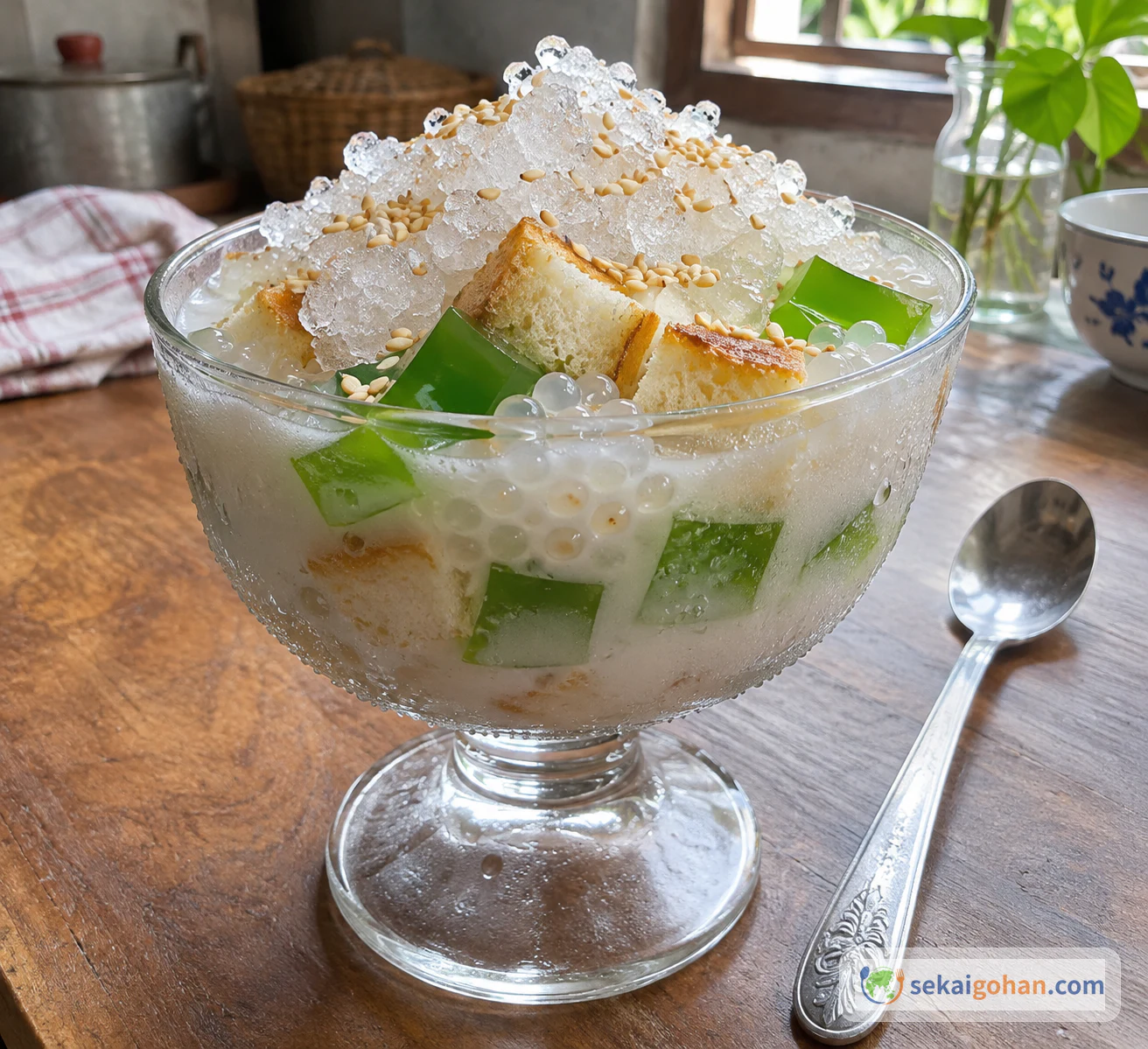
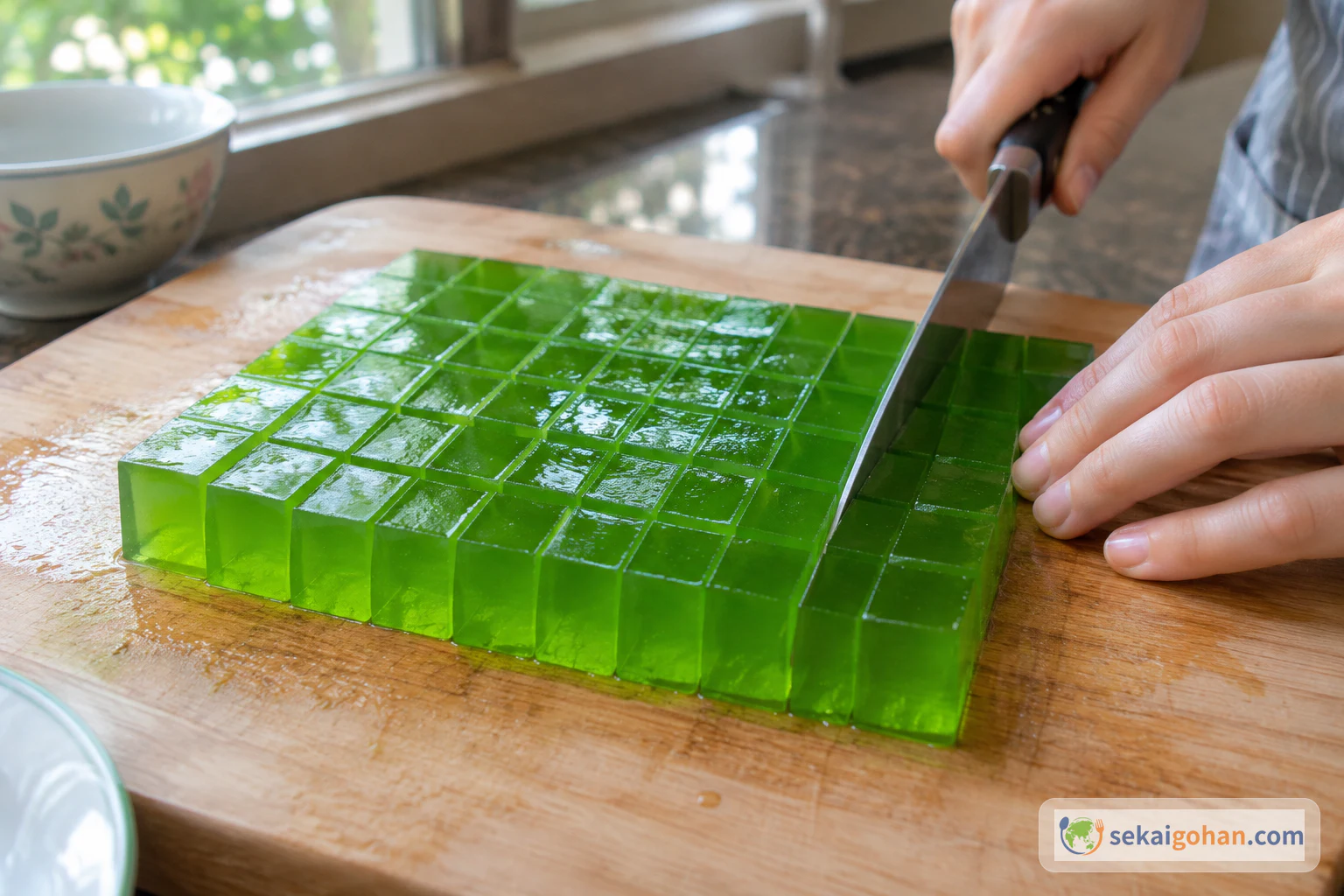
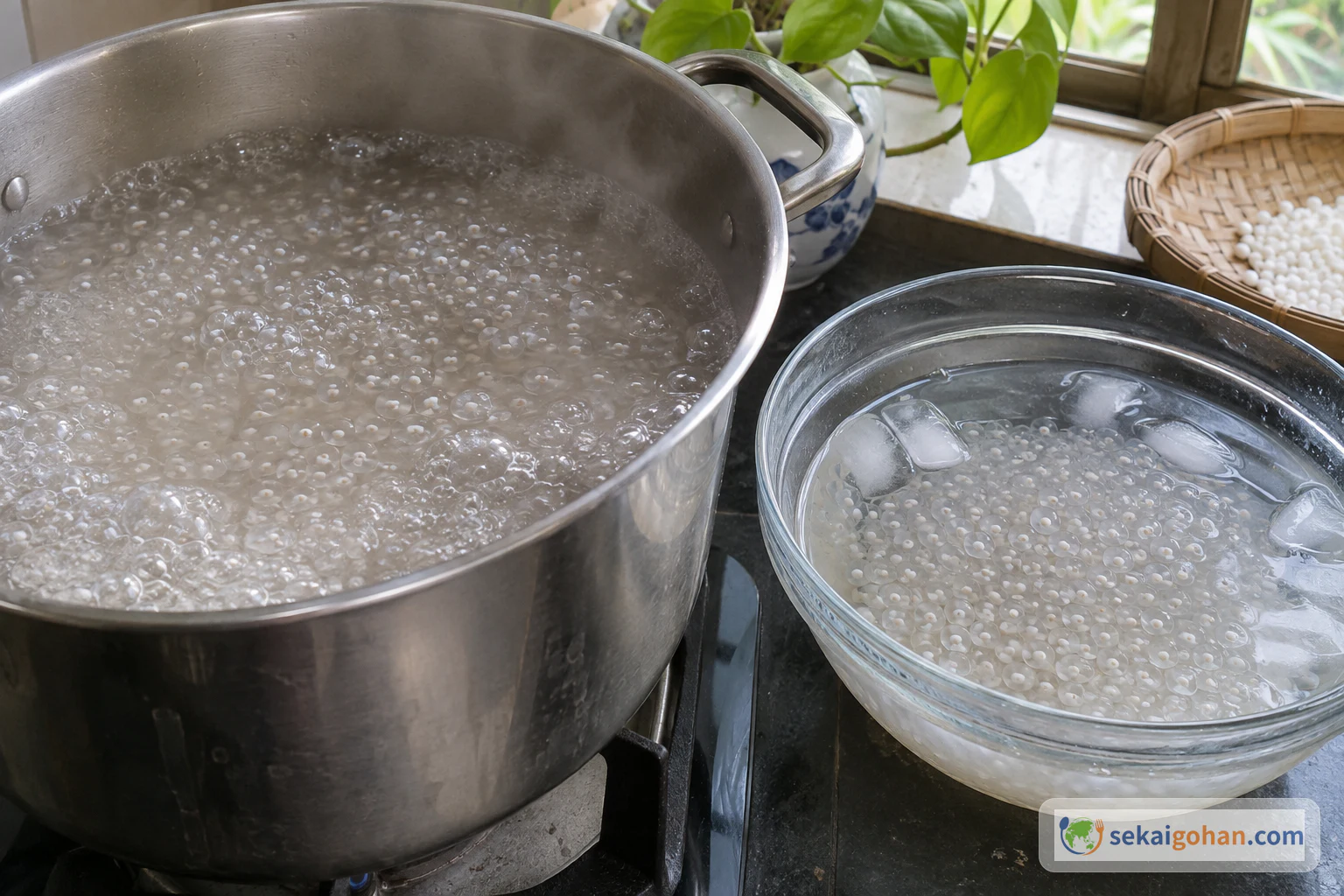
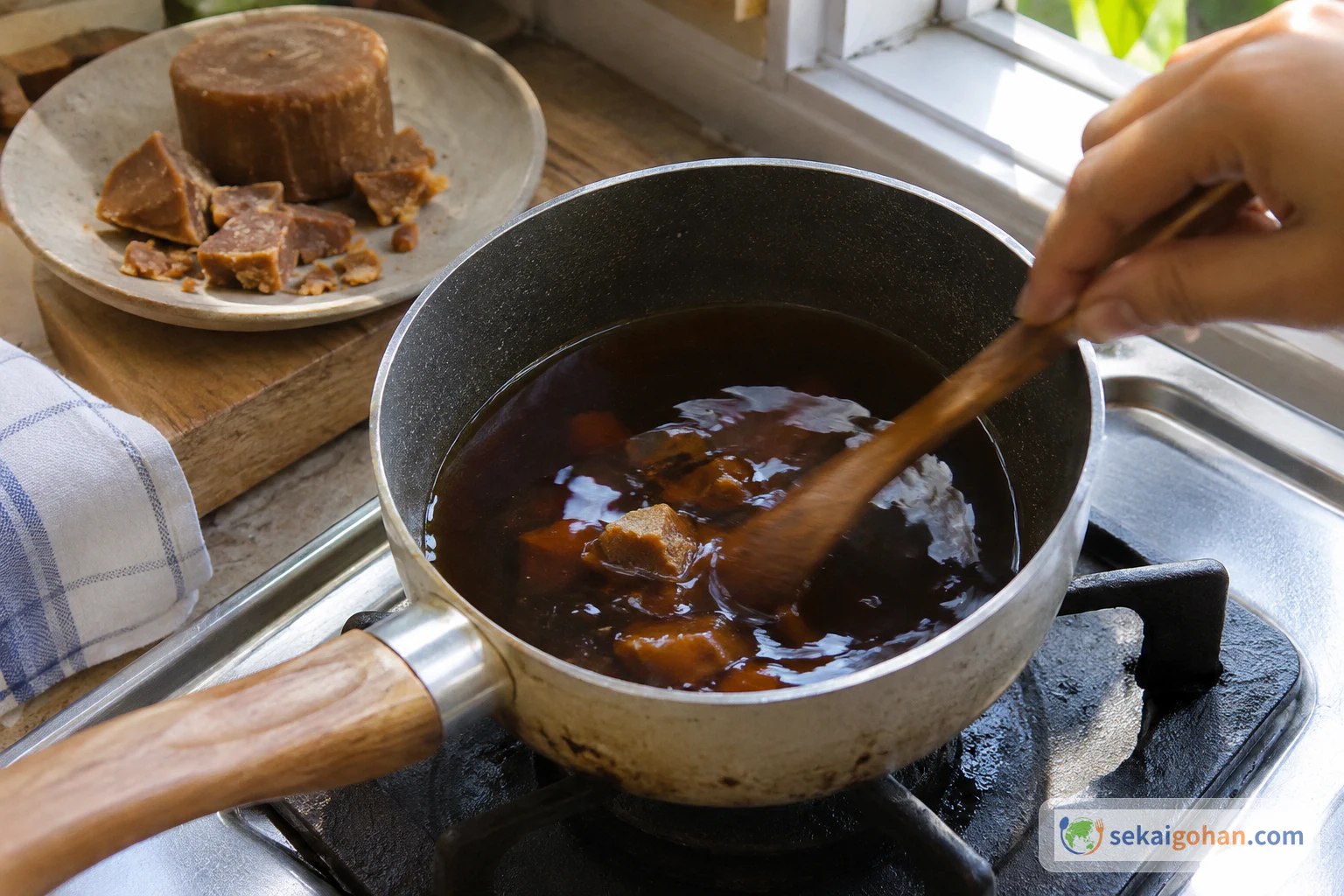
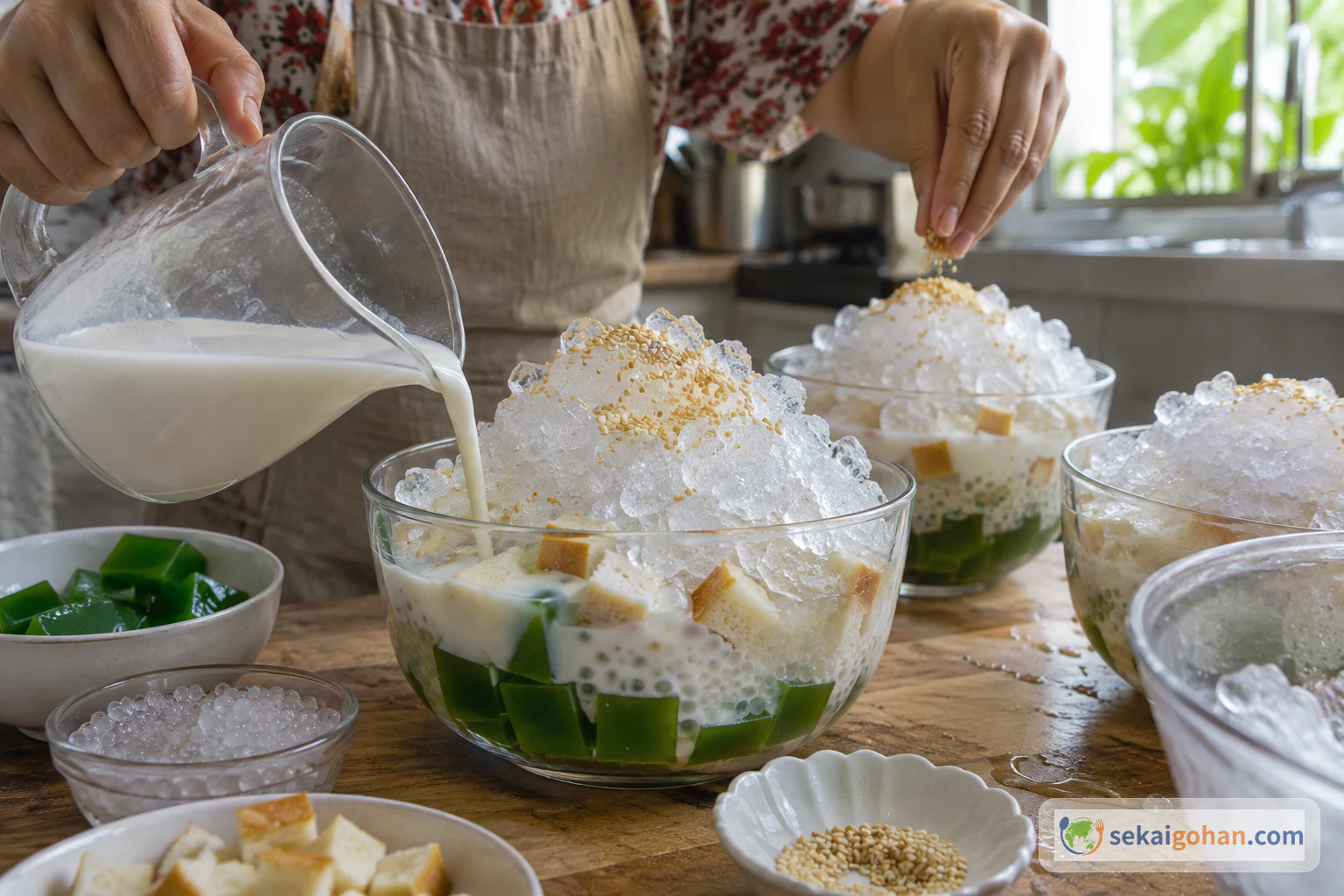
The ice goes on last, heaped above the rim of the bowl so the first spoonful is mostly cold crunch. Push a long spoon down through it and it comes back with green cubes of pandan jelly, glassy sago pearls and squares of bread that have soaked up sweet coconut milk. Shwe yin aye is the cold dessert of Thingyan, the Myanmar New Year, and a summer favourite at street stalls in Yangon. It tastes of coconut and pandan, with a pinch of salt in the milk and a dark thread of palm-sugar syrup that spreads as the ice melts.
A Golden Name, a Green Jelly and a Bowl Handed Out at New Year
In Burmese the dish is written ရွှေရင်အေး, and in English you will see it as shwe yin aye or shway yinn aeh. Through Thingyan, many households make it in quantity and hand it out free, so a bowl may well come from a neighbour's table. The rest of the summer it belongs to the stalls of Yangon, where vendors pile extras on top: pudding, ice cream, pieces of fruit.
The name is usually explained as something like "cooling the golden heart." The exact reading is not settled, but the idea fits a bowl eaten in the heat of the New Year season.
The jelly began white, and pandan juice is what turned it green. That colour now marks a regional line. In Yangon and Mandalay, the bowl you are handed is most often green jelly in coconut milk, the dish made below. In the south, white jelly under palm-sugar syrup goes by another name, mont let saung, and in the hill areas mont let saung takes the place of shwe yin aye altogether. For more of the country's cooking, start from the Myanmar page.
What goes under the ice changes from cook to cook. Some bowls carry sweetened sticky rice, pandan cendol noodles, tapioca, or a jelly set with gelatin or coconut. White bread soaked in coconut milk turns up again and again, and at home it is cut into small cubes. Here the jelly is set with agar, the bread is toasted dry first, and a palm-sugar syrup goes in with the ice.
The recipe below is one adopted version, taken from a single recipe-collection page rather than from a Myanmar cook's own recipe, so it is not offered as the standard local formula.
Ingredients
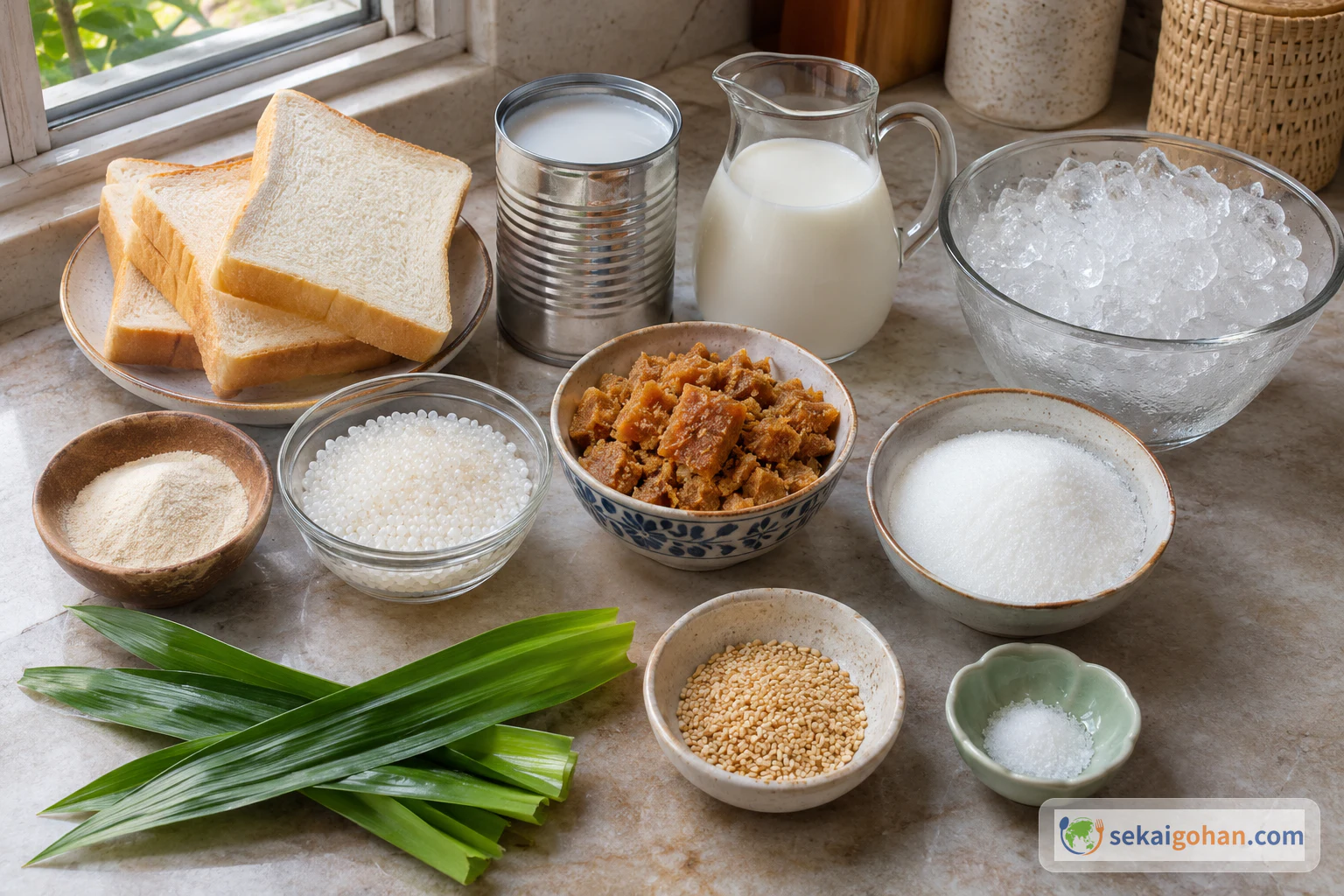
This dessert contains wheat (bread), milk, sesame and coconut. Check bread, sticky rice balls and any packaged extras for their own allergen labels before serving guests.
Equipment
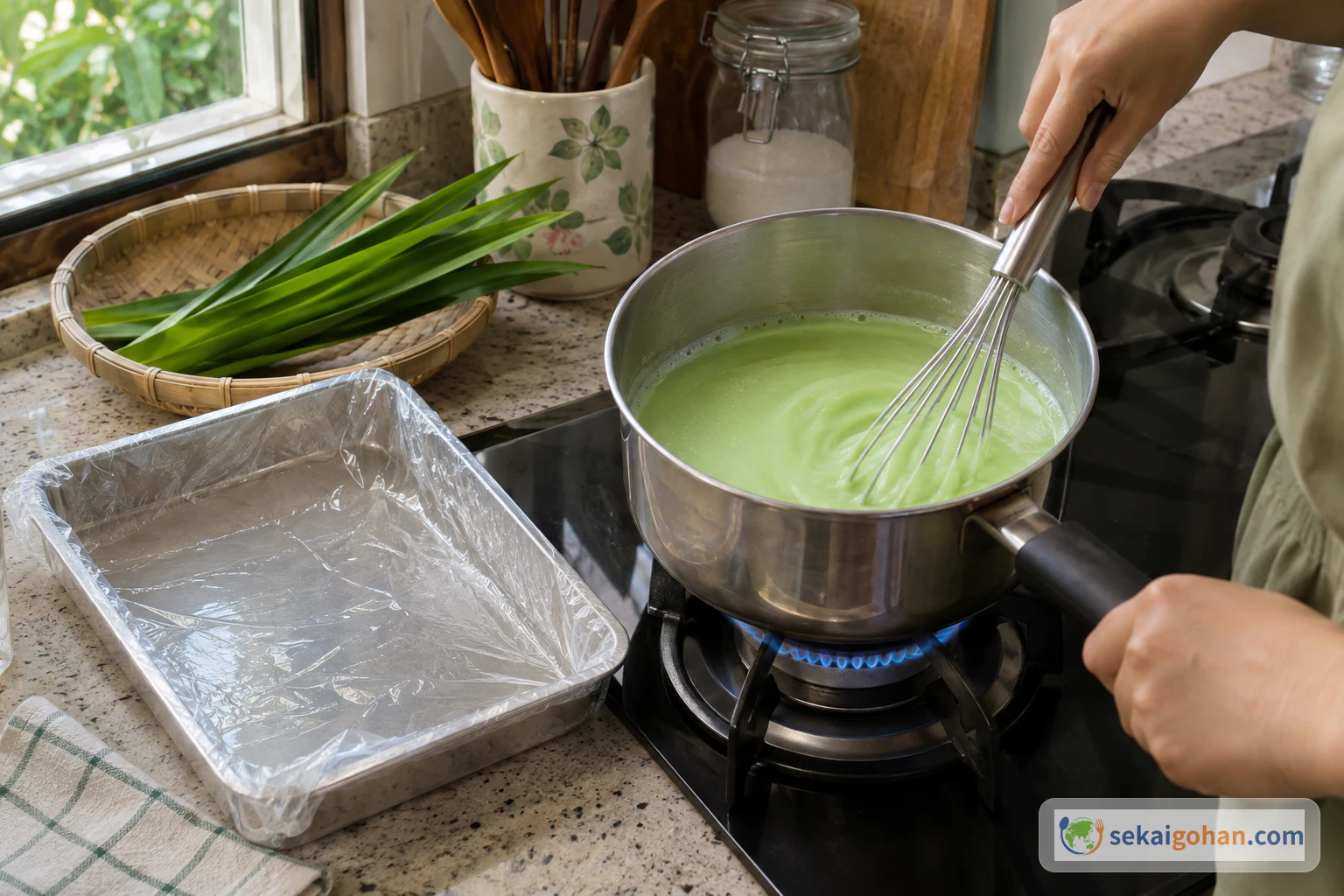
- Saucepan and whisk, for the jelly
- 6 × 8-inch (15 × 20 cm) tray lined with plastic wrap
- Knife and cutting board
- Large pot with a lid, and a sieve, for the sago
- Bowl of cold water, for holding the sago
- Baking sheet and oven
- Small pot, for the coconut milk, and a jug for chilling it
- Small pan, for the syrup
- Wide bowls and long spoons
Choosing and Swapping
Agar powder, small sago pearls, pandan essence and palm sugar are all easy to find at Southeast Asian grocers and online; the bread, milk and ice come from any supermarket. Agar powders differ in setting strength from brand to brand, so if your package gives a different ratio of powder to liquid, follow the package for a jelly that holds its edges.
| Ingredient | Swap | What changes |
|---|---|---|
| Small sago pearls | Small tapioca pearls | The pearls cook and chew differently; cook them to the same near-clear look |
| Palm sugar | Dark brown sugar or coconut sugar | The syrup still runs dark, but its flavour shifts away from palm sugar |
| Pandan essence | 2 fresh pandan leaves blended with the jelly water, then strained | A fresher green aroma; the colour may need the optional drops |
| Whole milk | Leave it out and use 2½ cups (600 ml) coconut milk in total | A fully plant-based bowl with a heavier coconut taste |
The jelly, sago, bread, coconut milk and ice make the dish. The rice balls are optional.
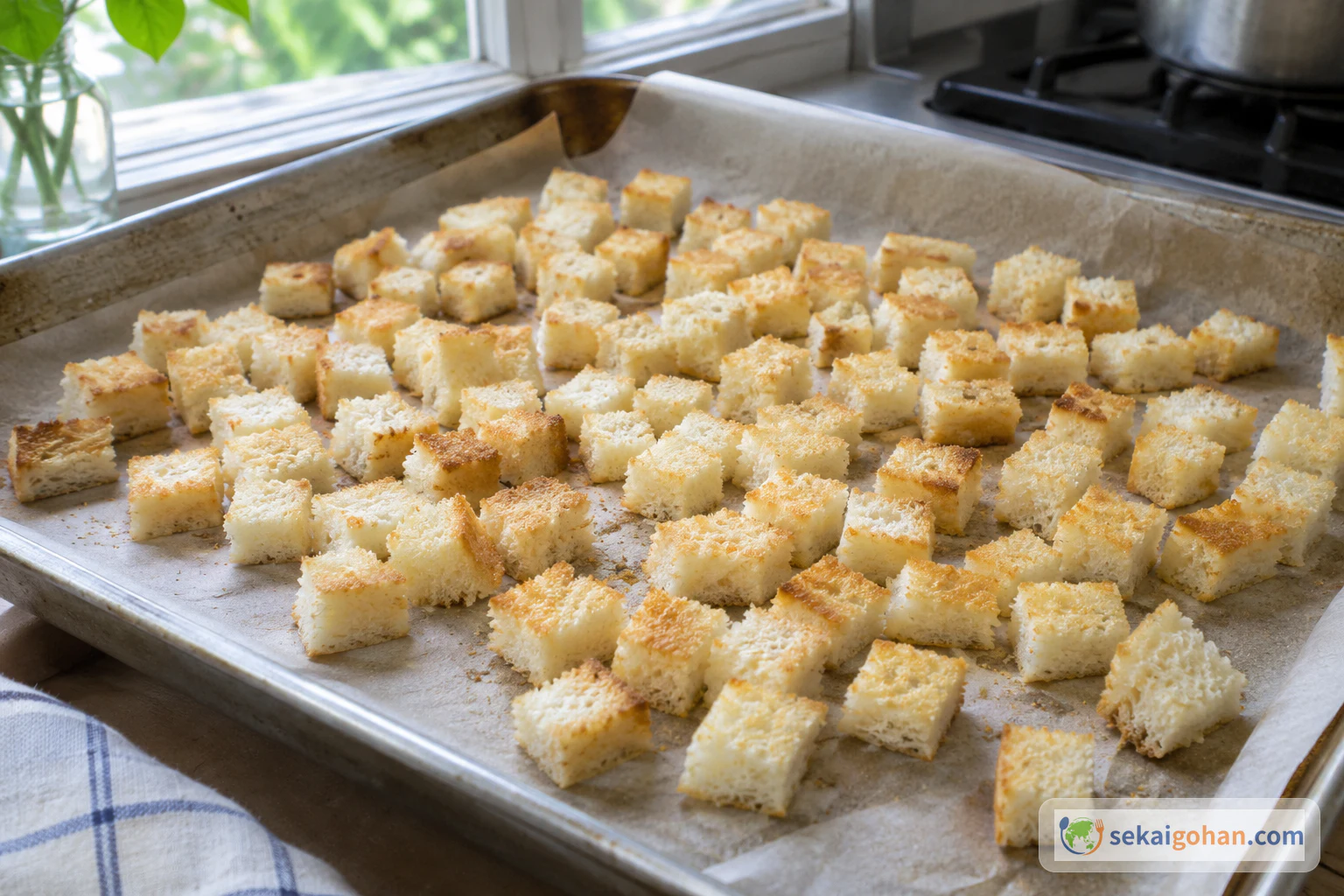
Day-old thick white bread toasts dry on the outside while staying a little soft inside, so it drinks the coconut milk without collapsing into paste.
Method
Start with the jelly, because it needs at least an hour in the fridge before you can cut it. The coconut milk needs the same hour cold, so put it on the stove soon after; the sago, bread and syrup all fit into that waiting time. Nothing is assembled until the moment you serve.
Assemble each bowl only when someone is ready to eat it. As the ice melts, bread that sits in the milk turns sticky.
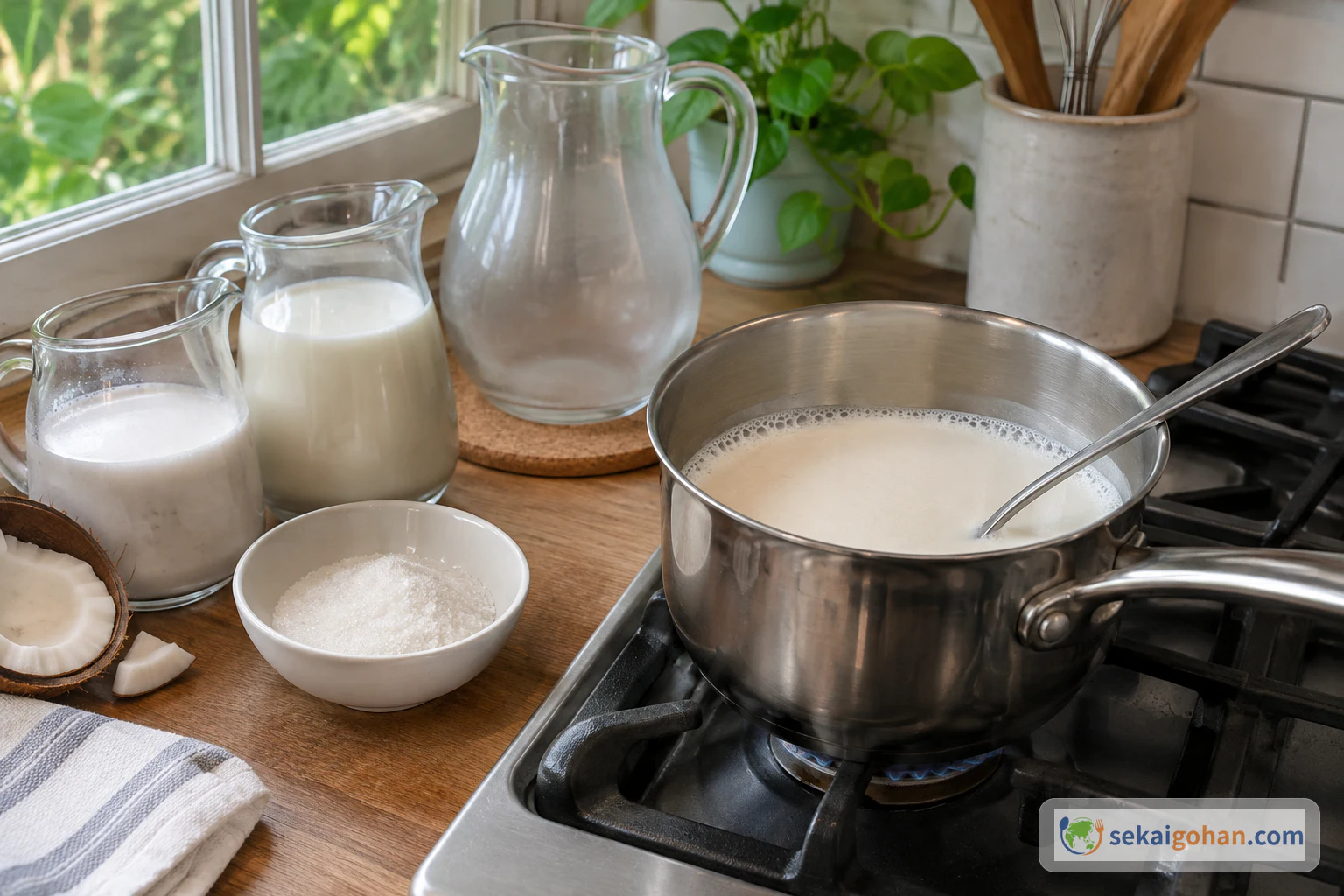
The coconut milk only needs enough heat to melt the sugar. Low heat and patience keep it smooth.
The agar mixture, the sago water and the palm-sugar syrup are all very hot. Pour away from you, keep children clear of the stove, and let the syrup cool fully before it goes near the bowls.
When It Goes Wrong
| What you see | Why | What to do |
|---|---|---|
| The bread is soggy and sticky | The bowl was assembled too early and the ice melted into it | Add the bread only at serving time; never assemble ahead |
| The jelly is soft and will not hold a cube | The agar was not boiled, or your brand sets with a different strength | Rest the powder in the water, boil and simmer for 2 minutes, and follow your package ratio |
| The cubes slump in the cold milk | The jelly was set with gelatin | Set it with agar, which keeps its shape in cold coconut milk |
| The pearls still have white centres after boiling | They have not had their covered rest | Leave them covered off the heat for the full 8 minutes |
| The bread cubes are hard and brown | They were toasted too long | Pull them at pale gold, while they still give a little when squeezed |
Serving, Variations and Storage
At the table
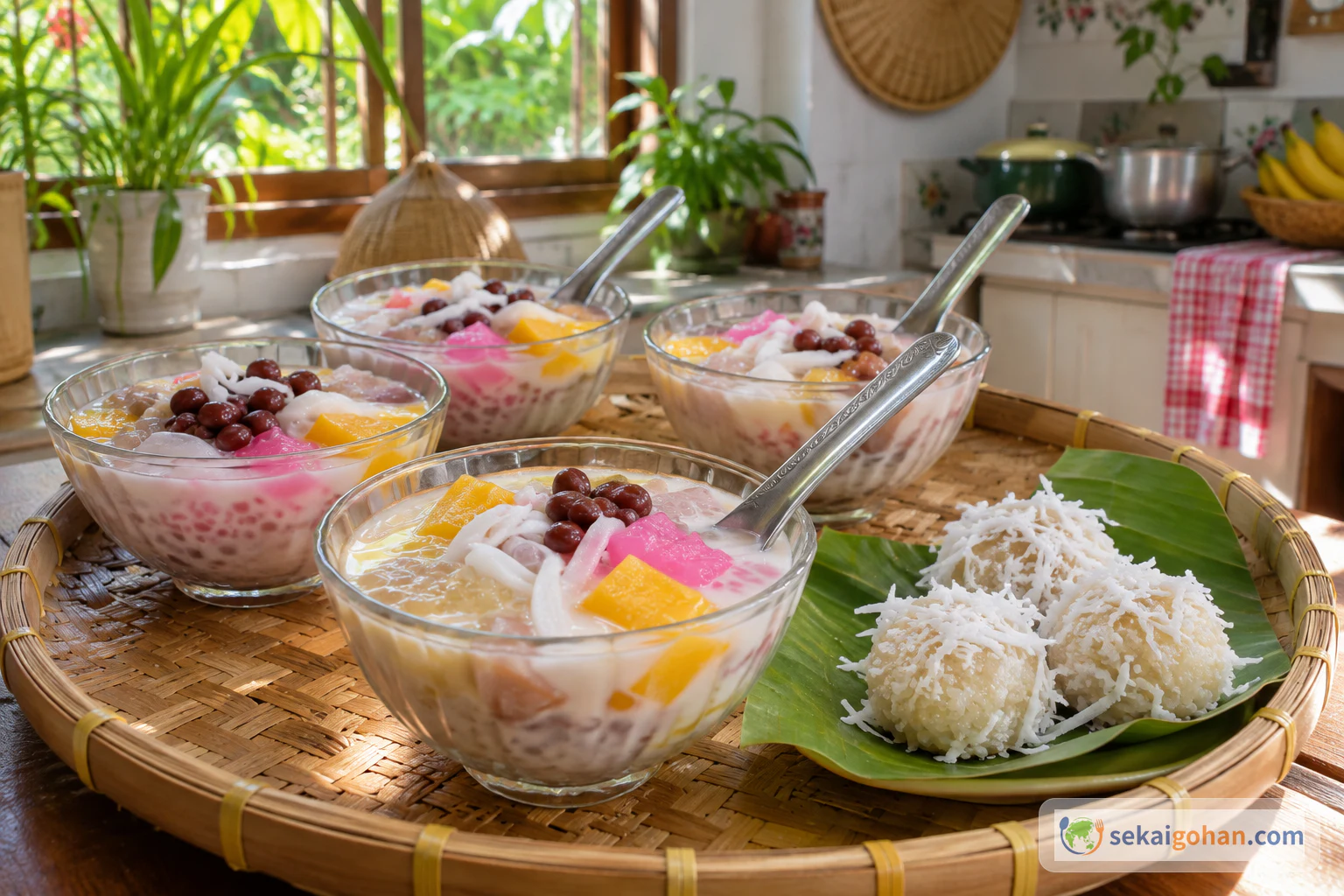
This is a dessert for a hot day and a crowd. Keep the components chilled and separate, then build each bowl just before it is eaten. Sticky rice balls can go on the side or in the bowl.
Variations
- Plant-based bowl. Leave out the whole milk and use 2½ cups (600 ml) coconut milk in step 6. The milk is richer and fully coconut.
- With jackfruit. Layer ripe jackfruit pieces in with the jelly and sago for a soft, sweet fruit bite between the cubes.
- Yangon street style. Top the ice with pudding, a scoop of ice cream or pieces of fruit, the way stalls do. It becomes sweeter and creamier.
- With rice balls. Add one or two mont lone yay paw per bowl for a chewy layer under the milk.
Making ahead and storage
Every part except the ice can be made ahead. Keep the jelly, sago, coconut milk and syrup separately, covered, in the refrigerator for up to 2 days. Keep the toasted bread cubes in an airtight tin for up to 3 days. Do not store an assembled bowl; build it fresh each time.
Make the ice from drinking water. Jelly cubes and sago pearls are slippery, so watch small children and older eaters closely and let them take small spoonfuls.
Frequently Asked Questions
Can I use gelatin instead of agar?
Some cooks set the jelly with gelatin, but it loosens quickly in cold coconut milk and the cubes lose their edges in the bowl. Agar holds its shape under the milk and ice from the first spoonful to the last. If gelatin is all you have, make the bowls one at a time and eat them immediately.
Is the bread really part of it?
Yes. White bread soaked in coconut milk is one of the parts of shwe yin aye that turns up in many versions of it. The cubes take on the sweet milk and give the dessert a soft, cake-like layer between the jelly and the pearls.
I have seen bowls with sticky rice and green noodles. Is that the same dish?
It is. Other bowls include sweetened sticky rice, pandan cendol noodles or tapioca in the layers, and the jelly may be set with coconut. Any of them can be added alongside the jelly and sago here, and the cold milk is poured over the top in the same way.