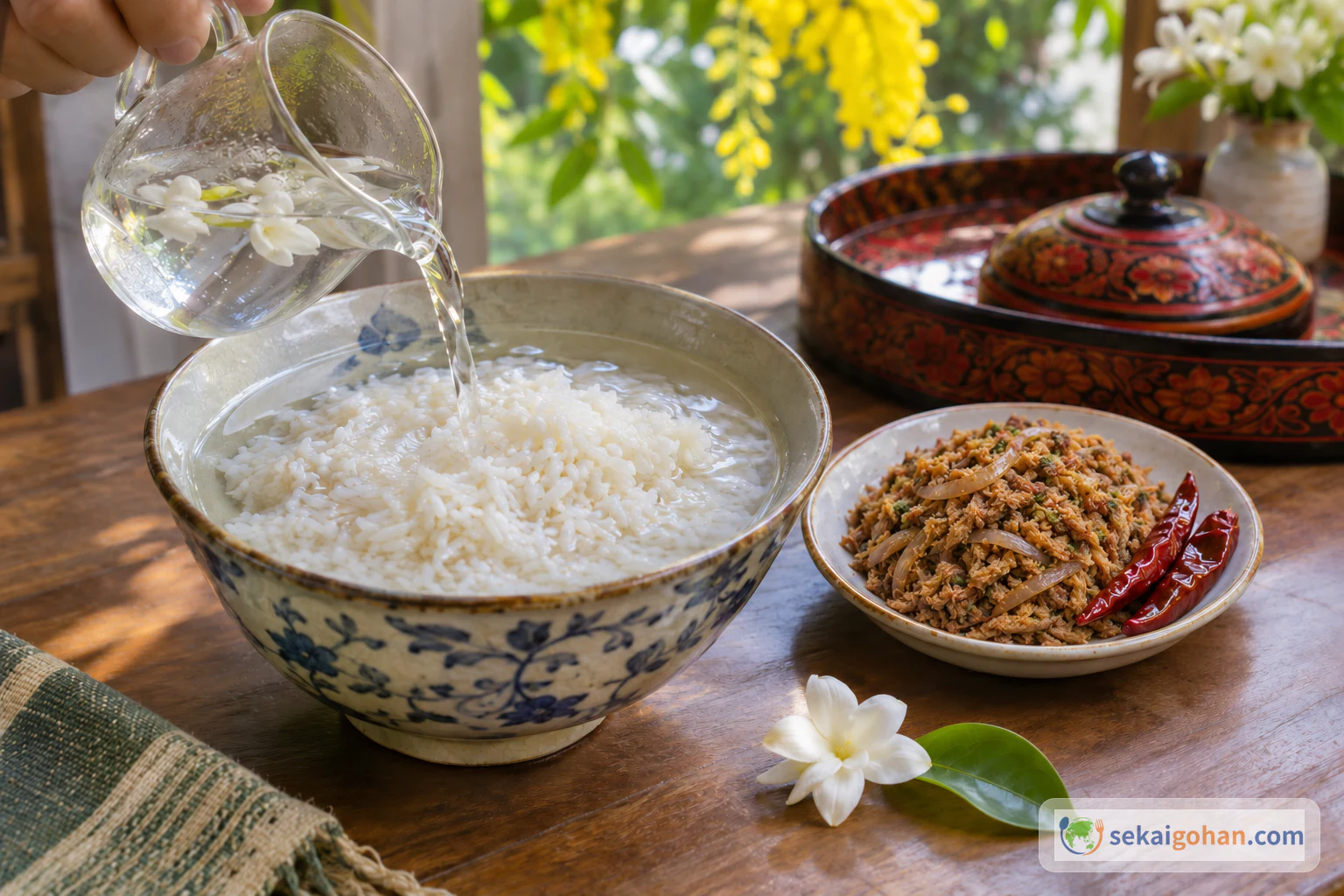
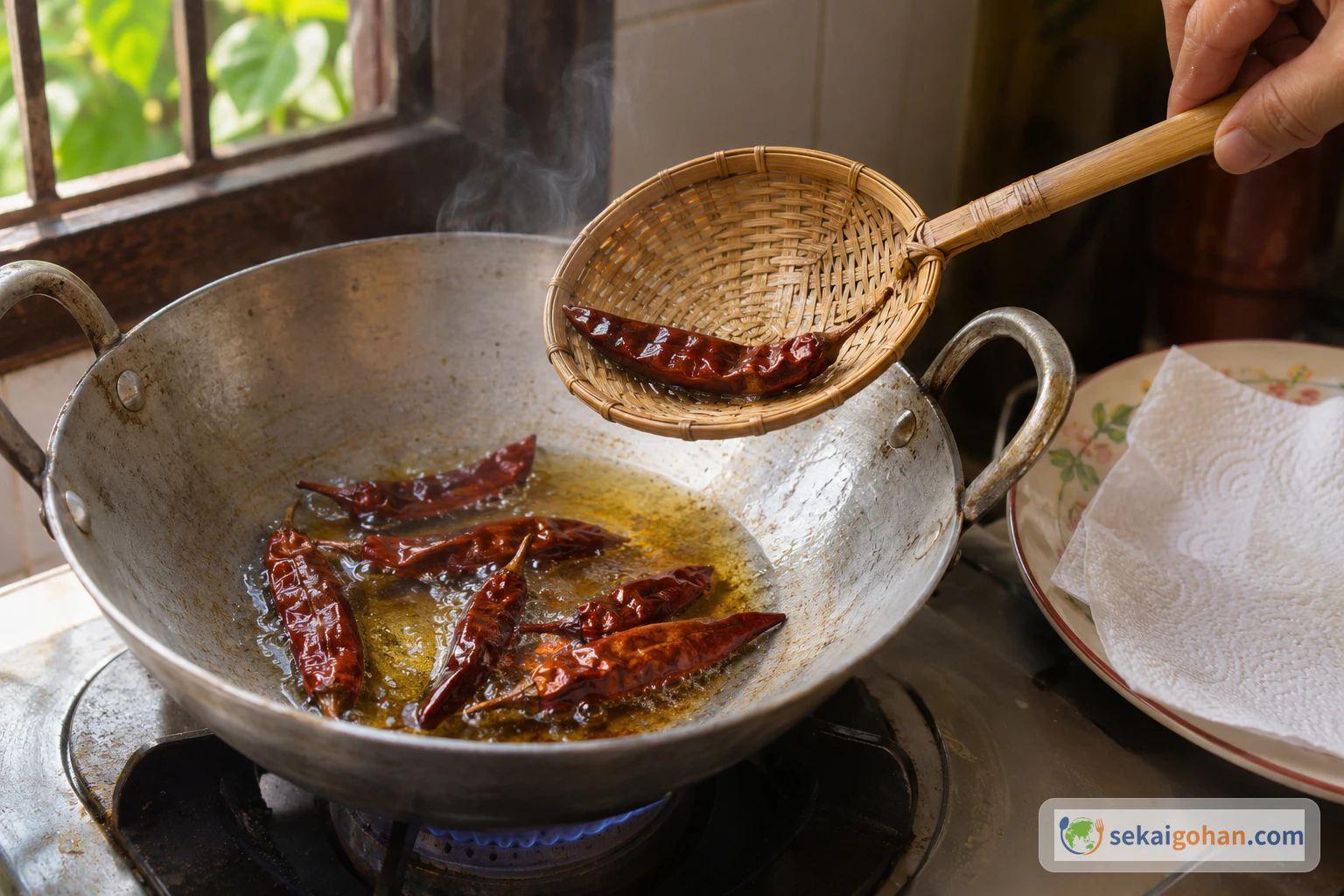
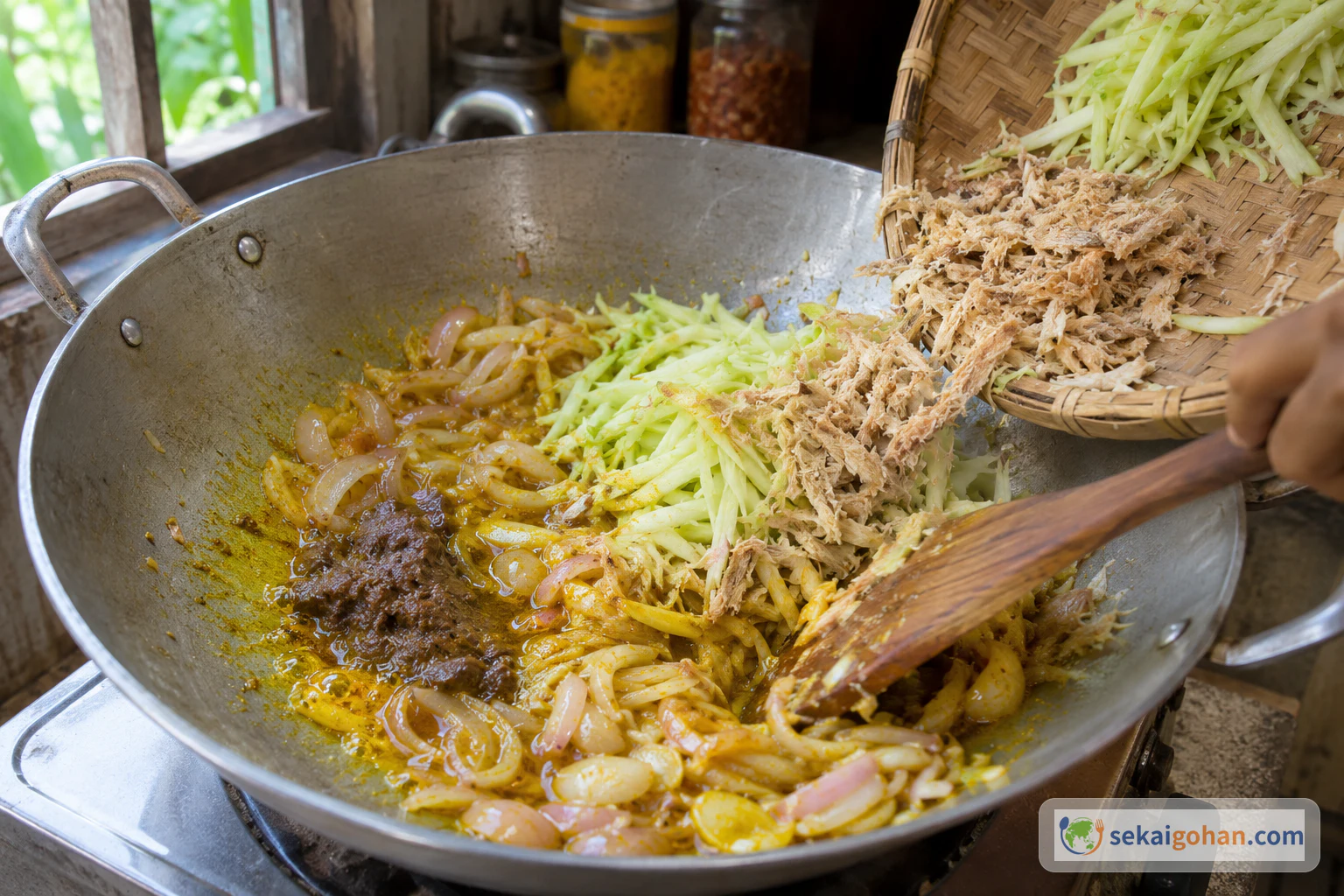
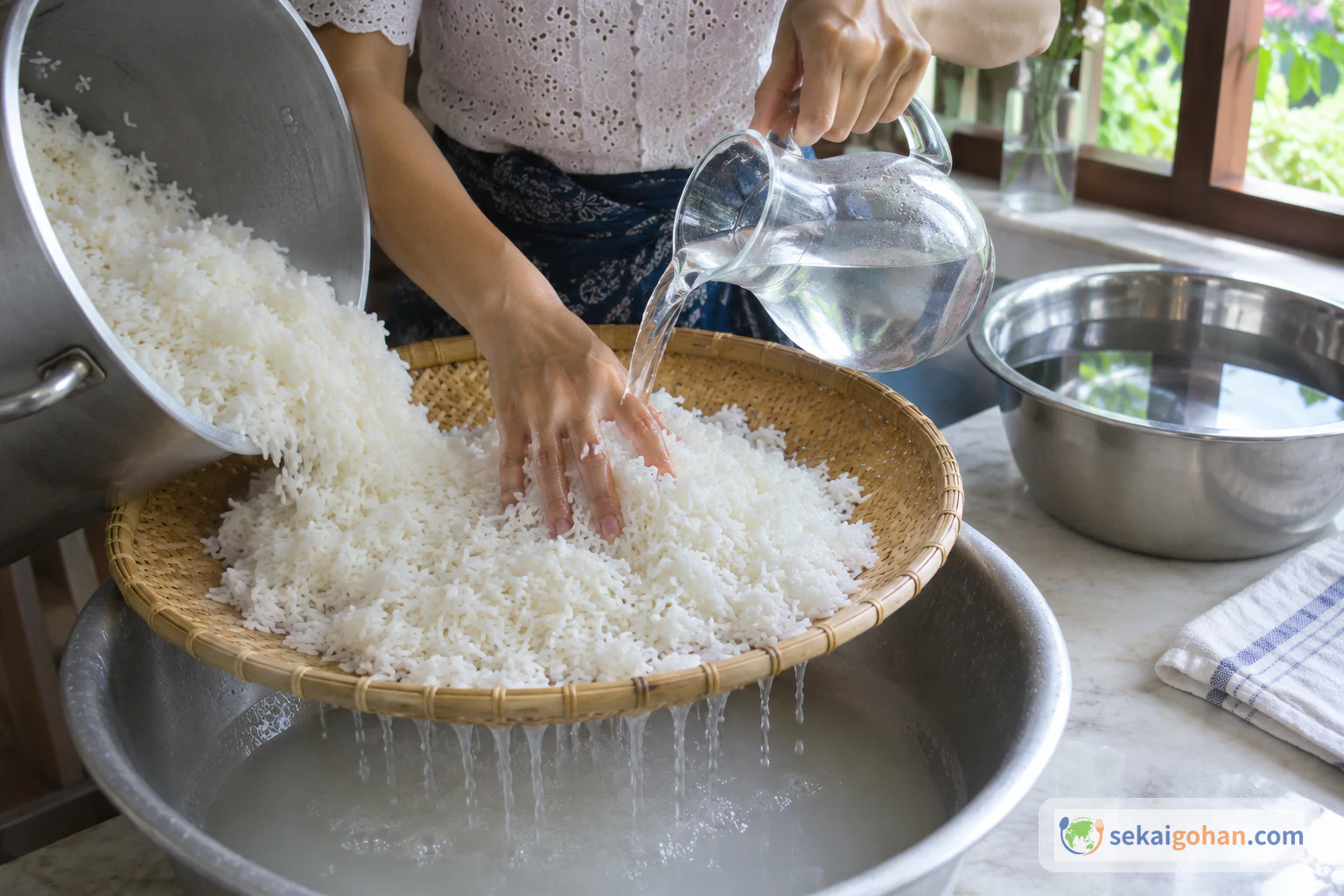
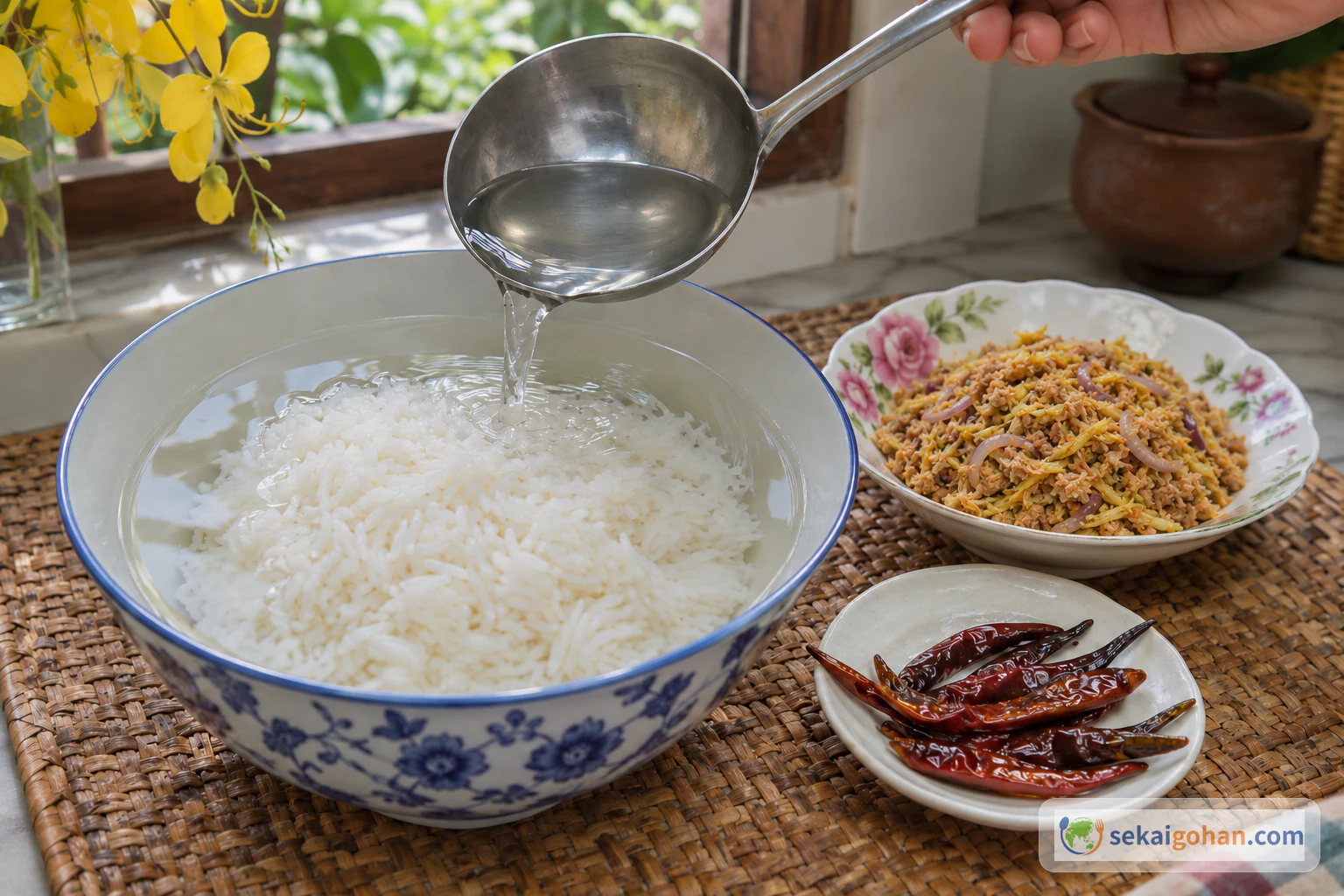
Mid-April is the hottest stretch of the year in Myanmar, and it is when the New Year arrives with the water festival, Thingyan. On those days a bowl of white rice comes to the table sitting under clear, cool water that smells faintly of jasmine or, in the older way, of candle smoke. Beside it there is dried fish fried until it shatters, and green mango sharp enough to make you reach for the next spoonful of rice. The grains are soft but separate, the water is cold against the teeth, and the salt of the fish and the sourness of the mango do all the seasoning. This is Thingyan rice, thingyan htamin, the Mon New Year dish of Lower Burma.
A New Year Bowl from the Mon Coast
The dish is usually traced to the Mon people of Lower Burma. From there it spread across Lower Burma, and today people all over Myanmar eat it at New Year. It is one of only two dishes made specifically for Thingyan; the other is mont lone yay baw. Thingyan itself falls in mid-April, on dates the calendar committee sets each year. Families cook it in large batches, and the bowls go out to neighbours as a way of sharing the blessings of the New Year.
Thingyan htamin joins Thingyan, the New Year festival, with htamin, the everyday Burmese word for cooked rice. In Burmese it is written သင်္ကြန်ထမင်း; in Mon, ပုင်သင်္ကြာန်.
The water carries the scent
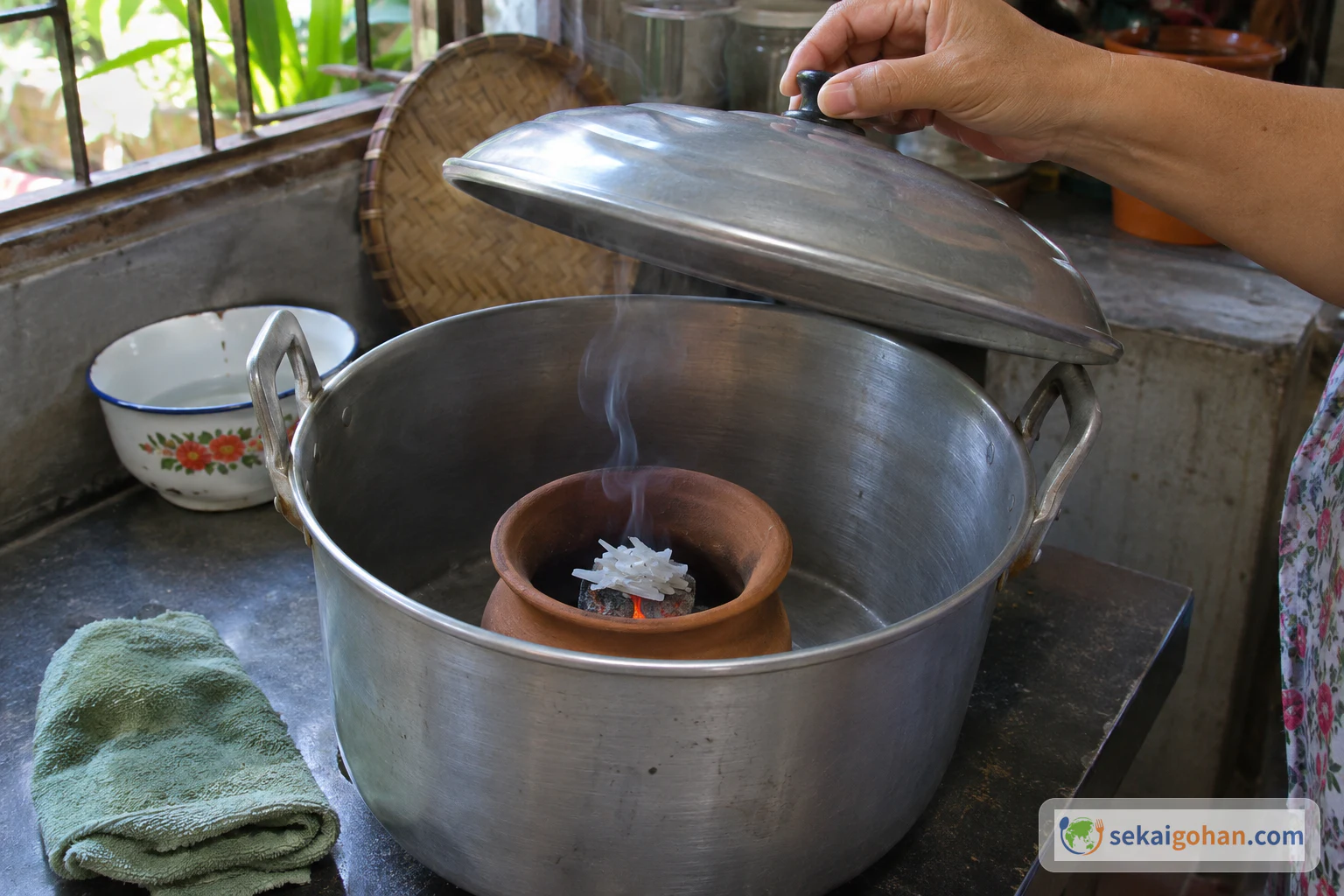
The cool water is the reason the dish exists: on the hottest festival days it cools the body. In its traditional form the water is scented with smoke. A small clay pot holding a glowing coal sits inside a larger pot, thin shavings of candle wax go onto the coal, and the big lid traps the smoke until the wax has burned away. Drinking water then goes into the smoky pot and is covered so it takes on the scent. The wax is a token amount, but it really is part of the dish, and wax itself is not food. Home cooks today scent the water with jasmine blossoms or simply use plain cool drinking water, and that is the way this recipe goes.
Where it began, and its Thai cousin
Most accounts give the dish to the Mon. In Mawlamyine, the city of Mawlamyine, a local tradition traces it instead to the Pyu-Bamar, so where it was first made is not settled. Across the border it has a close relative of the same root. In Thailand it became khao chae, eaten at Songkran, the Thai New Year, and taken up into royal cuisine, where the scented water changes to rose and similar scents. Myanmar has other rice dishes with a festive feel, such as sticky rice cooked in oil, hsi htamin, but none of them is eaten cold under water like this one.
Ingredients (serves 4)
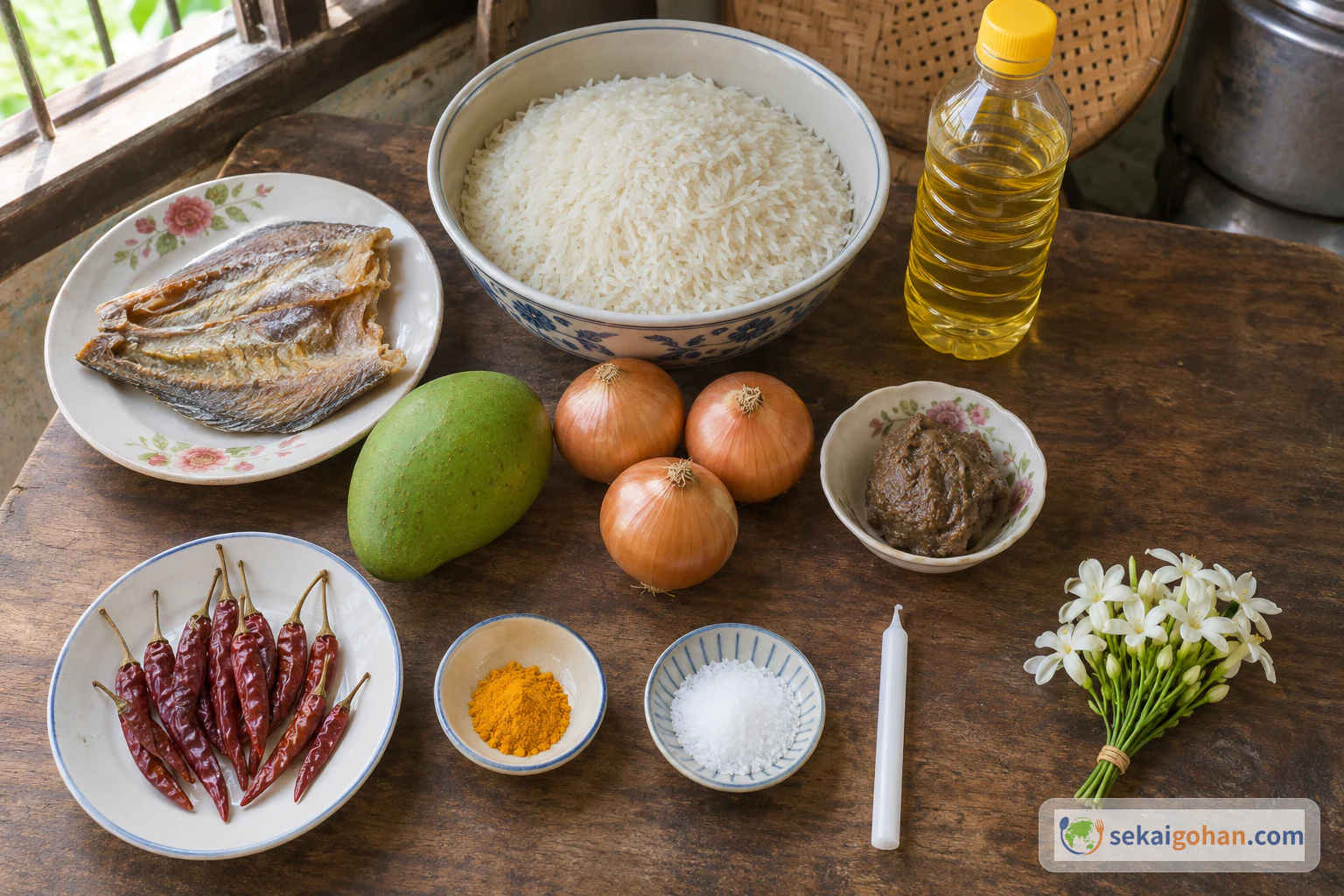
This dish contains fish (dried fish, fish sauce) and peanut (peanut oil). Dried shrimp and shrimp paste, used in some versions, are crustaceans. Mango is also a known allergen for some people.
The relish needs a mango that is hard all over and sour, with no give under the thumb. A mango that has started to soften turns sweet and limp, and the bowl loses its sharp edge.
Equipment
- Saucepan with a tight lid, for the rice
- Wide sieve or basket strainer, and a large basin to catch the rinsing water
- Jug or pitcher for the scented water
- Wok or frying pan, slotted spoon or skimmer, and a paper-lined plate
- Coarse grater or shredder for the mango
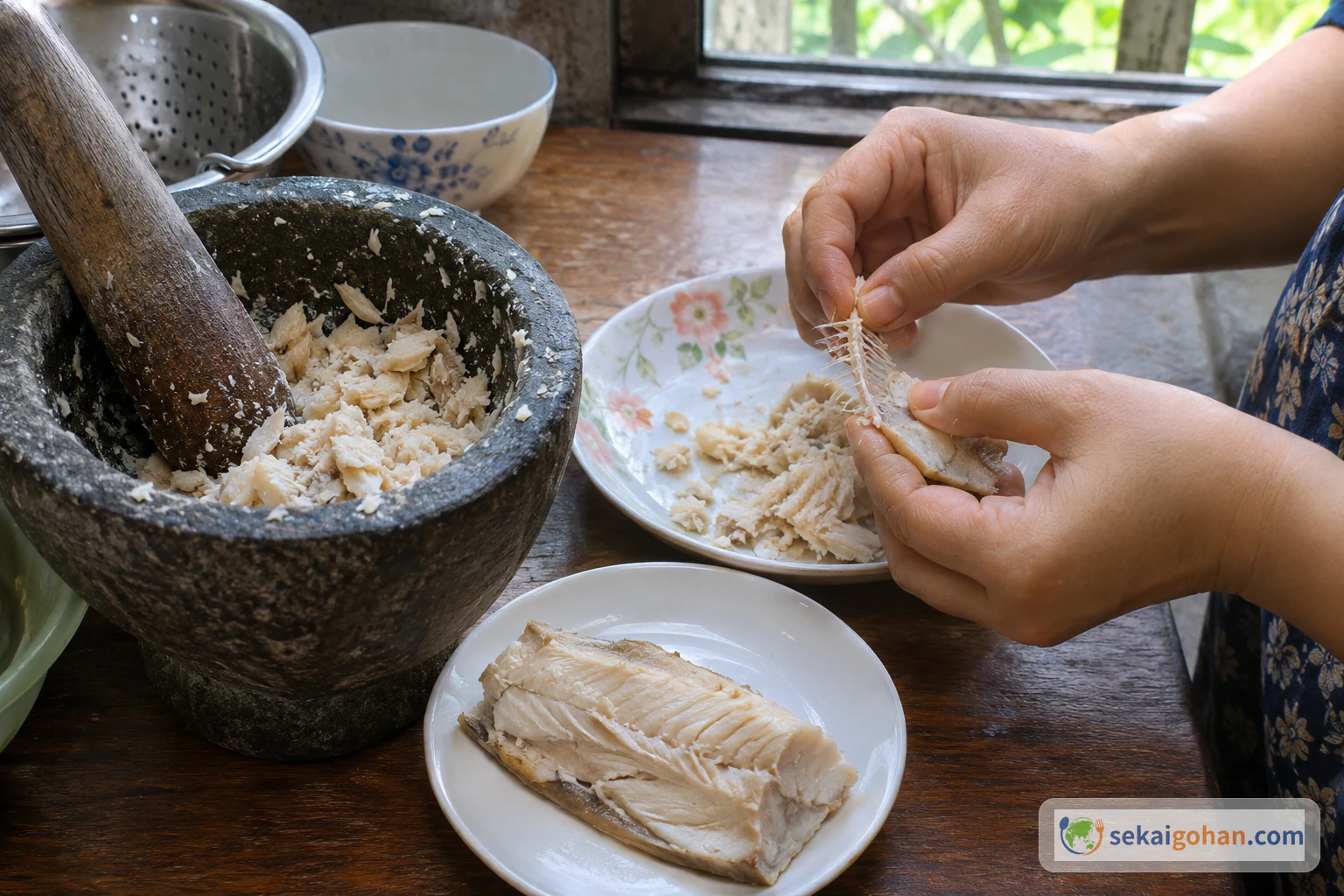
- Mortar and pestle, for the softer pounded fish (optional)
- Deep serving bowls
Choosing and Substituting
Dried snakehead or threadfin is sold at Southeast Asian and Indian grocers and online. Dried shrimp is easier to find and works in its place; it fries crisp in the same way and gives a sweeter, more briny side. Green mango is sold hard and unripe at Asian and Indian grocers, often labelled for salads. Palm sugar or jaggery comes in cakes or tubs at the same shops; break off what you need.
Buy jasmine blossoms only where they are sold as food, at an Asian grocer, or pick them from a plant you know has never been sprayed. Never use florist or ornamental flowers, which are often treated with chemicals. When there are no blossoms, plain cool drinking water gives the everyday version of the dish, and nothing else needs to change.
What has to stay for the bowl to taste right is the clear, cool water, the salt and crunch of the fish, and the sourness of the mango. The candle smoke is the part that is easiest to let go of in a home kitchen abroad.
Method
Start with the water, because the blossoms need an hour of hands-off steeping. Use that hour for the fish and the mango. Cook the rice last, so it is freshly rinsed and cool when the bowls go out, and keep the rice and the water apart until then.
When It Goes Wrong
| What you see | Why | What to do |
|---|---|---|
| The serving water turns cloudy, then sour as it stands | Starch left on the rice | Rinse the cooked rice until the runoff is completely clear |
| The grains break down and the bowl looks like porridge | Too much cooking water, or rough rinsing while the rice was hot | Use a little less water than for plain rice, wait until the steam stops and loosen the grains gently |
| Hard rice and almost no scent | The water was ice-cold | Serve with cool water, never straight from the refrigerator |
| No scent in the water | Too few blossoms or too short a steep; in the smoke method, smoke escaped from the lid | Steep the full hour; seal the rim with a damp cloth when using smoke |
| The water tastes harsh or bitter | Too much smoke, or blossoms left in too long | Lift the blossoms out after the hour and keep the smoke brief |
| The relish is limp and watery | Tossed with the fish sauce and sugar too early | Season the mango only once the rice is in the bowls |
Serving, Variations and Storage
At the table
Thingyan rice is a New Year dish, cooked in quantity and shared. Each person gets a bowl of rice under water, with the fish, relish and fried chillies set out alongside to take a little at a time. The contrast is the point: a bite of salty crisp fish, a bite of sour mango, then a spoonful of cool rice and water to wash it clean. It sits comfortably with other hand-mixed salads on a festive spread, such as lahpet thoke.
Variations
- Softer Mawlamyine rice. Boil the rice in plenty of water until a grain crushes lightly against the roof of your mouth, drain off the starchy water, and rinse it cool. Some cooks repeat the boil-and-drain with fresh water. The rice turns tender and silky, closer to the old way.
- Full Thingyan Fried. Boiled, pounded fish mixed with pounded dried shrimp, onions cooked with turmeric and fish paste, and squeezed green mango fried, all combined, sometimes with black sesame. It gives a richer, more fermented side than the fresh relish.
- Different scents. Rose water, pandan leaves steeped in the water, or jasmine buds sprinkled over the bowl change the perfume without changing anything else.
- Peas or coconut milk. In some regions green peas are added to the rice, or coconut milk goes into the bowl, for a fuller, milkier dish.
Storage
Keep the rice and the water apart until the moment of serving; once the water is poured, eat the bowl straight away, because it does not hold. Cool any leftover rice, cover and refrigerate it promptly, and eat it soon.
Frequently asked questions
Can I drink the water left in the bowl?
Yes. In Mawlamyine people drink the scented water left over once the rice is finished. Water that was boiled and fully cooled, or bottled, is drinking water to begin with, so the jasmine or plain version is fine to drink. Keep the smoke-scented water as a taste of the traditional method rather than something to drink by the glass.
Should I chill the rice in the refrigerator before serving?
Rinsing with cool water is all the chilling the rice needs. Rice and water straight from the refrigerator turn the grains hard and mute the jasmine. If the kitchen is very hot, keep the jug of scented water in a cool spot out of the sun.
What can I use if I want the Mon-style stir-fry but cannot find fish or shrimp paste?
A small splash of fish sauce brings the stir-fry toward the fermented depth of the paste. Add it near the end, taste, and salt only after that, since fish sauce is already salty. The flavour will be cleaner and less funky than with paste.