Kastengel: A Cheese Stick with a Dutch Name and an Indonesian Home
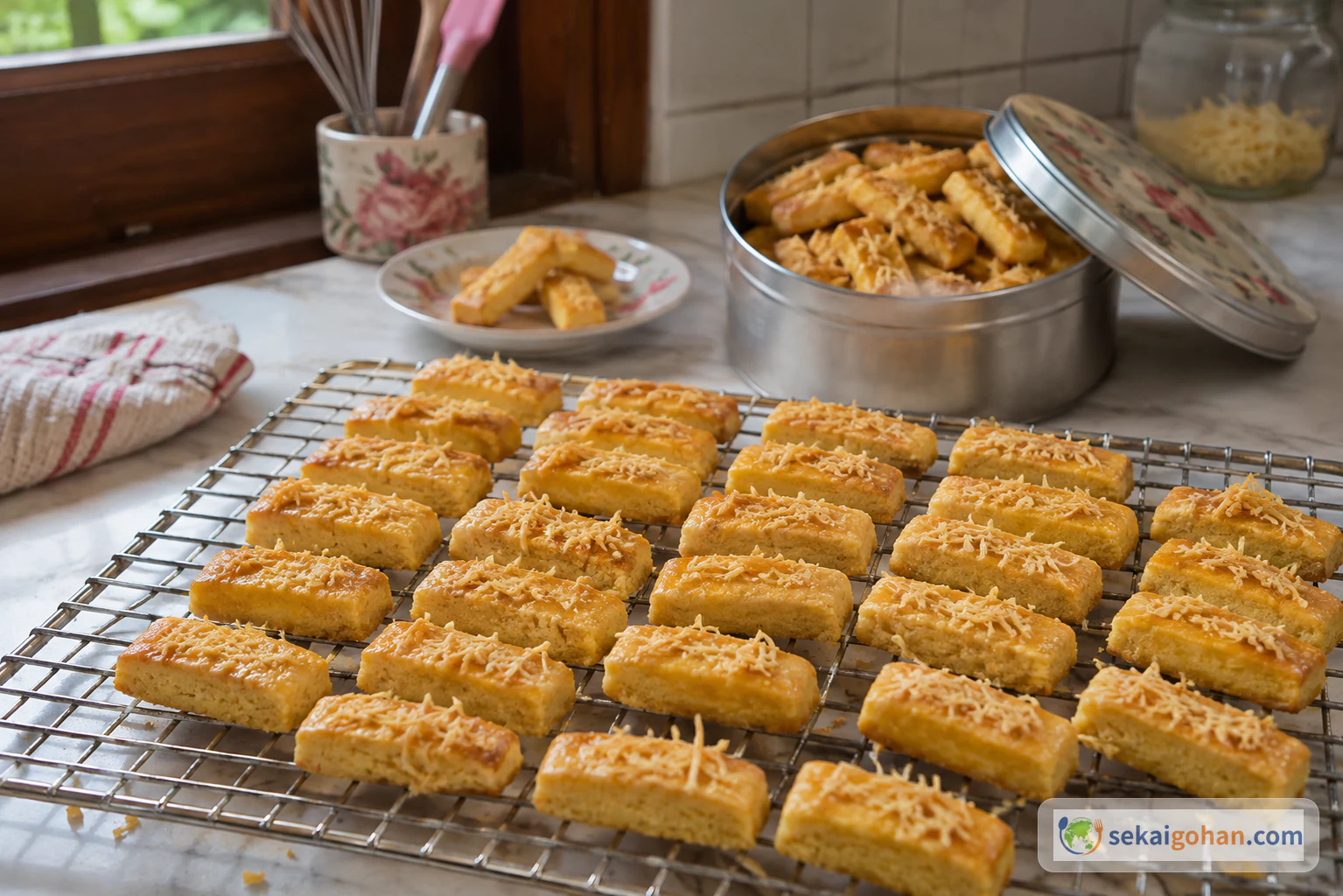
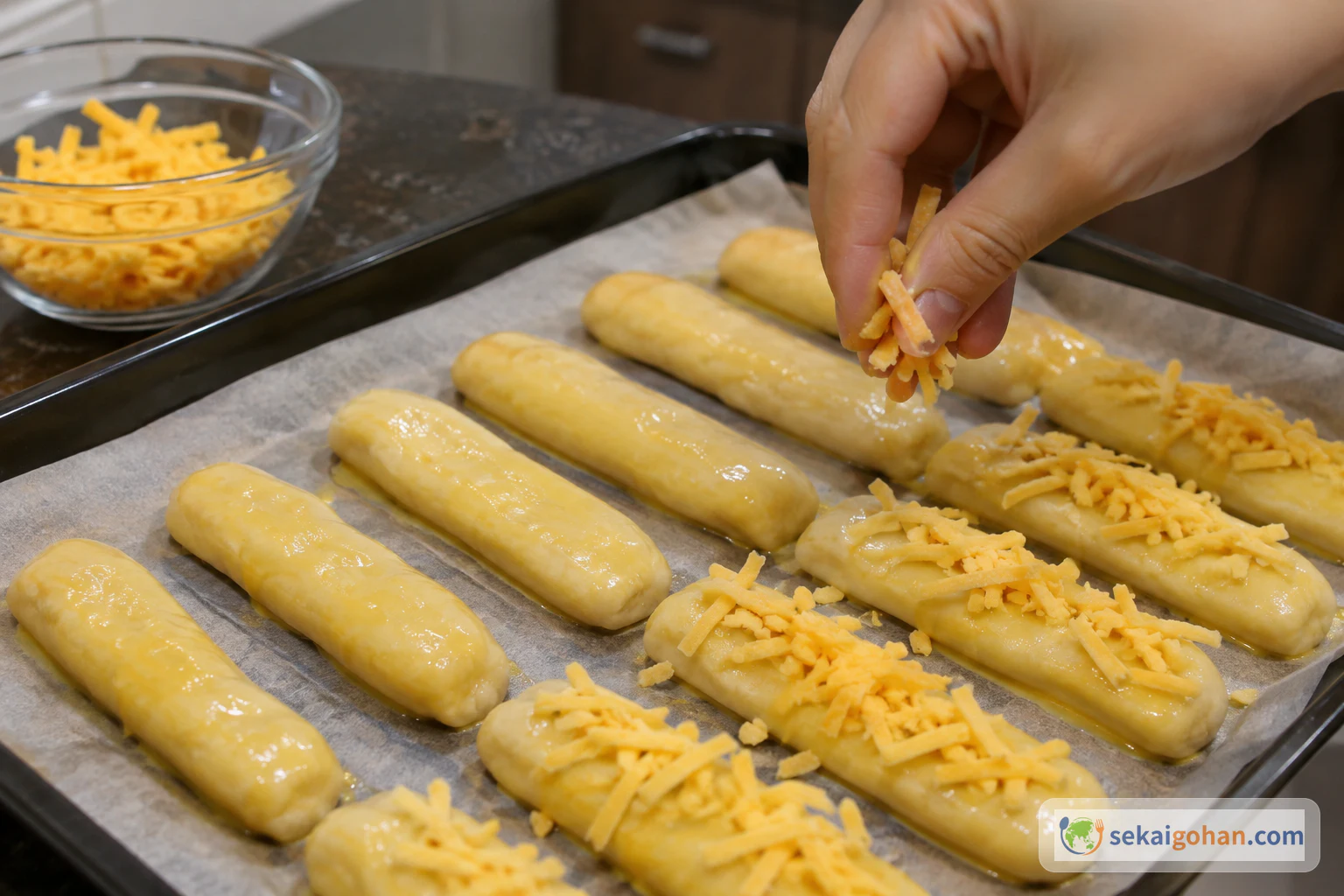
Edam is in the dough, and coarse Cheddar goes on top. Keep those two cheeses in their own places, mix the dough only until it comes together, and bake gently until the tops turn golden.
When Lebaran comes around in Indonesia, jars of cookies are set out for visiting family and guests, and kastengel is one of the cookies that fill them. Indonesia's Ministry of Creative Economy presents kastengel as part of this Lebaran cookie-jar hospitality, and also as a cookie that is made and sold today at home scale.
Kastengel is small, slender and savory. Cheese is the main flavor, not sugar. The version in this article is one specific formula published by the Indonesian food site Primarasa: a butter-and-margarine dough with grated Edam worked in, cut into short sticks, brushed with egg yolk and milk, and topped with coarsely grated Cheddar. Other Indonesian recipes use different cheeses and proportions; this article follows only this one and does not mix in amounts from elsewhere.
Primarasa lists the recipe as making about 450 g and taking about 60 minutes in total, with about 20 minutes in the oven. These are the publisher's own figures. This recipe has not been kitchen-tested by Sekai Gohan, and the yield and time have not been measured here, so treat them as indications rather than guarantees. For more dishes from the same country, see Indonesian recipes.
What Kastengel Is: "Cheese Sticks" Adapted
The name comes from Dutch. The Ministry of Creative Economy links kastengel to the Dutch word kaasstengels, "cheese sticks" (kaas means cheese, stengels means sticks). Its feature describes baked goods brought by Dutch residents being adapted to local ingredients in Indonesia and becoming part of today's Lebaran cookie culture. That account is a cultural overview, not a record of a precise date of invention or of one household's practice, so this article does not give an origin year.
Linguists have looked at this kind of change too. A paper in the journal LingTera (Universitas Negeri Yogyakarta) studies how Dutch-origin food names are kept or adapted in Indonesia, and discusses such names as markers of history and identity. Kaasstengels becoming kastengel in everyday Indonesian fits that pattern of a Dutch name reshaped by local pronunciation and spelling. The paper is about names; it does not settle how or when the cookie itself came to be.
You will see both spellings. Kaasstengels follows the Dutch form, and kastengel (sometimes kastengels) is the common Indonesian spelling. Searching both helps when you look for recipes or for Edam in shops.
This formula and others
An English-education program site at Universitas Negeri Surabaya presents another home recipe, also called kastengel and described as a savory cheese cookie for festive occasions. Its formula is built around Cheddar and margarine, with different proportions and a different method. It shows that kastengel is not one fixed recipe. In this article, it is used only for comparison; none of its amounts or steps are used below.
Ingredients
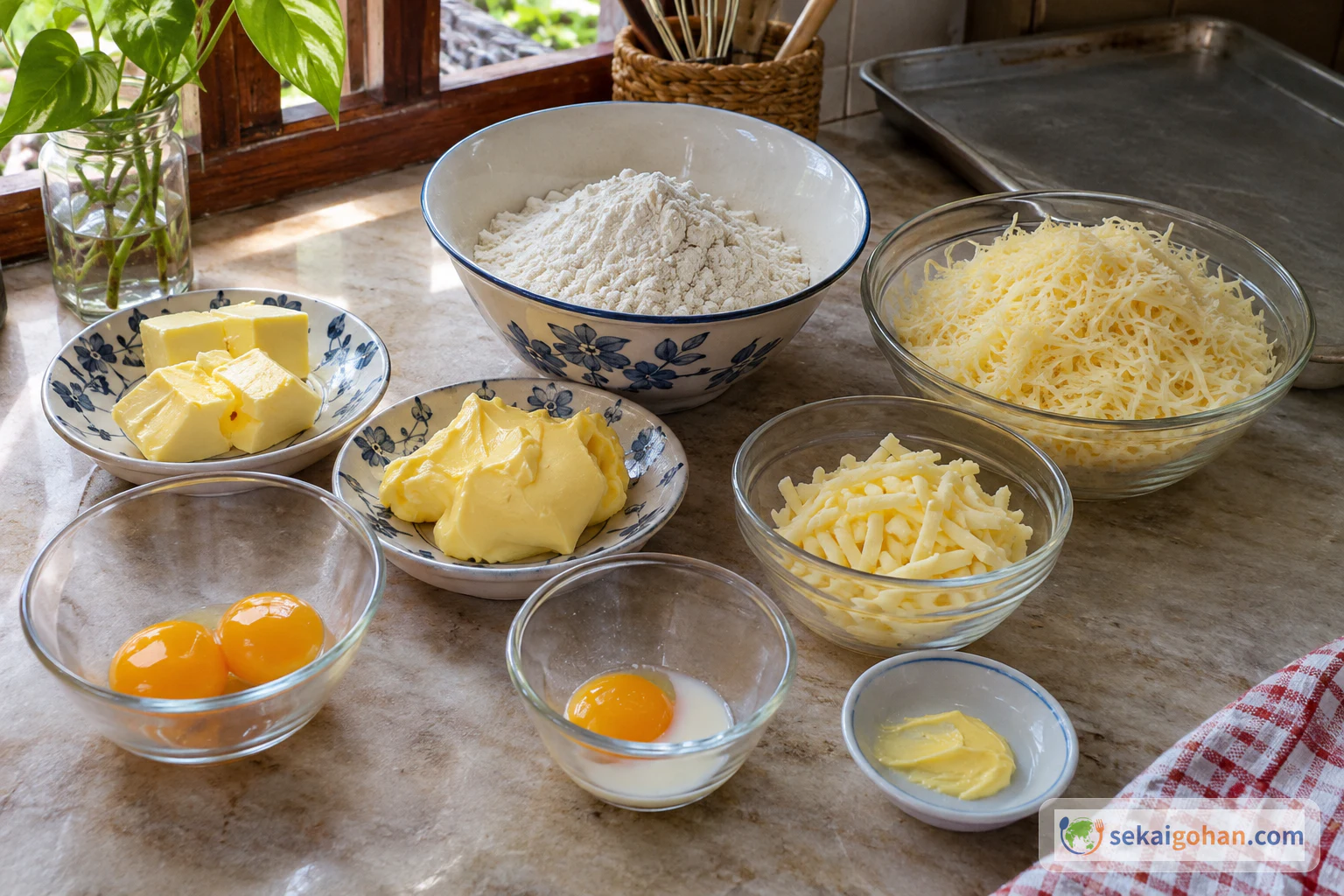
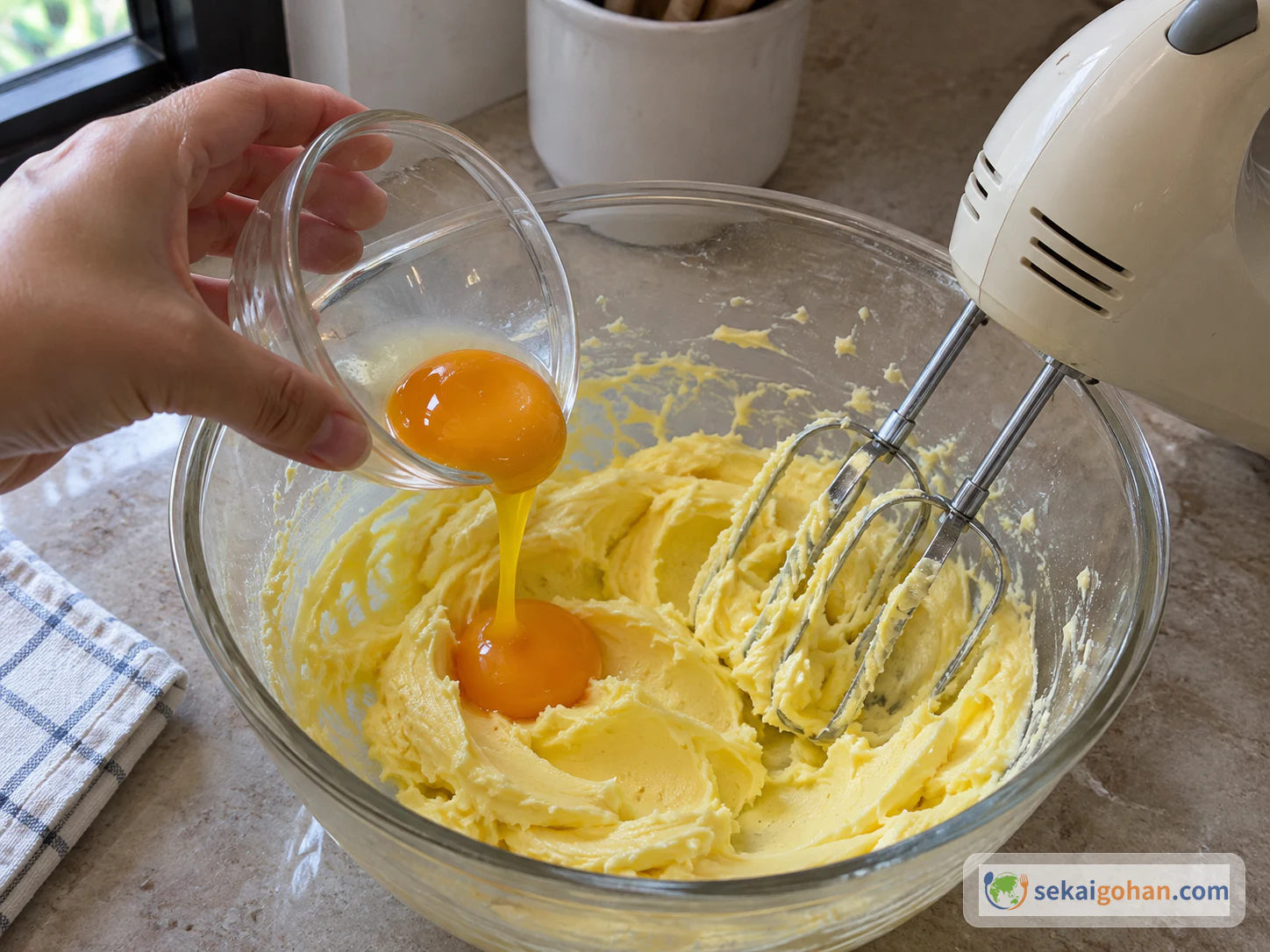
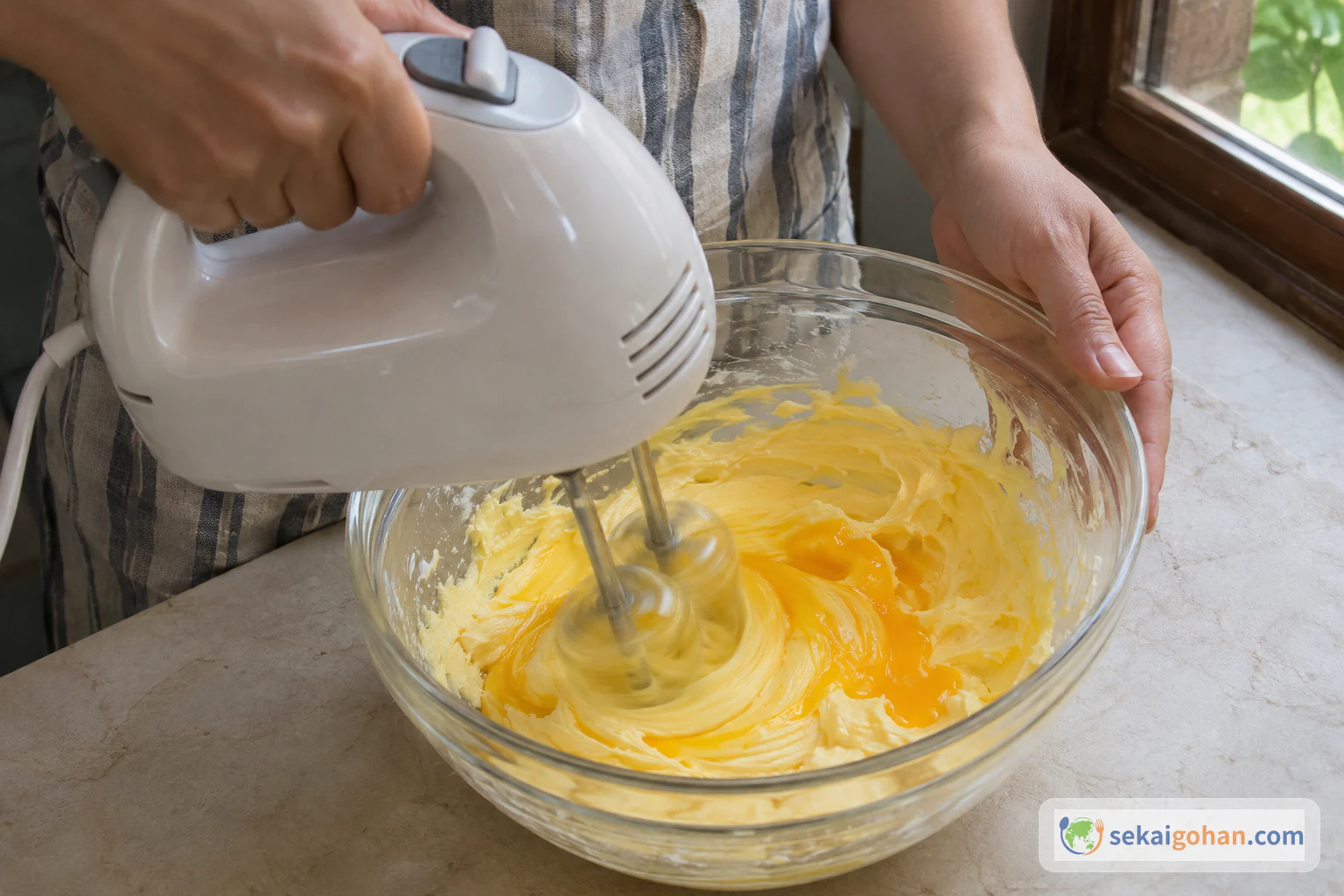
There are three egg yolks in total: two go into the dough and one goes into the wash. The Edam goes into the dough; the Cheddar is only for the top.
This cookie contains wheat (gluten), milk (butter, cheese, milk and many margarines) and egg. Check the labels of the margarine and cheeses you buy.
Choosing What to Buy
The flour, butter and eggs you choose from your local shelves are your own choice and have not been tested with this formula. If you use salted butter, the cookies will taste saltier than with unsalted butter.
- Edam: Look for it at cheese counters or import grocers. It is the main flavor inside the dough. Young Gouda is an editorial alternative to consider when Edam is hard to find, but it is not part of this recipe, has not been tested here, and differs in flavor, saltiness and moisture.
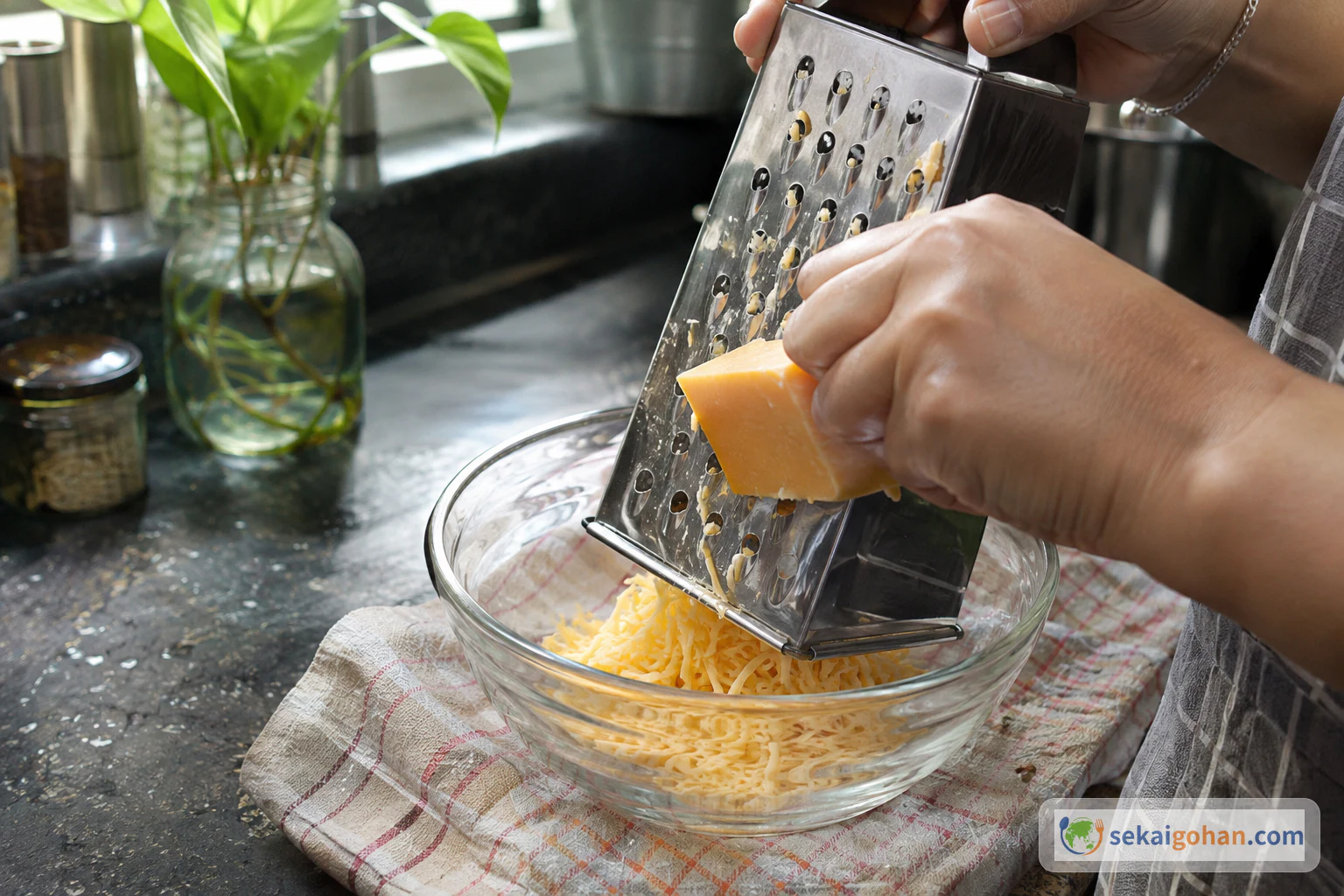
- Cheddar: A block you can grate coarsely works for the topping. It stays on top and does not go into the dough.
- Margarine in the dough: Replacing it with more butter changes aroma, moisture and texture, and a straight swap has not been tested.
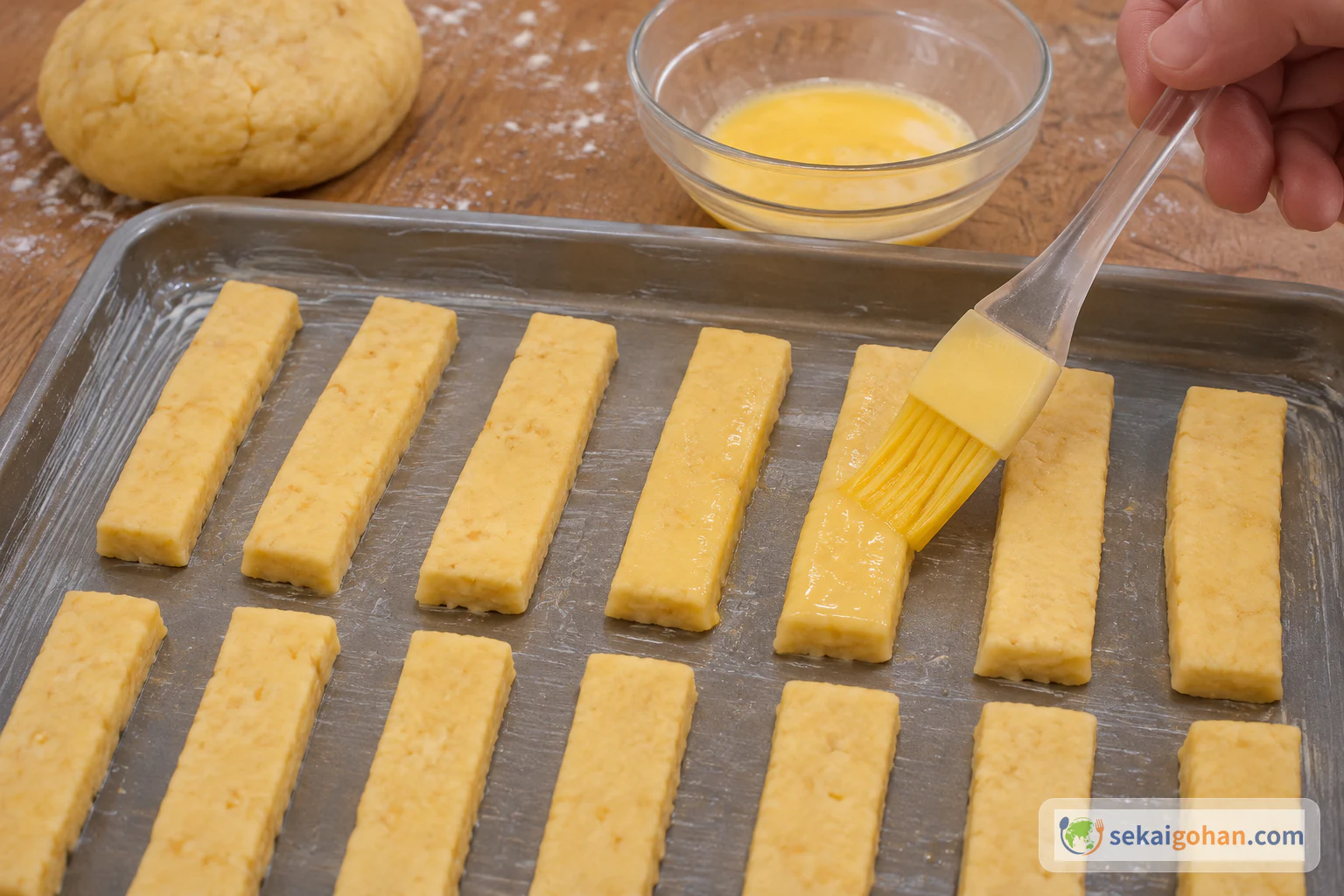
- Milk: Keep it to 1 sdt (tsp) of plain liquid milk for the wash.
Equipment
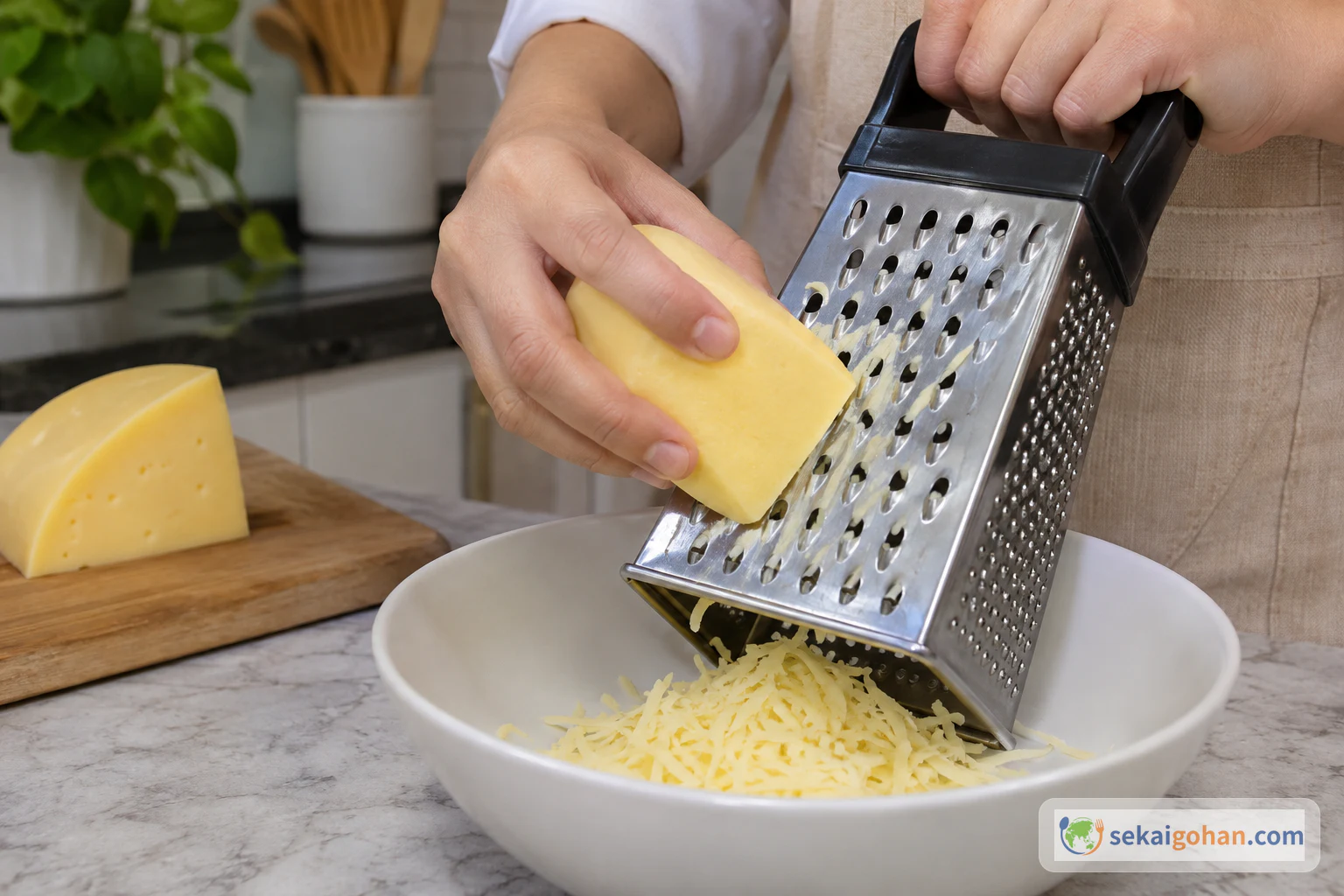
- Box grater
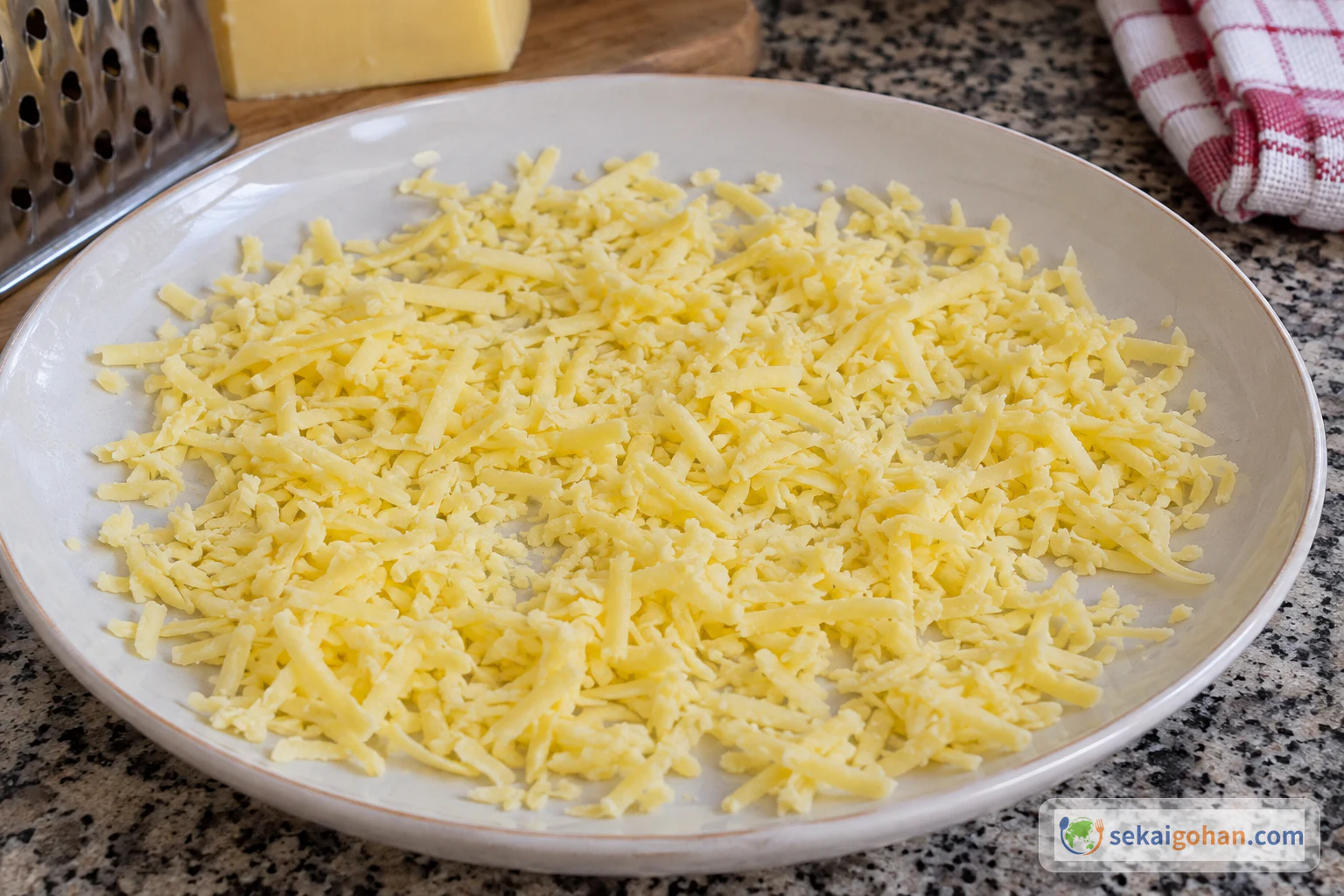
- Shallow dish for air-drying the Edam
- Mixing bowls (one large, one for the flour and Edam, one small for the wash)
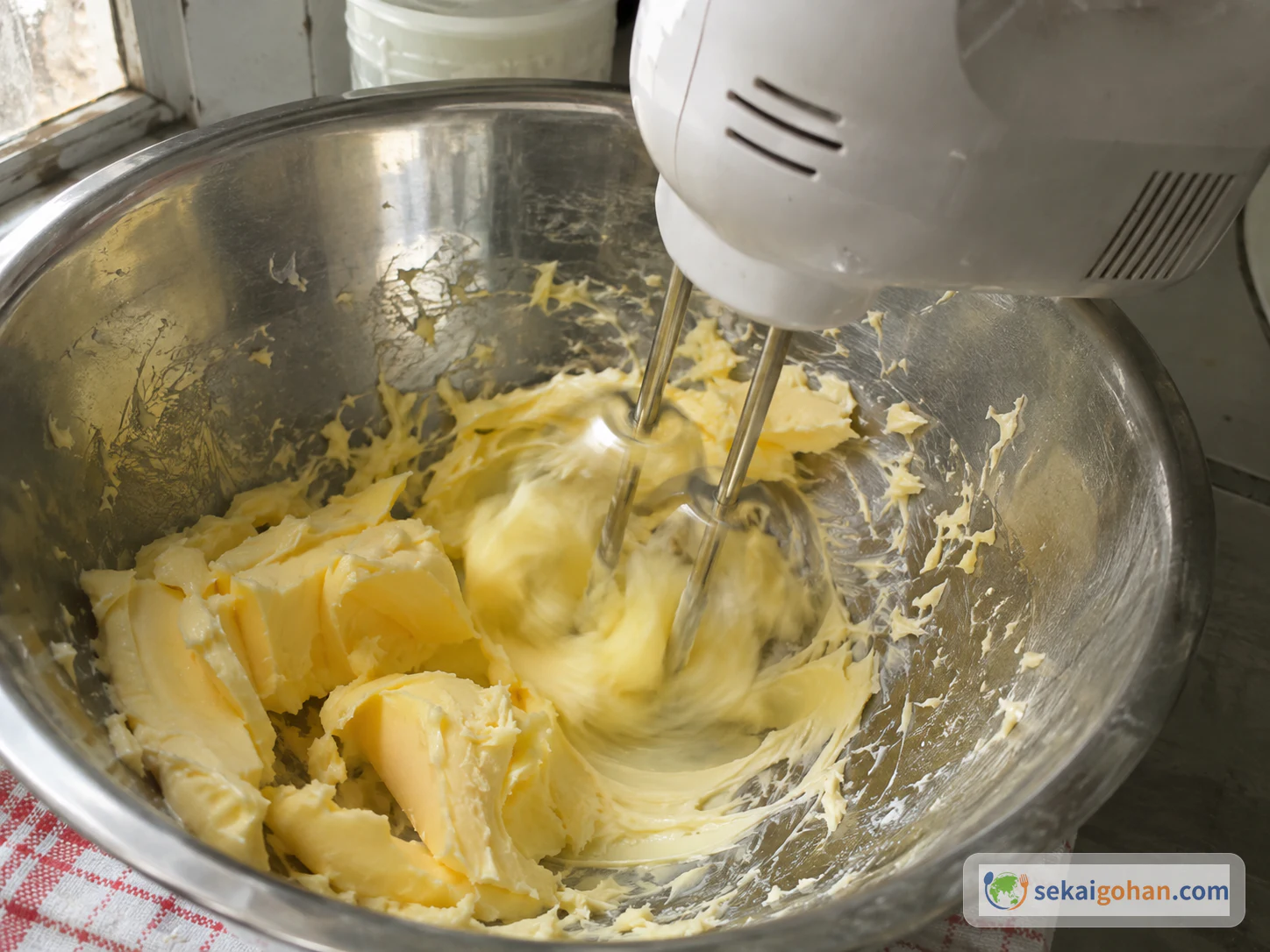
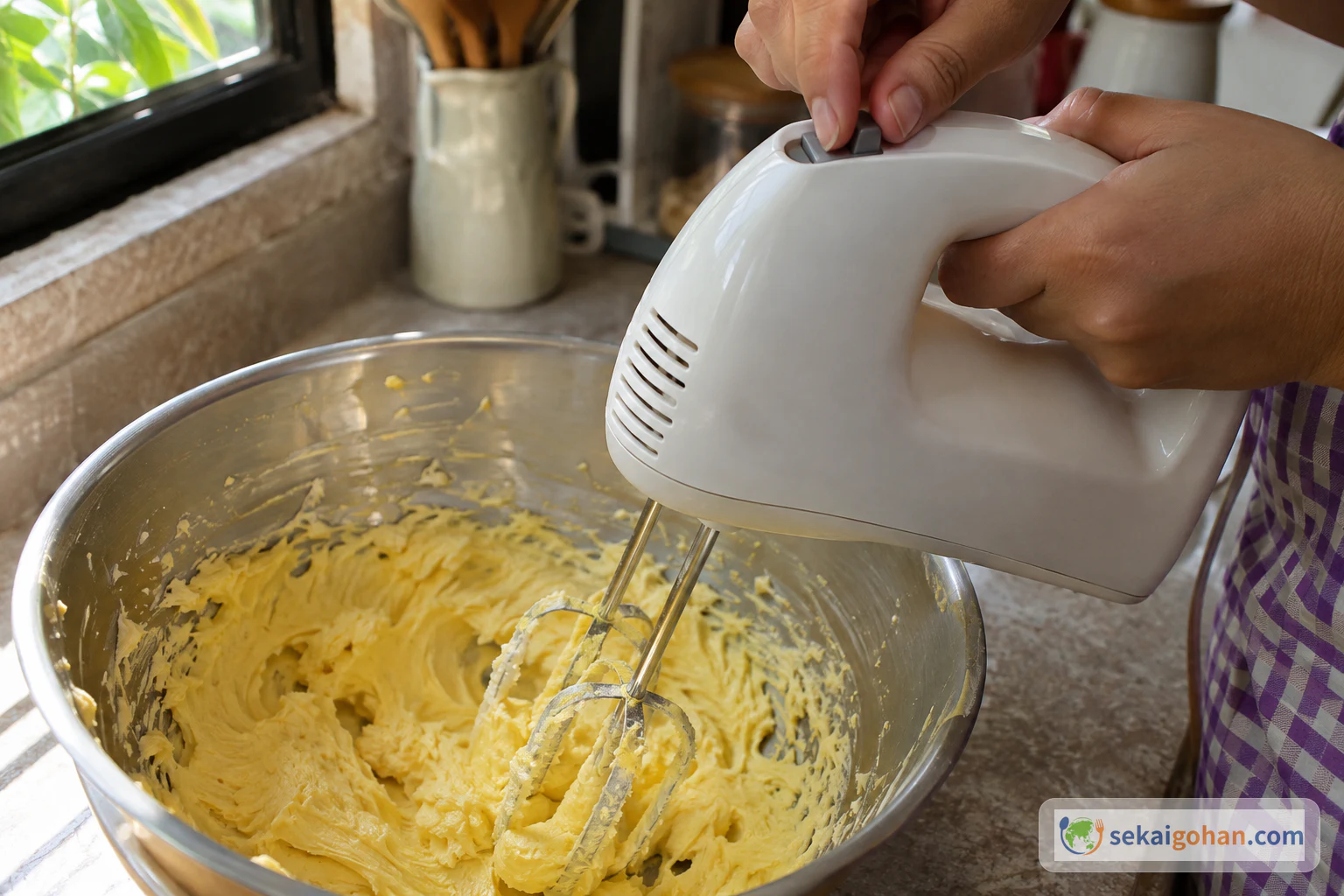
- Hand mixer
- Wooden spoon or spatula
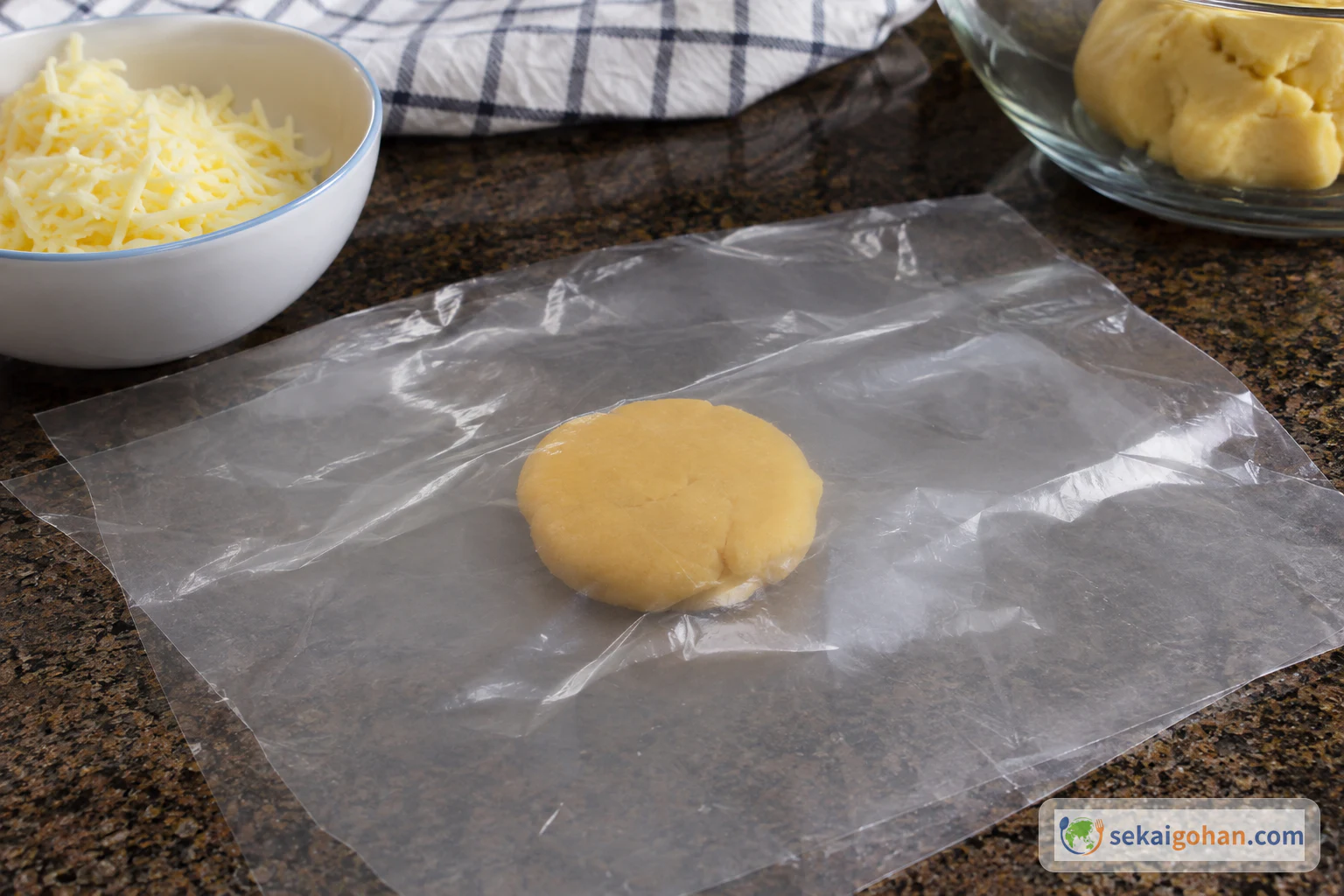
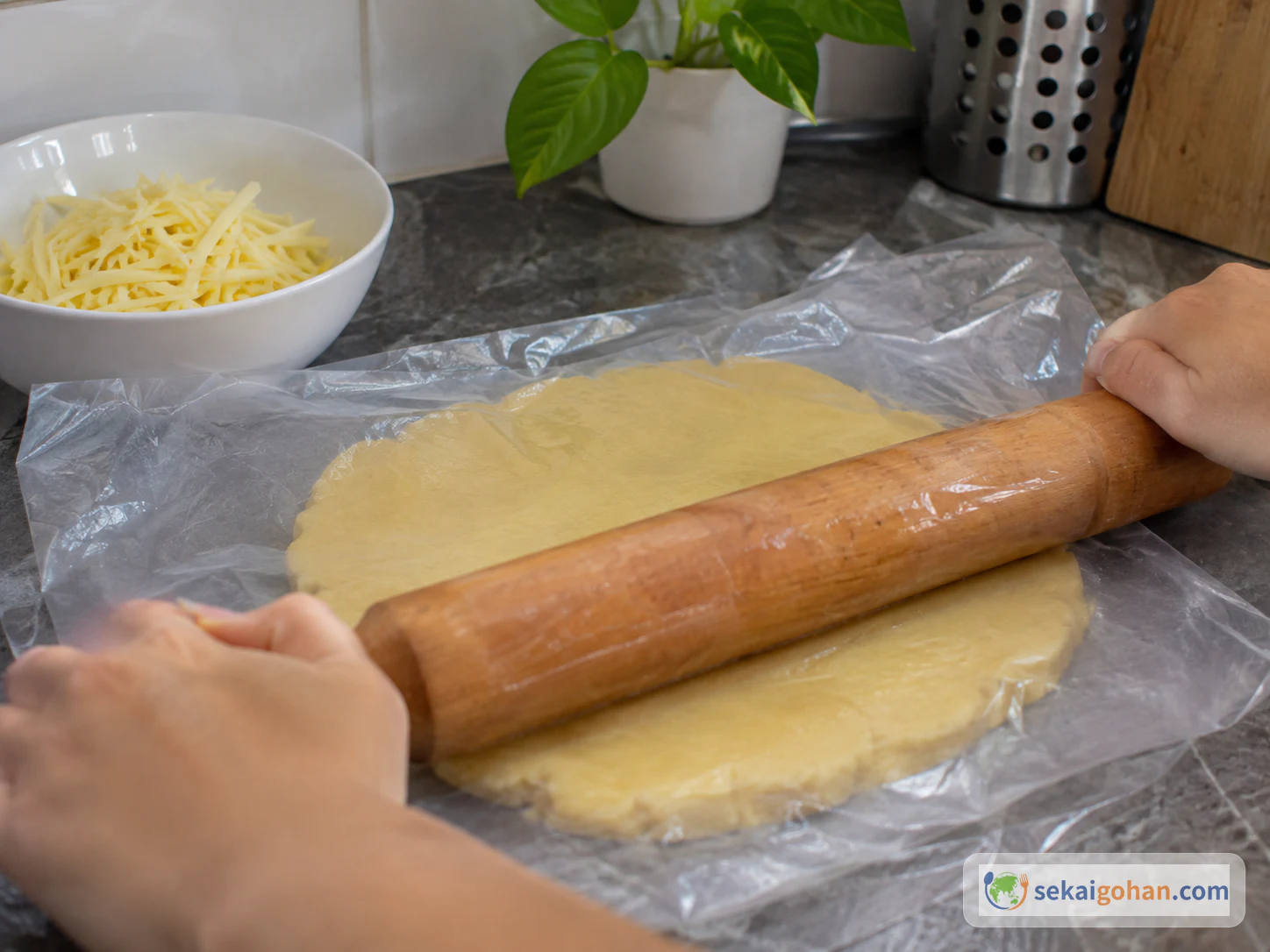
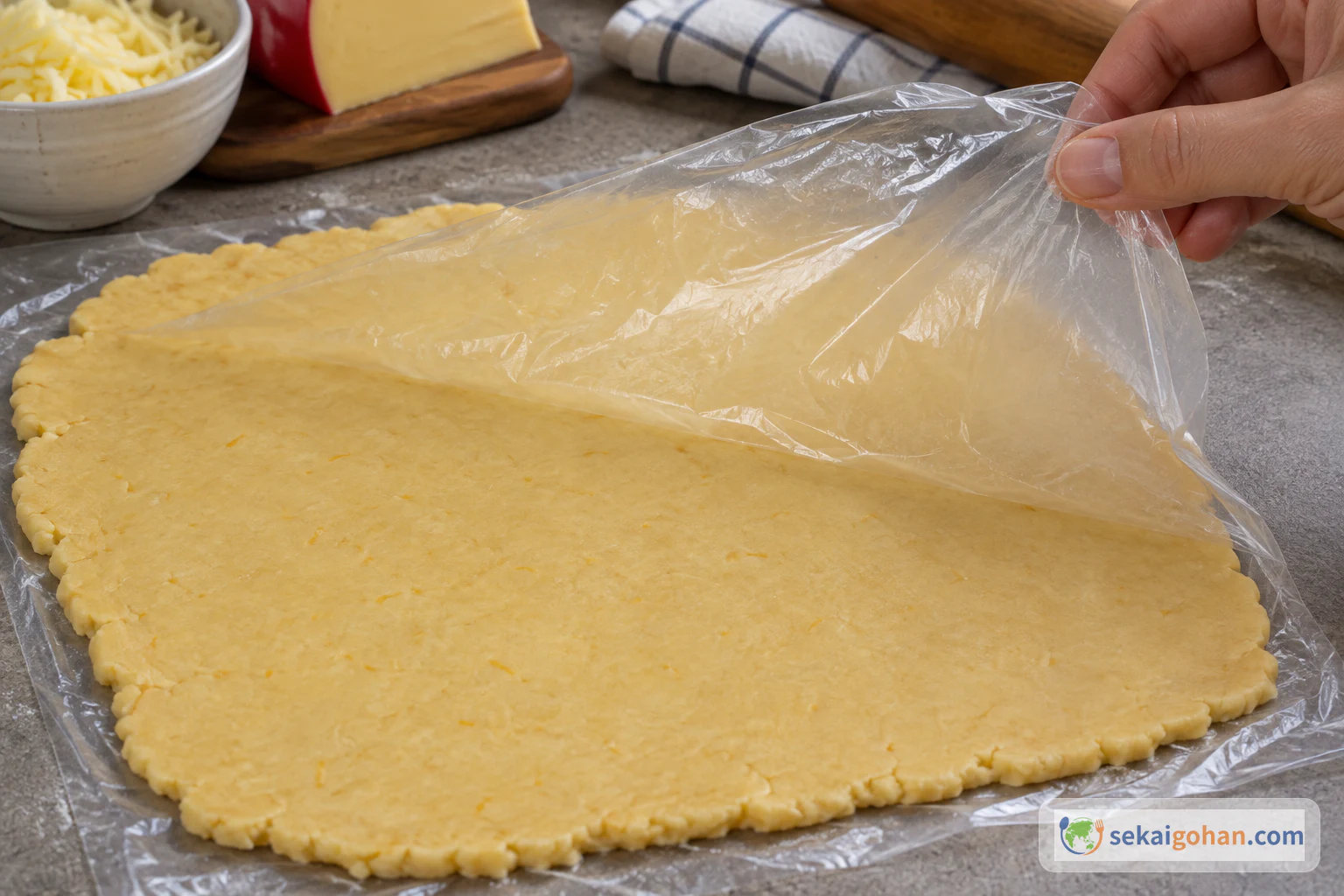
- Two food-safe plastic sheets
- Rolling pin
- Knife (or a cookie cutter)
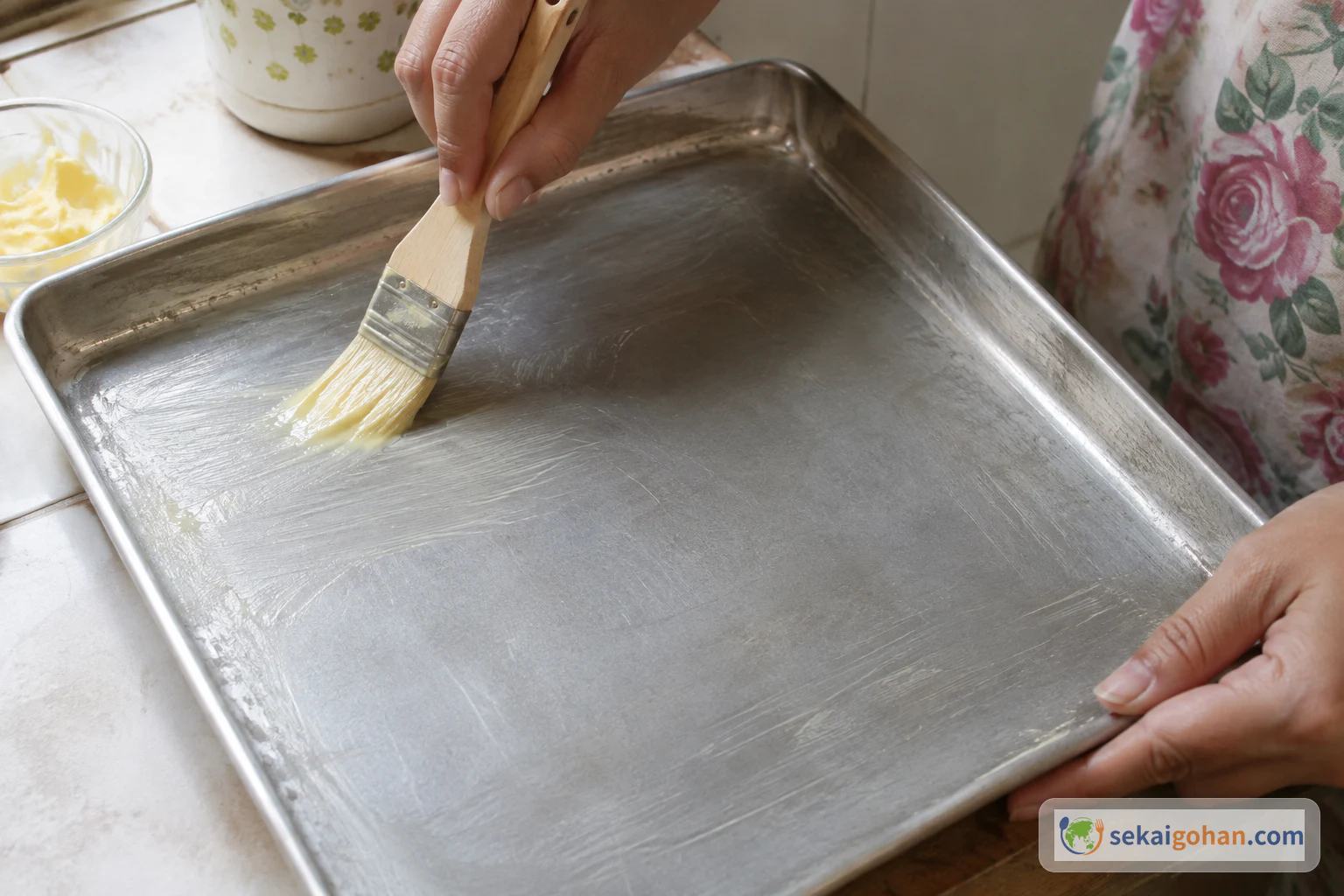
- Baking tray
- Pastry brush
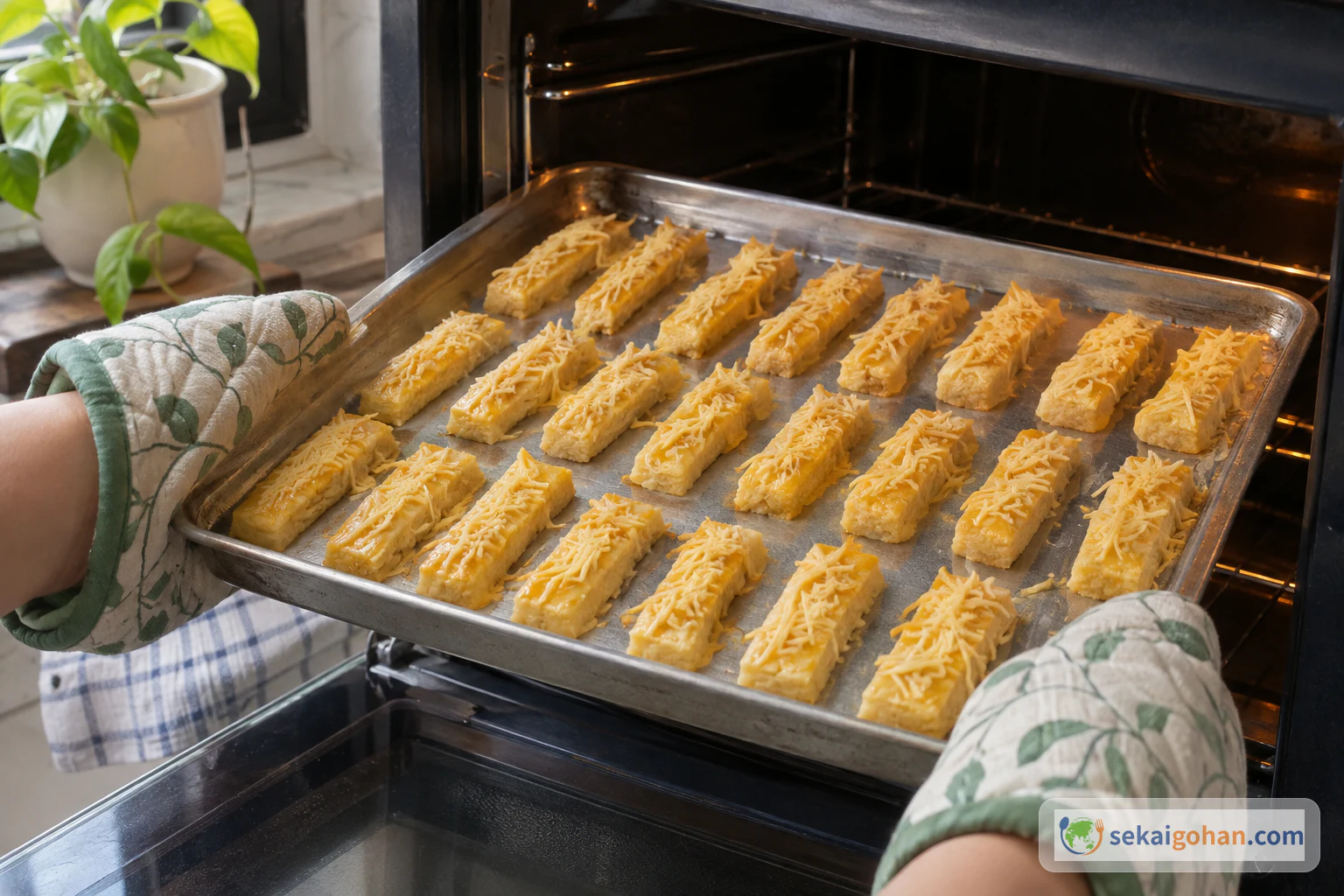
- Oven mitts
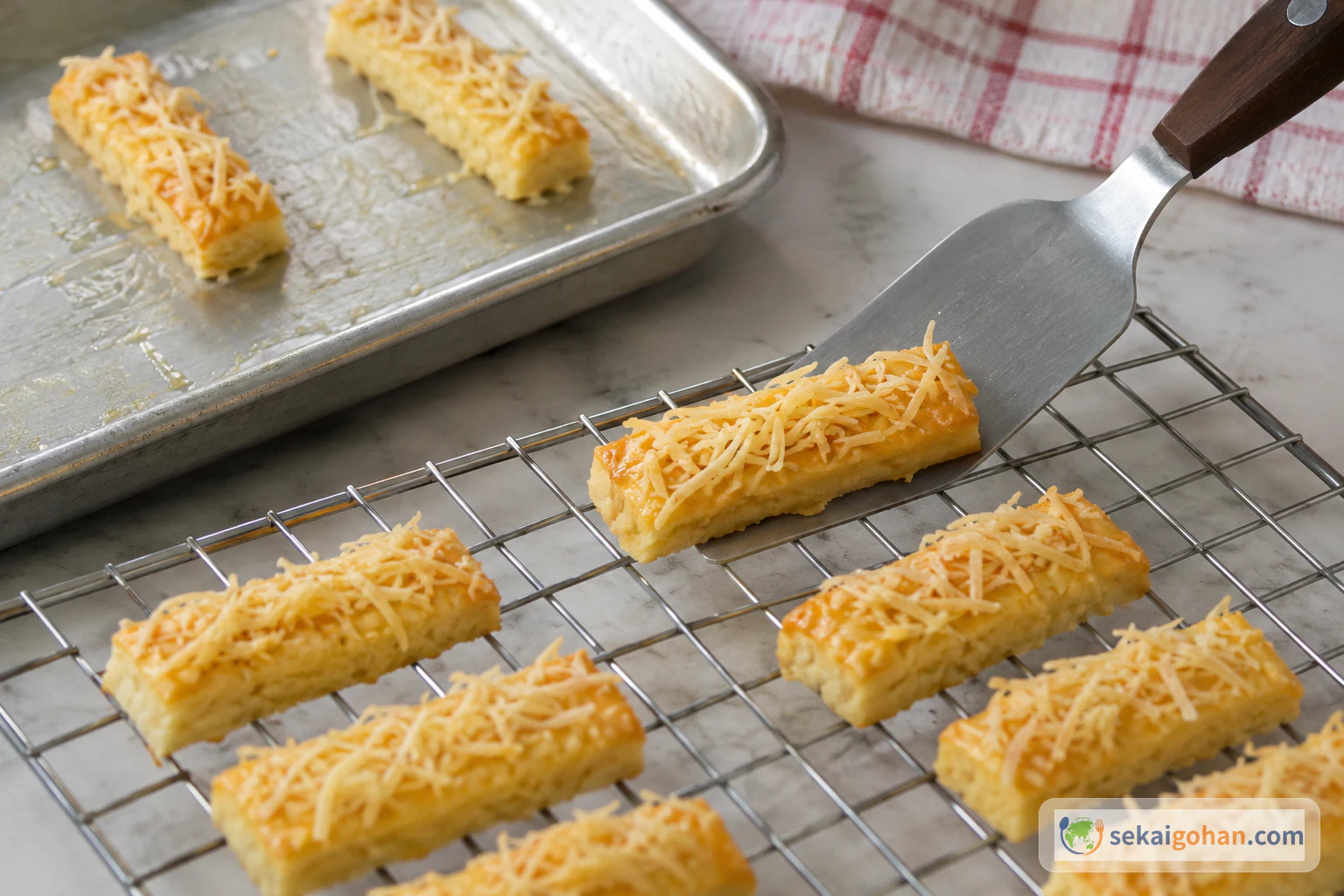
- Flat spatula
- Wire cooling rack
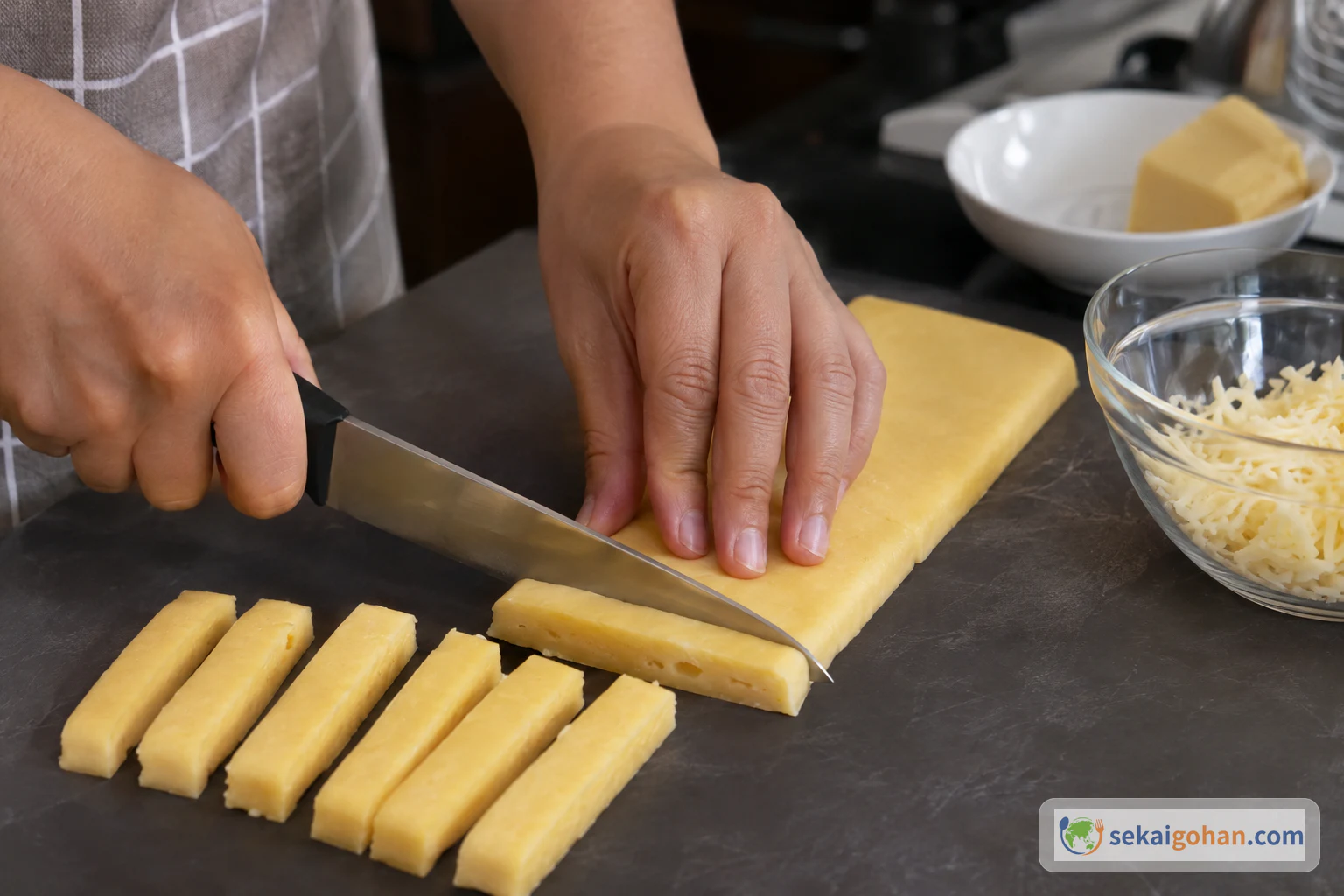
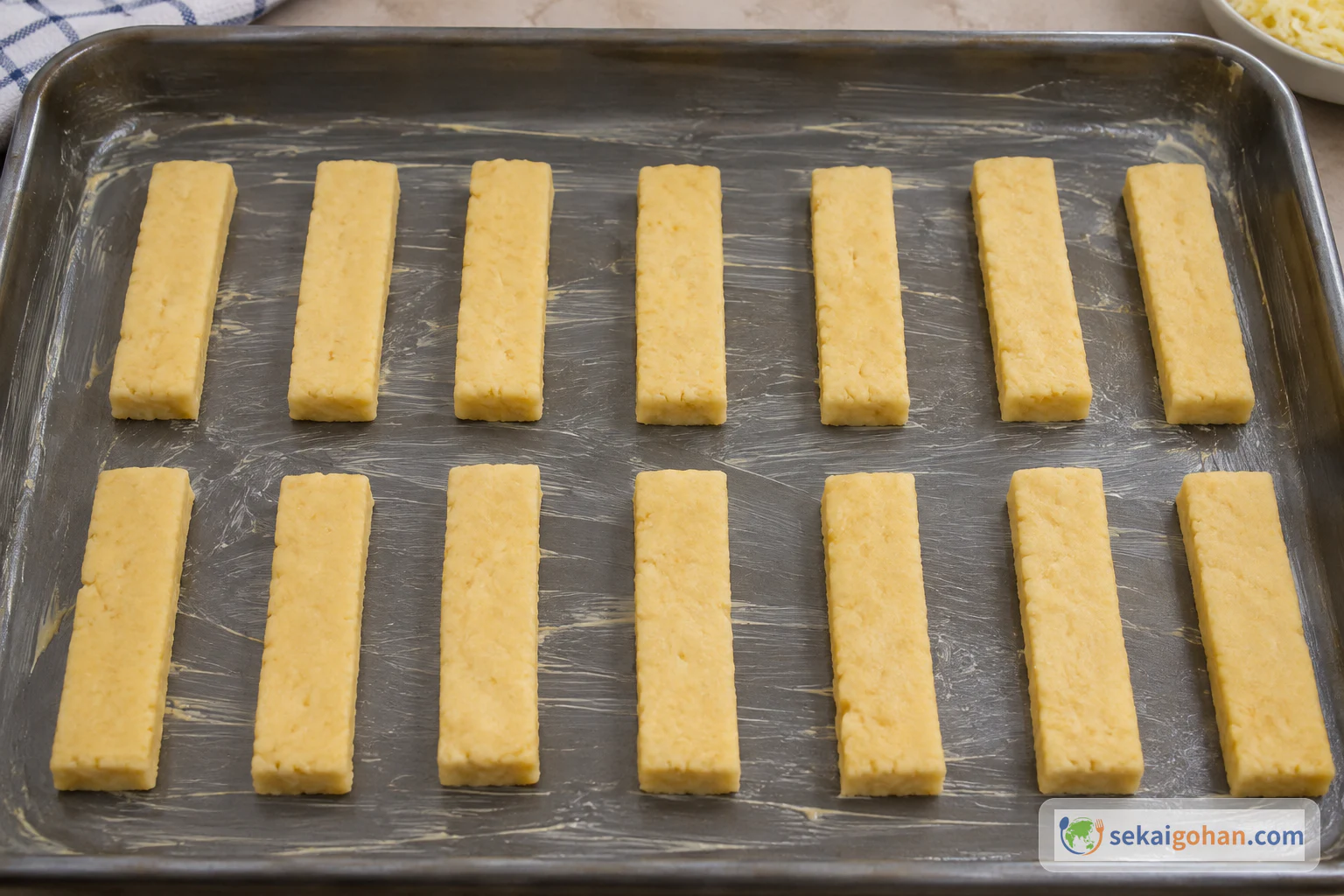
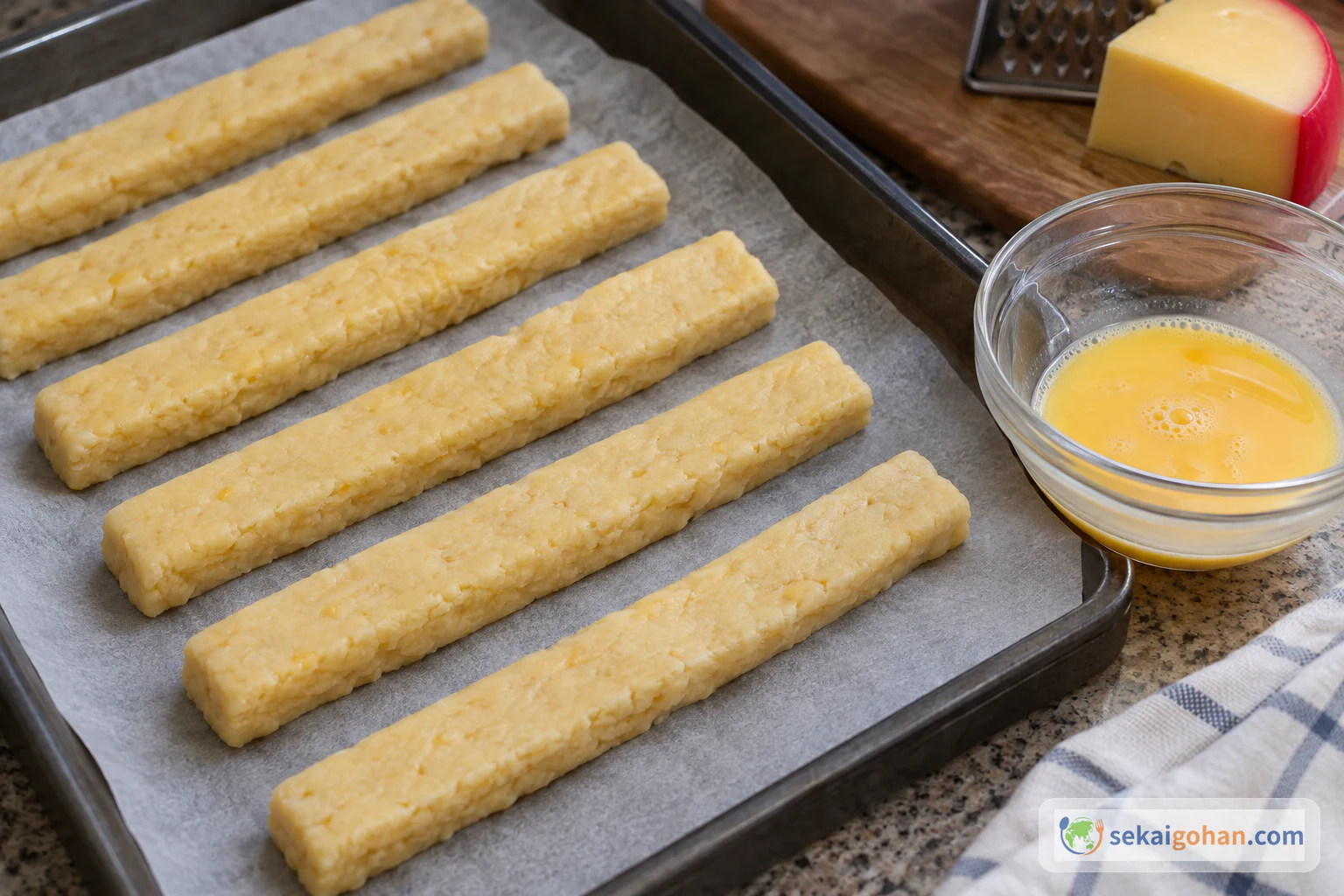
Method: From Grated Cheese to Golden Sticks
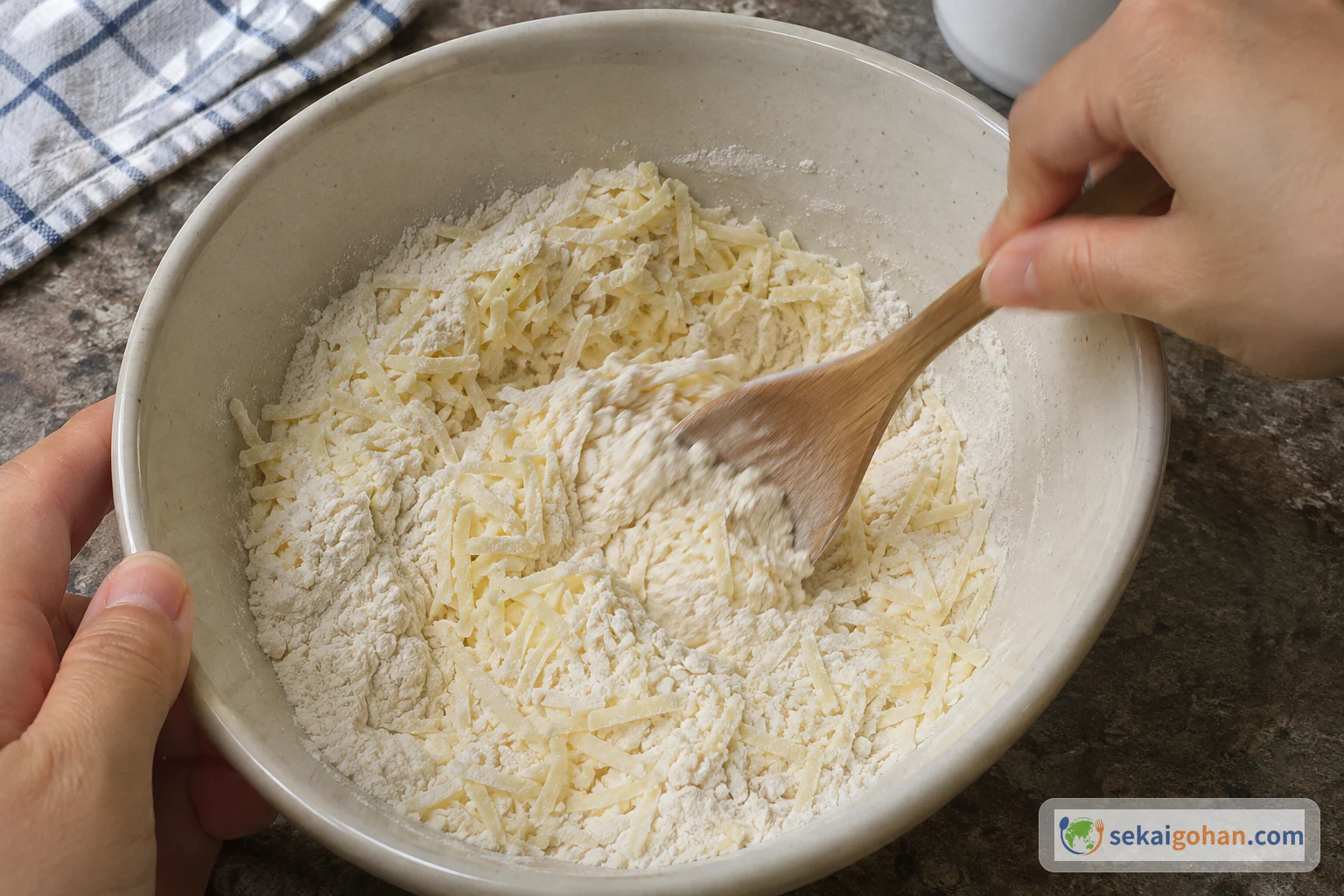
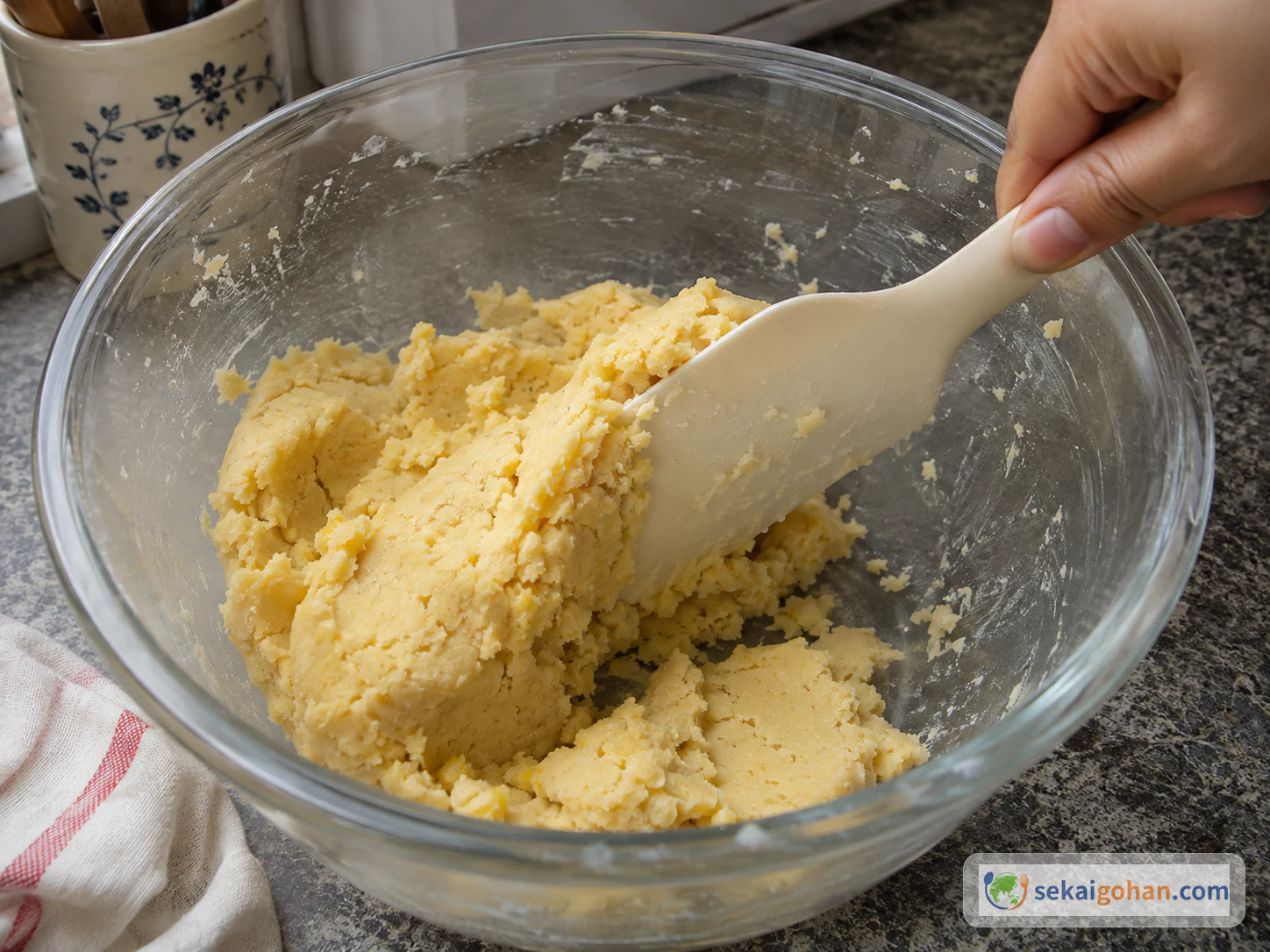
Grate both cheeses first and keep them in separate bowls. The Edam needs a little time spread out in the air before it goes into the flour.
Common Problems and How to Check
| Problem | What to check | What to do |
|---|---|---|
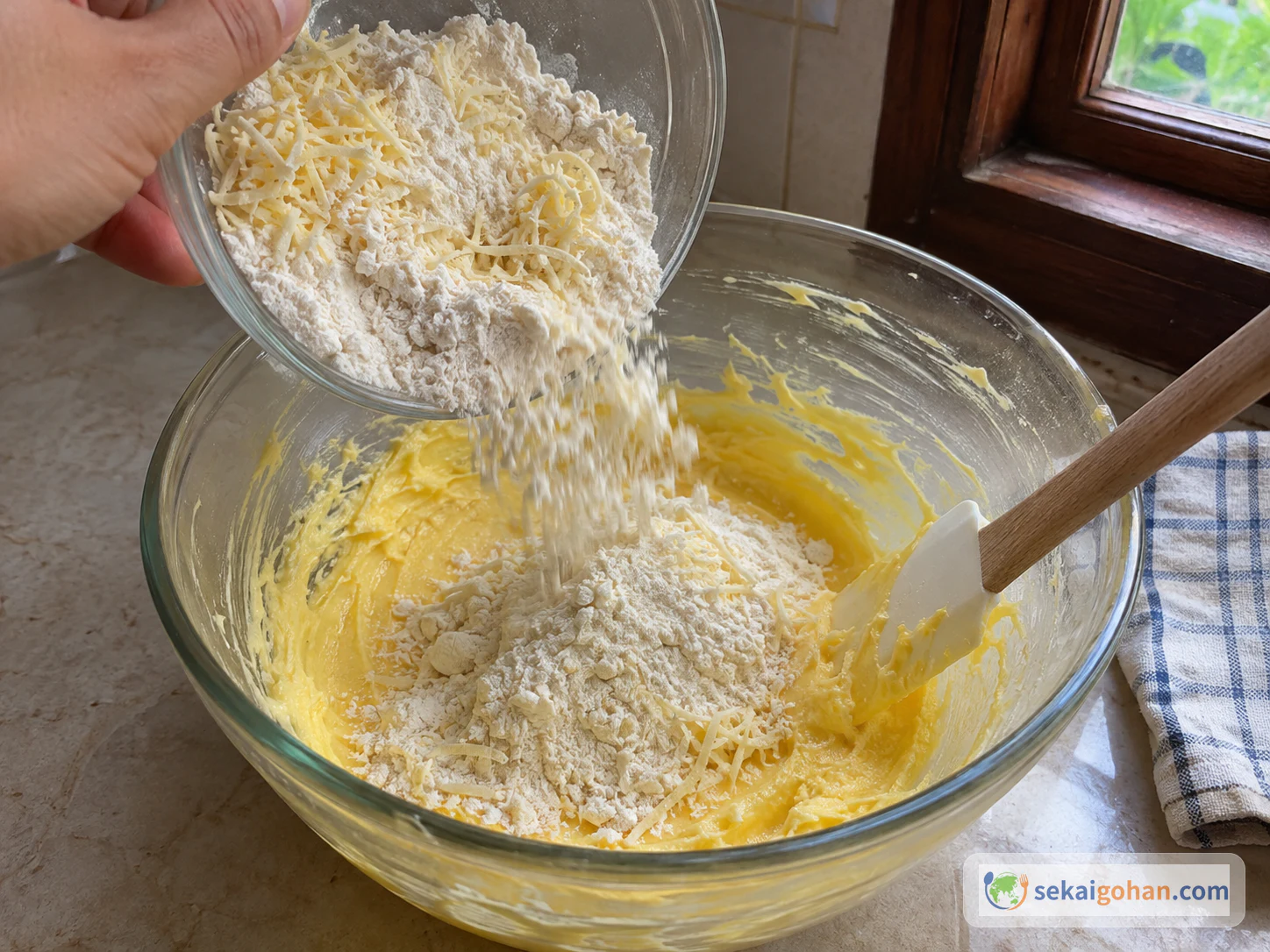
| The dough feels hard | How long it was mixed after the flour went in | Fold only until the dough comes together. Mixing too long makes the dough hard |
| Uneven sticks | The thickness of the rolled dough | Roll between the two sheets to an even 1 cm before cutting |
| Pieces crowded on the tray | The space between sticks | Leave 2 cm between each piece |
| Cheese mixed into the wrong place | Which cheese went where | Edam goes into the dough; Cheddar goes on top after the wash |
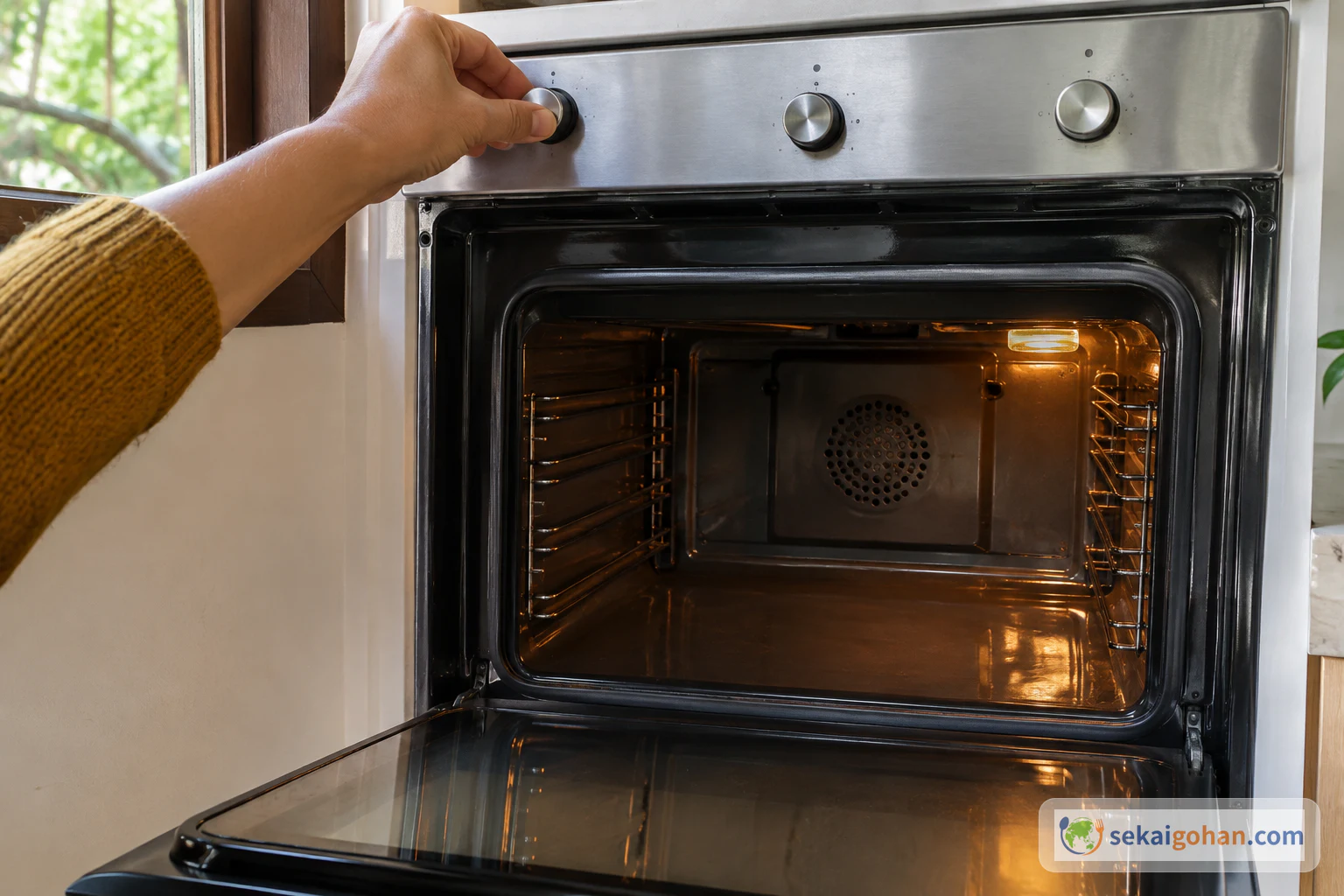
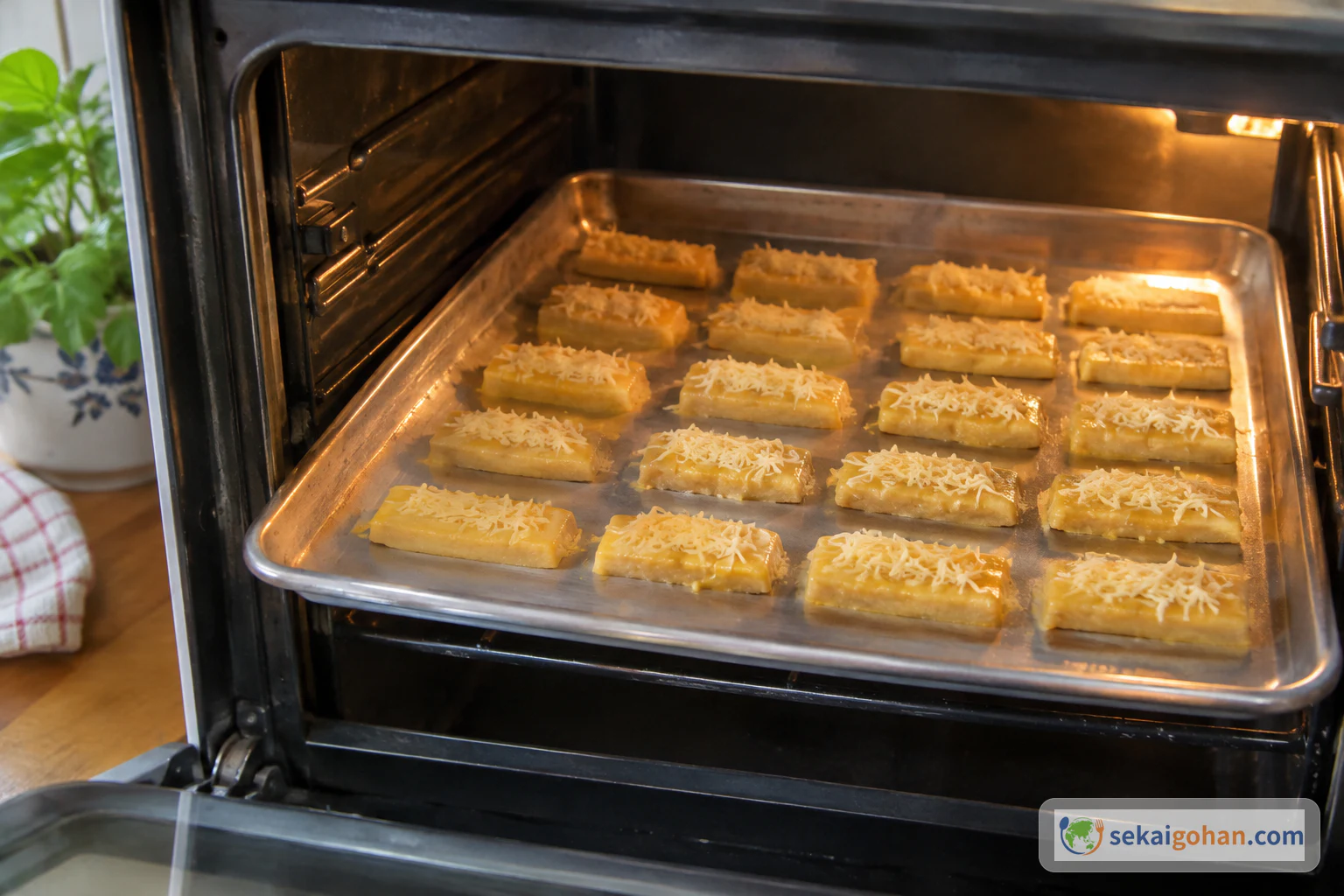
| Pale tops at about 20 minutes | Color, not just time | Ovens vary; bake until cooked through and golden at 130°C |
| Tops turning dark | How close they are to done | Take them out once golden; don't bake toward dark brown |
Ways to Vary It
These are ideas for comparison, not part of the recipe above, and none of them has been tested here.
- Cutter shapes versus knife-cut sticks: A cutter can be used instead of a knife; compare the look of the two on one tray.
- Fine versus coarse Cheddar on top: Coarse is used above. A finer grate would change how the topping looks.
- Edam only: Some cooks may want to compare the flavor of Edam on its own. Changing the cheese amounts would be a different recipe and would need its own trial.
- Young Gouda when Edam is hard to find: An idea only. Expect different flavor, saltiness and moisture.
Lebaran Jars and Everyday Tea
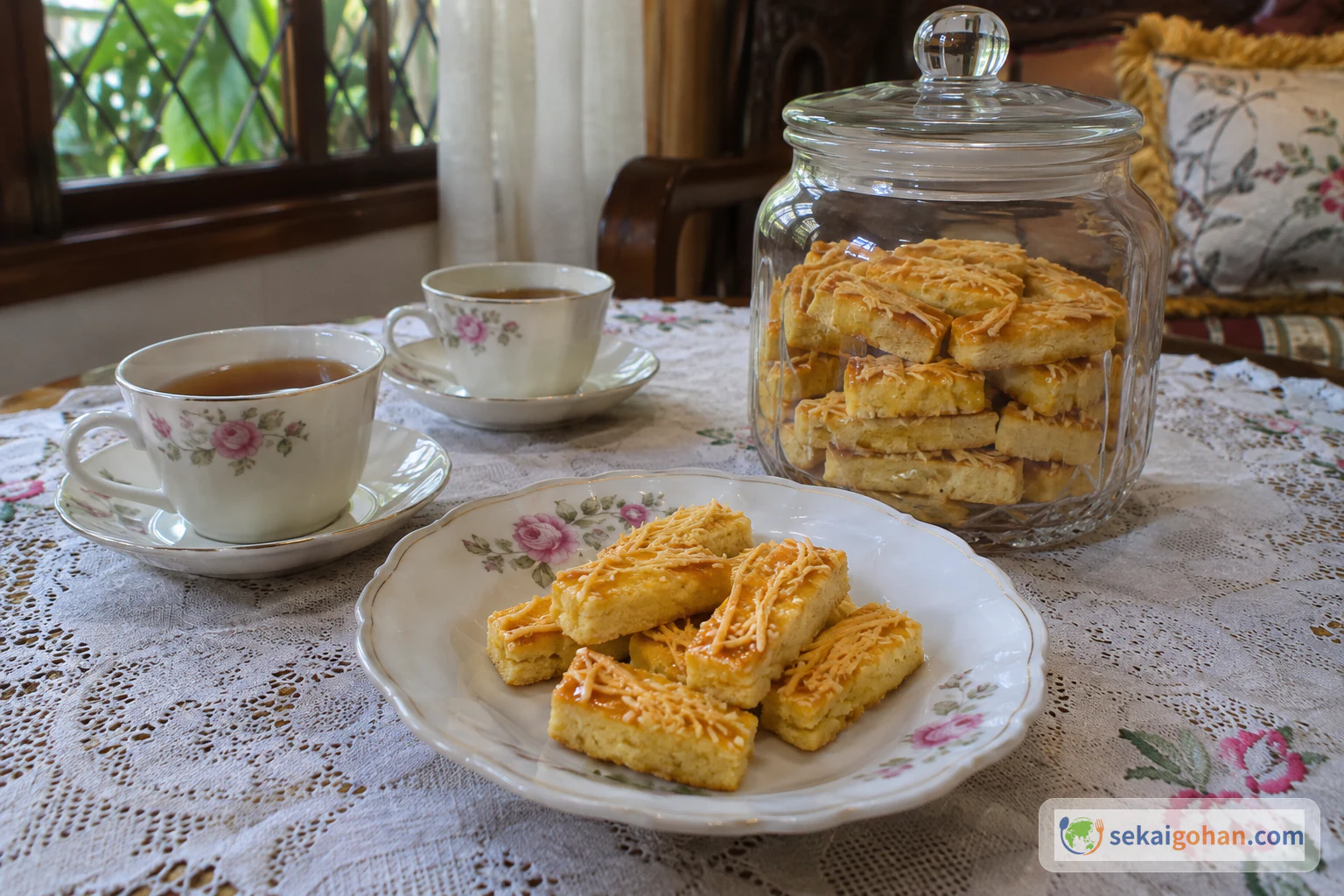
The Ministry of Creative Economy places kastengel among the cookies of Lebaran, set out in jars when guests come to visit, and describes this cookie culture as something that also supports home-scale businesses today. That is a picture of present-day custom, not a claim that every Indonesian household makes kastengel in the same way.
Away from the holiday, a few sticks on a small plate beside tea or coffee make a simple snack. The drink is only an accompaniment; the cookies need nothing else.
Frequently Asked Questions
Are kaasstengels and kastengel different foods?
They are two spellings of the name. Kaasstengels is the Dutch form, meaning "cheese sticks," and kastengel is the adapted Indonesian form, as described by Indonesia's Ministry of Creative Economy and discussed as a naming pattern in the LingTera paper. This article covers the baked Indonesian cheese cookie.
What can I use if I can't find Edam?
The Primarasa recipe does not give a substitute. Young Gouda is an editorial alternative to consider, but it is an untested idea, not part of this recipe, and it differs from Edam in flavor, saltiness and moisture.
How long do I bake them?
In this Primarasa formula, about 20 minutes at 130°C, until cooked and golden. The recipe does not specify fan settings or rack position, and home ovens differ, so watch the color.
How much does the recipe make?
Primarasa lists 450 g. That figure is the publisher's, not a weight measured for this article.
Why are the cookies firmer after cooling?
The Universitas Negeri Surabaya kastengel post notes that the cookies firm up as they cool. That post uses a different formula, so treat it as a general observation; the recipe here simply has you cool the cookies on a wire rack.
How should I store them?
The recipe gives no storage guidance, so this article does not give a storage method or period.
Sources
- Primarasa, "Kaasstengels." The ingredients, amounts, method, oven temperature and baking time used in this article, plus the stated yield of 450 g and total time of about 60 minutes. https://www.primarasa.co.id/resep/kaasstengels
- Kementerian Ekonomi Kreatif / Badan Ekonomi Kreatif RI, "Jejak Kolonial di Balik Manisnya Kue Lebaran hingga Jadi Penggerak Ekonomi Kreatif." Kastengel as an Indonesian adaptation of the Dutch-named kaasstengels (cheese sticks), and its place in Lebaran cookie-jar hospitality and today's home-scale cookie making. https://ekraf.go.id/ragam-ekraf/jejak-kolonial-di-balik-manisnya-kue-lebaran-hingga-jadi-penggerak-ekonomi-kreatif
- Universitas Negeri Surabaya, Faculty of Languages and Arts (English Education program site), "Kastengels." Another Indonesian home presentation of kastengel as a festive savory cheese cookie, with a different Cheddar-and-margarine formula; used for comparison only. https://s1pbing.fbs.unesa.ac.id/post/kastengels
- "Retensi dan adaptasi nama makanan asal Belanda di Indonesia," LingTera 9(1), Universitas Negeri Yogyakarta. Linguistic framing for the retention and adaptation of Dutch-origin food names in Indonesia, including kastengel. https://www.researchgate.net/publication/371376401_Retensi_dan_adaptasi_nama_makanan_asal_Belanda_di_Indonesia