Balut: A Warm Shell, a Sip of Broth, and a Pinch of Salt
This recipe starts with balut already incubated by a specialist and sold as food for cooking. It does not cover incubating eggs at home, and ordinary duck eggs cannot replace balut.
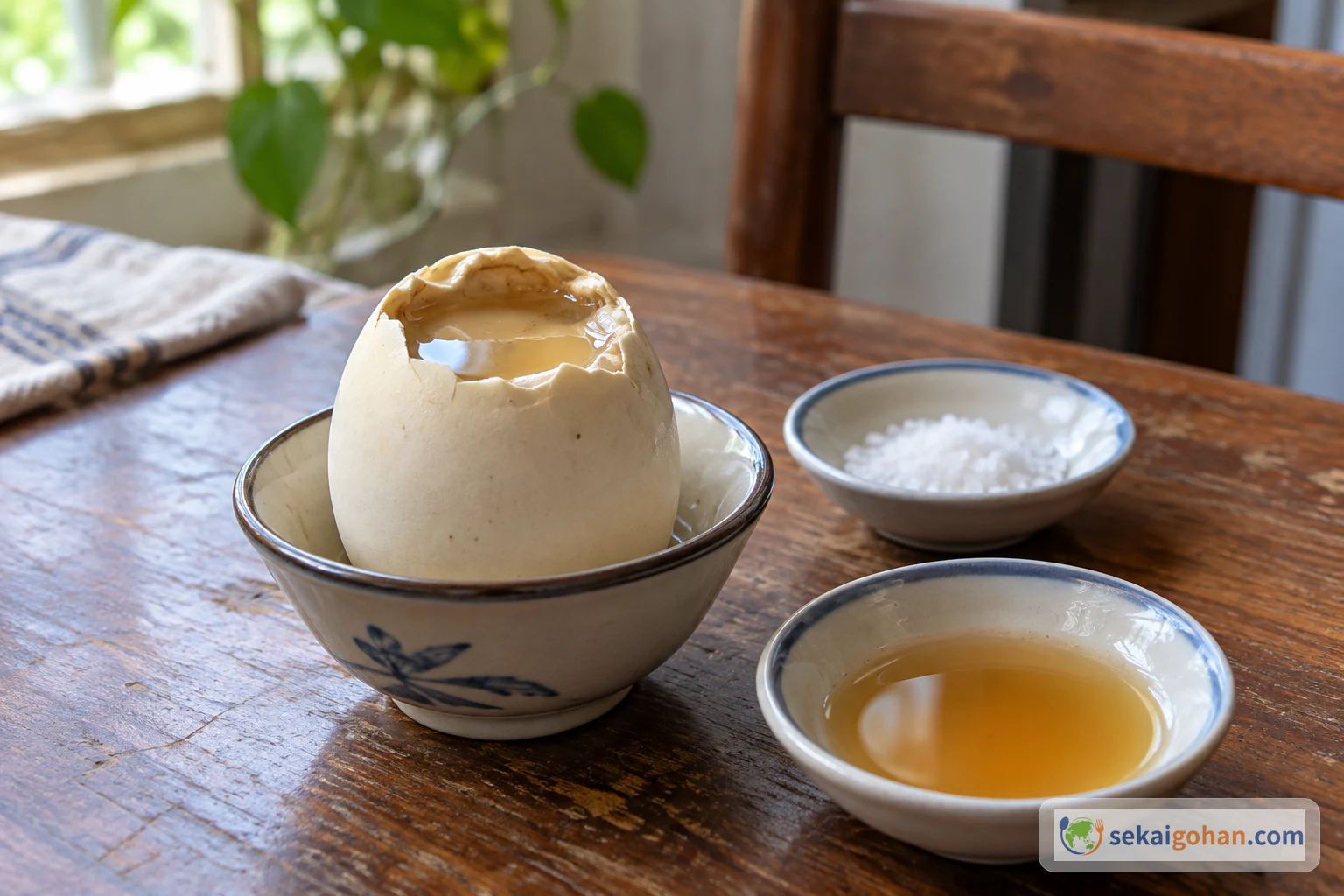
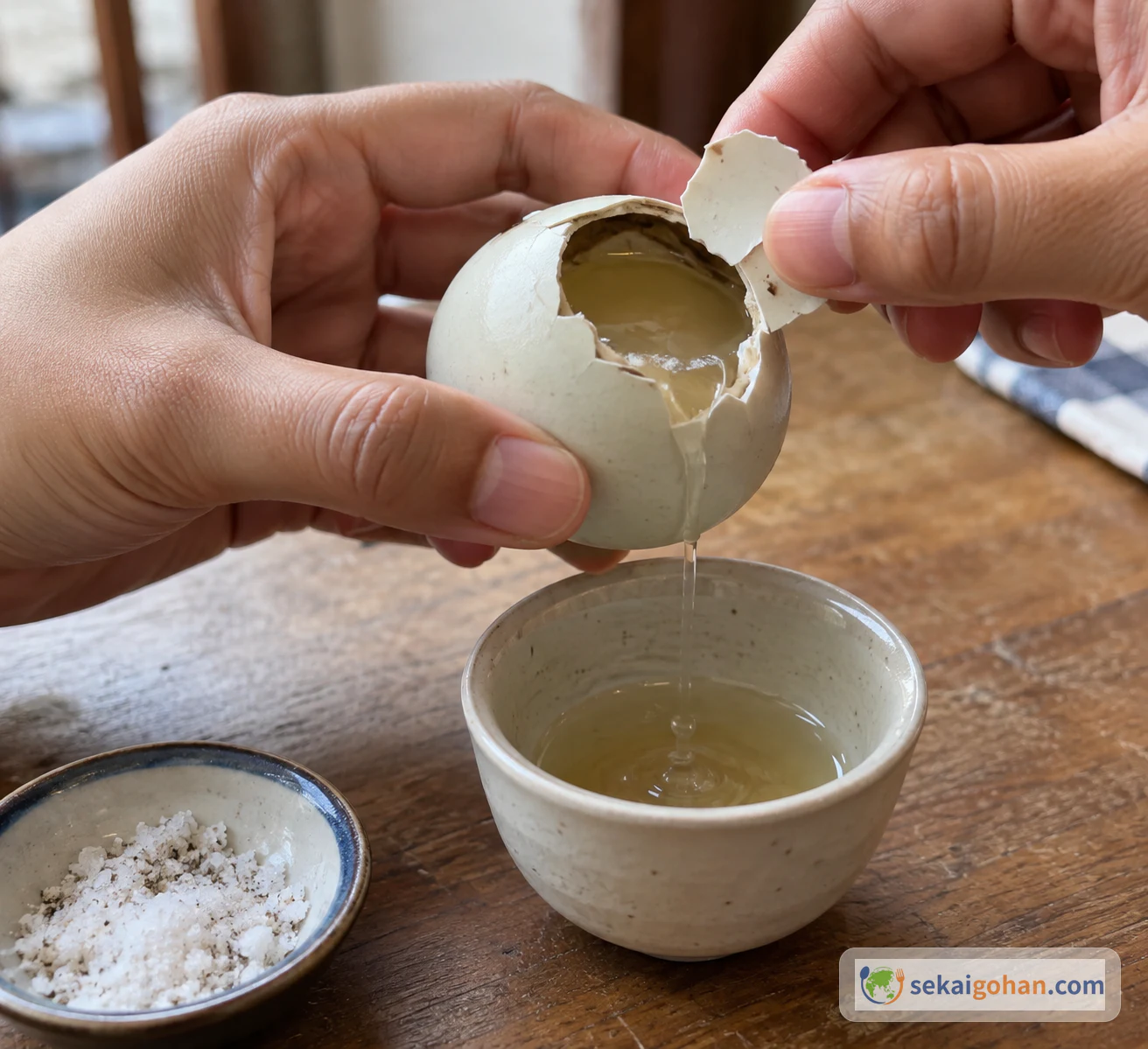
Tourism Philippines describes balut being sold on the street at night and eaten warm. The top of the shell is cracked, the broth is sipped first, and then the yolk and young duck are eaten with salt or garlic vinegar. Some people leave the firm white behind.
Balut, also written balot, is a fertilized, incubated egg, usually a duck egg, that is boiled or steamed before eating. It is part of a wider Asian family of incubated eggs, but it has its own local preferences and its own trade in the Philippines. For more of the country's cooking, see our dishes from the Philippines.
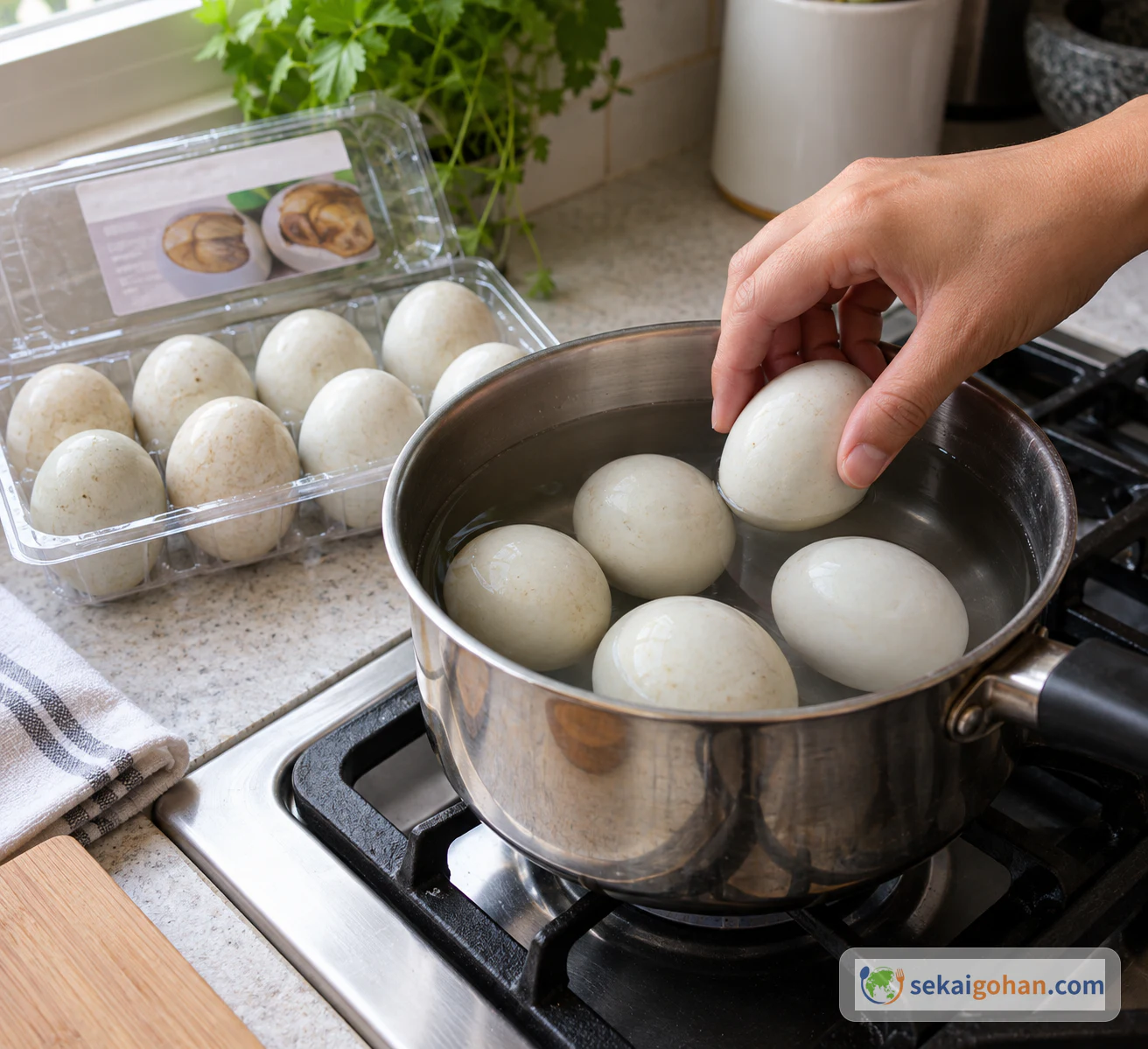
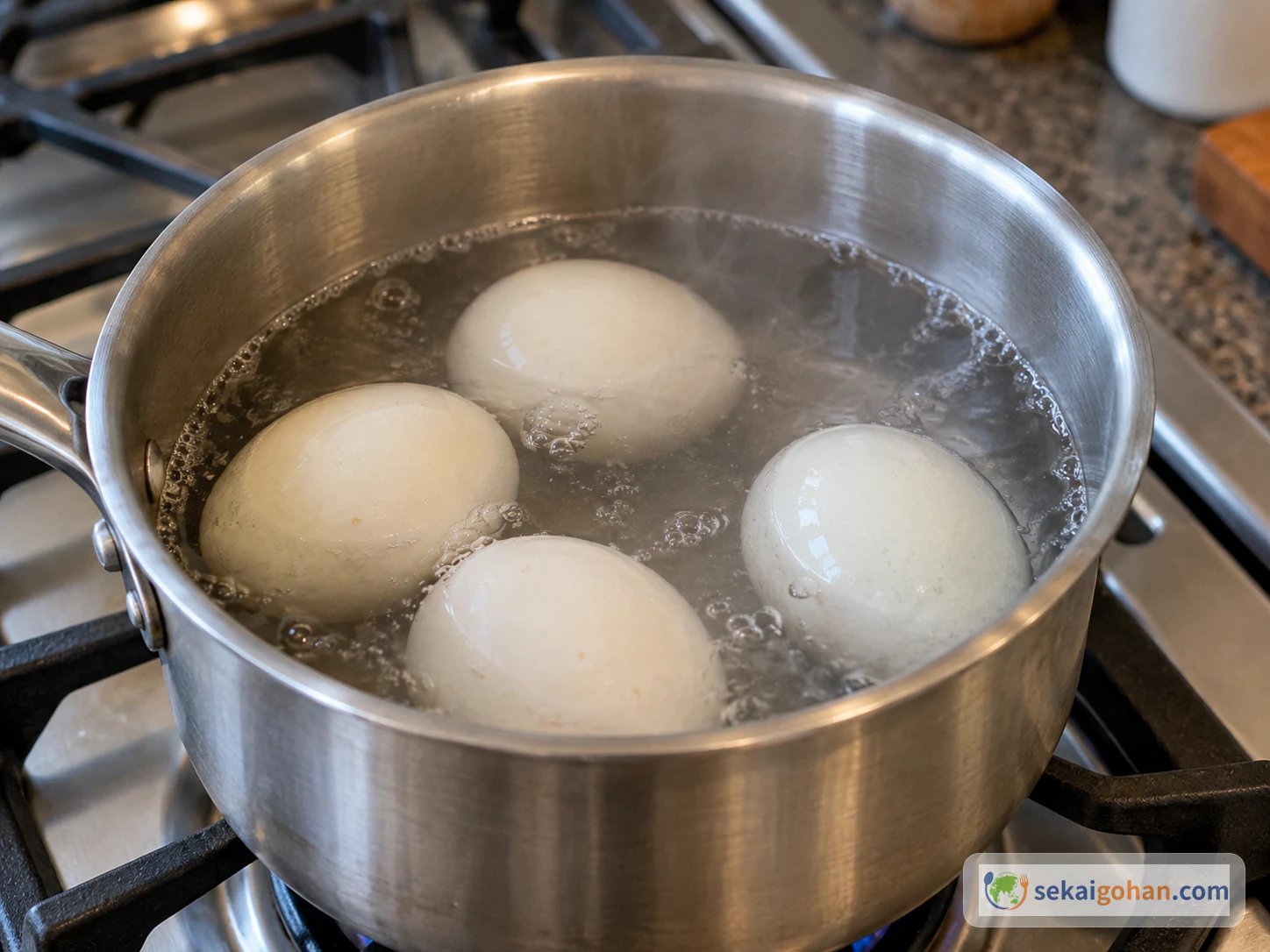
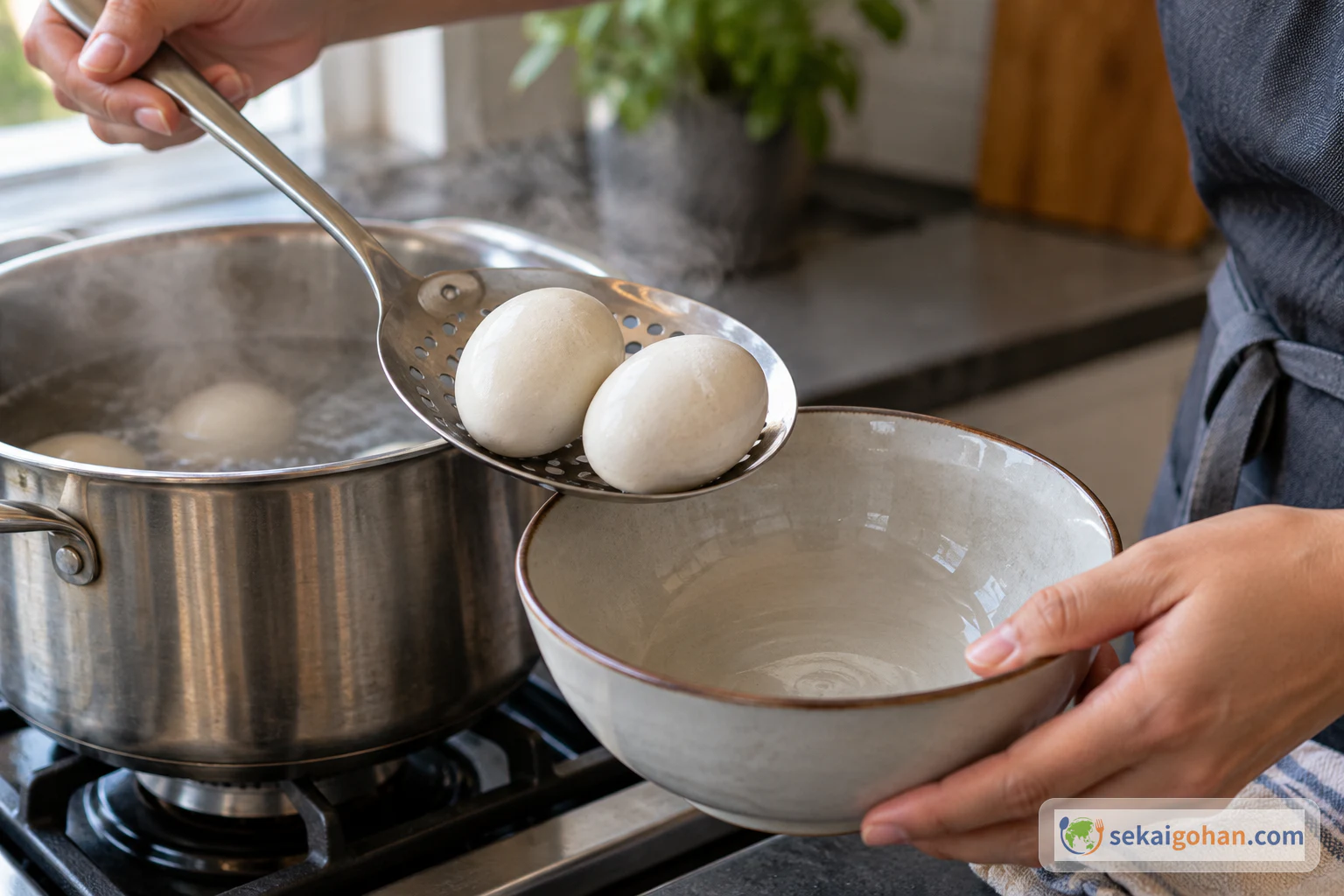
This recipe has not been kitchen-tested. It is based on the Classic Balut recipe from PagkainPinoy, one editorial page that lists no author credentials, citations, or test notes. It is one home method, not an official Filipino standard. The six-egg batch, gentle boil, and cooking time all come from that page. Directions from the seller or on the product label always take priority.
Published cooking times differ. PagkainPinoy gives 30–35 minutes, timed from when the water reaches a steady gentle boil. The Philippine National Nutrition Council mentions 20–30 minutes but does not say when the clock starts. A separate Vietnamese-style recipe by Vicky Pham says about 35 minutes. These times are not combined or averaged here; the recipe uses the PagkainPinoy timing because its starting point is clear.
The eggs should be fully set and thoroughly heated through to the center. Osaka Prefecture's public Salmonella guidance advises heating eggs to 75°C or higher for at least 1 minute. This is general egg guidance from a Japanese local government, not a national standard or a balut-specific rule. The U.S. FDA similarly advises cooking eggs until the yolk and white are firm, also as general guidance. No cooking time here guarantees safety, and the photos are illustrative only: they do not show a specific product, its label, its cooking state, or its internal temperature.
Ingredients: Six Balut Eggs and Separate Seasonings
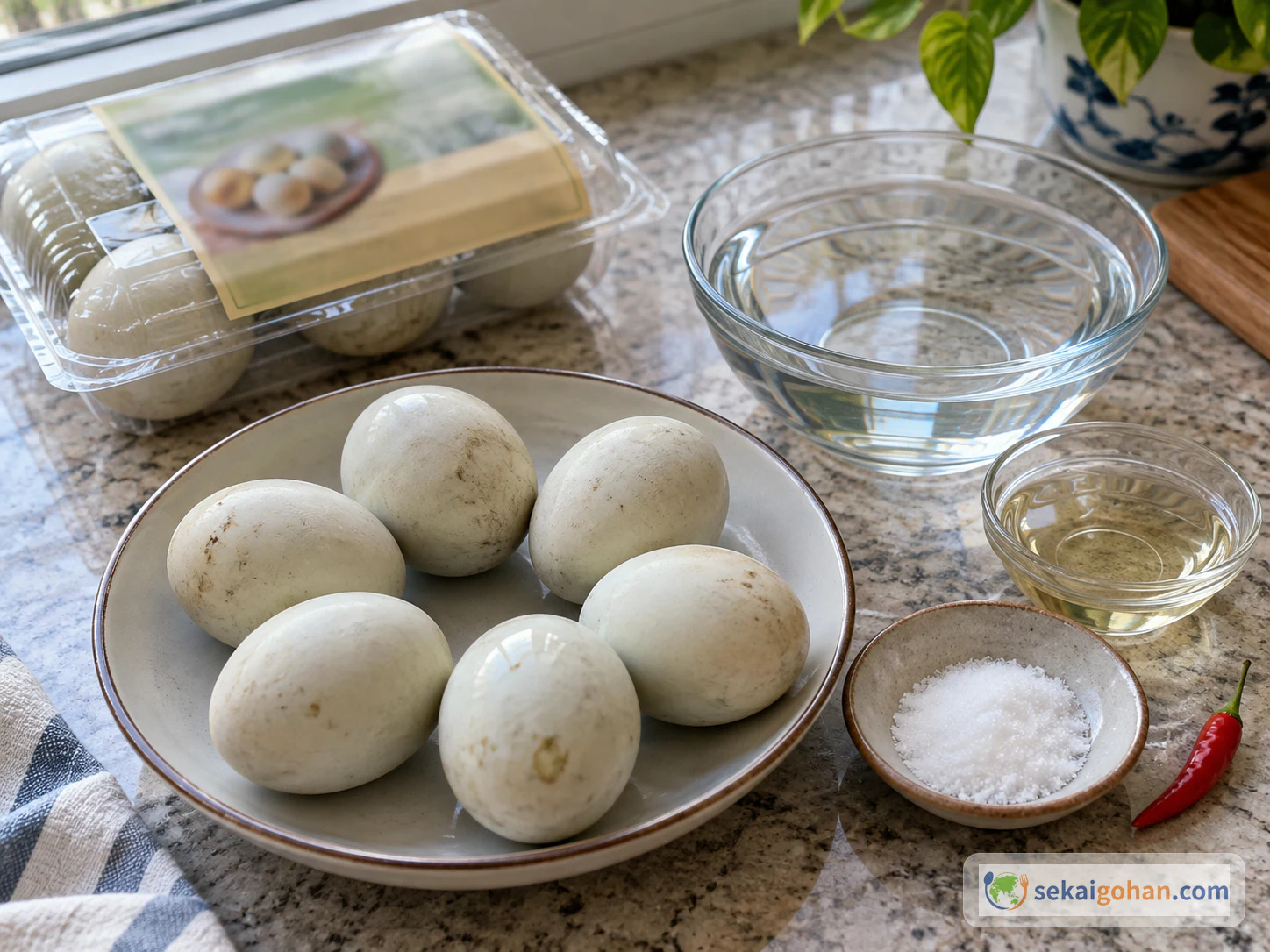
Equipment
- Saucepan large enough to hold the eggs in one layer
- Slotted spoon
- Heat-safe bowl
- Small dishes for the salt and vinegar
- Kitchen timer
- Food thermometer for checking the test egg
Choosing Balut and Its Seasonings
Balut has no real substitute. Chicken eggs, raw duck eggs, and penoy all make a different food. Never cook hatching eggs or try to incubate eggs at home.
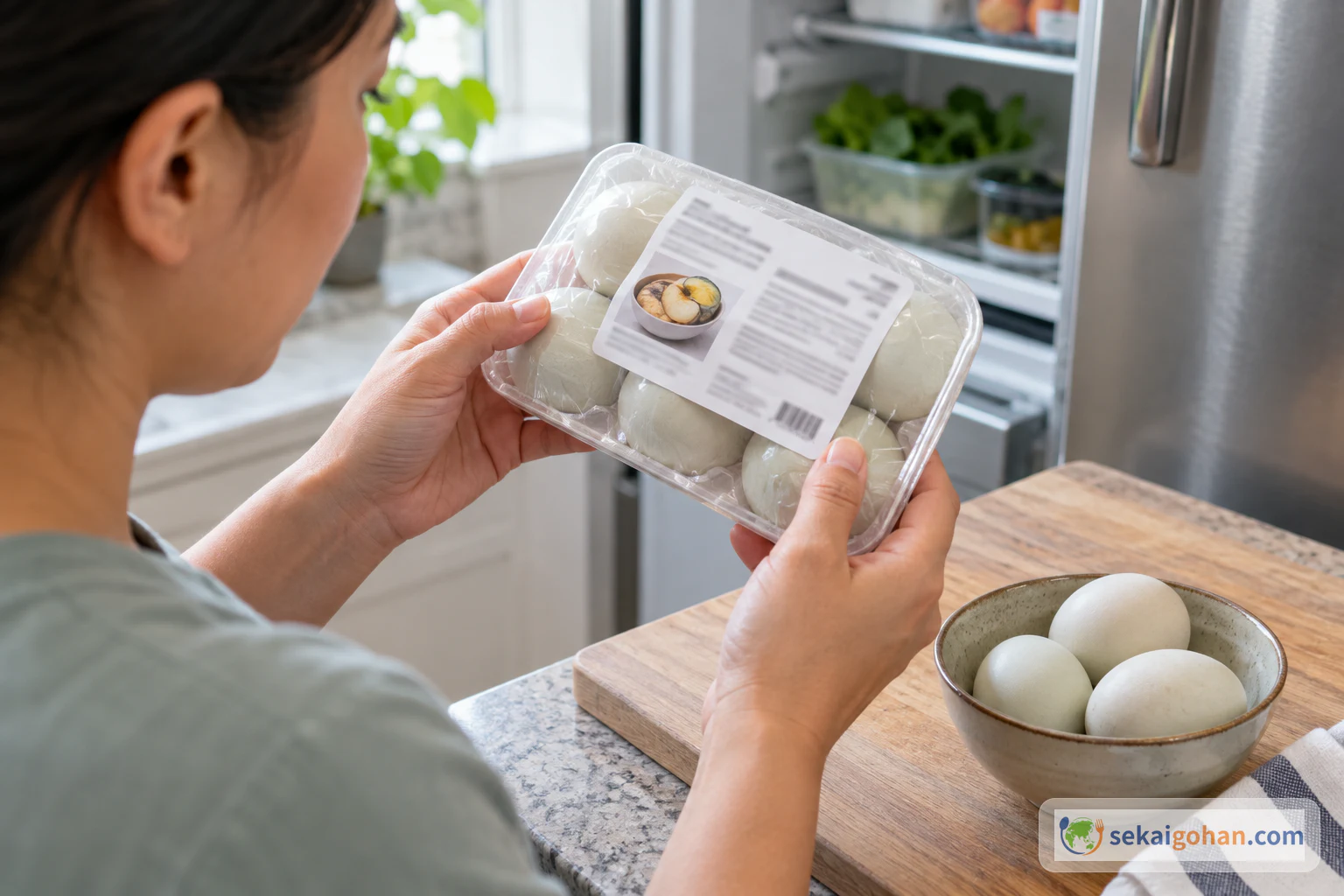
Ask at a Filipino or Asian grocery, or a Philippine-food importer, specifically for food-grade balut. We have not confirmed any particular retailer or brand, and balut may be hard to find where you live. If you can't find a properly labeled product, this recipe is best left unmade.
Before buying, confirm whether the eggs are raw and need boiling, already cooked, or frozen. The boiling time below is for raw eggs only.
Rice vinegar is easier to find than cane vinegar, but it has a different aroma, so the two are not identical. The chili can be left out for a milder dip.
Troubleshooting and Safe Handling
| Problem | What to do |
|---|---|
| The package doesn't say whether the eggs are raw or cooked | Ask the seller. If you can't confirm the cooking state, don't use the eggs |
| You can only find ordinary duck eggs or hatching eggs | Don't use them. Ordinary duck eggs are not balut, and home incubation isn't an option |
| The eggs are already cooked or frozen | Don't apply the raw-egg boiling time. Follow the package directions |
| The label's time differs from this recipe | Follow the label |
| The test egg isn't fully set or heated through | Don't eat it. Return the unopened eggs to the gently boiling water, keep cooking, and test another |
| You want to judge doneness from the outside | Don't rely on the shell's appearance, the incubation age, or how developed the embryo looks. None of these is a home safety test |
| The vinegar or salt is too strong | Serve both separately and add a little at a time |
Do not serve undercooked eggs to children, older adults, pregnant people, or anyone with weakened immunity. Both the Osaka Prefecture and FDA guidance single out vulnerable groups. Balut is a duck egg, so people with egg allergies should treat it as an allergen.
For leftovers, PagkainPinoy advises cooling them and refrigerating within 2 hours, then using them within 2 days. A product's own label takes priority.
Variations: Five Ways the Plate Can Change
| Variation | What changes | Note |
|---|---|---|
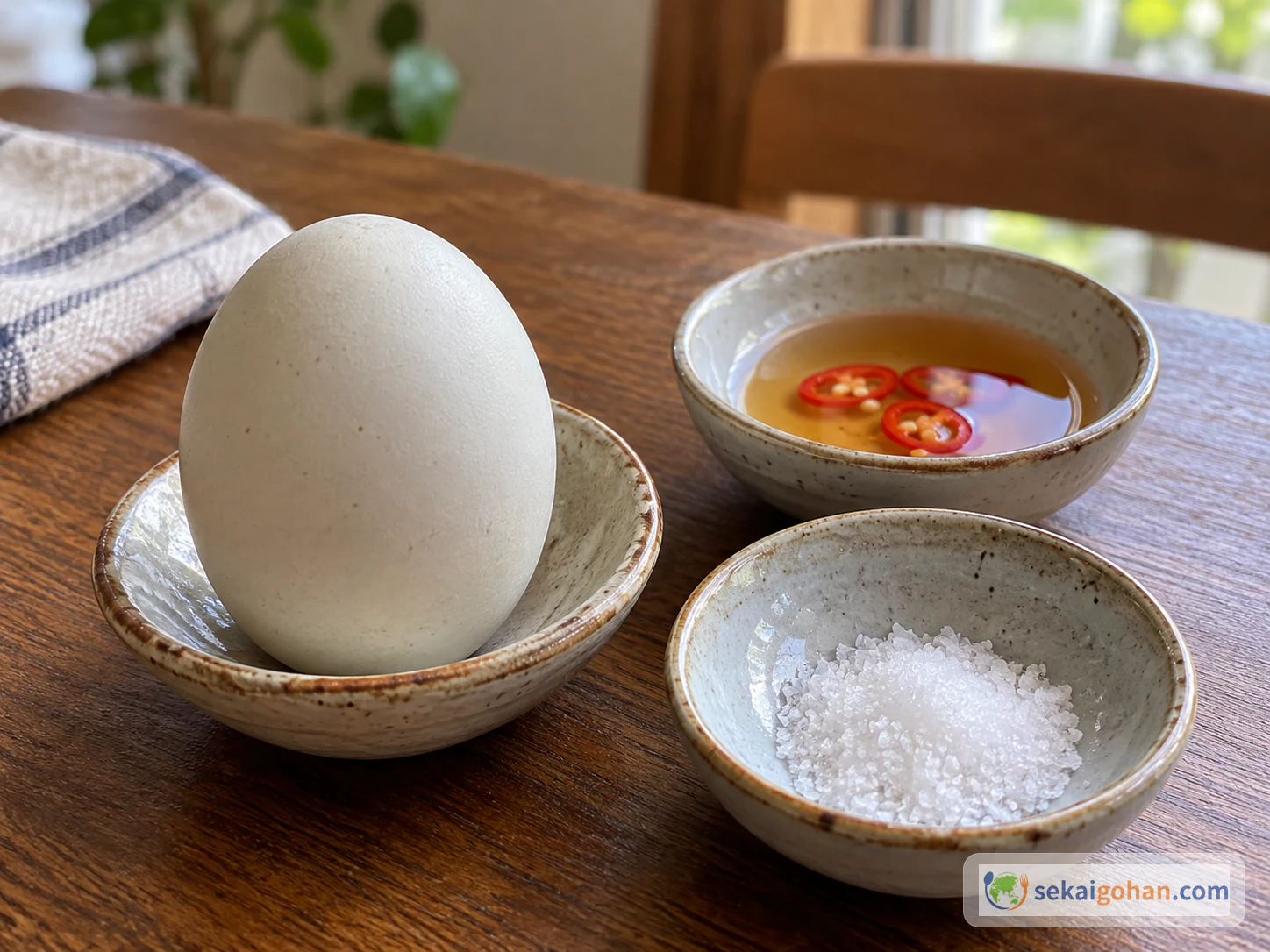
| Salt only | Keeps the seasoning simple | A commonly reported accompaniment |
| Vinegar only | Adds a sharper finish | Also commonly reported; garlic vinegar and soy sauce appear in some accounts |
| Chili vinegar | Adds heat | An optional choice, not a universal custom. Wash raw chili well under running water first |
| Balut sa puti | An earlier developmental stage reported locally | Described here for context only; it is not something to produce at home |
| Tokwa't balut | Combines cooked balut and fried tofu with a dressing of vinegar, onion, chili and seasoning | A distinct composed dish, not the recipe above |
Balut is a small snack, so it can sit apart from a full Filipino meal built around dishes such as monggo, sinigang, or kare-kare. They are not necessarily eaten together.
From Pateros to Many Provinces: Balut and Its Makers
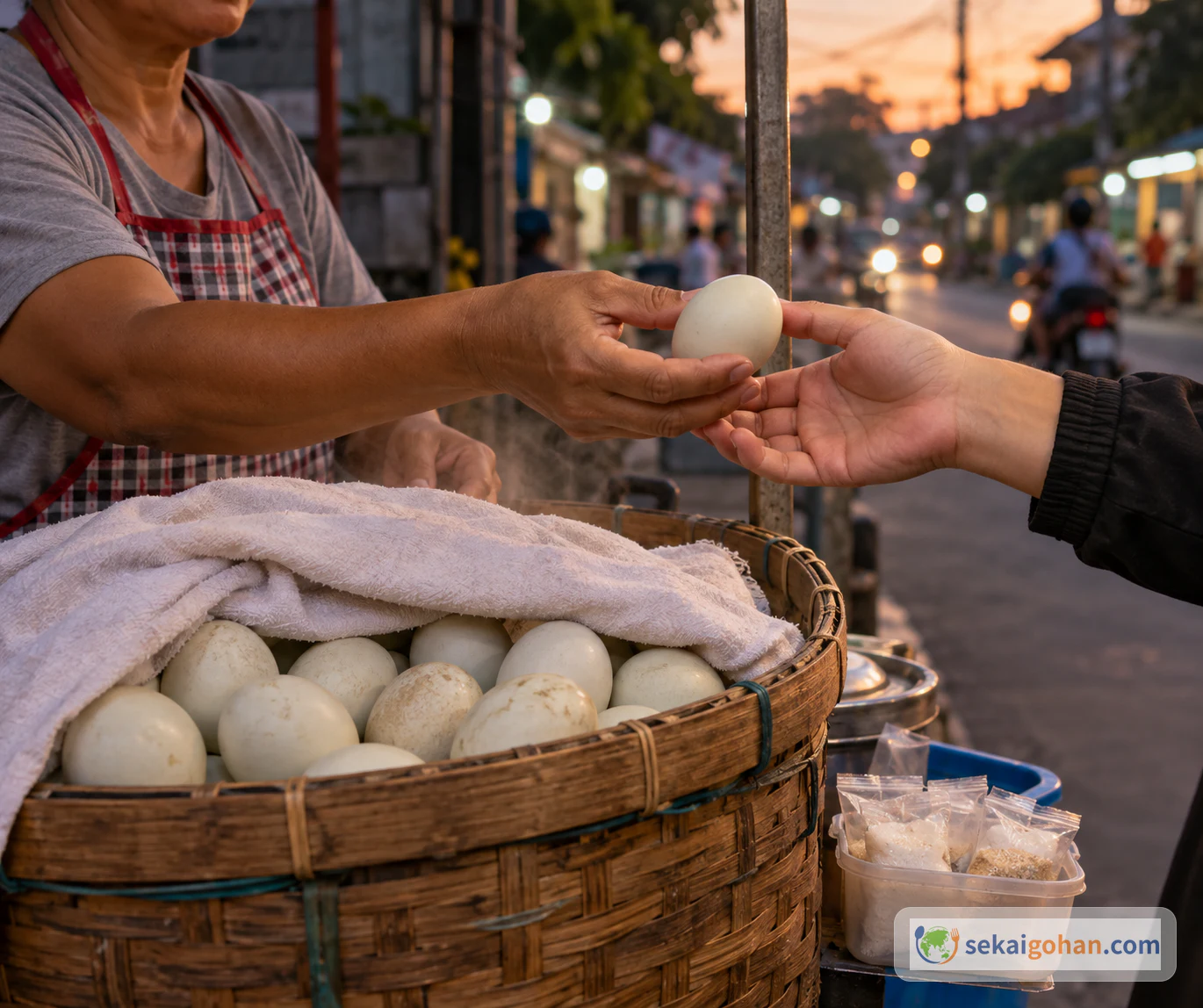
Balut and penoy are not the same thing. A study in the Journal of Cookery Science of Japan describes balut as a boiled, incubated, fertilized duck egg, and penoy as an incubated unfertilized duck egg.
Preferred stages also vary. One academic account of Philippine practice describes a preference around 17–18 days, while Tourism Philippines gives 14–18 days and says many makers prefer 17. Vietnamese and Cambodian related foods are commonly described at later stages. These figures describe local preferences, not a rule for every producer, and they are not instructions for home cooks.
Pateros is closely associated with the trade and developed an important balut industry. As the Journal of Ethnic Foods article explains, production and the livelihoods around it later spread to Laguna, Central Luzon, and elsewhere. That article also discusses disagreements over what makes balut authentic.
The origins are less settled. Scholars discuss Chinese influence and the way the craft became localized in the Philippines, but accounts of when it arrived differ. This article does not name a single origin date.
Frequently Asked Questions
Is balut just a raw fertilized egg?
No. It is a fertilized egg that has been incubated and then cooked. The preferred stage of development varies by locality.
Is penoy the same as balut?
No. Penoy is an incubated unfertilized duck egg, while balut is fertilized.
Do I have to eat the embryo and the white?
Preferences differ. Tourism Philippines describes drinking the broth first and then eating the yolk and embryo, and it is common for some people to leave the firm white.
Can I use ordinary duck eggs?
No. They don't produce balut, and this article does not cover home incubation.
Is the same incubation age used in Vietnam and Cambodia?
No. The related foods there are commonly described at later stages than the Filipino preference.
Why 30–35 minutes when another source says 20–30?
The 30–35 minutes comes from a recipe that starts timing at a steady gentle boil. The 20–30 minutes from the National Nutrition Council has no stated starting point, so the two can't be directly compared. A seller's or label's directions come first, and the eggs must still be fully set and heated through.
Sources
- Journal of Ethnic Foods / Springer Nature, "The authentic balut: history, culture, and economy of a Philippine food icon." Balut as a localized Filipino food, the Pateros industry, wider production, and debates over authenticity. https://link.springer.com/article/10.1186/s42779-019-0020-8
- Journal of Cookery Science of Japan / Japan Society of Cookery Science, "Some fine aspects and historical background of 'Balut' and 'Penoy', boiled incubated fertilized and unfertilized duck eggs." The difference between balut and penoy, Chinese influence, and localization of the craft. https://www.jstage.jst.go.jp/article/cookeryscience1995/40/4/40_231/_article/-char/en
- Tourism Philippines, "Balut: what it is, history and how to eat it." Incubation ranges, the order of eating, accompaniments, and night-time street vending. https://www.turismofilipinas.com/en/food-in-philippines/balut
- National Nutrition Council, Republic of the Philippines, "Are there good nutrients in Balut?" Used only for the general 20–30-minute cooking range and common seasonings, not for nutrition claims. https://nnc.gov.ph/mindanao-region/are-there-good-nutrients-in-balut/
- Ajinomoto Philippines Corporation / Cookmunity, "Tokwa't Balut." The separate dish of cooked balut and fried tofu with dressing. https://www.cookmunitybyajinomoto.com/recipes/tokwat-balut/
- PagkainPinoy, "Classic Balut (Boiled Incubated Duck Egg)." Ingredient amounts, water level, timing from a steady gentle boil, test egg, standing time, and leftovers. https://pagkainpinoy.com/recipes/classic-balut/
- Vicky Pham, "Balut – Hột Vịt Lộn (How to Cook and Eat)." A separate Vietnamese-style recipe with a boil of about 35 minutes. https://vickypham.com/blog/fertilized-duck-eggs-hot-vit-lon/?nb=1
- Osaka Prefecture, Food Safety Promotion Division, "サルモネラによる食中毒を防ごう!" General Salmonella guidance on heating eggs to 75°C or higher for at least 1 minute, cleaning utensils, and protecting vulnerable people. Not balut-specific and not national law. https://www.pref.osaka.lg.jp/o100110/shokuhin/shokutyuudoku/egg.html
- U.S. Food and Drug Administration, "What You Need to Know About Egg Safety." General U.S. egg-handling advice and higher-risk groups. Not balut-specific and not Japanese regulation. https://www.fda.gov/food/buy-store-serve-safe-food/what-you-need-know-about-egg-safety