Bún Mắm: A Southern Noodle Soup Layered on Fermented Fish
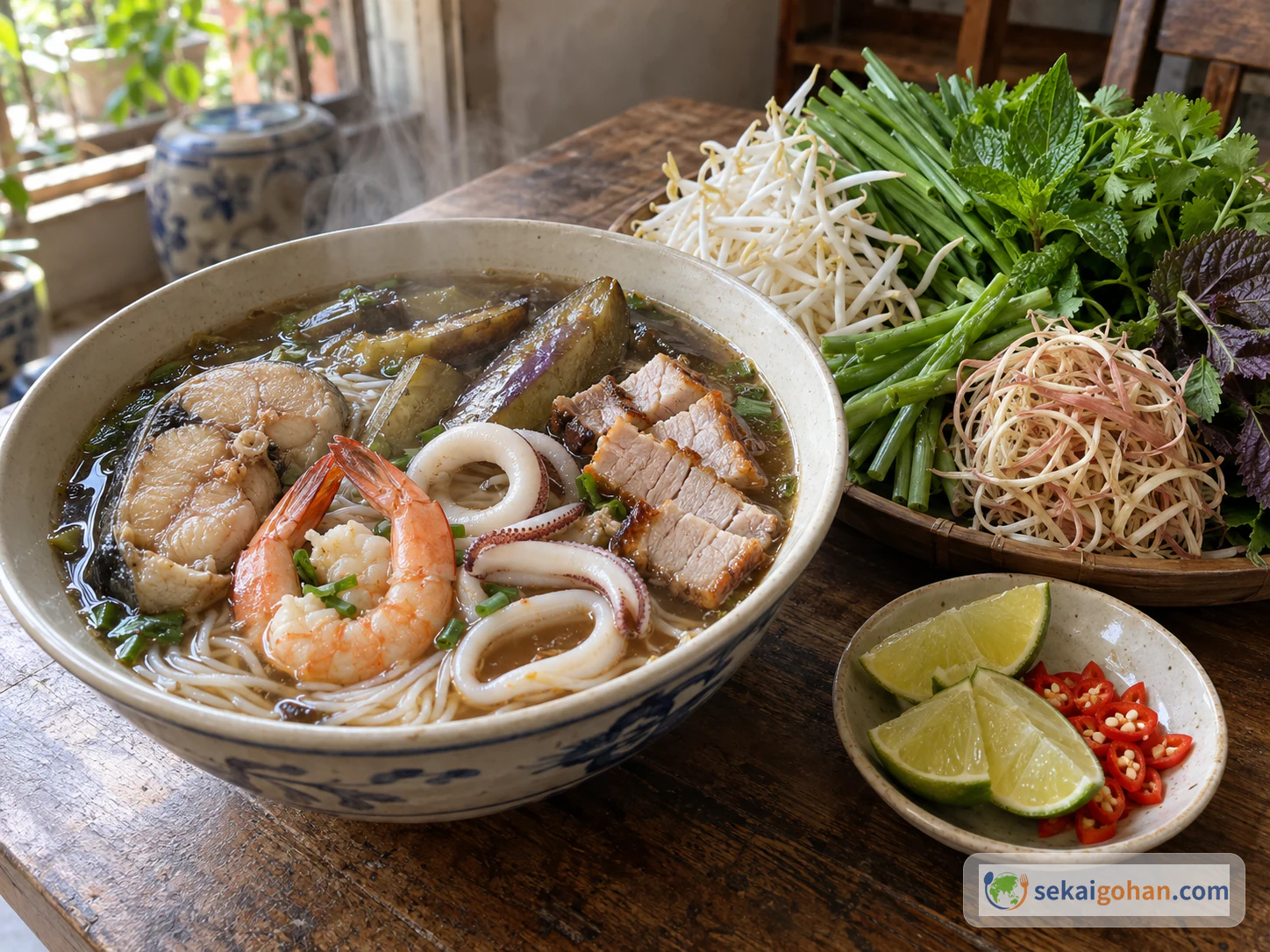
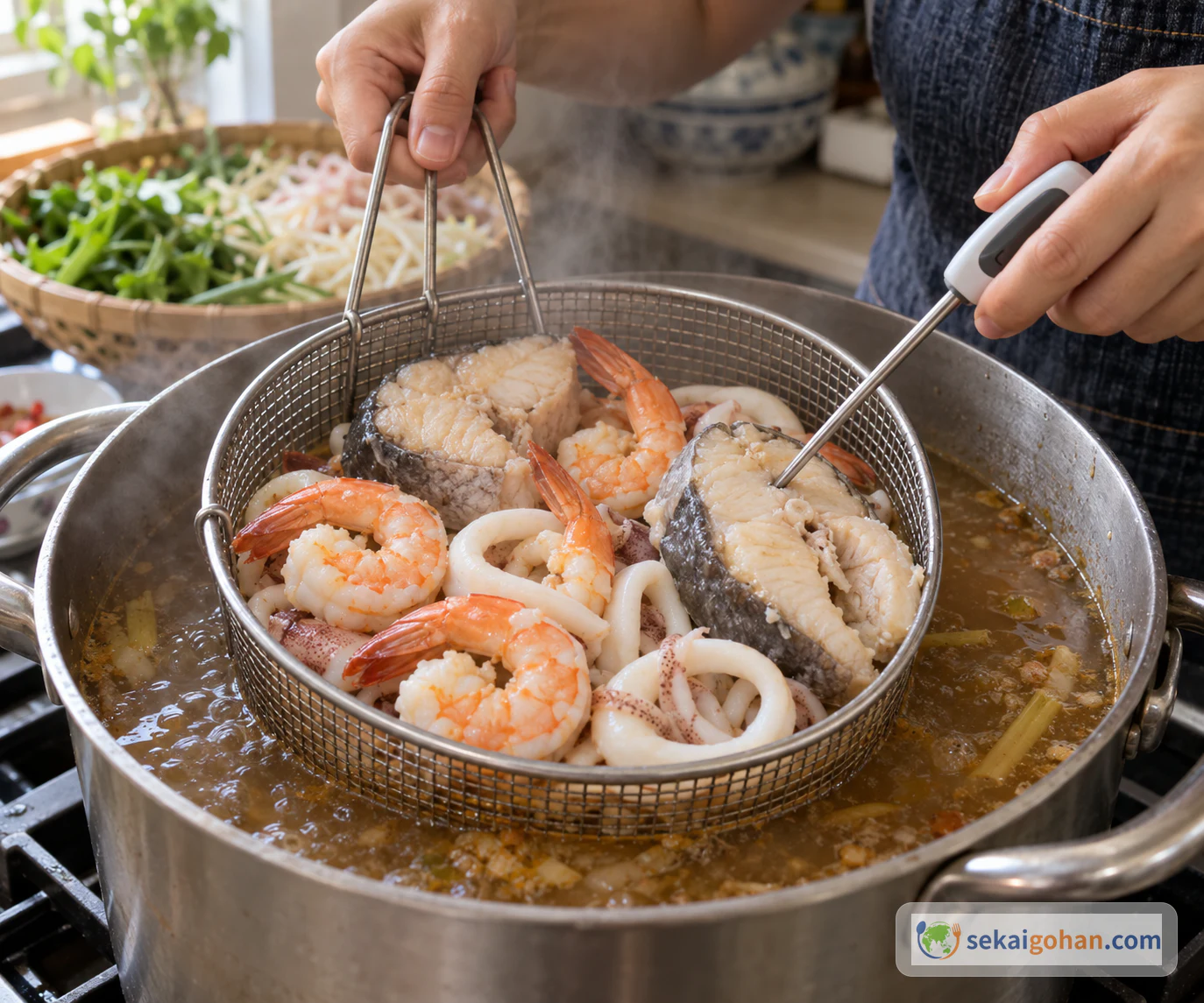
Two kinds of fermented fish, simmered and strained, form the base of the broth. Seafood is cooked in the soup at the end, and cooked roast pork goes on top. Greens, lime and chili sit on their own plate so each person can add what they like.
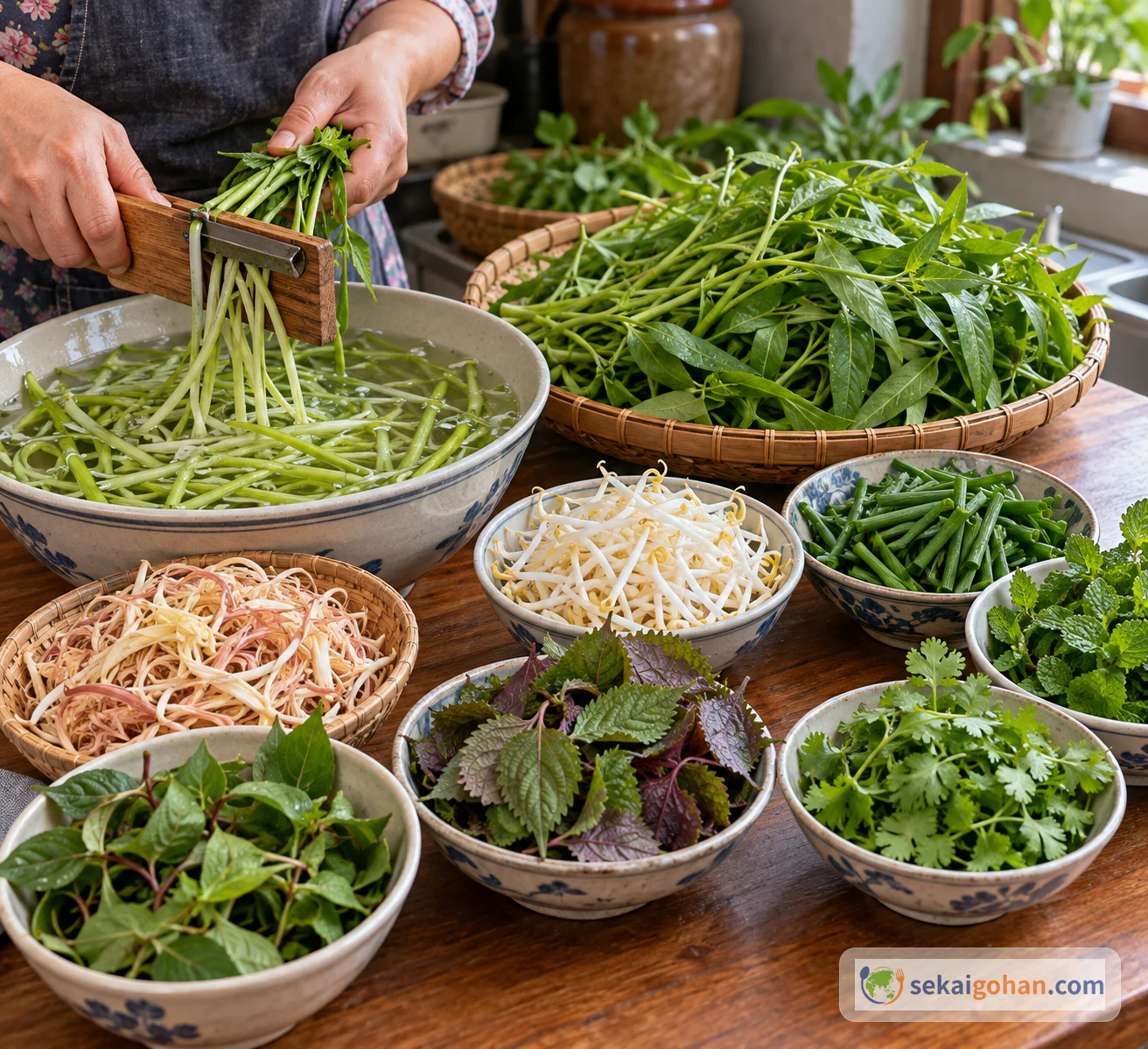
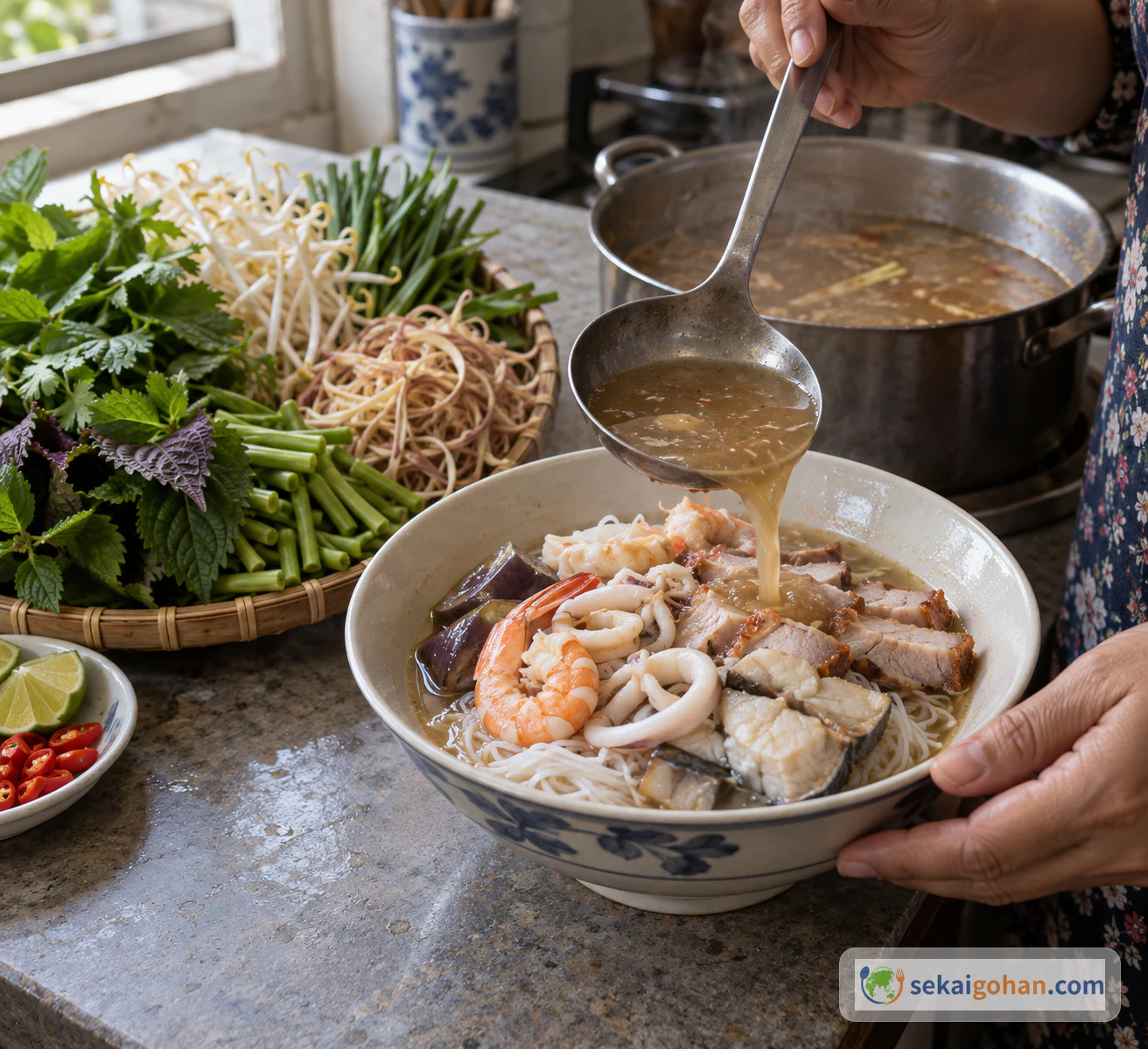
A handful of rice vermicelli goes into the bowl first. On top come catfish, shrimp with their tails still on, rings of squid and pieces of eggplant, then hot broth, and finally chopped roast pork. Beside the bowl sits a separate platter of bean sprouts, garlic chives, mint, cilantro, fish mint, perilla, split water spinach stems and banana blossom, with lime and red chili. That is the shape of bún mắm as it is laid out in Helen Le's recipe for the southern Vietnamese soup, which is the single recipe this article follows.
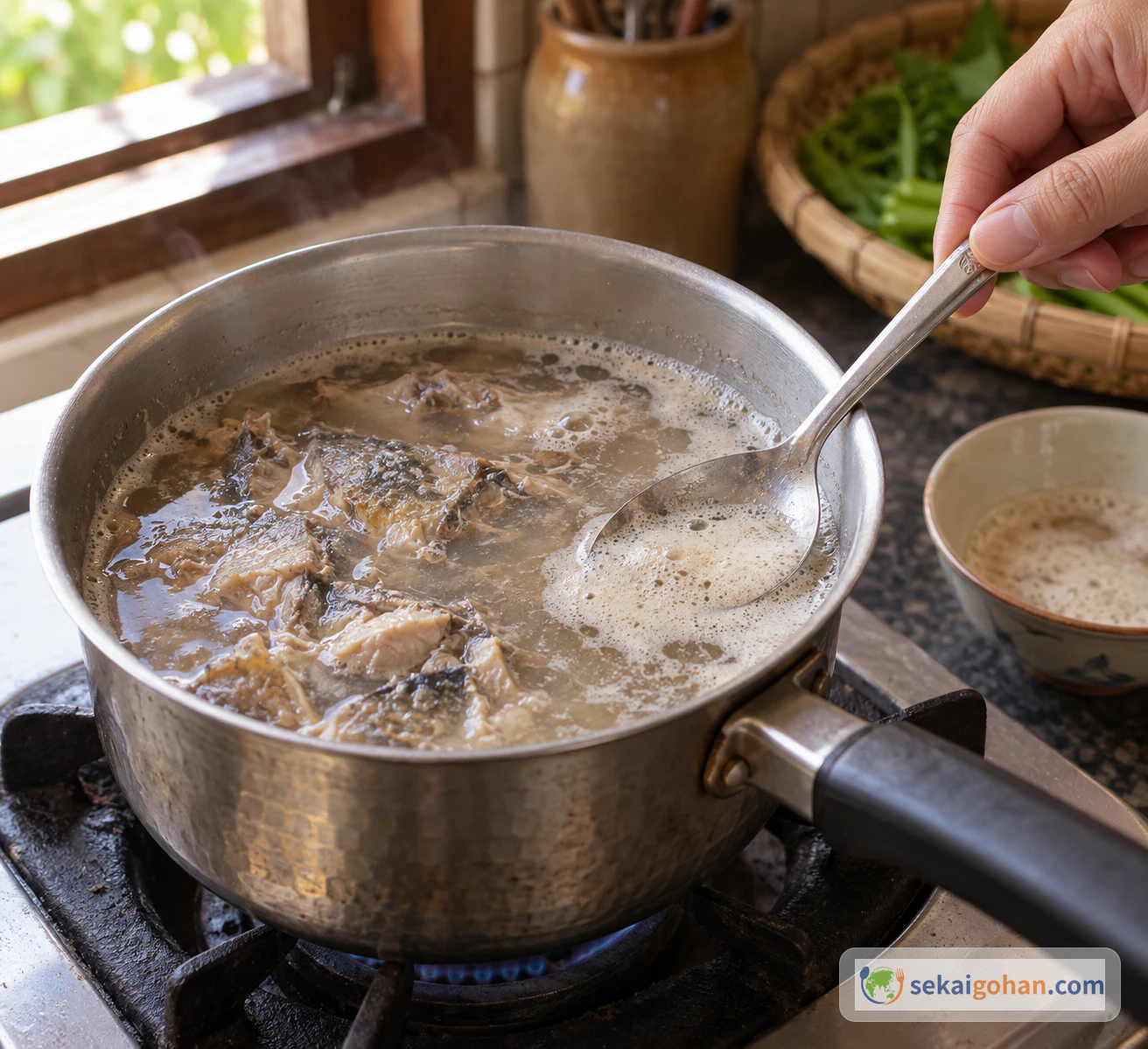
The word to understand first is mắm. Tuoi Tre News describes mắm as fermented seafood paste and distinguishes it from nước mắm, the everyday liquid fish sauce. Calling bún mắm simply "fish sauce noodles" erases that difference and leads to the wrong shopping list. Helen Le's recipe calls for two specific kinds of fermented fish, mắm cá linh and mắm cá sặc. They are not necessarily smooth: they can contain pieces of fish and small bones. That is why they are simmered in water first and the liquid is strained before it goes into the soup.
VnExpress International presents bún mắm as a Mekong Delta-style soup that is also sold in Ho Chi Minh City. It names Can Tho, Tra Vinh, Soc Trang, Bac Lieu and An Giang among the places associated with it, and reports that the choice of fish and fermented fish varies by region. For more dishes from across the country, see our Vietnam page.
Sekai Gohan has not kitchen-tested this recipe. Helen Le's page gives 4–6 servings and estimates of 30 minutes prep, 30 minutes cooking and 60 minutes total. These are the author's published estimates, not times measured by our team. Her page prints each fermented fish as 200 g with "8 oz" in parentheses. Those two weights are not the same, so this article uses the gram amount, 200 g.
Where Bún Mắm Comes From, and What It Is Not
There is no single proven origin for this soup. VnExpress International reports one restaurant owner's account linking the dish to a Cambodian predecessor made with mắm bò hóc. VOV, in a report credited at its footer to Saigon Times, also describes a connection to Cambodian prahok as one account of the dish's lineage. Both are reported explanations from particular interviews and articles. They are best read as one strand of the story, not a settled history or founding date.
The name causes confusion with two other dishes:
- Bún mắm thịt heo (Da Nang). Da Nang's tourism office describes this as a dry, mixed noodle dish made with mắm nêm, pork, young jackfruit, peanuts, vegetables and a seasoned sauce. It shares part of the name but is a different dish from the Mekong-style soup here. None of its ingredients belong in this recipe.
- Bún nước lèo. VnExpress notes that bún nước lèo and bún mắm are sometimes confused because both use fermented fish to make the broth, but they are different dishes. Bún nước lèo is described as a distinct dish associated with Bạc Liêu.
If you are searching for recipes, adding "Mekong" or the names mắm cá linh and mắm cá sặc helps steer you toward the soup rather than the Da Nang noodles.
Ingredients for 4–6 Servings
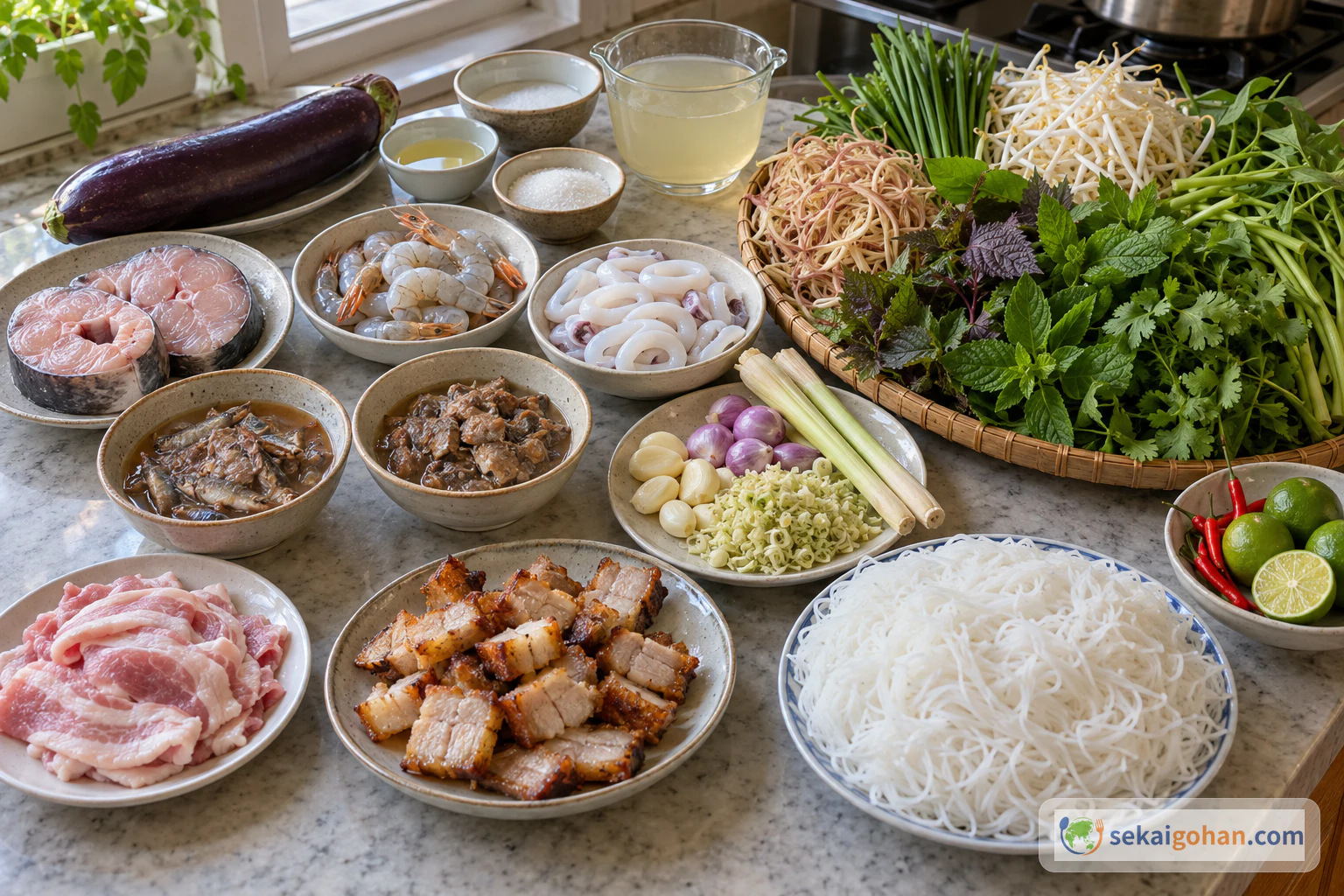
The two fermented fish, the seafood and the roast pork are the heart of the bowl. Set out the raw and cooked foods on separate plates from the start.
The 200 g of pork belly is raw and optional. The 500 g of roasted pork is a separate, already-cooked topping. The minced lemongrass and the smashed stalks are also two separate items.
Equipment
- Small pot for simmering the two fermented fish
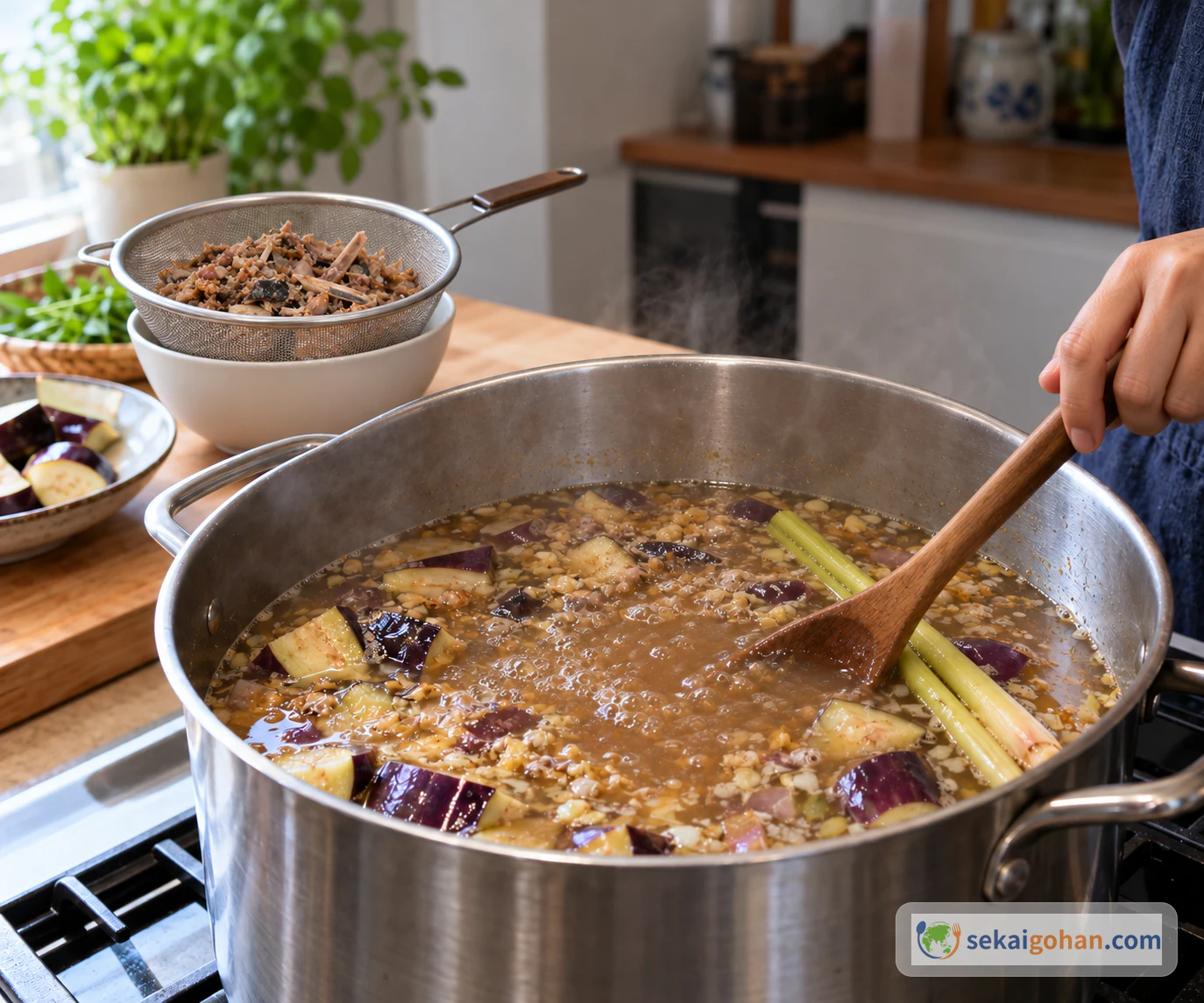
- Large soup pot with room for the soup liquids, the strained mắm liquid, the eggplant and the seafood basket
- Fine-mesh strainer and a clean container to catch the liquid
- Wire cooking basket for the seafood
- Pot and colander for preparing the rice vermicelli
- Knife, cutting boards, measuring cups and spoons, ladle and soup bowls
- Water spinach splitter (a clean knife can be used to split the stems if you don't have one)
- Food thermometer, for checking that the seafood is cooked through
Use separate boards and utensils for raw seafood and pork and for the greens that will be eaten raw, or wash them well between tasks.
Shopping and Substitutions: Fermented Fish Is Not Fish Sauce
At a Vietnamese or Southeast Asian grocer, look for the names mắm cá linh and mắm cá sặc on the label. They are two different products, so buy both. Read the product name, the ingredient list and the storage instructions after opening on each jar or pack.
What not to swap in:
- Liquid fish sauce (nước mắm) is a different ingredient from mắm and does not replace the two fermented fish.
- Mắm nêm belongs to Da Nang's dry bún mắm thịt heo, not this soup.
- Coconut milk is not coconut juice. The soup uses coconut juice, the clear liquid, also called coconut water.
Rice vermicelli comes in different forms. Prepare whichever you buy according to its package.
There are no tested substitutes for the catfish, shrimp, squid or pork in this recipe, so this article does not suggest any. For the greens platter, it is fine to put out whichever of the listed greens you can find. Other vegetables are not equivalent replacements. Fruits and garnishes from other dishes, such as pineapple, peanuts or fish cakes, are not part of this bowl.
Method: Strain the Fermented Fish, Cook the Seafood Last
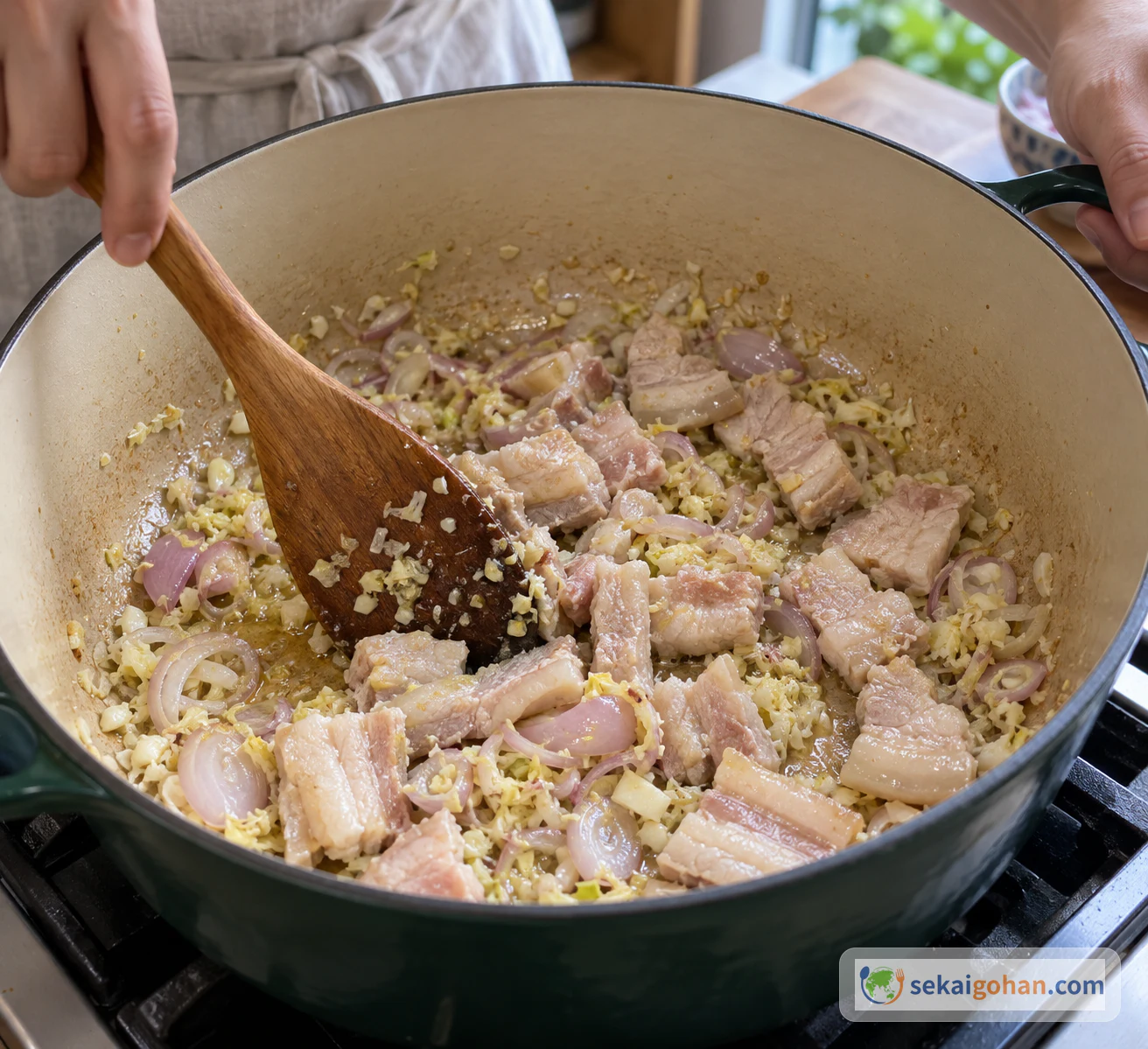
First prepare the greens, noodles and eggplant. Then simmer and strain the fermented fish, sauté the aromatics, and build the soup. Cook the seafood in a basket at the end, and assemble the bowls.
At the Table: Greens, Lime and Chili
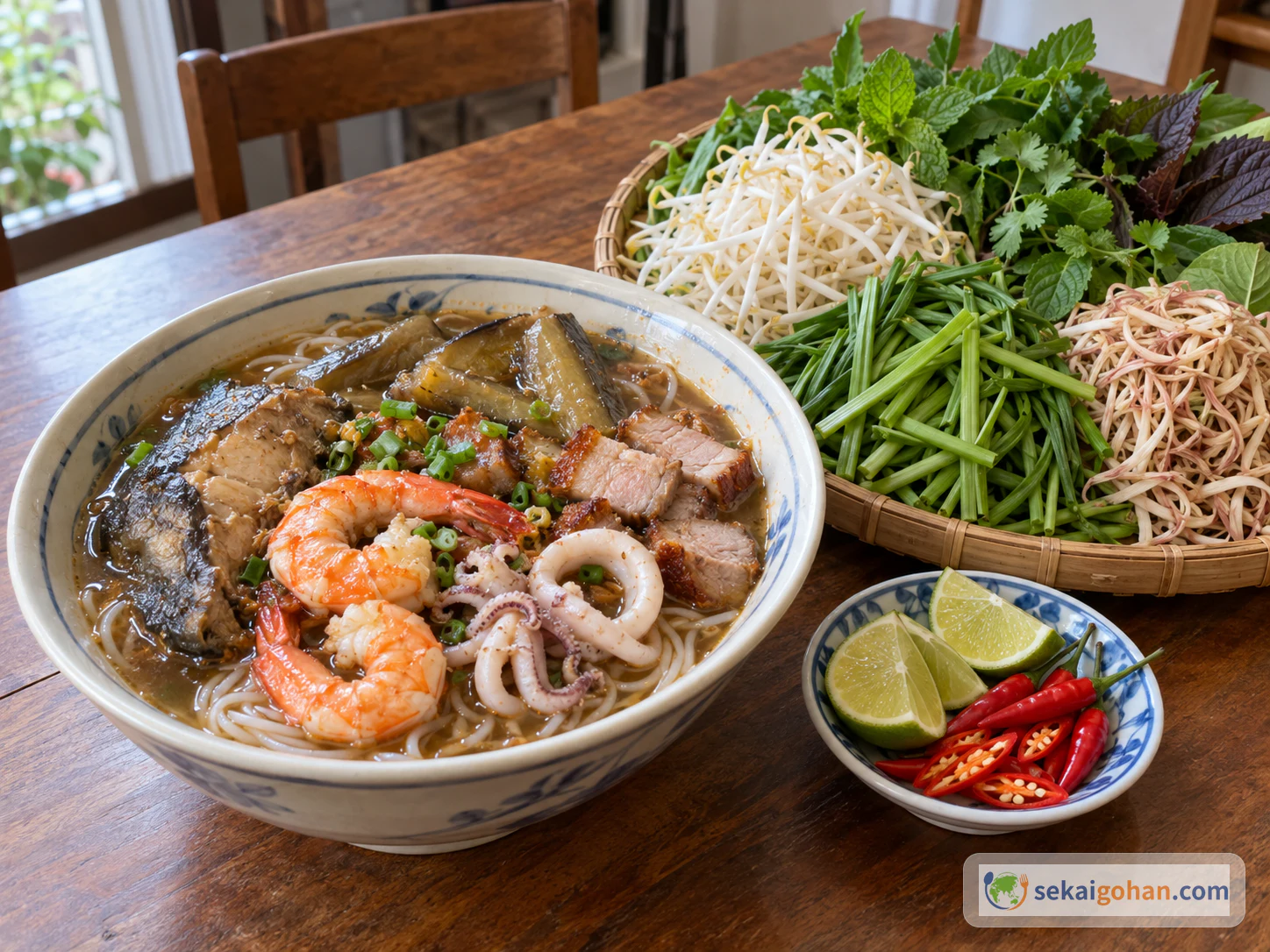
Part of the pleasure of bún mắm is that the bowl is finished by the person eating it. Tuoi Tre News describes diners adding the greens, lime and chili to their own bowls at the table. Helen Le's recipe serves the soup the same way, with the greens platter, lime and chili alongside. The heat depends on how much chili each person adds and on the chilies themselves, so leave that choice at the table.
Common Mix-ups and How to Avoid Them
| Problem | Why it happens | What to do |
|---|---|---|
| The broth is built on liquid fish sauce | "Mắm" was read as nước mắm | Use the two fermented fish, mắm cá linh and mắm cá sặc, simmered and strained |
| Bones or bits of fish in the soup | The mắm liquid went in without straining | Pass the simmered liquid through a fine-mesh strainer and discard the solids |
| Raw pork and cooked pork confused | The optional pork belly and the roast pork topping were treated as one item | The 200 g pork belly is raw and cooked in step 3; the 500 g roast pork is already cooked and goes on top |
| Soup turns creamy and rich | Coconut milk was used | Use coconut juice, the clear liquid |
| Unsure whether the seafood is done | There is no fixed cooking time for the basket | Check the center of the thickest piece of fish with a thermometer for 75°C held at least 1 minute |
| Greens touched by raw seafood juices | Shared board, knife or hands | Prepare the greens first, keep them apart, and wash hands and tools after handling raw foods |
Variations Within the Recipe
- With or without pork belly. The 200 g of sliced pork belly is optional. Leaving it out does not change the roast pork topping.
- Pork broth instead of water. Helen Le offers pork broth as an option in place of the 3 L of water. This article uses water as the base.
- Greens you can find. Put out whichever of the listed greens are available to you.
- Raw or blanched greens. VnExpress International reports one restaurant where diners can ask for the side greens raw or lightly blanched. That is one restaurant's practice, not a rule for every kitchen.
Food Handling, Storage and Allergies
Keep the juices of raw fish, shellfish and pork away from the greens that will be eaten raw. Wash your hands and wash knives and cutting boards after handling them. For cooked foods, Japan's Ministry of Health, Labour and Welfare gives a general household guide of heating the center to 75°C for at least 1 minute.
For leftovers, follow the same ministry's general household guidance. Don't leave the soup at room temperature for long. Divide leftover soup into clean, shallow containers so it cools quickly, then refrigerate it promptly in a refrigerator kept at 10°C or below. When reheating, heat leftovers thoroughly to at least 75°C and bring the soup to a boil. There is no specific storage period for this soup, so eat leftovers soon, and don't eat anything that has been kept too long or seems off.
This article does not cover making fermented fish at home. Simmering does not make an unsuitable fermented product safe.
This dish contains fish (in the mắm and the catfish), shrimp, squid and pork. Chicken stock and fermented fish products may contain other ingredients depending on the brand, so check the label of every product you buy.
Frequently Asked Questions
Are mắm and nước mắm the same thing?
No. Tuoi Tre News distinguishes mắm, fermented seafood paste, from nước mắm, the common liquid fish sauce. This soup's broth starts from two kinds of fermented fish, mắm cá linh and mắm cá sặc, simmered in water and strained.
Can I use mắm nêm instead?
It is not recommended as a substitute. Mắm nêm is the base of Da Nang's dry bún mắm thịt heo, which the Da Nang tourism office describes as a mixed noodle dish with pork, young jackfruit and peanuts. That is a different dish from this soup.
Is bún mắm the same as bún nước lèo?
No. VnExpress notes that the two are sometimes confused because both use fermented fish in the broth, but they are different dishes.
Can I leave out the pork belly?
Yes. Helen Le lists the 200 g of pork belly as optional. The 500 g of chopped roast pork is a separate, already-cooked topping, so the bowls still get pork on top.
How many grams of noodles should I use?
Helen Le gives the noodles only as a handful per bowl, with no weight. Prepare the noodles you buy according to their package and portion them by the handful.
Is the chicken stock powdered or liquid?
Helen Le's recipe does not say. Whichever form you choose, follow its label and add it to taste.
Why does the recipe say 200 g and 8 oz?
Helen Le's page prints each fermented fish as 200 g with 8 oz in parentheses. Those weights are not equal, so this article uses 200 g.
How long does it keep?
There is no specific storage period for this soup. Cool leftovers quickly in shallow containers, refrigerate them promptly at 10°C or below, and bring the soup to a boil when reheating. Eat leftovers soon.
Sources
- Helen's Recipes / Helen Le, "Bún Mắm – Rice Vermicelli Soup / Fermented Fish and Seafood." The recipe this article follows: yield of 4–6 servings, published time estimates, ingredient amounts, simmering and straining the two fermented fish, water spinach prep, sautéing, building the soup, cooking the seafood in a basket and serving. https://helenrecipes.com/recipe-bun-mam-rice-vermicelli-soup-w-fermented-fish-and-seafood/
- Tuoi Tre News, "'Bun mam': A smorgasbord in a noodle soup from Vietnam's Mekong Delta." The difference between mắm paste and liquid nước mắm, and diners adding greens, lime and chili at the table. An editorial travel account, not a recipe. https://news.tuoitre.vn/bun-mam-a-smorgasbord-in-a-noodle-soup-from-vietnams-mekong-delta-10364069.htm
- VnExpress International, "Fermented fish noodle soup: A captivating southern specialty." Mekong Delta associations, regional variation in fish and fermented fish, one restaurant's raw or blanched greens, and one owner's account of a Cambodian predecessor using mắm bò hóc. https://e.vnexpress.net/news/food-recipes/fermented-fish-noodle-soup-a-captivating-southern-specialty-4554927.html
- VOV.VN (credited to Saigon Times), "Unique fermented fish noodle soup." A report of the Cambodian prahok connection as one account of the dish's lineage. Used only as attributed supporting context. https://english.vov.vn/en/travel/entertainment/unique-fermented-fish-noodle-soup-831553.vov
- Da Nang City Department of Culture, Sports and Tourism / Da Nang Tourism Promotion Center, "Bún mắm thịt heo, or Vietnamese fermented fish noodle soup with pork." Used only to distinguish Da Nang's dry mắm nêm noodle dish from this soup. https://danangfantasticity.com/en/eat-drink/bun-mam-thit-heo-or-vietnamese-fermented-fish-noodle-soup-with-pork
- VnExpress Du lịch, "Bún nước lèo, đặc sản miền Tây." Used only for the statement that bún nước lèo and bún mắm are different dishes. https://vnexpress.net/bun-nuoc-leo-dac-san-mien-tay-2891981.html
- Ministry of Health, Labour and Welfare (Japan), "家庭でできる食中毒予防の6つのポイント" (Six points for preventing food poisoning at home). General household guidance on cross-contamination, cooking to 75°C for at least 1 minute, refrigeration at 10°C or below, cooling leftovers in shallow containers and reheating soups to a boil. Not a shelf-life or fermented-product assessment for this dish. https://www.mhlw.go.jp/stf/seisakunitsuite/bunya/kenkou_iryou/shokuhin/syokuchu/01_00006.html