
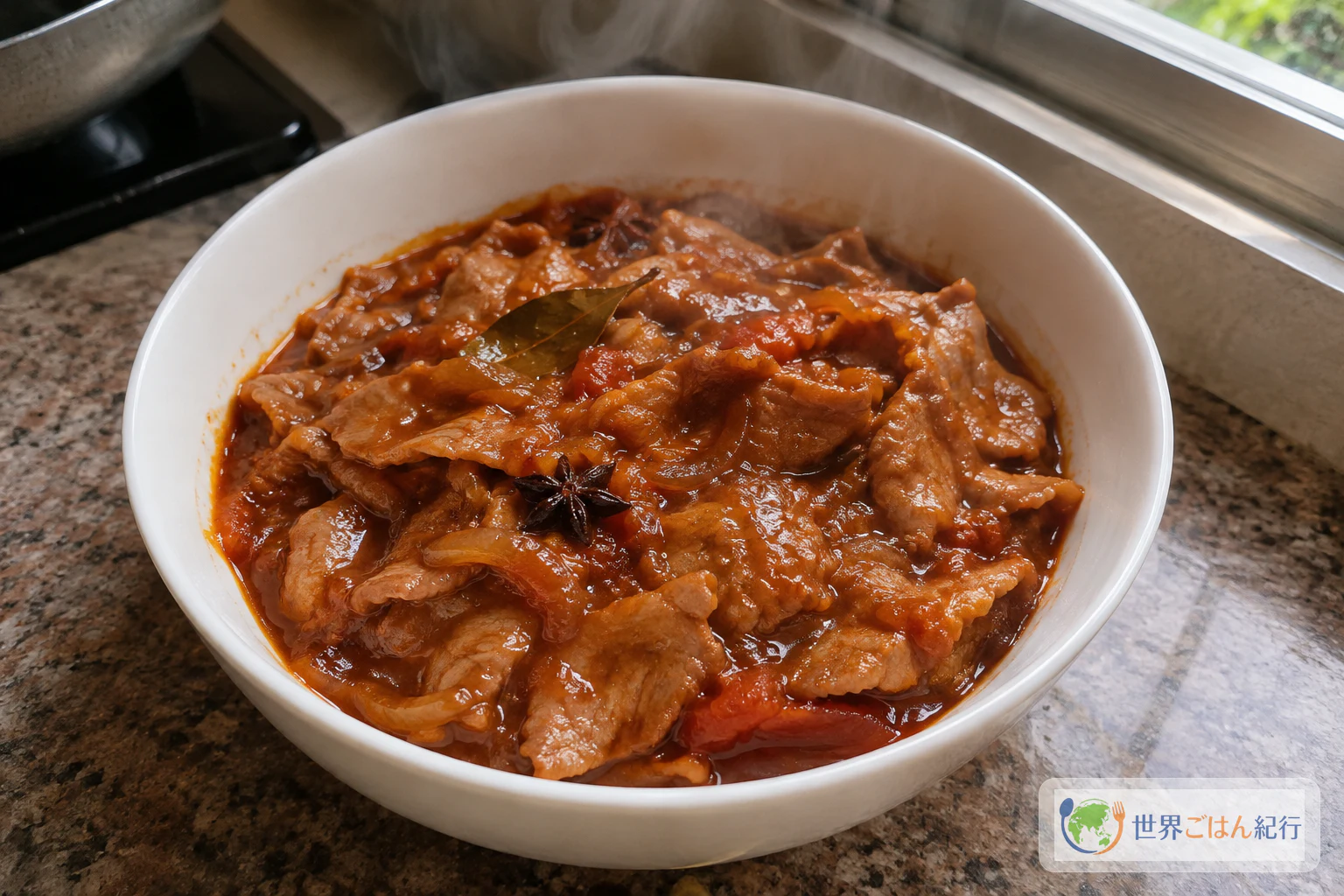
Philippine Asado: One Pork Version from a Name with Many
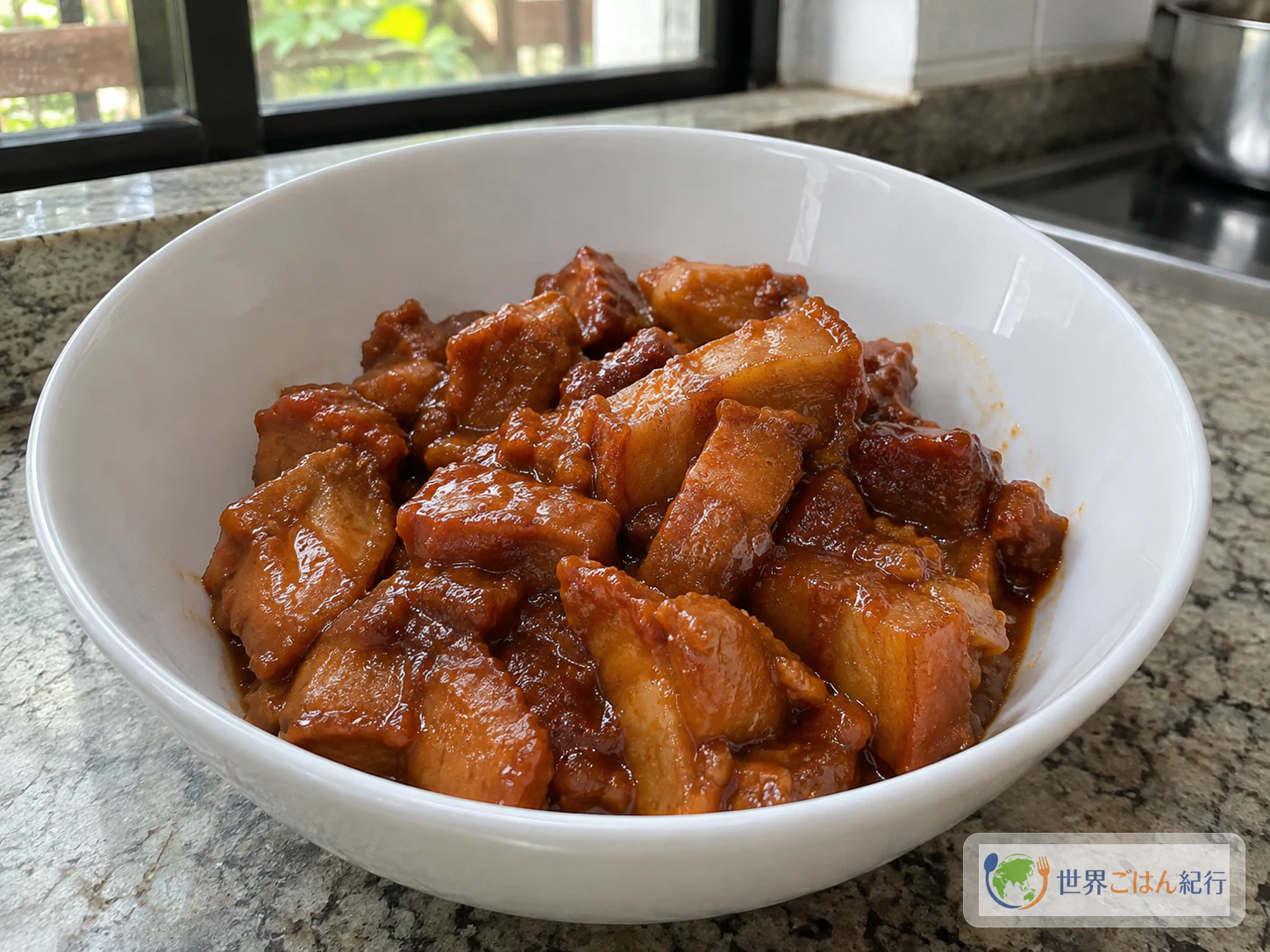
This is one modern Filipino-style pork asado, published by Ajinomoto Cookmunity Philippines as a recipe for its SARSAYA oyster sauce. It is not a national standard, and the word "asado" also covers quite different recipes.
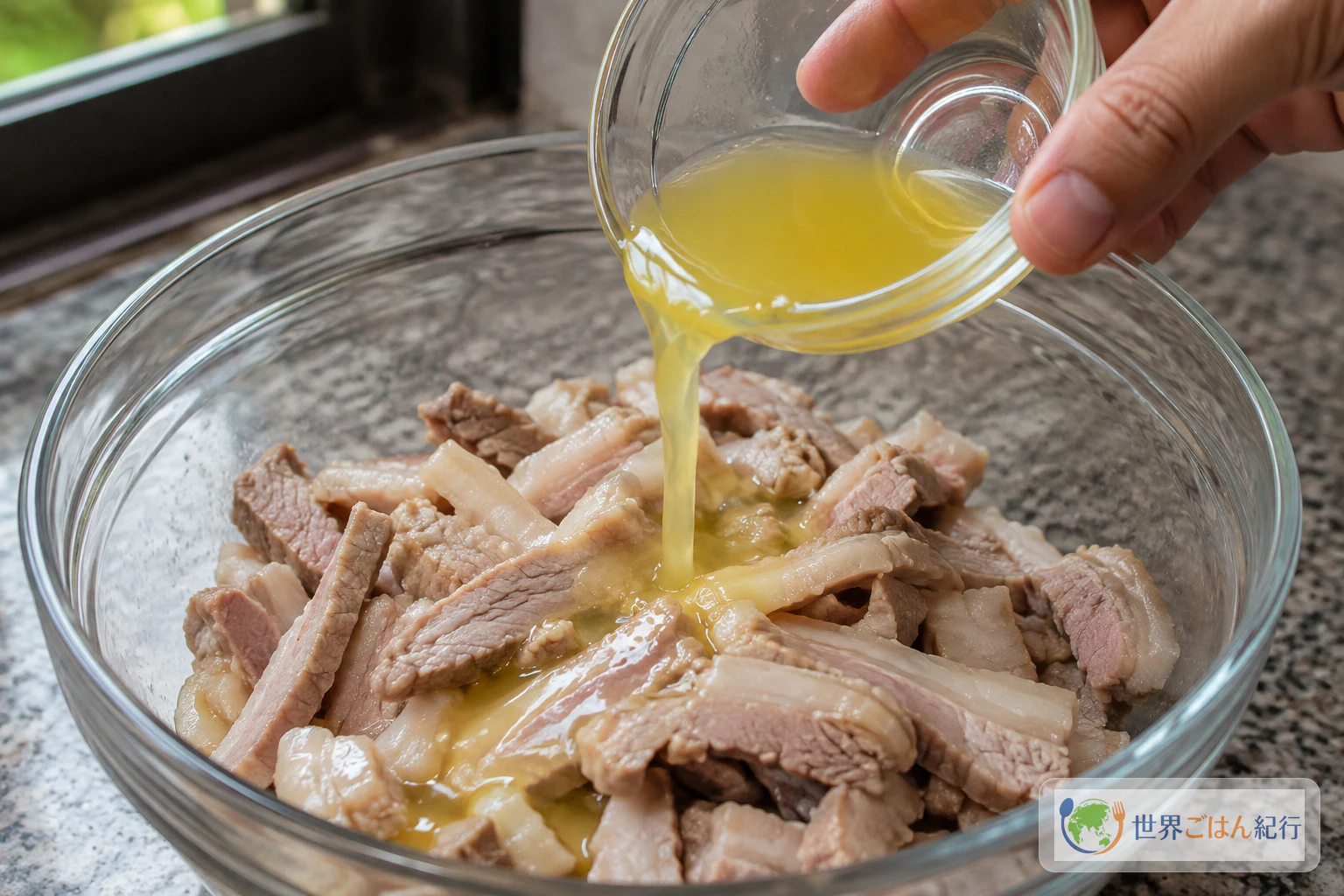
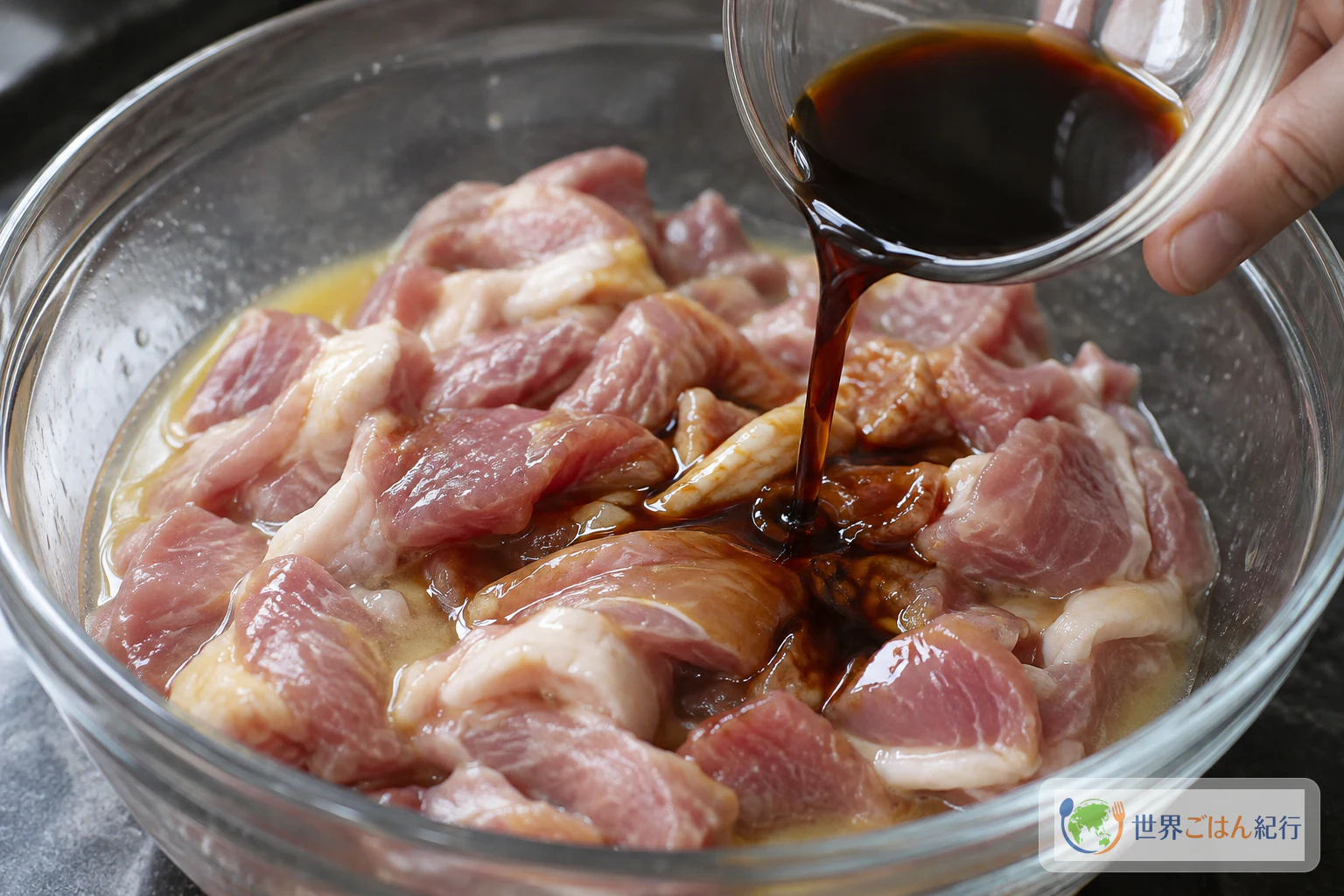
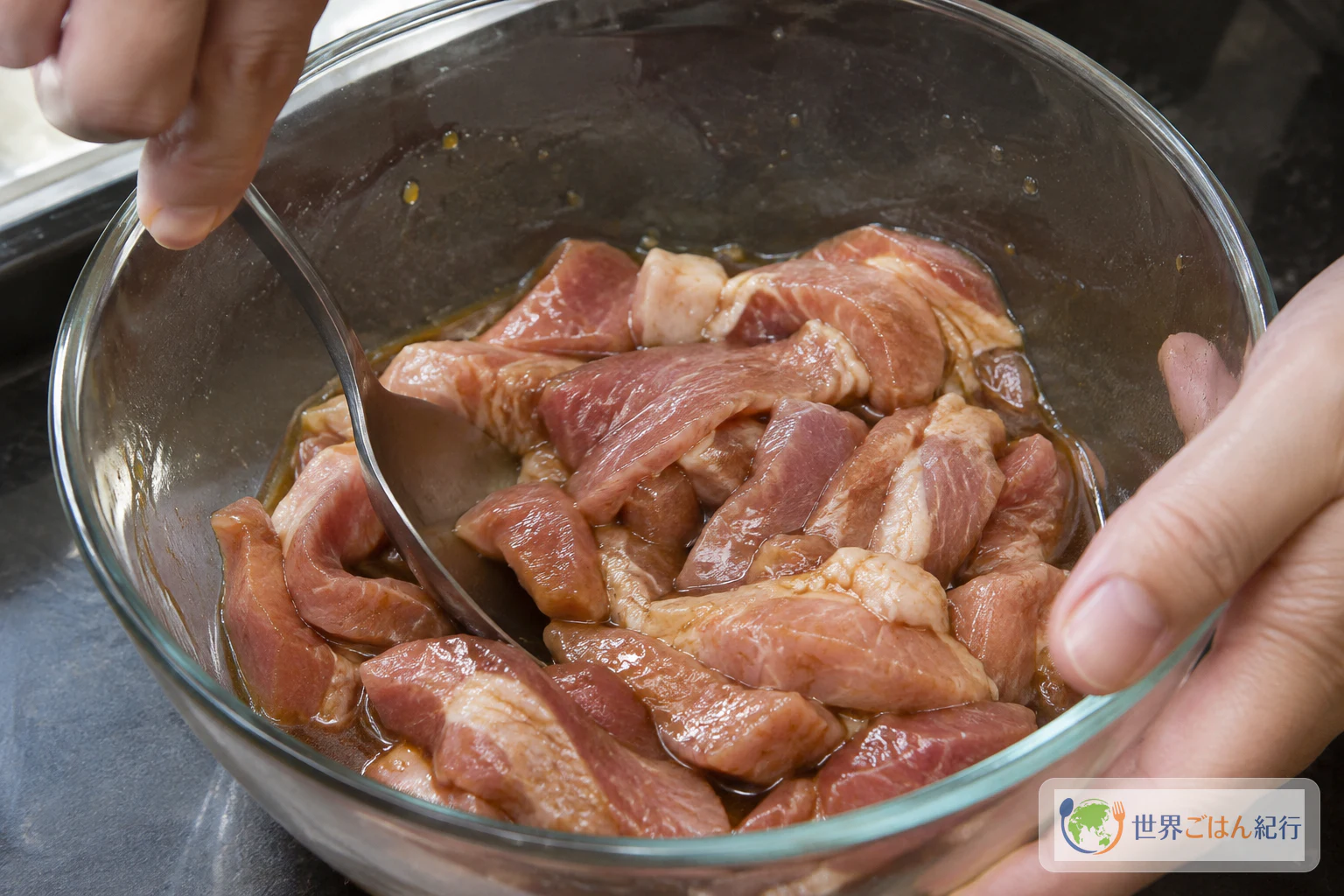
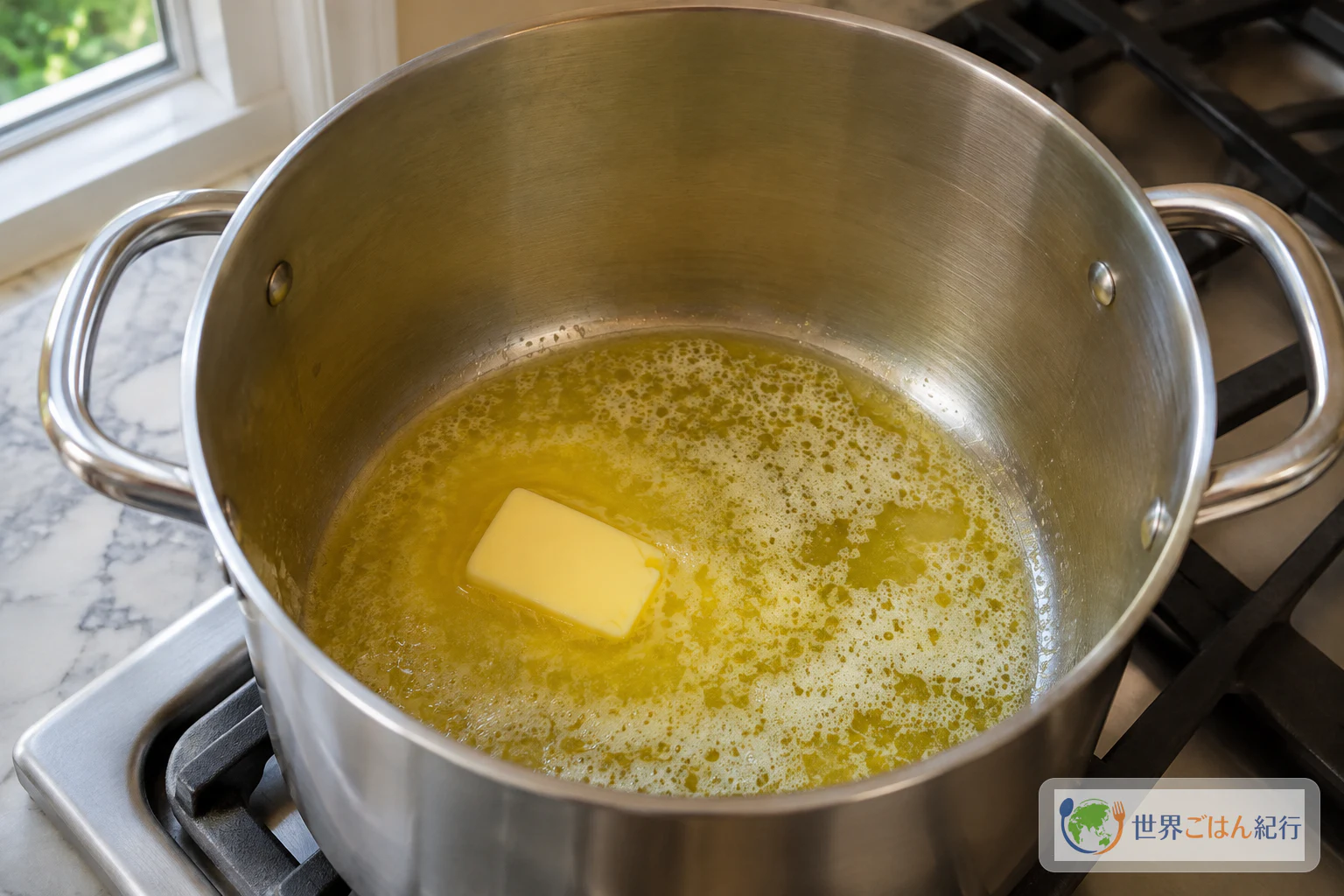
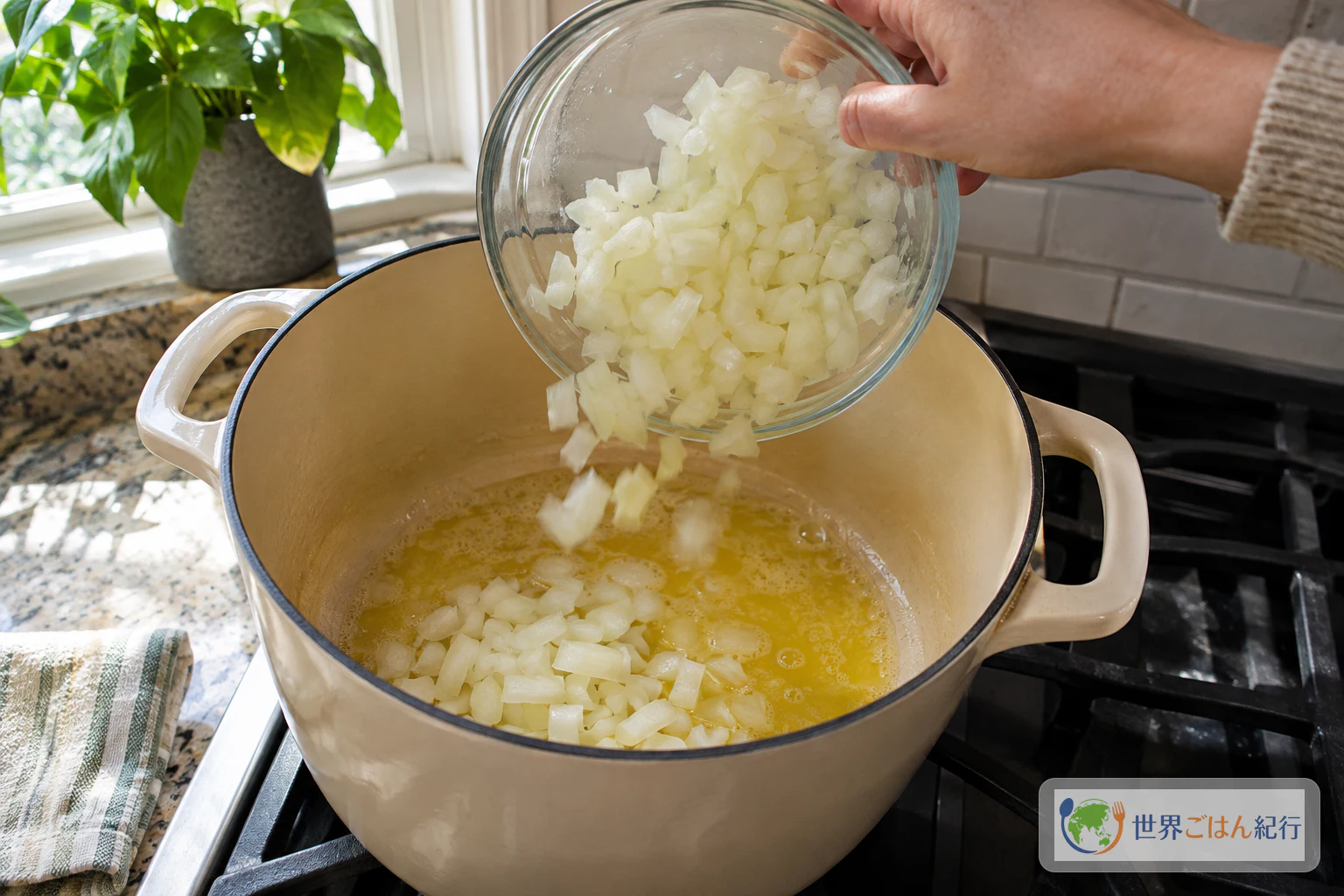
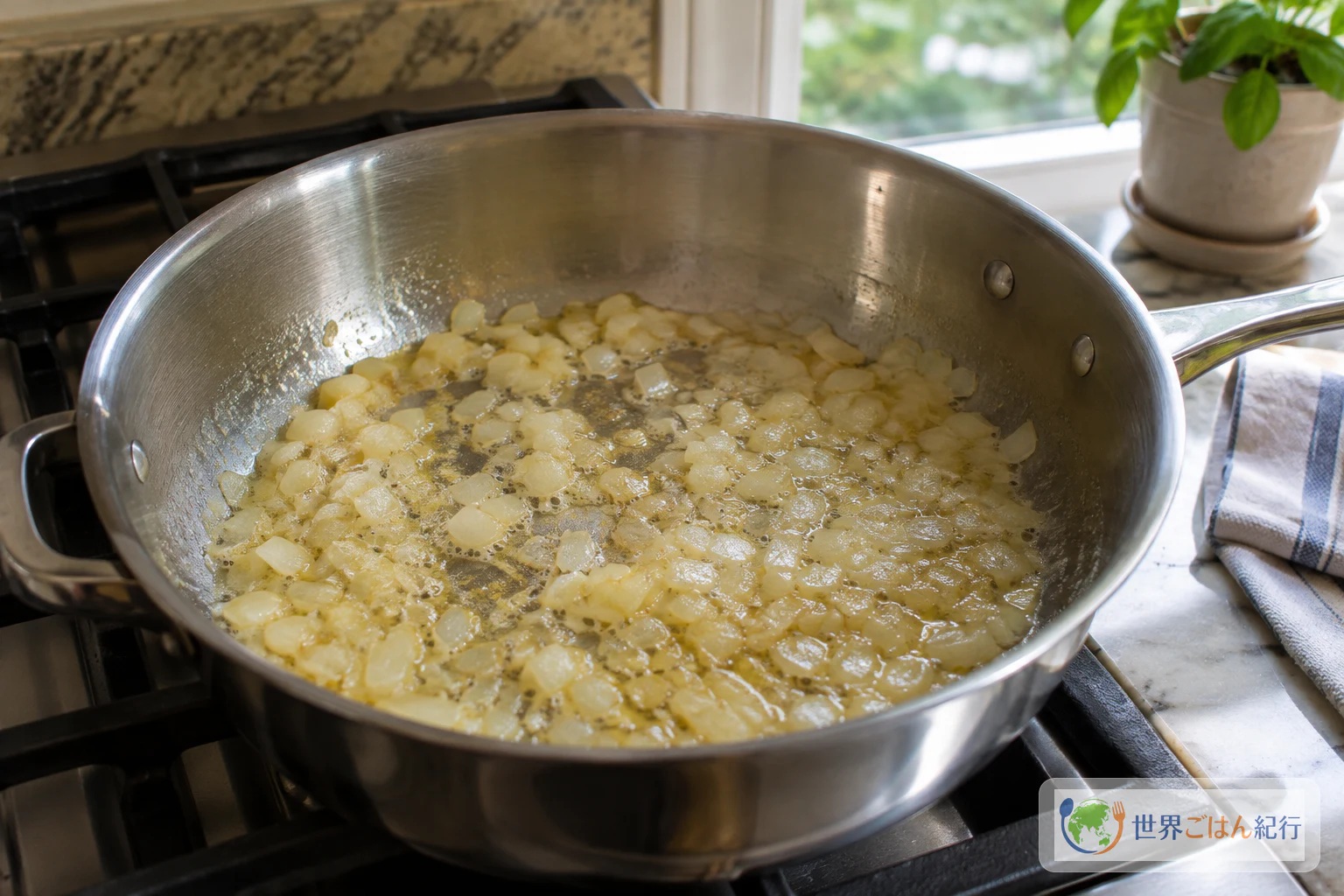
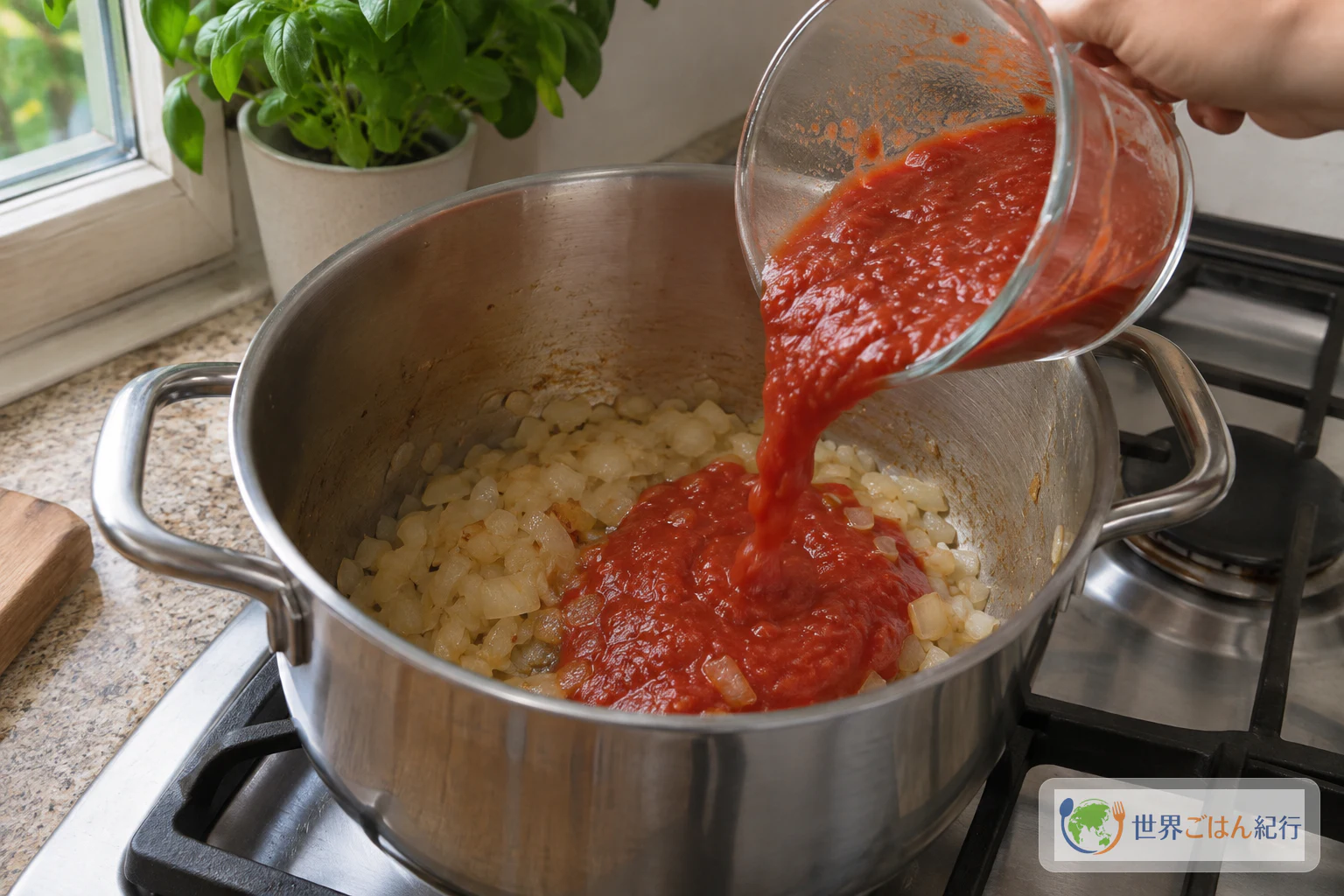
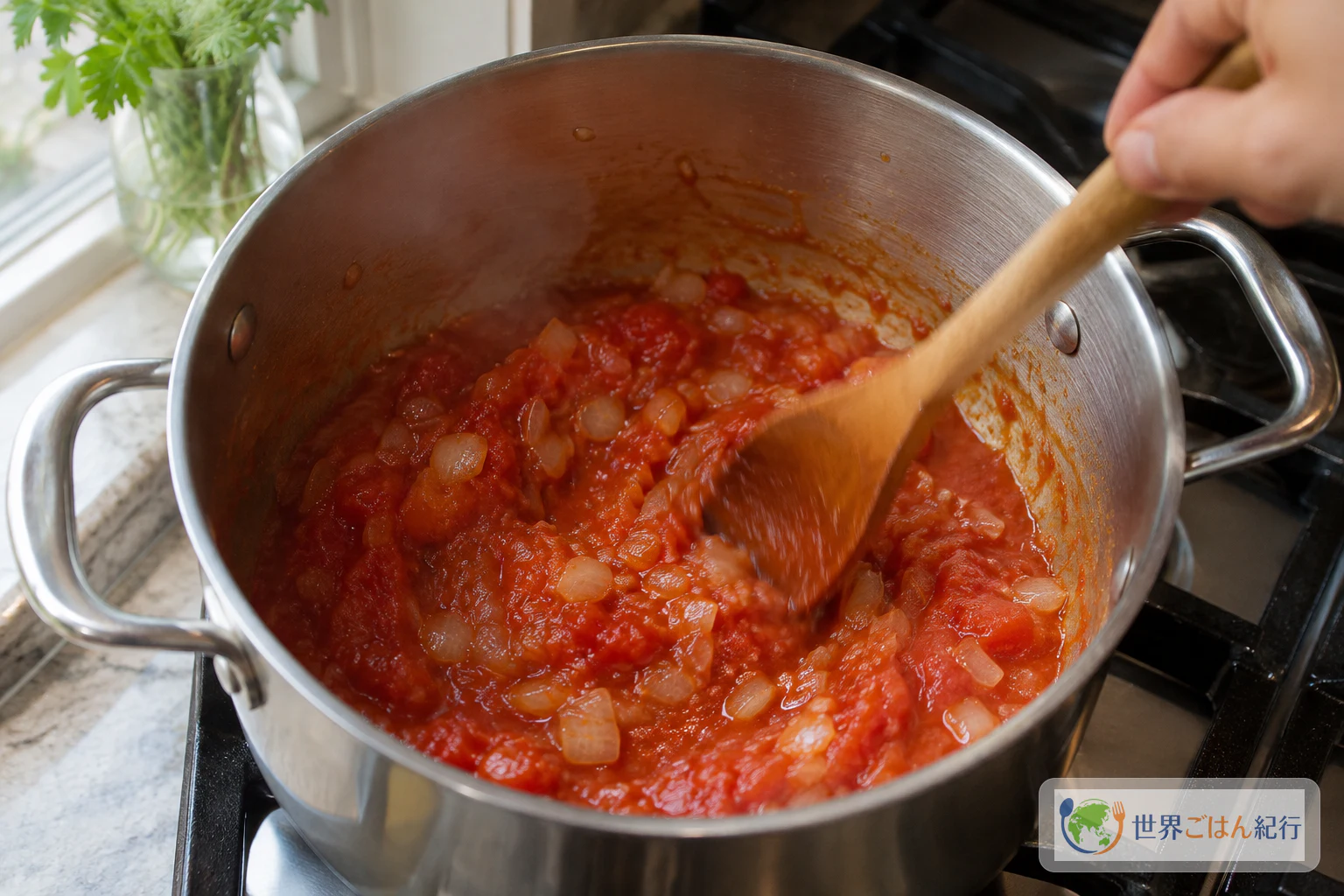
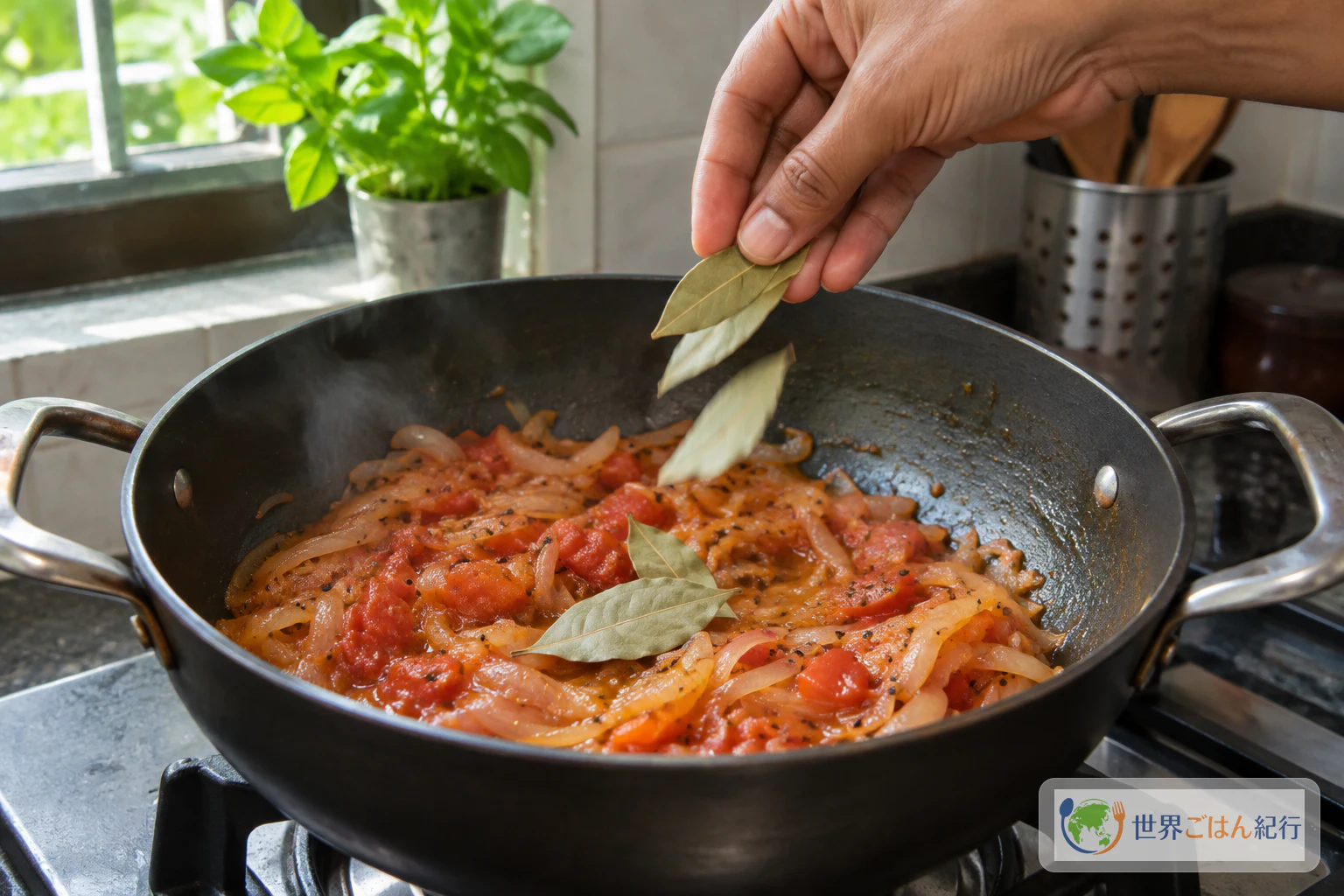
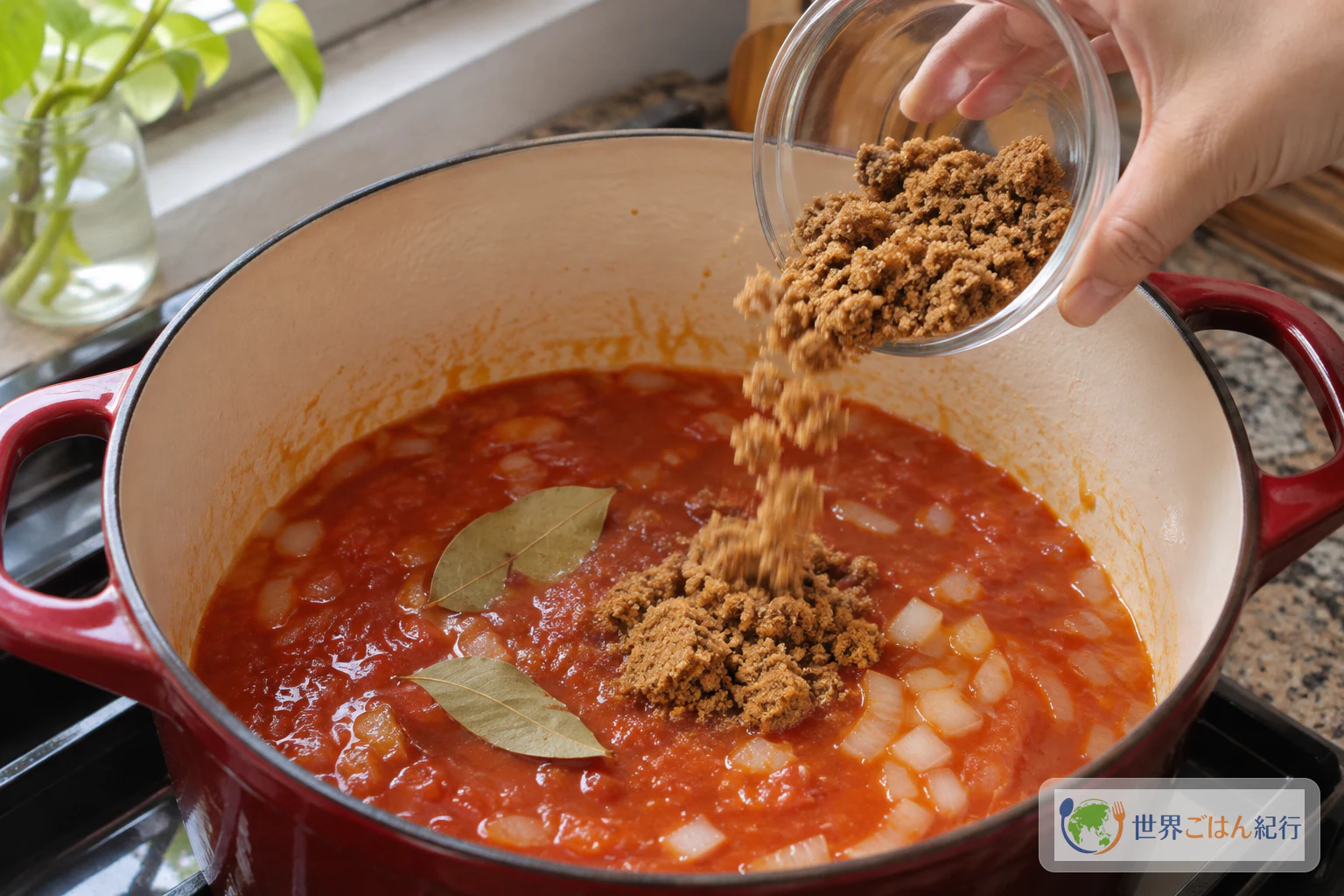
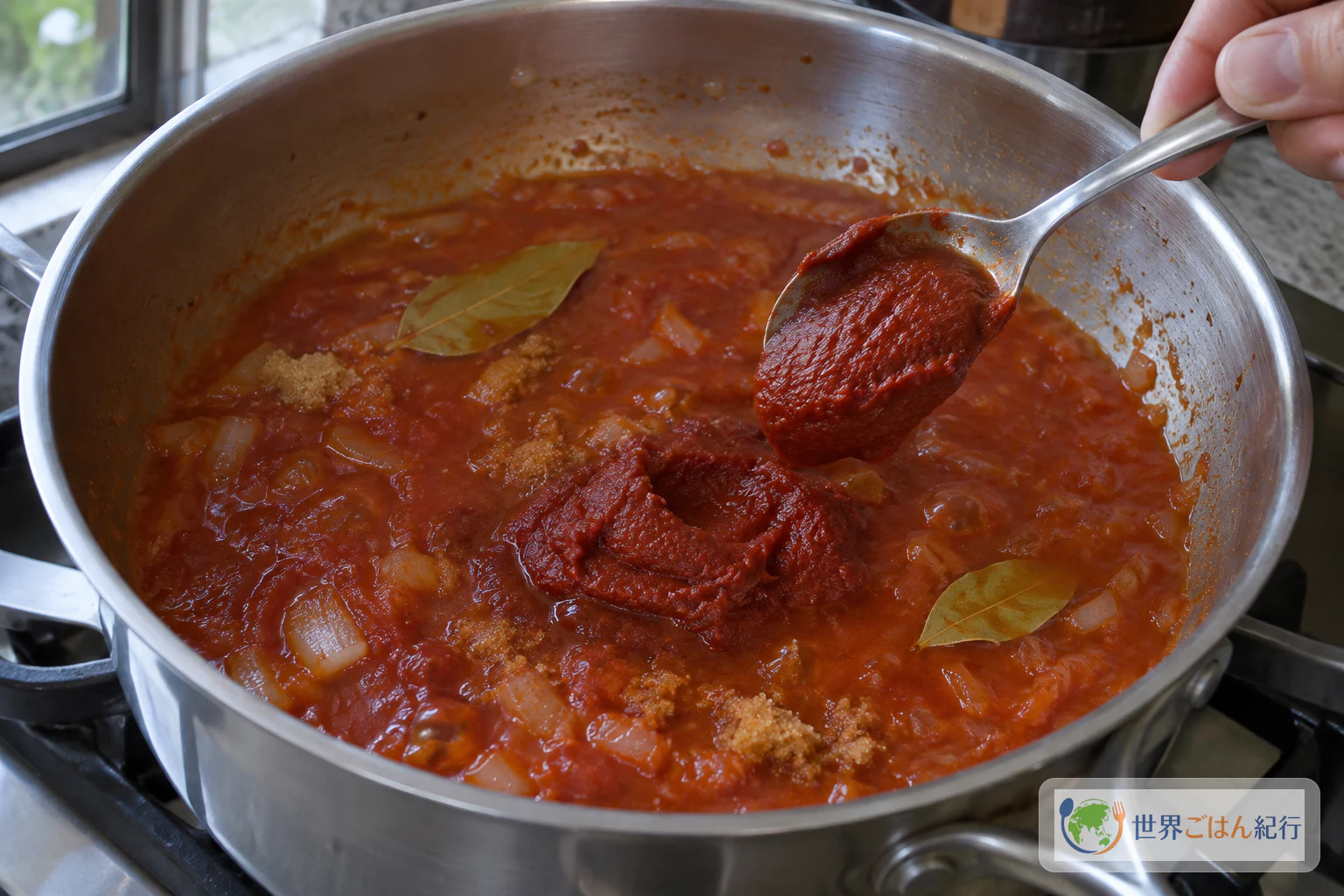
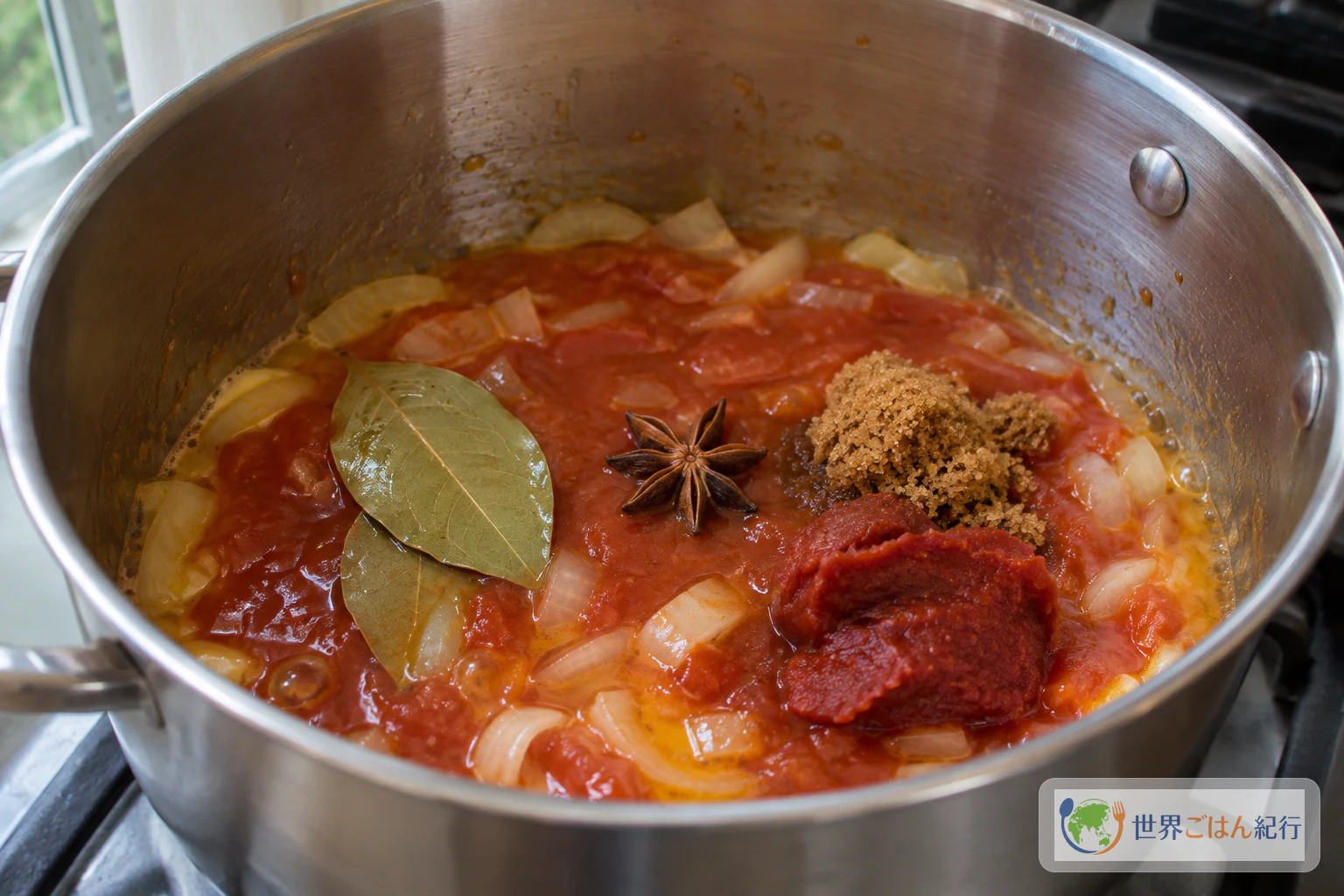
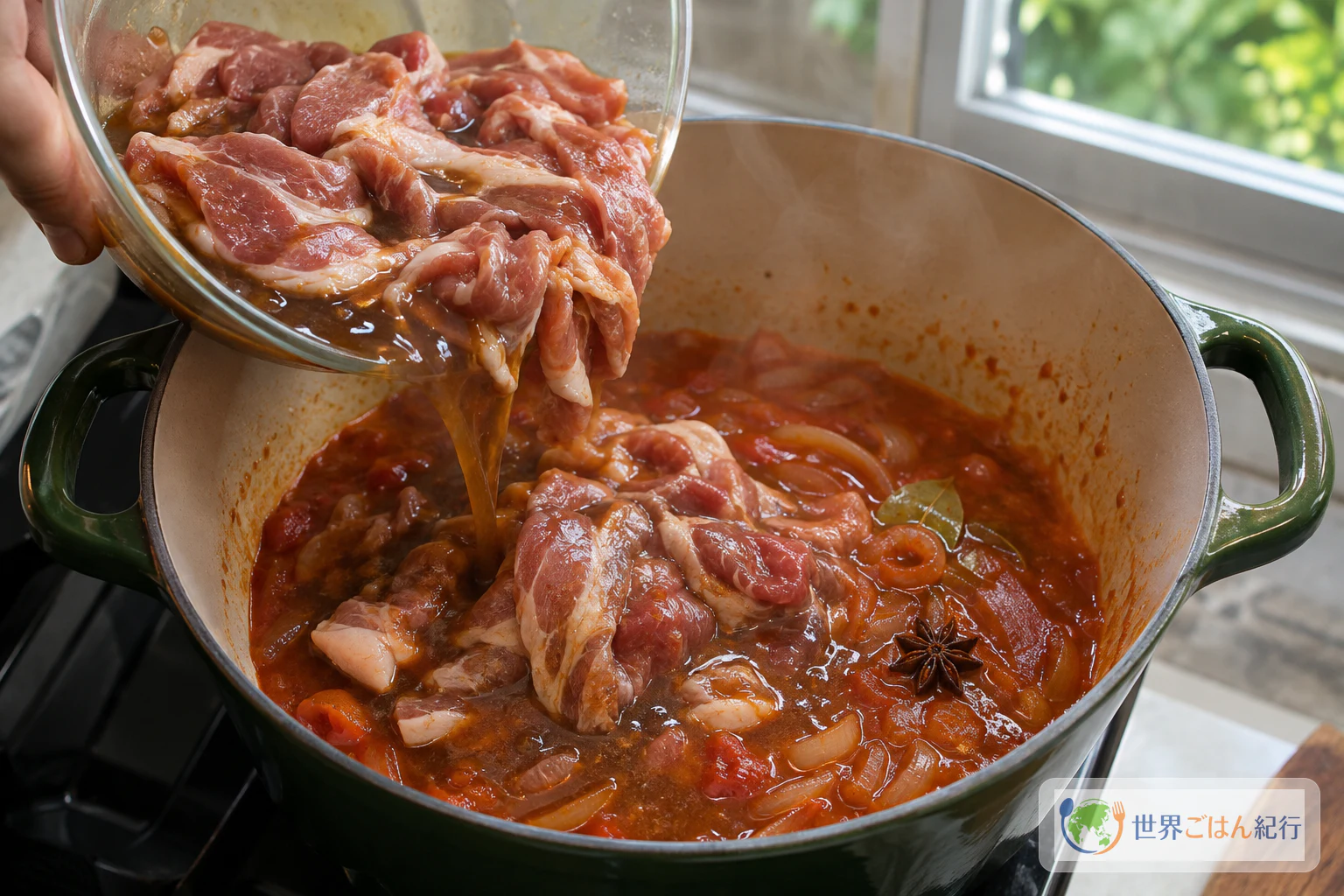
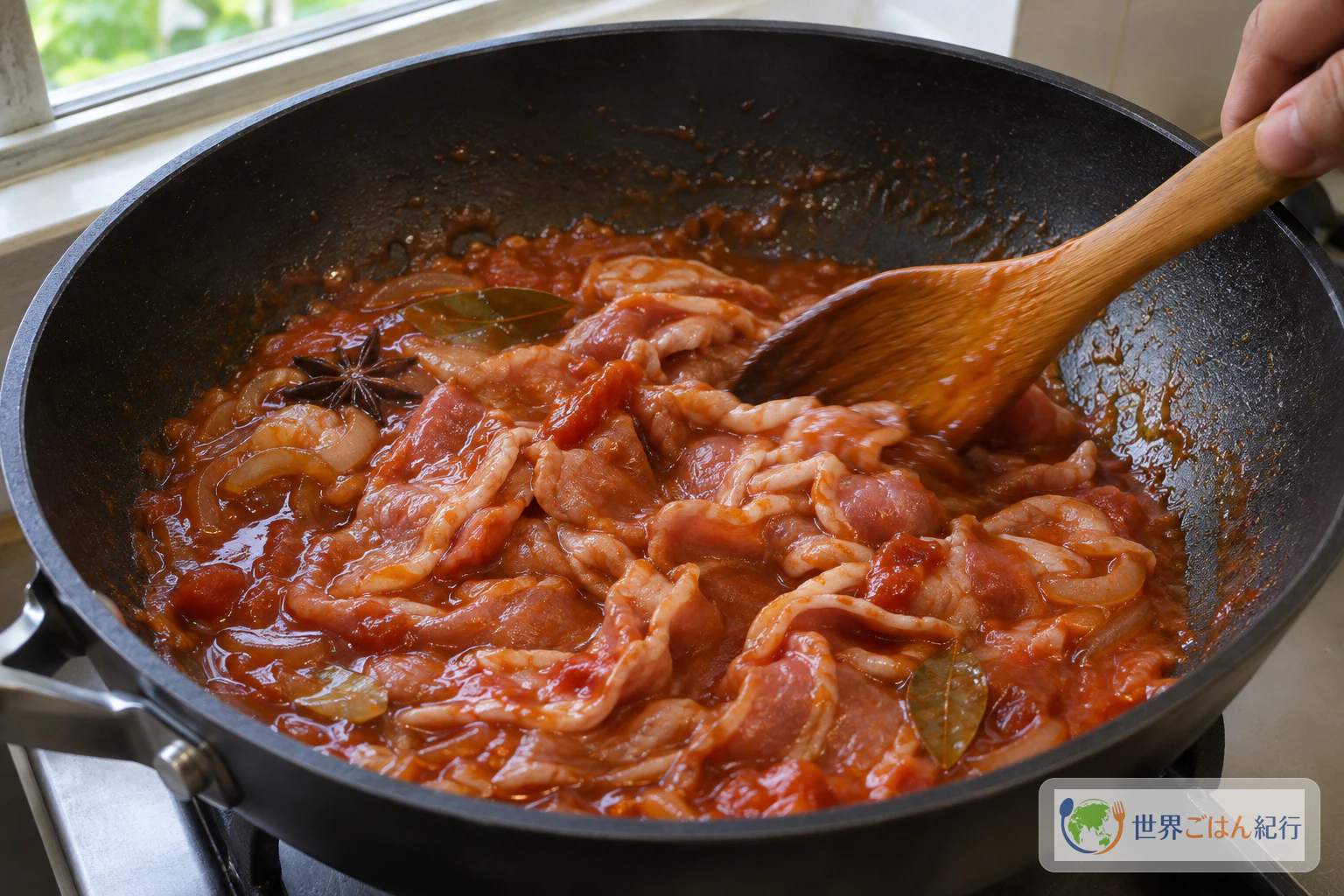
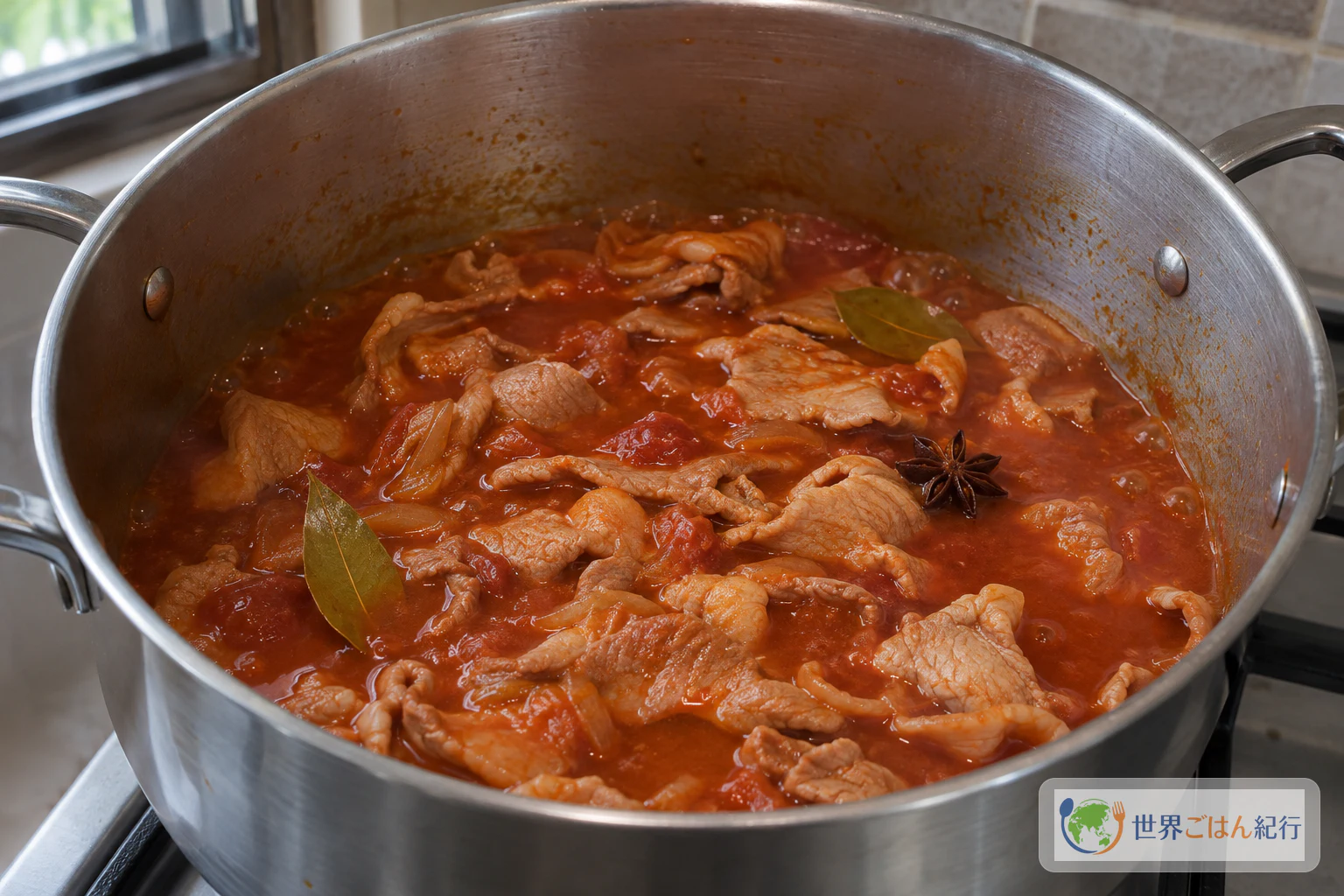
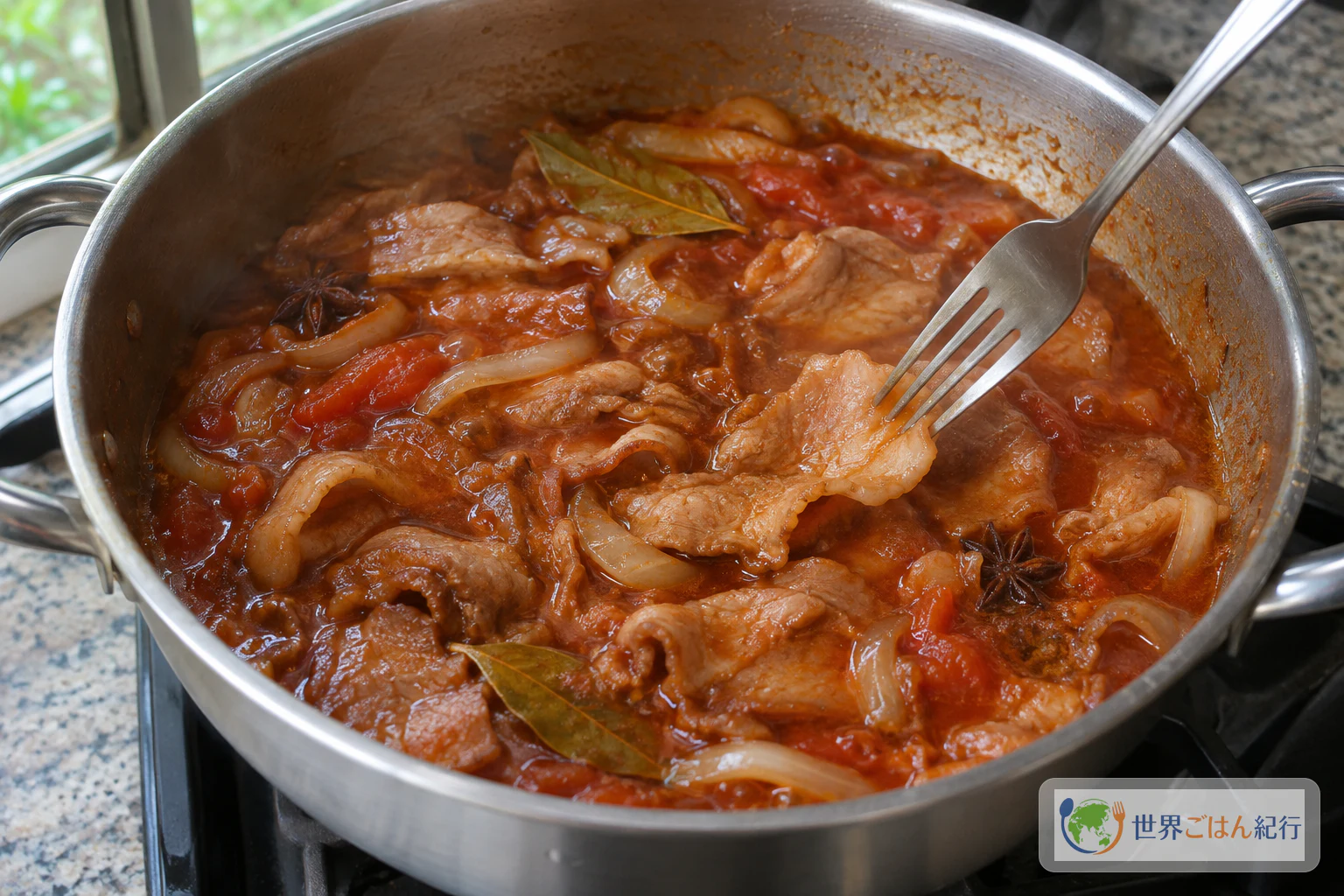
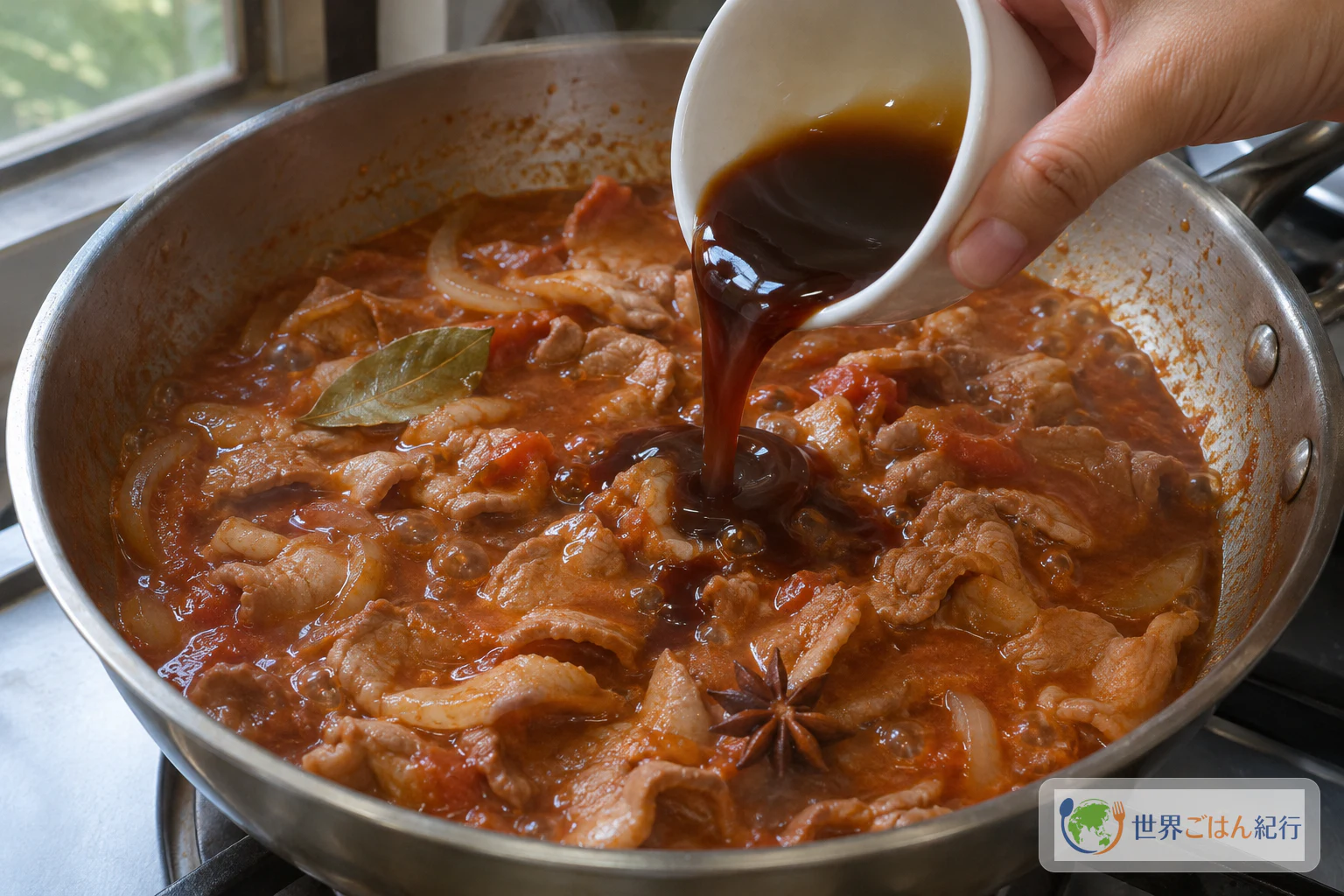
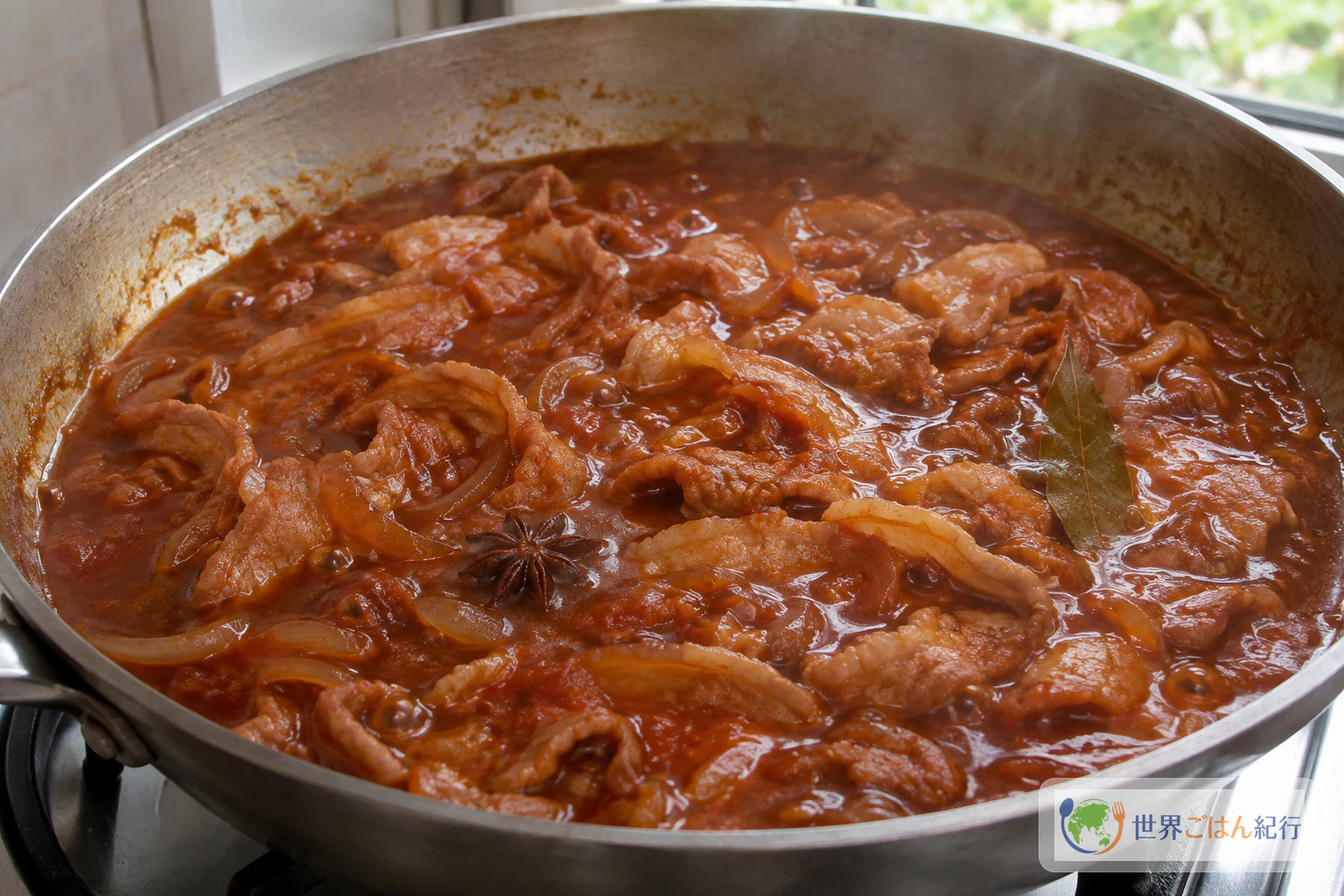
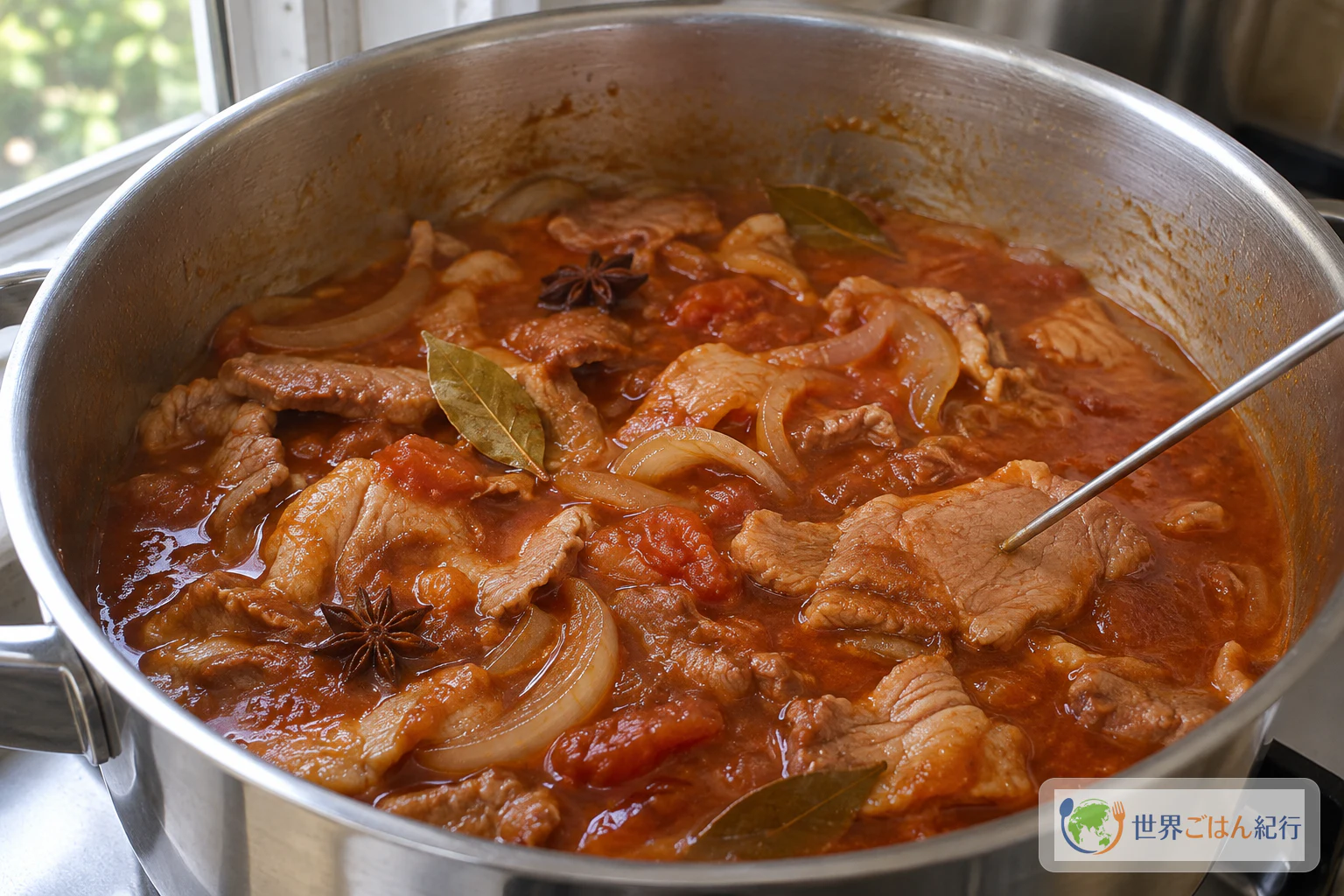
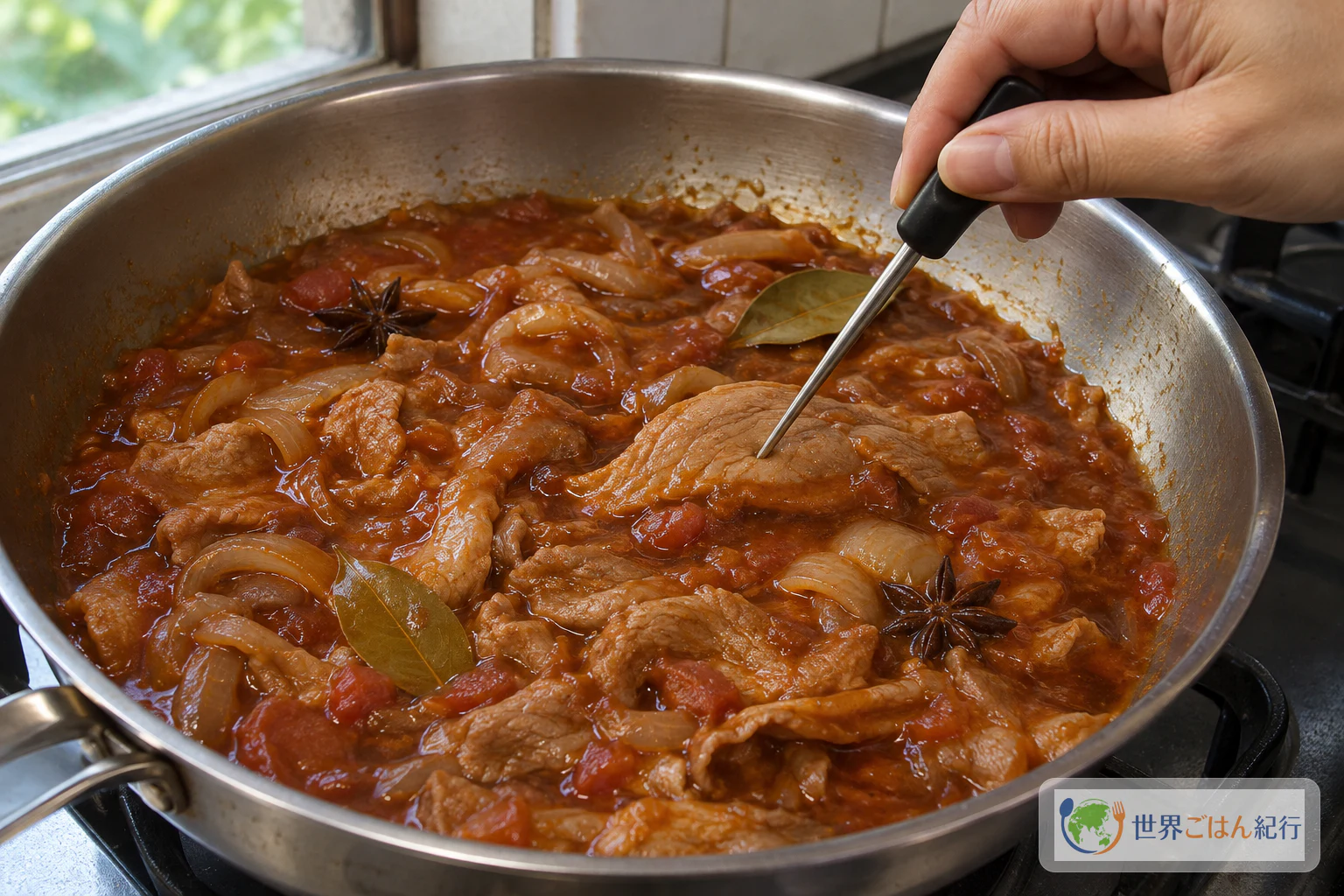
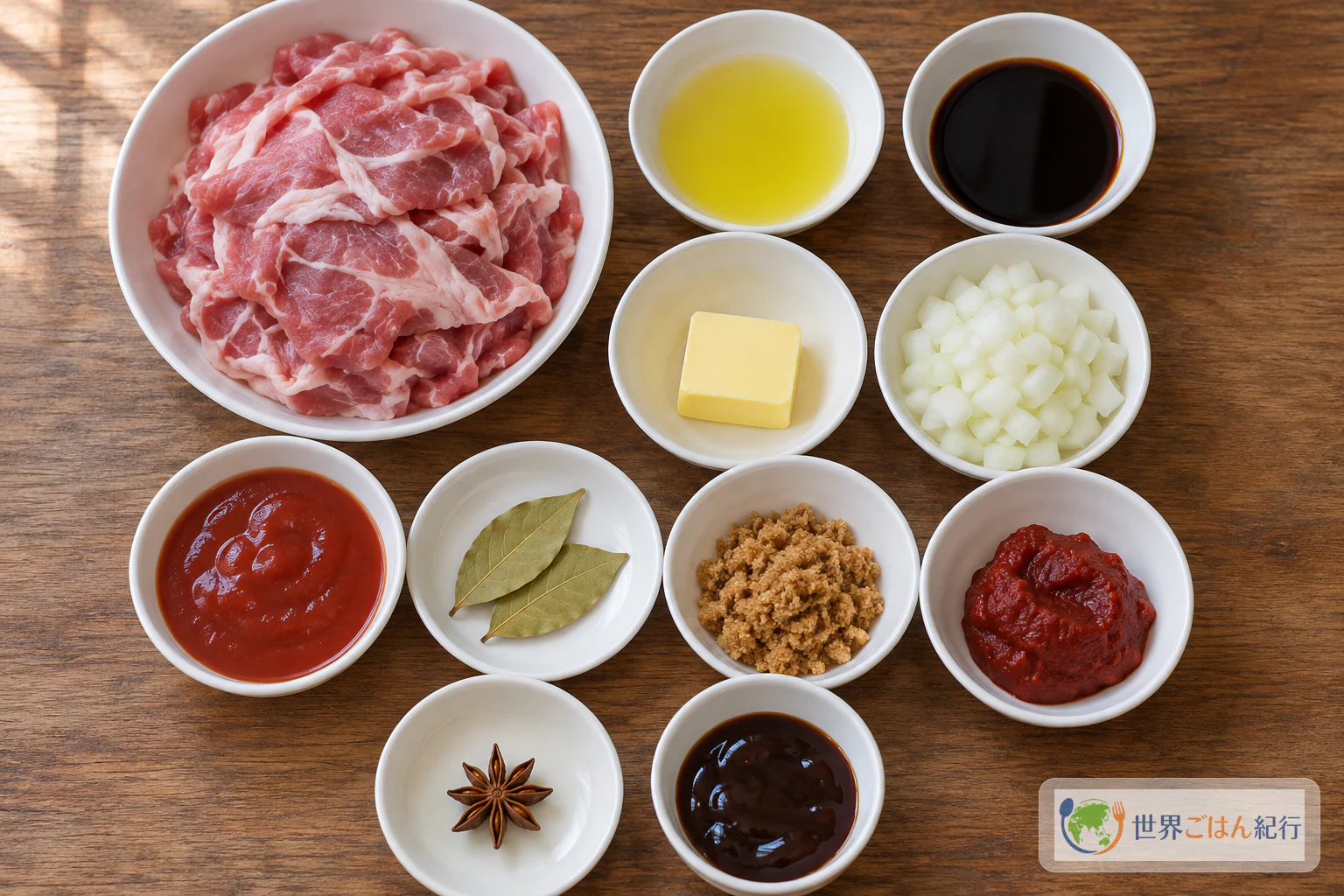
Thin slices of pork shoulder sit in calamansi juice and soy sauce for 30 minutes. In a separate pot, butter melts, chopped white onion goes in, and tomato sauce follows, then bay leaves, brown sugar, tomato paste and a single star anise. The pork joins the pot with all of its marinade and simmers until a fork passes through it easily. Only then does the oyster sauce go in, for a last few minutes on the heat.
The amounts and the order of cooking come from the Ajinomoto Cookmunity recipe. Two things are our own additions for home cooks: refrigerating the pork while it marinates, and checking the core temperature of the pork at the end. That check follows food-safety guidance from Japan's Ministry of Health, Labour and Welfare and is separate from the simmering time. Sekai Gohan has not kitchen-tested this recipe as a whole.
The published recipe lists 8 servings and a serving size of 1/2 cup (97.5 g). Treat those as its own estimates, not a measured yield. Its method and its sidebar also disagree on cooking time, which the FAQ explains.
Ingredients
Choosing and Preparing
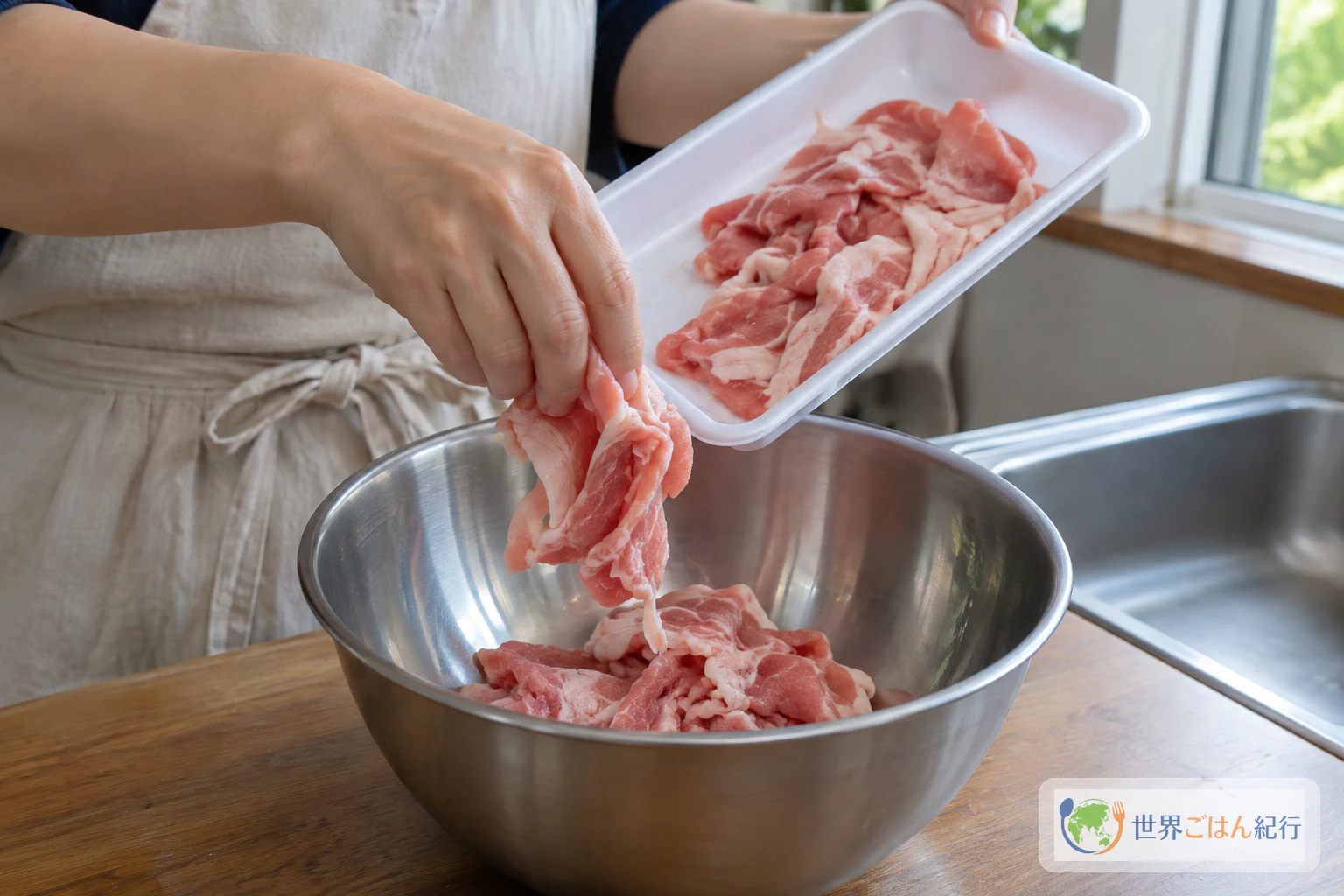
- Pork: Buy pork shoulder that is already thinly sliced. It needs no washing or further cutting.
- Calamansi: You need the juice ready to use, so keep it close at hand when you start the marinade.
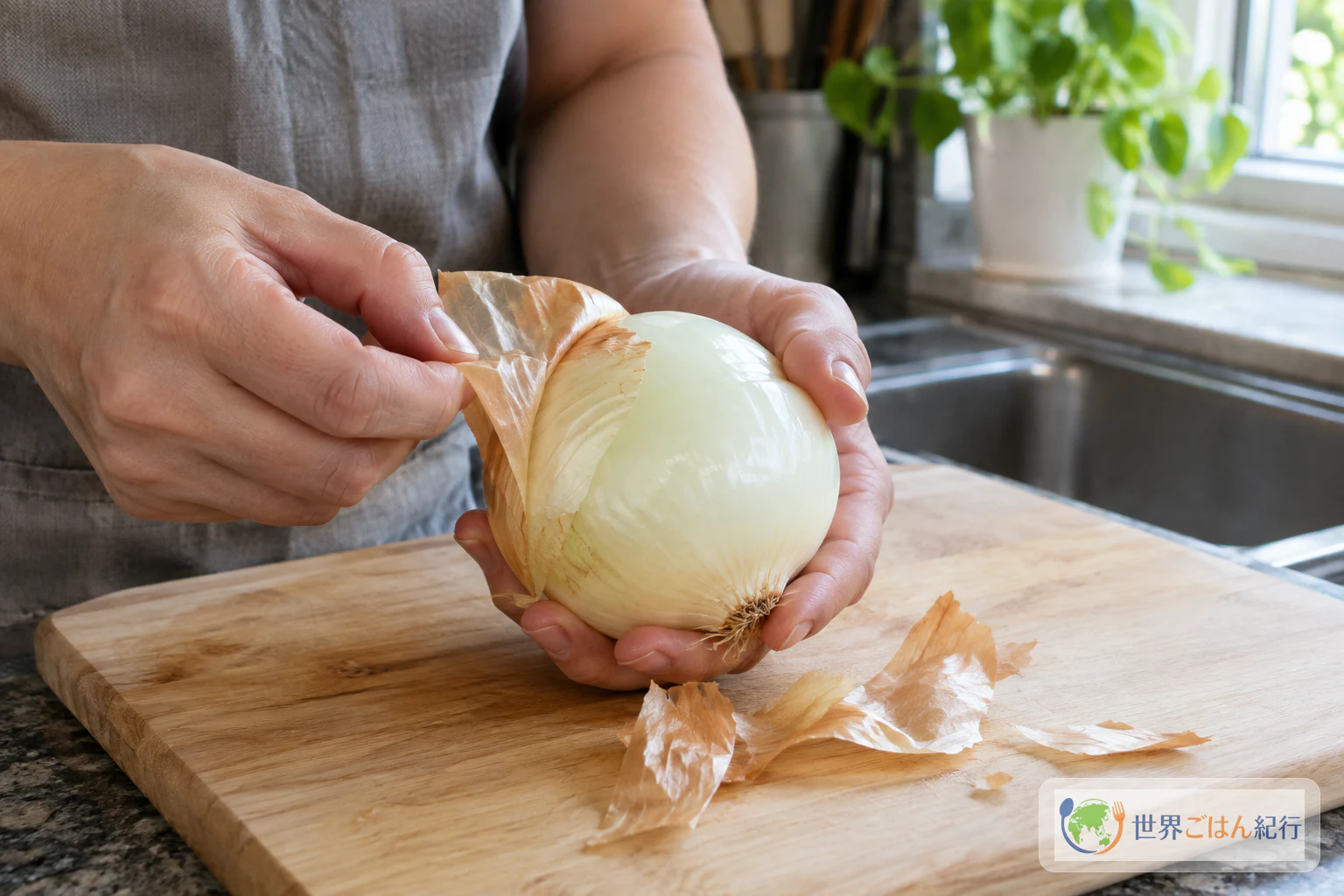
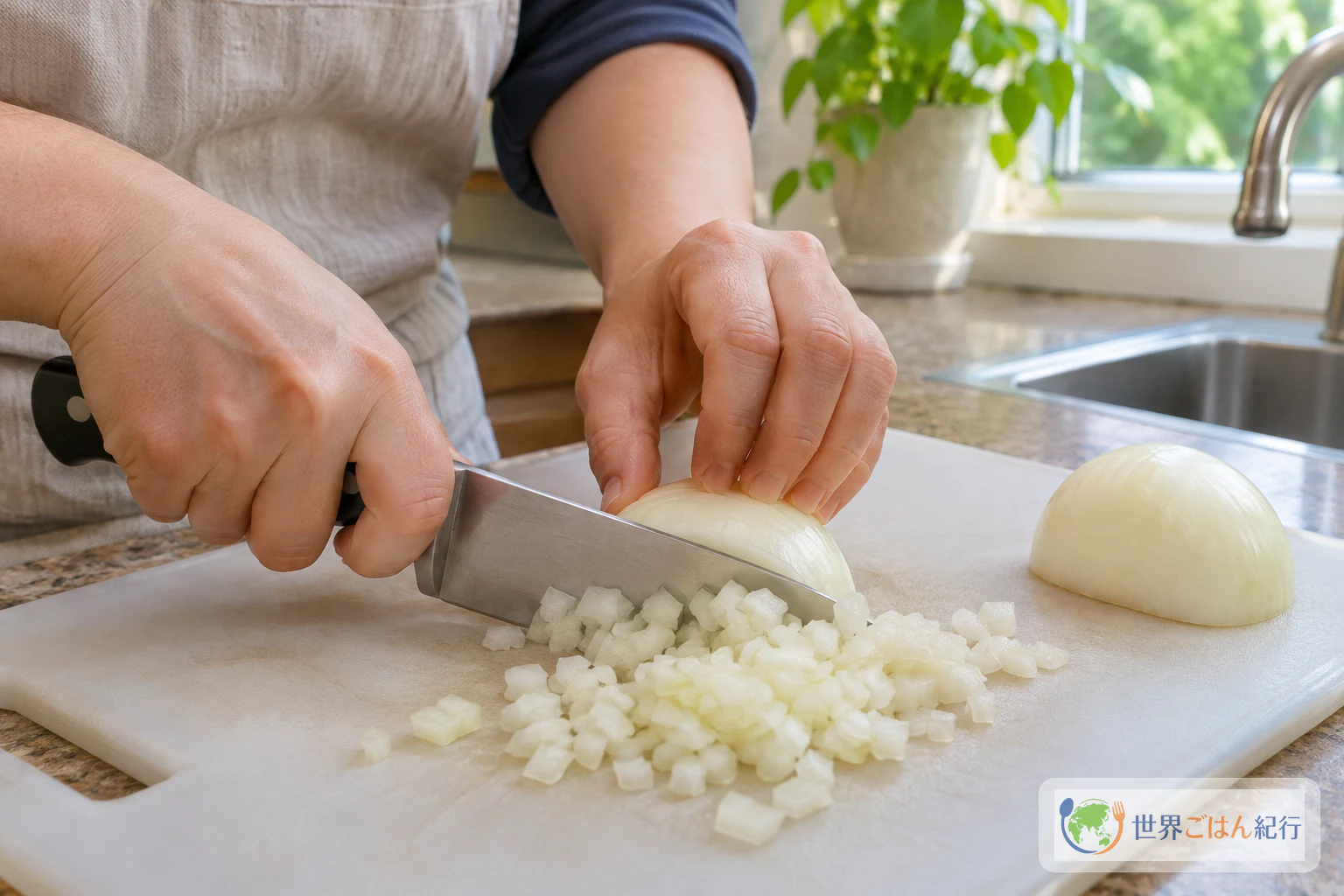
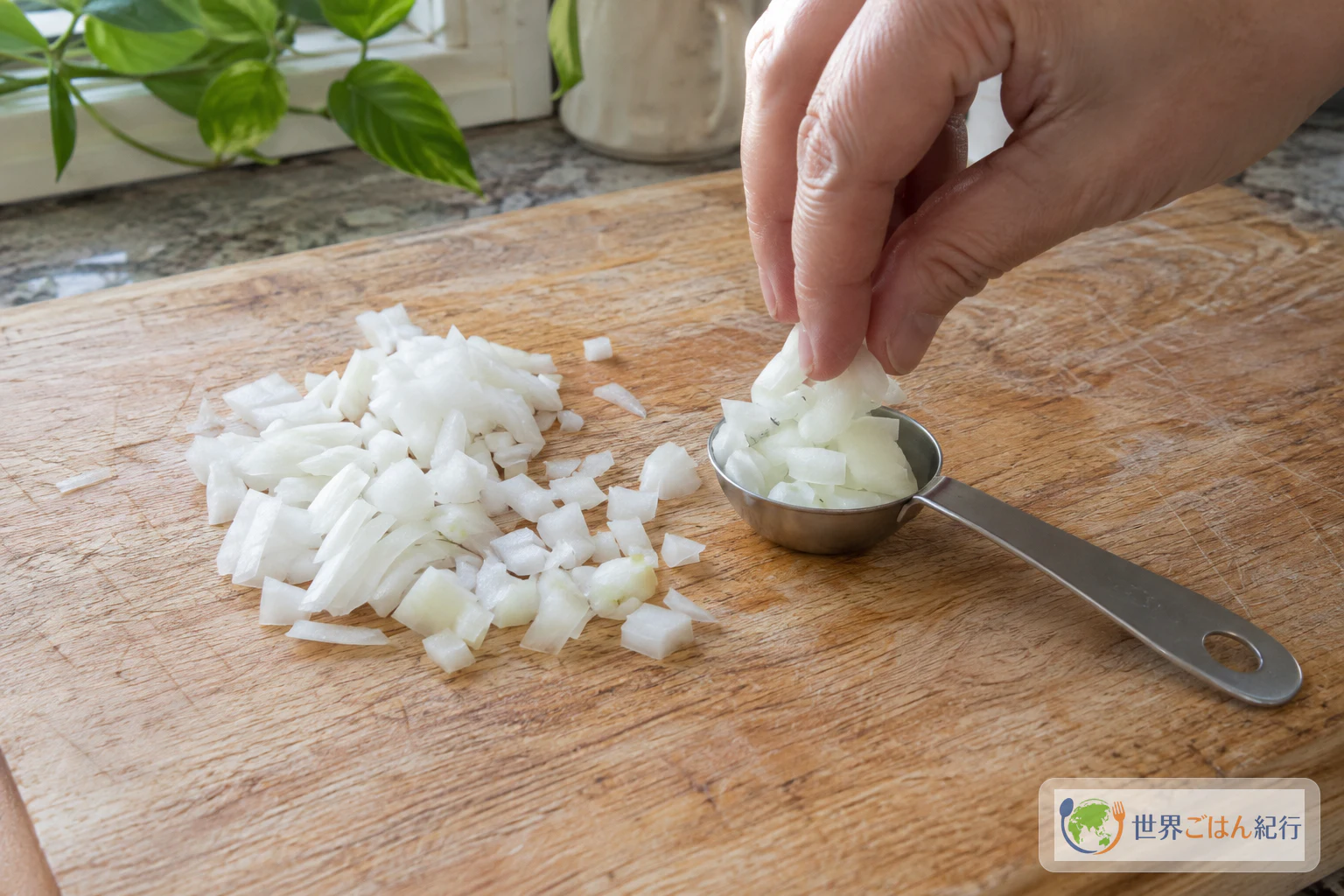
- Onion: You peel and chop a whole white onion but use only 1 Tbsp of the chopped onion in the pot.
- Tomato: Tomato sauce and tomato paste are separate ingredients that go in at different points.
- Oyster sauce: This version is built around SARSAYA oyster sauce, so no other brand or product is suggested here.
- Additions: The dish has no added oil, water, salt, pepper, garlic or herbs.
- Labels: Check the labels of packaged ingredients for anything you need to avoid.
Equipment
- Mixing bowl with a cover
- Measuring spoons and cups
- Cutting board and knife
- Cooking pot
- Spoon or other utensil for mixing
- Fork
- Clean food thermometer
- Clean serving utensil and serving bowl
Method
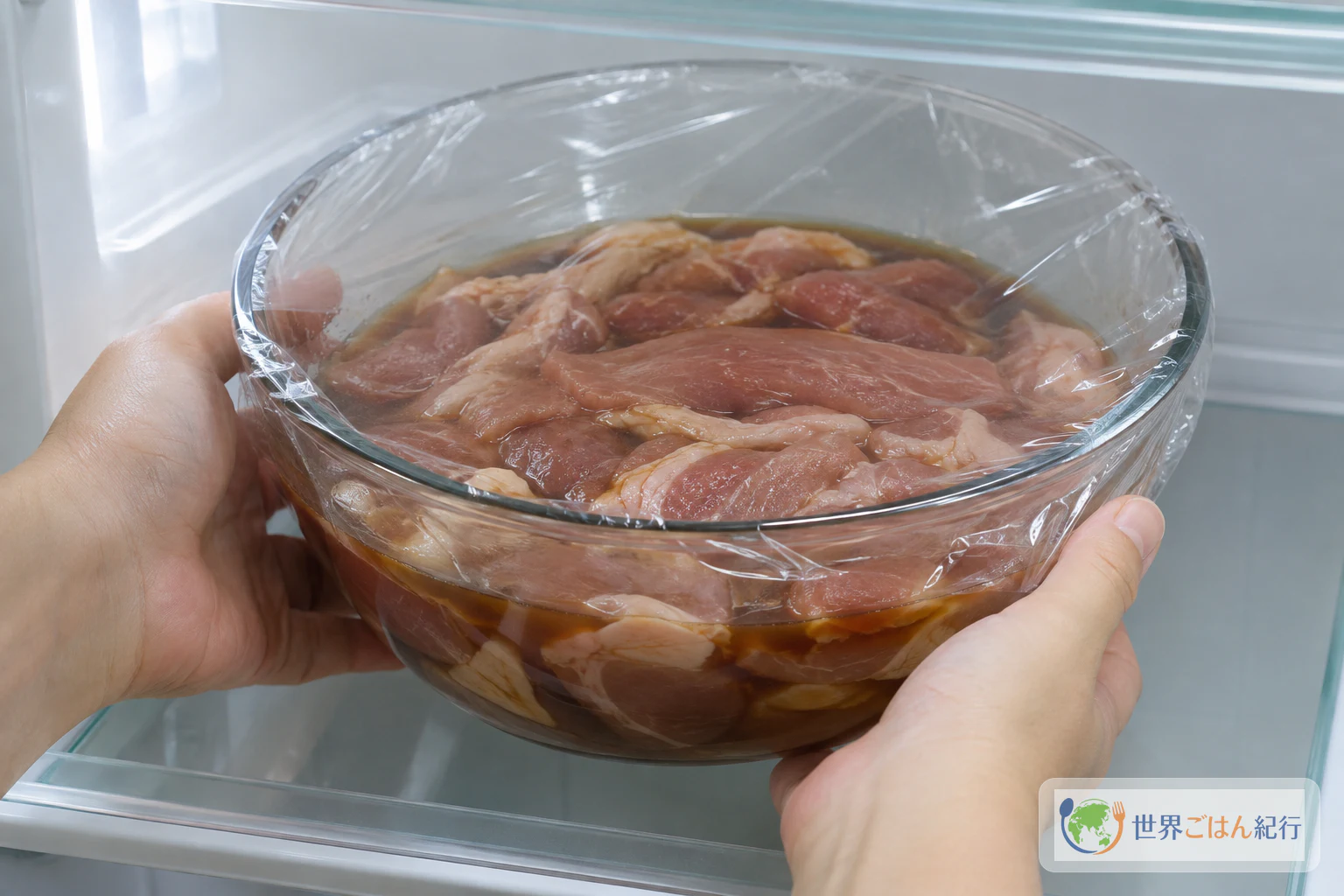
Keep raw pork, its marinade, and the tools and surfaces they touch away from cooked food. Refrigerate the pork while it marinates. Tenderness, color and cooking time do not prove the pork is safe, so check the core temperature at the end.
The photos illustrate each action. They can't confirm an amount, a temperature or that the food is safe to eat.
Troubleshooting
| What happened | What to do |
|---|---|
| The pork is not fork-tender after 30 minutes | Keep simmering and testing. The range is 30–60 minutes, and the fork test decides when to move on. |
| The pork is tender, but the center has not reached 75°C | Keep simmering, then check the thickest slice again. It needs at least 1 minute at 75°C. |
| You reached for the oyster sauce too early | Wait if you can. It belongs after the pork is tender, followed by only a few minutes of simmering. |
| You chopped far more onion than you need | Use only the measured 1 Tbsp. The rest is not part of this dish. |
| You are unsure what to do with the raw marinade | All of it goes into the pot with the pork, where it simmers. Never spoon uncooked marinade over cooked food. |
| The sauce looks thick during the simmer | Do not add water. Keep an eye on the pot and use the fork test as your guide. |
How Other Asado Recipes Differ
These are separate recipes, not adjustments to the one above. Their ingredients and amounts are not interchangeable with this version.
| Recipe | What sets it apart |
|---|---|
| Ajinomoto Cookmunity Pinoy Pork Asado (this article) | Thin-sliced pork shoulder, calamansi, soy sauce, butter, tomato sauce and paste, brown sugar, bay, star anise, and SARSAYA oyster sauce to finish |
| Simpol, Old-Fashioned Pork Asado | A separate recipe using pork ribs, chicken liver, fresh tomato, oil and annatto |
| Panlasang Pinoy Meaty Recipes, Pork Asado with Pechay | A separate recipe using a commercial barbecue marinade and pechay |
What the Name Covers
Simpol's page describes how asado changes from household to household, in both the meat and the way it is cooked. The three recipes above show how far apart dishes with the same name can be, so no single one should stand in for the whole country. For more dishes from the same table, see our Philippines page.
The recipe here comes from a manufacturer and is written around that company's own product. That makes it a clear, specific version to cook from, but it doesn't make it the standard.
This article makes no claim about where or when asado began, or how it should be classified. Caroline Hau's 2020 review of Clinton Palanca's My Angkong's Noodles, titled "A Lauriat of Chinese-Filipino Dishes," offers some broad context on Chinese-Filipino cooking. It is a book review rather than research on asado, and only its opening portion informs this article, so it can't support an origin story for this dish.
Frequently Asked Questions
How long does this take in total?
No single total is given here, because the published figures don't agree. The method calls for a 30-minute marinade, 30–60 minutes of simmering and a few final minutes. The recipe's sidebar lists 30 minutes of cooking. Follow the fork test and the temperature check rather than a fixed clock time.
Why are there no gram conversions for the butter, sugar or tomato sauce?
The published recipe prints some paired figures, such as 4 Tbsp butter with 80 g, 1 Tbsp chopped onion with 15 g, 1/2 cup tomato sauce with 112 ml, and 4 Tbsp brown sugar with 50 g. Those pairs haven't been verified as accurate conversions, so this article uses the leading spoon, cup and count amounts, along with the stated 60 g of oyster sauce. It doesn't assume a particular national size for the tablespoon or cup.
Does 1 tablespoon of onion really mean a whole onion goes in?
No. You peel and chop a whole onion, then measure out 1 Tbsp of it for the pot.
Why refrigerate the pork when it only marinates for 30 minutes?
The 30 minutes comes from the published recipe, which doesn't specify refrigeration. Refrigerating it is our added hygiene step for raw meat, in line with the Ministry of Health, Labour and Welfare's guidance. It isn't meant to change the flavor or ferment anything.
Is the fork test enough to know the pork is done?
No. The fork test tells you about tenderness. The separate safety check is a core temperature of 75°C for at least 1 minute, based on the ministry's guidance for pork. That check is not part of the published simmering time.
Can I use another oyster sauce, or lemon instead of calamansi?
This article doesn't offer substitutes. The recipe is written for SARSAYA oyster sauce and calamansi juice, and no adjusted amounts are available for other products.
Should I sear the pork first, or serve it with rice?
This version has no searing step, and it is served hot and plain, so rice and side dishes are not part of the recipe.
Is this Kapampangan asado?
This article doesn't make that claim. The recipe is presented as one Filipino-style pork version, with no regional origin asserted here.
How do I store or reheat leftovers?
This article covers cooking and serving the dish fresh and hot. The materials behind it give no storage period or reheating method, so none is offered here.
Sources
- Ajinomoto Cookmunity Philippines, "Pinoy Pork Asado Recipe." A manufacturer's recipe for its SARSAYA oyster sauce, and the basis for this article's ingredients, amounts, order of cooking, simmering range and published serving estimates. https://www.cookmunitybyajinomoto.com/recipes/pinoy-pork-asado-recipe/
- Simpol / Chef Tatung, "Old-Fashioned Pork Asado Recipe." Used only for its description of household variation and as a comparison with a different recipe type. https://www.simpol.ph/old-fashioned-pork-asado/
- Panlasang Pinoy Meaty Recipes, "Pork Asado with Pechay." Used only as a comparison with a separate recipe using commercial barbecue marinade and pechay. https://www.panlasangpinoymeatrecipes.com/pork-asado-with-pechay.htm
- Ministry of Health, Labour and Welfare (Japan), "お肉による食中毒の原因や予防方法について紹介します。" (on the causes and prevention of food poisoning from meat). Used for the pork core temperature of 75°C for at least 1 minute, refrigerating raw meat, and avoiding cross-contamination. It does not cover this recipe's quantities or storing and reheating the cooked stew. https://www.mhlw.go.jp/stf/web_magazine/closeup/08.html
- Caroline Hau, "A Lauriat of Chinese-Filipino Dishes," Asian Studies: Journal of Critical Perspectives on Asia, University of the Philippines, 2020. A book review used in part, for broad Chinese-Filipino culinary context only. It is not research on the origin of asado. https://www.asj.upd.edu.ph/mediabox/archive/ASJ_56_1_2020/A_Lauriat_Chinese_Filipino_Dishes_Hau.pdf