



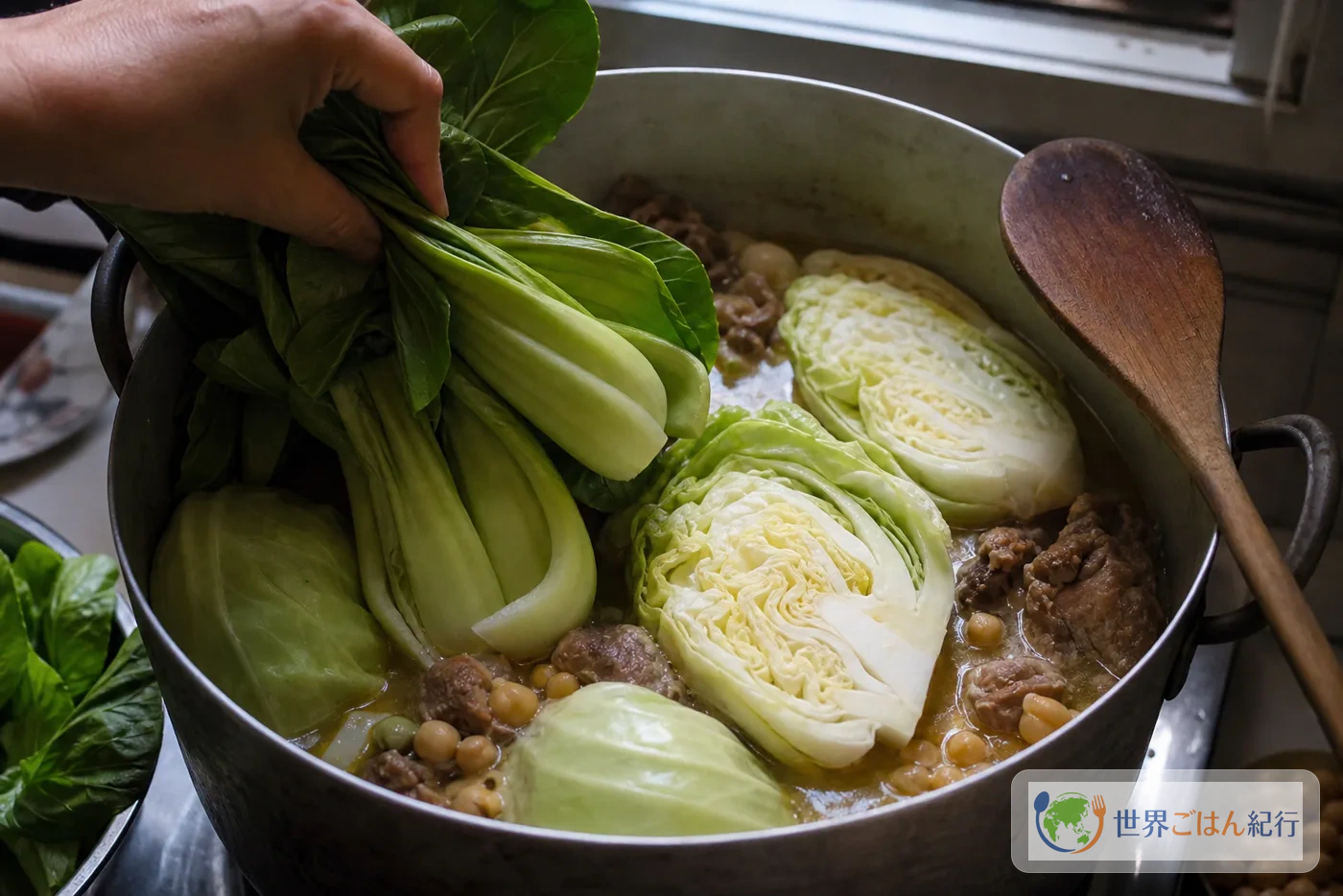
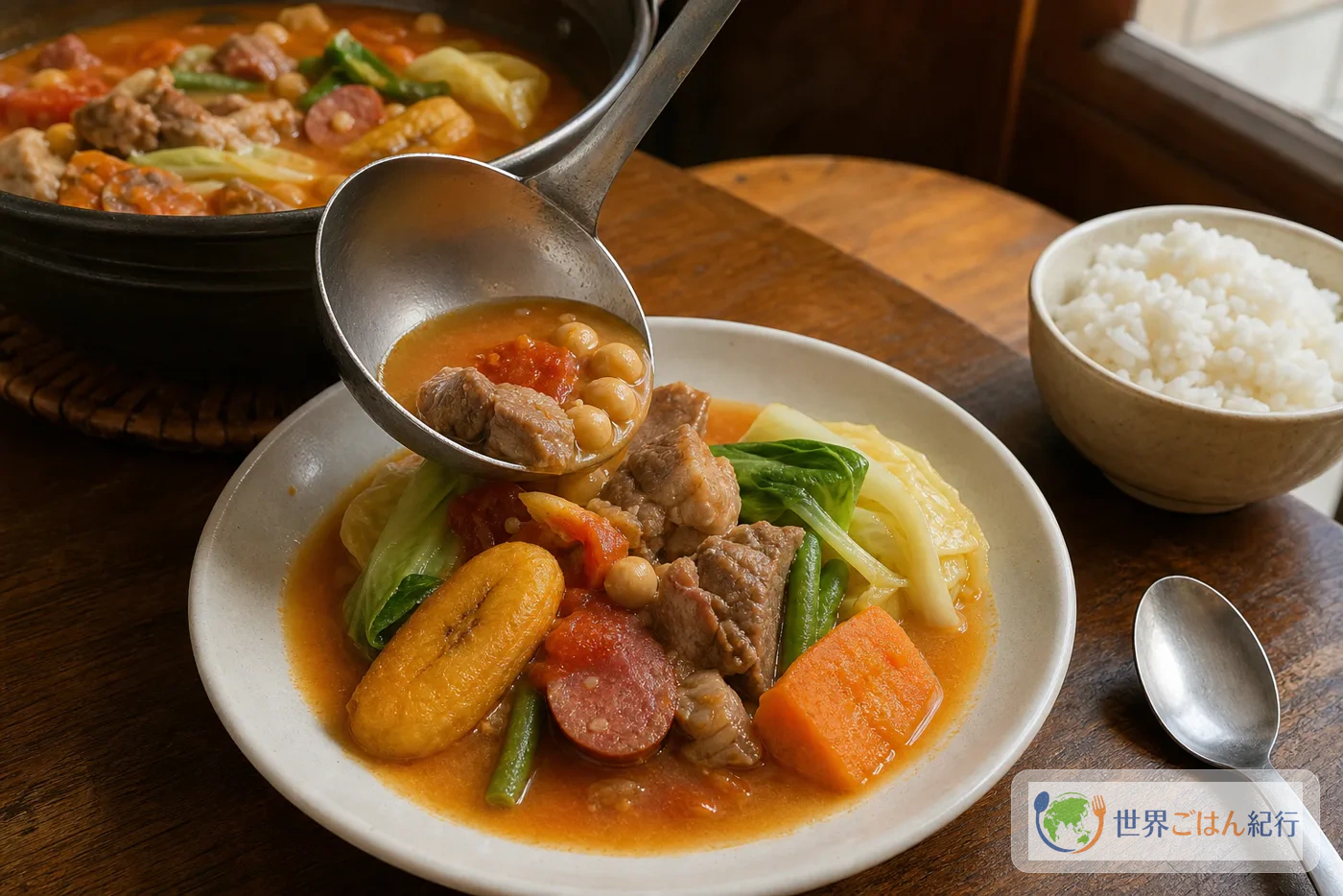
The story of pochero: a stew with sweet bananas for rainy days

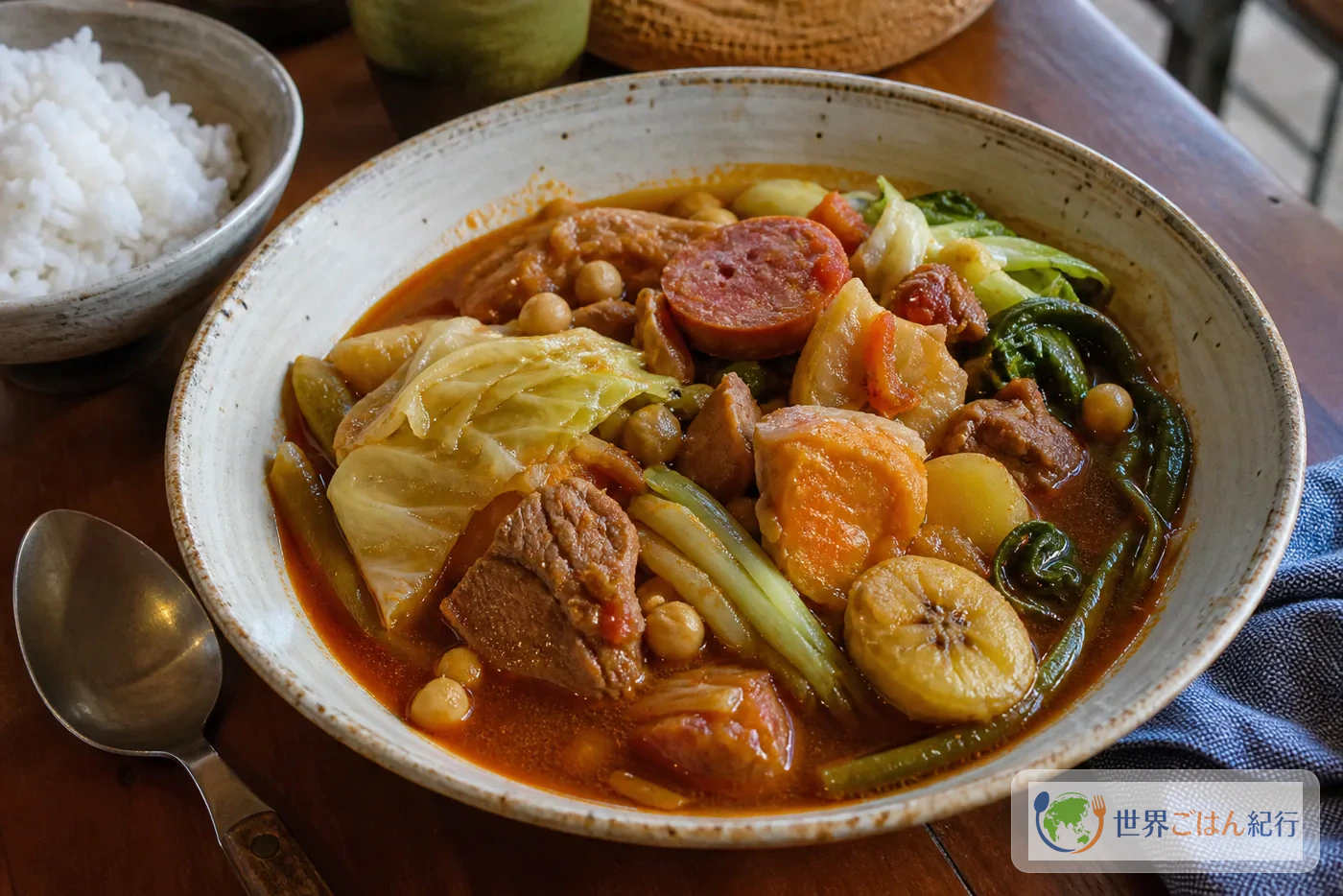
Pochero becomes unmistakably Filipino at the moment you crush the tomatoes and the chorizo's red fat starts to bleed across the bottom of the pot. It is a meat stew, yet partway through, saba bananas and sweet potatoes go in. That can sound a little odd, but one bite explains it: the sweetness of the banana gently rounds out the salty patis, the richness of the meat and the acidity of the tomato.
Pochero (Pochero / Puchero, also spelled putsero in Tagalog) is the stew puchero, brought over during the Spanish colonial period, that took root as a Filipino home dish. Where the Iberian stews put meat, beans and vegetables into one pot, the Filipino version adds saba bananas, chorizo de Bilbao, chickpeas, pechay or cabbage and patis, turning it into a dish with sweetness and the aroma of fish sauce.
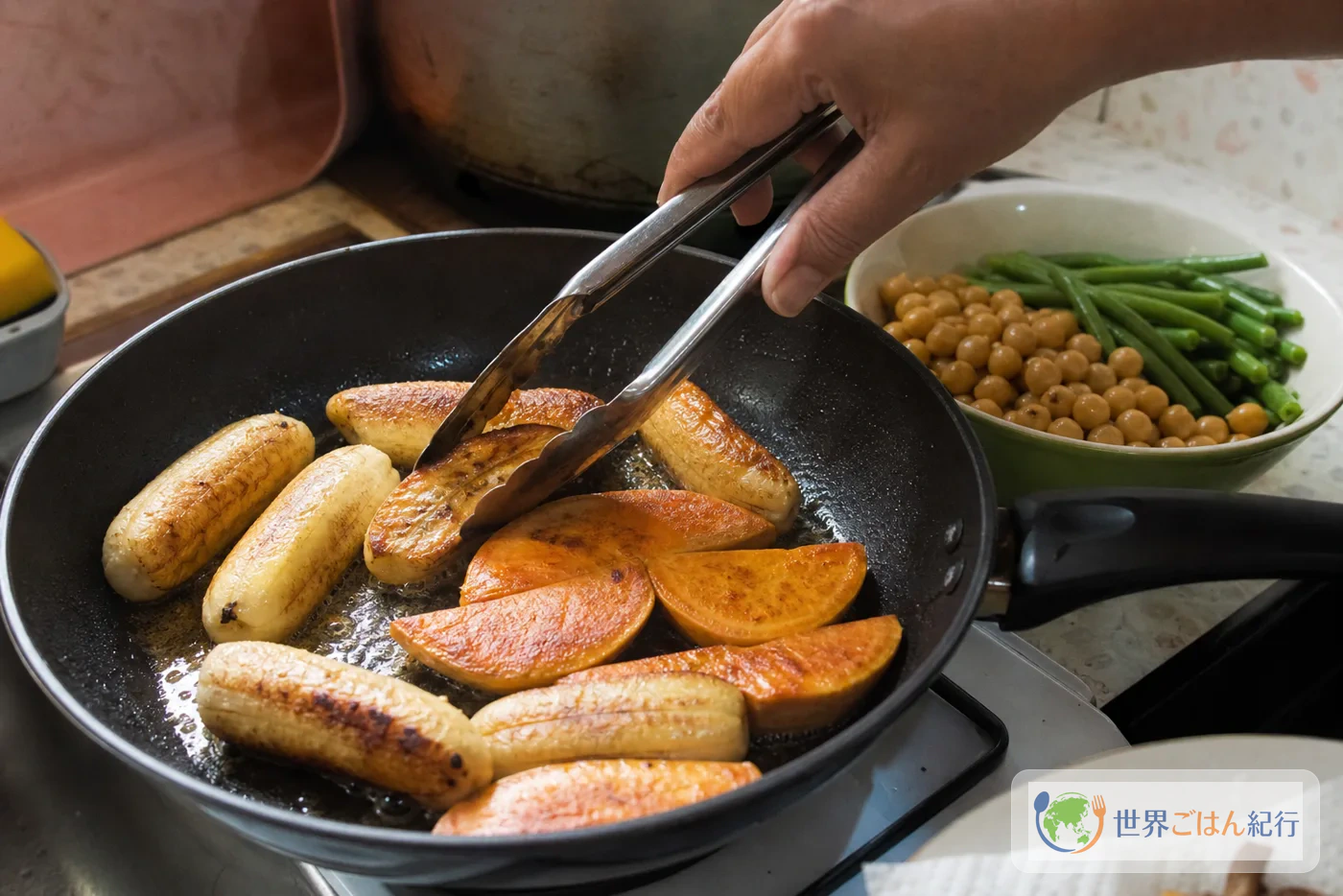
Compare English-language Filipino recipe sites and you'll see that pochero varies from home to home. Panlasang Pinoy presents it as a straightforward stew of pork, chickpeas, ripe plantains and patis, while Kawaling Pinoy notes that frying the saba bananas, potatoes, carrots and chorizo first and then returning them to the pot keeps them from falling apart. Wikipedia's Puchero entry also describes the Filipino version as including saba bananas, chorizo, chickpeas, tomato sauce and leafy greens.
The hard part in a home kitchen isn't sourcing every authentic ingredient. What you need to protect is the combination of sweet banana, beans, tomato, fish sauce and chorizo aroma. No saba bananas? Pair bananas that are still a little green with sweet potato. No chorizo de Bilbao? Use a small amount of Spanish chorizo. Chickpeas can be dried or canned, as long as you handle them so they stay whole in the broth.
Among Filipino stews, it plays a different role from sour sinigang (in Japanese), tinola (in Japanese) with its clear chicken broth, and kare-kare, thickened with peanuts. Pochero is the dish that turns a meat stew into a sweet-and-salty home dish made for rice.
In Spanish it's puchero; recipes from the English-speaking Philippines more often write pochero, and in Tagalog it is sometimes spelled putsero. This article uses "pochero" and gives Pochero / Puchero as the local spellings.
Ingredients (serves 4)
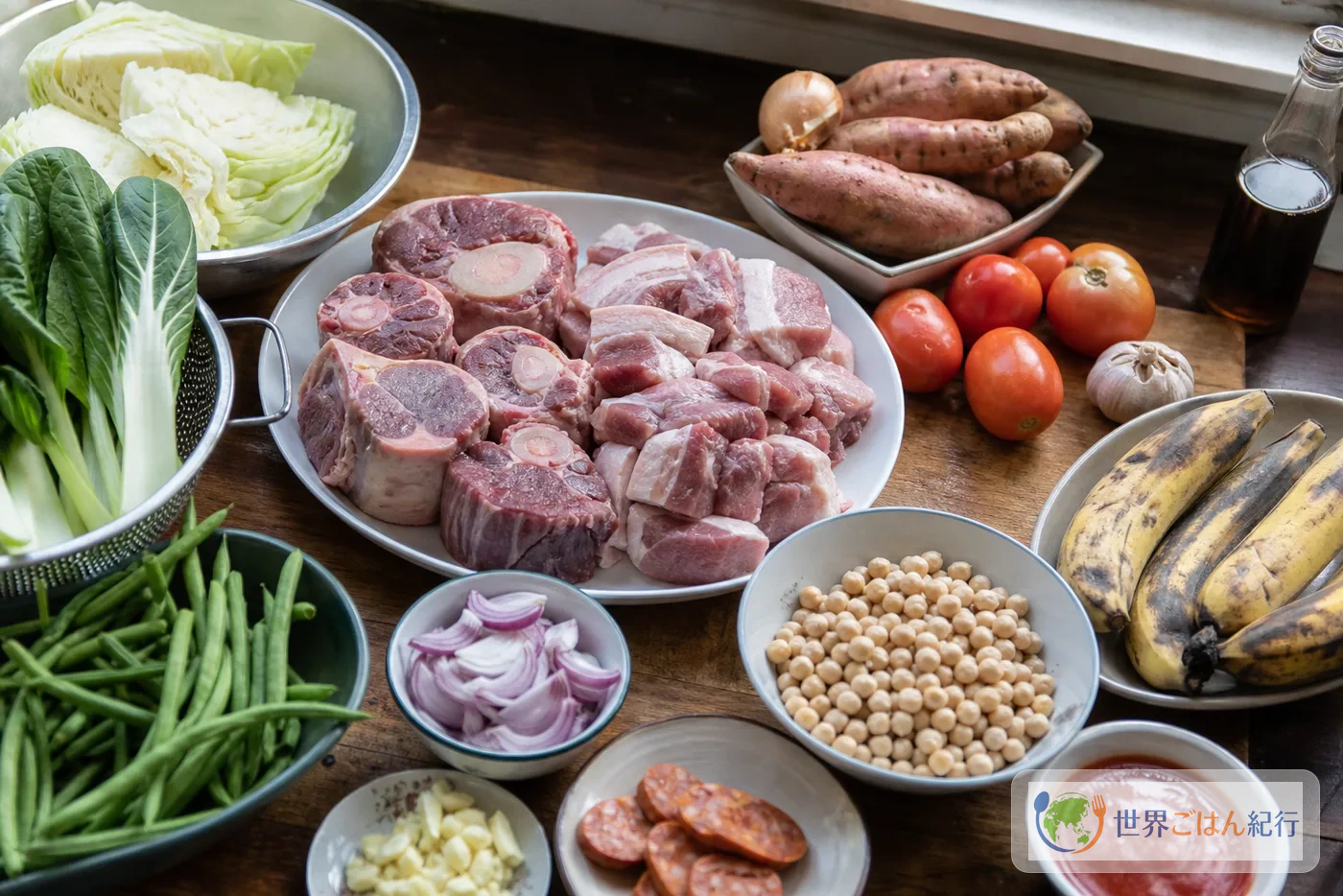
This recipe serves 4. It combines beef shank and pork shoulder. You can make it with only beef or only pork, but a little of the shank's gelatin plus the shoulder's fat gives a broth that stands up to the sweet bananas. If you want a lighter version with chicken, shorten the simmering time and enjoy it as a different dish.
Substitution guide
| Closer to the original | Practical substitute | Why it matters |
|---|---|---|
| Saba banana | Bananas still a little green + sweet potato | Not just sweetness; it holds its shape in the broth |
| Chorizo de Bilbao | A small amount of Spanish chorizo | The red fat and smoked paprika aroma |
| Chickpeas | Dried or canned chickpeas | Whole-bean texture, different from the pork-and-beans version |
| Patis | Thai fish sauce (nam pla) | Fish sauce saltiness and fermented aroma |
| Pechay | Bok choy, komatsuna | Greens go in last so the stew doesn't get too heavy |
Choosing the specialty ingredients
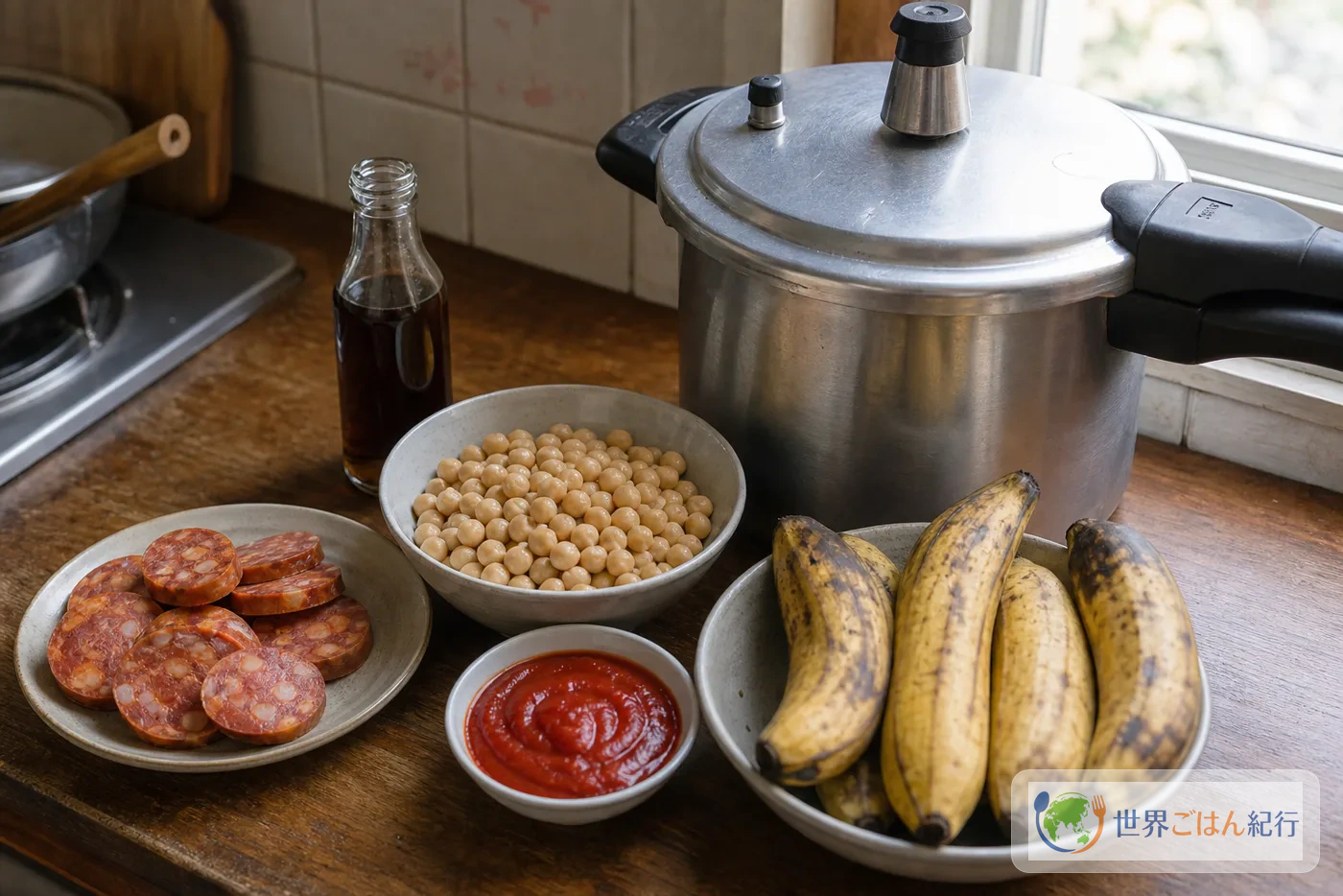
The things worth hunting for aren't ordinary beef or onions. The decisions are about the chorizo that sets the aroma, chickpeas that keep their bite, patis for that Filipino saltiness, and a pot that makes dried beans and meat easy to cook.
Saba bananas can be hard to find at an ordinary supermarket, so there's no need to search everywhere; look at a Filipino or Asian grocery if there's one nearby. At home, briefly frying bananas that are still a little green and returning them to the pot, with sweet potato for sweetness and structure, is the more reliable route. Patis, on the other hand, is a high priority if you plan to keep cooking Filipino food: one bottle also goes into tinola (in Japanese), sinigang (in Japanese) and pancit canton. Look for it at Asian grocers or online.
Too much chorizo pushes the dish toward Spanish cooking. About 80 g for 4 servings, just enough for a little red fat to show in the broth, is right. Ordinary wieners lose the smokiness and paprika aroma, so if you use them, think of it as a "no-chorizo home version."
Method
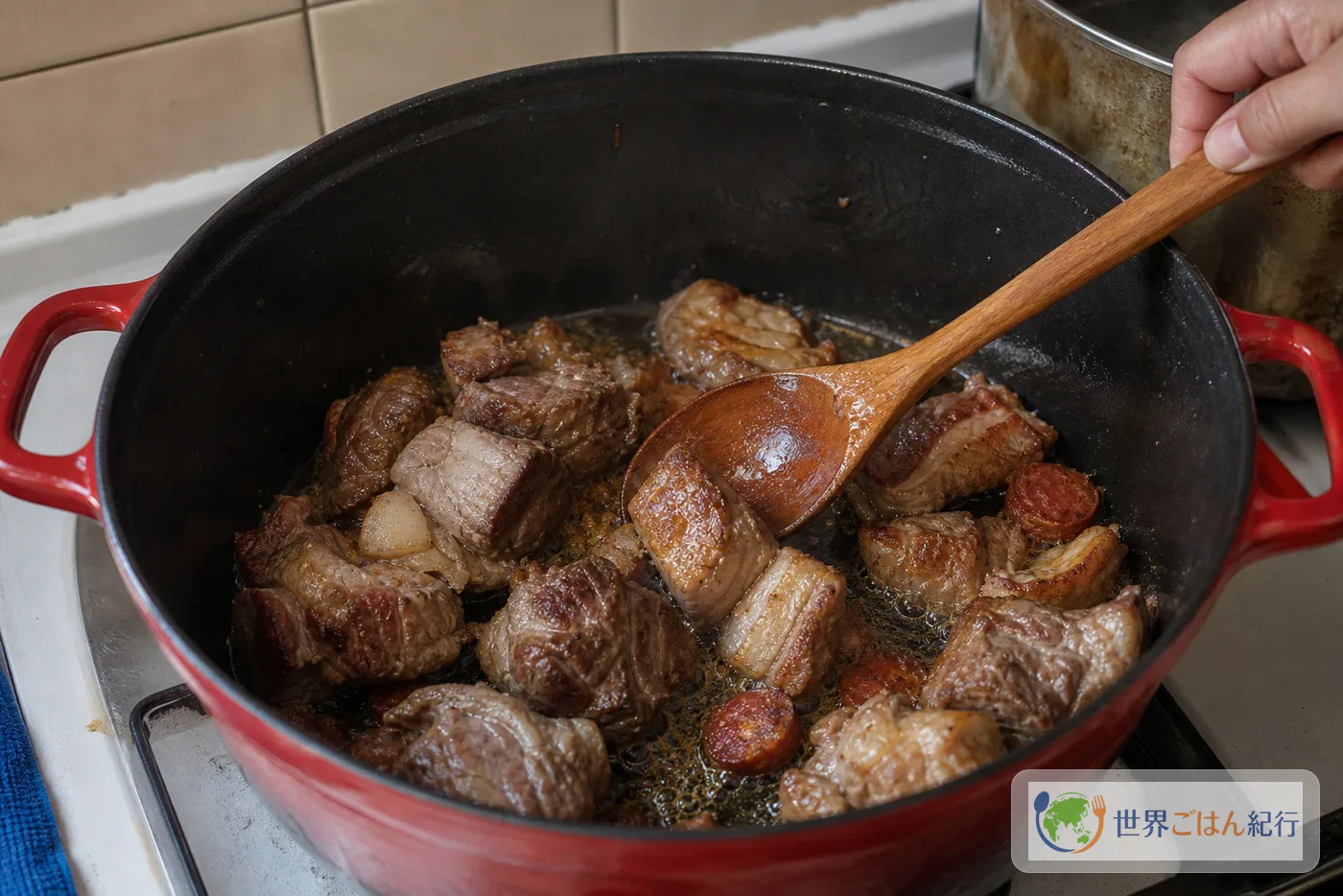
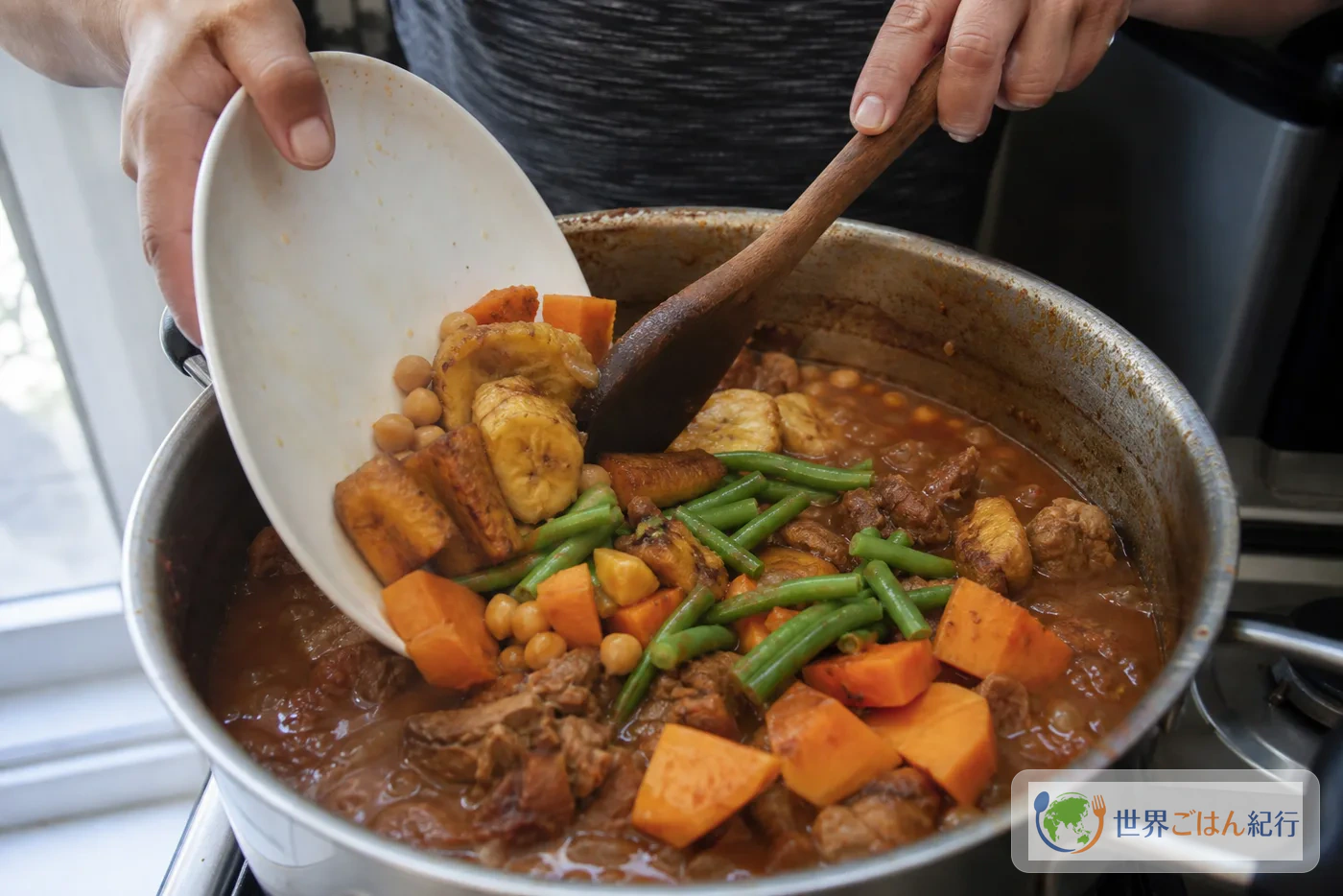
Pochero tends to go wrong if everything goes into the pot at once. Brown the meat to build aroma, cook the tomatoes to soften their acidity, make the meat tender, and only then return the bananas and greens at the end. Not simmering the sweet ingredients for a long time from the start is the key to a dish that looks like a "stew with bananas" on the plate.
Frying the bananas and potatoes before they go back into the pot firms up their surface so they're less likely to fall apart. Don't let the broth boil hard; keep it at a steady simmer with small bubbles.
Common problems and how to fix them

The most common failure with pochero isn't that it tastes too sweet; it's that the sweet ingredients break down and make the whole broth heavy. Saba bananas are a cooking banana and hold their shape well, but ordinary dessert bananas melt quickly if they're overripe. Choose ones that still feel a little firm and have few black spots on the peel.
The bananas melt
It's one of three things: overripe, overcooked or overstirred. Don't put all the bananas in the pot; keeping half for plating makes it reliable. If they do break down, a squeeze of lemon and extra black pepper will tighten the sweetness. It will look a little different, but it's still delicious as a stew over rice.
The broth is thin
Either the tomatoes weren't cooked long enough, or there was too much water when simmering the meat. Reducing the tomato sauce for 2 minutes in step 3 and simmering with the lid slightly ajar in step 4 helps the broth cling to the meat. If it still seems thin at the end, lift out the solids, reduce just the broth over medium heat for 5 minutes, return everything and serve.
The meat is tough
This usually happens when it's kept at a hard boil. Hold it at low heat with small bubbles and wait until the meat fibers loosen. If you're short on time, use a pressure cooker: about 25 minutes at high pressure with 10 minutes of natural release. Even then, don't pressure-cook the bananas, potatoes or greens. Combine them afterward in a pot.
It's too salty
Patis and chorizo both bring salt. Don't add much salt at the start; adjust when finishing in step 7. If it ends up too salty, boil a little potato or cabbage in a separate pot and add it. Covering it up with sugar gives you a vague sweetness instead of pochero's sweet-and-salty character.
How it's eaten, and making it ahead
Pochero is most at home with white rice. It isn't a stew you drink as soup; it's a dish where you break up the meat, potatoes, beans, greens and bananas a little at a time on the plate and let the rice soak up the tomato-red broth. In Filipino home cooking, the meat isn't made the sole star; having bananas and greens on the same plate is what makes it satisfying.
At the table, rather than ladling out everyone's portion at once, serve with a large spoon so each plate gets an even share of meat, potato, banana and greens; it keeps the dish looking neat. Eat the first bite as is, then squeeze on a little calamansi or sudachi partway through to bring back the tomato's acidity and the patis's salt. A small dish of lightly pickled cucumber or pickled red onion on the side keeps the sweet broth from feeling heavy.
If you make a big pot for Sunday lunch, it stretches to lunch the next day. Refrigerate in a clean airtight container and eat within 3 days. To freeze, leave out the bananas and greens and portion only the meat, beans, potatoes and broth. Bananas lose their texture when frozen, so it's more natural to fry fresh ones in a skillet on the day you eat and add them then.
To reheat, start in a pot over low heat. If the broth has set, add 2 to 3 tbsp water and warm until it simmers. Aim for 75°C (167°F) or higher in the center, and if you're adding greens, add them only for the last minute. In a microwave, put it in a deep bowl so the meat and potatoes don't break up, heat at 600 W for 2 minutes, stir gently, then heat 1 to 2 minutes more.
For a full menu, add one thing with acidity. On days you serve it with something fried like lumpiang shanghai (in Japanese), use less meat in the pochero and more greens. Rather than following it with another rice dish like arroz caldo (in Japanese), finishing with firmly cooked white rice, pickled cucumber and the sourness of calamansi or sudachi keeps the meal lighter.
Variations and regional differences: every household's pot is different
Pochero isn't a Spanish stew preserved unchanged; it's a dish that has been remade again and again in Filipino kitchens. So rather than thinking there's one right answer, it's more practical to think about which elements to protect.
Beef version
Beef shank, beef plate or chuck releases gelatin into the broth. Bone-in meat makes it deeper still, but because it isn't always easy to find, the combination of beef shank and pork shoulder is easier to work with. In the beef version, use less chorizo and let the flavor of the meat come forward.
Pork version
The pork version often seen on Kawaling Pinoy and Panlasang Pinoy has a sweetness of fat that pairs well with the bananas. Pork belly alone makes it heavy, so at home, pork shoulder and a small amount of chorizo make it easier to keep eating.
Chicken version
With chicken thighs, about 25 minutes of simmering is enough. Don't simmer the meat long in step 4, and use canned chickpeas. The chicken version tends toward a cleaner flavor, so go light on the patis and add lemon or sudachi at the end to pull it together.
Pork-and-beans version
Filipino home recipes sometimes mention using canned pork and beans in place of the chickpeas and tomato sauce. It adds sweetness and body, which makes it easy for kids to eat, but the whole-bean texture and the tomato's acidity get weaker. This article uses the chickpea version as the base, but for a quick weeknight dinner, the pork-and-beans version is perfectly natural home cooking too.
Frequently asked questions
Q1. Can I make it with regular bananas if I can't find saba bananas?
Yes, but avoid overripe bananas. Choose ones with few black spots on the peel that still feel a little firm, cut them into 3 cm pieces, brown them over medium heat and return them at the end. Adding more sweet potato to make up for sweetness and structure keeps it reliable.
Q2. Is it no longer authentic without chorizo?
Not entirely. Pochero is home cooking, and even the type of meat varies. That said, the red fat of chorizo de Bilbao or Spanish chorizo adds a smoky aroma to the tomato stew. If you leave it out, adding just 1/2 tsp paprika fills some of that gap.
Q3. Can I use canned chickpeas instead of dried?
Canned is fine for your first time. Drain in a colander, rinse lightly and add them with the potatoes in step 6. If they go in from step 4, they become too soft. Dried beans keep more of their own aroma and give the broth more body.
Q4. Can I make the whole thing in a pressure cooker?
A pressure cooker is well suited to the first stage of cooking the meat and chickpeas: about 25 minutes at high pressure with 10 minutes of natural release. But don't pressure-cook the bananas, sweet potato, potato or greens. Under pressure they fall apart easily and turn the broth sweet and cloudy.
Q5. Does it lose flavor when made ahead?
The meat and beans actually taste more settled the next day. What suffers is the texture of the bananas and greens. If you're making it ahead, use fewer bananas and greens, and on the day you reheat, add freshly fried bananas or komatsuna to get closer to how it looked on the first day.
Sources
- Wikipedia, Puchero
- Panlasang Pinoy, Pochero Recipe
- Kawaling Pinoy, Pork Pochero (Pocherong Baboy)



