
Lift the Lid, and the Steam Reaches You Before the Sweetness of the Mango
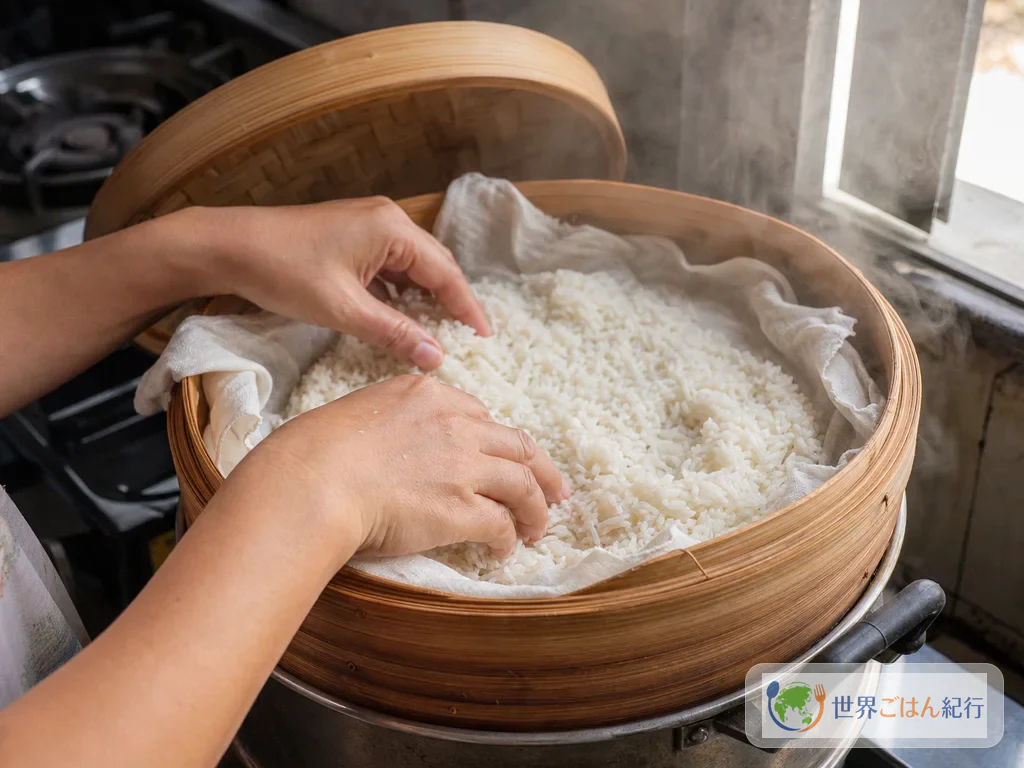
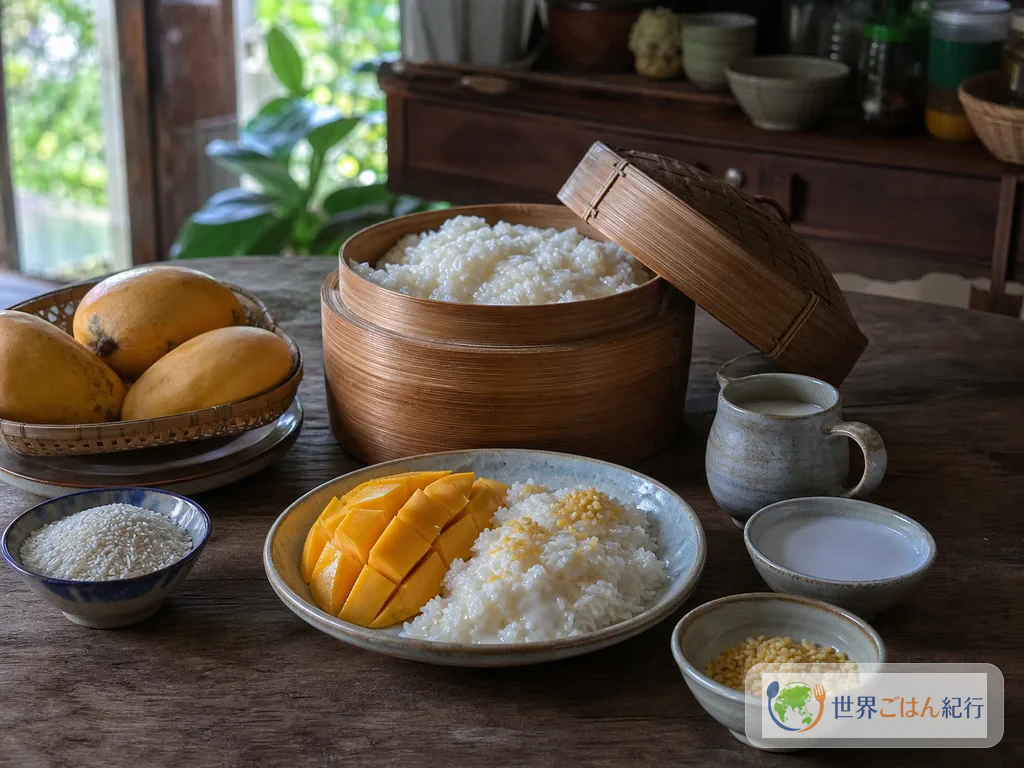
When you lift the lid of the steamer, the surface of the glutinous rice has changed from white to translucent. There is no sweet smell yet, but in the steam there is a round smell that only comes when rice holds its water.
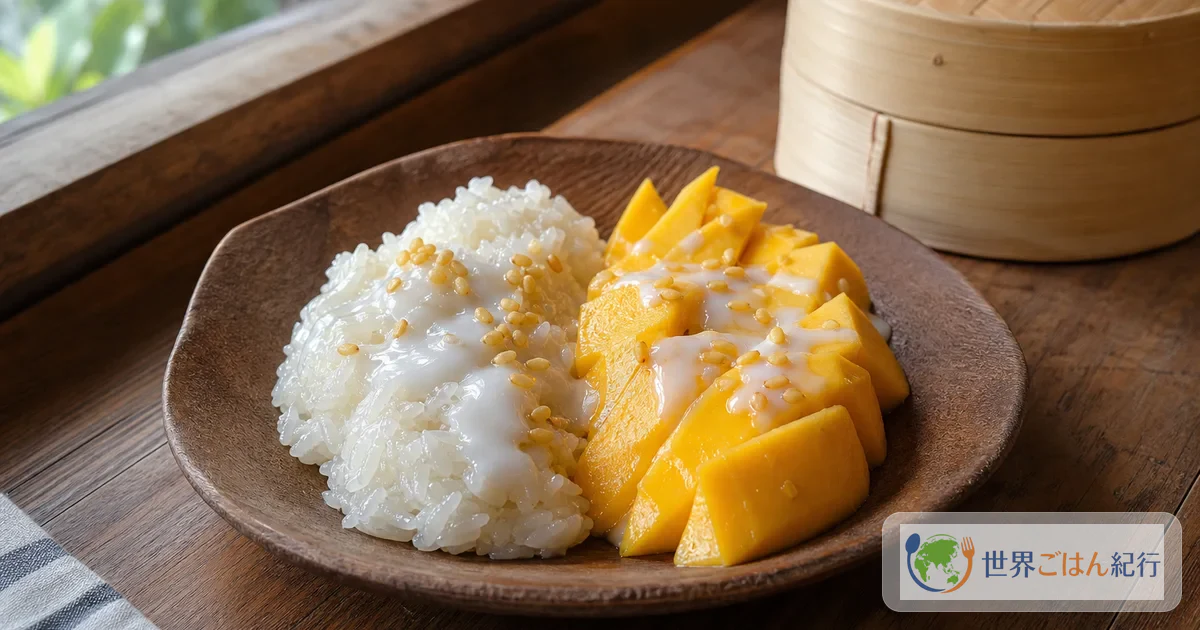
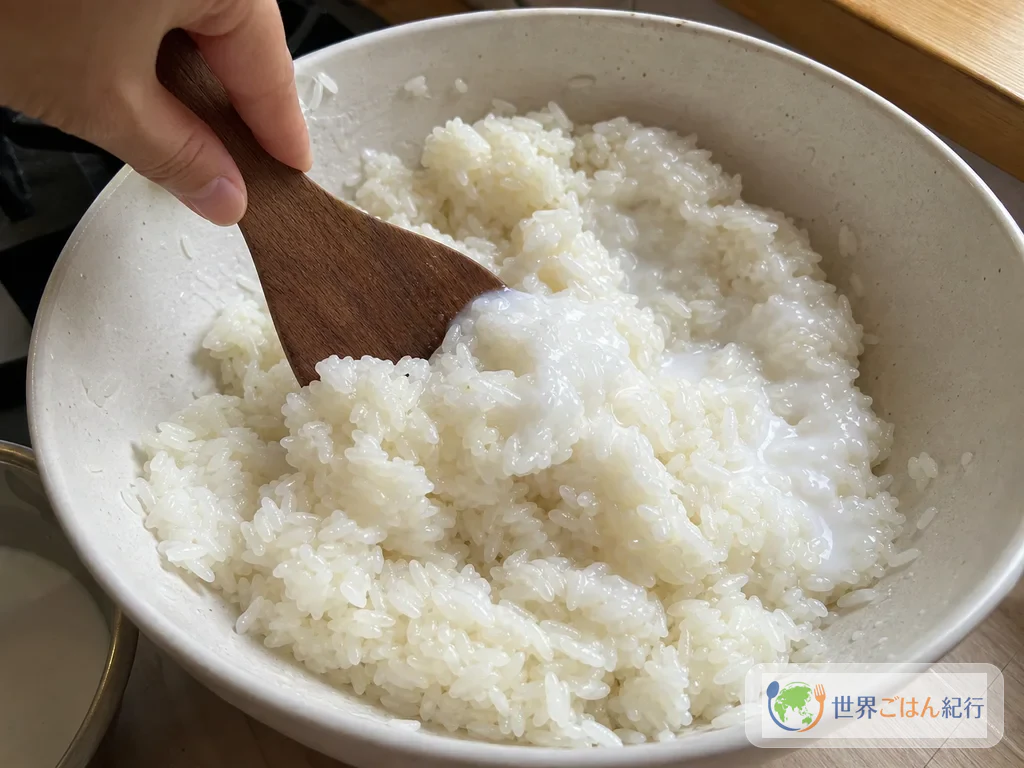
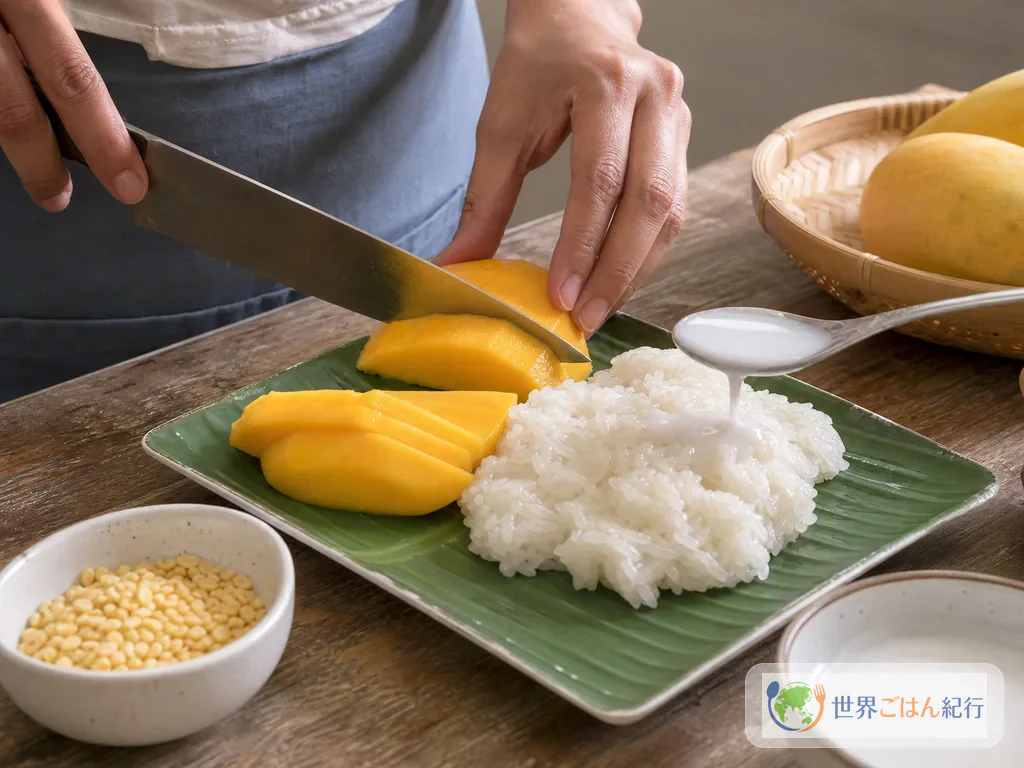
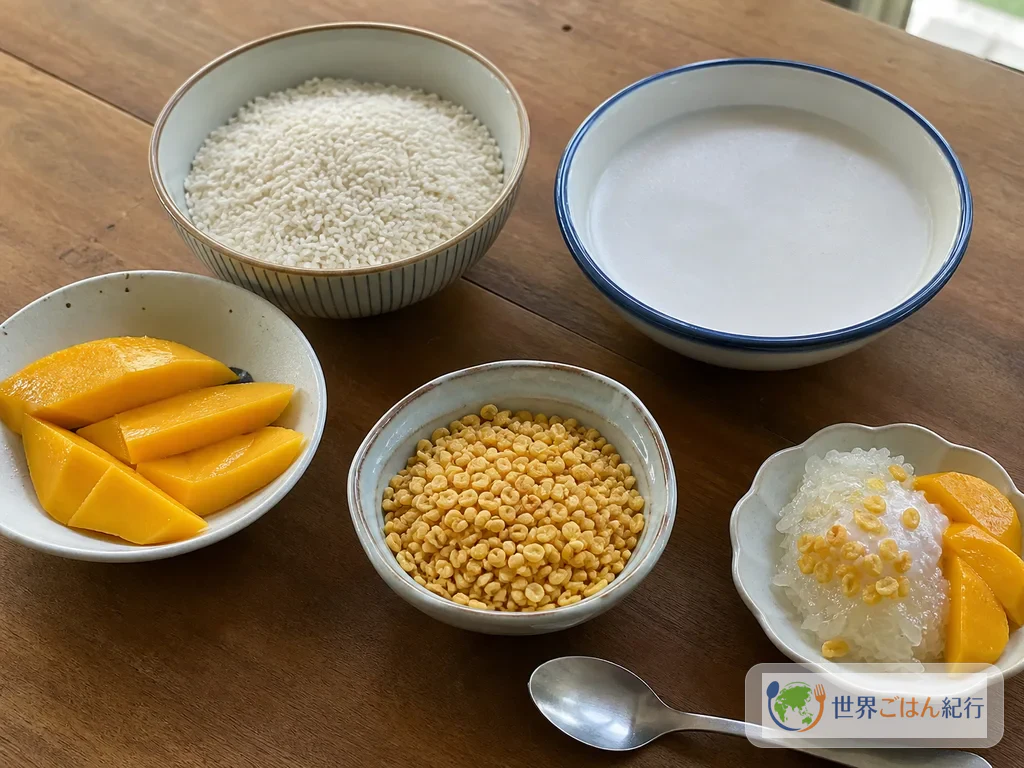
Then the warm coconut sauce goes in. The grains cling at first, and after a short rest take on a sheen. Finally, sliced mango is added, and a tropical fruit and slightly salted rice fit on the same plate.
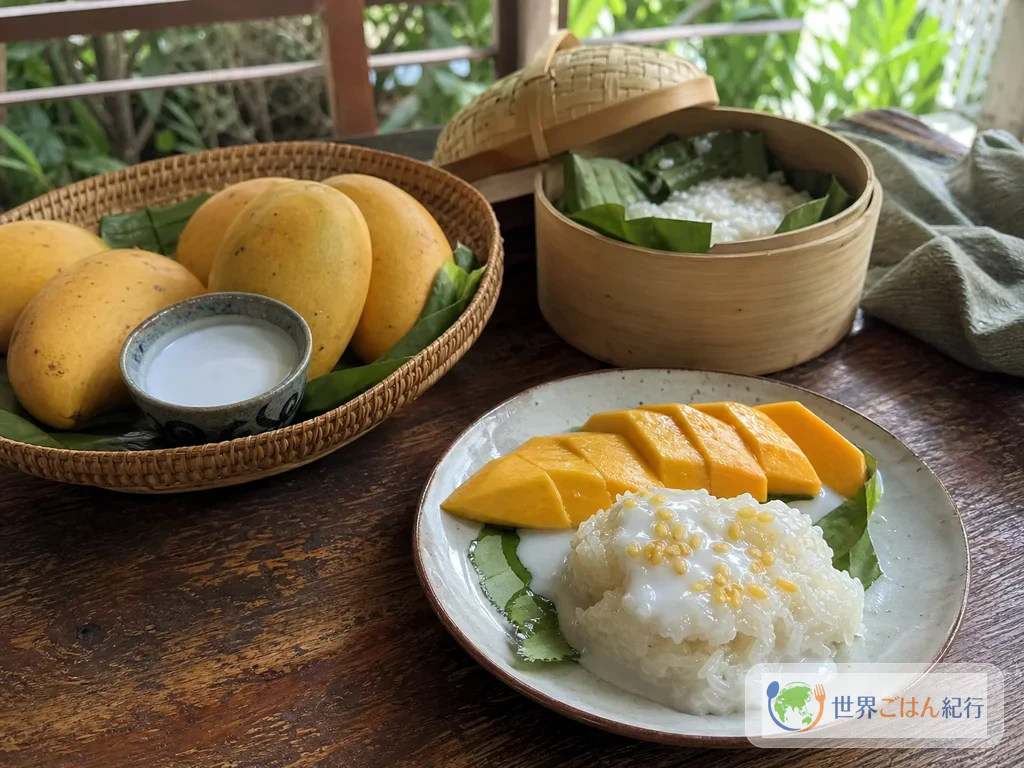
Khao niao mamuang (ข้าวเหนียวมะม่วง / Khao Niao Mamuang) is a Thai dessert that pairs sweet coconut sticky rice with mango. English-language Thai food sources present it as something eaten in mango season and explain that fragrant varieties such as Nam Dok Mai and Ok Rong suit it. I rebuilt Temple of Thai's recipe as a 4-serving version that is easy to make at home.
This article settles four things.
- Whether to look for Thai glutinous rice, or start with the glutinous rice you already have.
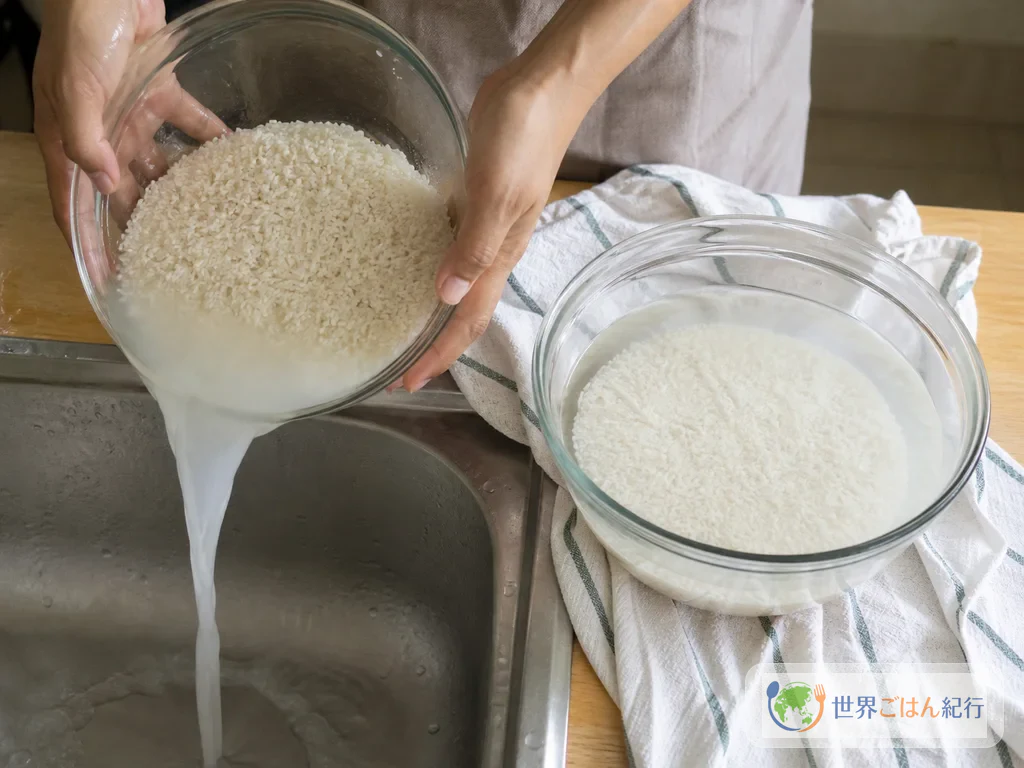
- Whether you can wait out the 4-hour soak and the steaming time so the grains cook through to the center.
- Whether to make the coconut sauce sweet and rich, or thin enough that the mango is the star.
- Whether you will make this often enough to buy a bamboo steamer, or try it once with a pot steamer.
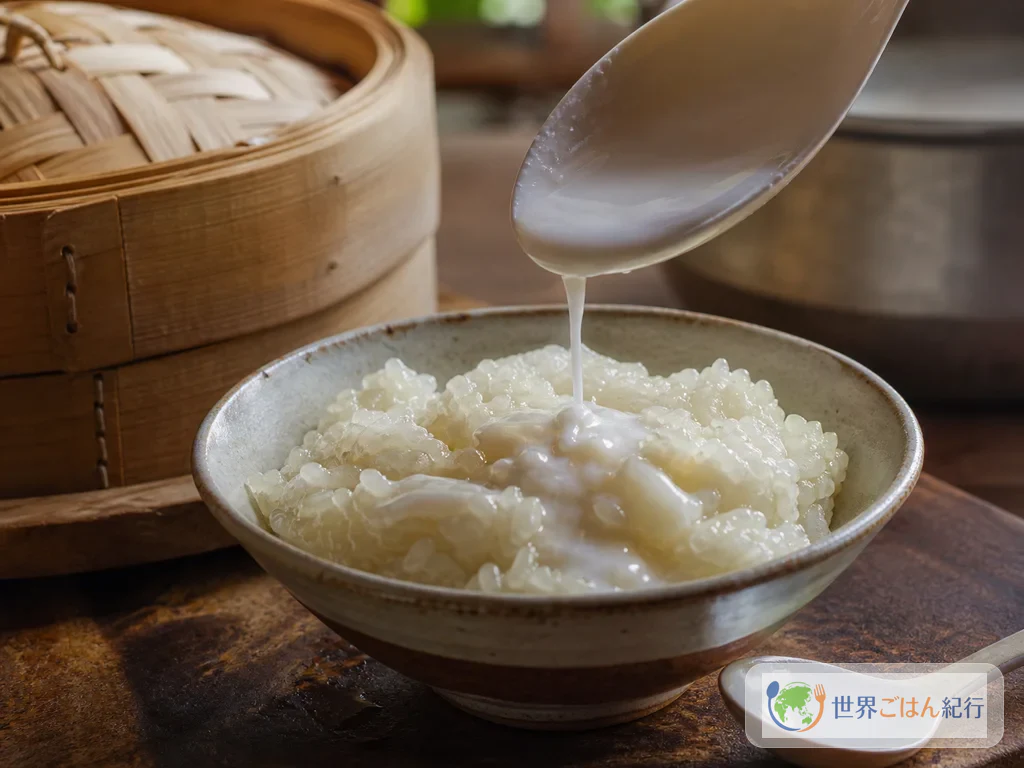
- The star is the acidity and aroma of the mango; the rice is a base that takes not only the sweetness of the coconut but also a little saltiness.
- "Soft" is not enough for the steamed rice. Aim for grains with no hard white core at the center that spring back when pressed with a finger without being crushed.
- You can make the shape of the dish with glutinous rice from other countries. The reason to choose Thai rice is when you want to get closer to the aroma and the way the grains loosen.
Why It Became a Hot-Season Plate: Regional Glutinous Rice and Fruit Seasons
Imagine it. On a hot afternoon a small plate is brought to the table, and you first scoop the white coconut sauce with a spoon. Where sweet rice alone would feel heavy, you alternate it with slightly tart mango. It is not a cold dessert, but in the mouth the water of the fruit loosens the heat.
This is not a record of watching a particular shop or home; it is a scene of eating you can imagine from the combination of the dish. What is interesting about khao niao mamuang is that although it is a dessert, rice is at the center, and the fruit is not a side but changes the pace of the sweetness.
According to the Thai government's guidance, the hot season in Thailand runs roughly from mid-February to mid-May. Tourist guides for May also feature orchards and fruit food culture, showing that fruits of the hot season are tied to memories of the table and of travel. Reading the Thai government's seasons guide and the Tourism Authority of Thailand's May fruit introduction, you can see that a plate with mango does not belong to a "dessert that tastes the same all year" but carries a sense of season.
The place of glutinous rice also varies by region. The Thailand Foundation explains that in Isan, glutinous rice is eaten with spicy and salty dishes, and that the central region has many sweets made with coconut. Explanations of northern cuisine also describe glutinous rice as the staple at the center of the table. Layering regional differences in Thai cooking and the northern Thai table, it is more accurate to see khao niao mamuang not as "the rice dish of all Thailand in one" but as a dish where everyday glutinous rice, the sweet coconut sweets of the central region, and seasonal fruit overlap on one plate.
| Axis | Local background | Judgment when making it in Japan |
|---|---|---|
| Rice | In the north and Isan, glutinous rice is a staple of the everyday table | Thai rice brings the aroma closer. Domestic glutinous rice lets you prioritize availability |
| Sweetness | Sweets of the central region use coconut milk | Do not boil the sauce, and do not leave out the salt. Let the fat and sweetness form the outline |
| Fruit | Tied to mangoes in the shift from hot season to fruit season | Choose fully ripe, fragrant ones firm enough to cut with a knife |
It is not "complete once you gather the authentic ingredients"; if you separate the roles of rice, sauce, and fruit, you can choose how faithful to be. Even if you do not buy Thai rice, as long as you do not miss how to judge the steaming and the saltiness of the sauce, the skeleton of the dish will not collapse.
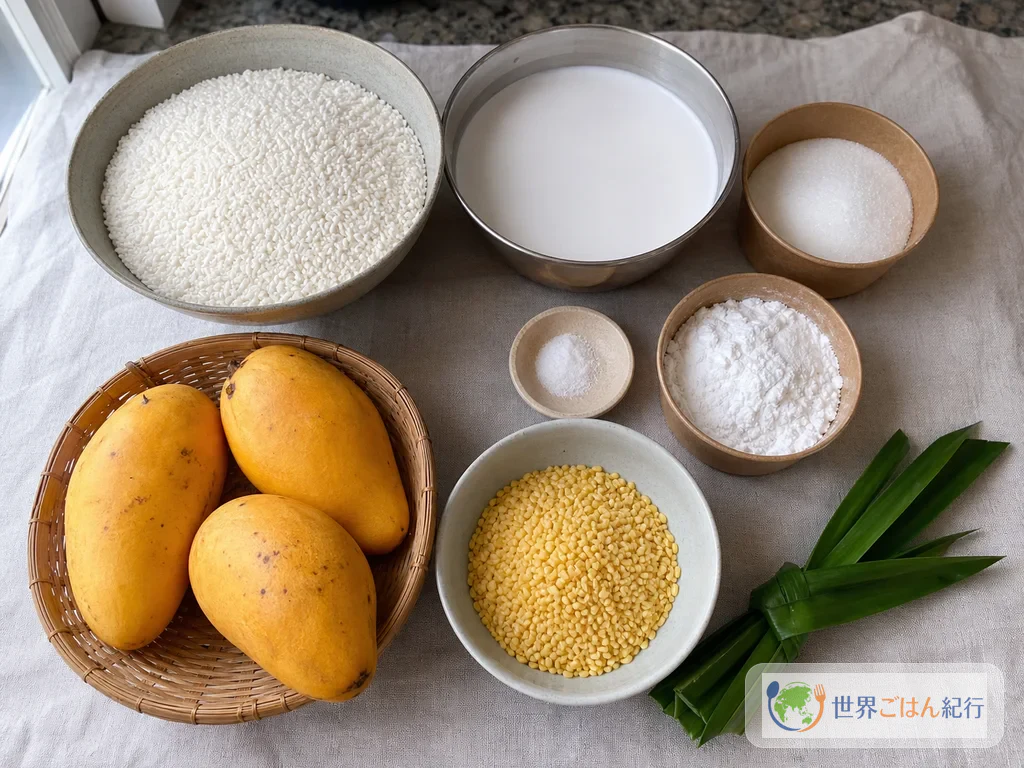
Ingredients (serves 4): Split the Sauce in Two
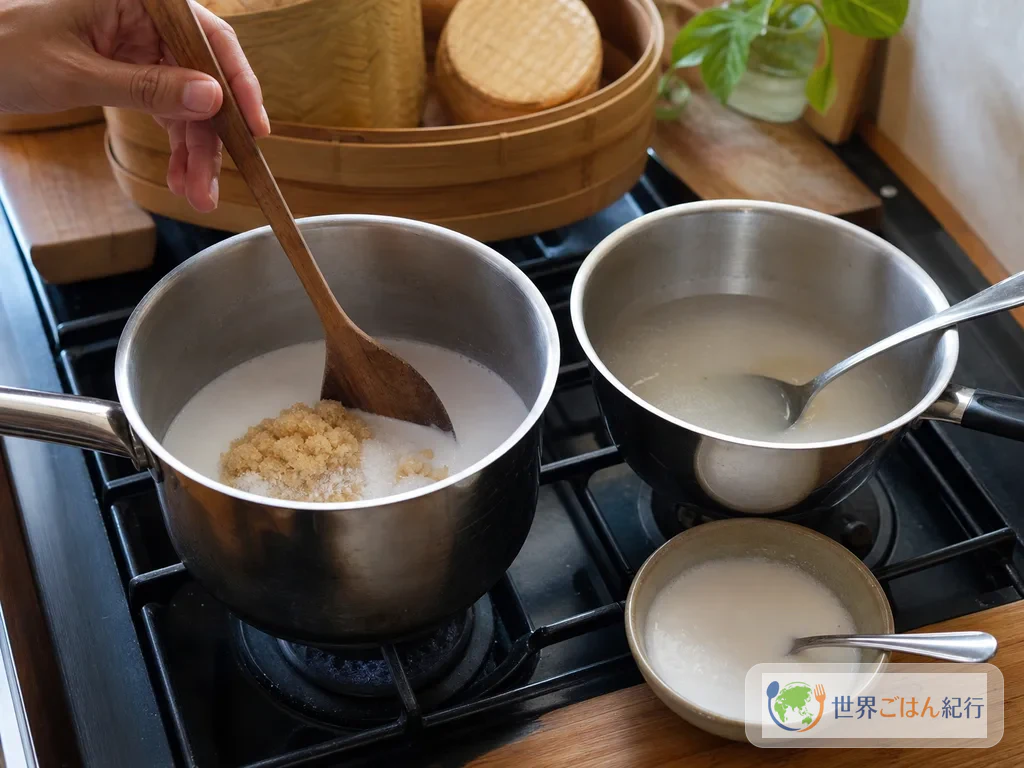
First, decide not to use all the coconut milk in one pot. If you separate the sauce worked into the rice from the sauce poured on at the end, the rice holds the flavor and a white line remains on the plate.
The condition for buying Thai glutinous rice is that the product name says "glutinous rice" or "sticky rice" and the ingredient is glutinous rice. For a dish like this one, steamed and then worked with sweet sauce, it is worth trying Thai grains and aroma. On the other hand, if you will only make it once and storing a 5 kg bag is a burden, it is more reasonable to start with 300 g of domestic glutinous rice. Check the content weight and the milling date on the label.
For coconut milk, choose a pourable unsweetened type, not "coconut cream." Even if solids float on top of the can, shake before opening and stir well in the pot, and it can be used. For mangoes, look at aroma, skin tautness, and softness of the flesh rather than variety name. If you chill them too much in the refrigerator the aroma closes, so take them out 30 minutes before cutting and the sweetness comes up.
This uses coconut, rice, and mango. Processed products may be made on lines that handle wheat, dairy, peanuts, or tree nuts, so those who need to should check the product labels. If mango juice touching the skin or around the mouth causes discomfort, do not force it and substitute another fruit.
Method: Do Not Leave a White Core in the Grain
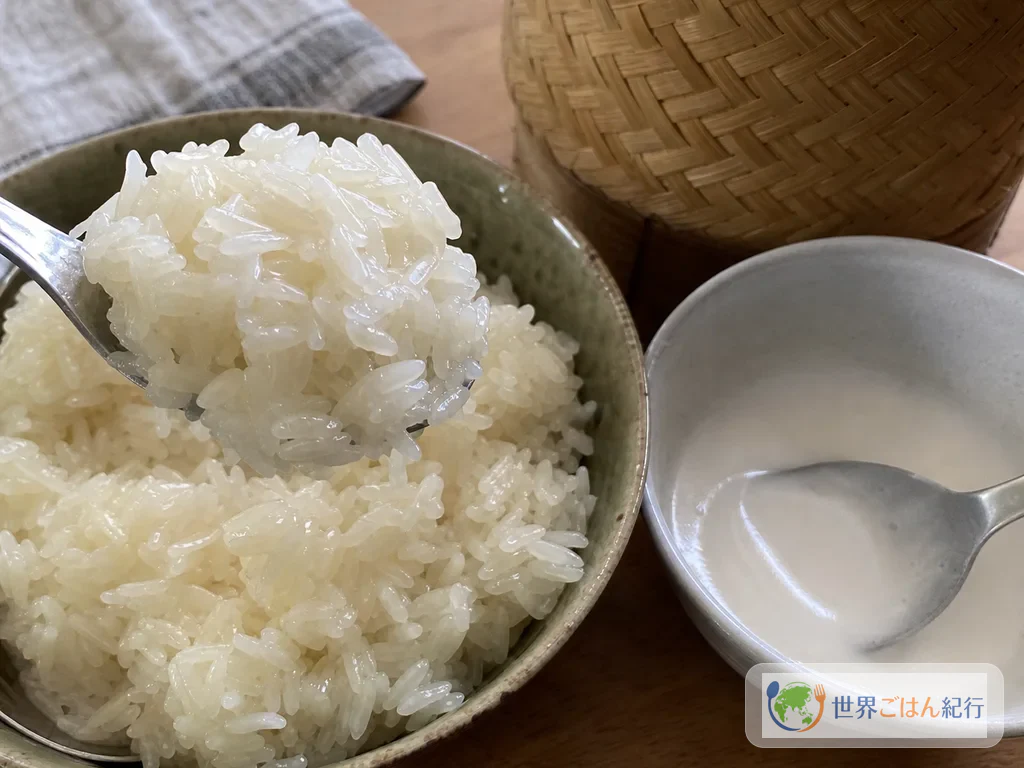
The hot water in the steamer is not water for boiling the rice directly. If the steam gives out, only the surface of the rice dries and the center stays hard as time passes. Bring the water in the pot to a full boil first, and while steaming keep a "not too strong boil."
Reading the Steam and Fixing It: Failures Come from Moisture, Not Flavor
Khao niao mamuang has few ingredients, so the moisture of the rice almost decides the impression of the flavor. Before adding sweetness, look at the condition of the grains.
| Condition | What is happening | How to recover |
|---|---|---|
| A white core in the center | Not soaked enough, or the rice in the steamer is too thick | Sprinkle 15–20 ml hot water, cover, and steam 5 minutes at a time |
| The surface is watery | Not drained enough after washing, or steam droplets fell | Take off the lid for 5 minutes and turn from the bottom without crushing the rice |
| Grains collapse into a paste | Over-soaked, or steamed too long | Add no more water, use less sauce, and let it cool |
| The sauce separated | It was boiled, or mixed abruptly into cold rice | Stir over low heat again and work it into the rice a little at a time |
| The mango is sour | Not ripe enough, or a variety with strong acidity | Do not increase the sauce; dissolve 5 g raw cane sugar into the sauce |
The condition for buying a bamboo steamer is that you will make glutinous rice or steamed sweets at least once a month, that the inner diameter fits your pot, and that you can secure storage space. The condition to pass is that you hardly ever steam food and can try this once with the steaming rack in your pot. If you decide to buy, check whether a 24 cm diameter fits in your pot, whether it comes with two tiers and a lid, and how to care for it before first use.
Choosing How Faithful to Be in a Home Kitchen: 5 Variations
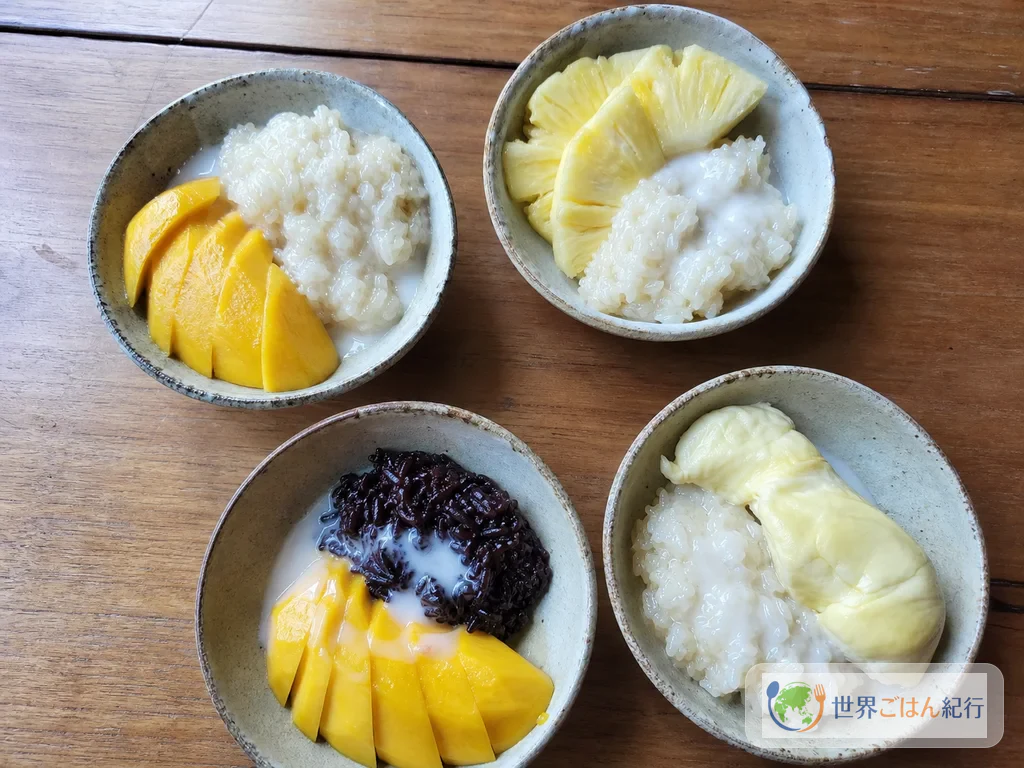
On days when local varieties and ingredients are not available, there are parts that do not have to be a choice between giving up the dish or substituting everything. If you narrow the change to one place, you can judge what stayed and what changed as you taste it.
- Make it with domestic glutinous rice: Change only the rice to domestic. The aroma and how the grains loosen change a little, but the combination of coconut sauce and mango holds. Suited to a first batch when you hesitate about buying Thai rice.
- Switch to raw cane sugar: Using 80 g raw cane sugar in place of 80 g sugar gives a faint aroma resembling brown sugar. On days when the mango's aroma is weak, going back to white sugar rather than adding more sweetness keeps the fruit from getting lost.
- Replace the mango with pineapple: Replace 600 g edible flesh with 600 g cored pineapple. The acidity is strong, so start the finishing sauce at 15 ml per person. This is not khao niao mamuang itself, but a variation for home cooks that uses the same sweet rice.
- Add durian: Replacing part of the mango with ripe durian leads to the durian sticky rice that the Thailand Foundation introduces. The aroma is strong, so at first plate 450 g mango and 150 g durian separately and compare them with the same sauce. The Thailand Foundation's explanation of durian dishes also describes durian sticky rice as a classic sweet similar to mango sticky rice.
- Mix in black glutinous rice: Mix 50 g Thai black glutinous rice into 250 g white glutinous rice. Black rice is hard to match in absorption and steaming time, so soak it separately for 2 hours before combining it with the white. This variation adds color and toastiness; make a baseline with white rice only first.
To reduce what you have to buy, you can start with only domestic glutinous rice, canned coconut milk, and mango. Conversely, if you want the Thai aroma at the center of the plate, do not change the rice and prioritize the variety and ripeness of the mango. Rather than adding tools first, checking whether you can tell when the rice is done steaming before moving to the next purchase keeps your baseline for faithfulness steady.
Nutrition and Storage: Why You Eat It the Day It Is Made
The nutrition figures are an approximation for the whole recipe, not for the whole ingredient list divided by 4. Glutinous rice and sugar make the carbohydrate high, and coconut milk adds fat. They vary with the mango variety, the richness of the can, and the type of sugar, so people with a medical condition or dietary restrictions should prioritize product labels and their own intake.
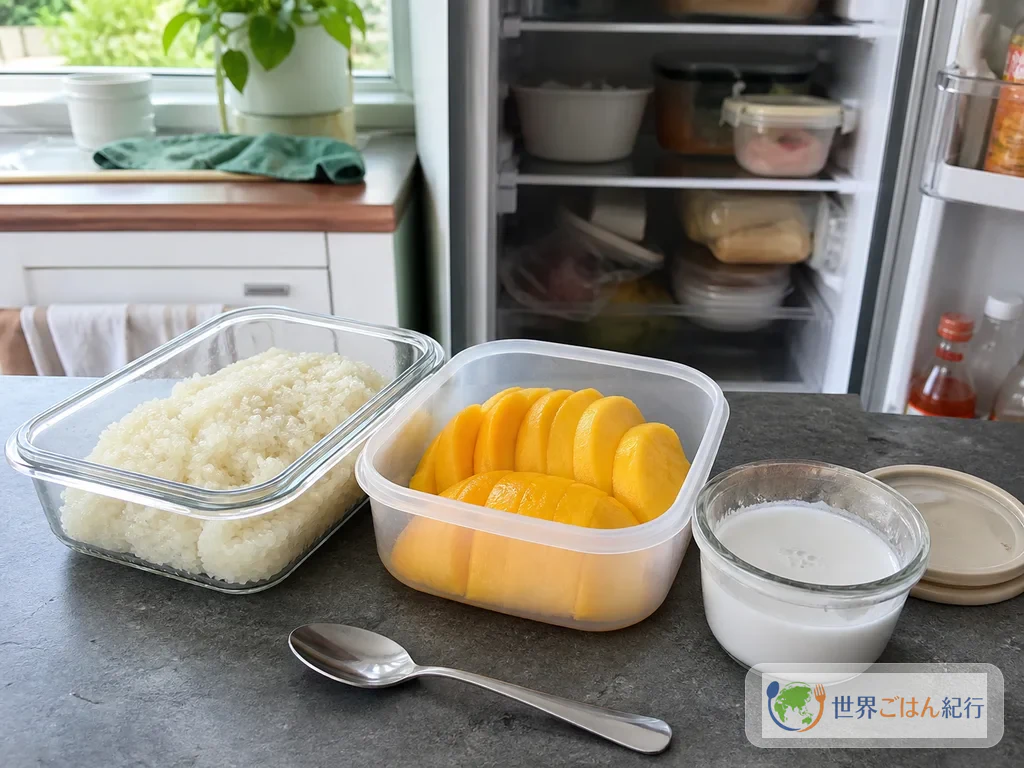
Prepare the mango just before cutting, and eat the glutinous rice the same day if you can. To keep leftovers, move the mango, rice, and sauce into separate clean airtight containers and refrigerate once the heat is off. Rice hardens when cold, so before eating warm one serving in the microwave for 20–30 seconds at a time and add a little sauce to bring the condition back. Do not warm the mango; take it out of the refrigerator and plate right away.
Do not leave cooked food at room temperature for long; refrigerate the rice and sauce within 2 hours. USDA food safety guidance says cooked leftovers keep refrigerated for 3 to 4 days, but with this sweet, the longer it sits the more the texture of the rice and the aroma of the mango fall. For taste as well as safety, making an amount you can finish by the next day is realistic. Use USDA's Leftovers and Food Safety as the basis for storage decisions.
Connecting to the Thai Table: Using Sweet Rice as the Entrance
Making khao niao mamuang gives you a way of looking at Thai food that is not only spicy stir-fries. Rice becomes both a staple and a sweet, coconut supports the fat and aroma of the sauce, and fruit tells the season. Three roles line up on one plate.
If you go on to Thai food as a meal, khao man gai (in Japanese), a chicken dish with fragrant rice, is an easy entry for comparison. To dig deeper into the texture of steamed sweets, you can compare the work of rice flour and tapioca starch in another Thai dish, khanom chan. If you want a detour into the relationship between regional heat and glutinous rice, Laos's laab is another example of rice taking up the aroma of a dish.
The same goes for what to buy. Thai glutinous rice is easy to use up if you are going to make steamed sweets or Isan dishes next. A bamboo steamer suits only those who want to spend time steaming rice again. If this will be a one-time dessert, check the axes of flavor with the ingredients and a steamer you already own, and choose tools later.
Frequently Asked Questions: Untangling the Doubts About Rice and Fruit
Q. Can I make it with ordinary glutinous rice from Japan?
Yes. Keep to washing the rice, a 4-hour soak, and steaming it spread thin. The difference from Thai glutinous rice shows in aroma and how the grains loosen, so decide whether to buy the local rice by whether you have another dish to make next, and nothing is wasted.
Q. What do I do if I have no steamer?
You can substitute a steaming rack that fits in the pot and a clean steaming cloth. Spread the rice within 2 cm and use the cloth so lid droplets do not fall directly on it. Opening the lid more often lets steam escape, so limit it to the single turn partway through.
Q. May I soak it overnight?
There is a way of leaving it overnight in the refrigerator, but the surface can crumble more easily. For the first time, use 4 hours at room temperature as the baseline, look at how it steams, and adjust next time. If you leave it for a long time in a hot room, switch to refrigerated soaking.
Q. What if the mango is hard and has little aroma?
Let it ripen at room temperature without cutting it, and use it once the aroma comes. Coating the flesh with sugar after cutting does not bring the aroma back. On days when it is hard anyway, slice it thin and serve the sauce on the side, switching to a plate that enjoys acidity and texture.
Q. Can I make the coconut sauce the day before?
The sauce alone keeps in the refrigerator. Before eating, loosen it over low heat or in a water bath and stir the separated fat back in. Do the step of working it into the rice on the day. If you eat refrigerated rice as it is, the hardness stands out, so warm it a little at a time.
Q. Can someone with a nut allergy eat it?
The basic formula in the ingredient list uses no nuts, but check the labels of processed products that contain coconut. The toasted mung beans for finishing should be left out or replaced with white sesame depending on the production line and the labeling at the shop. If you have symptoms, do not eat it on your own judgment; follow the labels and your healthcare provider's instructions.
Sources
- Temple of Thai: Mango with Sweet Coconut Sticky Rice: information on steaming glutinous rice, coconut sauce, mango varieties, and toasted mung beans. Accessed and checked 29 July 2026.
- Thailand Foundation: Secrets to Thai Cooking: regional differences in Thai cooking, glutinous rice in Isan, and the background of sweets in the central region. Accessed and checked 29 July 2026.
- Thailand Foundation: Northern Thai Cuisine: the northern table and the place of glutinous rice. Accessed and checked 29 July 2026.
- Thailand.go.th: Thailand’s Three Seasons: Thailand's hot and rainy seasons and the climate divisions. Accessed and checked 29 July 2026.
- Tourism Authority of Thailand: May in Thailand: the fruit of May and the seasonal feel of orchards. Accessed and checked 29 July 2026.
- Thailand Foundation: A Beginner’s Guide to Thai Durians: the food culture of durian sticky rice and handling of the fruit. Accessed and checked 29 July 2026.
- USDA FSIS: Leftovers and Food Safety: general safety guidelines for refrigerating and keeping leftovers. Accessed and checked 29 July 2026.



