Panang Curry: A Sauce That Clings to the Beef, and a Bright Citrus Finish
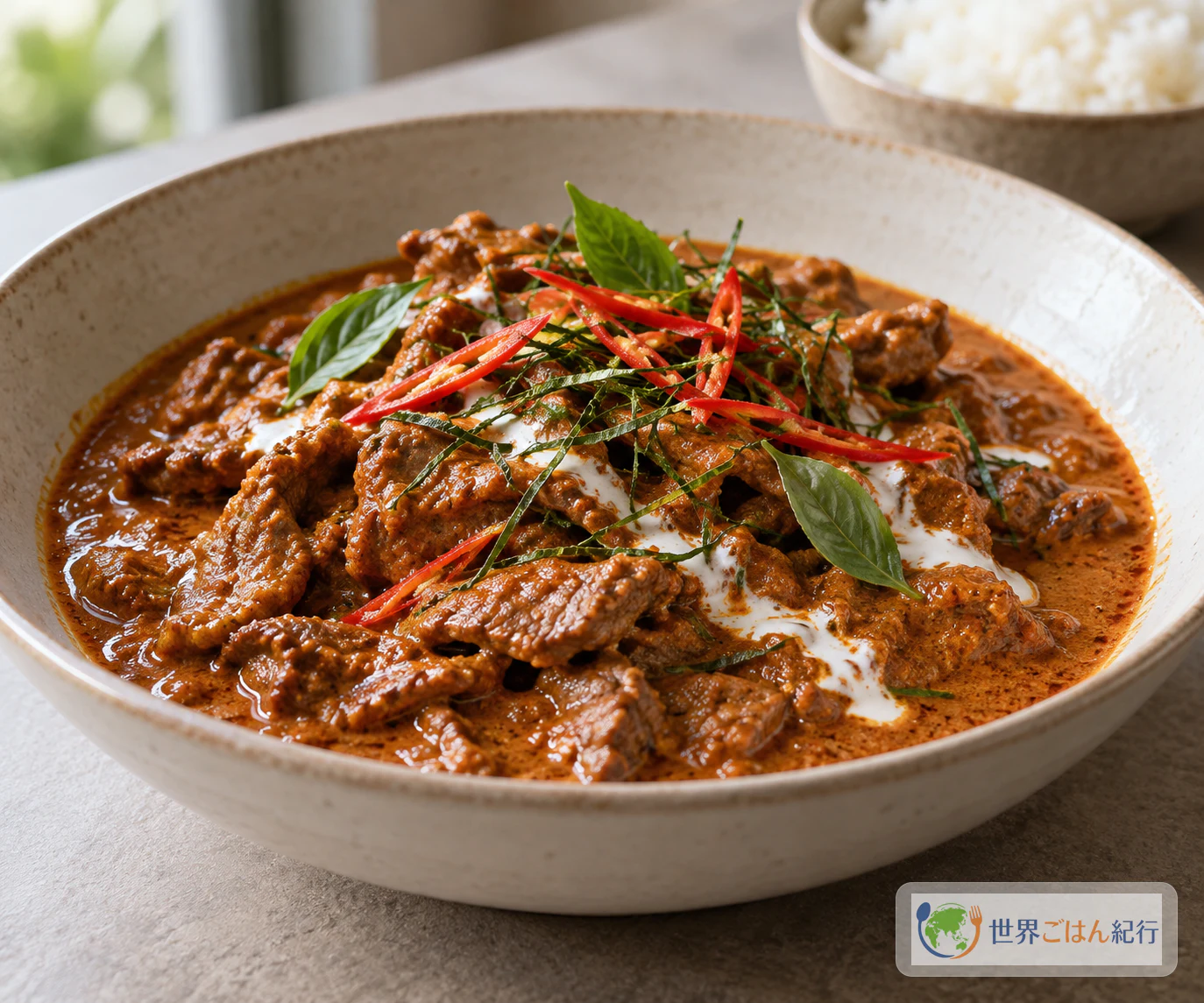
A sauce thick enough to coat thin slices of beef, the aroma of fried panang paste, the richness of coconut, the salty savoriness of fish sauce, the green citrus scent of makrut lime leaves, and a sweetness that keeps all of it in balance.
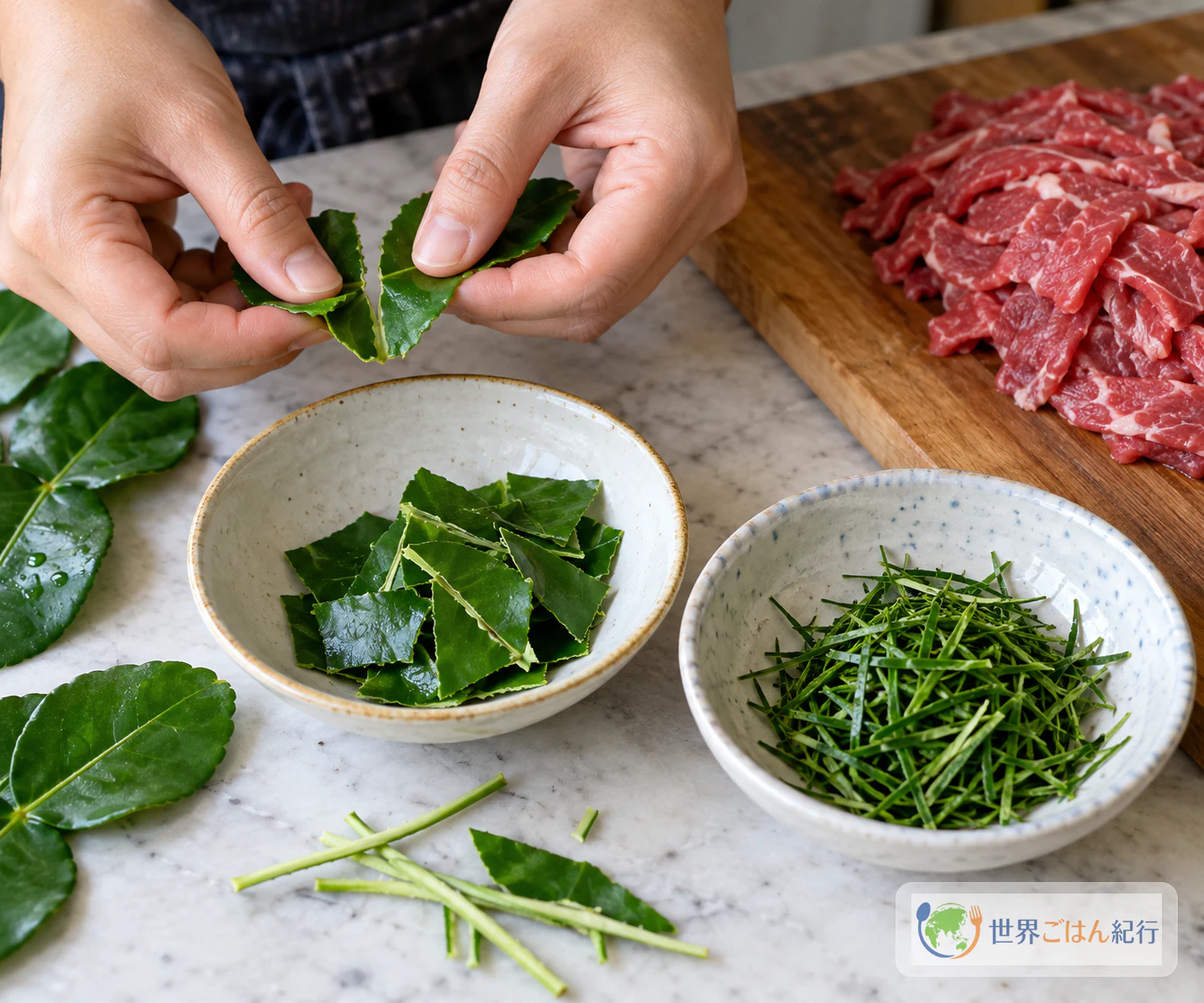
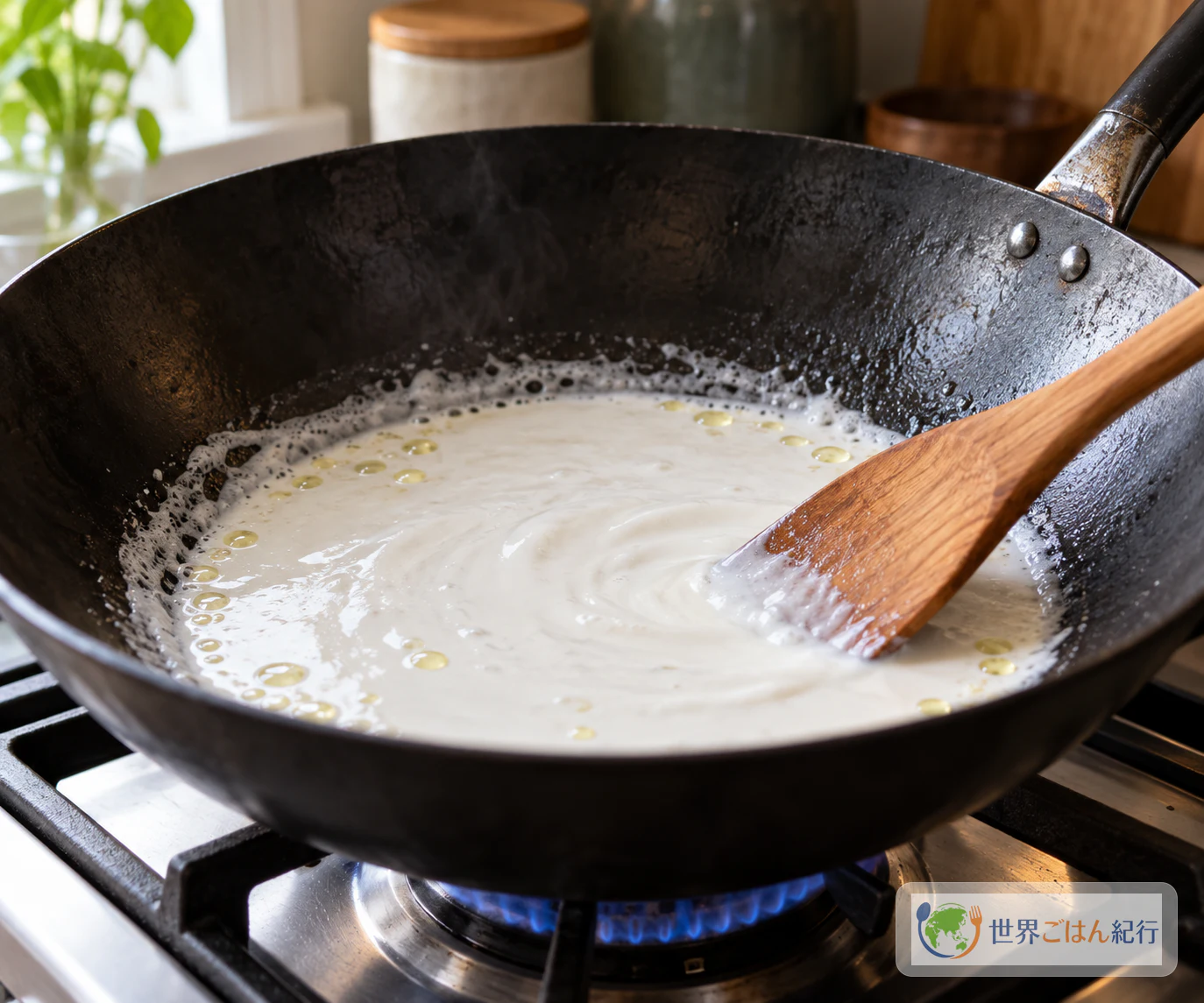
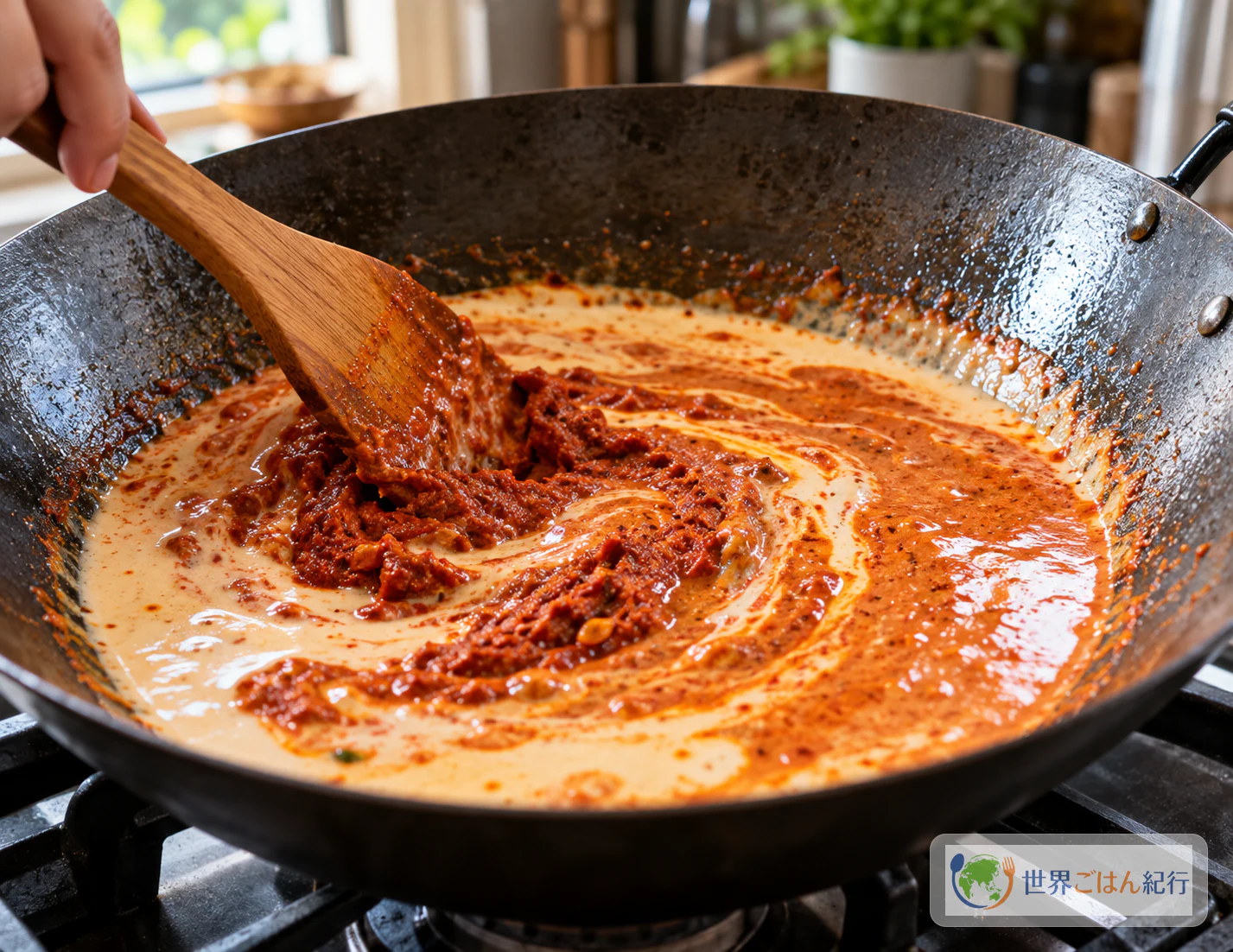
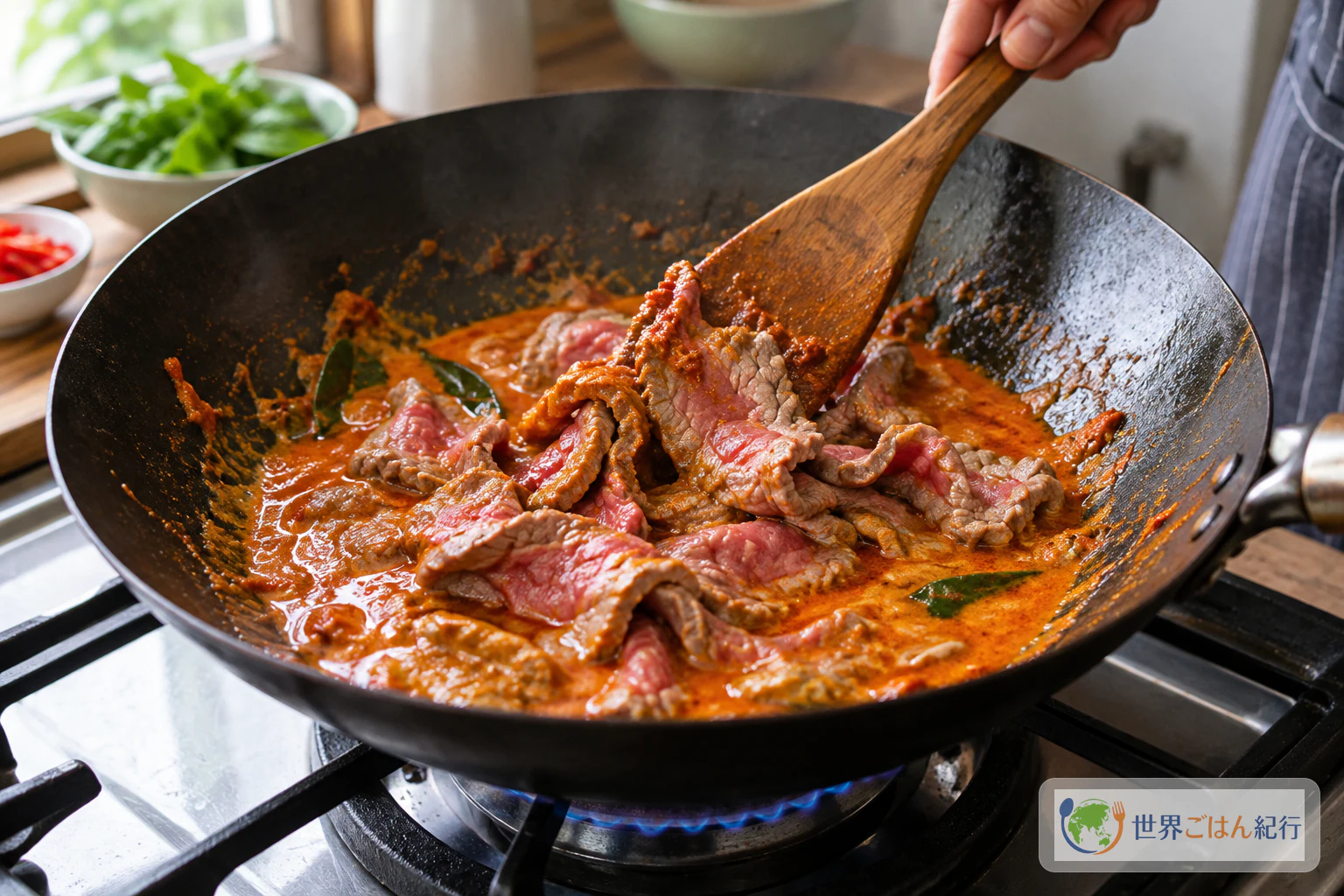
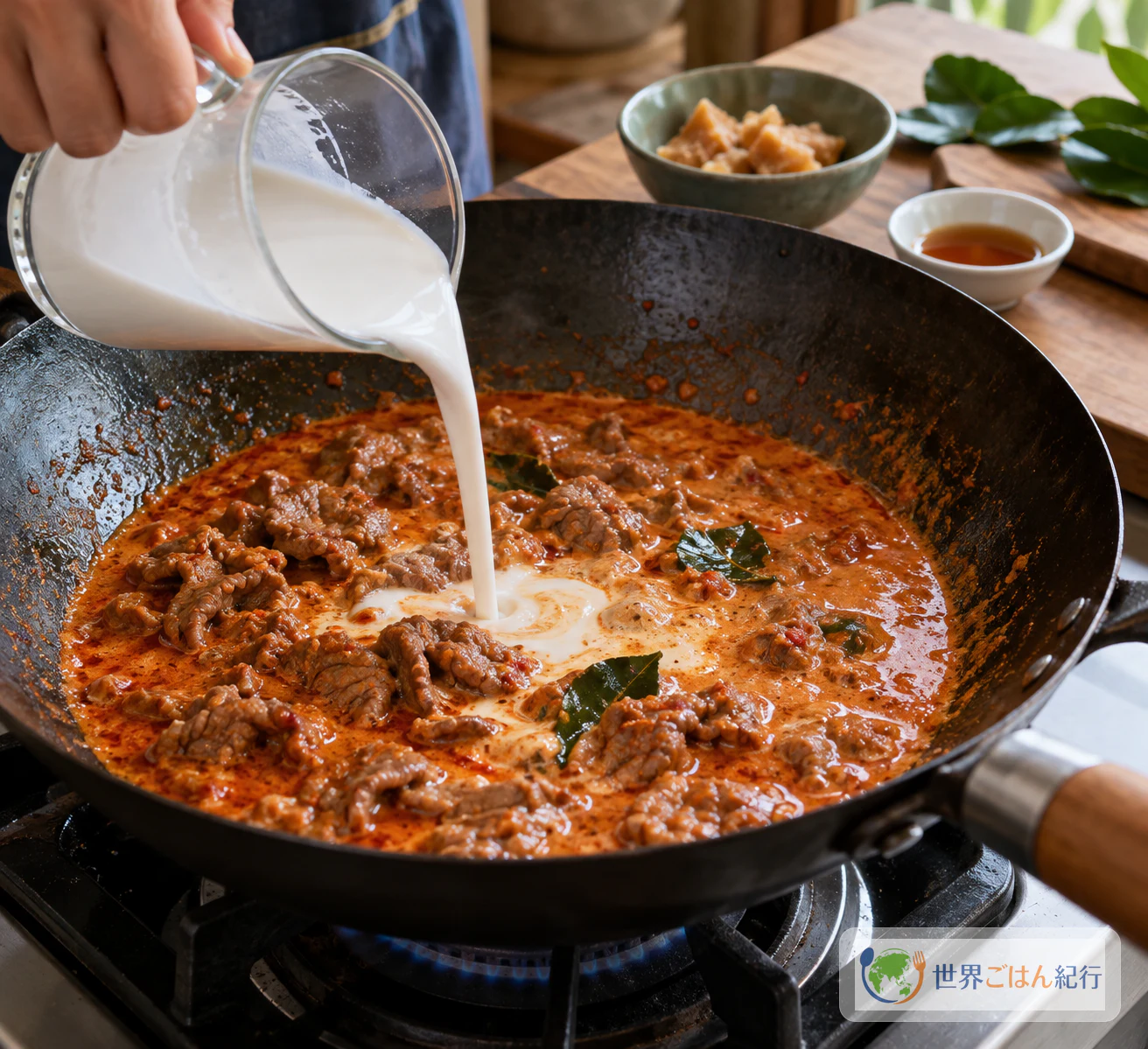
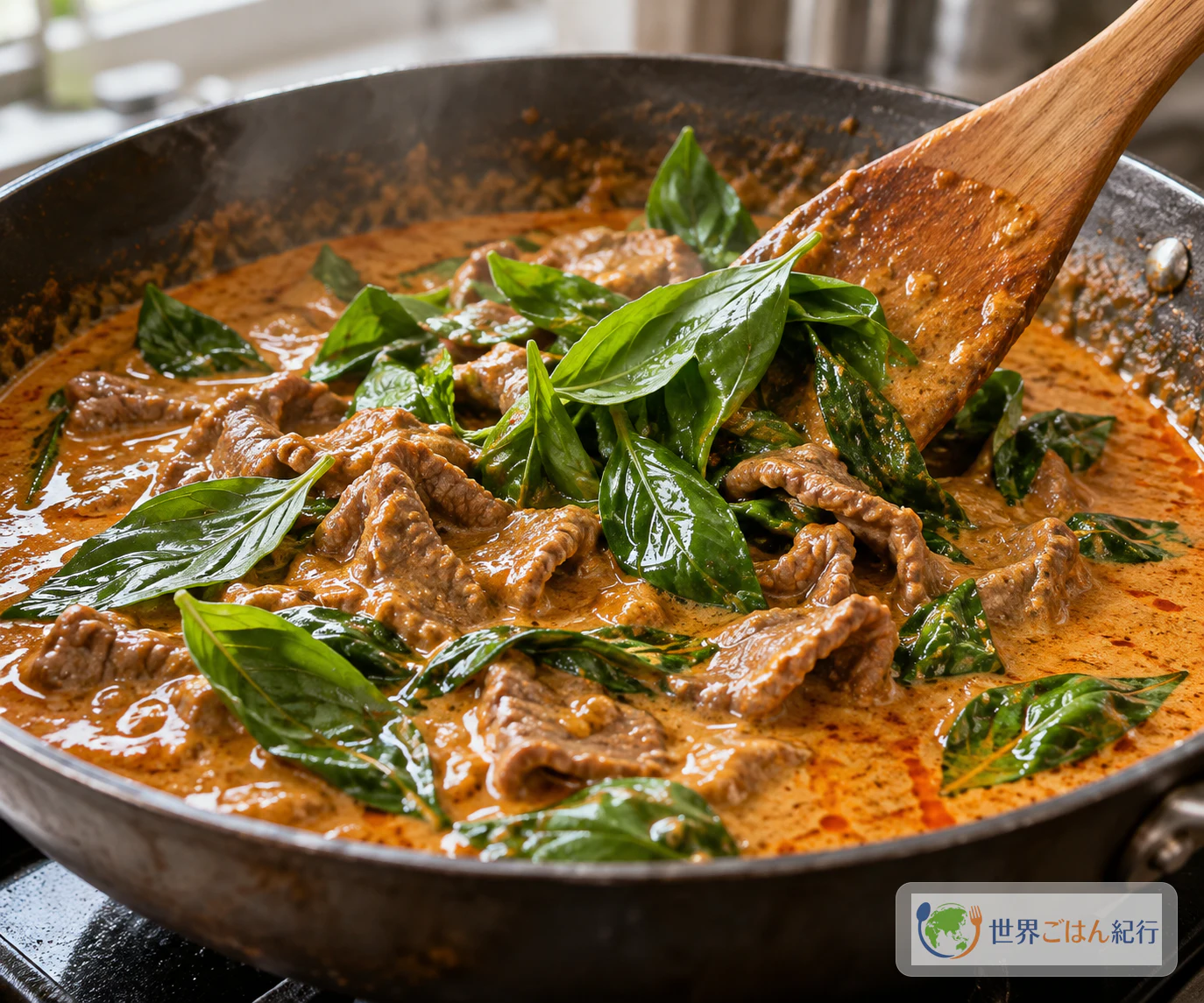
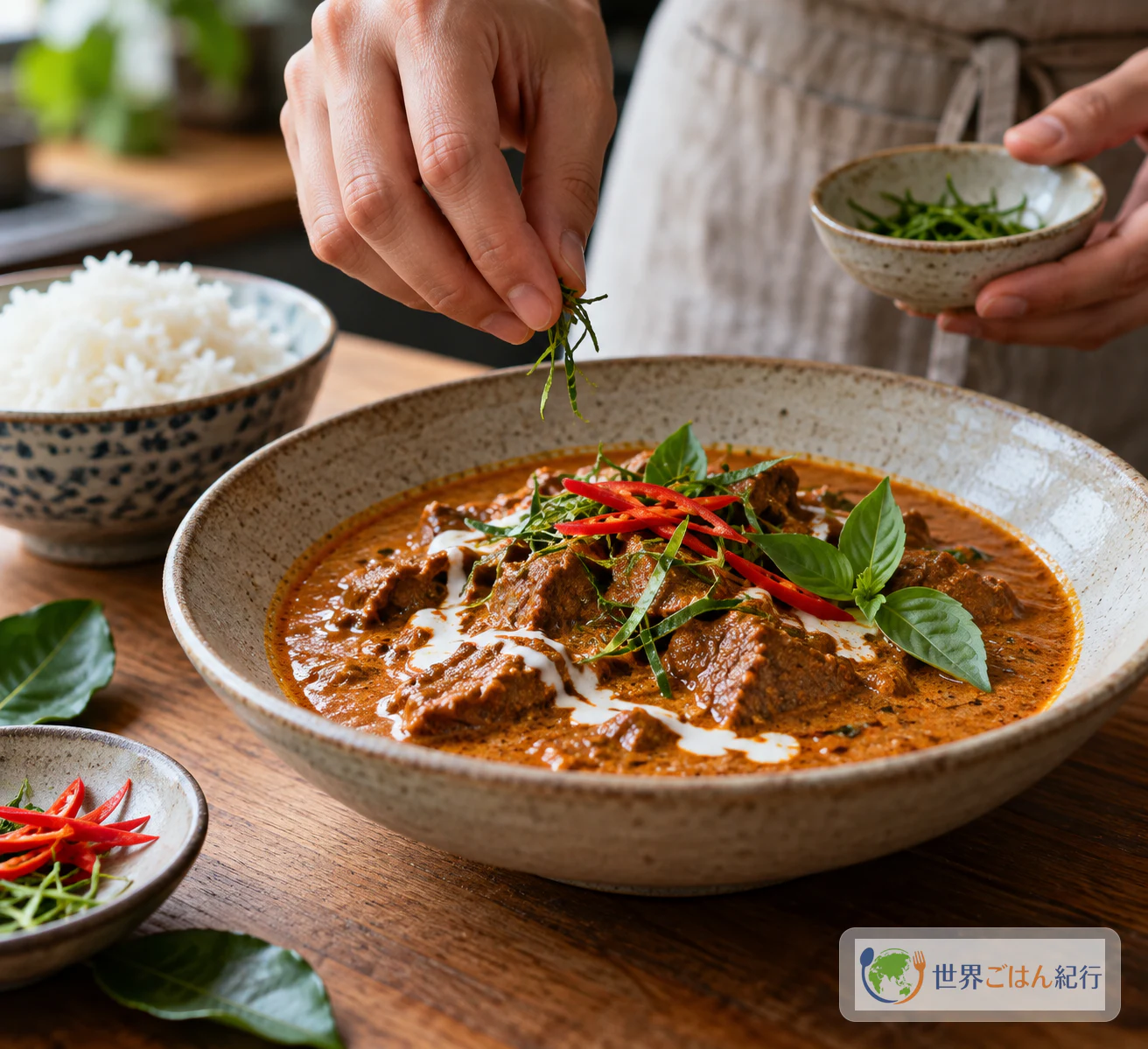
Warm a portion of thick coconut milk in a wok, stir it until its surface begins to turn glossy, then fry deep red panang curry paste in it. The liquid in the pan stops behaving like a soup and becomes a sauce that wraps around whatever goes in next. In this recipe that is thinly sliced beef, finished with a little reserved coconut milk, very fine shreds of makrut lime leaf and slices of red chili scattered over the top. The contrast between that dense, sweet-salty sauce and the sharp, fresh scent of the leaves is what panang curry is about.
The dish is written พะแนง in Thai, and in English you will see it as Panang, Phanaeng or Phanang. All of these point to the same Thai curry, so it is worth searching with more than one spelling when you look for paste or further reading. Thailand's Government Public Relations Department describes it as a curry of meat in a thicker sauce made with coconut milk, chili and makrut lime leaves, with a sweet and salty taste.
The recipe below follows one recipe in full: a beef panang credited to Sompon and Elizabeth Nabnian of the Chiang Mai Cookery School. The amounts, the order of the steps and the only two cooking times it gives are kept as they appear there. Where the recipe leaves something to judgment, such as heat level, this article says so instead of inventing a number.
Panang, Massaman and Green Curry: Different Pots, Not a Ladder of Heat
Thai curries are often lined up by how spicy they are, but these three differ more in what they are built around than in heat alone.
| Curry | What it centers on | What to keep in mind |
|---|---|---|
| Panang (this recipe) | Thin slices of beef, panang curry paste, thick coconut milk, makrut lime leaves | The sauce is reduced around the meat; leaves and chili finish it |
| Massaman | Warm spices and sweetness come to the front | A different paste and a different character; not interchangeable with panang |
| Green curry | Green paste and the aroma of green herbs, with vegetables | Same family of paste-based curries, but a lighter, herb-led result |
Commercial pastes differ in salt, heat and ingredients from one product to the next, so no single jar defines "the real taste." Choose with the label in hand, which is where the ingredients section below begins.
Ingredients: Serves 4
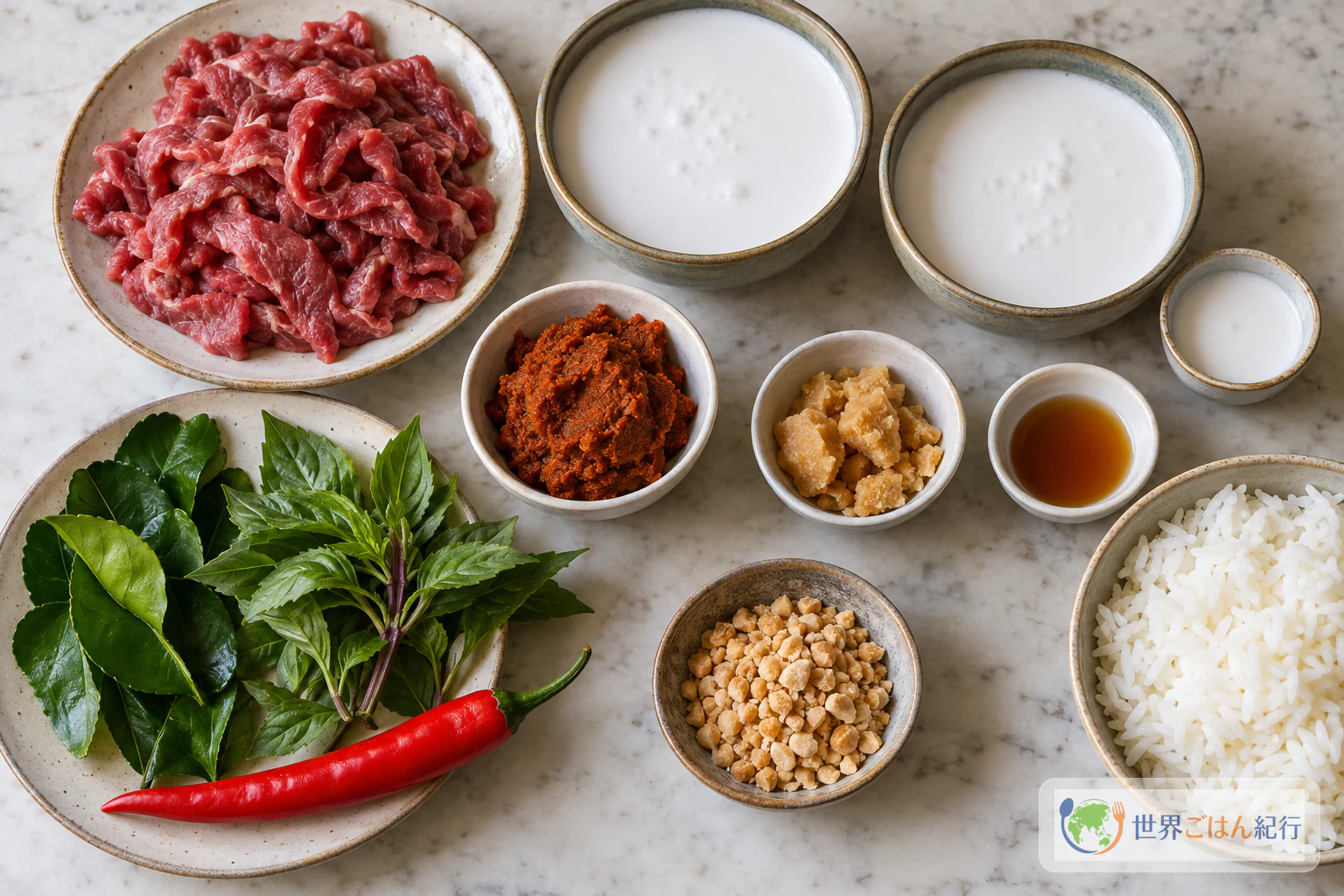
Amounts are given exactly as the source recipe lists them, including its own cup and spoon measures. The coconut milk is a single 500 ml total: 30 ml is set aside for garnish. Dividing the remaining 470 ml into two portions of 235 ml is this article’s allocation of the source total, not an additional quantity or a separately specified source measurement. No extra coconut milk is added beyond that total.
The source recipe does not list oil, salt, water or extra vegetables, so none are added here. The paste is fried in the coconut milk itself.
Fish sauce is a fish product, and many panang pastes contain shrimp paste or other seafood; check the label of the product you buy. Peanuts are optional in this recipe, but some commercial pastes may contain them, so read the ingredients even if you skip the topping. Coconut milk is not dairy milk, but check the labels of processed products such as canned coconut milk and paste for milk and other allergens, along with any shared-facility statements.
Choosing and Substituting: What Changes When You Swap
The beef and basil are easy to find. Put your shopping effort into panang curry paste, makrut lime leaves, Thai fish sauce and thick coconut milk; these carry the outline of the dish. Look for them at Asian grocers or online by their general names.
- Panang paste vs. red curry paste: Red curry paste is not the same thing. It will make a curry, but the aroma, salt and heat change, and the result is no longer quite panang.
- Coconut milk: If you use canned coconut milk, try not to shake the can. If a thicker layer has settled on top, it can go into the first portion you heat. Products differ, so not every can separates this way.
- Palm sugar: If you cannot find it, use a less-refined cane sugar and add it a little at a time. The sweetness works, but the aroma and depth are different.
- Makrut lime leaves: Also sold as bai makrut. Dried leaves have a weaker aroma and a different texture from fresh ones.
- Sweet basil vs. Thai basil: Thai basil works, but it changes the aroma of the finish.
- Red chili: Choose a large red chili. Removing the seeds is one way to keep the heat down.
- Peanuts: Ground fine they melt into the sauce; coarser they add crunch. Either way, they are an allergen.
- Beef shank: Shank needs a long, different cooking plan. Do not drop it into this thin-sliced recipe as a direct swap.
Equipment
- A wok or a pot with a wide base
- A wooden spatula
- A knife and cutting board for raw beef, kept separate from those used for garnishes and serving
- A small container for the reserved 30 ml of coconut milk, and one for the second 235 ml portion
- A food thermometer, if you have one, to check the center of the beef
Ordinary kitchen tools are enough; there is no need to buy anything special for this dish.
Method: Splitting the Coconut Milk and Frying It in Stages
The source recipe gives only two times: 3–5 minutes for the first coconut milk, and 1–2 minutes for the paste. It does not specify heat levels or a simmering time after the curry boils. Judge heat by what you see and smell, since stoves vary.
Before you turn on the heat, have every ingredient measured and close at hand. Once the paste is in the pan, things move quickly.
When you finish, check three things in order: the sauce should coat the beef rather than run off it, the beef should be cooked through, and the seasoning should taste balanced. The recipe does not call for long simmering of the beef.
Keeping It Rich: Fixing Problems in the Pan
| Problem | Likely cause | What to do |
|---|---|---|
| The paste sticks to the bottom of the pan | Heat too high for the amount of liquid | Lower the heat and drizzle in a little of the second coconut milk portion to loosen it. Avoid water, which dilutes the flavor |
| The oil does not separate | Coconut products differ in processing and fat content | Separation is not the only sign of success. If nothing is scorching and the paste smells fragrant, move on |
| Too salty | Fish sauce added all at once; salty paste | Start fish sauce at 30 ml and taste. Check the paste's own salt, and do not add the full 45 ml automatically |
| The beef is tough | A cut meant for stewing, or cooking stretched out without reason | Use thin slices of a tender cut. But if the center is not fully cooked, keep heating: safety comes before speed |
For the chef interviewed by the MICHELIN Guide at Supanniga Eating Room in Bangkok, the aroma of the paste and the fish sauce matter most, and his approach fries the paste over low heat while adding coconut cream a little at a time until the oil starts to separate. That is a different recipe from the one used here, with different amounts, but it points the same way: patience with the paste matters more than high heat.
Use separate tools for raw beef and for anything served without further cooking. Cook the beef until the center reaches 75°C for at least 1 minute. This article does not cover versions using ground meat.
Serving, Cooling and Reheating
Jasmine rice is the base here. The source recipe also lists other ways to eat it, including roti and salted egg; changing the staple changes how the sauce is taken up, so a soft flatbread and plain rice each make it a slightly different meal.
This article does not give a storage period for panang curry. If you keep leftovers, follow general home food-safety practice: divide the curry into shallow containers so it cools quickly, do not leave it at room temperature for long, and reheat it thoroughly, to 75°C or above. These are general guidelines, not a tested shelf life for this dish.
Variations Worth Trying
- Milder: Using less paste lowers the heat, but it also lowers the aroma and salt. The whole sauce becomes less dense, so this is more than a spice adjustment.
- Pork instead of beef: The source page lists beef or pork for its panang. Expect to readjust the paste amount and the salt.
- Chicken: Advice on how strongly panang paste should coat chicken differs between sources. This recipe does not cover chicken; treat it as a separate dish with its own cooking.
- Peanut topping: Optional in the source recipe. It adds toastiness and texture, and adds an allergen.
- Roti or jasmine rice: Both are options; choose by how you want the sauce to be eaten.
Name, Records and Theories: What Can and Cannot Be Said
Thailand's Government Public Relations Department presents phanaeng as a Thai dish and notes that it is made with various meats, including beef, chicken, pork and duck. It is not tied here to the home cooking of any single province. More about the country's food is collected on the Thailand page.
The same government article states that a cookbook from 1890 already included a chicken dish written as "Panang." That is the government's account; the 1890 book itself has not been examined here. The article also introduces theories about the name: one links it to Penang (Pulau Pinang), another to the Malay word panggang, meaning to roast or grill. It also includes a food writer's view that Muslim cooking influenced the dish. These are presented as theories and opinions, and the origin and etymology of panang remain unsettled.
A wider frame comes from research on Thai curry pastes. A 2018 qualitative study in the Dusit Thani College Journal, based on interviews and observation in central Thailand, describes how the ingredients and aromas of curry pastes diversified with place, trade and time, and how ingredients such as lemongrass and makrut lime leaves are used in traditional pastes. It is about Thai pastes in general, not about panang's origins, but it helps explain why the leaves and the paste carry so much of the flavor.
The beef version followed here appears on the Temple of Thai site, credited to Sompon and Elizabeth Nabnian of the Chiang Mai Cookery School and described there as adapted from their cookbook Passion for Thai Cooking.
Frequently Asked Questions
Are peanuts required?
No. In this recipe, roasted ground peanuts are an optional topping. Some commercial panang pastes may contain peanuts, so check the label if you need to avoid them.
Can I use red curry paste instead?
You can make a curry with it, but it is not panang paste, and the aroma, salt and heat will differ. If you can, use a homemade or ready-made panang paste, as the recipe intends.
What if I can't find makrut lime leaves?
Their citrus aroma is one of the pillars of the dish, so leaving them out or switching to another citrus will not give the same flavor. Dried leaves are an option, but their aroma is weaker and their texture is different.
Can I make it with beef shank?
Not by simply swapping it into this recipe. The MICHELIN Guide article uses beef shank in a separate recipe with its own amounts and method. This recipe is built around thin slices that cook quickly.
How is it different from massaman curry?
Massaman puts warm spices and sweetness forward, while this panang centers on beef, panang paste, thick coconut milk and the scent of makrut lime leaves. See the comparison table above; neither dish's origins reduce to a single simple story.
Sources
- Temple of Thai, "Panang Curry with Beef Recipe (Kaeng Phanaeng Neua)," recipe credited to Sompon and Elizabeth Nabnian, Chiang Mai Cookery School. The recipe followed in this article: ingredients and amounts, 4 servings, the order of frying coconut milk, paste and beef, the 3–5 and 1–2 minute times, the garnish and the ways of serving. https://www.templeofthai.com/recipes/panang-curry.php
- Thailand.go.th, Government Public Relations Department, ""Phanang Curry" is ranked no. 1 among the world's best-flavored stew dishes." The government's description of the dish and the meats used, its account of an 1890 cookbook, and the theories about the name and influences it introduces. https://thailand.go.th/issue-focus-detail/001_10_011
- MICHELIN Guide, "How to Make Thai Beef Panang Curry Like a MICHELIN Restaurant," interview with chef Tatchai Nakapan of Supanniga Eating Room. A chef's view on paste aroma, fish sauce and frying the paste with coconut cream; its separate beef-shank recipe is not mixed into this one. https://guide.michelin.com/us/en/article/dining-in/how-to-make-thai-beef-panang-curry-like-a-michelin-restaurant
- Taddara Kanchanakunjara et al., "The Evolution of Thai Curry Pastes," Dusit Thani College Journal, 2018. General background on central Thai curry-paste culture and traditional paste ingredients; not used as evidence for panang's origin. https://so01.tci-thaijo.org/index.php/journaldtc/article/view/136206
- Ministry of Health, Labour and Welfare (Japan), "家庭でできる食中毒予防の6つのポイント" (Six points for preventing food poisoning at home). General home guidance on heating to 75°C at the center for at least 1 minute, separating tools, cooling in shallow containers and reheating. https://www.mhlw.go.jp/stf/seisakunitsuite/bunya/kenkou_iryou/shokuhin/syokuchu/01_00006.html