Butter-Scented Rice With Tender Split Dal
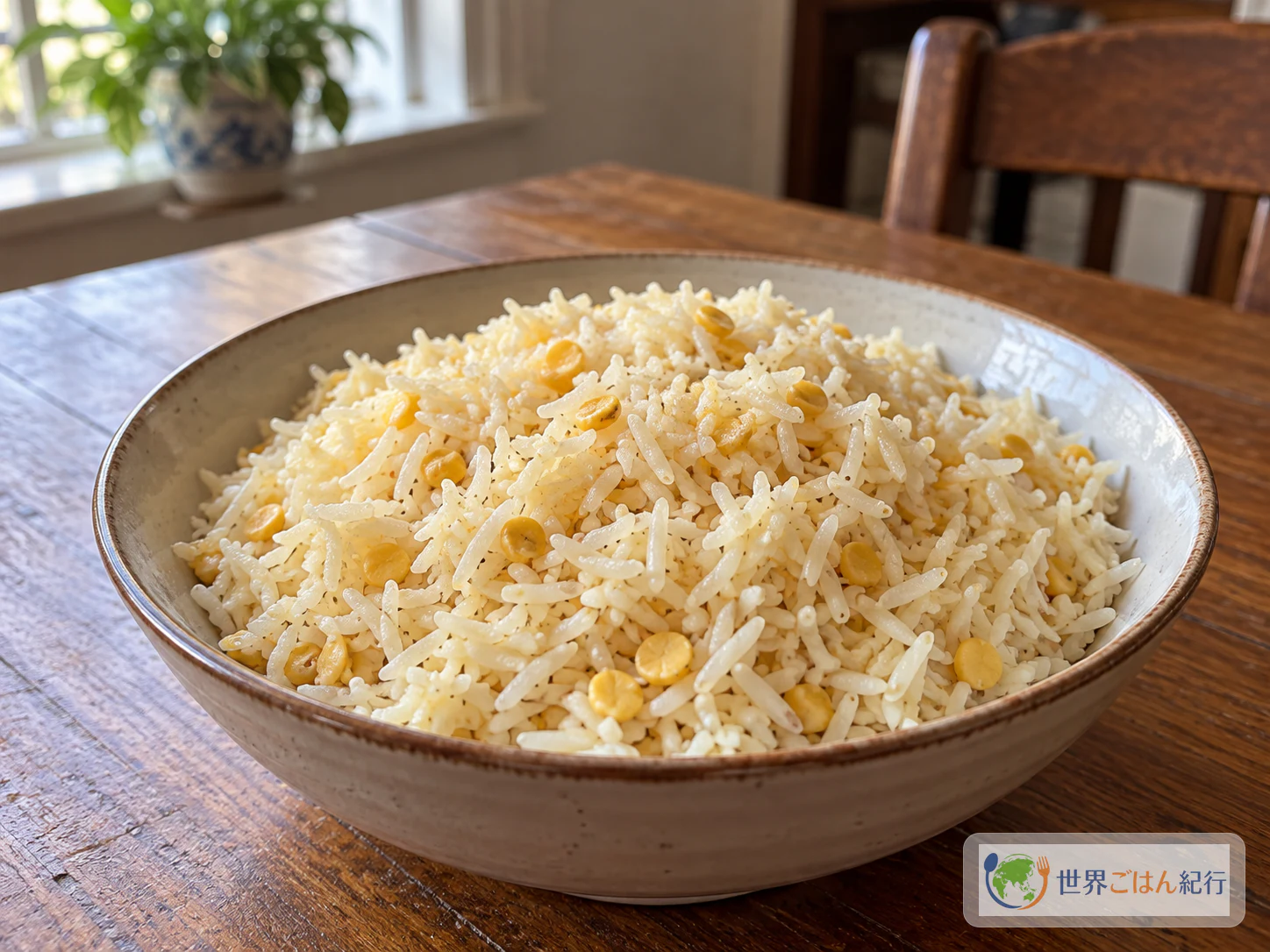
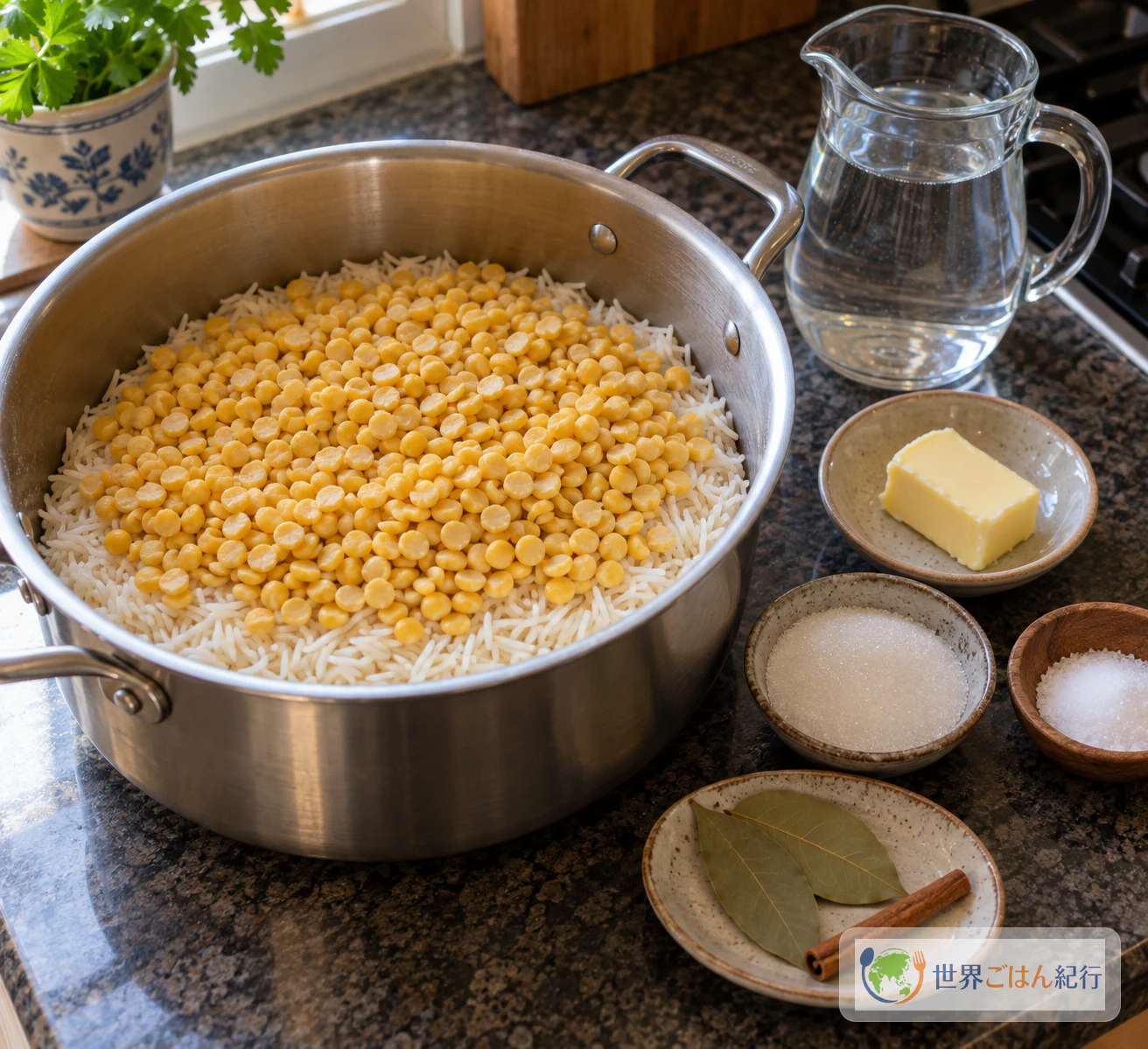
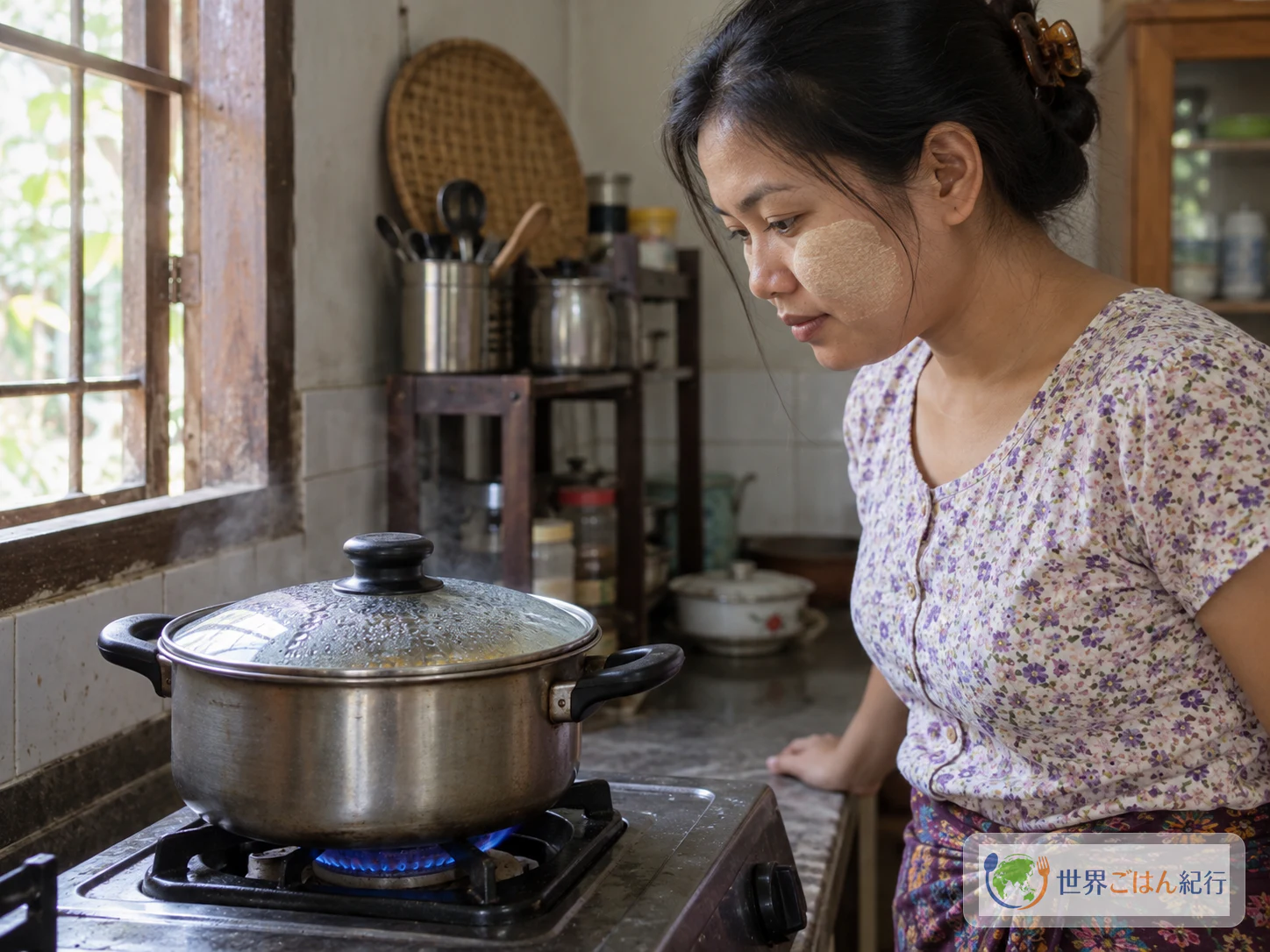
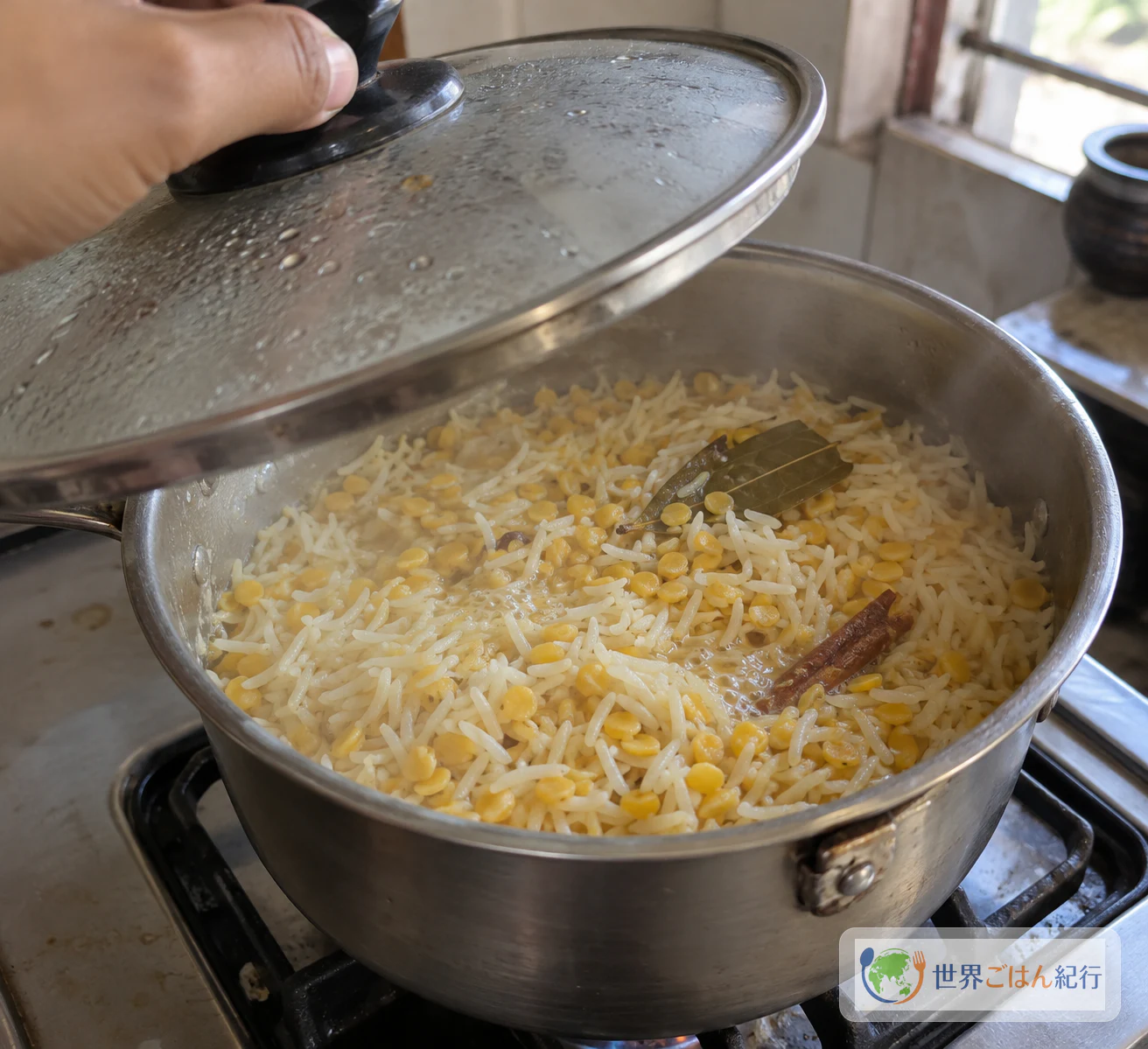
Separate long grains of basmati, the aroma of butter, small pieces of split chana dal cooked until tender, and a gentle note of cinnamon and bay leaf. Everything goes into one pot, gets added once, and cooks under a lid.
Pe htaw bhut htamin (ထောပတ်ထမင်း) is a Myanmar rice dish of basmati rice and split dried chana dal cooked with butter, a little sugar and salt, bay leaves and a cinnamon stick. Tin Cho Chaw, the cook behind the recipe site hsa*ba, calls it "butter & lentil rice." She describes it as a fragrant rice eaten with rich meat curry on birthdays and anniversaries. She also says it can be eaten on its own with a dried-shrimp relish or fried onions.
This recipe follows her version: eight ingredients in grams, millilitres and spoons, for 2–3 people. The method is short. Most of the work is soaking the dal ahead of time, then watching the pot as it comes to the boil.
The amounts, times and steps below follow the source recipe as published. We have not kitchen-tested it, so we don't give extra fixes, measured yields or adjusted timings beyond what the source says.
Not the Same as Hsi Htamin: Butter Rice With Beans
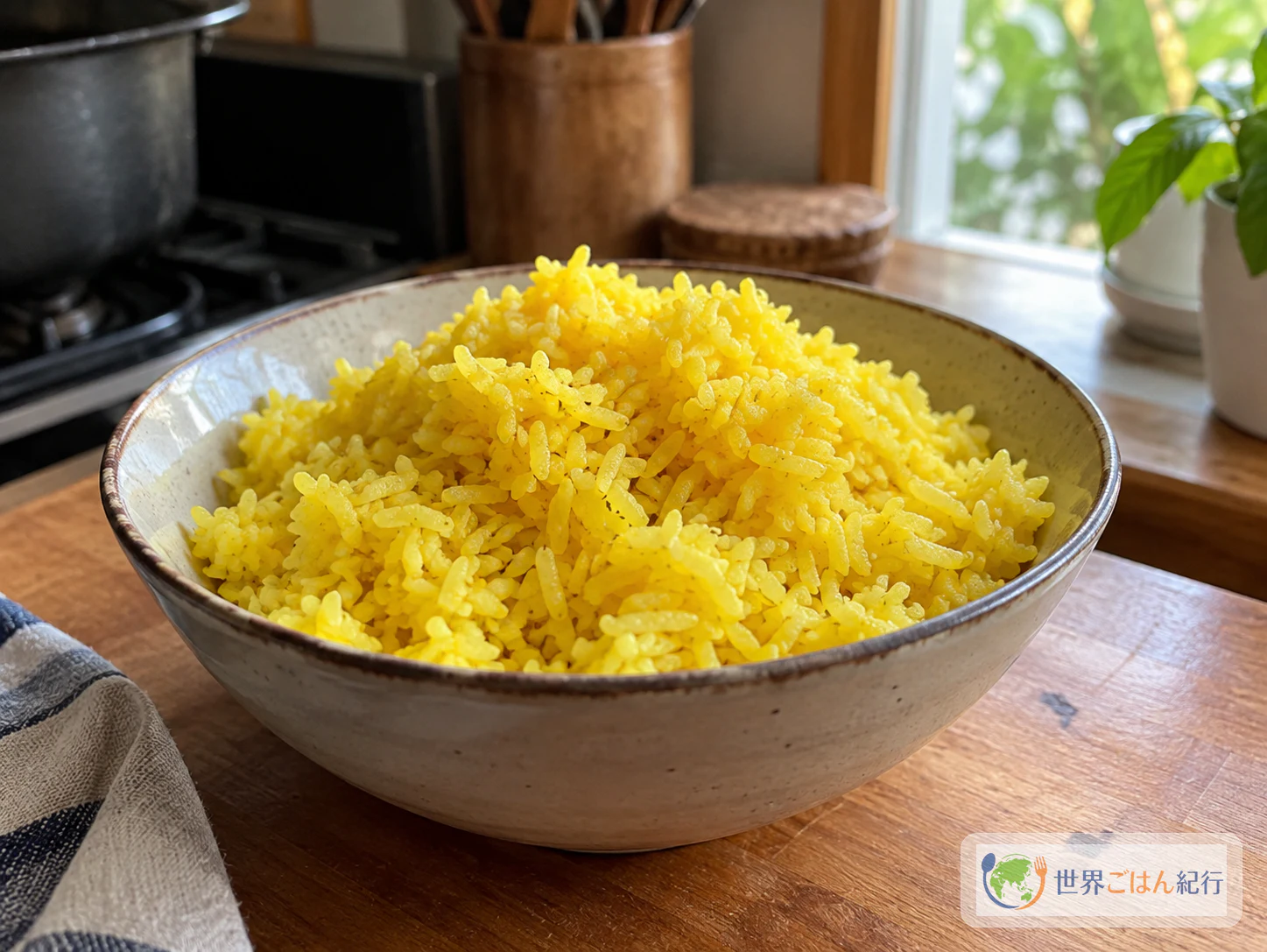
Myanmar has more than one rice dish with a golden, rich look, and the names are easy to mix up. Hsi htamin is glutinous rice steamed with oil and turmeric. Pe htaw bhut htamin is a different dish: long-grain rice cooked with butter, whole spices and split dal. This article covers only the second dish. If you want the sticky, turmeric-yellow rice, see the hsi htamin recipe instead.
You may also see the name spelled Htawbat Htamin. A 2017 Myanmar Cultural Day at Mae Fah Luang University used that spelling when it listed the dish among the Myanmar foods served at the event. For more dishes from the same table, see our Myanmar country page.
Ingredients for 2–3 Servings
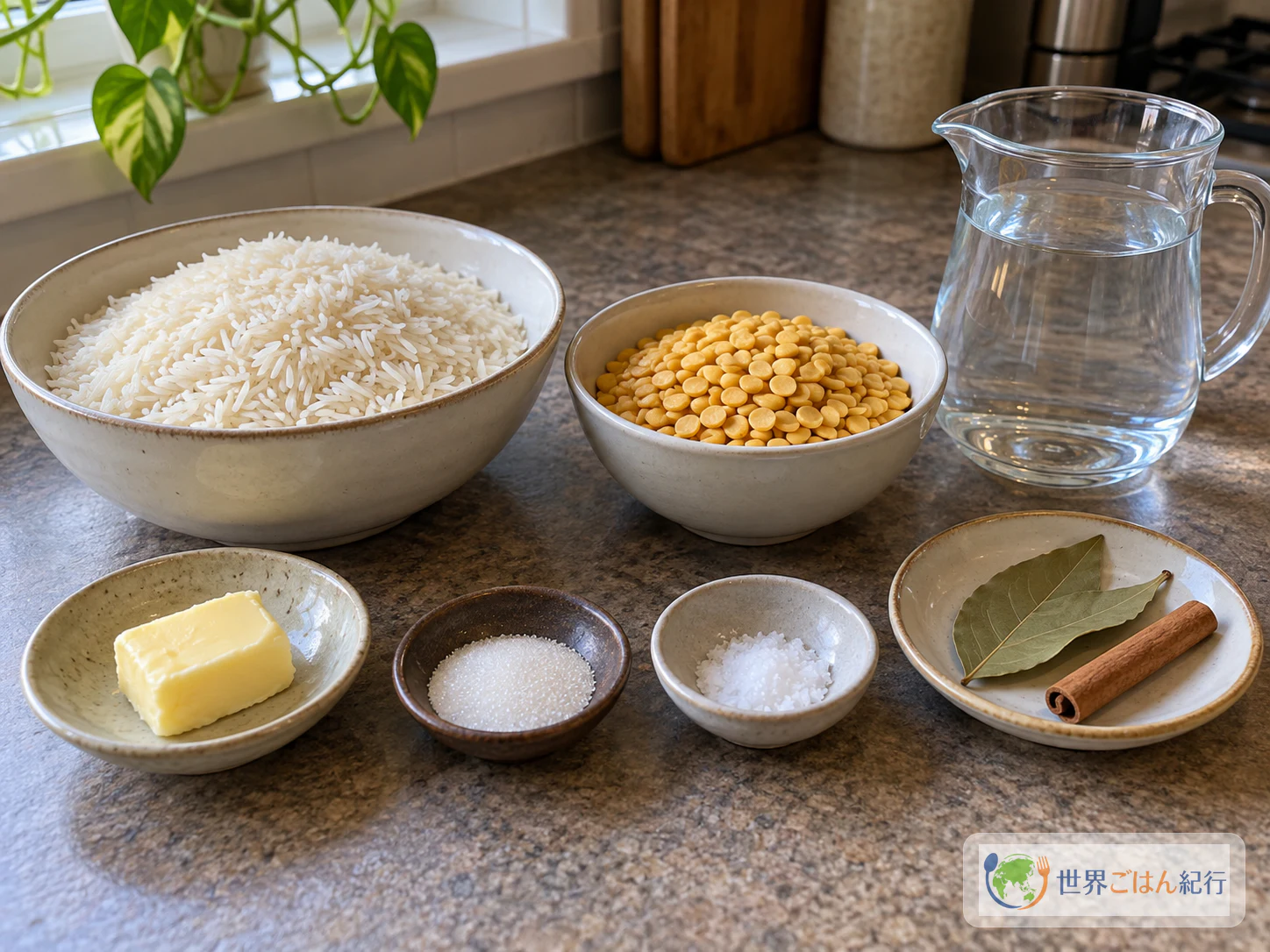
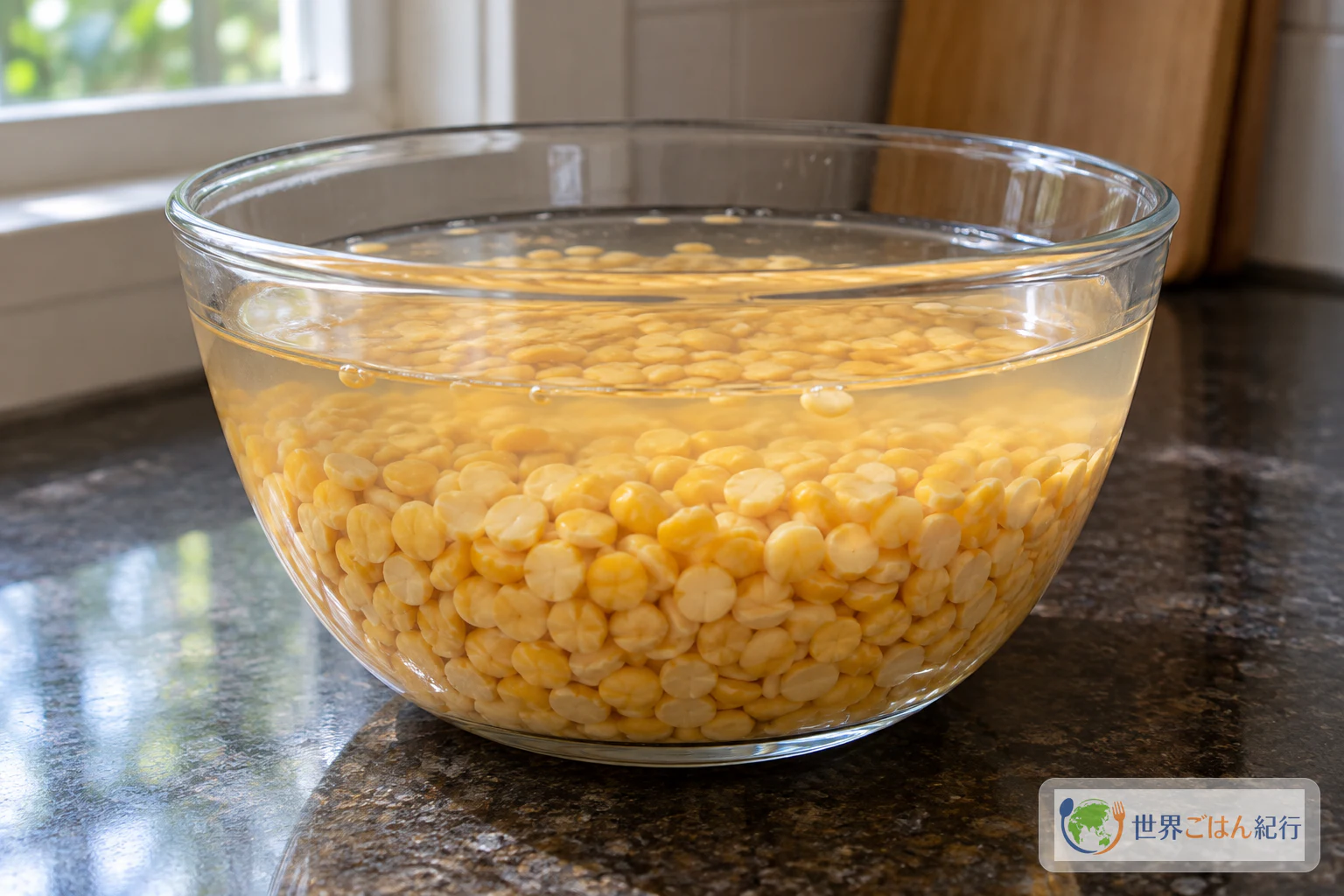
These are the source's full amounts. They are not scaled up or down. The chana dal needs to soak for 8 hours, so start the day before or in the morning.
Equipment
- A bowl for soaking the dal
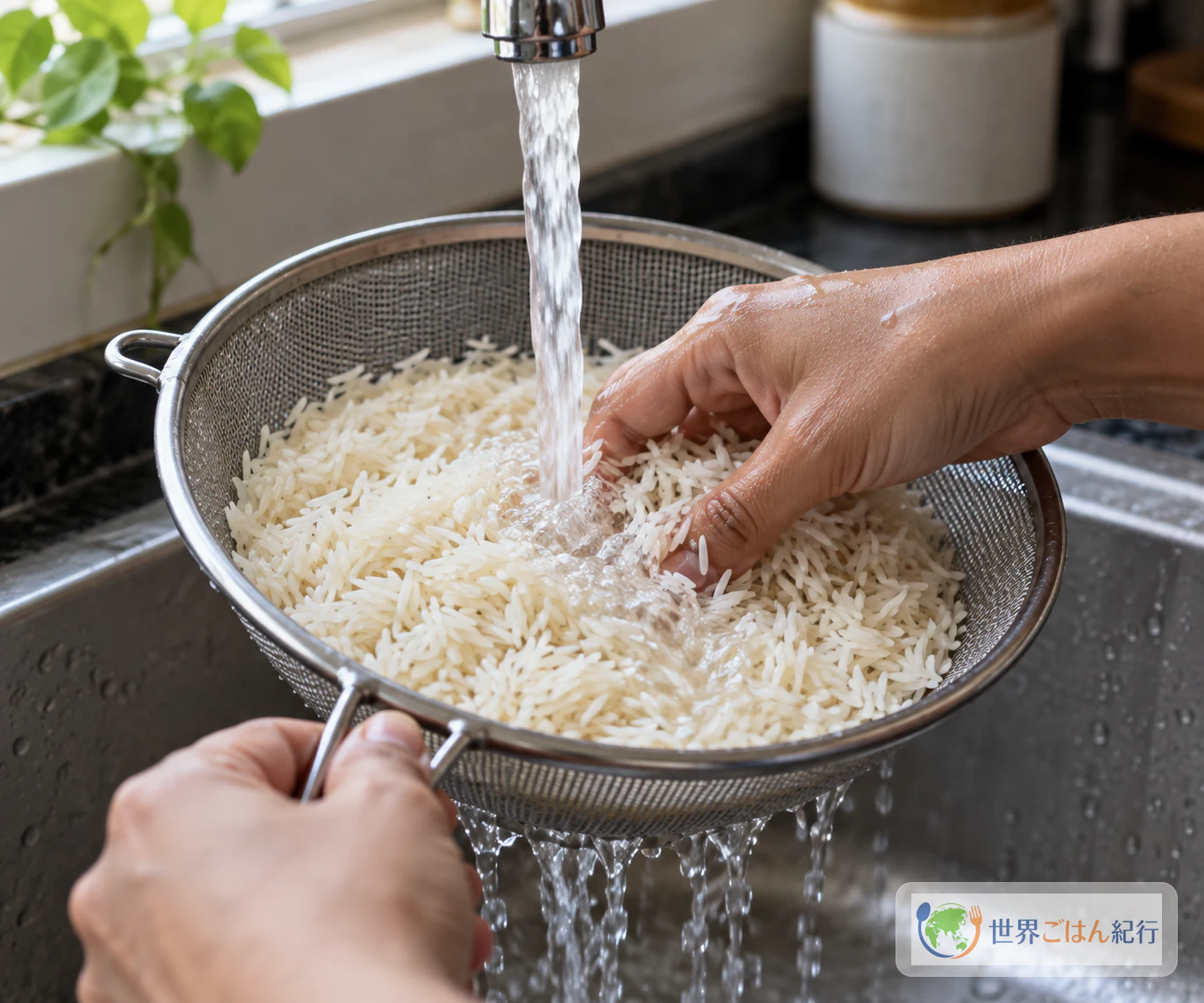
- A sieve or strainer for rinsing and draining
- A saucepan with a lid. A heavy pot is a reasonable choice, but the source doesn't call for any special pan
Choosing and Substituting: Chana Dal Is Not Canned Chickpeas
Chana dal is dried chickpea that has been skinned and split. The pieces are small, flat and yellow. Canned chickpeas are whole and already cooked. Red lentils are a different legume. Neither one is the same as the soaked dried dal this recipe uses. Look for "chana dal" or "Bengal gram" at South Asian grocers or in the dried-bean aisle. The source doesn't offer a substitute, and we haven't settled on one either. If you can't find chana dal, treat any replacement as your own experiment, not as this recipe.
Basmati rice gives the dish its long, separate grains, and the recipe is built around it. Other kinds of rice may need different amounts of water, and that hasn't been checked, so we don't suggest swapping the rice.
Butter: the source doesn't say whether to use salted or unsalted butter. Salted butter adds salt on top of the full teaspoon in the recipe. Using unsalted butter with the salt as written is our editorial suggestion, not part of the source. Whether to reduce the salt when using salted butter hasn't been tested.
Cinnamon and bay leaves are easy to find in ordinary supermarkets.
The same recipe also appears on the Travel by Stove blog with cup measurements: 1 cup rice, 1/4 cup dal and 1 2/3 cups water. That is a republication of the same Tin Cho Chaw recipe, not a separate one. Don't mix the two measuring systems. The amounts here use the grams and millilitres from hsa*ba.
This dish contains milk (butter) and legumes (chana dal). If you buy dal, spices or butter as packaged products, check the ingredient and allergen labels.
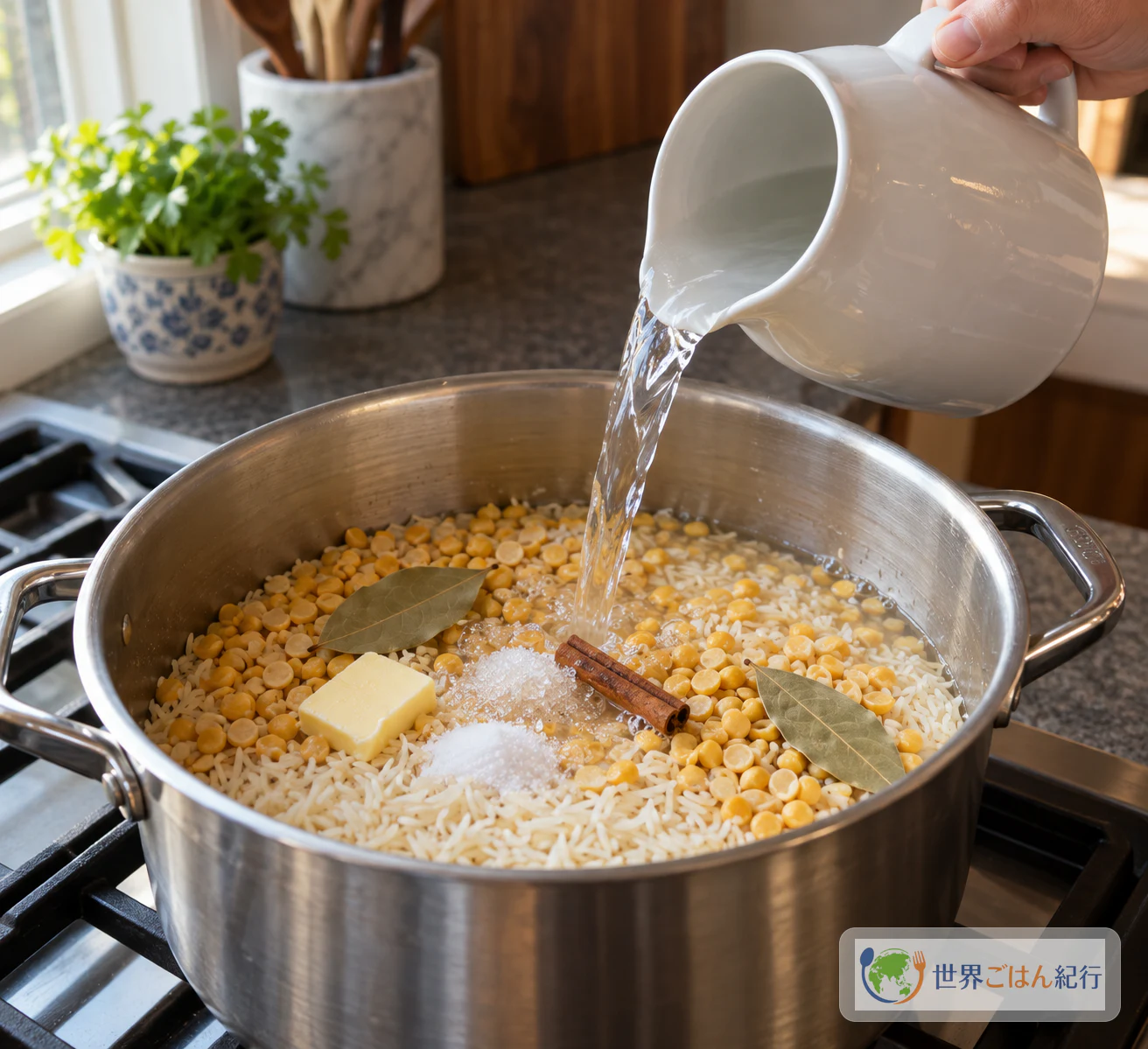
Method: One Pot, Added Once, Cooked Under a Lid
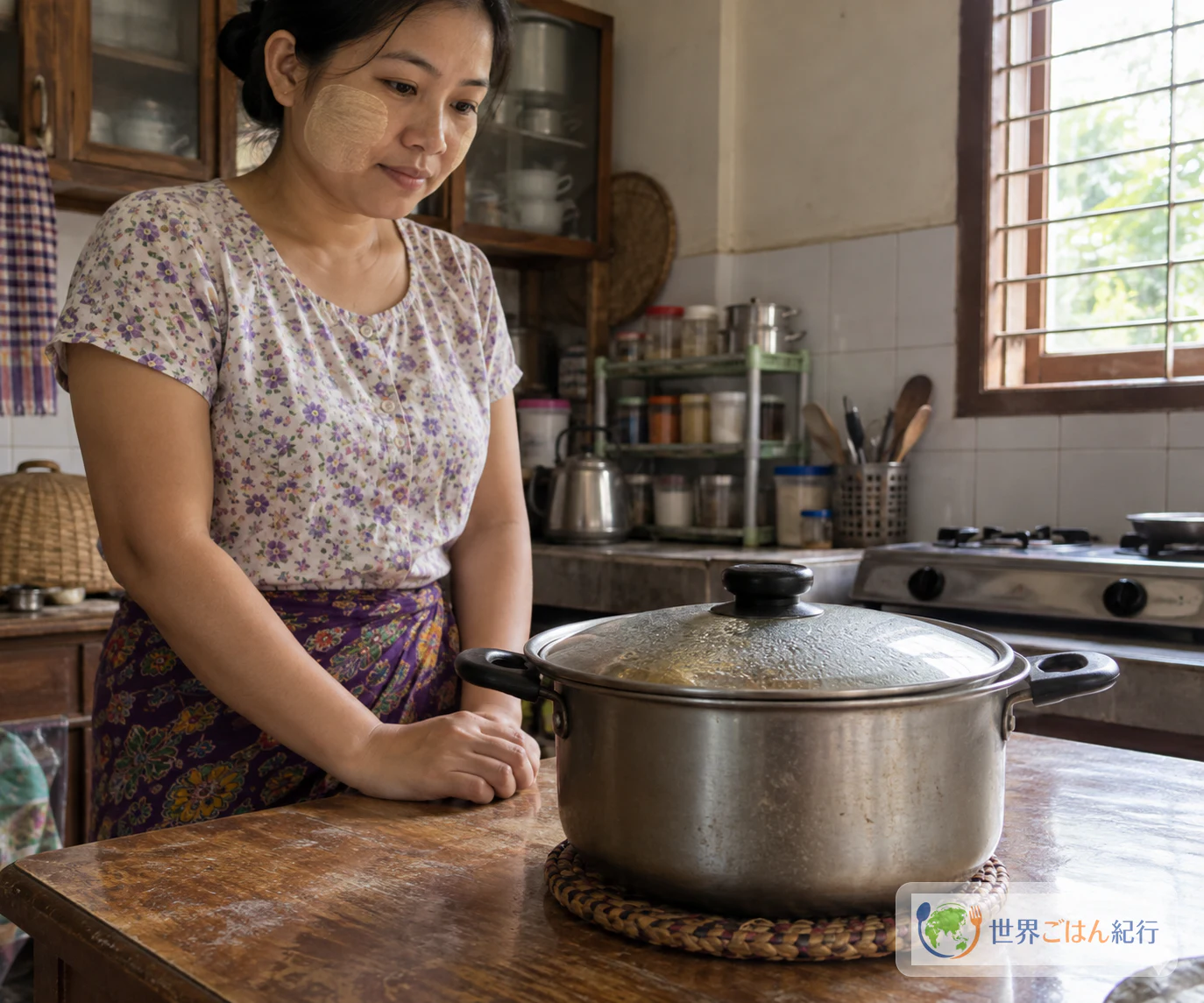
The source lists 8 hours of soaking for the dal. On the stove, the rice cooks on low heat for 15–20 minutes after it boils, then rests for 5 minutes. The source also states a cooking time of 25 minutes. Judge doneness by the signs in steps 6 and 7, not by the clock alone.
Troubleshooting
| Situation | What the source says | What we can and can't say |
|---|---|---|
| The pot bubbles over as it boils | Watch the pot while it comes to the boil | Stay at the stove until you turn the heat down to low |
| The dal is still hard | Cook on low for 15–20 minutes, until the water is absorbed and the dal is cooked | Burners and pots differ. We haven't tested a fixed amount of extra water or time, so we don't give one |
| Water is left in the pot | The same signs: water absorbed, dal cooked | Check again within the 15–20 minute window. Any change beyond that is untested |
| The dal is mushy or falling apart | Not covered by the source | Make sure you used split dried chana dal, not canned chickpeas or red lentils |
Leftovers and Storage
The source gives no storage guidance, and we haven't confirmed storage times or reheating methods for this dish. Don't leave cooked rice standing at room temperature, especially in hot, humid weather. For how long to keep leftovers and how to reheat them, follow your local food-safety authority's guidance on cooked rice.
How It's Eaten: With Curry, or With Simple Sides
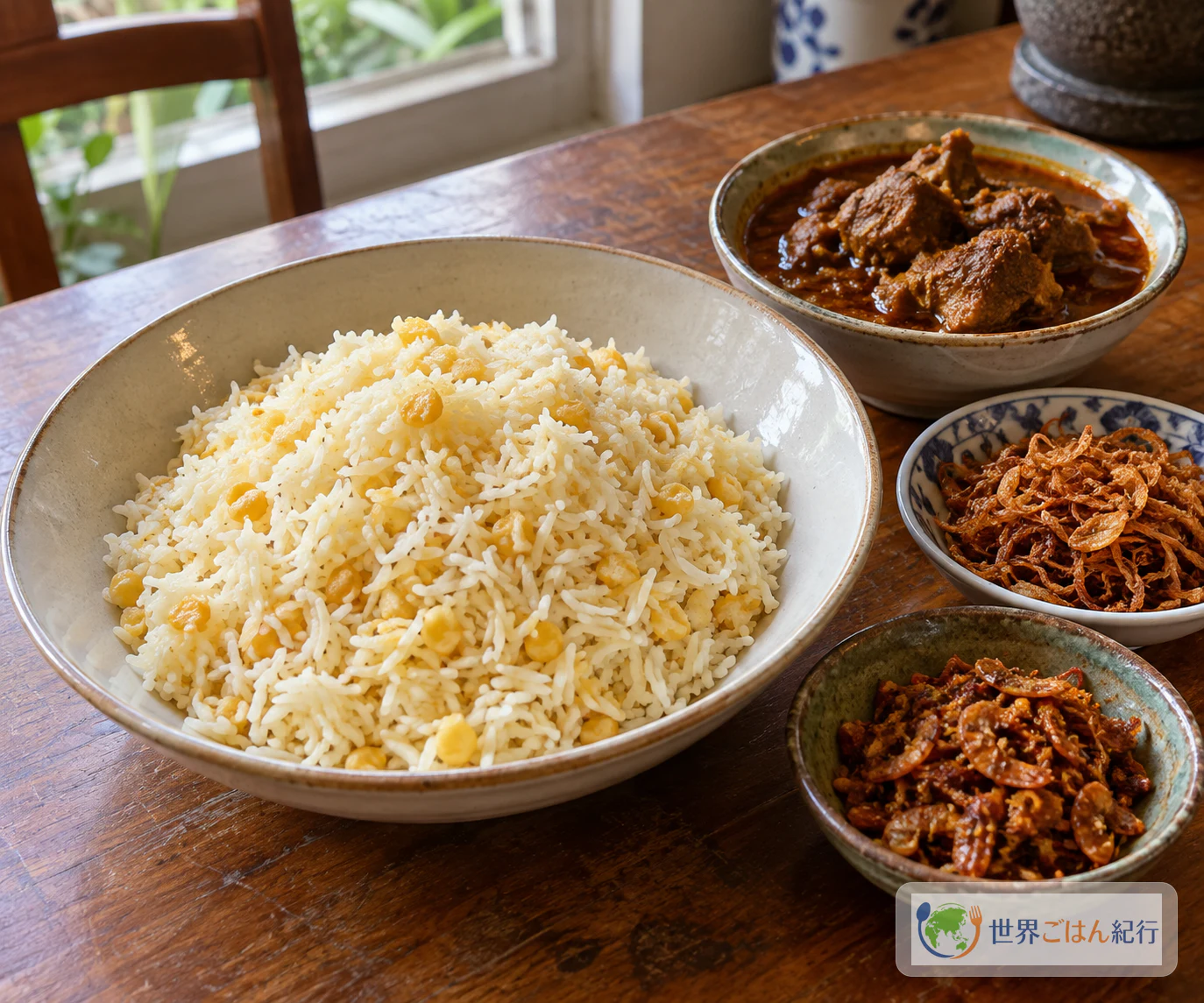
According to Tin Cho Chaw, pe htaw bhut htamin is eaten with rich meat curry on birthdays and anniversaries. It can also be eaten on its own with a dried-shrimp relish or fried onions. These are options, not requirements. Serve them in separate dishes so the rice itself stays plain. If you leave out the dried-shrimp relish for allergy or availability reasons, the rice still works.
If you serve it with a rich curry, one idea is to keep the rice seasoned as written and adjust the saltiness on the curry side. That is our editorial suggestion, not something the source says.
Variations to Treat as Experiments
These are ideas outside the recipe above. None of them has been tested, so don't treat them as the standard method.
- Rice cooker: water amounts and cooking times for a rice cooker haven't been checked.
- Unsalted vs. salted butter: using unsalted butter with the salt as written is a suggestion. Whether to adjust the salt after tasting hasn't been tested.
- Other beans in place of chana dal: no substitute has been chosen.
Frequently Asked Questions
Can I use canned chickpeas instead of chana dal?
They aren't the same ingredient. Chana dal is dried chickpea that has been skinned and split, and here it is soaked for 8 hours and cooked with the rice. Canned chickpeas are whole and already cooked. The source gives no substitute, and we haven't tested one.
Is this the same dish as hsi htamin?
No. Hsi htamin is glutinous rice steamed with oil and turmeric. Pe htaw bhut htamin is long-grain basmati cooked with butter, bay leaves, cinnamon and split chana dal.
What should I serve it with?
The source mentions rich meat curry for birthdays and anniversaries, or a dried-shrimp relish or fried onions when eating it on its own. Serve any of them alongside the rice rather than mixed in.
Can I use a different rice?
The recipe is built on basmati and on 400ml of water for 200g of rice. Other rice may need different water and timing, which hasn't been checked.
Sources
- hsa*ba: please eat / Tin Cho Chaw, "butter & lentil rice | pe htaw bhut htamin." The main recipe: the dish name, the eight ingredients and amounts, the 8-hour soak, cooking on low heat for 15–20 minutes after boiling until the water is absorbed and the dal is cooked, the 5-minute rest, serves 2–3, the stated cooking time of 25 minutes, and eating it with meat curry on birthdays and anniversaries or with dried-shrimp relish and fried onions. This is one cook's account and is not generalized to all of Myanmar. https://hsaba.com/recipes/butter-lentil-rice
- Travel by Stove / Becki Robins, "Recipes from Burma." A republication of the same Tin Cho Chaw recipe in cup measurements, with the Pe Htaw Bhut Htamin spelling and the curry context. Used only for comparison, not as independent support. https://travelbystove.blogspot.com/2012/07/recipes-from-burma.html
- Mae Fah Luang University, "Myanmar Cultural Day and Exhibition." The spelling Htawbat Htamin, and that the dish was served with other Myanmar dishes at a 2017 university cultural event. Not used for history, how widely it is eaten, or the recipe. https://en.mfu.ac.th/en-news/en-news-detail/detail/News/279.html