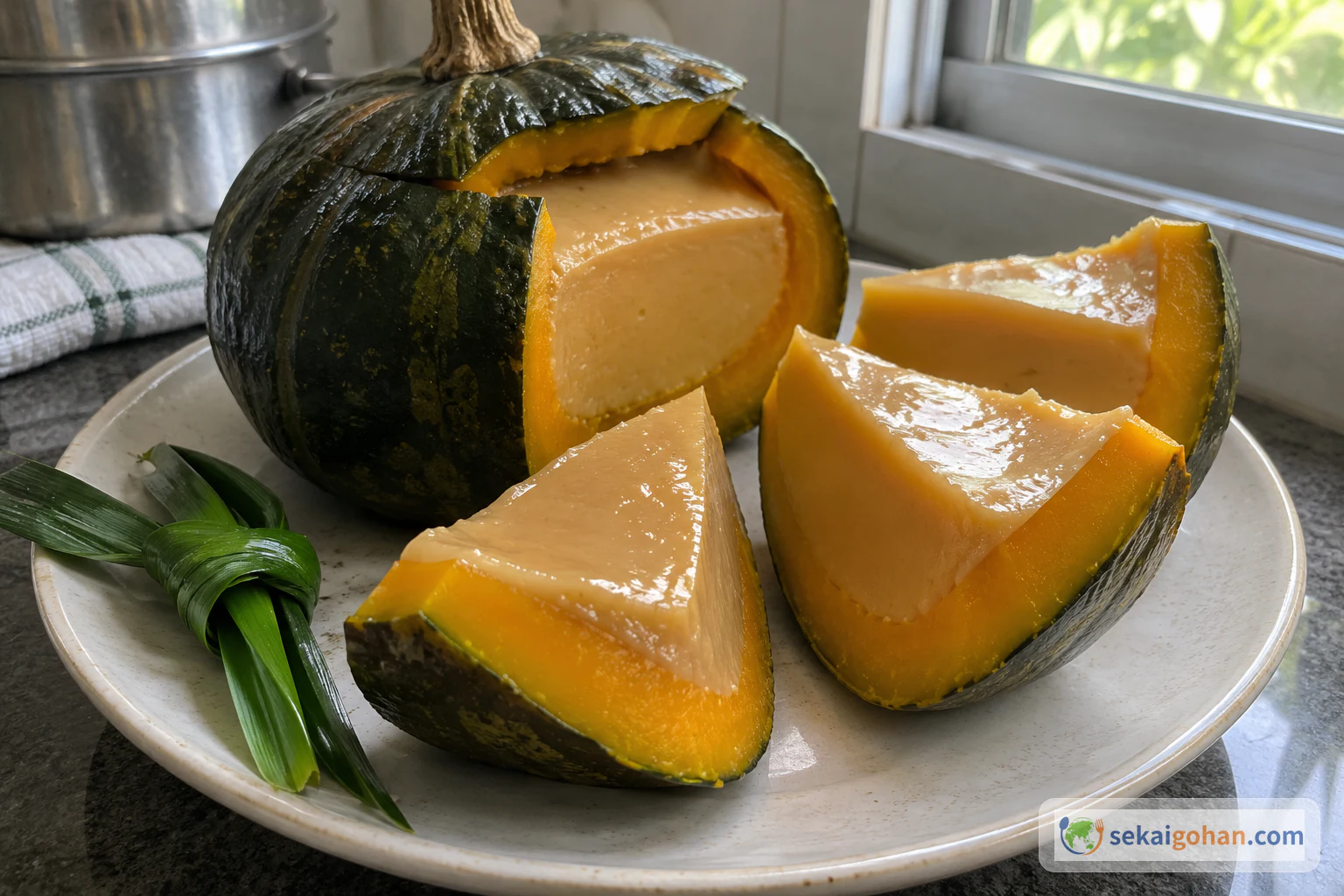
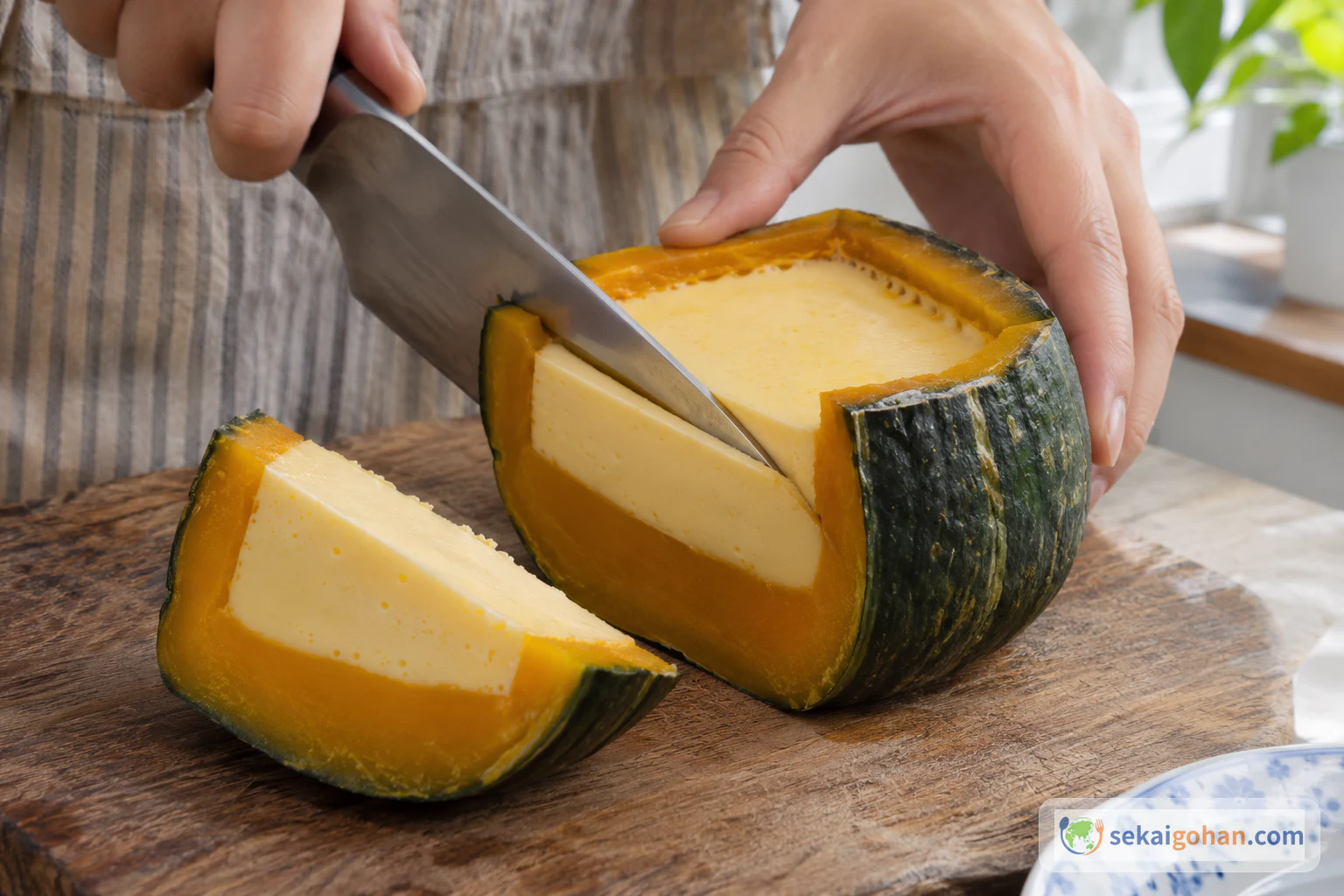
When the steamer lid comes off, the custard inside the squash has set into a smooth dome, pale golden brown and slightly puffed, and the steam smells of pandan and dark palm sugar. Sangkhaya fak thong is a small green kabocha hollowed out, filled with eggs beaten with coconut milk and palm sugar, and steamed whole until both are cooked through. Chilled and cut into wedges, every slice carries two textures side by side: a firm, silky custard and dense, sweet orange squash, held together by a thin green rind. It is a Thai sweet sold by the slice at street stalls and markets, and it is one you can make at home with a single squash from the supermarket.
A Pumpkin That Is Also the Bowl
The name tells you exactly what you are getting. Sangkhaya (สังขยา) is the Thai word for a custard of eggs, coconut milk and sugar, and fak thong (ฟักทอง) means pumpkin. Put together, the name describes custard set inside a pumpkin, and the squash is both the container and half of what you eat. Nobody scoops the custard out and leaves the shell; the knife goes straight through rind, flesh and custard, and the wedge is eaten as one piece.
At Thai street stalls the squash is sold already sliced, each wedge showing that clean line between orange flesh and pale custard. That clean cut is the mark of a good one, and it is the reason Japanese kabocha is the squash to use: its flesh is dense and dry enough to slice neatly once chilled, instead of slumping away from the custard.
The same sangkhaya custard turns up elsewhere in Thai sweets, spooned over sticky rice as khao niao sangkhaya or served alongside bread. Those are separate dishes with the custard cooked on its own; here it only exists inside the squash. Across the border, Cambodia has a close relative called ipov sankya. More of the country's food lives on the Thailand page.
The romanization wanders a long way: sangkhaya fak thong, sangkaya phak thong, sankaya phak tong and sang ka ya fak tong all name the same pumpkin custard. Searching with the Thai script สังขยาฟักทอง brings up recipes written in Thailand.
Ingredients
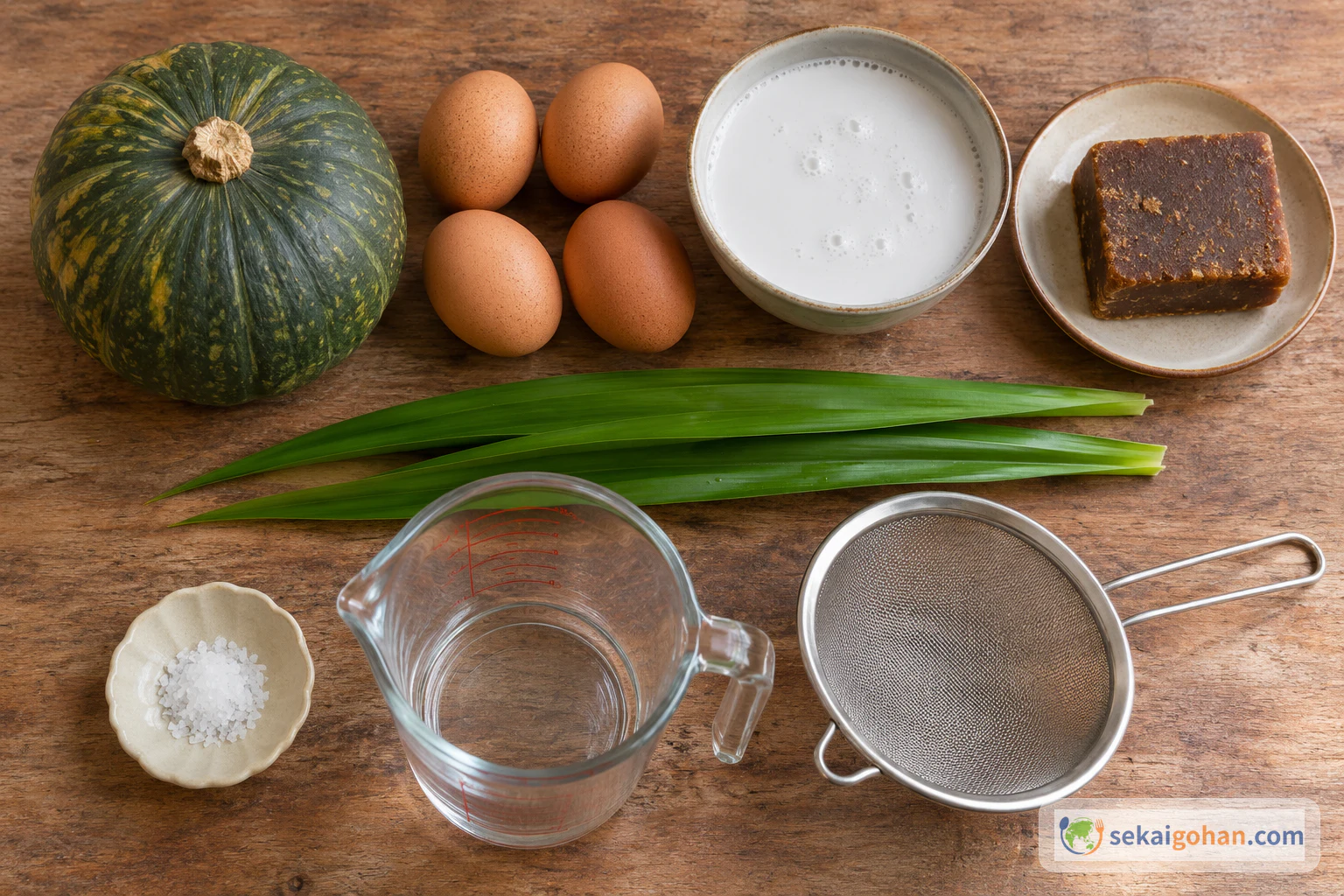
Use 4 eggs if they are small, 3 if they are large. The custard needs enough egg to set inside the squash, so count by size as above.
This dessert contains eggs and coconut. If you use milk instead of coconut milk, it also contains dairy. Check the label on canned coconut milk and pandan paste for any other allergens.
Equipment
- A deep steamer, or a large pot with a steaming rack and a tight lid, big enough to hold the whole squash and its lid
- A pointed knife and a sturdy spoon
- A mixing bowl and a whisk
- A fine-mesh sieve
- A jug with a pouring spout
- A clean kitchen towel and a wire rack
- A heatproof plate that fits inside the steamer
- A wooden or bamboo skewer and an instant-read thermometer
- A sharp chef's knife for cutting the chilled squash
Choosing and Substituting
Kabocha is the squash to buy. Its green rind, dense flesh and compact size are what the dish is built around, and it slices cleanly once the custard has set. If you cannot find kabocha, buttercup squash is the closest match. Look for one around the weight in the table, small enough to fit your steamer with the lid on.
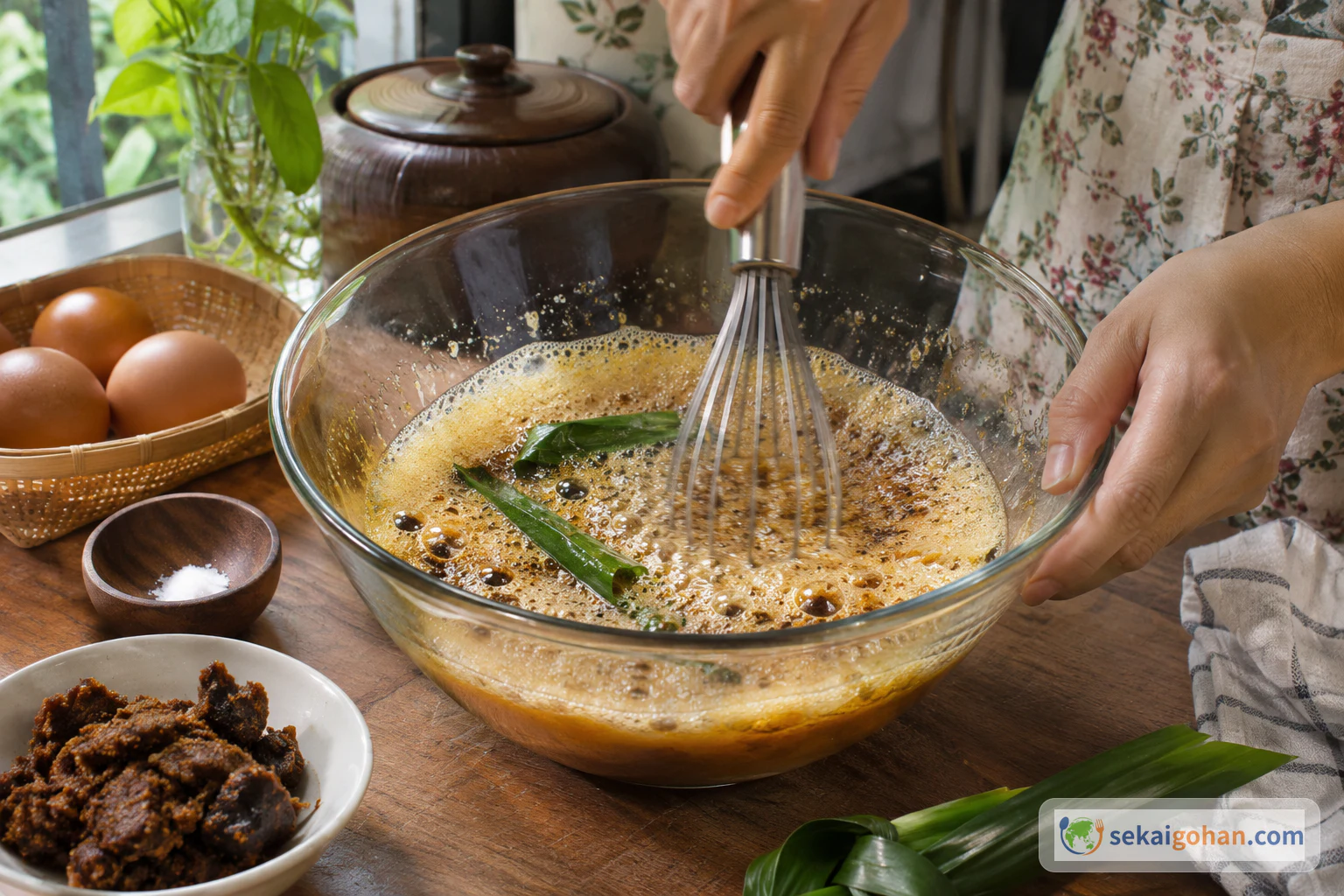
Palm sugar is sold in hard, dark blocks or cakes at Asian grocers and online. It gives the custard its amber color and its toasty, caramel scent. Coconut sugar is the easiest swap and works well, but the custard comes out a slightly different color and flavor. Crumble or chop either one finely before it goes into the eggs so it dissolves completely.
For coconut milk, use a canned one that is smooth and well emulsified rather than one that has split into a hard cream and thin water. A smooth coconut milk helps the custard set evenly. Fresh pandan leaves are rarely in supermarkets; frozen leaves from an Asian grocer work just as well, and a pandan paste gives the scent in a pinch. With paste, add a little, smell the egg mixture, and add more only if the green, grassy-vanilla scent is faint.
Method
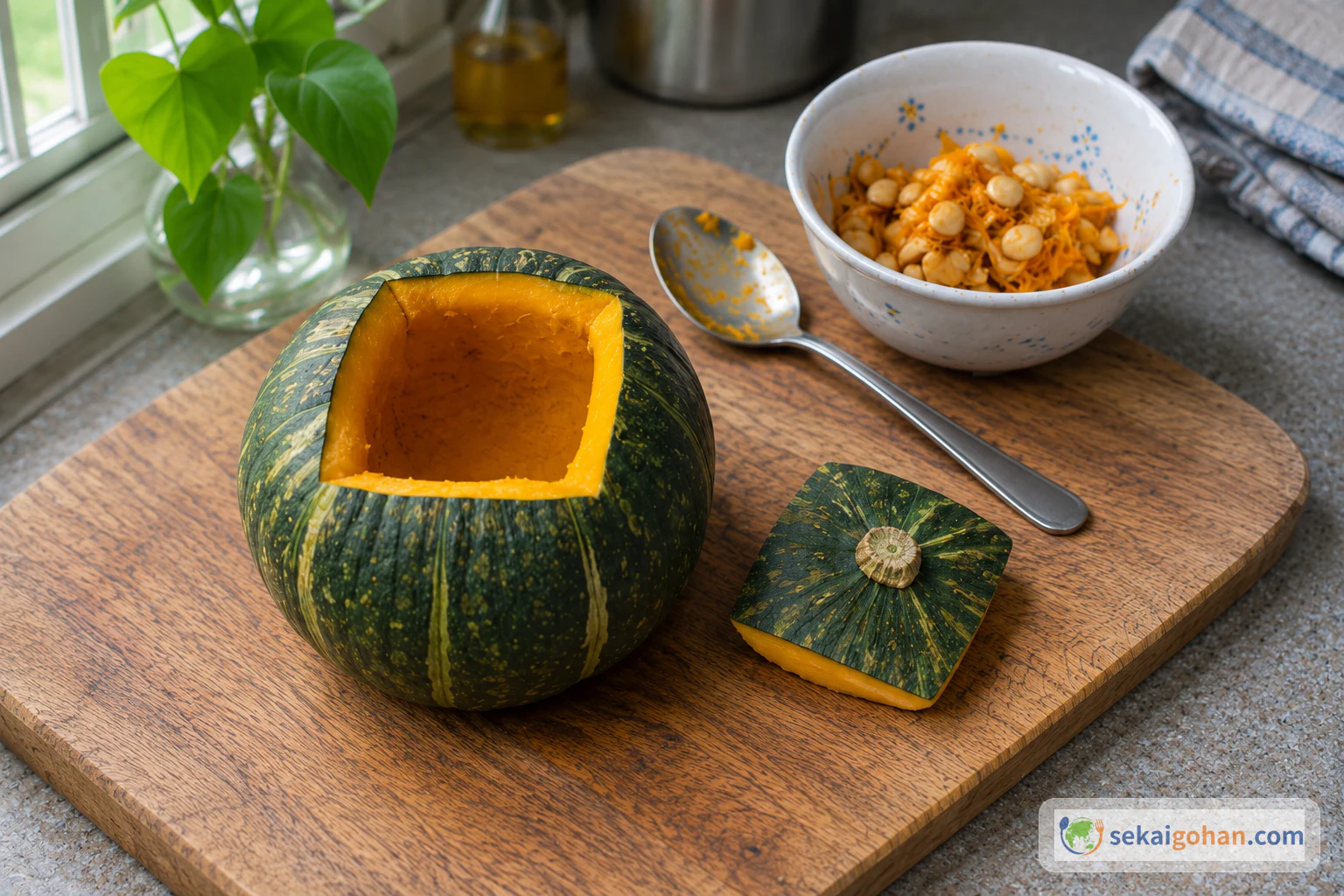
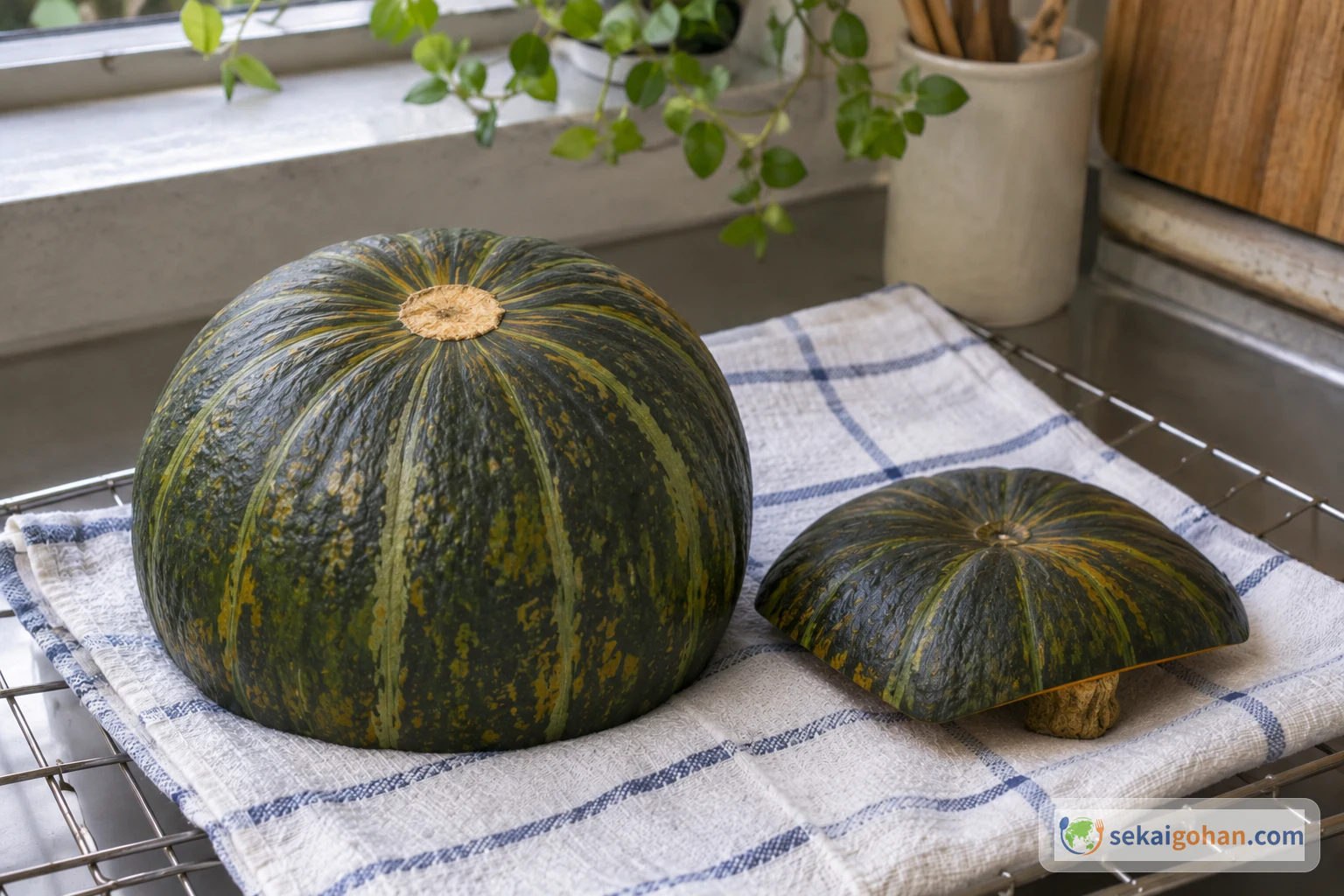
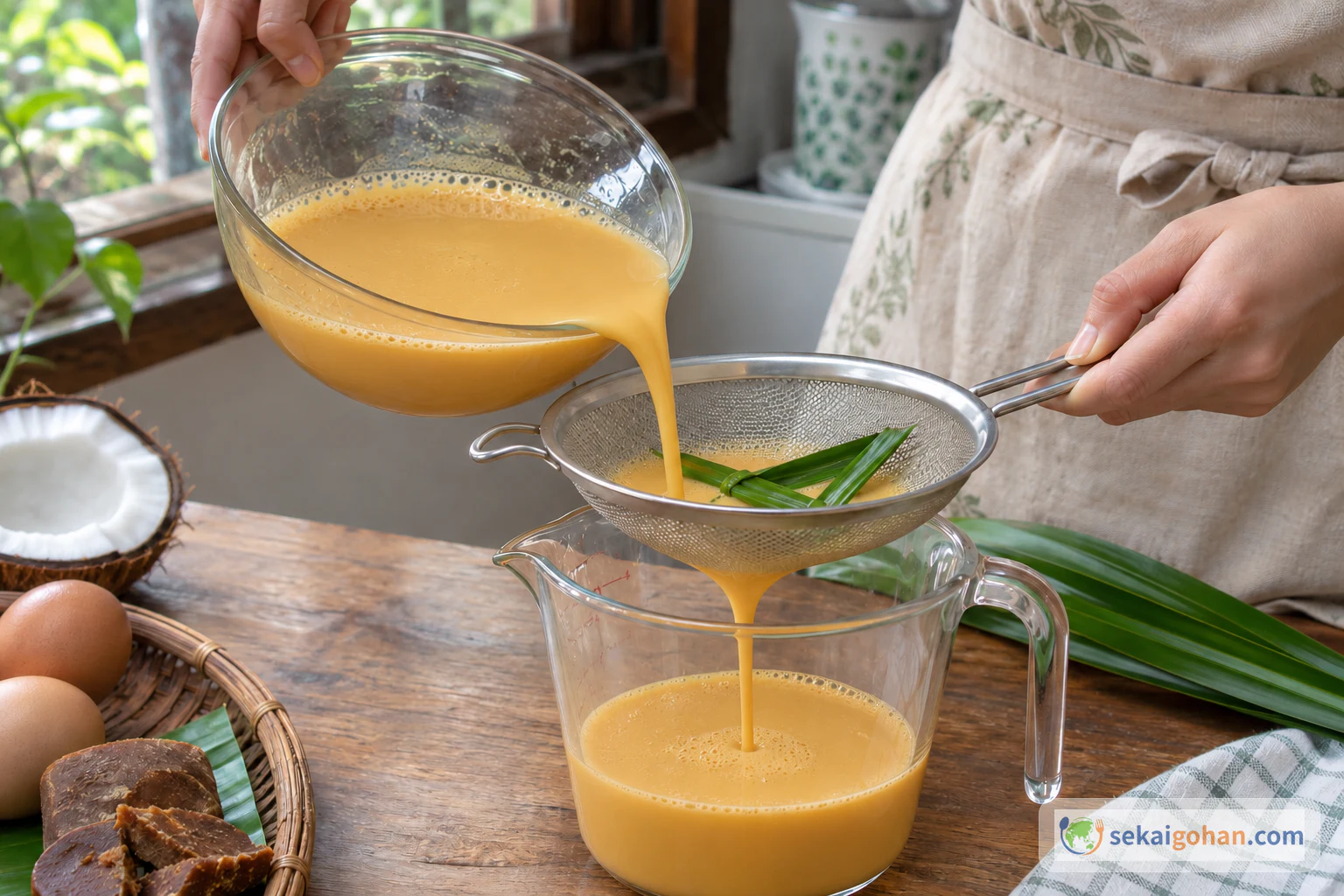
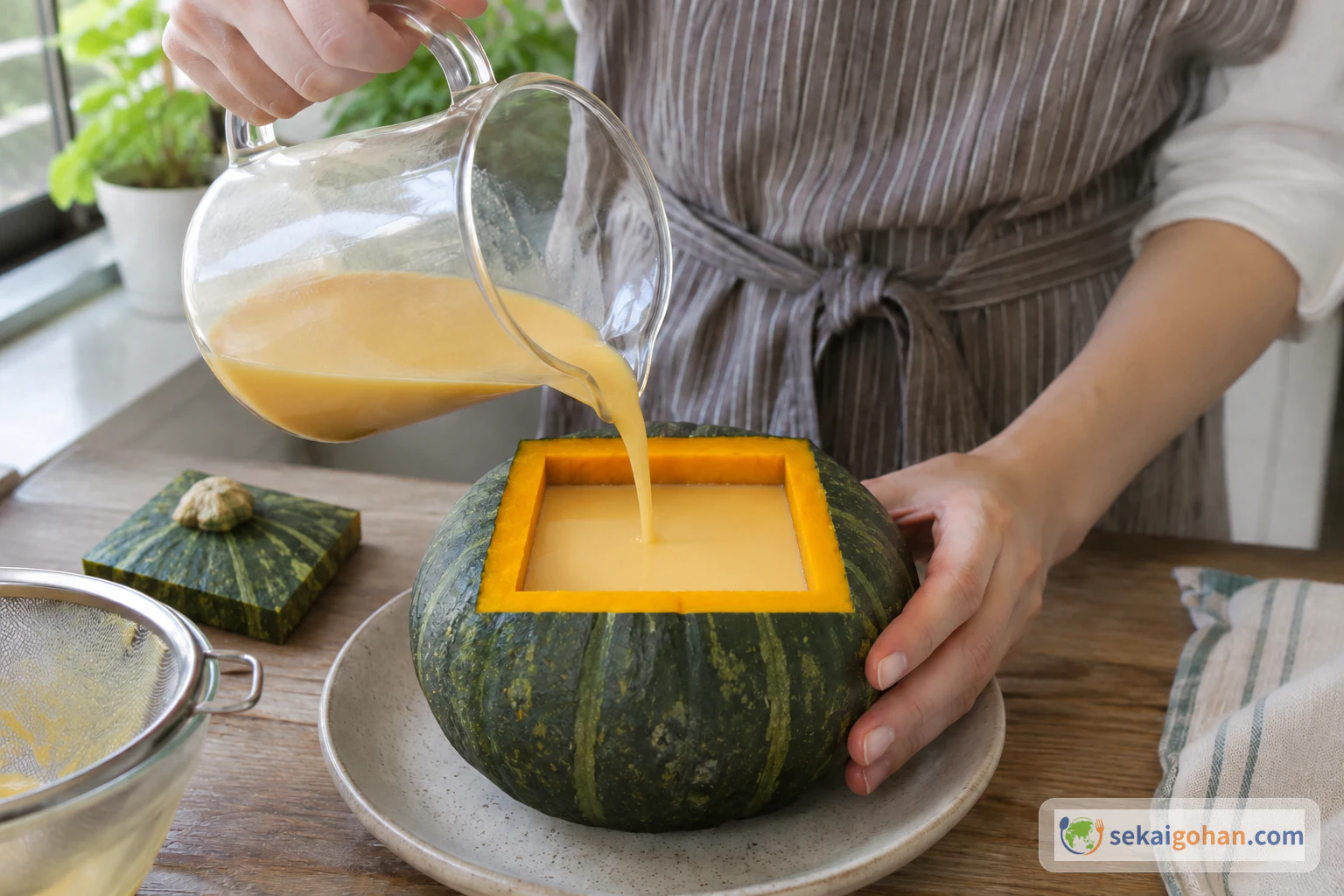
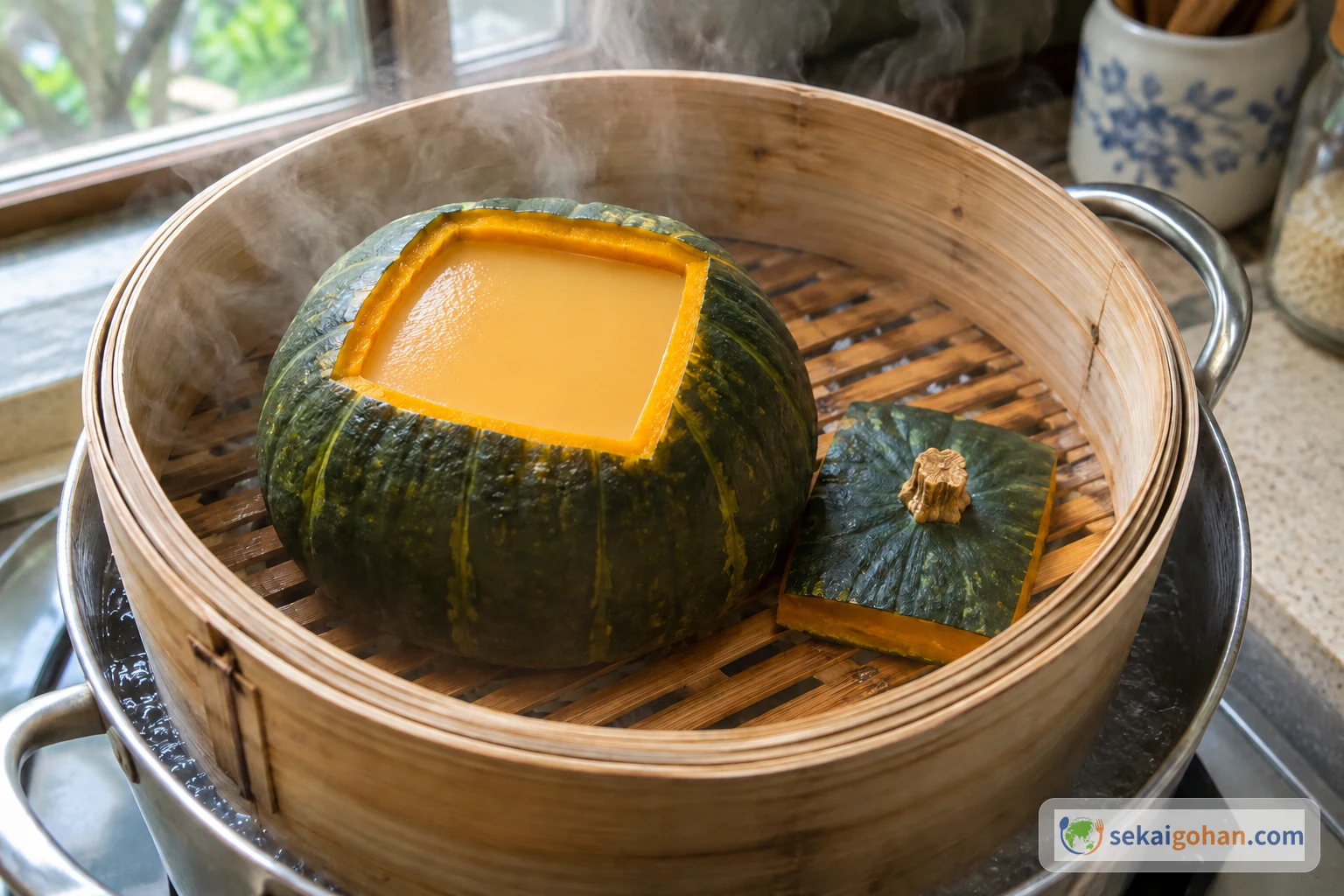
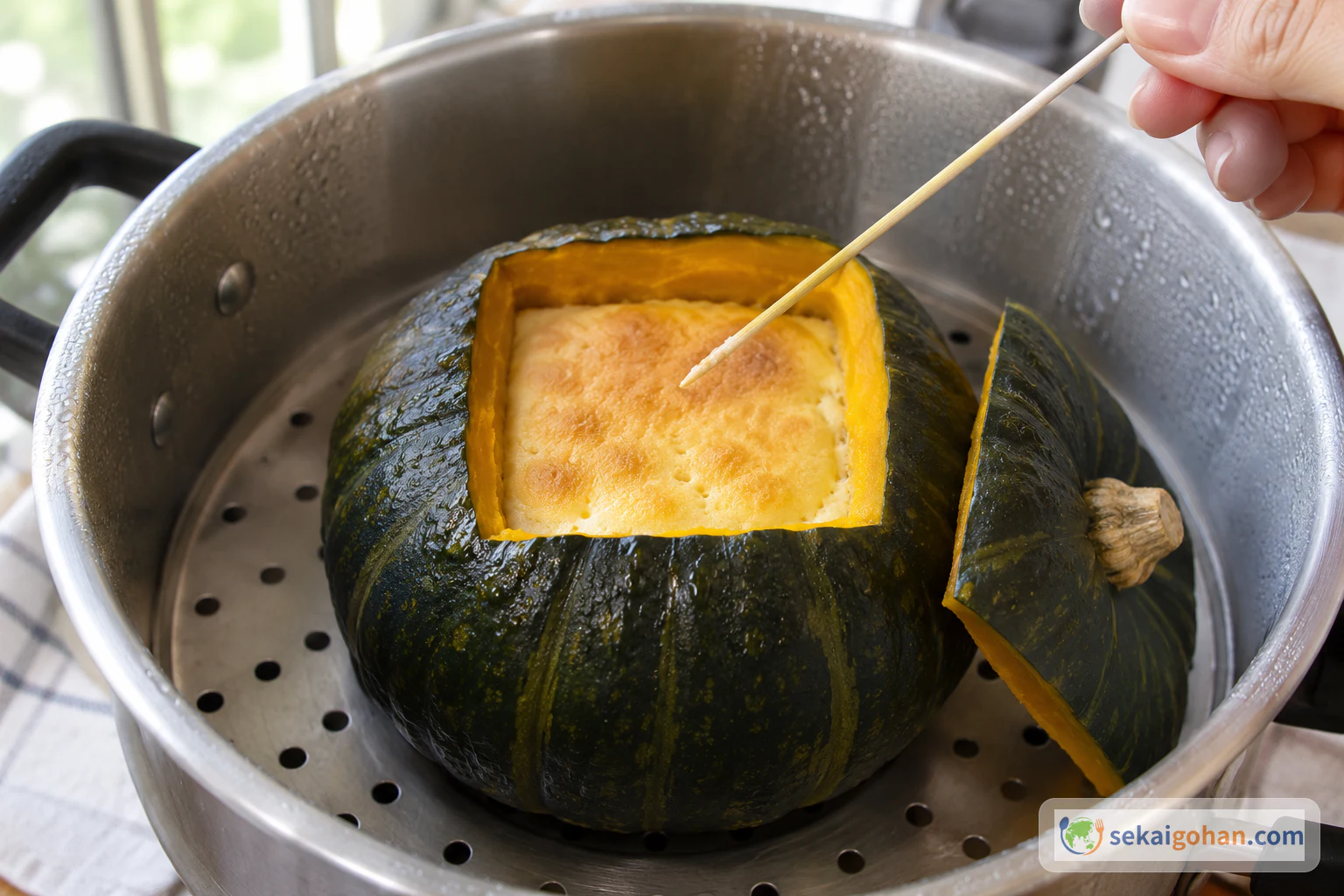
Start with the squash, since it needs to drain upside down while you make the custard. The custard takes only a few minutes to mix and strain. The long part is the steaming, which is hands-off as long as you leave the lid alone, and after that the squash needs time to cool and chill before it will cut cleanly.
When It Goes Wrong
| What you see | Why | What to do |
|---|---|---|
| The squash cracked in the steamer | The steamer lid was opened too often | Keep the lid closed through the steaming |
| The custard surface is rough or full of holes | The heat was too strong | Steam at a steady boil, not a fierce one |
| Liquid runs off the skewer | The center has not set | Cover and keep steaming, then test the center again until it reaches 167°F (75°C) |
| Bubbles and pits on the set surface | Foam on the custard, or it was poured too fast | Strain twice, let the foam settle in the jug and pour slowly down the side |
| Gritty bits in the custard | The palm sugar did not dissolve | Crumble the sugar finely and stir until no grains remain before straining |
| The custard smears when you cut | It was cut before it was cold | Cool to room temperature and chill until firm before slicing |
Serving, Variations and Storing
Serving
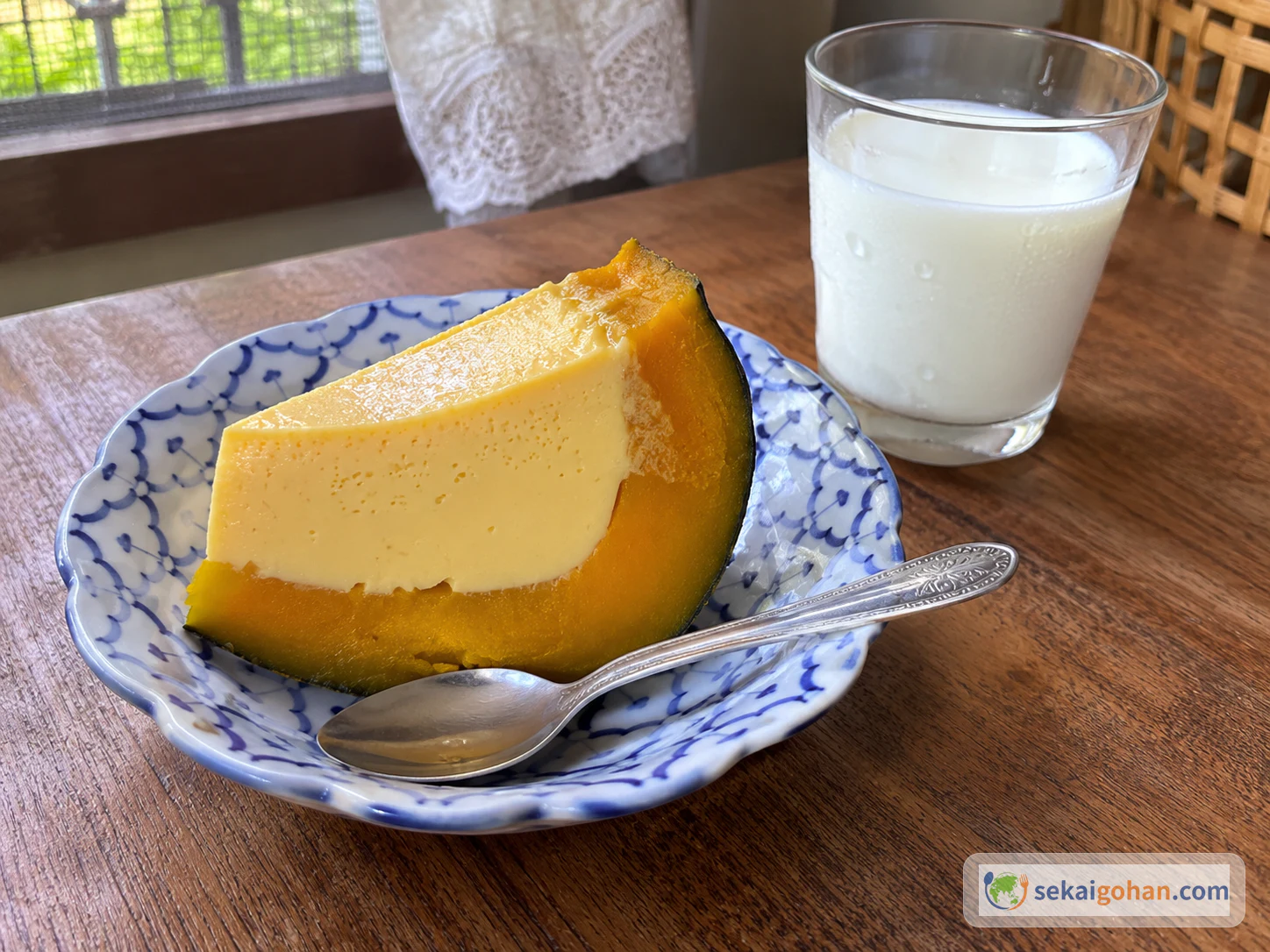
Sangkhaya fak thong is best eaten cold, when the custard is firm and the squash is dense and sweet. Serve one wedge per person on a small plate with a spoon, rind and all, and set a glass of cold milk alongside. It works as an afternoon sweet, the way it is bought by the slice at a stall, or as the end of a Thai meal.
Variations
A purple version swaps the coconut milk for unsweetened condensed-style milk (evaporated milk) and stirs purple sweet potato powder into the custard. The custard turns violet and tastes milkier. That version is steamed longer, one hour on strong heat and then 30 minutes on medium, so use the skewer and thermometer to decide when it is done.
Versions written for Western kitchens often add cinnamon, vanilla or a splash of cream to the custard. These pull the flavor toward a spiced pumpkin custard and away from the pandan and palm sugar that make it taste Thai, so keep them light if you try them.
Storing
The custard is made with eggs, so treat it like any cooked egg dish. Once the squash has cooled, cover it and refrigerate it promptly, and finish it the same day or the next.
Frequently Asked Questions
Can I use milk instead of coconut milk?
Yes, the recipe allows either coconut milk or milk, in the same amount. The custard loses its coconut flavor and tastes cleaner and lighter, and how firmly it sets may change. Go by the skewer and the 167°F (75°C) reading rather than the clock.
What if I do not have a steamer?
Use a large pot with a steaming rack and a tight-fitting lid. The rack must hold the plate above the water, and the pot must be deep enough to close over the squash and its lid. Check the water level partway through and top it up with boiling water so the pot never runs dry.
Can I serve it warm?
After the 10–20 minute rest the custard holds together and can be eaten, but it is soft and smears when cut. Chilling firms both the custard and the flesh, gives clean wedges and brings out the sweetness. For the stall-style slice, chill it.