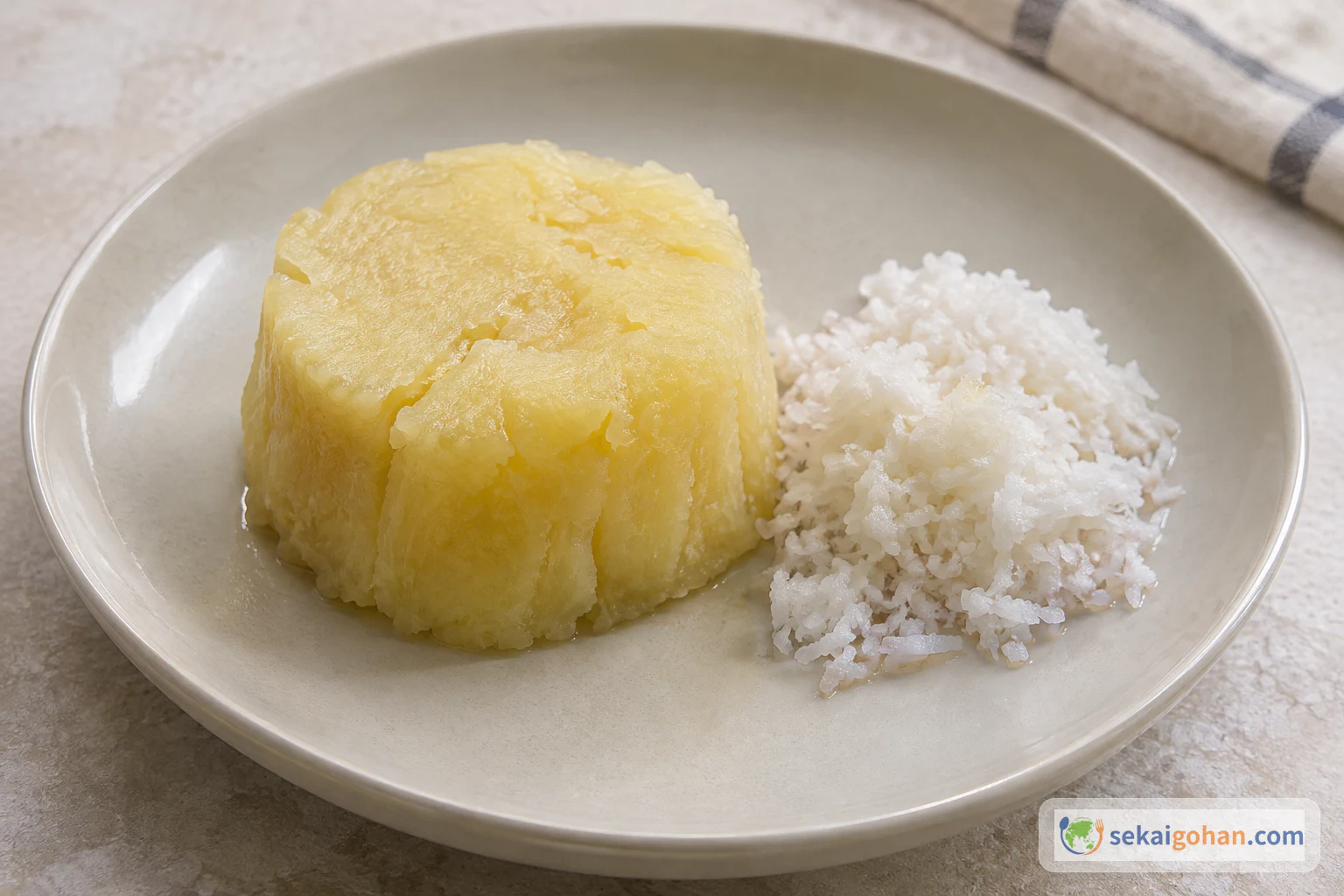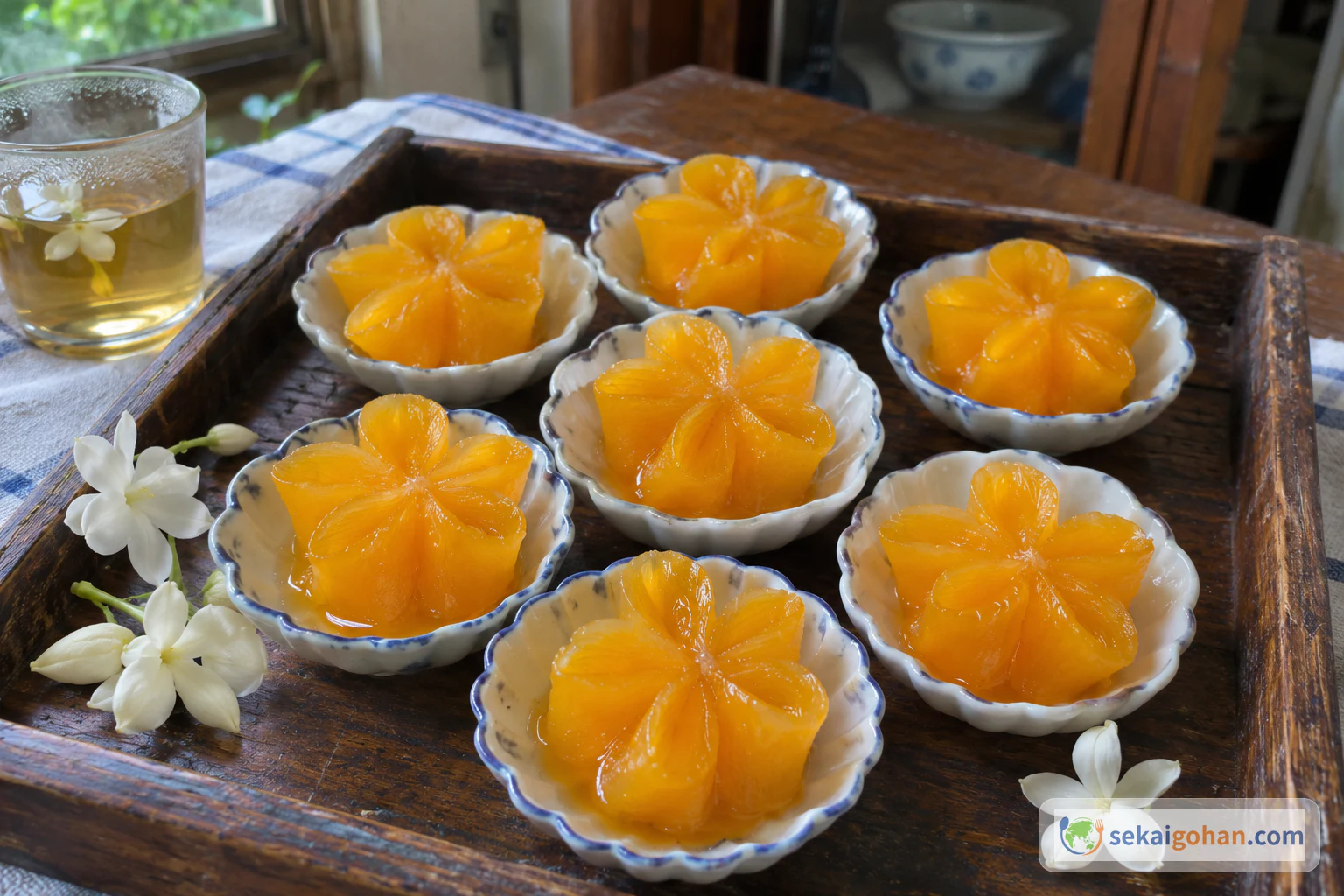
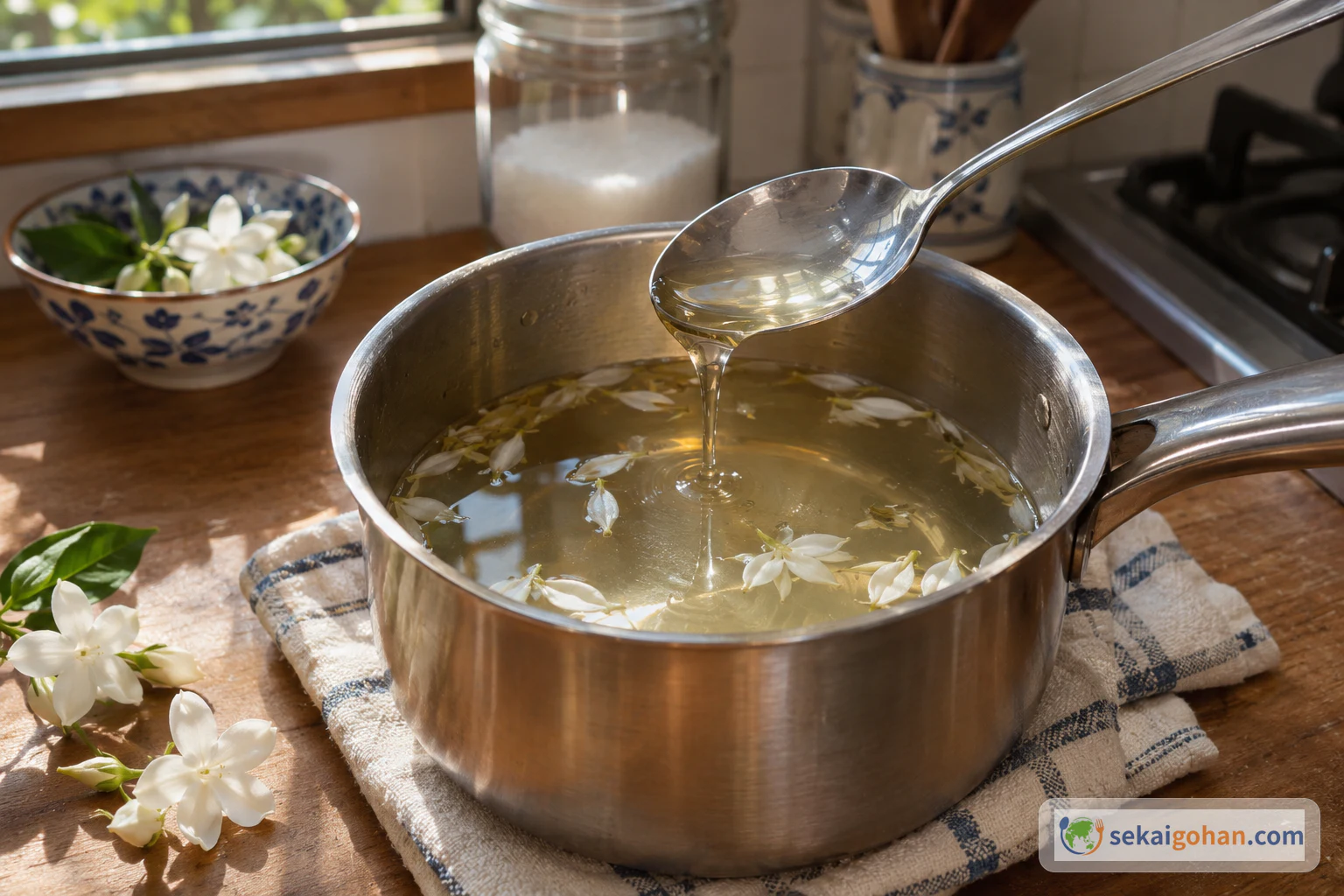
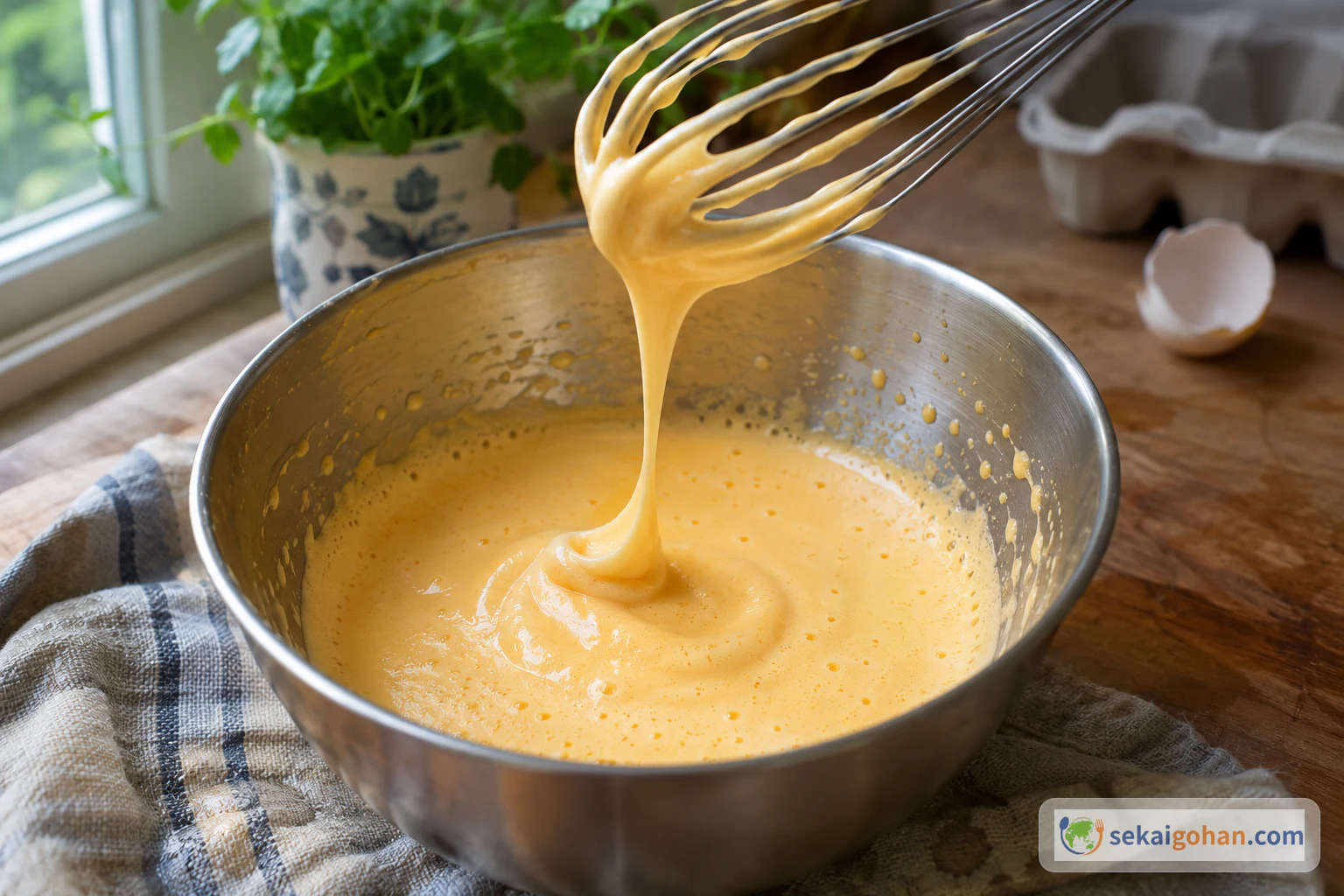
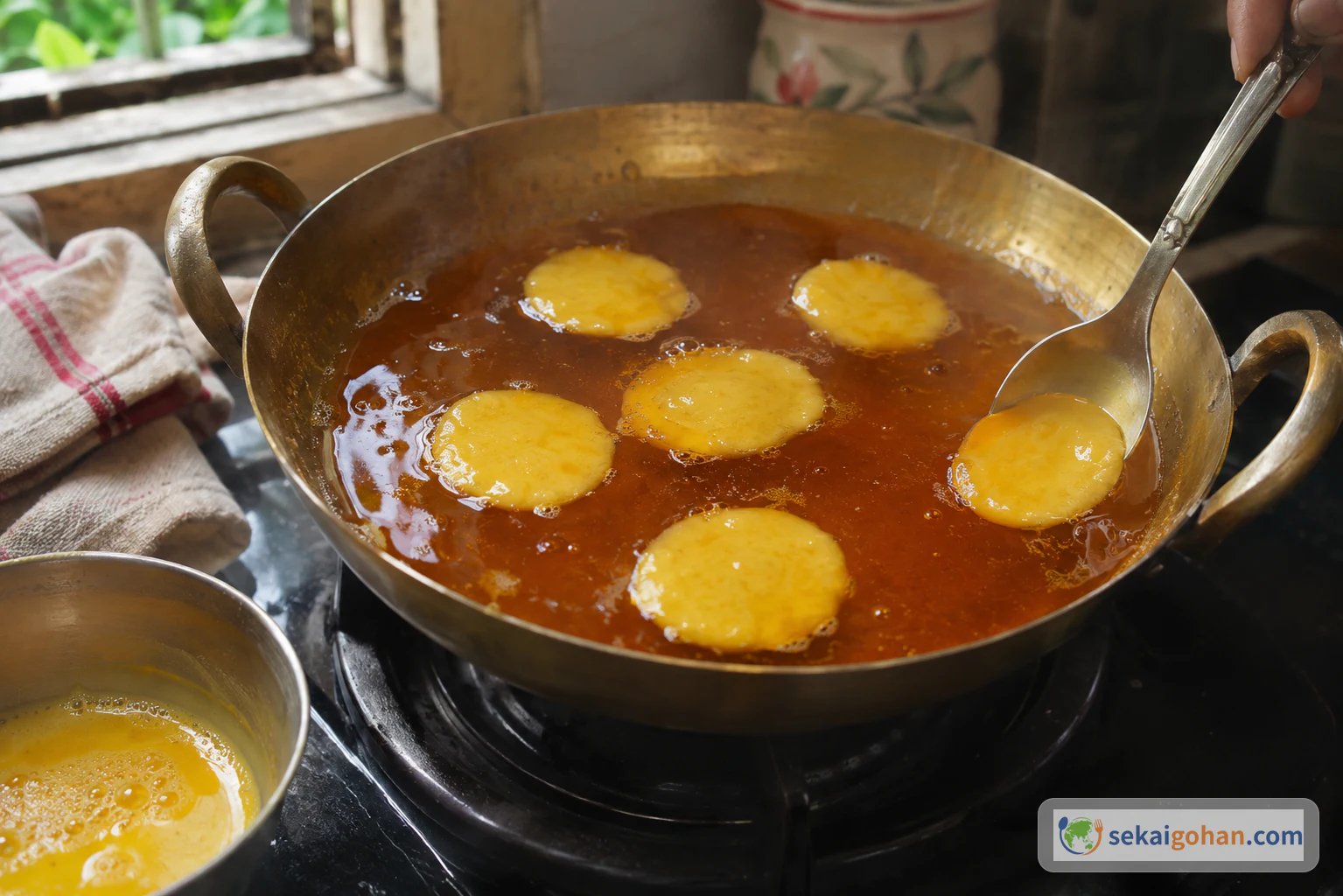
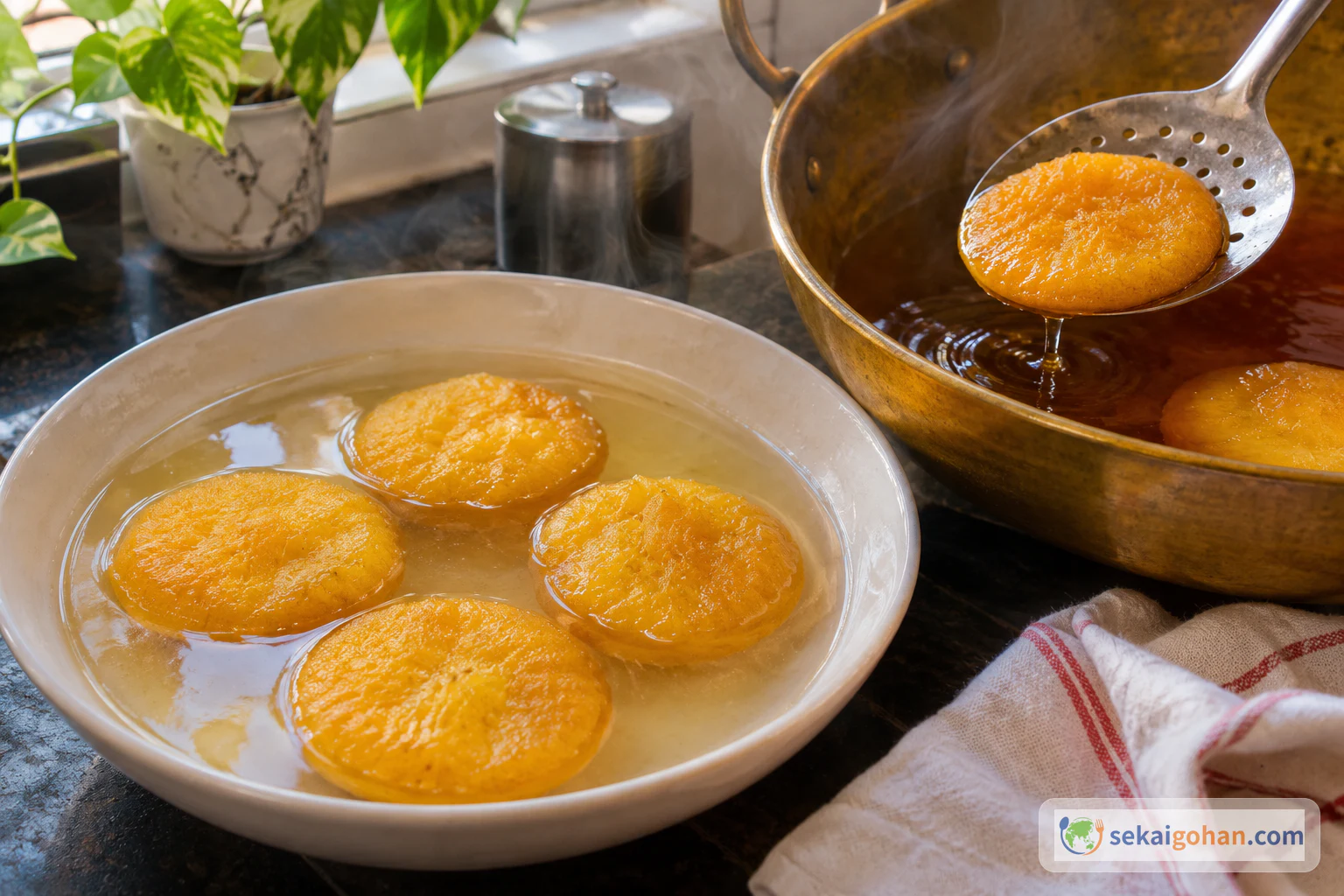
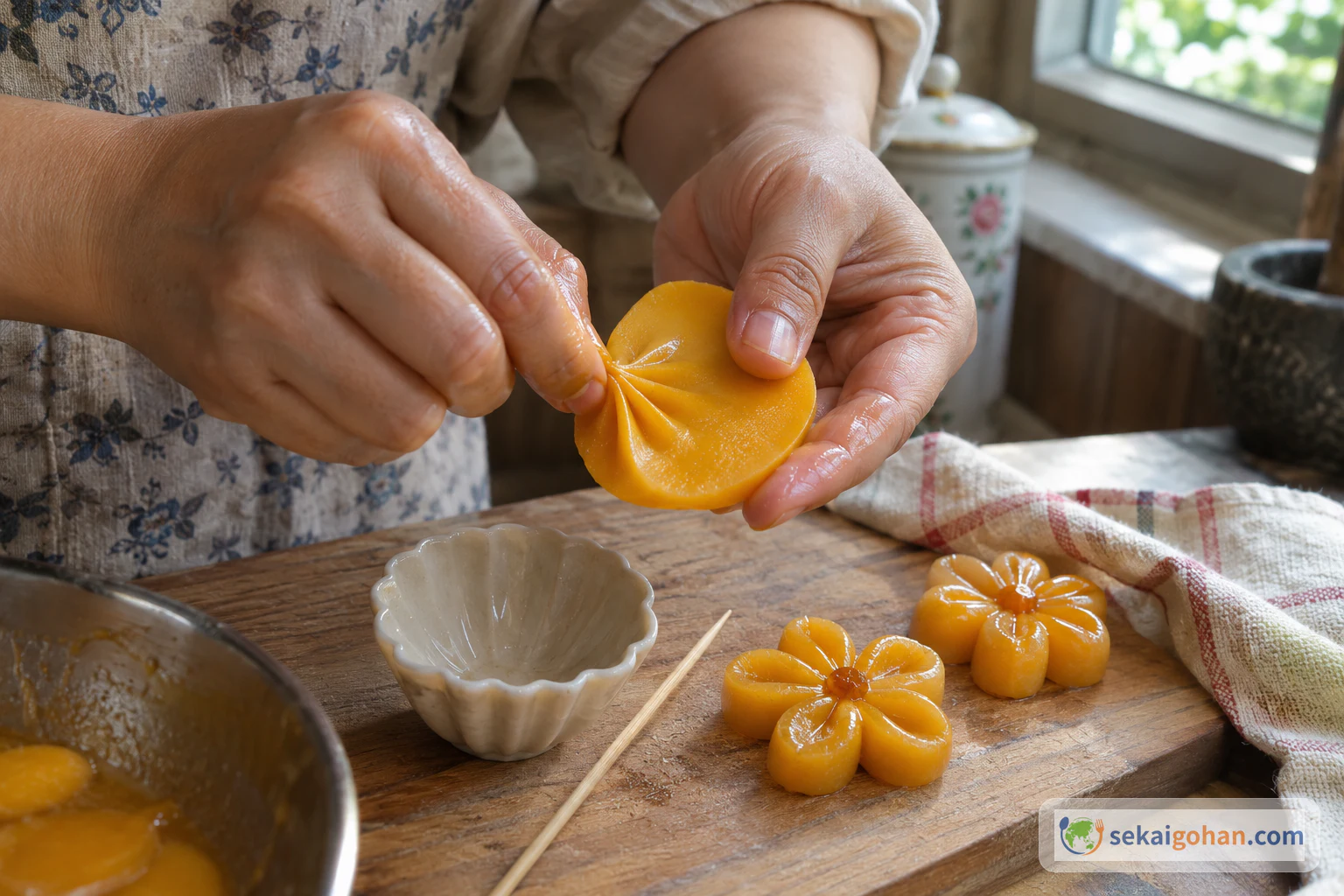
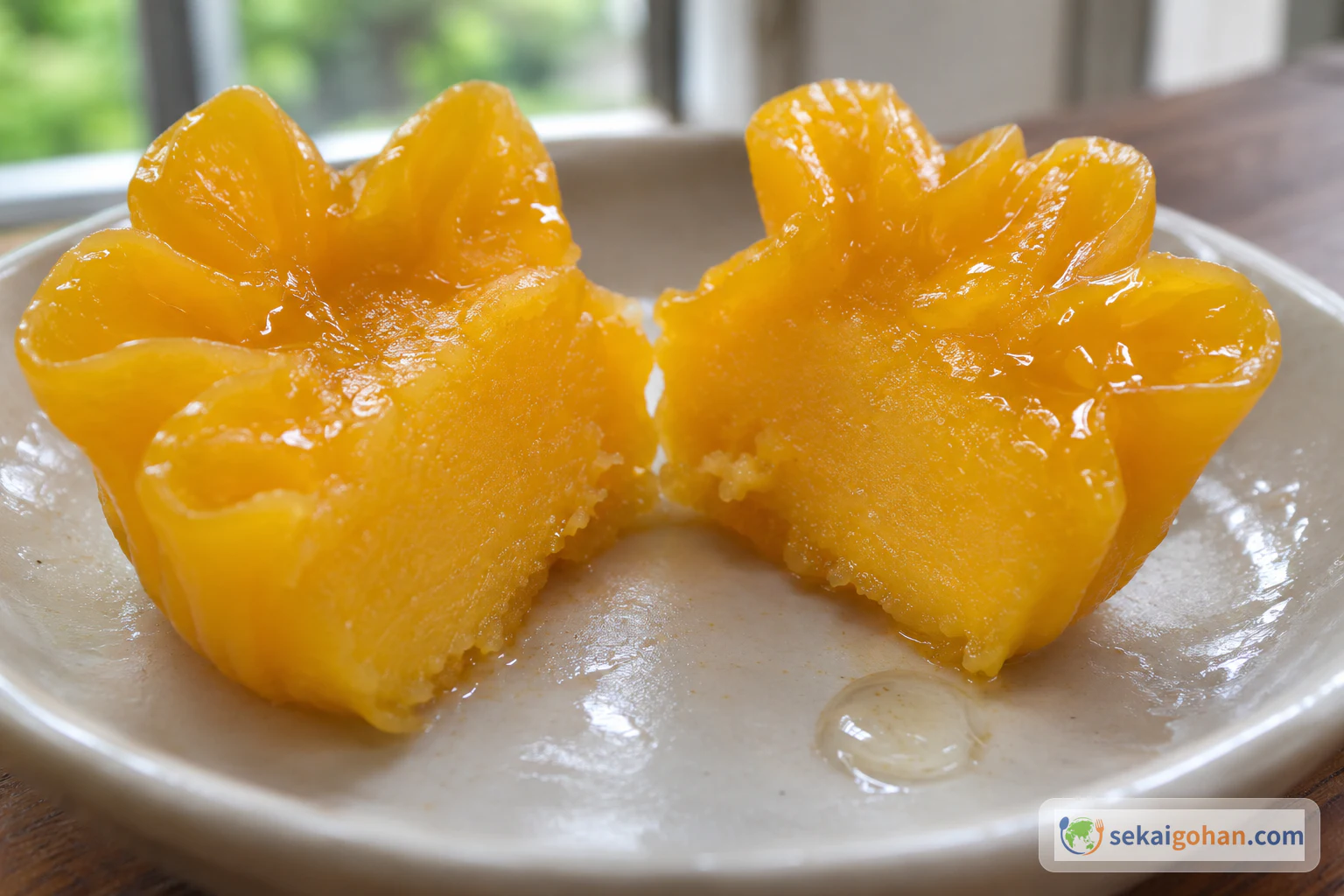
A disc of whipped yolk comes out of the clear syrup still warm, soft, glossy and smelling of jasmine. You pinch it three times on one side and three times on the other. Six folds rise, and the disc becomes a small golden flower that you press into a fluted cup. That is thong yip (ทองหยิบ), one of the Thai sweets brought to weddings and ordinations. It has only two real ingredients, duck egg yolk and white sugar. The yolk is poached in a heavy syrup scented with flower water, so each bite is dense and very sweet, with a light jasmine smell.
Gold You Pick Up: Where Thong Yip Comes From
A name that carries a wish
Thong means gold, and yip means to pick up or pinch between the fingers. People believe the name brings wealth and success, so that whatever you pick up turns to gold. Thong yip is one of the nine auspicious sweets (khanom mongkhon kao yang). Thai families give these sweets at weddings, at ordinations and when someone moves into a new house. Thong yip often shares the tray with its golden relatives. Mae Khrua Hua Pa, often called the first Thai cookbook, was written by Prien Pasakorn-Rawong in the reign of Rama V, and it already presents the auspicious sweets as a group.
Tradition ties the sweet to the old court of Ayutthaya rather than to one provincial town. Recipes differ a lot between shops and households. Some use only duck yolks. Others mix duck and chicken eggs, or scent the syrup with bottled jasmine flavoring instead of flower water. For more of the country's food, see Thai cooking.
They are made from almost the same yolk and sugar, but each has its own shape. Thong yip is pinched into a flower. Thong yot (ทองหยอด) is a drop. Foi thong (ฝอยทอง) is fine threads of yolk drawn through syrup, much like Japan's keiran somen. The syrups differ too. Thong yip cooks in syrup of about 70–72°Brix, thong yot in a slightly heavier 72–74, and foi thong in a lighter 55–57.
Eggs that arrived by sea
Before eggs came into Thai sweets, the main ingredients were rice flour, palm sugar and grated coconut, scented with jasmine and pandan. The Portuguese reached Ayutthaya in 1511 and brought new techniques and ingredients, including the habit of building sweets on egg yolk and sugar. Foi thong matches the Portuguese fios de ovos almost exactly. In Bangkok, the Kudi Chin neighbourhood is still called Little Portugal, and Portuguese-Thai families live there.
Thai tradition ties the golden yolk sweets to Maria Guyomar de Pinha, known in Thai as Thao Thong Kip Ma (1664–1728). In King Narai's time she ran the palace kitchens and spread sweets made from egg and sugar. Exactly which sweet came from her hands is not settled. What lasted is the method, Portuguese yolk and sugar cooked in Thai flower-scented syrup and then shaped by hand.
Why two syrups
The two syrups do two different jobs. The heavy cooking syrup sets the yolk and holds the disc together. The lighter clear syrup takes the hot discs and keeps them soft and glossy until you pinch them. How heavy the cooking syrup is decides the texture. Syrup that is too heavy makes the sweets hard, and syrup that is too thin lets the discs fall apart.
Ingredients
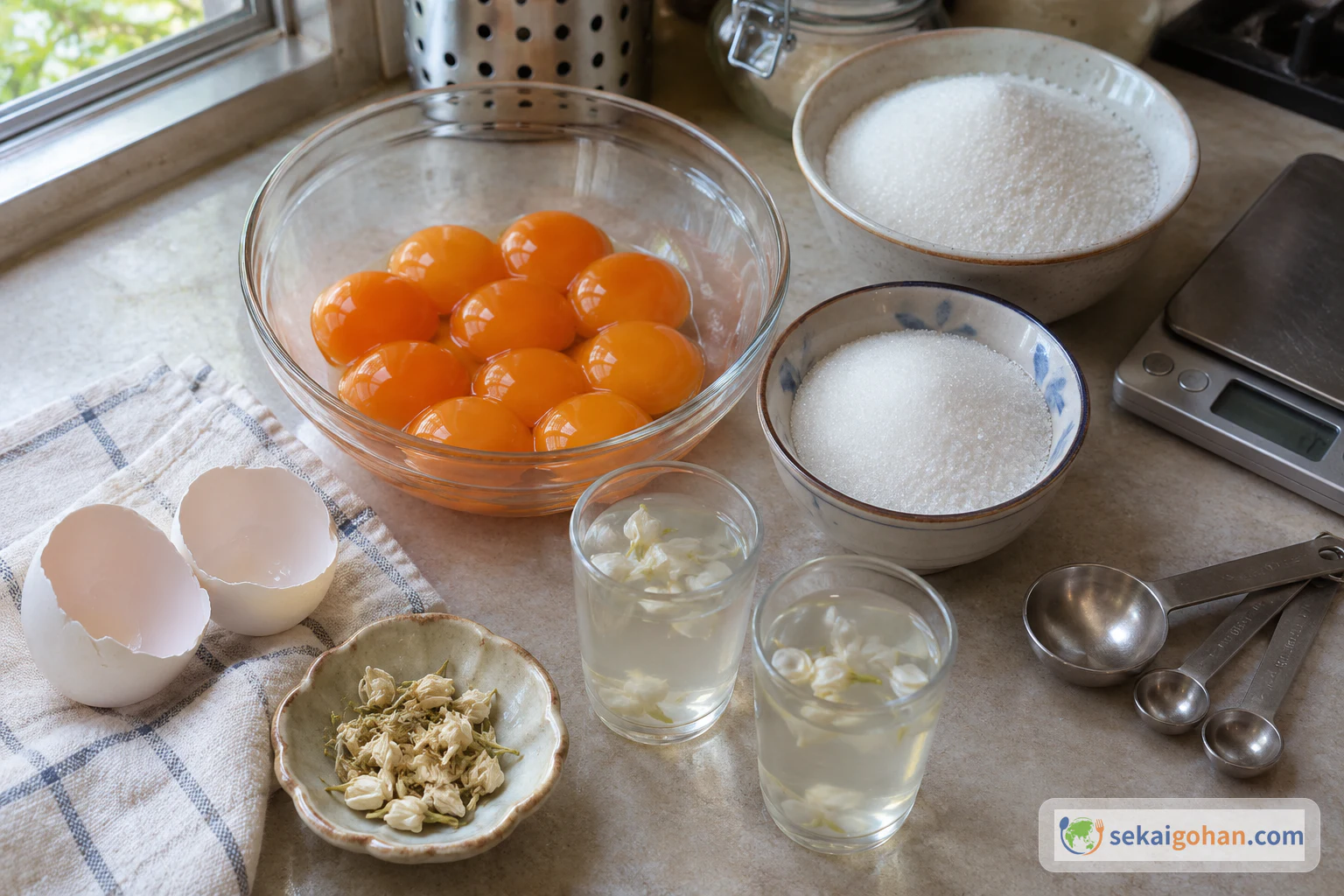
Weigh everything on a kitchen scale, including the jasmine water.
For a bigger tray, double every line: 20 yolks, a clear syrup of 14 oz (400 g) jasmine water and 14 oz (400 g) sugar, a cooking syrup of 1 lb 12 oz (800 g) jasmine water and 2 lb 3 oz (1 kg) sugar, and the shells of 2 eggs.
Thong yip is made from egg yolk, either duck or chicken. Anyone with an egg allergy cannot eat it.
Equipment
- Kitchen scale
- Balloon whisk or hand mixer
- Small saucepan for the clear syrup
- Saucepan for boiling the cooking syrup
- Cheesecloth or a very fine sieve
- Wide, heavy pan for poaching (a brass or copper pan is traditional)
- Spoon for dropping the yolk, and a slotted spoon for lifting the discs
- Shallow bowl for the clear syrup
- Small fluted cups (thuai talai, ถ้วยตะไล) or small ceramic cups
- Thin bamboo skewer or stick
- Refractometer (optional)
Choosing and Substituting
Duck eggs are the backbone. Their yolks have a deep color, more body and more fat, which is why Thai cooks prefer them. Look for them at Thai or Asian grocers, wholesale food shops and farm stands. Chicken yolks also work, but the sweet comes out paler, with less richness and less spring. Mixing the two is a common household version. It makes the sweet a little softer and calms the smell of duck egg, so half duck and half chicken is a good first swap.
The scent comes from the jasmine water. In Thailand it is made by floating jasmine, often with kradang nga (กระดังงา, ylang-ylang) flowers, in water overnight and lifting the flowers out before dawn. Flowers left in too long turn the water cloudy and bitter. Abroad, steep dried jasmine flowers or jasmine tea leaves in water the night before. Jasmine essence works as a last resort, but the scent comes out flatter. This scent matters because it covers the eggy smell of duck yolk. Weak jasmine water leaves the sweets tasting of egg.
Use white granulated sugar. The cleaner the sugar, the clearer the syrup. Palm sugar or dark sugar would change both the color and the aroma into a different sweet. Any heavy pan that does not scorch can stand in for a brass or copper pan. Small ceramic cups or saucers can replace thuai talai.
Use only the yolks, with no white or chalazae attached. Pour each yolk from hand to hand or lift it with a spoon, and keep the bowl clean.
Method
Make the jasmine water the night before. On the day, start with the clear syrup so it has time to cool, then make and strain the cooking syrup. Whip the yolks just before poaching. From the first disc in the pan to the last pinched flower, keep moving, because the shaping only works while the discs are warm. A first batch shows you the rhythm of dropping, flipping, moving and pinching, so have the clear syrup, cups and skewer ready next to the stove.
Wash your hands before and after touching eggs and eggshells. Wash the shell well before it goes into the sugar, and simmer the syrup for at least 10 minutes once it boils. Cook the yolk until it is firm right through. The center should reach 167°F (75°C) for at least 1 minute. If any piece still has a wet, raw-looking center, do not serve it to older adults, children aged 2 and under, pregnant women or anyone with a weakened immune system. Sugar syrup at a boil is far hotter than boiling water, so keep children away from the stove and lower the discs in gently.
The fine bubbles on the cooking syrup are the sign that it is heavy enough. Turn off the heat and let it settle before the yolk goes in, so the discs keep their round shape. With a refractometer, this is the 70–72°Brix range.
When It Goes Wrong
| What you see | Why | What to do |
|---|---|---|
| The petals will not stand, or the flower splits | The disc cooled before pinching, or it was not cooked through | Shape each disc as soon as it leaves the clear syrup, and cook both sides for the full time |
| The finished sweets are hard and tight | The cooking syrup was reduced too far | Add a little hot water to the syrup and bring it back to fine bubbles before the next batch |
| The discs spread out and fall apart | The cooking syrup is too thin | Boil it a little longer until fine bubbles cover the surface again, then turn off the heat and drop the yolk |
| The discs stick together | They were dropped too close together | Leave space between spoonfuls. Once discs touch, they join |
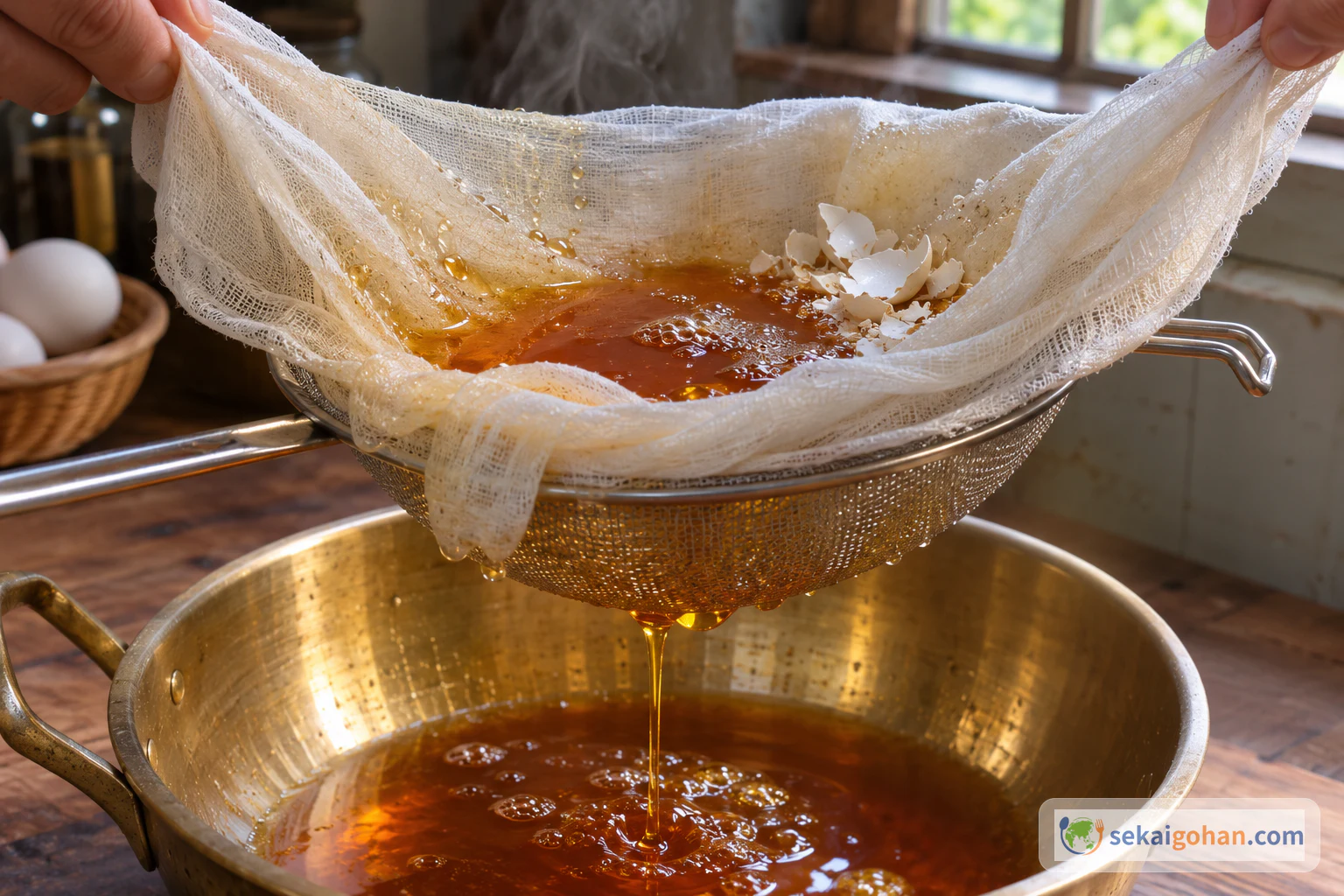
| The syrup is cloudy | The shell or foam was not strained out | Strain through cheesecloth. The taste does not change, only the clearness |
| The sweets smell of egg | The jasmine water was weak | Next time, steep fresh, fragrant flowers overnight |
| A center is still wet | The yolk was undercooked | Cook the next batch the full time on both sides. Do not serve wet-centered pieces to older adults, young children, pregnant women or anyone with a weakened immune system |
Serving and Storage
On the table
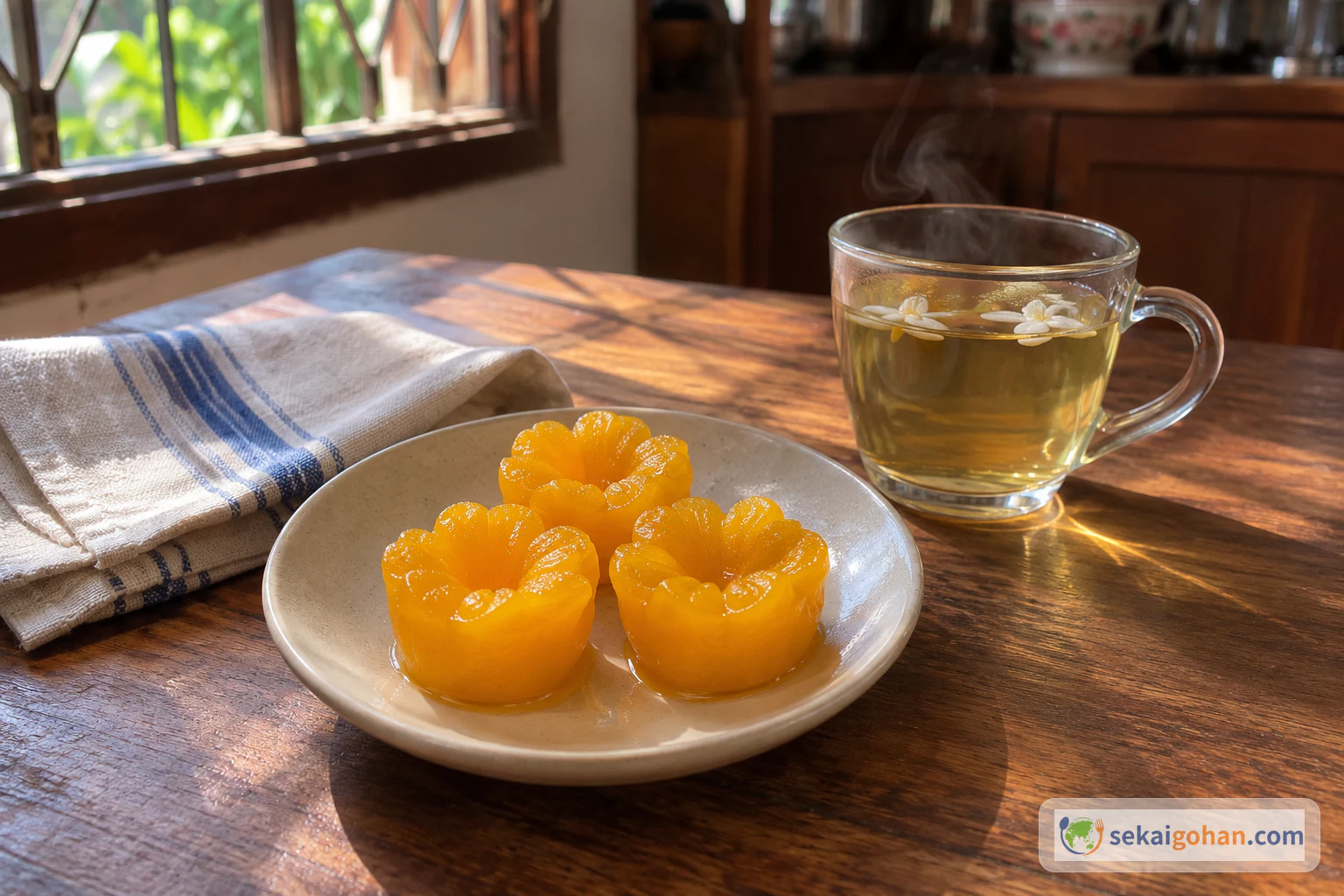
Thong yip is a sweet for good occasions. It is carried to weddings and ordinations, set out at a housewarming, and often arranged with thong yot and foi thong as one golden set. It is very sweet and dense, so serve each person a few on a small plate. Leave the sweets in their small cups until they go on the plate, so the petals keep their shape.
Variations
- Kradang nga in the flower water. Steeping ylang-ylang flowers with the jasmine gives a deeper, more layered scent. The flowers are hard to find outside Thailand, and the sweet is complete without them.
- Five-point star. Instead of six pleats, shape the disc into five points and press it into the cup. The flower looks more open and star-like.
- Mixed yolks. Half duck and half chicken yolks give a softer bite and a milder egg smell, with a lighter gold color.
Storage
Do not leave the sweets out at room temperature for long. Once they are cool, divide them into shallow containers, cover them and refrigerate promptly. As a guideline rather than a tested shelf life, eat them within 2–3 days. Do not reheat them, because warmth melts the syrup coating and the flowers slump. Take them out of the refrigerator a short while before serving.
Frequently Asked Questions
Do I need a refractometer?
No. The fine bubbles on the surface of the cooking syrup, then turning off the heat, tell you when the syrup is ready. A refractometer is just a check. If you own one, the cooking syrup for thong yip sits at 70–72°Brix.
Does it have to be six petals?
Six pleats, three on each side, is the standard shape and the easiest to repeat evenly. Some cooks press the disc into a five-pointed star instead. Both are thong yip. Choose one and keep it the same across the tray, so the sweets look matched.
Does the pan have to be brass or copper?
No. Brass and copper pans are traditional in Thai sweet kitchens, but any wide, heavy pan that does not scorch works. A wide pan matters because the discs need room to spread to 1½ inches (4 cm) without touching.
Can I make the clear syrup ahead?
Yes. The clear syrup only has to be dissolved and fully cool before the first discs come out of the cooking syrup. Making it first, or earlier in the day, leaves your hands free for the poaching and pinching.