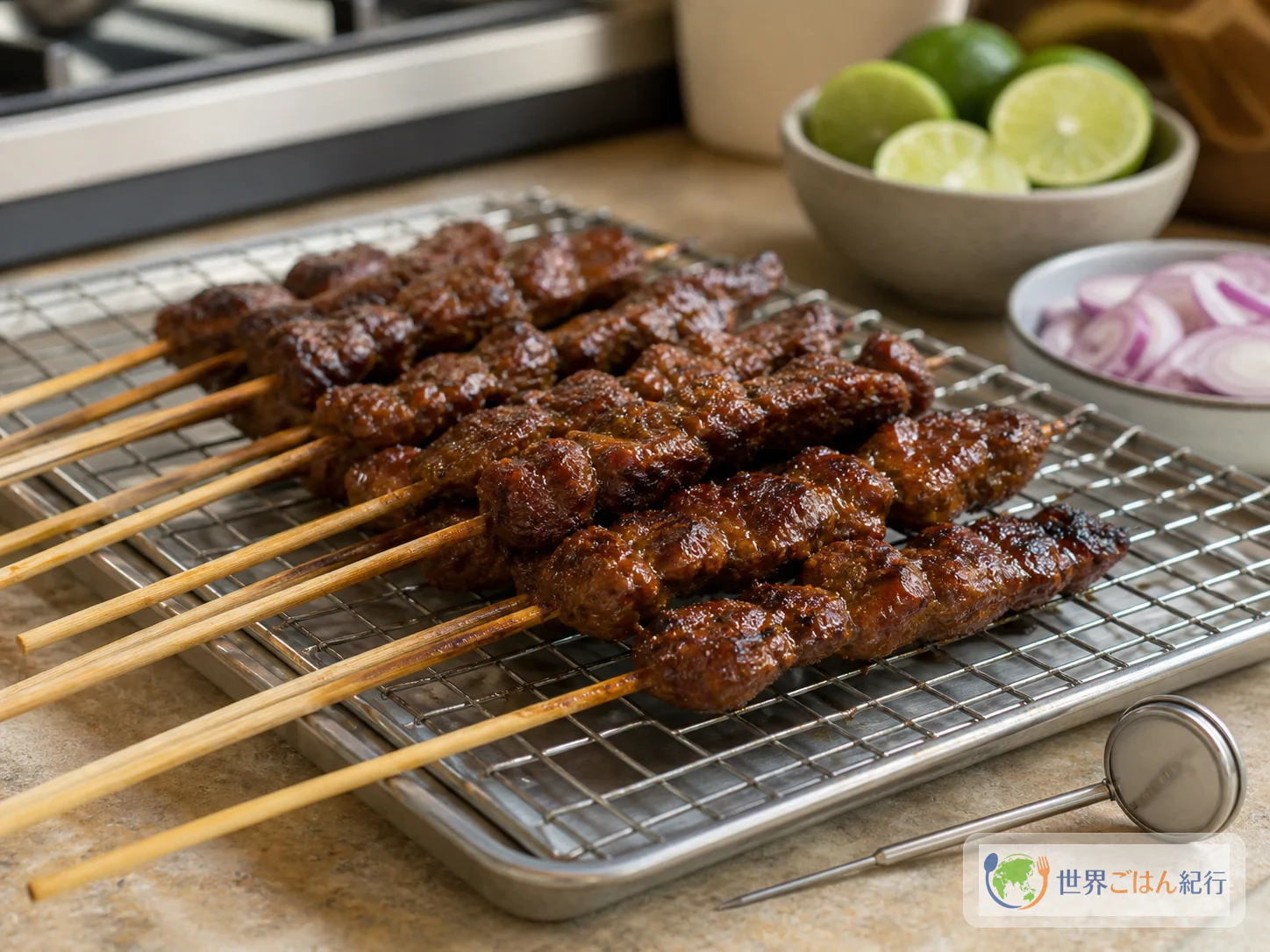
The moment you turn the skewer, sweet soy rises in the smoke
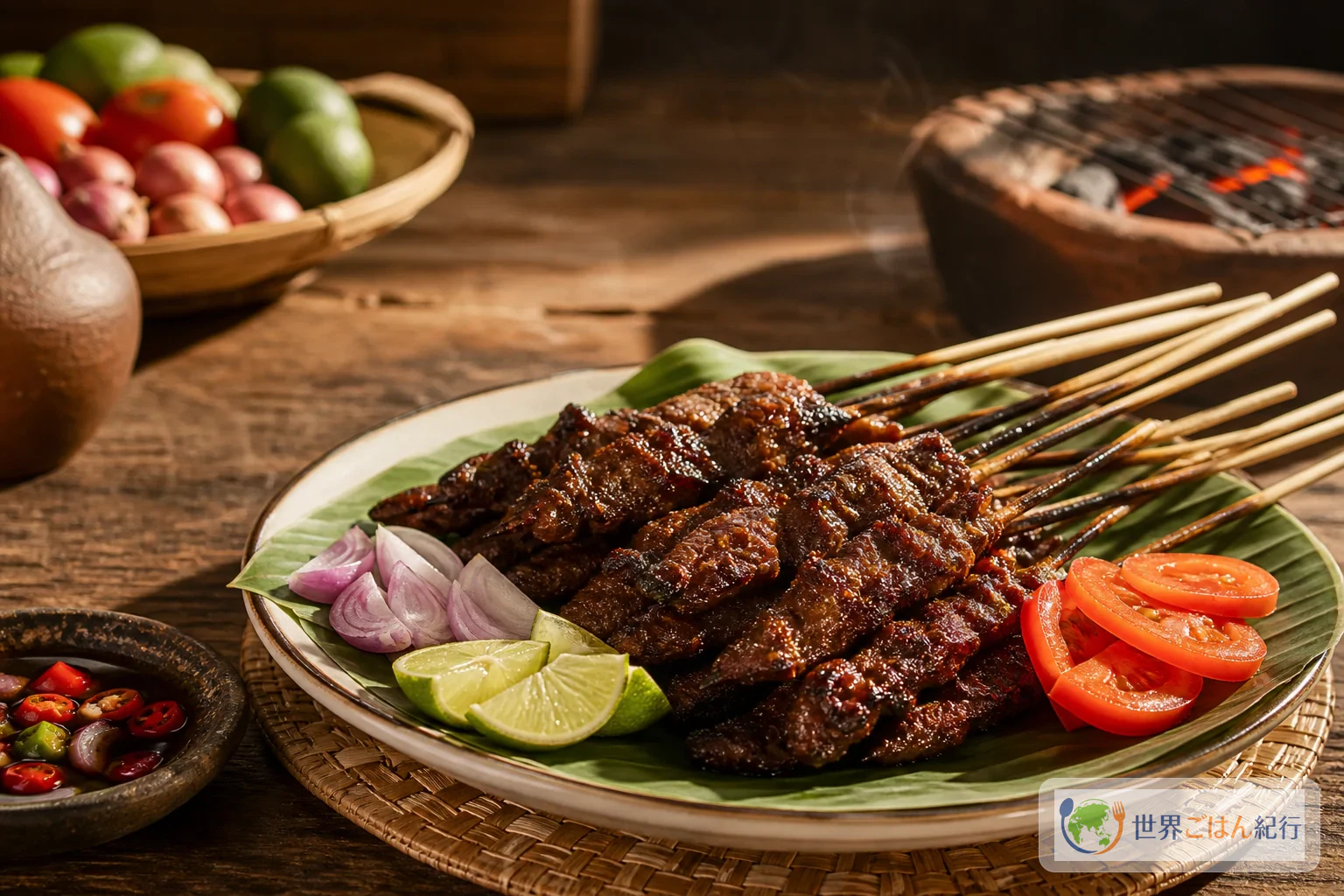
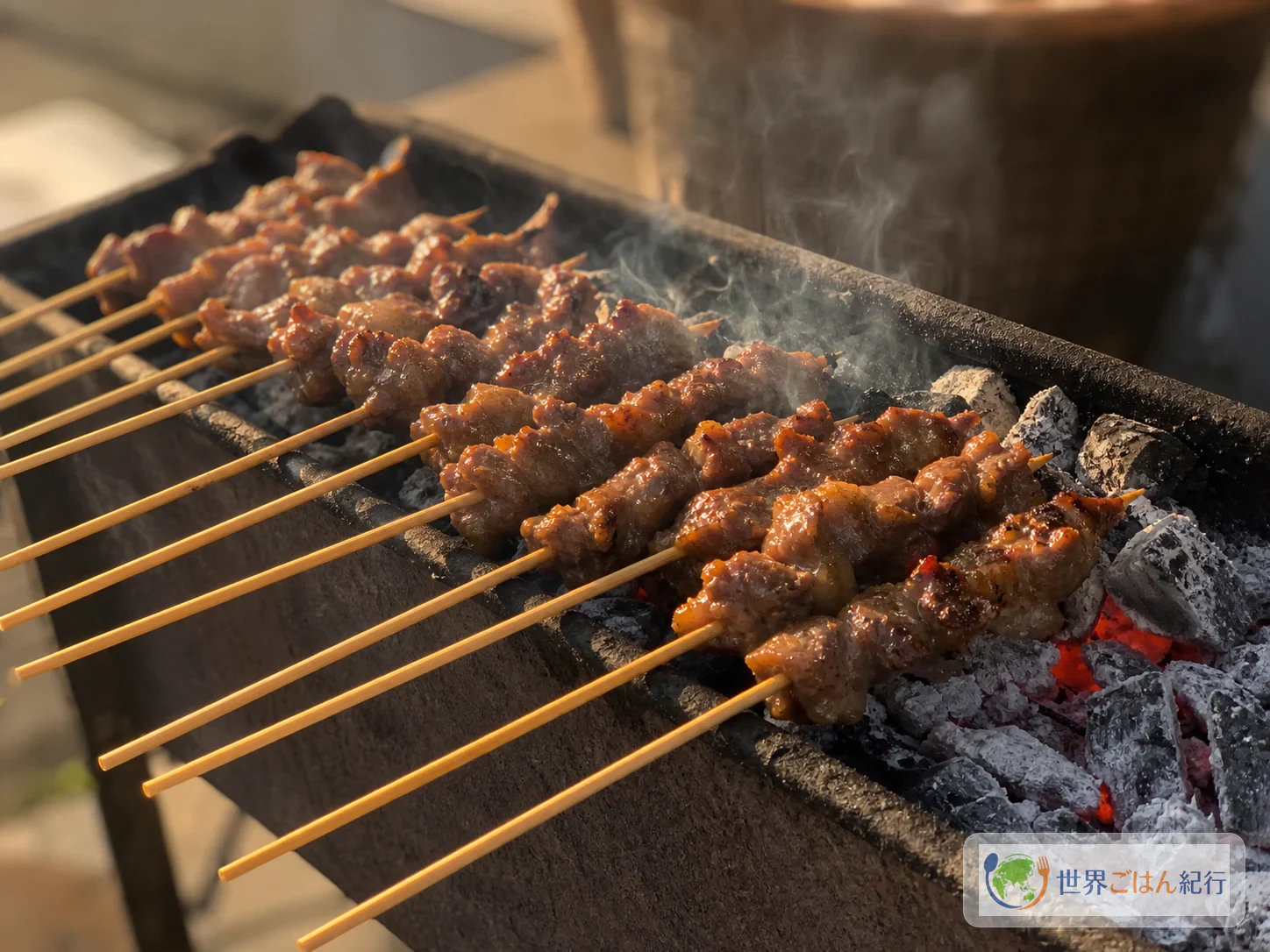
Every time you turn a skewer over the coals, the smell of sweet soy sauce and rendered fat lifts off the surface of the meat. It is tempting to hurry the still-pink cubes toward a darker color, but sate kambing is not a dish decided by how dark the char is.
Grilled goat skewers can also be hard to approach because of the aroma. Cut the meat large and the center turns tough; marinate it long and the enzymes in fresh pineapple break down the surface. Even with lamb, which is easier to find, whether you brush on the sweet soy early or only at the end changes the impression when the plate reaches the table.
Three decisions matter here. Do you look for goat, or start with lamb? Do you buy kecap manis, or substitute dark soy sauce and brown sugar? Do you light charcoal, or pick up the smoky flavor under a broiler?
Rather than transplanting an Indonesian street-stall dish unchanged, this recipe keeps the time spent taming the aroma and the way to tell when the skewers are done. By the time you eat the last skewer, you will see the difference between a day that calls for goat and a day when lamb is enough.
Sate kambing is Indonesian for goat satay. Local sources sometimes describe it including lamb, so this article treats goat as the base and lamb as the realistic, easier-to-find substitute.
How goat skewers came to line the evening stalls
Satay is a general term for meat or fish cut small, threaded on skewers and grilled over charcoal. Indonesia's tourism ministry travel site places the origin of satay on Java and explains it together with its connection to Indian kebab culture. But satay differs by island and by town: how the meat is cut, the sauce, the material of the skewer, even the time of day it is eaten. Indonesia Travel's satay article also presents the regional differences as part of the dish's character.
Sate kambing is best known as cubed goat grilled and served with a sauce containing sweet soy, along with shallots, tomato and chili. In a recipe article from the Indonesian news agency ANTARA, it is a dish eaten at celebrations such as weddings and Eid al-Adha, combining young goat, a short marinade and charcoal. It has two faces: a street-stall snack, and a dish for days when the family gathers.
Surprisingly, even for the same goat skewers, more sauce is not necessarily the right answer. Madura's satay goes in the direction of combining peanut sauce with sweet soy. Yogyakarta's sate klatak, on the other hand, grills young goat seasoned mainly with salt and pepper and serves it with a gravy-like gulai. Explanations of its name even cite theories based on the sound of grilling or the plants used; the way of eating itself becomes the memory of the place. A regional article on sate klatak also explains its distinctive use of bicycle spokes as skewers.
So the sweet soy sauce in this recipe is not an attempt to reproduce the one correct answer. It is a choice that lets a home kitchen handle the aroma and char of goat and makes it go easily with white rice or warm rice. If you want to try the salt-only klatak style, a branch for it is left in the variations later.
Ingredients (serves 4)
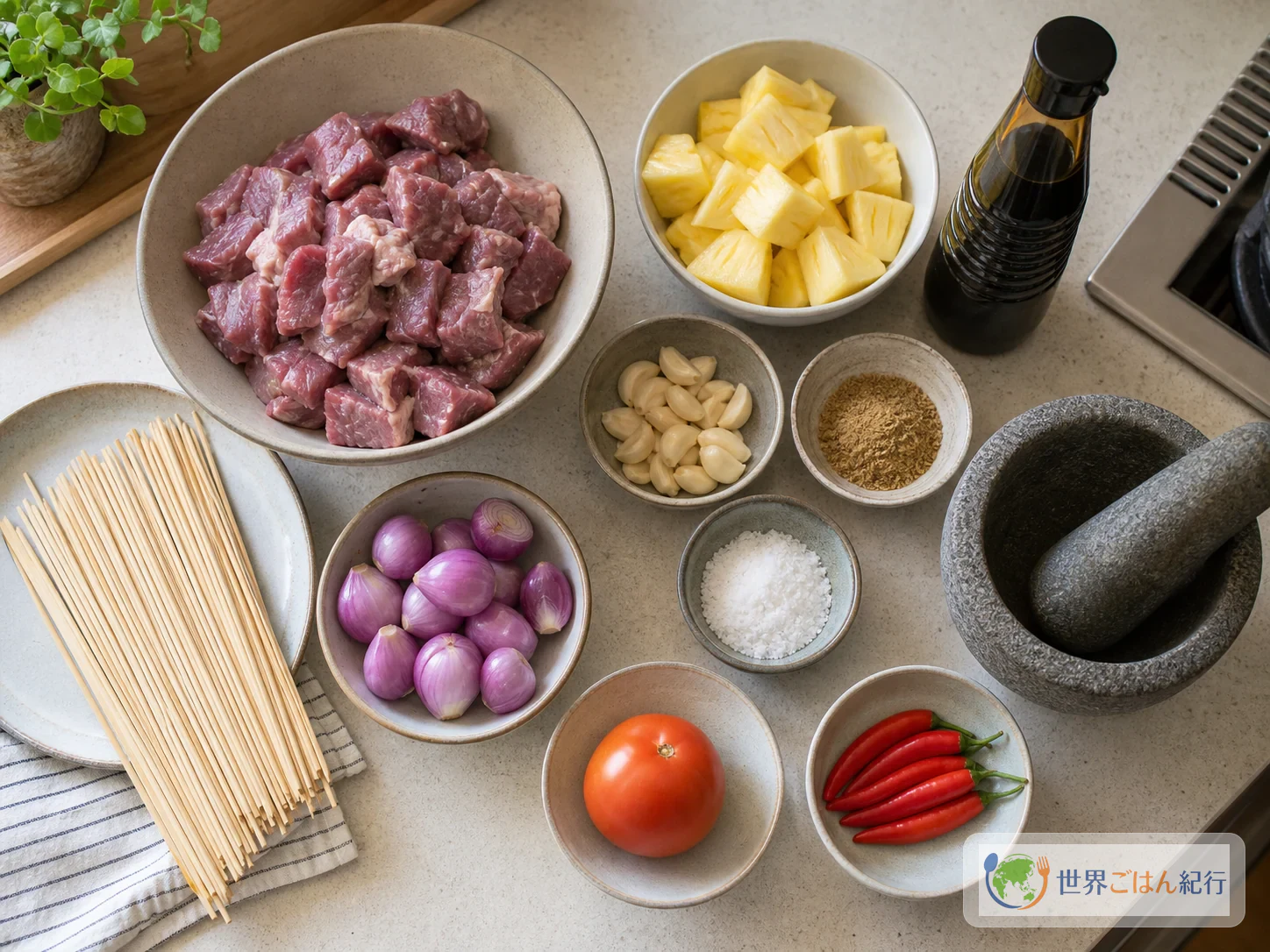
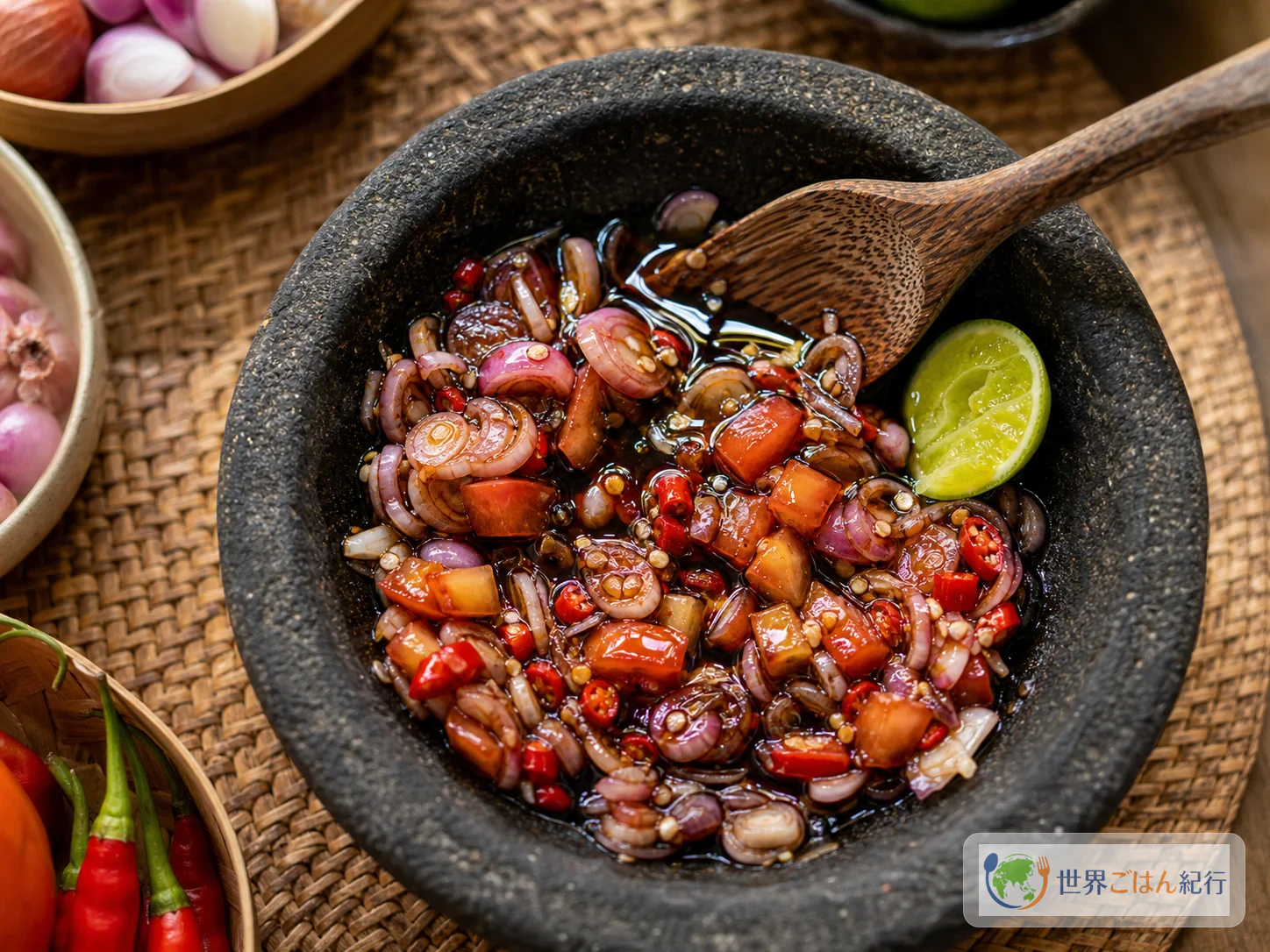
Kecap manis is sweeter and thicker than ordinary soy sauce, and it forms a thin film on the surface of grilled meat. 2 tbsp goes into the marinade, and 3 tbsp goes to the glaze and the sambal kecap. One bottle can do three jobs, but whether to buy a bottle should depend on whether you can use it up.
It is worth buying if you want the glossy sheen and depth of sweet soy not only for this dish but also for nasi goreng and stir-fries. If you are making this once, dark soy sauce with brown sugar will still grill the meat. When you shop, check that the label says kecap manis (sweet soy sauce) and what the volume is. Prices and stock change, so none is fixed here.
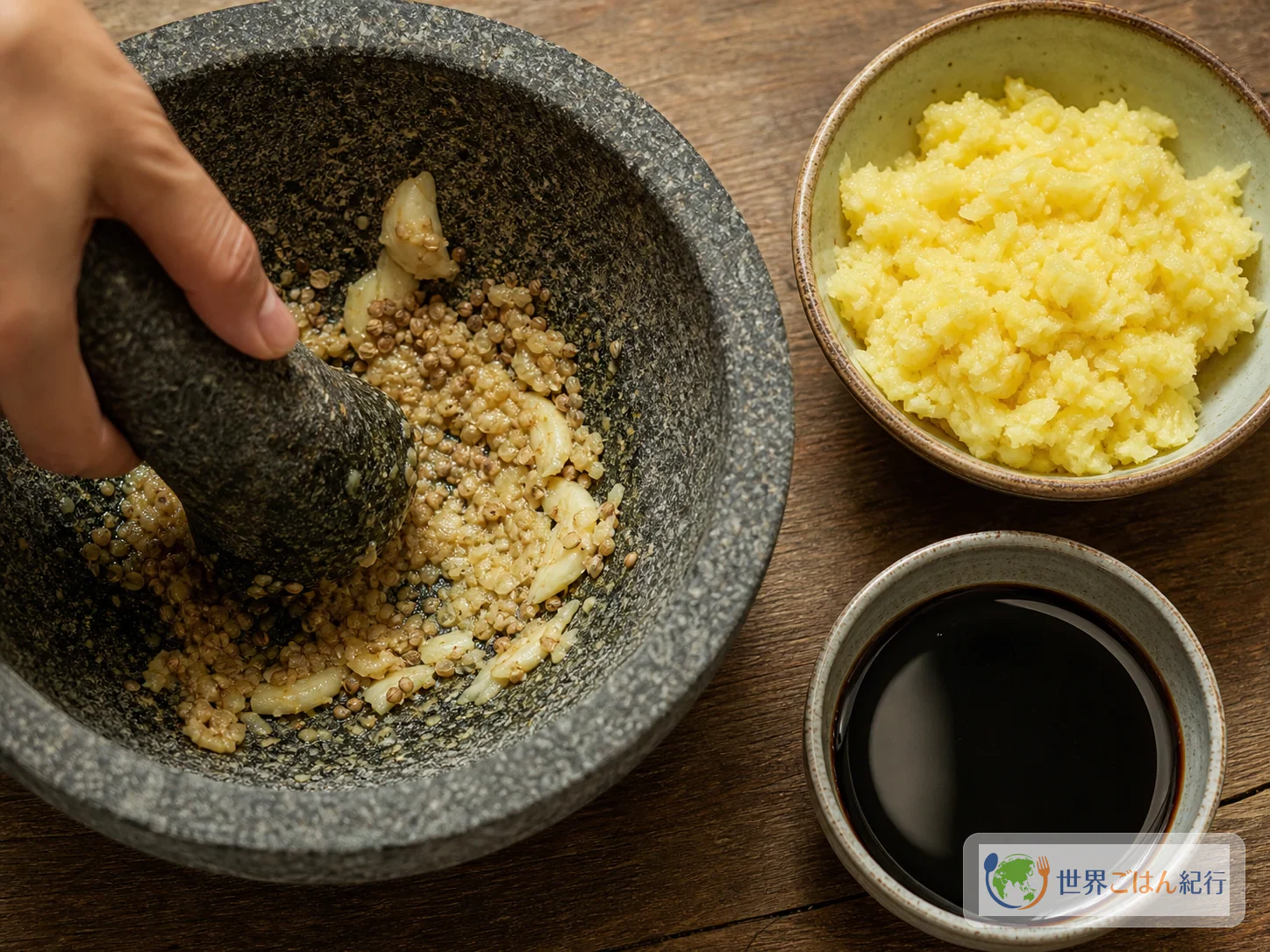
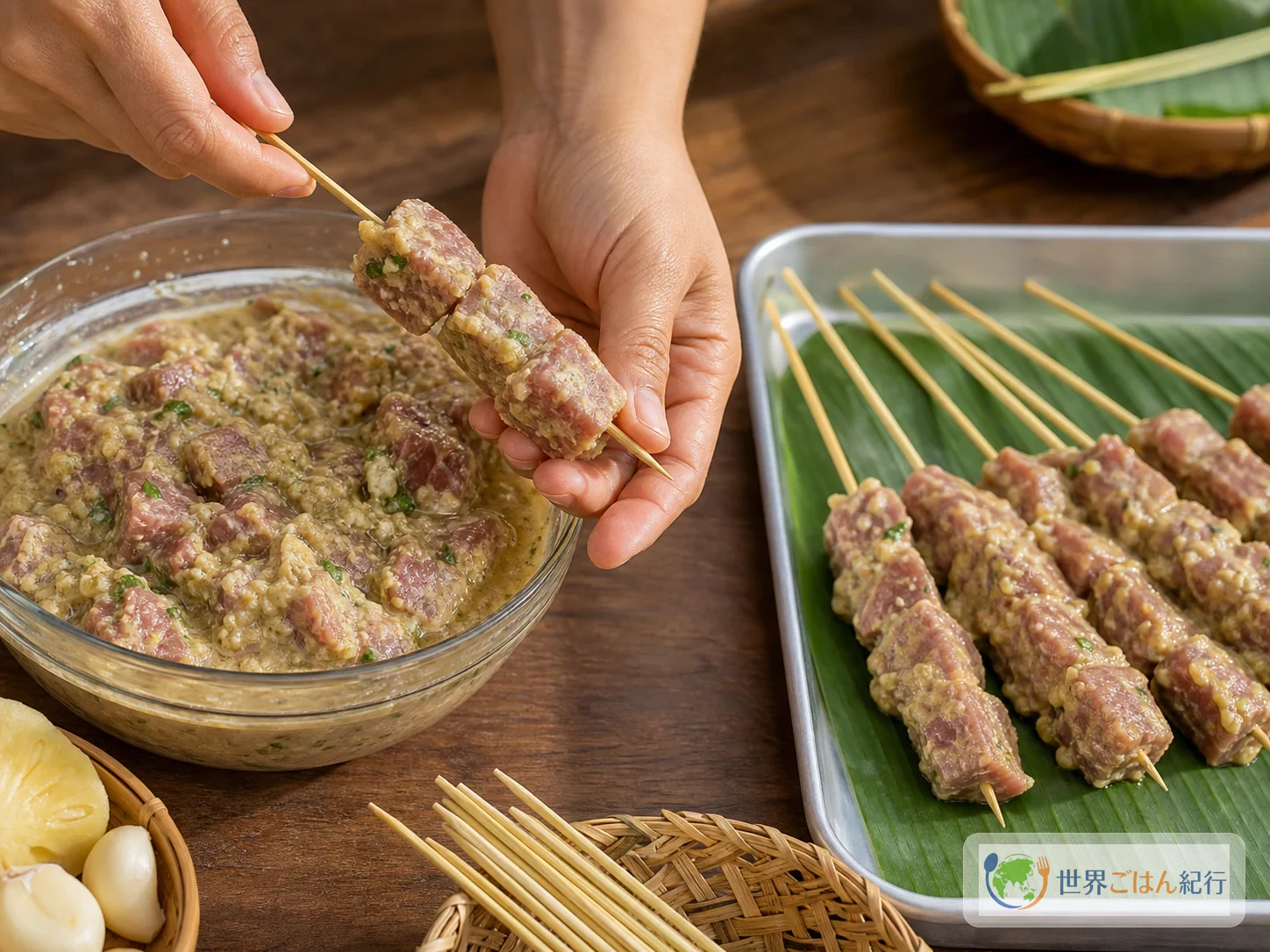
You can use powdered garlic and coriander. But lightly crushing the seeds brings a green, citrus-like aroma out from under the sweet soy. The point of the mortar is not to turn them into powder but to coat the meat with the crushed pieces still intact.
Method
Get the skewers and meat ready first
Four tips for even char and aroma
With fresh pineapple, time matters more than quantity
Fresh pineapple helps soften goat's aroma and make the surface easier to eat. But a longer marinade is not always better. Touch the meat once at 30–45 minutes and check that the surface isn't watery or collapsing. If the corners hold when pressed with a finger, you can thread it onto skewers as is.
If the goat's smell is strong, removing the thick fat and switching to younger meat or lamb has a more predictable effect than adding more pineapple. The ANTARA recipe also lists young goat, lime and pineapple as measures against the smell. Referring to ANTARA's sate kambing article, keep the marinade short at home.
Layer the sweet soy thinly at the end
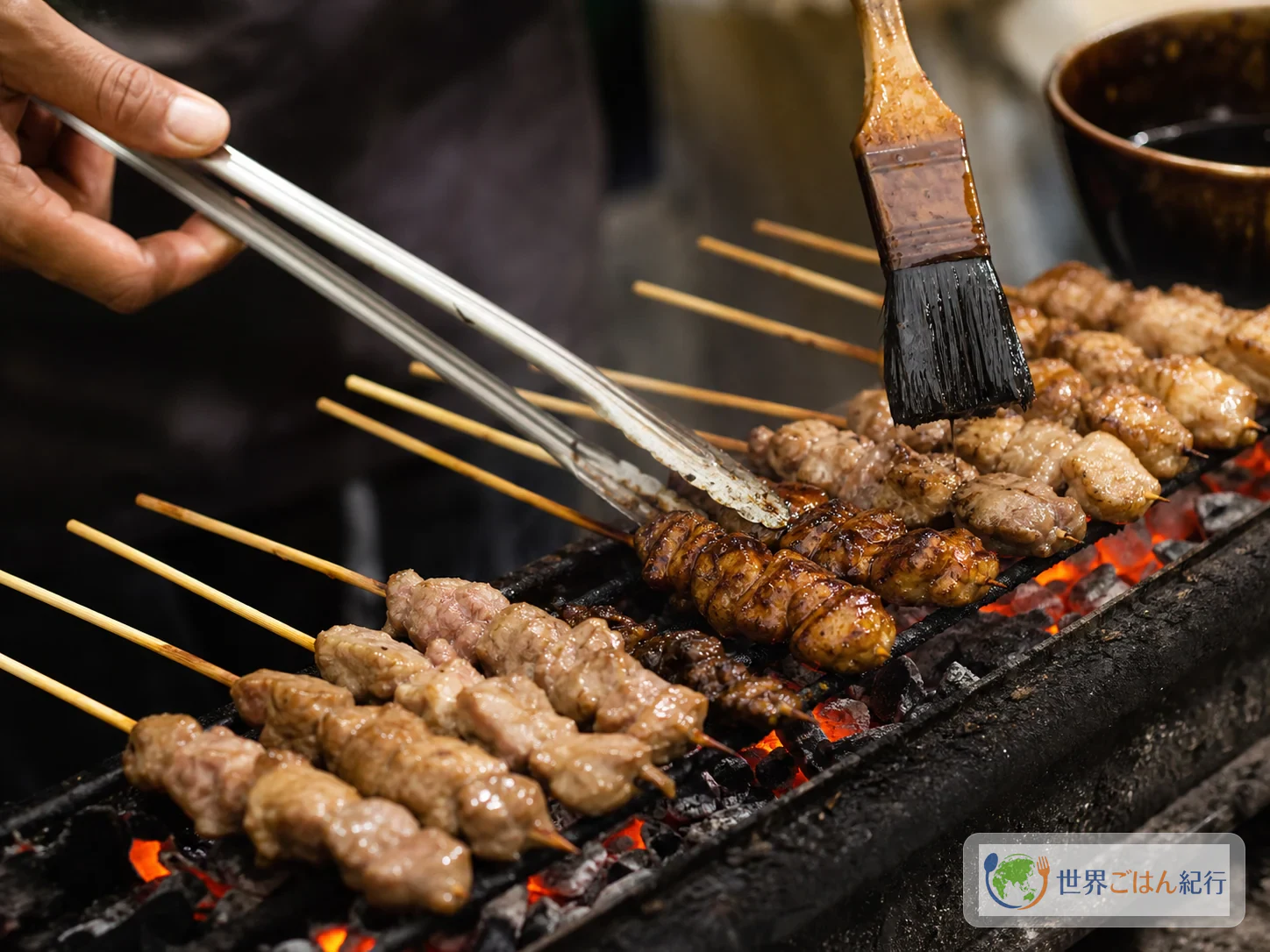
Once kecap manis turns dark, the meat looks cooked. But because it contains sugar, the surface can blacken while the center is still cold. The sequence of driving off the meat's moisture first and brushing a thin layer on during the last two turns decides both appearance and doneness.
Take the skewers off the heat for 30 seconds, thin the sauce with 1 tsp water and then brush it on. If you keep brushing over a fire that is too strong, what remains is bitterness rather than sweetness. If you serve sambal kecap alongside after grilling, you can build the outline of the flavor without adding more sheen.
Don't pack the meat onto the skewer
If you press cubes together with no gaps, the outside cooks but steam stays between the pieces. Leave 2–3 mm of space and place the skewers with the fatty side toward the grate. When thin fat melts and drips onto the coals, short flames can flare up, so move the skewers to the edge instead of turning them immediately.
Adjust strength with the accompanying sauce
Once you brush a lot of sweet soy on the meat, it is hard to bring the taste back. If you serve sambal kecap separately, sweetness, acidity and heat can be added at the table. For people who dislike spicy food, or on days you eat with children, make a chili-free sauce in a separate dish so the seasoning on the meat doesn't need to change.
What to keep and what to change when cooking outside Indonesia
Goat and lamb are not the same
Fresh goat meat is not always available. To try the flow of the dish first, lamb leg is easy to work with. Goat has a stronger personality in aroma and fat, while lamb is relatively tender and takes on sweet soy easily. Don't call what you make with lamb "the taste of goat"; treat it as a separate pleasure, including the difference in aroma.
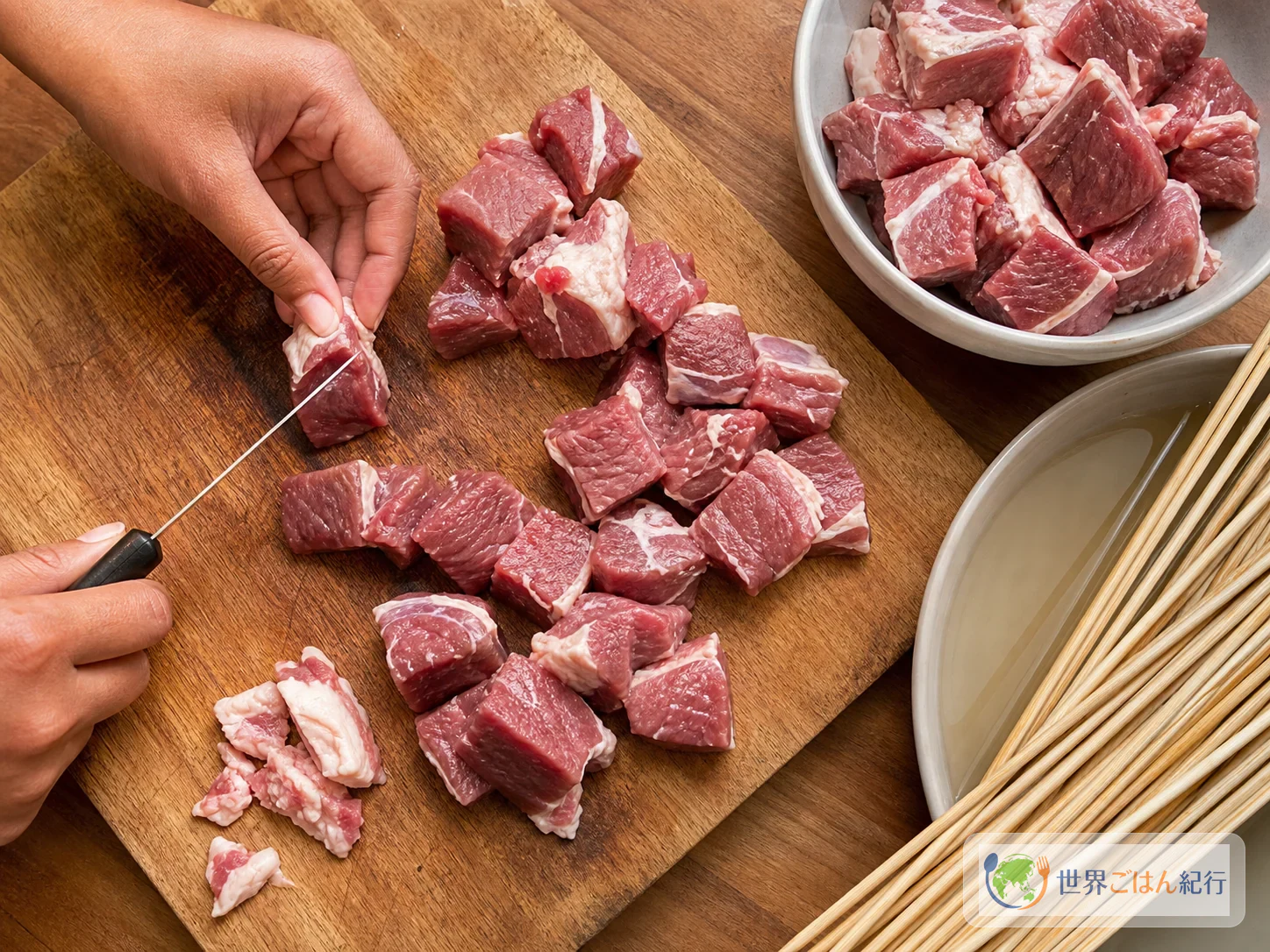
If you use goat, check cuts and frozen state at a butcher or halal grocery. Thaw frozen meat slowly in the refrigerator and wipe off the drip with paper towels before marinating. Do not refreeze thawed meat. Shops differ in the cuts and processing they offer, so it is easier to ask if you say, "cut into 2.5 cm cubes for skewers," when you buy.
Without charcoal, you can still build the order of aroma
You don't need to reproduce charcoal smoke exactly. With a broiler, drive off the moisture first and brush on the sweet soy at the end. If you cook in a frying pan, remove the meat from the skewers, lightly oil the pan and cook over medium-high heat, turning the sides. A frying pan weakens the smoke and charcoal scent, so add lime and raw onion to fill in the outline.
Rather than forcing charcoal indoors, the strong top heat of a broiler is easier to manage for ventilation and fire risk. Not making the cooking environment dangerous comes before keeping the dish's name.
Three ways to eat it, by region
After making sate kambing, you can move to another region simply by changing the sauce. Whether to layer sweet soy or return to salt alone depends on where you want to carry the meat's aroma.
Sweet soy and peanuts: Madura style
Madura's satay is presented as a dish eaten from evening into the night from stalls and carts, combining peanut sauce, sweet soy, shallots, chili and lime. Indonesia Travel's article on sate Madura also touches on chicken and goat and on coconut-shell charcoal.
Add 2 tbsp of roasted, crushed peanuts to this recipe's sambal kecap for a fragrant depth beneath the sweetness. If you have a peanut allergy, leave them out and check the ingredient labels of the sauces.
Salt and gulai: Klatak style
Yogyakarta's sate klatak is described as young goat grilled with simple seasoning and eaten with gulai and rice. Leave out the kecap manis and pineapple and coat the meat with just salt and pepper before grilling, and you can branch off from this recipe. There is no need to imitate the local feature of metal bicycle spokes as skewers at home. Even if you use metal skewers sold for food use, take care, because the handles get hot.
Stronger acidity leans toward Maranggi style
West Java's sate maranggi is presented as a dish that does not make peanut sauce the star but expands the aroma toward chili, sugar, vinegar, shallot and tomato. Add a little more lime to the sambal kecap and reduce the kecap manis by 1 tbsp, and the meat's sweetness tightens up. Since this borrows traits from a different dish, keep it distinct from sate kambing itself.
Storage, allergies and recovering from mistakes
Let the grilled skewers cool slightly and move them to a shallow container. FoodSafety.gov's storage chart gives 3–4 days at 4°C or below for leftover cooked meat. Refrigerate within 2 hours of cooking (1 hour if it is hot outdoors) and reheat only what you will eat. Following the Cold Food Storage Chart, don't leave it long on a room-temperature plate.
To freeze, remove the meat from the skewers and wrap it in single-meal portions. Thaw in the refrigerator, put a little water in a frying pan, cover and heat through to the center, and finish with a little glaze. Because sambal kecap uses raw vegetables, refrigerate it separately from the meat and use it up by the next day.
Kecap manis contains soy, and some products use soy sauce that contains wheat. Anyone with allergies, including those who share a mortar or cutting board, should check the ingredient labels. If you change to peanut sauce, pay attention to peanut labeling and shared utensils.
Only the surface burned
Move the skewers away from the heat, and if the center is still cold, lower the heat and add time. Don't scrape off the burned parts; check the temperature before serving. Next time, brush the glaze on fewer times and lift the grate farther from the heat.
The meat is tough
Check whether the pieces are thicker than 3 cm or packed too tightly on the skewer. Depending on the cut, goat may suit stewing better than quick skewers. Adjusting in the order of switching to lamb shoulder, evening out the cut to 2.5 cm and observing the rest time makes it easier to separate the cause.
The aroma is too strong
If the smell is too strong to eat, don't try to hide it by adding seasoning. Remove the thick fat and increase the lime and tomato in the sambal kecap. Next time, choose young goat or lamb, and keep to the marinating time rather than increasing the pineapple.
Frequently asked questions
Is it still sate kambing if I swap the goat for lamb?
It works as a home substitute. Lamb has a milder aroma than goat and renders fat differently, so the dish does not share the same background as its name. If you want to try goat's aroma, check the grilling method with lamb first, then move to goat, which makes it easier to separate the causes of failure.
Can I make it without pineapple?
Yes. Leave out the pineapple and marinate 30–60 minutes in garlic, coriander, salt, kecap manis and lime. The effect of taming the meat's aroma is weaker, so trim the fat carefully and grill while checking the center temperature. Canned pineapple can make the surface collapse more easily, so stop the marinade sooner.
Can I substitute regular soy sauce for kecap manis?
For the 2 tbsp in the marinade, 1 tbsp dark soy sauce plus 2 tsp brown sugar works. The glaze burns more easily, so thin it a little with water and brush it on thinly at the end. If you plan to keep using sweet soy in stir-fries, check whether you can use up a whole bottle before buying one.
Can I grill the skewers under a broiler?
Yes. Preheat on high for 3 minutes and grill without any glaze at first. If the skewer handles are close to the heat, cover them with foil and keep the meat from touching the rack. Ventilate, and if only the surface blackens, lower the heat or move the rack one level down.
Can I make it ahead?
Move the cooked meat to a shallow container and refrigerate within 2 hours of cooking. FoodSafety.gov's guideline is 3–4 days refrigerated, but skewers dry out easily, so for flavor they are best eaten by the next day. Store the raw-vegetable sambal kecap in a separate container and do not assume it keeps for as long as the meat.
Indonesian dishes to make alongside
The sweet soy and spicy sauce of sate kambing goes well with fried rice as well as white rice. On days when you want to enjoy the meat's aroma more gently, try sate ayam, which uses chicken and sweet soy. For days you want rice with a rich yellow sauce, move on to sate padang (in Japanese), a beef skewer dish, and you will see the regional differences within satay.
Leftover sambal kecap can also be added in a small amount to finish nasi goreng (in Japanese). Because of the water from the raw vegetables, it suits being added to taste on the plate rather than in large amounts into the cooking oil.
Sources
- Ministry of Tourism, Republic of Indonesia, "Delicious Satay, Indonesia's Most Famous Dish!", https://www.indonesia.travel/us/en/travel-ideas/gastronomy/delicious-satay-indonesia-s-most-famous-dish (accessed and checked 2026-07-31)
- Ministry of Tourism, Republic of Indonesia, "Sate Klatak", https://www.indonesia.travel/gb/en/destination/java/yogyakarta/sate-klatak (accessed and checked 2026-07-31)
- Ministry of Tourism, Republic of Indonesia, "Sate Madura: The Irresistible Indonesian Satay", https://www.indonesia.travel/gb/en/travel-ideas/gastronomy/sate-madura (accessed and checked 2026-07-31)
- ANTARA News, "Resep sate kambing antibau perengus", https://www.antaranews.com/berita/4441197/resep-sate-kambing-antibau-perengus (accessed and checked 2026-07-31)
- FoodSafety.gov, "Safe Minimum Internal Temperatures", https://www.foodsafety.gov/food-safety-charts/safe-minimum-internal-temperatures (accessed and checked 2026-07-31)
- FoodSafety.gov, "Cold Food Storage Chart", https://www.foodsafety.gov/food-safety-charts/cold-food-storage-charts (accessed and checked 2026-07-31)