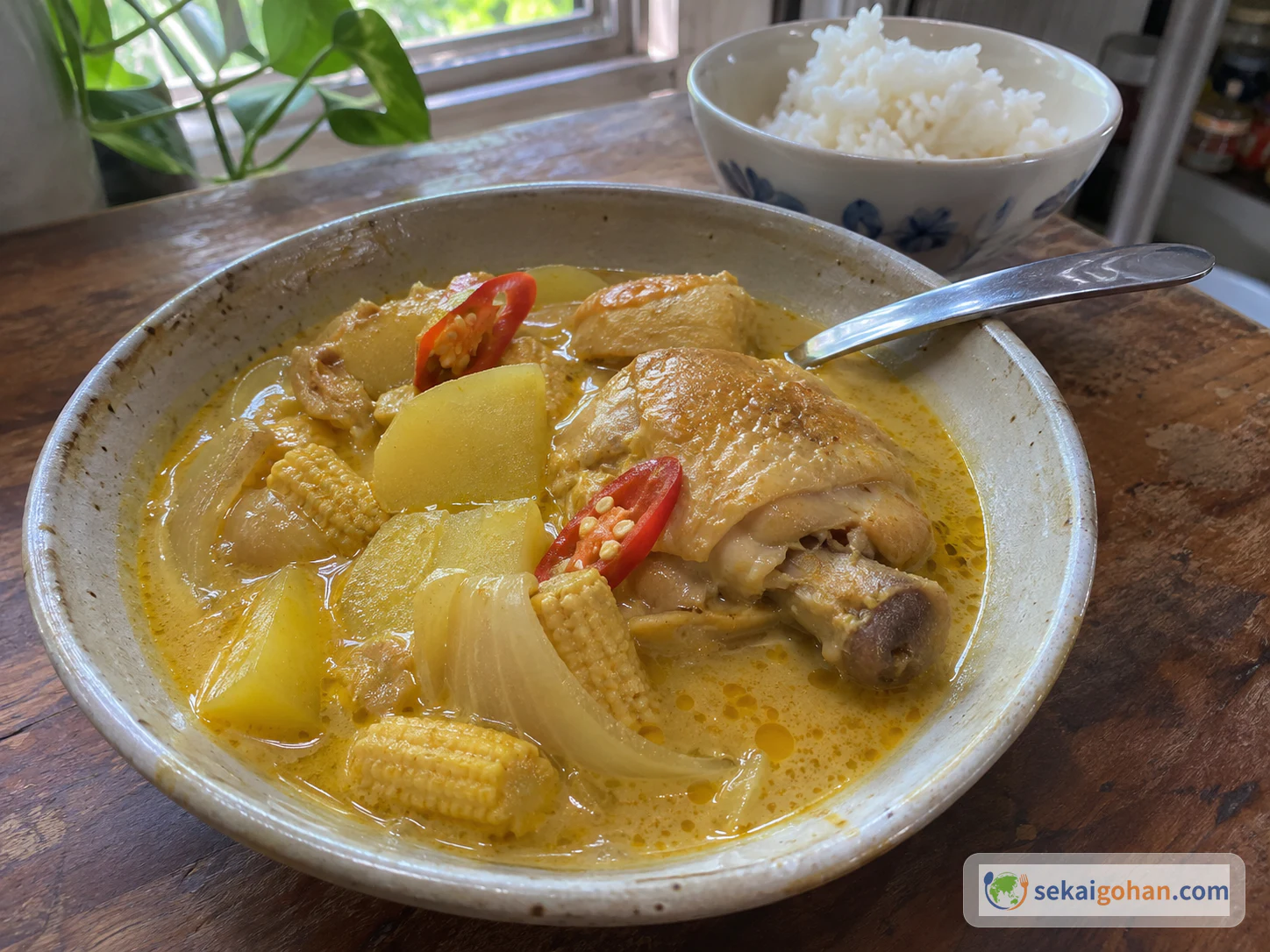
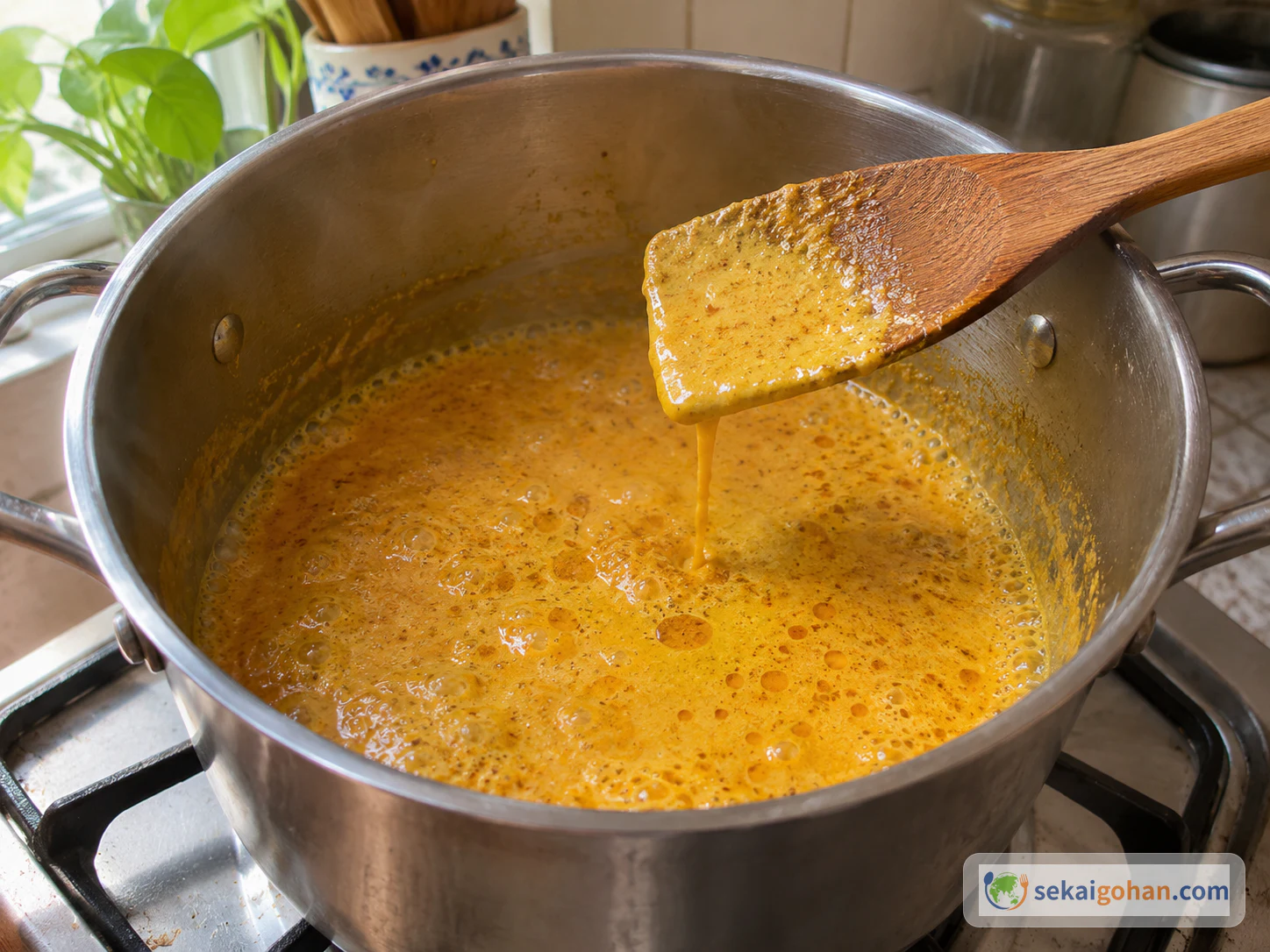
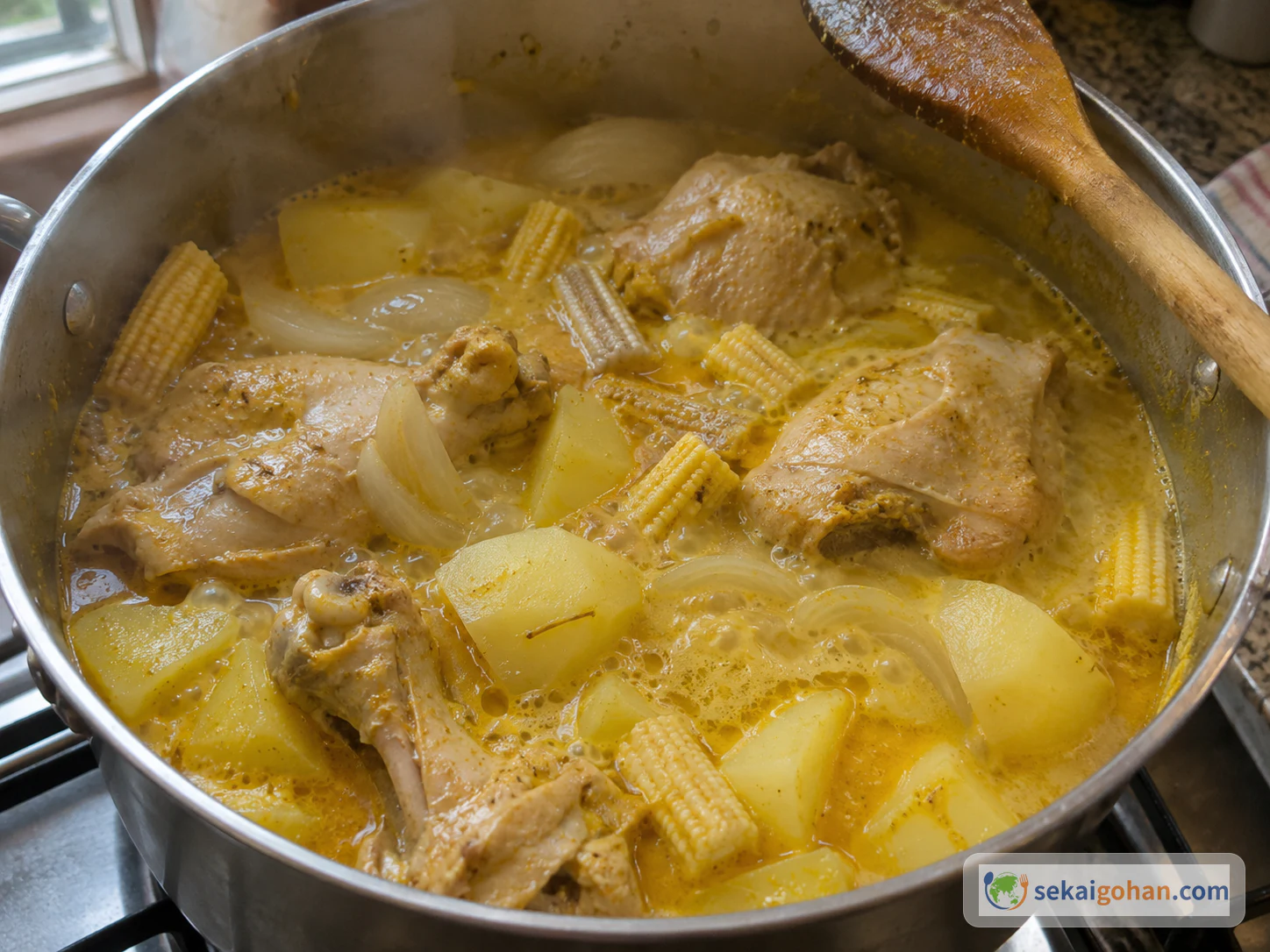
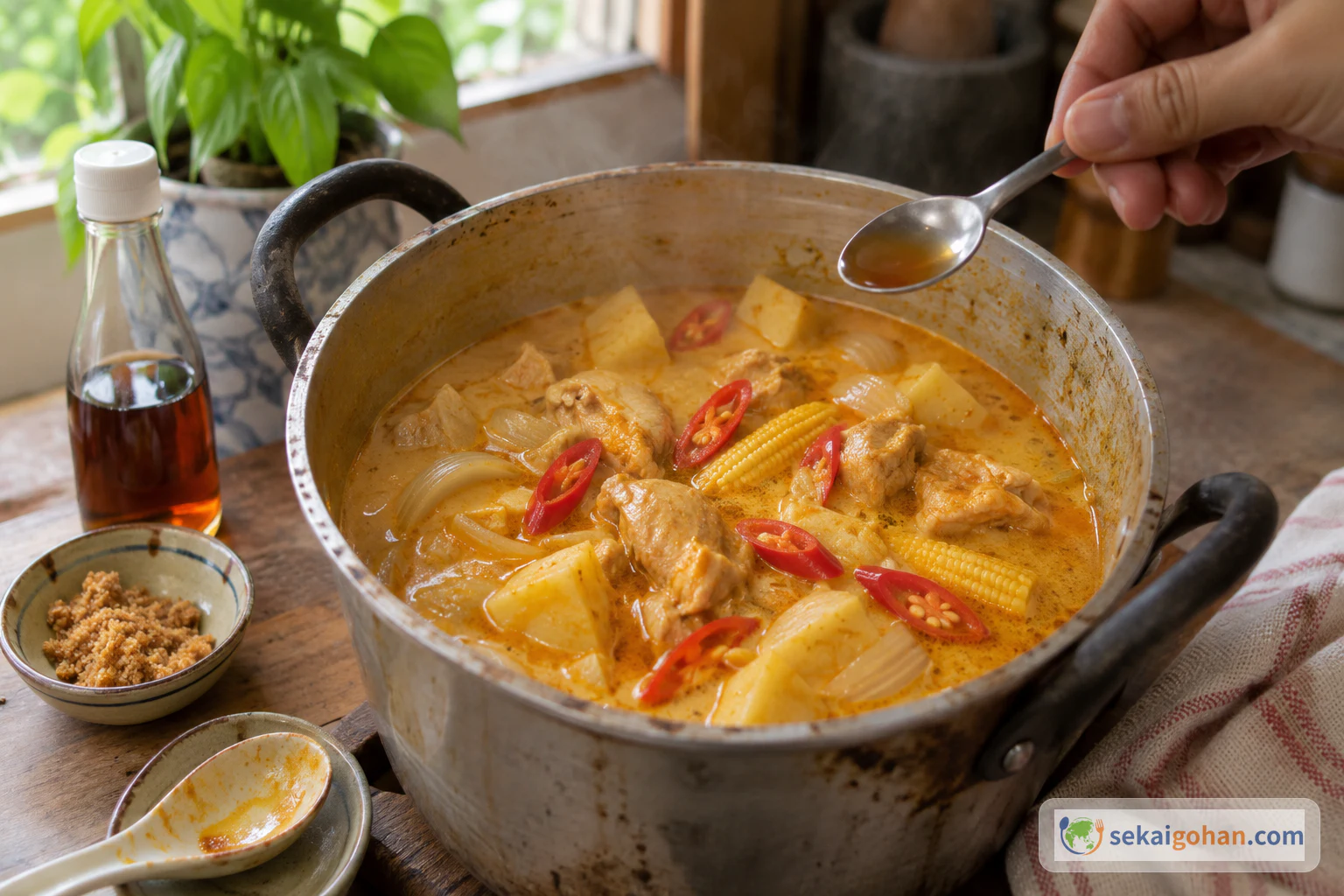
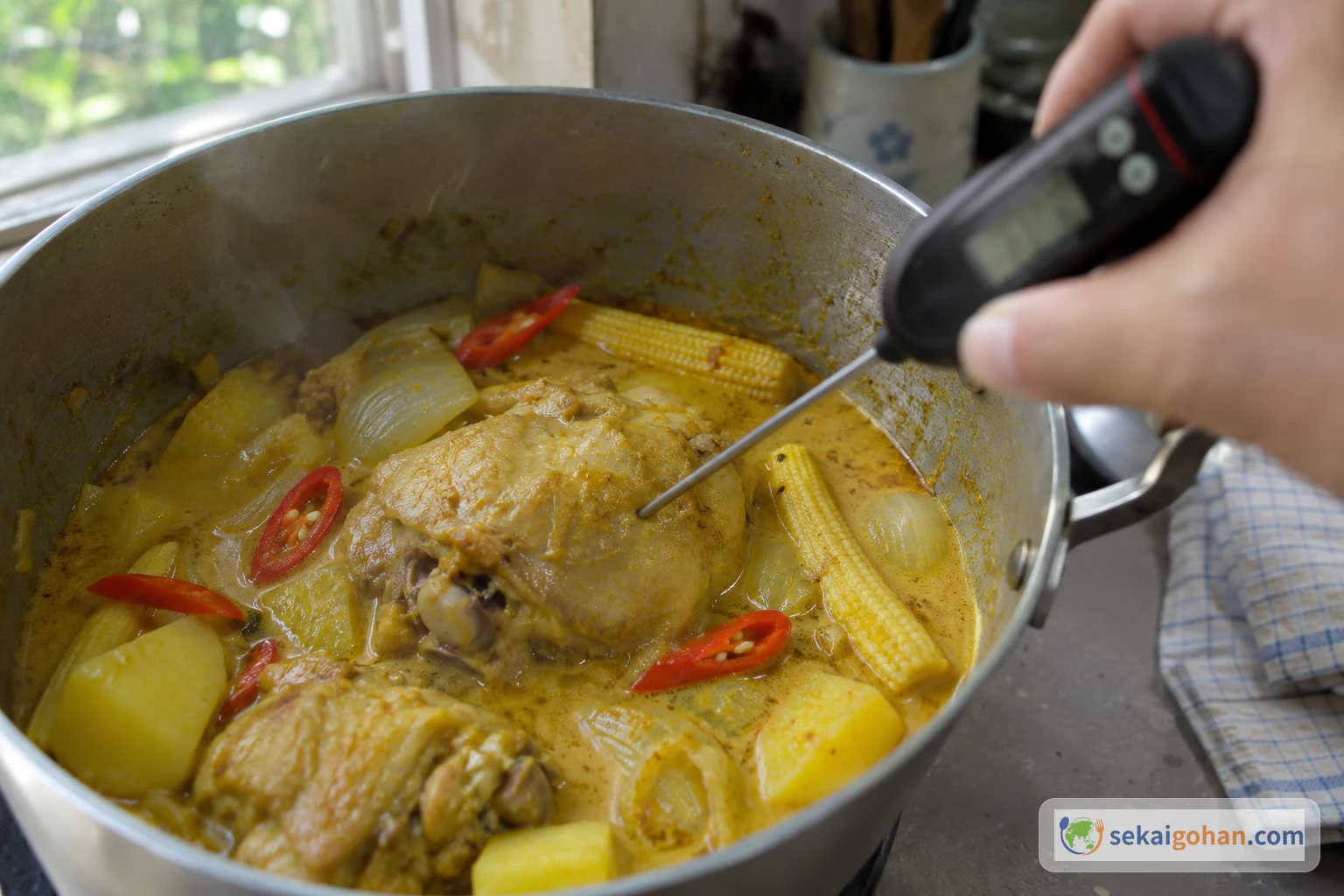
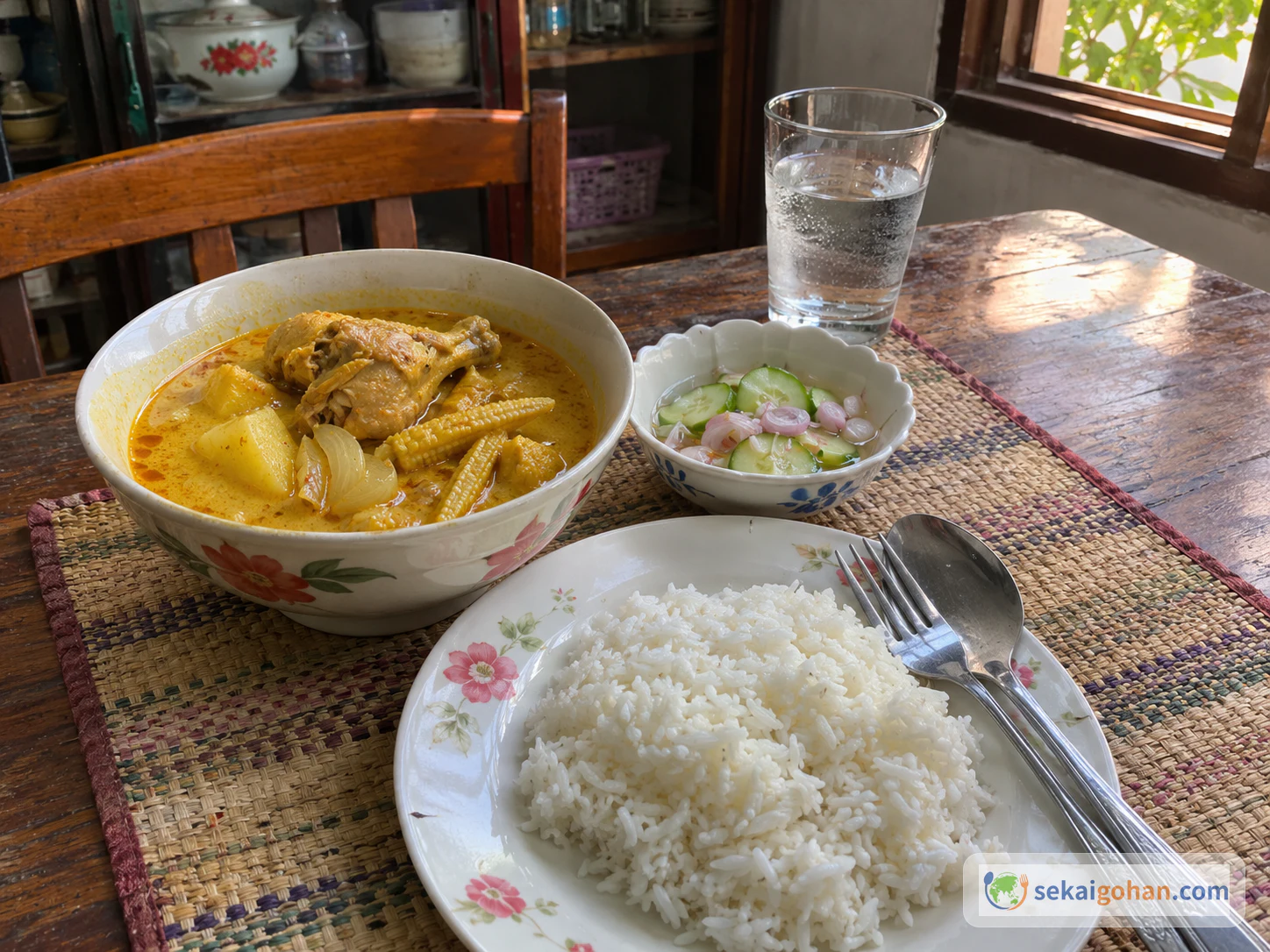
Half the coconut milk is bubbling in the pot when the yellow paste goes in, and the first smell to rise is curry powder, warm with cumin and cardamom, before anything you would call Thai. Keep stirring and the bubbles tighten, the color deepens to gold, and small beads of yellow oil slip free at the edge of the pot. That is kaeng kari (แกงกะหรี่), the dish English menus call yellow curry: bone-in chicken, potatoes and onion simmered in coconut milk, mild and round, a little sweet, salted with fish sauce. Among Thai curries it is the one where dried spices lead, and it goes to the table with jasmine rice and a small bowl of cucumber relish.
Curry Curry: The Name, the Two Yellows and the Spice Trail
A name that says curry twice
In Thai, kaeng means curry, and kari also means curry, so the name reads as "curry curry." The chicken version is แกงกะหรี่ไก่, kaeng kari gai. The second word points to curry powder, ผงกะหรี่ (phong kari), and that is what sets this pot apart from the green and red curries of the Thai kitchen: their pastes are built on fresh chilies and herbs, while this one carries a dusty, toasty layer of dried spice.
แกงเหลือง (kaeng lueang) translates literally as "yellow curry," but it is a different dish: a southern, turmeric-led curry with a thin, sharply sour broth. Ask for "yellow curry" in English at a Thai eatery and that sour soup can be what arrives. In central Thailand the southern version of the sour curry gaeng som is sometimes called kaeng lueang too, so the word "yellow" can point to two quite different pots.
The same split runs along the shelf of curry pastes. Two kinds are sold as "yellow," and the one for this dish carries แกงกะหรี่ on the label. Here is how the neighbours line up:
| Dish | What is in the pot | How it eats |
|---|---|---|
| Kaeng kari (แกงกะหรี่) | Coconut milk, curry-powder paste, chicken, potato, onion | Mild, round, dried-spice aroma |
| Kaeng lueang (แกงเหลือง) | Turmeric-led southern paste, sour broth | Thin, sharp, sour |
| Massaman (แกงมัสมั่น) | Coconut milk, potato, tamarind, roasted spices | Sweeter, deeper, tart from tamarind |
| Japanese curry rice | A roux thickened with wheat flour | A separate family altogether |
The spices and where they came from
A kaeng kari paste holds things other Thai curry pastes leave out. Ginger and galangal go in cooked, along with coriander seed, cumin seed, black cardamom and curry powder; some households add fenugreek, cinnamon or mace. Thai curry powder is itself a long blend, with cinnamon, cumin, coriander seed, cardamom, clove, black pepper, turmeric, star anise, nutmeg and mace among the spices that turn up in it.
How these Indian-style spices settled into a Thai curry is told in more than one way. Southern Thai cooking shows the influence of Malaysia and Indonesia, the south has a large Muslim population, and massaman is the stew most often named as its signature. The spices in kaeng kari are sometimes explained through that southern Muslim world or through old trade routes, but where the dish first took shape is not settled.
At the table
Kaeng kari is gentle by Thai standards, and some Thai cooks describe it as an entry point for visitors new to their curries. Jasmine rice is the everyday partner. Ajaad (อาจาด), cucumber and shallot in sweet vinegar, sits beside it to cut the richness, and the curry also turns up with roti, paratha or bread for scooping.
Ingredients (serves 2 to 3)
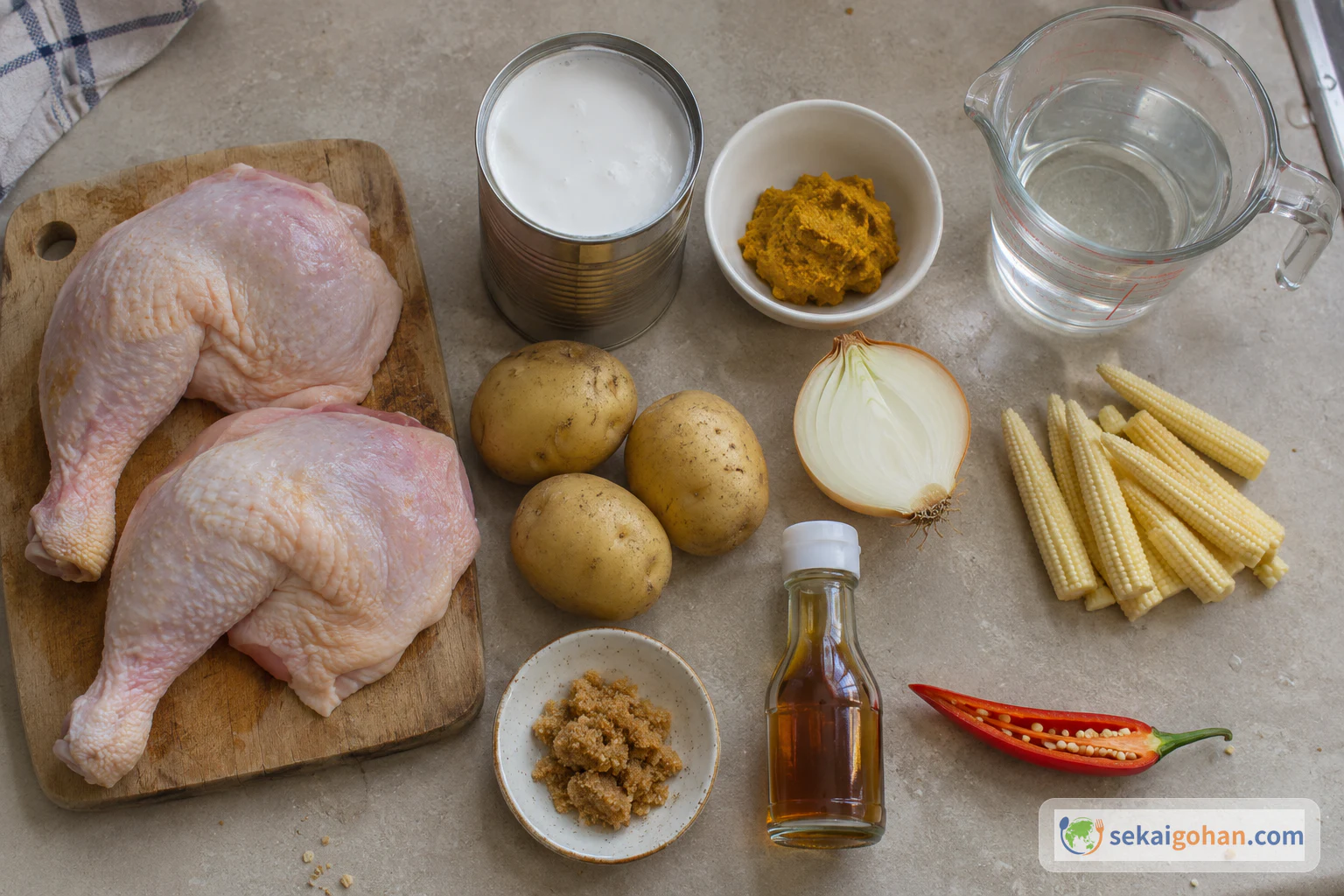
Look for แกงกะหรี่ on the jar or pack. A paste labelled แกงเหลือง makes the sour southern curry, and no amount of coconut milk will turn it into this dish. Pastes also differ widely by brand in heat and salt, which is why the fish sauce and sugar are finished by taste.
Many yellow curry pastes contain shrimp paste (kapi), so they contain shellfish. Fish sauce is made from fish. Some pastes also contain milk or soy. Check the labels on the paste and fish sauce before you buy, and if you cook for someone who avoids shrimp for religious reasons, choose a paste without shrimp paste.
Equipment
- Heavy, deep pot, 20–24 cm, deep enough that boiling coconut milk does not spill over
- Wooden spatula
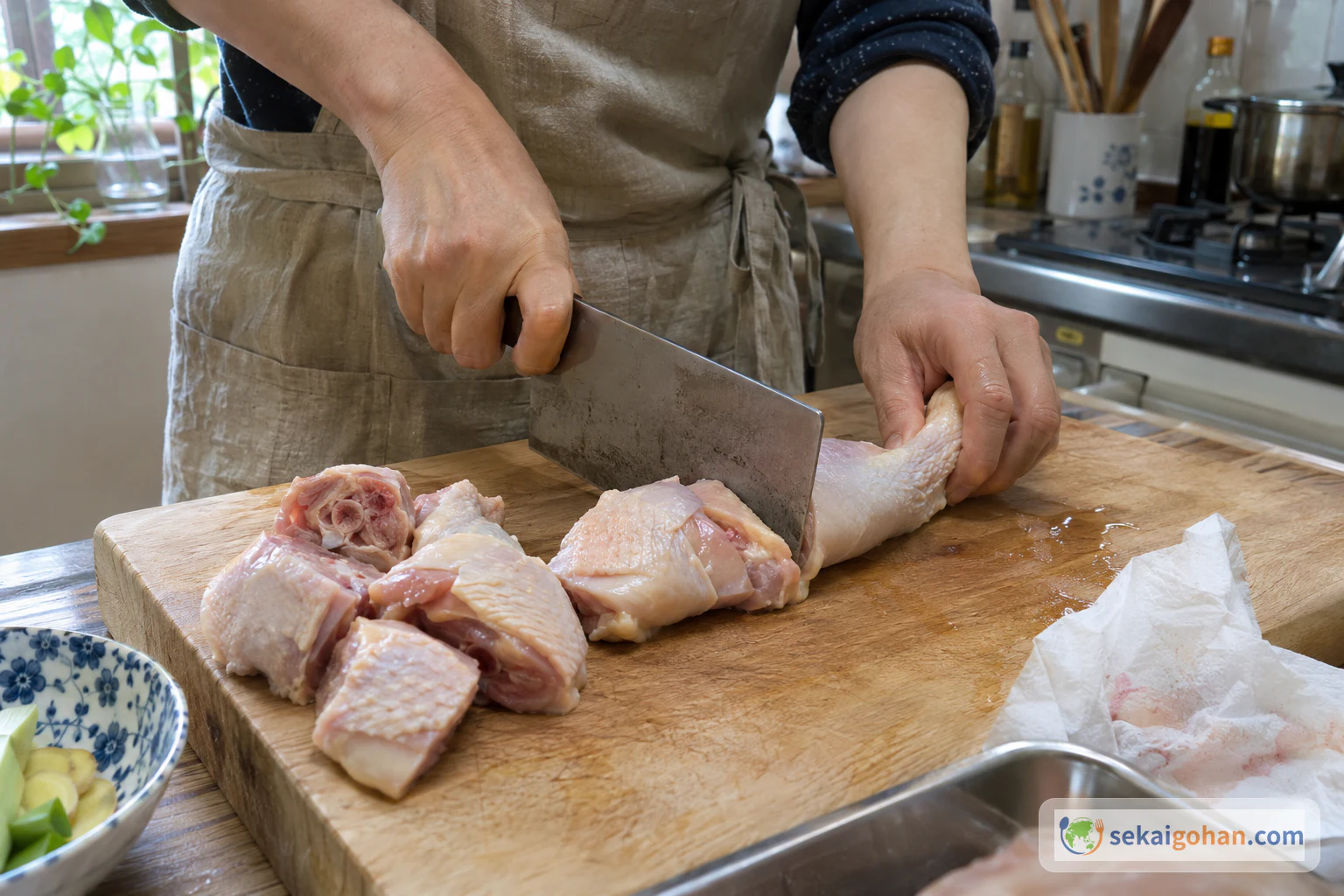
- Cutting board kept for raw meat only
- Heavy knife or cleaver for the chicken
- Measuring cups and spoons
- Bamboo skewer for testing the potatoes
- Instant-read kitchen thermometer
- Paper towels
Choosing and Substituting
The paste is the one thing worth a trip to an Asian grocer or an online order; a jar of fish sauce and a bag of coconut sugar usually sit on the same shelf. Everything else comes from a supermarket.
- Chicken. Bone-in legs give the fullest sauce. Ask the butcher to cut them into pieces if you do not want to work through bone at home. Boneless thigh cooks faster but falls apart more easily, and the sauce turns thinner.
- Coconut milk. A thin brand reduces quickly and makes the curry taste light. Choose a rich one.
- Potatoes. Waxy potatoes hold their shape; floury ones collapse, cloud the sauce and dull its shine.
- Onion. Brown or yellow onion keeps its wedges. White onion is sweeter but breaks down faster.
- Baby corn. Vacuum-packed or canned baby corn that is already cooked drops straight into the pot at the end of the simmer. Frozen green beans or kabocha squash can take its place; both make the pot sweeter, and squash deepens the color of the sauce.
- Fish sauce. Soy sauce brings a fermented soybean smell that pulls the curry away from Thai flavors. Keep fish sauce.
- Coconut sugar. Light brown sugar or cane sugar is the closest swap. Plain white sugar makes the sweetness jump forward and the sauce taste flat.
- Thai long chili. A fresh red chili works; use less, since it is there for fragrance and color, and the curry's heat comes from the paste.
- Rice. Jasmine rice suits it best. Short-grain rice holds more water and makes the sauce taste saltier.
Method
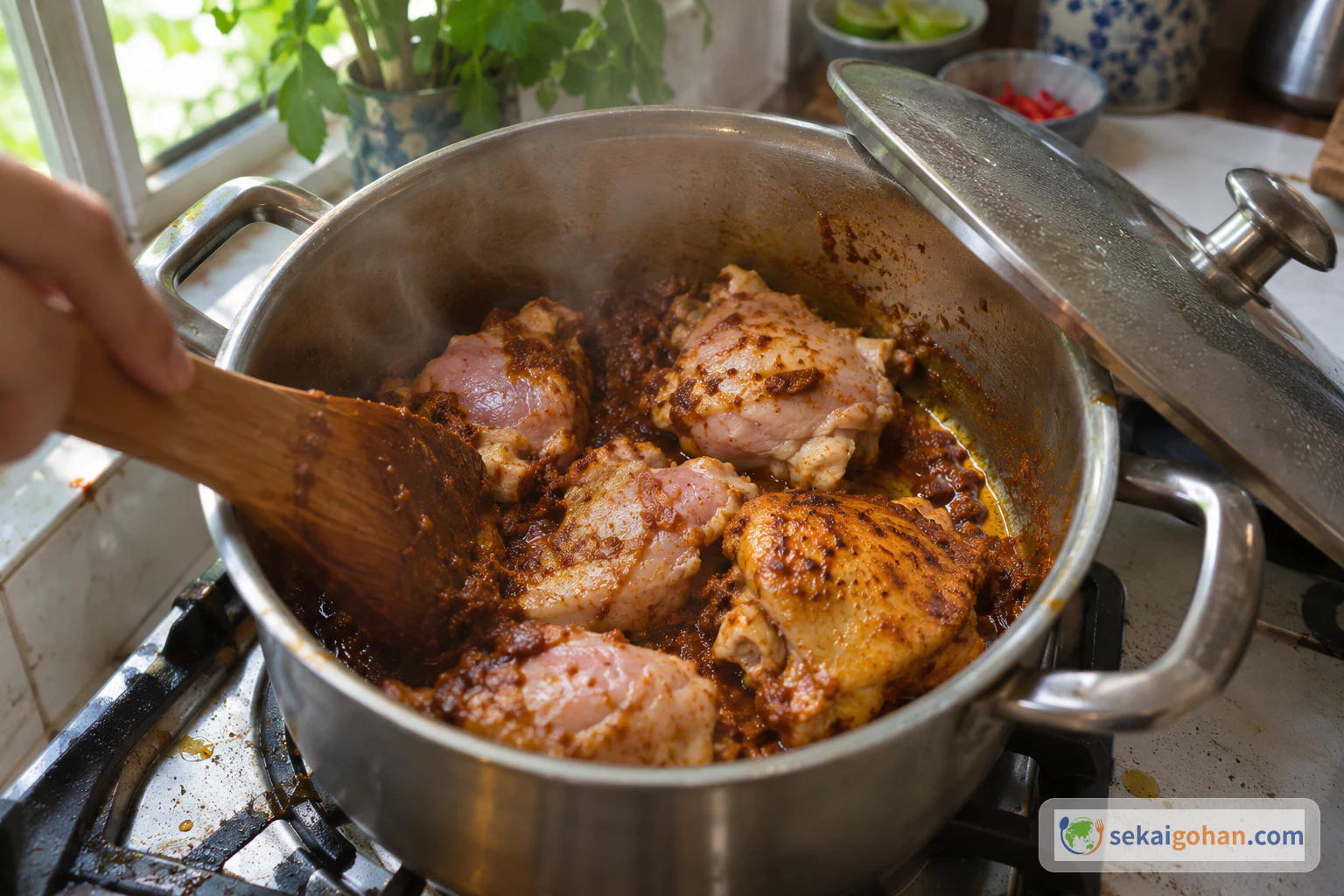
The work runs in one pot. Cut the chicken and prepare the vegetables before any heat goes on, because once the paste is frying, everything follows quickly. The only hands-off stretches are the covered sear and the simmer, and the cooking ends with a thermometer in the thickest piece of chicken.
The two minutes of frying in half the coconut milk is what turns the paste from dusty to fragrant. Wait for the bubbles to shrink, the color to deepen and yellow oil to separate at the edges. If the curry tastes raw or powdery at the end, this step was cut short.
Fish sauce and sugar go in twice. The first half seasons the chicken as it sears; the second half is decided at the end by tasting, once the potatoes have soaked up salt and the paste has given its own.
Do not rinse raw chicken; splashing spreads bacteria around the sink and counter. Keep raw chicken away from other foods, and use a separate board and knife for it, or wash them well before cutting vegetables. Coconut milk foams up fast at a boil, so use a deep pot and stay at the stove.
When It Goes Wrong
| What you see | Why | What to do |
|---|---|---|
| Grainy sauce, oil pooling and refusing to come back | Boiled hard after the coconut milk went in, or a thin coconut milk | Keep it at a gentle low-to-medium simmer after the boil, and lower the heat as soon as oil appears while frying the paste |
| Cloudy sauce, potatoes dissolving, no gloss | Potatoes overcooked; their starch pulls the coconut oil back into the sauce | Stop the simmer the moment a skewer slides through, and use waxy potatoes |
| Flat or powdery taste | Paste fried too briefly, or a mild brand | Fry the paste a full 2 minutes or longer, then finish with more fish sauce |
| Too hot | Strong paste | Add more coconut milk and potato to carry the heat |
| Chicken pink at the center | Thick bone-in pieces need more time | Simmer in 5-minute stretches until the center holds 75°C for at least 1 minute |
| Knife will not go through the bone | Home knife against leg bone | Cut at the joint instead, or have the butcher cut the legs; do not force the blade |
Serving, Variations and Storage
On the table
Kaeng kari is an everyday meal: one pot of curry, a plate of rice and ajaad on the side, its sweet vinegar and crisp cucumber clearing the richness between mouthfuls. Two people eat well from this pot with rice; for three, add a vegetable side.
Variations
- Boneless chicken thigh. Quicker and good for a weeknight. The pieces break more easily and the sauce is lighter; the thermometer check stays the same.
- Roti or paratha instead of rice. Flatbread for tearing and dipping turns the curry into a scooping meal; it also gets wrapped in pastry for a pie-like version. Bread works the same way.
- Squash or green beans for the baby corn. The pot turns sweeter, and squash gives the sauce a deeper orange.
- Curry powder fried separately. Some home cooks fry curry powder in coconut cream in a second pan and stir it into a pot of chicken and potatoes simmered in coconut milk. The result sits between a curry-powder stir-fry and a curry, with a sharper powder aroma.
Storage
Let the curry cool, then refrigerate it quickly in a clean, covered container and plan to finish it the next day. Reheat it in a pot until it boils, so the chicken is hot all the way to the center. Keep opened curry paste in the refrigerator and use it by the date on the label.
Frequently asked questions
Can children eat it?
The heat comes almost entirely from the paste. The chili goes in at the very end, so lift out children's portions before step 7. For a milder pot overall, use less paste and make up the depth with a little more fish sauce at the finish.
Can I make it with beef?
Yes. Beef needs a different start: simmer it in water alone, with no coconut milk, until it is tender, which takes more than an hour. Then combine it with the fried paste and coconut milk and carry on with the potatoes as usual.
Can I reheat it in the microwave?
Microwaves heat unevenly, so heat it, stir, then heat again. Make sure the chicken is hot right through to the center before serving.
Why did my curry taste sour when I bought "yellow curry paste"?
The paste was most likely แกงเหลือง, the southern sour curry paste. It makes a thin, tart broth, and it cannot be corrected into kaeng kari. Next time choose a jar labelled แกงกะหรี่.