Leum Kleun: A Clear, Glossy Bite with a Spot of Salted Coconut
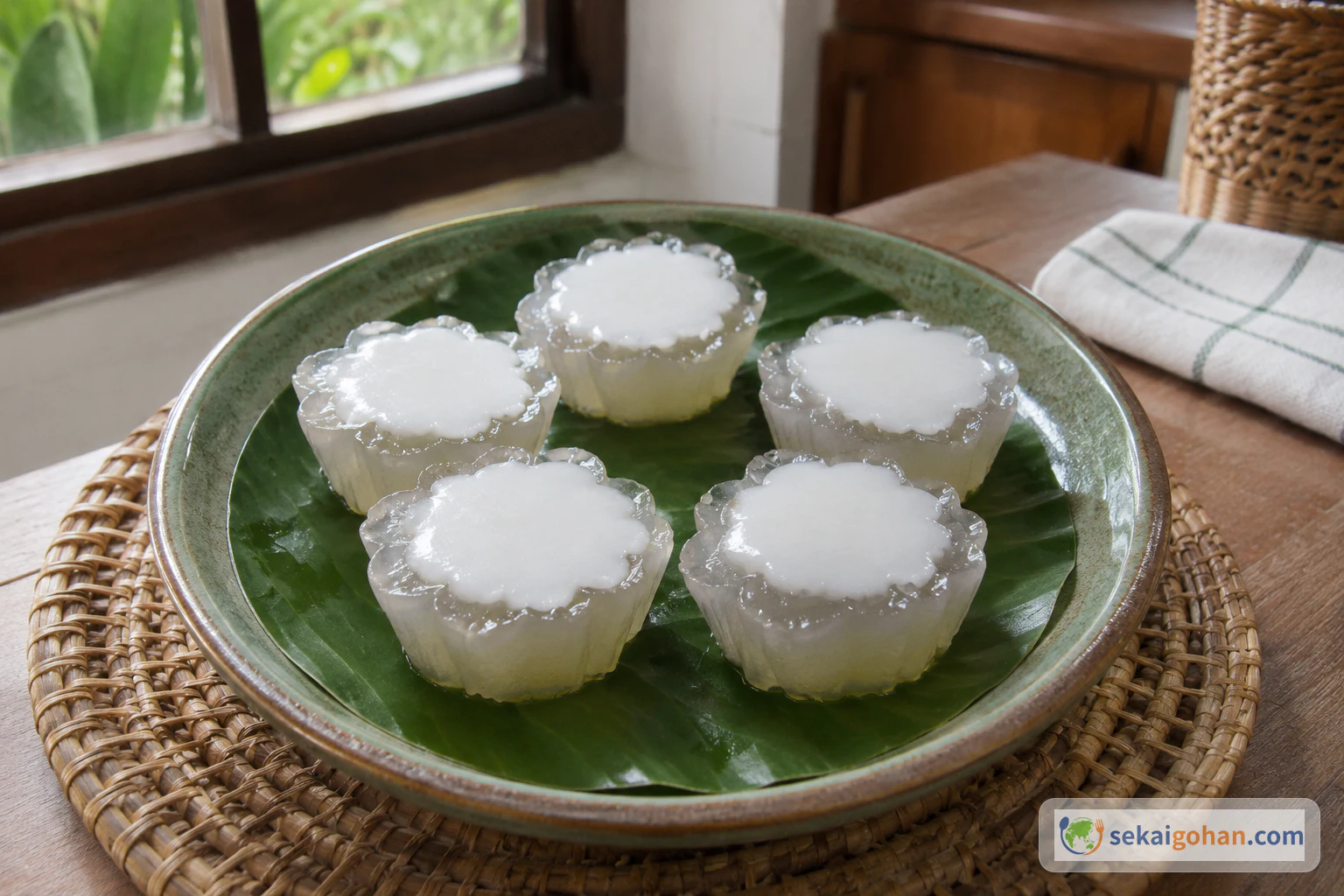
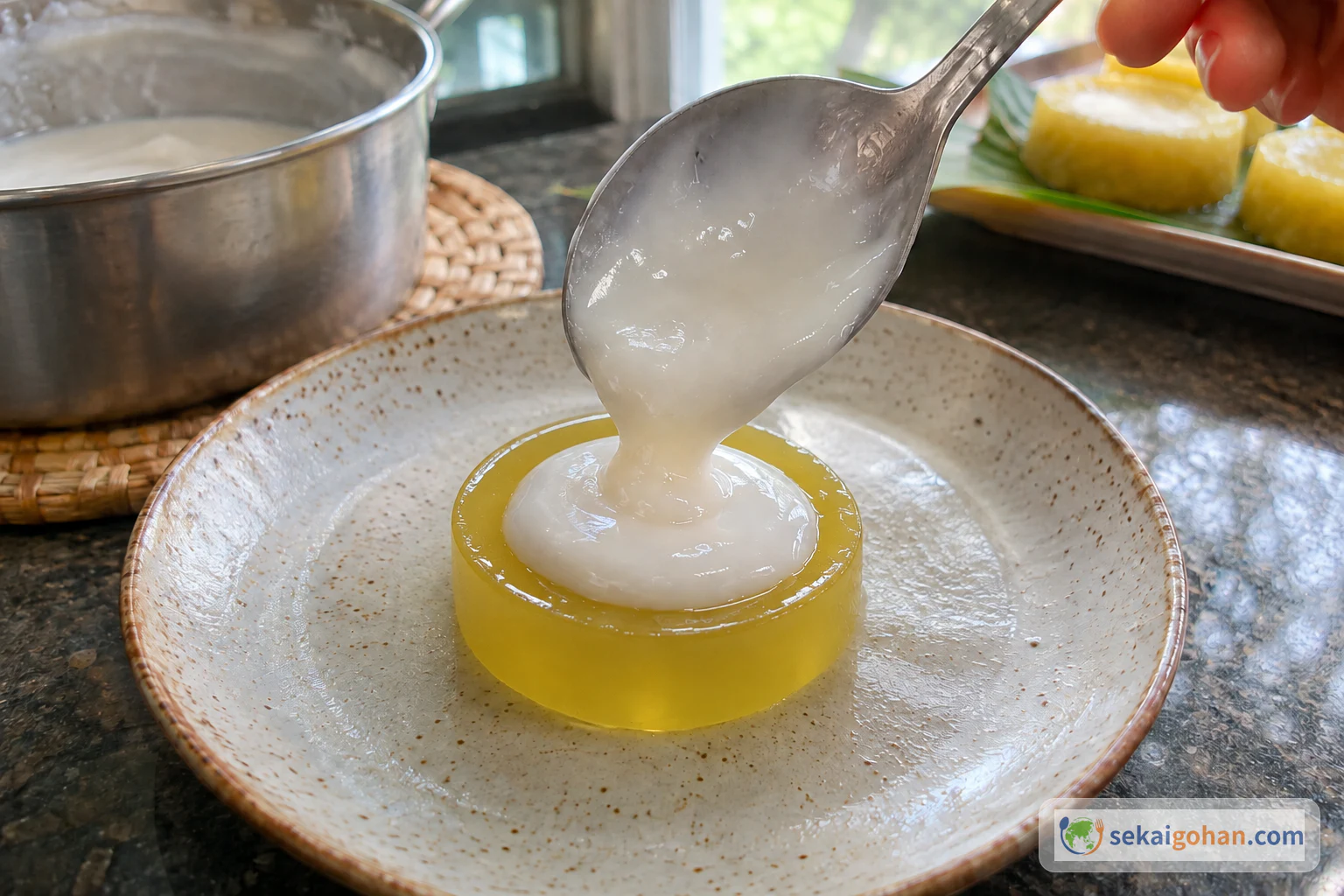
A smooth, translucent mung bean starch base, and a small white mound of salty-sweet coconut topping set in the center, with a clear rim of the base still showing around it.
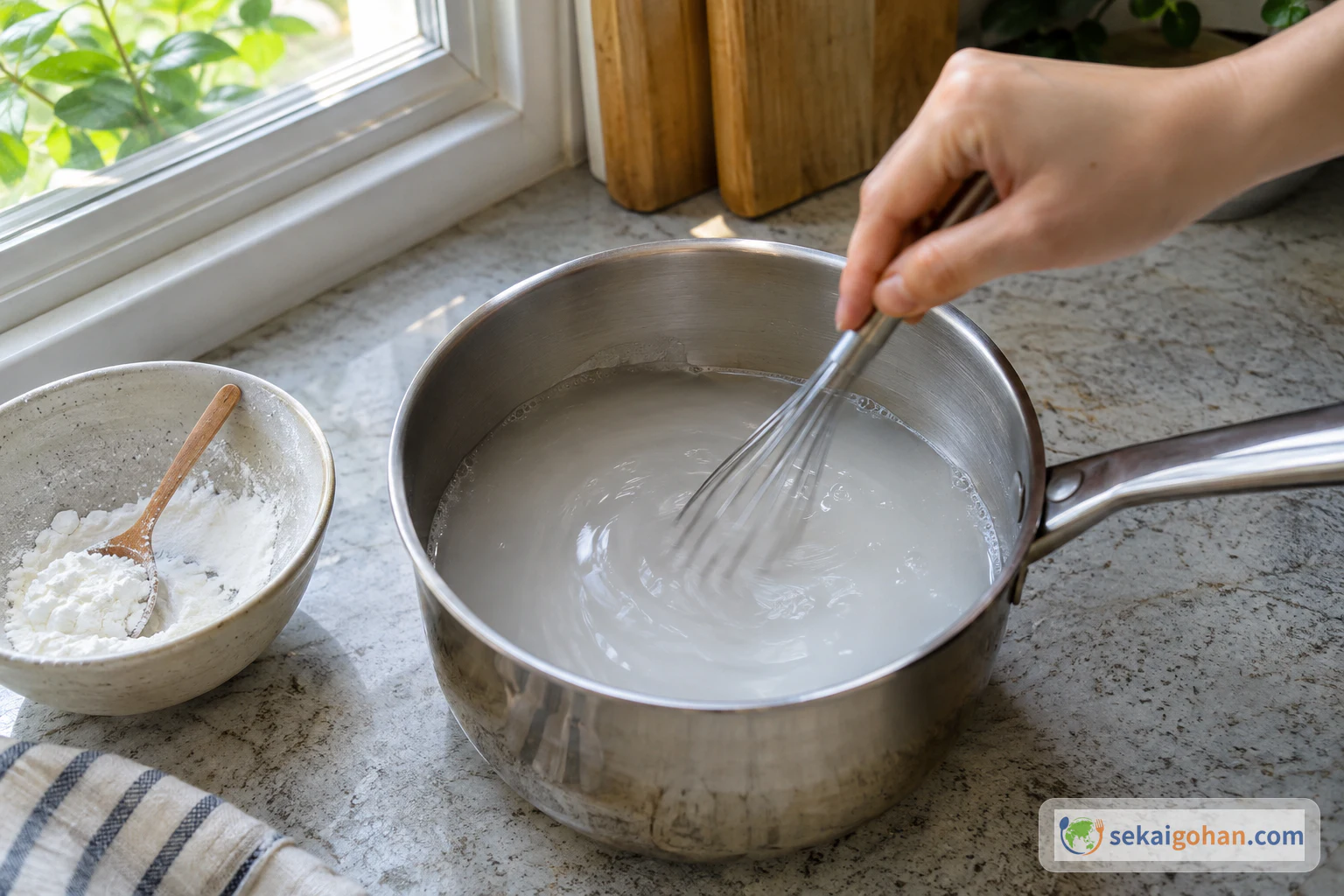
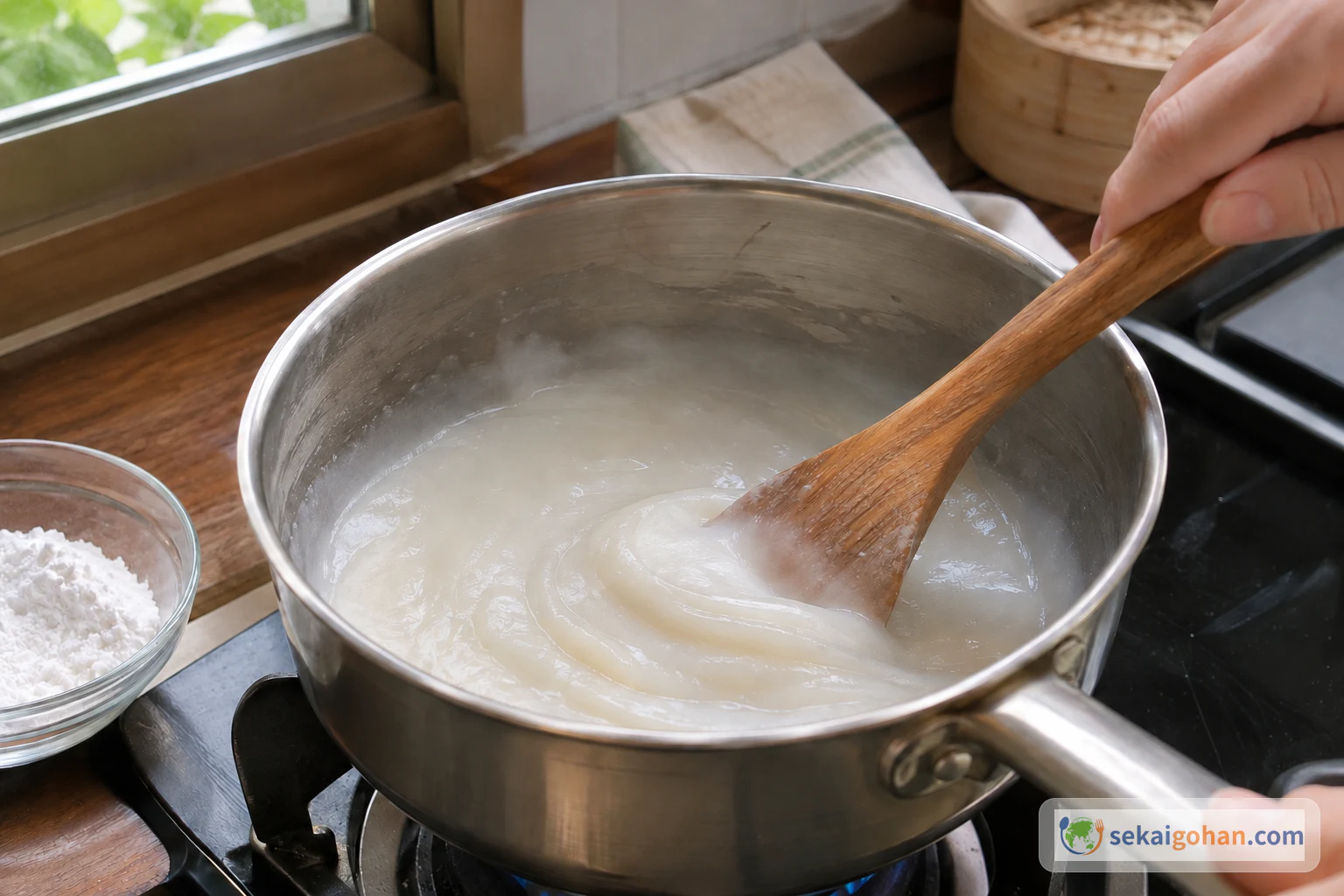
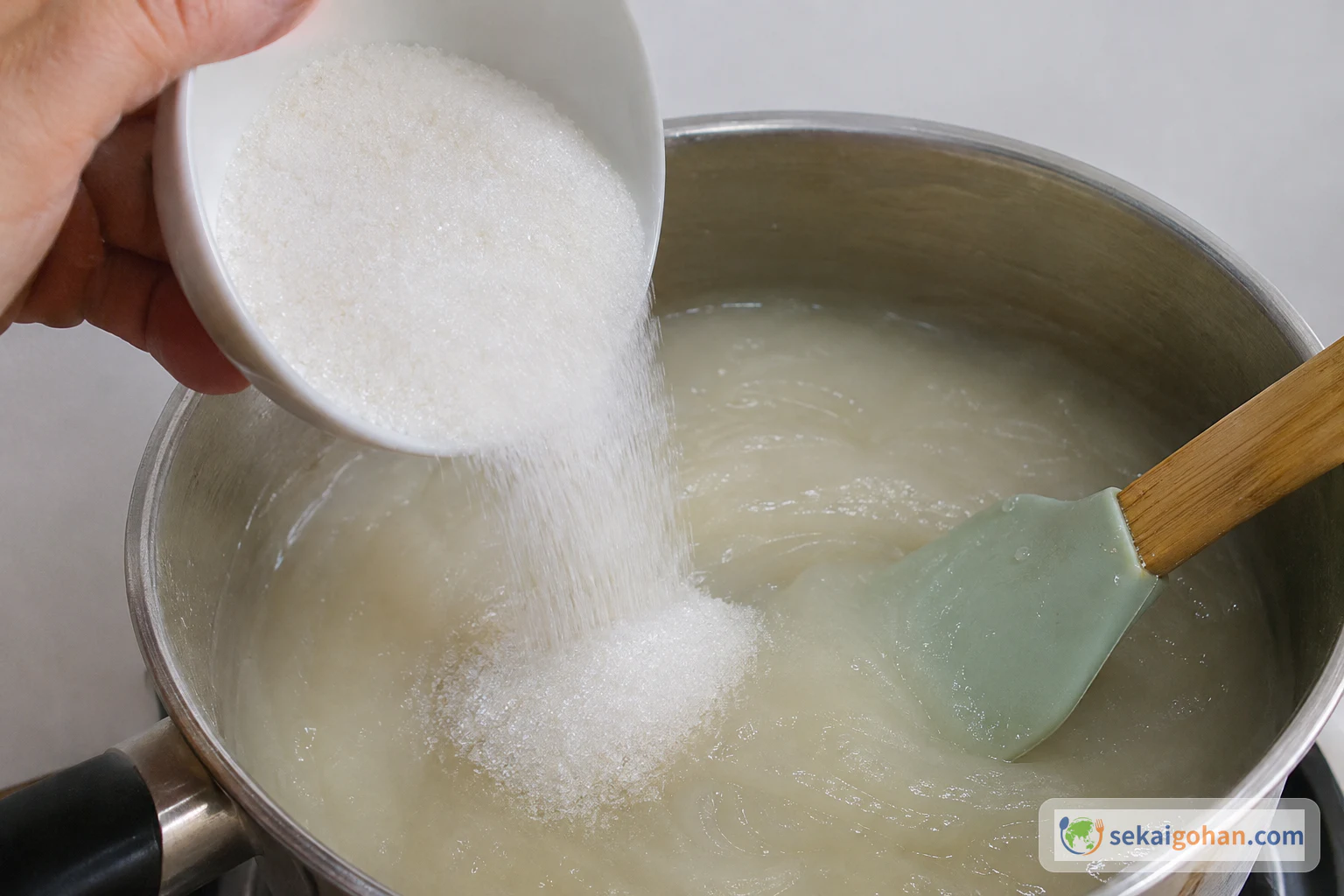
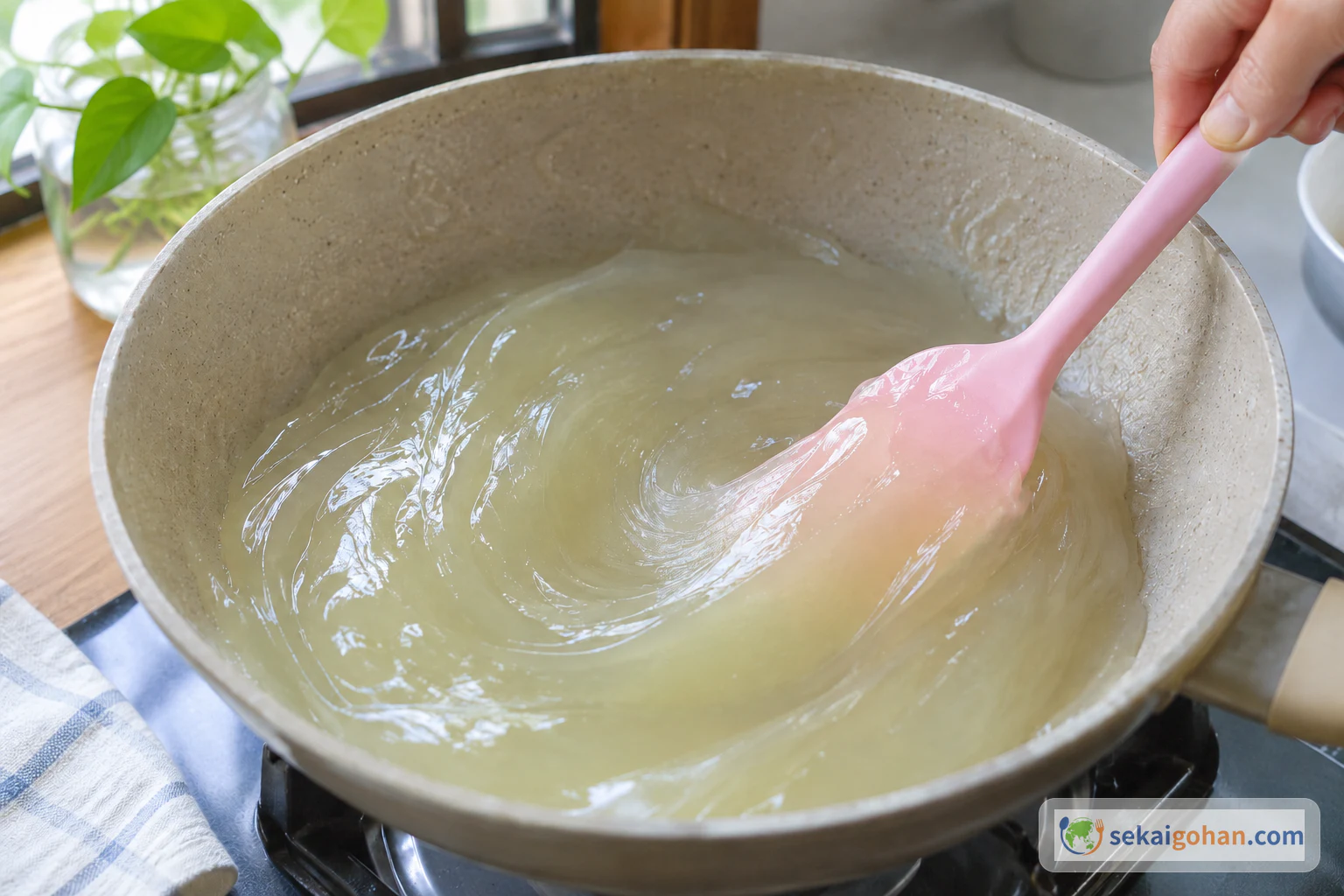
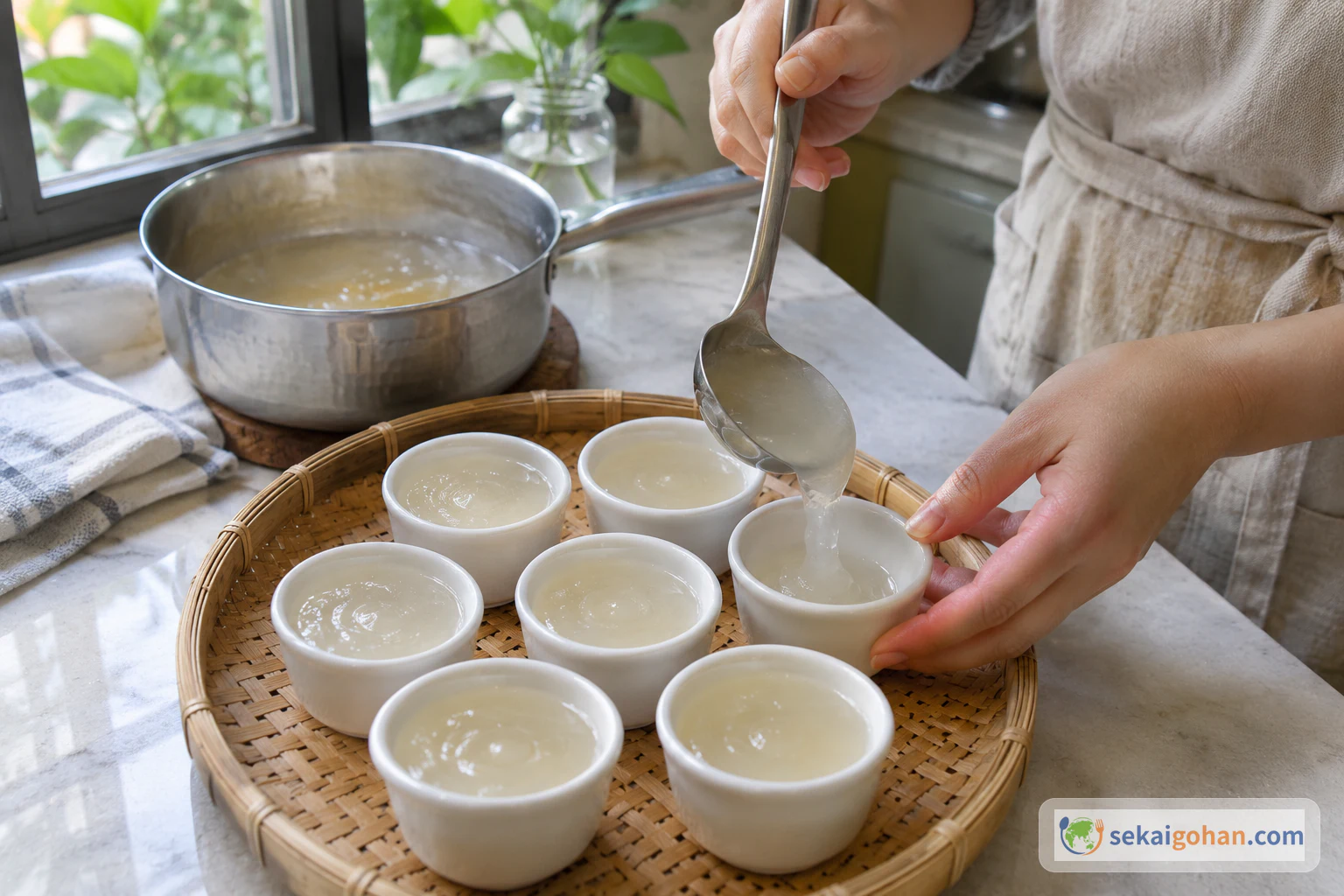
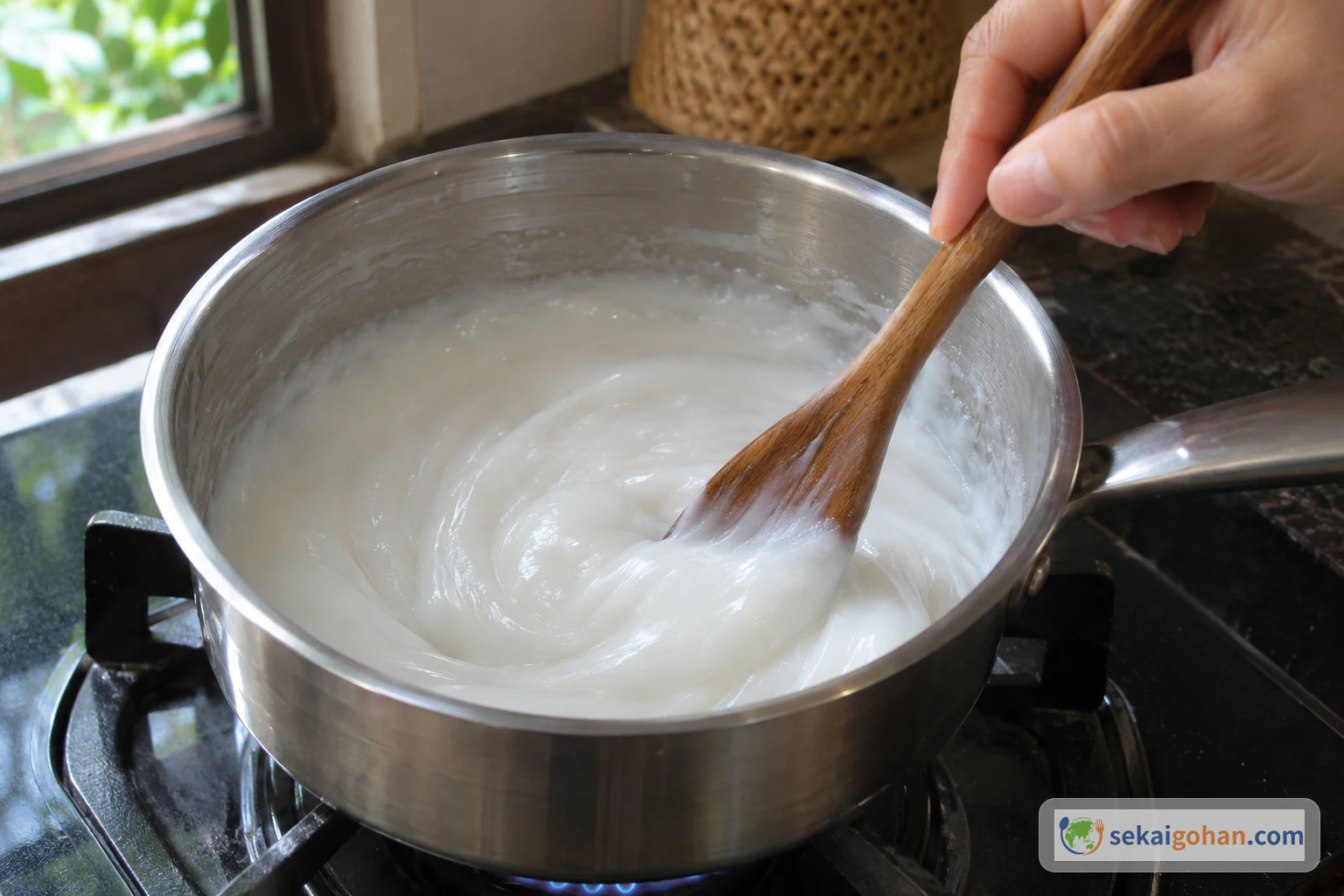
Leum kleun (ขนมลืมกลืน, khanom leum kleun) is a Thai sweet built in two parts. The first is a dough of mung bean starch, water and sugar, stirred over heat until it turns from cloudy to glossy and translucent, then portioned into small round cups while still warm. The second is a coconut topping, cooked in its own pan with rice flour, salt and a little sugar until thick, and placed in the middle of each bite.
It is worth saying clearly at the start: this is a sweet made from mung bean starch, not from whole or cooked mung beans. There is no bean paste here and no simmered beans. The character of the sweet comes from the clear, cooked starch and the contrast with the salted coconut on top.
The recipe below follows the plain-water basic recipe in a 2014 research report from Rajamangala University of Technology Phra Nakhon. It has not been kitchen-tested by Sekai Gohan. The report gives no numeric temperatures, cooking times, piece count or number of servings for this version, so the method is written by the state of the dough and topping rather than by the clock.
In Thai it is written ขนมลืมกลืน, romanized here as khanom leum kleun. Spellings such as "leum kluen" also appear in Thai recipe sites. We do not explain the meaning or origin of the name here, as our sources do not establish it.
Two Layers, One Bite: What Sets Leum Kleun Apart
Two independent Thai recipe pages, TrueID Food (crediting VIPS Station) and Wongnai Cooking, show the same overall shape as the research report: a translucent cooked starch base, and a coconut topping thickened in a separate pan and added on top. Their quantities and some ingredients differ from the recipe here, so they are used only to confirm the form of the sweet, not to set any amounts.
Thailand has many small sweets that pair coconut with a starch or rice base, and several of them can look similar at a glance. Khanom krok, khanom thuai, khanom chan and mango with sticky rice (khao niao mamuang) are separate sweets with their own methods. Leum kleun stands apart through its clear mung bean starch base and the separately cooked, salted coconut placed only in the center. You can find more dishes from the same country on our Thailand page.
The research report itself focuses on developing a five-color version of leum kleun enriched with vegetables and fruit. This article uses only the plain basic recipe from its appendix, without color, fruit, flowers or flavorings.
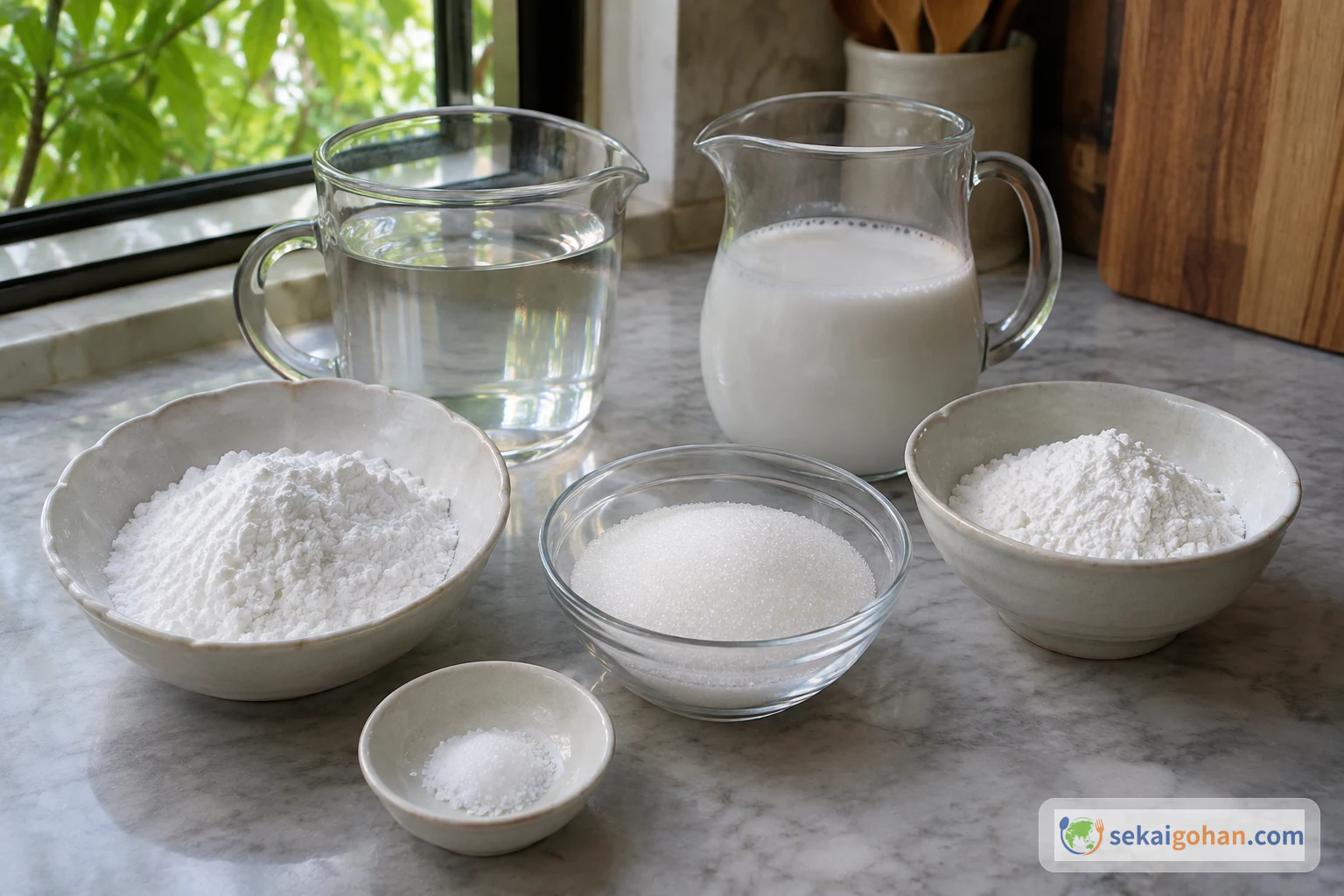
Ingredients: Base and Coconut Topping
Equipment
- A small saucepan for the base
- A long-handled heatproof spatula
- A separate saucepan for the coconut topping
- Small round cups or molds, about 1/2 inch, for portioning
- A spoon or a small piping bag for placing the topping
Choosing the Starch and Coconut Milk
Mung bean starch is not mung bean flour. Ground mung beans (mung bean flour) contain the whole bean and will not give the same clear, glossy base. Look for a fine white powder labeled as mung bean starch.
The coconut milk and rice flour are ordinary supermarket or Asian grocery items. Use plain rice flour, not glutinous (sticky) rice flour, since the two thicken differently.
Check the label of each coconut milk product for allergen information and shared-facility statements, as these vary by brand. Do the same for the starch and rice flour if you need to avoid particular allergens.
Method: Cook the Base Until Clear, Then Add the Coconut
Cooked starch dough is very hot and sticky, and it can splash as it thickens. Use a small pan and a long-handled heatproof spatula, and keep your hands and face back from the pan. Do not taste the dough before it has been cooked.
There are no clock times in this method. Watch the dough change: thin and cloudy, then thick, then glossy and translucent. Work while the base is warm, because it becomes harder to portion as it cools and sets.
Serving
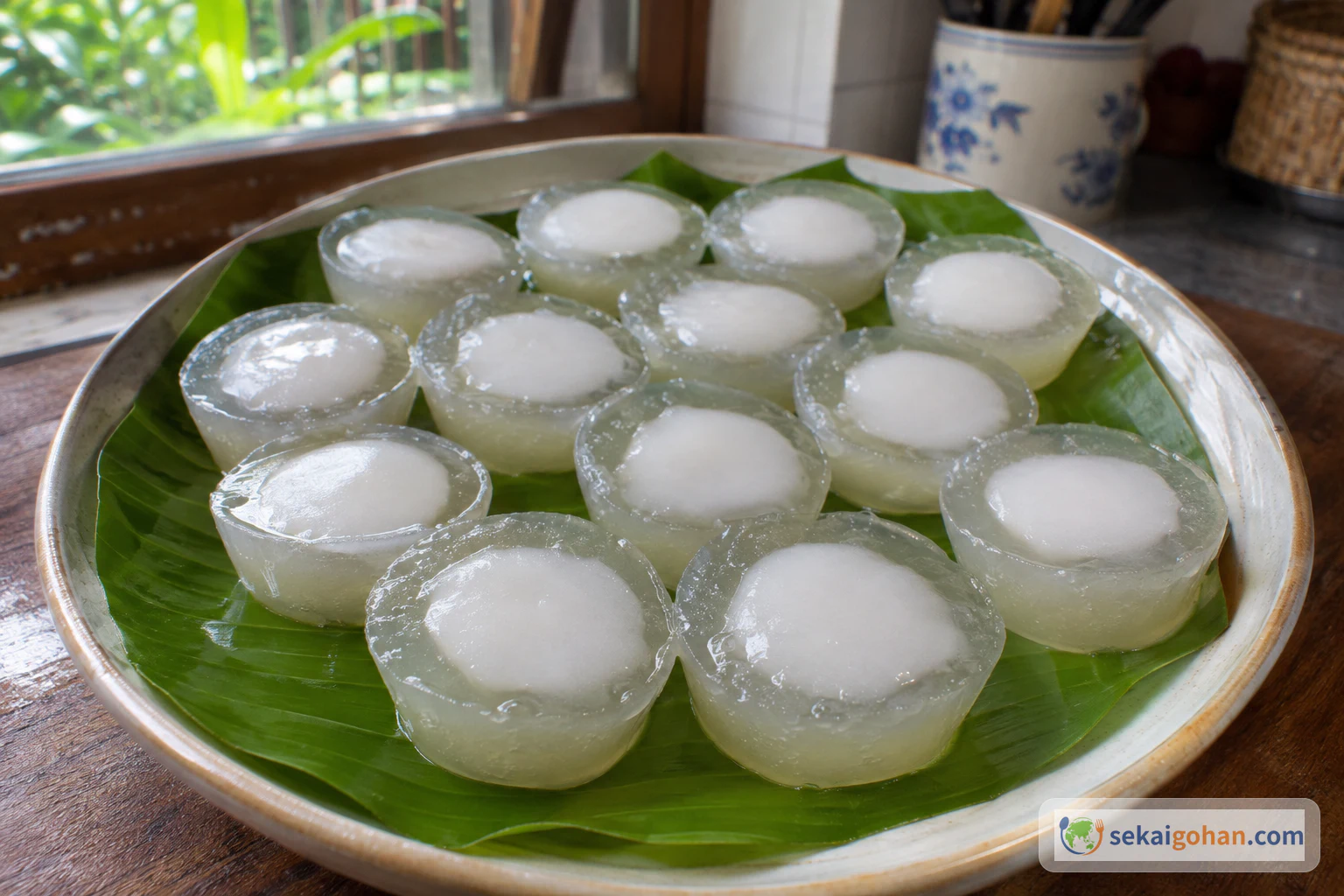
Serve the bites as they are, with the clear base and the white coconut center both visible. No garnish is part of this basic recipe.
Our sources give no storage guidance for this version, so we do not give storage times here.
Lumps, Cloudiness, Setting Too Soon: Fixing Problems
The table below reflects general cooking judgment for starch doughs and custards. It is not based on tests of this recipe.
| Problem | Likely cause | What to try |
|---|---|---|
| Lumps in the base | The starch was not fully dispersed before heating, or the bottom was not stirred | Stir the starch and water thoroughly before turning on the heat, and keep scraping the bottom and corners as it thickens |
| The base stays cloudy or white | The starch is not yet cooked through | Keep stirring over the heat until the whole mass turns glossy and translucent |
| The dough sets in the pan before portioning | It cooled while waiting | Have the cups ready before you start, and portion as soon as the dough is translucent |
| The topping is runny | Not yet cooked long enough to thicken | Keep stirring over low heat until it is evenly thick |
| The topping catches on the bottom | Heat too high or not stirred | Keep the heat low and stir continuously |
| The topping covers the whole bite | Too much topping per piece | Use a smaller amount and place it only in the center |
Variations, Kept Separate from the Basic Recipe
The recipe above uses plain water and no flavorings. Other versions exist, and they are best treated as different recipes rather than mixed into this one:
- Jasmine-scented water. The research report's main results table lists a version using water scented with jasmine. Its numbering differs from the appendix recipe used here, and the two are not combined. Flowers, flavorings and fragrances are not part of this recipe.
- Colored versions. The report's main focus is a five-color leum kleun enriched with vegetables and fruit, and Wongnai Cooking presents a three-color version. These use different liquids and are not covered here.
- Roasted mung bean garnish. Wongnai Cooking shows roasted mung beans as an optional garnish. This basic recipe does not include it.
- Different starches. The TrueID Food recipe uses arrowroot starch with its own quantities.
Background: Where This Recipe Comes From
The amounts and method follow Appendix A, basic recipe 2, of a 2014 research report by Panthip Phadungsilp and Kamonbhibhat Chanasith at Rajamangala University of Technology Phra Nakhon, on developing a five-color leum kleun with vegetables and fruit. This appendix recipe states plain water (1400g), so it is used as written, and kept separate from the jasmine-water row in the report's main table.
The report also contains a separate process chart for its experimental procedure, which gives approximate heating times. Those times belong to a different procedure, so they are not carried into this recipe; here the heating is judged by the state of the dough and topping. The report's taste-panel results are likewise not used as an endorsement of this plain version.
The salt amount (10g) is kept as stated in the appendix, even though other recipes for this sweet use different amounts.
Frequently Asked Questions
Is leum kleun made from whole mung beans?
No. The base is made from mung bean starch, cooked with water and sugar until translucent. No whole or cooked mung beans go into the basic recipe.
What does the rice flour do?
It thickens the coconut milk in the topping, so the topping holds as a small mound in the center of each bite instead of running over the base.
Why use the plain-water version?
The appendix recipe in the research report clearly states plain water, while the jasmine-scented water appears in a differently numbered row of the main results table. Using the plain-water appendix recipe keeps one consistent set of amounts and avoids flavorings.
How many pieces does this make, and how many people does it serve?
The research report does not give a piece count or number of servings for this recipe, and we do not estimate one. The number of pieces depends on your cups and how full you fill them.
Can I use less salt?
Other recipes use different salt amounts. This recipe keeps the 10g stated in the research report; if you change it, treat that as your own adjustment.
Has this recipe been tested?
It has not been kitchen-tested by Sekai Gohan. It follows the research report's appendix recipe, and the photos illustrate each stage rather than proving results.
Sources
- Panthip Phadungsilp and Kamonbhibhat Chanasith, "รายงานการพัฒนาขนมลืมกลืนเสริมผักผลไม้ 5 สี" (research report on developing khanom leum kleun enriched with five-color vegetables and fruit), Rajamangala University of Technology Phra Nakhon, 2014. The main recipe: Appendix A, basic recipe 2 (mung bean starch, sugar and plain water for the base; coconut milk, rice flour, salt and sugar for the topping) and its method, and the two-part structure with the topping placed in the center. https://repository.rmutp.ac.th/bitstream/handle/123456789/1500/HEC_58_06.pdf?isAllowed=y&sequence=1
- TrueID Food (recipe credited to VIPS Station), "สูตรขนมไทย วิธีทำขนมลืมกลืน เหนียวนุ่ม ละลายในปาก." An independent recipe showing a translucent cooked starch base and a separately thickened coconut topping; it uses different quantities and arrowroot starch, and was used only as a cross-check of the form. https://food.trueid.net/detail/boge4M9gAgnj
- Wongnai Cooking (recipe by pimtp__), "วิธีทำ "ขนมลืมกลืน" เมนูขนมไทยโบราณ." A three-color variant confirming the two-stage preparation, portioning while warm before setting, and an optional roasted mung bean garnish; its quantities were not used. https://www.wongnai.com/recipes/leum-kluen