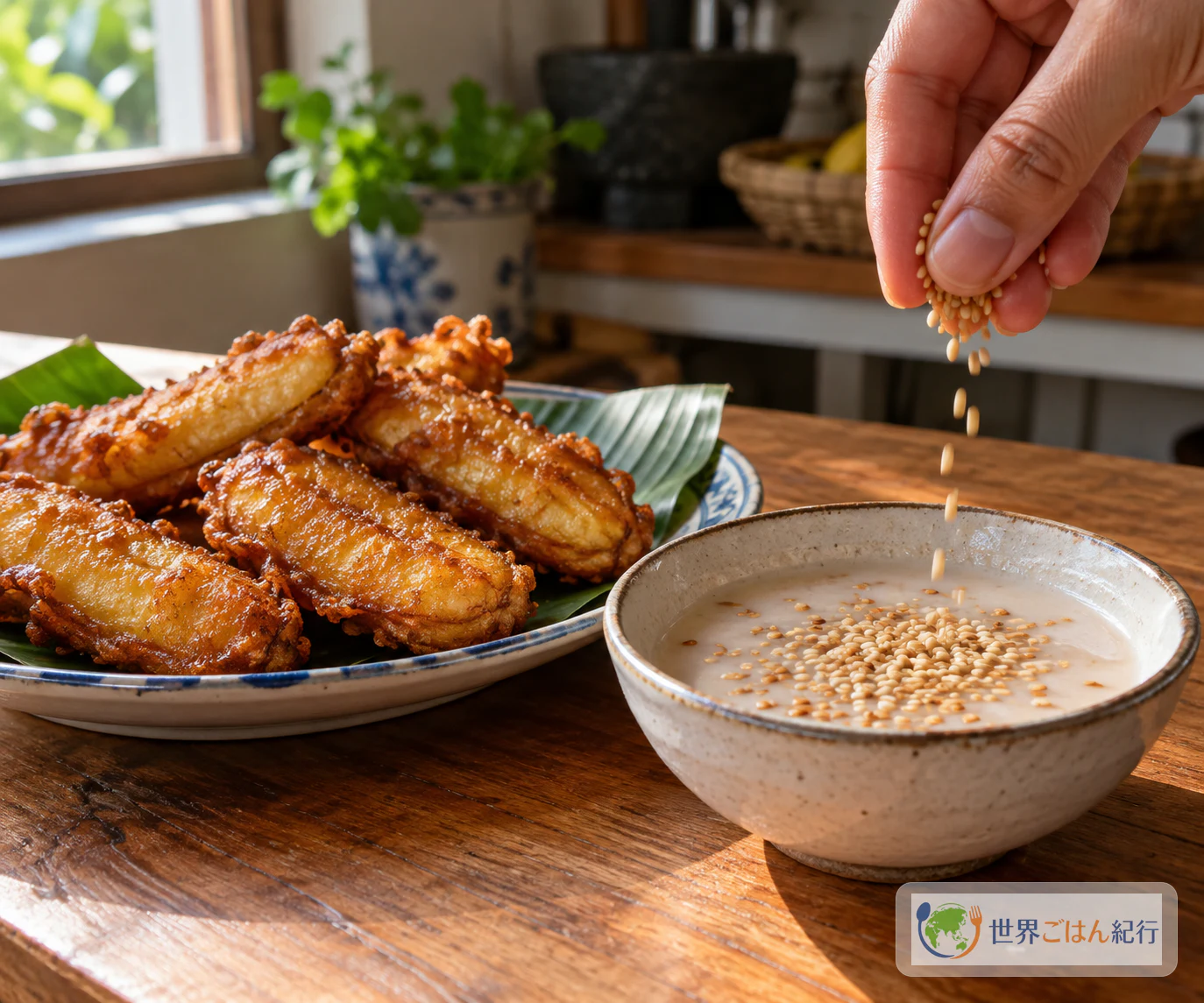
Chuối Chiên: Flattened Bananas in a Crisp Coat, with Sauce on the Side
Ripe bananas pressed flat, one smooth batter, frying until golden-brown, and a coconut milk sauce reduced by half that waits in its own small bowl. The toasted sesame goes on the sauce at the very end, not into the batter or the pot.
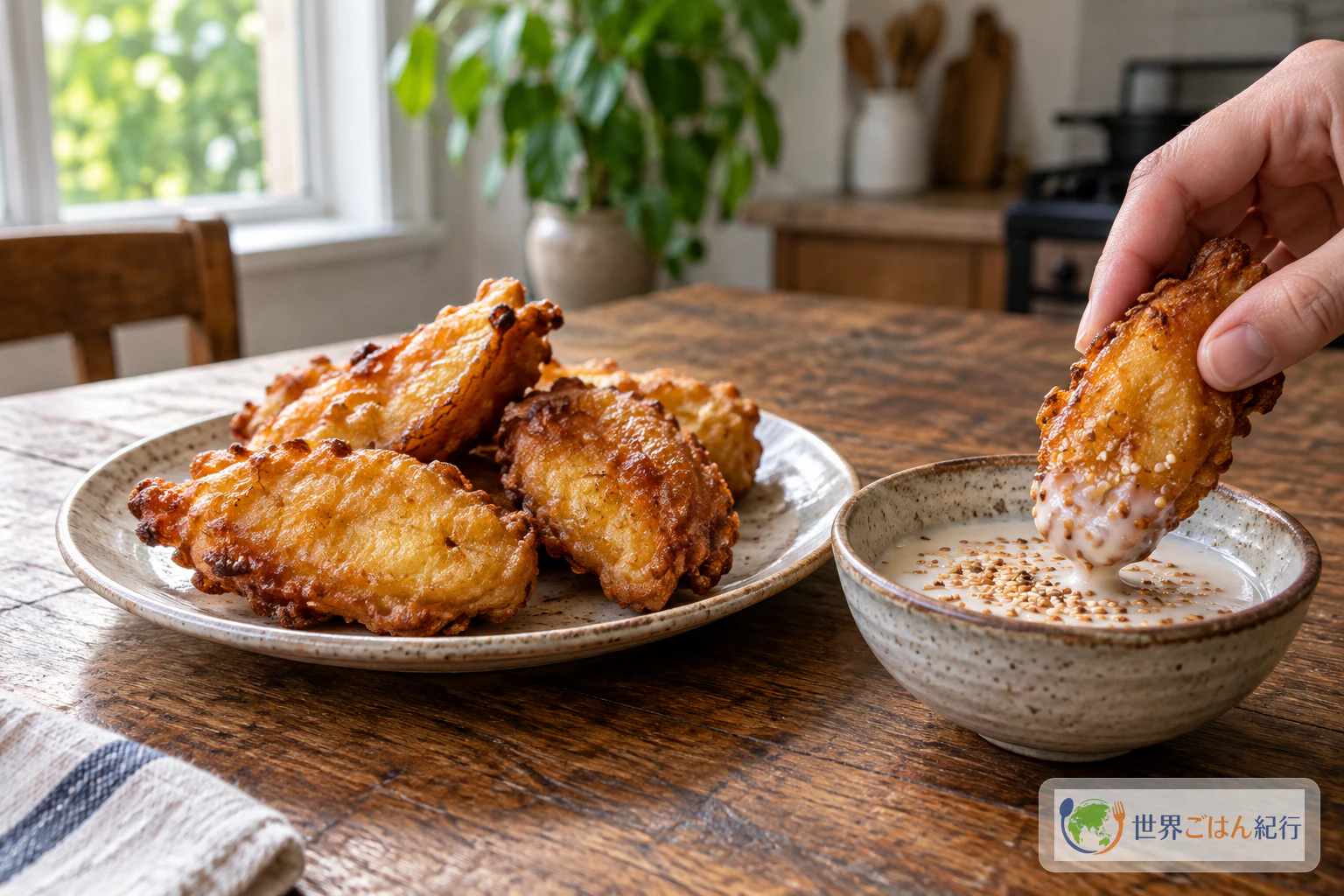
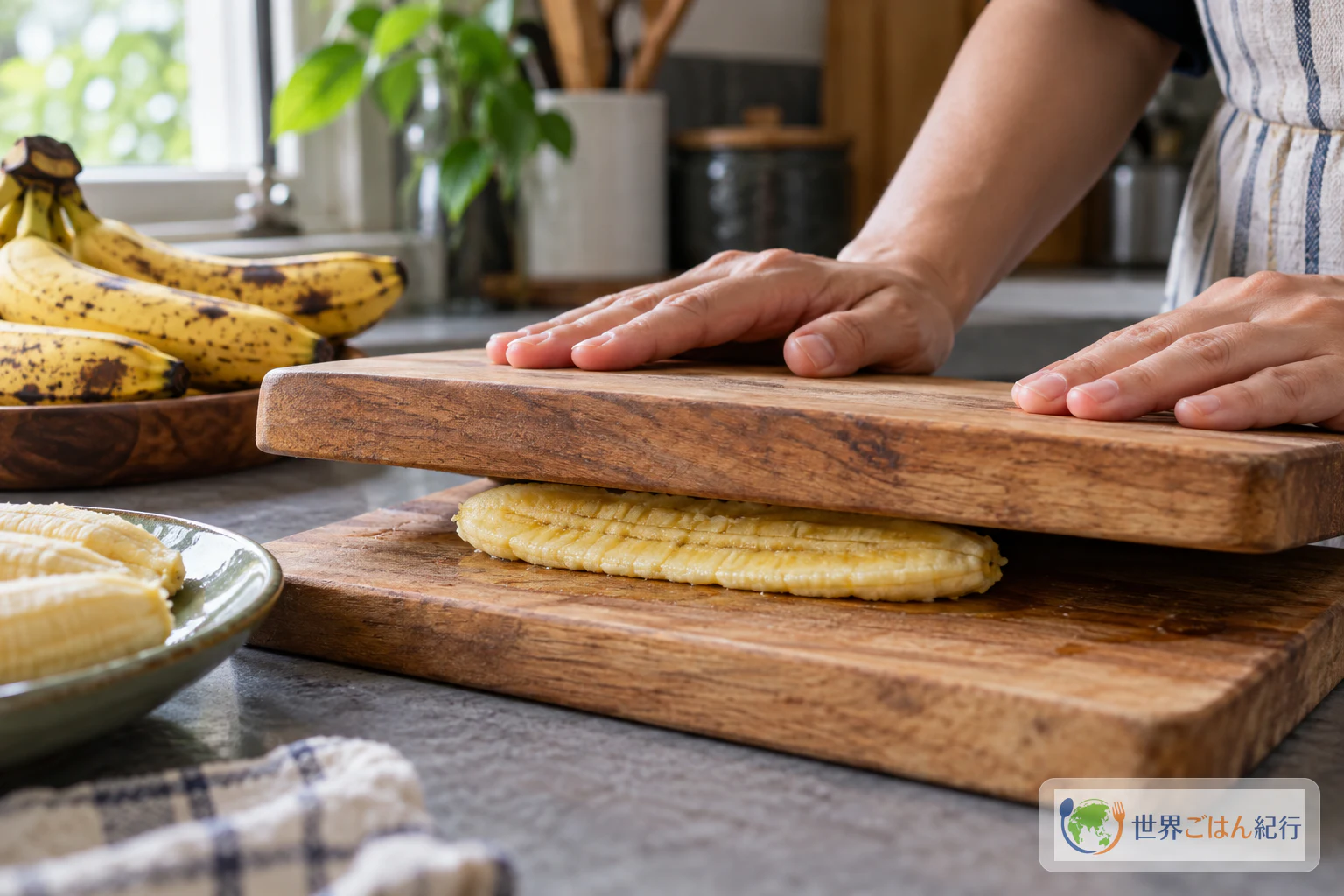
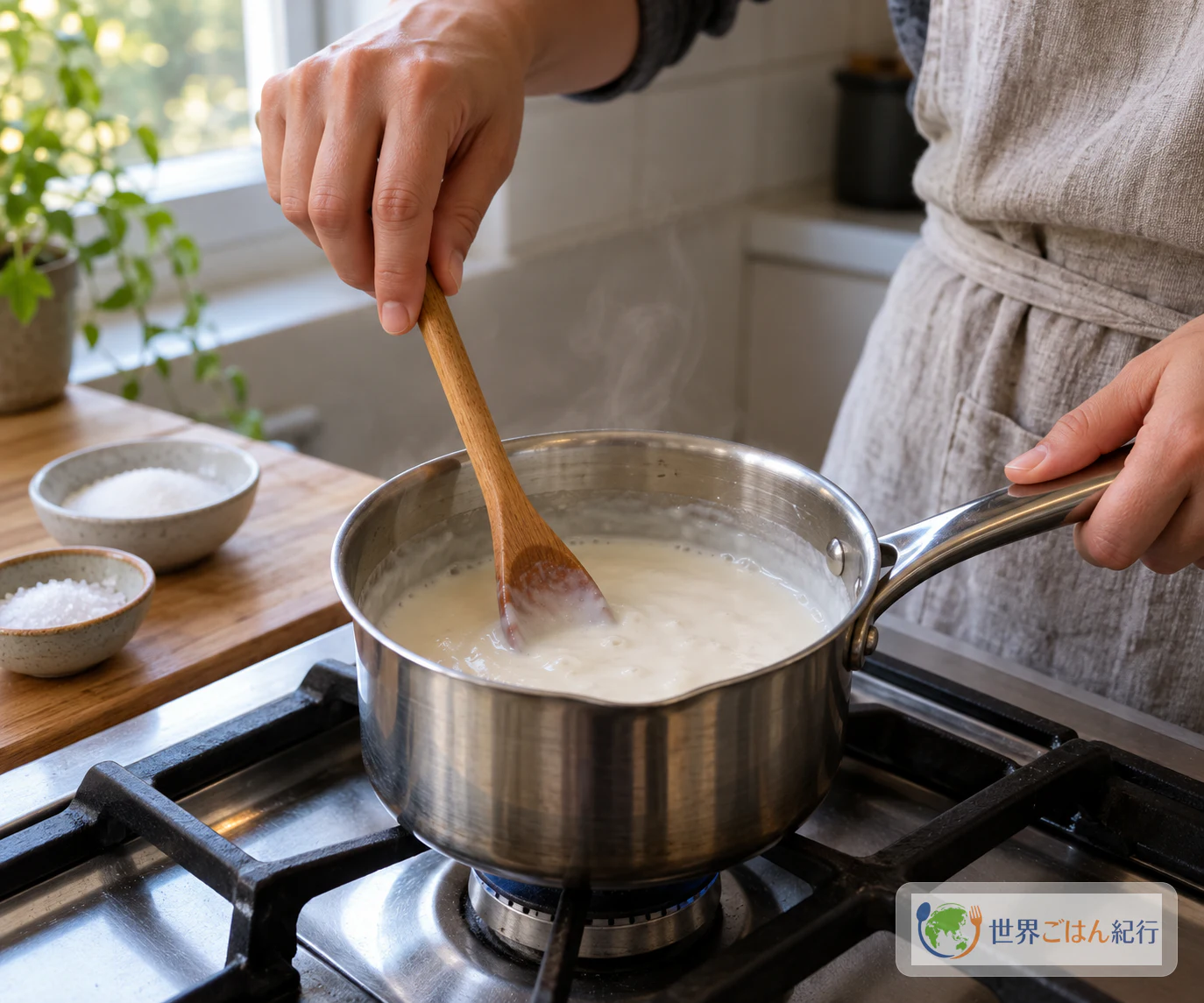
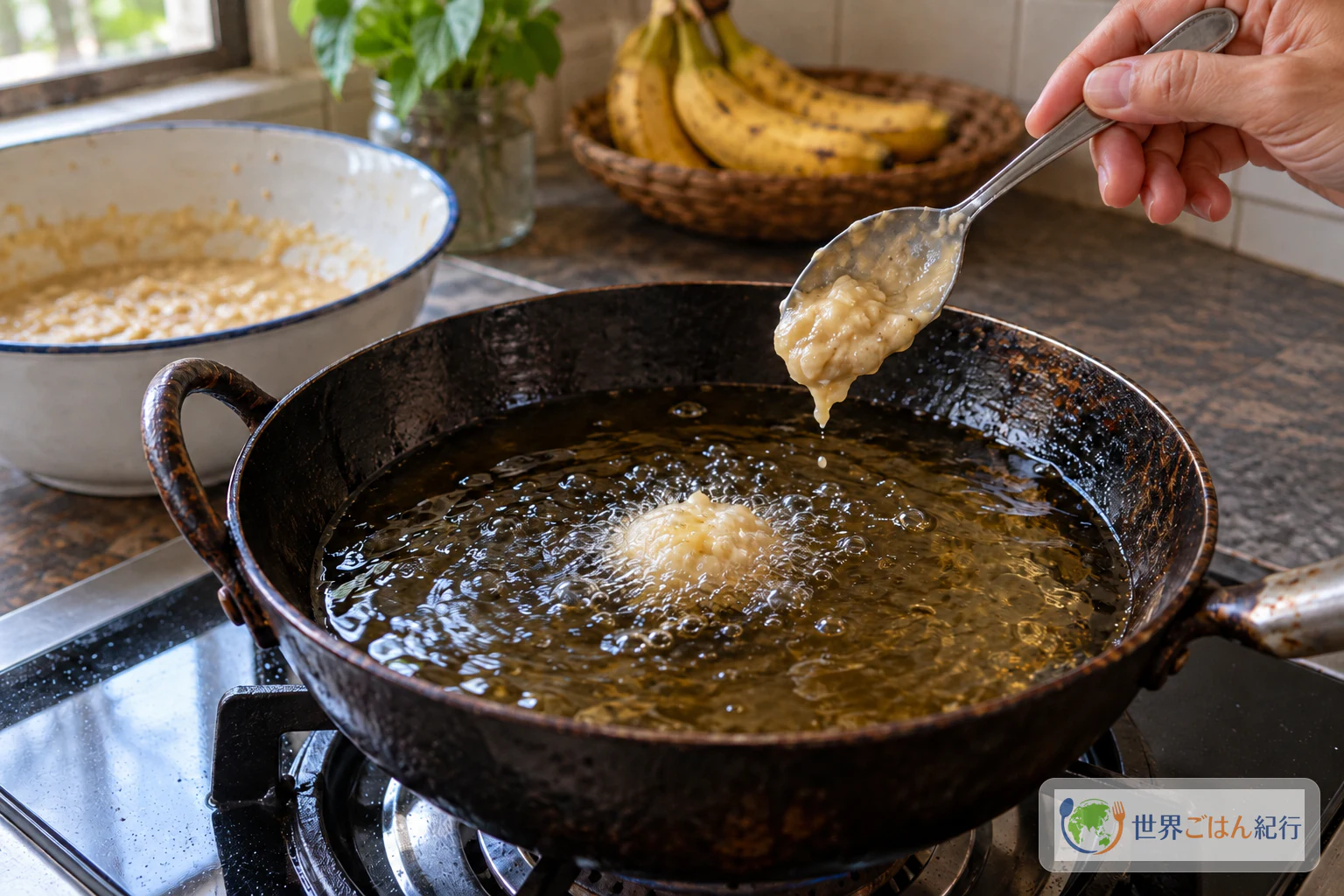
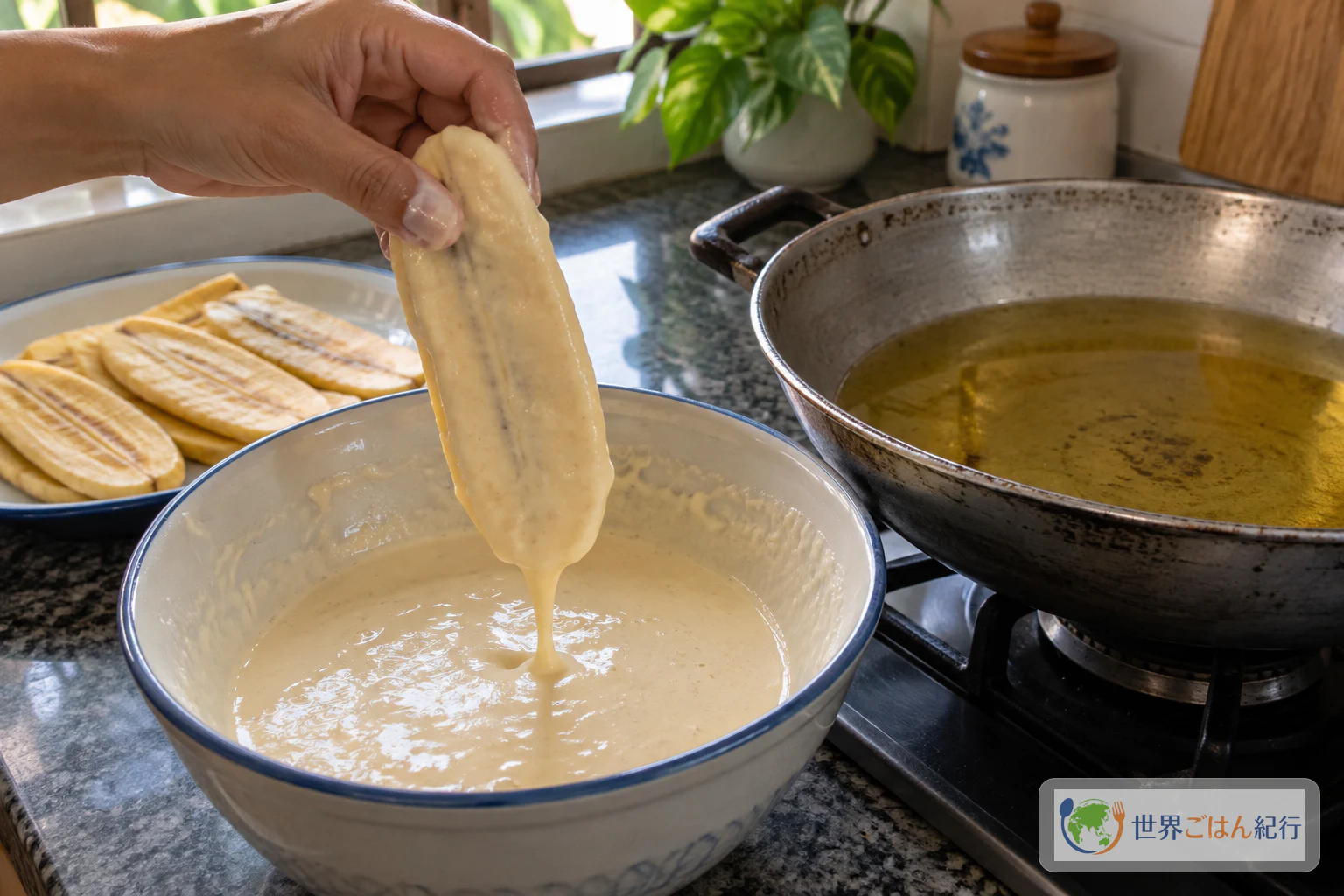
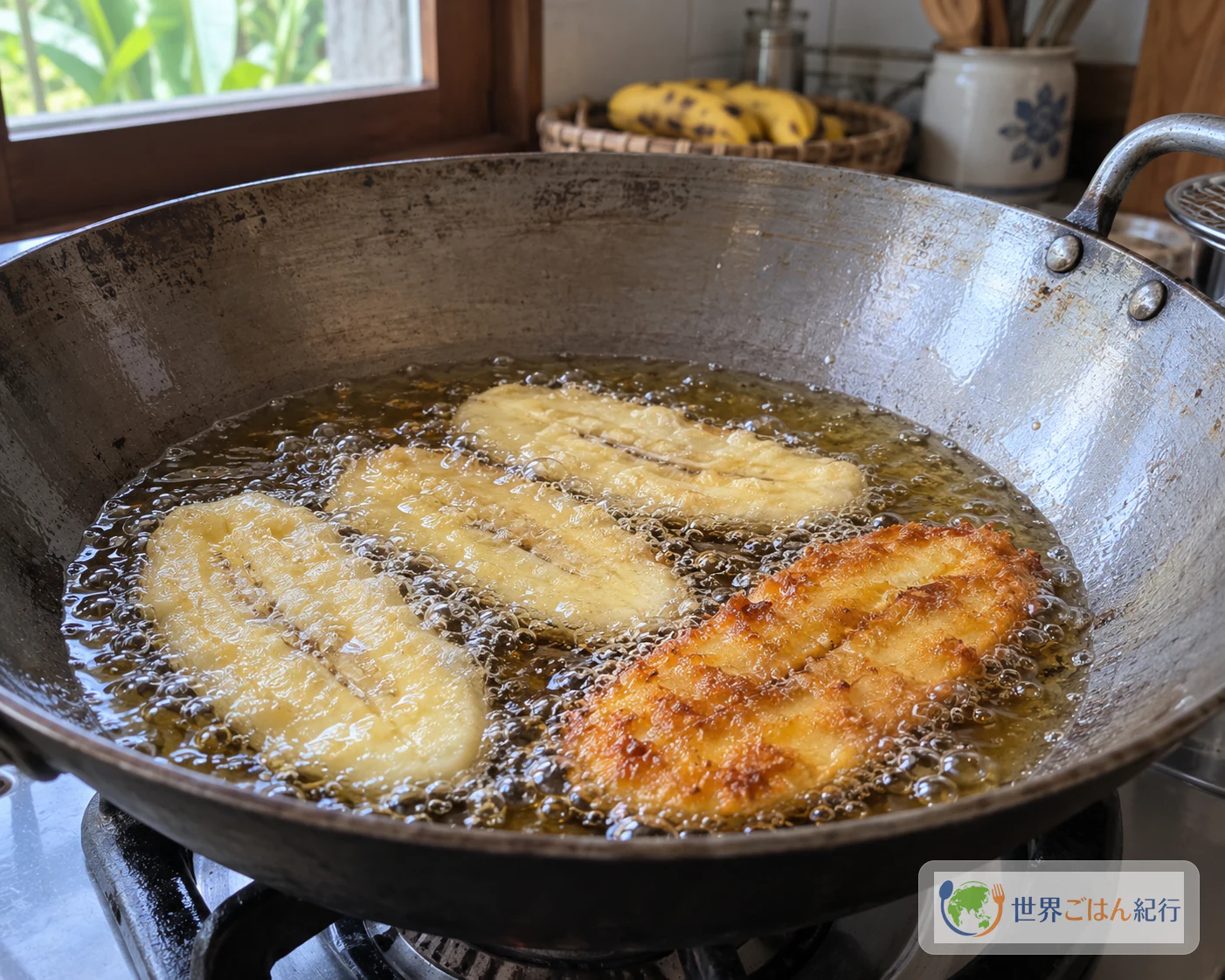
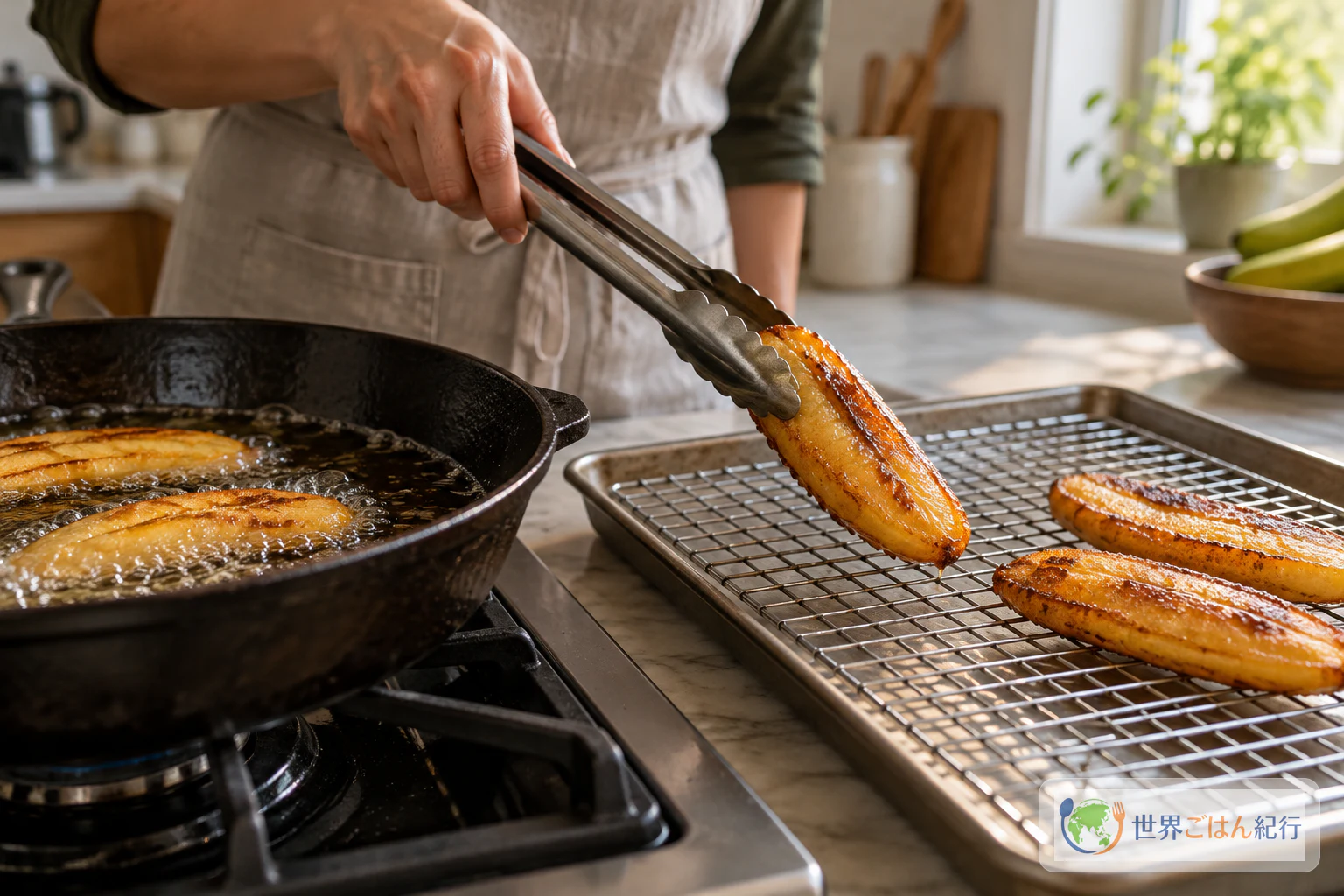
Ripe lady finger bananas are peeled and pressed flat, dipped into a smooth batter, and fried in batches until their surfaces turn golden-brown. Beside them sits a small bowl of coconut milk simmered with salt and sugar until it has thickened, scattered with toasted sesame just before the plate goes out. This is the version of chuối chiên published by SBS Food, where the introduction credits the dessert to Jillian Nguyễn.
The recipe here follows that single page as one complete set: its ingredients, amounts, method and sauce together. The dish's name covers more than one recipe, so a few things are worth settling before you start. The batter is built on a prepared Vietnamese banana fritter flour rather than a home flour mix. The measures are Australian. And coconut milk appears twice, in two separate portions with two different jobs. Once those are clear, the method itself is short. If you would like to see how this fits alongside other dishes, browse more Vietnamese cooking.
What Chuối Chiên Is: A Snack of the South
Chuối chiên means fried banana, and VietNamNet Global renders it in English roughly as fried banana cake. Its report describes chuối chiên as a snack of Vietnam's southern provinces, made at home and also sold by snack vendors, for whom it became a way of making a living.
That same report tells of one seller in Ho Chi Minh City whose version was unusual because it was fried in butter. That is one vendor's story, not a standard recipe, and it says nothing about how common butter frying is today. The SBS recipe below uses vegetable oil and no butter.
What these sources describe is a snack with a home side and a street-vendor side. They do not establish one formula shared by every household and region, and they do not trace the dish's origin, so this article does not either. From here on, everything follows the SBS version.
Ingredients: Bananas, Batter and a Separate Sauce
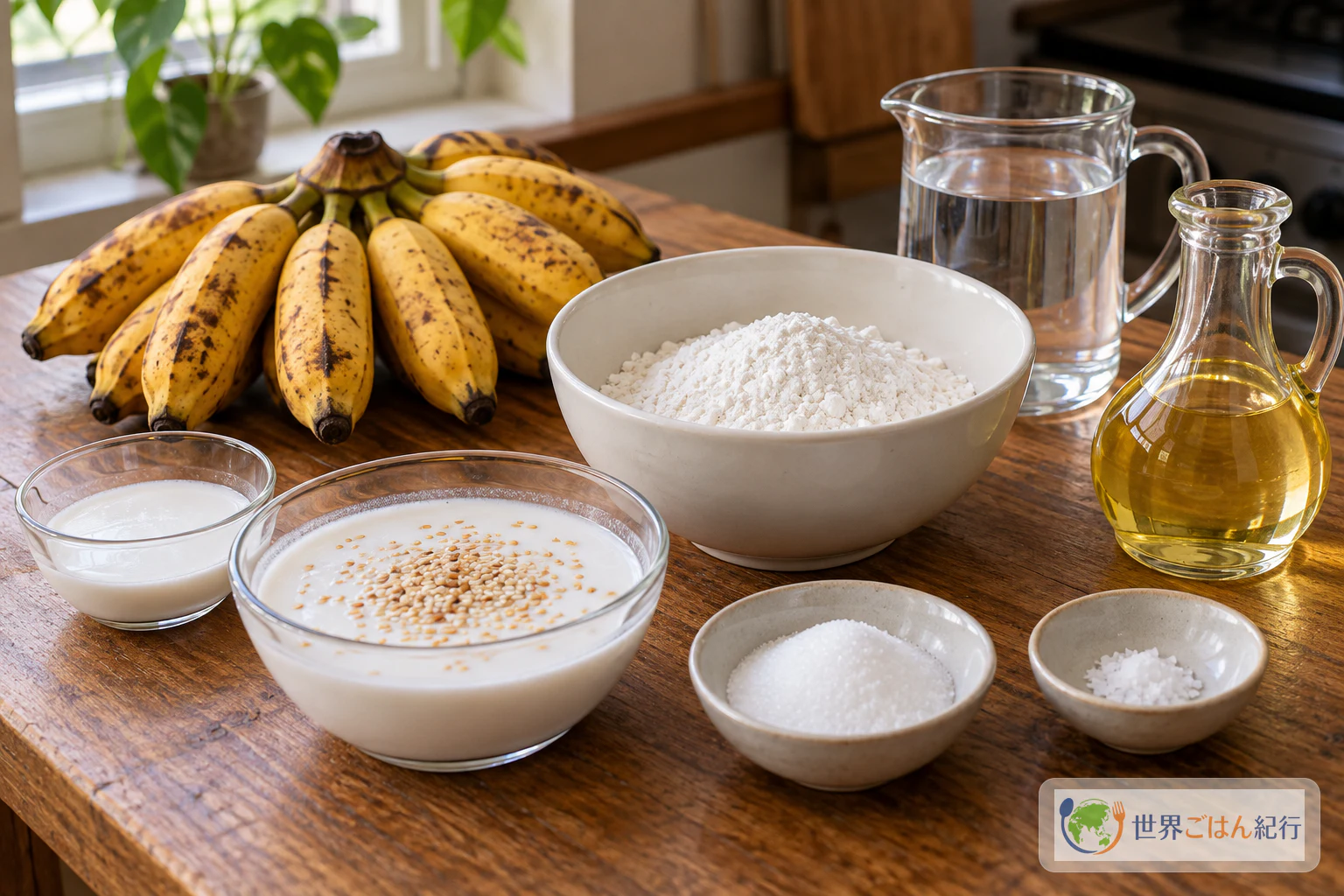
These are the SBS amounts as published, without scaling. The page lists the recipe as serving 4–6.
Reading the Australian measures
SBS defines its measures in its cook's notes: 1 cup is 250 ml, 1 tablespoon is 20 ml and 1 teaspoon is 5 ml. The tablespoon is the one to watch, since spoon sets differ, so check what your own tablespoon holds before measuring the sugar and sesame. By that definition, the 1¾ cups of water works out to 437.5 ml. The sugar, salt and sesame are given only by volume, so there are no gram weights to offer for them.
One small mismatch: a quarter of a 250 ml cup would be 62.5 ml, but the ingredient list prints the batter coconut milk as ¼ cup (60 ml). Use the stated 60 ml.
Two portions of coconut milk
The SBS introduction speaks of dividing one tin of coconut milk between the batter and the sauce, but it does not give a tin size, and tins vary. Measure 60 ml for the batter and 340 ml for the sauce, rather than tipping in whatever is left in the container.
Equipment
- Flat side of a large knife, or a second chopping board, for pressing the bananas
- A chopping board
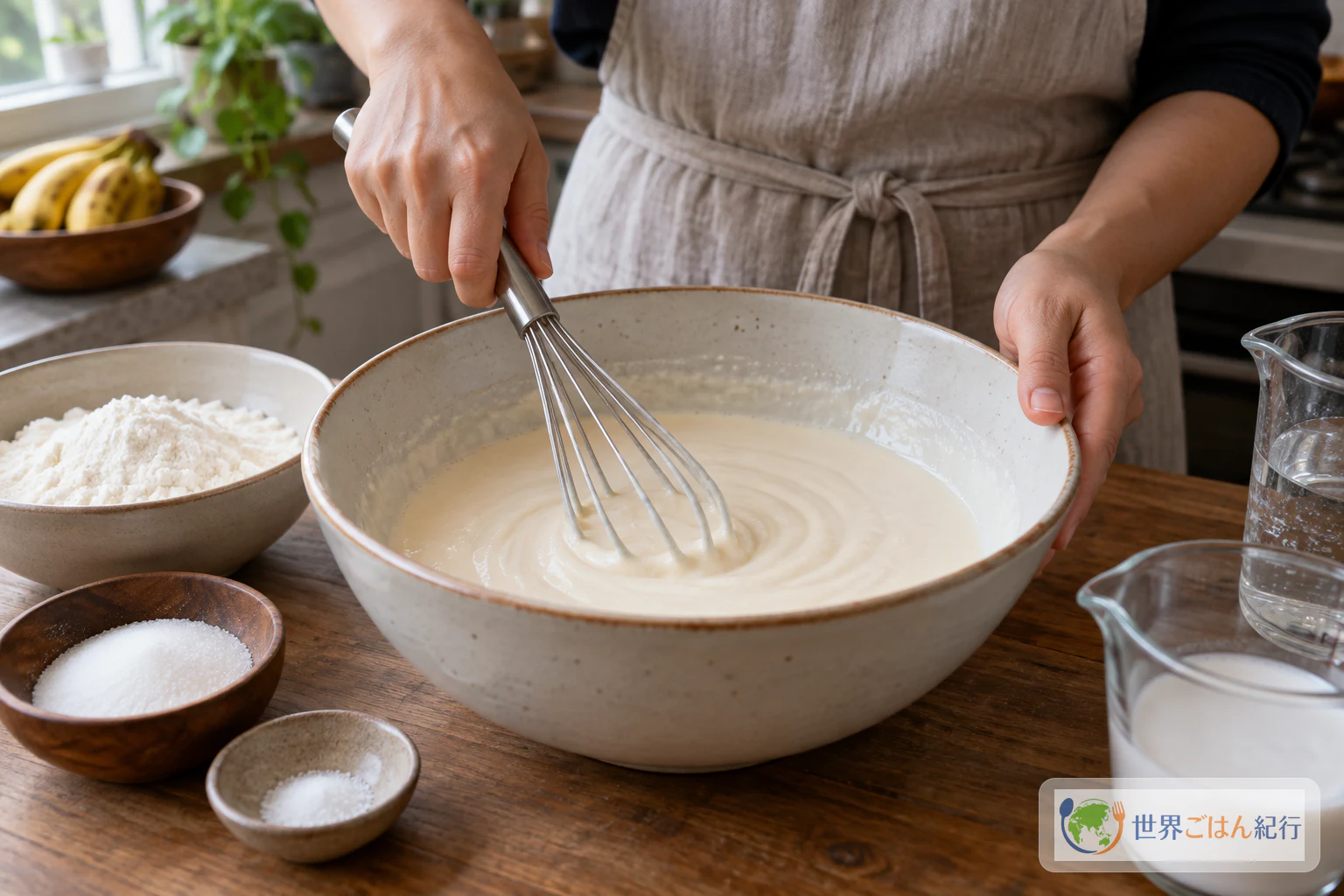
- A large bowl and a whisk for the batter
- A small saucepan for the sauce
- A large saucepan or wok for deep-frying
- A spoon for the batter test
- A wire rack for draining
- A serving plate and a small bowl for the sauce
Method: Flatten, Coat, Fry, and Serve with the Sauce
SBS lists 10 minutes of preparation and 15 minutes of cooking. Those are the page's figures, not timings from a separate kitchen test, and they are not per-batch frying times. The source gives no resting time for the batter, no oil temperature, no per-piece frying time and no number of batches, so the steps below lean on what you can see: a smooth batter, a sauce reduced by half, a test drop of batter that sizzles and rises, and a golden-brown surface.
When Something Looks Off: Reading the Cues Again
The source does not offer troubleshooting of its own. Each of its cues, though, tells you whether to move on yet.
| What you see | What the cue is telling you | What to do |
|---|---|---|
| The test drop of batter sinks quietly without sizzling | The oil has not reached the state the source asks for | Keep heating and test again with another small drop |
| The sauce is still thin | It has not yet reduced by half | Keep simmering, stirring occasionally, until it has halved and thickened |
| The batter has lumps | It is not yet smooth | Whisk a little longer before setting it aside |
| The coating is still pale | It has not reached golden-brown | Leave the piece in the oil until the surface turns golden-brown |
| The sesame is already in the pot or batter | It has gone in too early for this version | Next time, keep it for the poured sauce in step 8 |
Choosing and Sourcing: The Prepared Flour and the Bananas
The most specific ingredient is bột chiên chuối, a prepared Vietnamese flour mix for fried bananas. The SBS page does not list its components or name a brand, and nothing in the sources confirms what it contains or where to buy it outside Vietnam. For that reason, this article does not offer a home flour blend or point to an equivalent product. If you look for it, search using the Vietnamese name and read the product label for its ingredients.
It can be tempting to borrow a rice flour and all-purpose flour mix from another recipe. That is a different batter, though, discussed in the next section, and the sources do not support it as a stand-in for the prepared flour.
The SBS ingredient list uses ripe lady finger bananas. Its introduction also suggests trying other varieties, such as banaito, mazano or xiem. Treat those as something to try, not a swap that gives the same result. The source does not say whether the 1 kg of bananas is weighed before or after peeling.
This recipe contains sesame and coconut. The components of the prepared flour are not specified, so check the label of the product you buy for wheat and any other allergens, including shared-facility statements. Do not assume a particular prepared flour is free of any allergen until its label confirms it.
Serving and Leftovers
SBS asks for the fried bananas to be served immediately with the sauce, and the sesame goes on only at that moment. The source gives no guidance on storing, refrigerating or reheating leftovers, so this article does not offer any.
Other Versions Under the Same Name
Chuối chiên is not one fixed formula. Helen Le's recipe, titled "Fried Banana - Chuối chiên / Bánh chuối chiên," is a separate version. Its batter uses rice flour, all-purpose flour, sugar, water and optional turmeric. It rests the batter for 15 minutes and fries the bananas twice, dipping them again between fries. It also includes a combined assembly with sweet potato and coconut flesh. Her page uses both names, chuối chiên and bánh chuối chiên.
None of that belongs in the SBS version: not her flours, not the 15-minute rest, not the second fry, and not the sweet potato or coconut flesh. Each recipe holds together as its own set. Neither should be taken as the single standard. The VietNamNet butter-fried snack is a further variation, from one vendor.
Frequently Asked Questions
How many does it serve, and how long does it take?
SBS lists the recipe as serving 4–6, with 10 minutes of preparation and 15 minutes of cooking. Those times are the page's figures, not per-batch frying times, so judge each batch by its golden-brown surface.
How long should the batter rest?
The source says only to set the batter aside after whisking it smooth. It gives no time. The 15-minute rest belongs to Helen Le's separate recipe.
Can I replace the prepared banana fritter flour with my own flour mix?
The sources do not confirm a substitute. The prepared flour's components are not specified, so this article does not suggest a home ratio.
Should I fry the bananas twice?
Not in this version. SBS fries them once, in batches, until golden-brown. Double frying is part of Helen Le's recipe.
When does the sesame go in?
At the very end. Pour the reduced sauce into a small bowl, then scatter the toasted sesame over the sauce. It goes neither into the batter nor into the simmering pot.
Can I store or reheat leftovers?
The source gives no storage or reheating guidance. It asks for the bananas to be served immediately with the sauce.
Sources
- SBS Food, "Vietnamese fried banana recipe." The page byline is SBS Food, and the introduction credits the dessert to Jillian Nguyễn. Source of the recipe used here: ingredients and amounts, method, Australian unit definitions, the 4–6 serving yield, the listed preparation and cooking times, the separate coconut and sesame dipping sauce, and the suggestion to try other banana varieties. https://www.sbs.com.au/food/the-cook-up-with-adam-liaw/recipe/vietnamese-fried-banana/t9jifi7qi
- Helen Le, "Fried Banana - Chuối chiên / Bánh chuối chiên," Helen's Recipes, 30 May 2014. Used for comparison only, as a separate version with a rice flour and all-purpose flour batter, optional turmeric, a 15-minute batter rest, a second fry, and a sweet potato and coconut flesh assembly. https://helenrecipes.com/recipe-fried-banana-chuoi-chien-banh-chuoi-chien/
- VietNamNet Global, "Fried banana cakes come to the rescue" (desk credit SGT; photographs Thanh Hoa). Used for chuối chiên as a snack of Vietnam's southern provinces, made at home and sold by vendors, and for one Ho Chi Minh City seller's unusual butter-fried version. https://vietnamnet.vn/en/fried-banana-cakes-come-to-the-rescue-722324.html