Katupa: Yellow Rice Packed Into Small Woven Leaf Baskets
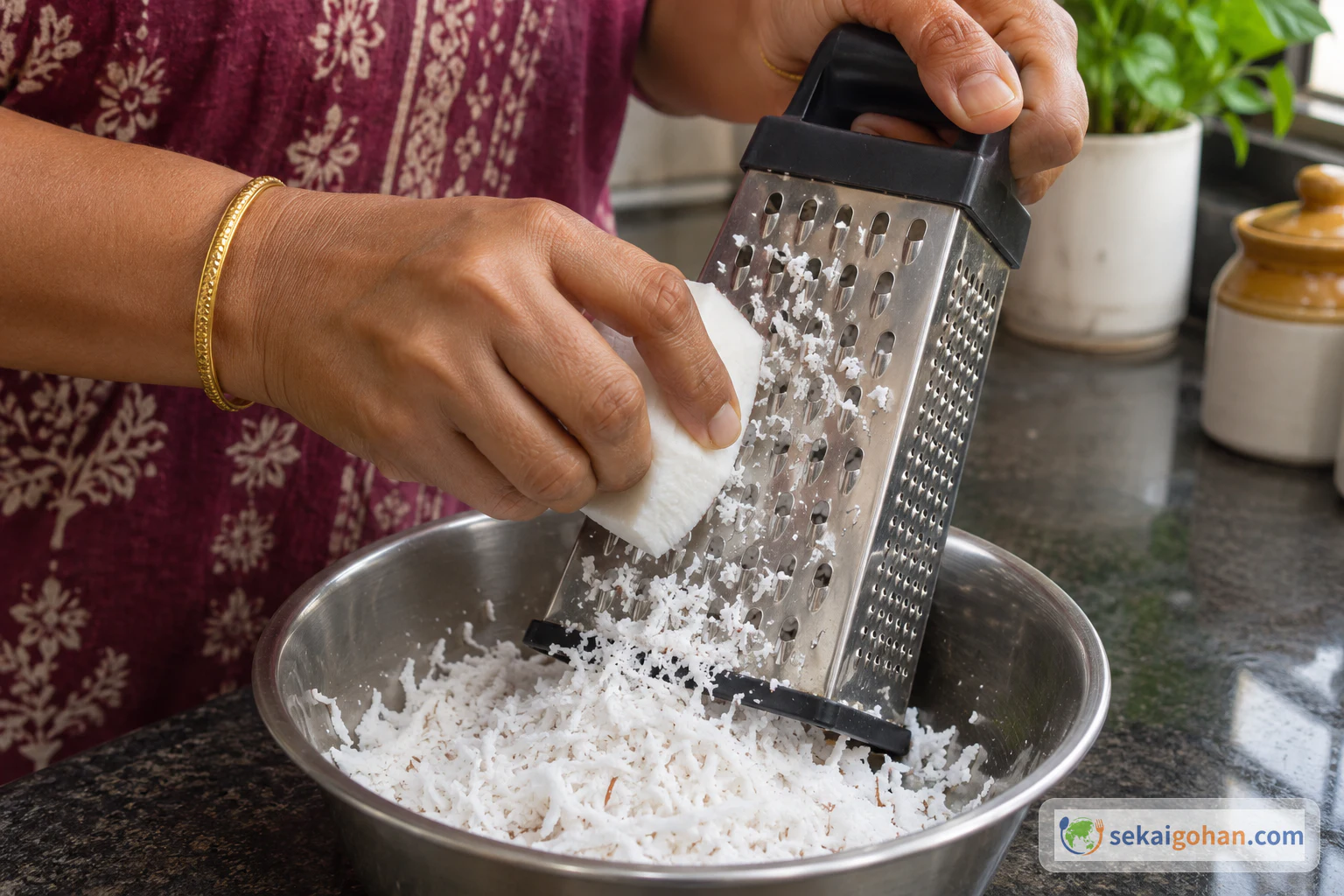
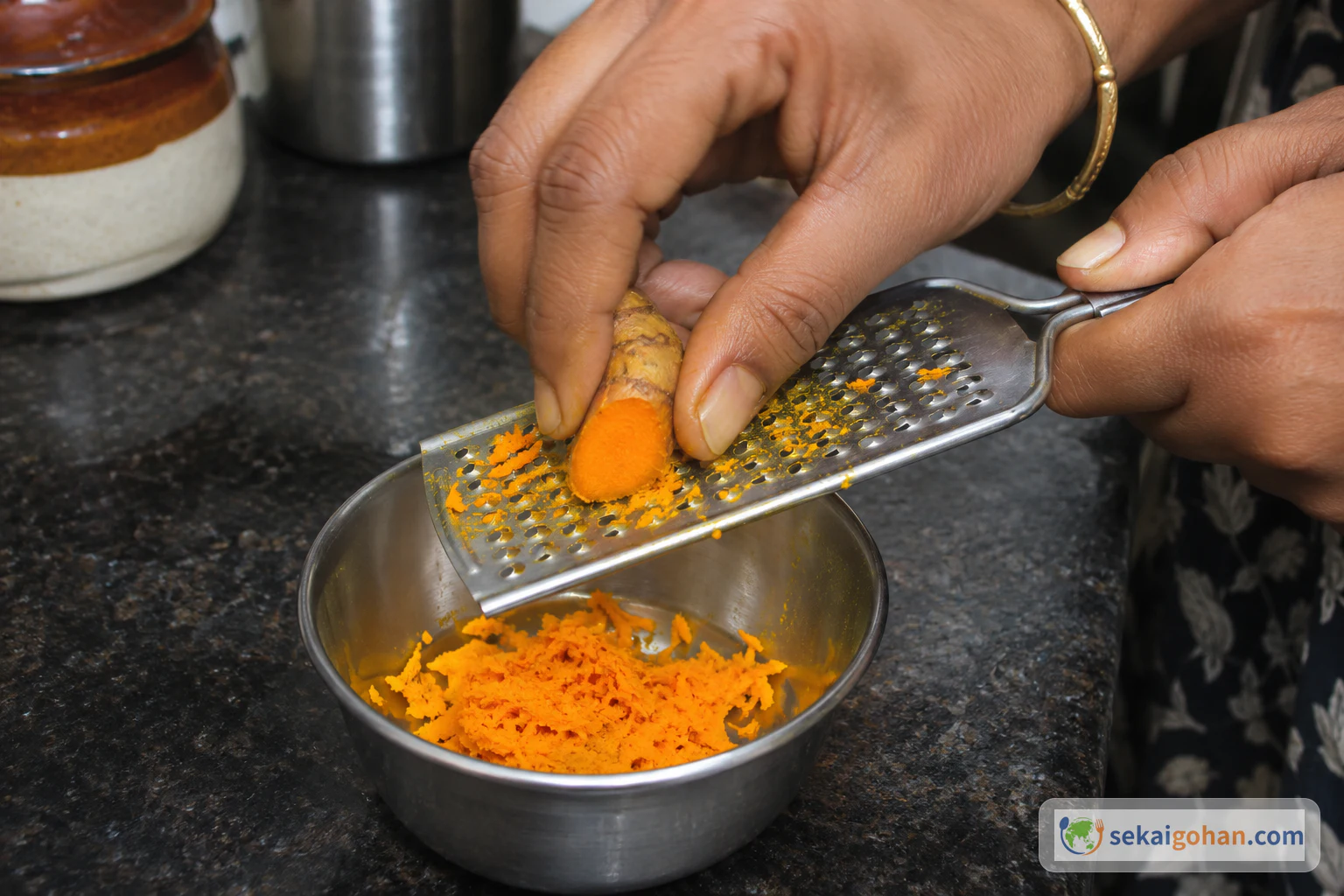
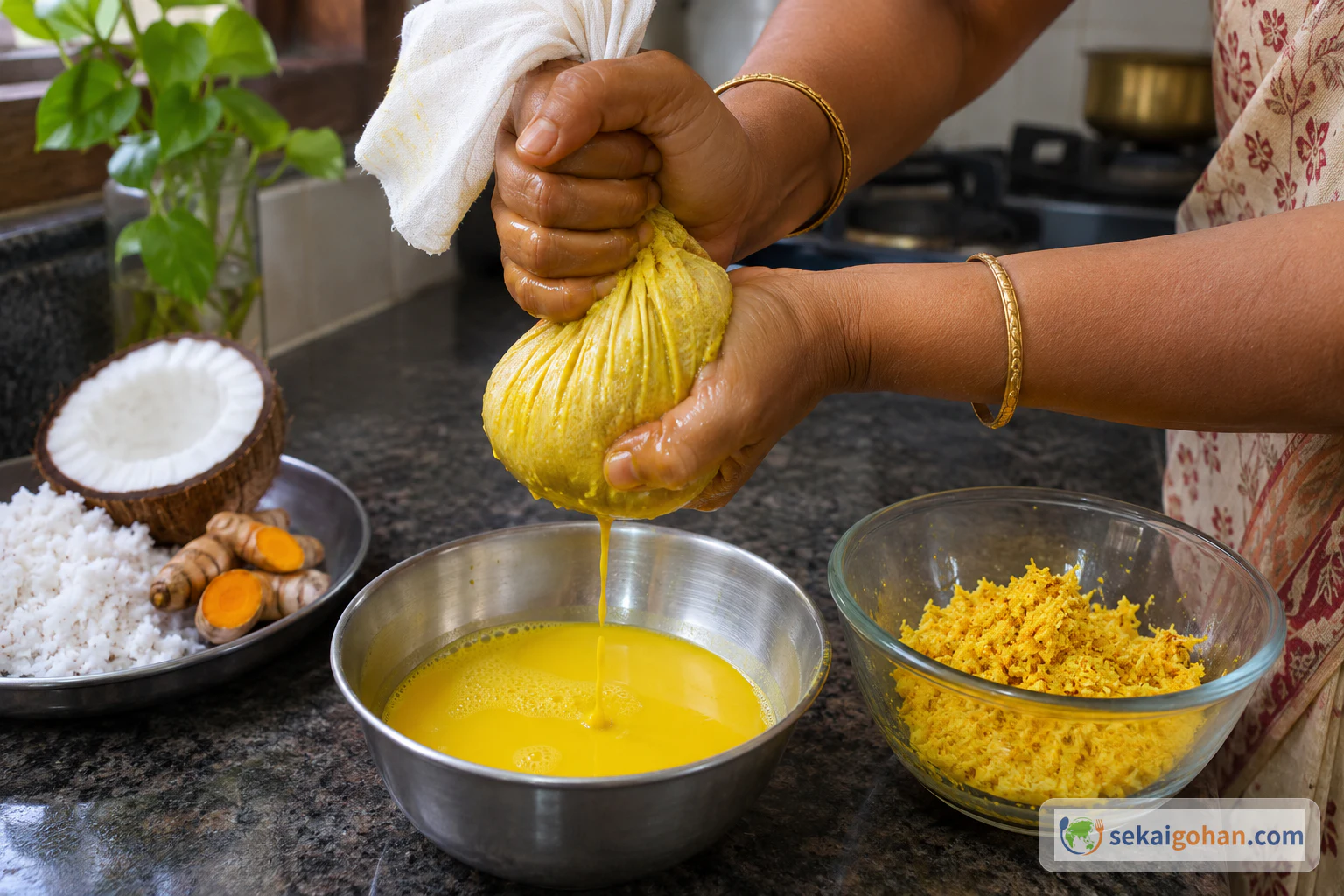
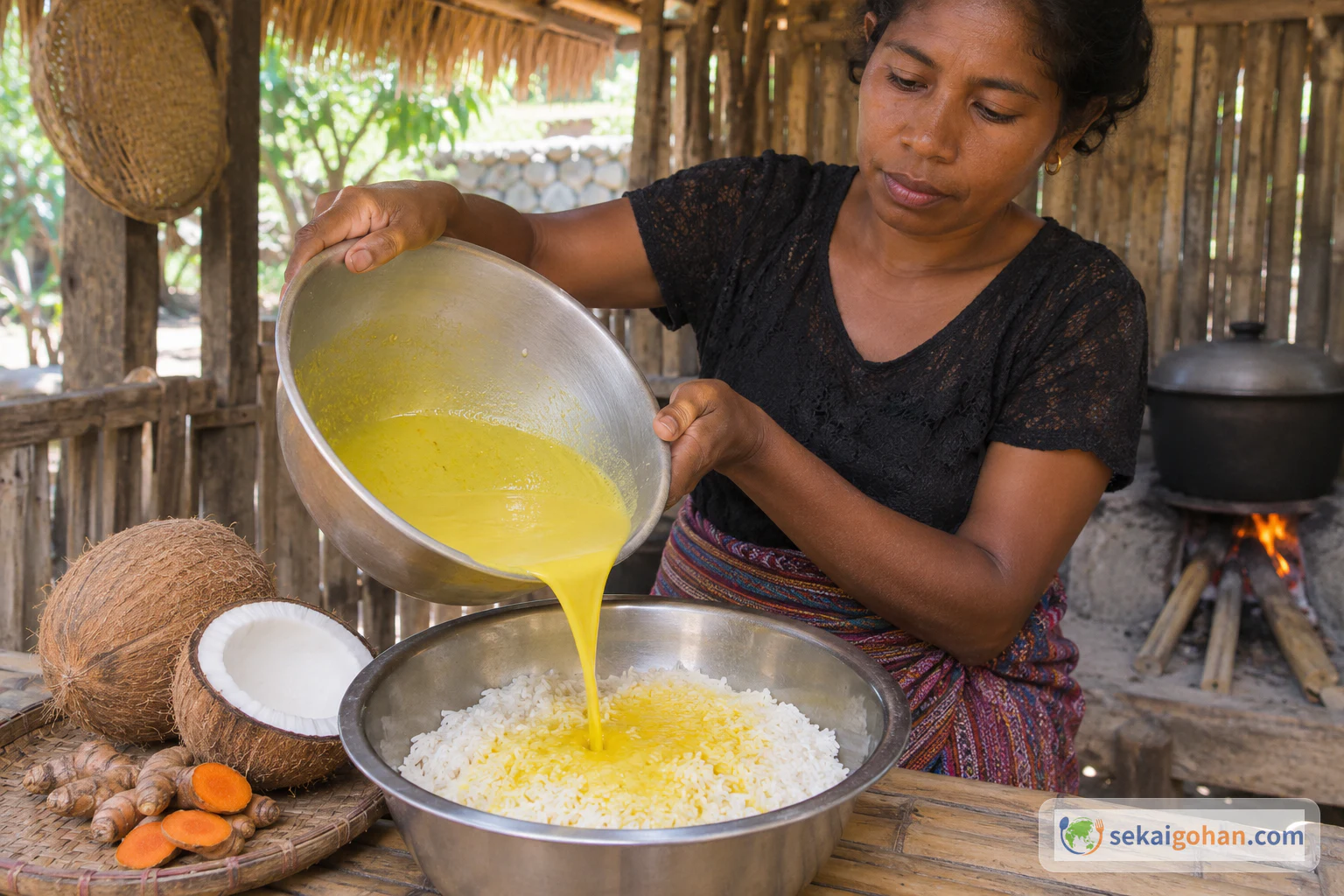
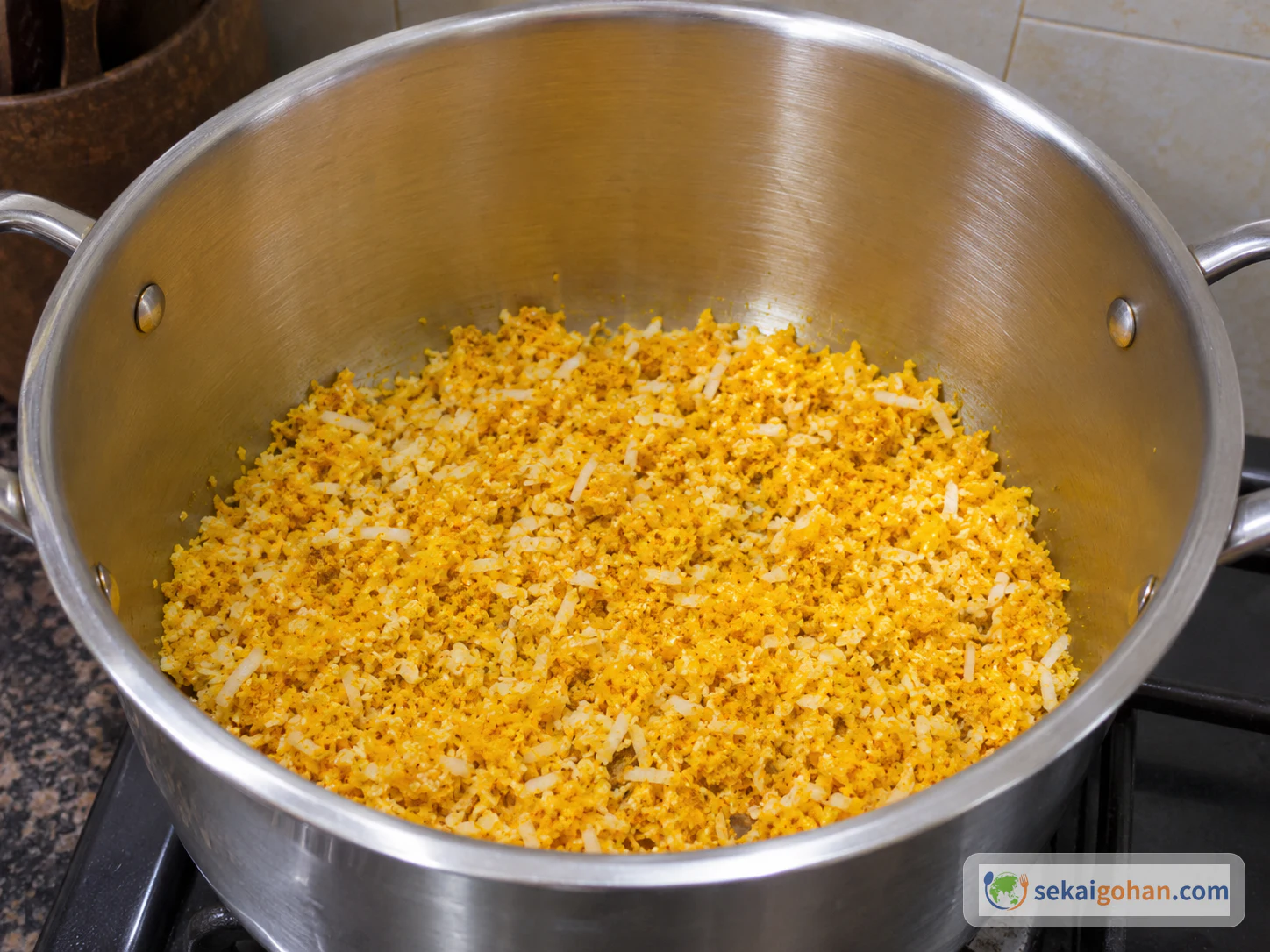
Coconut and turmeric are grated and squeezed. The yellow liquid goes into the rice, and the squeezed solids go to the bottom of the pot. Both halves are used; nothing is thrown away.
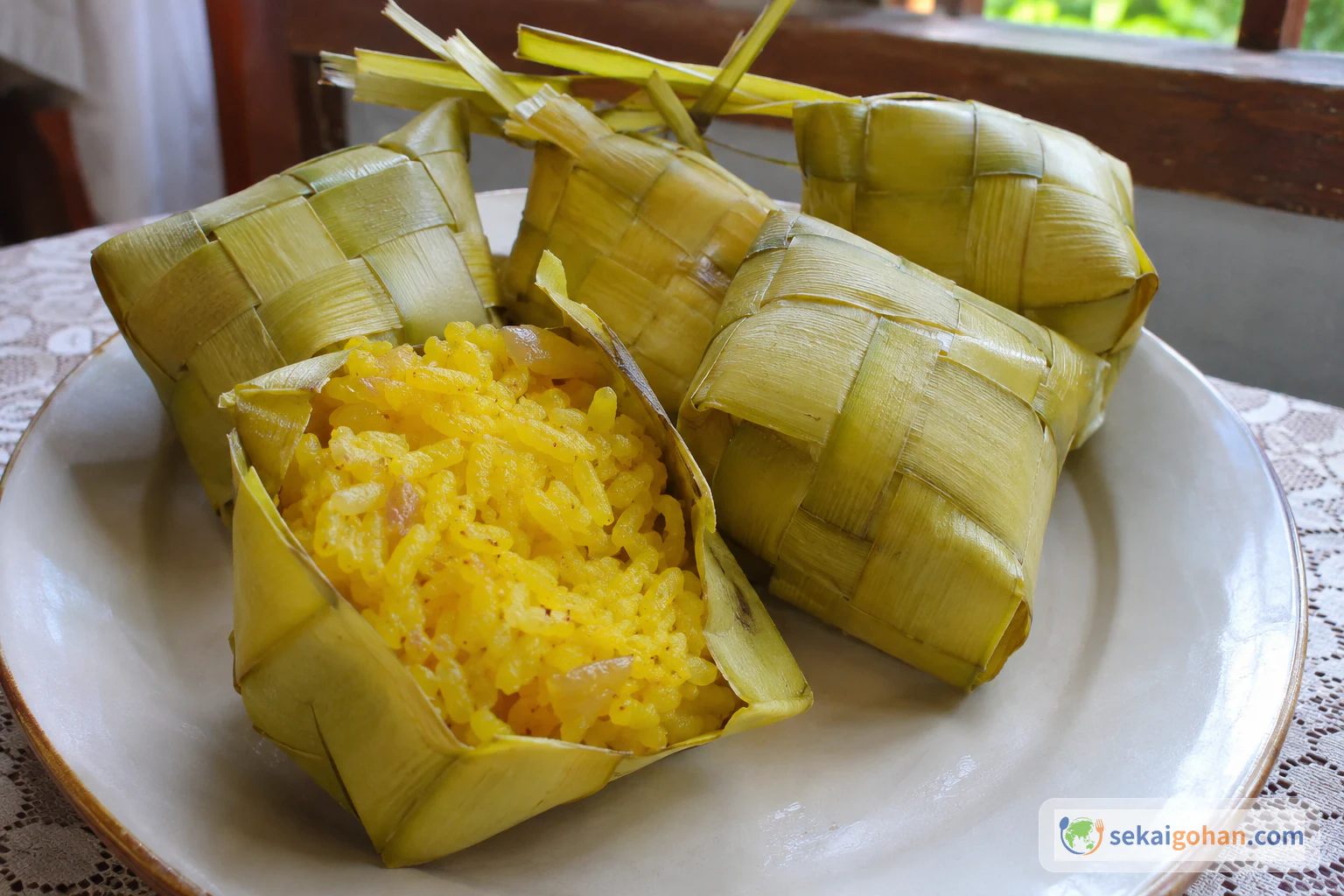
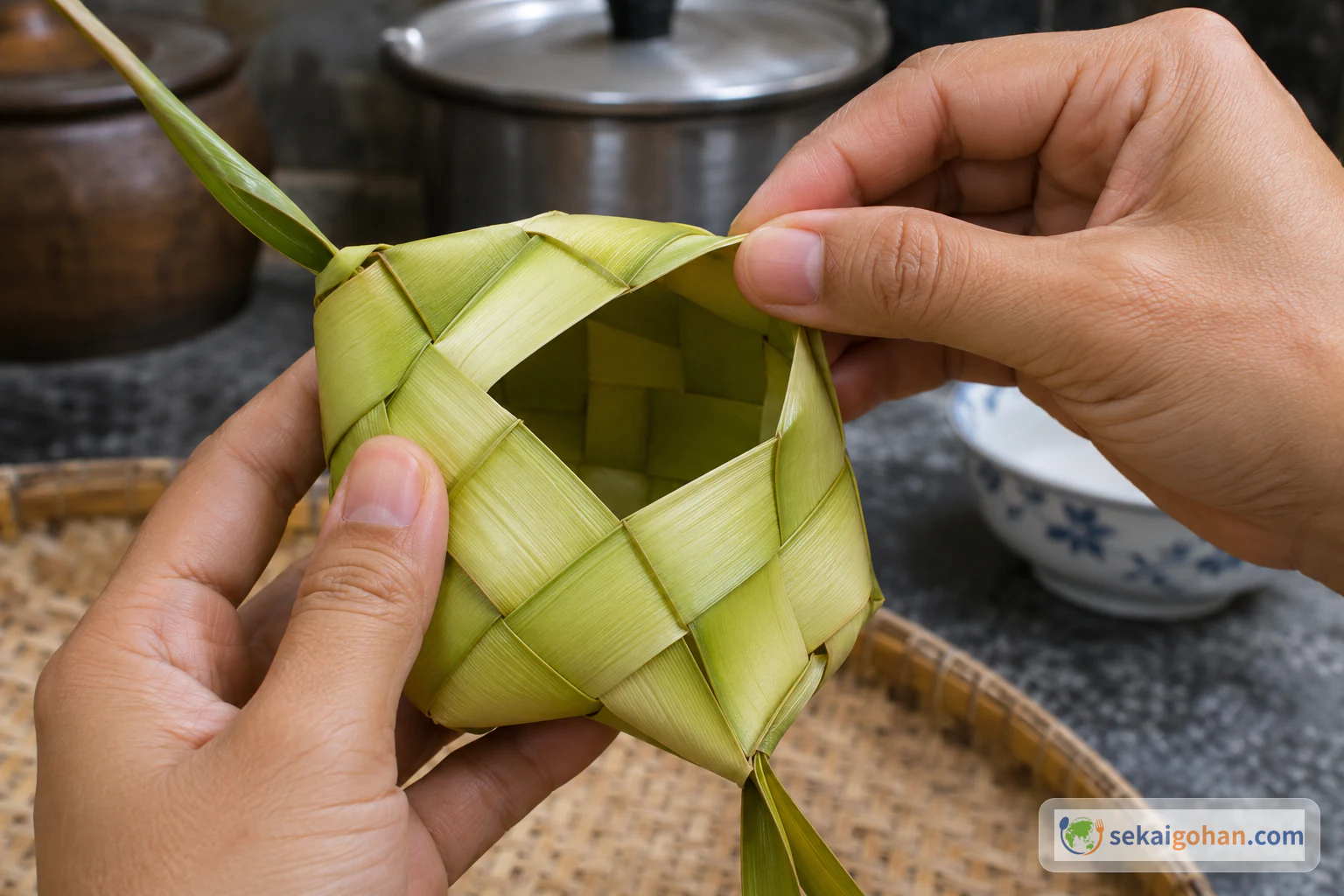
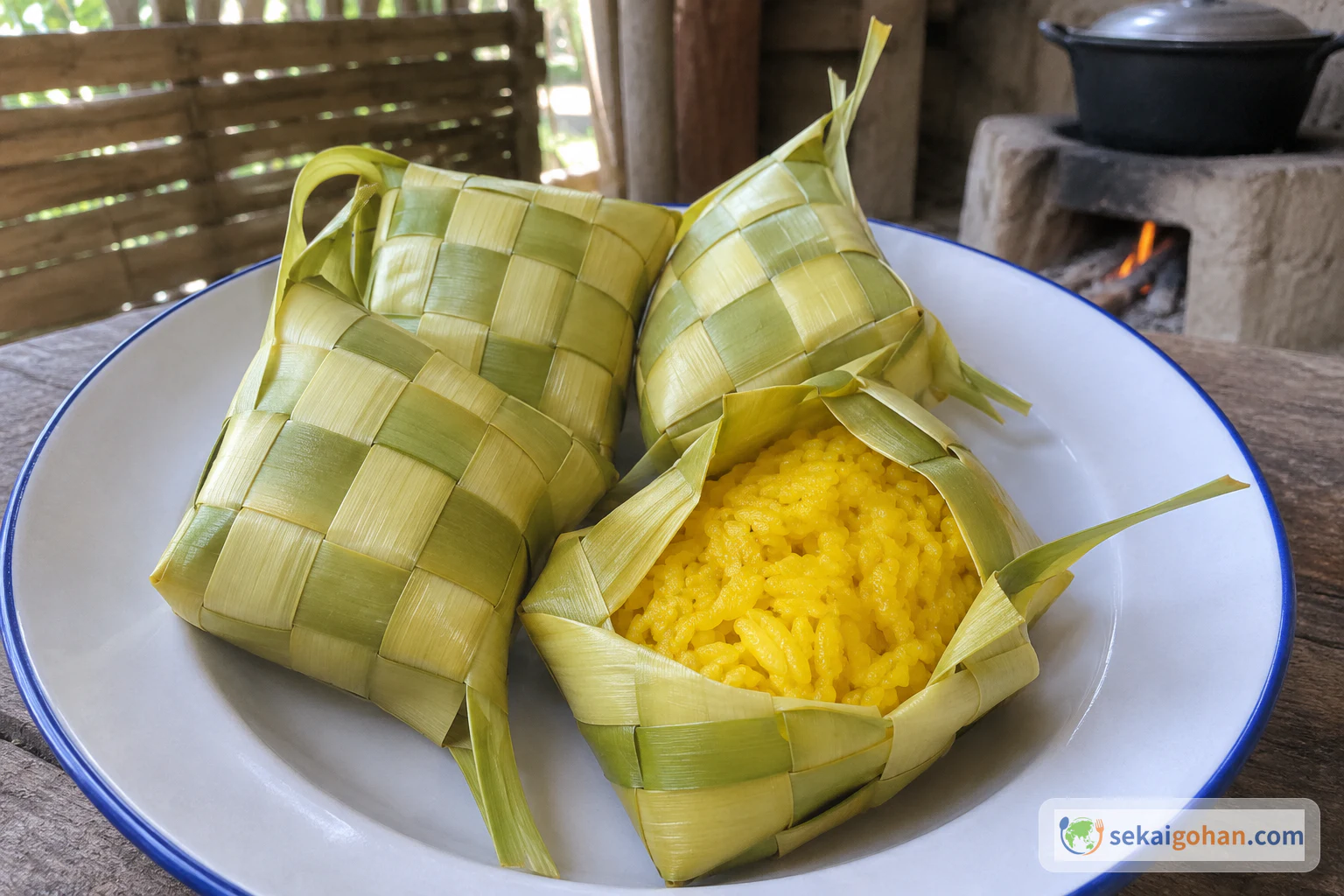
Small baskets woven from narrow strips of young coconut leaf sit in a pot of water, each one only about half full of raw rice tinted yellow with fresh turmeric and coconut. When they come out of the pot and are opened, the rice has filled its basket and pressed into a compact, golden block. This is katupa, a rice dish from Timor-Leste.
There is more than one way to make katupa in Timor-Leste. This article follows a single version: the one the authors' family usually makes in the municipality of Viqueque, as published in the Australian Centre for International Agricultural Research (ACIAR) cookbook Cooking fish and seafood in Timor-Leste. The amounts, order and timings below come from that version and are not mixed with others.
This version starts from pouches that are already woven. The article does not teach how to weave a pouch from fresh leaves. The ACIAR book has a separate section on weaving for readers who want to learn it.
This recipe as a whole has not been kitchen-tested by Sekai Gohan. The yield of 16 pouches for 4 people is the published figure, not a measured result, and the photographs show each action qualitatively; they do not prove amounts, times, temperatures or food safety.
What Katupa Is: A Rice Dish With Several Versions
Timor-Leste's official tourism website describes katupa simply as rice dumplings that are often served at celebrations. That short description is all the page says about the dish; it gives no recipe.
The ACIAR cookbook, produced with contributors from Timor-Leste, notes that there are several methods for making katupa in the country and presents one of them: the Viqueque family version used here. It is the source for every ingredient and step in this article.
Katupa also travels with Timorese people. In 2012, the communications office of UNILAB, a university in Brazil, reported on a campus event where Timorese students introduced katupa among dishes from their country on a festive occasion. That is one event at one university; it is not evidence of how every household celebrates.
As for what goes alongside, the ACIAR book suggests serving katupa with grilled fish and aimanas, a chili condiment, and the East Timor Guide food guide describes the same kind of pairing. Those are suggestions for the table only; this article does not cover recipes for them.
What Makes This Version Distinctive
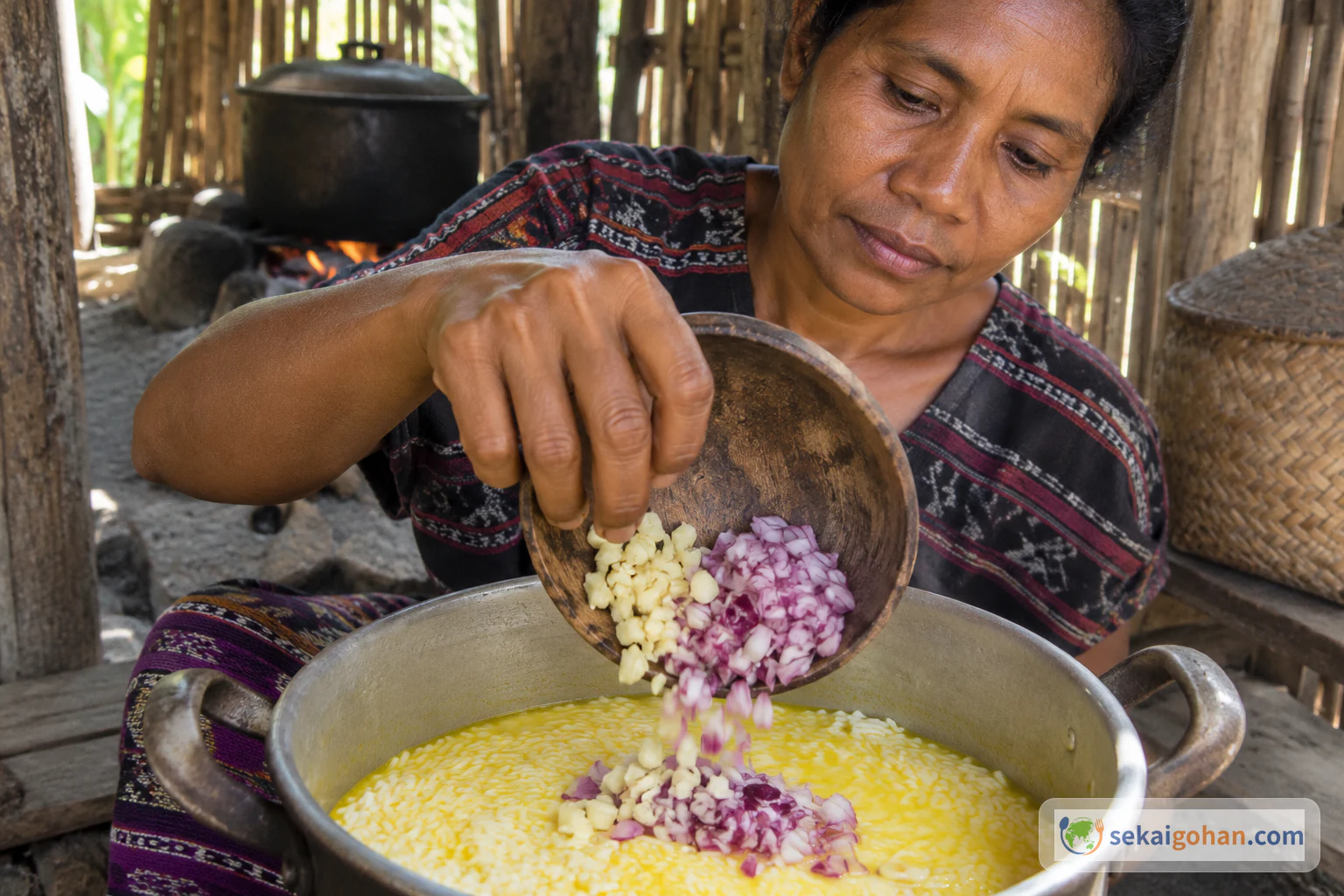
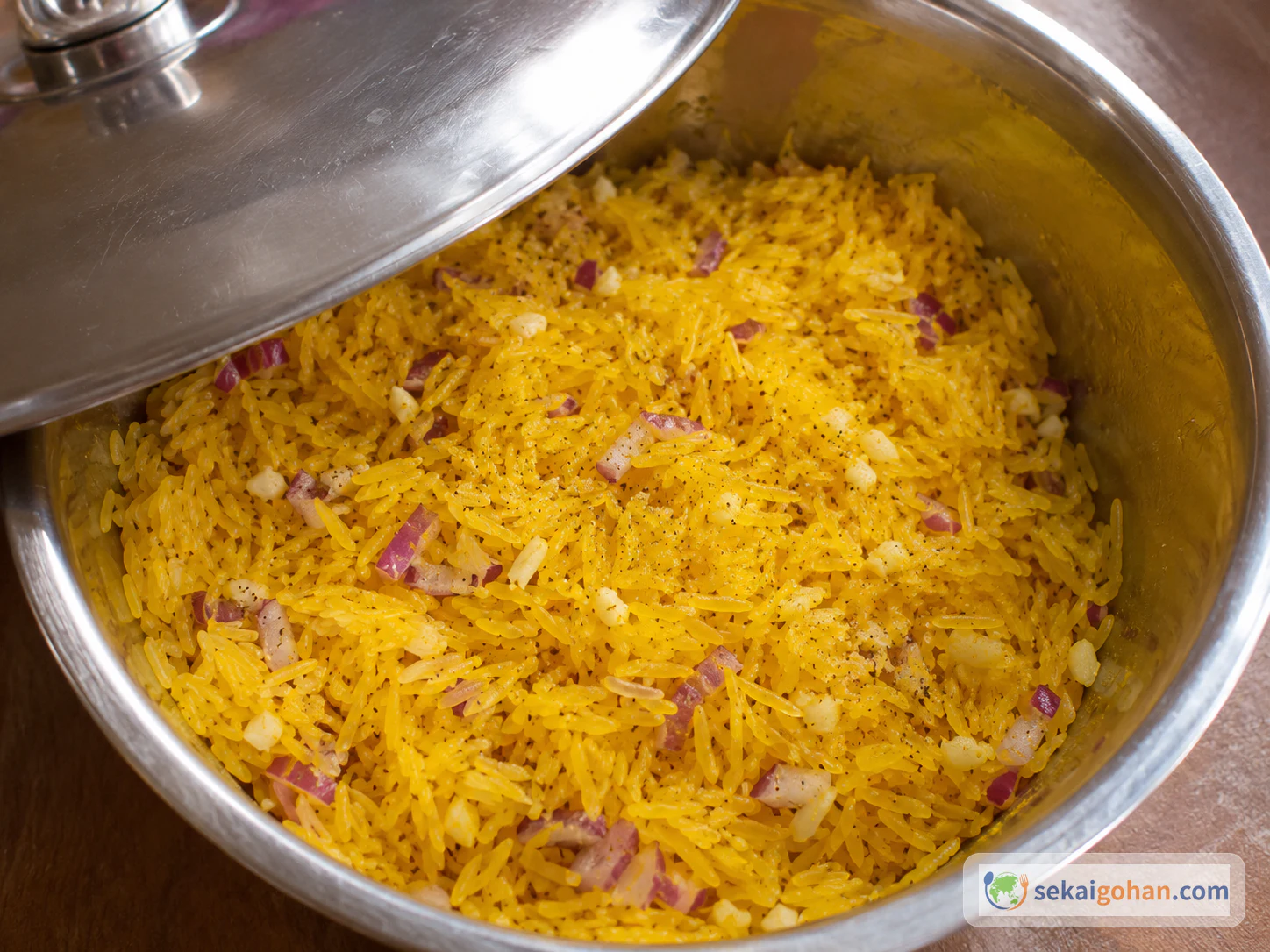
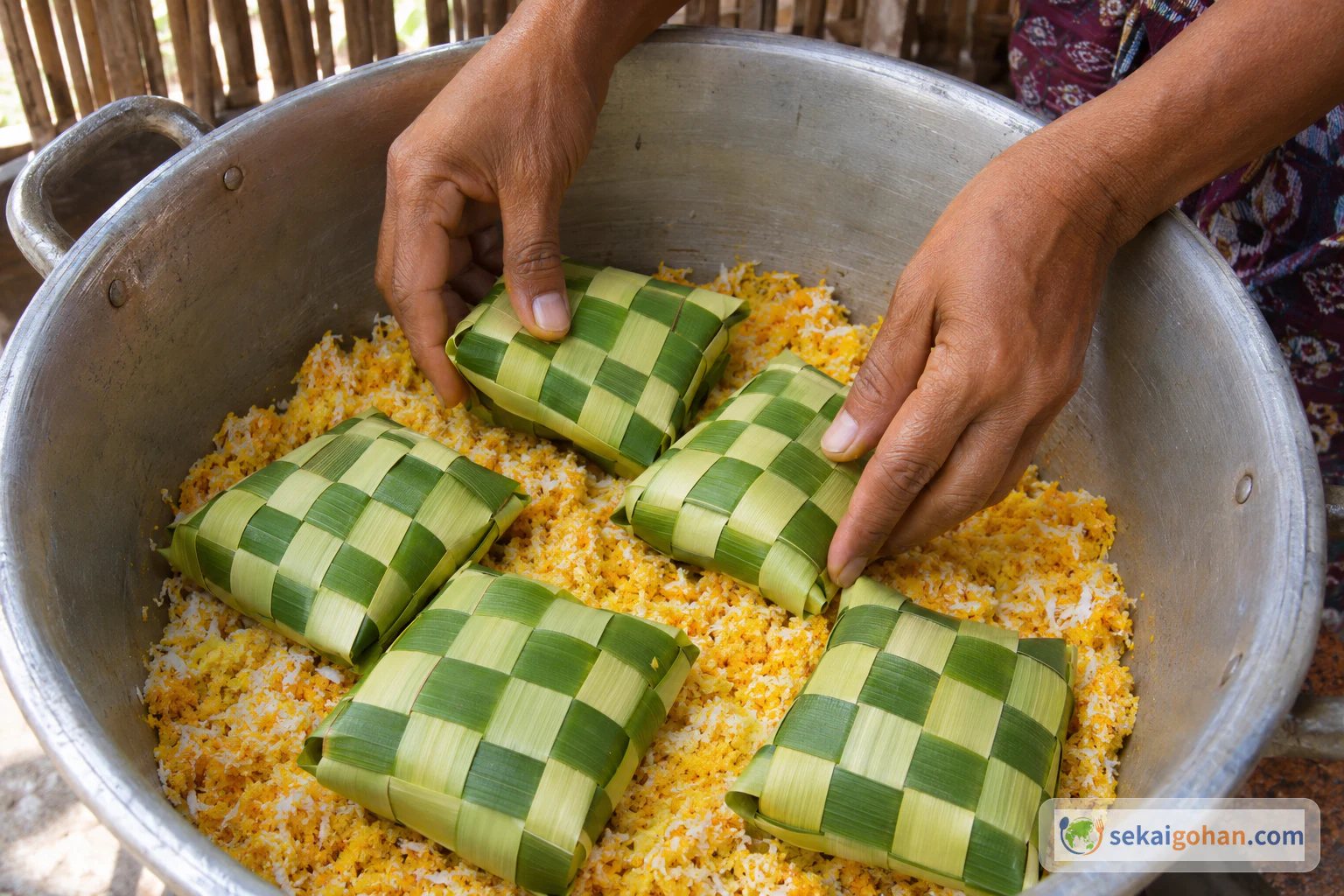
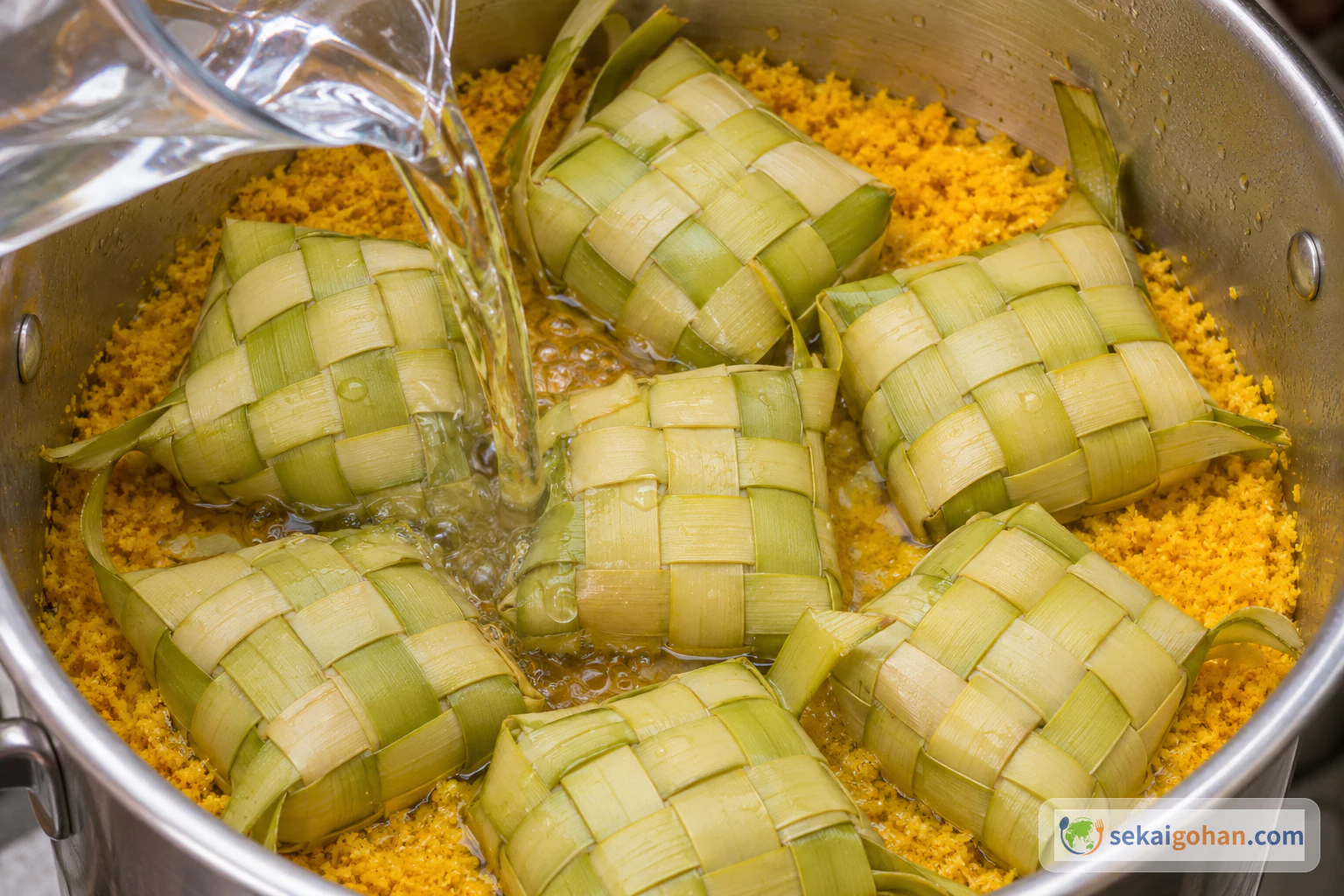
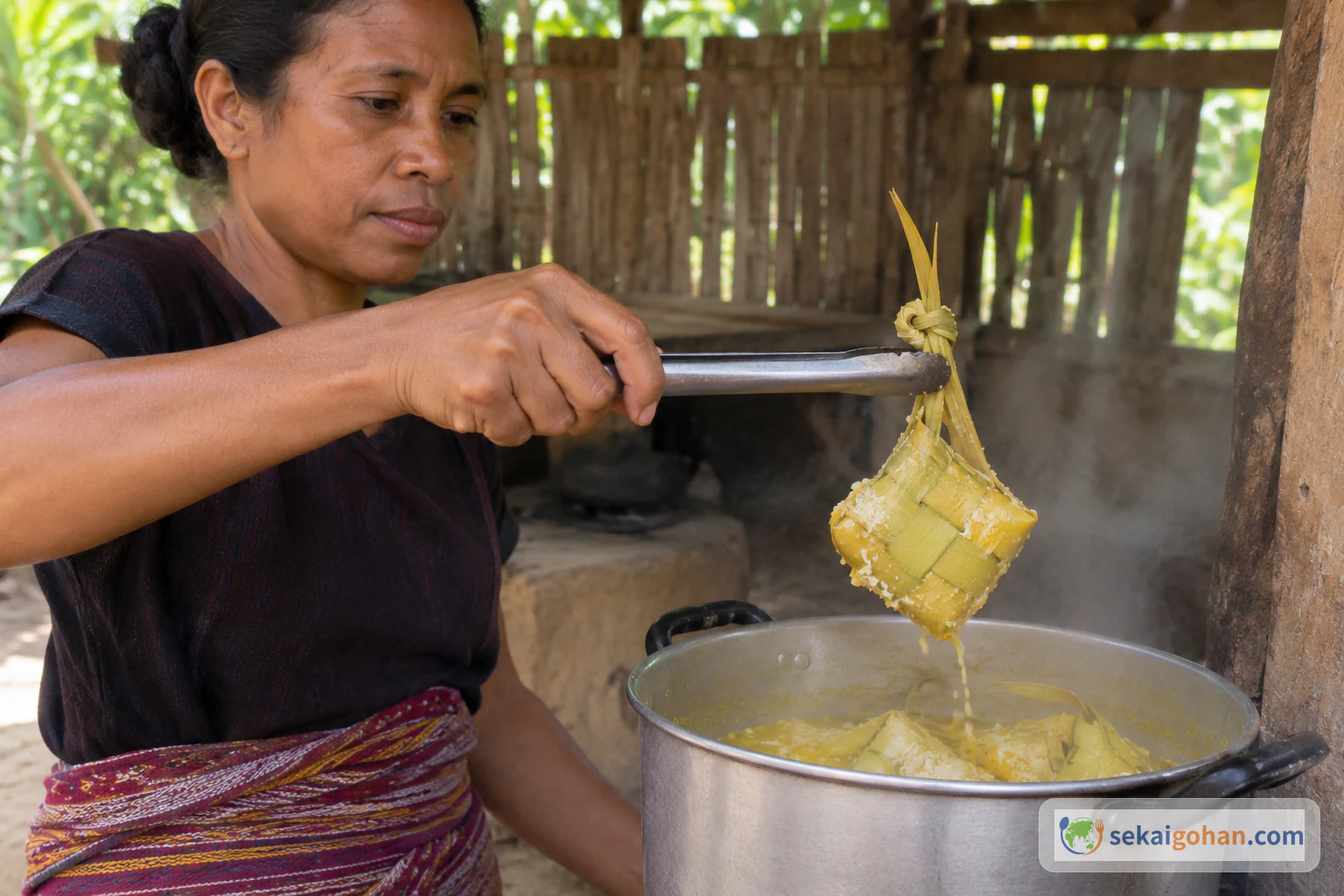
Coconut and turmeric work twice. Grated together and squeezed through a cloth, they give a yellow liquid that seasons and colors the raw rice. The squeezed solids are not discarded: they are spread across the bottom of the pot, and the filled pouches are set on top of them before the water goes in.
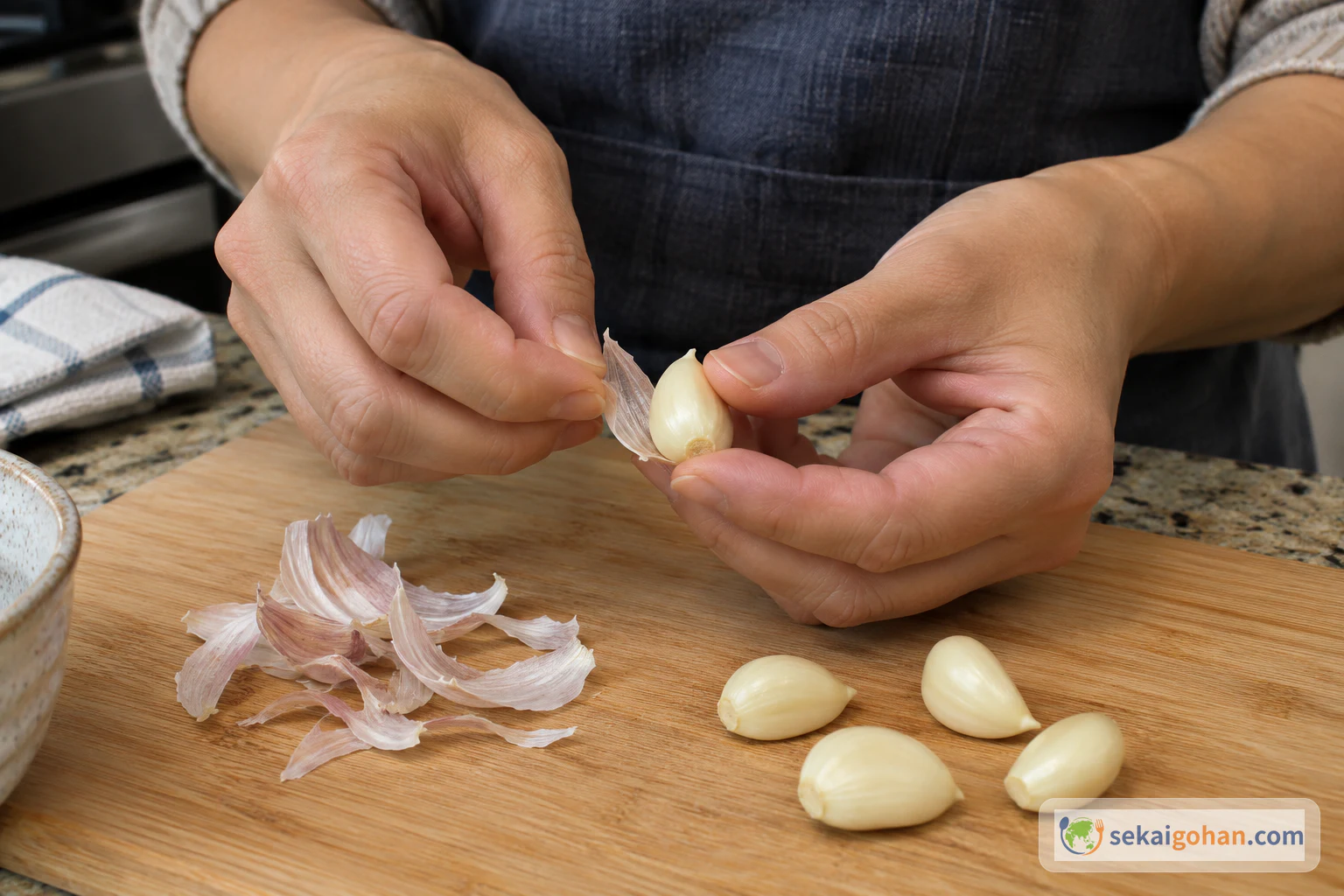
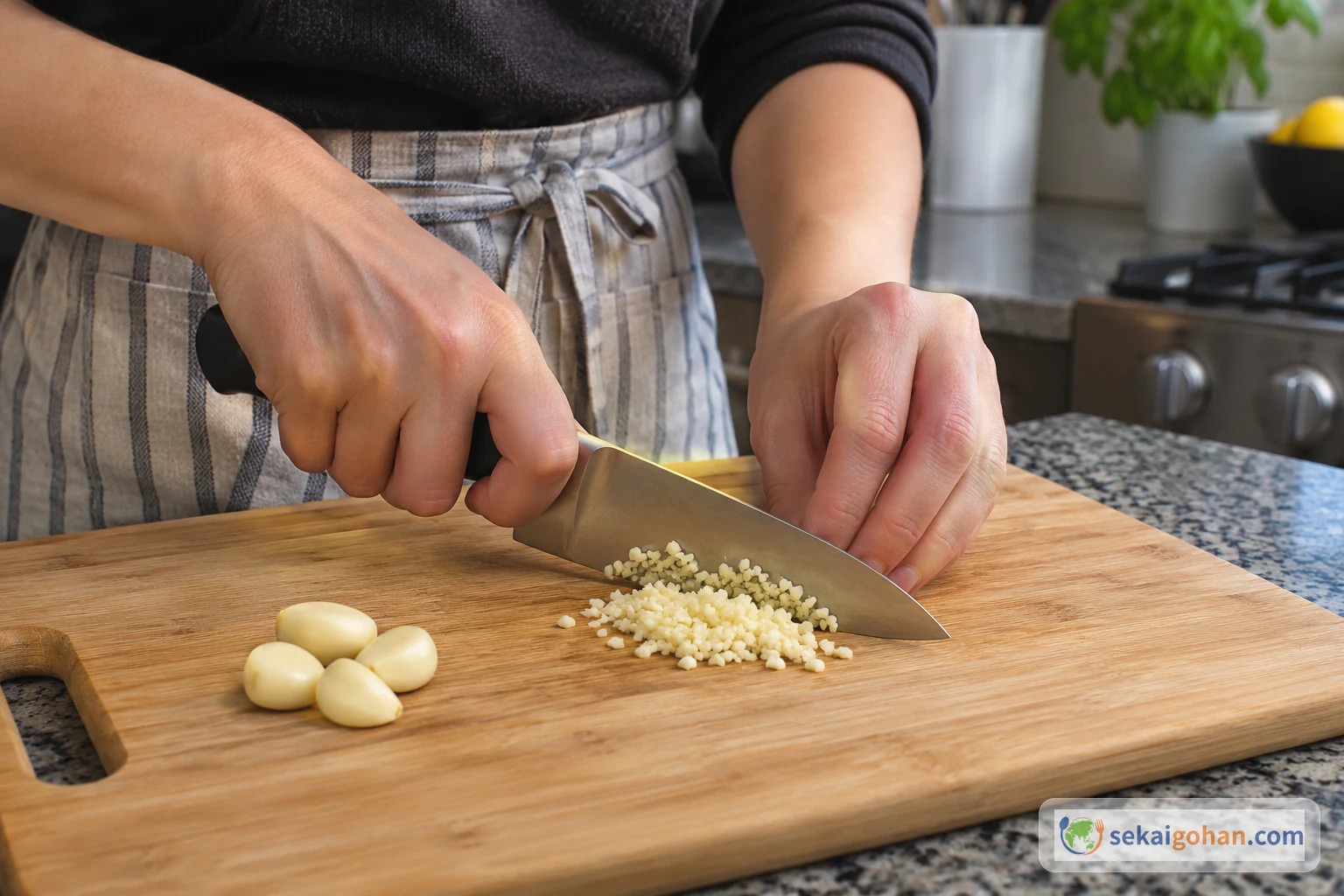
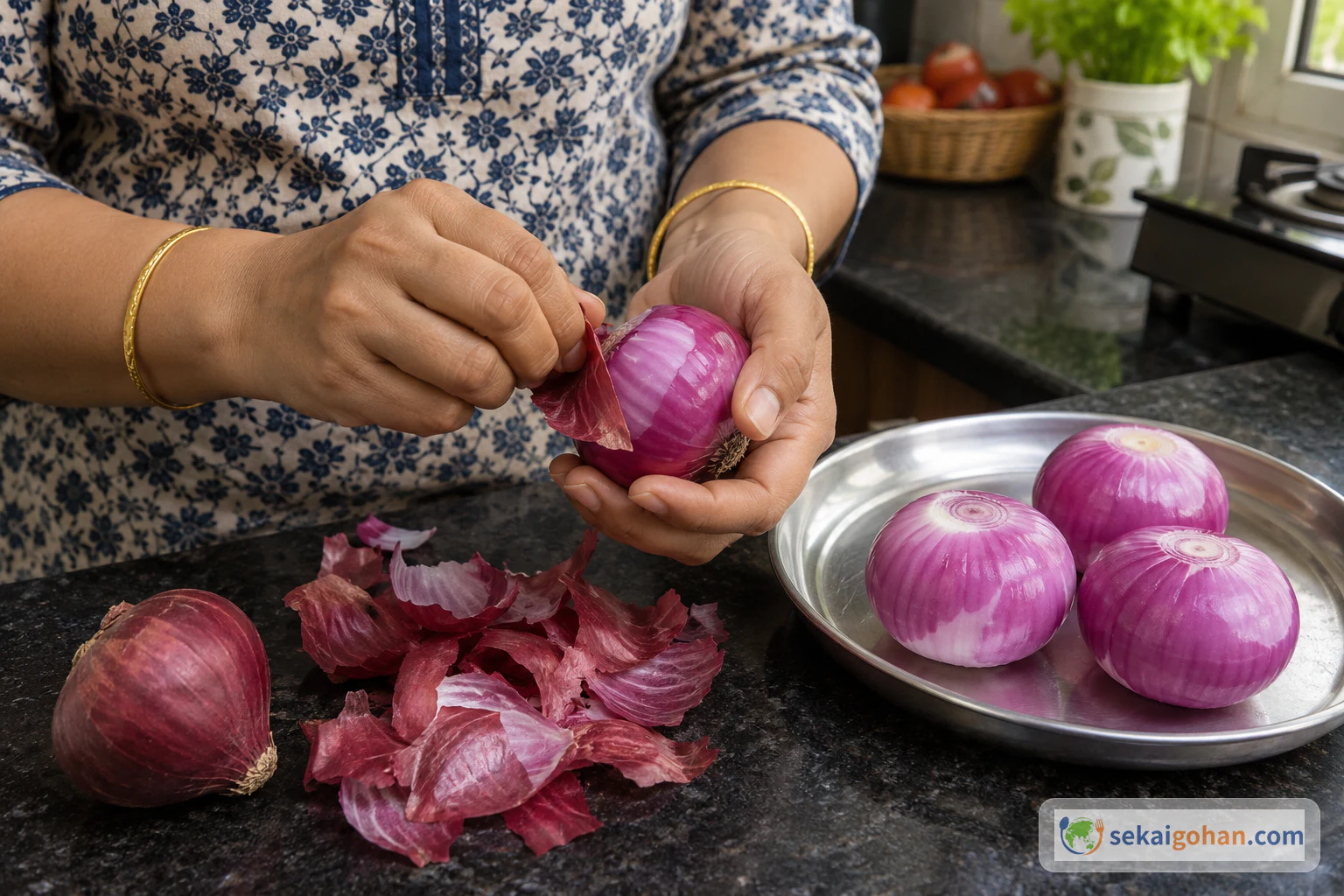
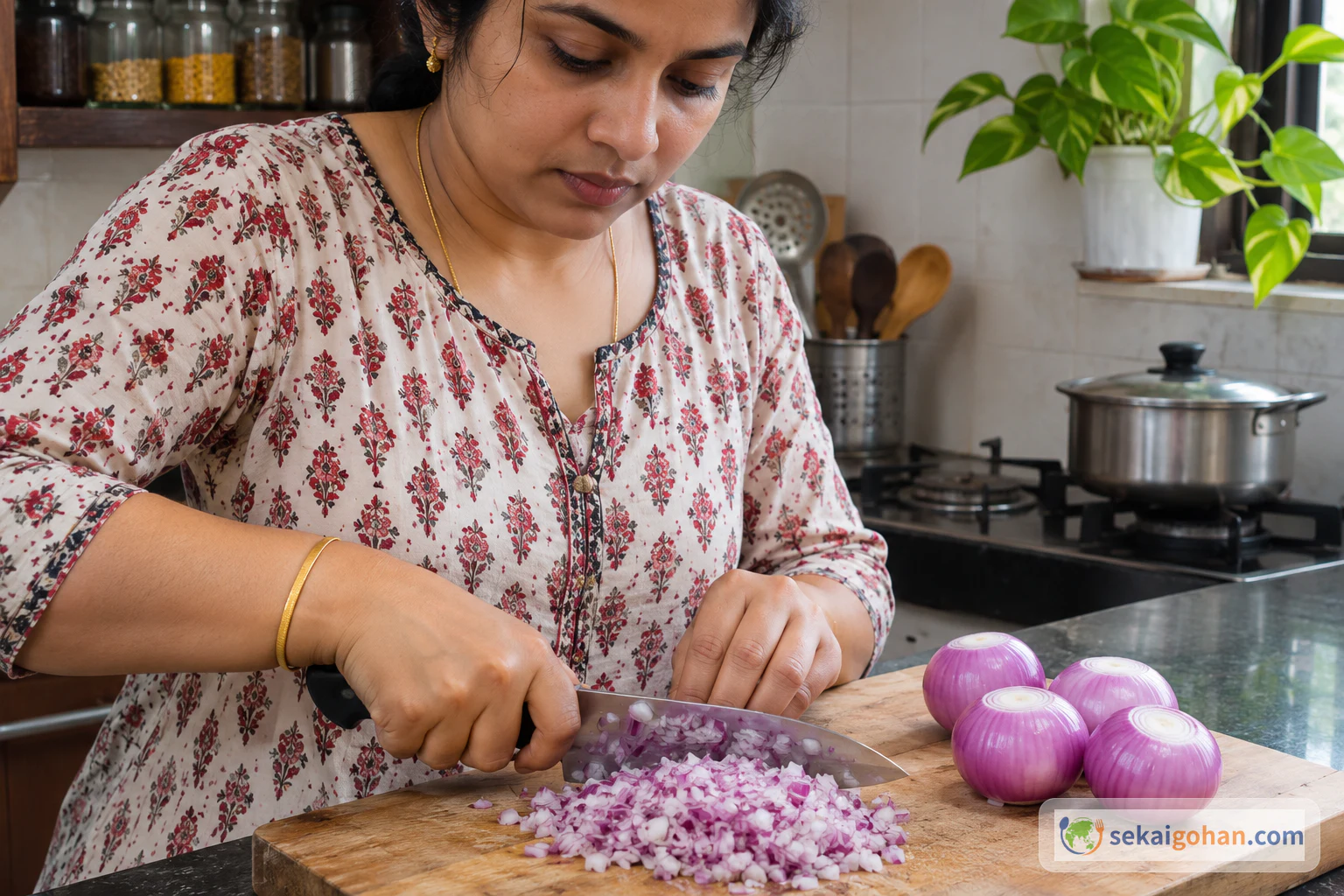
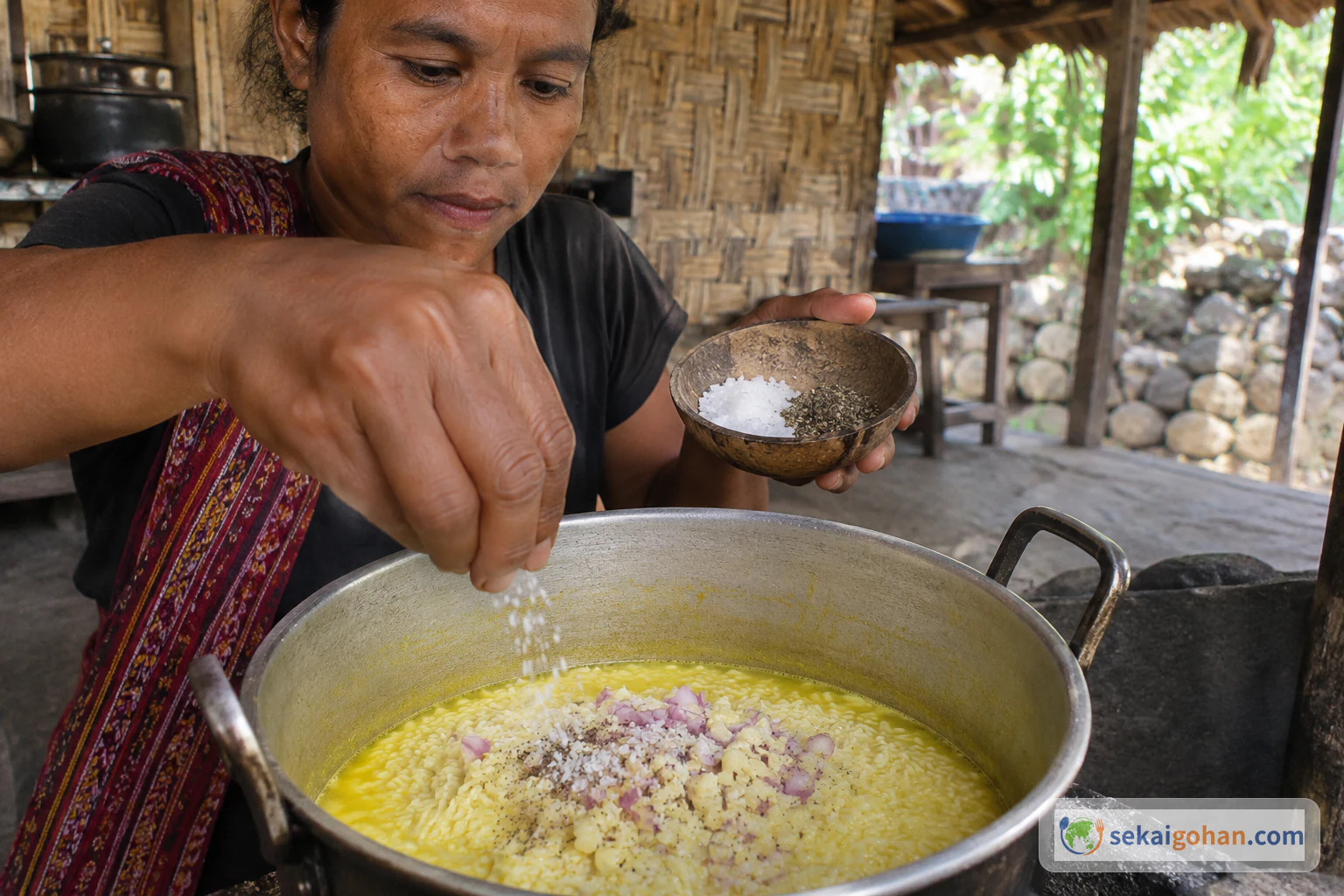
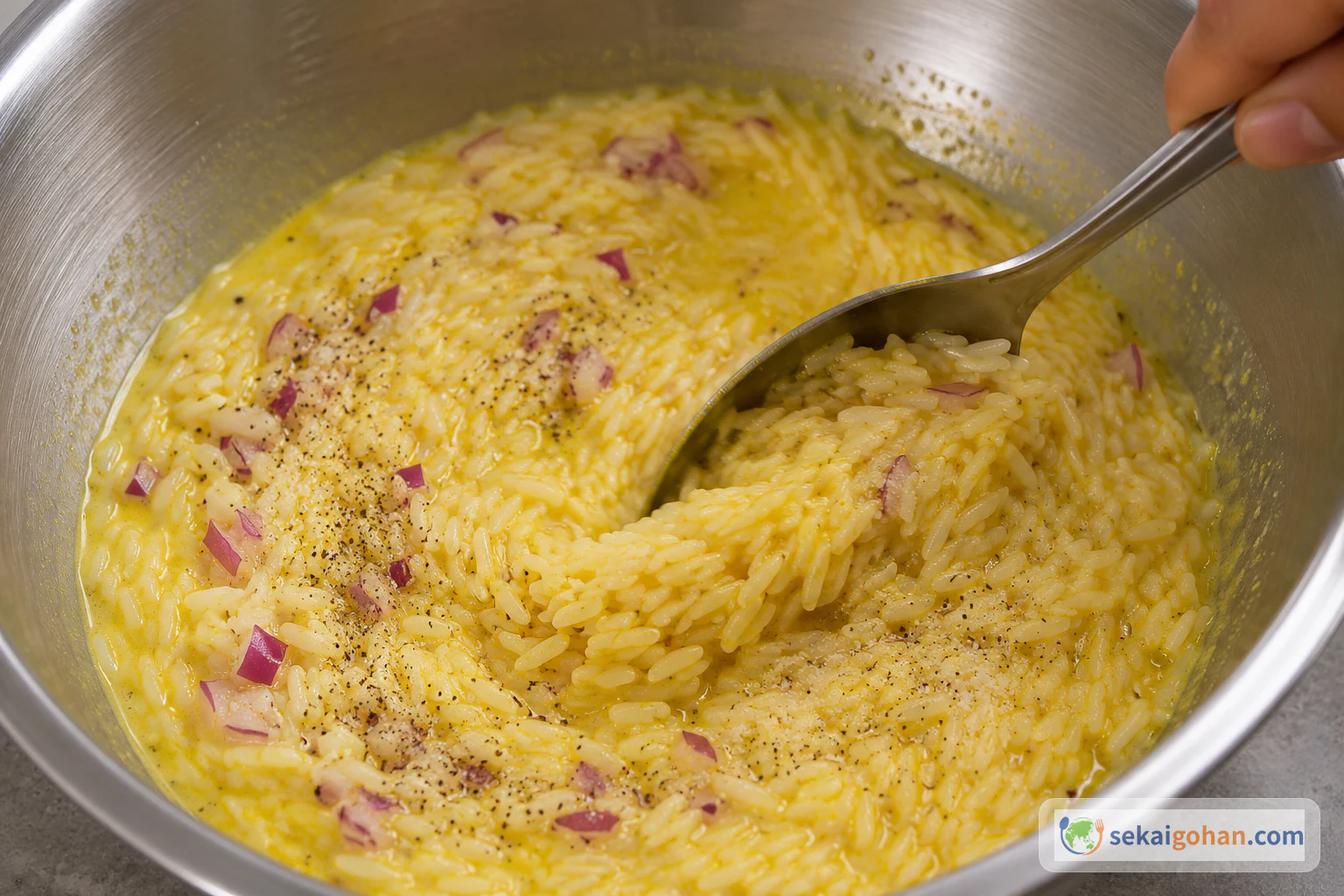
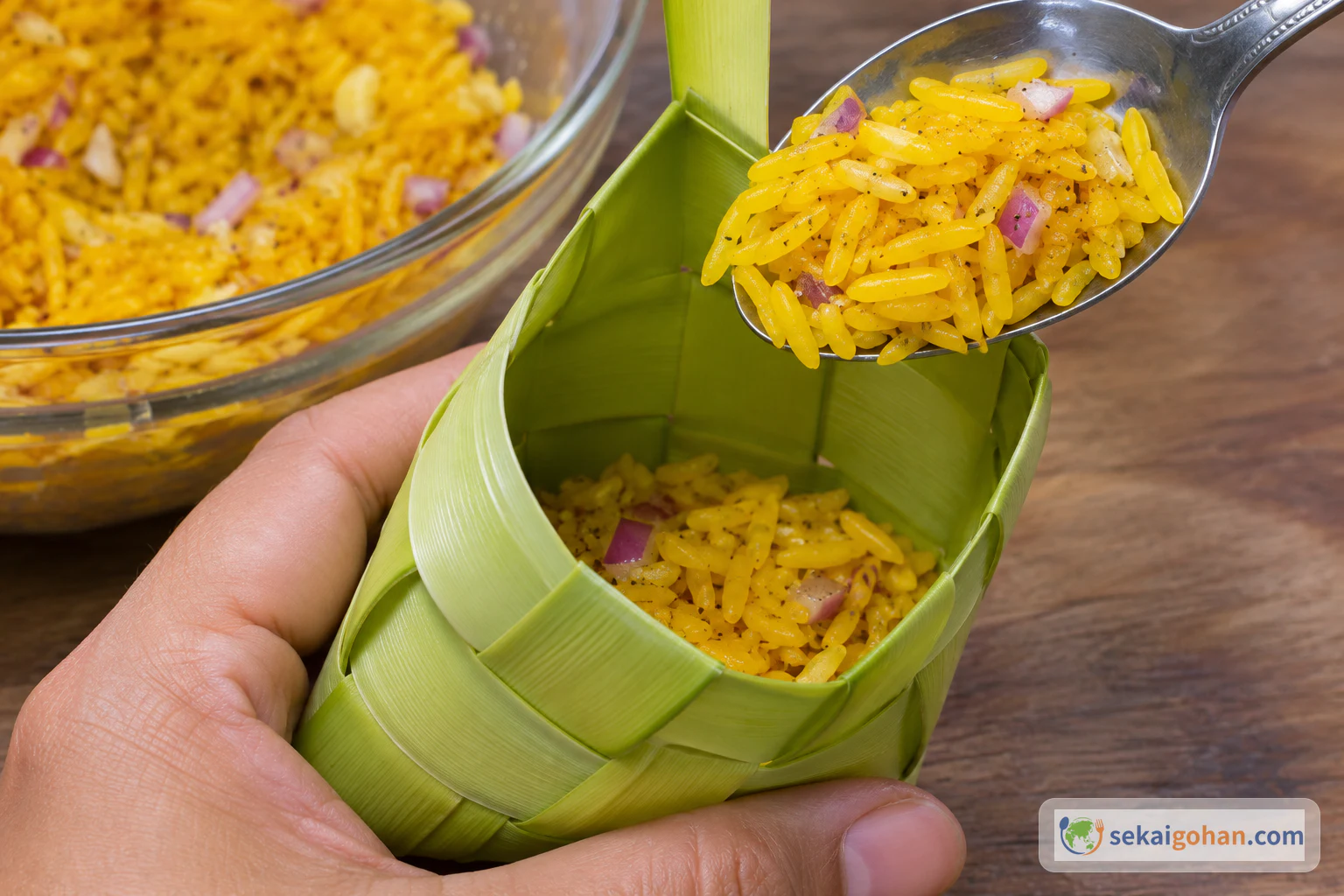
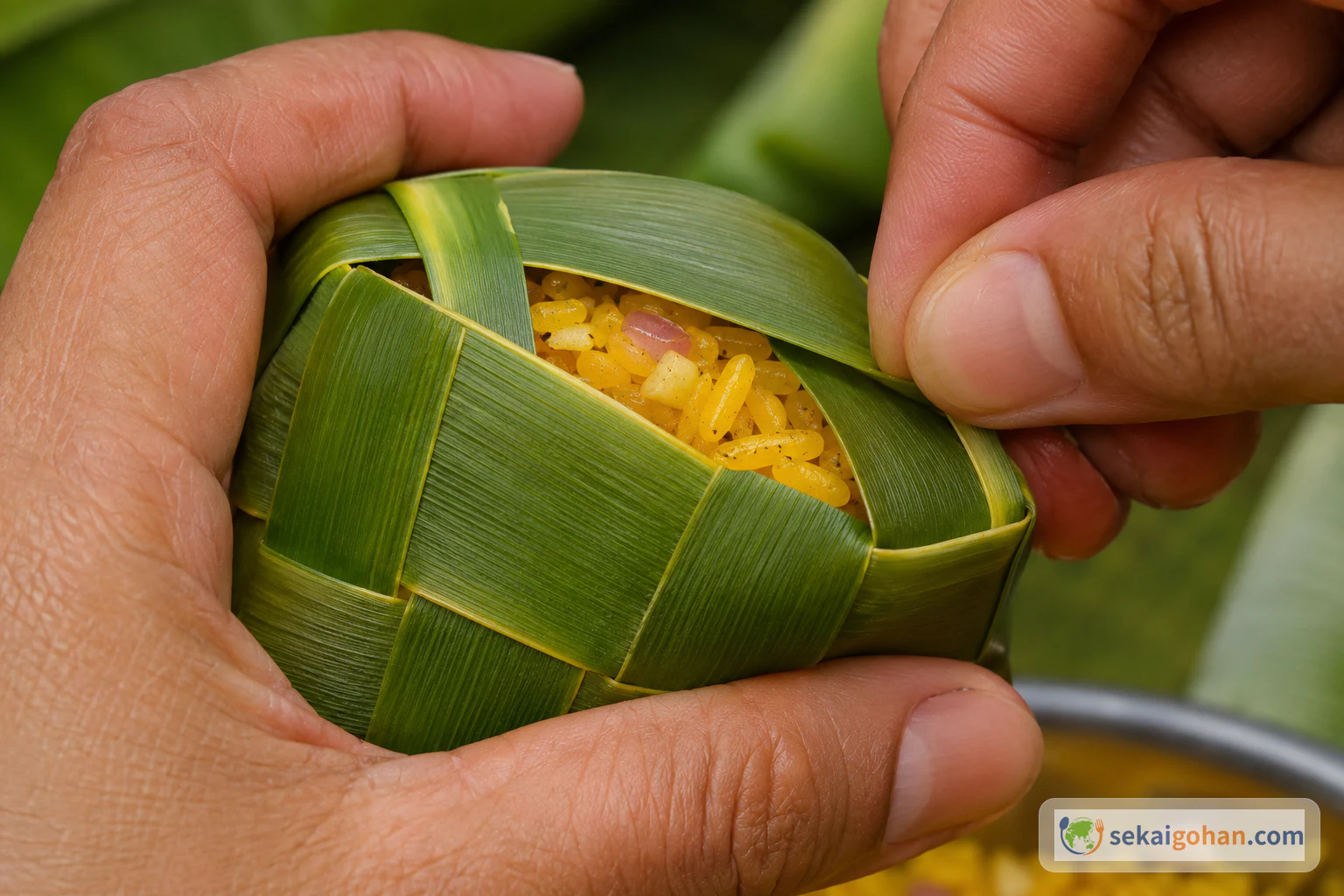
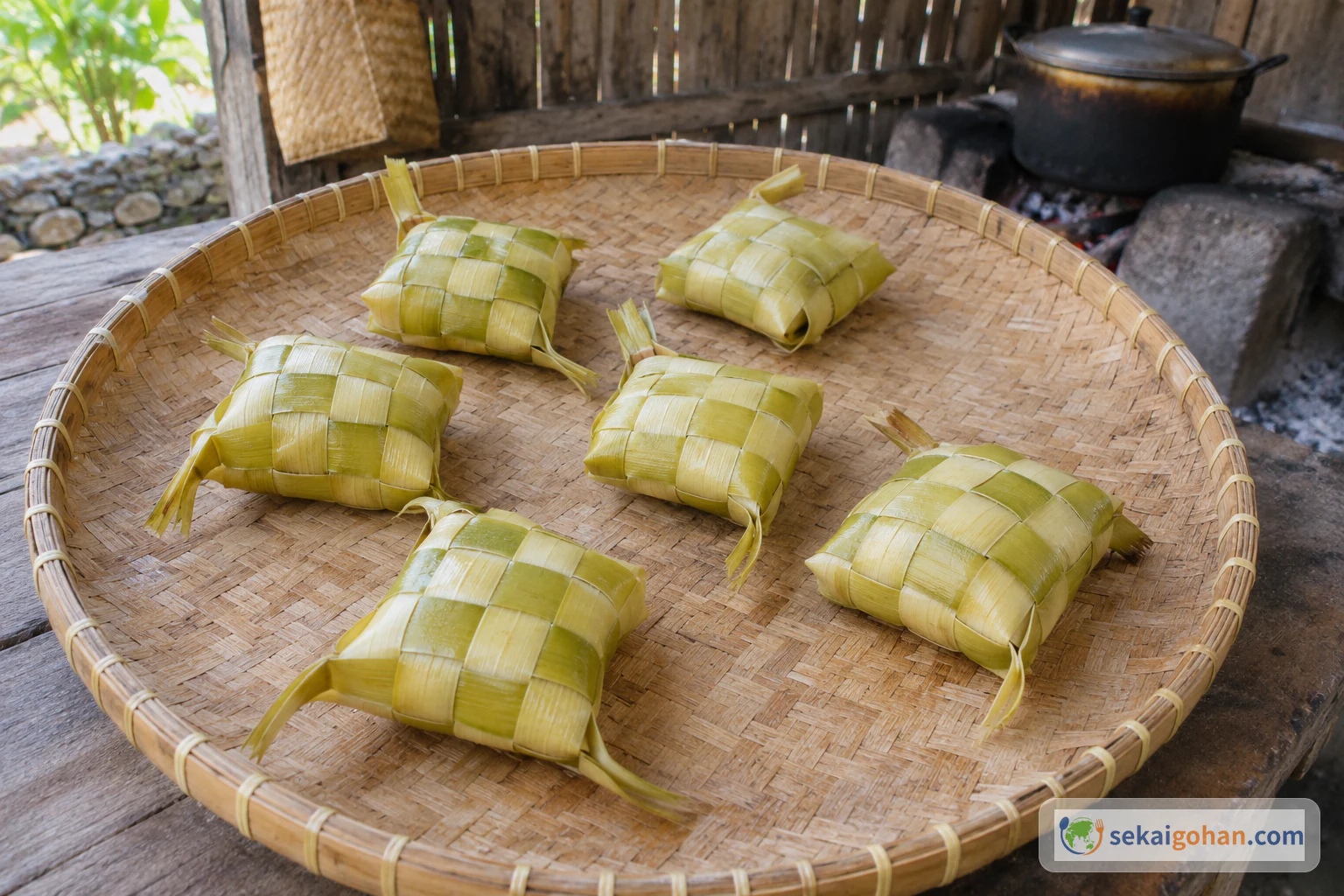
The pouches are only half filled. The rice goes into the woven basket raw, together with chopped garlic and red onion, salt and pepper, and the pouch is closed with plenty of room left inside.
No extra fat or broth. There is no coconut milk, oil or stock in this version. The flavor comes from the fresh coconut and turmeric, the aromatics and the seasoning.
Ingredients (16 pouches, 4 servings)
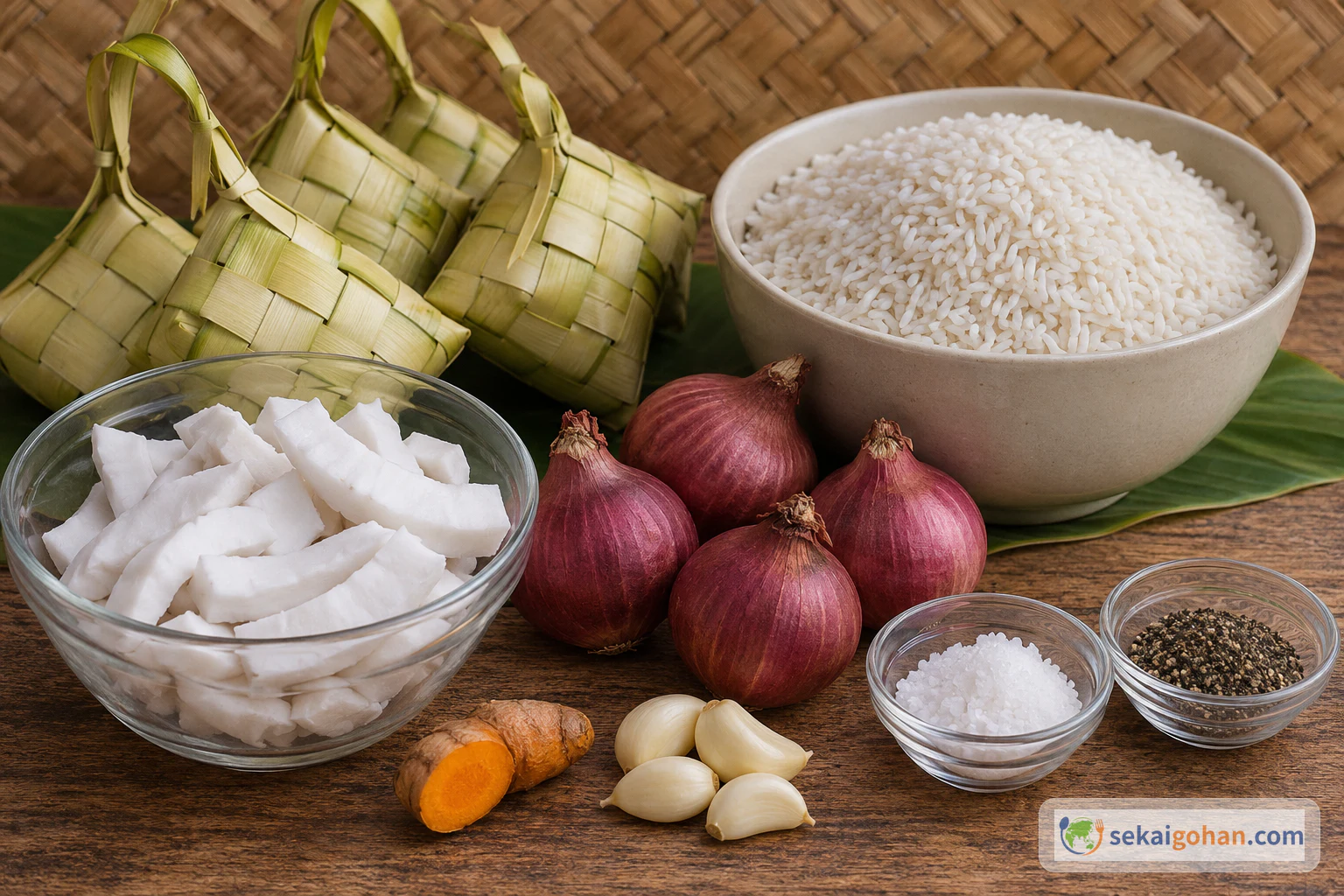
Have the edible flesh of the coconut ready before you start.
Equipment
- 16 empty, already woven Katupa pouches made from young coconut leaves, prepared for food use
- Grater
- Two bowls for the grated coconut and turmeric, plus bowls for the squeezed liquid and solids
- Clean cloth for squeezing
- Cutting board and knife
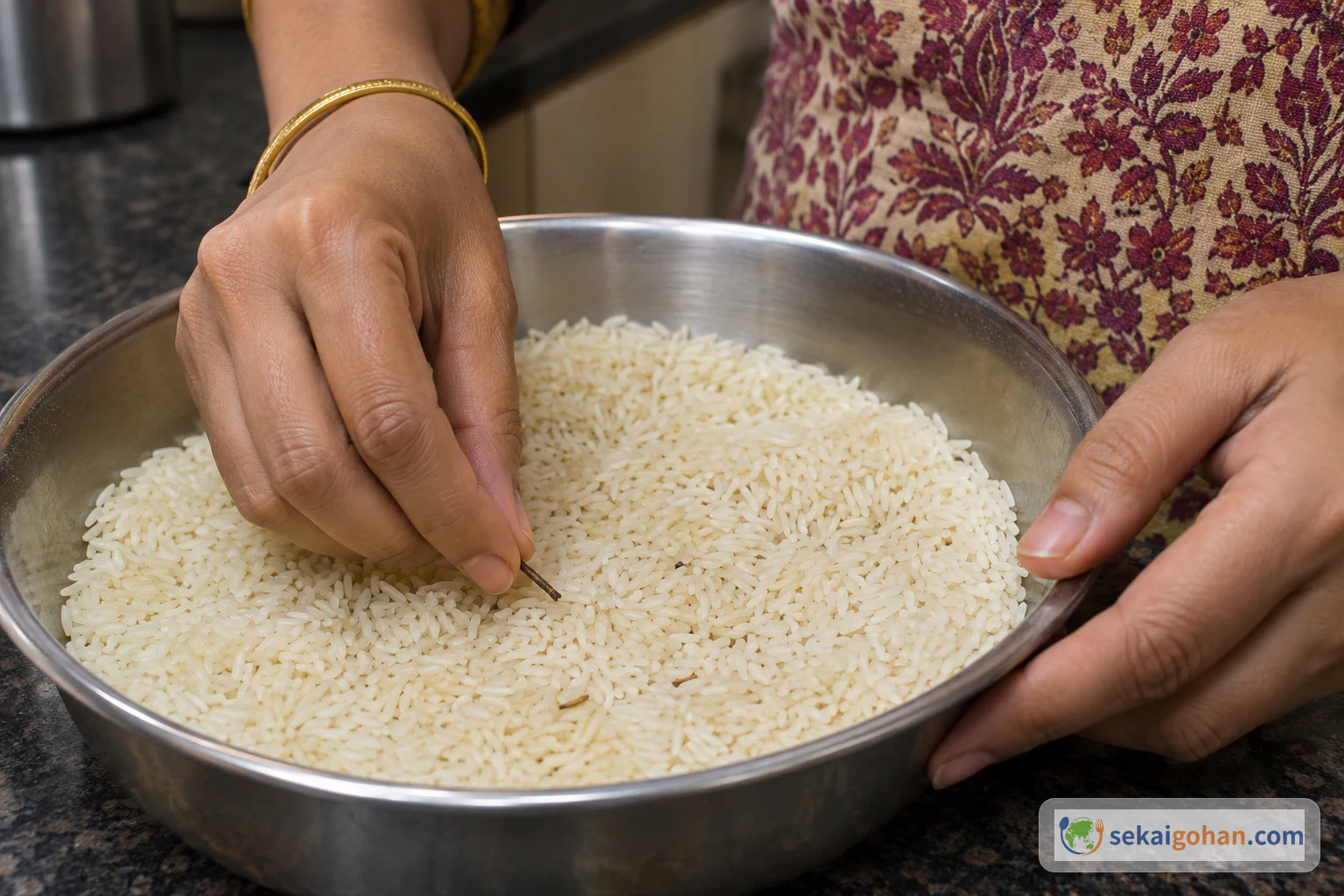
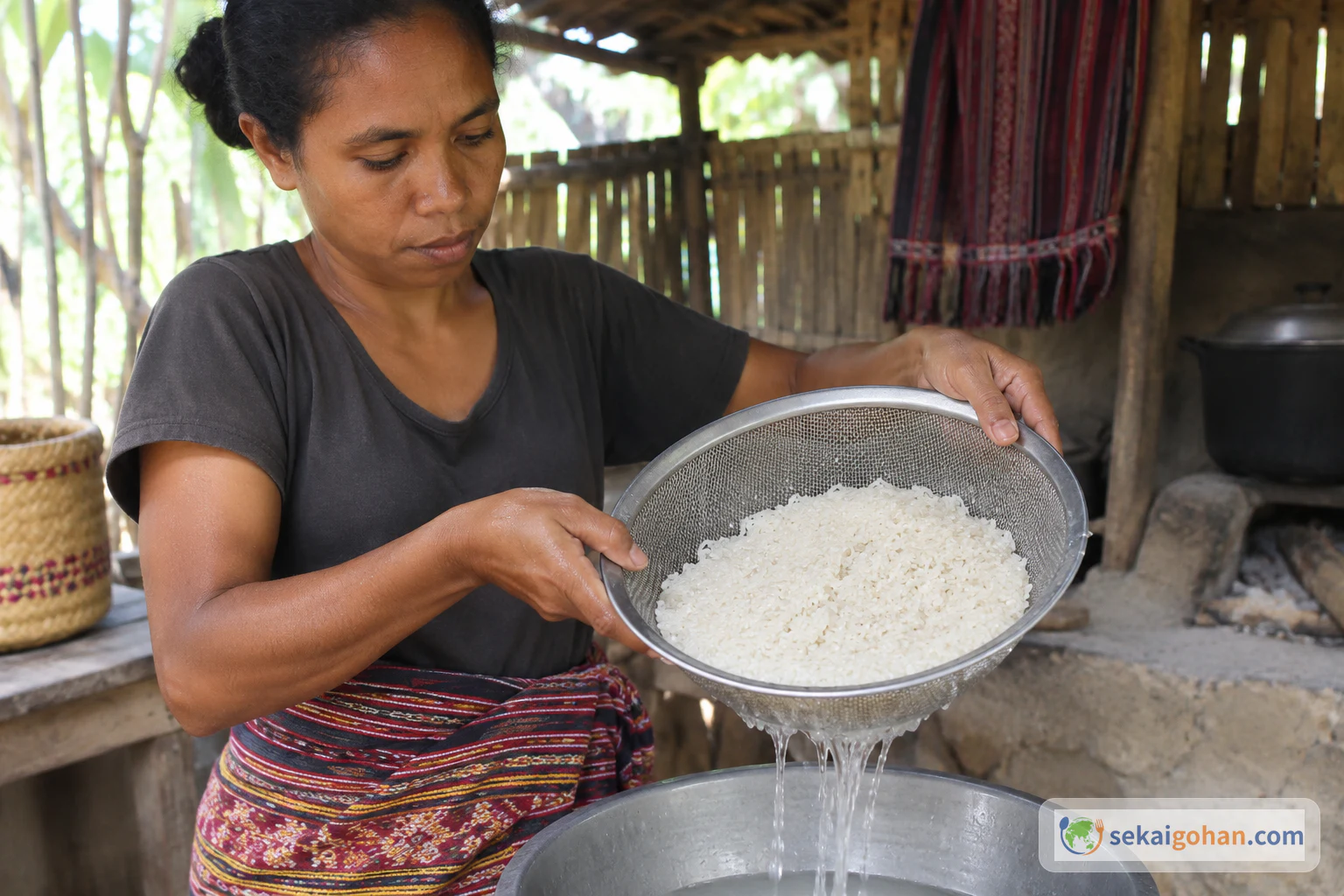
- Shallow bowl for picking over the rice, and a sieve
- Large mixing bowl and spoon
- Large pot with a lid
- Utensil for lifting the pouches out of the pot
- Clean cloth for wiping the pouches
- Shallow flat basket for cooling
Choosing Pouches and Rice
Use pouches that were woven from young coconut leaves and sold or prepared for food use. Check the product's food-contact use and follow the supplier's instructions for preparing the pouches before filling. Leaves from unknown or ornamental plants, waxed paper and cotton bags are not traditional equivalents and should not be used as stand-ins.
Paper bags or rice wrapped in banana leaf are different things from a woven katupa pouch, and this article does not present them as substitutes. If you cannot get food-use woven pouches, this version cannot be made as described.
Method: Grate, Season, Rest, Fill and Cook
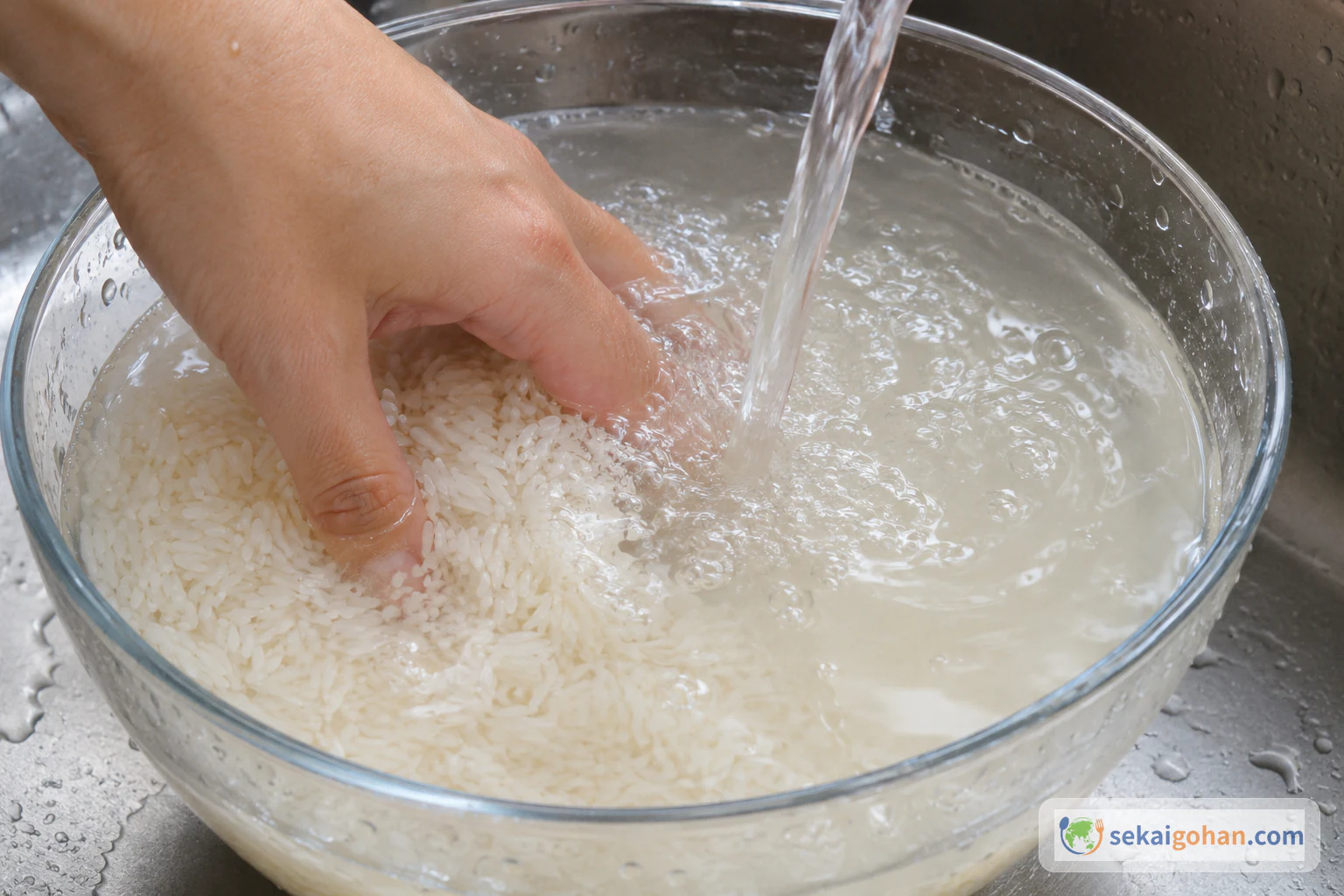
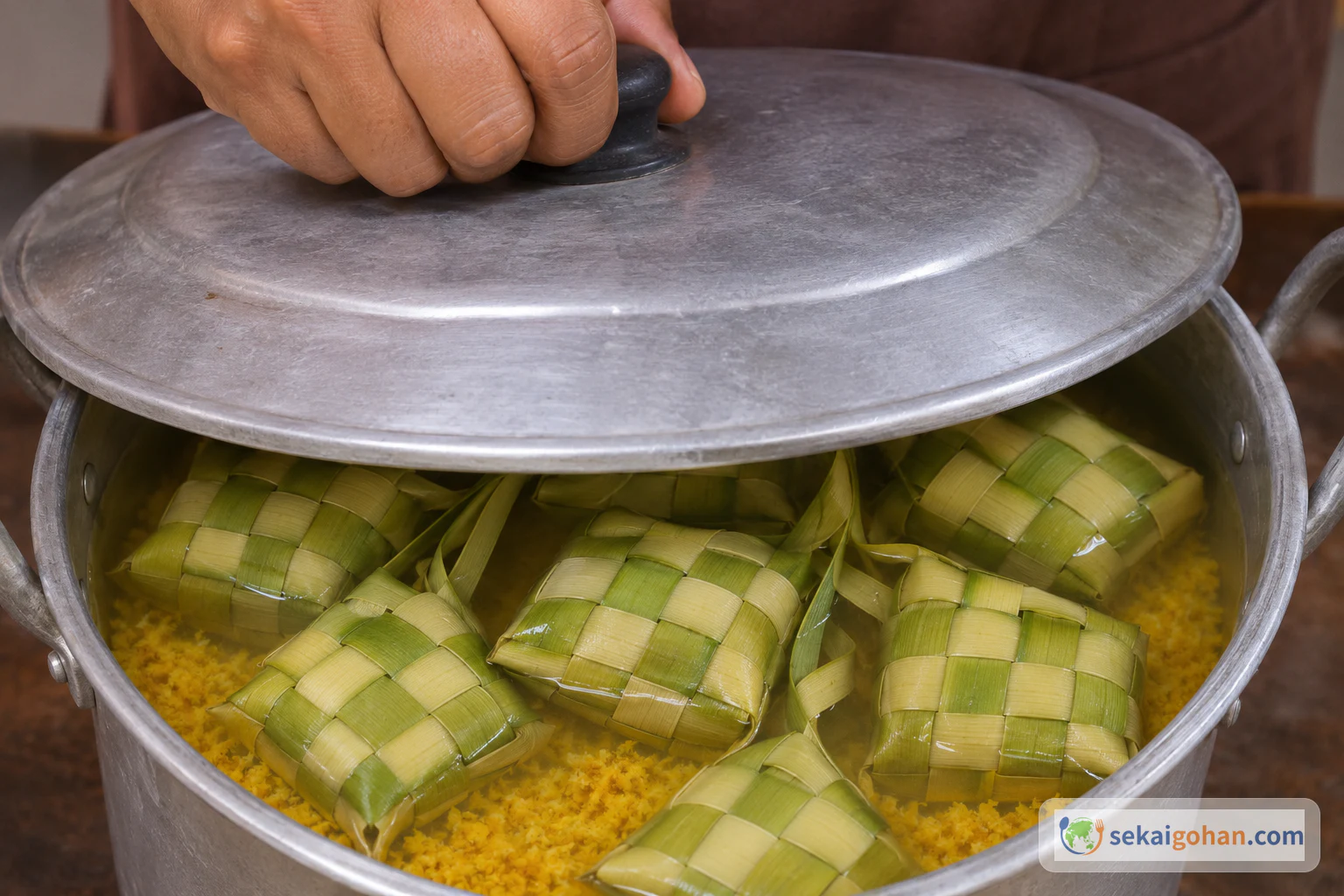
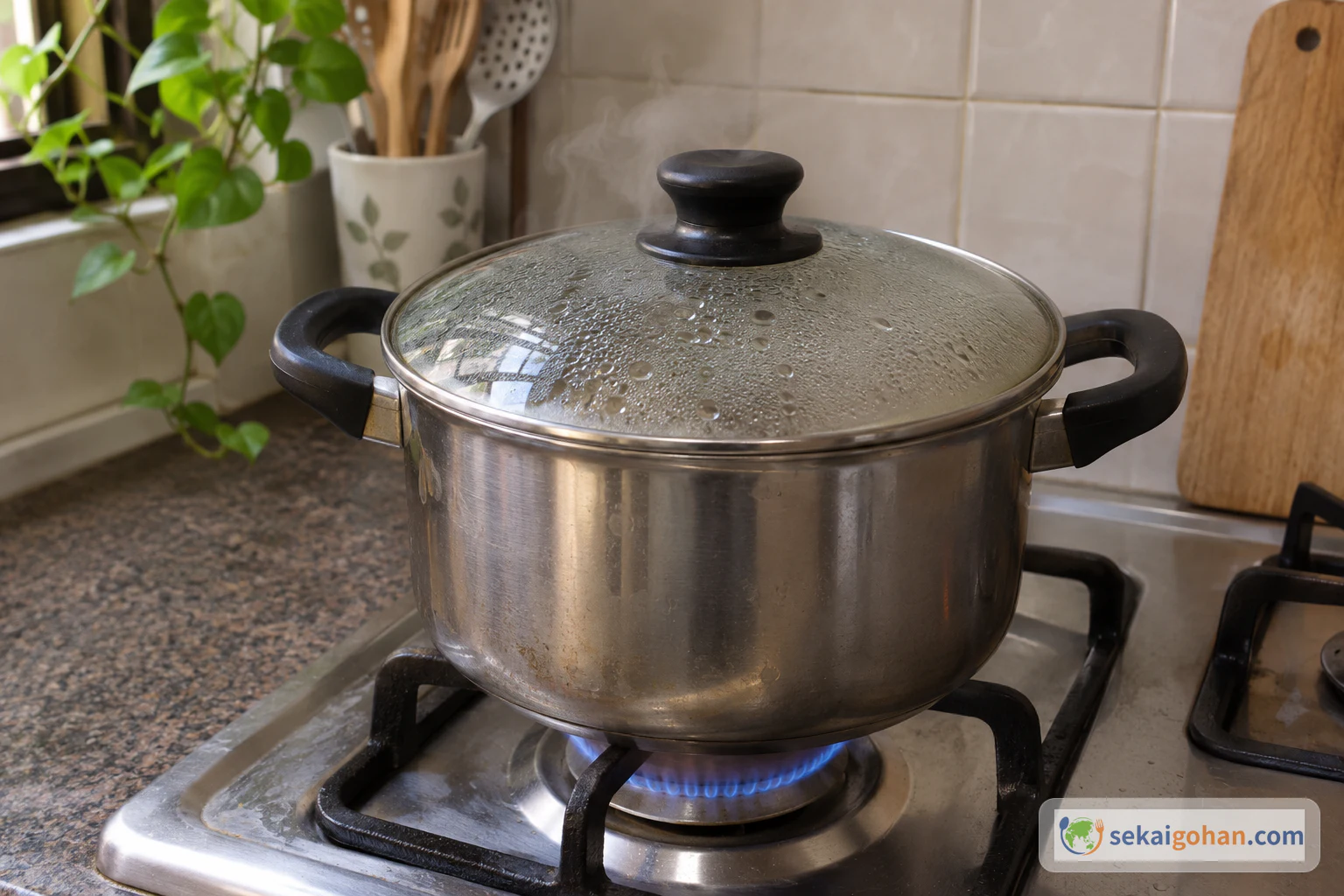
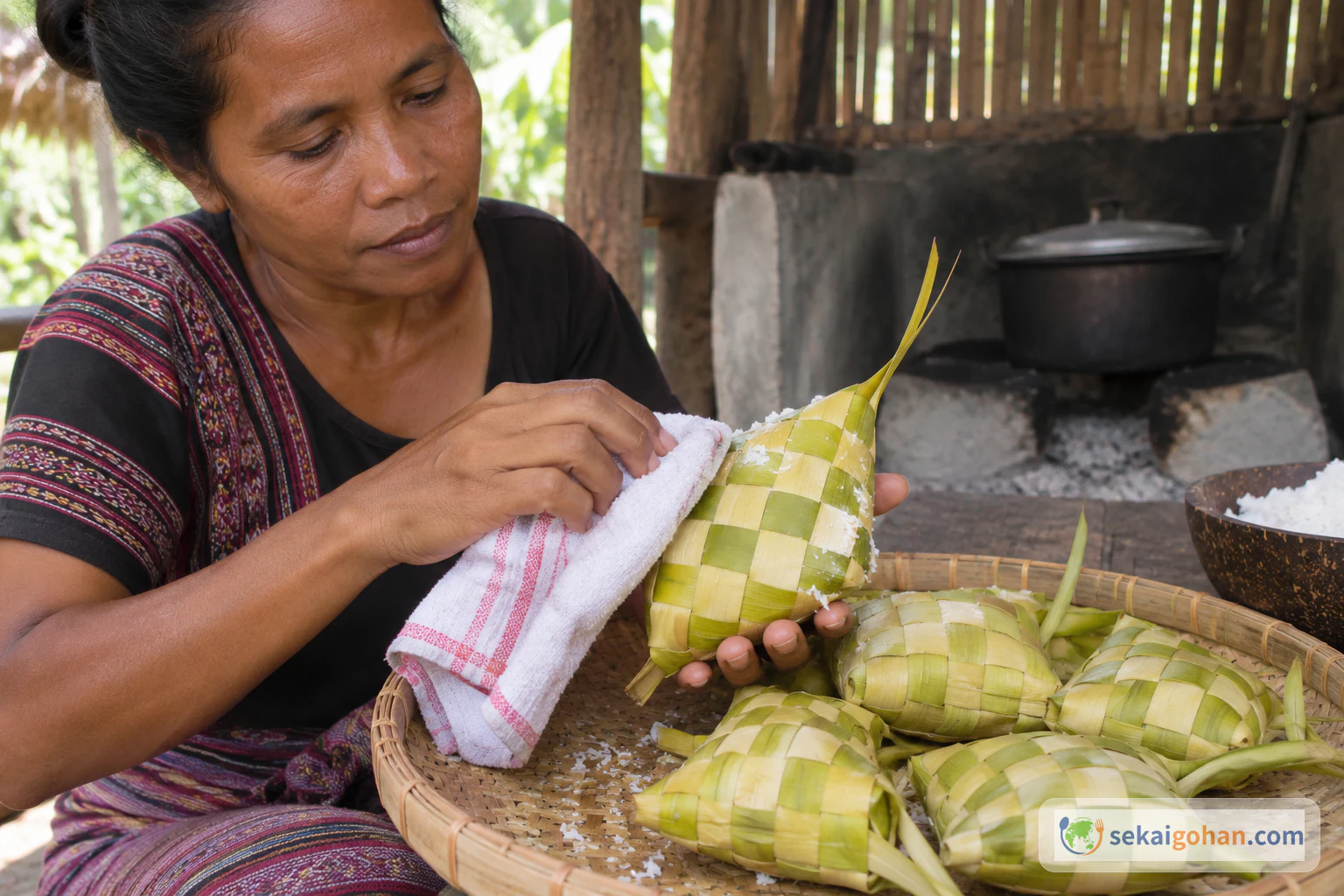
The steps are split into single actions. Steps 1–11 prepare the rice mixture, steps 12–14 fill the pouches, steps 15–19 cook them, and steps 20–22 bring them to the table.
When Things Go Sideways
Because this version has not been kitchen-tested and gives no detailed doneness test, the fixes below stay within what the method itself says.
| Situation | What to do |
|---|---|
| A pouch is more than half full | Spoon some of the mixture back out until it is about half full before closing. Half filling is part of this method |
| A pouch will not stay closed | Tuck the leaf ends in again along the existing weave. Do not improvise with string, other leaves, paper or cloth |
| You are unsure when to stop cooking | Keep to the 40–60 minute range over medium heat. No tested visual cue is given for this version, so none is suggested here |
| You are tempted to discard the squeezed solids | Keep them: they go under the pouches in the pot |
| You want to keep some for later | Storage and reheating are not covered for this version; plan to serve it within the same meal |
Other Ways Katupa Is Made
Several methods for katupa exist in Timor-Leste, and this article covers only the Viqueque family version. It does not combine its amounts or steps with other versions, and it does not describe what those other versions contain.
Within this version, the one choice shown is how to cool the pouches: the ACIAR book also describes hanging them, while this article lays them out on a flat basket. At the table, grilled fish and aimanas are optional companions, as suggested in the ACIAR book and described in the East Timor Guide; katupa itself stays the same whether you add them or not.
Frequently Asked Questions
What size cup and what kind of rice should I use?
Neither the cup volume nor the rice variety is specified for this version. Use your usual cup for 2½ cups of rice, and keep the salt and pepper amounts as listed. No conversion to grams or other measures is given here.
Can I wrap the rice in banana leaf or a paper bag instead?
That would be a different preparation, not katupa in a woven pouch, and this article does not treat those wraps as equivalents. The same goes for leaves from unknown or ornamental plants, waxed paper and cotton bags. Use food-use woven coconut-leaf pouches, and check the supplier's food-contact information and preparation instructions.
How do I weave the pouches myself?
This article does not teach weaving; it starts from pouches that are already woven. The ACIAR cookbook Cooking fish and seafood in Timor-Leste has a separate section on weaving if you want to learn.
How long does cooked katupa keep?
This version gives no storage period, room-temperature guidance or reheating method. Cool the pouches quickly on a flat basket and serve them within the same meal.
Why keep the squeezed coconut and turmeric solids?
In this version they are spread across the bottom of the pot, and the filled pouches are set on top of them before the water goes in. The liquid seasons the rice, and the solids are used in the pot.
What should I serve with it?
The ACIAR book suggests grilled fish and aimanas, and the East Timor Guide describes a similar pairing. Both are optional, and this article does not include recipes for them.
Sources
- Australian Centre for International Agricultural Research (ACIAR), with Timor-Leste contributors, Cooking fish and seafood in Timor-Leste / Te'in ikan no hahán tasi iha Timor-Leste. The Viqueque family version of katupa used in this article (English text, printed page 57; Tetun text, printed page 56): the note that several methods exist in Timor-Leste, the yield of 16 pouches for 4 people, all ingredients and amounts, the method steps, and the suggestion to serve with grilled fish and aimanas. https://www.aciar.gov.au/sites/default/files/2020-12/CookingTimor-Leste_web-72dpi_3.pdf
- East Timor Guide, "Timorese Food: Dishes to Try in Timor-Leste." Food-guide context describing katupa with grilled fish and aimanas as a pairing. Not a recipe source. https://www.easttimorguide.com/food/
- Universidade da Integração Internacional da Lusofonia Afro-Brasileira (UNILAB), communications office, "Estudantes timorenses testam receitas típicas de seu país," 2012. A single campus event where Timorese students introduced katupa among dishes from their country on a festive occasion. Not a recipe source. https://unilab.edu.br/2012/05/16/estudantes-timorenses-testam-receitas-tipicas-de-seu-pais/
- Timor-Leste Tourism (official tourism website), "Where to Eat: Restaurants, Cafes & Local Food." Describes katupa as rice dumplings often served at celebrations. No recipe or quantities. https://timorleste.tl/eat-drink