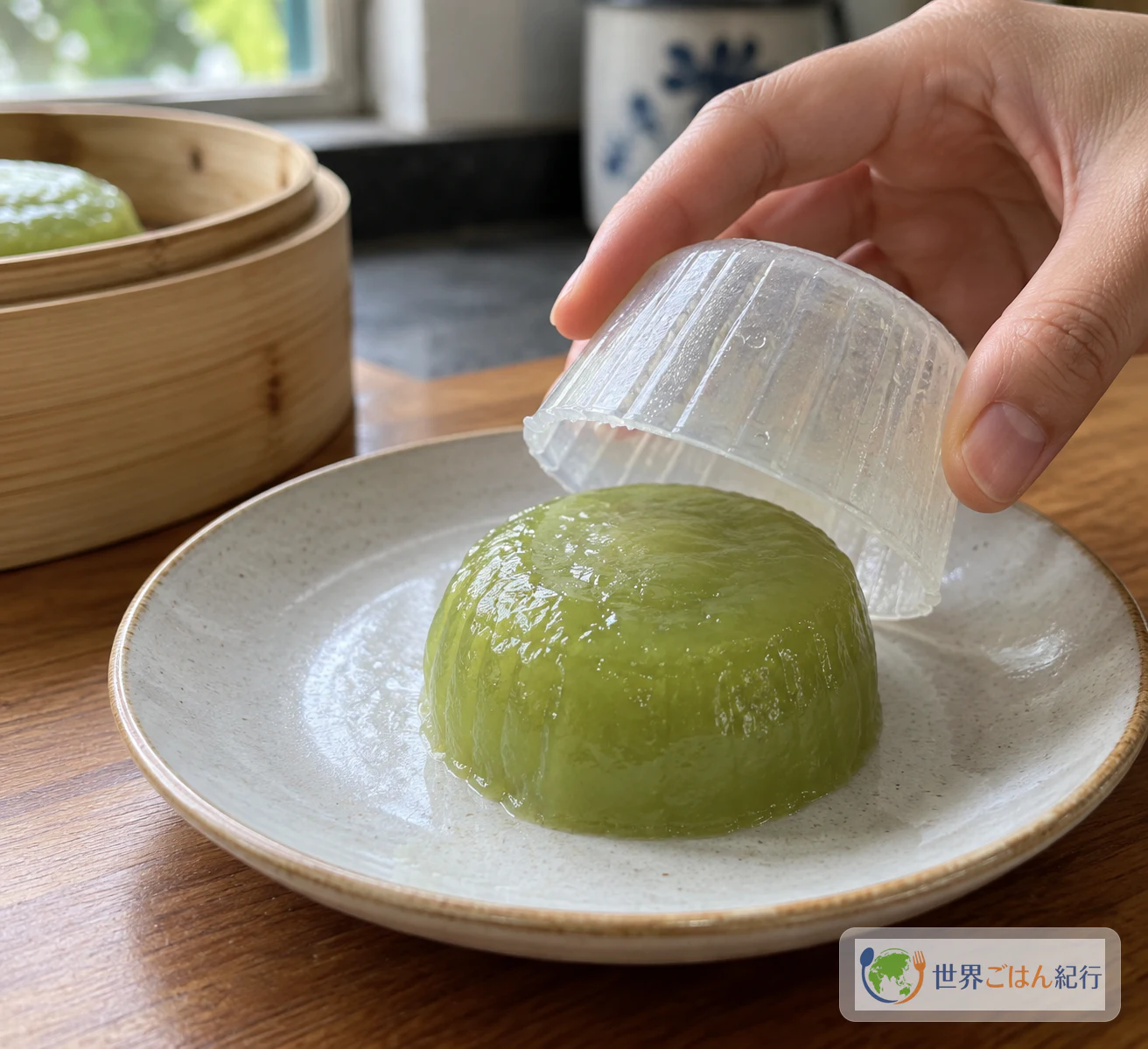
Bánh Phu Thê: Yellow Mung Bean Glowing Through a Chewy Green Skin
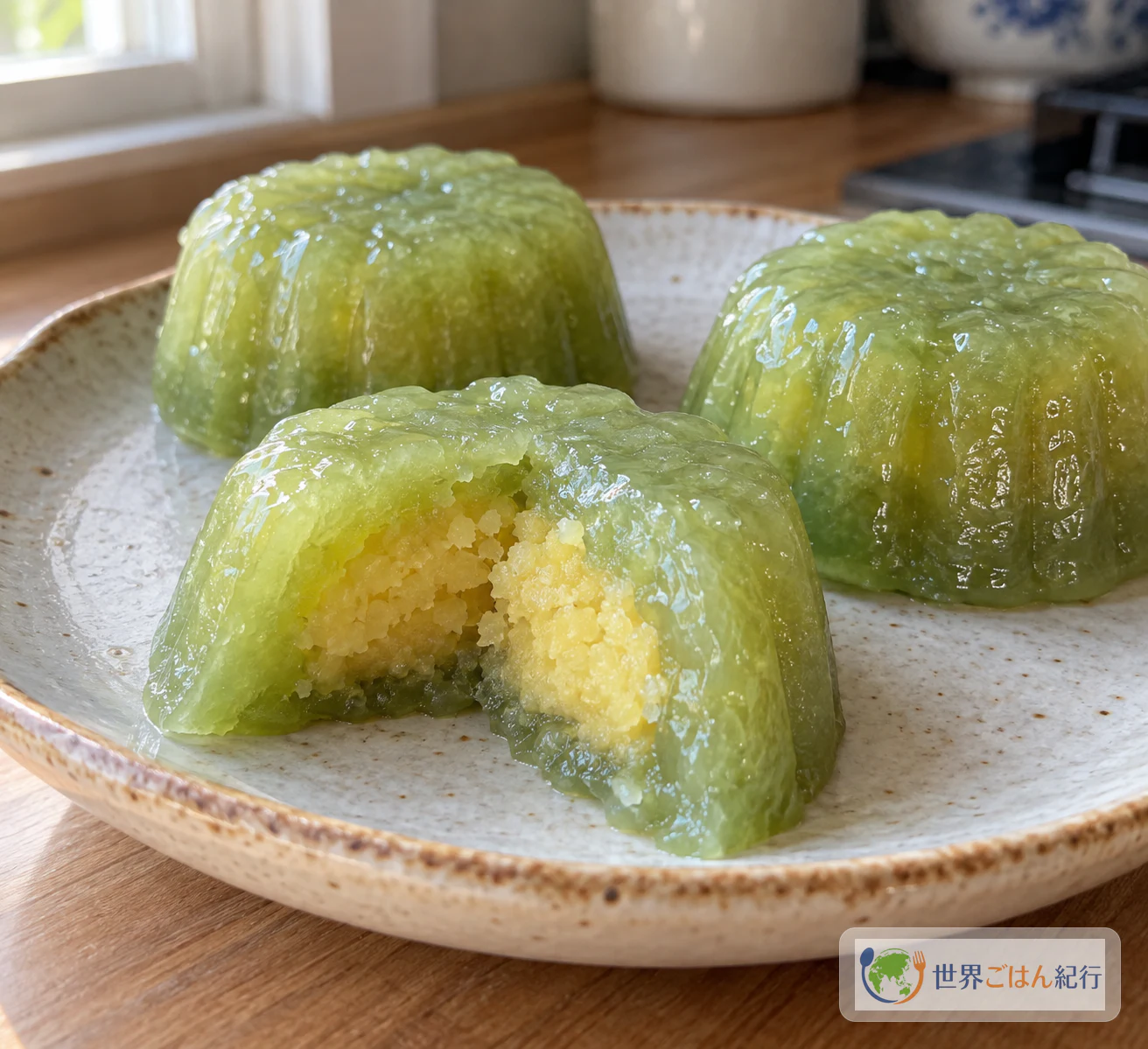
A soft, chewy skin of tapioca starch, pale green from pandan and translucent enough to show the yellow mung bean filling inside. Two layers of skin hold one small ball of filling, and the whole thing is steamed gently in a small mold.
Bánh phu thê is a sweet Vietnamese cake built on a contrast: a chewy, glossy tapioca skin on the outside and a dense, sweet mung bean filling at the center. The name is sometimes translated as "husband and wife cake," and in some places the same cake is called bánh xu xê.
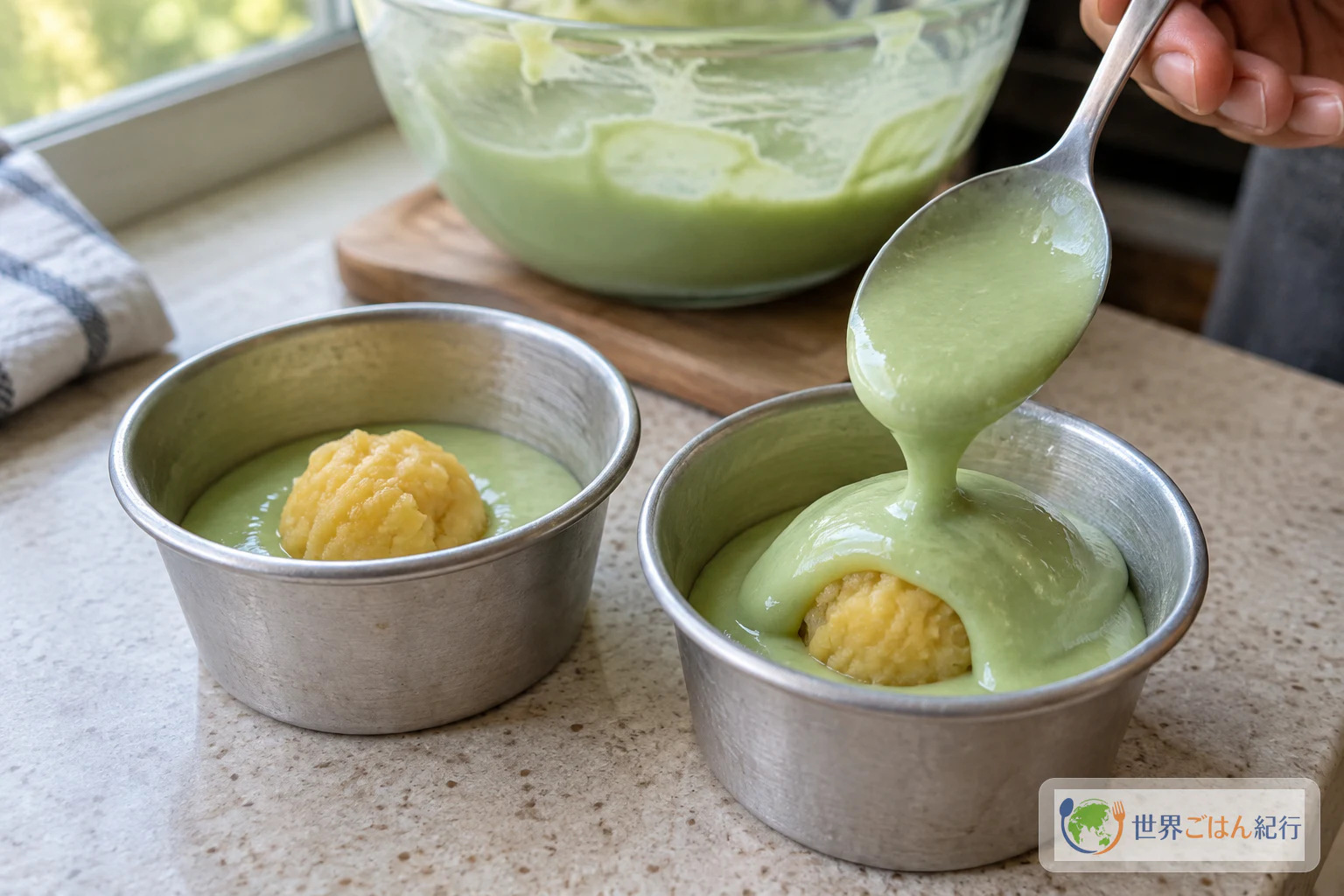
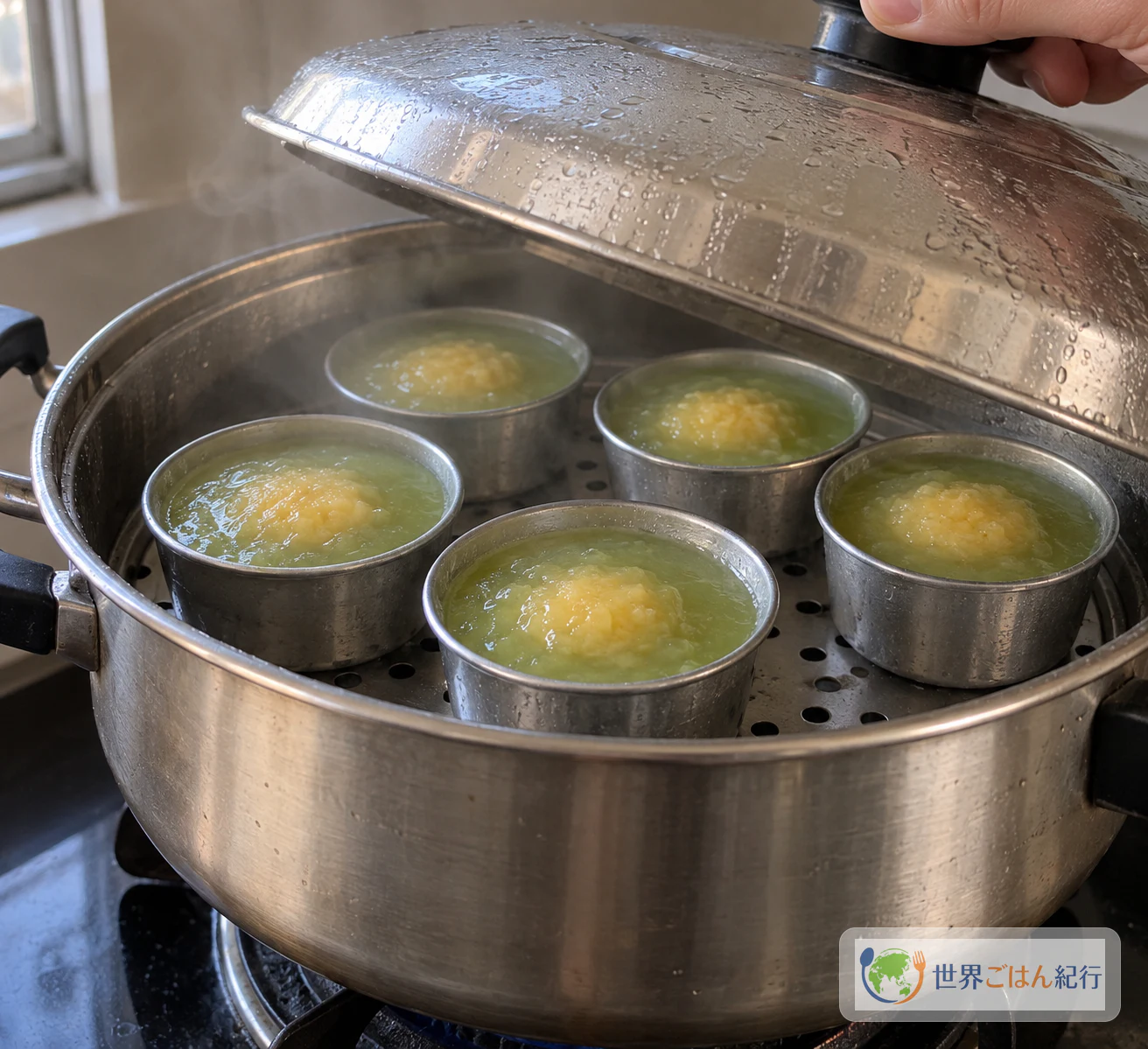
The recipe here follows a home version shared on Cookpad Vietnam by Quỳnh Phương, a home cook in Hà Nội. In this version the skin is made with water blended with pandan leaves, the batter is warmed just until it begins to thicken, and the cakes are layered in oiled molds (batter, filling, batter) and steamed over low heat for 15 minutes. It is one household's molded version, not a reconstruction of the leaf-wrapped wedding cakes associated with Đình Bảng.
Sekai Gohan has not kitchen-tested this recipe yet. Some details are not fixed, such as the size of the molds, the number of cakes, how long to soak the beans and how many pandan leaves to use. Where those are open, the method below tells you what to look for rather than giving a number. For more dishes from the same country, see our Vietnam page.
Bánh phu thê is written with Vietnamese tone marks; without them it often appears as "banh phu the." Searching for "bánh xu xê" or "banh xu xe" as well will turn up related regional versions.
A Cake Given in Pairs: The Wedding Background
GoVietnam, an independent travel guide, introduces bánh phu thê as a cake linked to the Kinh Bắc region and Đình Bảng, where it is described as part of wedding gifts. In the guide's account, the cakes are arranged in pairs on wedding gift trays as a wish for harmony between husband and wife, and the leaf wrapping and red ties used for wedding cakes carry their own meanings. These are explanations from a guide article, not an independent historical record, so they are best read as one description of the tradition rather than a settled origin story.
The same guide describes regional differences in shape, wrapping and filling, and the name xu xê appears in places such as Hà Nội and Huế, with wedding cake customs also described in Phú Yên. The molded home cake in this article is a single version among those. It uses no leaf box and no red tie: the green comes from pandan water, and the small mold gives the cake its shape.
A different home recipe from the Vietnamese baking site Làm Bánh Ngon shows how wide the range is. It uses its own proportions, cooks the skin until it turns fully transparent, and wraps the filling by hand while the dough is still hot. The cake here does neither: the batter is only warmed until slightly thick and then set by steaming in the mold. The two methods are not mixed in this recipe.
Ingredients: Pandan Skin and Mung Bean Filling
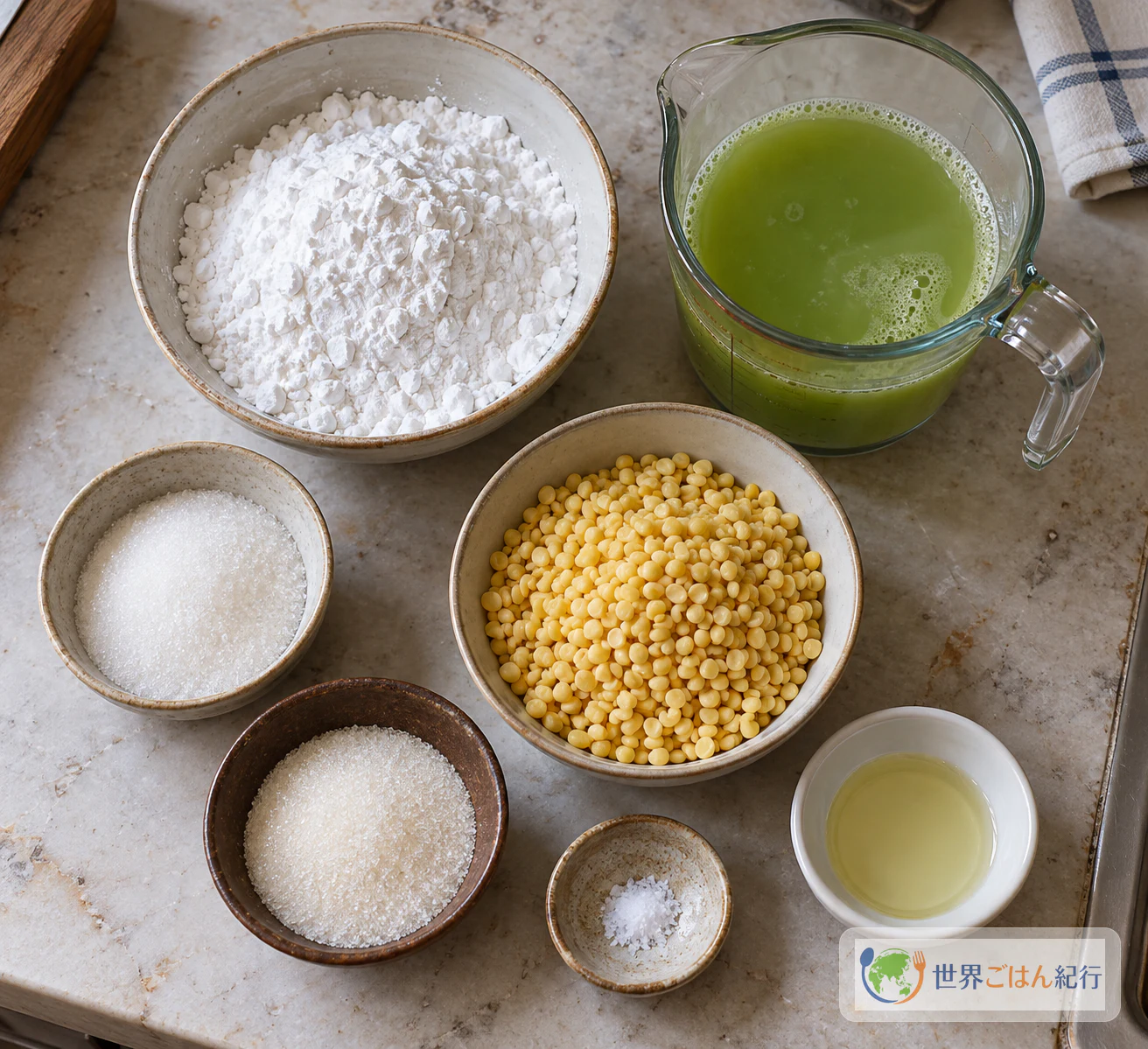
Keep the 60g of sugar for the skin and the 30g for the filling in separate bowls so they don't get mixed up. The oil only goes on the molds; it does not go into the batter or the filling.
Equipment
- Steamer with a lid
- Small heatproof molds
- Saucepan
- Spatula
- Bowls
Choosing Tapioca Starch, Pandan and Mung Beans
Tapioca starch is what gives the skin its chew and translucency. Look for it at Asian grocers, sometimes labeled tapioca flour or bột năng. Potato starch and cornstarch are not the same thing and behave differently, so they are not recommended as swaps here.
Pandan water is made by blending pandan leaves with water to get a pale green liquid. Look for fresh or frozen leaves at Southeast Asian grocers; availability varies. Bottled pandan extract is a different product: its strength, color and aroma vary by brand, so it can't simply replace the 230ml of pandan water. Treat an extract version as a separate recipe that needs its own liquid balance.
Mung beans for the filling here are the peeled, split yellow kind, which mash into a smooth paste. Whole green mung beans with their skins would give a different texture and color.
The ingredients listed contain no wheat, milk or eggs, but that does not make the cake allergen-free. Check the labels on tapioca starch and other packaged ingredients for shared-facility and cross-contact statements.
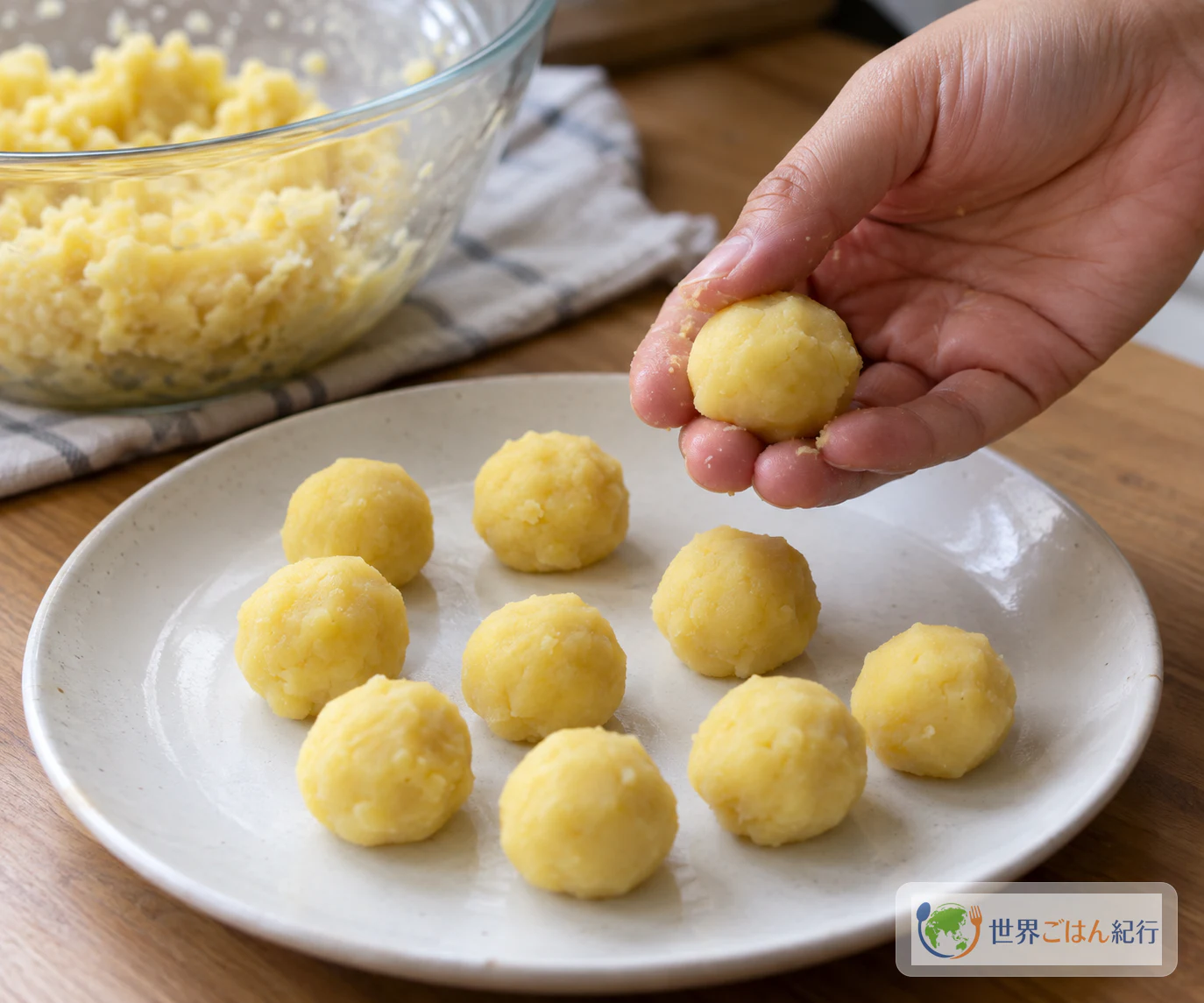
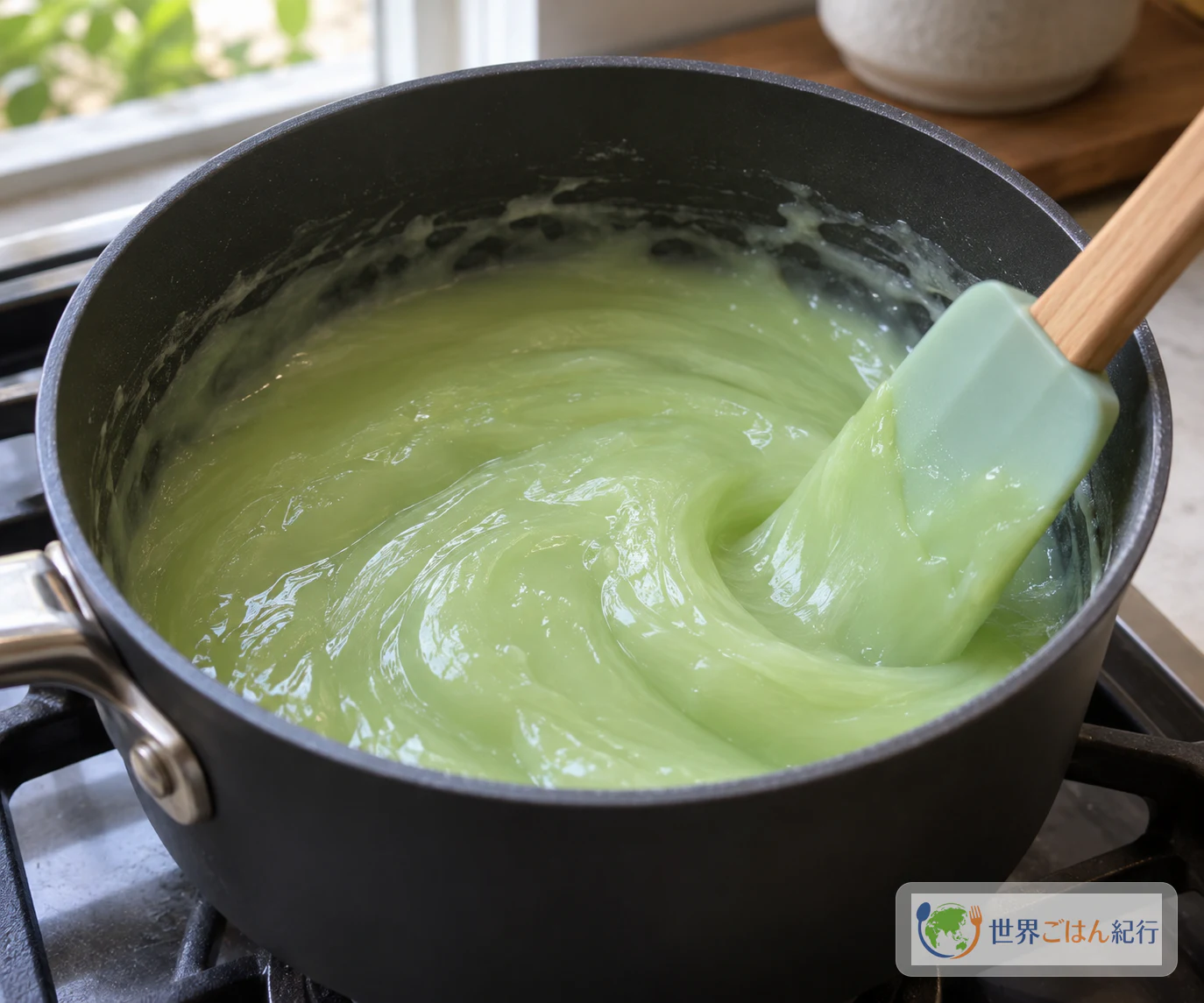
Method: Filling First, Then a Barely Thickened Batter
The batter should only start to thicken on the stove. If it is cooked until it is fully clear or turns into a dough, it no longer spreads in the mold. The cakes set in the steamer, not in the pan.
Fixing Problems: Sticking, Shifting Filling, a Cloudy Skin
| Problem | Likely cause | What to do |
|---|---|---|
| The skin sticks to the mold | The mold was not oiled, or not all the way up the sides | Brush every mold thinly with oil before adding batter. Keep the oil out of the batter itself |
| The filling sinks or the layers run together | The filling was soft or warm when the cakes were assembled | Shaping the filling into balls and letting them cool before assembling makes them easier to place |
| The batter is too stiff to spoon | It was cooked past the first thickening in the pan | Next time take it off the heat as soon as it begins to thicken |
| The skin still looks white and cloudy after steaming | Molds and steamers differ, so 15 minutes may not suit every setup | Judge by the look of the skin: it should be set and translucent. Note what works with your molds for next time |
| The cake tears when unmolded | It was unmolded while still hot and soft | Wait until the cakes have cooled before taking them out |
Fifteen minutes over low heat is the steaming time for this recipe, but it does not guarantee the same result in every mold and steamer. The look of the skin is the more reliable signal.
Serving and Leftovers
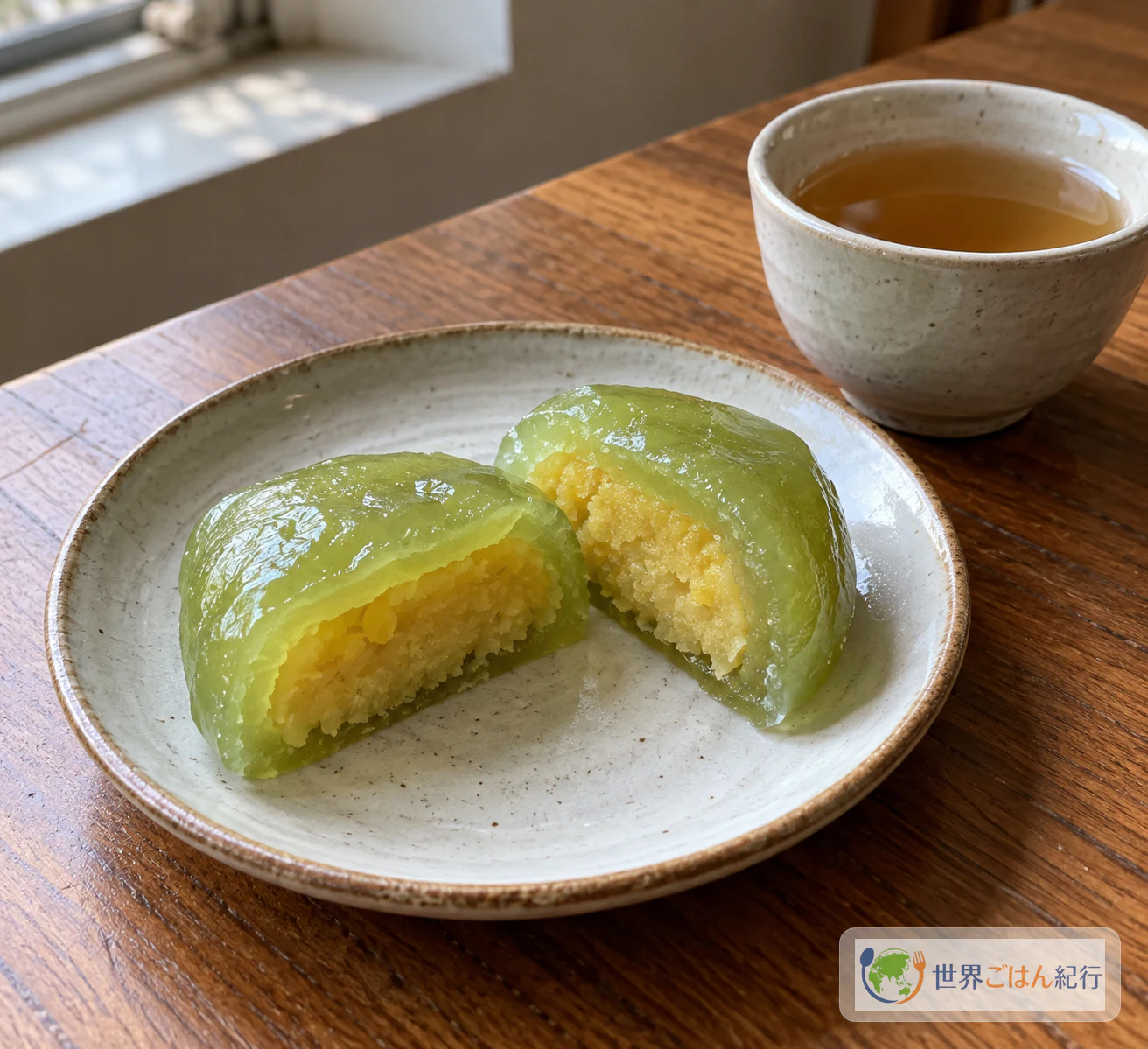
Cut one cake in half and the yellow filling shows inside the pale green skin. A small cup of hot tea is one simple option alongside, though the cake needs nothing else on the plate.
No storage period is given for these cakes. Make them with clean utensils and eat them soon.
Variations Worth Trying After the First Batch
- Whole mung beans: Using unpeeled mung beans gives a filling with a different texture and color than the smooth peeled-bean version. Treat it as a different cake rather than an equal swap.
- Pandan extract version: If fresh pandan leaves are hard to find, an extract version is possible, but it is a separate recipe. The liquid amount and color need working out again instead of swapping straight for the pandan water.
- Less sweet: Make the cake once as written before reducing either sugar, so you have a baseline to compare against.
- Leaf-wrapped presentation: The leaf boxes and red ties of wedding cakes belong to a different style. If you want to show that context, present it as a serving idea and keep the molded method here unchanged.
Frequently Asked Questions
Is bánh phu thê the same as bánh xu xê?
The names overlap. The GoVietnam guide uses xu xê as a name for the cake in some regions, and describes differences in shape, wrapping and filling from place to place. The name is shared, but the methods vary.
Can I use potato starch or cornstarch instead of tapioca starch?
That swap is not recommended. These starches behave differently from tapioca starch, and no substitution has been tested for this recipe. Use tapioca starch.
How many cakes does this make?
It depends on the size of your molds. The home recipe this follows does not give a mold size or a number of cakes, so no yield is given here.
Do the mung beans have to be peeled?
The Hà Nội home recipe simply says mung beans, without saying whether they are peeled. This article uses peeled split mung beans for a smooth yellow filling. Whole beans with skins would give a different texture.
How many pandan leaves do I need for the pandan water?
The home recipe gives only the volume of the pandan water, 230ml, not the weight of leaves or how strong to make it. Blend leaves with water to get a pale green liquid, and expect the color and aroma to vary with the leaves you use.
How long do the cakes keep?
No storage time is given, because the sources used here do not support one. Make the cakes with clean utensils and eat them soon.
Has this recipe been tested?
Not yet. Sekai Gohan has not kitchen-tested this recipe, so details such as mold size and yield are not fixed.
Sources
- GoVietnam Editorial, "Bánh phu thê – Vietnamese Sweet Cake." An independent travel guide article used for the names bánh phu thê and xu xê, the outline of regional versions, the association with Kinh Bắc and Đình Bảng, the custom of giving the cakes in pairs as wedding gifts with leaf wrapping and red ties, and the contrast of a chewy tapioca skin with mung bean filling. Used as a general overview, not as proof of historical origin. https://govietnam.travel/en/food/banh-phu-the/
- Quỳnh Phương (Hà Nội), "Bánh phu thê," Cookpad Vietnam. The home recipe adopted here: tapioca starch, pandan water and sugar for the skin; mung beans, sugar and a little salt for the filling; warming the batter until slightly thick; layering batter, filling and batter in oiled molds; steaming over low heat for 15 minutes; cooling before unmolding. https://cookpad.com/vn/cong-thuc/11966097
- Làm Bánh Ngon, "Công thức bánh Xu xê (bánh Phu thê) làm tại nhà ngon khó cưỡng." Used only for comparison, as a different home method that cooks the skin until fully transparent and wraps it by hand while hot. Its amounts and method are not used in this recipe. https://lambanhngon.com/huong_dan_lam_banh/cong-thuc-banh-xu-xe-banh-phu-the-lam-tai-nha-ngon-kho-cuong/971.nhtml