Batar Daan: Corn, Beans and Pumpkin Softening Together in One Pot
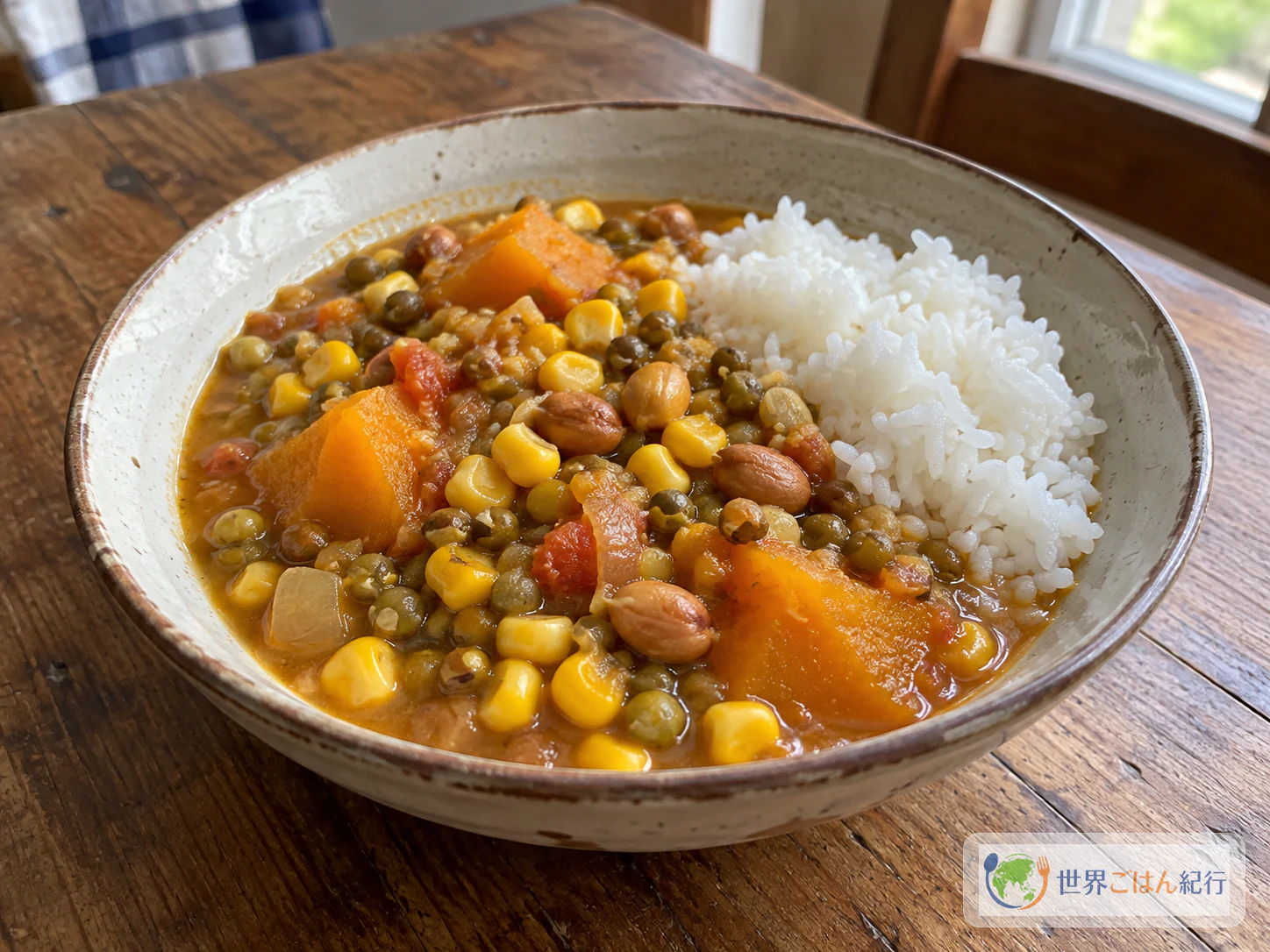
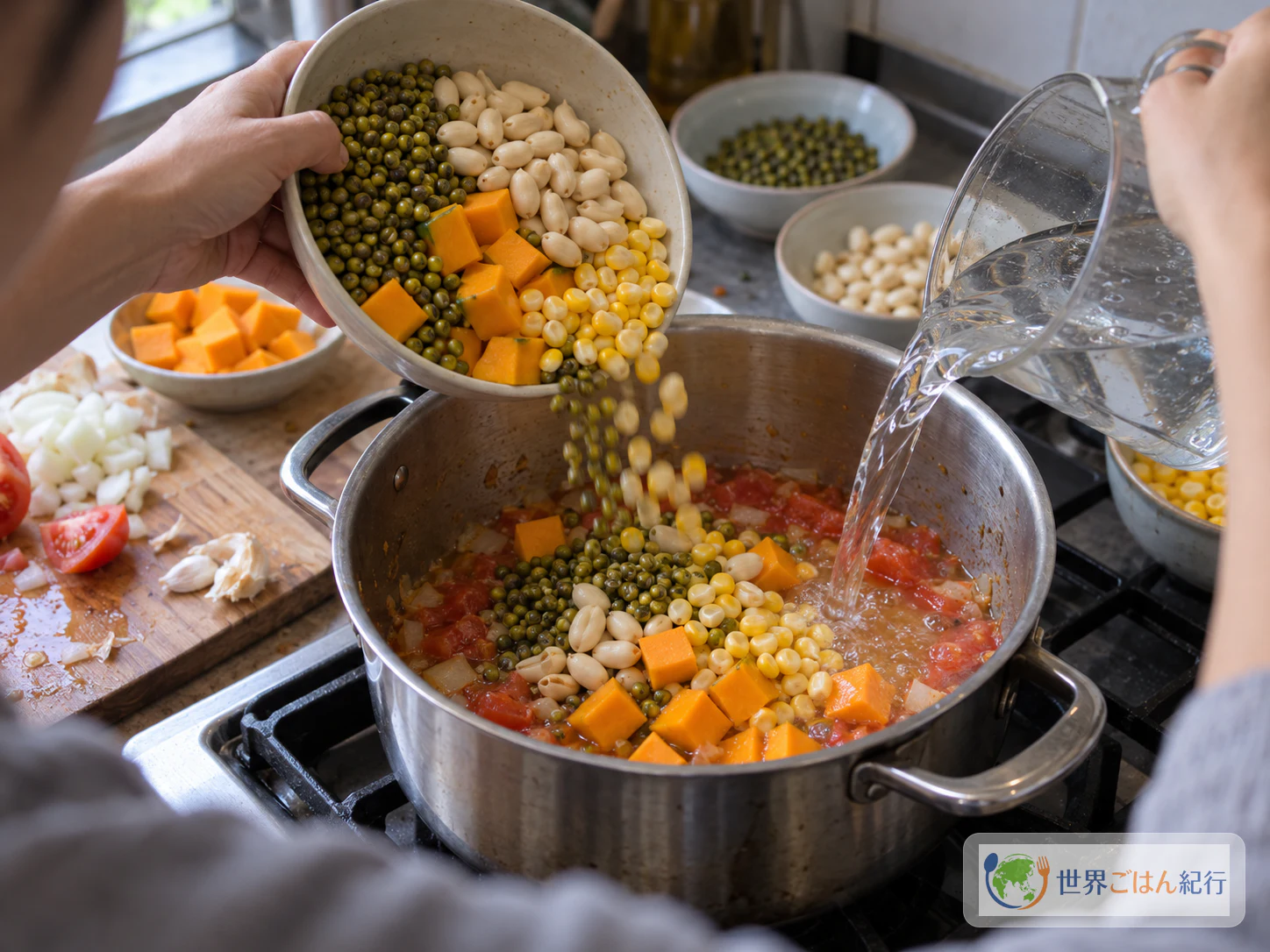
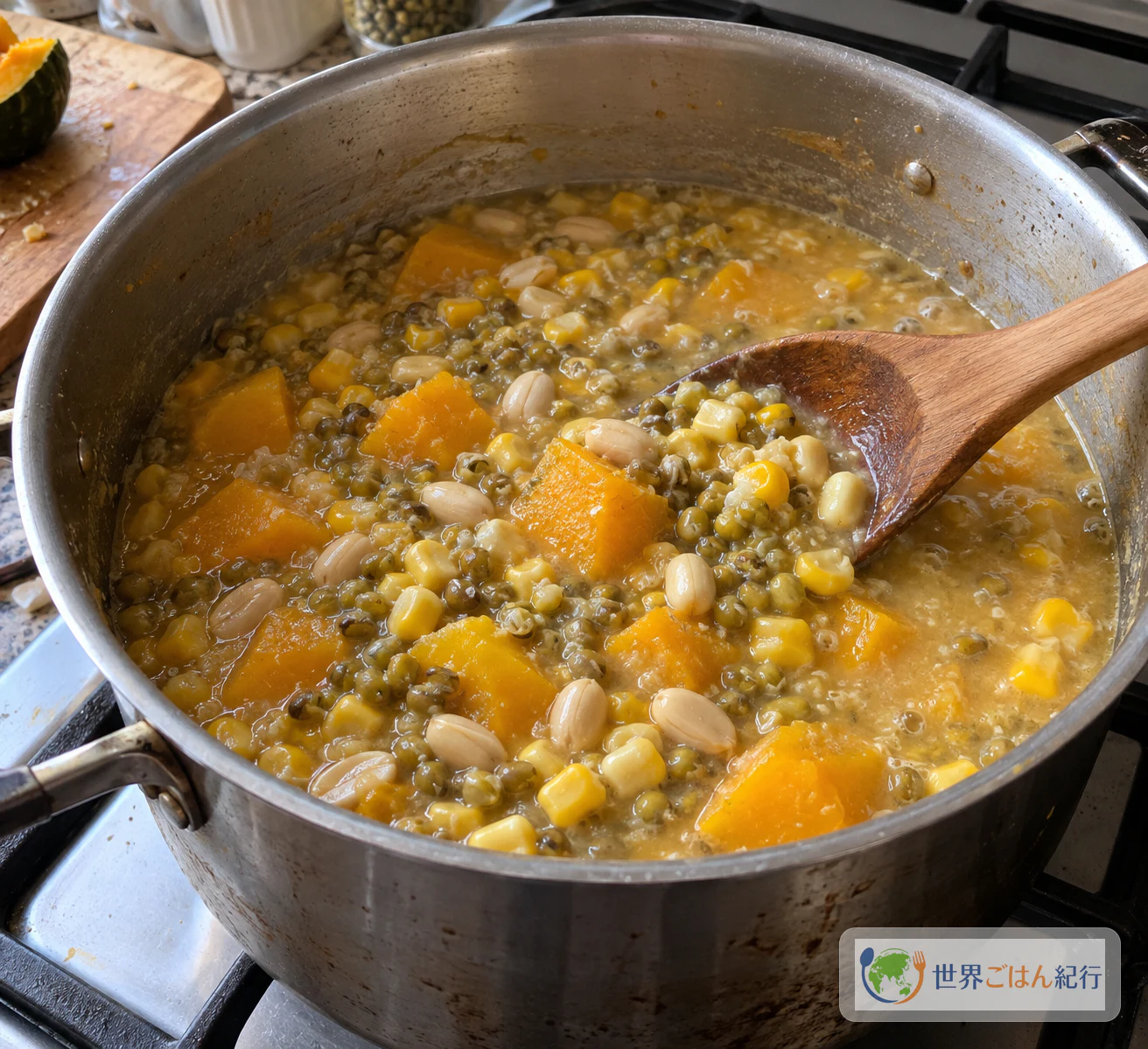
Let the sweetness of the corn and pumpkin carry the stew, keep the mung beans and peanuts substantial, and simmer until everything is tender and the liquid has thickened into one dish. Heat and sourness are not essential here.
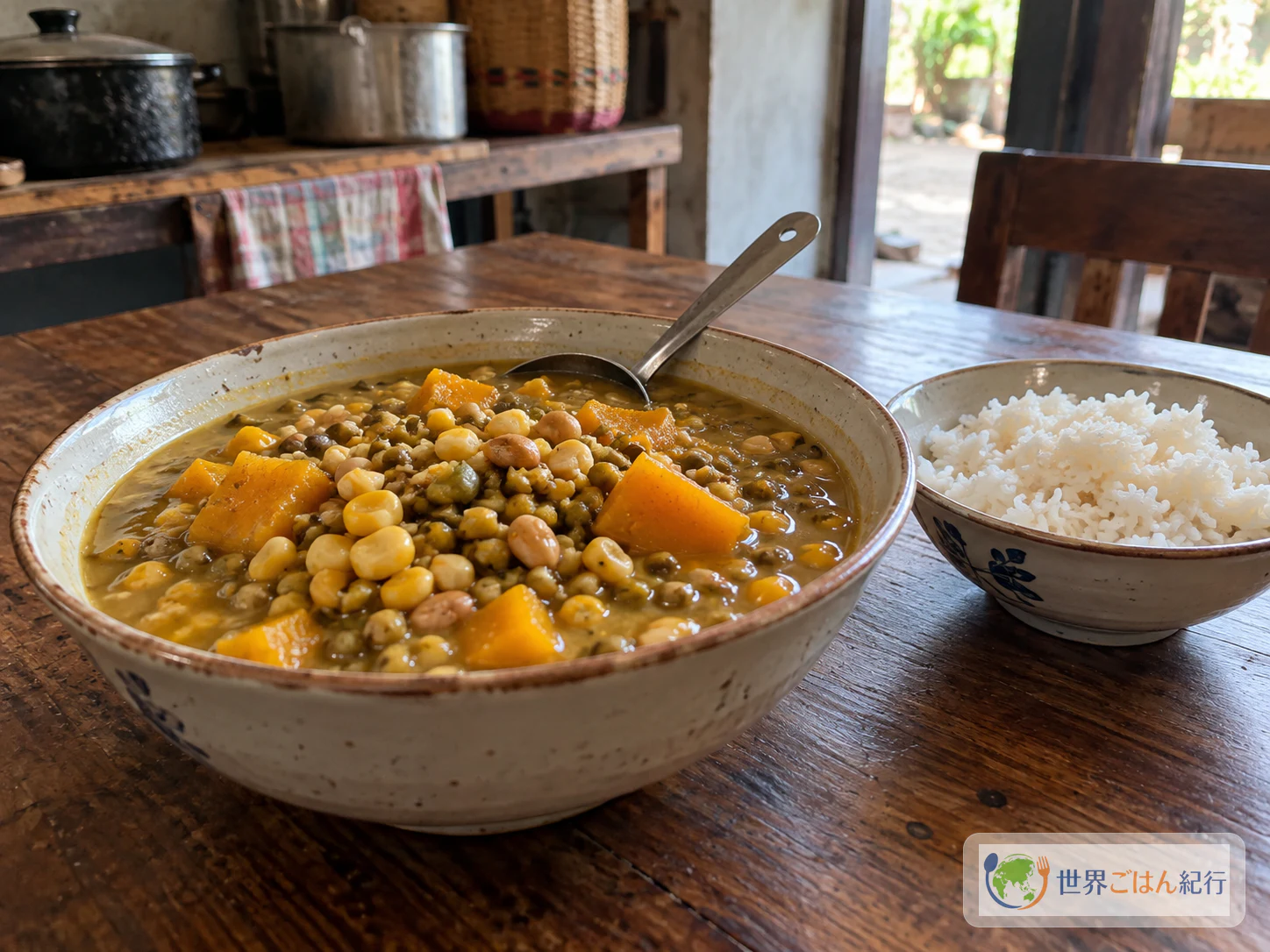
Corn kernels, beans and pumpkin go into a single pot and soften together, bound by the natural sweetness of the main ingredients. Timor-Leste's official tourism site lists batar daan among the country's traditional dishes and describes it as a dish of corn, beans and pumpkin.
The ingredient list is short, and that is the point. This article follows one specific home version: the SBS Food recipe by Adam Liaw, published as Batar da’an ho lakeru, which uses dried mung beans, raw peanuts, onion, garlic, tomato, butternut pumpkin and fresh corn kernels, served with steamed rice. It is one household version, not the single correct recipe.
This recipe reproduces the amounts and method published by SBS Food. Sekai Gohan has not kitchen-tested it, so the times and the 4–6 servings are the source's own figures, not measured results. Judge doneness by the pot in front of you.
What Batar Daan Is: A Dish Built on What the Land Provides
Batar daan is a stew of corn, beans and pumpkin. That is how Timor-Leste's tourism site summarizes it, presenting it as a traditional dish within a food culture shaped by region, local ingredients and outside influences.
You will see the name written in more than one way. SBS Food uses Batar da’an ho lakeru, while the tourism site writes batar da'un. One recipe site, 196 flavors, explains the Tetum name as meaning boiled corn. That explanation comes from a single third-party source, so treat it as a helpful hint rather than a settled translation.
SBS Food stresses that batar da’an is made differently from home to home and depends on the produce available. Families use different kinds of beans, may use dried corn, and choose different pumpkins or squashes; some add lime or chili to taste. The tourism site's short description of corn, beans and pumpkin is the common thread that runs through these versions.
For other dishes from the same country, see the Timor-Leste country page.
Ingredients: The SBS Food Version, Serves 4–6
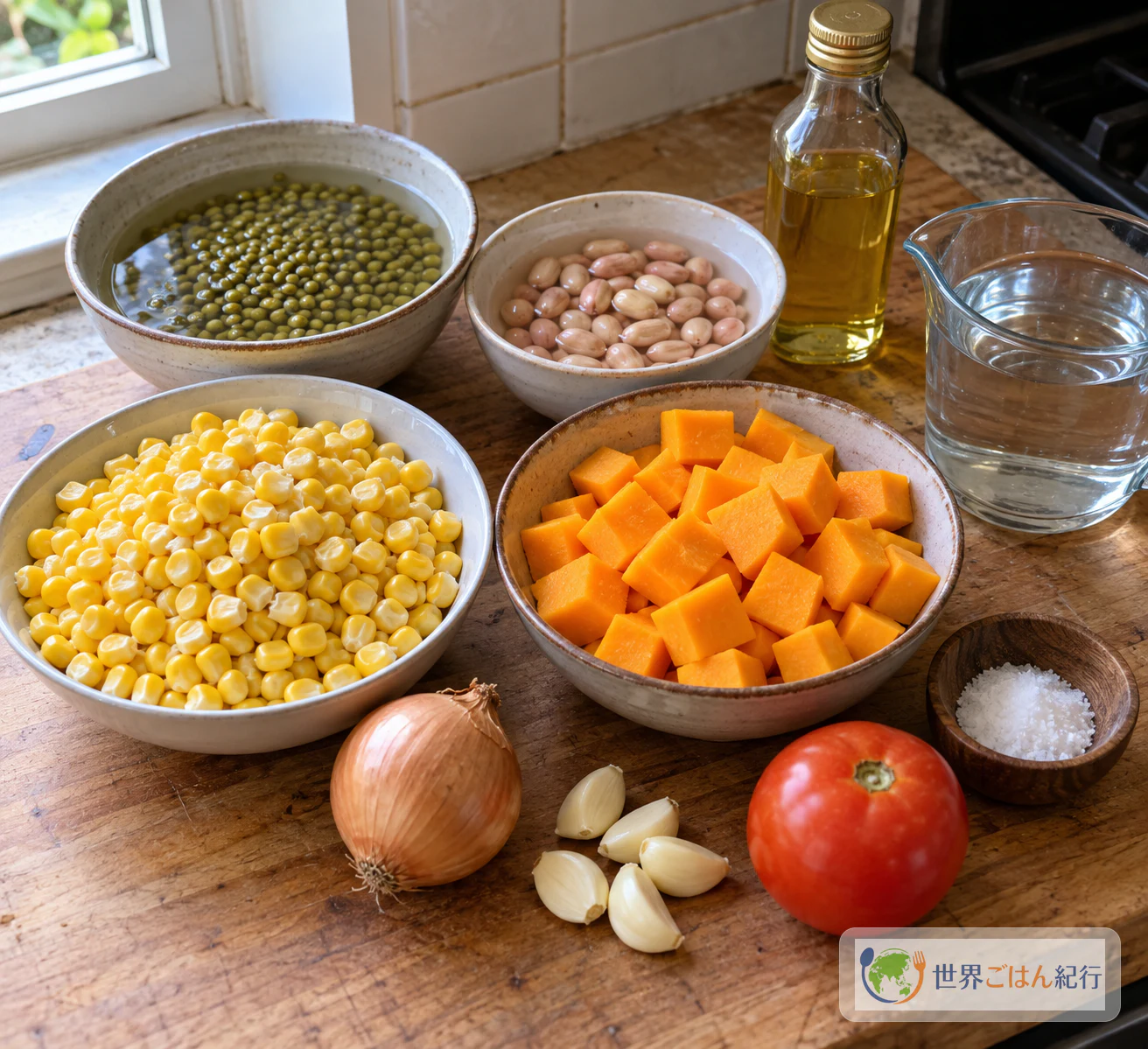
An Australian tablespoon is 20ml and an Australian cup is 250ml.
This recipe contains peanuts. If you or anyone eating has a peanut allergy, do not make this version. Leaving the peanuts out does not reproduce the same dish. Take care with legumes generally, and check product labels for allergen and cross-contact information.
Equipment
- A large bowl for soaking
- A colander or sieve for draining
- A large, heavy pot that holds the beans and vegetables together
- Measuring spoons or a measuring jug with ml markings, to measure the 60ml of oil and about 1 litre of water
- A knife and cutting board
- A spoon for stirring and checking tenderness
Choosing and Substituting: What to Keep, What Can Change
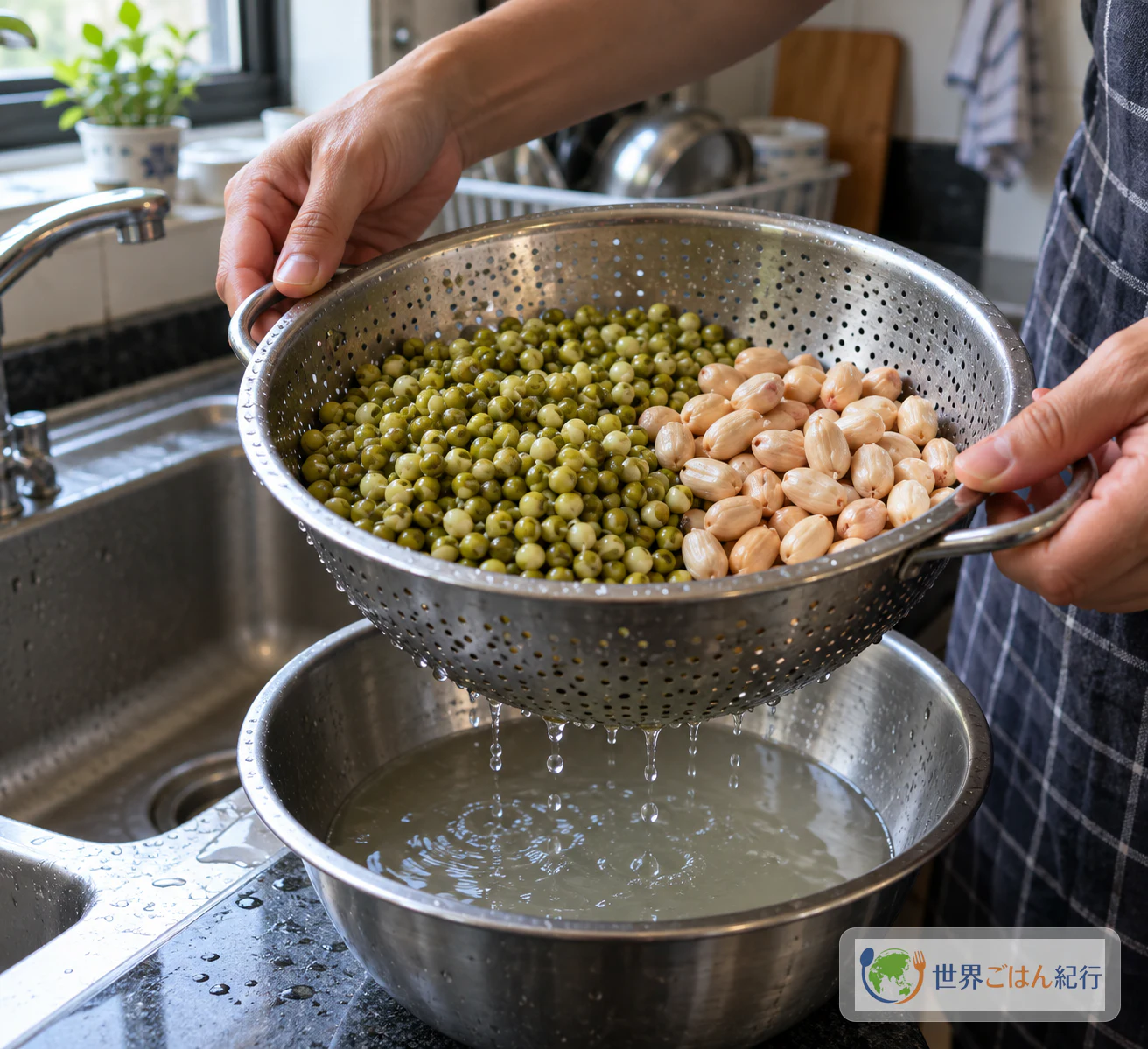
Mung beans and peanuts. Use dried mung beans and do not swap them silently for other beans such as soybeans or lentils. The peanuts should be raw, shelled and deskinned. Roasted, salted peanuts differ in oil, salt and toasty flavor, so they are not an equivalent substitute.
Measuring the oil. Three Australian tablespoons make 60ml. If your tablespoon holds 15ml, three spoonfuls fall short, so measure 60ml directly.
Pumpkin. Use one butternut pumpkin. Another winter squash, such as kabocha, also works; expect differences in moisture, sweetness and how readily it breaks down.
Corn. Use kernels stripped from fresh cobs. With 400g of unsalted frozen corn, aroma and bite will differ.
Oil. A neutral oil such as rapeseed (canola) is an editorial choice for "vegetable oil." Stronger oils change the flavor.
Method: From Overnight Soaking to a Thickened Stew
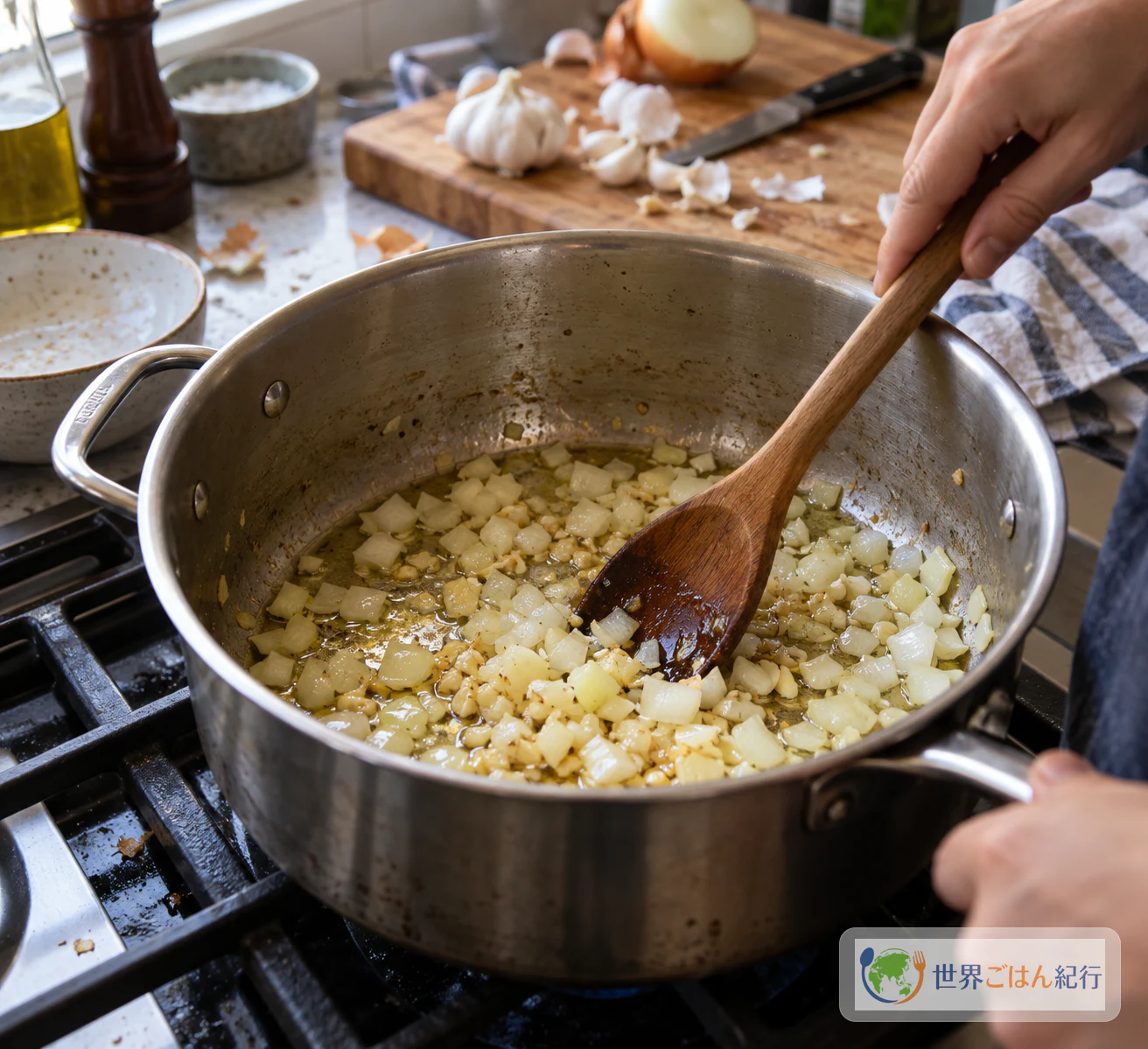
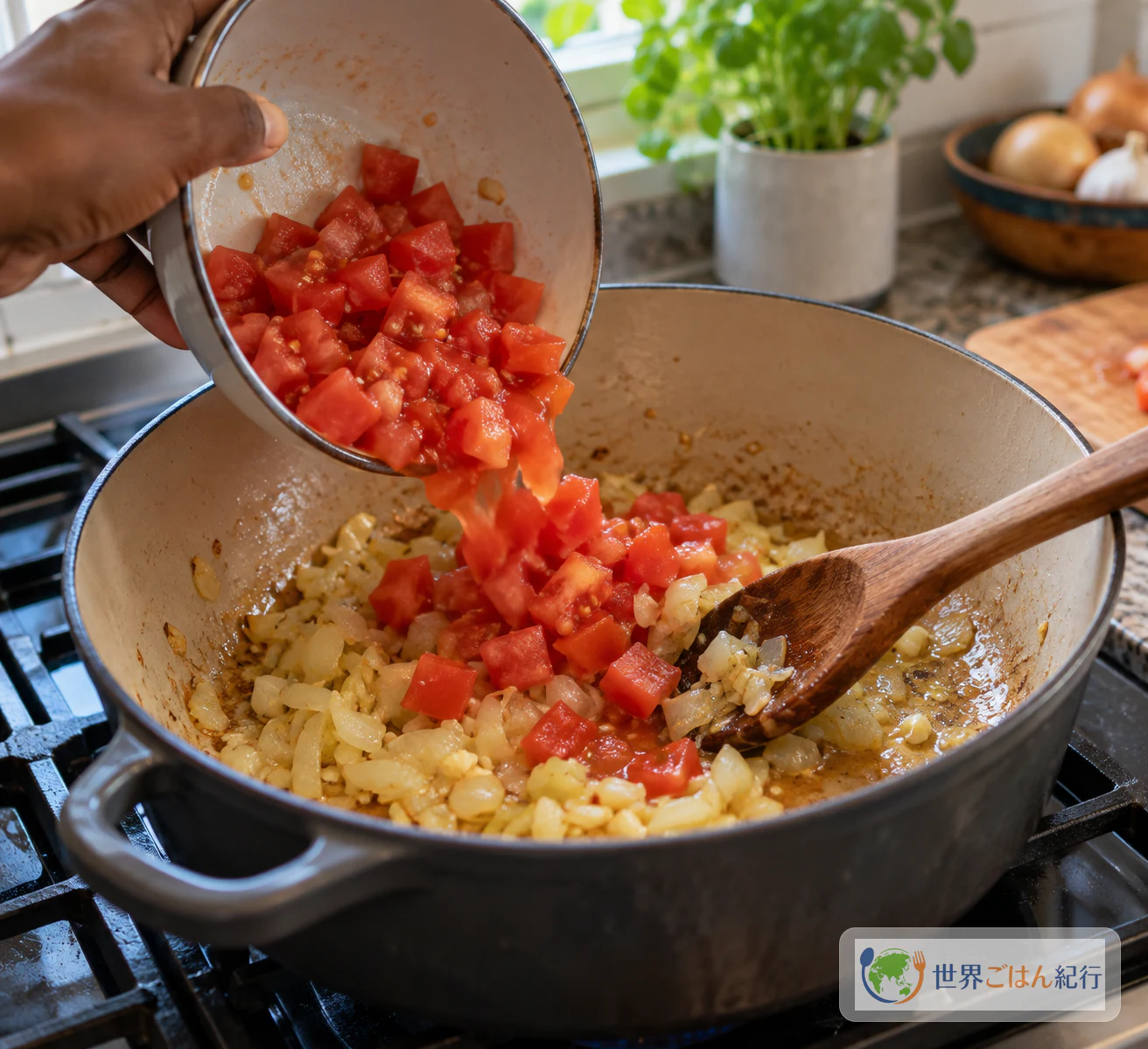
The SBS Food method gives about 4 minutes for the onion and garlic, about 1 minute for the tomato, and 25 minutes of simmering. The recipe header lists 15 minutes preparation and 30 minutes cooking, plus overnight soaking; it does not say whether the soaking counts toward preparation. The steps below use the method's own times. Neither figure has been measured in a test kitchen.
Checking the Pot: Hard Beans, Scorching, Thin Liquid
The recipe's own finish line is simple: tender ingredients in a thickened stew. The fixes below are practical home-kitchen guidance, not instructions from the source.
| Condition | Likely cause | What to do |
|---|---|---|
| Beans or peanuts still hard | Soaking was short, or the pot is simmering too gently | Keep simmering and test again. Don't rely on time alone |
| Sticking on the bottom | Heat too high, or the liquid has reduced | Lower the heat, check the bottom occasionally, and add a little water if needed |
| Liquid still thin | Ingredients have not broken down enough | Keep simmering until it thickens, stirring now and then |
| Pumpkin has dissolved | Some squashes break down faster | It will thicken the stew; next time, check the pumpkin earlier |
| Tastes flat | Not enough salt | Add salt a little at a time and taste again |
Variations: How Households Change the Pot
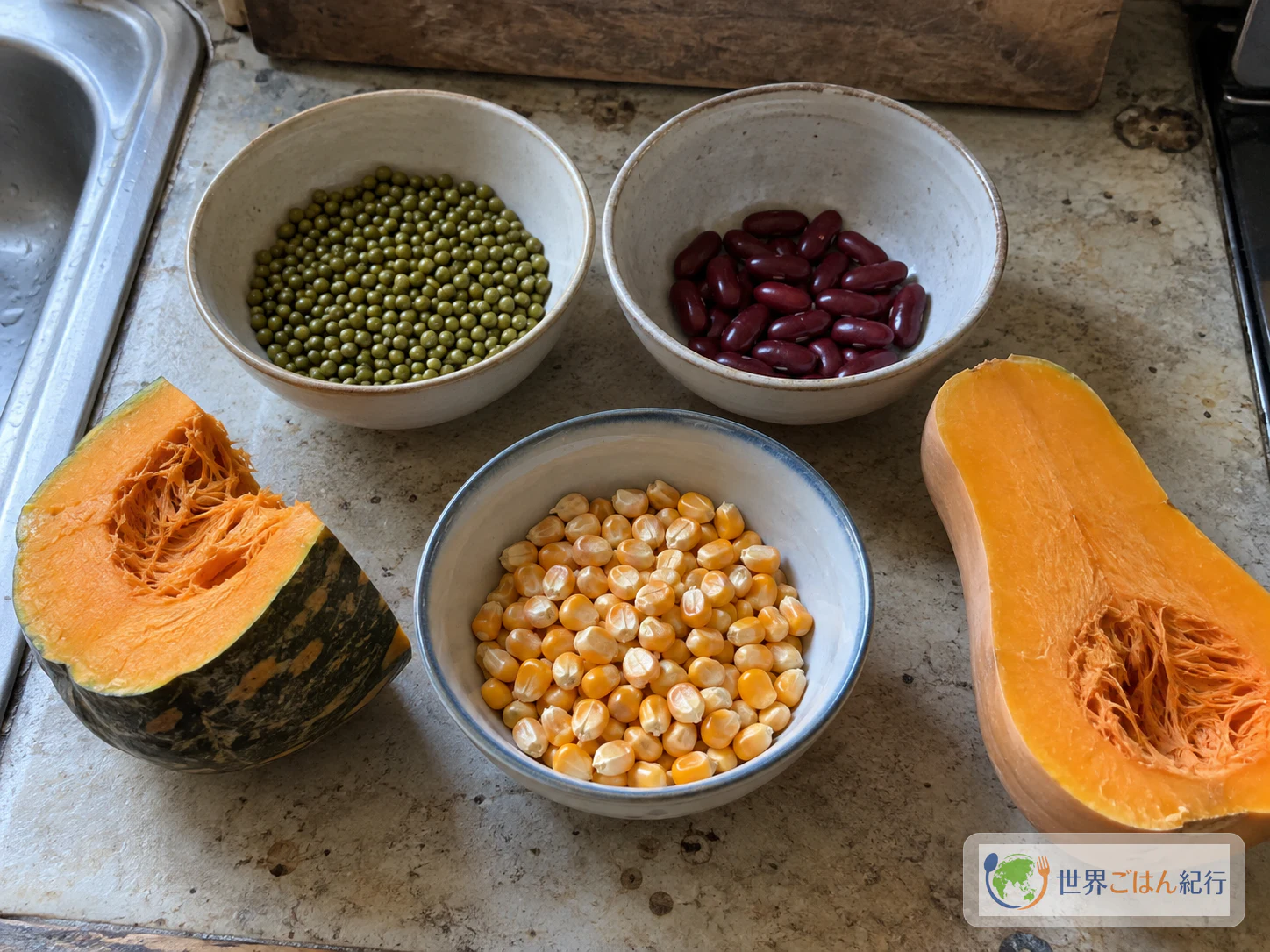
SBS Food describes a dish that shifts with the household and with the produce available. These are directions to explore, kept separate from the base recipe above.
- Different beans. SBS Food notes that families use different kinds of beans. A version with red kidney beans has different amounts and steps, so treat it as a separate recipe rather than mixing it into this one.
- Dried corn. Some households use dried corn instead of fresh. That also changes how the dish is cooked, so it is not a straight swap.
- A different squash. Families choose different pumpkins and squashes. Using kabocha or another winter squash is an editorial substitution; the sweetness and texture will shift.
- Lime and chili. Mentioned by SBS Food as additions some households like. Serve them on the side so each person can decide.
- Other published versions. The 196 flavors recipe uses pumpkin, corn and mung beans but boils the soaked mung beans separately. The Catholic Relief Services Rice Bowl recipe is a simplified version with canned red kidney beans, served with rice. Both differ from the SBS Food version in amounts and steps.
Batar Daan and Katemak: Similar Ingredients, Different Dishes
Katemak, from West Timor on the Indonesian side of the island, also brings together grains, beans and vegetables. Similar ingredients do not make them the same dish. Batar daan is presented by Timor-Leste's tourism site as a dish of Timor-Leste, while katemak belongs to Indonesia's East Nusa Tenggara. Keep the names and the countries distinct when you search for recipes.
Storage and Leftovers
The source recipe gives no storage or reheating guidance, so this article does not suggest storage times. Follow the food-safety guidance of your local authority for cooked bean dishes.
Frequently Asked Questions
What kind of dish is batar daan?
A stew of corn, beans and pumpkin, as Timor-Leste's tourism site describes it. The SBS Food version uses mung beans and peanuts and is served with steamed rice.
Can I use canned beans instead of dried mung beans?
The Catholic Relief Services Rice Bowl recipe uses canned red kidney beans, but it is a different recipe with its own amounts and steps. It is not a like-for-like swap in the SBS Food version, which is built on soaked dried mung beans.
Do I need lime or chili?
No. SBS Food mentions them as additions some households like, but they are not in this recipe's ingredient list. Offer them on the side if you want them.
Can I use roasted peanuts?
Roasted, salted peanuts bring different oil, salt and a toasted flavor, so they are not the same as the raw, shelled, deskinned peanuts in this recipe.
Is batar daan the same as katemak?
No. Katemak is from West Timor on the Indonesian side; batar daan is a dish of Timor-Leste. They share some ingredients but are separate dishes.
Sources
- SBS Food / Adam Liaw, "Pumpkin, corn and mung bean stew (Batar da’an ho lakeru)," excerpt from Asian Home Cooking. The recipe followed here: ingredients, amounts, overnight soaking, method, 4–6 servings, time indications, Australian measures, and the note on household differences in beans, corn, pumpkin, lime and chili. https://www.sbs.com.au/food/recipe/pumpkin-corn-mung-bean-stew/93xuq8t5g
- Timor-Leste Tourism (official tourism website), "Eat & Drink." Batar daan as a traditional dish of corn, beans and pumpkin, and the general description of the country's food culture. https://timorleste.tl/eat-drink
- 196 flavors, "Batar Da’an - Authentic East Timor Recipe." Used only for its explanation of the Tetum name and as a comparison with a different mung bean version; its amounts and method are not mixed into this recipe. https://www.196flavors.com/east-timor-batar-daan/
- Catholic Relief Services Rice Bowl, "Batar Da’An — Timor-Leste." A simplified alternative recipe with canned red kidney beans, served with rice; used only for comparison. https://www.crsricebowl.org/recipes/batar-daan-timor-leste