Bánh Gai: A Dark Leaf-Scented Wrapper Around a Golden Mung Bean Heart
A wrapper that is dark brown-black, smooth and chewy, with no gritty leaf fiber. A soft filling of mung bean, coconut and sweet back fat. A low, flat square parcel of dried banana leaves, steamed and then cooled before cutting.
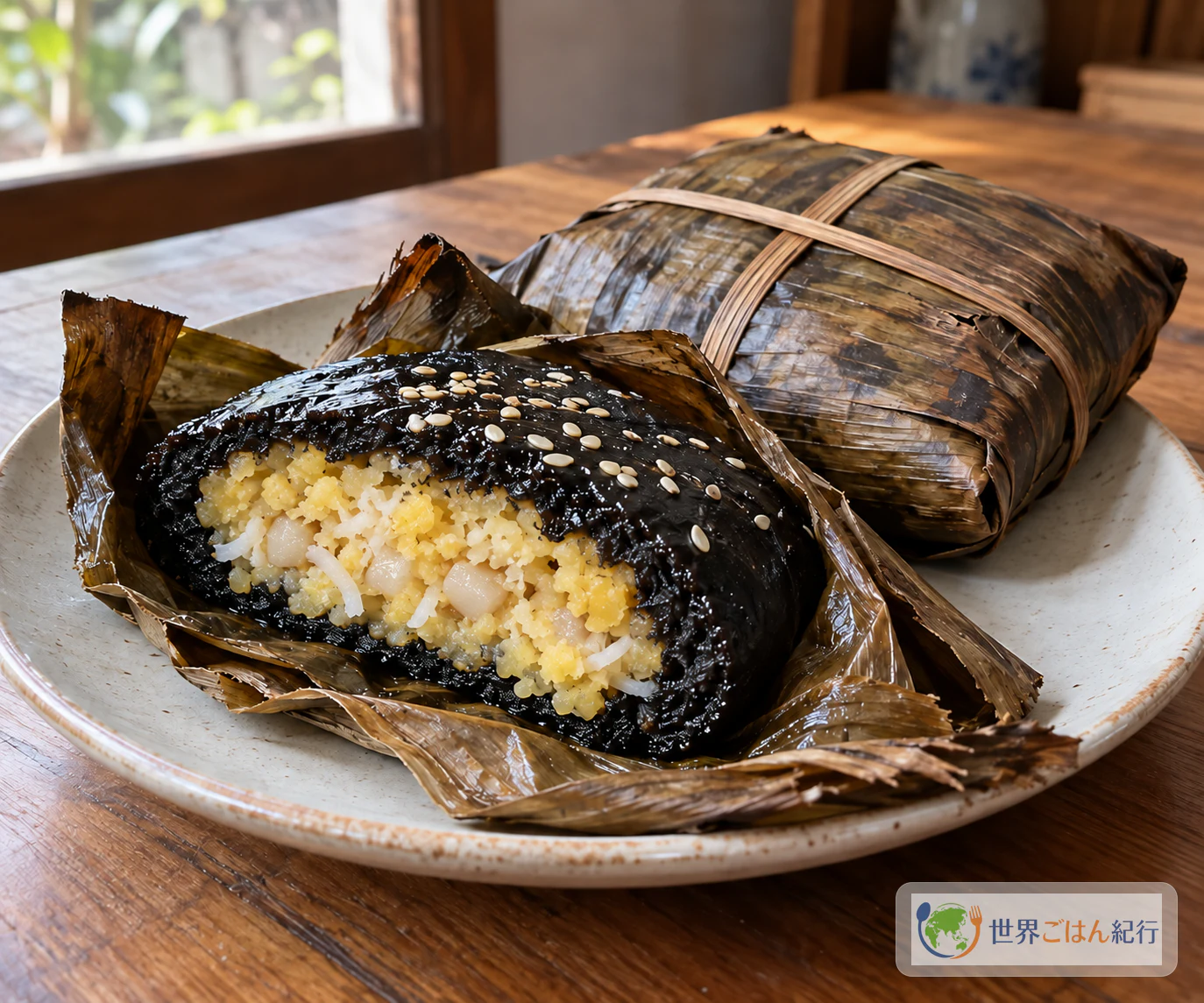
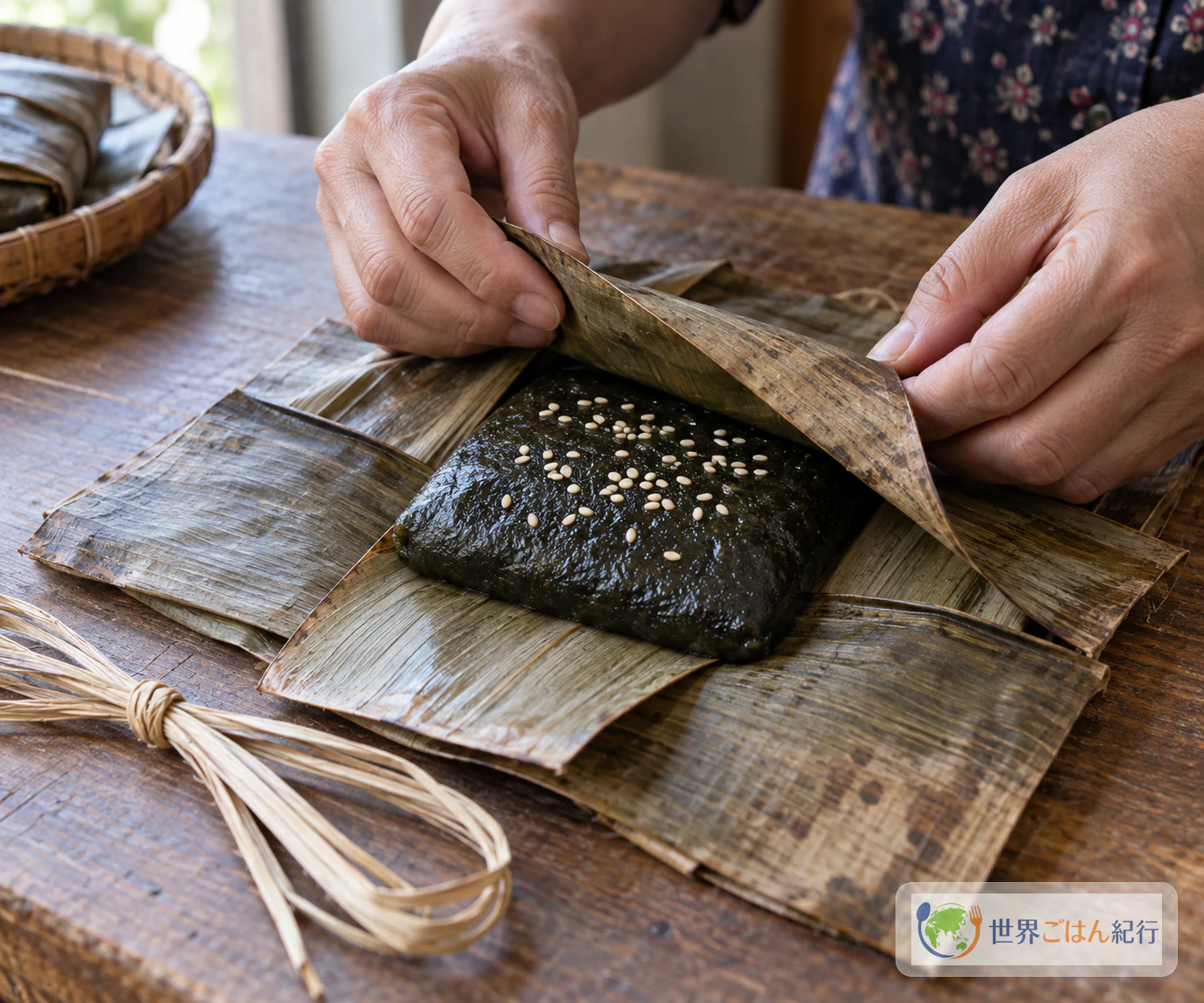
Untie the string and peel back the layers of dry, brown banana leaf, and what appears is a flat square cake so dark it looks almost black, flecked with a little white sesame. Cut it into quarters and the inside is a pale gold of mung bean and coconut, set off sharply against the wrapper. A Vietnamese vocational-college cooking handout describes the finished cake exactly this way: a brown-black color, the aroma of ramie leaves, sesame and pomelo flower, a chewy wrapper and a soft filling.
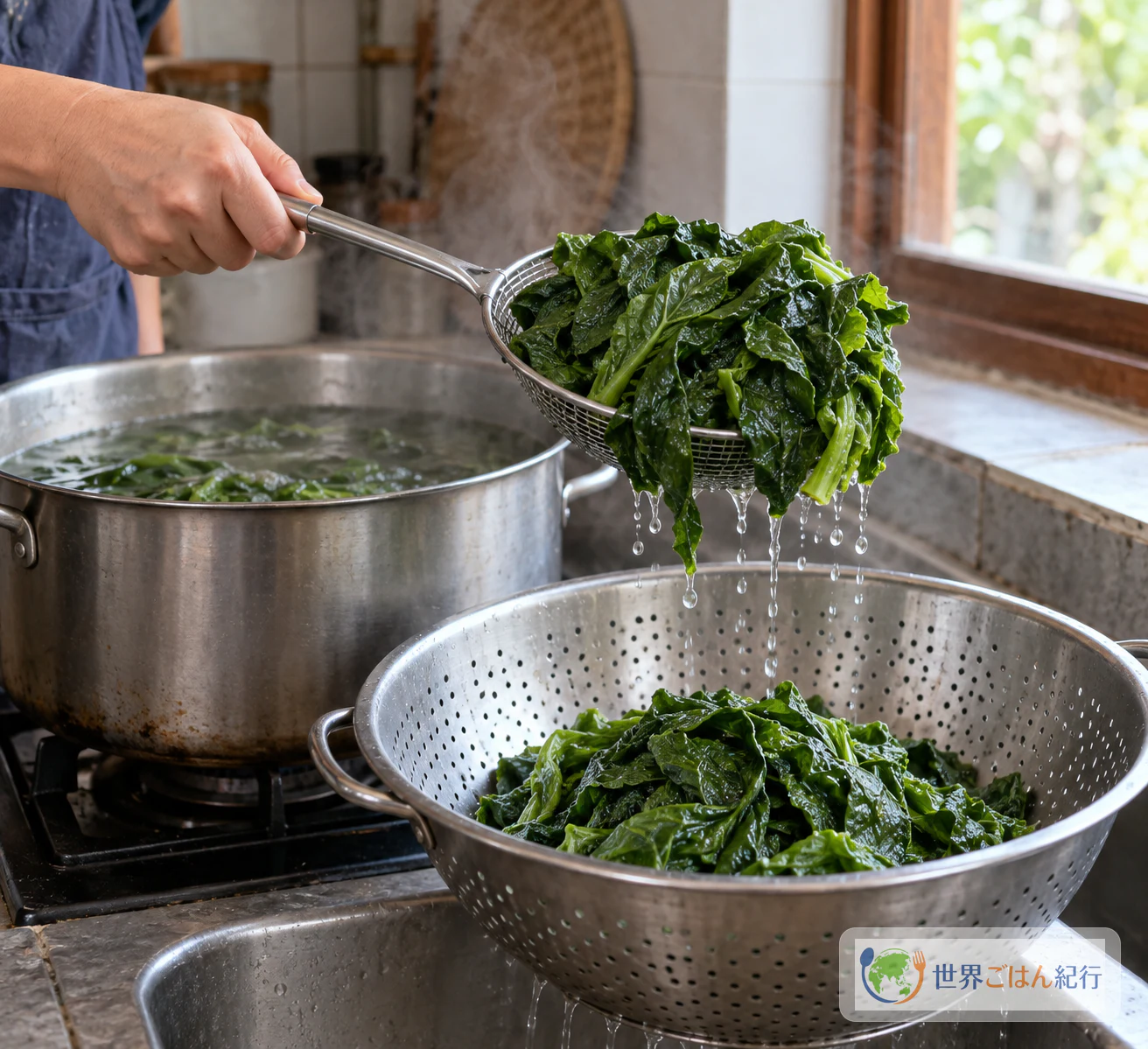
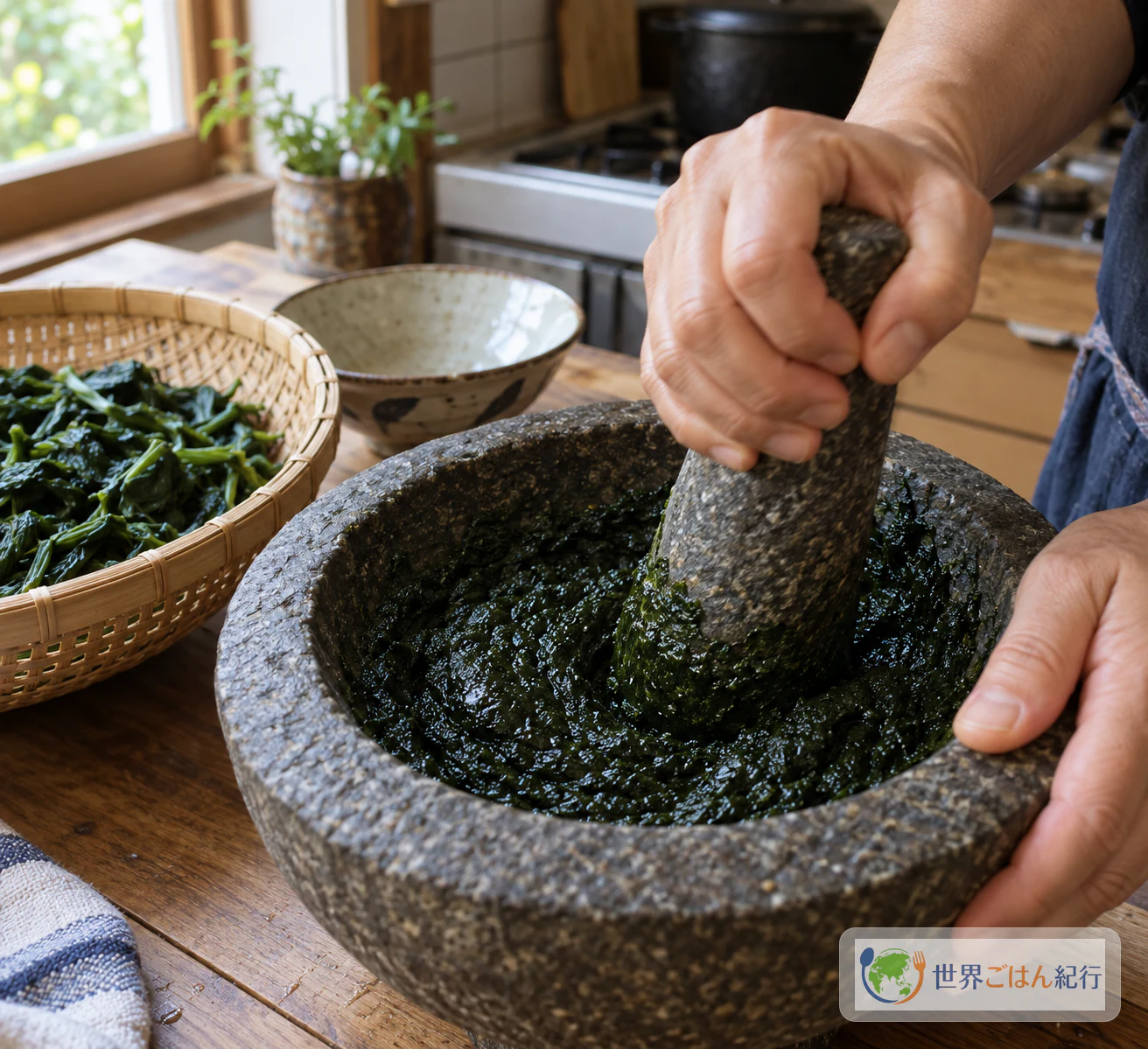
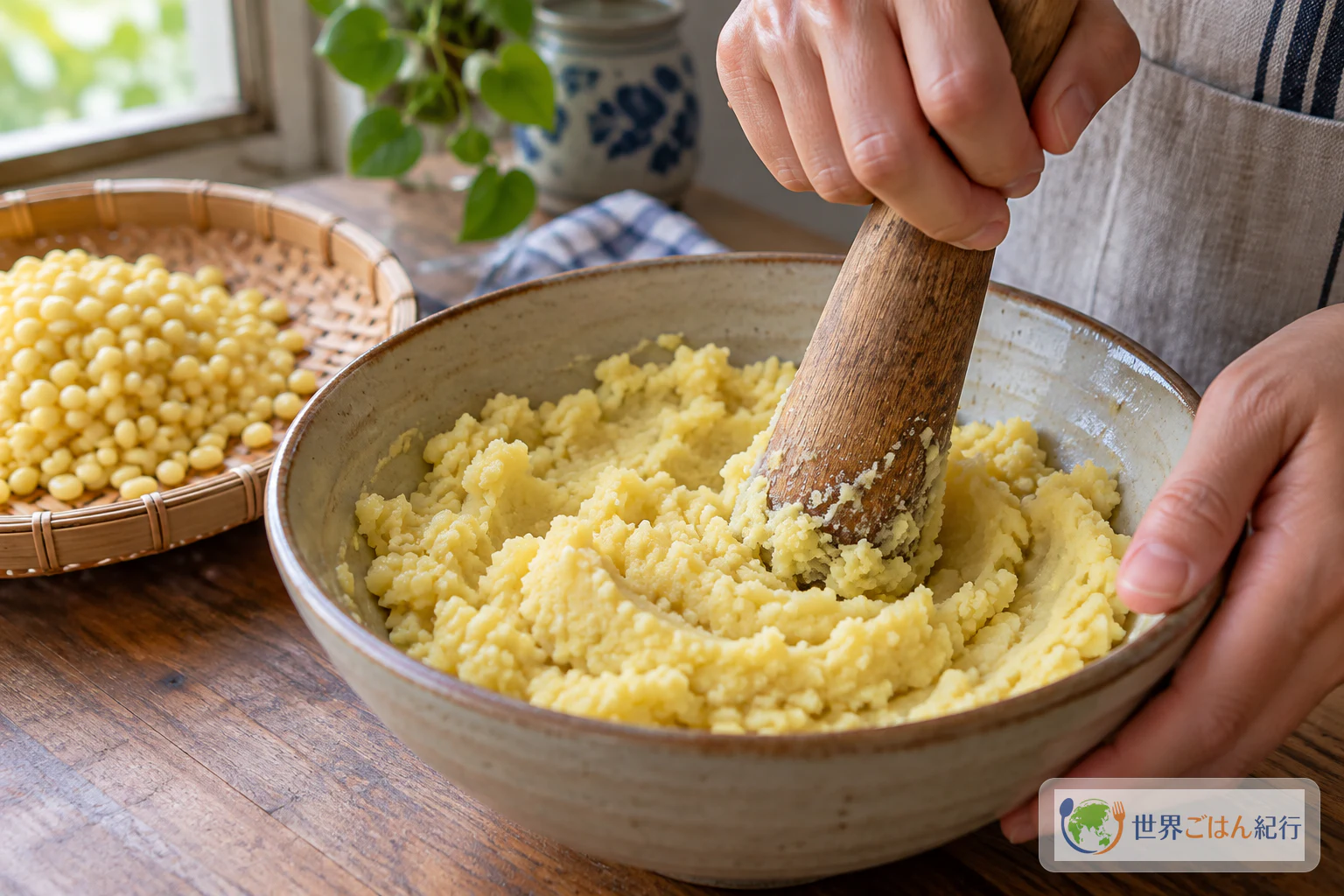
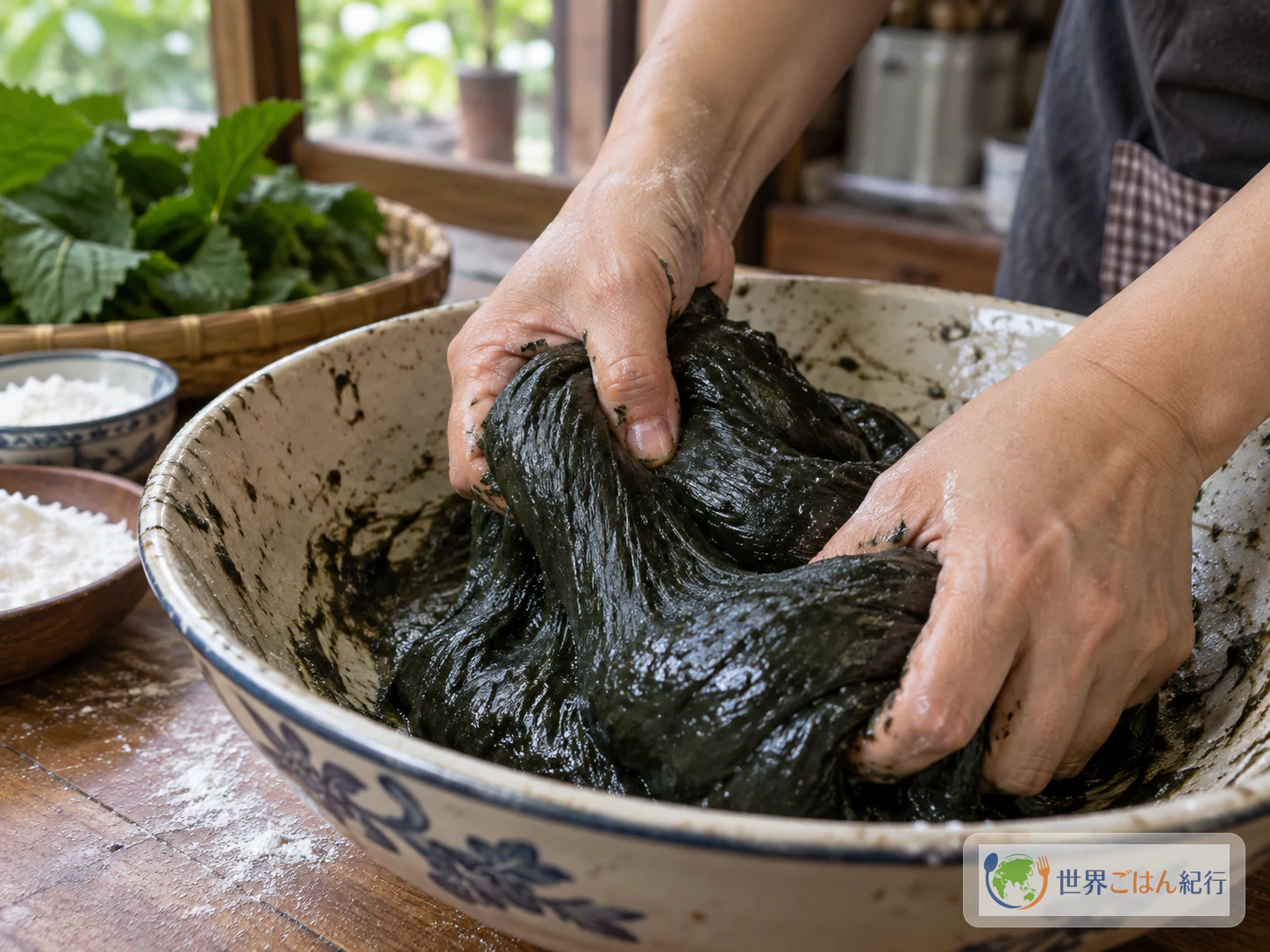
That color comes from the leaves themselves. Bánh gai takes its name from lá gai, ramie leaves, which are boiled until very soft and pounded into a fine paste before being worked into glutinous rice flour. The result is a sweet steamed cake, not a savory one, even though the classic northern filling includes a little pork back fat.
This recipe follows the handout's 10-portion northern version with a sweet mung bean filling. It has not been kitchen-tested by us, so the amounts and times here are the handout's own, and the visual cues in each step are what to watch for. If you are exploring the country's food more widely, start from our Vietnam page.
The cake here is the northern flat, square, pillow-shaped bánh gai. A related name, bánh ít lá gai, refers to a different style and shape, a pyramid-shaped parcel, and is treated as a separate dish.
What Bánh Gai Is, and Why One Recipe Is Not the Whole Story
Bánh gai is built from three things: glutinous rice flour, ramie leaves and mung beans. The handout notes that fillings vary, and other sources show how widely. A travel and editorial overview from Vinpearl associates bánh gai with several Vietnamese provinces and describes fillings and wrapper techniques that differ between them; it mentions, for example, a Thái Bình version whose filling can include mung bean, pork fat, coconut and peanuts.
A home-cooking recipe from That Là Ngon describes the Tứ Trụ style, whose wrapper is sweetened with molasses and flavored with banana essence, and notes that dried banana leaves are used for wrapping in the northern style. Another home recipe, from HAY ĂN, treats the ramie with ash water and steams the cakes for about an hour. These are all real ways people make bánh gai, but they use different quantities and methods, so none of their numbers are mixed into the recipe below. Origin stories and dates for the dish are not covered here, since they could not be confirmed from primary material.
Ingredients for 10 Portions
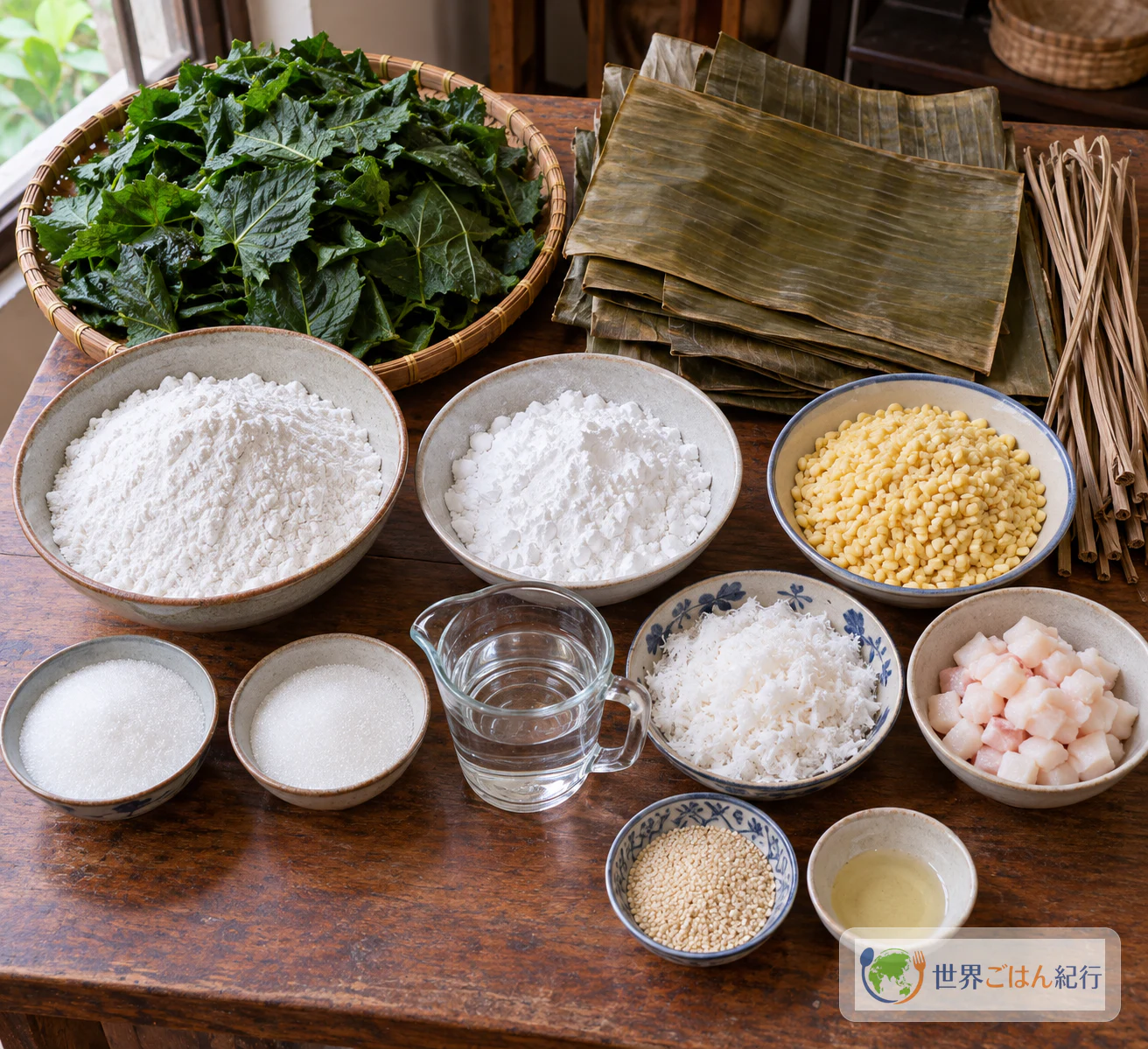
The wrapper, filling and wrapping leaves are prepared separately and only come together at the end. The filling is divided into 10 portions; the number of finished cakes depends on how you portion the dough, so count by filling portions.
This cake contains pork back fat, so it is not vegetarian. It also contains sesame and coconut. Wheat, milk and egg are not part of this recipe, but check the labels of flours, starches and flavorings for allergen and shared-facility statements. Boil the back fat until cooked through before dicing it.
Equipment
- A large pot for boiling the ramie leaves and the back fat
- A colander
- A stone mortar and pestle, or a food processor, to reduce the leaves to a very fine paste
- A steamer
- A clean damp cloth for softening the banana leaves
- A small saucepan for the syrup
- Mixing bowls, a knife and a cutting board
Choosing Ingredients and Honest Substitutions
Ramie leaves are the one thing you cannot really replace. Outside Vietnam, look in Vietnamese grocers or online shops and match the names "lá gai" and "ramie leaf." Ramie is sold fresh, dried and as a powder, and freshness and drying change the color and aroma. This recipe uses 500g of fresh leaves; do not swap in the same weight of dried leaves or powder, because how much to use and how to rehydrate them varies by product and cannot be converted from these amounts. Mugwort (yomogi) is sometimes suggested as a stand-in, but its aroma and color are different, and the result should not be called bánh gai.
Cassava starch is not potato starch. Bột sắn here means cassava (tapioca) starch. Vietnamese also has bột sắn dây, which is a different product, so read labels carefully. Potato starch such as Japanese katakuri-ko is not the same ingredient, and the texture of the wrapper will change if you use it.
Glutinous rice flour varies. Check that the label says glutinous (sweet) rice flour. Japanese mochiko and shiratamako differ from Vietnamese bột nếp in grind and in how much liquid they absorb, which is one more reason to add the syrup a little at a time.
Pomelo flower flavoring is optional. If you can find a food-grade pomelo flower water or essential oil, a few drops go into the filling. The cake is complete without it.
Method: From Leaves to Steamed Parcels
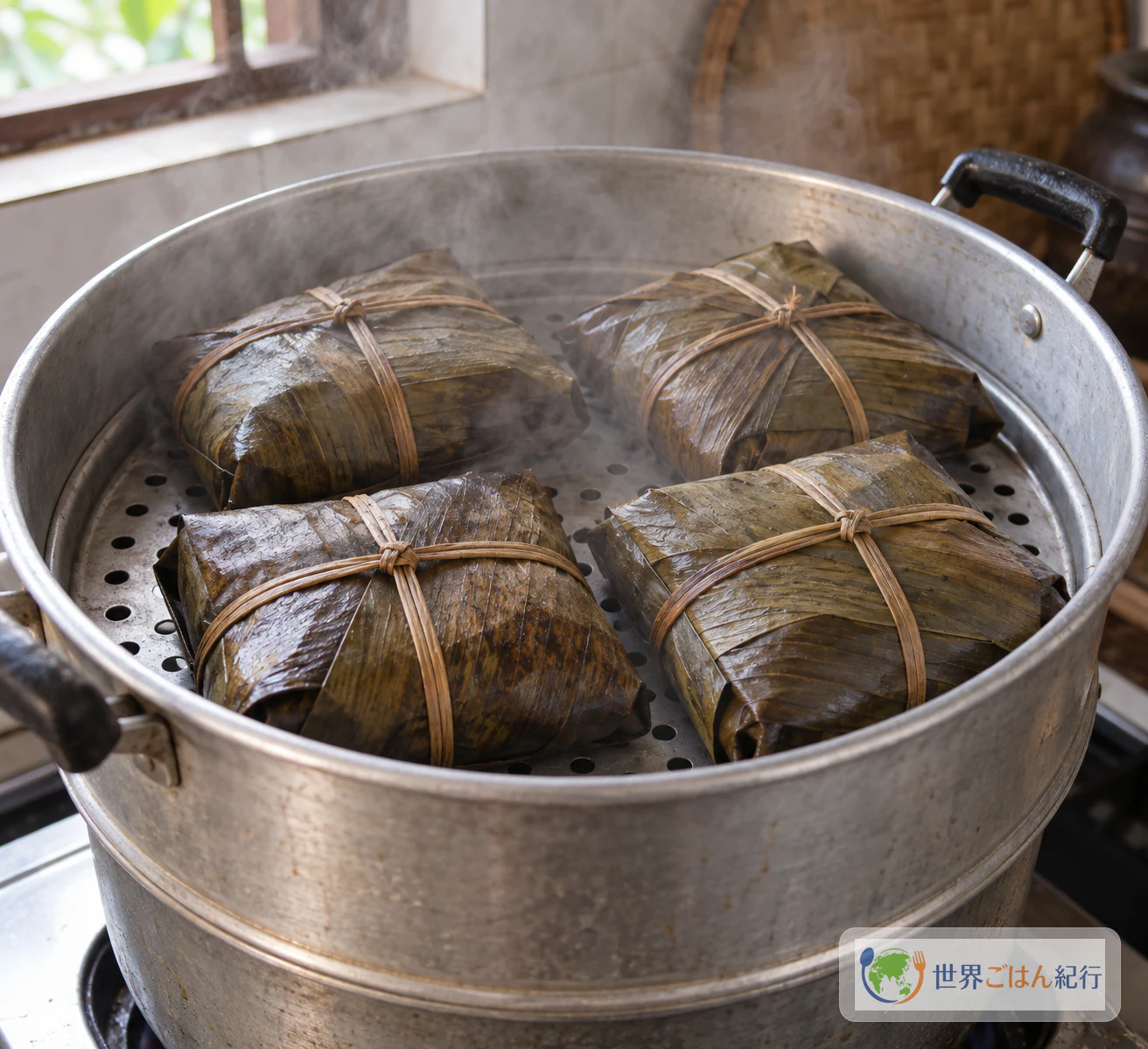
Only two times are fixed: about 2 hours of soaking for the mung beans and 30 minutes of steaming once the water is boiling. Everything else, from boiling the leaves to kneading and wrapping, goes by how the food looks and feels.
Serving: Unwrap, Then Cut into Quarters
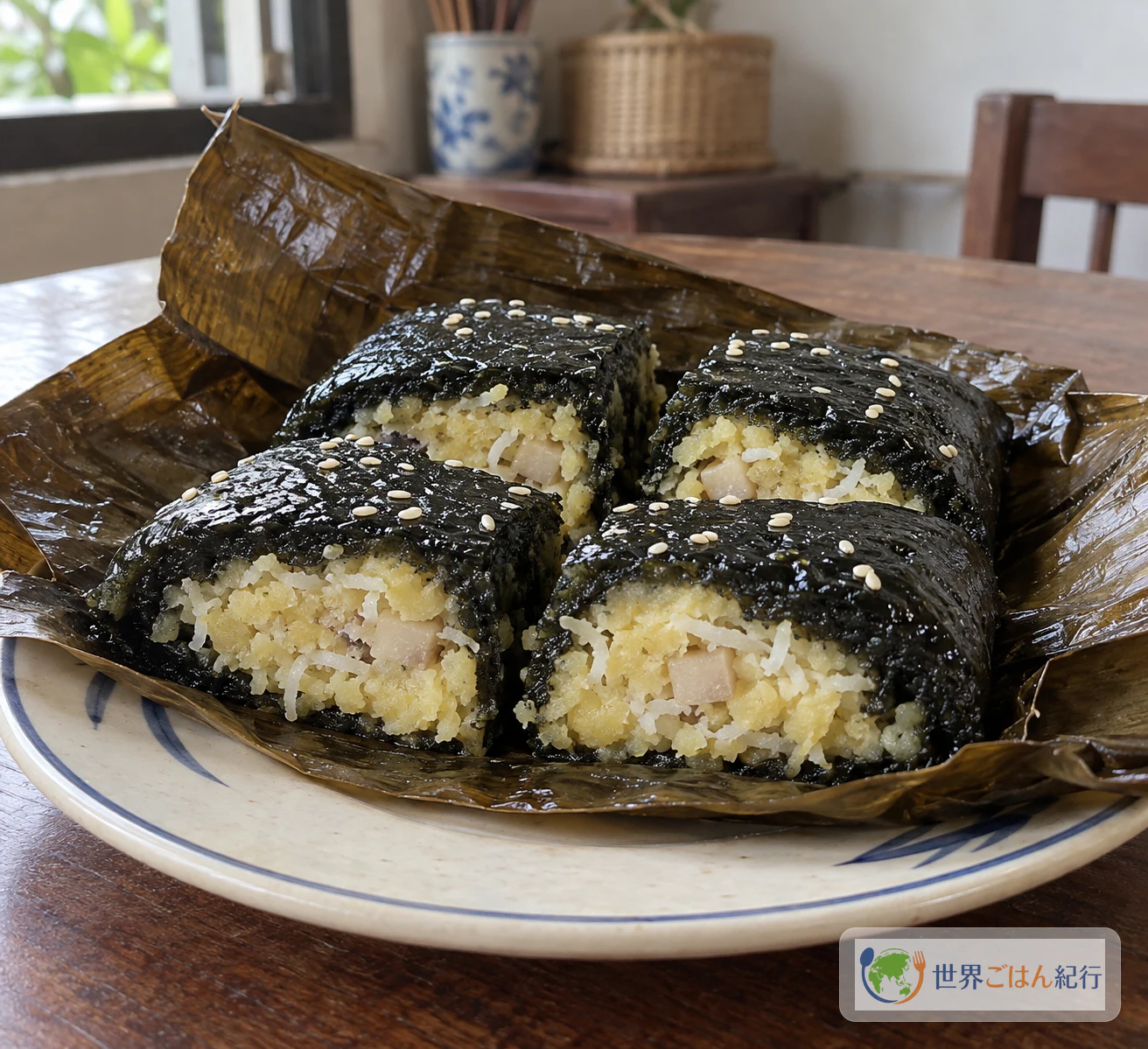
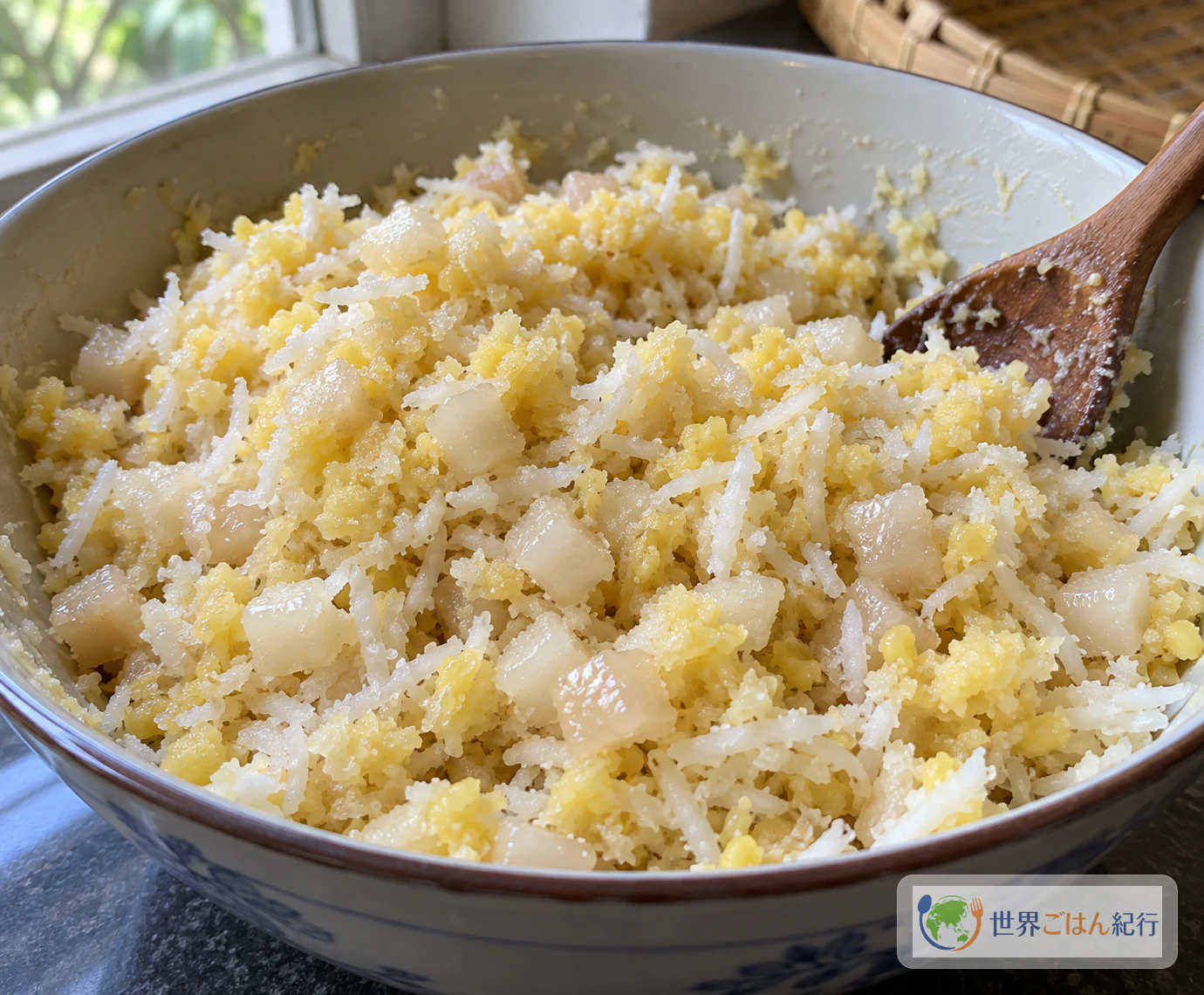
Once cooled, untie the parcel, peel away the leaves and cut the cake into four. The cut faces show the whole point of the dish: a thin, chewy, nearly black wrapper, a pale gold filling with threads of coconut and small translucent pieces of back fat, and a few sesame seeds clinging to the outside.
Gritty, Wet, Leaking: Fixing Problems
| Problem | Likely cause | What to do |
|---|---|---|
| The wrapper feels gritty | Leaf fiber left in the paste, or the dough not kneaded evenly | Pound or blend the leaves until very fine, and knead until the color and texture are even throughout |
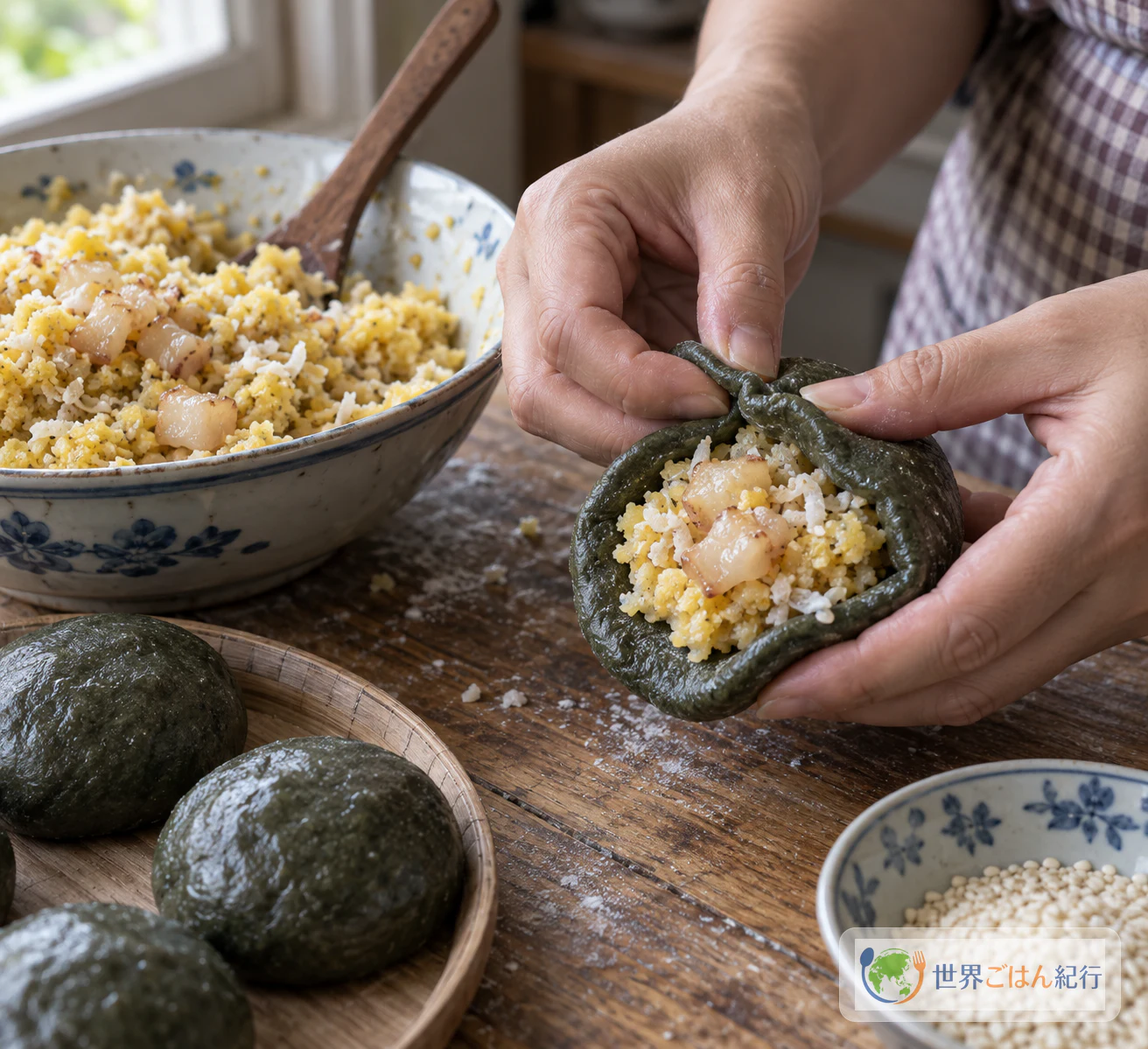
| The cake is watery or the inner leaves are soaked | Too few leaf layers, letting condensed steam seep in | Use more layers, offset the folds, and close every gap before tying |
| Filling leaks out | Uneven dough thickness, or a seam left open | Flatten the dough evenly and pinch the seam completely shut before rolling in sesame |
| The dough feels slack | Syrup added too quickly or all at once | Add the syrup in small amounts and stop as soon as the dough is shapeable |
About Leftovers
No storage period is given for this recipe, so none is stated here. Do not leave the cakes sitting at room temperature for long.
Variations and Regional Styles
These change the cake in real ways. Each one is a different recipe, not a tweak to the amounts above.
- Without pork back fat. Leaving out the fat makes the cake suitable for vegetarians, but the filling loses richness and changes in texture. It is a variation, not this northern version.
- Ninh Giang style. The Vinpearl overview describes versions from Ninh Giang with candied winter melon (mứt bí) or lotus seeds (mứt sen) in the filling. Adding them properly means reworking the whole filling, which is not done here.
- Thái Bình style. The same overview mentions a Thái Bình filling that can include peanuts alongside mung bean, pork fat and coconut.
- Tứ Trụ style. That Là Ngon's Tứ Trụ wrapper uses molasses and banana essence. Replacing some of the sugar with molasses moves the color, stickiness and flavor toward that style, and it becomes a separate recipe.
- Ramie powder or dried leaves. These forms exist and are easier to find abroad, but their amounts and rehydration vary by product and cannot be converted from 500g of fresh leaves.
- Ash-water method. HAY ĂN's home version treats the ramie with ash water and steams for about an hour. That one-hour time belongs to its own method and should not be applied to this recipe, which steams for 30 minutes.
Frequently Asked Questions
Can I make bánh gai without ramie leaves?
Not really. The leaves give the cake its dark color and its aroma, and they are what the name refers to. Mugwort or other greens produce a different-looking, different-smelling cake. If you cannot find fresh leaves, dried leaves or powder are the closer route, but you would need to work out amounts for your product rather than converting from this recipe.
Can I use potato starch instead of cassava starch?
It is not the same ingredient, and the wrapper's texture will change. Look for cassava or tapioca starch, and do not confuse bột sắn with bột sắn dây.
How many cakes does this make?
The handout gives the recipe as 10 portions and divides the filling into 10, but it does not state how many finished cakes that is. Count by filling portions and divide the dough to match.
How is the 300g of sugar divided?
The handout lists 300g white sugar in its ingredient table. In the method, it uses 150g for the wrapper syrup, about 150g for the filling, and about 2 tsp to coat the back fat. It does not say whether those 2 tsp come out of the 300g, so the figures are kept here exactly as given rather than recalculated.
Can I serve it warm, and how long does it keep?
The handout directs cooling the cakes before cutting, which is how this recipe serves them. It does not give a storage period, so none is stated here; avoid leaving the cakes at room temperature for long.
Sources
- Trường Cao đẳng Kinh tế - Kỹ thuật Hòa Bình (course handout), "Kỹ thuật chế biến Bánh gai." The basis for the 10-portion recipe, ingredient amounts, sugar allocation, leaf preparation, dough, wrapping, 30-minute steaming, failure prevention and the description of the finished cake's color, aroma and texture. https://hcem.edu.vn/wp-content/uploads/2025/10/De-cuong-bai-giang-CB-BANH-VA-MATM-A.pdf
- That Là Ngon, "Cách Làm Bánh Gai Tứ Trụ Ngon & Chuẩn Nhất." The Tứ Trụ-style wrapper with molasses and banana essence, how leaf freshness and drying affect color and aroma, and dried banana leaves in the northern style. https://www.thatlangon.com/cong-thuc/cach-lam-banh-gai/
- Vinpearl, "Bánh gai là đặc sản tỉnh thành nào và nên mua ở đâu?" A travel and editorial overview of bánh gai across several provinces, regional differences in fillings and wrappers, and the Thái Bình filling with mung bean, pork fat, coconut and peanuts. https://vinpearl.com/vi/banh-gai-tu-tru-thanh-hoa-va-nhung-phong-vi-doc-dao-vung-mien
- HAY ĂN, "Cách làm bánh gai mềm ngon, dẻo thơm ngay tại nhà." A home version using ash-water-treated ramie and about one hour of steaming, cited only to show how methods vary. https://hayan.vn/vao-bep/cach-lam-banh-gai-mem-ngon-deo-thom-ngay-tai-nha-p12135.html