Canh Bún Cá: White Fish, Clear Broth, One Seasonal Green
Boiled fish, never fried. A clear broth of fish bones and pork bones, with no sour note added. One seasonal green, plus dill and scallion, and crisp pork cracklings on the side.
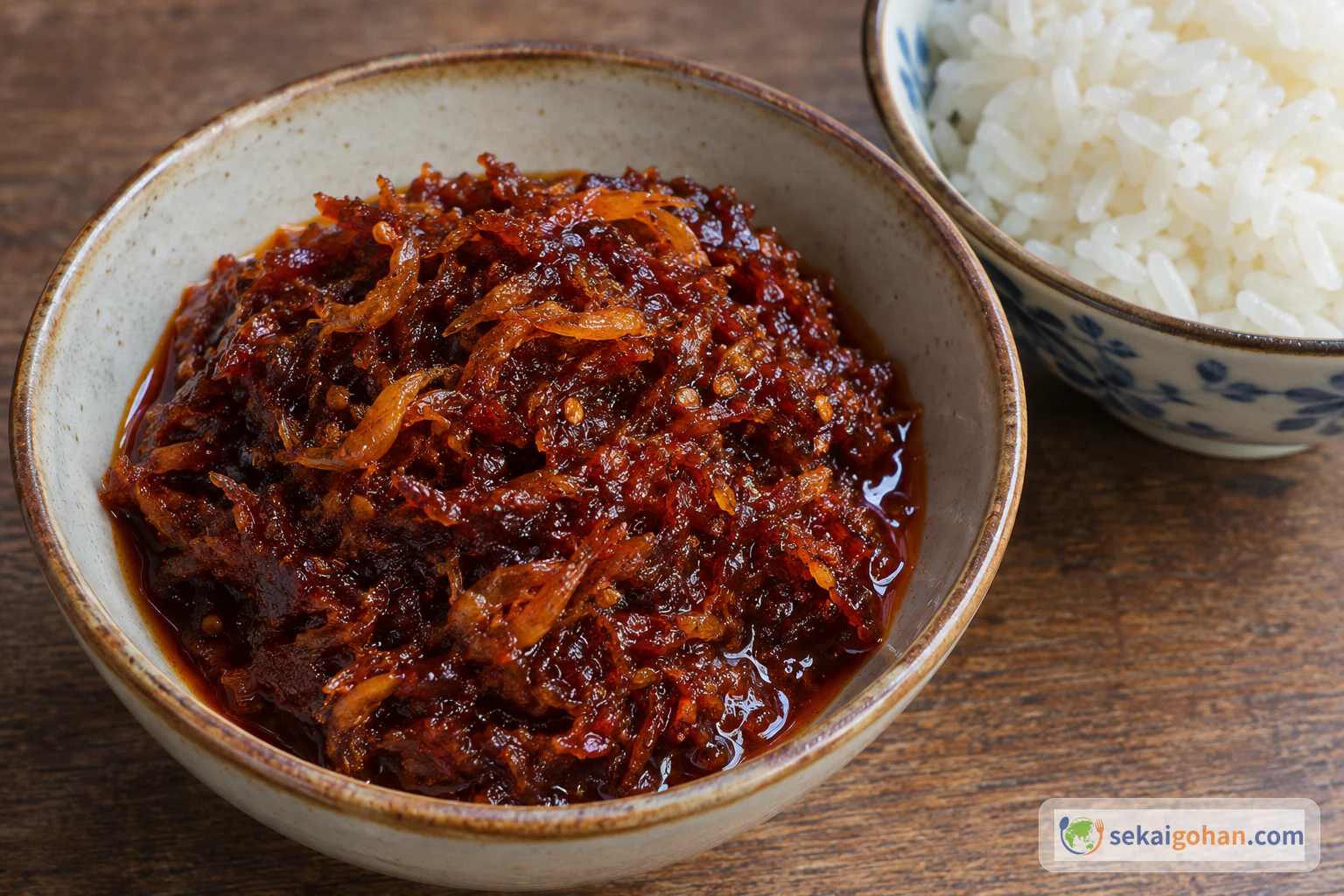
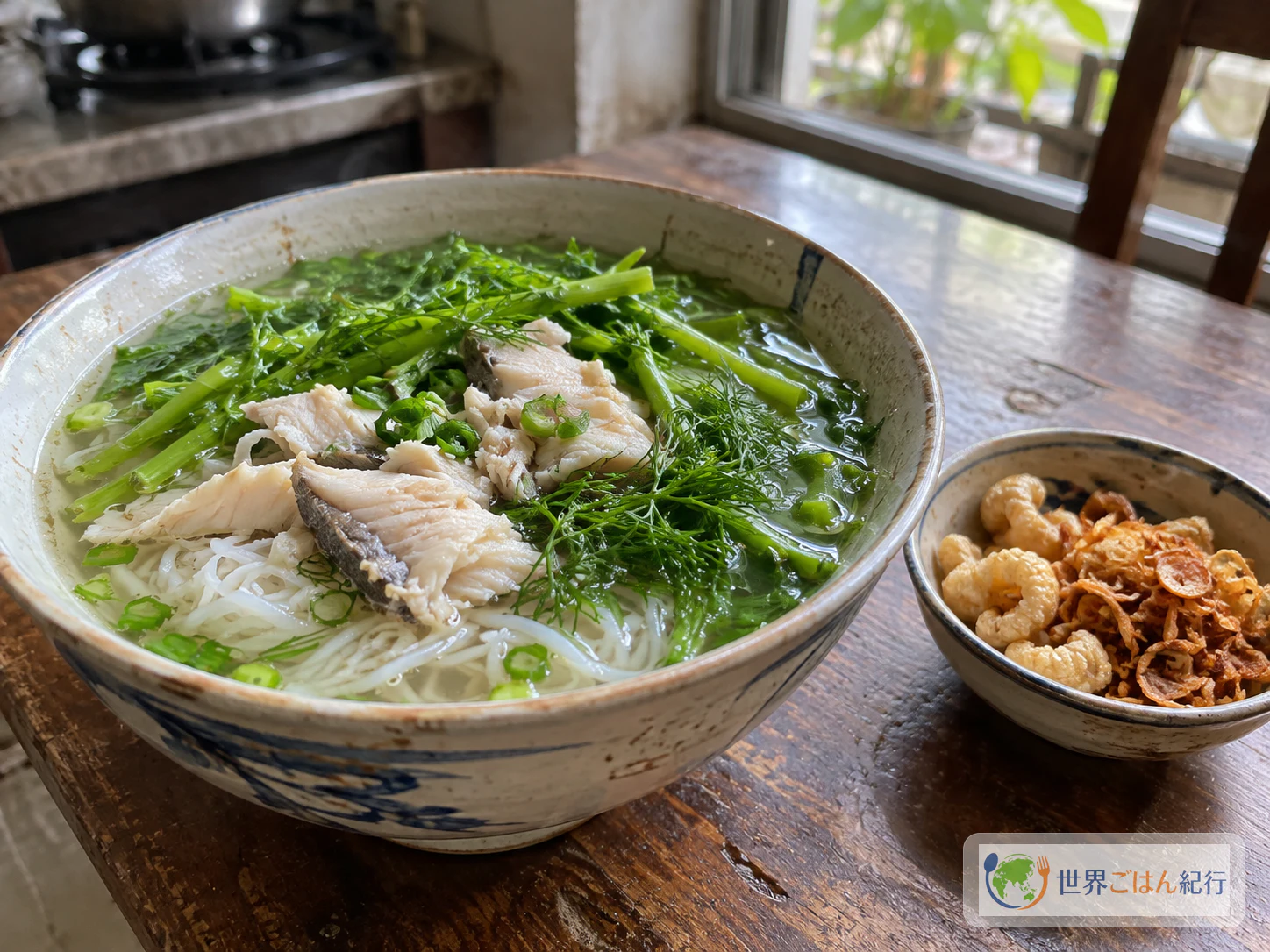
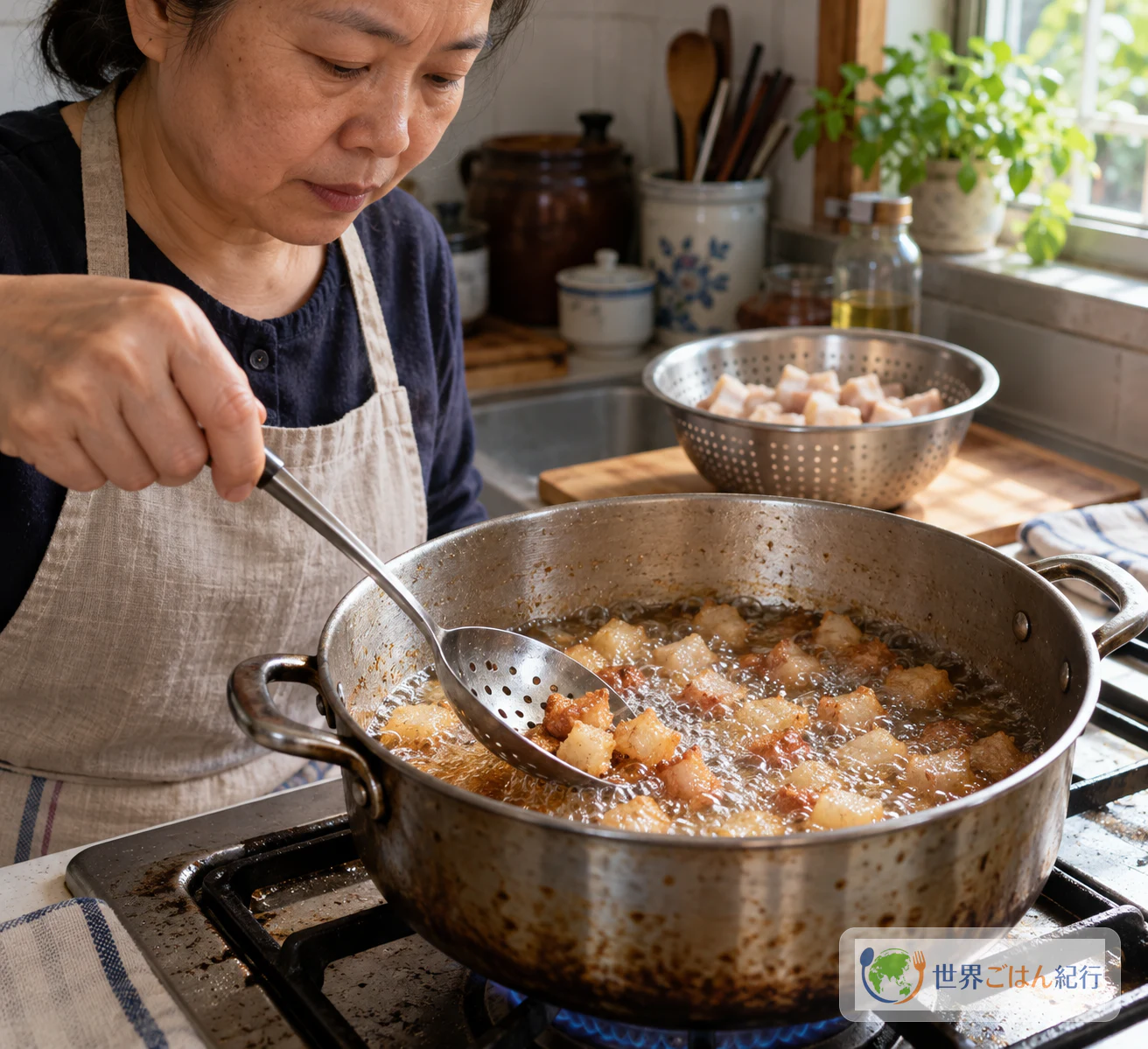
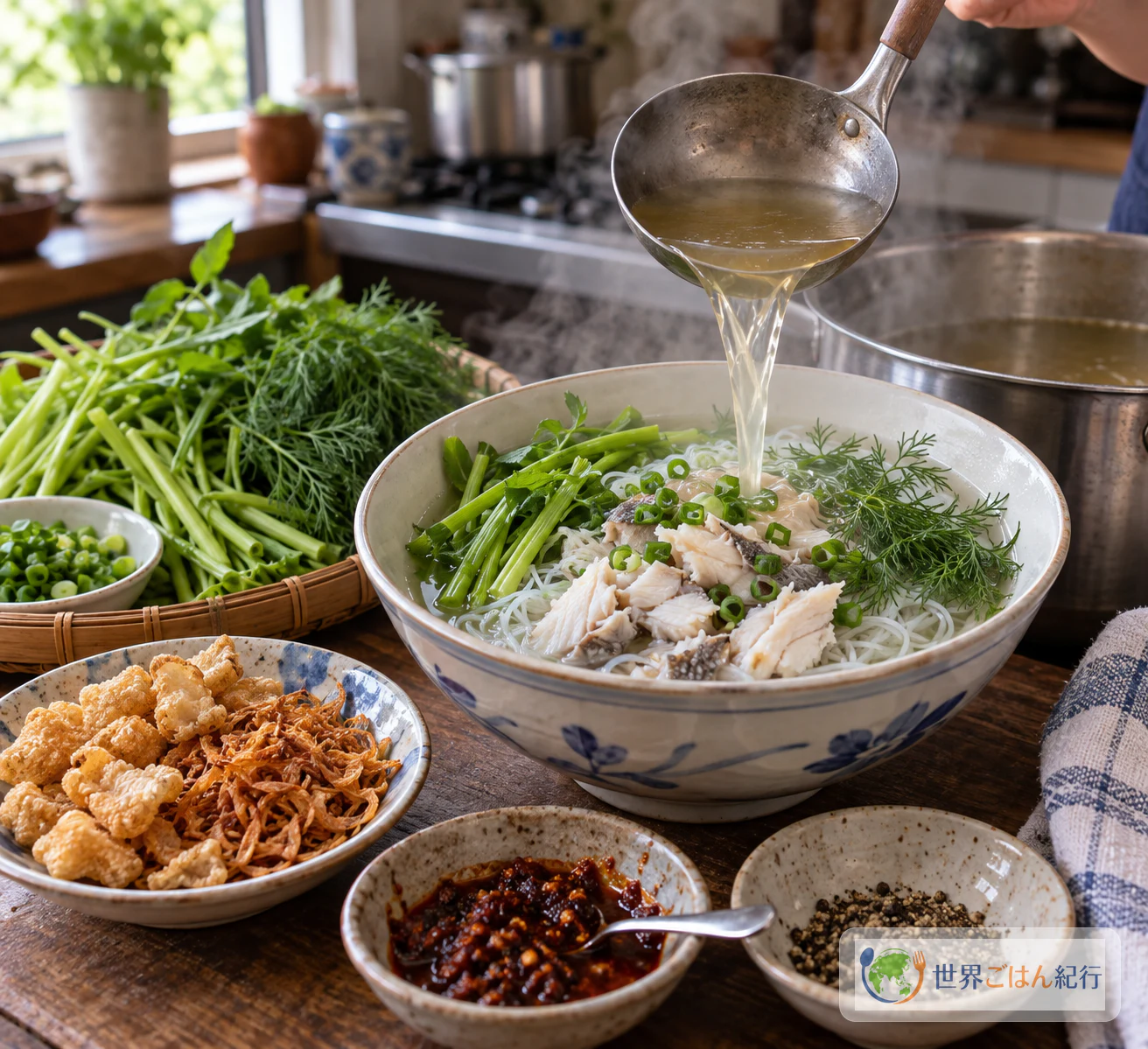
Soft, white flakes of snakehead rest on fresh rice noodles. A single kind of blanched green, a handful of dill and scallion, and then hot broth, clear rather than red or sour, is poured over everything. Beside the bowl sit crisp pork cracklings (tóp mỡ), fried shallots, black pepper and chili paste for each person to add.
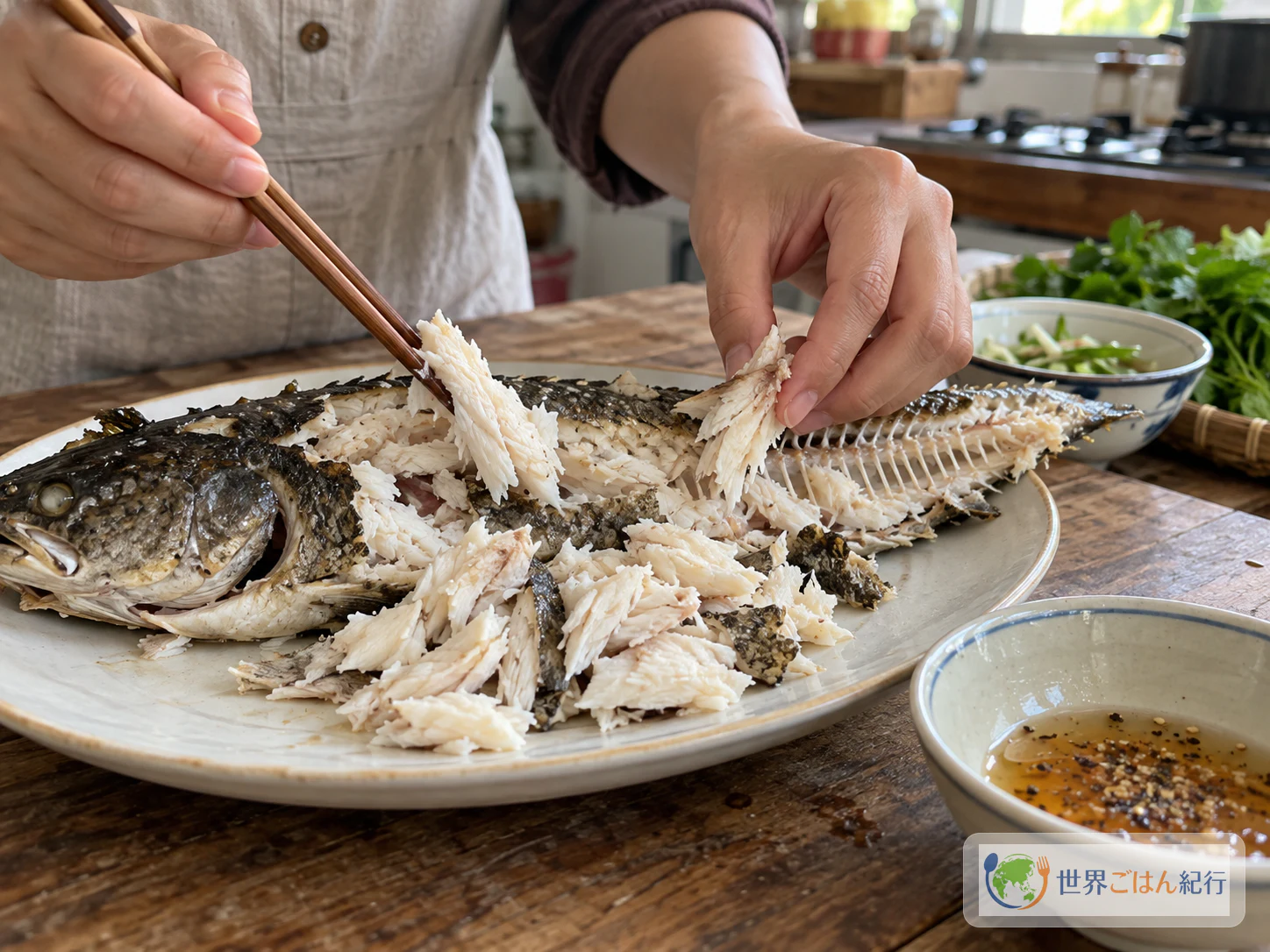
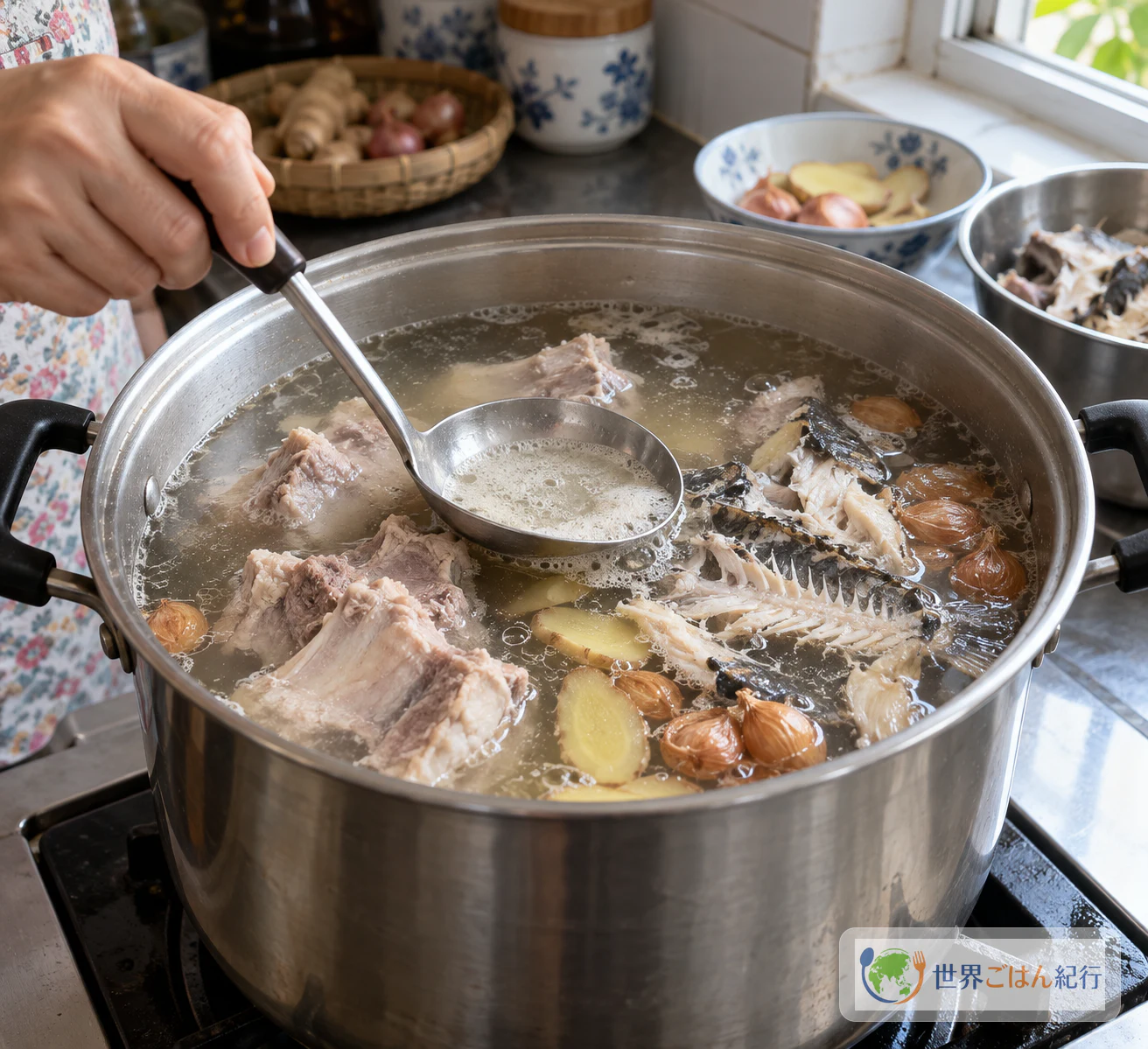
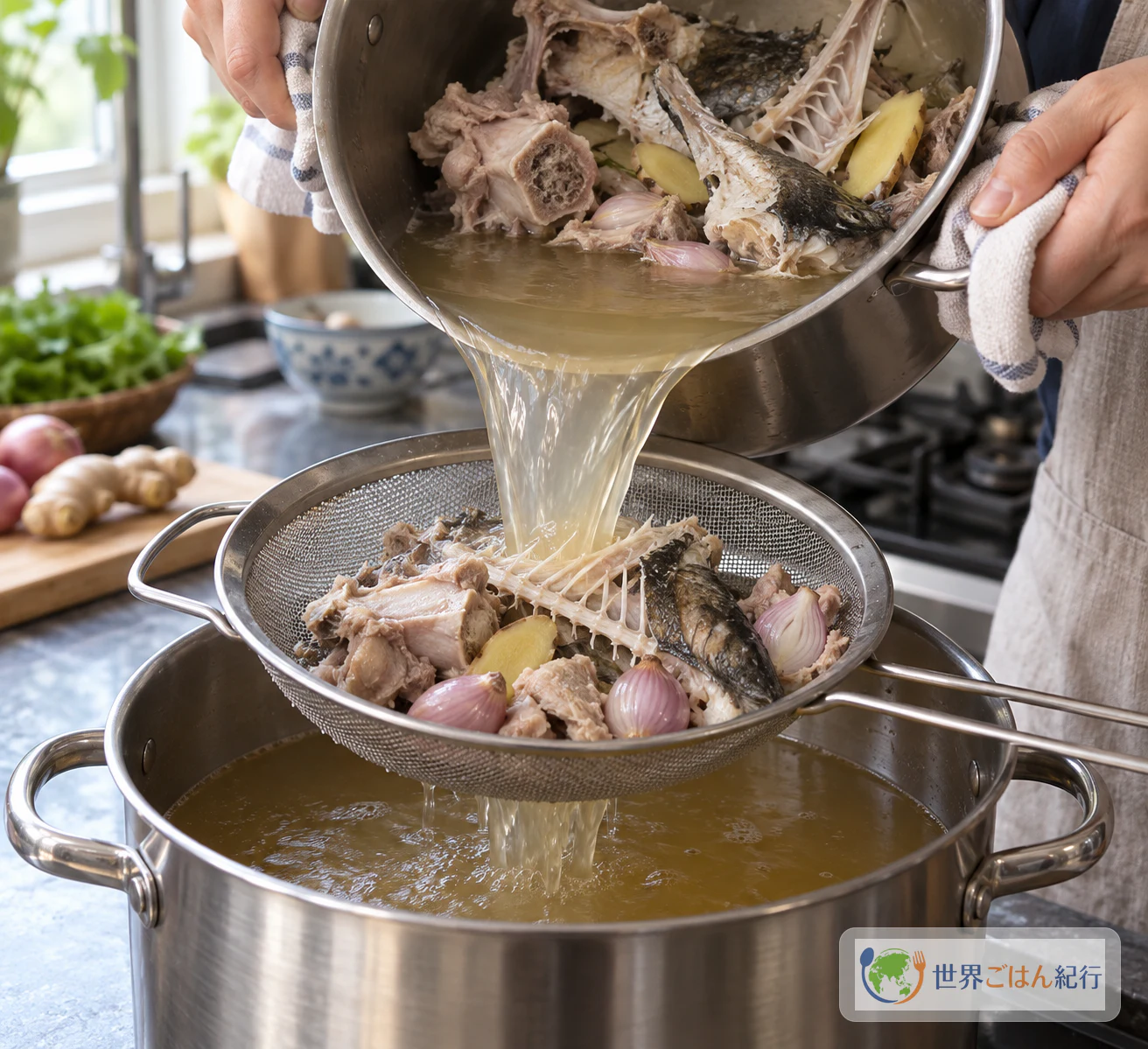
Bún cá simply means "fish with rice noodles", and across Vietnam the name covers many different bowls. This article follows just one of them: the canh bún cá that Bùi Thủy, writing for VnExpress Cooking, presents as a dish of old Hanoi. In this version the snakehead (cá quả) is boiled whole with ginger and shallots, its meat is lifted off the bones, and the bones go into a gently simmered stock with pork bones. The author describes it as a version that does not add a sour element. The "old Hanoi" label is the author's own framing; this article does not claim a date of origin or that this is the one true form of the dish.
An honest note before you start: this recipe has not been kitchen-tested by Sekai Gohan. The VnExpress recipe gives amounts for the fish, pork bones, shallots, ginger, dill and scallion, but not for the water, noodles, greens, pork fat or any of the seasonings, and it gives no cooking times for the fish or the bone stock. The recipe card lists 4–6 servings and 55 minutes; treat those as the card's figures, not a checked yield or a step-by-step schedule. Where an amount is missing, the steps below say "as needed" or "to taste" rather than inventing a number. For more dishes from the same country, see Vietnam.
Ingredients for Old Hanoi Canh Bún Cá
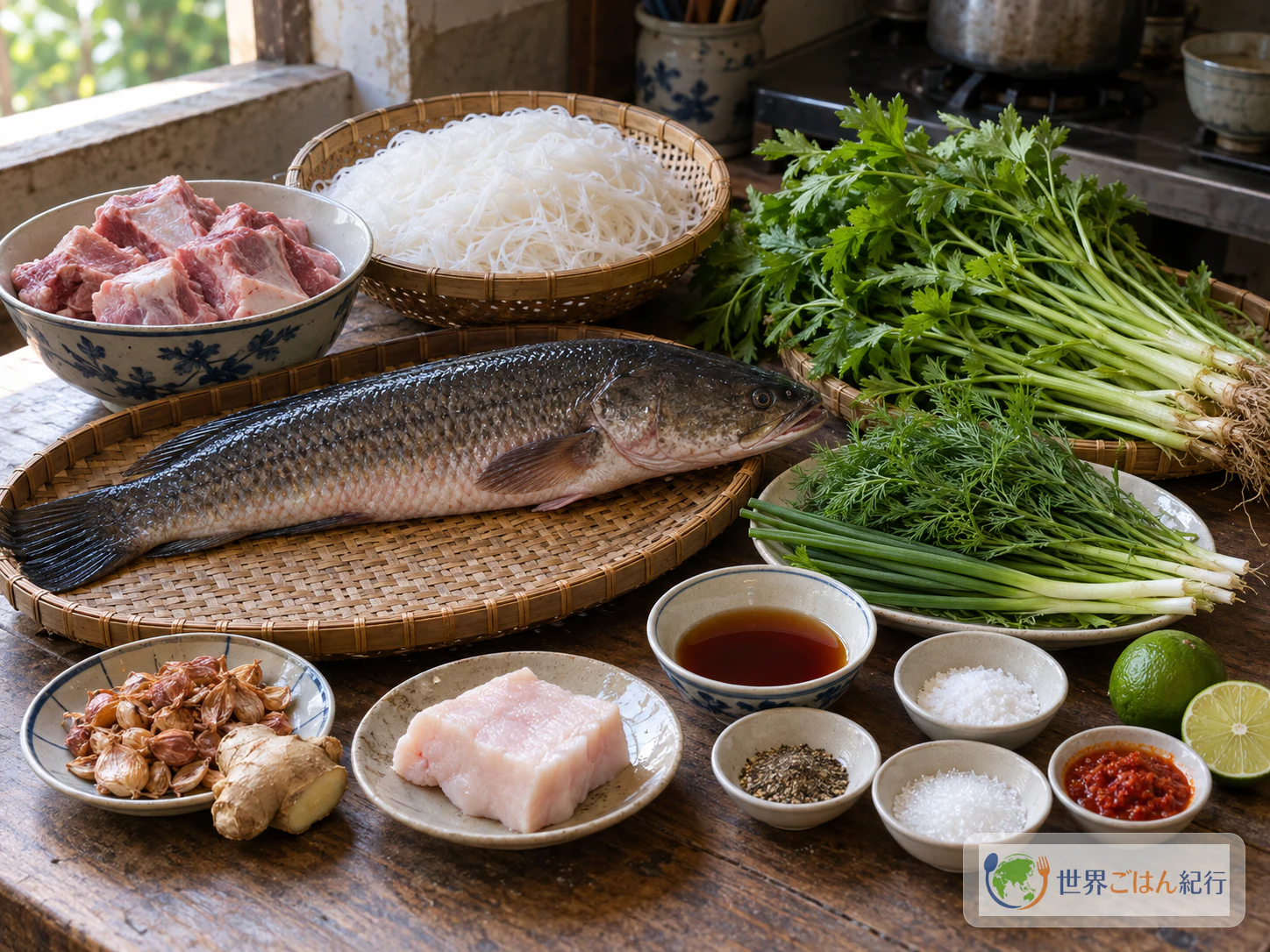
This dish contains fish and pork. Check the labels of your fish sauce, MSG and chili paste for allergens such as soy.
Choosing the Fish, Greens and Noodles
The fish. The dish is built around snakehead (cá quả). No substitute fish or matching amount is suggested here, so a different fish would make a different bowl.
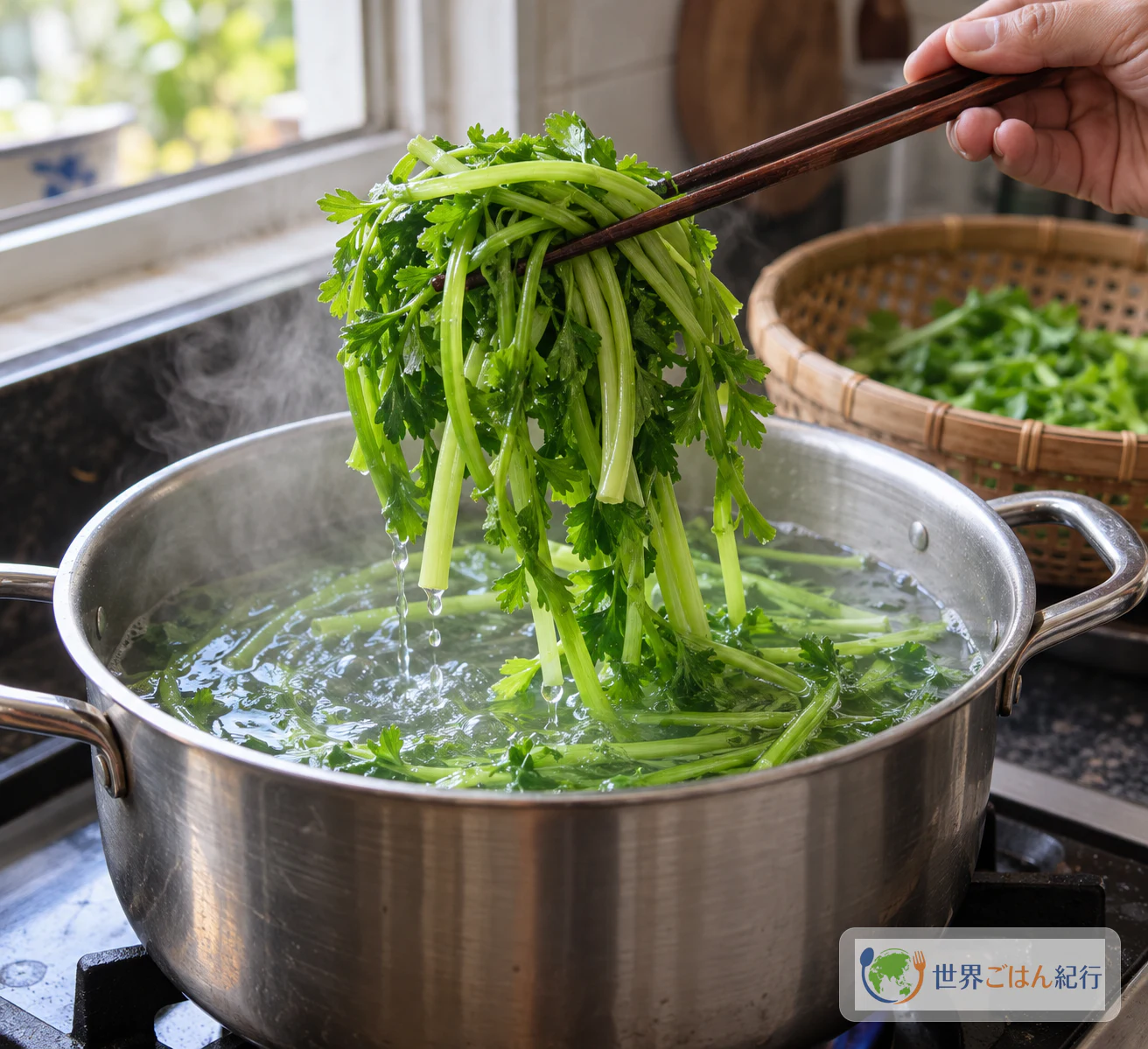
The green. Water celery (rau cần) is the green shown in this article. Crown daisy (cải cúc) or rau rút can be chosen instead as the seasonal green. Pick one; they are alternatives, not a mix, and they are different plants with different flavors.
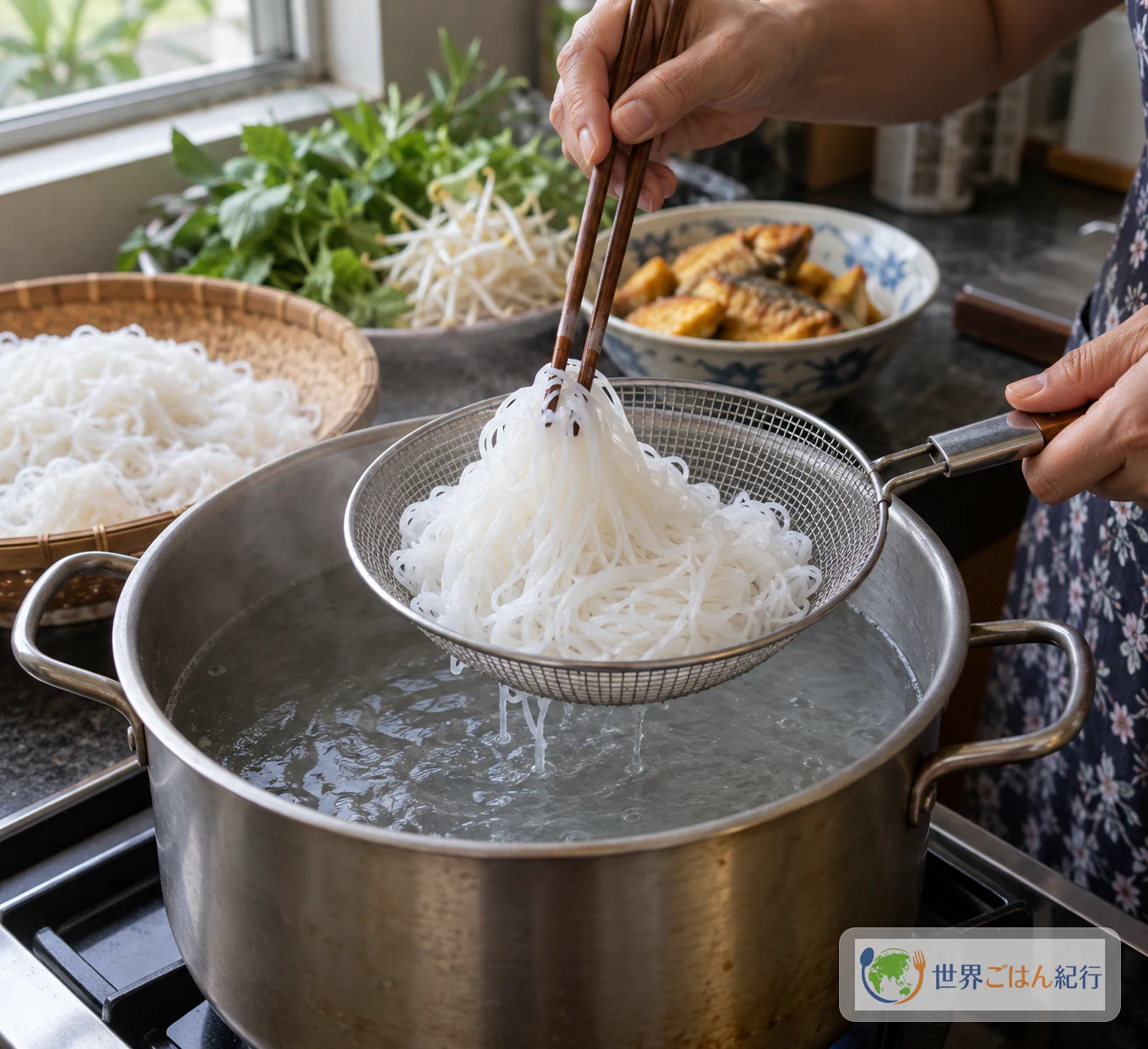
The noodles. Use fresh bún. Dried noodles are not part of this version.
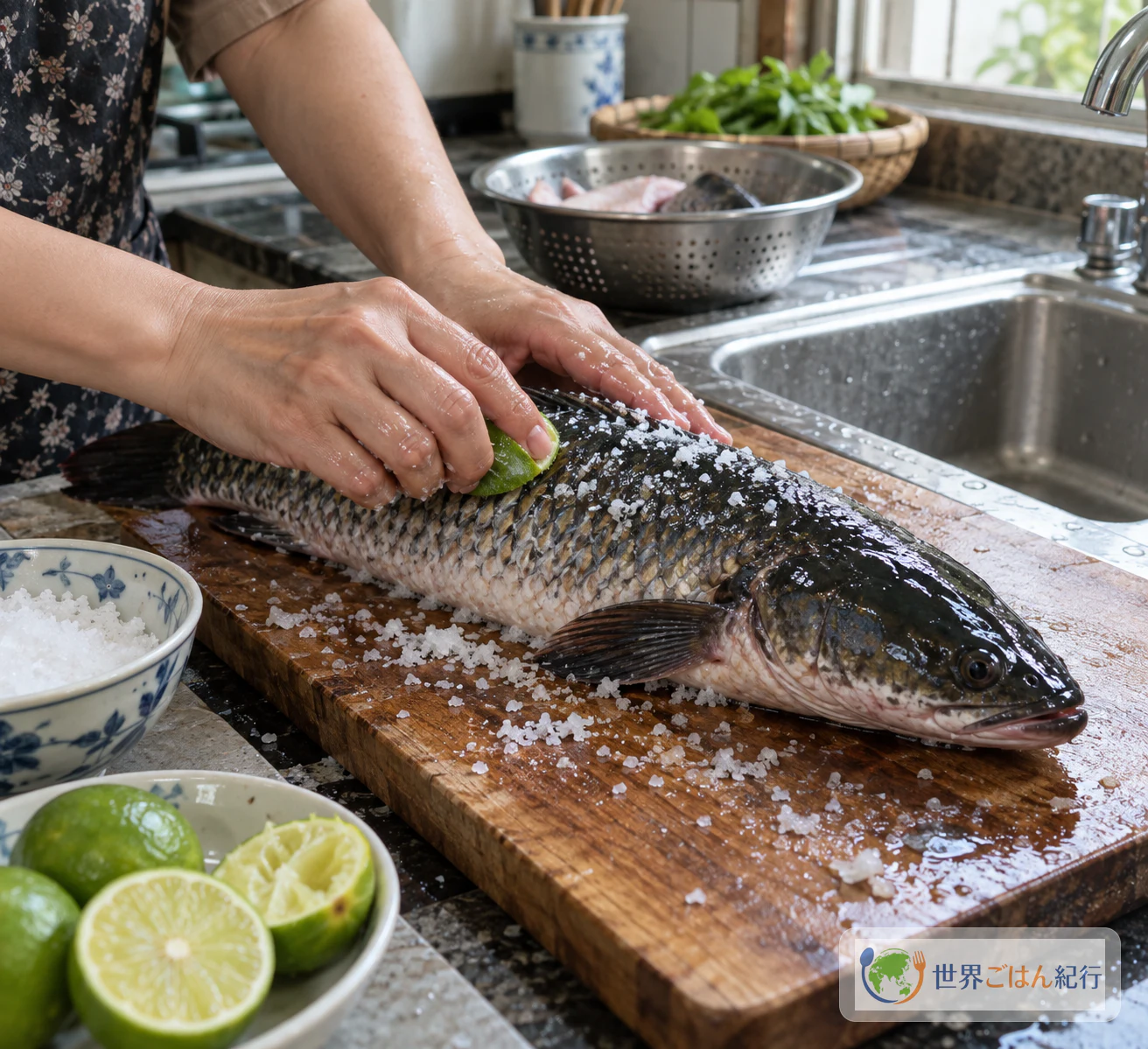
The lime. In Vietnamese the citrus is simply chanh. This article pictures an ordinary green culinary lime, but that is our choice for the photos, not a confirmed species. It is only for cleaning the raw fish and is rinsed off; no citrus juice goes into the broth.
Equipment
- A pot large enough to boil the whole fish
- A stockpot for the bone broth
- A separate cutting board and knife for the raw fish
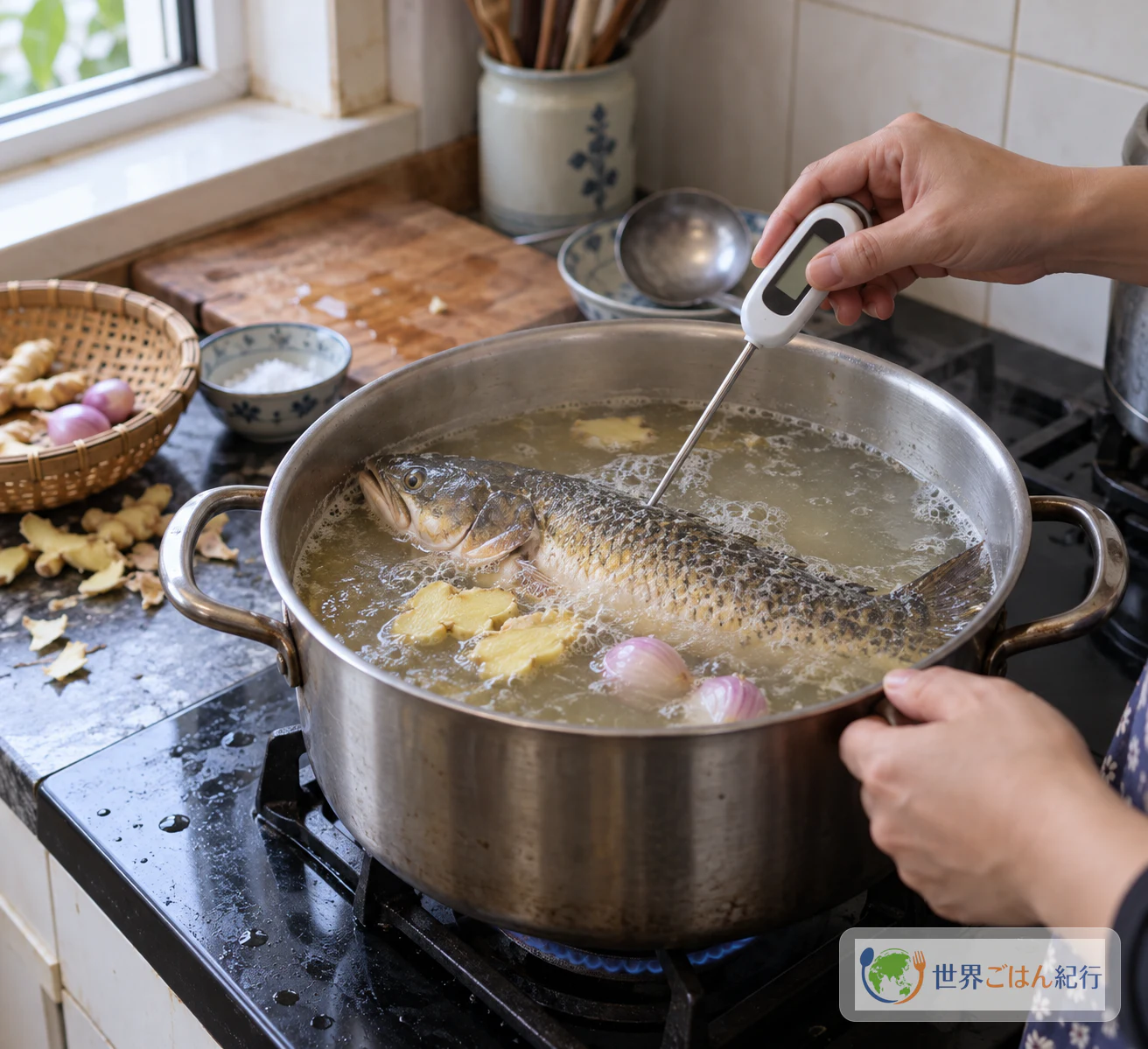
- A food thermometer for checking the fish
- Fish-bone tweezers for picking small bones out of the flaked meat
- A fine-mesh strainer for the broth
- A slotted spoon for the cracklings and fried shallots
- A wire strainer basket for dipping the noodles
- A ladle
Method: From Whole Fish to a Clear Bowl
The U.S. Food and Drug Administration advises cooking fish to an internal temperature of 63°C / 145°F, measured with a food thermometer. Where a thermometer isn't practical, cook until the flesh is opaque and separates easily with a fork. Color and texture alone do not guarantee safety. Keep raw fish away from other foods, and wash hands, boards and utensils after handling it. No cooking time to reach it is given here.
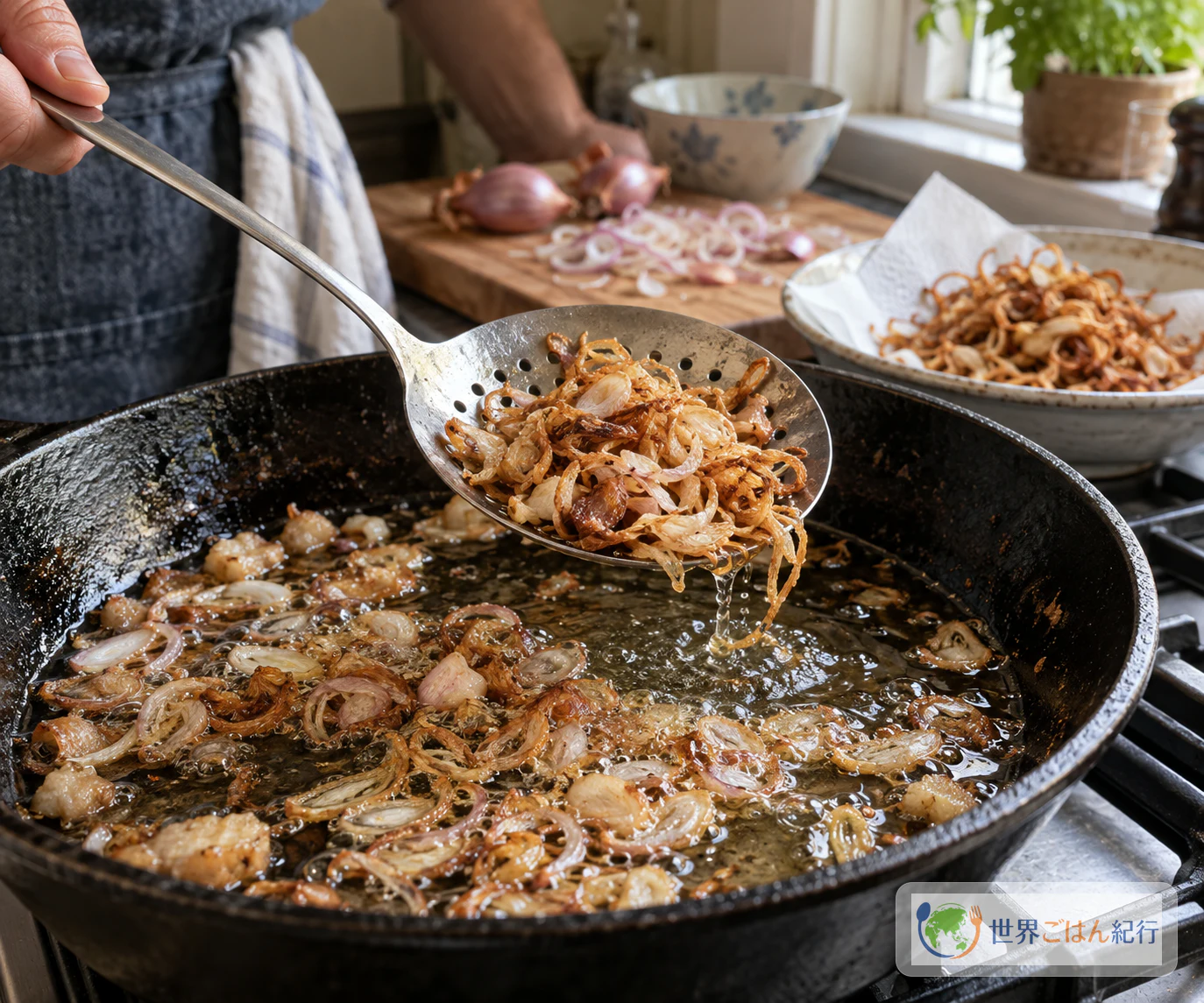
The order matters: the fish is cooked first, so its bones are ready for the broth. The pork fat is rendered before the shallots are fried, because the shallots are fried in that fat.
When the Bowl Goes Wrong
| Problem | Likely cause | What to do |
|---|---|---|
| The broth is cloudy | The bones were crushed | Keep the bones whole and simmer gently next time; strain through a fine-mesh strainer |
| Bone fragments in the broth | Straining was too coarse | Strain again through a fine-mesh strainer; never serve the bones or shards |
| Small bones in the fish | Missed while flaking | Go over the flakes again with tweezers before they go into the bowls |
| Unsure whether the fish is cooked | Judging by look alone | Check for 63°C / 145°F with a food thermometer, or opaque flesh that flakes easily |
| The broth tastes sour | Citrus or another sour ingredient got into it | This version has no sour note. Rinse the fish well after cleaning, and keep lime out of the pot |
| The broth tastes flat | Not yet seasoned | Adjust a little at a time with salt, fish sauce and MSG, tasting as you go |
Golden color is not a doneness signal here, because the fish is boiled, not fried.
Small Changes That Stay Within This Version
- Choose your green by season. Water celery, crown daisy (cải cúc) or rau rút are the choices, one at a time. Each changes the flavor of the bowl; this is not a three-green mix.
- Heat is optional. The chili paste is served at the table, so anyone who prefers a mild bowl can leave it out. The broth itself does not change.
- Cracklings or shallots. You can skip either the tóp mỡ or the fried shallots if you like. The bowl will lose some of its pork-fat richness and crunch.
Swapping the fish or adding a sour ingredient would take you to a different bún cá, not a variation of this one.
One Name, Many Bowls: Where This Version Sits
Bún cá is a family of dishes, not a single formula. Vietnam's national tourism authority includes bún cá in its Hanoi food guide as a dish often eaten at lunch, and describes one broth-served version with rice noodles, fried fish pieces and greens, with cilantro and dill as herbs. Ninh Tito's home-style Hanoi bún cá is different again. The fish is tilapia, marinated with turmeric, coated and fried. Its broth combines fish stock and pork-bone stock with tomato and pineapple, and the article notes that Hanoi bún cá is eaten both in broth (chan) and as a dipping style (chấm).
Further afield, Vietnam Times separates bún cá by region. The Hanoi version it describes has a sour broth and fried fish, Hai Phong adds heat and several fish toppings, Thái Bình uses a rich non-sour stock with turmeric fish, and Nha Trang pairs a clear fish-bone broth with seafood. Viet Nam News reports that Hai Phong's bún cá uses both fried fish and fried fish cake (chả cá). Against that background, Bùi Thủy's canh bún cá stands out for what it leaves out: no frying, no tomato or pineapple, no sourness. That is why this article keeps those ingredients out of the recipe entirely.
It is also worth separating bún cá from chả cá Lã Vọng, another famous Hanoi fish dish. The tourism authority describes it as turmeric fish that is grilled, finished with herbs, and eaten with rice noodles, peanuts and mắm tôm. It is a dish in its own right, not a noodle soup with broth poured over.
What This Recipe Does Not Guarantee
The VnExpress recipe names its ingredients and its order of work clearly, but much of it is left to the cook's judgment. It gives no quantities for water, noodles, greens, pork fat or seasonings, and no times for boiling the fish or simmering the bones. Rather than borrowing numbers from other bún cá recipes, which use different fish, broths and methods, this article leaves those amounts open. It has not been kitchen-tested, so treat it as a faithful guide to one dish's structure and order rather than a measured, fixed formula. The 4–6 servings and 55 minutes shown on the recipe card are reported here as the card's own figures.
The recipe also gives no storage guidance. General food-safety advice is not to leave fish, broth or other perishable components at room temperature for long; No storage period or reheating time is given here.
Frequently Asked Questions
Why isn't the fish fried?
Fried fish belongs to other versions, such as the one in the Hanoi tourism guide and Ninh Tito's tilapia bún cá. This article follows the canh bún cá that Bùi Thủy presents as an old Hanoi dish, in which the snakehead is boiled and flaked.
Should I add something sour to the broth?
No. Bùi Thủy describes this version as one that does not add a sour element. The chanh is only for cleaning the raw fish, and it is rinsed off before cooking.
Can I use a different fish?
The recipe calls for one snakehead (cá quả) of about 1 kg. It does not suggest any other fish or give an equivalent amount, so this article does not either. Another fish would give you a different bowl.
How do I know the fish is cooked?
The recipe itself gives no temperature or time. The U.S. FDA's guidance is an internal temperature of 63°C / 145°F on a food thermometer. If a thermometer isn't practical, cook until the flesh is opaque and flakes easily. Color and texture alone don't guarantee safety.
What kind of lime is chanh?
The recipe just says chanh and does not name a botanical species. The photos here show an ordinary green culinary lime as our own choice; that is not a claim about the exact fruit intended.
Why are so many amounts missing?
The recipe lists amounts only for the fish, pork bones, shallots, ginger, dill and scallion. Everything else is left to the cook. This article does not fill those gaps with guesses or with figures from other recipes, and it has not been kitchen-tested.
Do I need to add oil for frying the shallots?
No added oil is called for. The shallots are fried in the fat rendered from the pork fat when making tóp mỡ.
Sources
- Bùi Thủy, "Cách nấu canh bún cá - món cổ ngon của người Hà Nội," VnExpress Cooking. The main recipe: its presentation as an old Hanoi dish without added sourness; ingredients and stated amounts; the order of cleaning, boiling and flaking the fish, simmering and straining fish and pork bones without crushing them, making tóp mỡ and frying shallots in its fat, and assembling with bún, one seasonal green and herbs; and the card's listed 4–6 servings and 55 minutes. https://vnexpress.net/doi-song-cooking-canh-bun-ca-4535424.html
- U.S. Food and Drug Administration, "Safe Food Handling." Cooking fish to 63°C / 145°F, or until opaque and flaking easily; the note that color and texture alone don't guarantee safety; keeping raw fish separate and washing hands and utensils; not leaving perishable food at room temperature for long. https://www.fda.gov/food/buy-store-serve-safe-food/safe-food-handling
- Viet Nam National Authority of Tourism, "Ha Noi Food Guide: The best street food dishes to sample." Bún cá as part of Hanoi's food scene and a lunch dish, and one broth-served version with rice noodles, fried fish, greens, cilantro and dill. Used for comparison only. https://vietnam.travel/things-to-do/ha-noi-food-guide-best-street-food-dishes-sample
- Ninh Tito (Ninh Trung Vu), "Công thức nấu bún cá ngon như ngoài hàng." A personal Hanoi home-style bún cá with fried tilapia, tomato and pineapple, and the chan and chấm serving styles. Used for comparison only. https://ninhtito.squarespace.com/blog/cong-thuc-nau-bun-ca-ngon-nhu-ngoai-hang
- Malie Nguyen, "How to Cook 'Bun Ca' - the Fish Soup Found Across Vietnam," Vietnam Times. Regional differences in bún cá across Hanoi, Hai Phong, Thái Bình, Nha Trang and other places. Used for comparison only. https://vietnamtimes.thoidai.com.vn/how-to-cook-bun-ca-the-fish-soup-found-across-vietnam-33294.html
- Hồng Vân, "The estuary of rice noodle soups," Viet Nam News. Hai Phong bún cá using both fried fish and fried fish cake. https://vietnamnews.vn/life-style/378112/the-estuary-of-rice-noodle-soups.html
- Viet Nam National Authority of Tourism, "Famous Ha Noi Food and International Fine Dining." Chả cá Lã Vọng as a separate Hanoi dish of grilled turmeric fish eaten with rice noodles, peanuts and mắm tôm. https://vietnam.travel/things-to-do/famous-hanoi-food-and-international-fine-dining/