Bánh Trôi: Small White Balls That Rise, Sink and Finally Stay Afloat
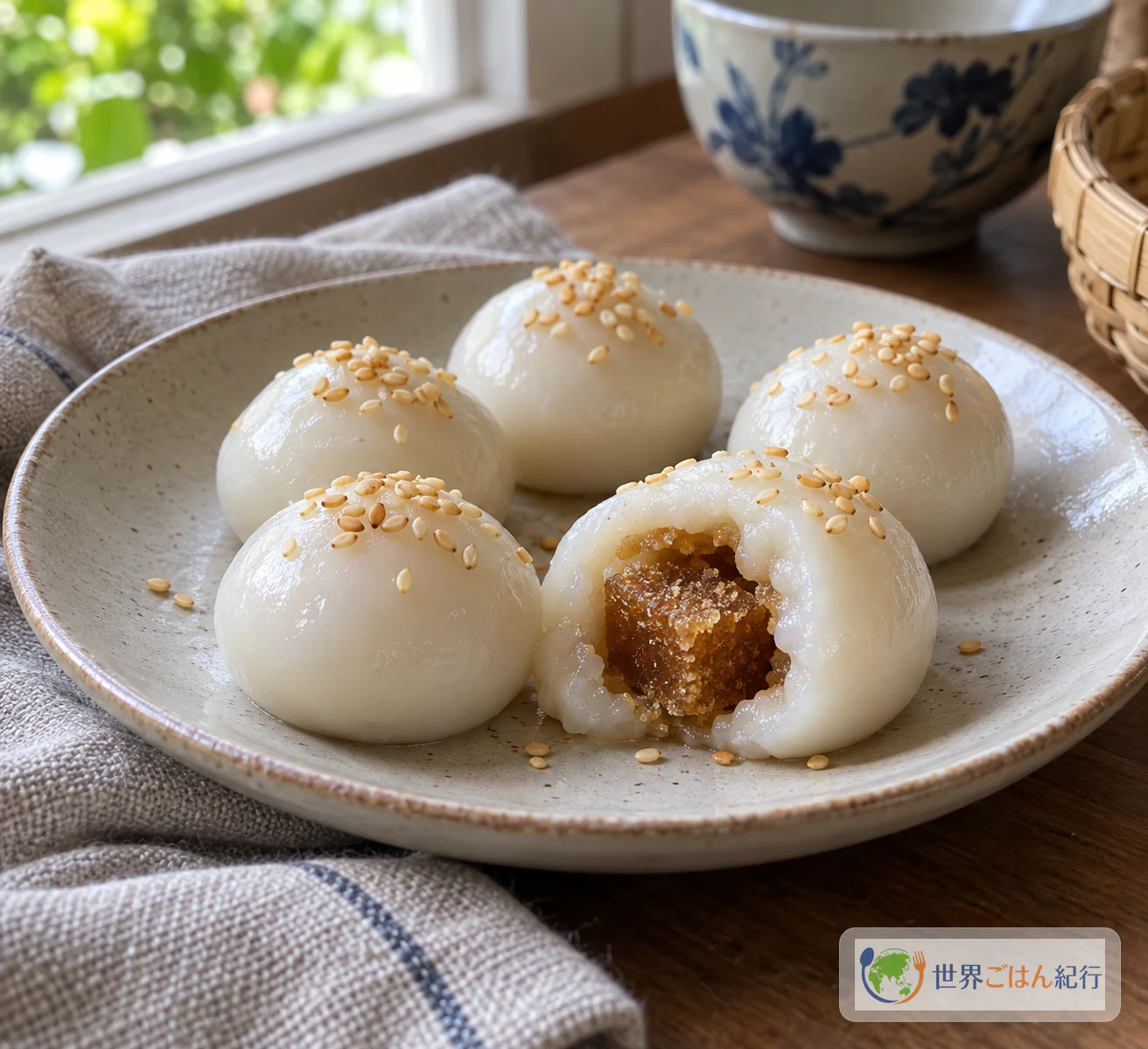
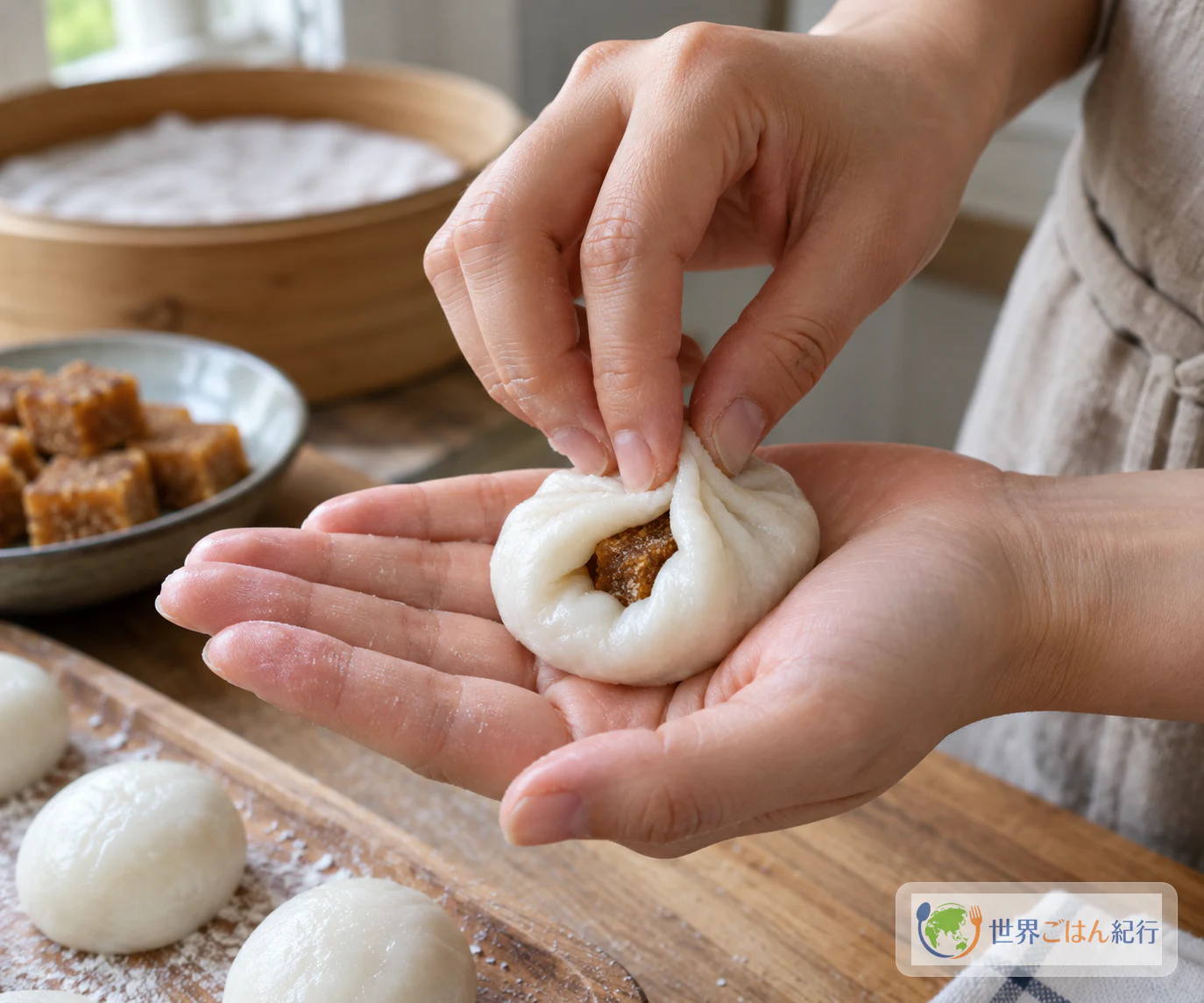
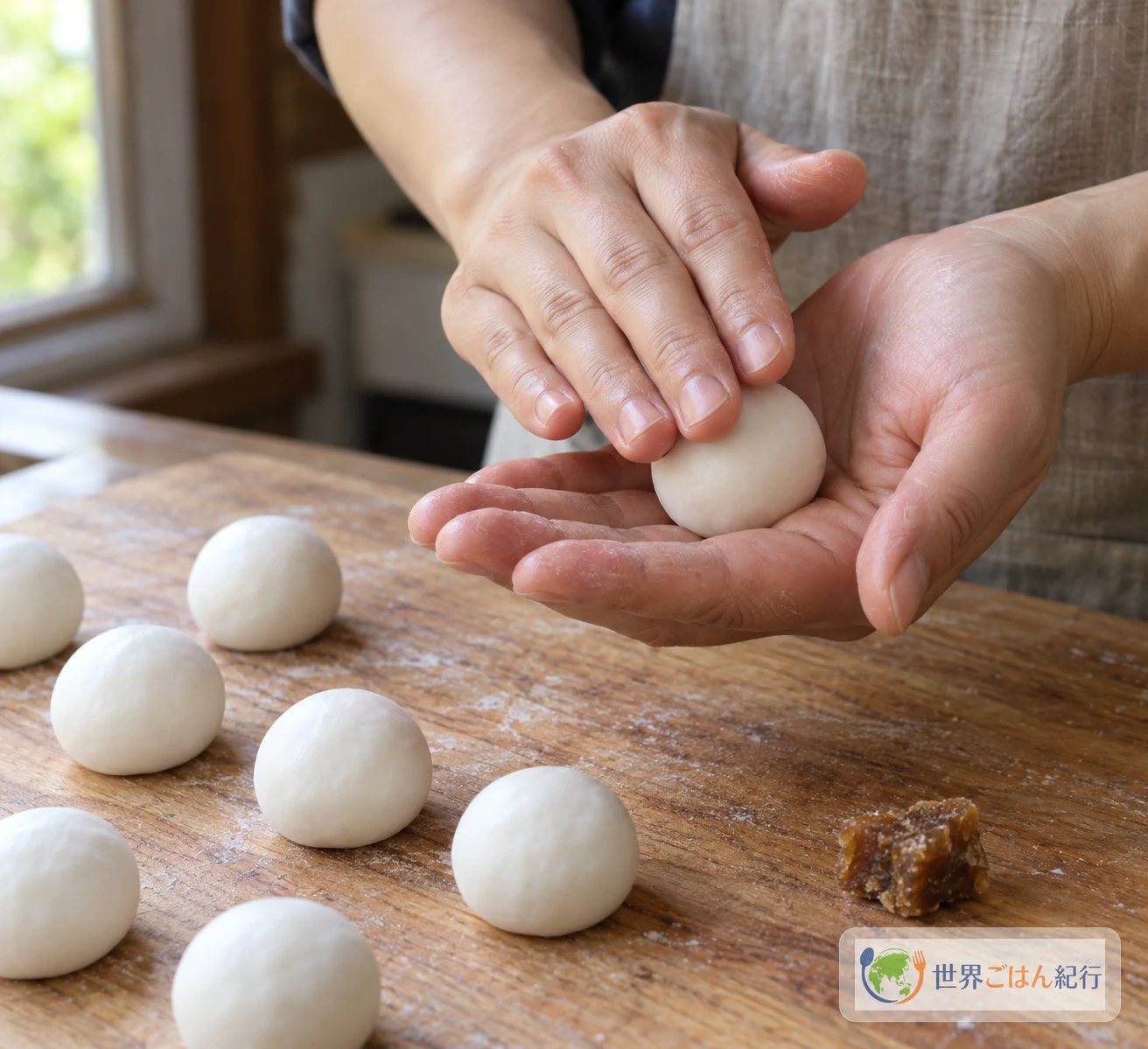
A soft, smooth skin of glutinous rice dough, sealed with no cracks around one small cube of cane sugar. Lift them from the pot only once they have floated up and stayed there.
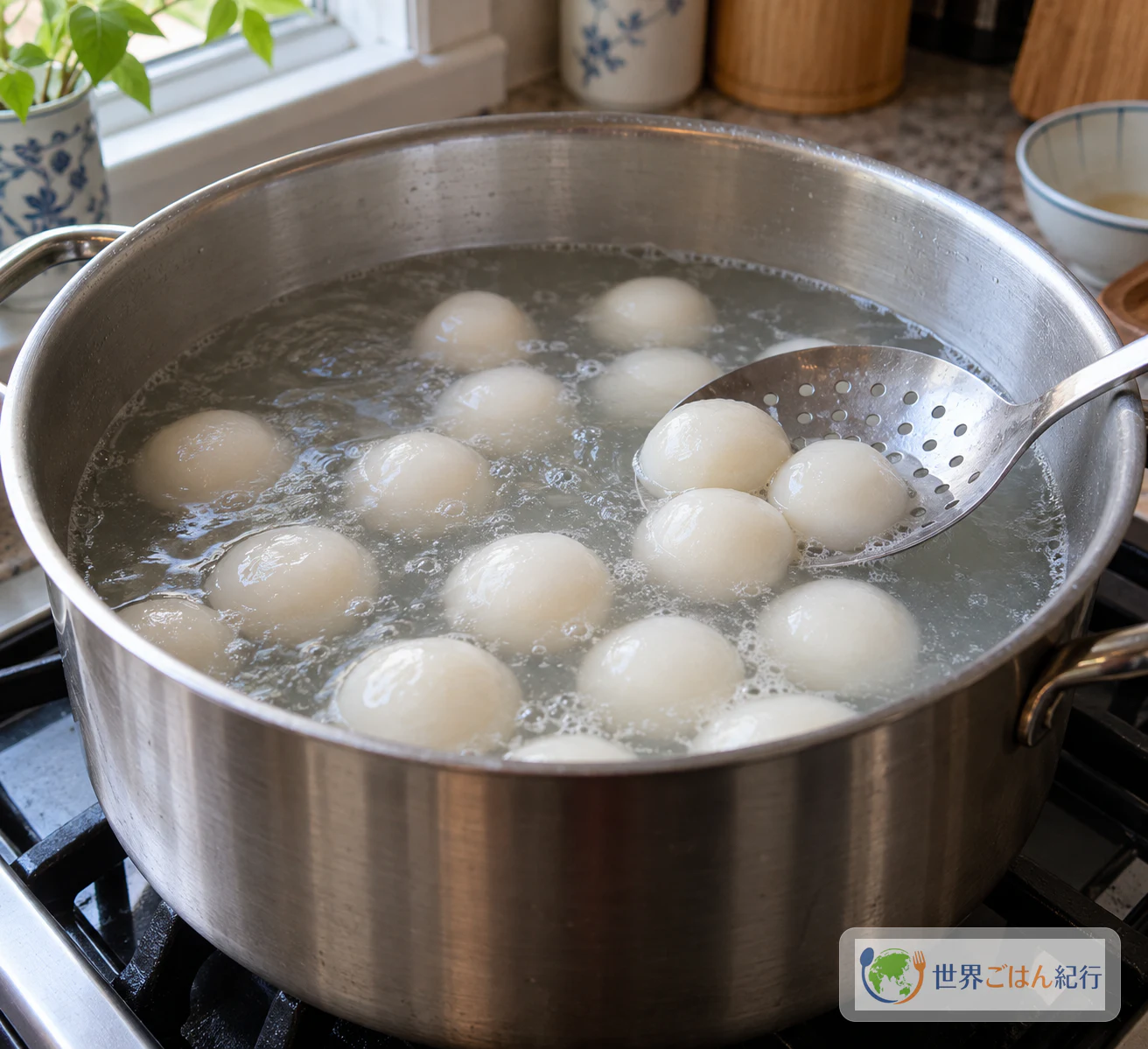
Small white balls go into a pot of gently bubbling water and sink to the bottom. After a while they drift up to the surface, sometimes slip back down, and rise again, until at last they stay floating. Inside each one is a single cube of unrefined cane sugar, wrapped by hand in a skin of glutinous rice dough. This is bánh trôi, a small sweet from northern Vietnam. The word trôi is explained as "to float," tying the name to exactly what the balls do in the pot.
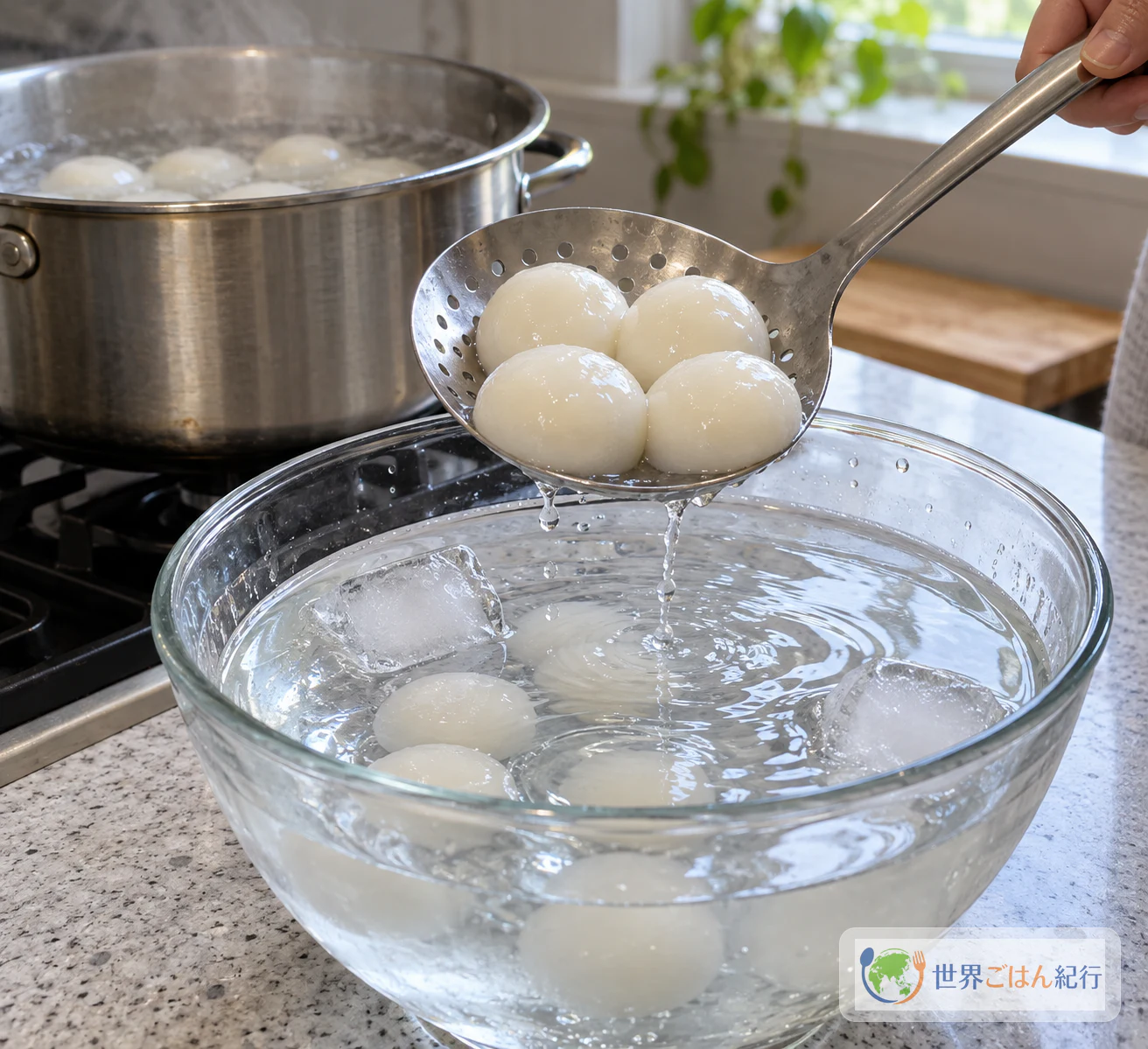
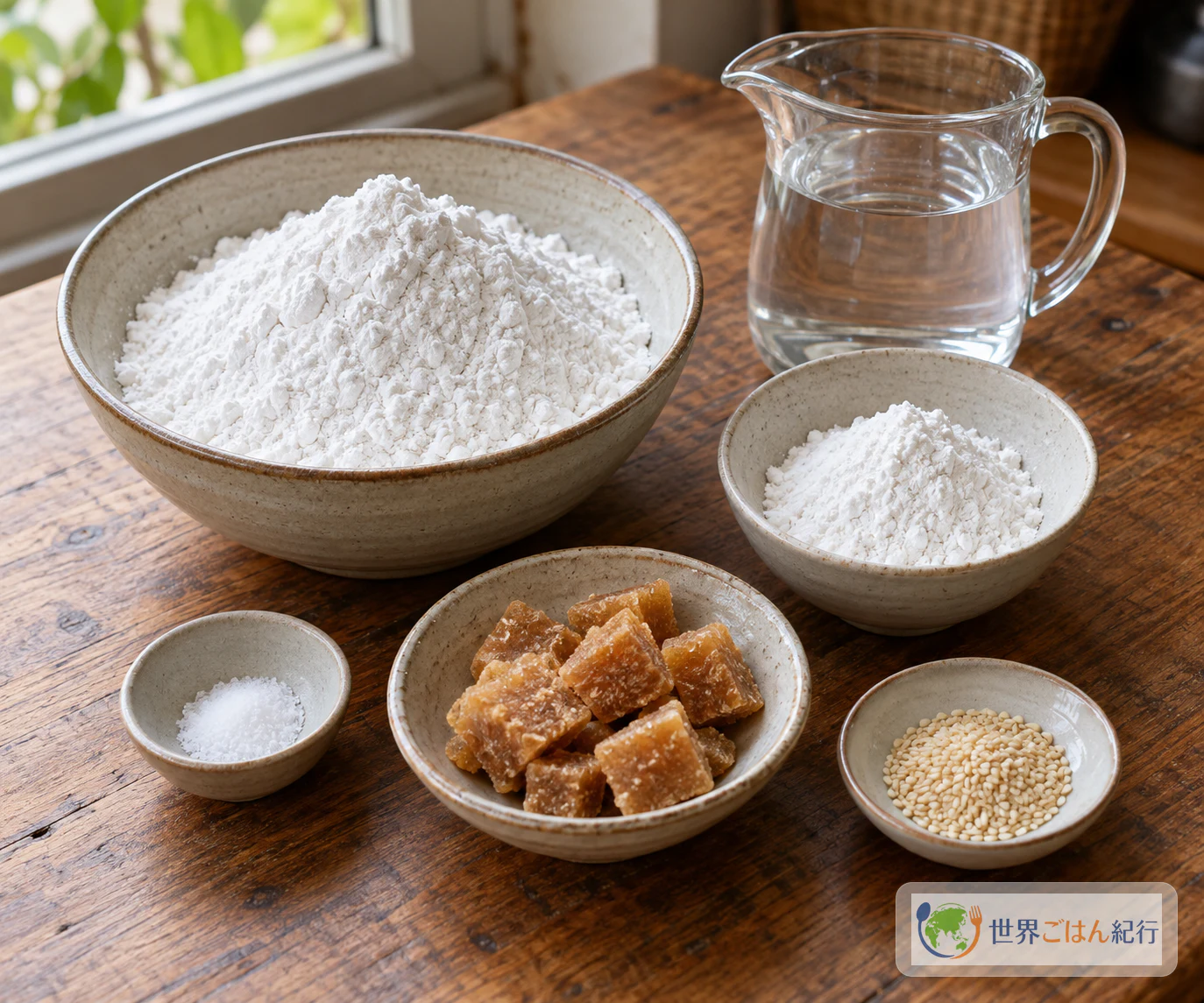
This article covers the small northern type: glutinous rice flour dough with a little plain rice flour, a center of đường phên (block cane sugar), boiled, cooled in ice water and finished with toasted white sesame seeds. Some recipe pages also call it bánh trôi nước, but here the main name is bánh trôi. The mung bean–filled bánh chay, the southern chè trôi nước served in warm ginger syrup, and bánh trôi tàu are different dishes, and their fillings and syrups are not mixed into this recipe.
The recipe follows a single published version from MM Bon Appétit, without blending in amounts or steps from other recipes. Its author notes that the sugar center softens during cooking but does not fully melt, so a little crunch remains.
This recipe has not been kitchen-tested by Sekai Gohan. The amounts and times below follow the published recipe, but the yield in particular is unconfirmed (see the FAQ).
Ingredients for Northern-Style Bánh Trôi
Equipment
- Kitchen scale
- Wide mixing bowl
- Whisk
- Chopsticks or a spoon for mixing
- Clean cloth or cover for resting the dough
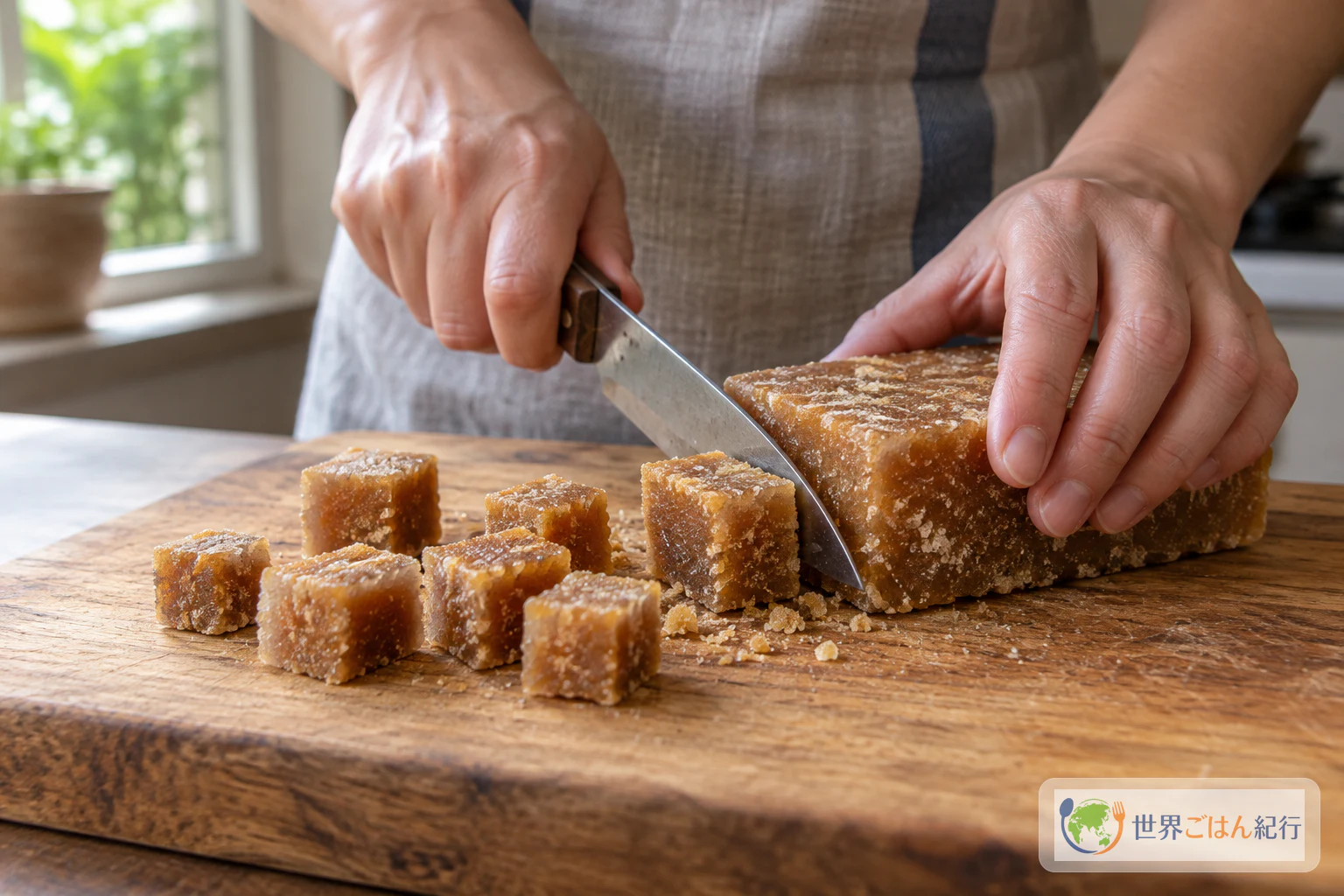
- Sturdy cutting board and a small, sturdy knife for cutting the sugar block
- Dry frying pan (only if your sesame seeds are raw)
- Large pot
- Slotted spoon
- Bowl for the ice water
- Serving plate
Choosing the Sugar, Flours and Sesame
Đường phên is the heart of the dish. It is a block of unrefined cane sugar, and its flavor and the slight crunch it keeps after cooking are part of what makes bánh trôi. Panela is a similar product to look for when shopping, but its shape and hardness may differ. Other dark block cane sugars, such as Japanese kokutō, can be considered as substitutes, but they are not confirmed to be equivalent; expect differences in how the center softens and in flavor. Palm sugar (đường thốt nốt) is not the same thing and is not recommended, so it is not used here.
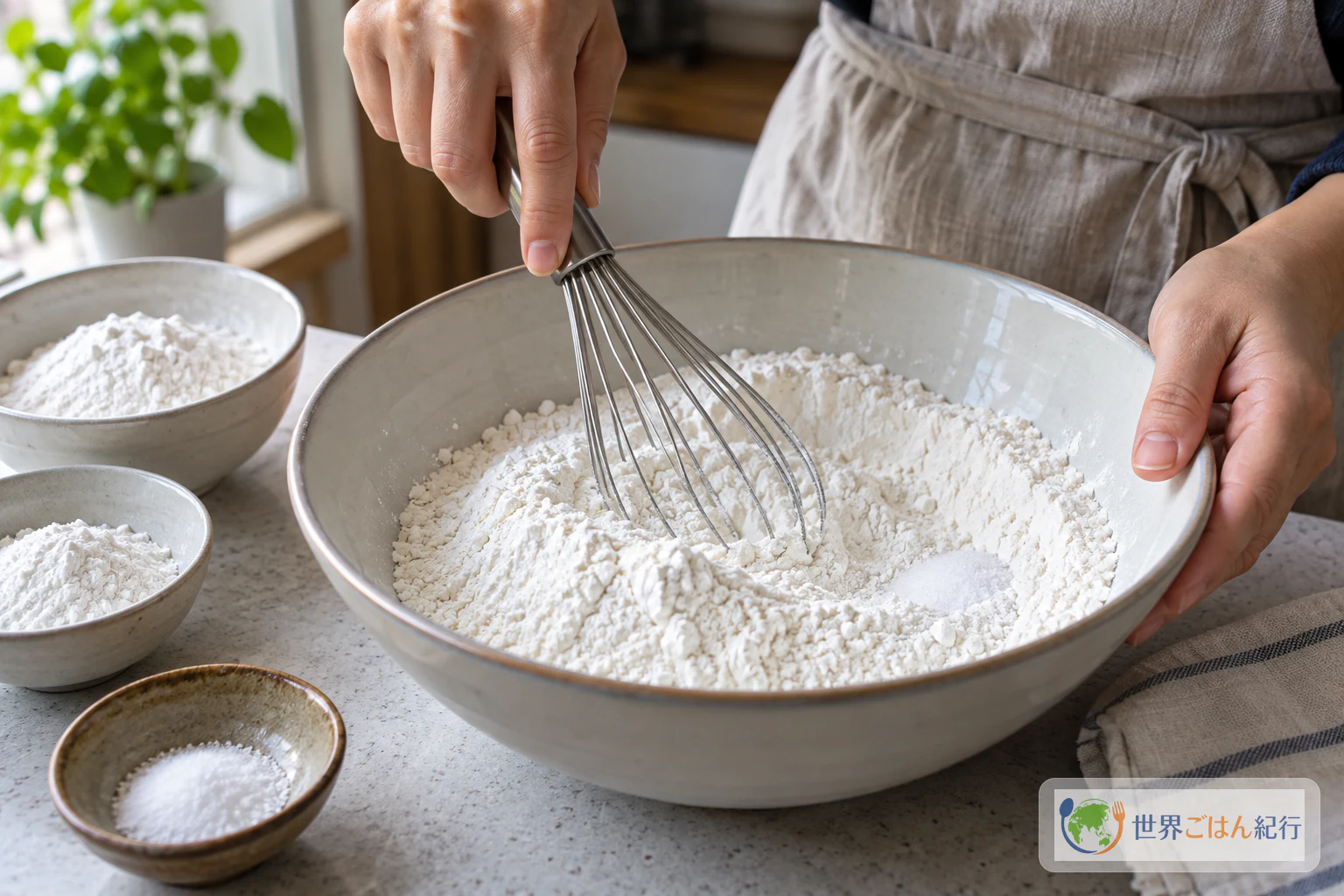
Keep the two rice flours distinct. Glutinous rice flour forms the dough, and plain rice flour is a small addition. Do not replace the rice flour with potato starch or cornstarch. Other glutinous rice products, such as Japanese shiratamako, are not confirmed to be the same in milling or texture, so if you use one, expect it to absorb water differently and adjust the extra water by feel.
Sesame. Use toasted white sesame seeds. If you only have raw ones, toast them in a dry pan until fragrant and stop before they color too much.
This recipe contains sesame. Check the labels on rice flours and sugar for possible cross-contact with other allergens in production. This information is not a medical safety guarantee.
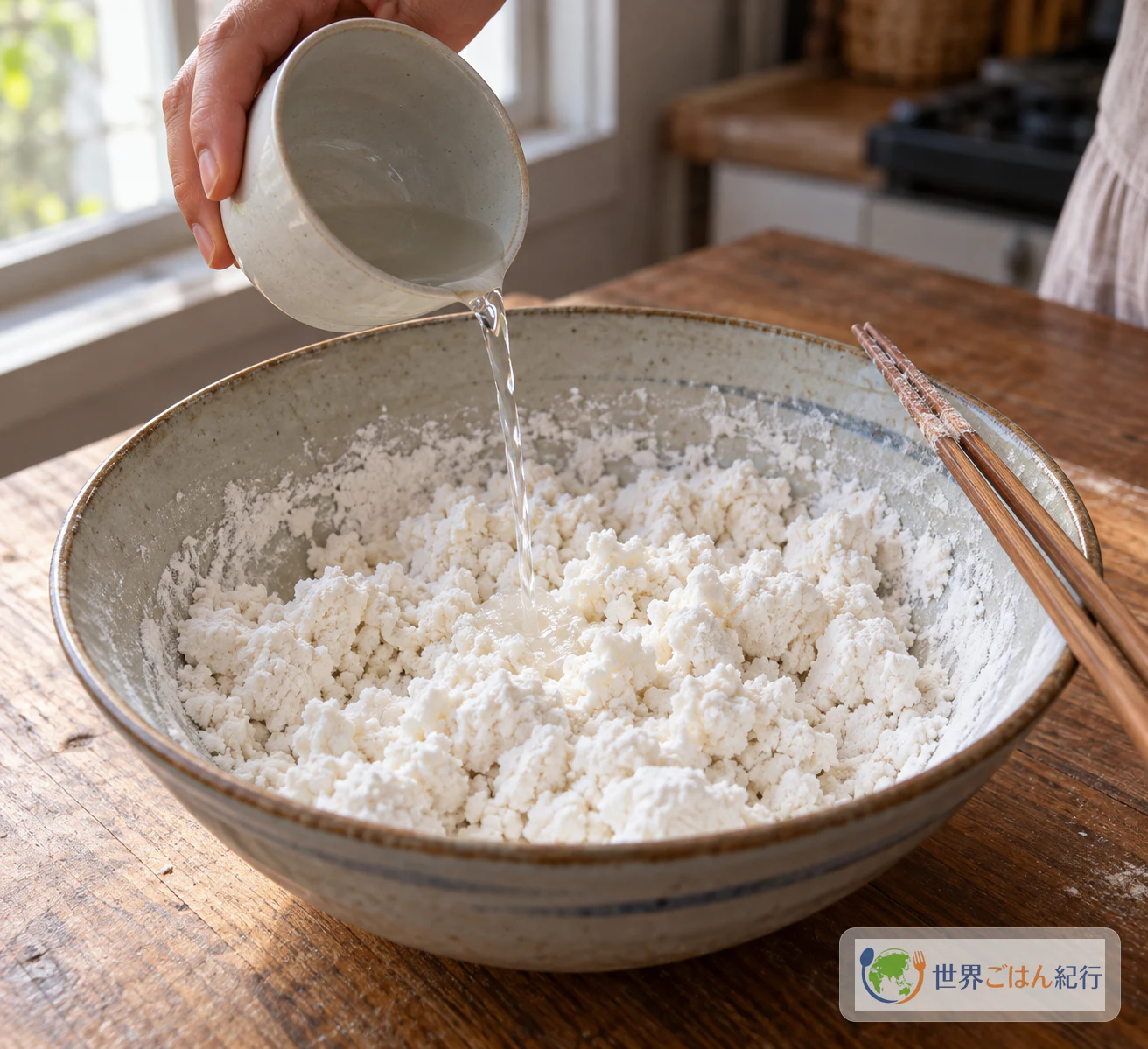
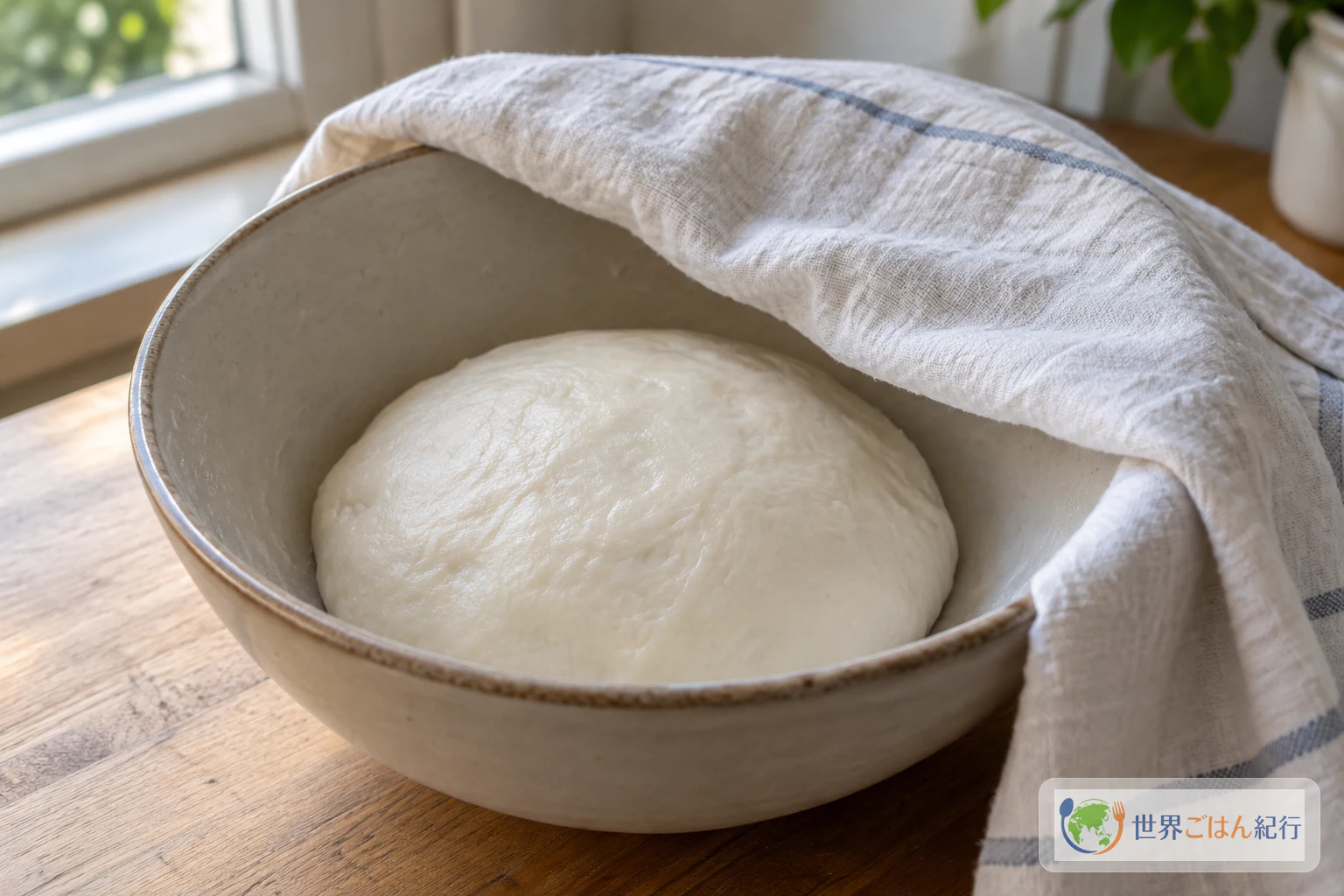
Method: Seal the Sugar, Then Wait for the Float
Balls may float up and sink again more than once. They are done when they rise to the surface and stay there.
Fixing Problems: Dough, Seams and the Pot
| Problem | Likely cause | What to do |
|---|---|---|
| Dough stays crumbly with dry flour | Not quite enough water | Add the extra warm water a little at a time, never all at once |
| Dough is sticky | Too much water | Stop adding water and let the dough rest |
| Sugar leaks out while boiling | Dry cracks or a loose seam | Before cooking, smooth out cracks and pinch the seam firmly closed |
| Balls tear or fall apart | Water boiling too hard | Keep the heat at medium-low so the balls don't tumble around |
| Center seems underdone | Lifted out at the first float | Balls can rise and sink again; wait until they float and stay up |
The Tuổi Trẻ report includes home cooks' advice that warm water helps the dough: they say rice dough mixed with cold water tends to crack, while water that is too hot makes it sticky. It also advises against keeping the heat high once the balls have floated. These are home cooks' tips rather than exact temperatures, so judge the dough by feel: soft, smooth and not sticky.
Serving and Leftovers
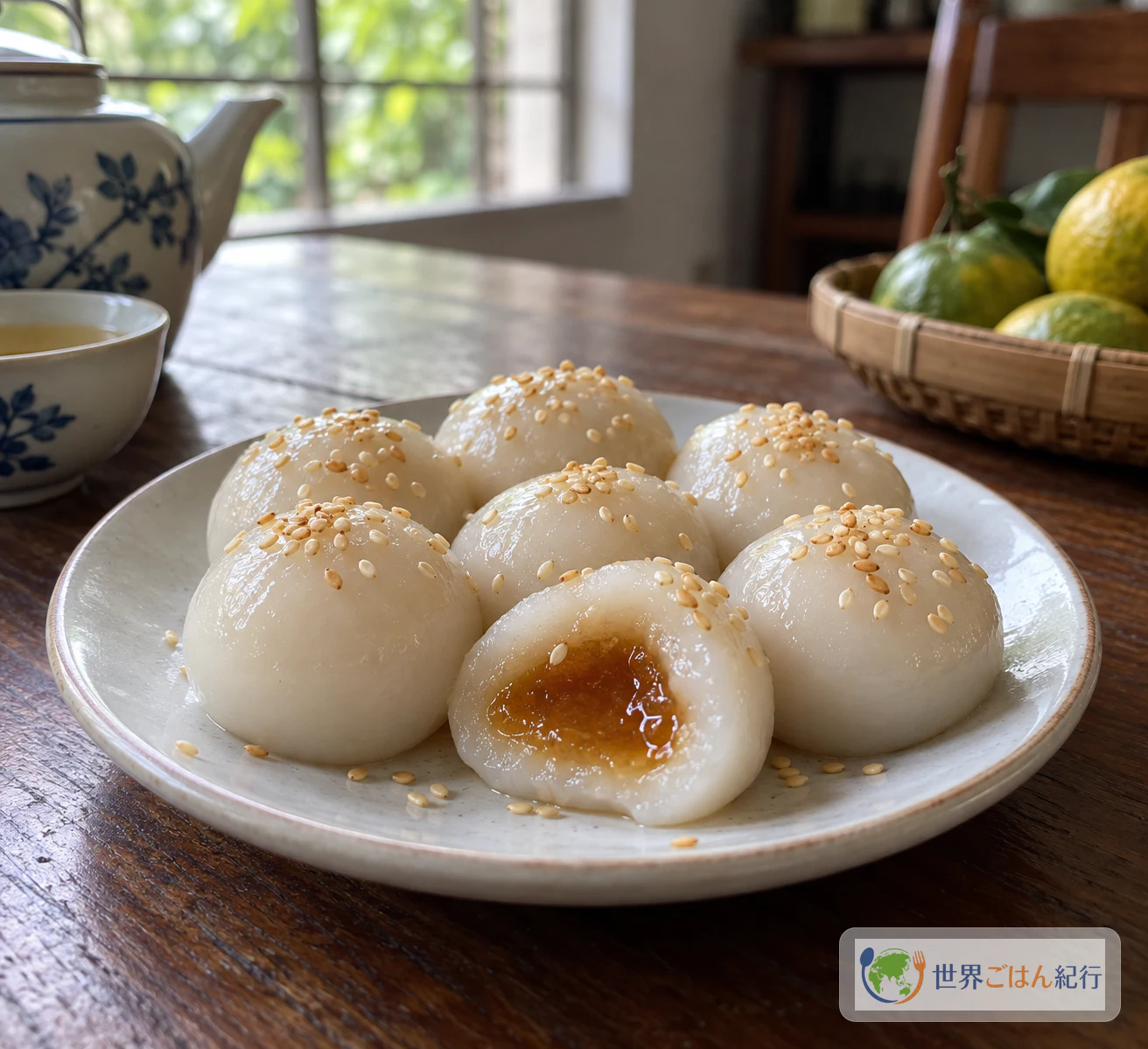
In this recipe, bánh trôi is eaten at room temperature after cooling in water, with only toasted white sesame on top. There is no syrup, coconut or ginger; those belong to the related dumplings below.
There is no confirmed guidance on keeping bánh trôi at room temperature, refrigerating it or reheating it, so cook only as many as you plan to eat.
Related Rice Dumplings: Same Dough Family, Different Dishes
The names are close and all of these use rice flour dough, but the filling, size, syrup and serving temperature differ, so it is easy to mix up recipes. MM Bon Appétit distinguishes them as follows.
| Dish | Filling and size | How it is served |
|---|---|---|
| Bánh trôi (north) | Small, with a cube of block cane sugar | Boiled, cooled in water, topped with sesame |
| Bánh chay (north) | Larger, with mung bean filling | In a thickened sweet syrup |
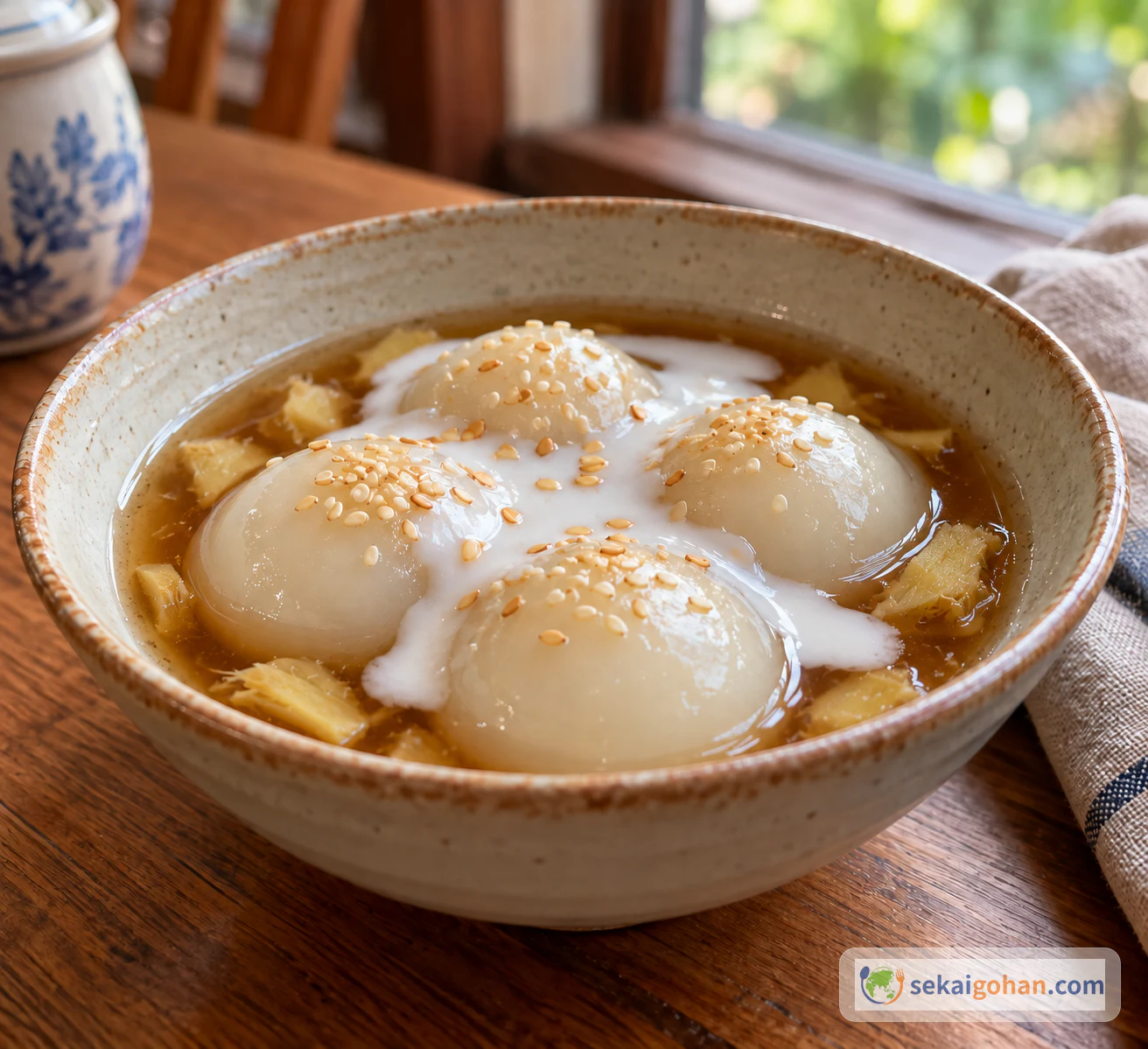
| Chè trôi nước (south) | Large, with mung bean filling | Warm, in a ginger sugar syrup |
| Bánh trôi tàu | A separate, larger dumpling | Warm, in ginger syrup |
This recipe makes only the first. For more of Vietnam's dishes, see Vietnam.
Tết Hàn Thực and a Poem About Floating
Bánh trôi is closely tied to Tết Hàn Thực, on the third day of the third lunar month. According to VOV, Vietnam's national broadcaster, the festival came from China, but in Vietnam it did not keep the custom of avoiding fire. Instead, it became a day for offering bánh trôi and bánh chay to the ancestors. VOV cites records by the scholar Lê Quý Đôn; these are presented here as VOV's account, not as records checked directly.
A Tuổi Trẻ report gathers testimony from a researcher and families. In the north, families come together to make the balls by hand and offer them, while in the south and central regions the practices and offerings differ. This is not a custom shared uniformly by every household across the country.
The dish is also known through Hồ Xuân Hương's poem "Bánh trôi," which turns the round white balls rising and sinking in the pot into a metaphor for a woman's lot. The poem is a literary image, not an account of the dish's origin, but it draws on the same rising and sinking seen in the pot.
Frequently Asked Questions
Are bánh trôi and bánh chay the same?
No. Both use rice flour dough and both appear at Tết Hàn Thực, but bánh trôi is small with a cane sugar center and is eaten after cooling in water, while bánh chay is larger, filled with mung beans and served in a thickened sweet syrup.
Can I use another sugar if I can't find đường phên?
Panela, which MM Bon Appétit names as a similar product, or another dark block cane sugar can be considered, but they are not confirmed to be the same. The shape, hardness, how the center softens and the flavor can all change. The recipe's author does not recommend palm sugar.
Are the balls ready as soon as they float?
Not necessarily. They can float and sink again several times. The recipe gives 20–25 minutes as a guide and treats "floating and staying at the surface" as the sign they are done. The recipe card lists a cook time of 20 minutes, while the method gives 20–25; let the float be your final check.
How many balls does this make?
MM Bon Appétit's recipe card gives a yield of 30, with dough portions of 15 g. However, the 15 g portion size, the count of 30 and the amounts of flour and water may not line up exactly, and how many 1 cm cubes 75 g of sugar gives also depends on how you cut it. Since this recipe has not been kitchen-tested yet, the actual number is unconfirmed.
Do I need all of the extra water?
No. Add it a little at a time and stop once no dry flour remains and the dough comes together. The recipe's author used 17 g of the up to 20 g allowed, and the amount you need may differ depending on your flour.
Is Tết Hàn Thực a day when cooking with fire is avoided?
The origin story of the festival in China is tied to avoiding fire, but VOV reports that in Vietnam people cook as usual and offer bánh trôi and bánh chay to their ancestors.
Are there other recipes with different amounts?
Yes. Other published recipes, such as the one on world.food, give different proportions and times. This article follows a single recipe and does not mix them.
Sources
- MM Bon Appétit, "Bánh trôi • Sugar-filled rice flour balls." Ingredients and amounts, dough, shaping, boiling, cooling in ice water, serving, the softened-but-not-melted sugar center, the distinction between northern bánh trôi and related dumplings, and the introduction to Hồ Xuân Hương's poem. A personal recipe site; amounts and yield are the author's own recipe values. https://mmbonappetit.com/banh-troi/
- VOV – Tiếng nói Việt Nam, "Vì sao cúng bánh trôi, bánh chay trong Tết Hàn thực?" Tết Hàn Thực, the offering of bánh trôi and bánh chay to ancestors, the festival's adaptation in Vietnam, and the article's citation of Lê Quý Đôn's records. A cultural news article; historical origins are not verified independently. https://vov.gov.vn/vi-sao-cung-banh-troi-banh-chay-trong-tet-han-thuc-dtnew-1074764
- Tuổi Trẻ Online, "Tại sao Tết Hàn thực lại phải ăn bánh trôi bánh chay?" Testimony from a researcher and families on regional differences, northern families making the balls together, and home cooks' advice on warm water and avoiding high heat. Testimony does not establish a uniform national custom. https://tuoitre.vn/tai-sao-tet-han-thuc-lai-phai-an-banh-troi-banh-chay-2024041108181679.htm
- Traditional Vietnam Recipe (world.food), "Bánh trôi (Vietnamese floating rice dumplings)." Used only to note that independent recipes differ in proportions and times; not used for this recipe. https://world.food/recipes/vietnam/banh-troi