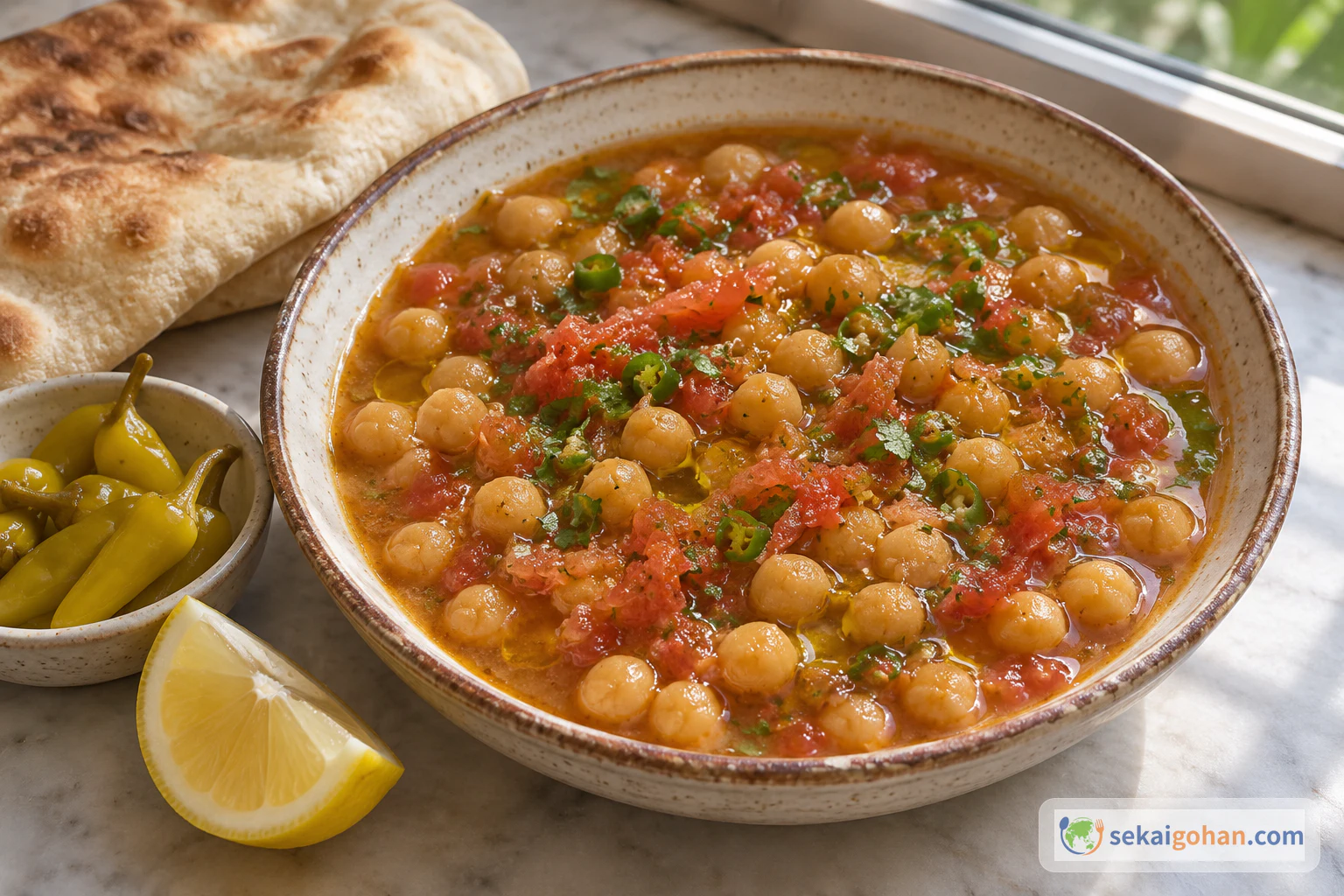
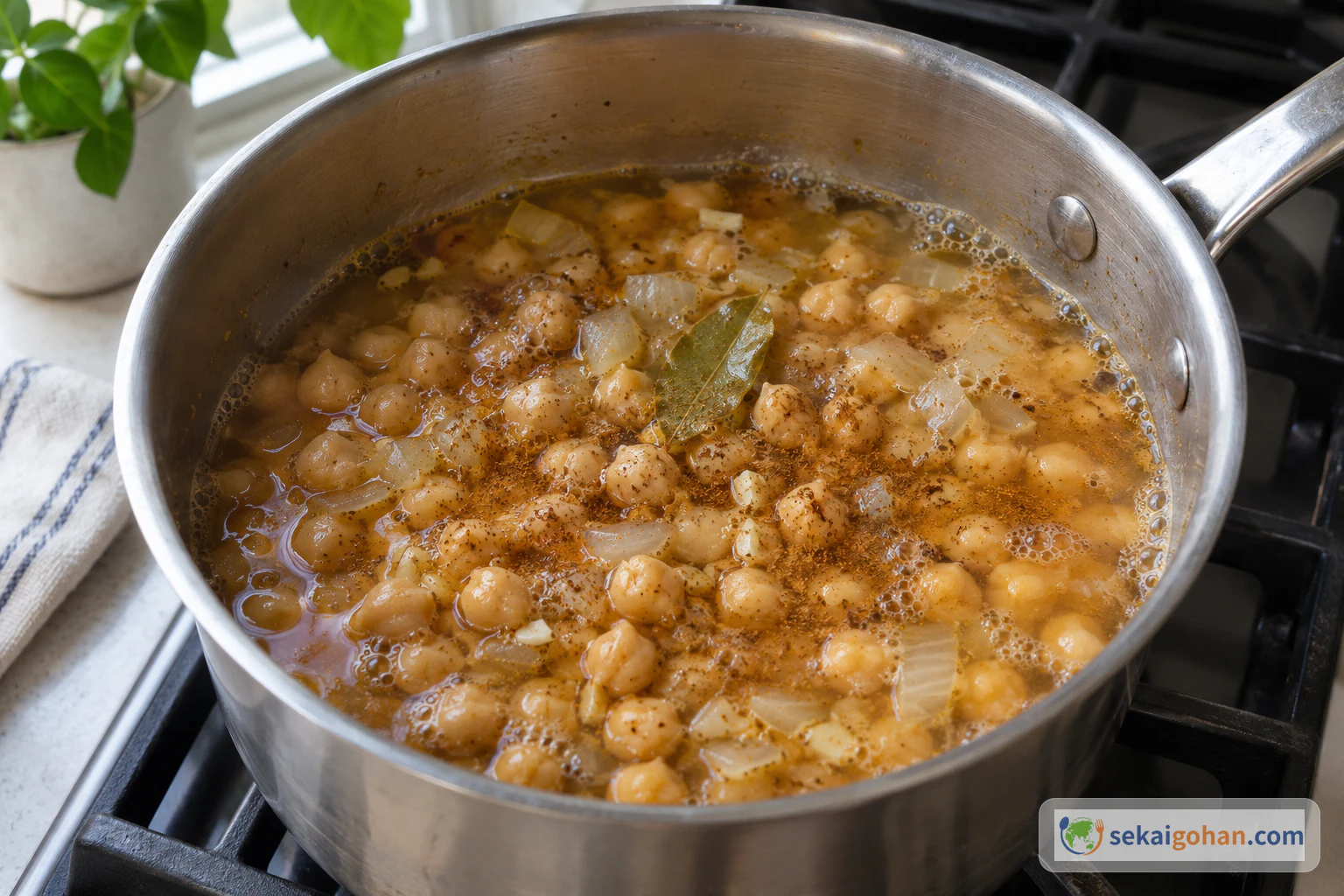
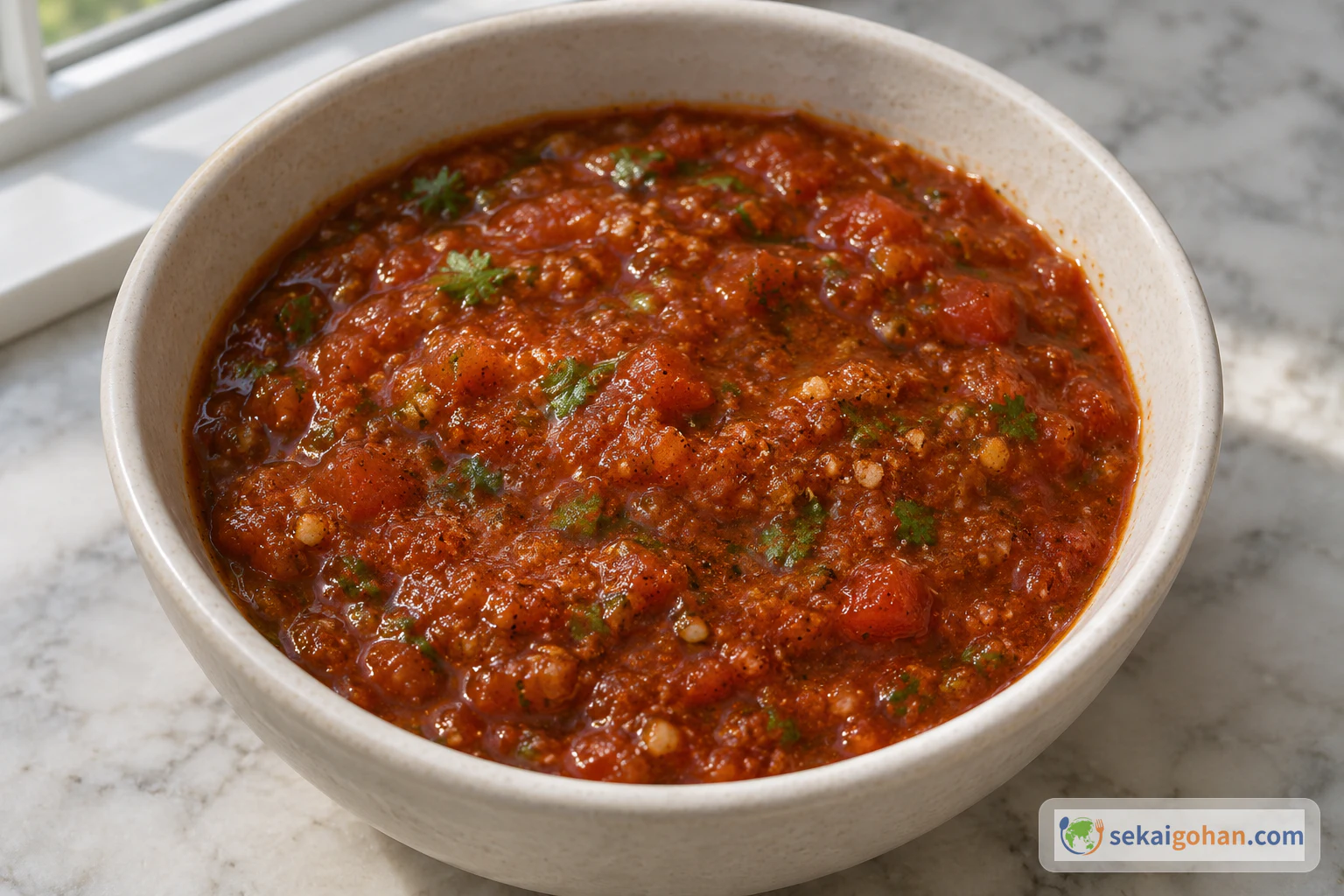
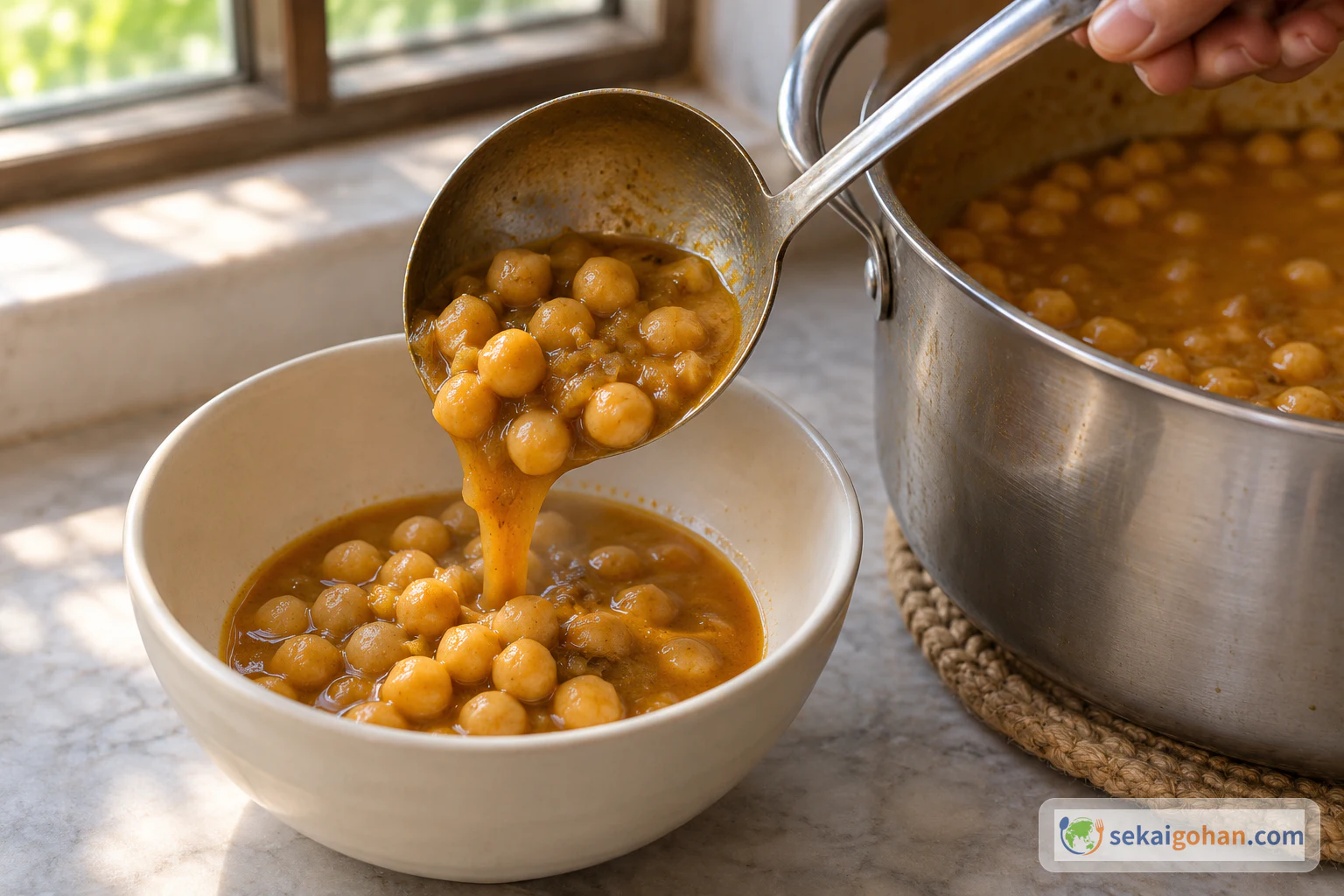
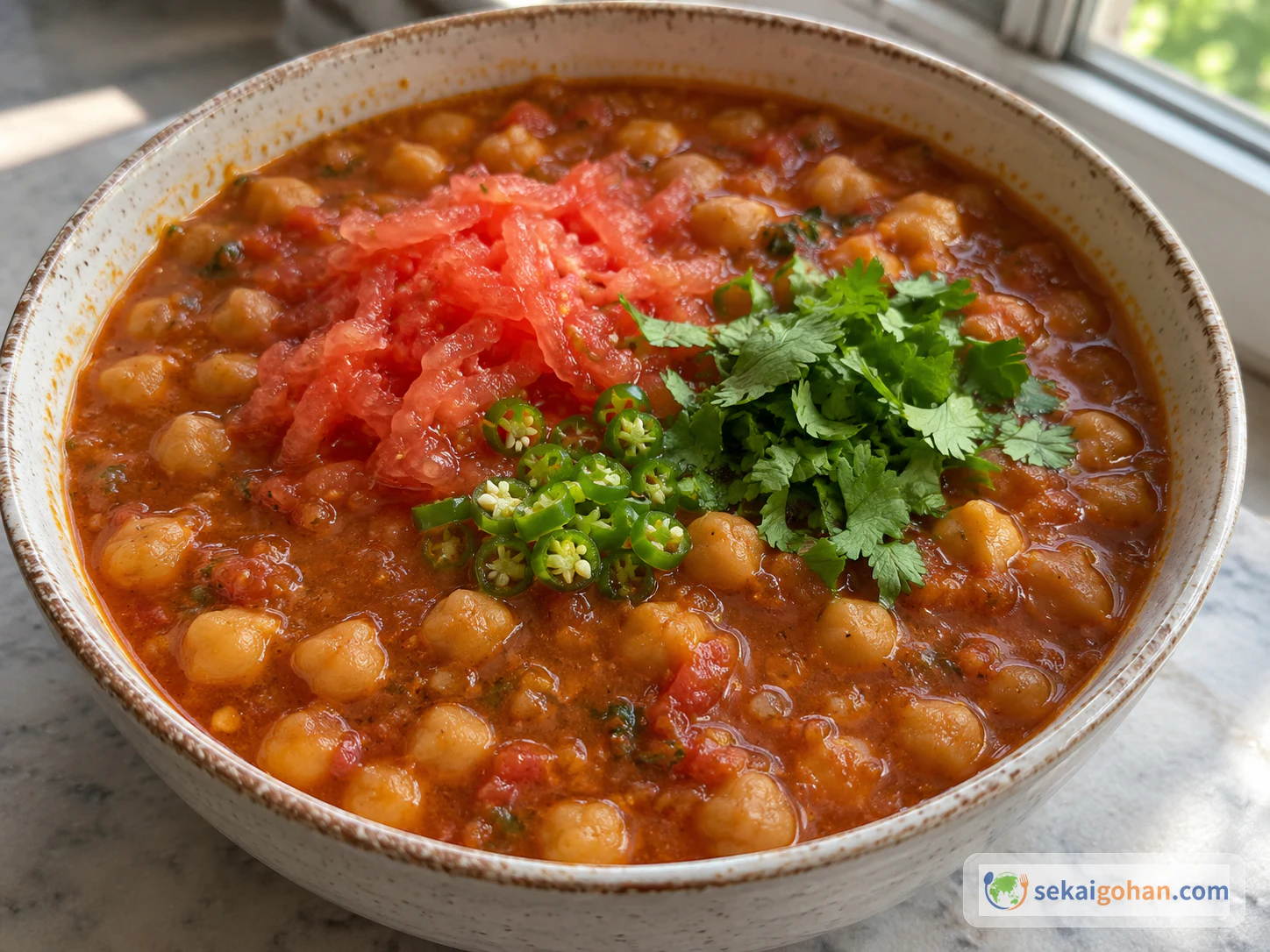
The chickpeas have gone soft enough to crush between two fingers, and the broth has cooked down around them. You ladle a few scoops into a bowl and stir in a spoonful of brick-red salsa. It smells of raw garlic and chili, and the broth turns orange. Then come the cold layers, piled on at the table: grated fresh tomato, chopped green chili, cilantro, a squeeze of lemon, a thread of olive oil. That is dobara, the winter bean soup of Biskra in eastern Algeria. Every spoonful has two tastes in it: earthy, cumin-warm chickpeas underneath, and sharp, bright, fresh heat on top.
A Winter Bowl from Biskra
Biskra is in eastern Algeria, and dobara is the bean soup people there eat in winter. It is said to have grown up in homes where meat was not an everyday purchase. A pot of dried beans, an onion, garlic and a handful of spices made a full meal, and the salsa and fresh toppings gave it all the flavour it needed. From Biskra it spread across the east of the country. You will find it in El Oued, Batna, Constantine and Djelfa. It is said to resemble Zviti, another Algerian dish.
Chickpeas are the most familiar base. Fava beans, or a mix of fava beans and chickpeas, are just as traditional, and households choose by what they have and what they like. The spelling changes too: Dobara, Doubara, and in English often simply "dobara soup".
The bowl is eaten warm or cold. In winter it comes to the table hot. In summer it is often served at room temperature, a cool bean dish with sharp tomato and lemon. Bread is always there. Kesra, the Algerian flatbread, is the classic partner, and a baguette or any flatbread does the same job of scooping and dipping. For the wider Algerian table this soup belongs to, see our Algeria page.
One source traces the name to the Arabic word d'bara. Other sources give no explanation, so the origin of the name is not settled. Most people simply call the dish by its spelling, Dobara or Doubara.
Ingredients (serves 3)
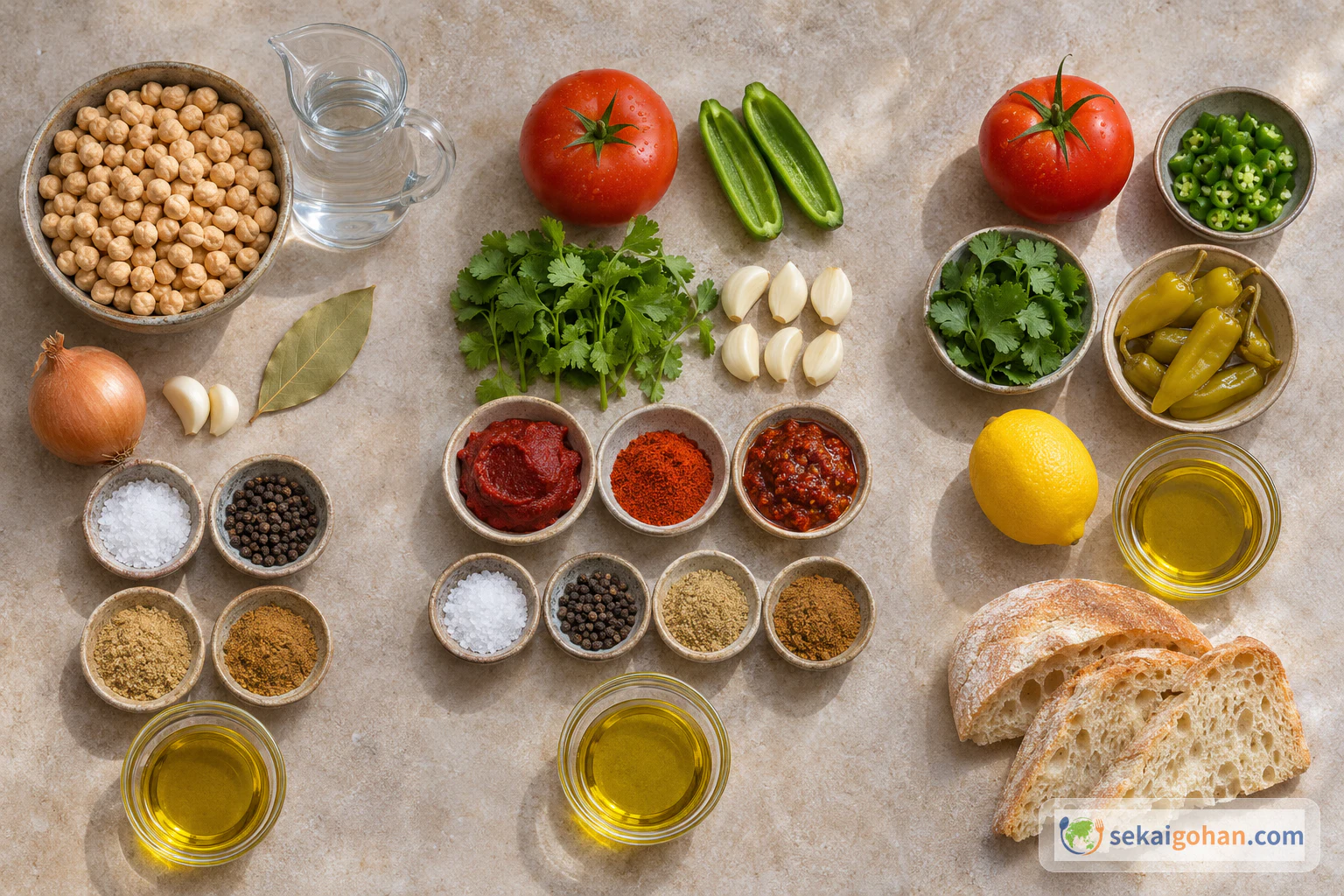
There are three groups: the bean pot, the red salsa, and the fresh toppings that go on at the table. Keep the garlic for each group separate. Two cloves go in the pot and six go in the salsa, and the dish only works when the salsa carries the raw garlic punch.
The soup itself is built on chickpeas, a legume. The bread usually contains wheat. Check the labels on harissa and tomato paste for any other allergens. Seeding and chopping chilies leaves capsaicin on your hands, so wash them before you touch your eyes or face.
Equipment
- A medium saucepan or pot with room for the chickpeas and water
- A large bowl for soaking
- A food processor or small chopper
- A box grater for the tomatoes
- A ladle, a spoon and a small bowl for the salsa
- Serving bowls
Choosing and Substituting
The one item to hunt down is harissa, the North African chili paste. Middle Eastern and North African grocers carry it, as do many large supermarkets and online shops. Jars differ a great deal in heat. A mild one and a fierce one can be worlds apart, so make the salsa with the full amount and then stir it into the bowls a little at a time.
Dried chickpeas are easy to find. They give the soup its creamy, slightly chewy body and a broth that thickens as it cooks. Canned chickpeas work on a busy night. Drained and simmered in the spiced water, they are ready in about 10 minutes. The broth comes out lighter, because there is no long simmer to pull starch out of the beans.
If you cannot find serrano, use any fresh green chili of similar heat. A milder chili makes a gentler salsa, and you can let harissa carry the heat instead. Salt crystals vary in size from brand to brand, so with flaky or coarse salt start a little under the amount and taste at the end. Cilantro has no real stand-in. Leave it out if you dislike it, and the bowl will lean more on tomato and lemon.
Three things make it taste like dobara: chickpeas cooked until truly soft, a salsa loaded with raw garlic and red with paprika and harissa, and cold fresh tomato and lemon added at the table. Everything else can bend to your kitchen.
Method
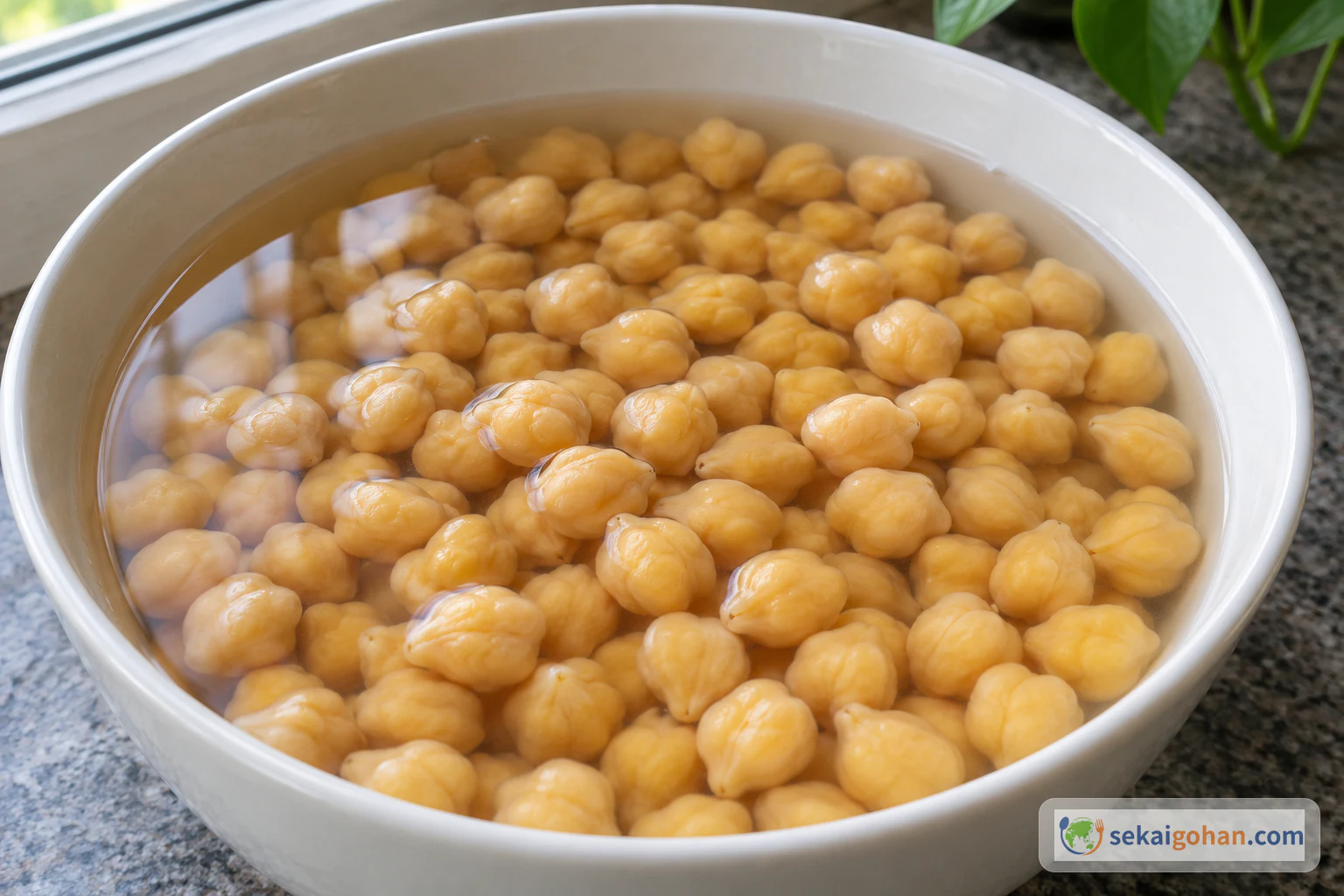
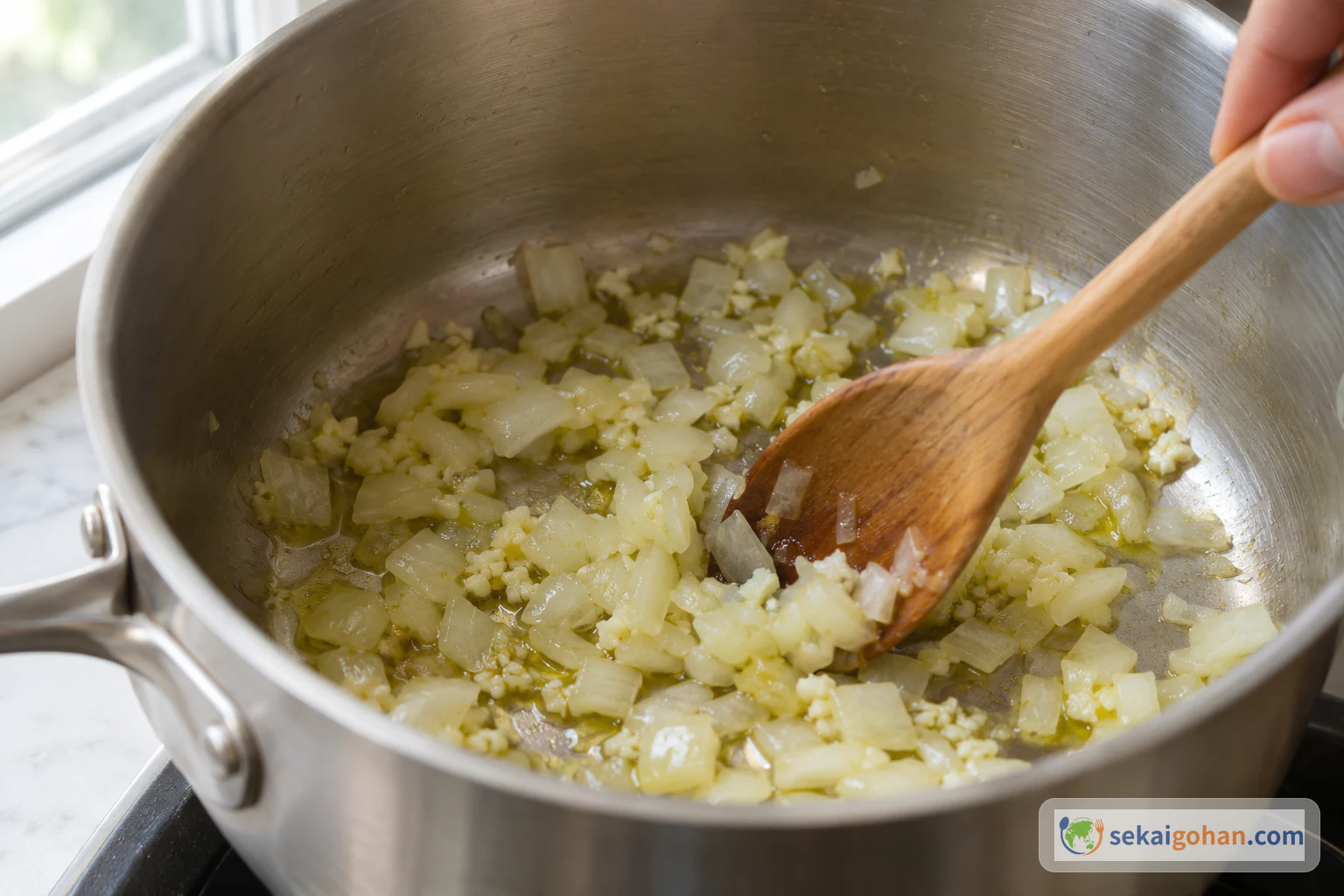
The work starts the night before, when you put the chickpeas in to soak. On the day, the pot needs only a few minutes of hands-on time before it simmers on its own. Make the salsa during that simmer, and set out the toppings so everyone can finish their own bowl.
Keep the pot plain and do the seasoning in each bowl. Stirred into the whole pot, the salsa's raw garlic cooks soft and the heat gets locked in for everyone. Toppings added early warm up and lose their snap.
Make the salsa with the full ½ tbsp of harissa, but stir it into the bowls a spoonful at a time. You can always add more at the table, and you cannot take it out.
When It Goes Wrong
| What you see | Why | What to do |
|---|---|---|
| Chickpeas still firm in the center | Short soak, or not long enough on the heat | Keep simmering, top up with boiling water so they stay covered, and test again until one crushes between your fingers |
| The pot is almost dry before the beans are soft | Too much water evaporated | Add boiling water straight away and keep the simmer gentle |
| The broth is thin and watery | Not reduced enough | Simmer a while longer until it turns slightly cloudy and cooks down |
| The bowl is too hot to enjoy | A strong harissa, or too much salsa | Pile on more grated tomato, add more lemon, and use less salsa in the next bowl |
| Tastes flat | Too little salsa, or too little salt | Stir in another spoonful of salsa and a pinch of salt |
| Too salty | Fine salt measured at full amount | Add more broth and beans to the bowl, and start with less salt next time |
Serving and Variations
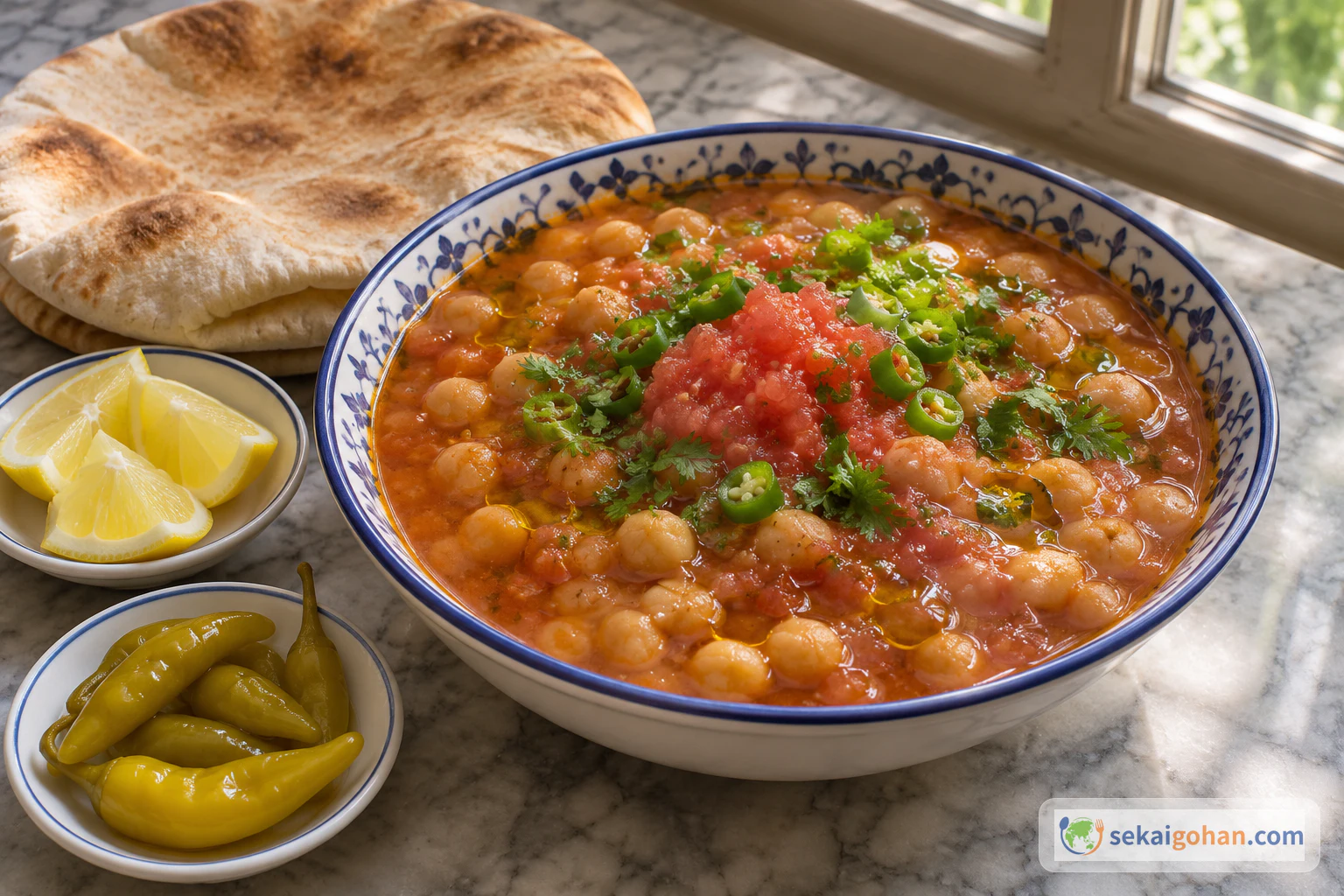
Dobara is a meal in a bowl. Put it on the table with plenty of bread, kesra if you can get it, plus a small dish of extra salsa, a plate of lemon and a bowl of pickled chilies. Everyone builds their own: more salsa for heat, more tomato and lemon for freshness. In cold weather serve it steaming. On warm days, let it sit until it reaches room temperature and serve it that way, with the toppings just as cold and sharp.
Variations
- Canned chickpeas: Drained canned chickpeas simmered in the spiced water are ready in about 10 minutes. The bowl is just as bright on top. The broth is thinner and less starchy underneath.
- Fava beans or a mix: Fava beans, alone or with chickpeas, are a traditional base. They give a more vegetal, slightly bitter, denser bowl. Cook dried beans until fully soft, as with the chickpeas.
- Milder salsa: Use less harissa and swap the serrano for a gentle green chili. The garlic and cumin come forward, and the bowl suits anyone who shies away from heat.
Frequently asked questions
Can I make the salsa ahead?
Yes. The salsa is mixed separately from the pot, so you can make it first while the chickpeas soak or simmer. Keep it covered until the bowls are ready. Stir it before using, because the oil settles on top.
Is the bay leaf eaten?
No. It adds aroma to the broth while the chickpeas simmer. Pull it out before you ladle the soup into bowls.
Does dobara have to be spicy?
The heat is in your hands. The chickpea pot has no chili at all, so all the heat comes from the salsa and the green chili on top. Stir in less salsa and leave off the chopped chili for a gentle bowl that still tastes of garlic and cumin.
Who should avoid the fava bean version?
Anyone with G6PD deficiency should not eat fava beans. Make the chickpea version for them instead. For a mixed table, cook a chickpea-only pot so everyone can share it.