Nigerian Pancake: A Thin Batter Where Sweetness Meets Chilli
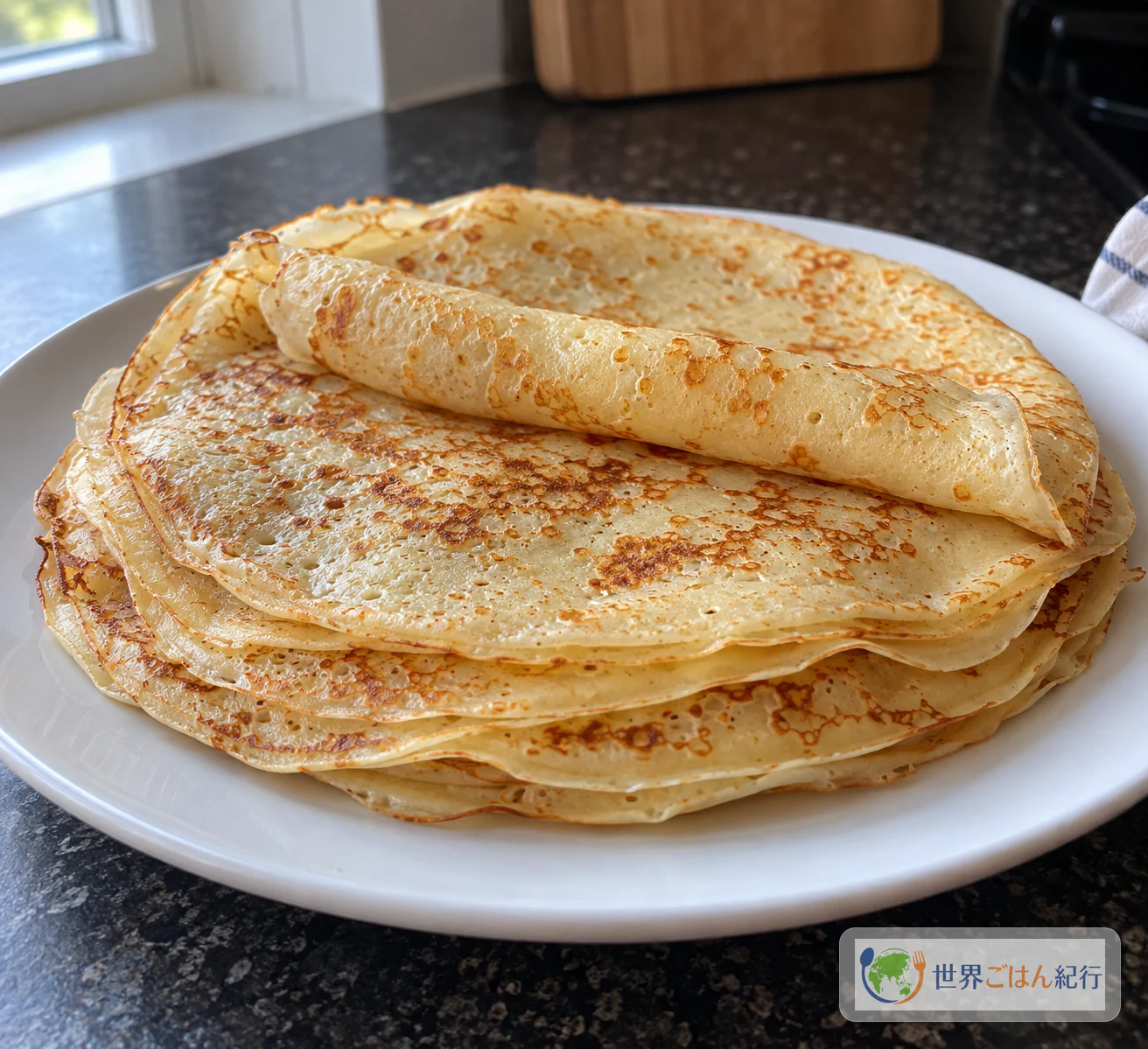
Keep the batter thin and smooth and the pancakes thin in the pan. A little sugar and a pinch of dry cayenne sit together in the same bite. Neither one is meant to take over.
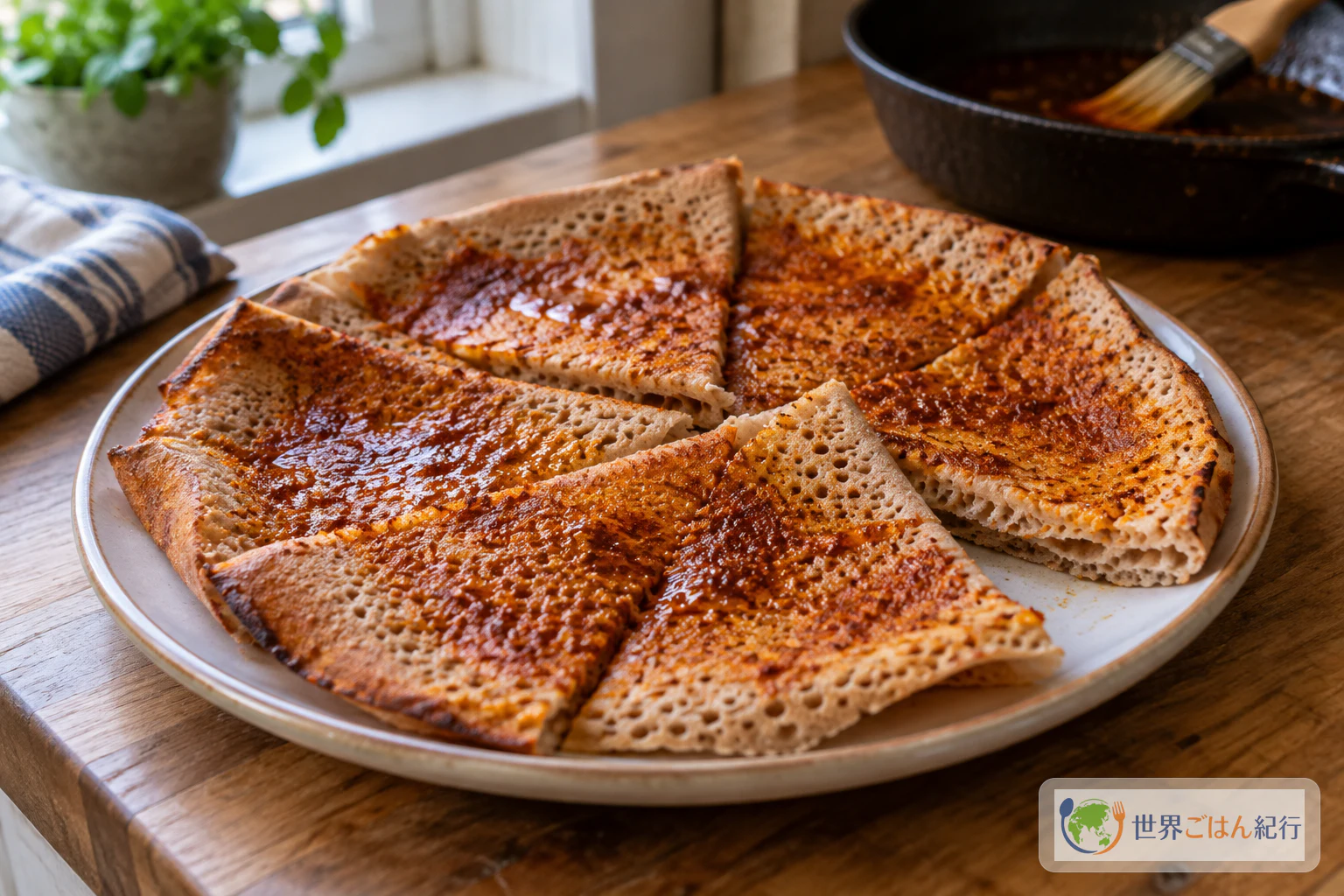
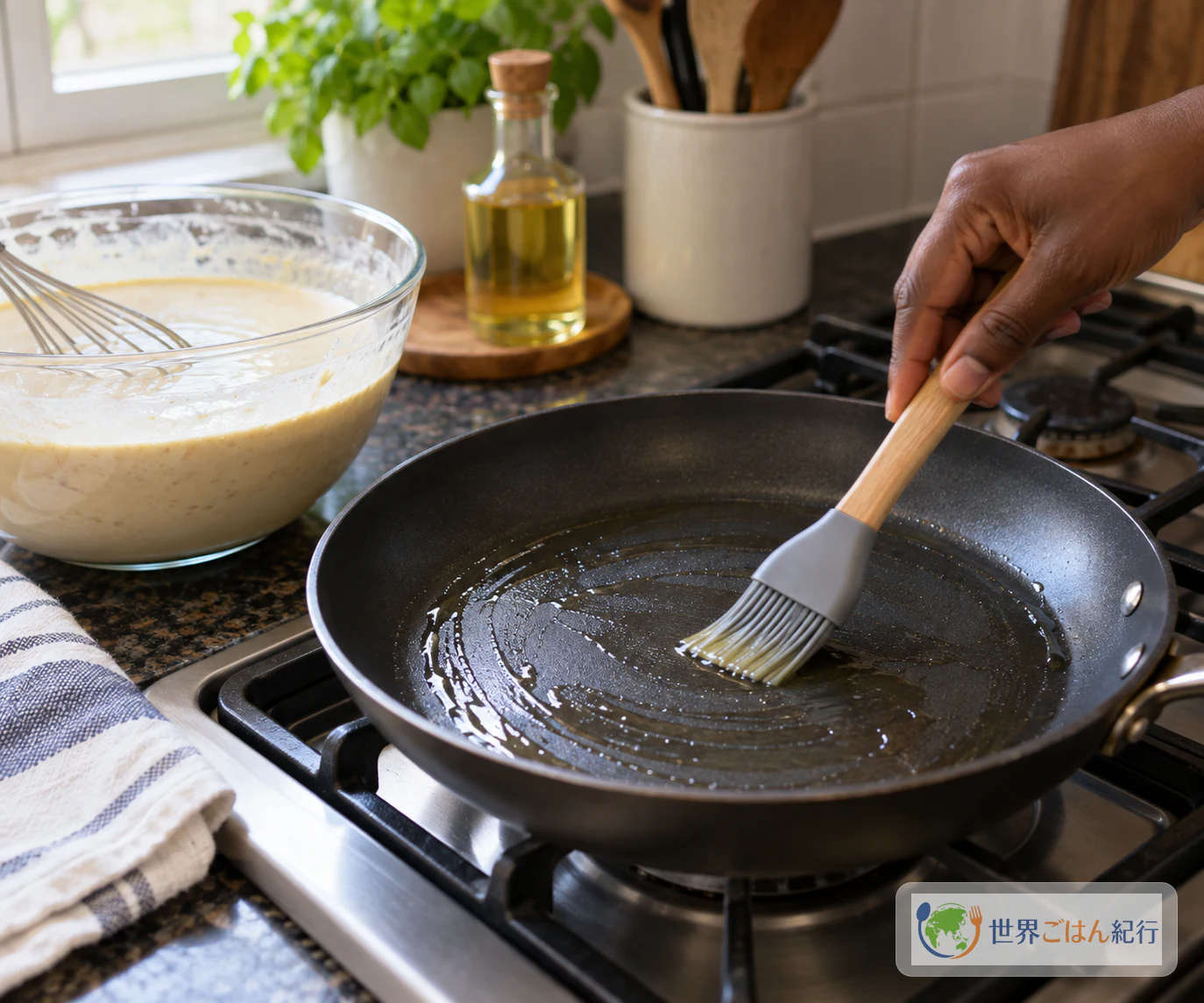
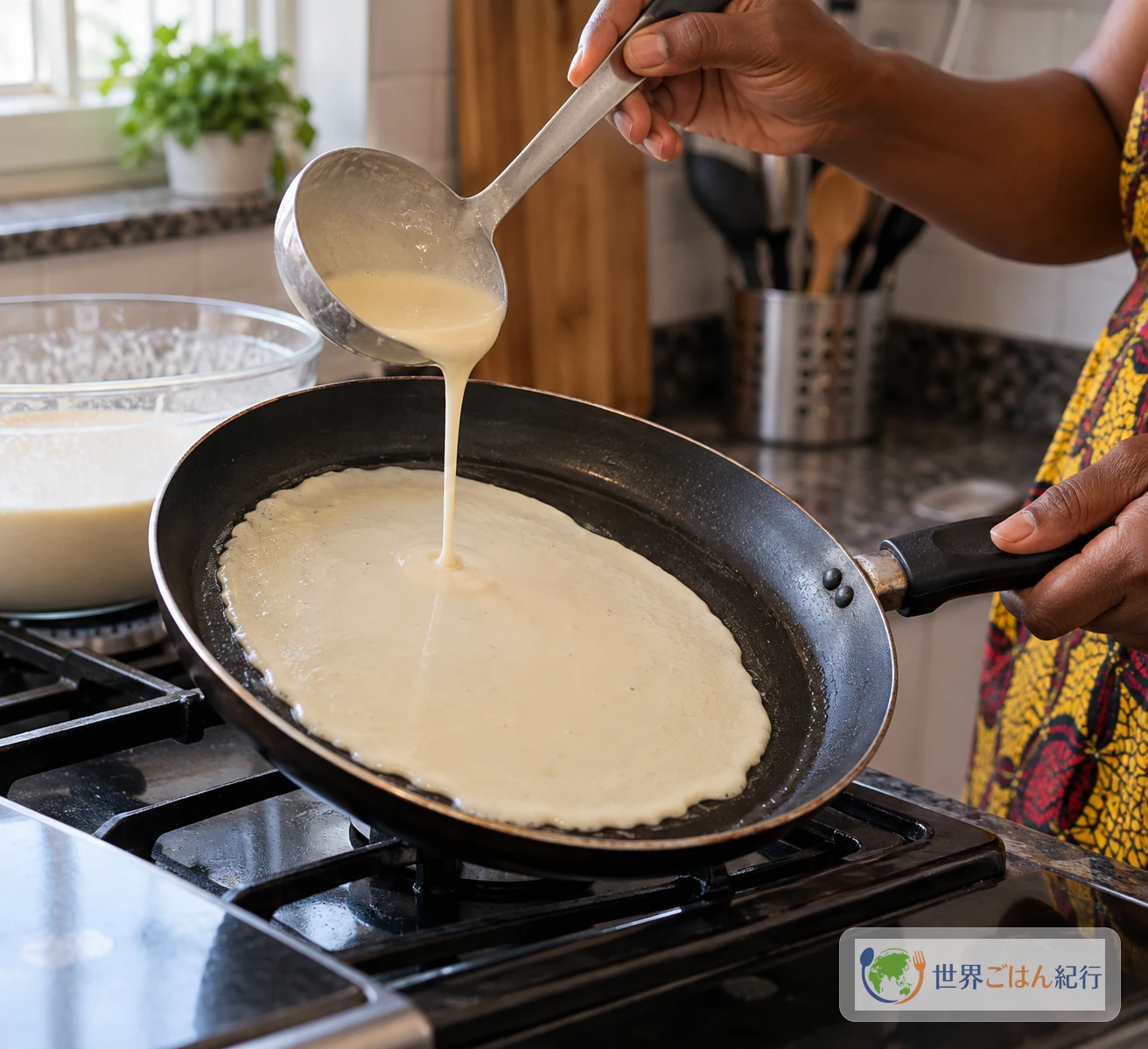
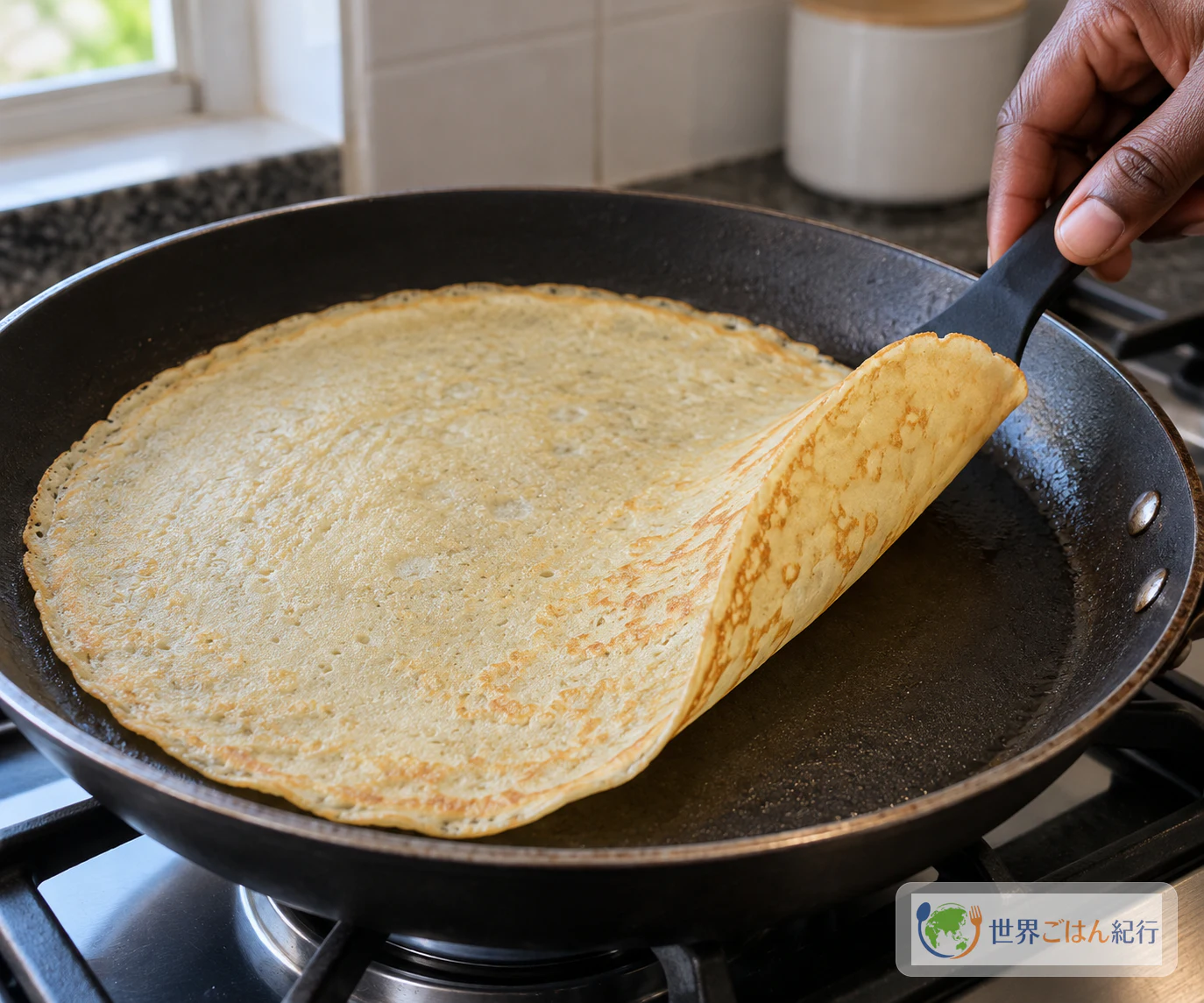
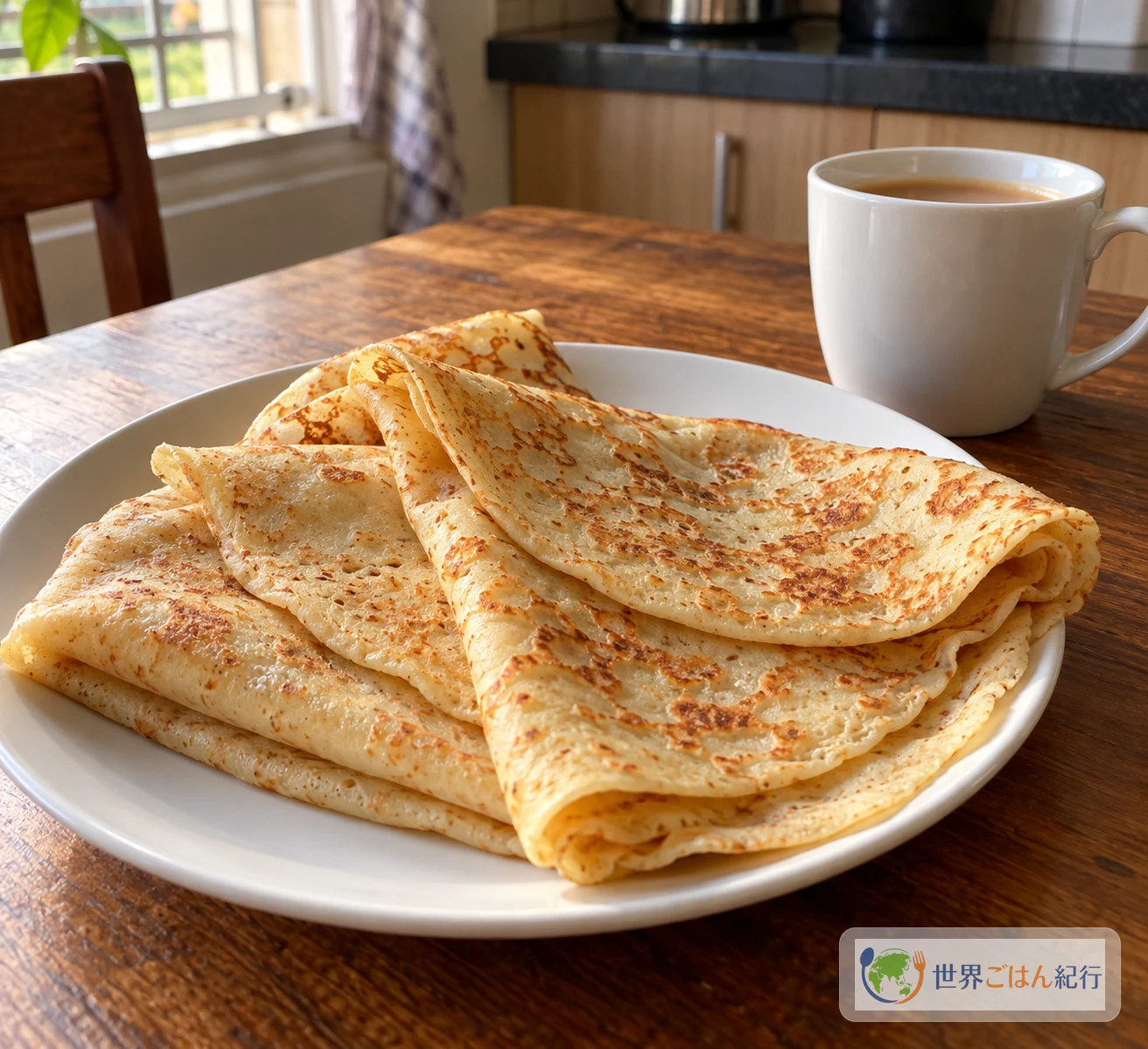
A pale, runny batter goes into a lightly oiled pan and is tilted out into a wide, thin round. When the surface sets, it is turned and browned to your liking. Nigerian pancake is often called Diet. African Food Network describes it as thin and light with a slight crispness at the edges. Nigerian Food TV describes a flavor that brings sweetness, saltiness and chilli together.
This is not the thick, fluffy pancake many readers know. The recipe used here has no baking powder or other leavening and no resting time. It is a pourable batter of flour, eggs, water and evaporated milk, cooked thin. That is a difference in style, not a ranking.
"Diet" here is simply another name for the dish. It does not mean a weight-loss food or a restricted meal. Where the name comes from, and when it started, could not be confirmed, so this article does not explain its origin or claim any health or nutrition benefit.
The recipe in this article follows the proportions and method of All Nigerian Recipes' "Perfect Nigerian Pancakes" exactly, without mixing in other versions. This recipe has not been kitchen-tested by Sekai Gohan. Cooking times, temperatures and the number of pancakes are not given in the original recipe, so none are given here either. For more of the country's food, see the Nigeria country page.
Breakfast or an Afternoon Bite
African Food Network presents Nigerian pancake as something eaten at breakfast or as a light afternoon snack. It mentions sweet ways of eating it, such as with honey or fruit. It also gives serving examples alongside drinks such as tea, pap, kunun aya and zobo. Nigerian Food TV also introduces it as a breakfast or a snack. These are serving ideas from those sources, not required parts of the recipe.
It is not presented here as the Nigerian breakfast. A BusinessDay essay on breakfast in Nigeria shows that the morning meal is not uniform. It ranges from pap and akara to yam and egg, depending on region, household and the circumstances of daily life. Nigerian pancake is one of the dishes that appears on these mornings, not a tradition shared by every home.
Whether onion goes in is also a matter of preference. The Nigerian Food TV author recalls arguing about whether to add onion while living in a university hostel. That is one person's memory, but it shows that onion and chilli vary from cook to cook.
Nigerian masa (also called waina) is a fermented pancake made with rice. Akara is a bean dish. Both use different ingredients and methods from this wheat-flour pancake. If you want the bean dish, see akara. For another bean dish often discussed alongside breakfast, see moin moin.
Ingredients: The Original Proportions, in the Original Units
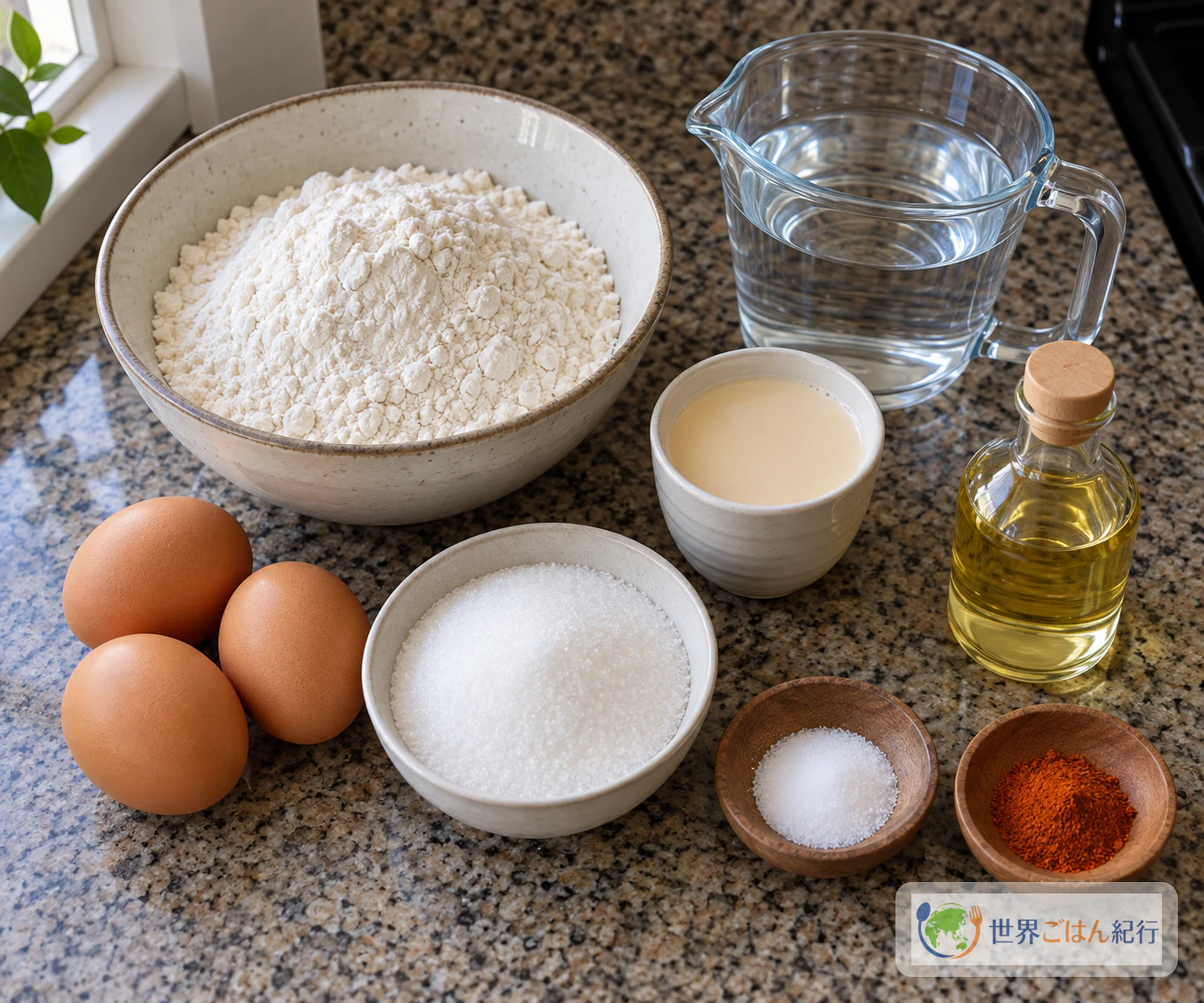
The amounts below keep the source's own units. The source page also prints cup equivalents beside the flour and water, but those conversions do not appear to match. This recipe uses the stated 500g and 1 litre instead. The source does not say which cup standard it uses for the milk and sugar, so use the amounts as written. The original recipe gives no yield.
Choosing and Substituting
- Evaporated milk: look for unsweetened evaporated milk. Sweetened condensed milk would change the sweetness, so it is not offered as a substitute here. Ordinary milk is not treated as the same ingredient either.
- Cayenne: use dry ground cayenne pepper. Other chilli powders differ in heat and flavor, so they are not equivalent. The amount is to taste in the original, so start small.
- Flour: plain or all-purpose wheat flour, as written. The recipe does not call for a special flour.
- Oil: the recipe specifies neither the type nor the total amount of oil for frying. Use a neutral vegetable oil, enough for a thin film in the pan each time.
- Salt: the source mentions salt twice, once in the ingredient list and once in the method. It is the same ½ tsp. Add it once only.
Equipment
- Large mixing bowl
- Whisk
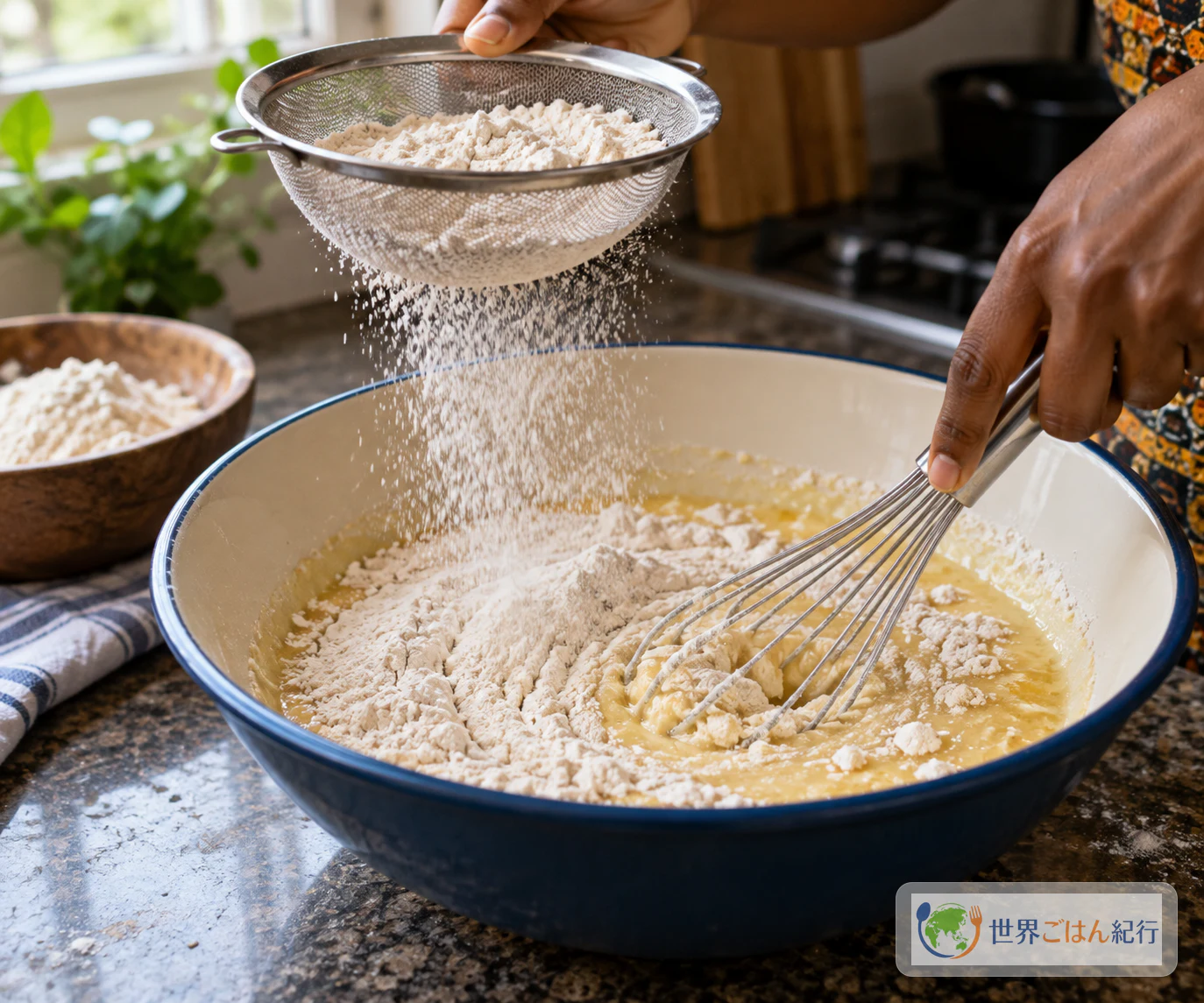
- Sieve, for sifting the flour and, if needed, straining the batter
- Hand mixer (optional, for working out lumps)
- Frying pan
- Ladle, for pouring the batter
- Spatula, for turning
Method: Smooth Batter, Thin Pour
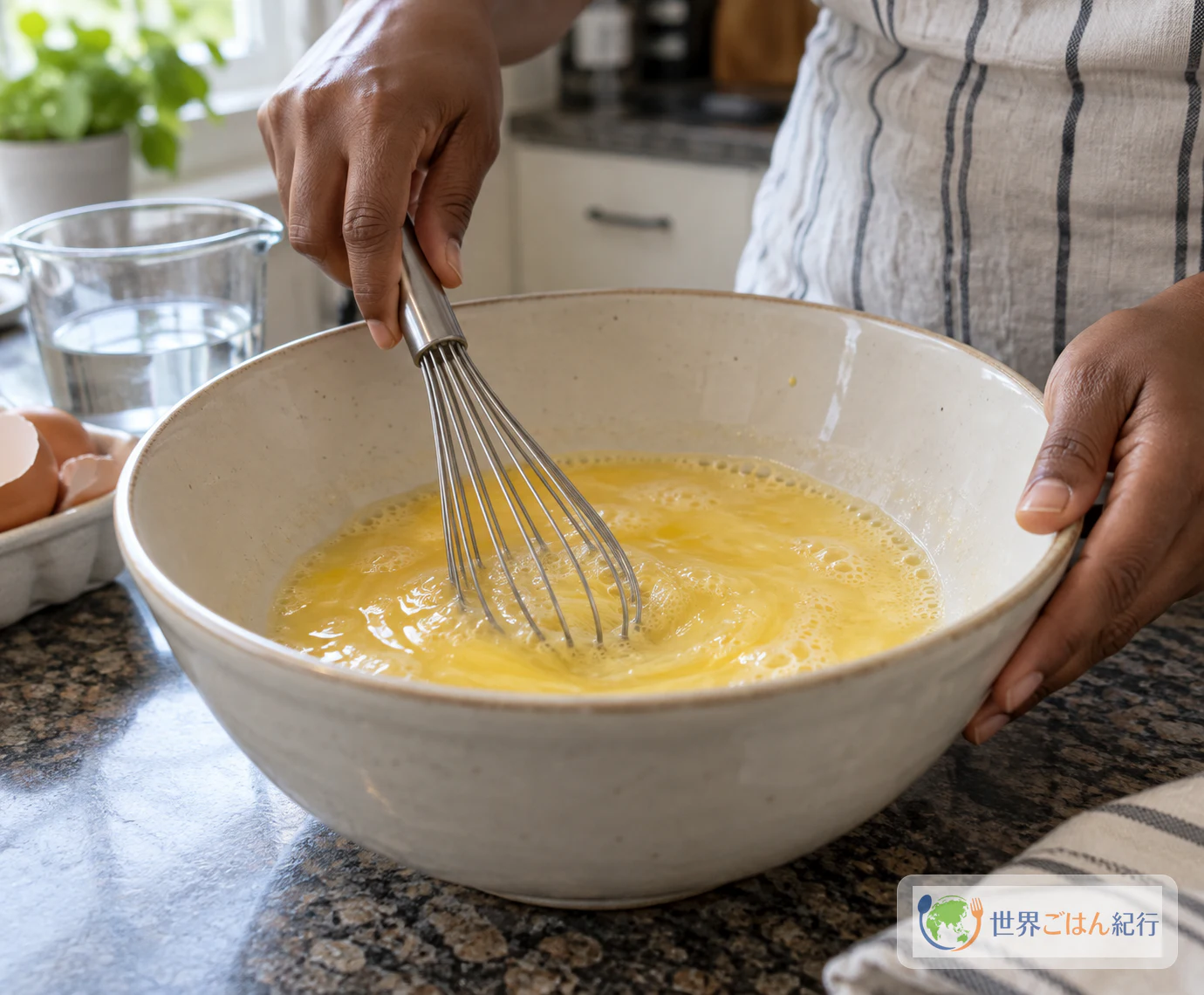
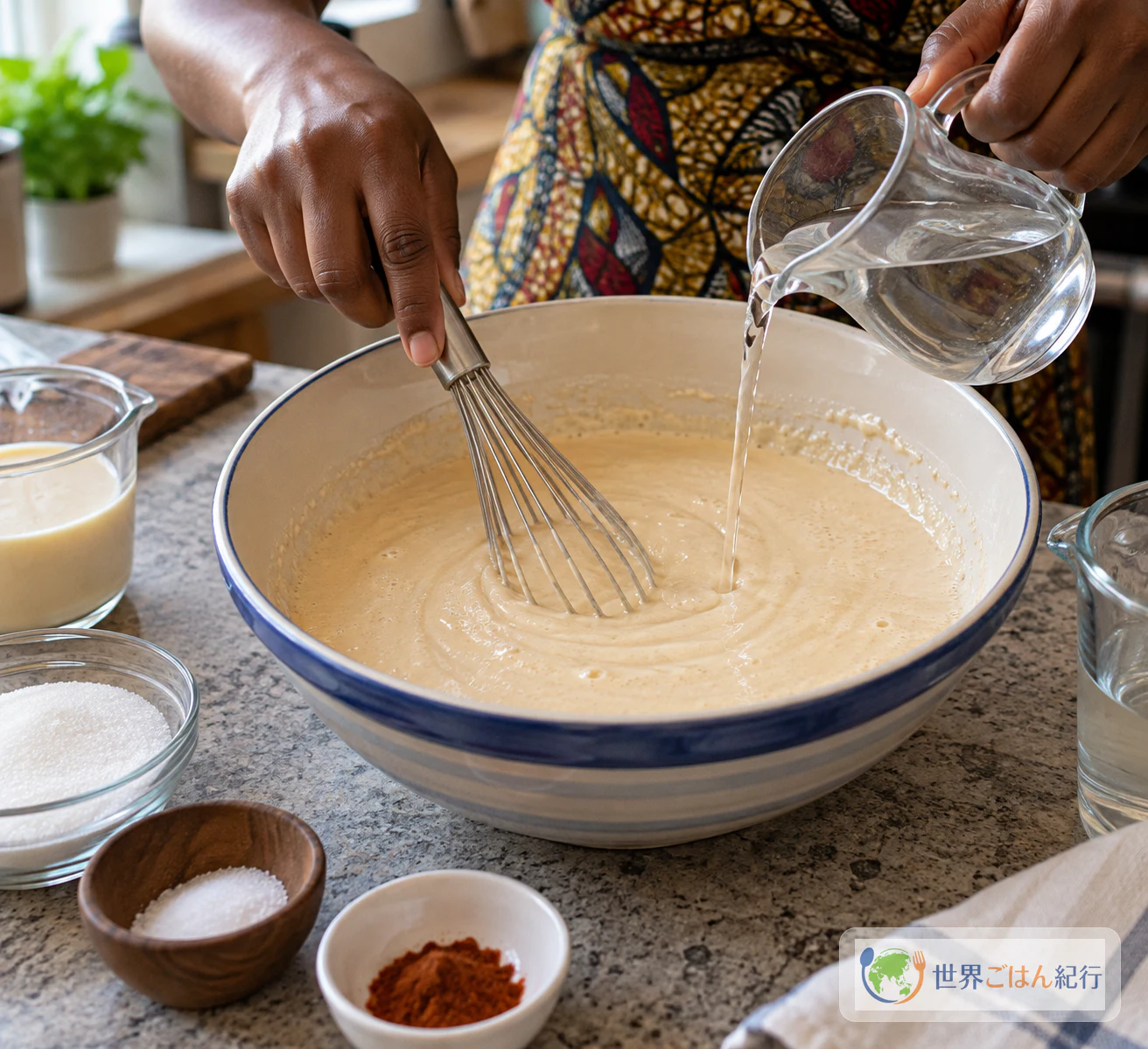
The original recipe gives no cooking times or temperatures. Judge each stage by what you see: a lump-free batter, a surface that has set before you turn it, and an underside browned to your liking.
Troubleshooting
| Problem | What to check | What to try |
|---|---|---|
| Lumps in the batter | Was the water added all at once? | Strain the batter through a sieve or use a hand mixer. Next time, mix the flour into the smaller amount of liquid first and add the rest of the water gradually |
| The pancake tears when turned | Had the surface set? | Wait until the top has set before turning |
| The pancakes come out thick | How much batter went in? | Pour less and tilt the pan wider (a general suggestion, not from the original recipe) |
| Too much or too little heat from the chilli | The cayenne amount | The original leaves cayenne to taste; adjust it in the next batch |
| It tastes too salty | Was the salt added twice? | The ½ tsp goes in once only, even though the source mentions salt twice |
Variations: Onion, Habanero and Sweet Toppings
- Red onion and habanero: All Nigerian Recipes mentions adding onion and fresh habanero as a matter of preference. Nigerian Food TV describes the onion question as a debate, one the author remembers from student days. Treat both as optional extras. The base recipe does not include them, and no amounts are given here.
- Sweet serving: African Food Network mentions honey and fruit. Serve them on the side rather than mixing them into the batter.
- With a drink: tea, pap, kunun aya and zobo all appear as serving examples in the sources.
Frequently Asked Questions
Is "Diet" a weight-loss food?
No evidence supports that. "Diet" is used here only as another name for the dish. Its origin is unknown, and this article does not make health or nutrition claims about it.
Does the batter need to ferment or rest?
Not in this recipe. It contains no yeast or other leavening and specifies no resting time. Fermented pancakes such as Nigerian masa (waina), made from rice, are a different dish.
How many pancakes does this make?
The source gives no yield. The count depends on how much batter you pour for each pancake, so no fixed number is given.
Are onion and scotch bonnet or habanero required?
No. The sources treat onion and fresh chilli as optional and a matter of preference. The base recipe uses only dry ground cayenne, to taste.
Can I use sweetened condensed milk instead of evaporated milk?
It would change the sweetness, so it is not offered as a substitute. Use unsweetened evaporated milk.
Has this recipe been tested?
Not by Sekai Gohan. It reproduces the source recipe's proportions and steps, and no outcome is guaranteed.
Sources
- All Nigerian Recipes, "Perfect Nigerian Pancakes." The source of the recipe used here: ingredients and amounts, the staged water, mixing the flour from the center, cooking thin over medium heat and turning once the surface sets, optional onion and dried chilli, and the name Diet. https://www.allnigerianrecipes.com/breakfast-recipes/perfect-nigerian-pancakes/
- African Food Network (Jennifer Ezeokoli), "Nigerian Pancake (Diet)." The name Diet; the description of thin, light pancakes with slightly crisp edges; breakfast and afternoon-snack serving; serving examples with honey, fruit and drinks. Its own recipe is not used here. https://afrifoodnetwork.com/recipes/breakfast-recipes/nigerian-pancakes/
- Nigerian Food TV (Nky Lily Lete), "Nigerian Pancake Recipe: How to Make Nigerian Pancake." The combination of sweet, salty and chilli flavors; the author's personal memory of debating onion; presentation as breakfast or a snack. Its own recipe is not used here. https://www.nigerianfoodtv.com/nigerian-pancake-recipe-how-to-make/
- BusinessDay NG (Esther Emoekpere), "What is on my plate? Pounded yam for breakfast." Background on how breakfast in Nigeria varies by region, household and circumstance. Not used as evidence about the history of this pancake. https://businessday.ng/bd-weekender/article/what-is-on-my-plate-pounded-yam-for-breakfast/