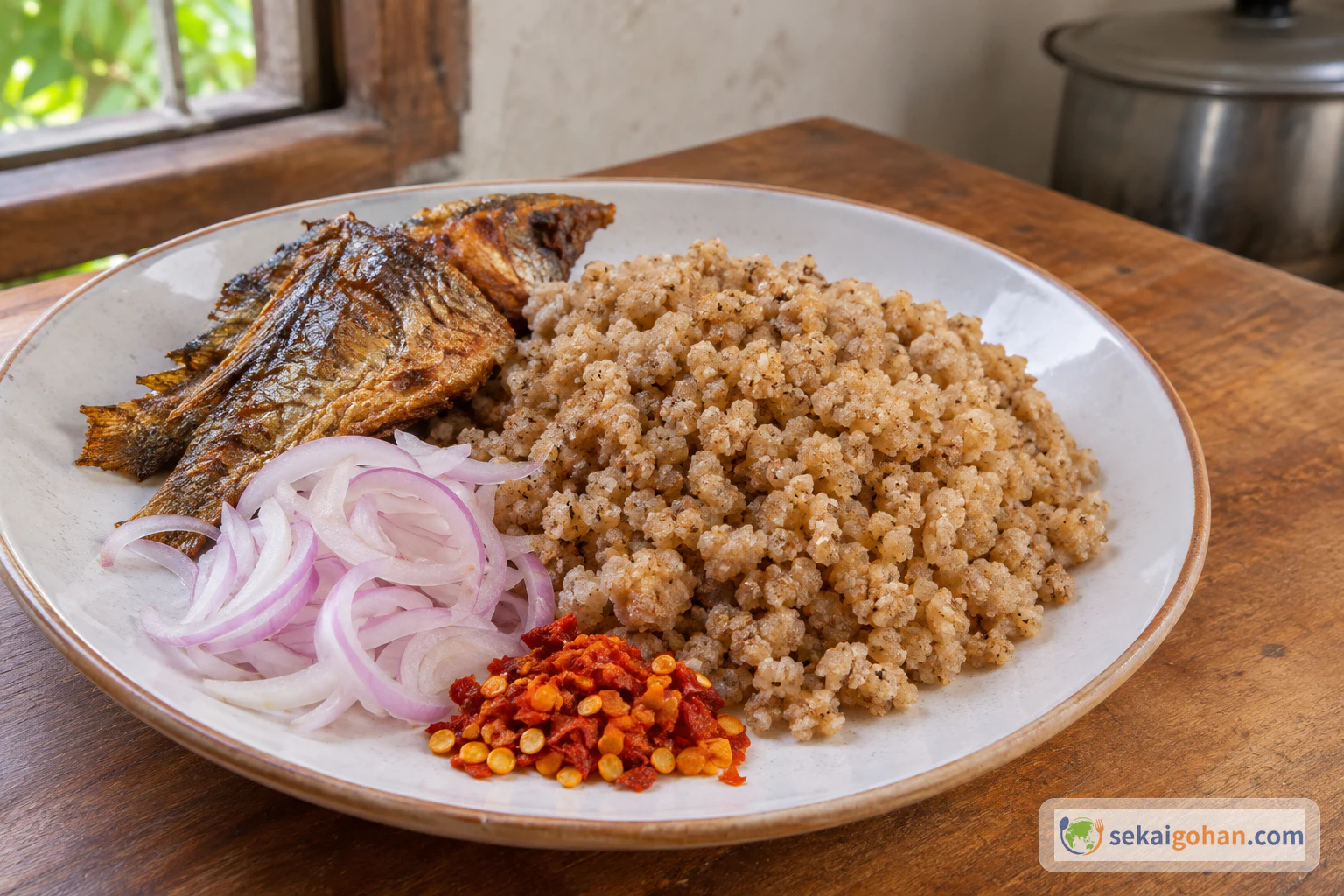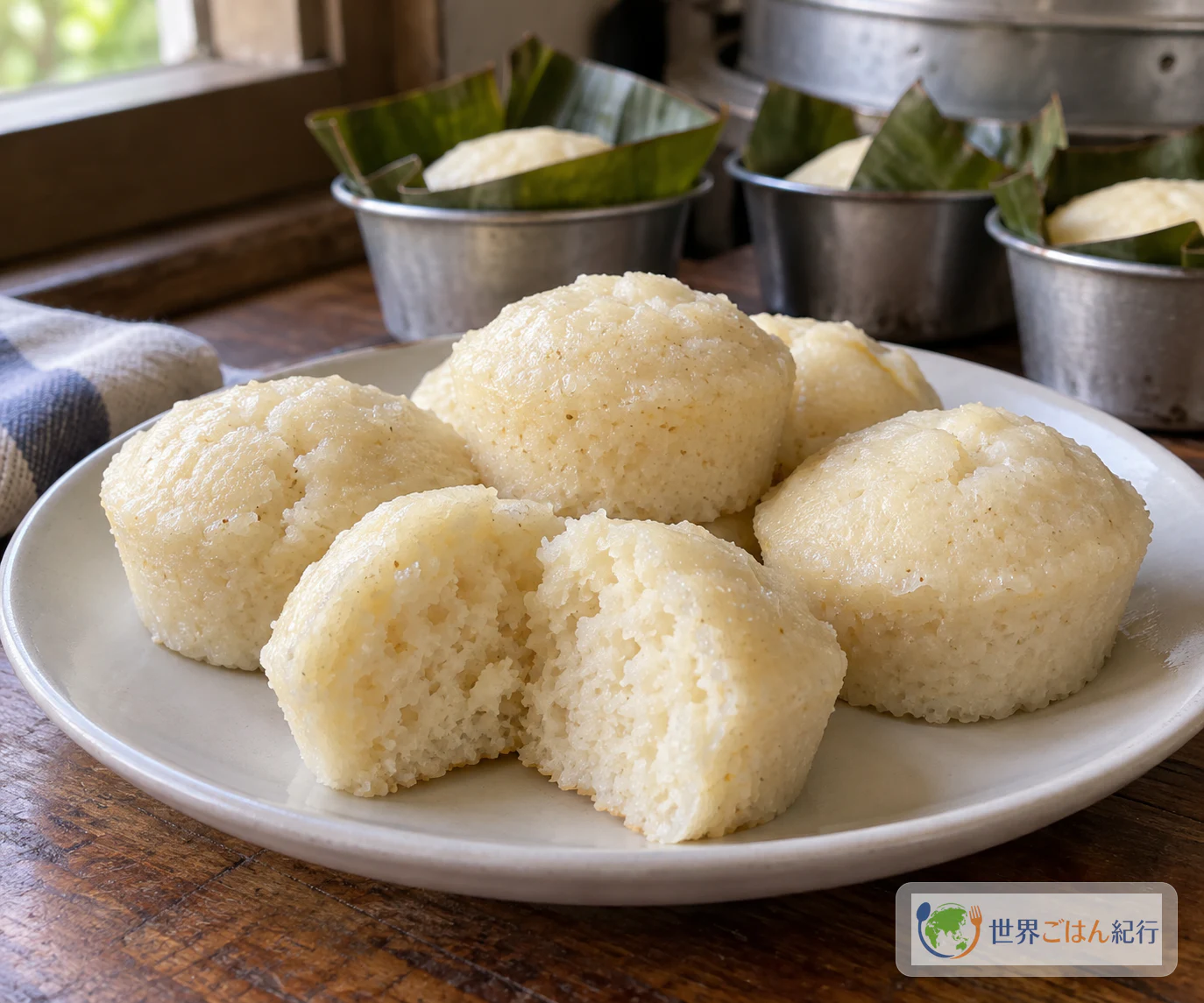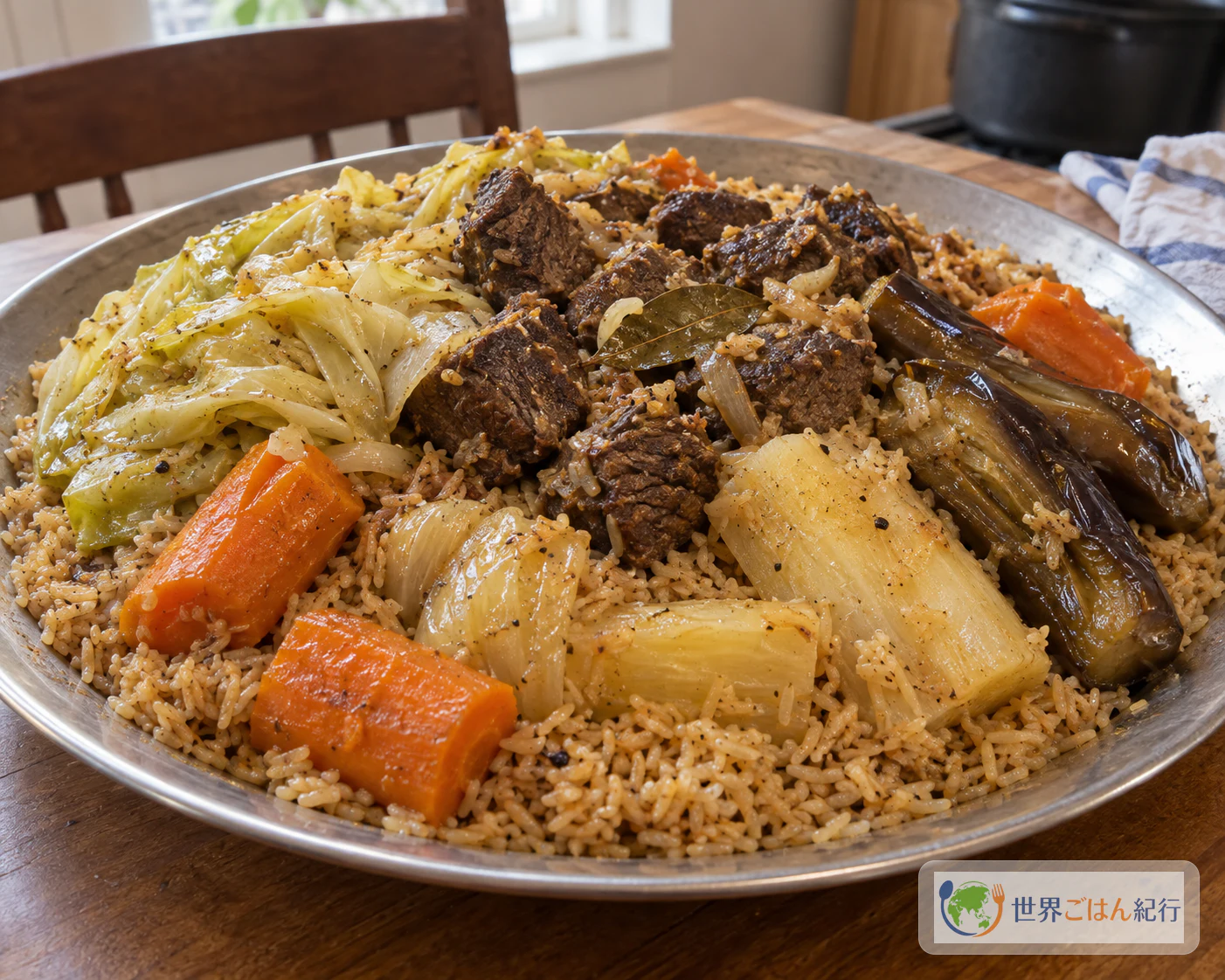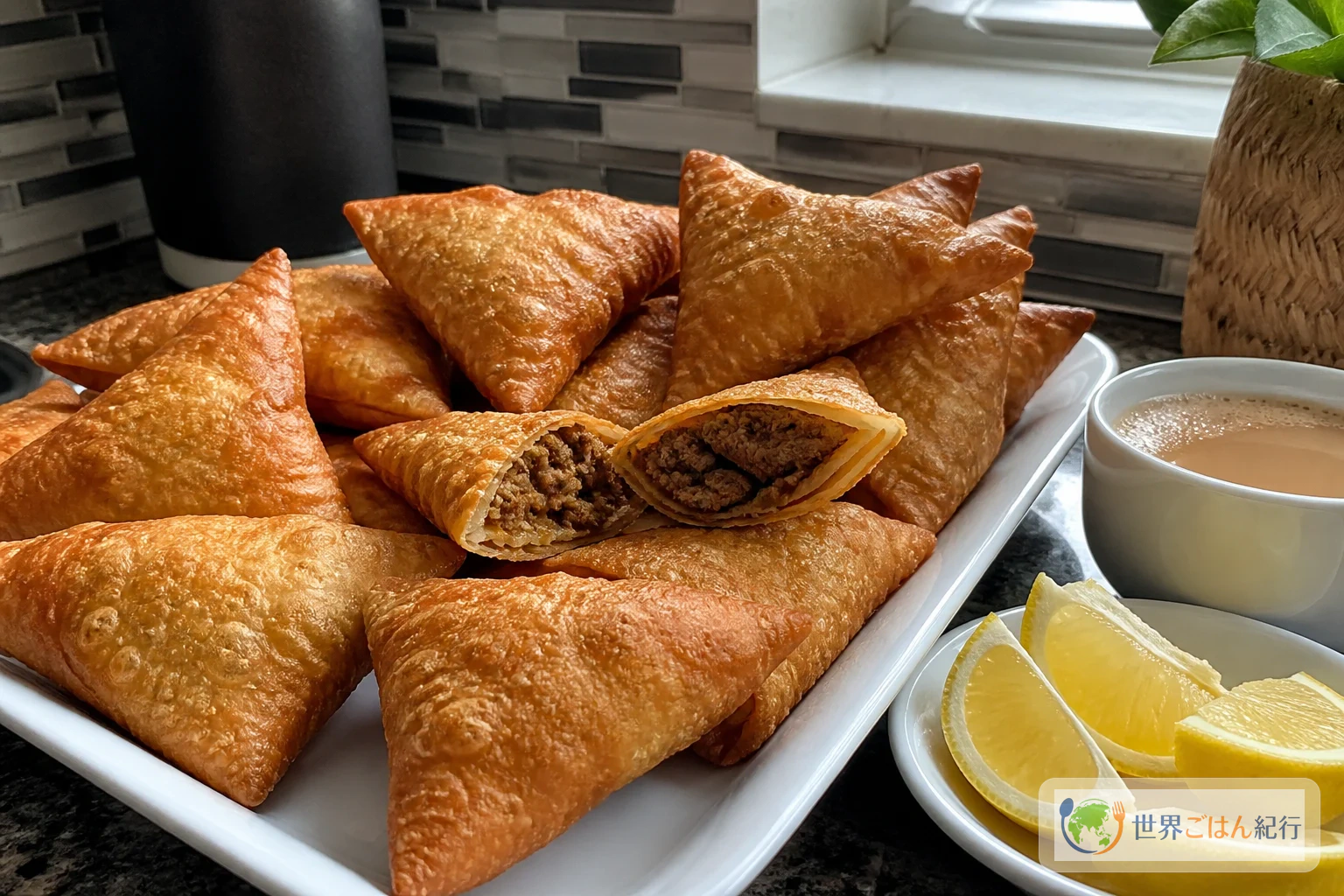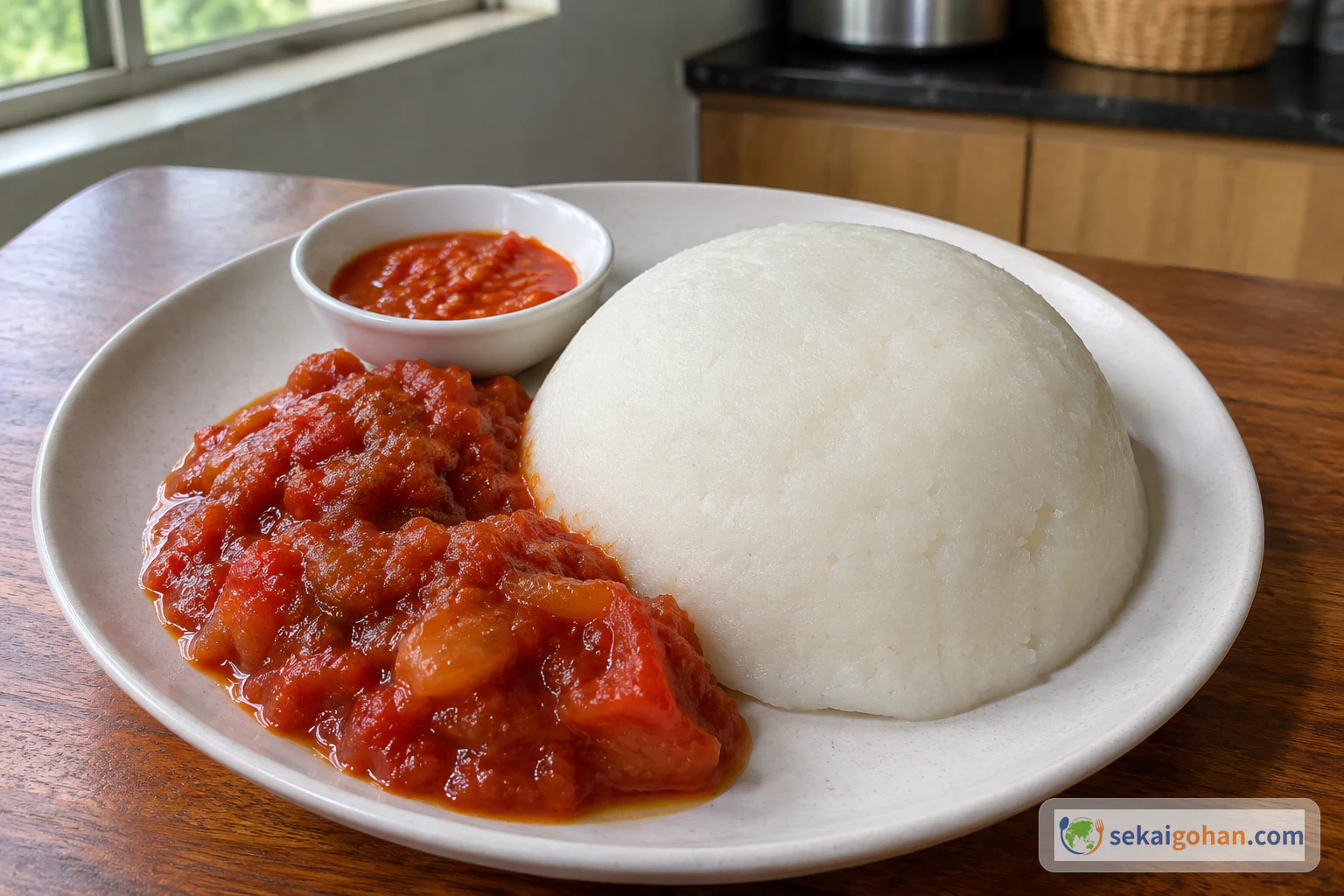
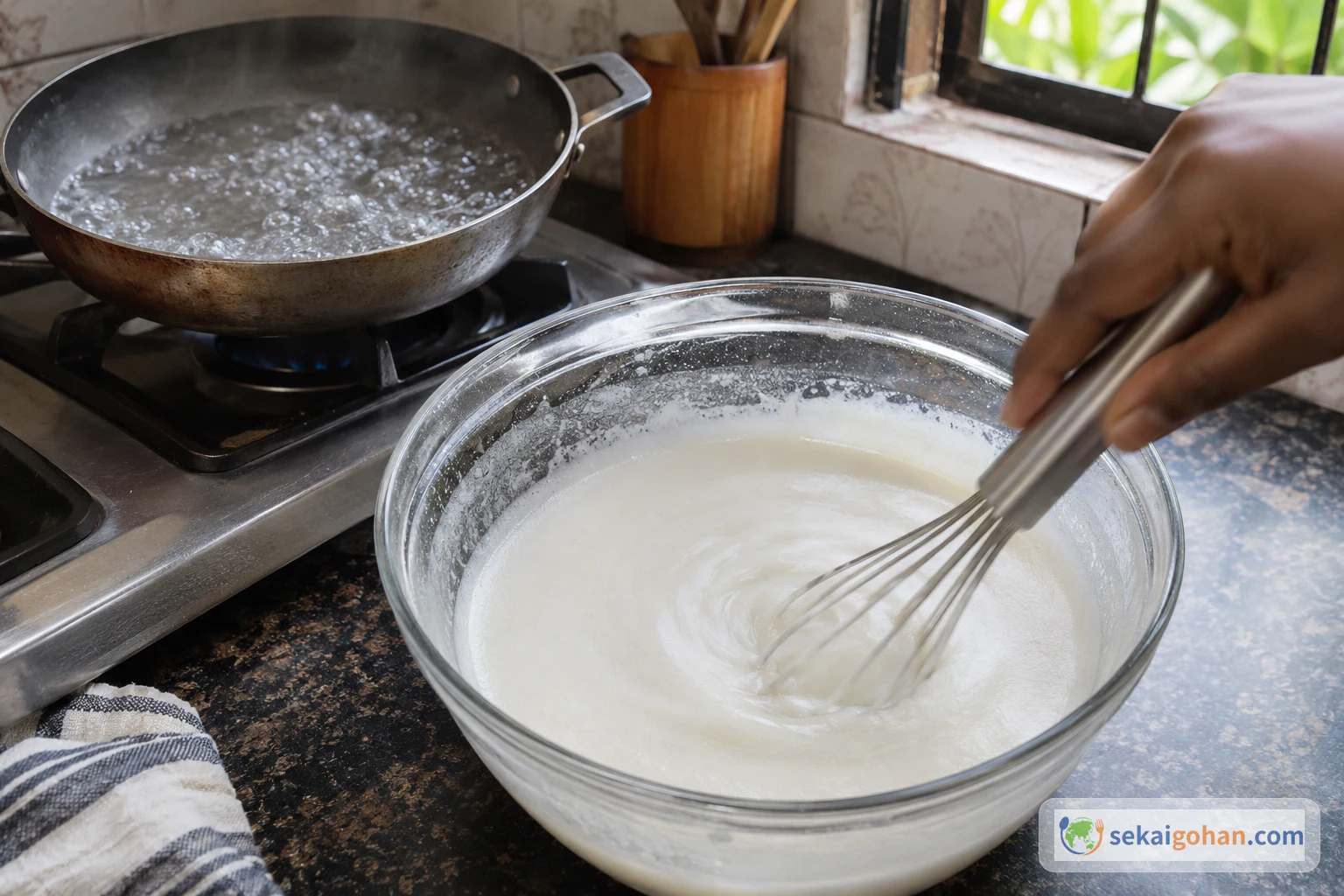
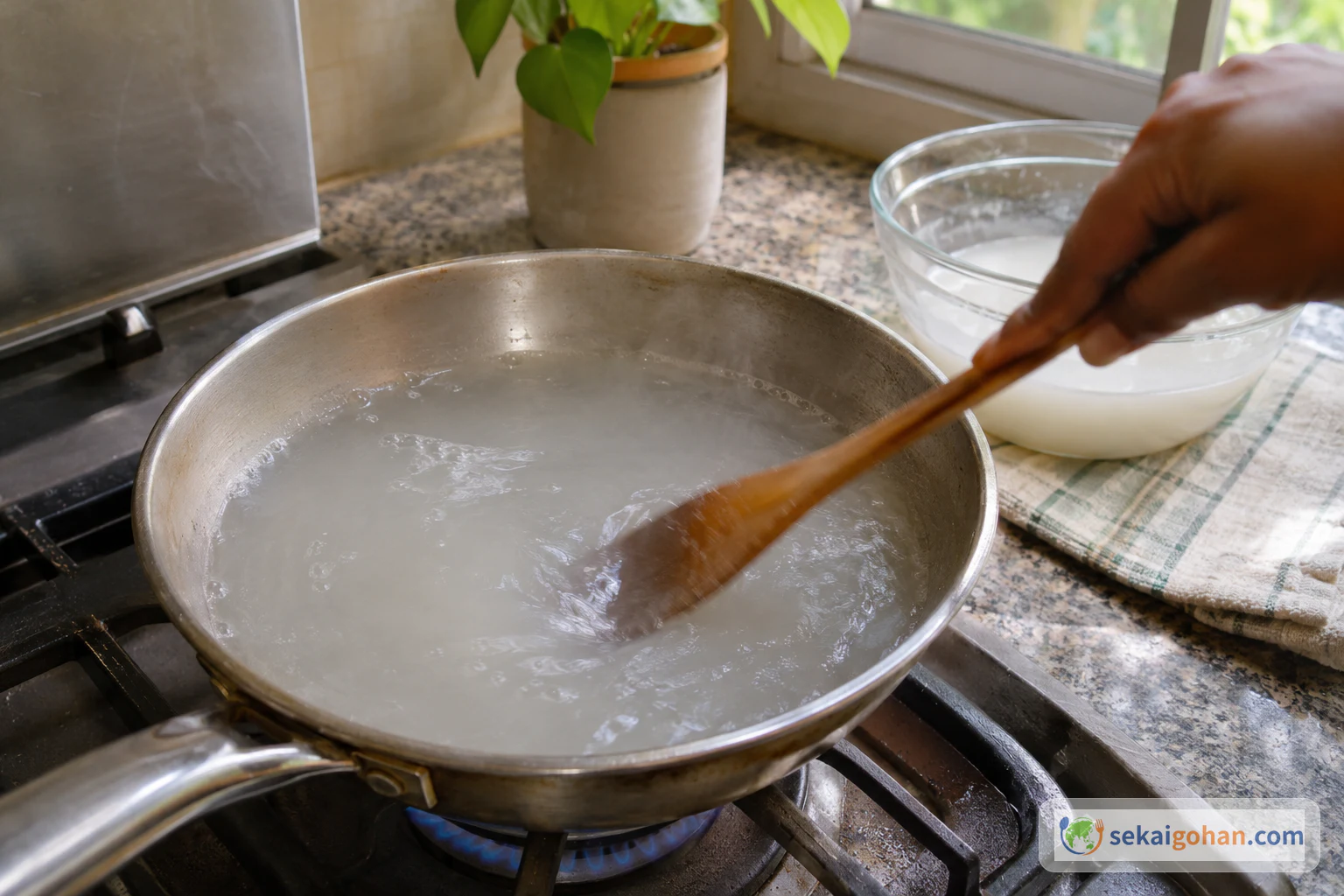
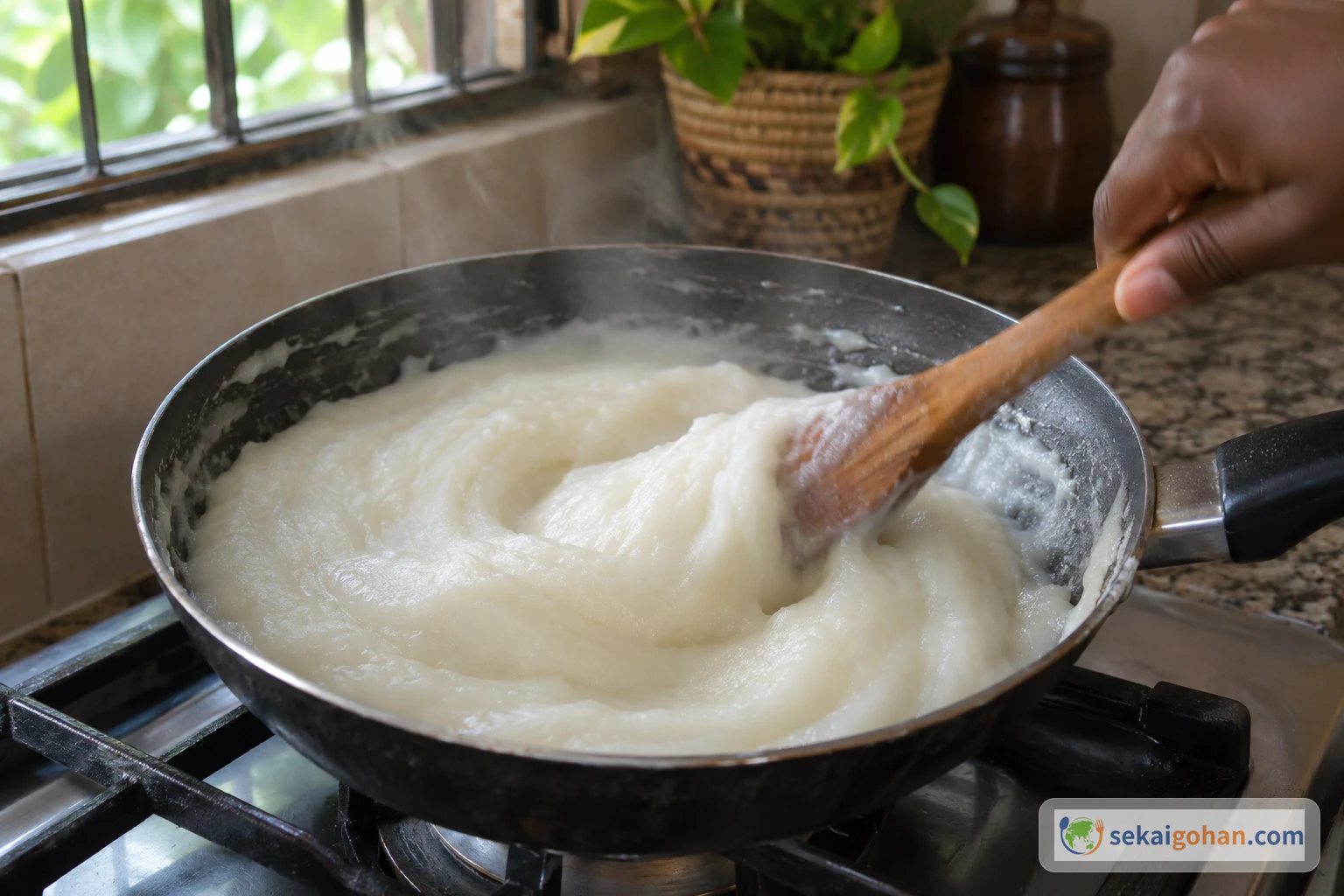
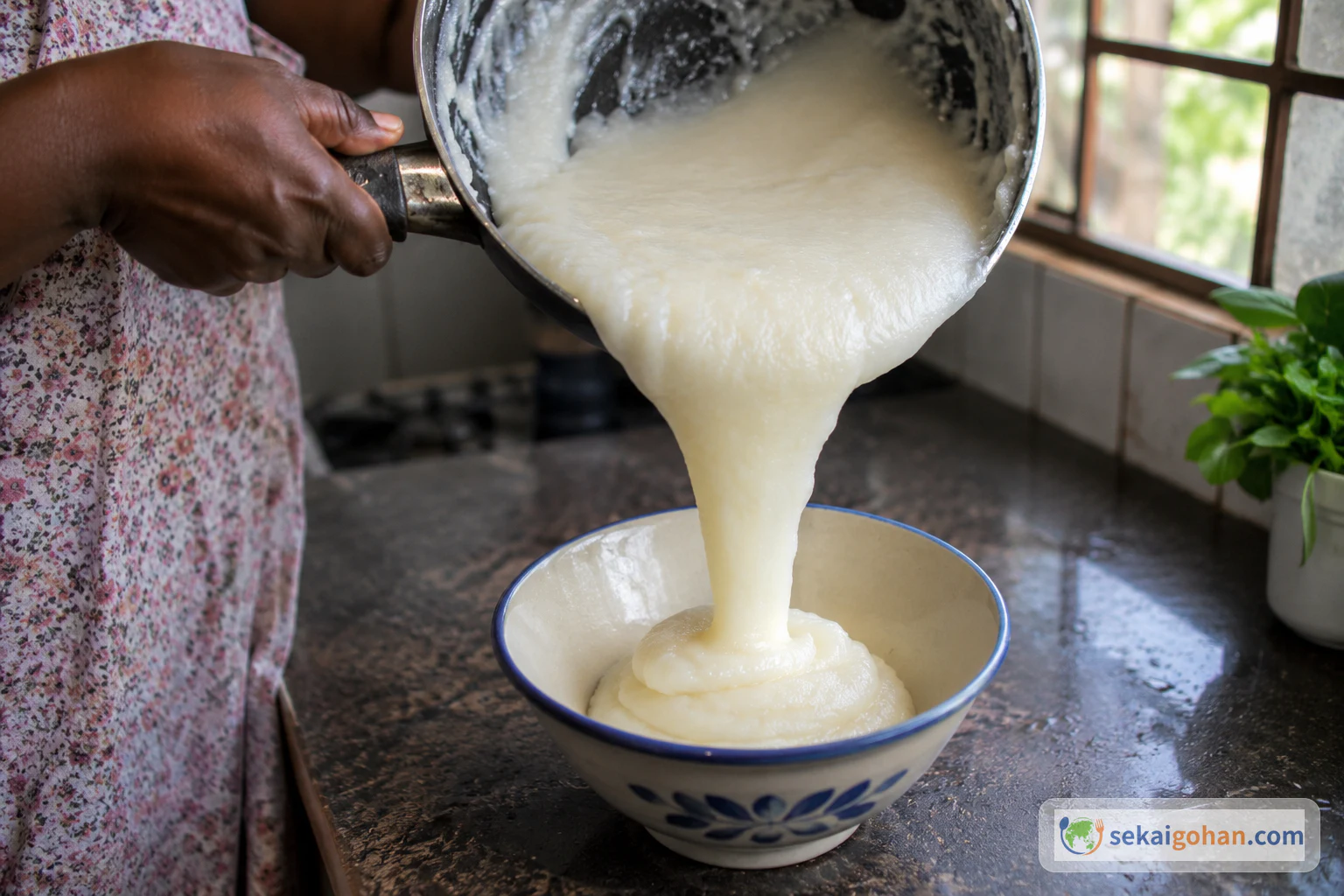
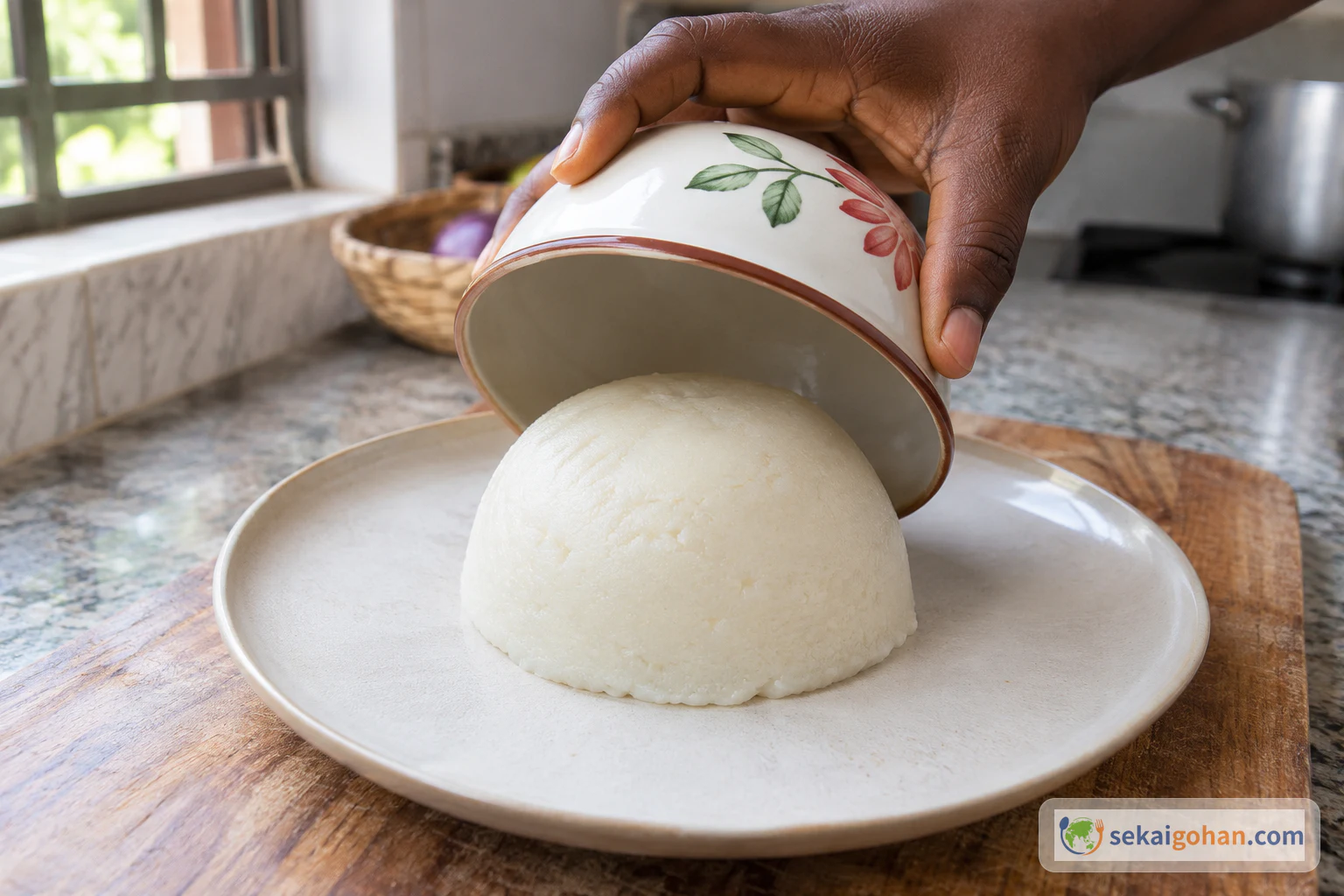
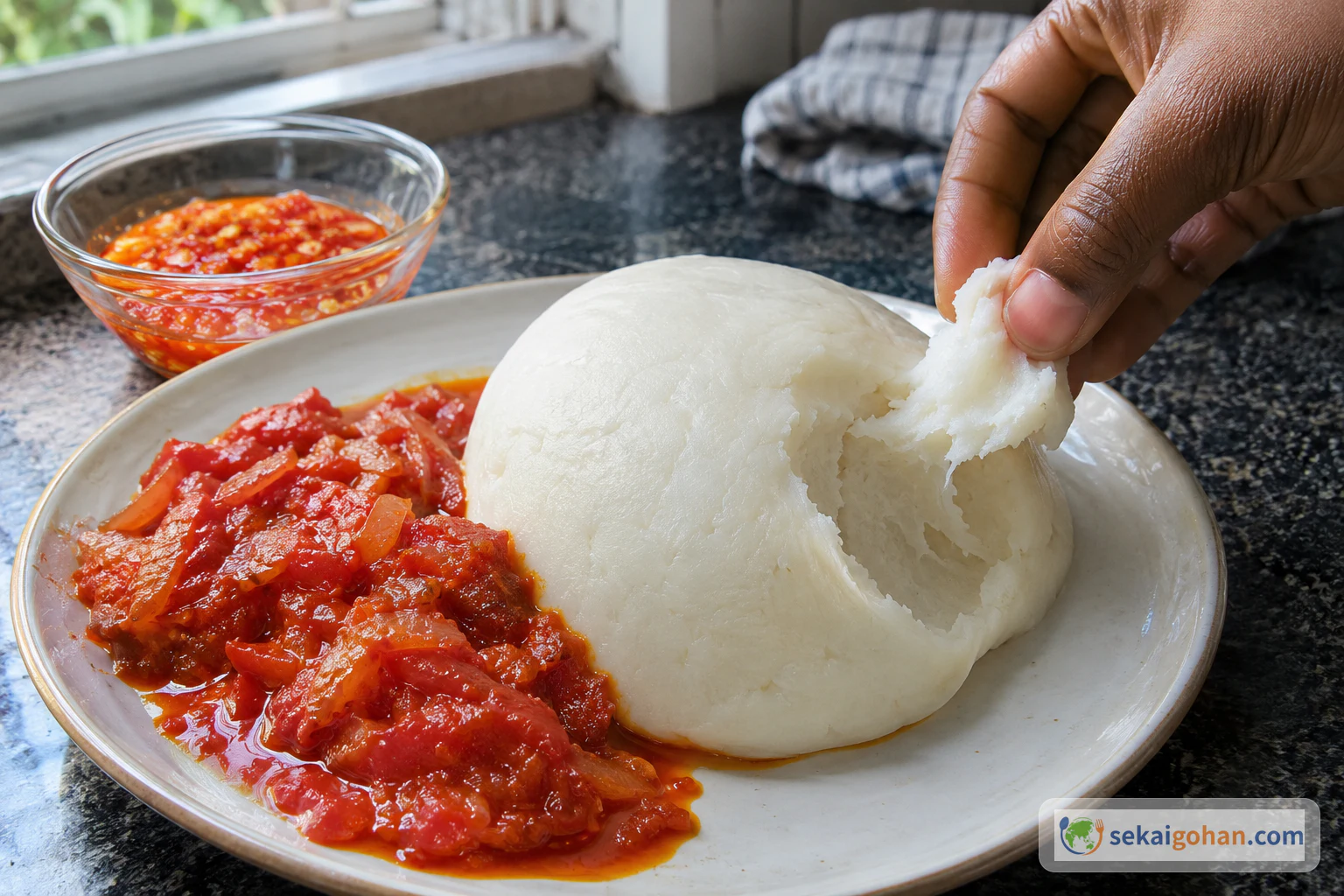
At first the pan holds nothing but milky water with a faint sour smell. A few minutes of steady stirring turn it into a glossy white paste that drops heavily off the spoon. It still looks too soft when you pour it into a wet bowl. Then it cools and sets firm, and it turns out onto the plate as a smooth white dome. Akassa is fermented maize dough from Benin. You tear off pieces by hand and pull them through fried tomato sauce or a fierce pepper sauce. The fermented flour gives it a gentle sourness and a dense, springy body that grips the sauce.
A Firm Maize Paste from Benin
Akassa belongs to the thick maize pastes of Ghana and Benin, a family that also includes banku and akple. You make it by cooking maize flour or fermented maize dough in water until it is heavy, then leaving it to set. In Benin it comes to the table firm. It is eaten with a sauce.
The sourness comes from work done before the pot. In the traditional method the maize is soaked and hulled, worked into a stiff dough with a little water, and left to ferment for a few days. That dough is the base of the fermented maize flours known as ogi and mawè. The same flour is now sold dried and already fermented, and dried fermented flour is what this method uses. That makes akassa a quick cook at home, even though the flavour is days in the making.
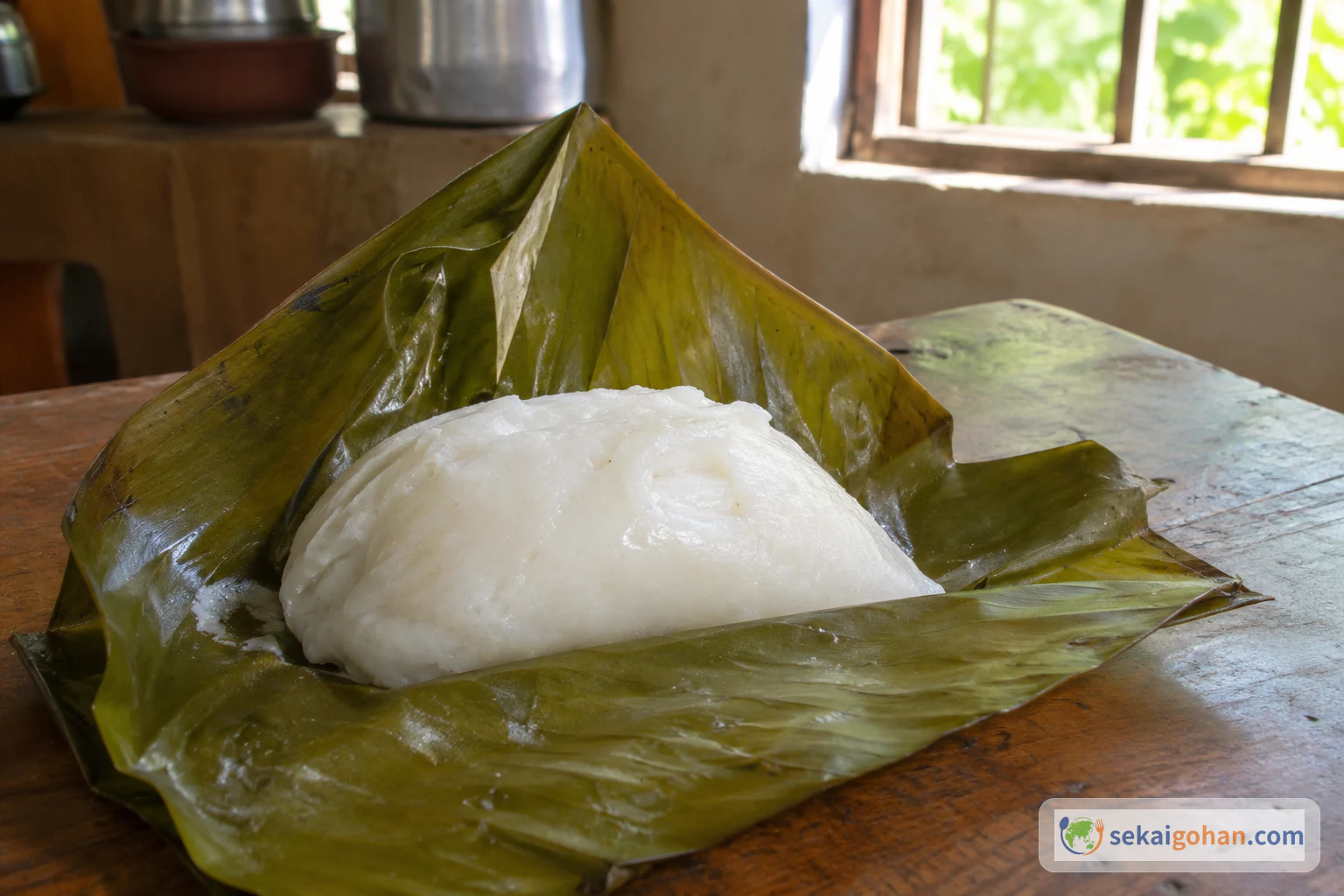
The shape has its own tradition. Traditionally each portion is wrapped in green leaves such as banana leaves, and at the market akassa is bought wrapped in leaves rather than in plastic bags. At home a small bowl does the leaf's other job and gives the hot paste its shape while it sets.
Benin calls it akassa, and French speakers also say boule d'akassa. In Togo a related fermented maize food is called akpan. The names line up, but whether the two are made the same way is not settled. The word akassa also turns up for a thin breakfast porridge made from the same kind of flour.
Ingredients
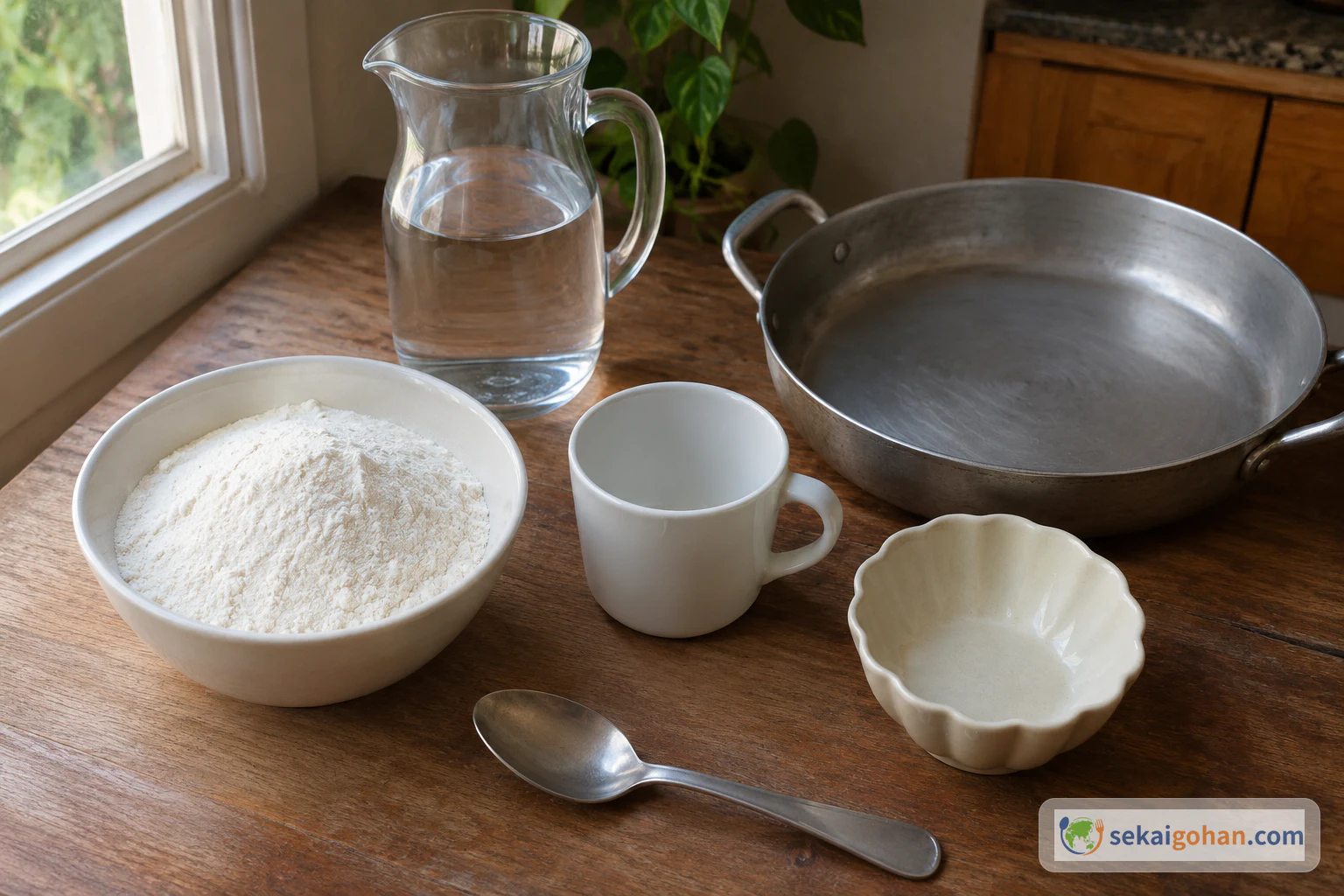
Measure the two waters separately before you start. The cold mixing water has to take all the flour, so no dry flour ever reaches the boiling pan. That one habit decides whether the paste comes out smooth.
Akassa is made from maize (corn). This recipe contains no wheat, milk or egg. It is gluten-free only when the flour is pure maize, so check the label for any added ingredients.
Equipment
- Shallow pan
- Mixing bowl and whisk
- Wooden spoon
- Measuring cup and tablespoon
- Small bowls or small cake molds for shaping
- Board or plate for turning out
Choosing the Flour
The flour sets the taste. Look in African grocery shops or online for dried fermented white maize flour, sold under names like ogi or mawè. Fermented flour gives you the sour edge and the clinging texture that make akassa taste the way it does in Benin. The flour is worth tracking down. Other things can change: a bowl works in place of the leaf wrap, and any sauce you like can go alongside.
If you cannot find fermented flour, use a finely milled white corn flour that has not been nixtamalized. The method stays the same, but the dough tastes plain and mild with almost no sourness. That makes it a different dish in flavour.
Masa harina is the wrong flour. It is nixtamalized maize, so the taste and stickiness are different. Yellow cornmeal and polenta are also wrong, because their grain size and colour pull the dough away from a smooth white paste. Labels use the same words for different products, so read the ingredient list. You want plain ground white maize that has not been treated with lime.
Method
The work moves fast at the stove, so measure everything first. The water comes to a boil while you mix the flour. The cooking itself takes only a few minutes of constant stirring. After that comes the hands-off part, while the bowls cool on the counter and the dough sets.
The first 3 tablespoons of flour mixture go into the boiling water alone. They lightly thicken the water, and the rest of the mixture blends into it without seizing into lumps. Adding everything at once is how lumps start.
Thickening maize paste spits and bubbles. Stir with a long wooden spoon, keep your hand back from the pan, and pour the hot dough slowly into the bowls.
Akassa firms a lot as it cools. If the paste already looks set in the pan, it will be hard once it is turned out. Stop at the glossy, heavy-dropping stage and pour it straight away. The bowl does the rest.
When It Goes Wrong
| What you see | Why | What to do |
|---|---|---|
| Lumps in the paste | Dry flour reached the hot water, or the mixture went in too fast | Dissolve all the flour in cold water first, add the first 3 tbsp alone, then pour the rest slowly while stirring constantly |
| Hard and dense after cooling | It was cooked past the soft, glossy stage before pouring | Pour sooner next time. Serve this batch with warm sauce spooned over, or work a little hot water into it |
| Scorched layer on the bottom | The paste sat still, or the heat was too high | Keep turning the paste up from the bottom and turn the heat down |
| Dough sticks in the bowl | The bowl was dry | Wet the inside thinly before pouring, and loosen the edge with a wet spoon before turning it out |
| Plain taste with no tang | Unfermented white flour was used | That is how the substitute tastes. Fermented flour brings back the sourness |
Serving and Variations
On the table
Akassa is eaten with a sauce. Fried tomato sauce and a hot pepper sauce are the usual partners, and any sauce with some body works. The sauces are separate dishes cooked in their own pans. The akassa is the plain, sour base that carries them. Serve it soon after it sets, while the warm sauce can still soften the outside.
Variations
- Leaf-wrapped. Spoon the hot paste onto a softened banana leaf (frozen ones work) and fold it closed to set. The portions come out as rounded parcels rather than domes, and the leaf gives the dough a light aroma. Foil or plastic wrap works for shaping but adds no aroma.
- Unfermented white flour. Use the same amounts and the same method. The dough tastes mild, with none of the sour edge.
- Small cake molds. Molds in place of bowls give neater, straight-sided portions that are easy to set out for several people.
Making ahead
Cook only what you will eat at that meal. Akassa keeps firming as it sits, and it is at its best soon after it is turned out.
Frequently asked questions
Can I ferment the flour myself?
The traditional way soaks, hulls and ferments the maize as a stiff dough for a few days. That process is outside this method. Buy flour that is sold dried and already fermented, and keep home fermentation as background reading.
How is akassa related to ogi porridge?
They start from the same fermented maize flour. Cook it thin and you have a porridge. Cook it thick and let it set in a bowl or leaf and you have firm akassa.
Does the dough need salt?
The dough is flour and water. The seasoning comes from the sauce, so salt is optional. If you want a little, add it to taste.