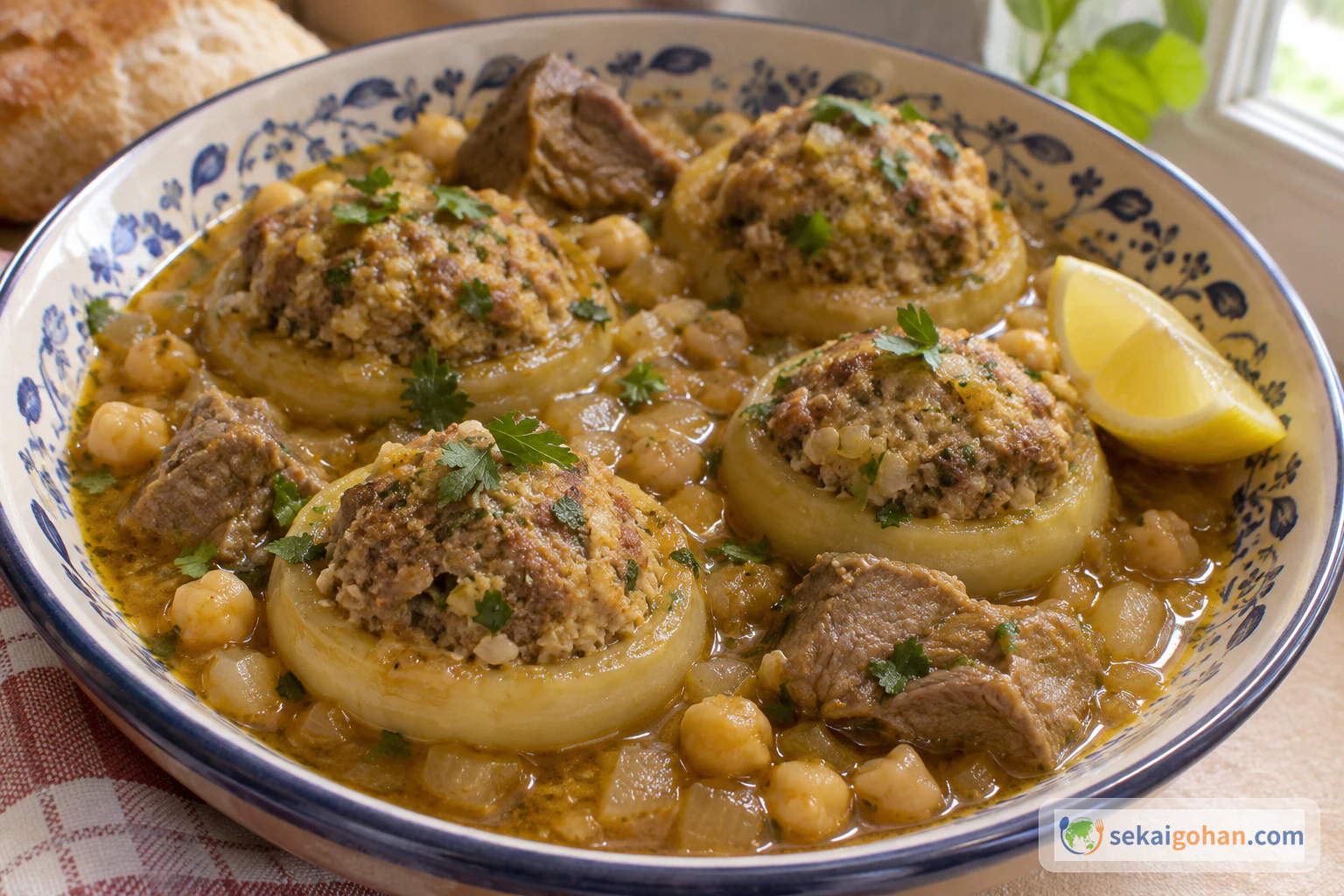
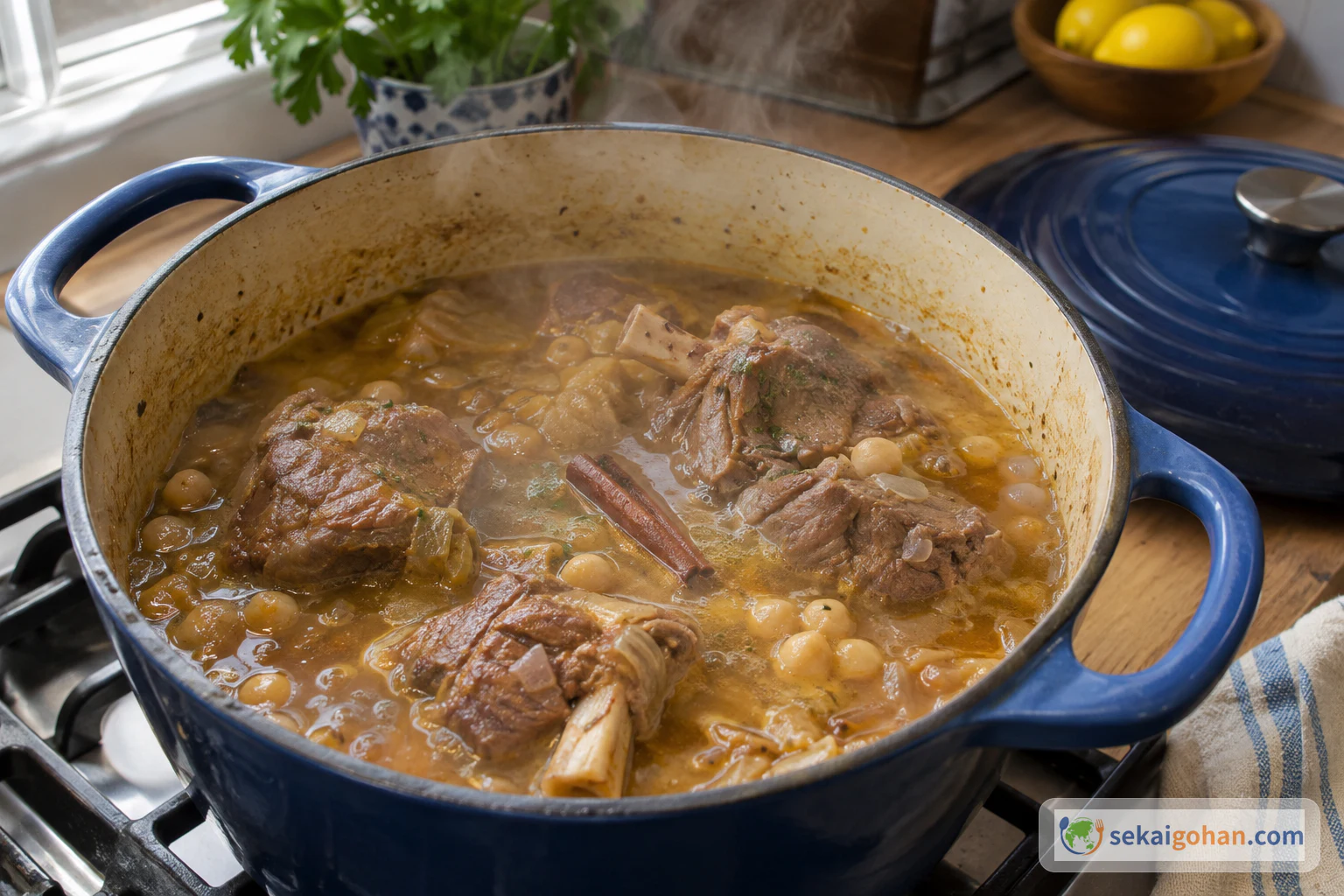
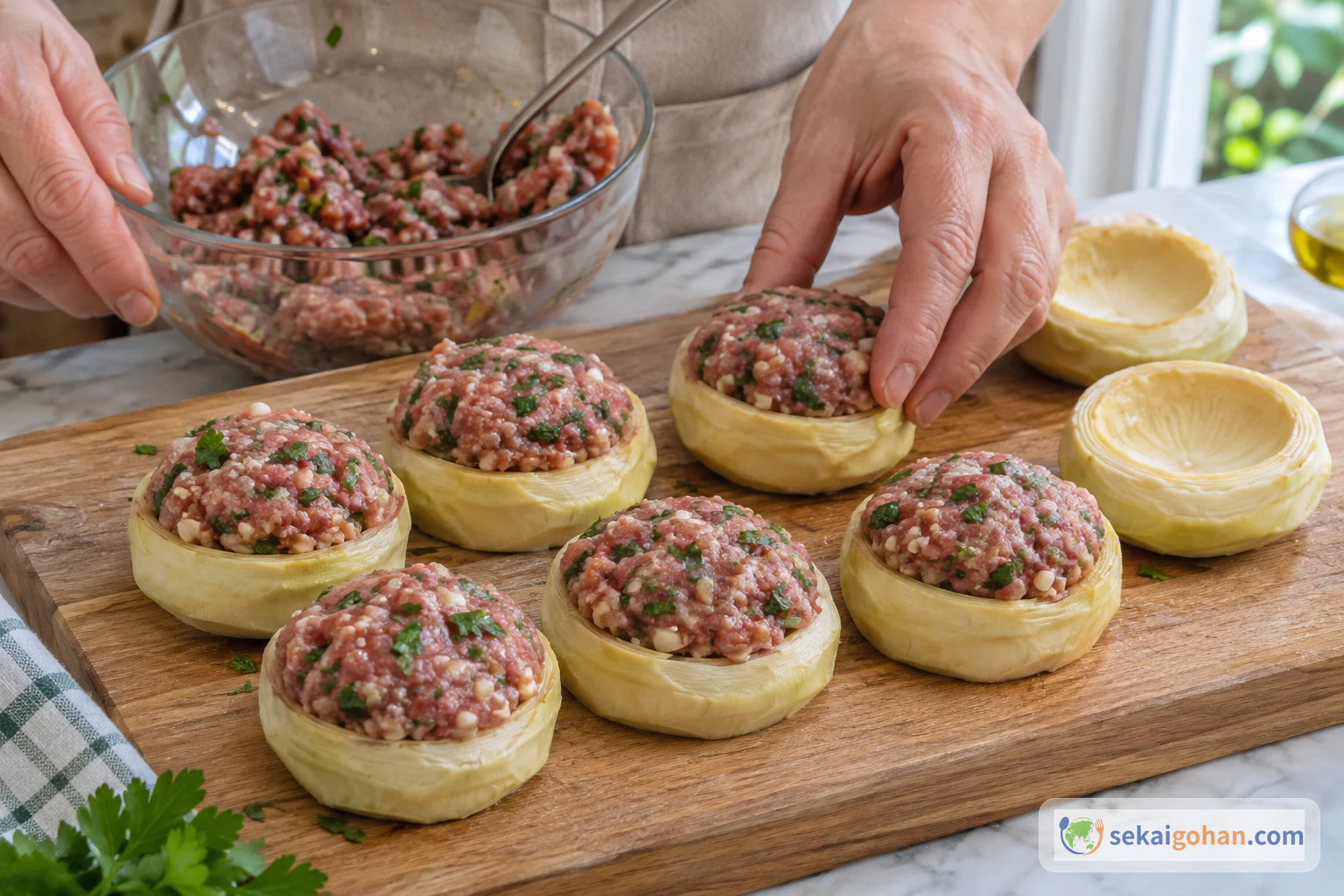
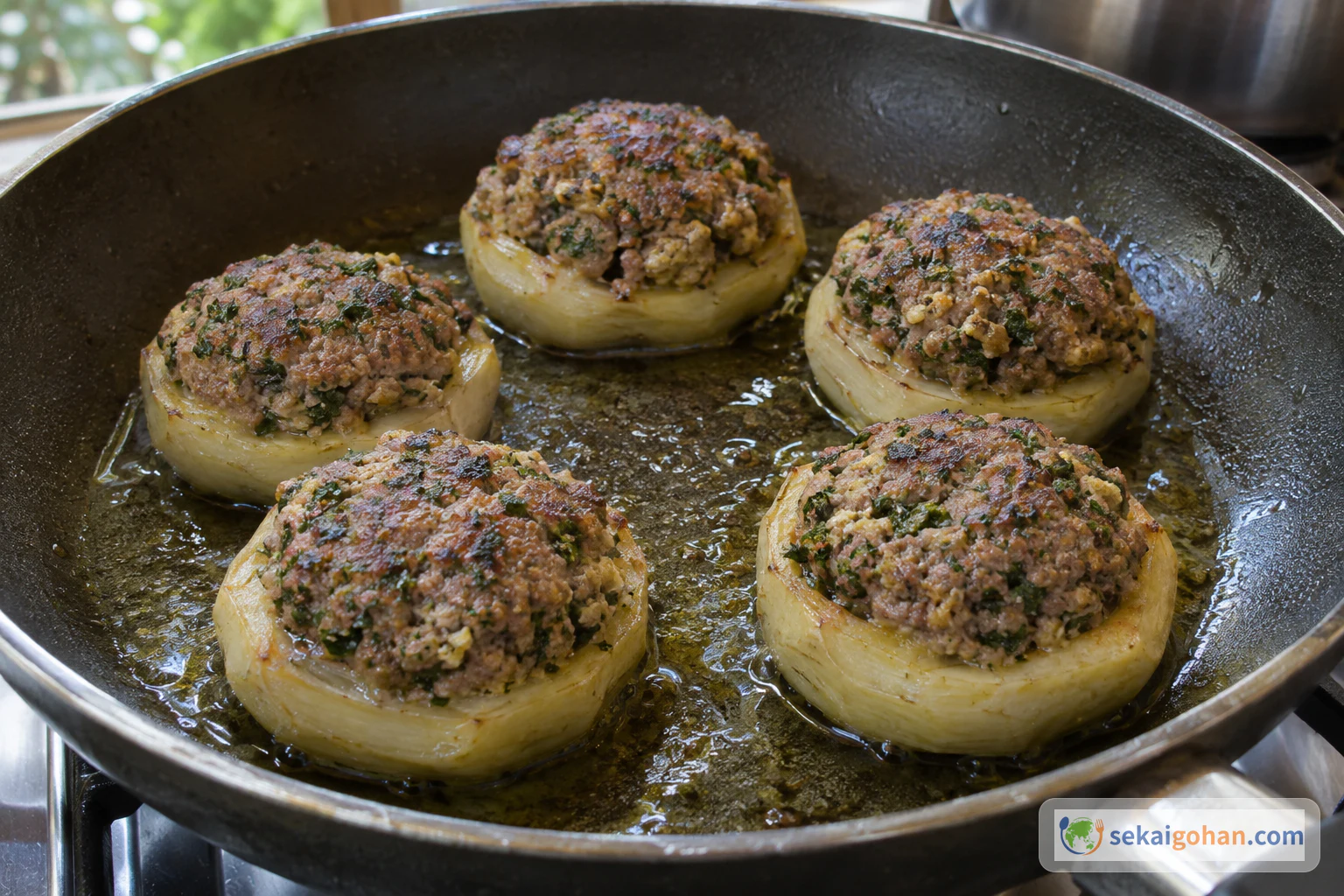
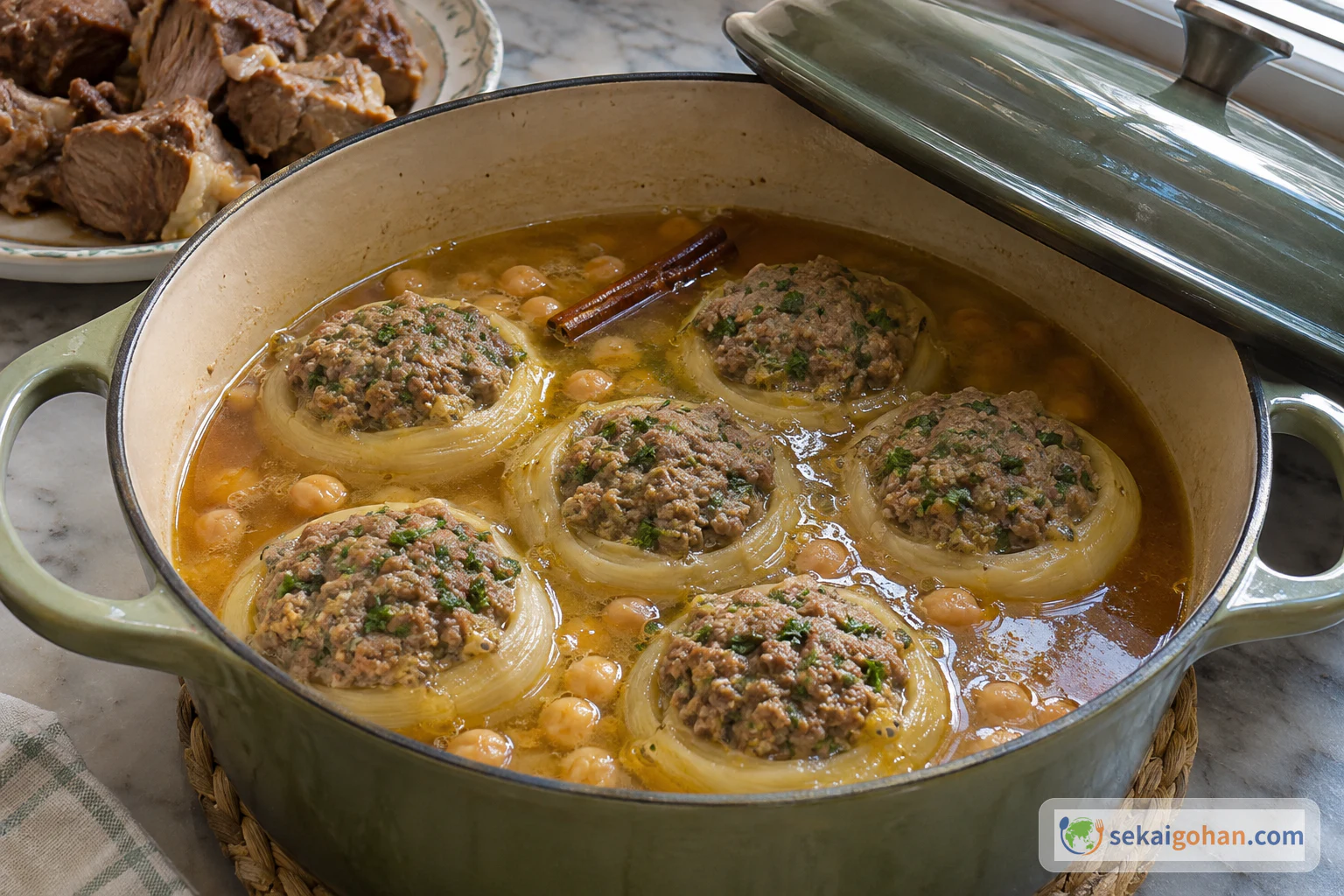
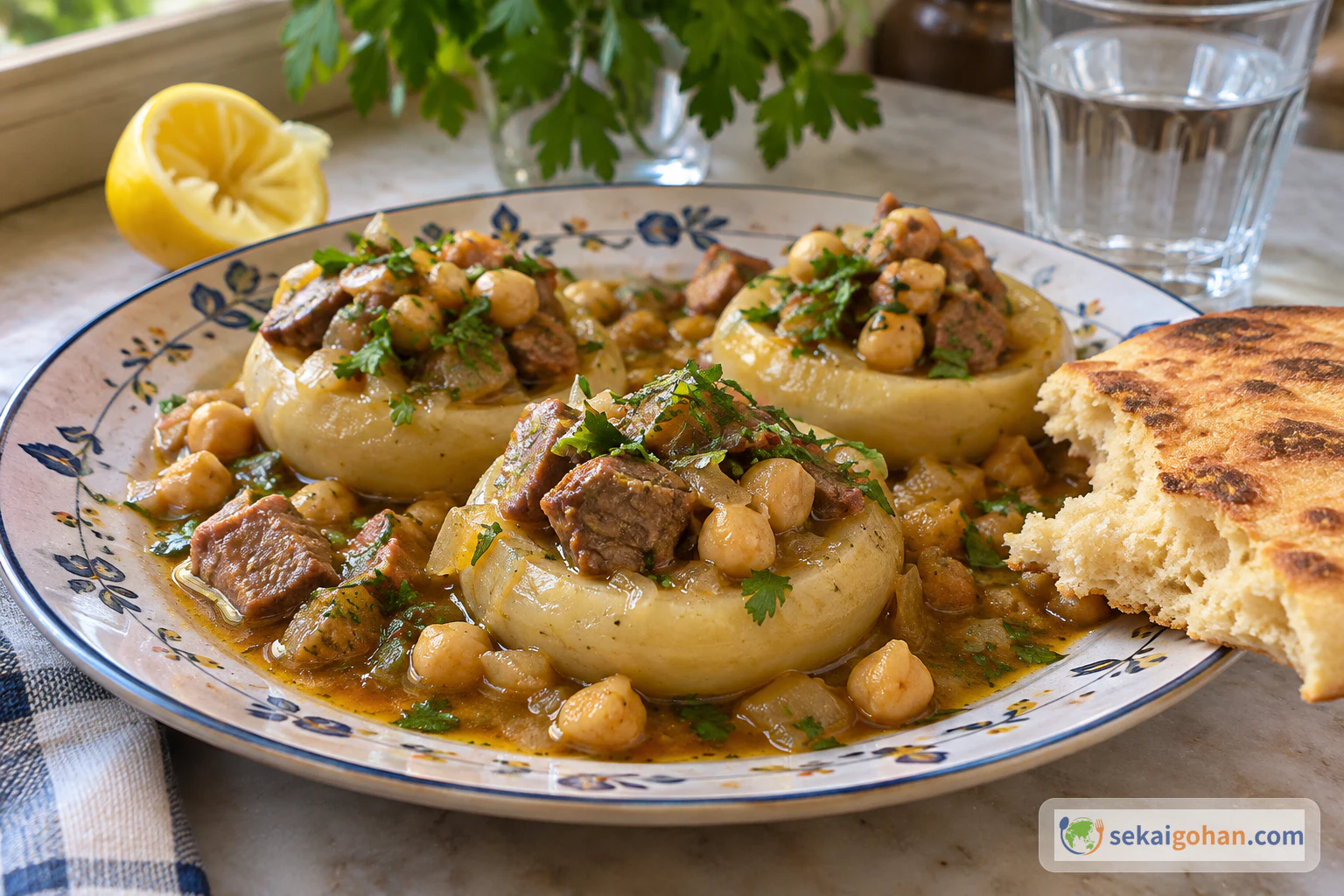
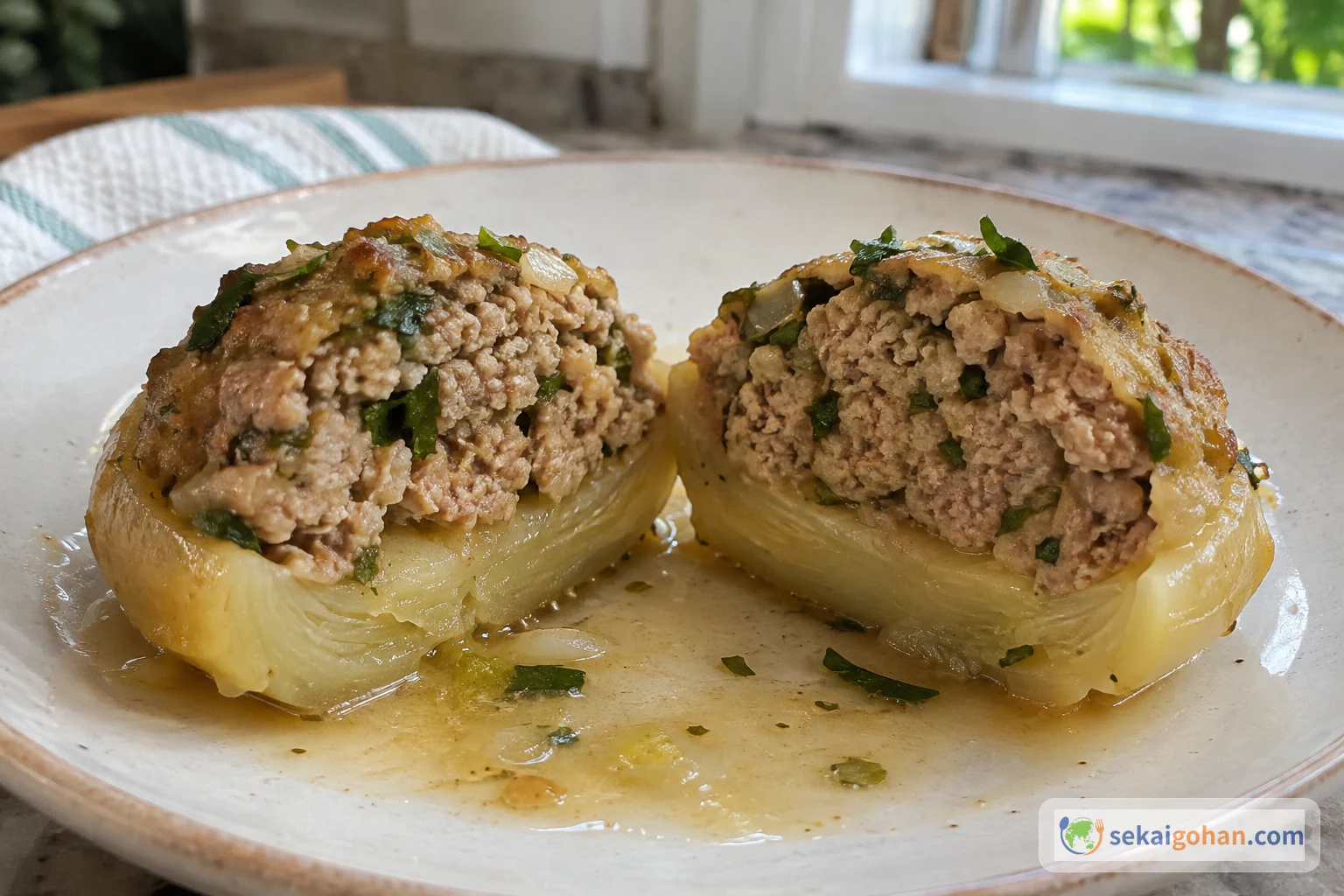
The stuffed artichoke bottoms go into the pot last. They are already seared golden on top, and they settle into a sauce that has been simmering with lamb, cinnamon and chickpeas for over an hour. The lid goes on, the heat drops, and for half an hour the filling cooks through in the steam while the artichoke softens around it. Dolma qarnun is Algerian home cooking: small cups of artichoke packed with ground lamb and a lot of parsley, served in a slow lamb and chickpea stew, finished with lemon. The sauce is meaty and gently sweet from the cinnamon stick. The filling is green and savory, and the lemon at the end makes it bright.
Stuffed Cups in a Slow North African Stew
The name and the family it belongs to
Dolma means "stuffed," and qarnun (also spelled qarnoun) means artichoke, so the name says exactly what is on the plate. The word dolma is usually traced to the Turkish verb dolmak, "to fill." Stuffed vegetables spread from the Ottoman kitchen into the Middle East, the Balkans and North Africa, and Algeria kept the name along with the idea.
In most Algerian kitchens, dolma means minced meat mixed with white rice, onion, parsley and spices such as white pepper, cinnamon and ginger. It is packed into potatoes, zucchini or green peppers and cooked slowly over low heat in a white broth. The artichoke version takes a different path. The artichoke bottom is the cup. The filling has no rice and is held together with egg and parsley. And instead of a pale broth, the stuffed cups braise in a browned lamb stew with chickpeas and cinnamon. That is the long-simmered style of stew found all over North Africa.
You will see both spellings, qarnun and qarnoun. Only the bottom of the artichoke is used, which is the fleshy base once the leaves and choke are gone. It makes a ready-made cup, which is why it works so well for dolma.
At the Algerian table
This is comfort food. It is a slow pot that comes to the table with plenty of sauce. An Algerian meal usually has bread on the table, and flatbread like kesra is how the sauce and chickpeas get eaten. Pork is uncommon at Algerian meals. For another lamb stew, see tajine lham lahlou, and for another Algerian pot, chorba frik. For more dishes from the country, see the Algeria page.
How households change it
Home cooks have their own versions. One quicker pot hollows out potatoes as well as artichokes, fills both with a mix of beef, rice and egg, and braises them in a little water with onion, oil and butter in about an hour. In Algerian Jewish cooking, stuffed artichokes are stewed with peas and pearl onions. Where the artichoke dolma first appeared is not settled. What all these pots share is the stuffed artichoke bottom cooking slowly in its sauce.
Ingredients (serves 4)
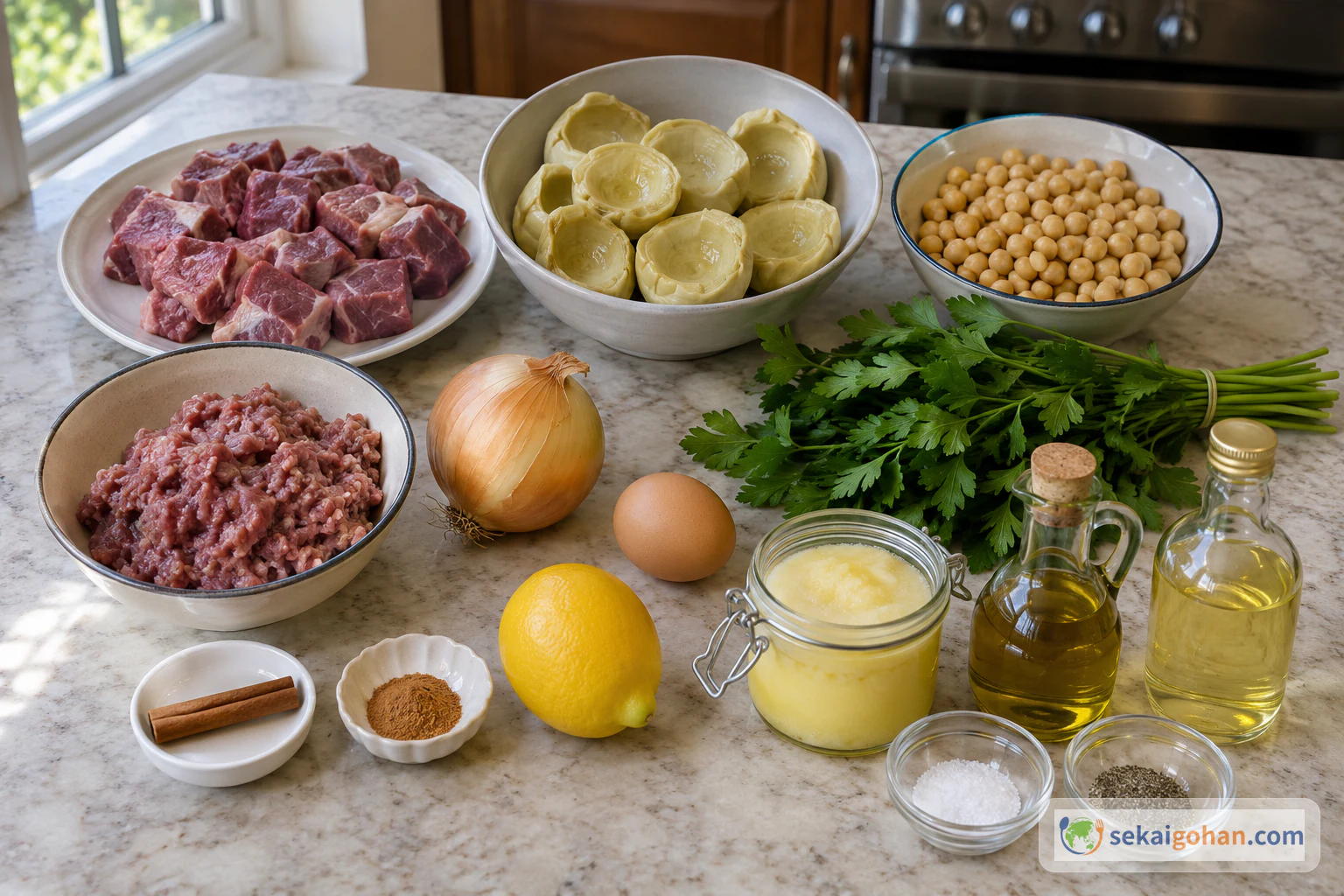
Press the stuffing in hard and mound it only slightly above the rim. A tightly packed, low dome stays put when you turn it in the frying pan and when it sits in the sauce. A tall heap breaks off at the edges and spills into the oil.
The stuffing contains egg. Smen is a dairy product, and using olive oil makes the stew dairy-free. Check the labels on canned chickpeas and canned or jarred artichoke bottoms for added ingredients.
Equipment
- Dutch oven or heavy pot with a lid, wide enough to hold 10 artichoke bottoms in the sauce
- Frying pan
- Mixing bowl
- Thin spatula for turning the stuffed bottoms
- Knife and cutting board
Choosing and Substituting
Frozen artichoke bottoms are the ones to look for. Check the freezer section of Mediterranean or Middle Eastern grocers, or order them online. Thaw them before stuffing. Canned or jarred bottoms packed in brine are easier to find and work well. Drain them well and use less salt, both on the cups and in the stew, because the brine has already seasoned them. They taste slightly tangier, and the texture is a little softer than frozen.
Smen is the traditional browning fat. It is aged fermented butter with a sharp, almost cheese-like smell. Olive oil is the standard replacement and gives a clean, fruity base. Ghee or plain butter adds richness but none of smen's aged tang.
Canned chickpeas are the easiest choice and go straight into the pot. Dried chickpeas soaked overnight need to be fully tender before the artichokes go in. For the stew meat, a chunk of mutton cut into large pieces works like lamb. Swapping beef into the stew changes both the flavor and how long the meat needs to become tender.
| Keep for the local taste | Fine to change abroad |
|---|---|
| Lamb in the stew, browned deeply | Smen → olive oil |
| A cinnamon stick in the sauce and ground cinnamon in the filling | Frozen bottoms → canned or jarred, with less salt |
| The full amount of parsley in the filling | Dried chickpeas → canned |
| Lemon and parsley at the end | Ground lamb → ground beef |
Method
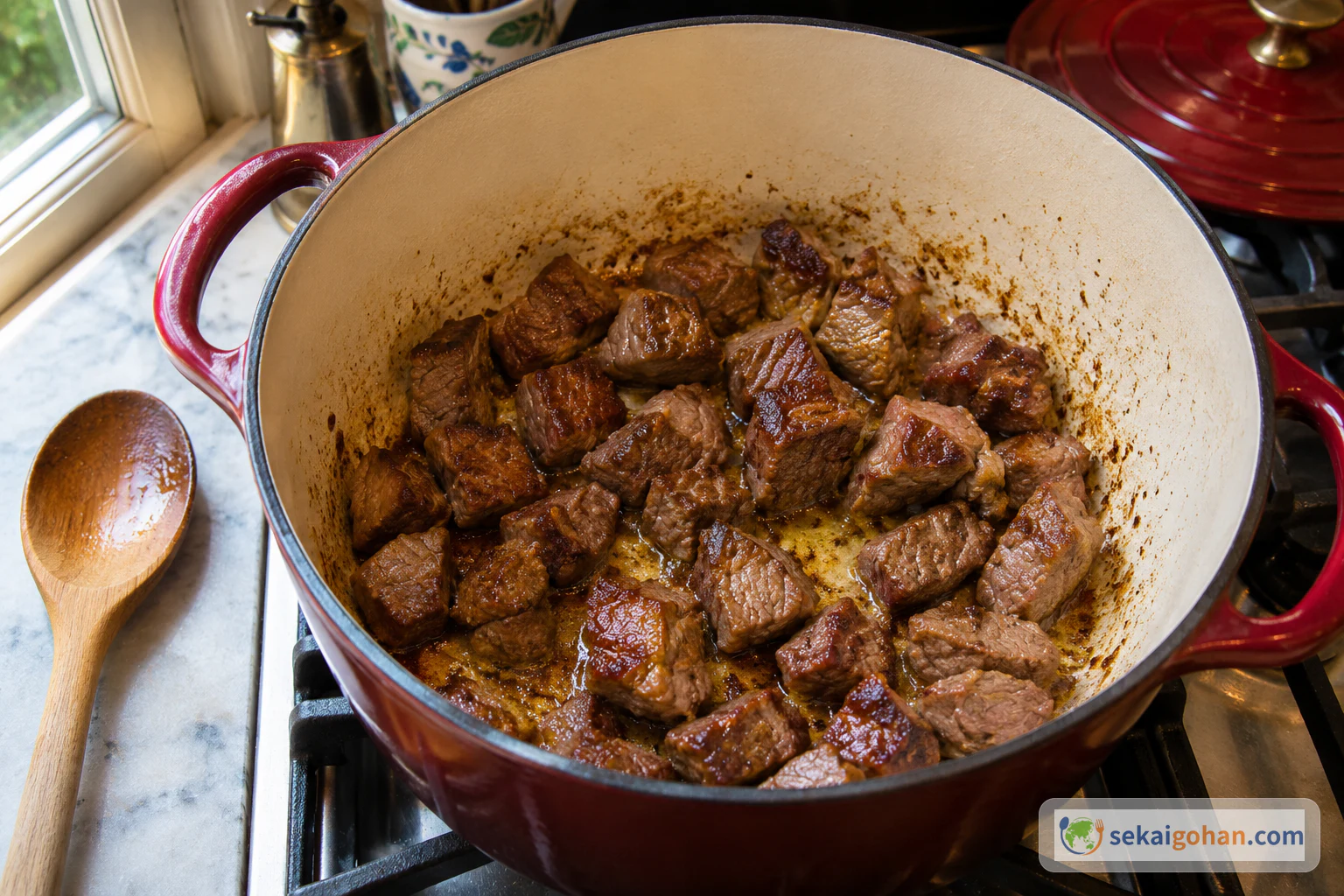
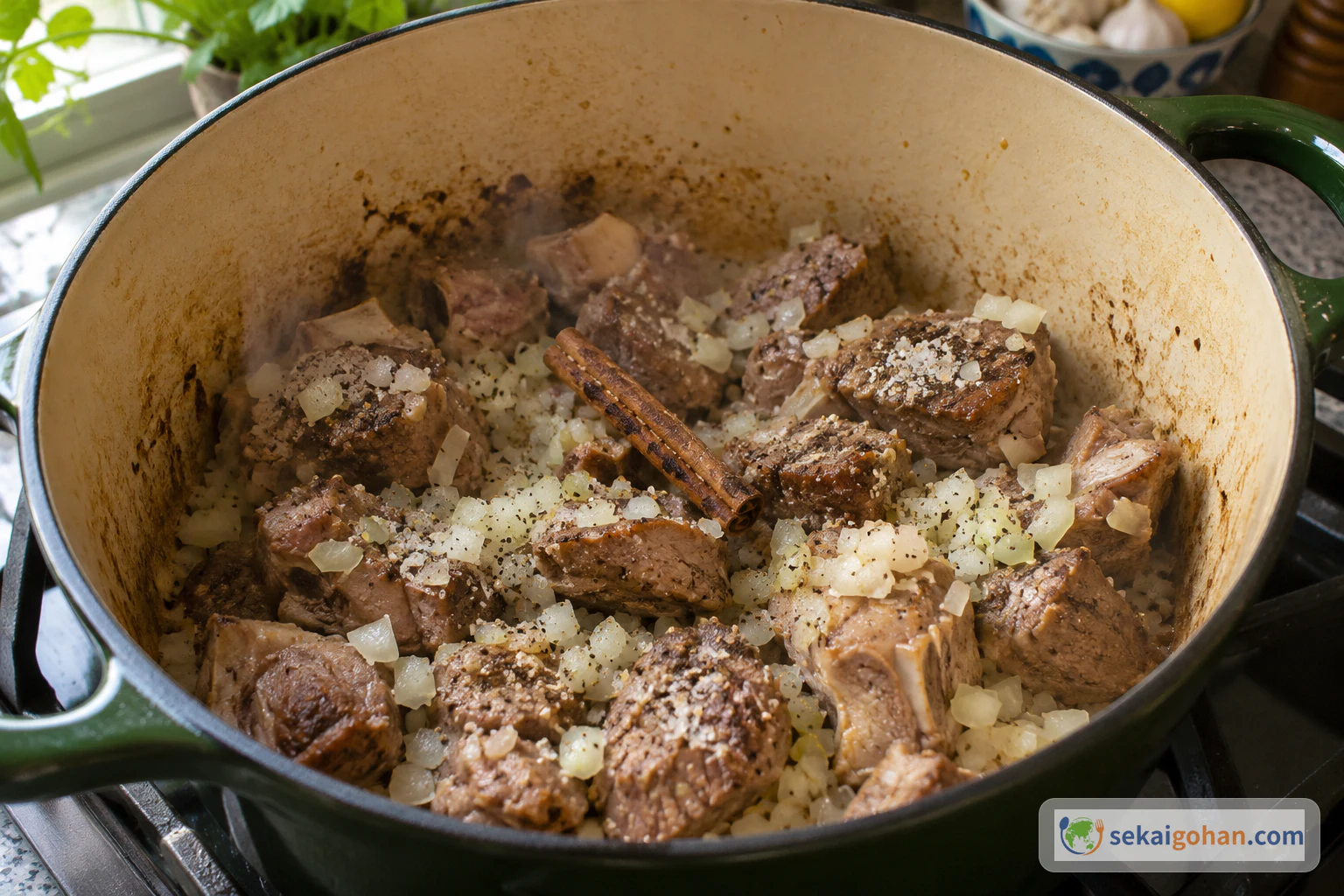
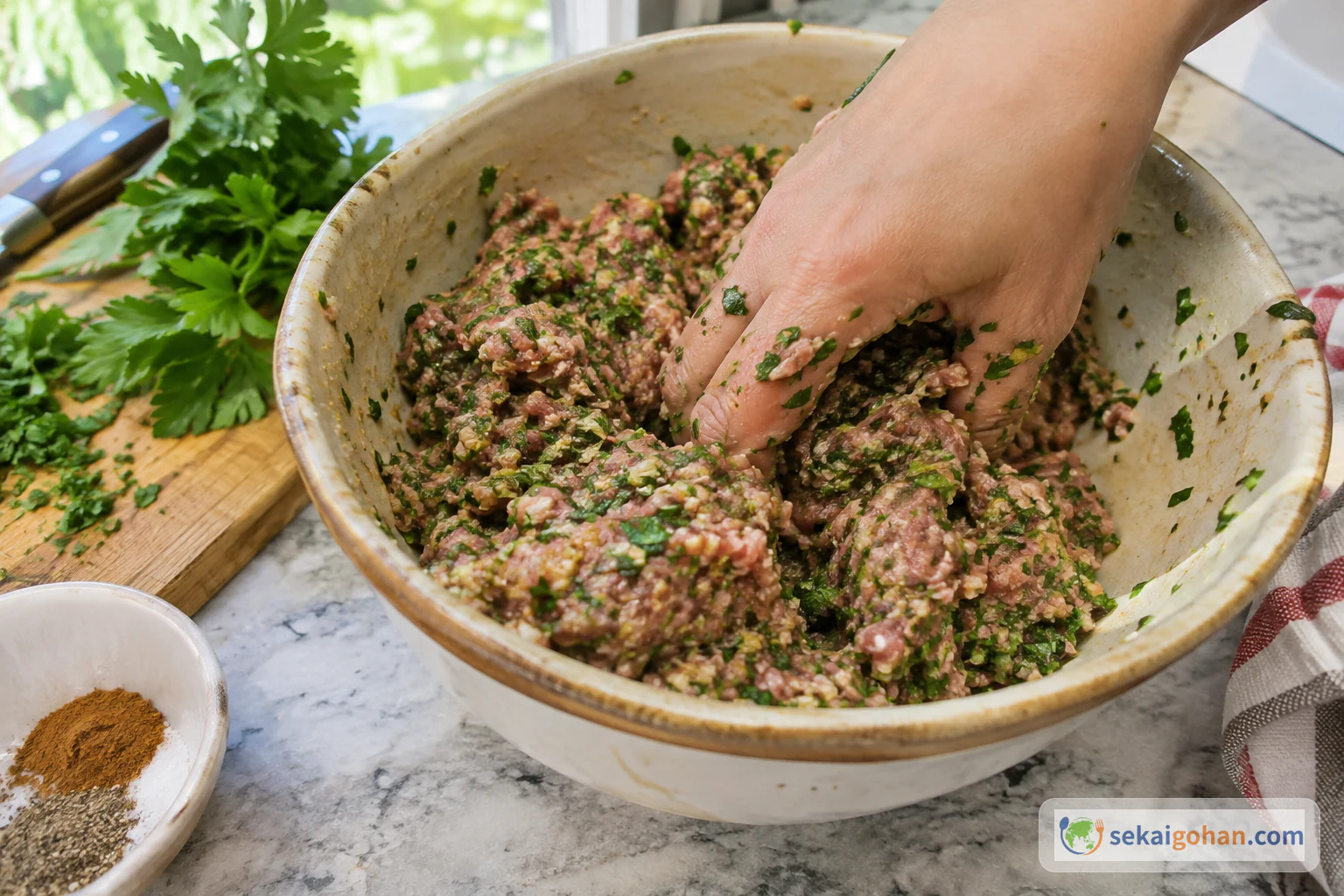
The stew comes first and does most of its cooking hands-off. You brown the lamb, soften the onion, then let it simmer for over an hour. Make the stuffing and fill the artichokes while the stew simmers. Then sear them and slide them into the pot for the final braise.
When It Goes Wrong
| What you see | Why | What to do |
|---|---|---|
| Pink or red meat in the center after the braise | The filling was thick, or the heat was too low to steam it through | Cover the pot again and keep braising on low until the center has no pink left. Never serve the filling undercooked |
| Stuffing falls off in the frying pan | Packed loosely, mounded too high, or moved before it browned | Press the rest in harder with a low dome, and let the stuffing side brown before the single turn. Tuck any loose pieces into the sauce to cook |
| Sauce is thin and tastes flat | The lamb went in pale, or salt was light | Next time brown the meat darker. For now, season with salt and pepper, and let the lemon do the rest at the table |
| Lamb is still chewy when the chickpeas are done | The cut needs more time | Keep simmering until it is tender before the artichokes go in. The final braise is on low and won't soften it much more |
| The whole dish tastes too salty | Brined artichoke bottoms were salted again | Rinse and drain canned bottoms, skip the salt on the cups, and go light on the salt in the stew until you taste it at the end |
Serving and Variations
At the table
Put dolma qarnun in the middle of the table in its pot or on one wide platter. Everyone takes two or three stuffed bottoms with lamb and chickpeas. Bread is essential. Tear kesra or another flatbread and use it to pick up the chickpeas and soak up the cinnamon-scented sauce. Keep extra lemon wedges nearby for anyone who wants more sharpness, and a jug of water.
Variations
- Ground beef filling. Use the same weight of ground beef instead of lamb. The filling is milder, and the lamb stew still carries the lamb flavor.
- Potatoes alongside the artichokes. Hollow out potatoes and fill them as well, with a beef, rice and egg stuffing. Braise them with onion, oil, butter and a little water. This makes a lighter pot that is ready in about an hour, without the long-simmered lamb stew.
- Peas and pearl onions. In Algerian Jewish cooking, a stuffed-artichoke stew is made with peas and pearl onions.
Frequently Asked Questions
Can I use ground beef instead of ground lamb?
Yes. Ground beef works in the filling at the same 10 oz (283 g). Keep the lamb in the stew, because the lamb broth is what makes the dish taste like dolma qarnun.
Should there be onion in the stuffing?
The onion goes into the stew, and the filling is meat, egg, parsley and cinnamon. If you want onion in the filling, chop a little very finely and mix it in. The filling will taste sweeter, and you need to press it in extra firmly so it holds together.
Which side goes up in the pot?
Stuffing side up. The artichoke sits in the sauce, and the seared dome stays above it and cooks in the steam under the lid. This keeps the crust intact and the filling in its cup when you lift the bottoms out to serve.
Do I have to take the lamb out before the artichokes go in?
Yes. Taking the lamb out makes room for all ten bottoms to sit in the sauce in one layer. Keep the lamb covered on a plate and return it when you serve, so every plate gets meat, chickpeas and stuffed artichoke together.