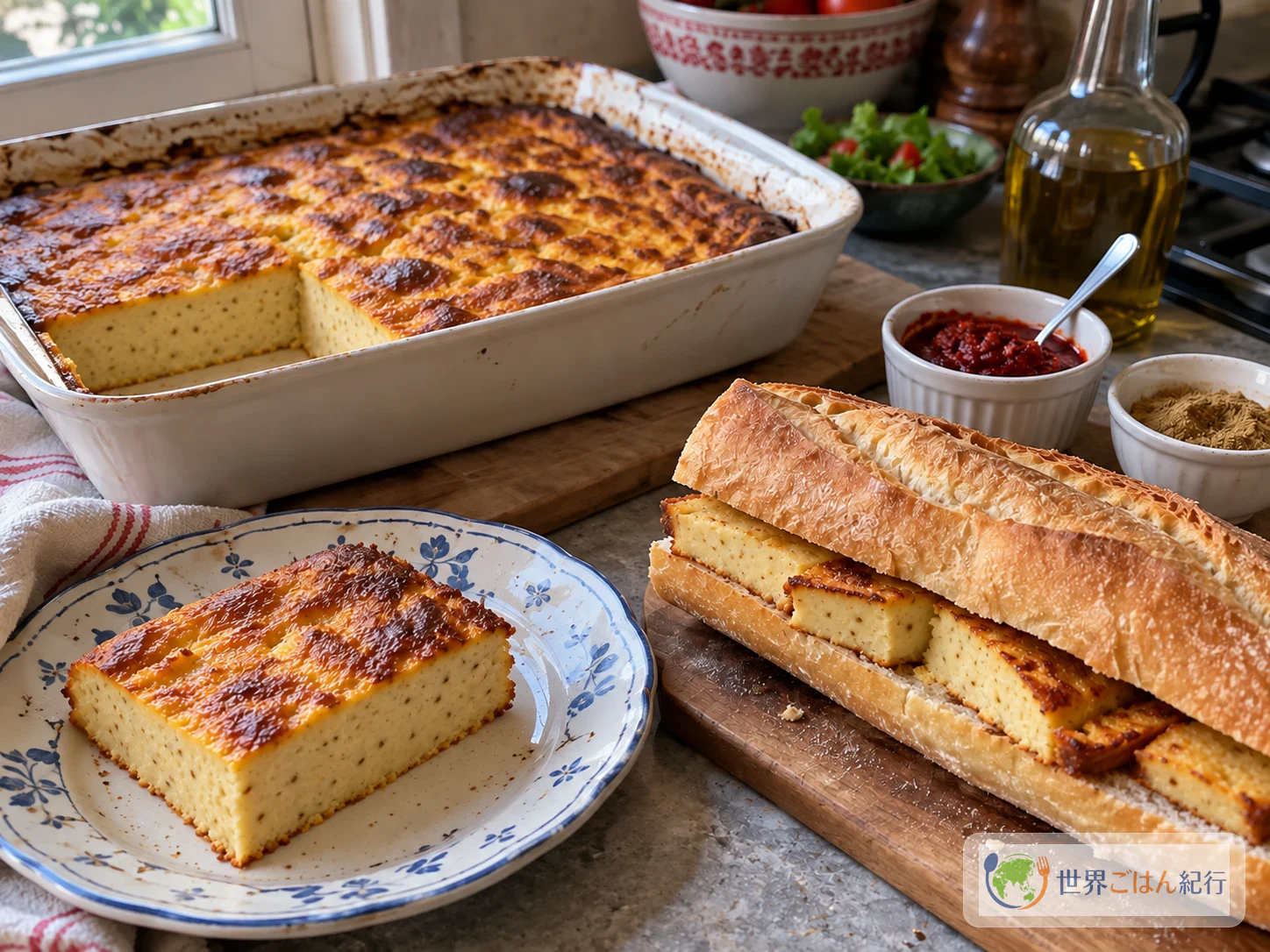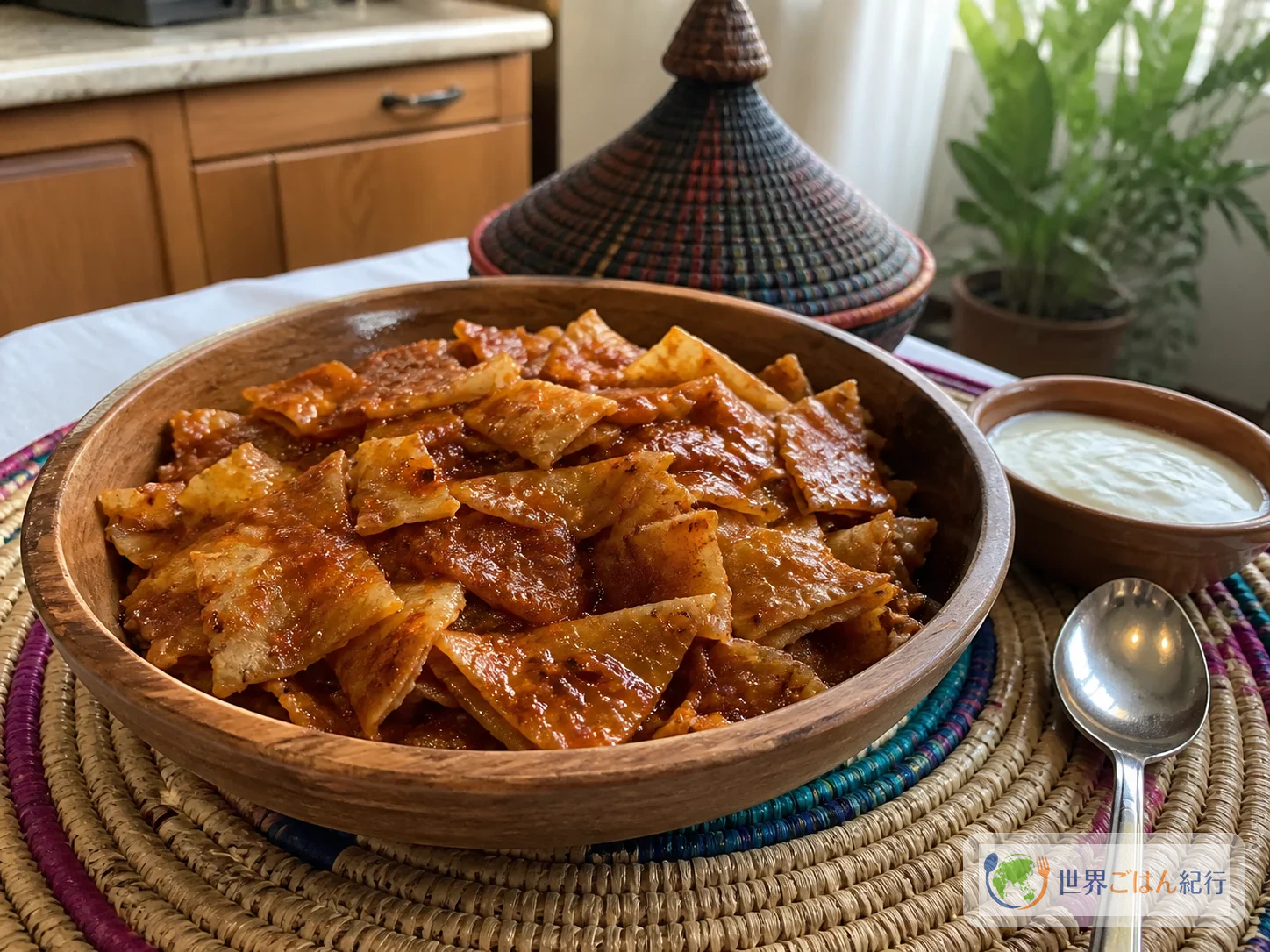
In the pan, the kita drinks the red butter
Roll a flour dough thin and bake it, and small brown spots rise on the surface. Tear it by hand and drop it into butter in which berbere has melted, and the dry bread crackles as it drinks up the red oil. Finally, a thin drizzle of honey lays a sweet aroma over the heat of the chili.
Chechebsa is an Ethiopian breakfast in which a flatbread called kita is torn and combined with niter kibbeh and berbere. It is also written kita firfir or kita fitfit. Ethiopian vocational training materials explain kita as an unfermented bread made from flour, water and salt, baked on both sides and eaten warm. The same material lists chechebsa as a breakfast, and also introduces a way of eating it in which the bread is combined with berbere sauce and honey is served alongside.
In a home kitchen, it is easier to bake each one like a pancake and then tear it. But it is not a dish to move toward a fluffy sweet bread. The landing point is thin dough with color on it, butter aroma and spice soaked in, and a dry bite left here and there.
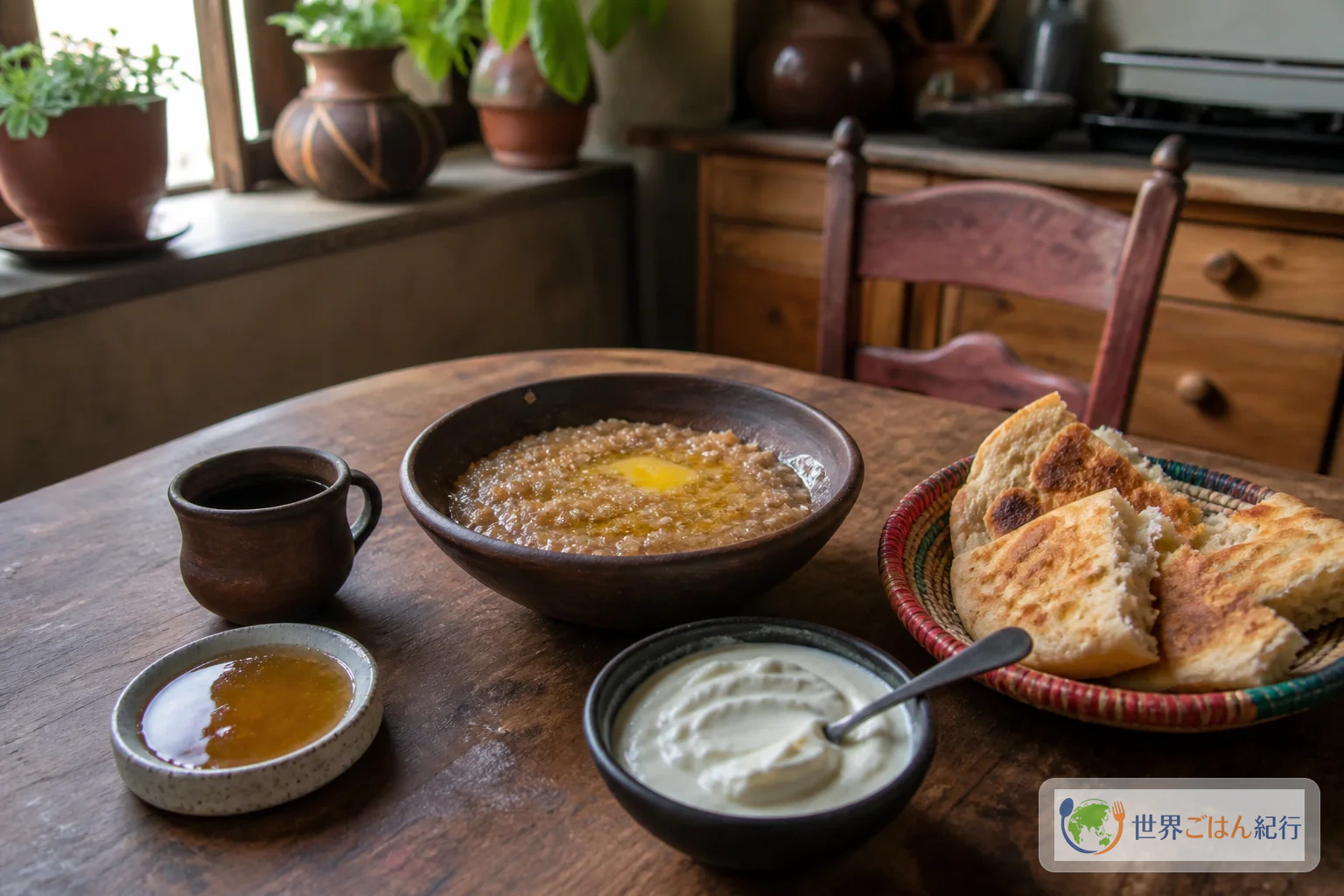
Background of kita firfir: the bread differs from the injera version
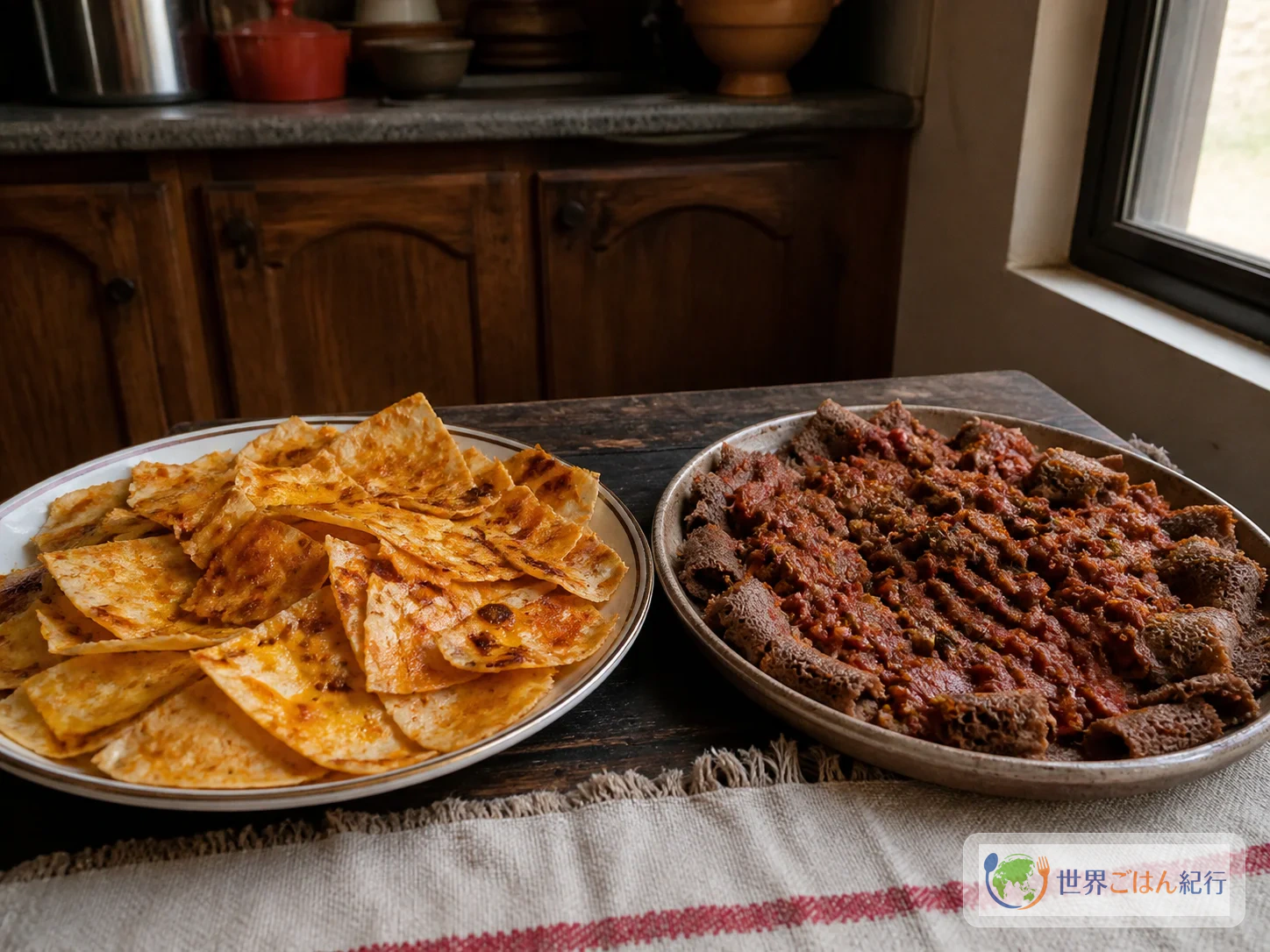
Chechebsa and firfir made with injera are both breakfasts in which a torn staple is combined with fat and spice, but they are not the same dish. Kita is a bread baked right after the flour is kneaded, so a baked surface and springiness remain. Injera is baked from a fermented batter, so it has sourness and fine bubbles, and becomes moist when it takes up tomato sauce. The article on firfir with injera covers the method of adding the bread last to a red tomato sauce.
Names and ingredients waver by language area, household and the grains available. A study of the food culture of the central Ethiopian highlands arranges how teff, maize, sorghum, barley and wheat are used differently by altitude and season. As the EthnoMed food culture material shows, a staple does not stand complete on its own; it builds the table together with stewed beans and vegetables, fermented foods and drinks. Chechebsa too, seen less as a fixed recipe of a particular shop than as the wisdom of bringing together the morning's bread and fat with spice, makes it easier to judge substitutes elsewhere.
There is also no single right blend of berbere. It is a mix centered on red chili with fenugreek, cardamom, cloves and so on layered in, but research reports that the number and combination of spices vary with taste, culture, region and availability. A survey in the Journal of Ethnic Foods also treats berbere as a food rooted in Ethiopian food culture, and records that its ingredients change by household and region. This is why, if you try to reproduce only the heat and replace it with ordinary chili powder, the aroma of chechebsa goes flat.
Niter kibbeh is a clarified butter infused with spices. On fasting days when dairy is avoided some households use vegetable oil, but fasting practice differs by church, household and individual. Rather than hiding the origin of ingredients and declaring it "the authentic taste," writing the butter version and the vegetable oil version separately is more honest to both the local table and your own circumstances.
Ingredients (serves 4): the thinness of the bread decides how the aroma gets in
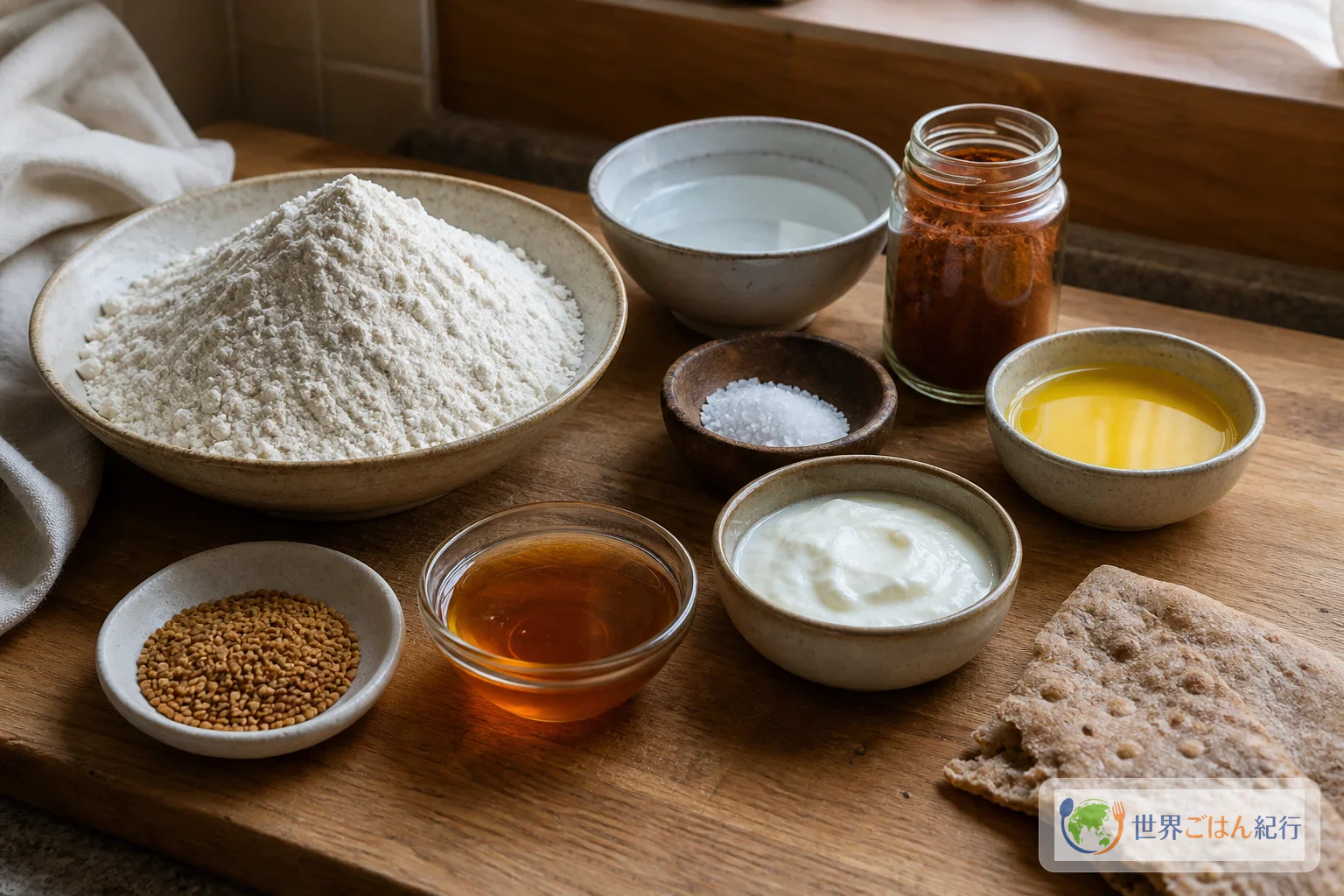
Do not make the kita too even in thinness; bake it to about 20 cm across. The thin parts are fragrant and the slightly thicker parts take up fat and keep their springiness, so the texture after tearing has range. The amounts below are for sharing among 4 people as breakfast.
Substitutes when you have no kita
In place of kita, thin pita, unsweetened flatbread or thin sourdough-style flatbread can be used. Using injera gives a sour firfir and changes the direction of the dish. Thick naan or sweet sandwich bread takes up oil only at the surface and tends to get heavy in the center, so they are not suited as a first substitute.
Berbere is used not just for heat but to carry a sweet spice and an earthy aroma into the oil. If you buy a ready mix, check the ingredients, the description of heat and the contents rather than the product name. If you try only a small amount the first time, getting berbere in a small packet lets you judge the difference in aroma better than substituting curry powder you have on hand.
If you have a wheat allergy, it becomes hard to get the same springiness with rice flour alone. A store-bought rice flour flatbread needs fewer adjustments to the dough, but check the label for wheat and dairy in the product. Niter kibbeh contains dairy, so replace it with vegetable oil if you avoid dairy. Berbere too can carry labels for contamination with wheat, sesame and tree nuts, so do not judge from the spice alone.
Method: build the color first, then let it take up the red oil
The resting time for the dough is needed so the flour absorbs water and becomes easy to stretch. If you combine the fat before baking the bread, the dough becomes slippery and hard to roll thin. Bake the kita first, let it cool, tear it, and combine it last with warm niter kibbeh and berbere.
Three forks that decide aroma and texture
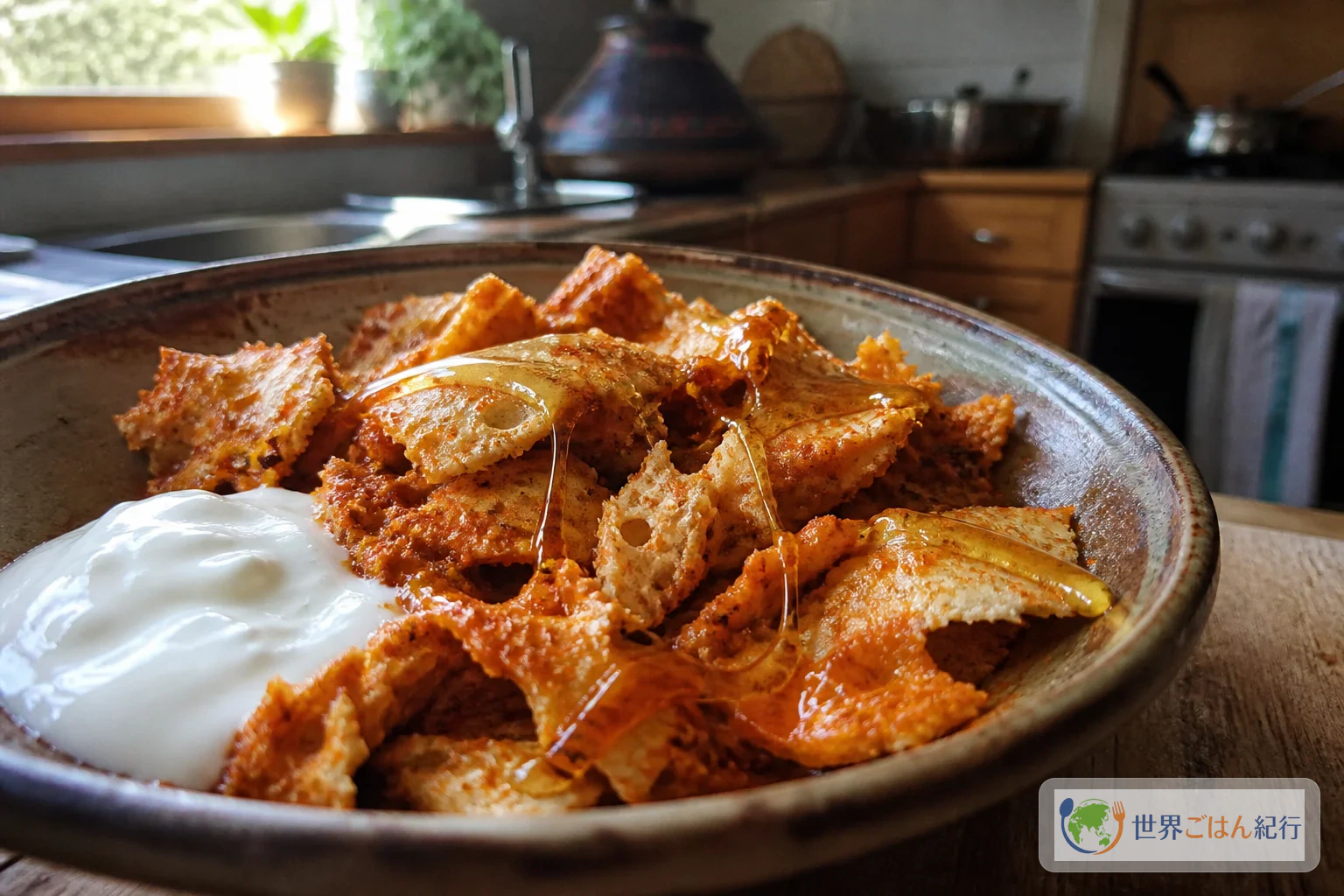
The temperature at which to add the berbere
Add the berbere right after the niter kibbeh melts. You do not need to heat it until it smokes. If you stir over low heat until the powder sinks into the oil and the red color spreads, the sweet aroma of the spice remains along with the sting of the chili. When it scorches, do not keep using it without washing the pan. The way to recover is to melt fresh fat in another pan and not carry over the scorched powder.
The size of the bread
Pieces of 2 to 3 cm take up fat easily and are a size easy to scoop with a spoon at breakfast. Mixing in a few pieces of about 5 cm leaves the texture of tearing with your teeth. Rather than cut everything to the same size, leave the baked edges and centers a little uneven.
When to drizzle the honey
Do not put honey in the pan; drizzle it after plating. If mixed in from the start, the sweetness spreads through everything and the aroma of berbere becomes hard to notice. For those who are weak with heat, rather than increasing the honey, making it with 4 g berbere and serving yogurt separately is easier to adjust.
Replacing things outside Ethiopia: aromas to keep, textures to let go
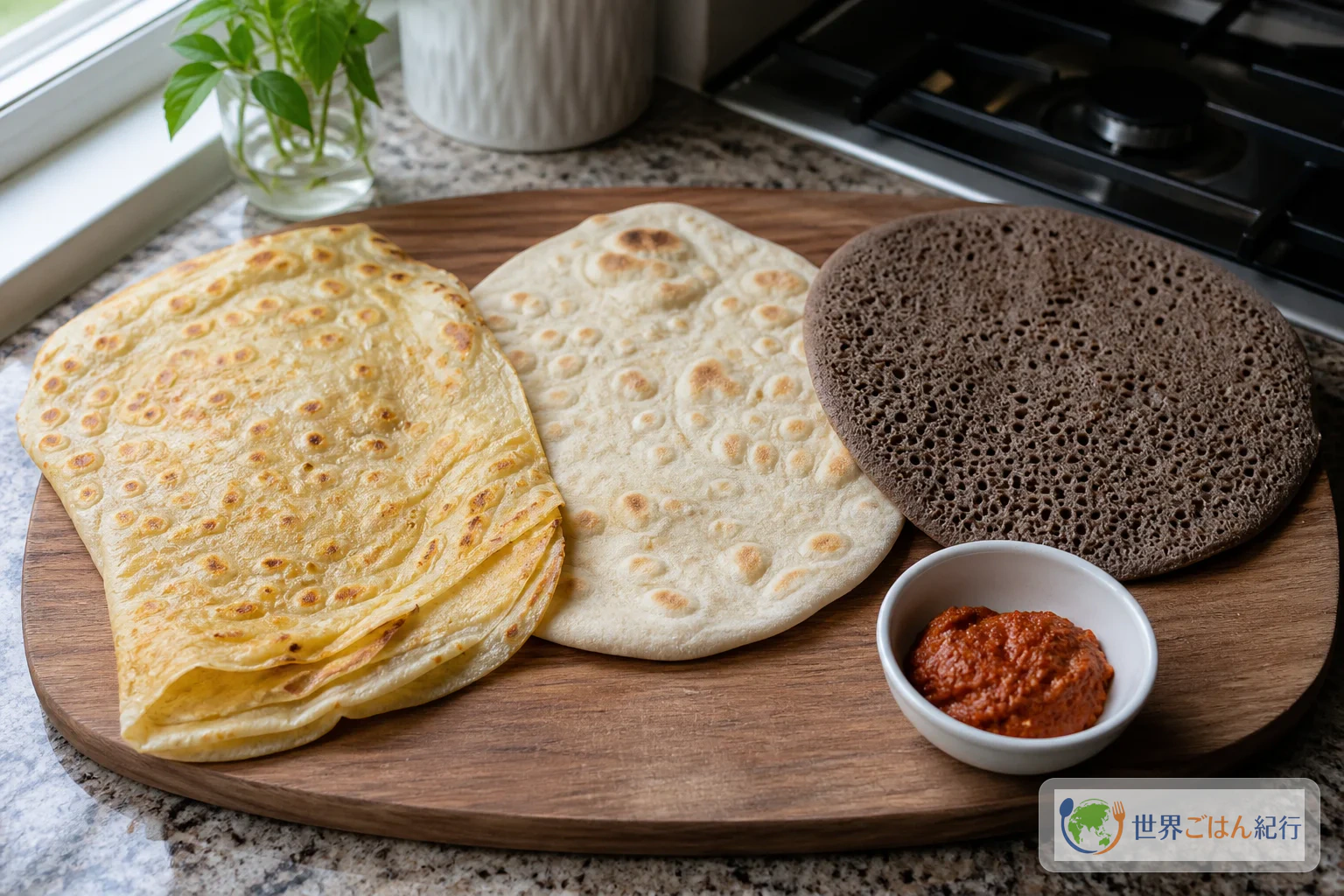
On days you have no time to bake kita from scratch, an unsweetened flatbread shortens the process. But for products that already have salt, make it without adding finishing salt. Store-bought bread has little color, so after tearing into 2 cm pieces, toasting 1 minute in a frying pan without oil brings back the toastiness.
If you use injera, think of it as a different dish. It has the sourness from fermentation, so reducing the honey and serving it with stewed tomato or beans brings it together. For the method, tear the injera into 3 to 4 cm pieces, blend the berbere and fat, and add it after turning off the heat. If you bake injera long, the sourness and bubbles are lost.
If you have no niter kibbeh, adding a little fenugreek to unsalted butter brings the direction of the aroma closer. If you also avoid butter, use a vegetable oil that is not strongly aromatic and give priority to not scorching the berbere. Switching the oil to olive oil brings a green aroma that Ethiopian food does not have to the front, so rice bran or canola oil is an easier first choice.
Fenugreek is a seed with a sweet aroma like maple syrup and a slightly bitter finish. Even 1 g transfers into the fat, so before increasing it, keep to the 30 seconds of heating. If you cannot find it nearby you can omit it, but substituting only curry powder makes it something different from the aroma of berbere.
If you will make Ethiopian dishes several times, it is worth having a little fenugreek on hand. On the other hand, if you make only this one plate, the aroma contained in a ready berbere mix is enough. When you choose a product, check the name of the seed ingredient, the contents and the storage method.
Five ways of eating that change the morning plate
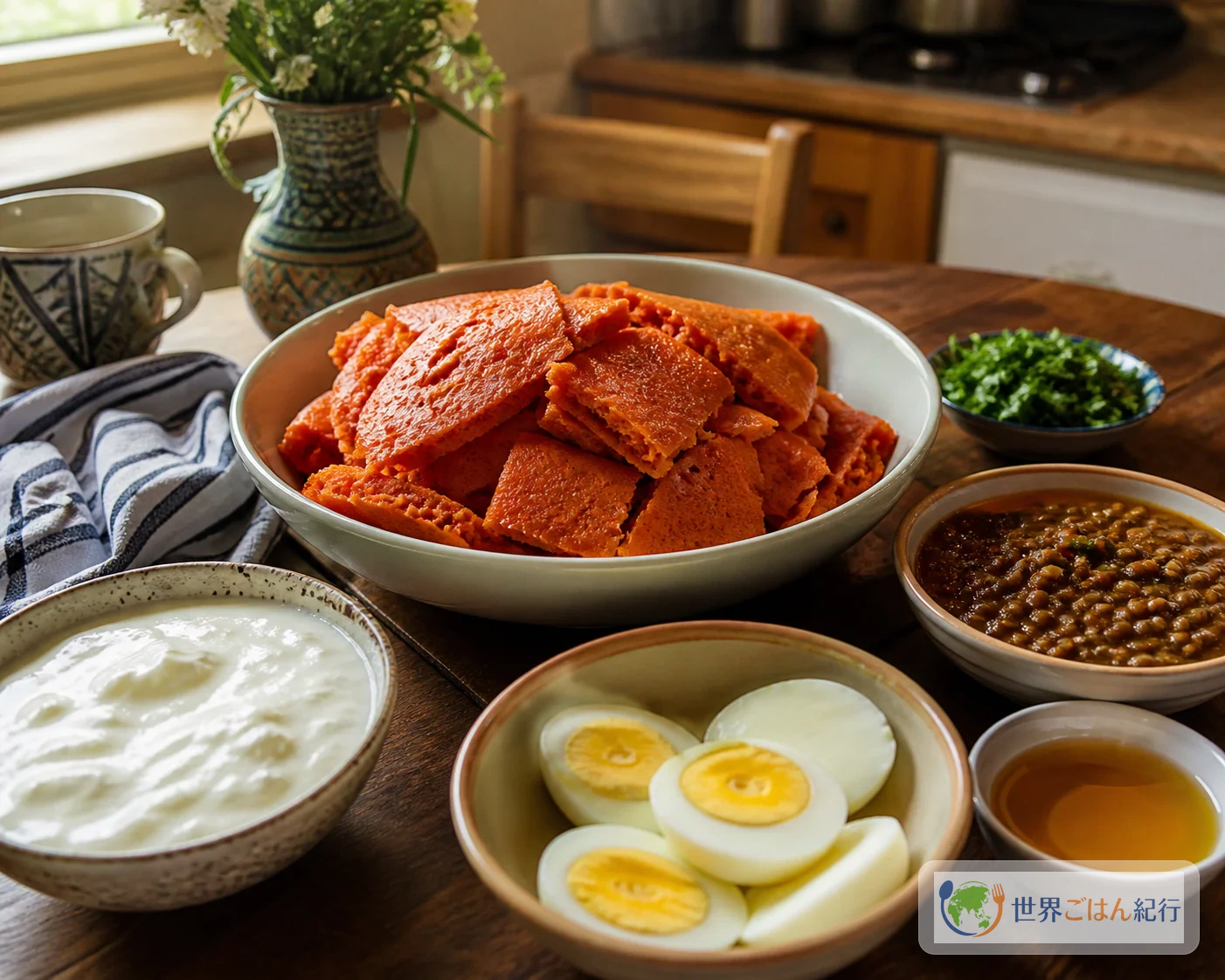
If the basic of letting the bread take up aroma stays the same, chechebsa can be adapted to the table by changing what is served with it. Rather than making several kinds at once, bake it first with the basic 7 g berbere and change just one thing the next morning, and the difference in bread and spice becomes clear.
1. Serve with egg
Hard-boil 4 eggs, cut them in half and serve 1 per person. Because they are not mixed into the pan, the whites do not get too deeply dyed berbere color, and they serve as a place to escape the heat. Ethiopian training material also shows an example of chechebsa served with egg.
2. Serve with yogurt
Put 30 g unsweetened yogurt per person on the side. Combined with honey it rounds off the heat, but mixed into hot bread it releases water, so combine a little at a time just before eating. If you avoid dairy, eat it without.
3. Serve with a bean stew
Serving 80 g per person of a stew of lentils or chickpeas increases the amount of the breakfast. If you use a stew that contains salt, reduce the salt in the chechebsa dough and finishing. Not mixing the beans into the bread but serving them alongside keeps the texture of the kita.
4. Reduce the honey and add cilantro
Halve the honey and serve about 2 g chopped cilantro per person. This is for people who do not like a sweet breakfast, but a strong green scent of cilantro hides the complexity of berbere, so start with a small amount.
5. A vegetable oil version with fasting in mind
Replace the niter kibbeh with 45 ml vegetable oil and serve without egg or yogurt. Ethiopian fasting differs by denomination, day and household, so one rule cannot be written as applying to everyone. The material on the food culture of the central Ethiopian highlands also explains that during fasting, animal foods are avoided and there are ways of eating that use oil and beans.
If you buy spices whole and grind them yourself, there is a way of adding small amounts of coriander and cumin as well as fenugreek. But if you change the berbere blend every time, it becomes hard to reproduce the heat of chechebsa. It is easier to work in the order of making a baseline taste with a store-bought mix first, then adding one aroma at a time. A small spice mill helps people who want to grind whole spices for just a few uses, but is not needed by those using a ready mix. Check the grinding mechanism and the amount it grinds at once.
Storing and reheating leftover chechebsa
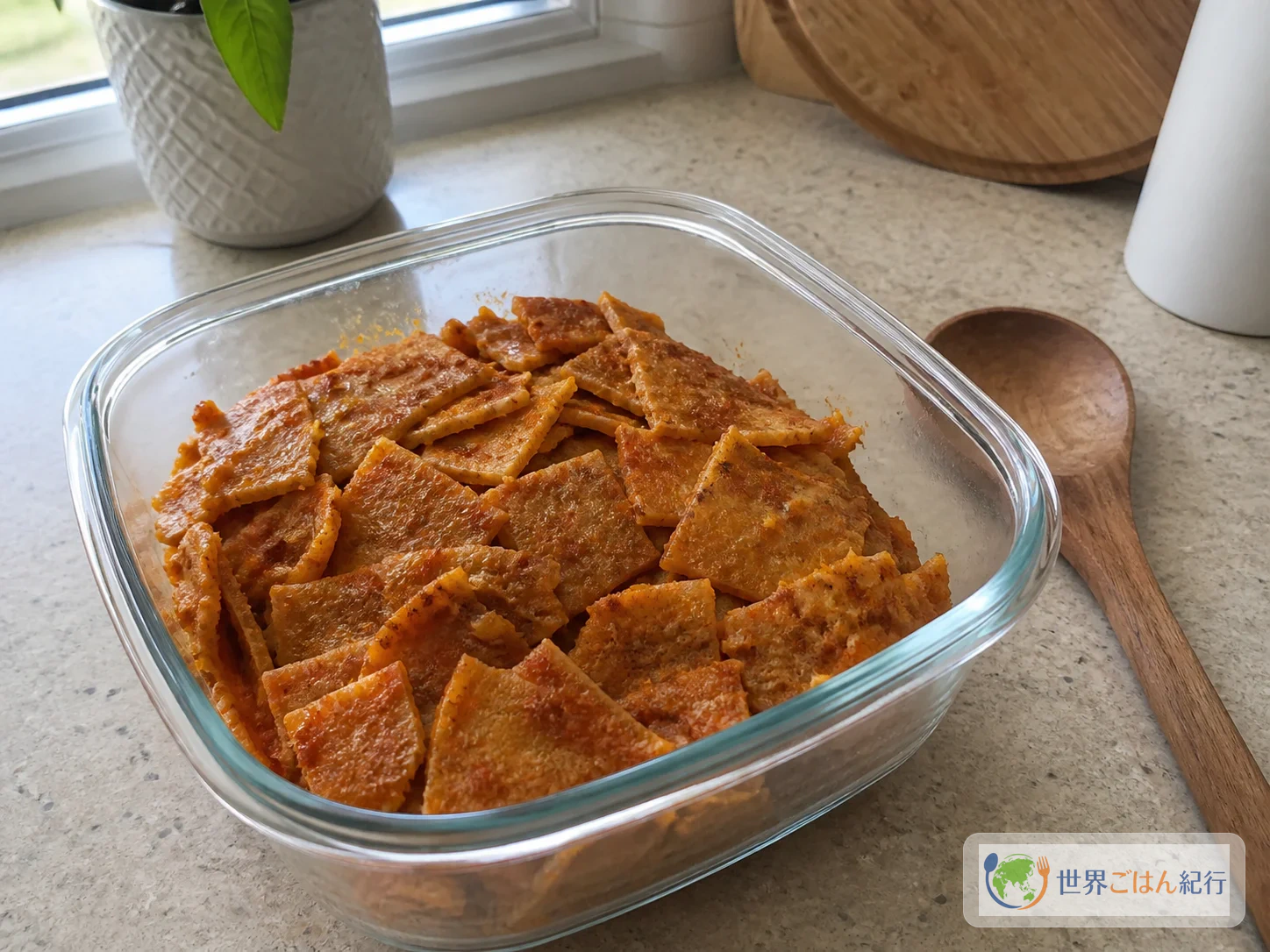
Chechebsa is a dish to eat while the corners of the freshly baked kita remain. Set aside any leftovers before drizzling honey or adding yogurt. Spread them in a shallow container, do not leave them long at room temperature, and refrigerate once the heat has gone off.
The guidance of the U.S. Department of Agriculture Food Safety and Inspection Service (USDA FSIS) advises refrigerating leftovers within 2 hours and using them up within 3 to 4 days once refrigerated. In a hot place, refrigerate in even less time. To reheat, put 15 ml water in a frying pan, cover and warm 2 to 3 minutes over low heat. When hot through to the center, remove the lid and drive off moisture for just 30 seconds. After refrigeration the texture tightens, so it does not return to the bite of freshly made.
If you freeze it, wrap flat one portion at a time and store without honey or yogurt. After thawing, add a little water and warm over low heat, but because the kita breaks easily, it is easier to handle by treating make-ahead as up to the next day in the refrigerator.
FAQ
Is chechebsa spicy?
It depends on the blend and amount of berbere. Start with 4 g and check the aroma at the stage where it has melted into the niter kibbeh. If you only want to lower the chili heat, reduce the berbere and add paprika. Rather than hiding the heat by increasing honey, adding a smaller amount from the start and adding more at the table keeps the aroma of the spice.
I can't bake the kita thin. What should I do?
Rest the dough 30 minutes, divide into 4, and roll one at a time. If it shrinks, do not force it by pulling; rest another 10 minutes. Matching the size of the frying pan, making them smaller than 20 cm and evening the thickness at 2 to 3 mm lets the heat reach the center.
Can I replace berbere with curry powder?
As a dish it can be made, but the aroma of fenugreek and cardamom will be weaker. As a stopgap, mix 4 g paprika, 2 g curry powder and 0.5 g cayenne and use only a total of 4 g at first. Next time, switching to a ready berbere lets you compare the aroma that is like chechebsa.
Is honey a must?
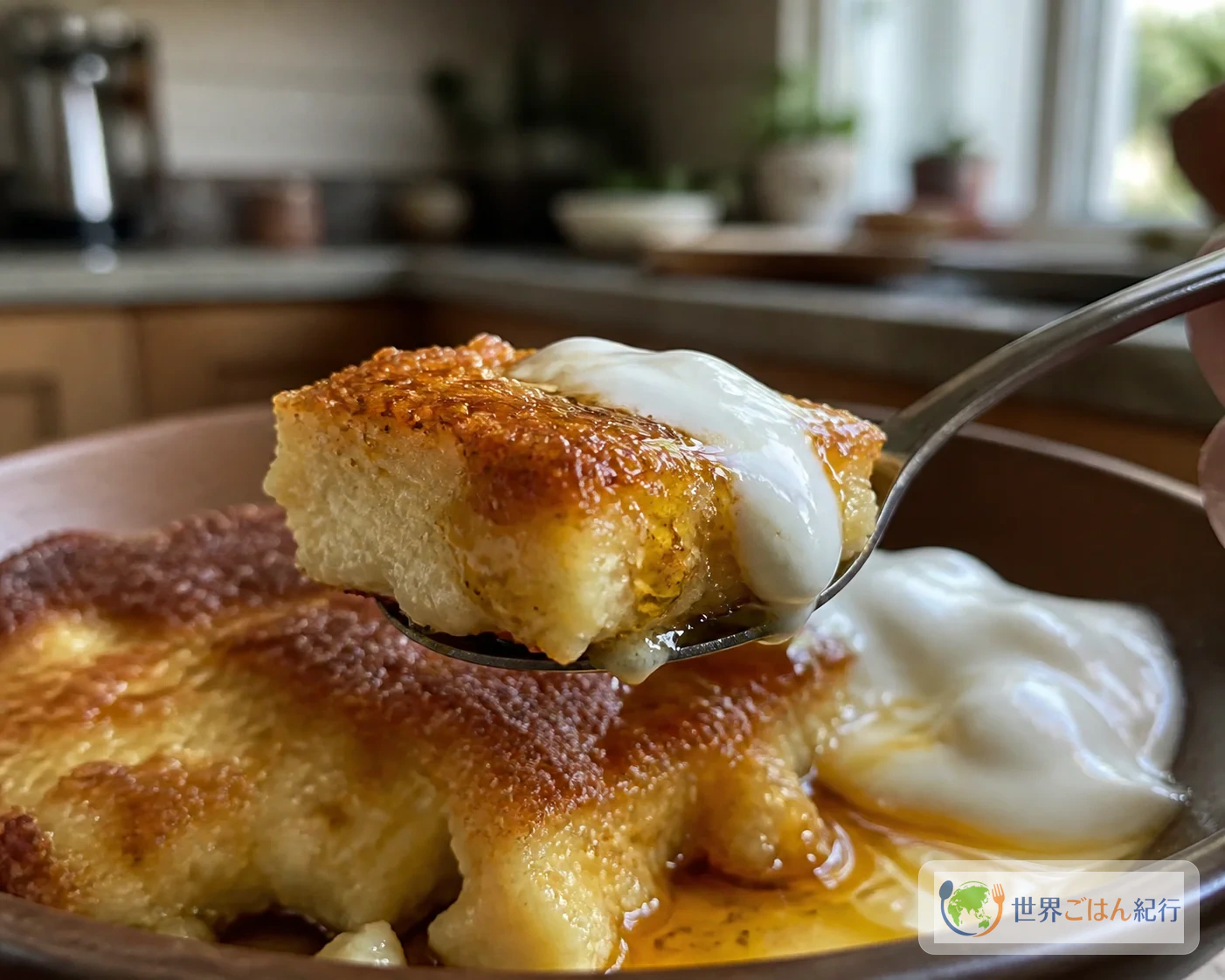
It is not required. A way of eating with honey is introduced, but there are households that eat it centered on salt and spice. For the first time, put the 40 g of honey for 4 servings in a separate container and let each person decide the amount, and you can separate preferences for heat and sweetness.
How is it different from firfir made with injera?
Chechebsa using kita keeps the baked spots and the springiness of wheat. The injera version has sourness from fermentation and becomes moist when it takes up the sauce. It is not a matter of one being right; the texture of the breakfast changes with the staple used.
If you make one more Ethiopian breakfast dish
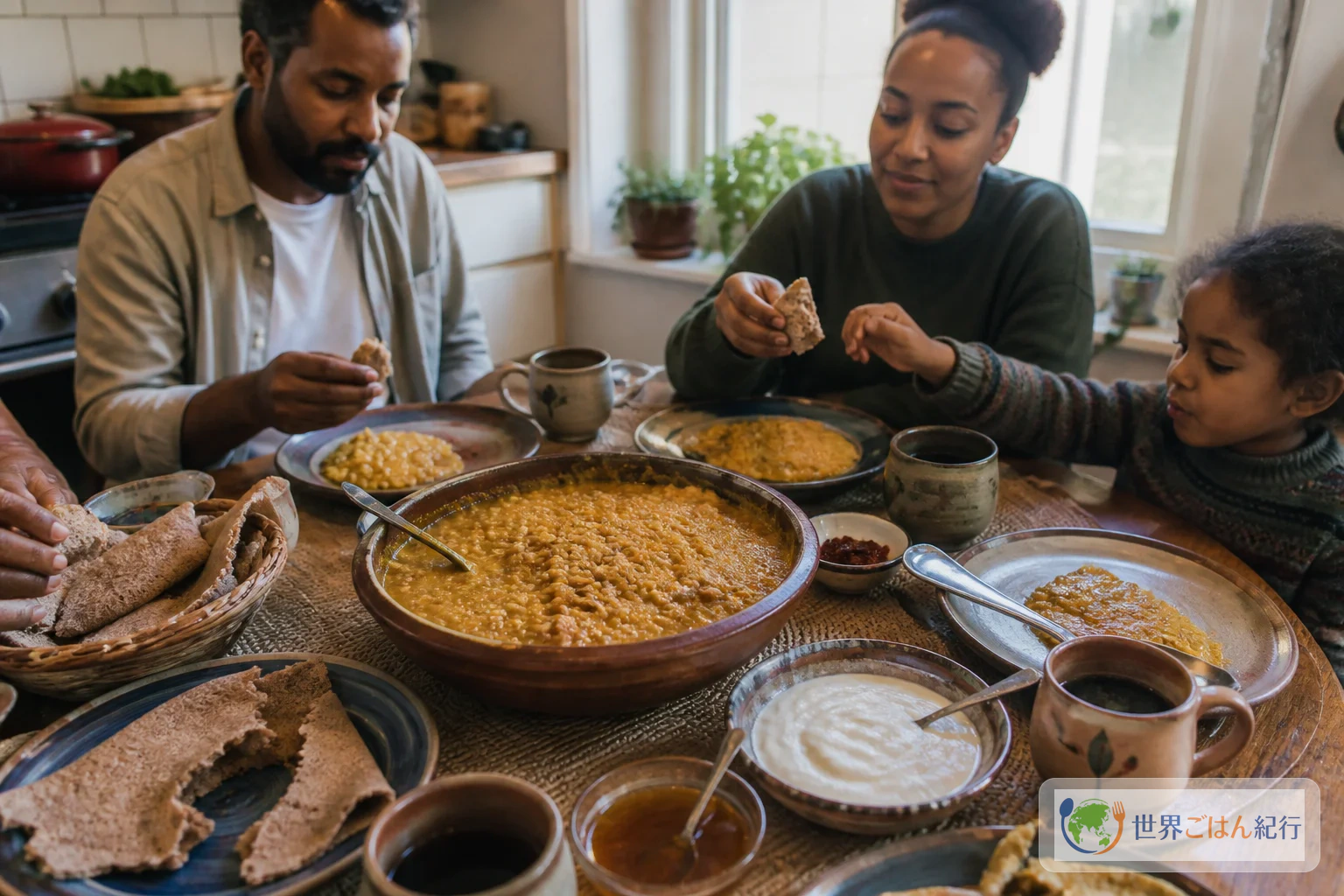
Once you have made chechebsa, you can treat berbere not just as a hot powder but as a seasoning that moves aroma into fat. Next, make firfir, which brings injera together with tomato sauce, and you see the difference in texture from the kita version. That is because a fermented staple and an unfermented flatbread, even in dishes close to the same breakfast name, differ in how long they take to receive the sauce.
The process of baking kita is also practice in reading the water of the flour and the strength of the fire. Take it out when brown spots appear on the surface, and combine the torn bread with the red oil for only a short time. If you keep to these two, you can extend it to a sweet morning with honey as well as a savory morning with egg or beans.
Sources
- Prepare Ethiopian Cereal and Vegetable Dishes (Ethiopian Ministry of Labor and Skills training material) (chechebsa, preparation of kita; accessed and checked 21 August 2026)
- Che'che'bsa - Ethiopian Review (the basics of baking and tearing a wheat dough and combining it with spiced butter; accessed and checked 21 August 2026)
- Chechebsa - Mesob Across America (resting the dough, baking time, handling of niter kibbeh and berbere; accessed and checked 21 August 2026)
- The Traditional Foods of the Central Ethiopian Highlands - EthnoMed (regional differences in grains, the table, fasting and ingredients; accessed and checked 21 August 2026)
- The role of indigenous spices in traditional foods of Ethiopia - Journal of Ethnic Foods (the makeup of berbere and differences by region and household; accessed and checked 21 August 2026)
- Day 6: Chechebsa - Ethiopian Sustainable Food Systems and Agroecology Consortium (chechebsa as breakfast and regional ways of eating it; accessed and checked 21 August 2026)
- Leftovers and Food Safety - USDA FSIS (safety guidance on refrigeration, storage periods and reheating; accessed and checked 21 August 2026)