A sweet meat dish changes the air at the table
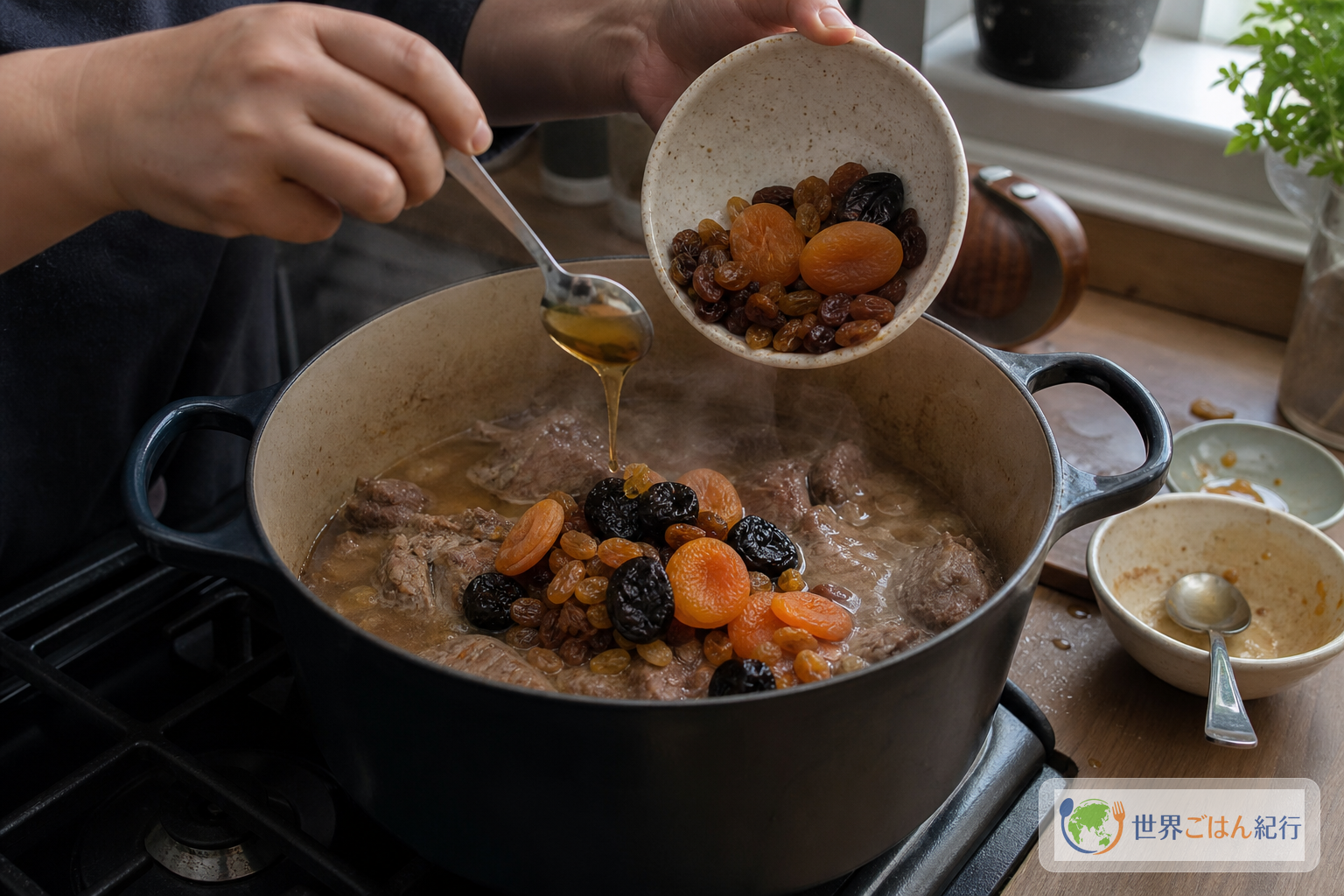
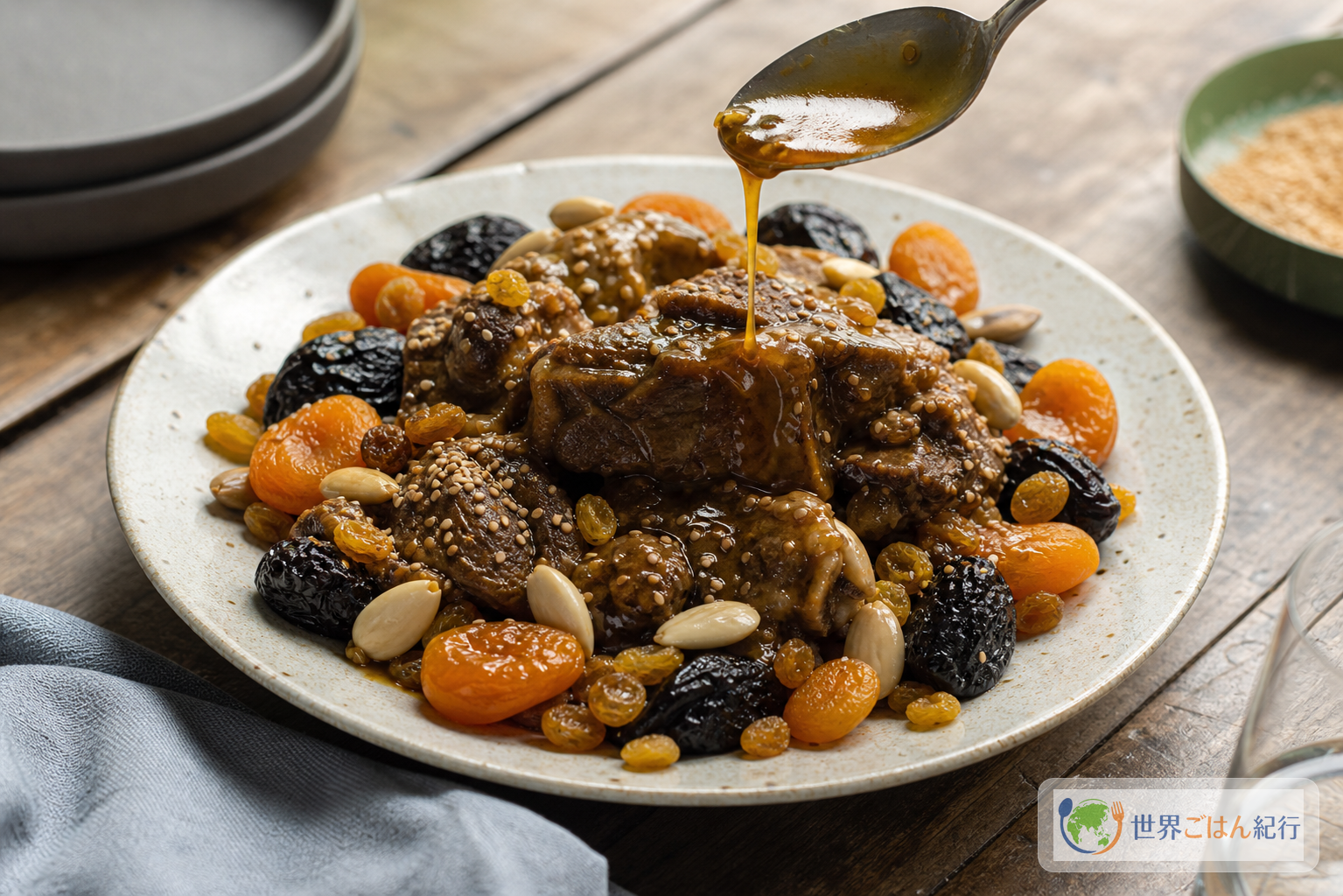
Lham lahlou (Tajine Lham-Lahlou / Lham Lahlou) is a sweet meat stew beloved in Algeria. Lamb is simmered with cinnamon and saffron, prunes, apricots, and raisins are added in the second half, and orange blossom water lifts the aroma at the end. Though it is a meat dish, it is easier to grasp as a small sweet plate set out in modest portions on a Ramadan table or at a celebration, rather than a salty main that drives you through rice.
What is easy to get wrong in a home kitchen is how much sweetness to keep, how to handle the lamb aroma, and when to take off the lid to reduce the sauce without breaking the fruit. Cutting the sugar drastically changes the character of the dish, but honey, lemon juice, and a floral scent let you pull it together without making it heavy.
The Arabic-derived name is often explained as meaning "sweet meat." In Algeria it is known as a sweet meat dish served at Ramadan tables, and by region and household it may include more prunes, or apricots, raisins, or apples. This article organizes quantities for a home kitchen, centered on prunes and apricots.
Ingredients (serves 4)
This dish uses lamb, dairy, almonds, and sesame. If you have a nut or sesame allergy, omit the almonds and sesame at the end. Cook the lamb thoroughly; if using a thermometer, confirm the center is well above 75°C.
Shopping and tool decisions
Lham lahlou doesn't have many ingredients. What is worth checking online or at specialty stores are orange blossom water, which is hard to find nearby, and saffron, where the aroma differs most. Check the doneness of the meat in the steps if you have an instant-read thermometer. Prunes, raisins, almonds, and honey are all available in the baking aisle of a supermarket.
Add the orange blossom water after turning off the heat. Boiling it loses the lightness of the flower and leaves only the weight of sugar and honey. Any leftover can go into the syrup of mhancha or basbousa (in Japanese).
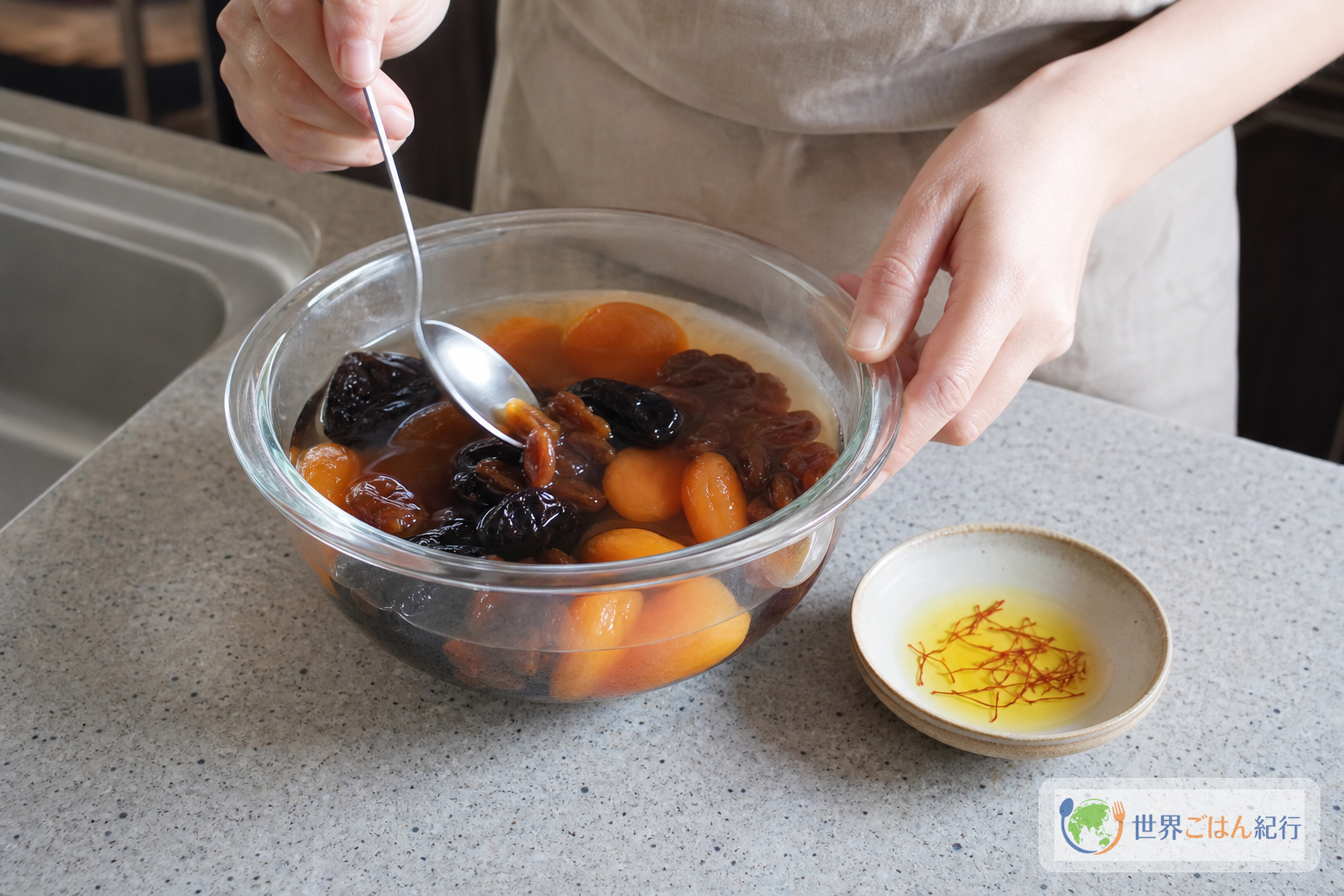
Saffron is expensive, so a pinch is enough. Rather than putting it directly in the pot for color, blooming it first in warm water around 40°C spreads even a small amount through the whole dish.
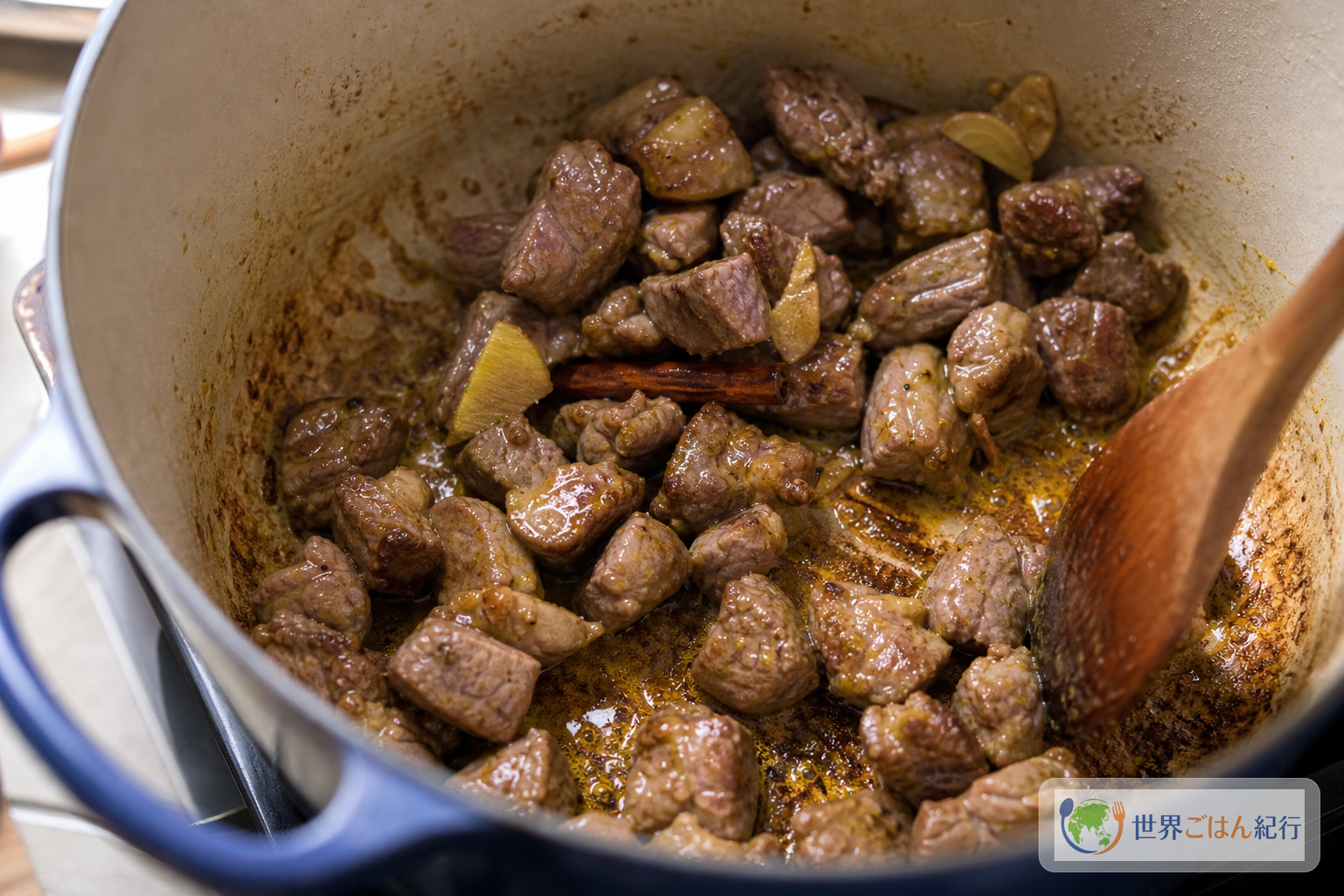
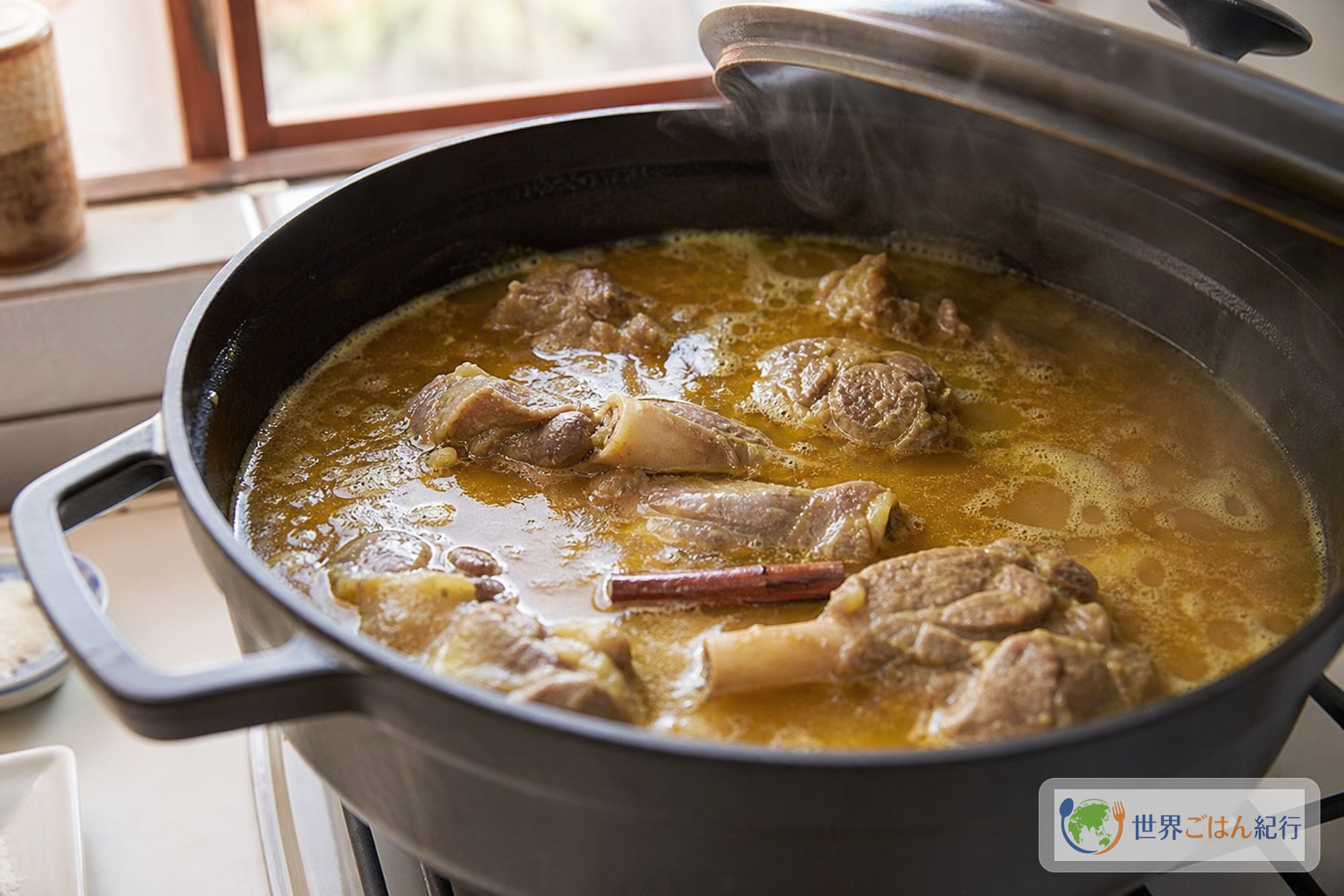
For lamb and mutton stews, it can be hard to judge the doneness of the center by sight. Even if you keep to the simmering time, the size of the pieces makes a difference, so a thermometer is reassuring for a first time.
Local table and cultural background
Lham lahlou is not just "sweet lamb stew." At an Algerian table, savory dishes, soup, bread, and sweet pastries connect loosely within one meal. It is often spoken of at Ramadan because the meal that breaks the fast begins with a warm soup, and alongside a heavy main there is a small plate with a sweet fragrance.
Cooking it at home, putting sugar in meat can feel strange. But the idea of wrapping meat in sweetness is not far from what happens with many sweet-savory braises. The difference is that the sweetness is carried not by the saltiness of soy sauce but by the aromas of cinnamon, saffron, flower water, and dried fruit.
Households differ greatly too: bring prunes forward and the sauce turns deep and black; add more apricots and it turns bright with acidity. Some households add apples or pears, and the moisture of the fruit makes it a little lighter. So this article keeps the first attempt centered on prunes and apricots and suggests adding other fruit from the second time on.
To eat in the flow of Algerian cooking, start with a soup such as chorba frik, a savory main of mtewem, and mhancha after the meal, and the movement between sweet and salty feels natural. Compared with Moroccan tagine, lham lahlou is sweeter and a dish eaten slowly in small amounts.
Regional differences and substitutions
| Direction | Fruit used | Result | Practical decision |
|---|---|---|---|
| Rich | More prunes | Dark sauce, deep sweetness | Doesn't reduce the meat; suits a day to eat a little |
| Lighter | More apricots and raisins | Brings tartness and bright sweetness | Easiest to eat on a first try |
| Table-friendly | A little apple or pear | Releases liquid and turns soft | Add in the second half of simmering; don't break it up |
| Closer to a sweet | More honey and flower water | Strongly scented, for after a meal | Serve in a small dish. Not as a main portion |
If you dislike lamb, it can be made with beef shank or beef chuck. But beef takes up sweet aromas strongly, so use a little less cinnamon and be sure to add orange blossom water at the end to keep the finish from turning heavy. Made with chicken it is tasty as a different dish, but the simmering time is shorter and the depth typical of lham lahlou weakens.
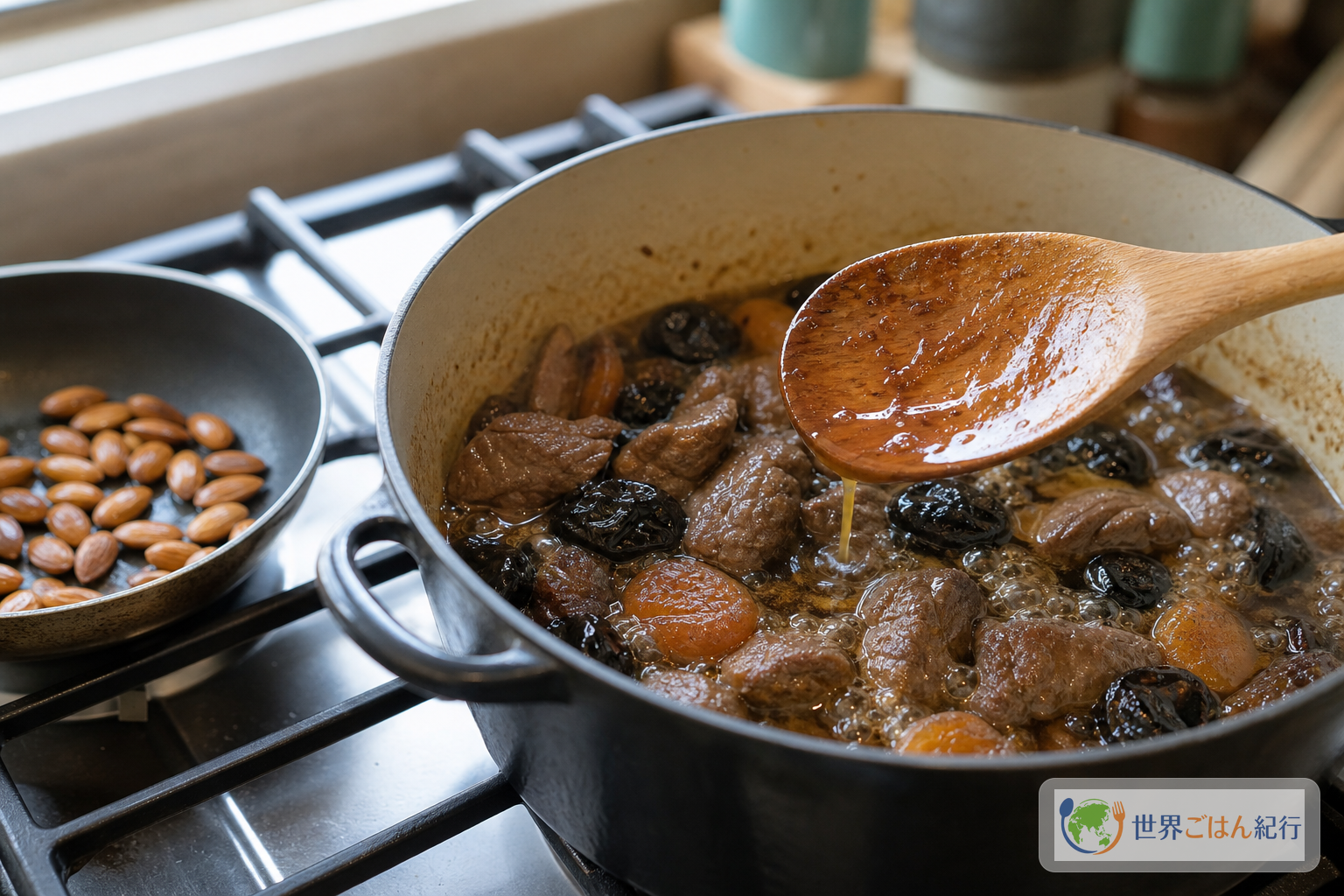
A dedicated tagine pot is not necessary. A heavy pot with a lid over low heat is enough at home. What matters: don't add the fruit from the start, take off the lid at the end to reduce the sauce, and don't boil the floral scent.
Common problems
| Symptom | Cause | Fix |
|---|---|---|
| Watery sauce | Lid not off long enough | Take out the meat first and reduce over medium-low heat for 3 to 5 minutes |
| Too heavy-sweet | Added too much sugar and honey | Add 1/2 tsp lemon juice and serve with flatbread or plain couscous |
| Fruit breaks apart | Added from the start, or stirred too much | Add the fruit in the second half and swirl the pot rather than stirring |
| Tough meat | Simmered too briefly, or heat too high | Add 100 ml water and simmer 15 more minutes on low |
| Perfumey aroma | Boiled the orange blossom water, or too much | Add it off the heat, up to 2 tsp. For more, a few drops at the table |
Putting in all the soaking liquid brings out the sweetness of the fruit but adds liquid. For a first time use only 100 ml and keep the rest to adjust if the sauce gets too reduced. Lham lahlou is not a stew you eat swimming in liquid but a dish where sweet sauce thinly coats the meat and fruit.
Storage and serving
Refrigerate for about 2 days. Cool completely and put the meat, fruit, and sauce together in an airtight container. The sauce alone may set first, so before reheating add 2 tsp to 1 tbsp water.
A small pot suits reheating. Warm over low heat for 4 to 5 minutes, until the sauce loosens and steam rises from the center of the meat. In a microwave, heat one serving at 600 W for 1 minute 30 seconds, stir, and add 30 seconds. With sugar and honey in it, leaving it on high heat scorches the bottom.
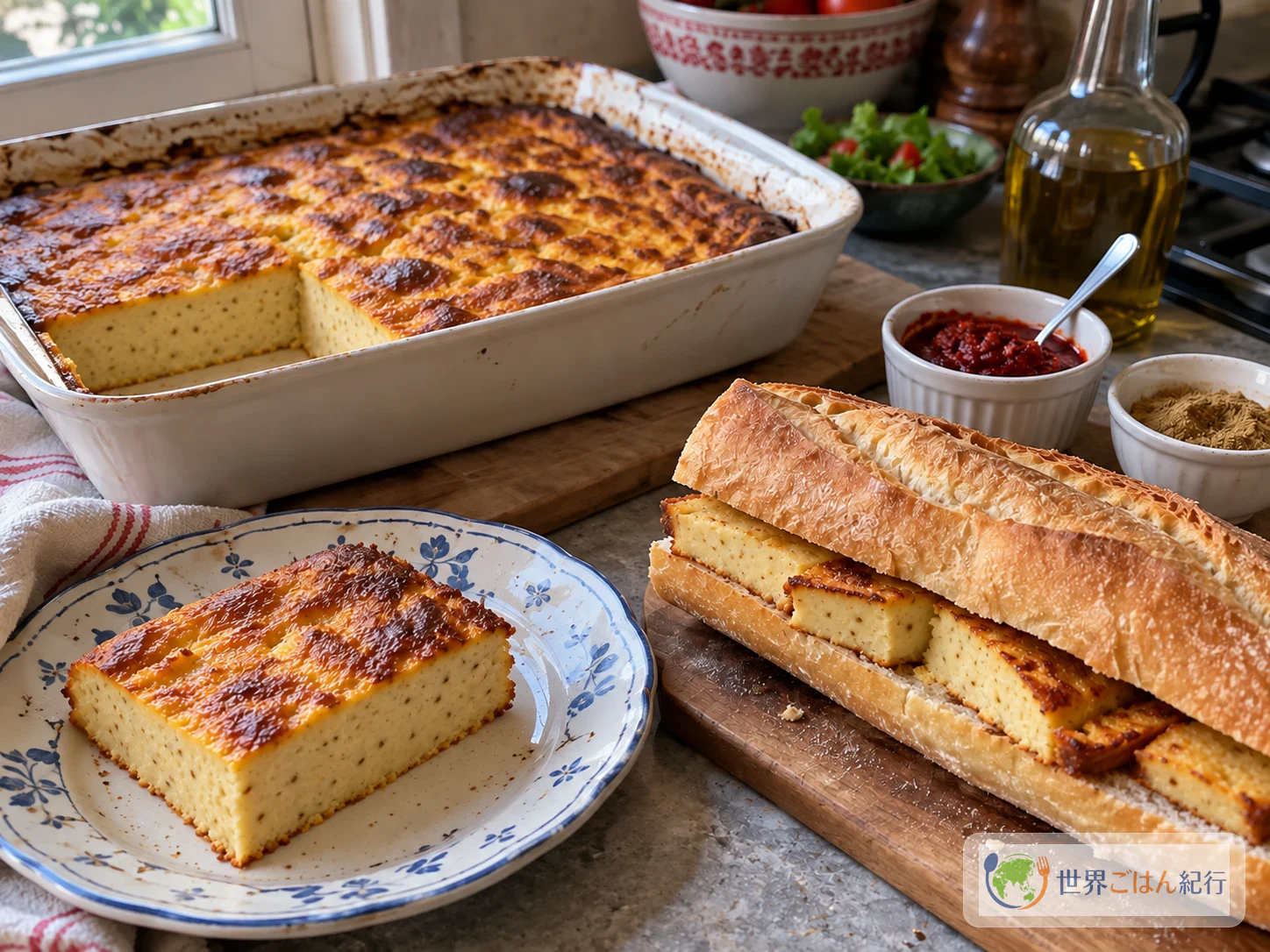
Eat small amounts, slowly. A rustic flatbread such as kesra can mop up the sauce, and plain couscous takes up the sweet sauce without turning heavy. With white rice, serve it in a small bowl alongside rather than pouring it over a full bowl.
FAQ
Can I make it with beef instead of lamb?
Yes. Beef shank, beef chuck, or stewing beef works. But beef can taste heavier than lamb, so go slightly lighter on cinnamon and add lightness with the orange blossom water and lemon juice at the end. Depending on the cut, the simmering time may run about 15 minutes longer.
Can I cut the sugar a lot?
A little. 35 g down to 25 g still holds together, but below that the gloss and sweet sauce typical of lham lahlou weaken. If you worry about sweetness, start with 25 g sugar and taste at the final reduction, adding honey 1 tsp at a time.
What if I don't have orange blossom water?
It isn't a complete substitute, but grating a small amount of unwaxed orange or lemon zest and adding it off the heat moves the aroma in the same direction. Citrus zest turns bitter easily, so start from about 1/4 tsp. The lightness when the floral scent goes in is the interesting part of this dish, so if you will make it again, a small bottle shows the difference.
Is it more local to leave out the salt?
There are versions that cut salt a great deal for a sweet meat dish. This article adds just 1/4 tsp so the meat flavor doesn't blur. It is easy to think of it this way: serve it without salt as a sweeter small plate, or with 1/4 tsp salt if eating it as a main.
References
- Wikipedia contributors. "Tajine Lham-Lahlou." https://en.wikipedia.org/wiki/Tajine_Lham-Lahlou
- Whats4Eats. "Lahm lhalou recipe." https://www.whats4eats.com/meats/lahm-lhalou-recipe
- TasteAtlas. "Lham Lahlou." https://www.tasteatlas.com/lham-lahlou