Edesi Isip: Coconut Rice Built on Smoked Fish, Not Sugar
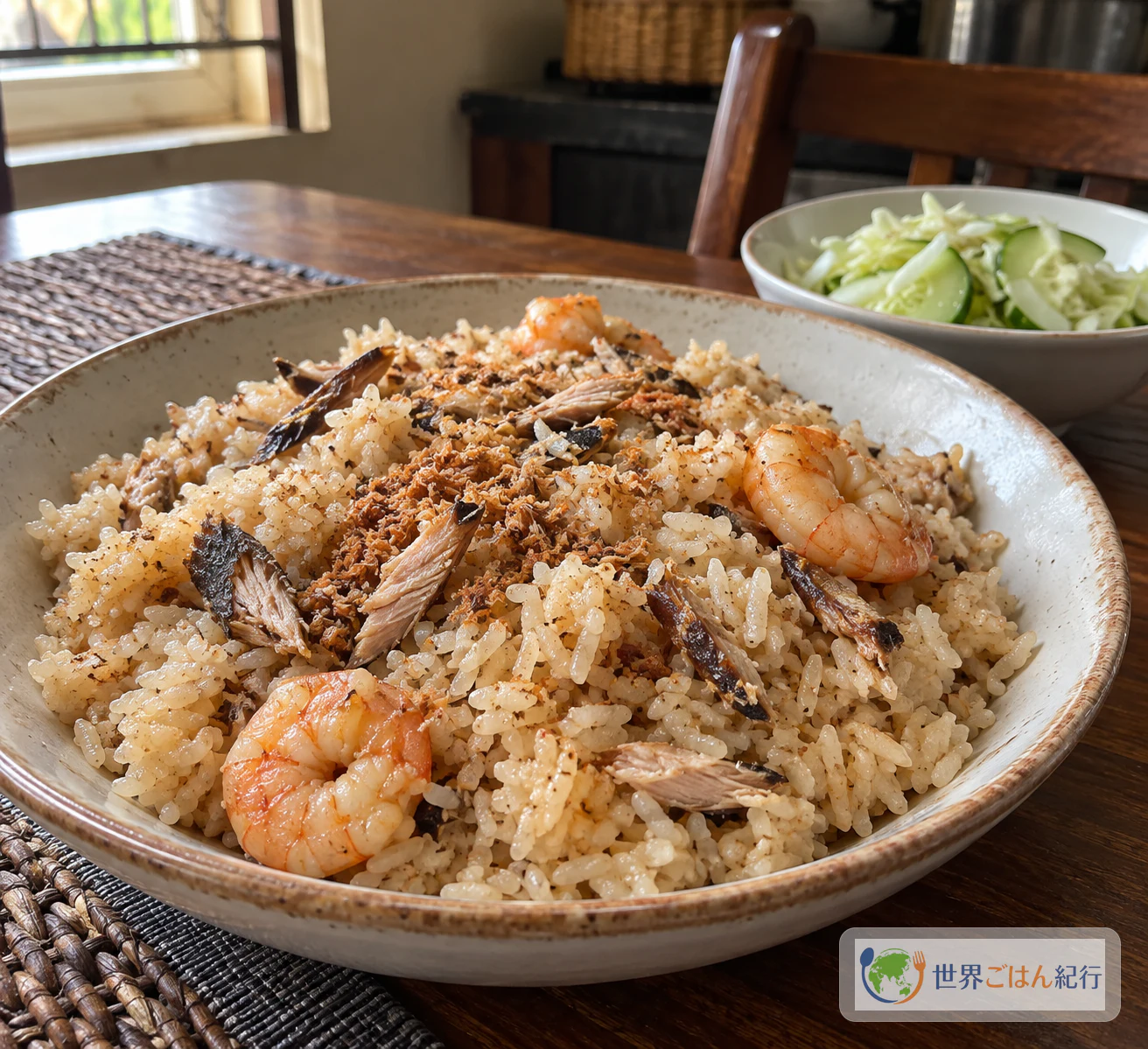
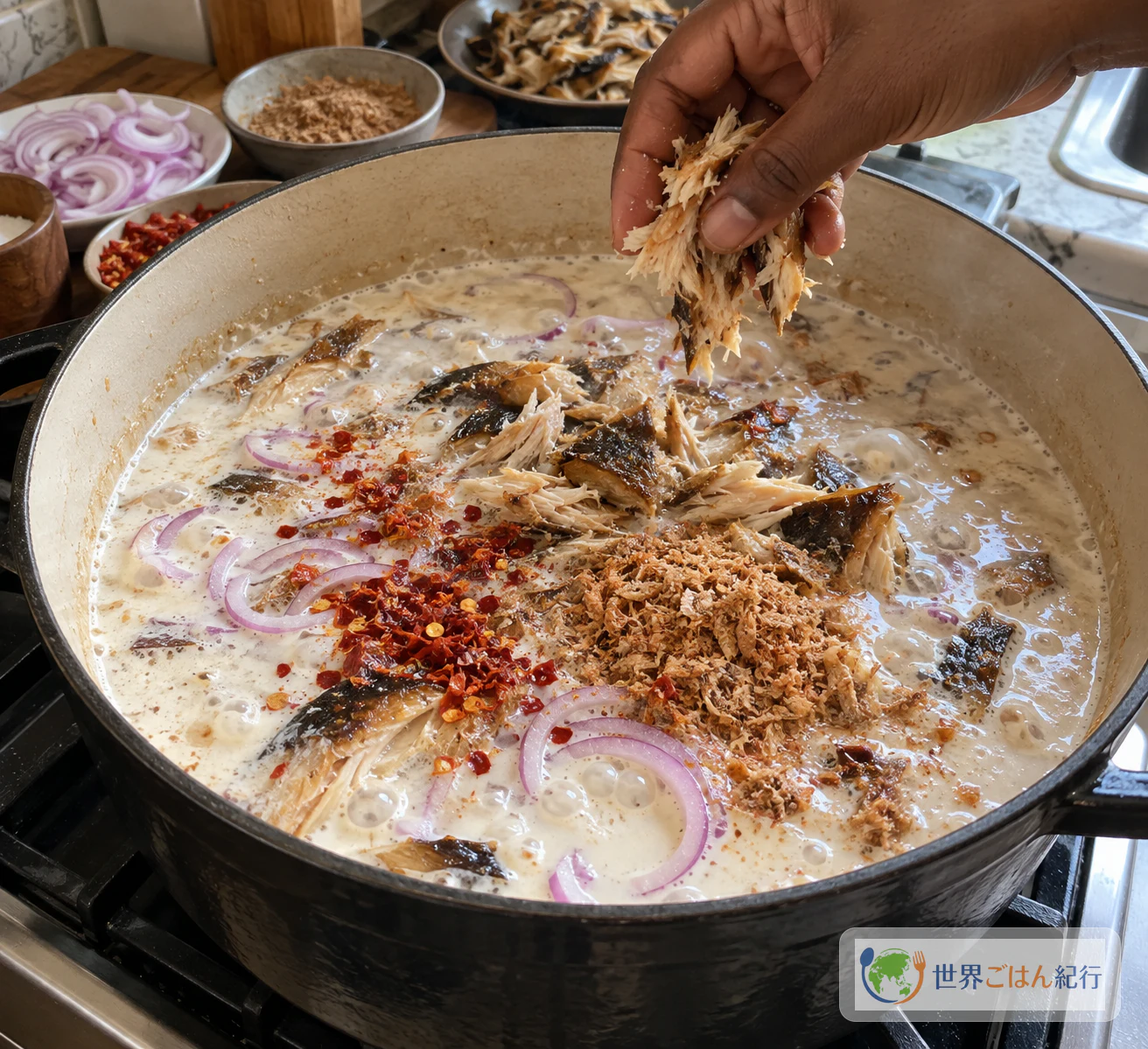
The aroma of coconut milk, the savory depth of smoked fish and ground smoked crayfish, and the sweetness of prawns. There is no tomato here: the rice stays pale, and the flavor comes from layering seafood into coconut.
"Coconut rice" can sound like a sweet side dish. Edesi Isip, as cooked in the Efik style, is something else: a full meal where freshly squeezed coconut milk carries smoked fish, ground smoked crayfish, prawns and onion into every grain. Iquo Ukoh of 1Q Food Platter presents it as one of the dishes that appear at functions and parties among the Efik of Calabar, and describes her version as deliberately tomato-free, letting crayfish and fish do the work.
This article follows that single six-serving recipe. It is one Efik household-style version, not the one standard coconut rice for all of Nigeria.
This recipe has not been kitchen-tested by Sekai Gohan. The amounts and order come from the recipe described above; judge doneness by the rice itself.
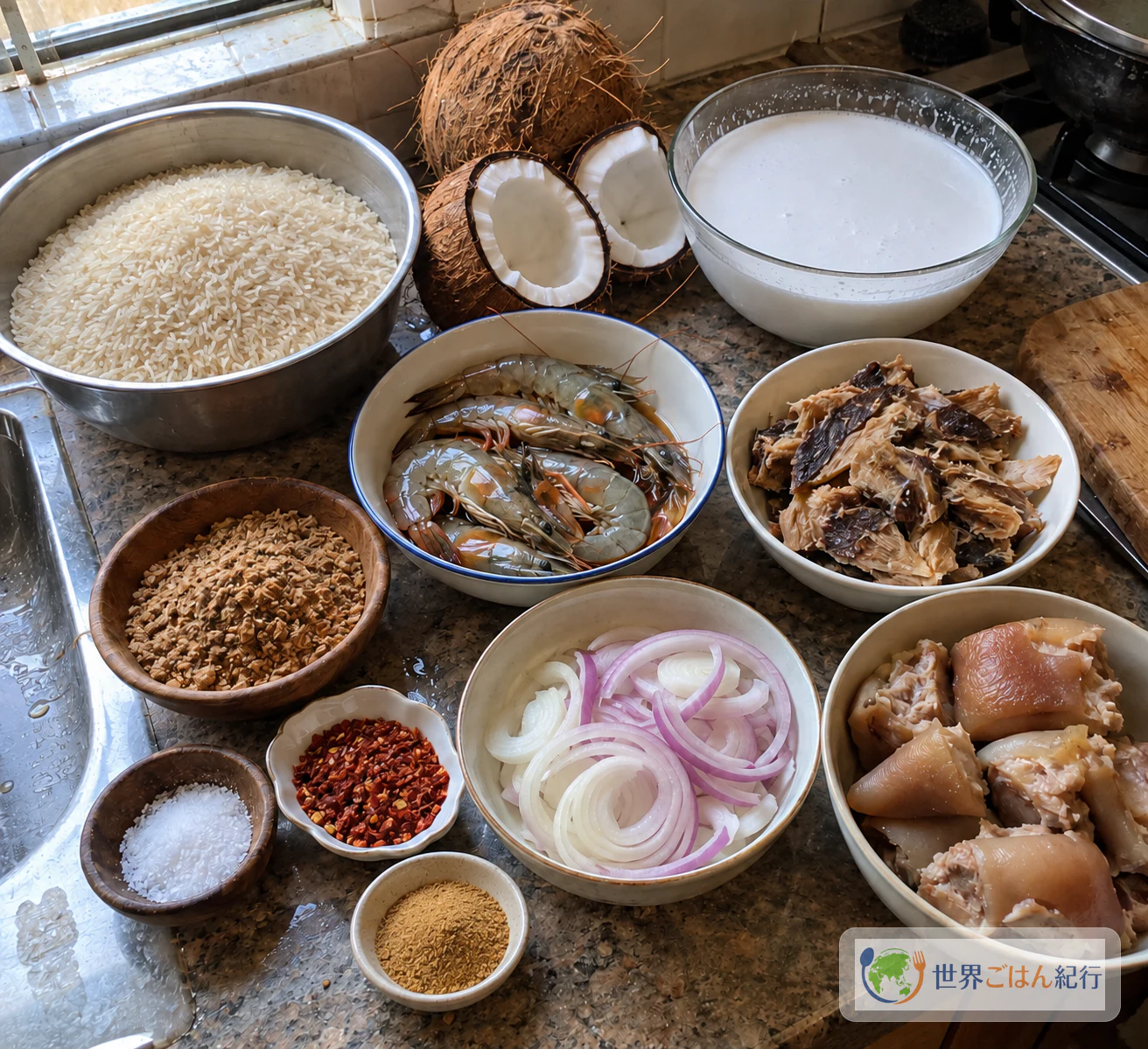
Ingredients (Serves 6)
Equipment
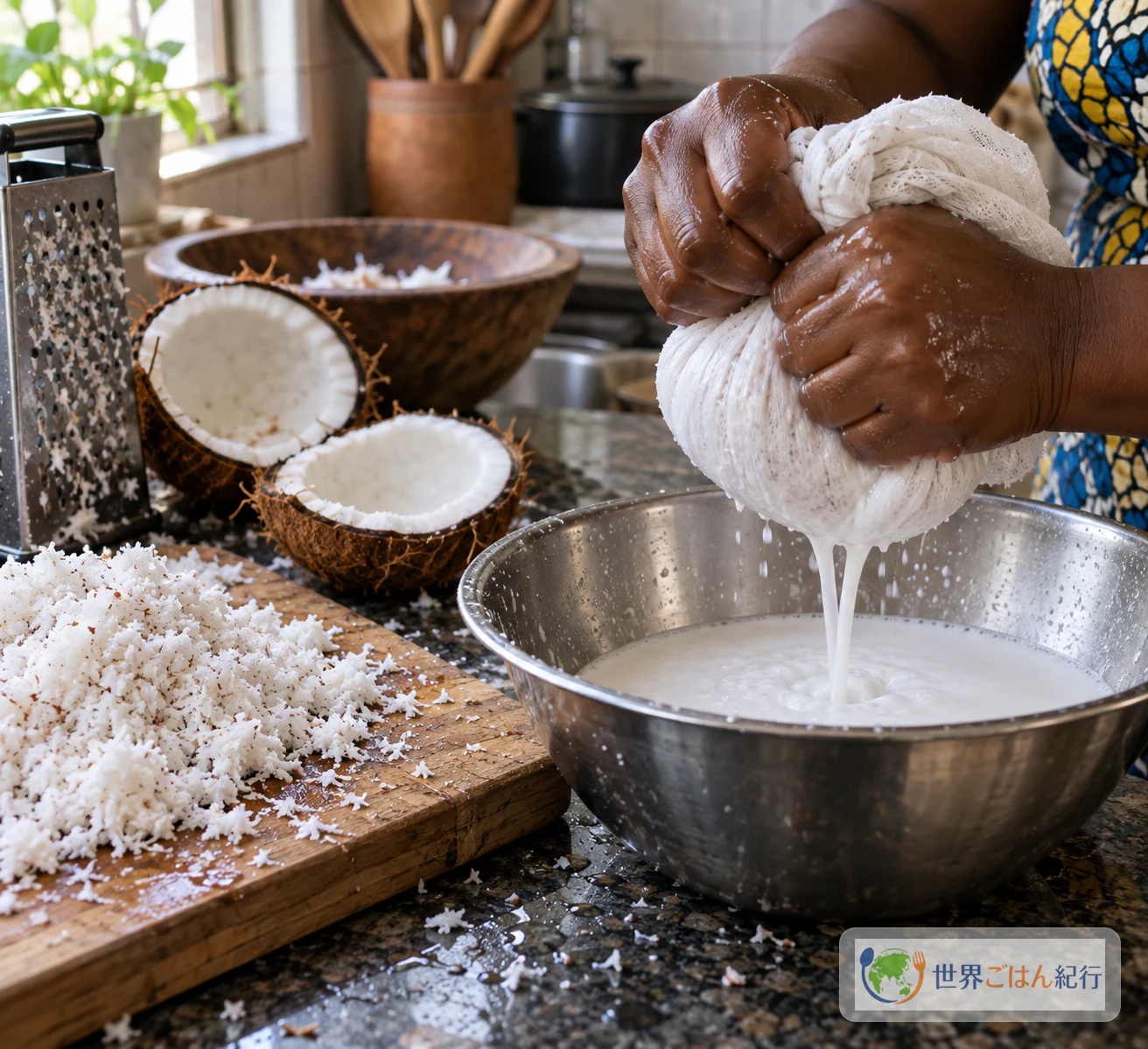
- Grater or blender, for the coconut flesh
- Fine cloth or strainer, for squeezing and straining the coconut milk
- Bowls, for the milk and the reserved extra
- A pot large enough for the rice and liquid
- A spoon, for checking the rice
This dish contains coconut, crustaceans (crayfish and prawns) and fish, and optionally pork. Check seasoning labels too, and keep shared boards, bowls and utensils in mind if anyone at the table has an allergy.
Choosing and Substituting Ingredients
Fresh coconut or canned? For a strong coconut aroma, use milk squeezed from fresh coconut; canned milk is a convenient alternative. Canned milk differs in thickness and aroma, so using the same amount will not necessarily give the same result. If aroma matters most, start from fresh coconuts; if time matters most, use canned and expect a different character.
Rice. The amount of liquid needed varies somewhat with the type of rice. Whatever rice you use, the reserved coconut milk is what lets you adjust.
Ground smoked crayfish and crayfish seasoning are two different things. Ground smoked crayfish is a powder of small smoked crustaceans and gives the dish much of its smoky shellfish depth; it is not simply the same as dried shrimp powder. Crayfish seasoning is a separate seasoning added to taste. If you cannot find either, the dish can still be made, but expect a lighter, less smoky flavor rather than a like-for-like swap. Don't replace crayfish seasoning with an arbitrary stock cube.
Smoked fish. Smoked fish varies in saltiness, so taste before salting.
Dry pepper. Heat levels vary between dried chili powders. Add it, taste, and adjust.
Prawns. Use fresh prawns. Frozen prawns are a practical option outside Nigeria; drain off the thawing water and accept a slightly different texture.
Pork feet are optional and go in already steamed. Use already-steamed pork feet, or leave them out.
How to Make Edesi Isip
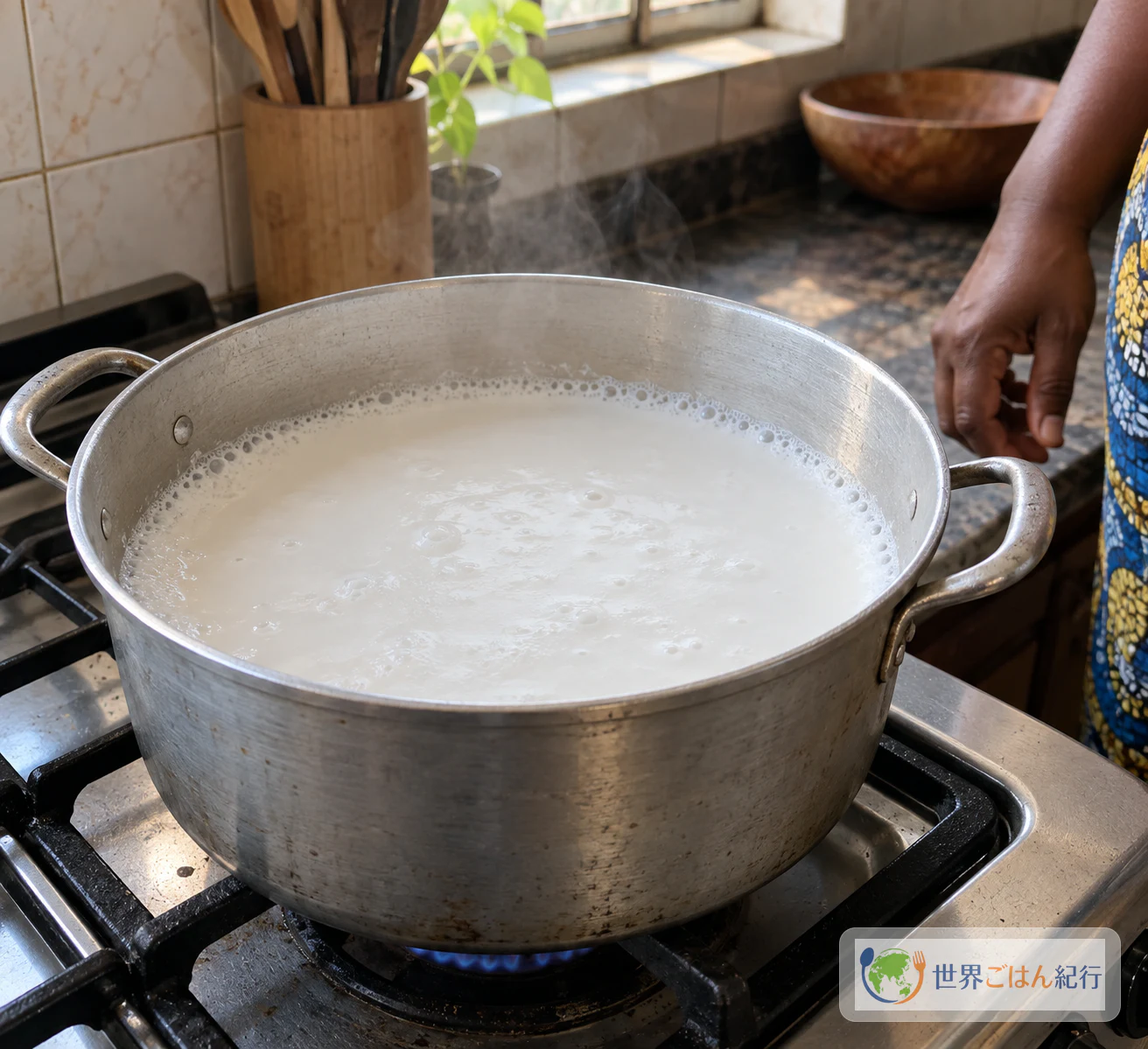
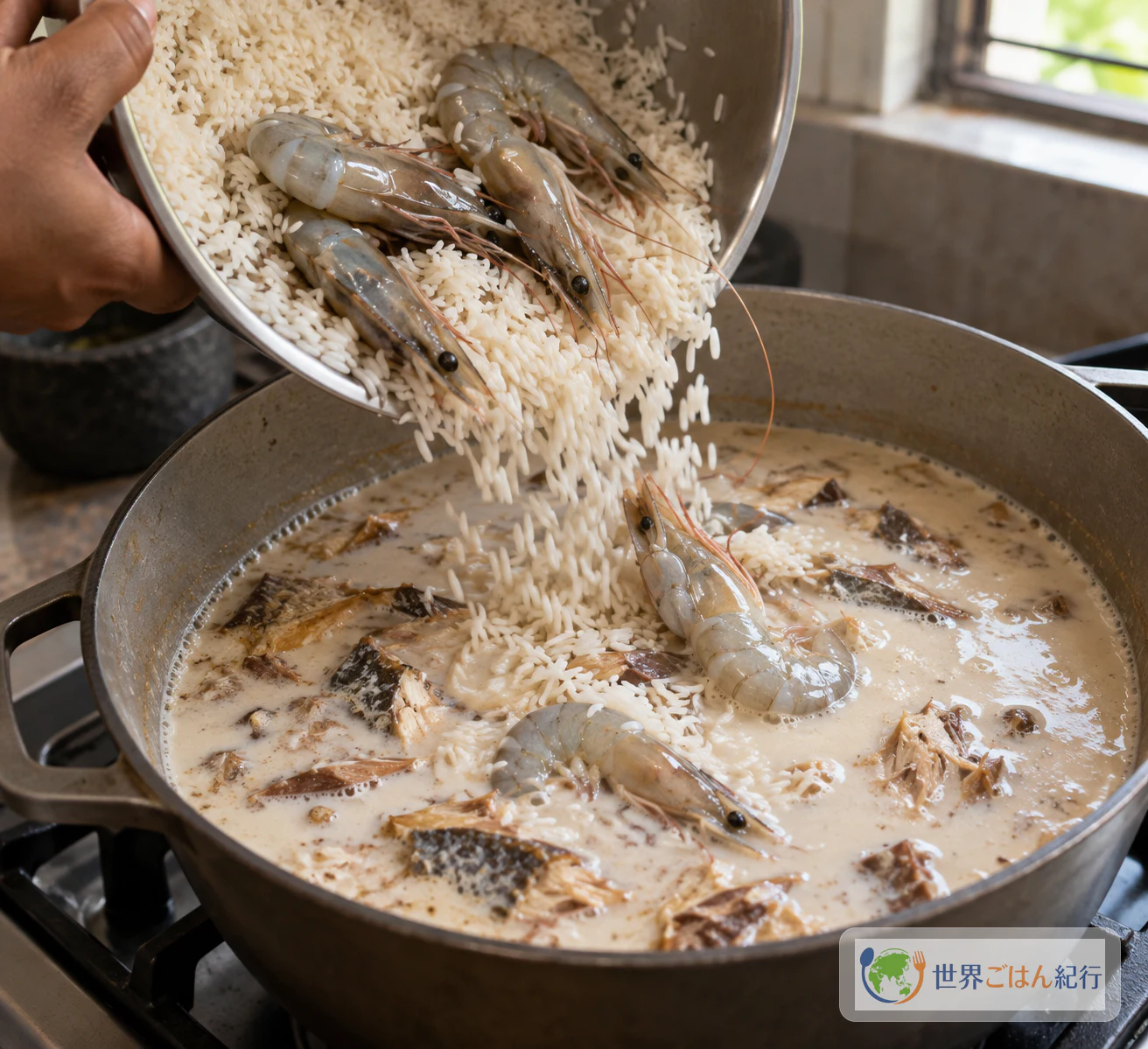
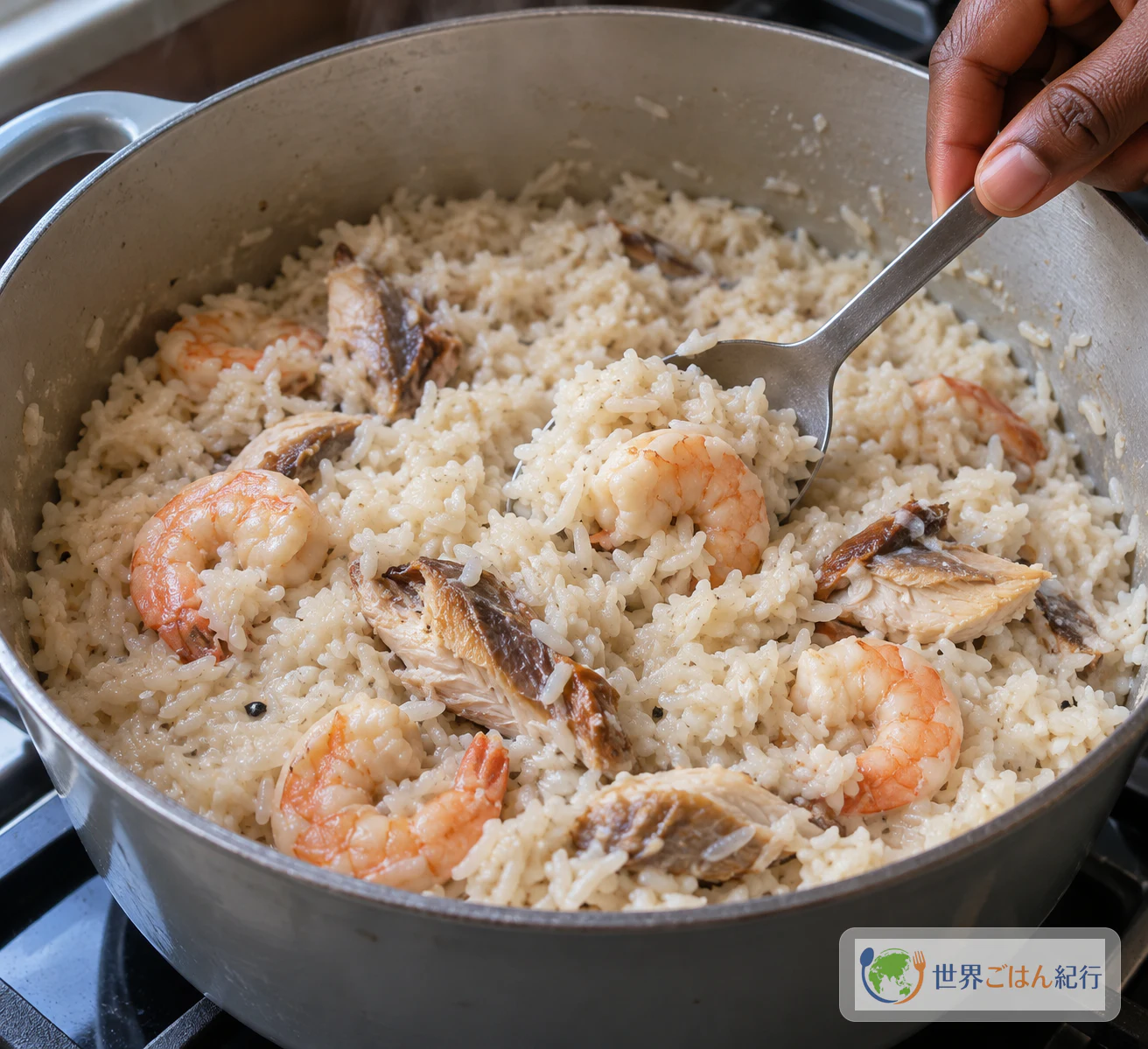
Keep the reserved coconut milk close to the stove. Decide when the rice is done by tasting it, not by the clock.
Troubleshooting
| Condition | Likely cause | What to do |
|---|---|---|
| The liquid is gone but the rice is still firm | Your rice needs more liquid than the recipe amount | Add the reserved coconut milk a little at a time and keep cooking |
| Too salty | Salty smoked fish or seasoning, plus salt added early | Next time, salt lightly in step 3 and adjust only at the end |
| Flat, not very savory | Little or no ground smoked crayfish or crayfish seasoning, or mild smoked fish | Adjust seasoning in small amounts; the smoky seafood is the heart of the flavor |
| Weak coconut aroma | Coconut milk with a milder aroma | Use fresh coconut when aroma matters most |
| Too hot | Strong dry pepper | Use less next time; pepper types vary |
Variations
These sit alongside the recipe rather than replacing it.
- Fresh or canned coconut milk. Fresh gives the aroma the author prefers; canned is the shortcut. Their thickness differs, so they are not interchangeable one for one.
- Seafood only. The pork feet are optional, so leaving them out gives a version centered on fish, crayfish and prawns.
- Milder or hotter. Change the amount of dry pepper to suit the table, tasting as you go.
- Salt to the fish. Let the saltiness of your smoked fish decide how much salt you add, rather than a fixed amount.
- Seasonal salad. Change the side salad with whatever vegetables are in season; the rice itself stays the same.
Edesi Isip at the Efik Table
Nigeria has many rice dishes, and Edesi Isip belongs to the Efik, whose cooking is closely tied to Calabar in Cross River State. In her recipe, Iquo Ukoh of 1Q Food Platter places it among the dishes served at Efik and Calabar functions and parties, and compares it to the place jollof rice holds for people in the southwest. That comparison is the author's own; the dish is not simply a tomato-free jollof. Where jollof is built on a red tomato base, this version keeps the rice pale and draws its depth from crayfish and fish.
The Nigerian newspaper The Pioneer, in a feature on the Efik kitchen, describes Efik food culture as using fresh and smoked fish and meat, seafood, herbs, spices and starchy roots, and portrays cooking and hospitality as important in Efik social life. The same feature names Edesi Isip among Efik rice dishes whose flavor depends on smoked fish, and notes that onions, though generally left out of many Efik soups, are used in pottages and rice dishes. That helps explain why onion appears in this recipe while tomato does not, though it is one feature's description rather than a rule for every Efik dish.
The dish also travels with the community. In 2016, The Sun Nigeria reported on an Efik community gathering in Abuja, where residents, friends and families came together to share language and culture, and coconut rice (spelled eresi isip in that report) was among the Efik foods on display. It is one example of the dish standing for Efik identity away from home, not evidence that Edesi Isip is only ever ceremonial.
Frequently Asked Questions
Can I use canned coconut milk?
The recipe author mentions canned milk as a possible convenience, but prefers fresh coconut milk for its stronger coconut aroma. Canned milk differs in thickness and aroma, so the result will not be identical.
Do I need tomato?
Not for this version. The Efik-style recipe followed here is tomato-free by design. Other Nigerian coconut rice recipes may differ, so this should not be taken as a rule for all of them.
Are the pork feet necessary?
No. They are optional, and when used they go in already steamed. The recipe does not describe how to steam them.
How long does the rice take to cook?
No cooking time or heat level is given. The recipe's endpoint is rice that is soft with the liquid dried up, and the time depends on your rice and pot. Keep checking, and use the reserved coconut milk if the rice needs more liquid.
Can I make it ahead and store leftovers?
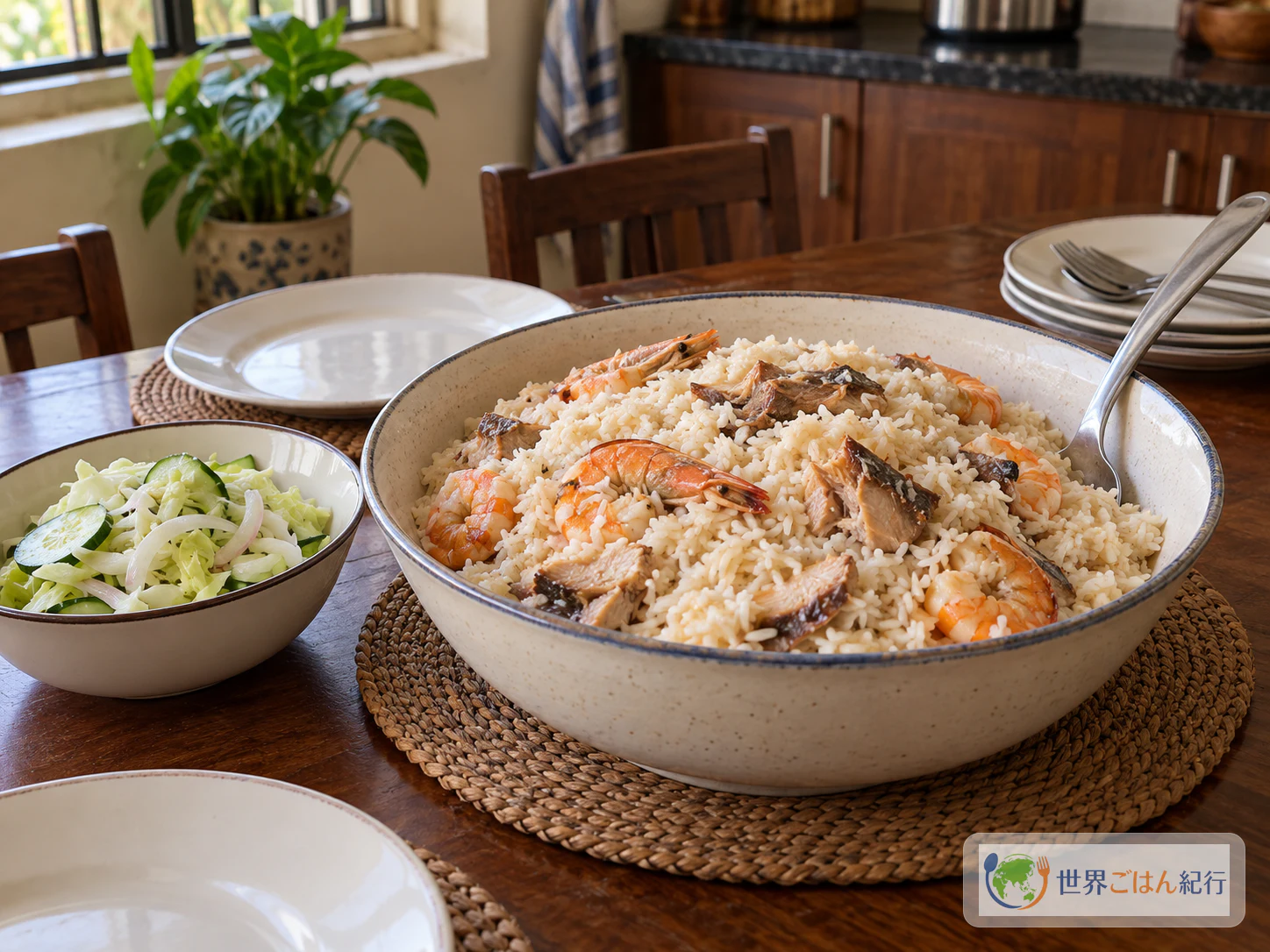
The sources used for this article give no storage times or temperatures for Edesi Isip, so none are given here. The recipe itself suggests serving it warm.
Why is it spelled differently in some places?
Both Edesi Isip and eresi isip appear in Nigerian writing. This article uses Edesi Isip, the spelling in the recipe it follows; The Sun Nigeria's report uses eresi isip.
Sources
- Iquo Ukoh, 1Q Food Platter, "Edesi Isip (Efik Style Coconut Rice)." The recipe followed in this article: six servings, all ingredient amounts and units, coconut milk extraction, order of additions, the roughly 2-minute seasoning boil, the doneness endpoint, reserving extra coconut milk, and serving warm with a vegetable salad. Also the source for Edesi Isip as an Efik (Calabar) dish at functions and parties, the tomato-free approach, the preference for fresh coconut milk, and the jollof comparison. https://1qfoodplatter.com/edesi-isip-efik-style-coconut-rice/
- The Pioneer (Nigeria), "Secrets Of The Efik Kitchen." Efik food culture's use of fresh and smoked fish and meat, seafood, herbs, spices and starchy roots; the importance of cooking and hospitality; onions used in rice dishes though generally left out of many soups; and Edesi Isip among Efik rice dishes flavored by smoked fish. https://pioneernewsng.com/secrets-of-the-efik-kitchen/
- Juliana Taiwo-Obalonye, The Sun Nigeria, "Culture, language unites Efiks in Abuja." A 2016 Efik community gathering in Abuja where cuisine and language were shared, with coconut rice (eresi isip) among the foods displayed. https://thesun.ng/culture-language-unites-efiks-in-abuja/