Domoda: A Peanut Sauce That Thickens Slowly Around Beef and Pumpkin
Keep the peanut butter smooth and unsweetened, add the pumpkin only after the beef has had its first simmer, and judge the finish by tender beef, soft pumpkin and a fully heated center, not by the clock alone.
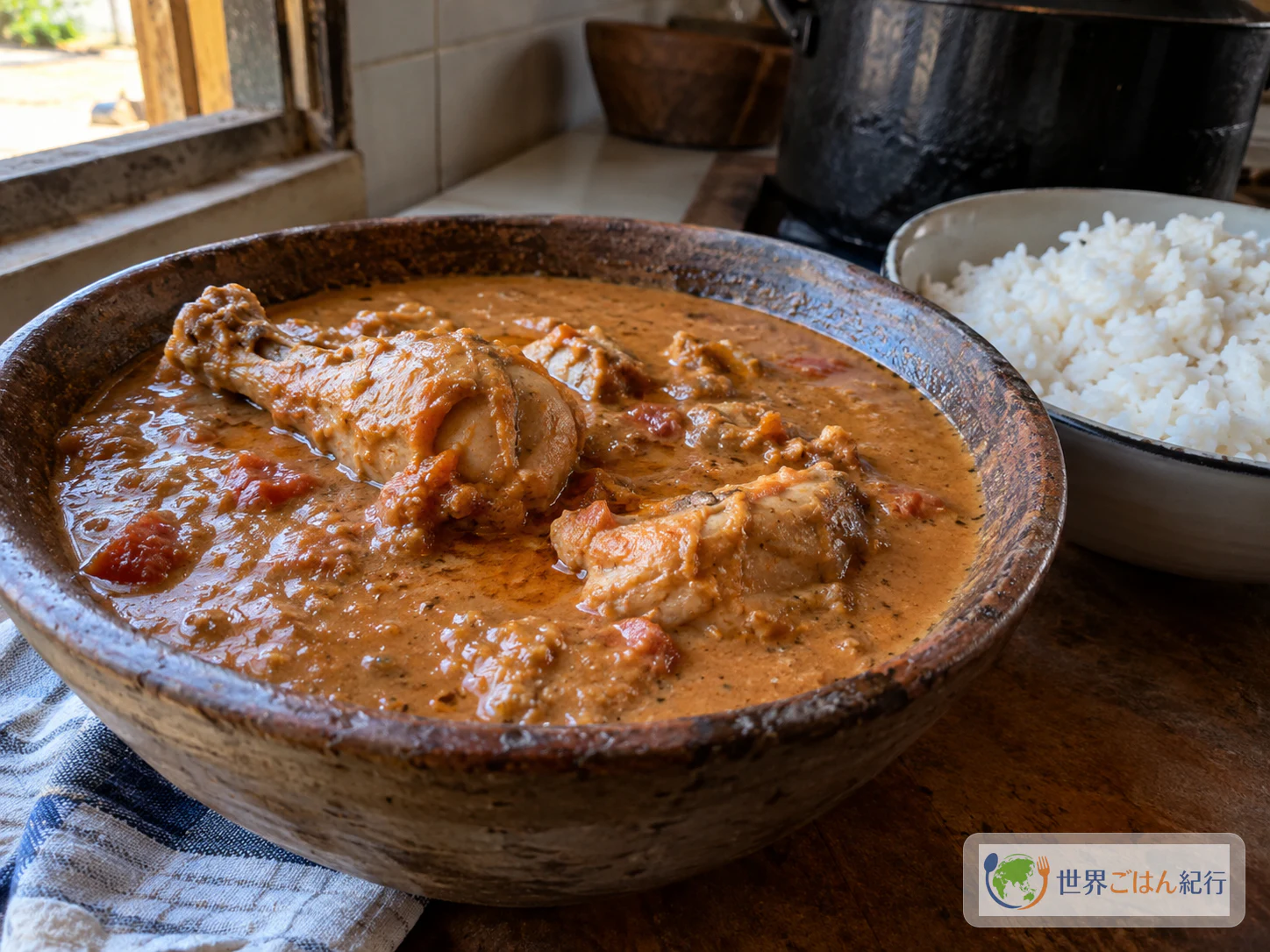
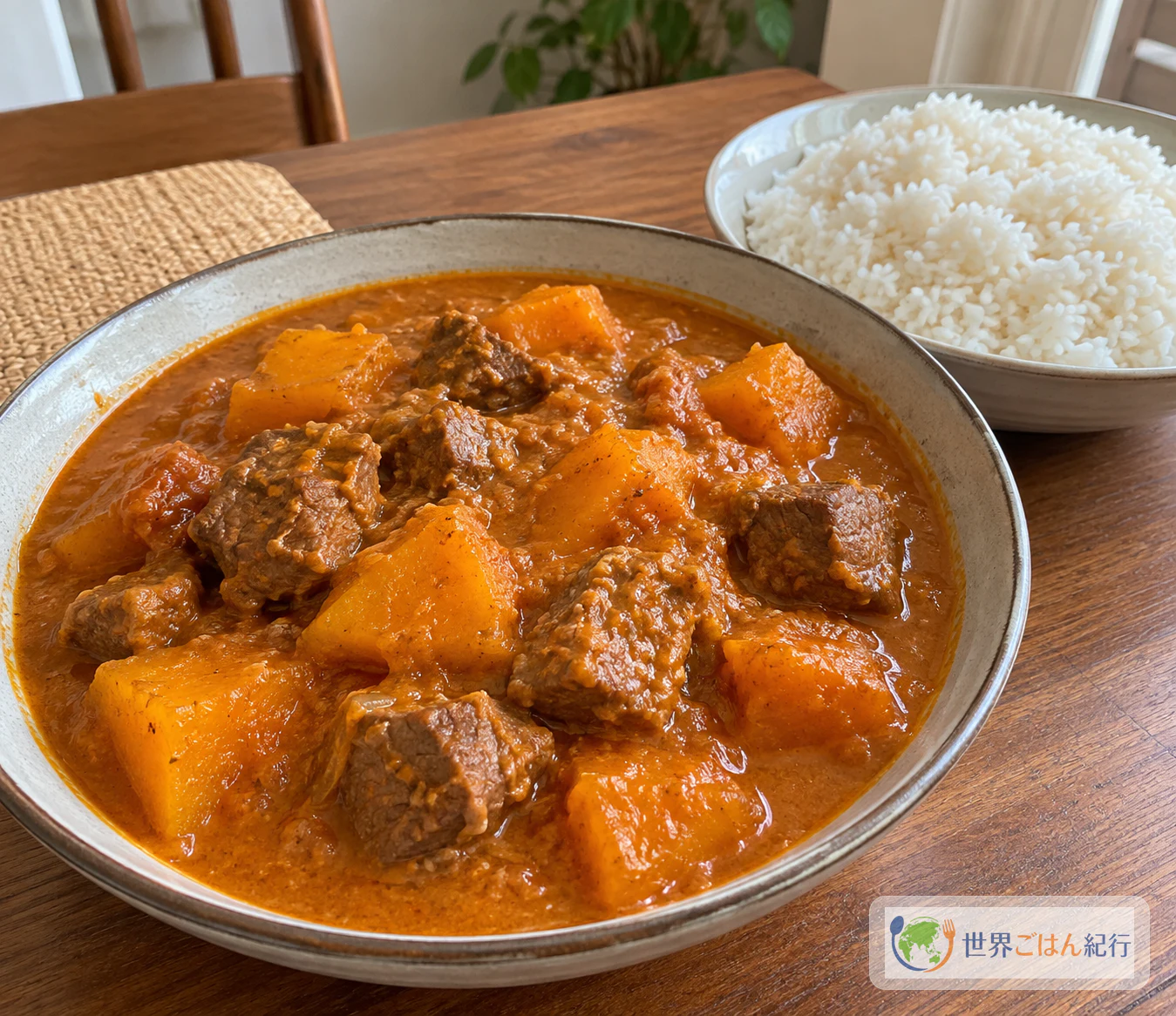
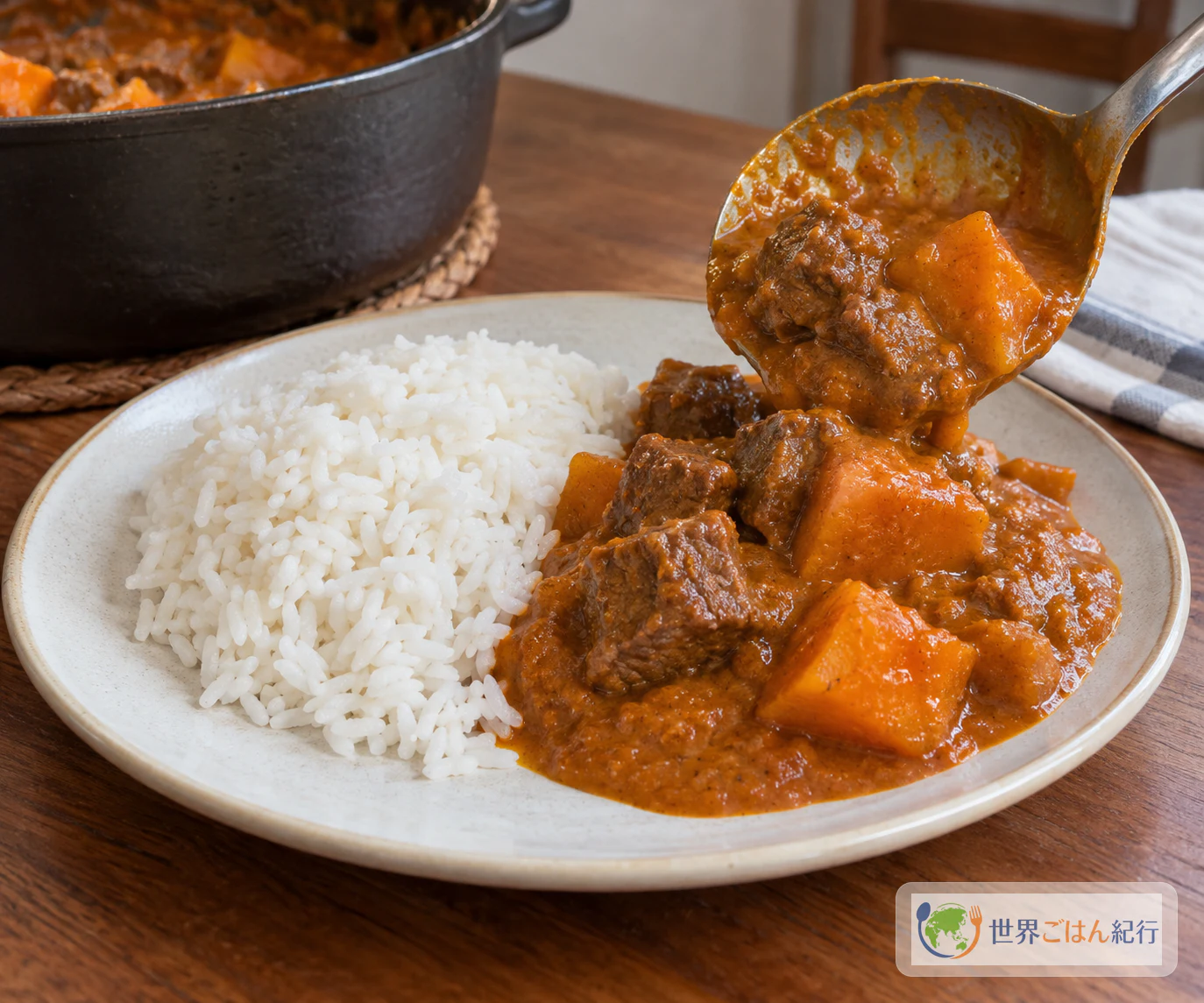
A pot of tomato and peanut sauce is stirred now and then as it cooks down, and when it is ready it goes to the table with white rice. My Gambia describes this moment in its own domoda recipe: the heat comes off once the sauce has thickened and oil shows on the surface, and the stew is eaten with rice.
Domoda is a Gambian stew built on peanuts. My Gambia introduces it as a traditional Mandinka dish and notes that it is made with meat, chicken, fish or vegetables. This article follows one complete home version, the beef and pumpkin domoda published by Kimberly Killebrew on The Daring Gourmet. It is one author's home recipe for this Gambian dish, not the single standard for every Gambian household.
The amounts, order and times below come from the published source recipe, with the editorial choices explained in each section. This version has not been kitchen-tested by us. The source's times and its estimate of 6 servings are guides, not guarantees.
Where Domoda Sits: One Name, Many Pots
Visit Gambia presents domoda as one of the country's staple dishes: a rich peanut stew eaten with rice. Beyond that broad outline, the pot changes a great deal from cook to cook.
My Gambia's version is a good example of a different method. Chicken is seasoned with salt, vinegar and, if you like, mustard; the aromatics are crushed; peanut butter is thinned and strained; the chicken is fried and set aside; the aromatics are sautéed; then the peanut liquid, tomato paste, vegetables and chicken go back in to simmer. At Footsteps Eco-Lodge in The Gambia, chef Famara's domoda is vegetarian, made with peanut butter, tomatoes, cabbage and squash. Both are local examples of how wide the dish is, and neither should be read as the rule for the whole country.
The word itself also carries more than one meaning. The Food Composition Table for The Gambia (Medical Research Council Human Nutrition Research, by C.J. Prynne and A.A. Paul, 2011, hosted by FAO) lists Mandinka and Wolof food vocabulary. There, domoda / durango is described as a thick sauce made from roasted groundnuts, often called tia durango, while domoda lalo is listed as a sauce made with dried baobab leaves that usually includes groundnuts. Because the term is used in more than one way, this article does not reduce it to a single definition or origin story.
If you already know West African peanut stews, you may want to compare this pot with mafe from Mali. The two are related peanut stews, but their recipes are different, and neither name stands for one fixed recipe across the region.
What this version chooses
| Axis | Range in the sources | This recipe |
|---|---|---|
| Protein | Meat, chicken, fish, or vegetables only | Beef chuck. The source also allows chicken |
| Vegetable | Pumpkin, squash, cabbage and others; the source also allows sweet potato | Pumpkin |
| Liquid | The source's water plus tomato bouillon cubes, or broth | Unsalted beef broth in the same volume |
| Heat | Optional Scotch bonnet in the source | No chili |
| Peanut | Peanut butter thinned and strained in some versions | Smooth unsweetened peanut butter stirred straight into the pot |
Ingredients: One Pot of Beef, Pumpkin and Peanut
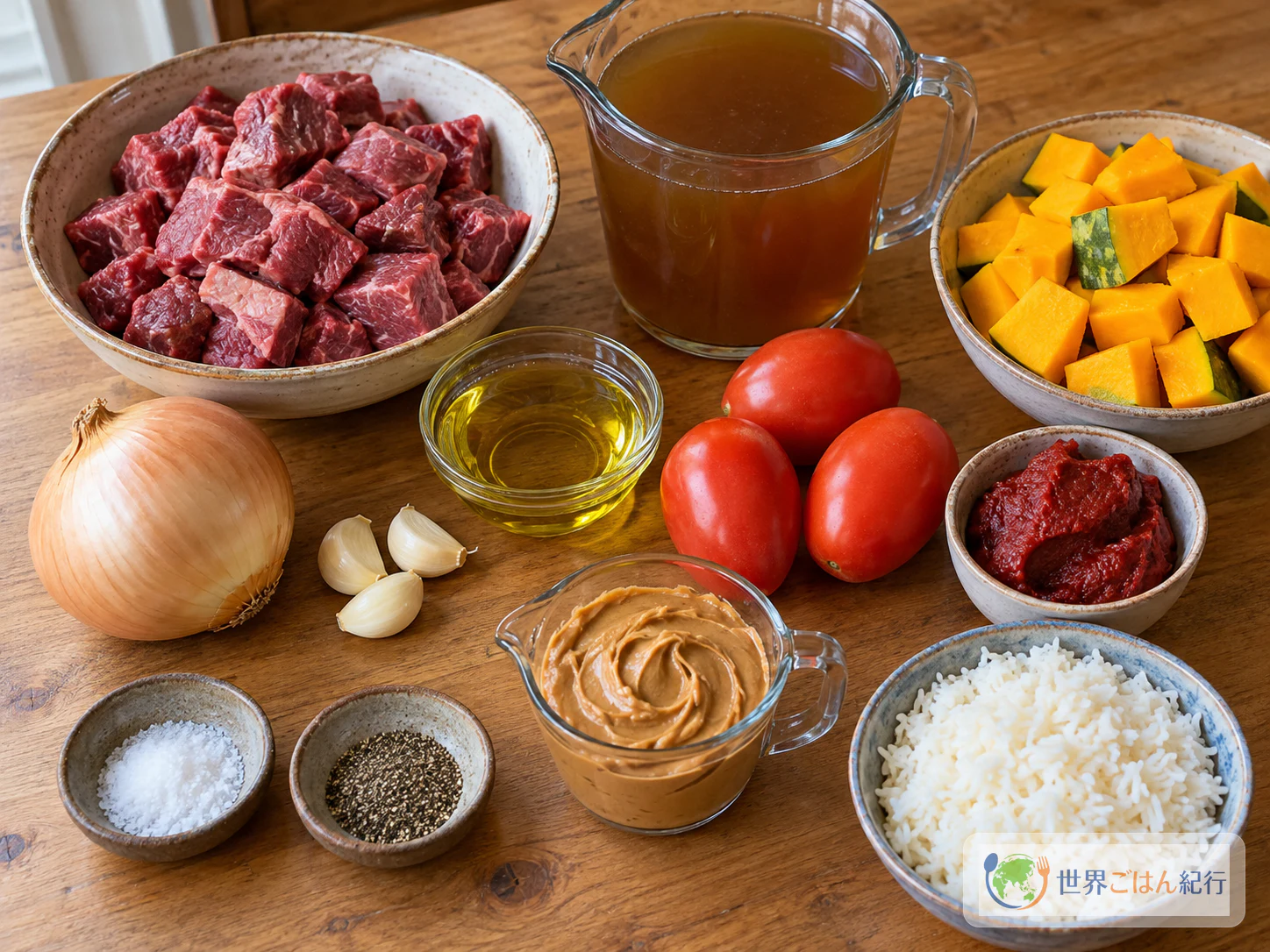
Serves 6. 1 cup = 240mL, 1 tbsp = 15mL and 1 tsp = 5mL. Weights are given only where noted.
Choosing and Substituting Ingredients
Peanut butter. Use smooth peanut butter with no added sugar. Sweetened peanut spreads and peanut creams are not an equal swap in the same amount. The salt in peanut butter varies by product, which is another reason to season only at the end.
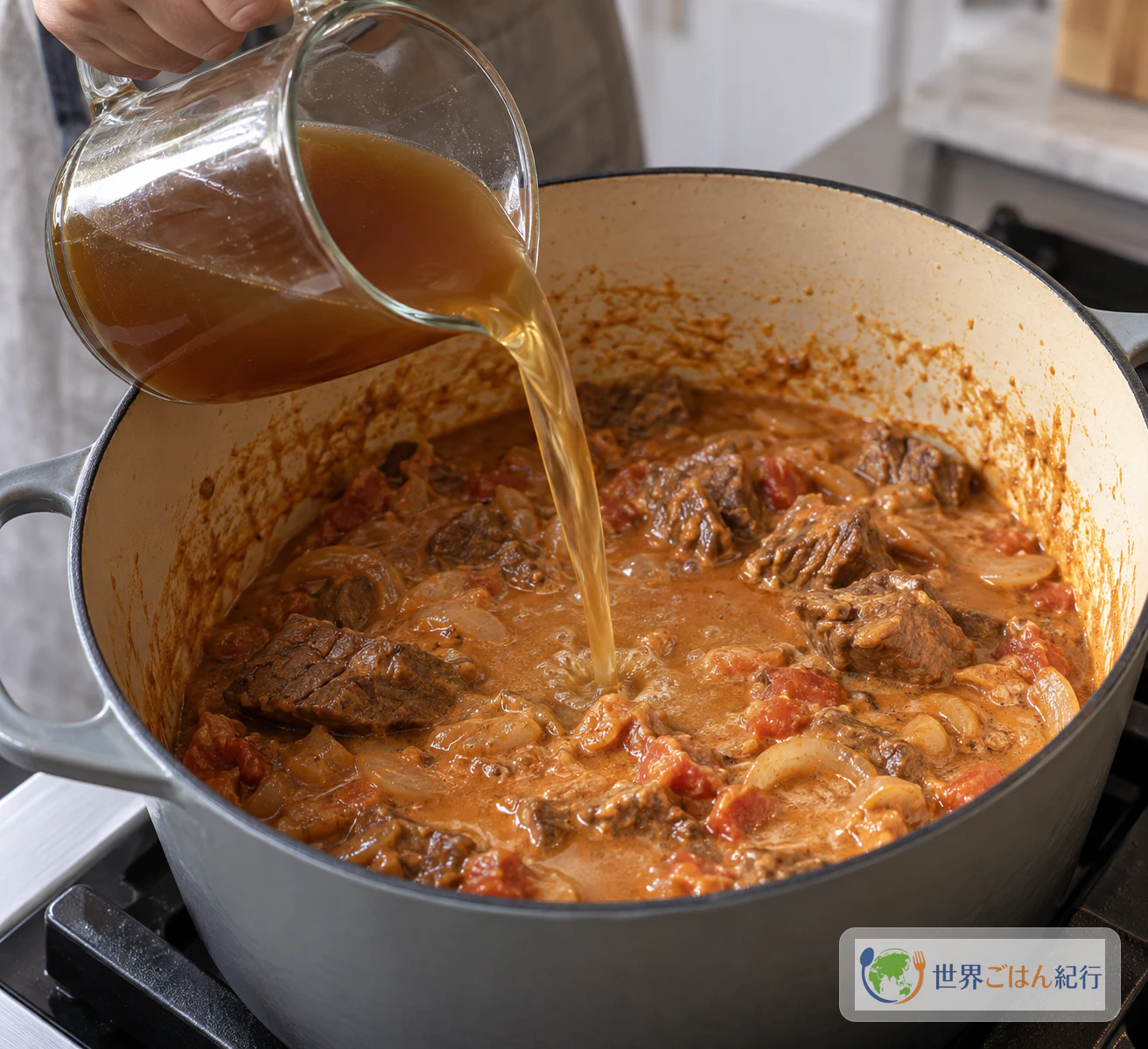
Broth. This version uses unsalted beef broth in place of 3 cups of water with 4 tomato bouillon cubes. That is the whole liquid: adding water or bouillon cubes as well would count the liquid and seasoning twice. Broth saltiness differs between products, so taste at the end.
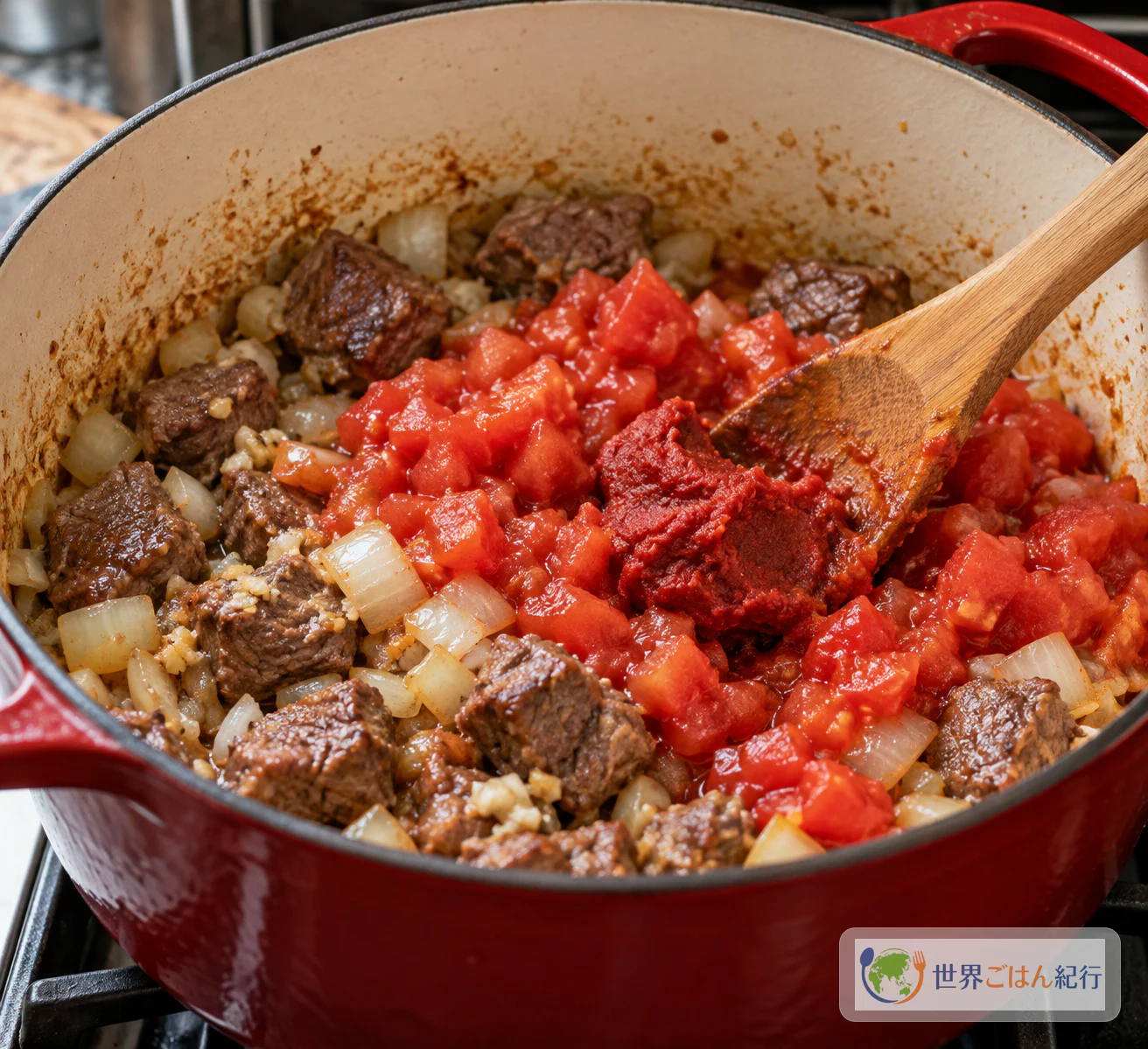
Tomatoes. Canned tomatoes can replace fresh; this version uses fresh Roma tomatoes. Some other domoda recipes call for bitter tomatoes. They are not in this recipe, and ordinary tomatoes are not a hidden stand-in for them. It is simply a different recipe.
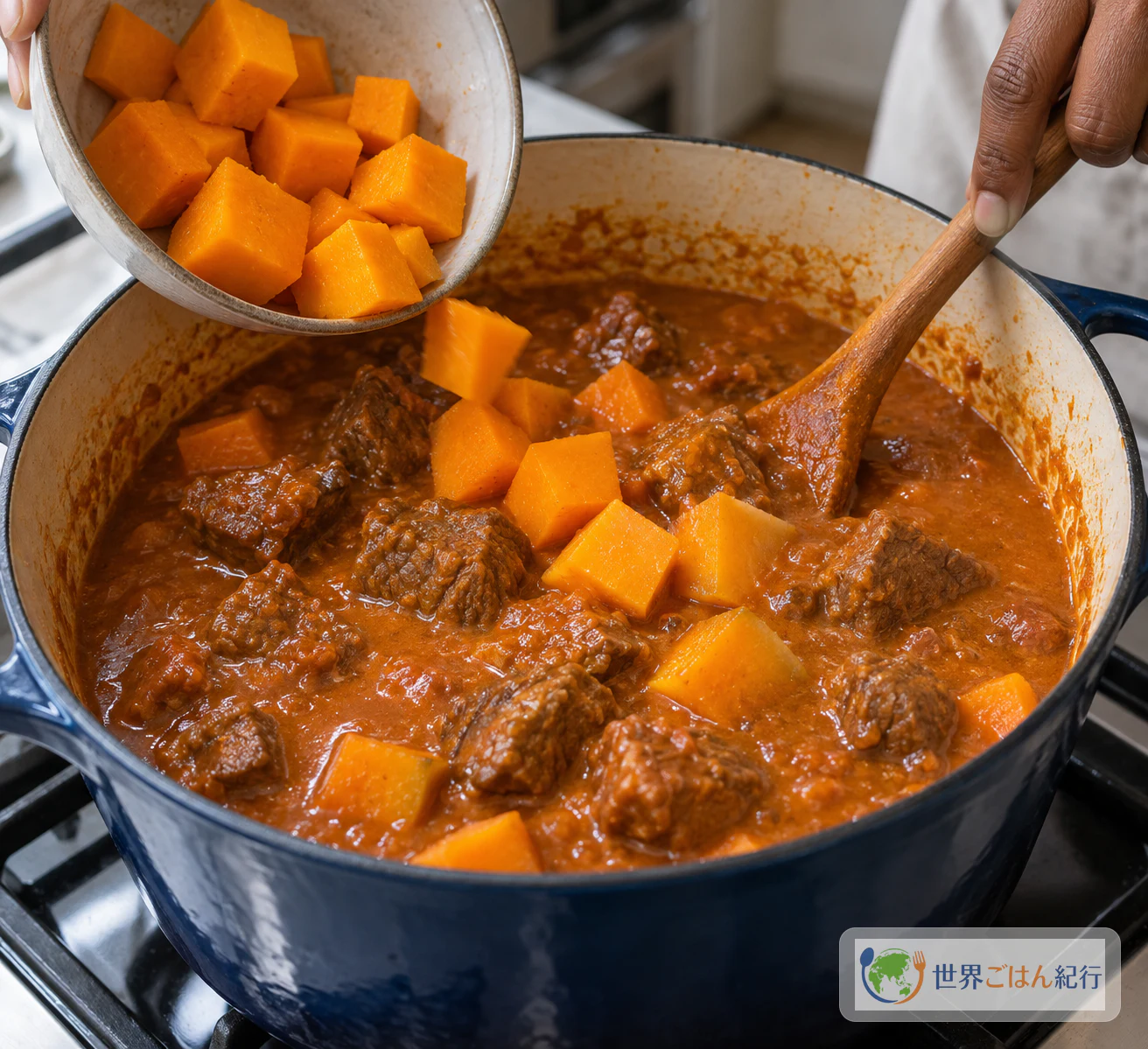
Pumpkin. Sweet potato can be used instead, but the amounts, photos and method here are for pumpkin.
This dish is built on peanuts. Do not serve it to anyone with a peanut allergy. Also check the ingredient and allergen labeling on the beef broth and any other processed product you use.
Equipment
- Heavy pot with a lid
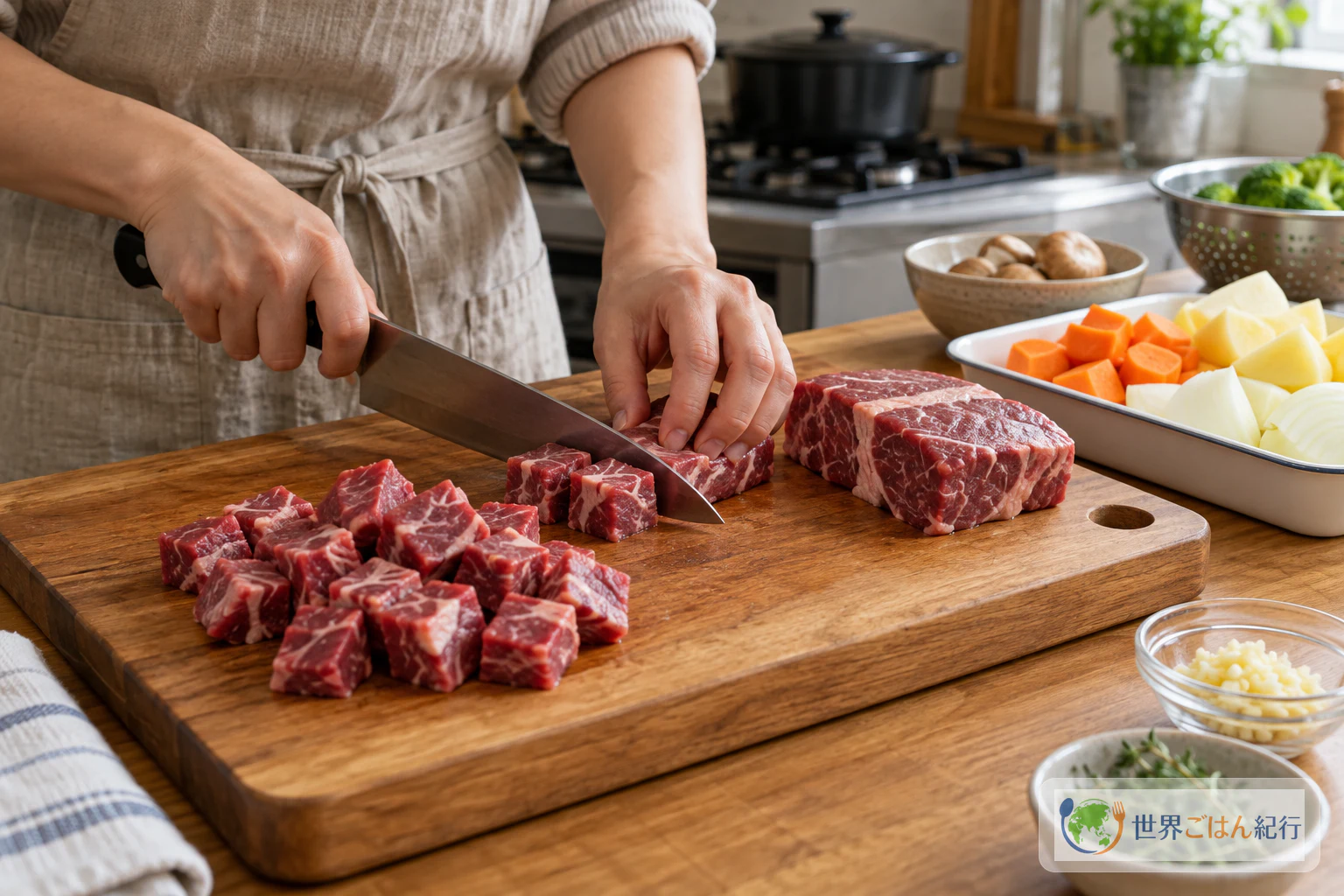
- Cutting board and knife used only for the raw beef
- Separate cutting board and knife for the vegetables
- Measuring cups and spoons (1 cup = 240mL, 1 tbsp = 15mL)
- Wooden spoon or spatula
- Food thermometer, if you have one, for checking the center of the beef
Method: Base, First Simmer, Then Pumpkin
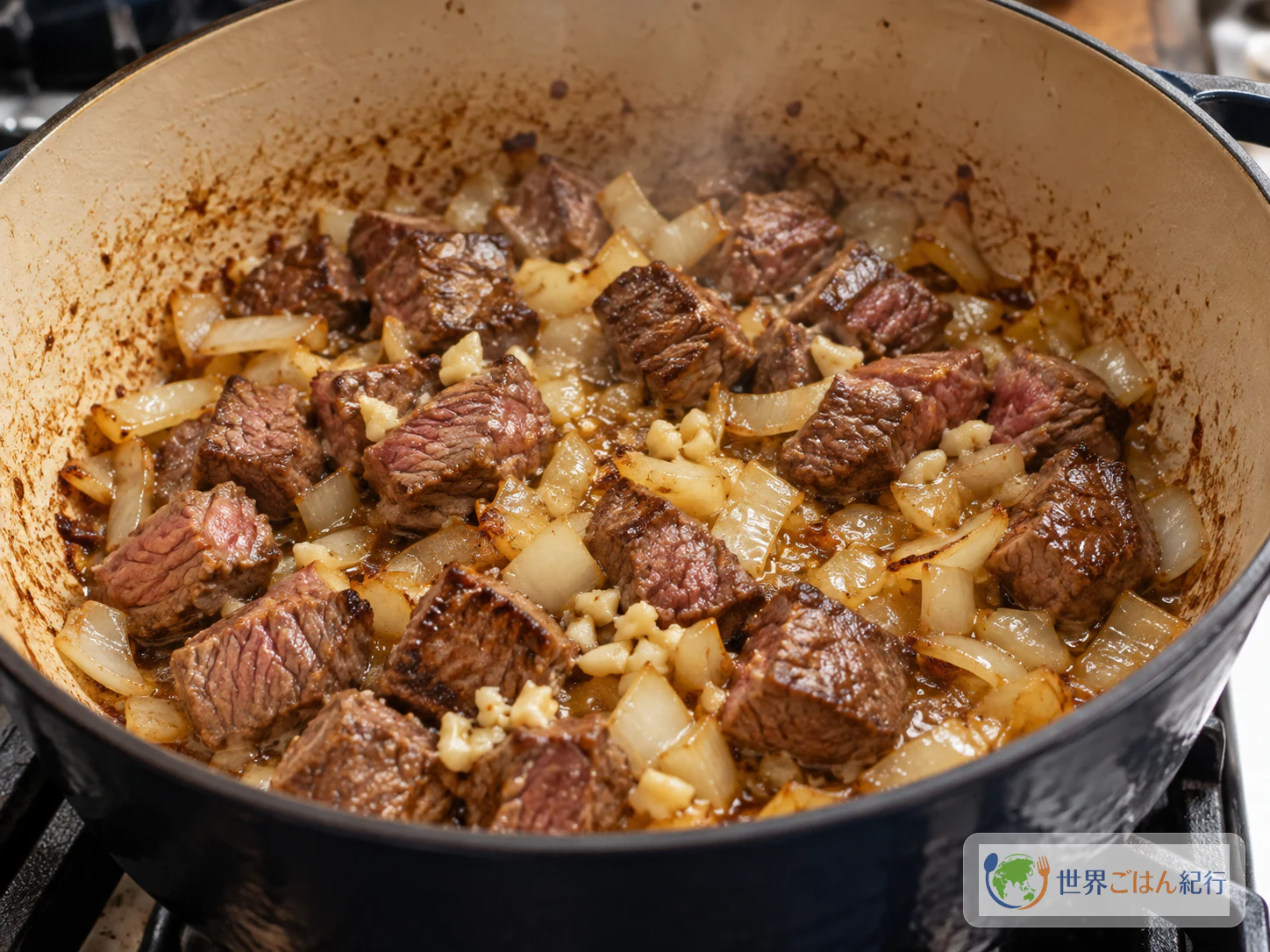
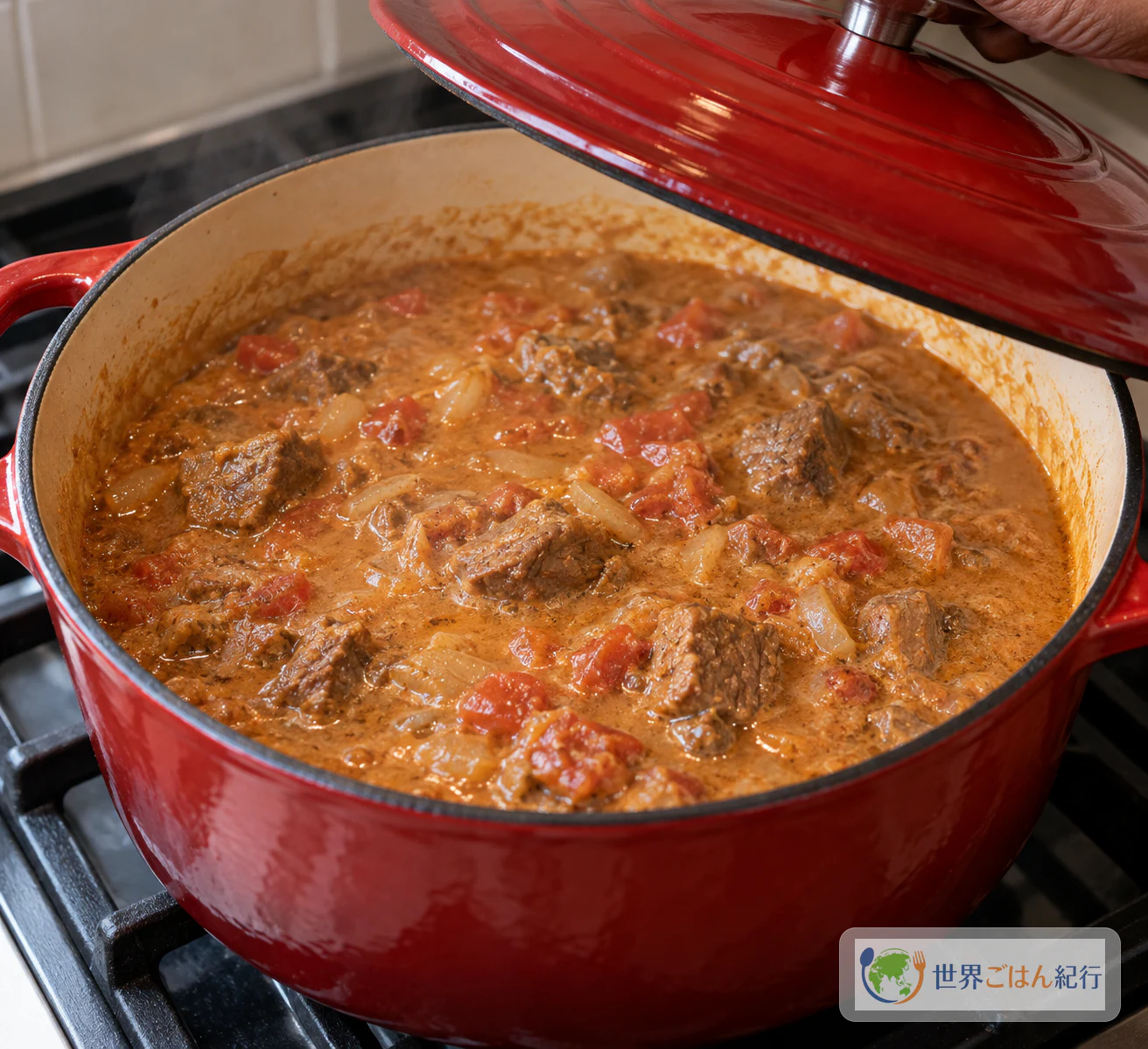
The 3–4 minutes, about 30 minutes and 30–40 minutes below are guides. Beef cut and cube size change how long the meat needs. Check tenderness and doneness yourself.
Troubleshooting
| Problem | Likely cause | What to do |
|---|---|---|
| The bottom is catching | Peanut sauce settles and thickens as it simmers | Stir from time to time through both simmers, scraping gently, and keep the heat low |
| The beef is still tough when the pumpkin is soft | The cut or cube size needs longer than the source's times | Keep simmering until the beef is tender, then check the center temperature |
| Too salty | Salted broth, salted peanut butter, or both, then salt added on top | Use unsalted broth and season only at the end |
| Oddly sweet | A sweetened peanut product was used | Next time choose unsweetened peanut butter |
| Too thin or too salty from double liquid | Water or bouillon cubes added on top of the broth | The 3 cups of broth already replace the water and cubes; don't add both |
| The sauce looks too thick or too thin | Differences between products and pots | Any change to the liquid is your own adjustment to this recipe, not part of the source |
Storage and Reheating
Following general home food-safety guidance: divide leftovers into clean, shallow, small containers, cool them quickly, and refrigerate promptly. Do not leave the stew standing at room temperature for a long time. When reheating, heat it until it reaches 75°C or above as a guide. This is general advice, not a tested storage period for this recipe, so no keeping time is given here.
Variations
- Chicken instead of beef. The source recipe allows chicken. The times and photos here are for beef and do not carry over directly.
- Sweet potato instead of pumpkin. Also offered by the source, as a separate version from the one shown here.
- With heat. The source lists an optional Scotch bonnet. This version leaves it out; adding it is your own adjustment.
- Vegetables only. Chef Famara's domoda at Footsteps Eco-Lodge uses peanut butter, tomatoes, cabbage and squash. It is a separate recipe; its amounts and timing are not mixed into this one.
- Chicken with a strained peanut liquid. My Gambia's method marinates and fries chicken first and strains thinned peanut butter. Again, a different recipe rather than a tweak of this one.
Frequently Asked Questions
Is domoda the same as mafe?
They are related peanut stews, and it helps to compare them, but the recipes differ, and neither name refers to one fixed recipe everywhere. See mafe from Mali for that dish on its own terms.
Can I use chicken?
The source allows it. The cooking time will differ, so judge by tender, fully cooked meat rather than the beef times here.
Do I need bitter tomatoes?
Not for this recipe. Bitter tomatoes appear in other domoda recipes, such as the one on CountryReports, but not in the version followed here. Ordinary tomatoes are not presented as a substitute for them; this is a different recipe.
Why not use the water and bouillon cubes?
The source permits beef broth in their place, and this version uses 3 cups of unsalted beef broth. Use one or the other, never both.
How many people does it serve?
The source estimates 6 servings. This has not been confirmed by testing.
Is it spicy?
Not as written here. The optional chili in the source is omitted.
Sources
- Kimberly Killebrew, "African Peanut Stew (Domoda)," The Daring Gourmet. The recipe followed in this article: beef and pumpkin version, ingredients and their order, the allowed broth substitute for water and tomato bouillon, the first simmer of about 30 minutes and the pumpkin simmer of 30–40 minutes, and the estimate of 6 servings. The author is based outside The Gambia, and the recipe is not presented as the sole local standard. https://www.daringgourmet.com/domoda-gambian-peanut-stew/
- My Gambia / My Magazine, "Traditional Dish Recipe: Domoda." Domoda as a traditional Mandinka dish, the range of meat, chicken, fish and vegetables, a chicken method with strained peanut liquid, and stopping the heat when the sauce thickens and oil appears, served with white rice. https://www.my-gambia.com/mymagazine/recipe-domoda/
- Footsteps Eco-Lodge, "How to Make Authentic Gambian Domoda (Video Recipe)." Chef Famara's vegetarian domoda with peanut butter, tomatoes, cabbage and squash, as a local example of variation. https://footstepsinthegambia.com/recipes/how-to-make-authentic-gambian-domoda-video-recipe/
- C.J. Prynne and A.A. Paul, Food Composition Table for The Gambia (Medical Research Council Human Nutrition Research, 2011; hosted by FAO). Mandinka/Wolof vocabulary: domoda / durango as a thick sauce of roasted groundnuts, often called tia durango, and domoda lalo as a dried baobab-leaf sauce that usually includes groundnuts. https://www.fao.org/fileadmin/templates/food_composition/documents/pdf/Gambia04082011.pdf
- Visit Gambia, "Food & Drink in The Gambia." Domoda as one of the country's staple dishes, a rich peanut stew eaten with rice. https://visitgambia.com/gambia/themes/food-drink
- CountryReports.org, "Domoda (Groundnut Stew) — The Gambia." A different recipe with lemon, bitter tomatoes, meat or chicken, pumpkin and rice, used only for comparison and not followed here. https://www.countryreports.org/country/TheGambia/recipes/500
- Ministry of Health, Labour and Welfare (Japan), "Preventing Food Poisoning at Home" (in Japanese). General guidance: heat the center of food to 75°C for at least 1 minute, reheat to 75°C, keep utensils clean, cool food in shallow small portions, and avoid long holding at room temperature. Not a recipe-specific validation of cooking times or storage life. https://www.mhlw.go.jp/stf/seisakunitsuite/bunya/kenkou_iryou/shokuhin/syokuchu/01_00008.html