Macatias: Small, Sweet Round Breads from Reunion Island
A plain, lightly sweet dough, two unhurried rises, and a thin golden crust over a soft crumb. Keep the rolls plain first; fillings are a separate project.
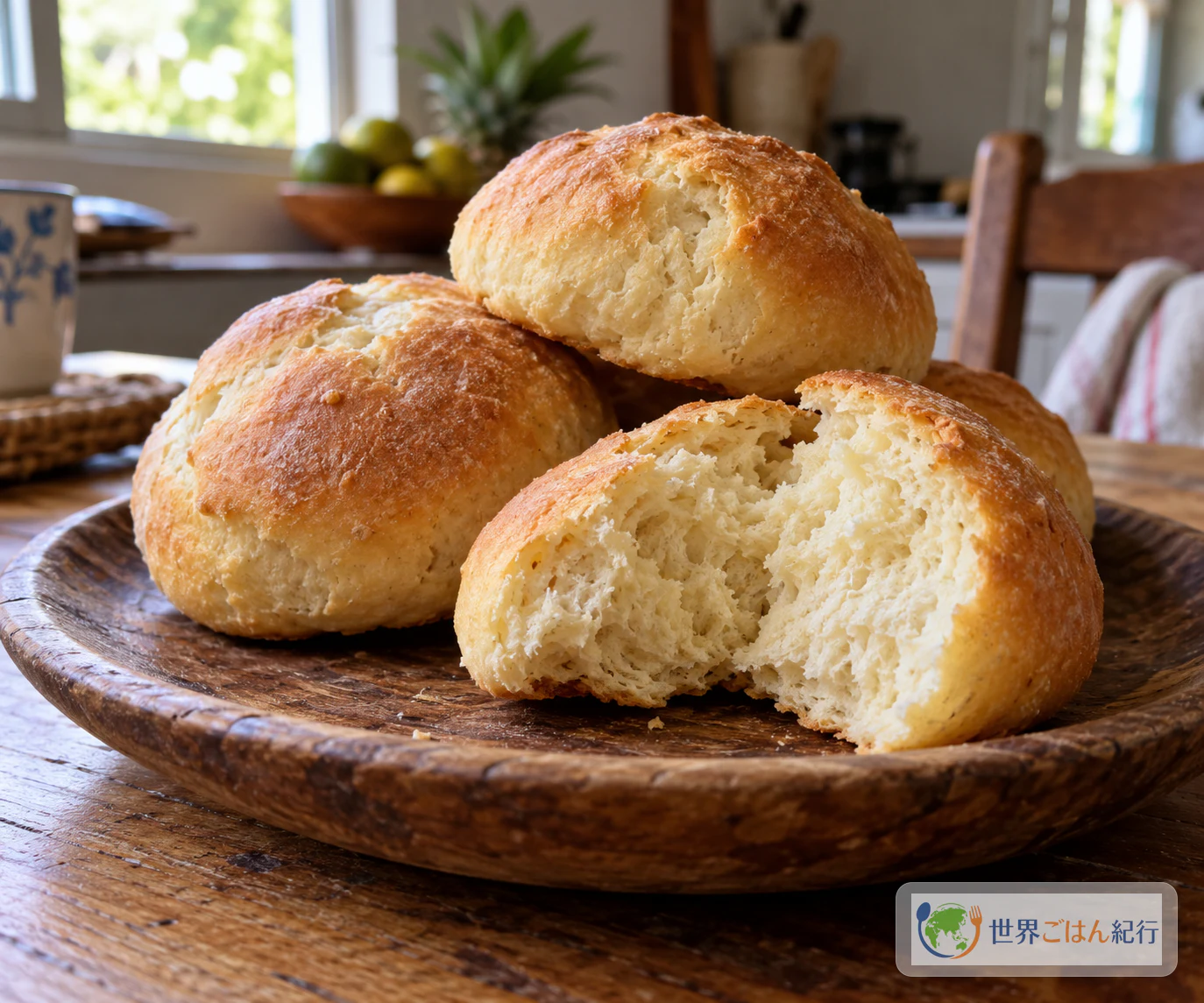
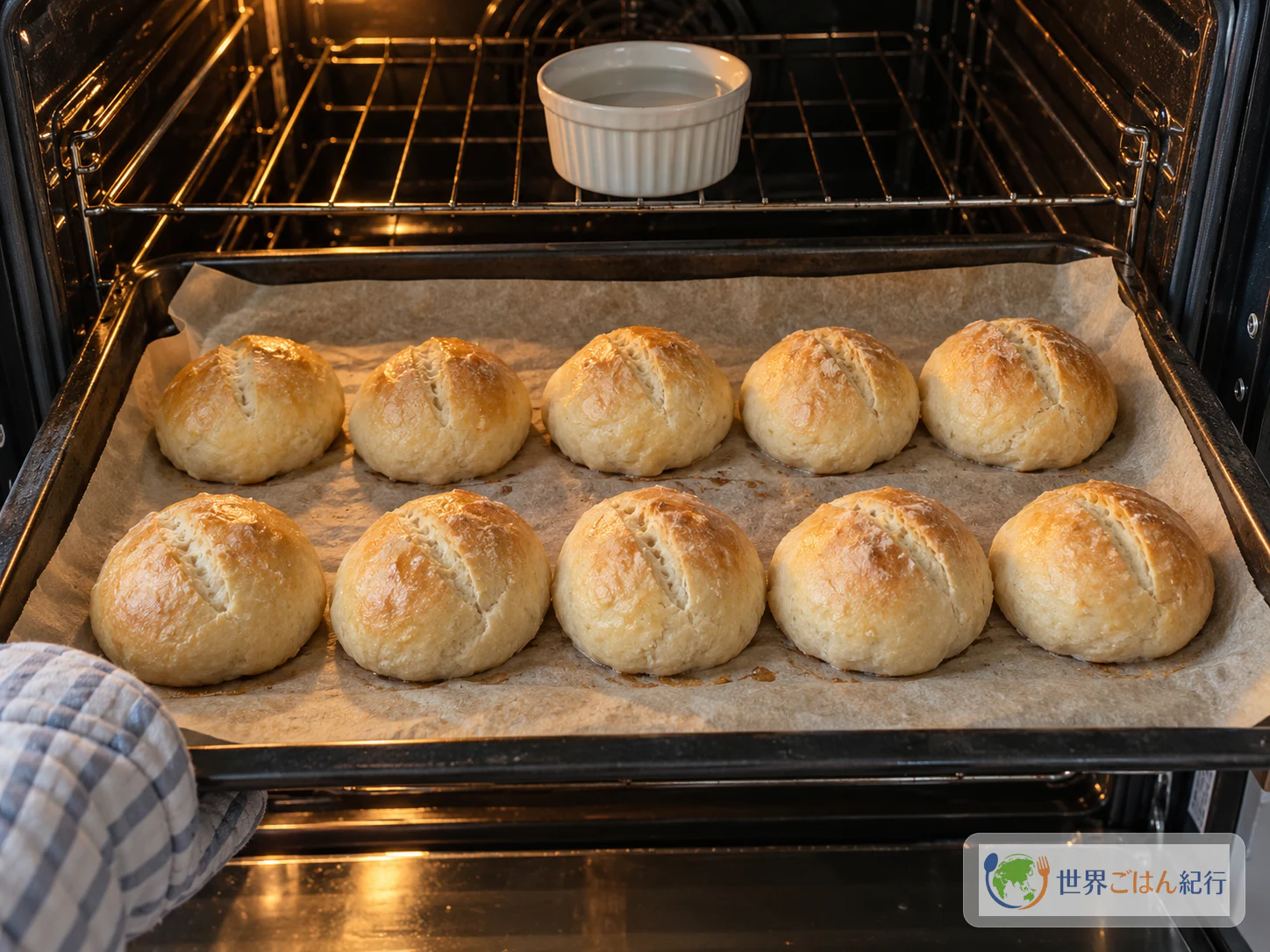
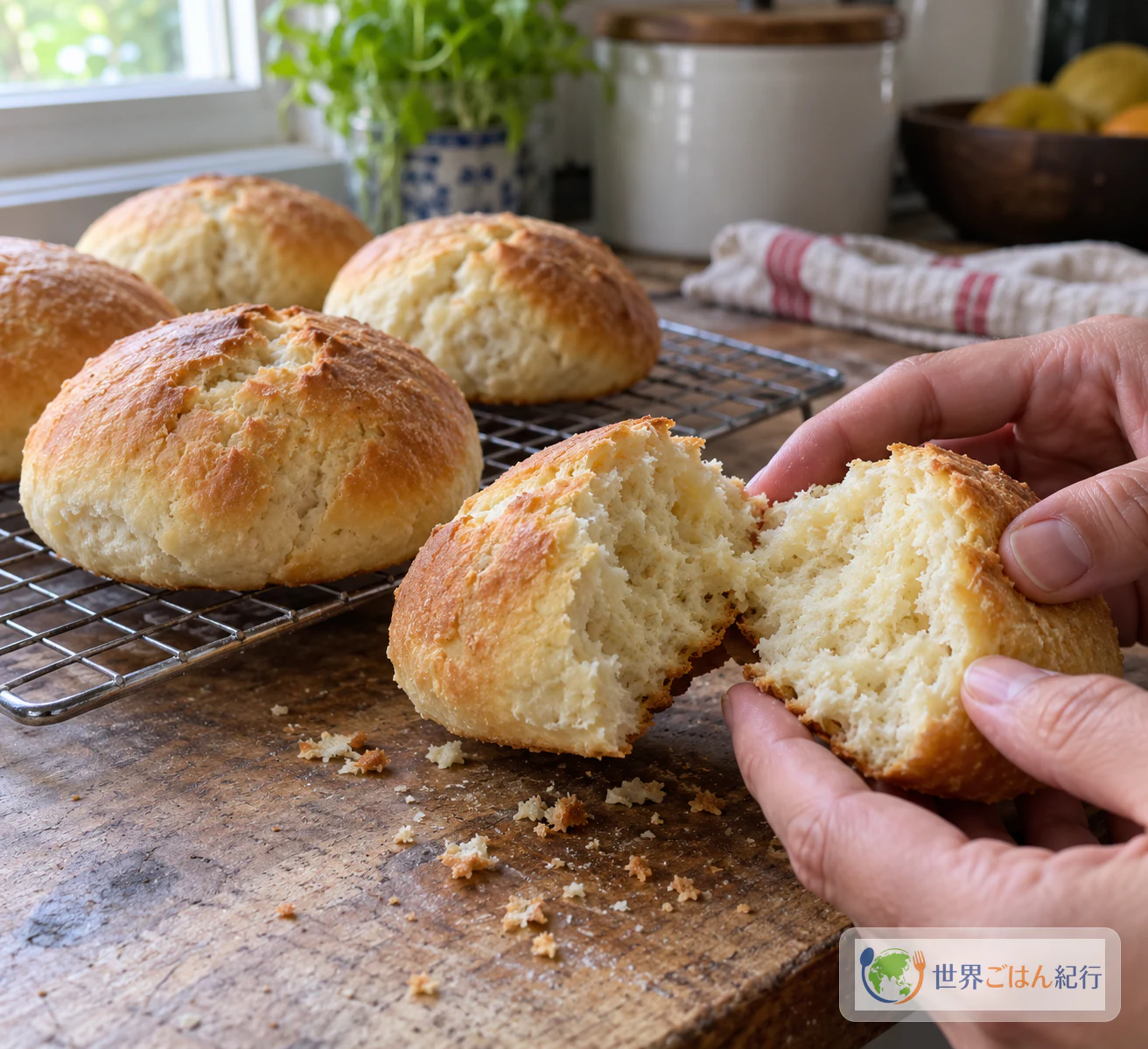
A tray of small round rolls comes out of the oven with a thin, lightly golden crust and a shallow cut across each top. Torn open, the inside is pale and soft. This is the macatia, a round sweet bread from Reunion, the French island in the Indian Ocean, where local reporting ties it to breakfast and to childhood memories.
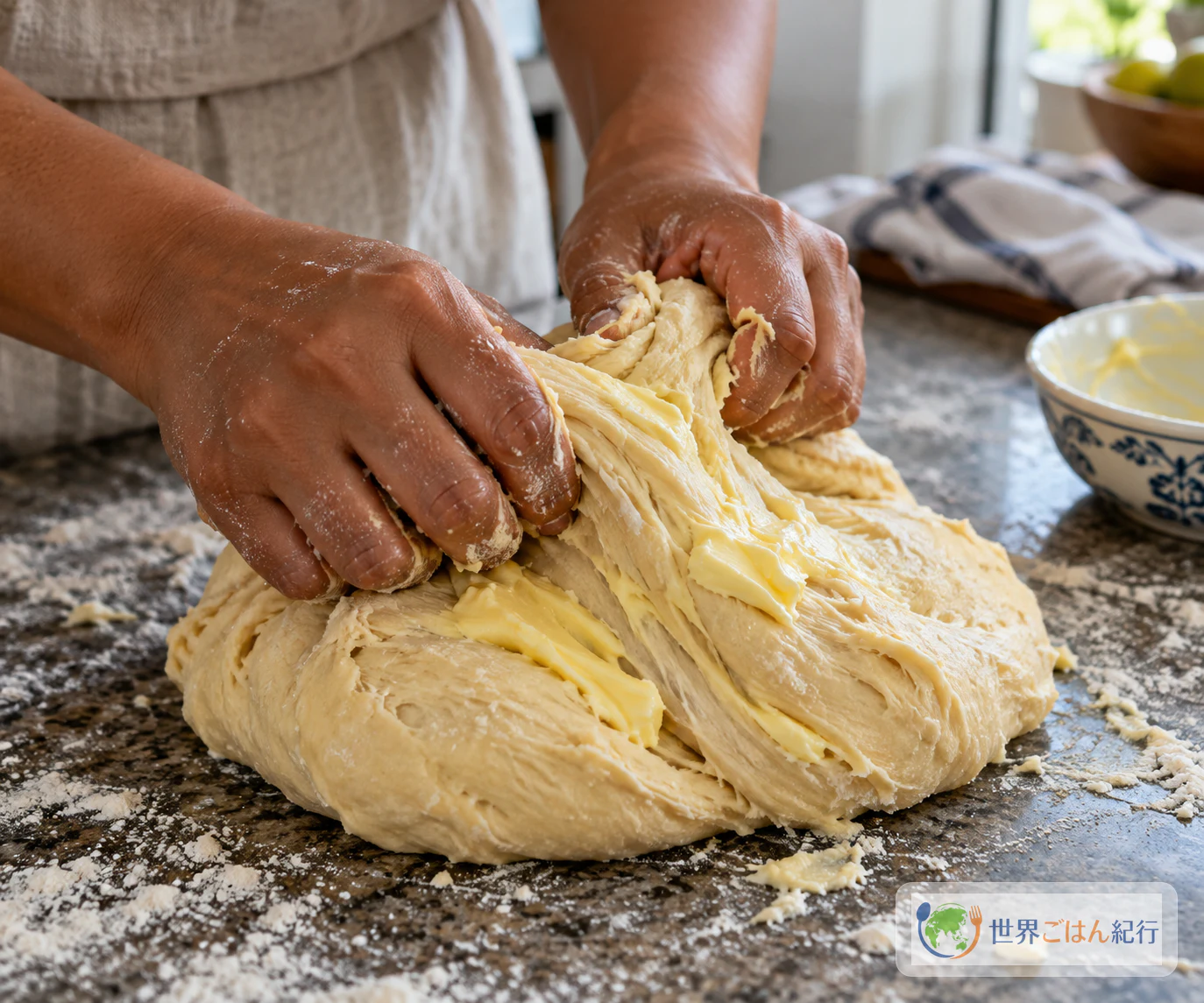
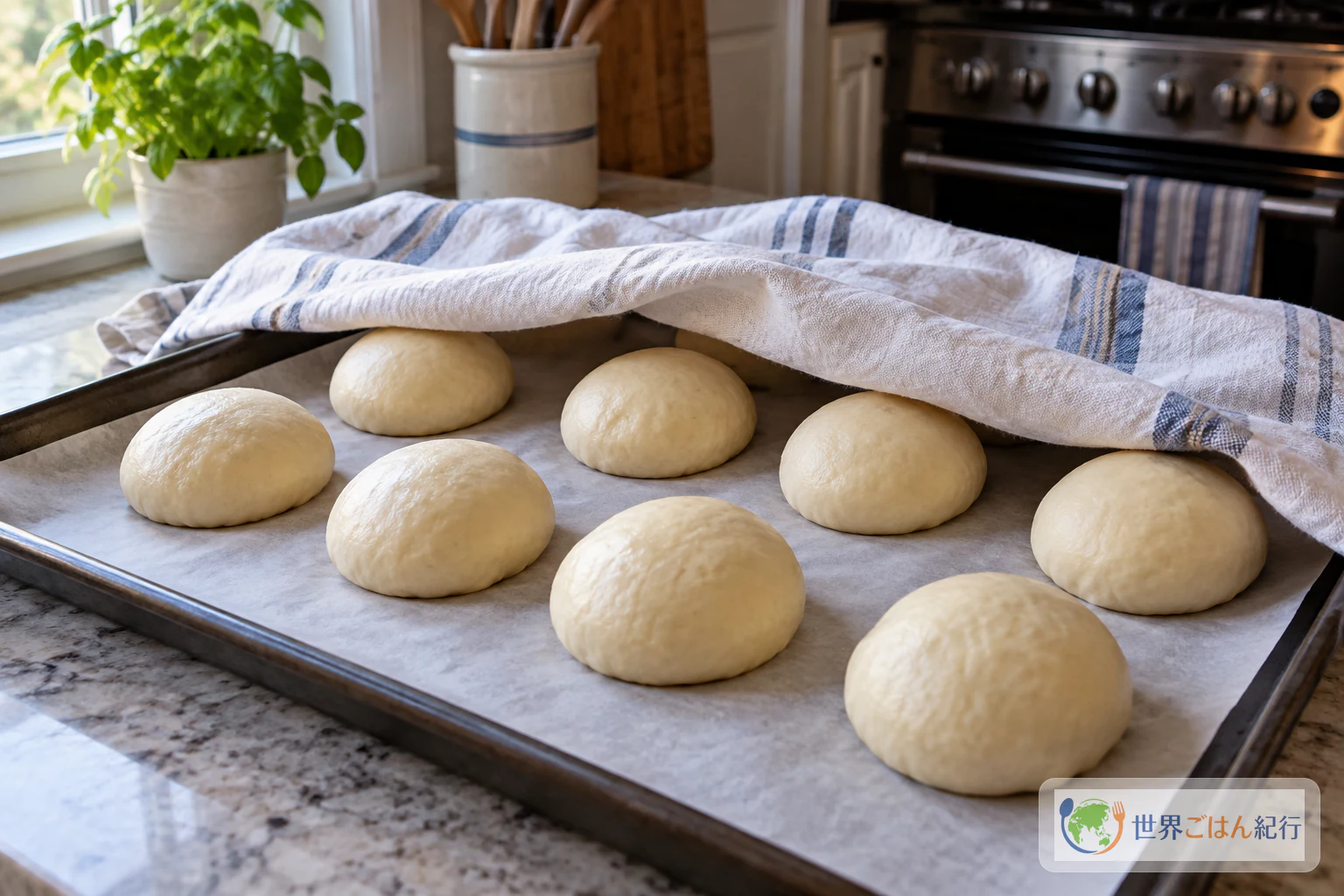
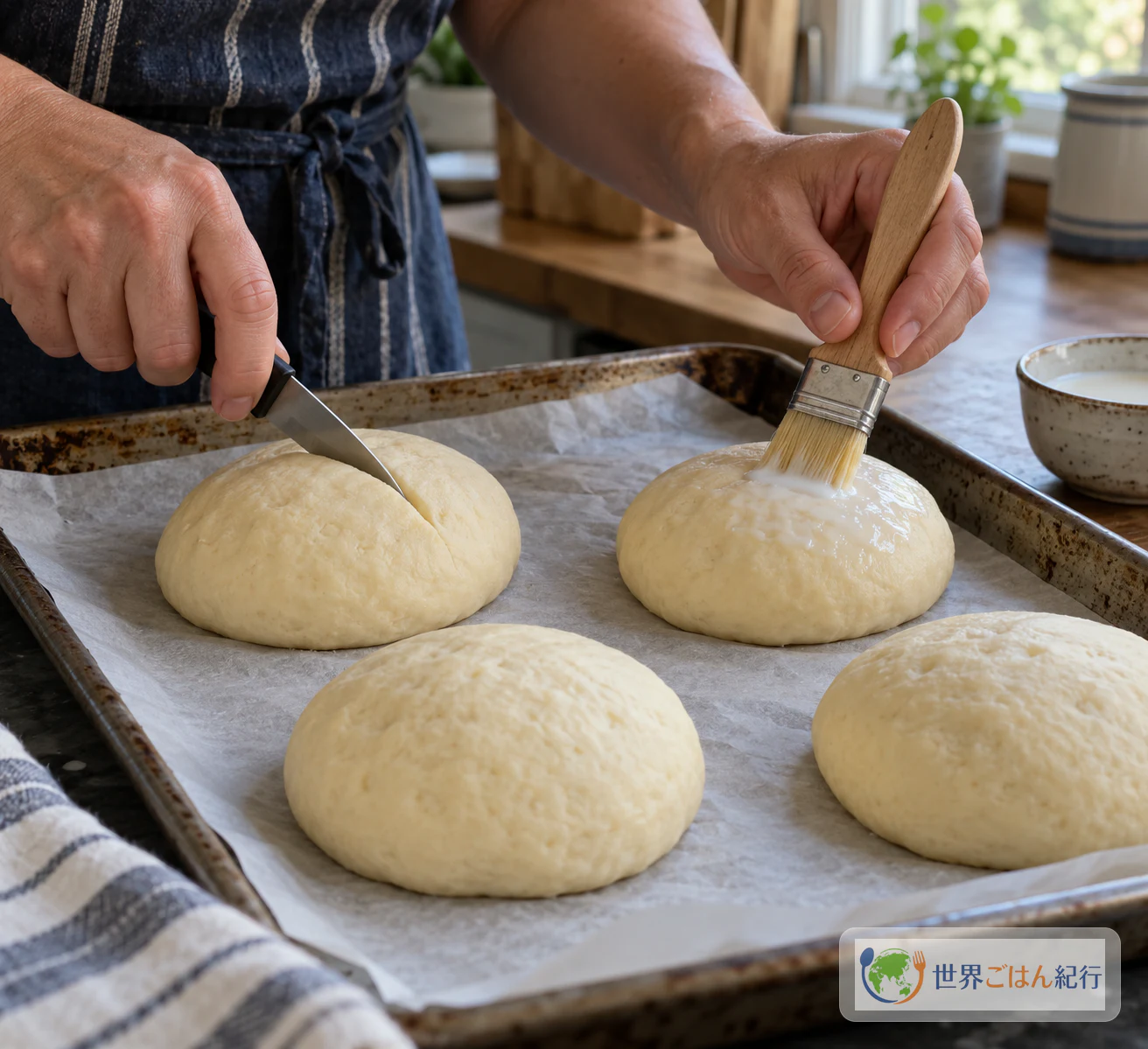
This article makes ten plain macatias (macatia nature) from 450g of flour, 100g of sugar and 20g of butter, with two rises of about an hour each and a short bake at 200°C. The dough is kneaded by hand, the butter goes in only after the first long knead, and a little milk is brushed on top just before baking.
This recipe has not been kitchen-tested by Sekai Gohan. The amounts, times and temperature come from a published Reunion recipe for ten macatias, and the descriptions of how the dough should look are guides for judging it, not measured results.
Ingredients for 10 Plain Macatias
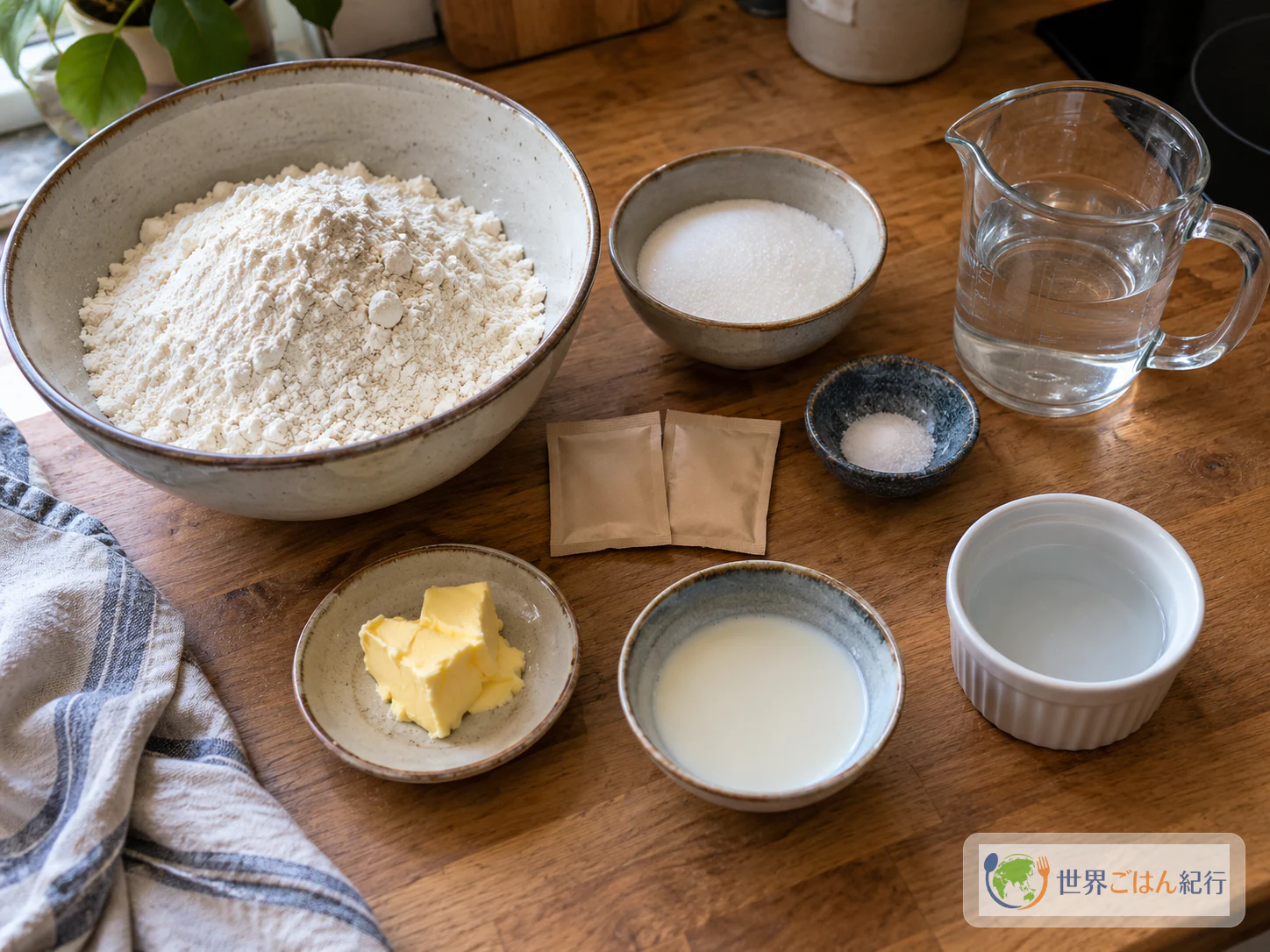
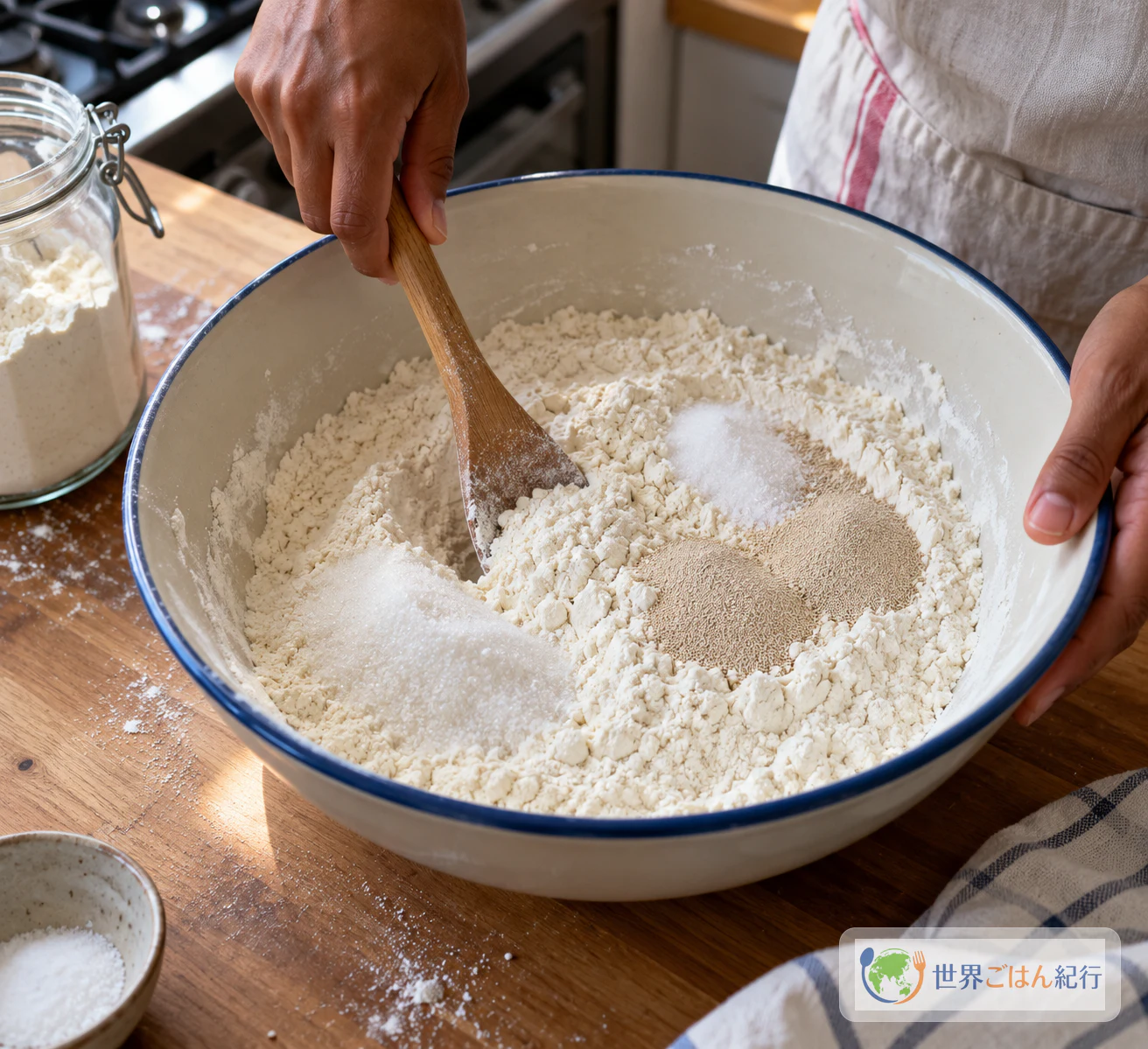
Measure the flour, sugar and butter by weight. Keep the milk and the steam water separate from the dough ingredients, since neither goes into the dough.
Macatias contain wheat (gluten) and milk (in the butter and the milk wash). Check the label of your yeast product as well. For the steam water, use an oven-safe heatproof dish such as a ceramic ramekin. Do not put an ordinary drinking glass into a hot oven.
Equipment
- Digital kitchen scale
- Large mixing bowl and a wooden spoon
- Clean cotton tea towel
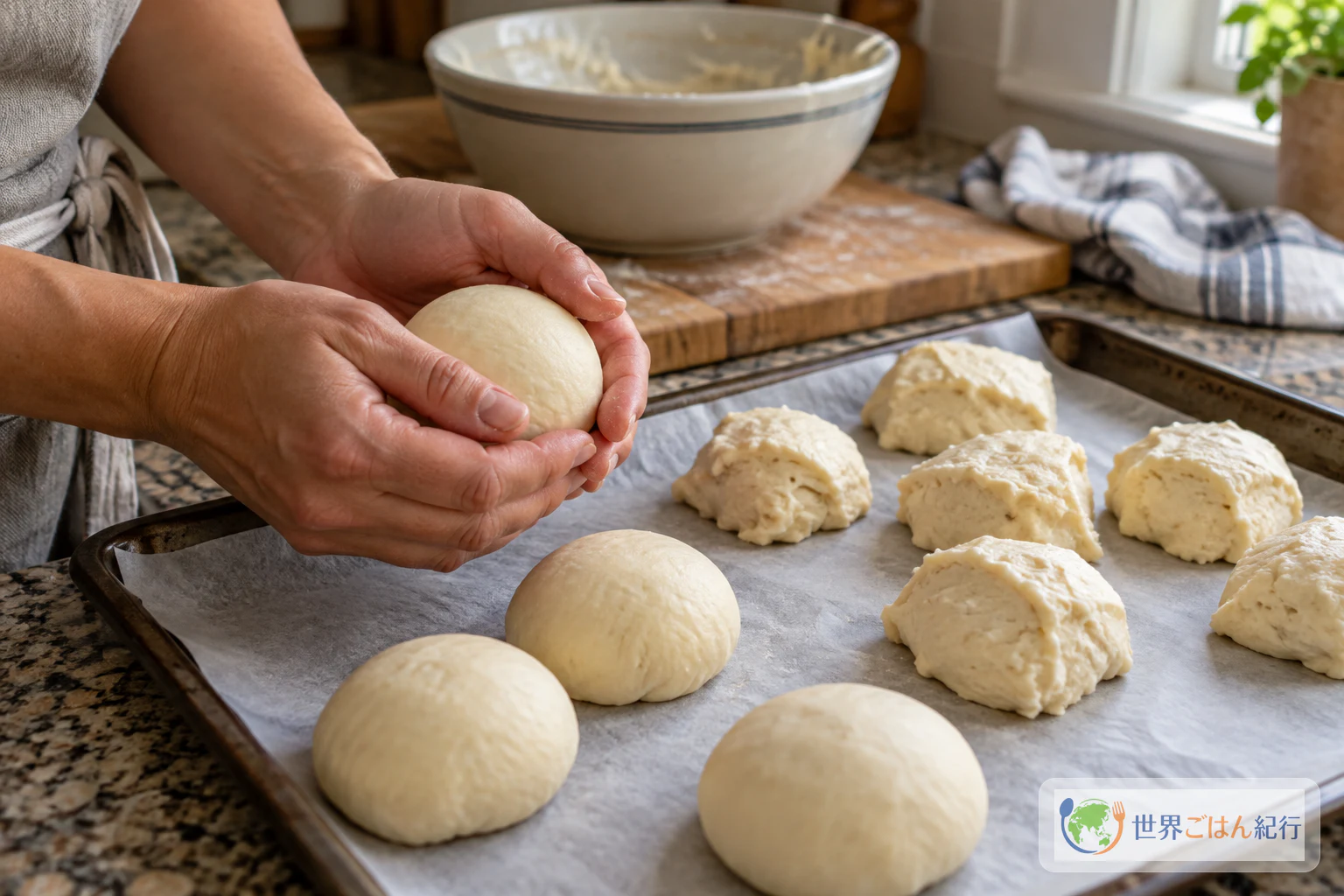
- Baking tray lined with baking parchment
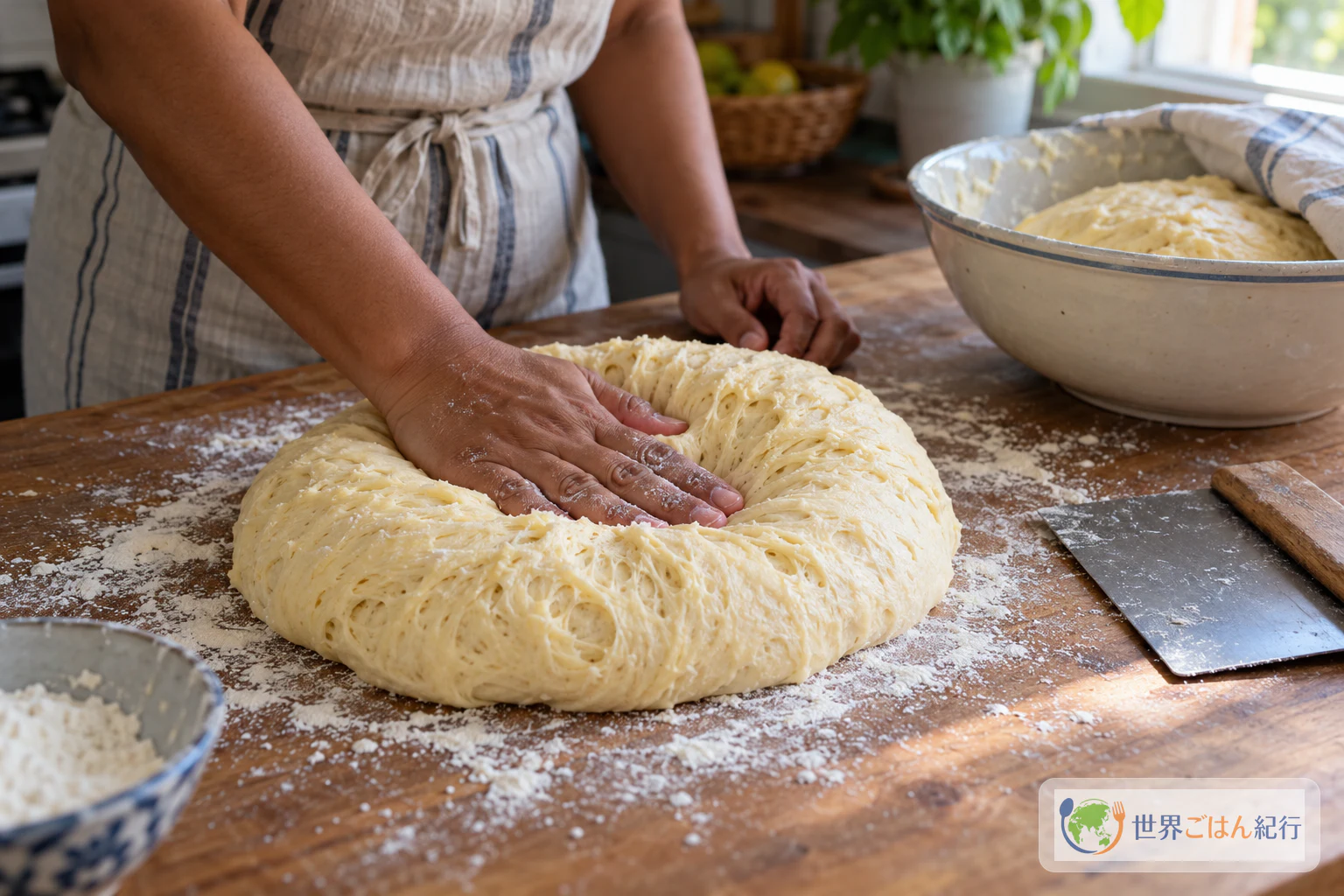
- Bench scraper or knife for dividing the dough
- Small sharp knife for scoring
- Pastry brush
- Small oven-safe heatproof dish for steam water (such as a ceramic ramekin)
- Oven mitts
- Cooling rack
Choosing Flour, Yeast and Butter
Flour. T55 is a French flour category, and flours sold elsewhere are not graded the same way. A plain wheat flour suited to bread is a reasonable choice, but the crumb and chew may differ somewhat. Using only cake or pastry flour changes how much the rolls rise and how much bite they have.
Yeast. Use 2 sachets for 450g flour, and check their package directions for the recommended flour quantity.
Sugar. Ordinary white sugar keeps the plain macatia's flavor. Brown sugar is a possible swap, but it changes the aroma and darkens the color.
Butter. Either salted or unsalted butter works. Salted butter adds a little extra saltiness to the dough.
Method: Knead, Rise Twice, Bake Until Golden
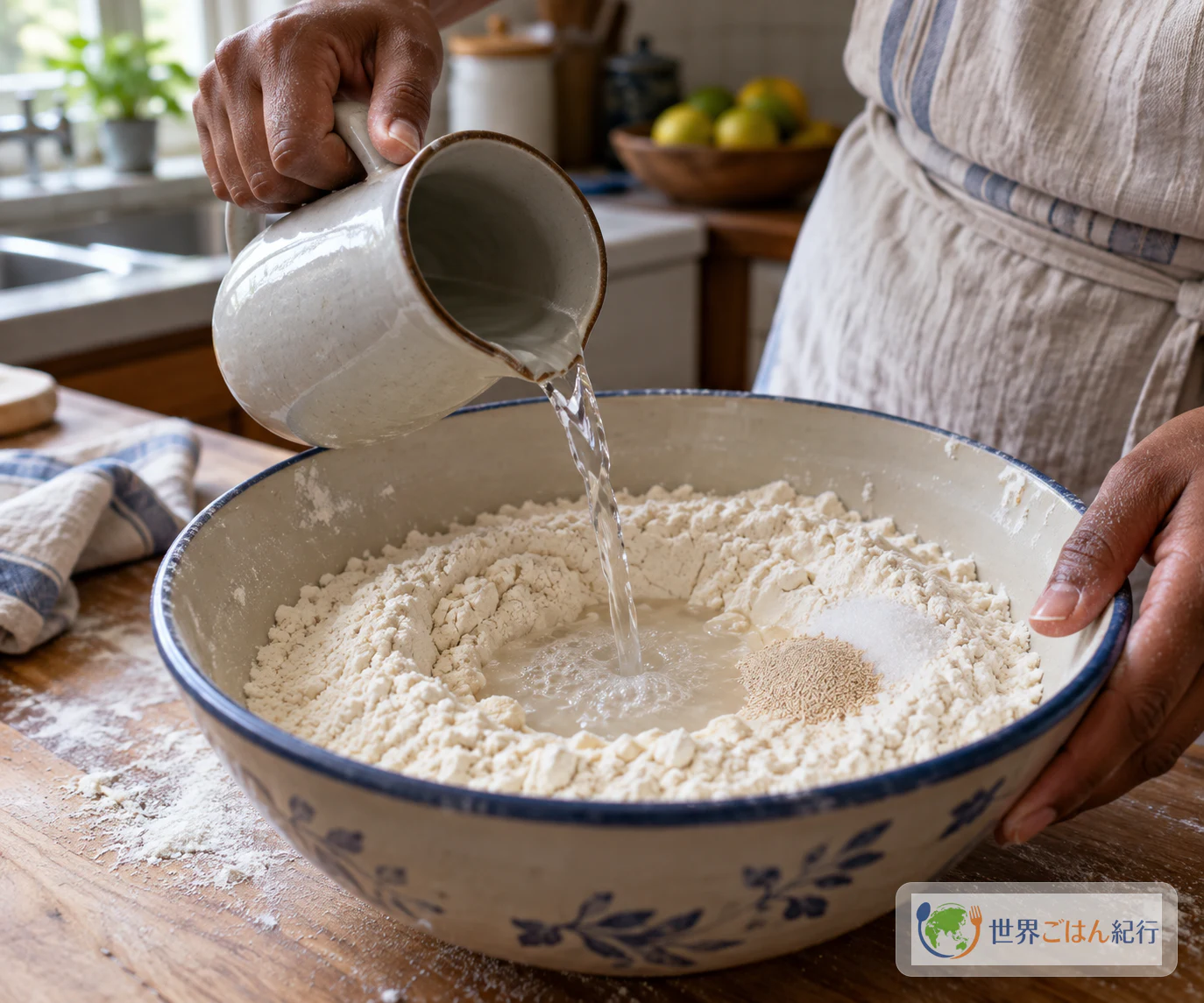
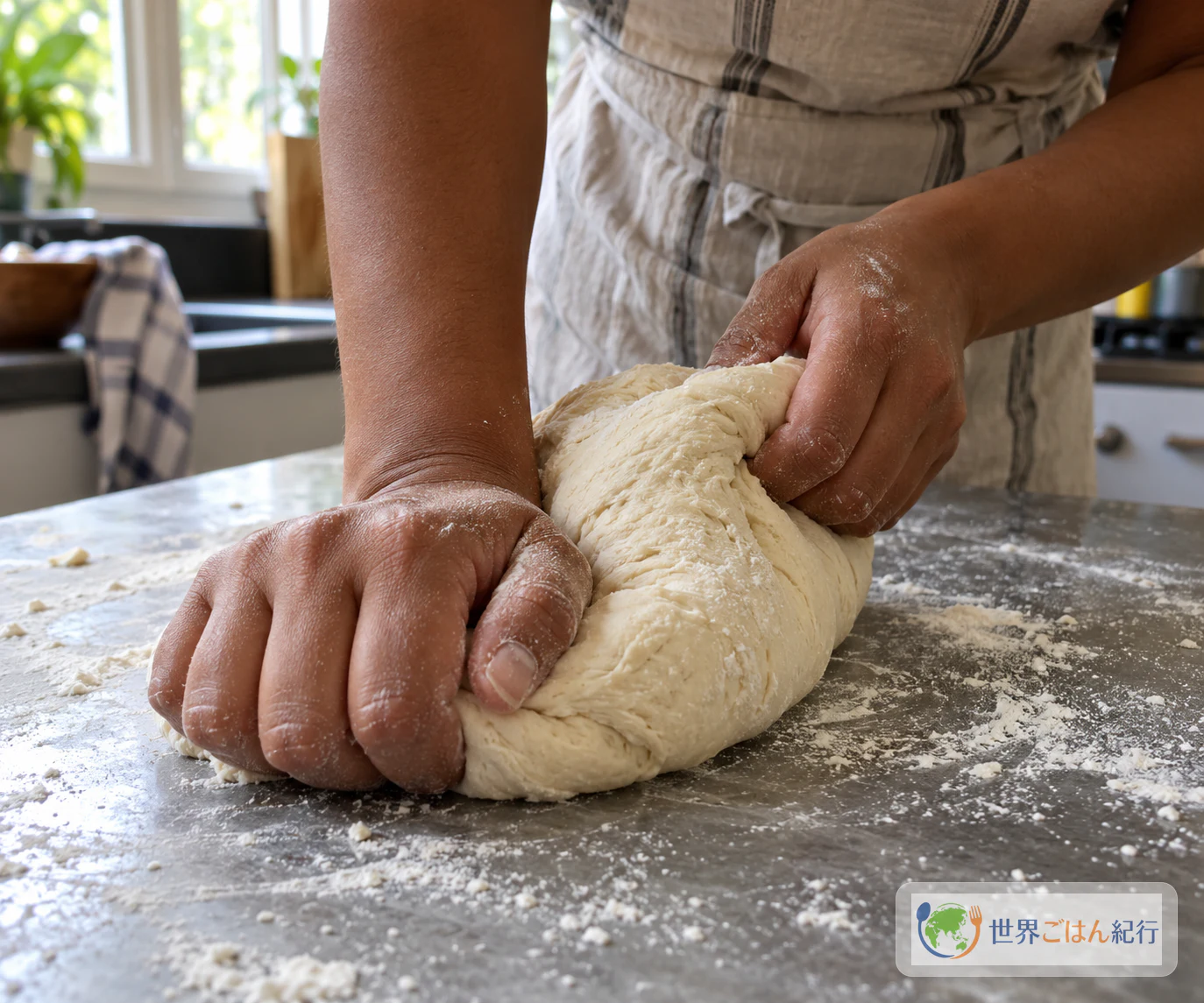
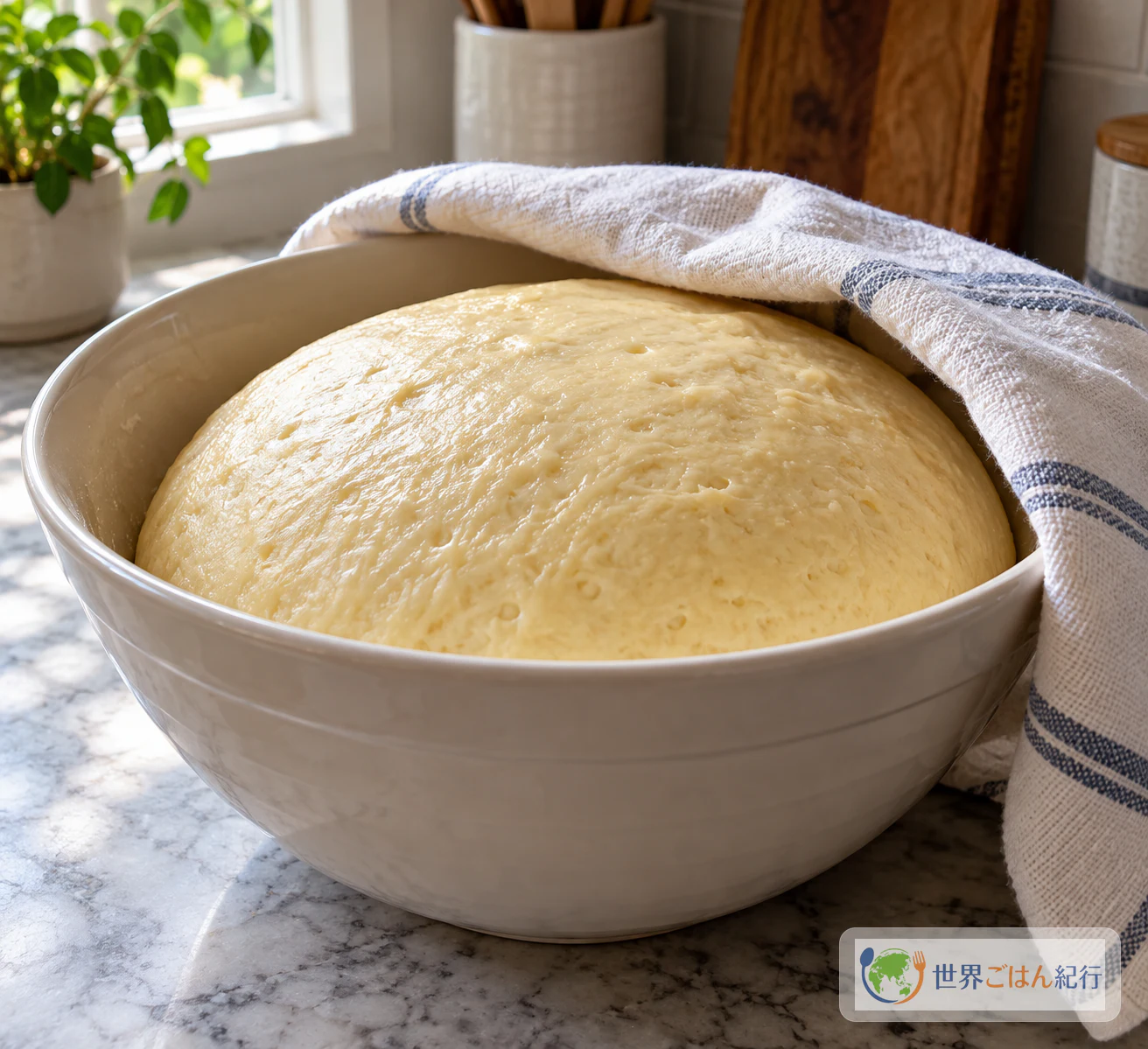
Rising times depend on the warmth of your kitchen. Use the times as guides and look at the dough itself: smooth after kneading, roughly doubled after the first rise.
When the Dough or the Bake Goes Wrong
| What you see | Likely cause | What to do |
|---|---|---|
| Dough is stiff and floury | Not enough water worked in, or water added too fast to be absorbed | Add the remaining water a little at a time while kneading, and give it time to absorb |
| Dough is very sticky | Not yet kneaded enough | Keep kneading. If you dust with flour, use very little; every extra spoonful moves the dough away from the recipe |
| Dough barely rises | A cool room, a dried-out surface, or tired yeast | Keep the bowl covered, find a warmer spot, and check how your yeast has been stored and its date |
| Tops brown before the time is up | Oven runs hot | Watch the color in the last minutes and take them out when golden, rather than guessing a new temperature |
Storage. No storage period has been established for these rolls. Once they have cooled, keep them in an airtight container and eat them soon. If you rewarm them, heat them through.
Filled Macatias and Other Variations
The plain macatia is the base, but Reunion has many variations. Each one uses its own dough and filling, so do not simply push fillings into the dough above while shaping.
- Chocolate or jam. The educational recipe sheet this article follows lists chocolate or jam as optional fillings, and local reporting notes that filled flavors are now common.
- Cheese. Fromages de La Réunion publishes a separate cheese-filled macatia made as six pieces, with brown sugar and Reunion cheese.
- Chocolate or coconut center. A community recipe on ChezVous.re uses 750g T65 flour, 450ml water, 50g brown sugar, dry yeast, salt and olive oil for 10–12 rolls, with an optional chocolate or coconut center and a 240°C bake.
- Fruit flavors. Banana and mango versions are among the flavors now sold.
- Macatia lontan. An older style, made by some artisan bakers with a long, slow fermentation on levain (sourdough starter). This is a craft practice rather than a home shortcut, and no home method for it is given here.
Background: A Round Sweet Bread Tied to Breakfast and Childhood
On Reunion, the macatia is an everyday bread found in bakeries and at home rather than a festive rarity. A LINFO.RE report describes it as a round, sweet bread connected with breakfast and with memories of childhood. The same report quotes one local baker's account of older methods: before commercial yeast was easy to find, bakers used levain and fermented dough, and sugar was added to soften the sourness. That is one baker's testimony, not a settled history, and the origin of the name has not been confirmed.
A profile from the West Reunion tourist office follows the artisan M. Fontaine in Trois-Bassins, who makes macatia lontan with good levain, a patient fermentation and small batches, and experiments with versions using less sugar and other flours. That is his own practice and quite different from the yeasted home recipe here.
The macatia also has a public, civic role. The town of Saint-Paul's account of its 2024 Fête du Pain (bread festival) presents it as a round bread emblematic of Reunion culture and records a community distribution of 200 macatias.
Home recipes vary widely. The ten-roll recipe used here comes from an educational recipe sheet published within La Réunion's school academy. It lists the flour both as "8 pots" and as 450g; since the size of a "pot" is not stated, this article uses the weight. It also suggests placing a glass of water in the oven, which is adapted here to an oven-safe dish for safety. Moulinex's appliance recipe, by contrast, uses 500g flour, 100g cassonade (brown sugar), one yeast sachet, 15g butter, 200g water, a teaspoon of salt and vanilla for ten rolls, baked at 210°C for about 15 minutes. These versions are not mixed together here.
Frequently Asked Questions
What kind of bread is a macatia?
A small round sweet bread from Reunion Island. Local reporting links it to breakfast and childhood, and the town of Saint-Paul presents it as a bread emblematic of Reunion culture.
How many rolls does this make, and how big are they?
Ten. The recipe divides the dough into ten pieces but does not give a weight per roll, and no measured weights are available, so none are given here.
Why is the yeast listed as "2 sachets" rather than in grams?
The recipe gives only "2 sachets" of baker's yeast, without the sachet weight or whether the yeast is dried or fresh. Rather than guess a number, this article keeps the sachet count. Check the directions on the yeast you buy for how much flour a sachet is intended for.
Why does the flour say 450g when some versions mention "pots"?
The recipe sheet prints both "8 pots" and 450g. The capacity of a pot is not stated, so the weight is used.
Can I add chocolate, jam or cheese?
Filled macatias are common on Reunion, but they are made as their own recipes, with different doughs and amounts. This article keeps the dough plain; see the variations section for the filled versions.
Is there nutrition information?
No. There is no confirmed weight per roll, and nutrition would depend on the specific products used, so no figures are given.
Sources
- Académie de La Réunion (school educational recipe sheet), "Recette pour faire 10 macatias." The ten-roll plain recipe: T55 flour 450g (also listed as 8 pots), sugar 100g, 2 sachets baker's yeast, 2 pinches salt, about 200ml lukewarm water, 20g soft butter; kneading, two rises, dividing into ten, scoring, milk wash, and baking at 200°C for 15 minutes; optional chocolate or jam fillings. https://bloc-note.ac-reunion.fr/9741600w/files/2020/05/jouer-recette_de_macatia.pdf
- Moulinex, "Macatias de la réunion." A different appliance-based ten-roll recipe with cassonade, vanilla and a 210°C bake, shown for comparison only. https://www.moulinex.fr/recette/detail/PRO/macatias-de-la-reunion/1717814
- Fromages de La Réunion, "Macatia maison fourré au fromage." A separate six-piece cheese-filled macatia. https://fromagesdelareunion.re/recette/macatia-maison-fourre-au-fromage/
- ChezVous.re (recipe credited to Laurent F.), "Recette des macatias." A community recipe for 10–12 macatias with T65 flour, olive oil, an optional chocolate or coconut center and a 240°C bake. https://www.chezvous.re/recette-des-macatias-de-la-r%C3%A9union
- LINFO.RE / Antenne Réunion, "Si les macatias m'étaient contés." Macatia as a round sweet bread tied to breakfast and childhood; one baker's account of older levain methods with sugar; filled flavors found today. https://www.linfo.re/la-reunion/societe/si-les-macatias-m-etaient-contes
- Office de Tourisme de l'Ouest 974, "Bonne pâte à Trois-Bassins." Profile of artisan M. Fontaine and his slow-fermented, small-batch macatia lontan. https://www.ouest-lareunion.com/bonne-pate-a-trois-bassins
- Ville de Saint-Paul, "Un jour de partage et de traditions : retour sur la Fête du Pain de Saint-Paul." The macatia as an emblematic Reunion bread at the 2024 bread festival and the distribution of 200 macatias. https://www.mairie-saintpaul.re/un-jour-de-partage-et-de-traditions-retour-sur-la-fete-du-pain-de-saint-paul/