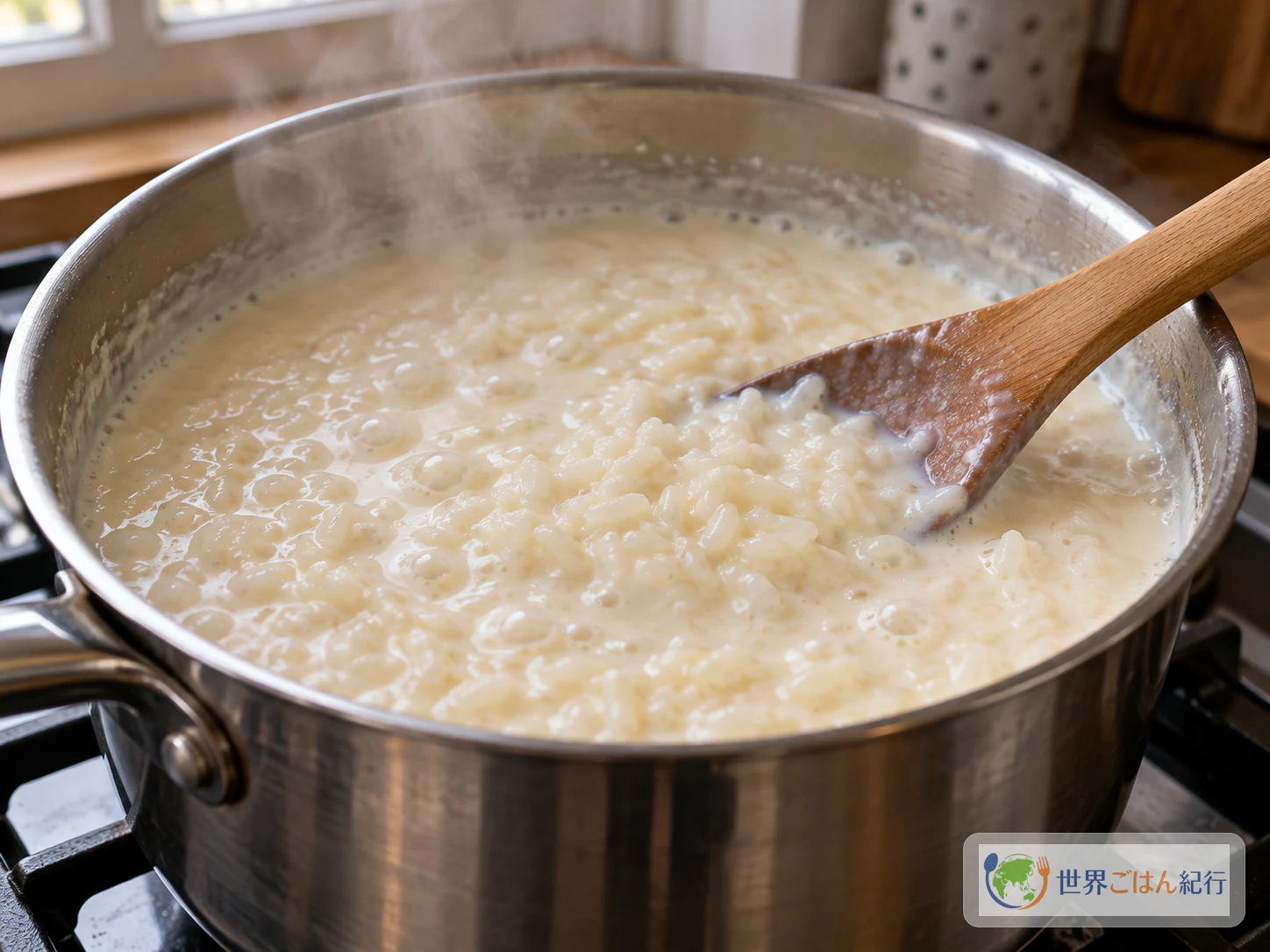
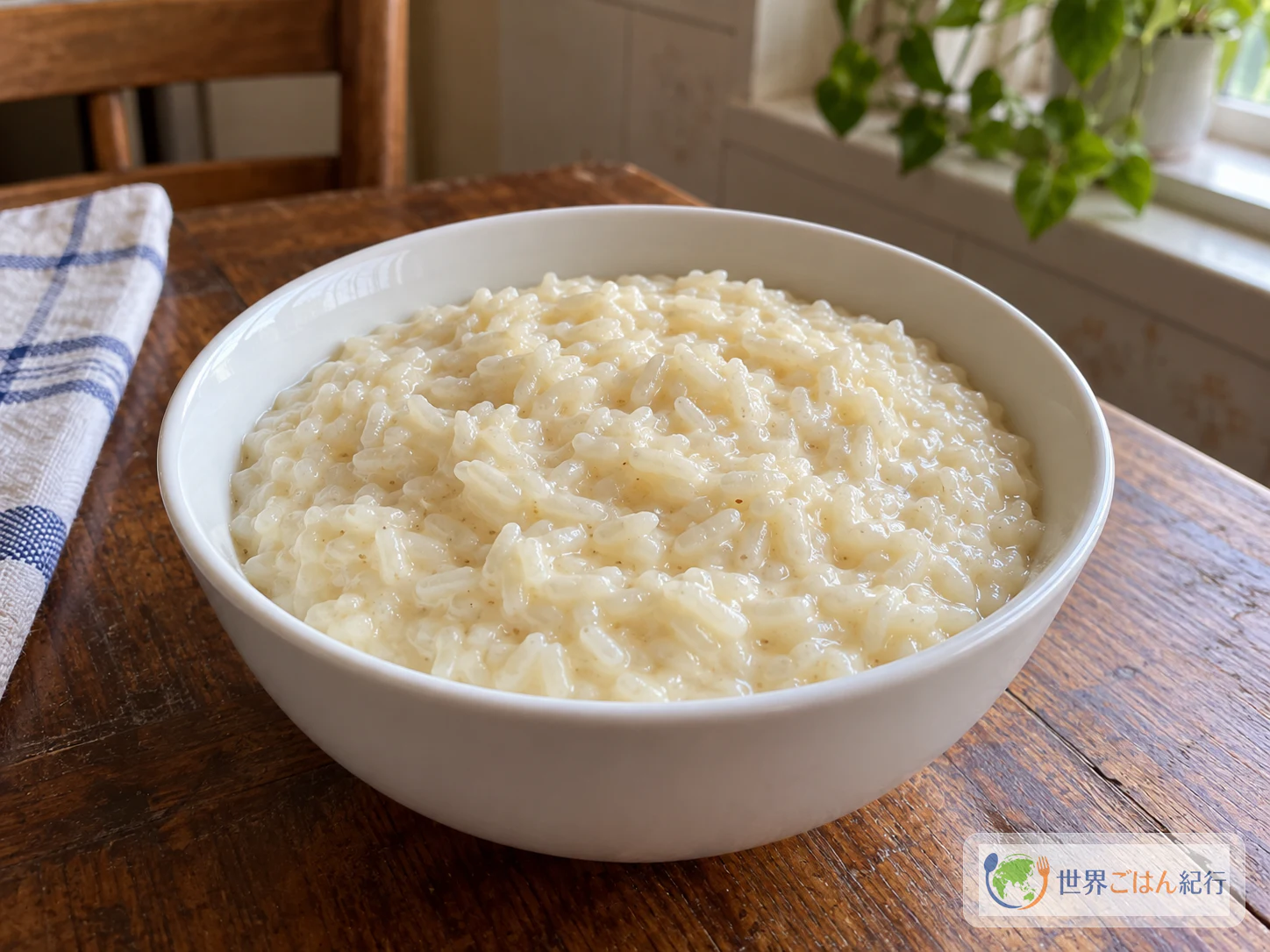
Sombi: Rice Grains You Can Still Feel, Wrapped in Sweet Vanilla Milk
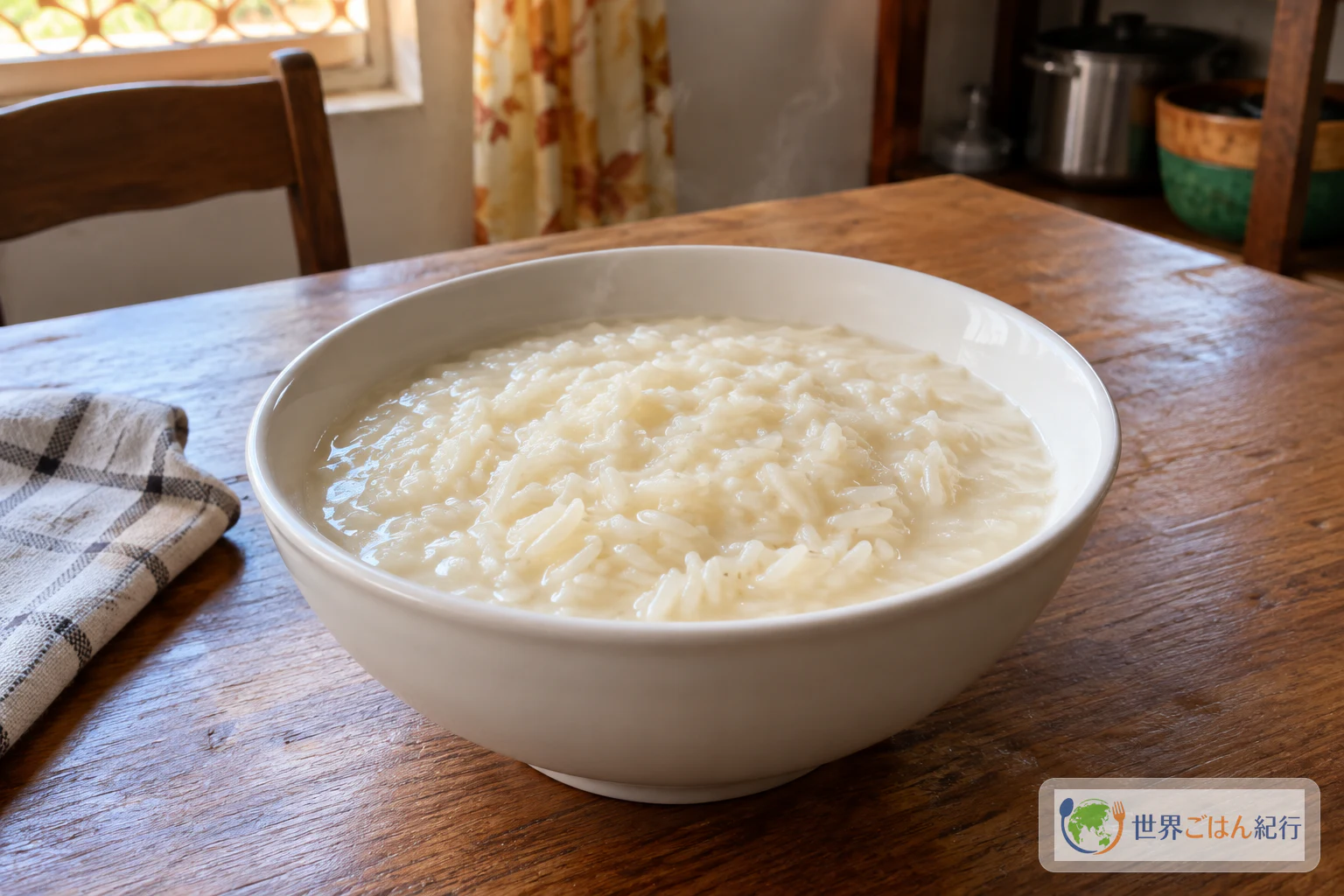
The rice stays in separate, tender grains, and the milk around it turns sweet, lightly thickened and fragrant with vanilla. The rice is boiled in water first and only then finished in milk.
Steam lifts off a pot of milk, and the rice that has been simmering in it is spooned into bowls, the grains still distinct in a pale, sweet liquid. In a community cookbook, a cook named Kady remembers Sombi as a snack from her childhood in Senegal. That is one person's memory, not a rule for the whole country, but it captures the place the dish can hold at home: something simple and sweet, made from rice.
"Sombi" does not point to a single recipe. A survey of rural Niakhar records it as a sweet rice porridge made with rice, water and rock sugar. A Senegalese cookbook gives a version with milk, sugar and vanilla. A contemporary Senegalese cook makes a Sombi guerte with peanut flour, and a coconut-milk version also appears in writing about Senegalese desserts. This article follows the milk version from the cookbook and keeps the other forms separate rather than blending them into one ingredient list. For more dishes from the same country, see our Senegalese cooking page.
This recipe has not been kitchen-tested by Sekai Gohan. The amounts and times below are as published in the recipe this article follows, and no yield or number of servings is given there, so none is stated here.
Senegalese Sombi Looks Different from Home to Home
The sources describe Sombi as a family of sweet rice dishes, not one fixed formula. In a dietary study of adolescent girls in Niakhar, rural Senegal, Sombi is recorded as a sweet rice porridge made from rice, water and rock sugar. The same study distinguishes it from other grain and milk dishes. It is a record from one surveyed community, so it shows one form of the dish rather than a national definition.
Other sources show milk entering the pot in different ways. A recipe sheet from the French Committee for International Solidarity (CFSI) on milk and dairy products presents Sombi as riz au lait sénégalais, Senegalese rice pudding, made with milk, sugar and vanilla; the sheet states the recipe is excerpted from Youssou N'Dour's 2004 cookbook Sénégal, la cuisine de ma mère (Minerva). A newspaper profile in Le Soleil of the cook Ibrahima Ndoye describes his Sombi guerte made with rice, salt, sugar, condensed milk, powdered milk and peanut flour. Kady's version in the community cookbook Fai(ê)tes en marmites ! is a creamy milk Sombi in which the rice is soaked and then cooked with milk. The French-language site Vivre au Sénégal introduces yet another recipe using coconut milk, coconut flesh, sugar, vanilla, salt, already cooked rice and lime, described as a warm or lukewarm dessert or breakfast. These come from very different kinds of sources: a development NGO's recipe sheet, a newspaper profile, a personal community cookbook and an introductory website.
The origin of the dish, the meaning of its name and any role it may have in ceremonies or religious occasions are not established by these sources, so this article does not claim any of them. The cookbook recipe is used here because it gives full amounts, a clear order of steps and specific times.
How the forms in the sources differ
| Form | What goes in | Where it comes from |
|---|---|---|
| Water Sombi | Rice, water, rock sugar | A dietary survey in rural Niakhar |
| Milk Sombi (this recipe) | Fragrant long-grain rice, milk, sugar, vanilla, salt | A recipe from a 2004 Senegalese cookbook, reprinted by CFSI |
| Sombi guerte | Rice, salt, sugar, condensed milk, powdered milk, peanut flour | A contemporary cook profiled in Le Soleil; no amounts given |
| Coconut Sombi | Coconut milk, coconut flesh, sugar, vanilla, salt, cooked rice, lime | An introductory recipe on Vivre au Sénégal |
Ingredients for Milk Sombi
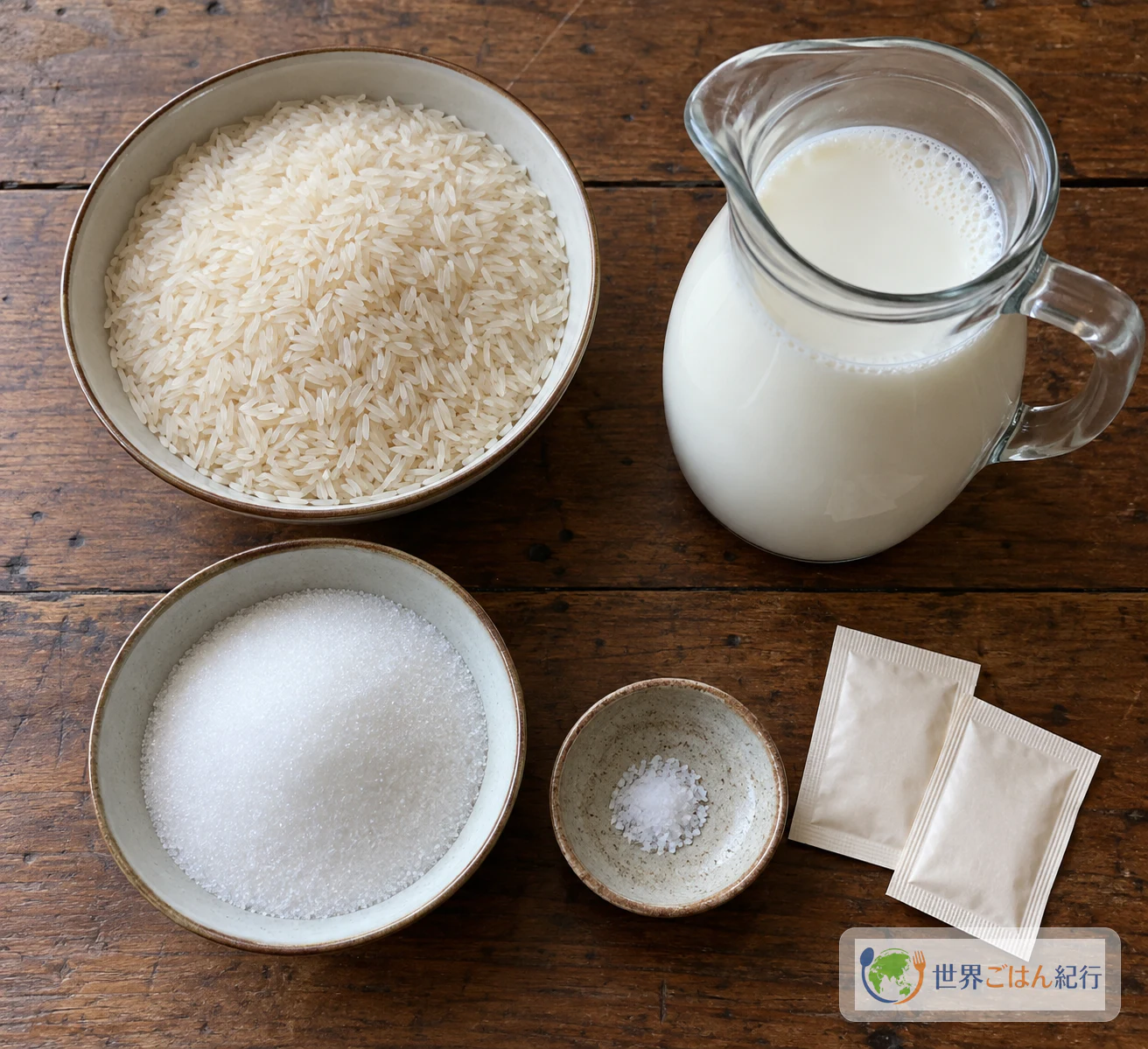
Use either the vanilla sugar or the vanilla beans, not both. The water is only for boiling the rice and is drained off.
Choosing Rice, Milk and Vanilla Outside Senegal
Rice. Use fragrant long-grain rice. Jasmine rice is an easy-to-find candidate that leans in a similar direction for aroma and grain, but it is a practical substitute, a substitute that may differ in aroma and texture. An ordinary long-grain rice will also work, with a different aroma and texture.
Milk. Whole milk is one practical option. Plant-based drinks, powdered milk and condensed milk differ in fat, sweetness and body from milk. If you swap the milk, treat the result as your own variation rather than this recipe.
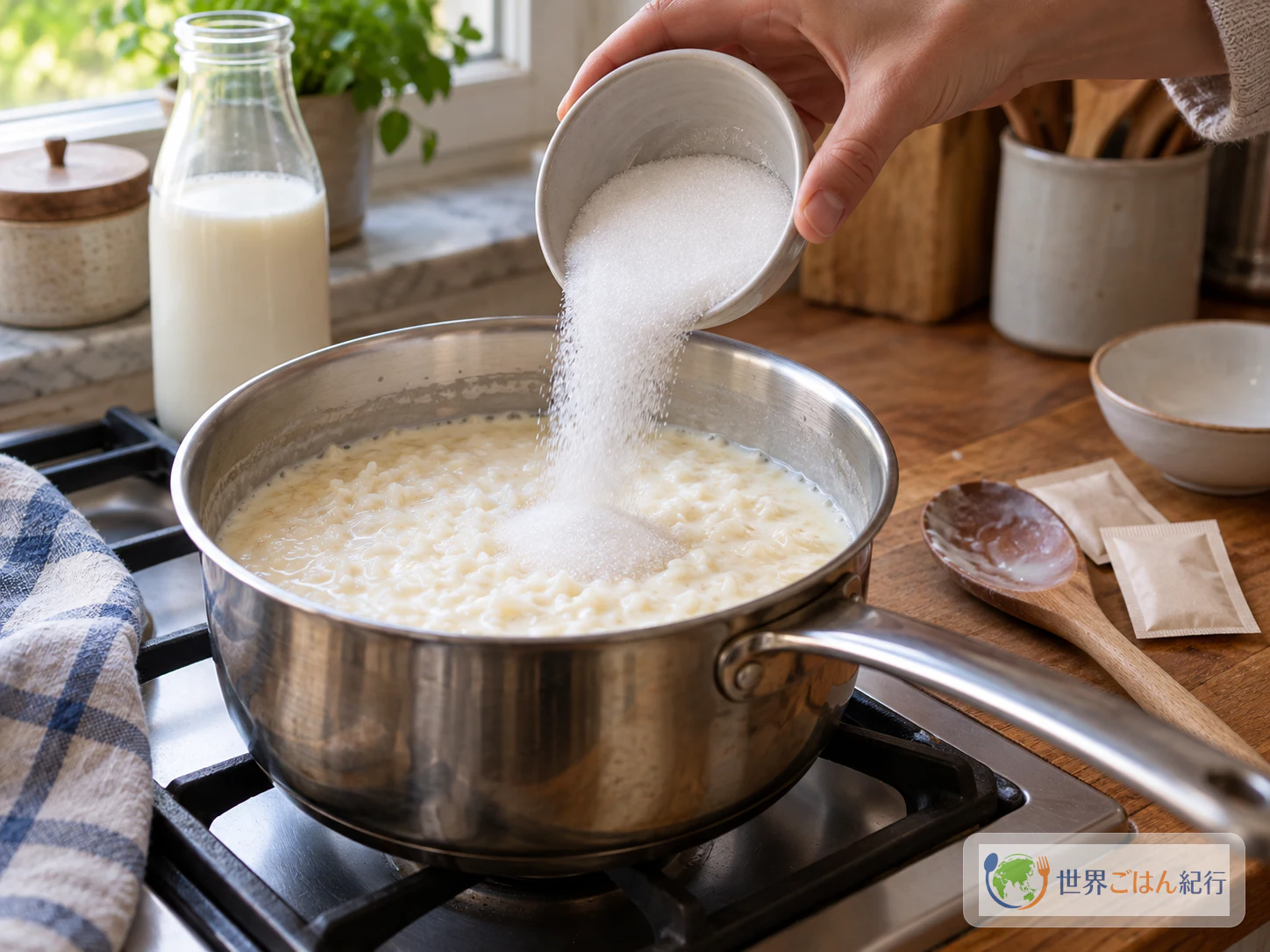
Sugar and vanilla. Caster or other white sugars are easy alternatives to granulated sugar, though grain size and flavor differ slightly. The 125 g of sugar is part of this recipe; using less changes the dish.
Serving extras. Plain yogurt or fromage blanc can be added at the table, on the side or as a small spoonful on top. They are optional and are not mixed into the pot.
Equipment
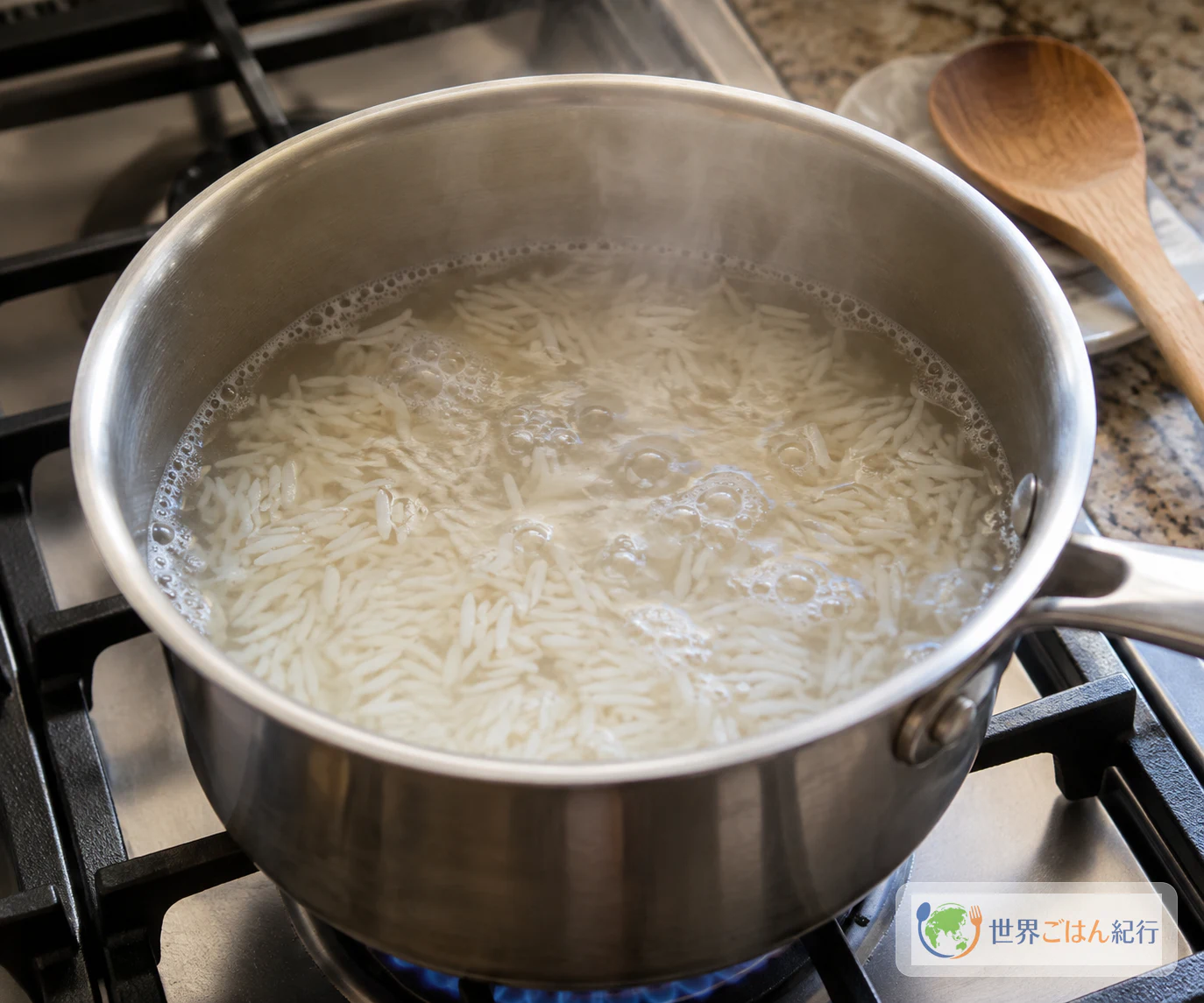
- A pot for boiling the rice in plenty of water
- A heavy saucepan for the milk, so it is easier to keep at a gentle boil without scorching
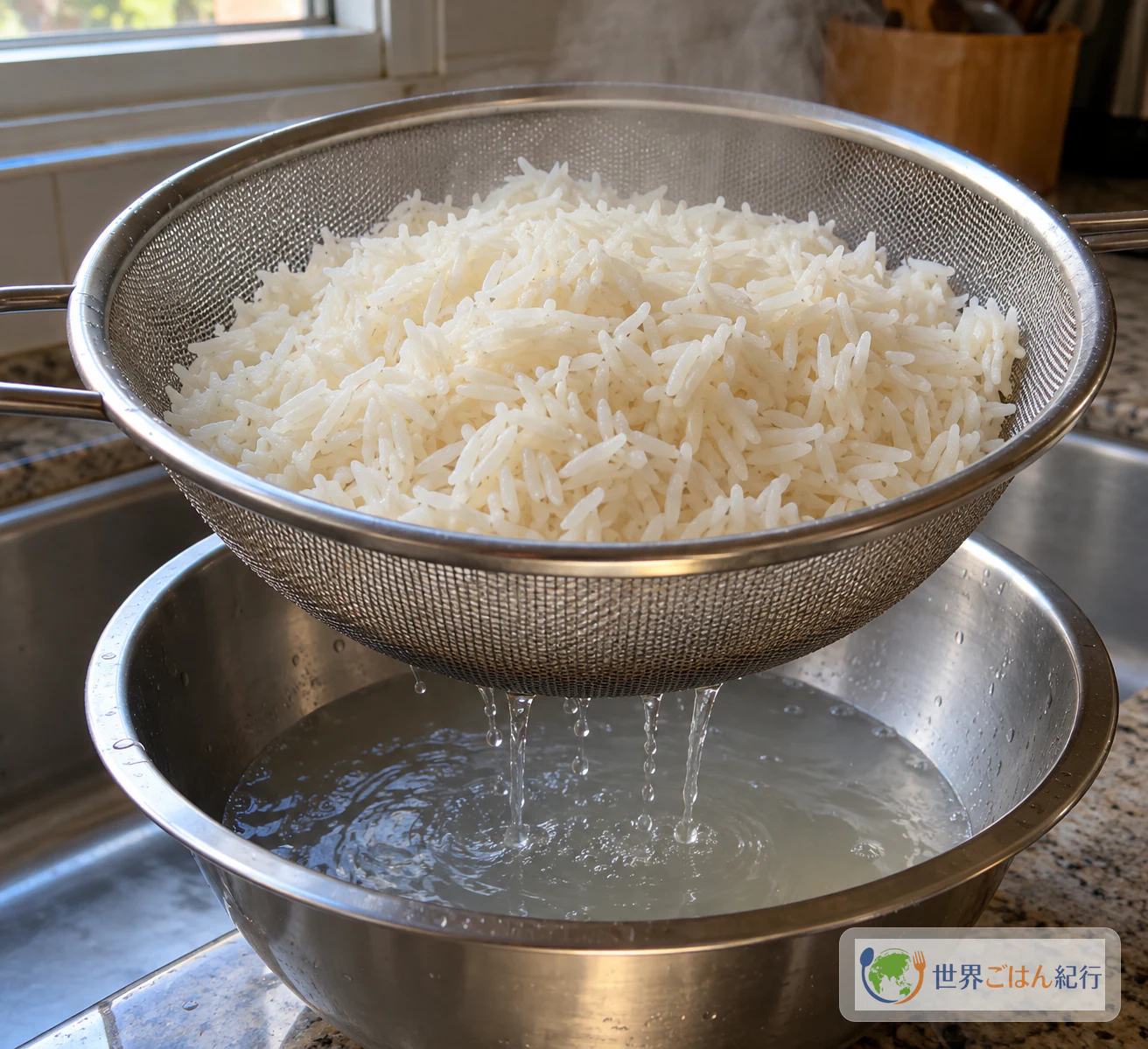
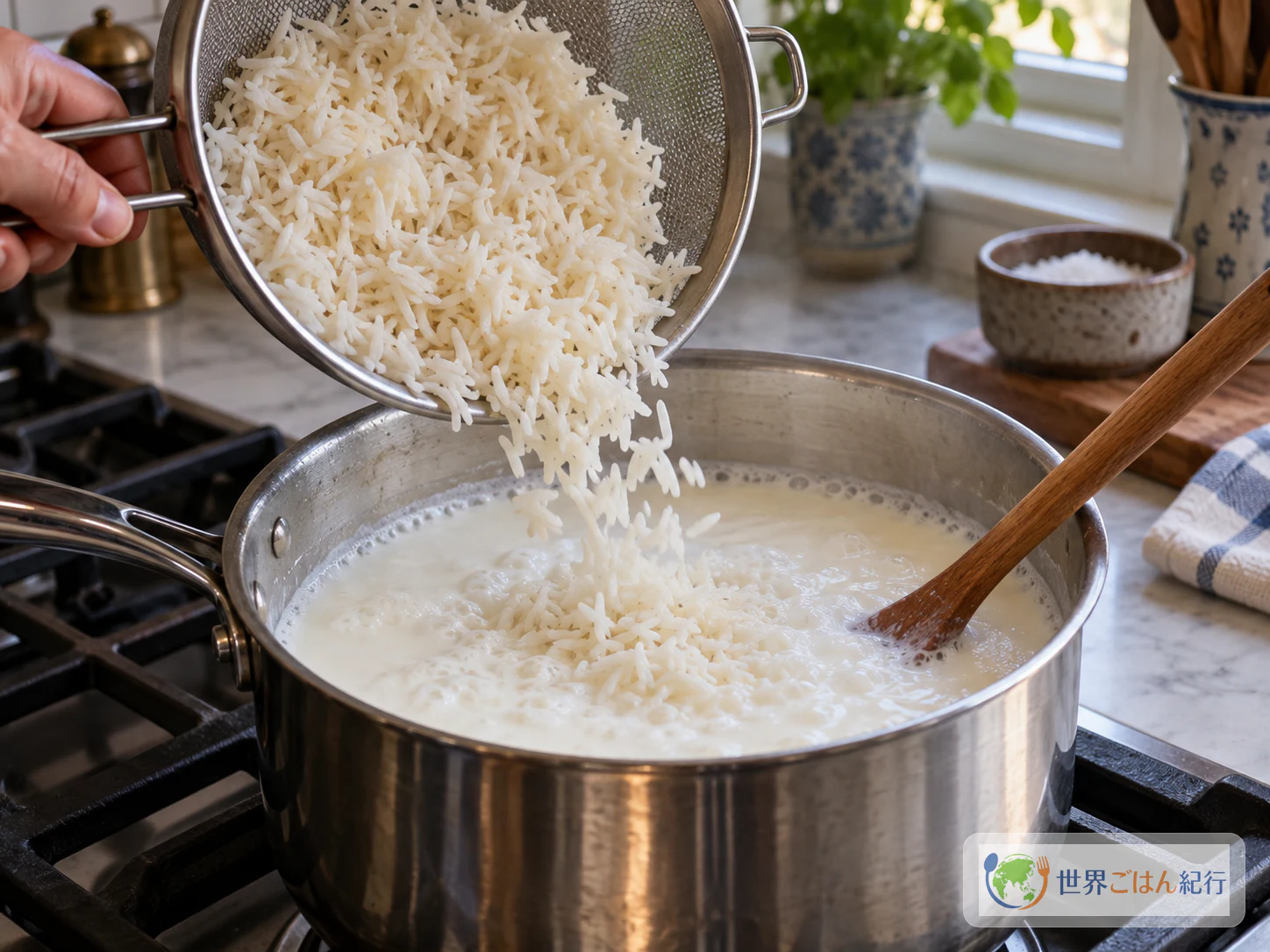
- A fine-mesh sieve, for draining the boiled rice
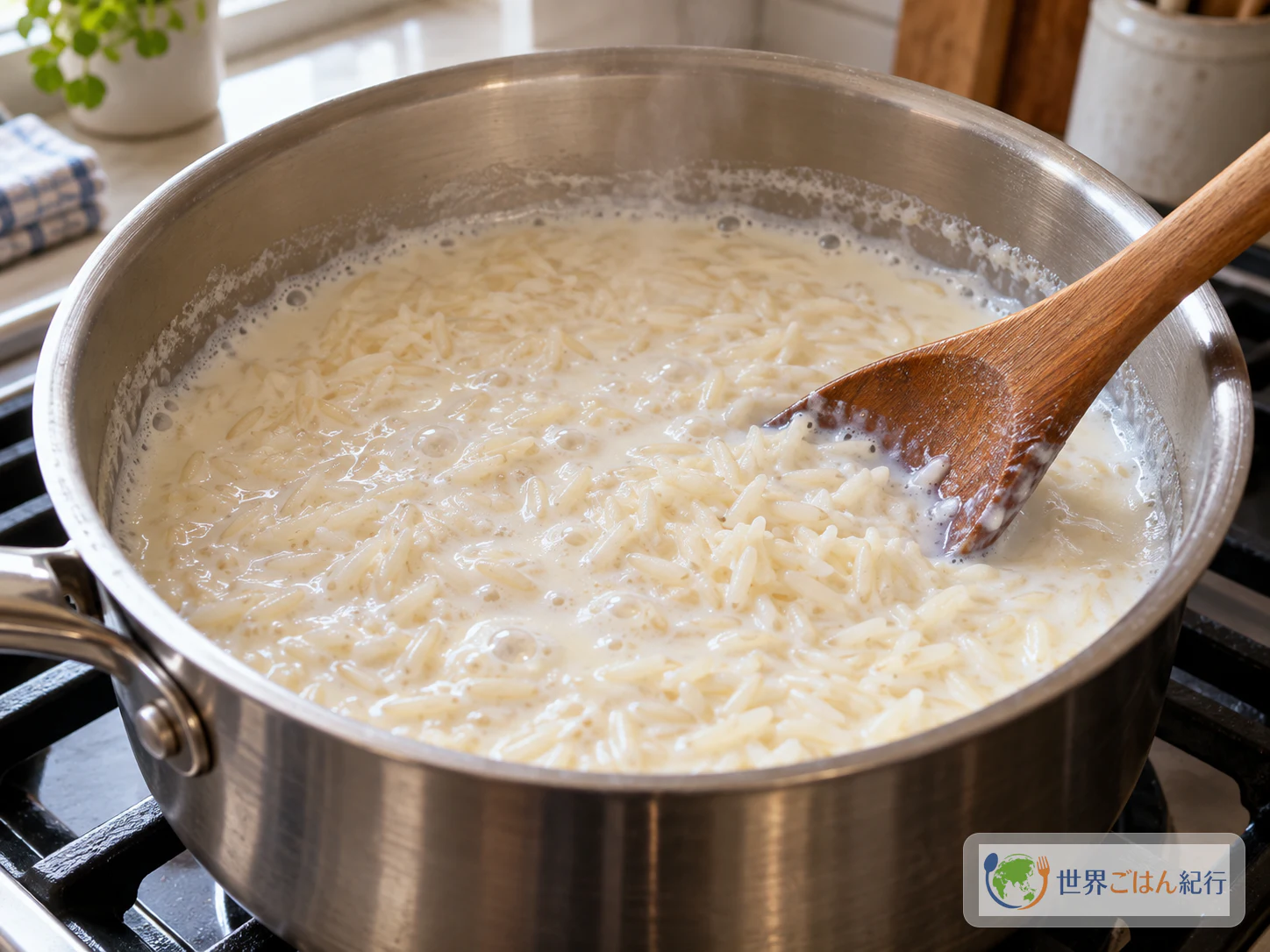
- A wooden spoon, for stirring along the bottom of the pan while the rice cooks in milk
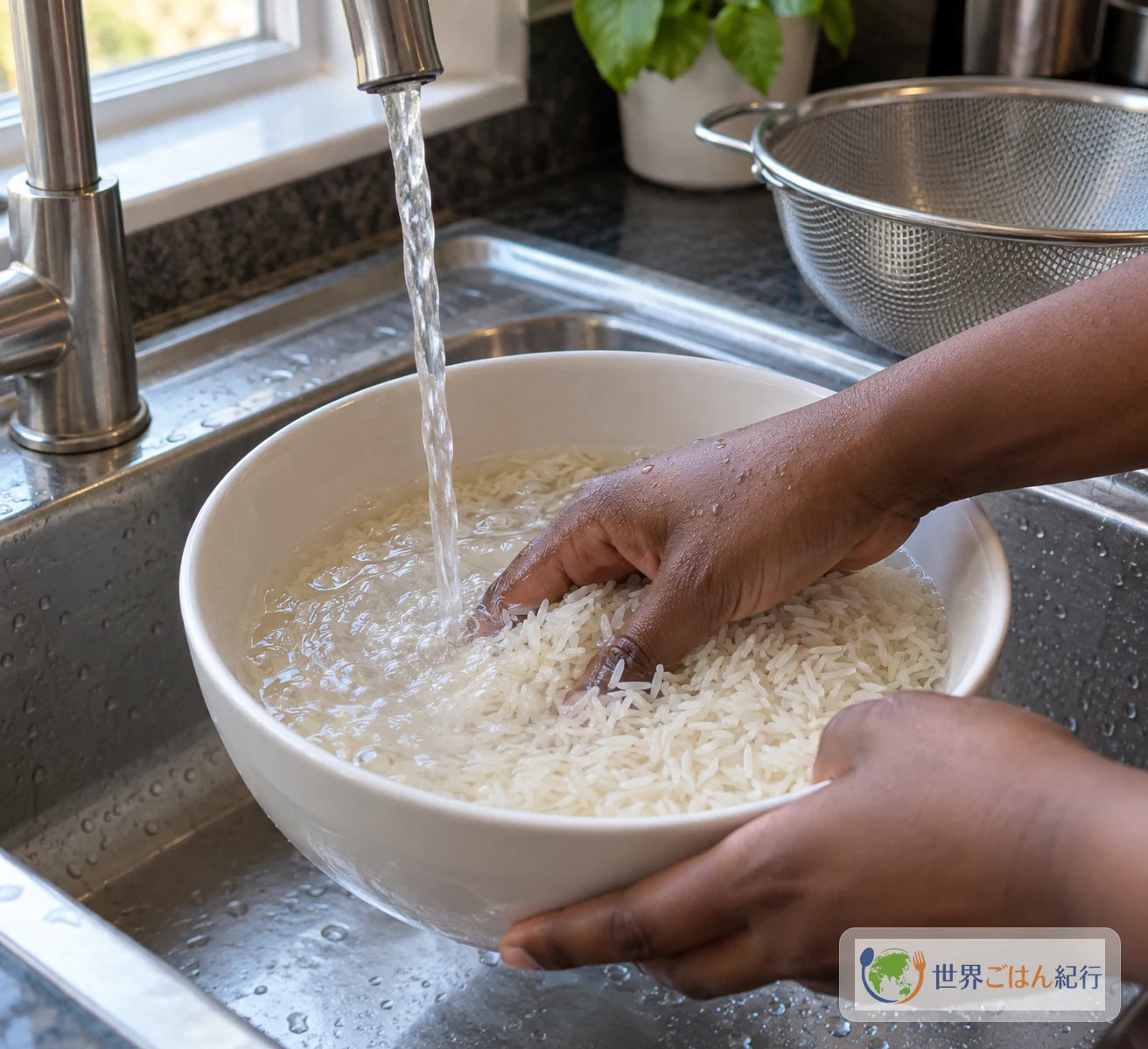
- A bowl, for rinsing the rice
Method: From Water-Boiled Rice to a Milk Finish
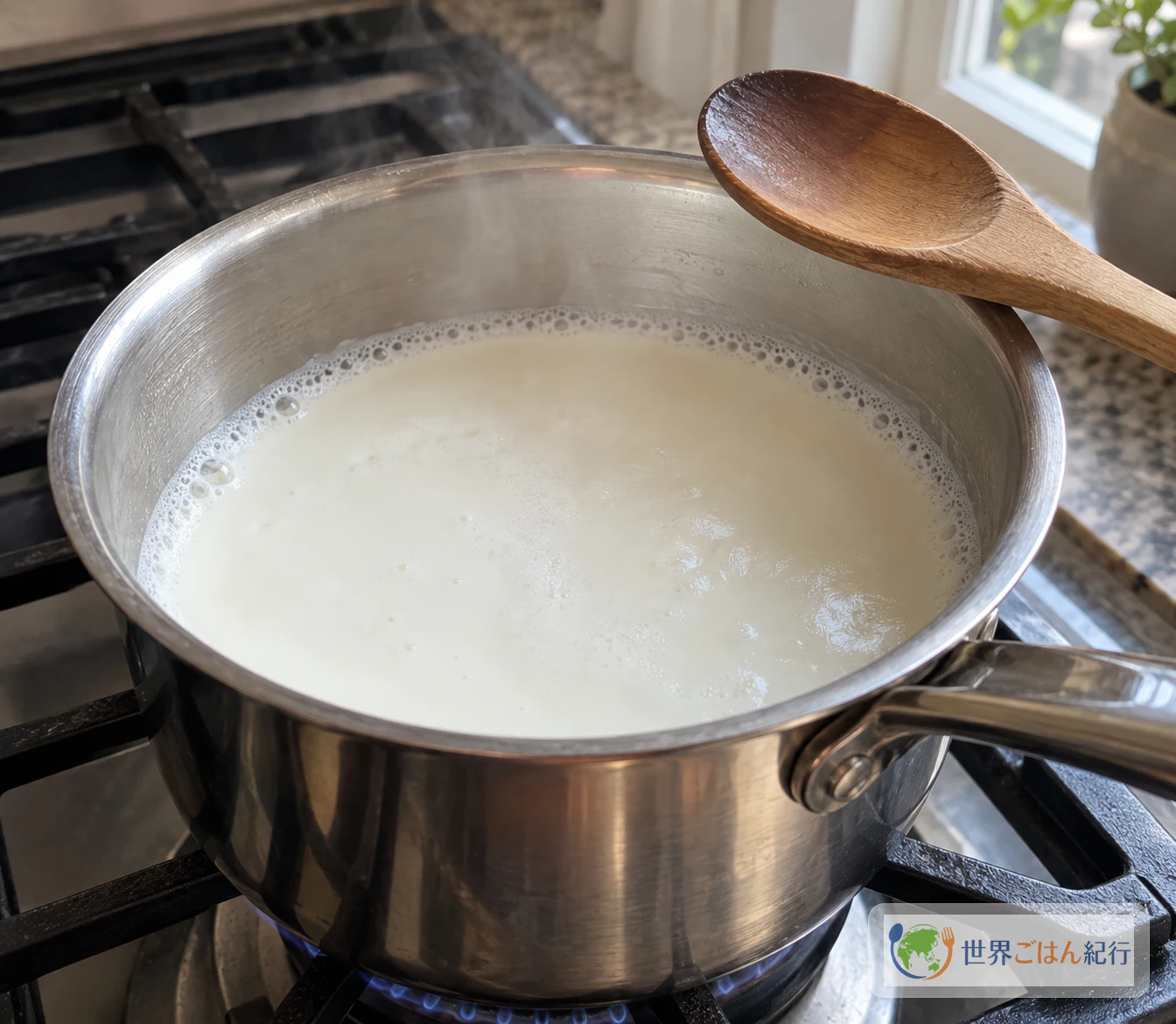
The rice cooks in water first and in milk second, and the sugar and vanilla go in only after the first 10 minutes in milk. Keep the milk at a gentle boil and stay close to the pan.
Scorched, Boiling Over, Still Hard: Fixing Problems in the Pan
| Problem | Likely cause | What to do |
|---|---|---|
| Milk sticks or scorches on the bottom | Heat too high, not stirred often enough | Once the milk boils, keep it at a gentle boil and stir along the bottom regularly with a wooden spoon. If it catches, don't scrape the burnt layer into the rest |
| Milk boils over | Left unwatched at high heat | Stay by the pan while the milk comes up, and lower the heat as soon as it boils |
| Rice is still hard in the center | Rice variety, pot or burner differs | Treat the 30 minutes as a guide, bite a grain after boiling in water, and cook a little longer before draining if the center is still firm |
| Too sweet for your taste | The 125 g sugar is fixed in this recipe | Serve it with plain yogurt or fromage blanc on the side. Cutting the sugar changes the dish; treat that as your own variation |
| Milk allergy or lactose intolerance | The recipe is built on milk | This recipe is not suitable as written. Plant-based or lactose-free milk results have not been tested, and the outcome would not be the same recipe |
Leftovers and Reheating
Don't leave cooked rice and milk sitting at room temperature for long. Divide leftovers into shallow containers, cool them quickly and refrigerate promptly, then eat them soon. To reheat, stir down to the bottom of the pan and heat the whole thing through thoroughly.
Ways to Serve It, and the Other Sombis
The first four options keep this milk recipe exactly as it is and change only how it reaches the table. The last one is a different dish in the same family, not a swap within this recipe.
- Lukewarm. Eat it shortly after cooking, while still warm from the pan.
- Cold. Cool it quickly in shallow containers and refrigerate before serving.
- With yogurt. Add a little plain yogurt on the side or on top, without stirring it into the pot.
- With fromage blanc. Use fromage blanc instead of yogurt; one or the other is enough.
- Explore the other forms. The water and rock sugar porridge from Niakhar, Ibrahima Ndoye's Sombi guerte with peanut flour, and the coconut version each use different ingredients and methods. They are best approached as separate dishes, not as easy tweaks to this one.
Not the same as other sweet grain dishes
The Vivre au Sénégal article that introduces the coconut Sombi groups it among Senegalese desserts and dishes made from millet, such as thiakry. The difference to keep in mind is the grain: thiakry is a millet dish, while Sombi is made with rice.
Frequently Asked Questions
What is Sombi?
It is a sweet Senegalese rice dish whose form varies by source. A rural survey in Niakhar records a version made with rice, water and rock sugar; a Senegalese cookbook gives the milk, sugar and vanilla version used here. There is no single fixed definition in these sources.
Does Sombi use coconut milk?
Some recipes do. Vivre au Sénégal introduces a version with coconut milk, coconut flesh, vanilla, lime and cooked rice, but this article's recipe uses cow's milk. The coconut version has different ingredients and steps, so it is treated as a separate form rather than a substitute.
Should it be eaten hot or cold?
The cookbook recipe says to serve it lukewarm or cold (tiède ou froid). If you serve it cold, cool it quickly in shallow containers and keep it refrigerated.
How many people does it serve?
The recipe does not state a yield or number of servings, and this version has not been kitchen-tested, so no serving count is given.
How do I use vanilla beans instead of vanilla sugar?
The recipe offers 2 vanilla beans as an alternative to 2 sachets of vanilla sugar, added together with the sugar. It does not describe how to prepare the pods, for example whether to scrape out the seeds or simmer the whole pod. Choose one vanilla option only.
How should I store leftovers?
Divide them into shallow containers, cool them quickly, refrigerate promptly and eat them soon. Reheat thoroughly, stirring to the bottom of the pan. No specific number of days is given.
Sources
- Comité Français pour la Solidarité Internationale (CFSI), "Fiche 3 : Des laits, des produits laitiers — Le Sombi, ou riz au lait sénégalais." The basis for this recipe's amounts, order of steps and times, serving it lukewarm or cold, and the optional yogurt or fromage blanc on the side. The sheet states the recipe is excerpted from Youssou N'Dour, Sénégal, la cuisine de ma mère (Minerva, 2004). It gives no water amount or yield. https://www.cfsi.asso.fr/wp-content/uploads/2021/01/17-fiche-enjeux-dev-filiere-lait-afrique.pdf
- IRD / Horizon documentation, "Etude de la consommation alimentaire des adolescentes de Niakhar, Sénégal rural." Records Sombi as a sweet rice porridge made with rice, water and rock sugar, distinguished from other grain and milk dishes. A survey of one community, not a national definition or evidence of origin. https://horizon.documentation.ird.fr/exl-doc/pleins_textes/2024-04/010024663.pdf
- Le Soleil, "Ibrahima Ndoye, cuisinier : Un passionné des fourneaux." Describes the cook's Sombi guerte with rice, salt, sugar, condensed milk, powdered milk and peanut flour. No amounts; a contemporary example, not a standard formula. https://lesoleil.sn/actualites/arts-et-culture/ibrahima-ndoyecuisinier-un-passionne-des-fourneaux/
- Fai(ê)tes en marmites ! (community cookbook), "Sombi, riz au lait crémeux." Kady's memory of Sombi as a childhood snack, and a separate creamy milk version in which the rice is soaked and then cooked. One family's recollection and recipe, not used for this article's method. https://s7df1ae9817c6c748.jimcontent.com/download/version/1707395664/module/12484865898/name/Fai(%C3%AA)tes%20en%20marmites!.pdf
- Vivre au Sénégal, "Thiakry, lakh, thiéré : desserts et plats de mil du Sénégal." Introduces a coconut Sombi with coconut milk, coconut flesh, sugar, vanilla, salt, cooked rice and lime, eaten as a warm or lukewarm dessert or breakfast. An introductory article; the original page of the recipe it credits to Saveur was not consulted. https://vivreausenegal.fr/decouvrir/cuisine/desserts
- Ministry of Agriculture, Forestry and Fisheries of Japan, "冷蔵庫のかしこい使い方~知ってお得な食品の保存~" (Using the refrigerator wisely). General guidance on dividing cooked food into shallow containers, cooling it quickly, refrigerating it, eating it soon and reheating thoroughly. Not specific to Sombi. https://www.maff.go.jp/j/syouan/seisaku/foodpoisoning/frige.html