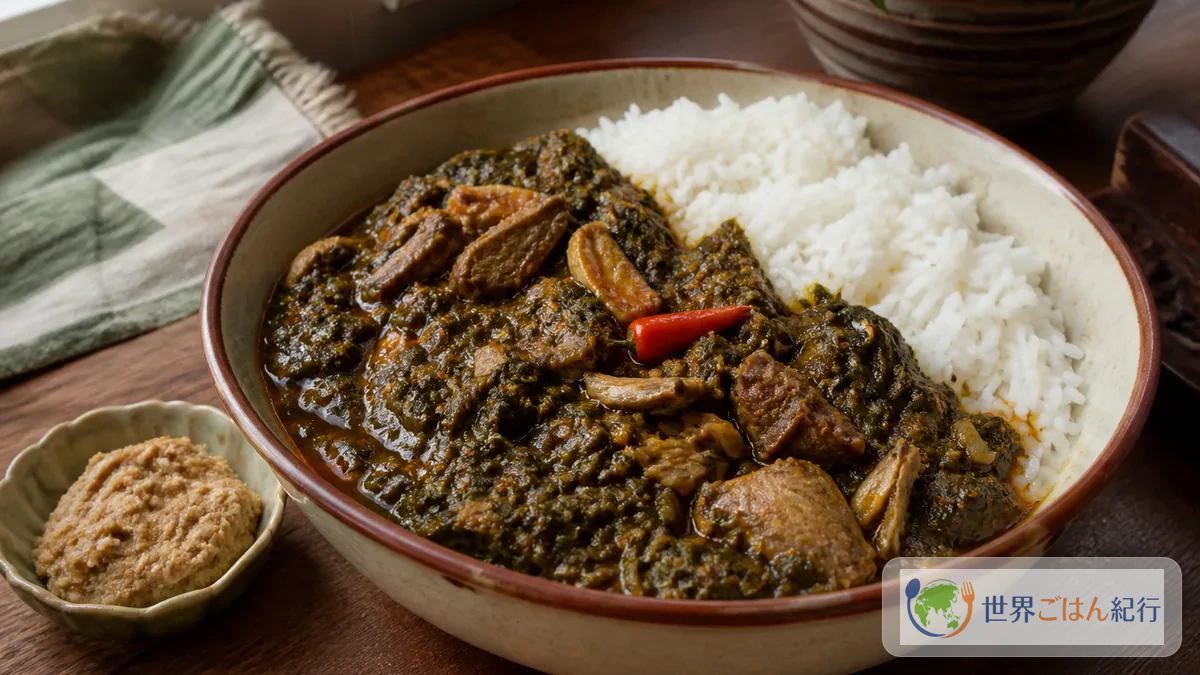
A leaf stew served with rice in Sierra Leone
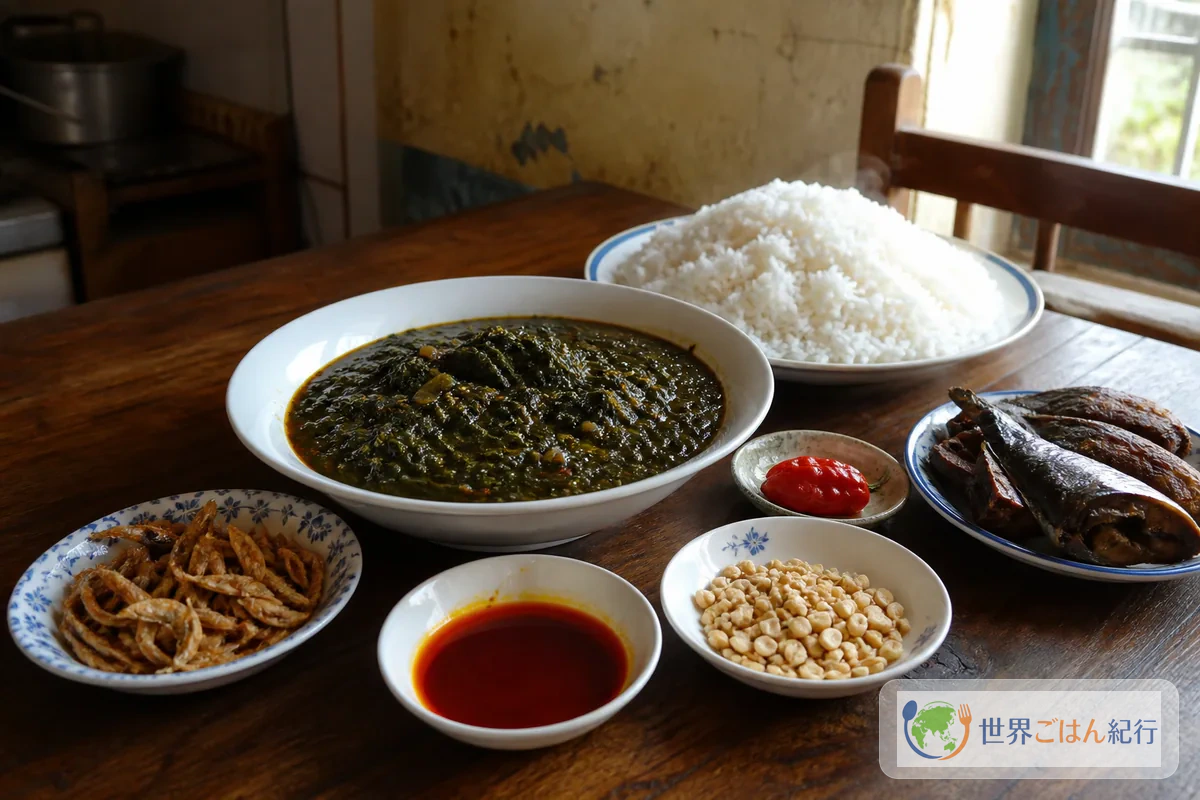
You spoon the deep green sauce over freshly cooked white rice. The orange of red palm oil floats in a thin line on the surface, and the simmered leaves leave an earthy aroma rather than a raw green smell. It is a stew in which the saltiness of smoked fish and the roundness of groundnuts soak into the rice the more you chew.
Sierra Leone Tourism introduces it in English as cassava leaf soup, but explains that it is really closer to a thick stew than a soup. The Sierra Leone Ministry of Tourism and Cultural Affairs's food introduction lists it as a dish of pounded cassava leaves cooked with palm oil, peanuts, fish or meat, and spices. "Plasas," used in English-language food articles, is a broad name for dishes of crushed leaves simmered, and is not limited to cassava leaves.
Rice is the staple served with everyday cooking in Sierra Leone. There is a food culture of pairing sauces made with cassava, yam, groundnuts and leafy greens with rice, and the sauce can be taken up by plain white rice or by fermented staples such as fufu. At home, start with rice and check the thickness of the stew and the texture of the leaves, and the outline of the dish is easier to grasp.
If you are unsure about getting leaves, don't keep searching for untreated fresh leaves; use a processed frozen product labeled as edible, or replace them with spinach. Cassava leaves are said to have a higher concentration of cyanide compounds than the root, and heating alone cannot always guarantee safety. The main method here assumes a frozen product whose bag is labeled minced, pounded or processed.
It serves four. Beef cooking liquid goes back into the leaf sauce, unsweetened peanut butter adds body, and smoked fish and dried shrimp are layered on at the end. Use 80–100 ml of red palm oil, but the first time start with 80 ml and add more after watching the aroma and how the oil floats. Nutrition values are approximate and include white rice; they vary with the saltiness of the smoked fish, dried shrimp and stock.
Ingredients | Serves 4, with substitutes
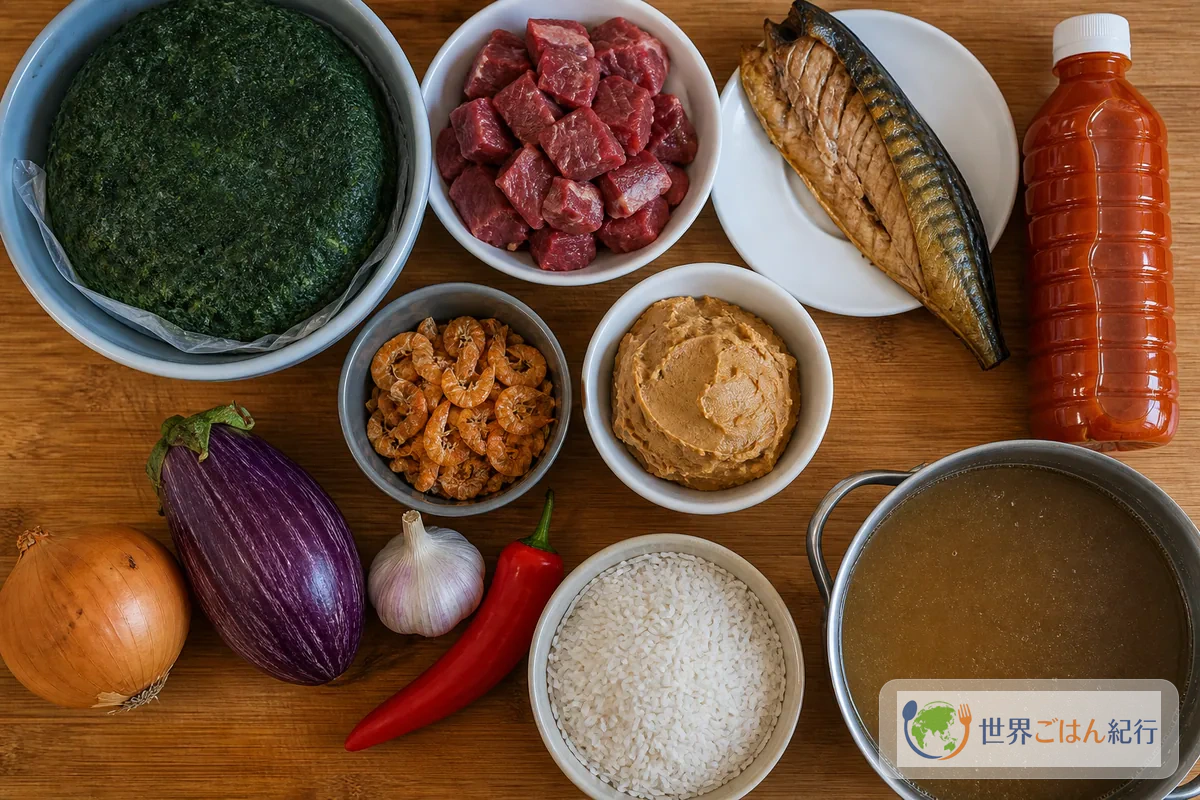
Cassava, the local name, is also called yuca. What is used in this dish is the leaf, not the root, so buying cassava flour or tapioca flour is not a substitute. When searching an import grocer, look for pounded cassava leaves or minced cassava leaves as well as cassava leaves.
Do not use raw cassava leaves, leaves with no stated processing method, or leaves sold as ornamental plants. Food-safety sources describe methods such as pounding the leaves for 10 minutes or more and then washing with twice the leaves' weight of water, or soaking in 50°C water and changing the water, but results vary with variety, leaf condition and processing environment. Since this is not a procedure whose safety can be guaranteed at home by timing alone, the ingredient list here is built around the commercial processed frozen product.
Red palm oil is not an oil that merely adds red color. It rounds the faint bitterness of the leaves and places an earthy, nutty aroma between the smoked fish and the peanuts. When you buy it, check for labels such as edible, red palm oil or red palm, and the volume. If you will try it only once, or dislike a strong oily aroma, there is no need to buy it; the dish works with rapeseed oil.
Peanuts here are not for adding sweetness but for thickness that ties the leaf fibers to the cooking liquid. Choose one whose ingredients are mainly peanuts, with no sugar or honey. If you are unsure how much to buy, about 150 g is enough. If you crush peanuts yourself, use raw unsalted ones, and loosen them with warm stock before adding to the pot so no lumps remain.
Instructions | Unwind the bitterness into a rich sauce
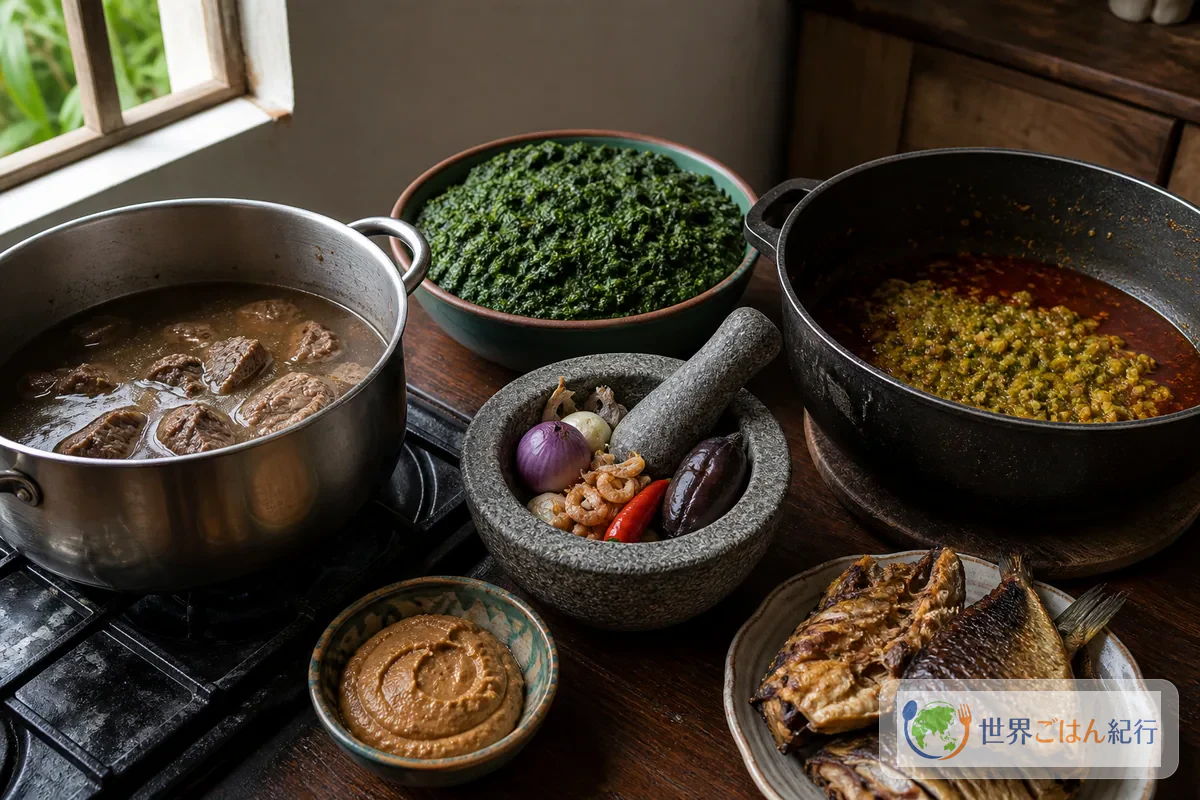
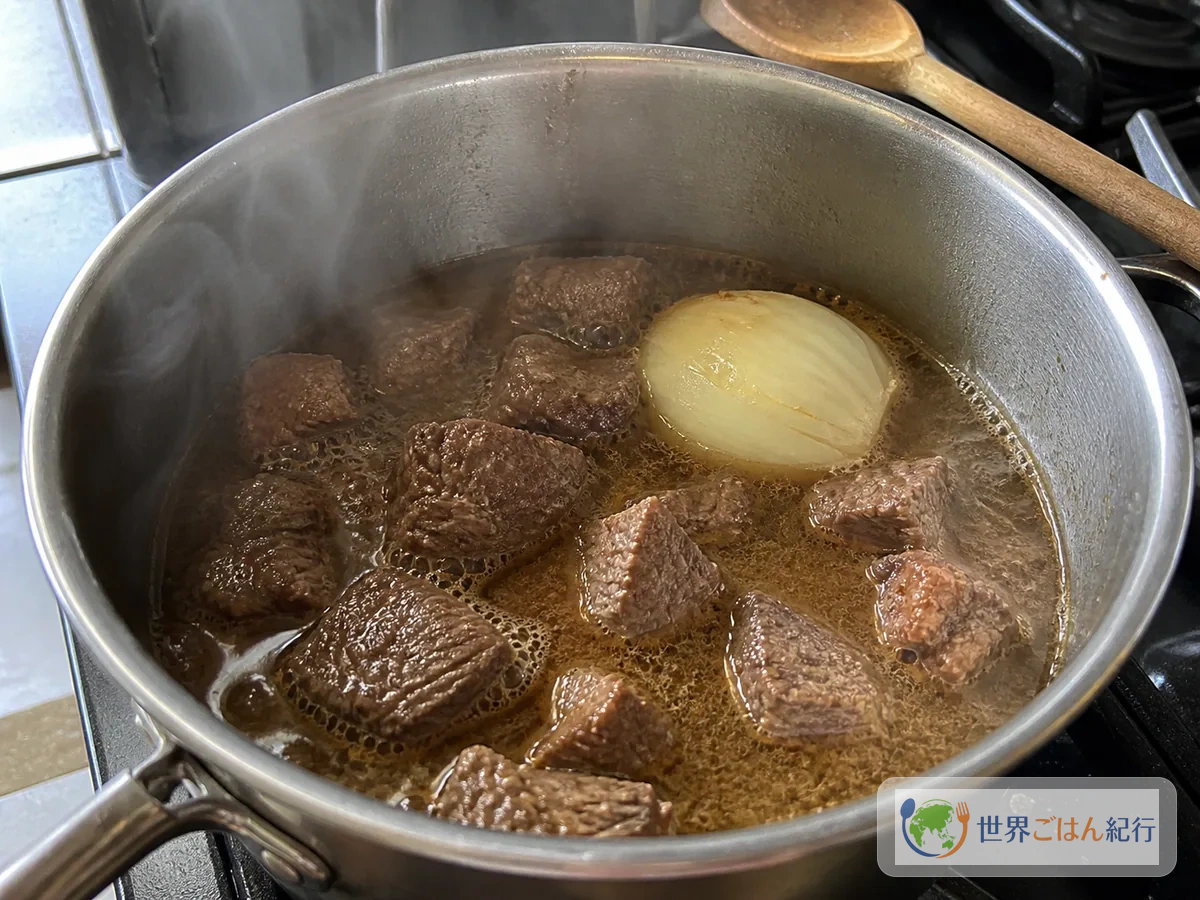
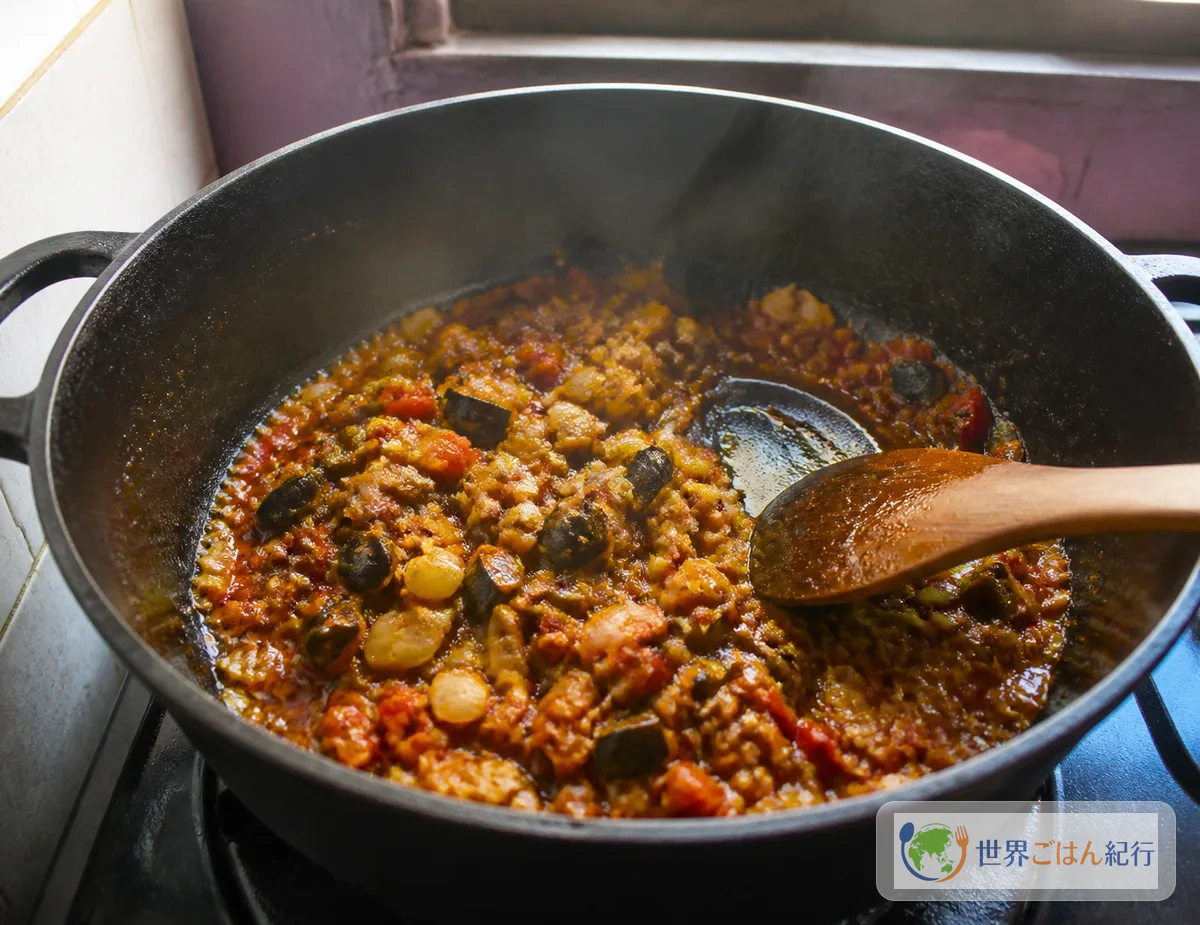
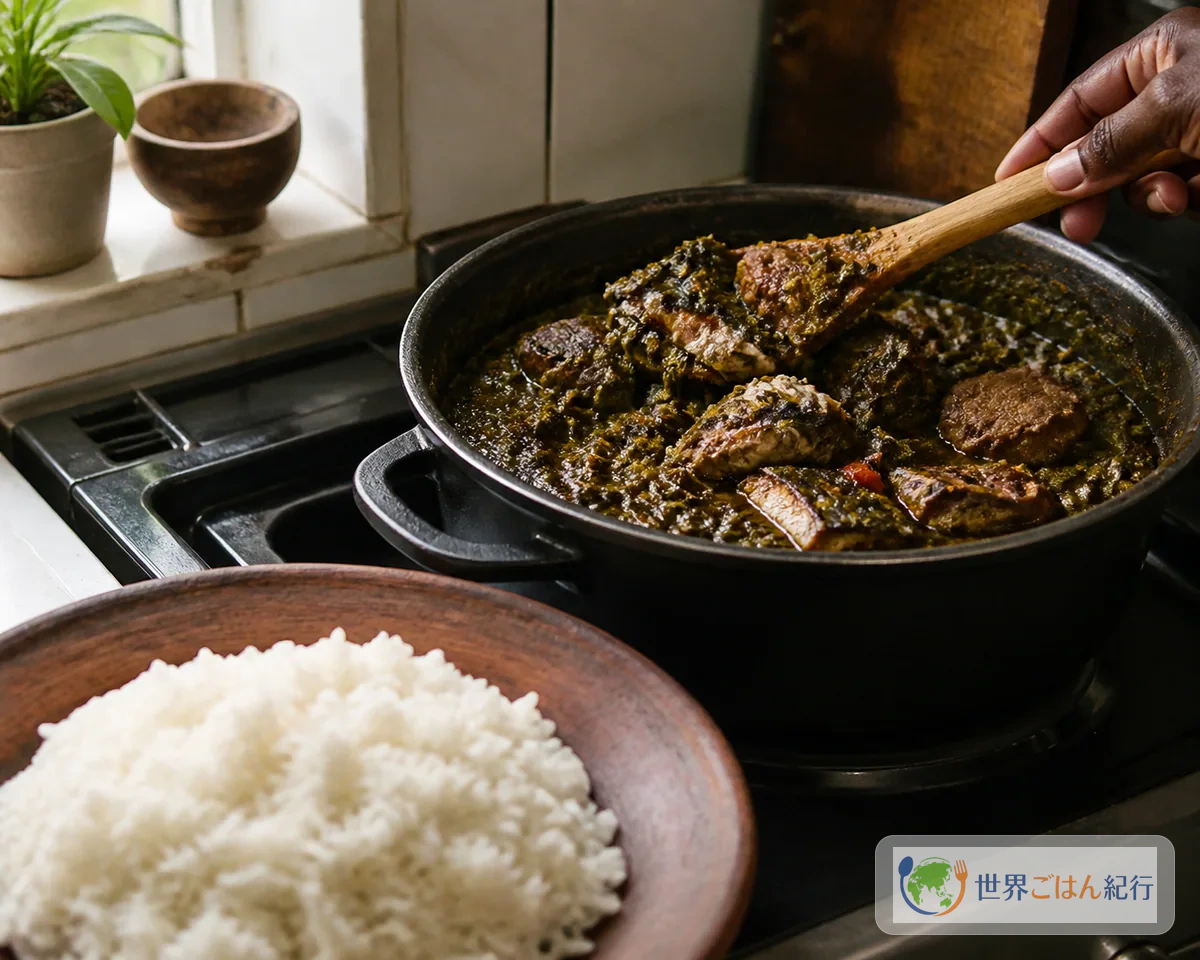
You do not need two pots. Simmer the beef first, thin the leaf sauce with that liquid, and put the meat and fish back at the end. Because cooking time changes with how fine the leaves are, watch the aroma, color and the trail of a spoon, not just the clock.
Three ways to judge the heat and texture
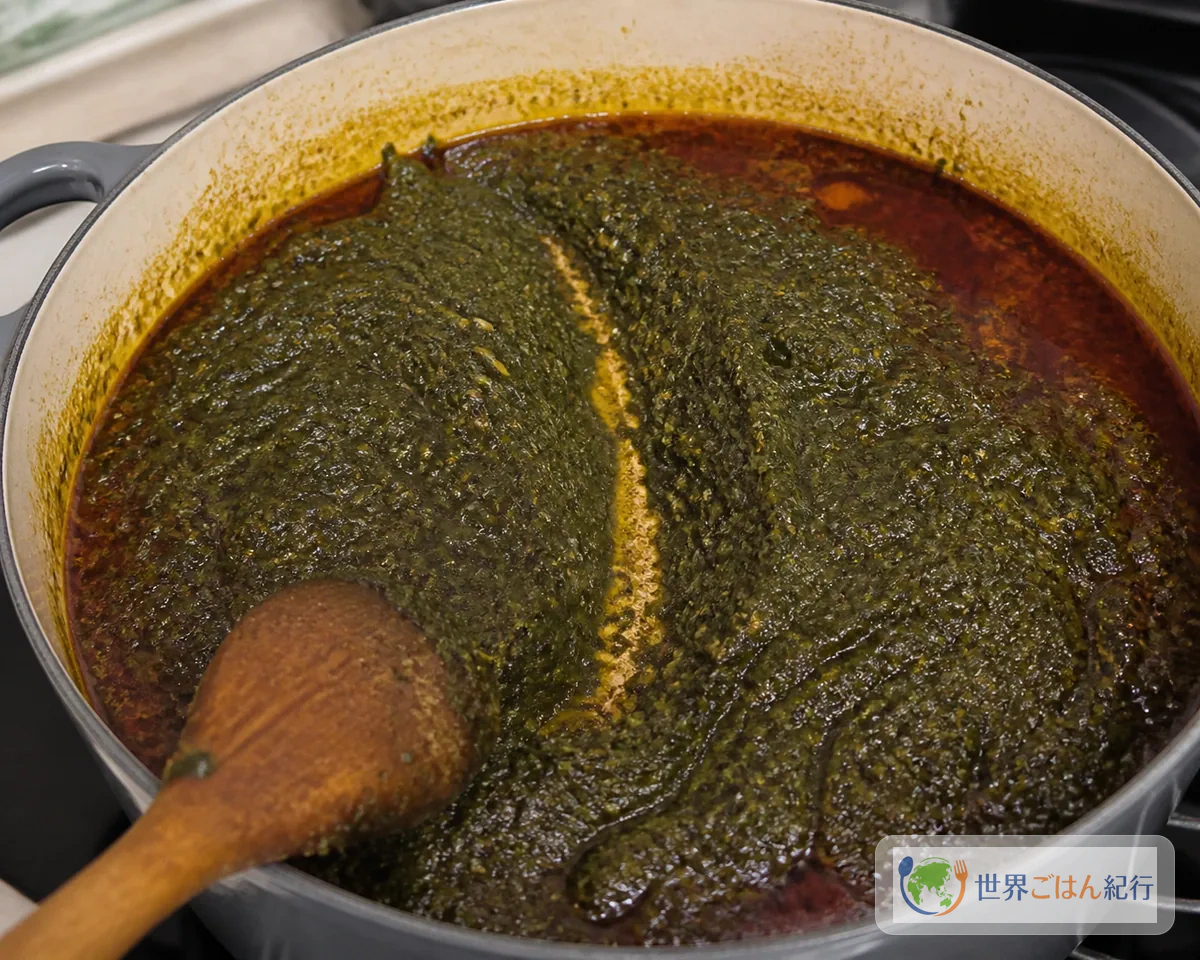
Even with all the ingredients ready, the state of the pot changes every time with the moisture of the leaves and the saltiness of the dried fish. Check these three things to decide whether to extend the time or add cooking liquid.
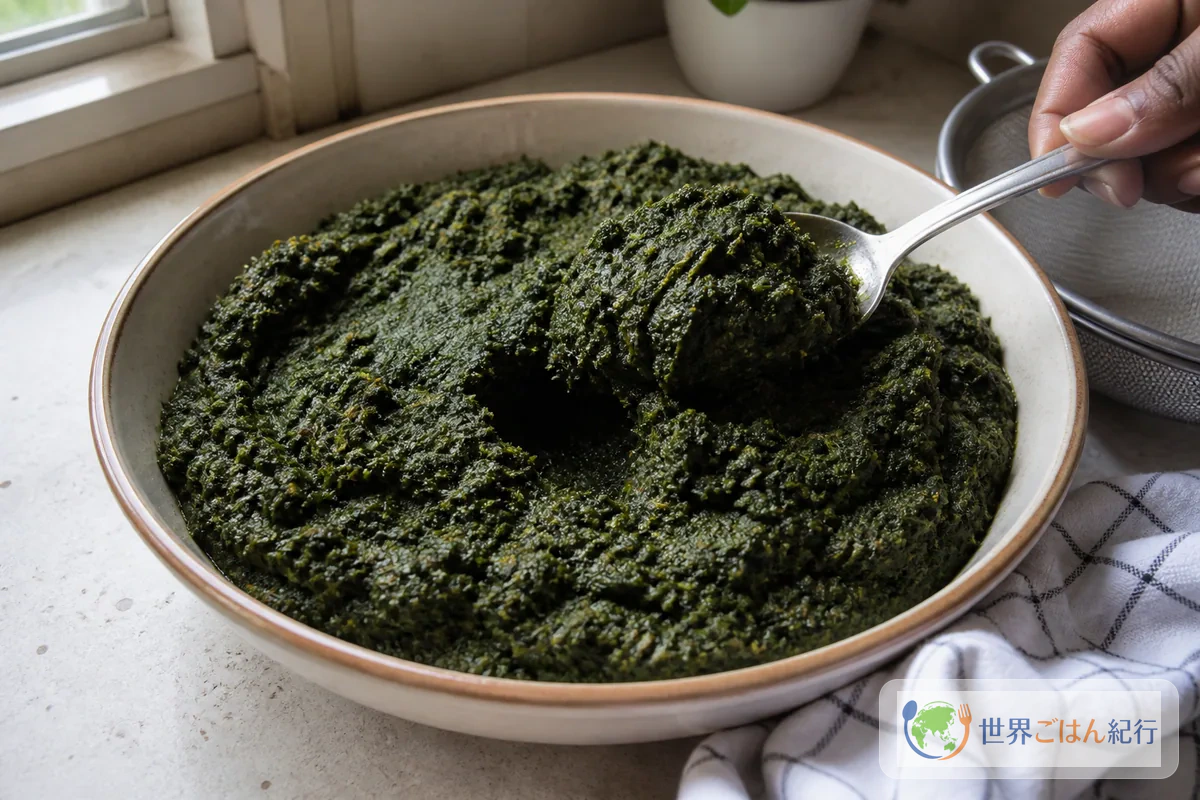
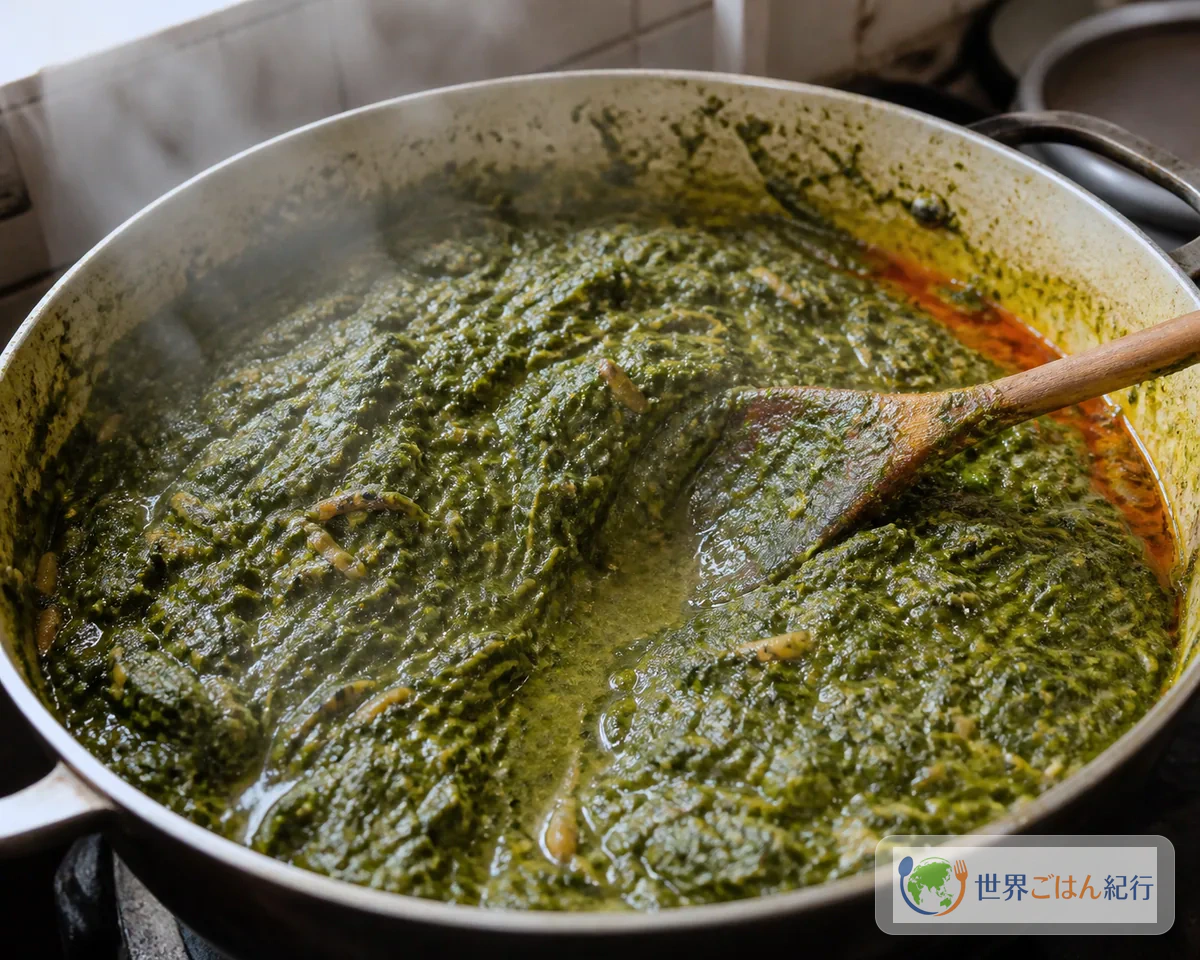
With finely crushed leaves, the fibers loosen in 35–45 minutes. Coarse leaves, old leaves, or leaves that held a lot of water when thawed can take nearly 50 minutes. If you boil off only the liquid while hard strings remain on the tongue, the bitterness gets stronger, so add a little hot cooking liquid and keep the heat low.
If you drop cold peanut butter straight into the pot, small lumps float on the surface. Mix it with hot cooking liquid in a separate bowl and add it once the sauce is an even light brown. The thickness comes not right after you add it but after 15–20 minutes of simmering, when the leaves' water and the oil have blended.
If you use less red palm oil from the beginning, the aromatic paste tends to stick to the bottom of the pot. Cook the paste first with 30 ml, and once the leaves and liquid are in, add the rest a little at a time; this lets you adjust the amount of oil while keeping the aroma. If a thick layer of oil collects on the surface, cut 20 ml from the last portion next time.
If a cassava leaf has no processing label, do not use bitterness or a green smell as the signal that it is done; do not eat it. Food-safety sources describe processing methods, but they do not guarantee that a home pot gives the same state as processed leaves. If you can't find processed frozen leaves, spinach is the safer choice.
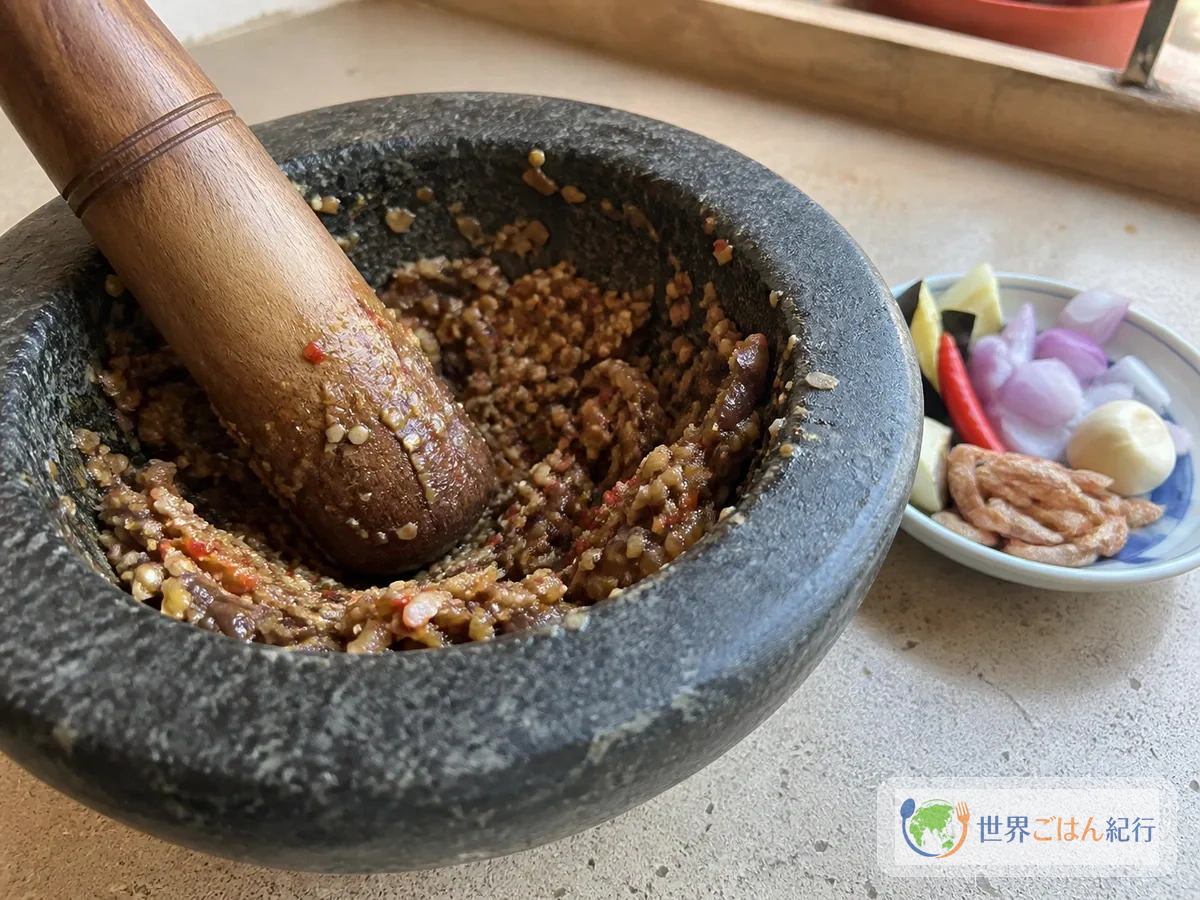
Blending the aromatics smooth in a blender makes the sauce come together quickly. If you want to move closer to local tools and texture, crush the onion, eggplant and chili in a mortar, leaving a few pieces. You do not need to buy one just for this, but if you repeatedly use dried chilies and dried shrimp, the role of the tool is clear. If you have a blender, you can skip a mortar.
Combinations that shift by region and household
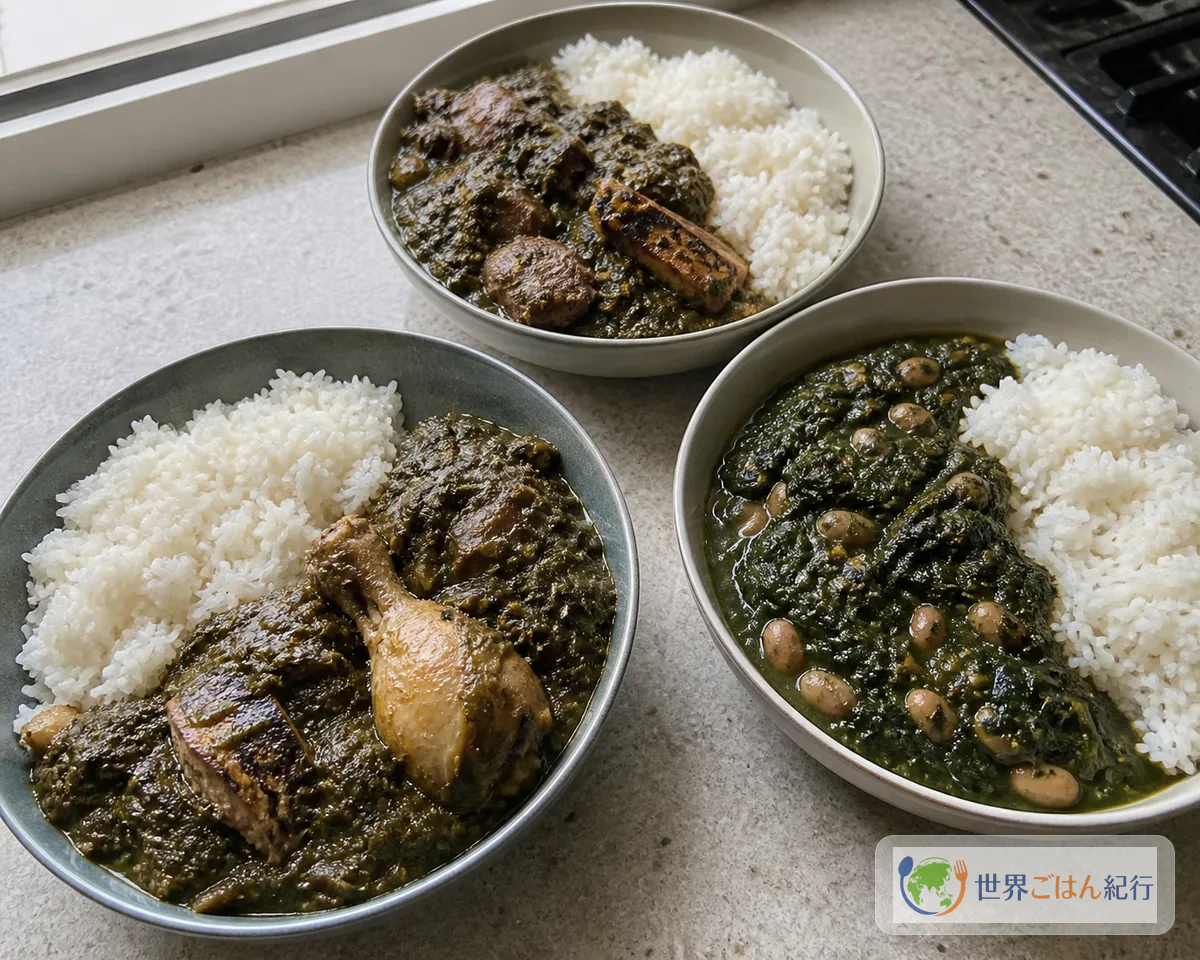
Rather than memorizing cassava leaf stew with a fixed set of fillings, think of which savory elements you layer onto the leaf sauce, and it is easier to adjust. Sierra Leone's tourism material introduces combinations of beef or chicken, salted fish, shrimp and so on, and articles on coastal cooking use smoked fish.
| Combination | Change in taste and texture | Judgment for a home kitchen |
|---|---|---|
| Beef + smoked fish + dried shrimp | Meat cooking liquid, smoke and the saltiness of the sea layer up and cling strongly to the rice | The basic form here. Decide on salt last |
| Chicken thighs + smoked fish | Lighter than beef, with the aroma of the leaves in front | Simmer chicken with the skin on and cook it through |
| Goat + dried fish | More fat and gaminess, a thicker cooking liquid | Try when you can get bone-in meat at an import store |
| Chickpeas + eggplant + peanuts | No meat or fish; the starchiness of the beans builds body | Switch to vegetable stock and shorten the leaf simmering time |
| Spinach + smoked mackerel | Lighter greenness and fiber, easy to make with home ingredients | A substitute for when you have no cassava leaves. The texture that the dish name implies changes |
Putting meat and fish in the same pot is not a matter of piling on ingredients. If you don't throw away the water the meat was cooked in and layer the saltiness of fish and dried shrimp on later, separate savory notes come together in one sauce. Simmering the fish for a long time first makes it fall apart and only the dried shrimp stands out, so keep the order of returning it at the end.
As a regional difference, Sierra Leone Tourism explains that there are versions that use potato leaves instead of cassava leaves. But do not substitute the leaves of potatoes from a home garden when you can't confirm they are sold as food. Limit substitutes to spinach sold as food.
Switching the staple to fufu moves it toward scooping up the sauce. Fufu is a springy staple made by pounding starchy crops such as cassava, plantain and yam. The first time you make it, white rice makes it easier to check the thickness of the leaves; pairing it with fufu another time keeps the cooking steps from growing too many.
Its place at the table
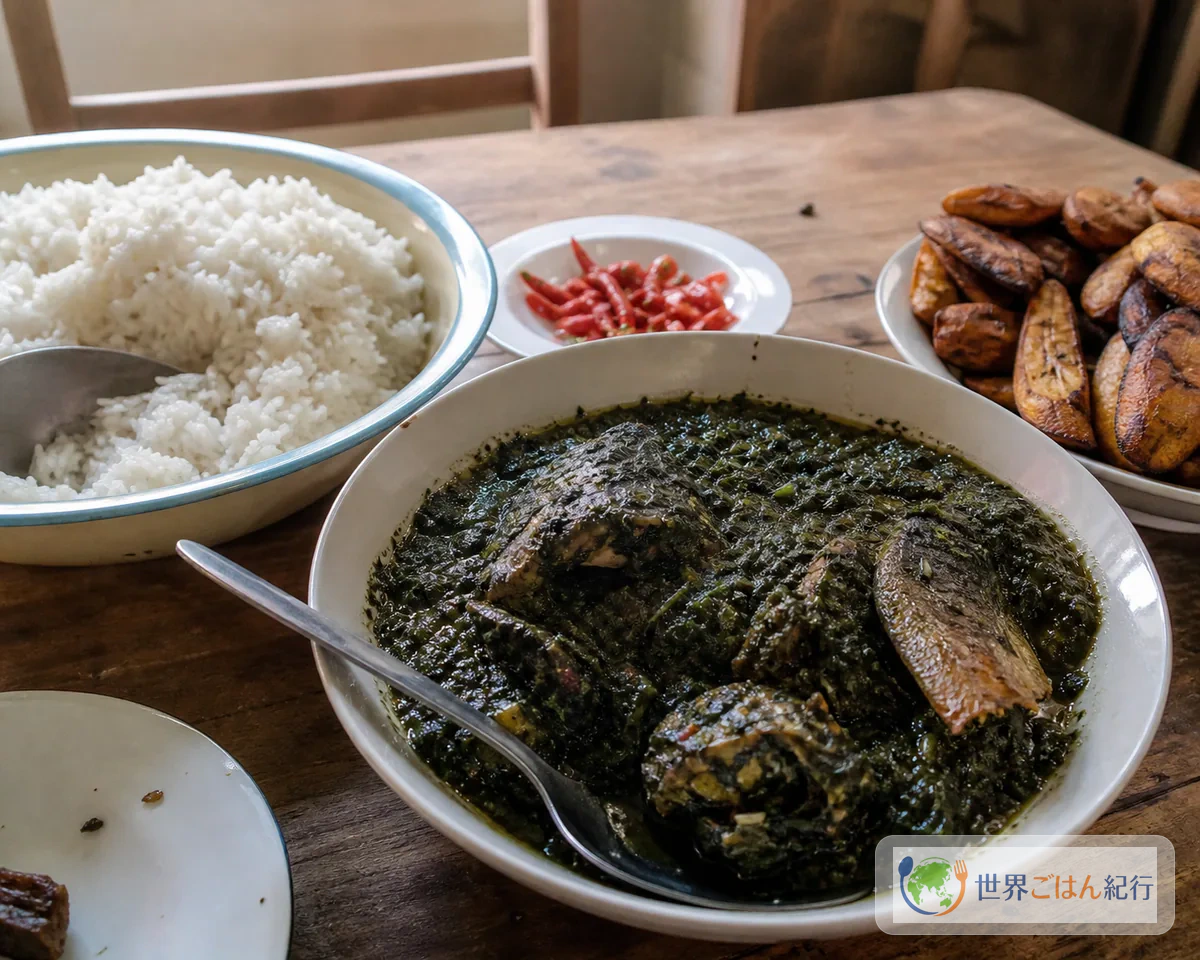
An FAO document summarizing Sierra Leonean cooking describes rice as the staple served with most fish, meat and vegetable dishes. Cassava is a plant whose root can be used in stews and flour, and whose leaves are also simmered long to remove bitterness and made into sauces for grains, meat and fish. The way of using it, not stopping at the root but putting the leaves in the pot, is recorded as the form of the dish.
Leaf stews called saka saka or pondu in English-language food articles spread to Liberia, Guinea and Central Africa. Even with leaves from the same plant, if the oil, fish, groundnuts, kind of leaf and staple change, it becomes a different home dish. On Sierra Leone's plasas, the cookbook author Maria Bradford explains its link with the Mende people, while saying the cassava leaf stew itself is an everyday food eaten across the country. It is more natural to read it not as a fixed recipe of one family or ethnic group but as a dish in which regions and households move the ingredients.
Groundnut is the English term for peanuts, and peanut butter or crushed peanuts gives the leaf sauce its body. In a stew with red palm oil, the orange of the oil and the aroma of smoked fish remain, so even if you switch to spinach, keeping the oil and peanuts keeps the dish's axis from collapsing. To compare peanut stews from another angle, in Ghanaian groundnut soup the tomato and the thickness of meat with peanuts come to the front. Even with the same peanuts, the mouthfeel differs from this pot, which makes leaves the star.
Frequently asked questions
Can I process fresh cassava leaves myself?
This recipe does not recommend it. Food-safety sources note that cassava leaves contain compounds that produce cyanide, and that the leaf concentration is higher than the root's. Use only products whose label, such as processed, edible or frozen, and whose seller you can confirm, and replace with spinach if there is no label.
What changes if I make it without buying red palm oil?
You can make it with rapeseed oil or peanut oil, but the red color and earthy aroma are weaker. For a single try, a substitute oil is fine. If you plan to make West African stews several times and can reuse it in fish, bean and leafy-green dishes, it makes sense to choose red palm oil after checking the edible label and volume. Palm nut cream is a different ingredient, so don't replace it at the same amount.
What if I am allergic to peanuts, fish or dried shrimp?
Don't force a different nut in for the peanuts; first leave out the peanuts and make a slightly thinner leaf stew. Fish and dried shrimp can be replaced with chicken, mushrooms or unsalted vegetable stock, but the smoky aroma and saltiness will change. People with severe allergies should not share utensils or oil, and should check the ingredient list and manufacturing-line labeling of purchased items.
How should I store leftover stew and rice?
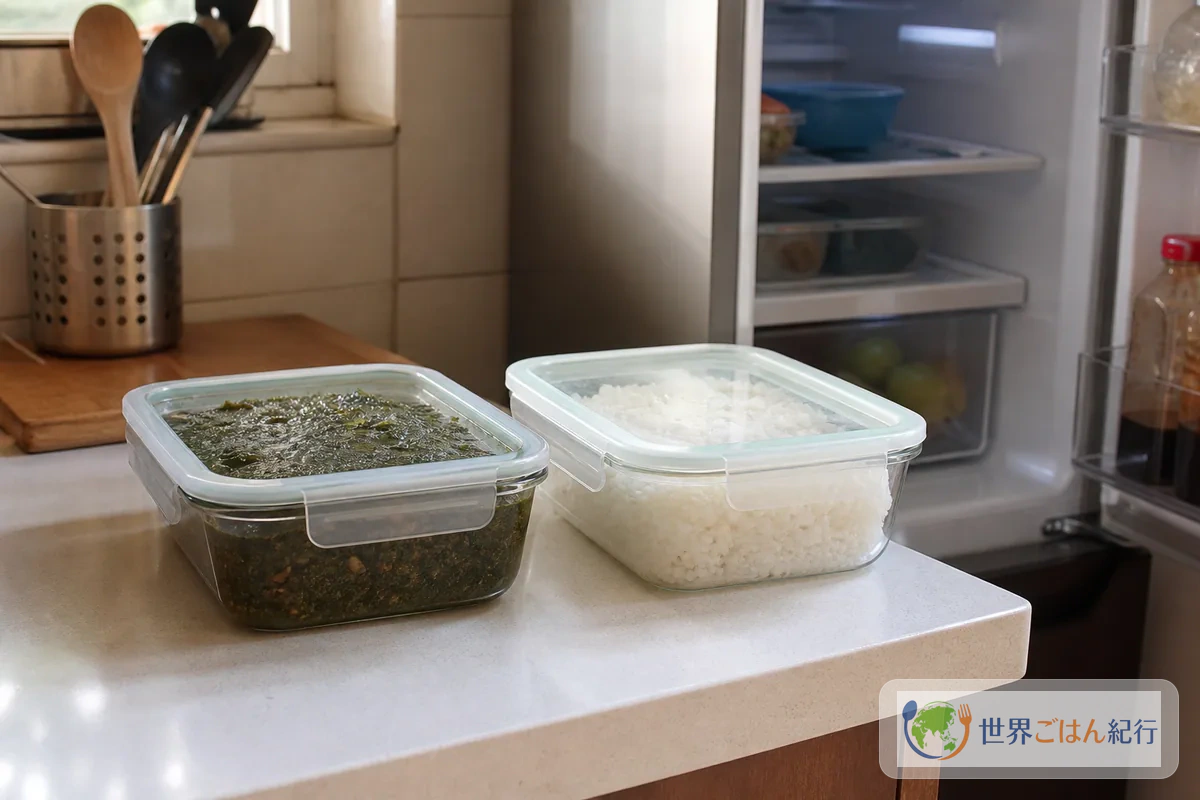
Keep the stew and rice separate, divide into shallow containers, and refrigerate or freeze within 2 hours of cooking. Use refrigerated stew within 3 to 4 days, and frozen within 2 to 3 months as the period quality holds up well, and reheat until hot in the center. Rice loses moisture easily, so wrap and freeze it in single portions. Discard anything left long at room temperature or that has an off smell or sliminess; don't judge by tasting.
Can I fix it if it stays bitter or comes out watery?
If it is a processed leaf and only slightly bitter, extend 10 minutes at a time over low heat with the lid ajar. If watery, take the lid off and simmer 5–10 minutes to reduce, adding hot cooking liquid if it threatens to burn. If it is very bitter and the leaf label or processing can't be confirmed, don't extend the simmer and eat it; switch the ingredient to spinach.
Sources
- Sierra Leone Tourism, Traditional Sierra Leonean Dishes: Our Favorite Cassava Leaf Soup Recipe. Checked for combinations of ingredients, beef cooking liquid, frozen spinach as a substitute, and serving over rice. Accessed and checked 28 August 2026
- Ministry of Tourism and Cultural Affairs, Sierra Leone, Gastronomy. Checked for the place of plasas, cassava leaves, palm oil, peanuts, fish and meat, and rice and fufu. Accessed and checked 28 August 2026
- Sierra Leone Tourism, 5 Must Try Dishes in Sierra Leone. Checked for the description of cassava leaf stew as thicker than soup, served with rice or fufu. Accessed and checked 28 August 2026
- Sierra Leone Tourism, 8 Delicious Food and Drink to Try in Sierra Leone. Checked for rice as a staple served with stews of leafy greens, fish and dried meat, the variation using potato leaves, and the step of using the liquid from cooking meat and fish. Accessed and checked 28 August 2026
- Food and Agriculture Organization of the United Nations / Slow Food Foundation for Biodiversity, Sierra Leone, pp. 3–4. Checked for rice, the bitterness of cassava leaves, the method of crushing and simmering the leaves, and the food culture of serving with meat, fish and grains. Accessed and checked 28 August 2026
- Food Standards Australia New Zealand, Cassava and bamboo shoots. Checked for cyanide compounds in cassava leaves, processing methods, and the safety caution against using unprocessed ingredients. Accessed and checked 28 August 2026
- Recipes From A Pantry, Cassava Leaf {Sauce} + Tutorial. Checked for the name used at Sierra Leonean diaspora tables, crushing aromatics in a mortar or blender, simmering time by fineness of the leaves, and handling of storage containers. Accessed and checked 28 August 2026
- National Geographic Traveller, 4 essential West African dishes and how to make them. Checked for the explanation of Sierra Leonean origins, coastal smoked fish, peanuts, the link between plasas and the Mende, and names in neighboring countries. Accessed and checked 28 August 2026
- FoodSafety.gov, 4 Steps to Food Safety and Cold Food Storage Chart. Checked for cooling within 2 hours of cooking, dividing into shallow containers, refrigerator and freezer storage, and guidelines for storage periods and reheating of stews. Accessed and checked 28 August 2026