Sambusa Belongs to Afternoon Tea and the Table After Sunset
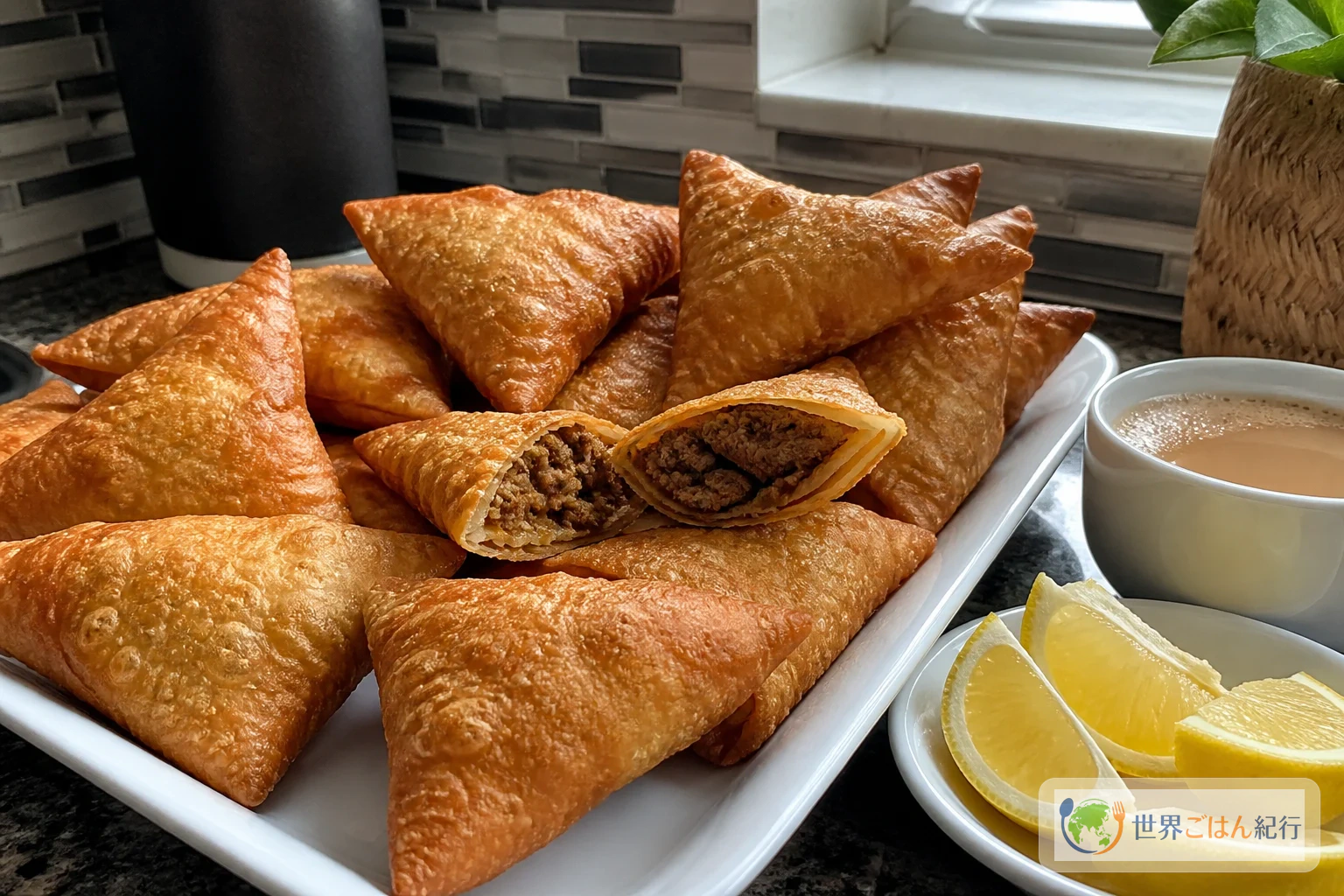
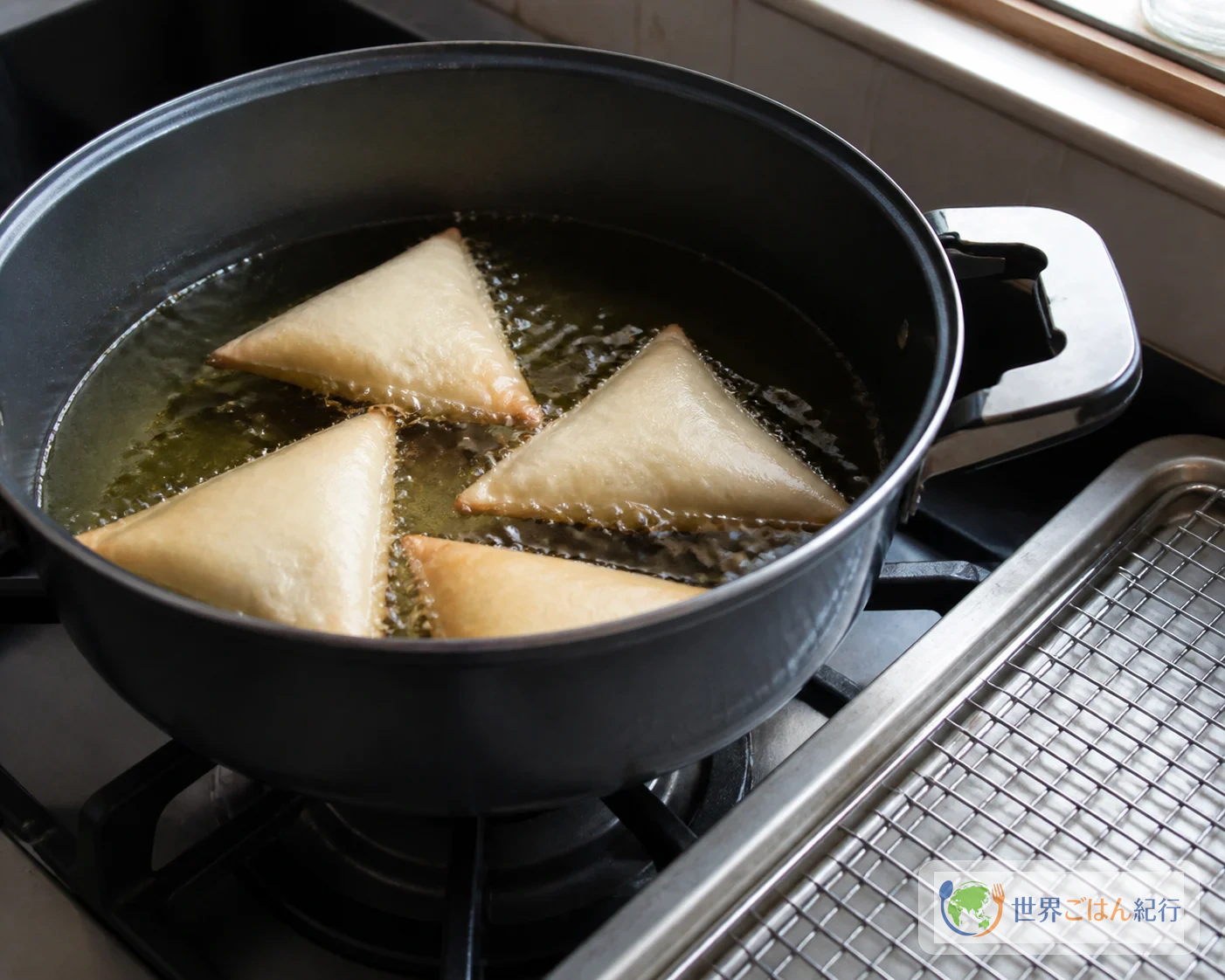
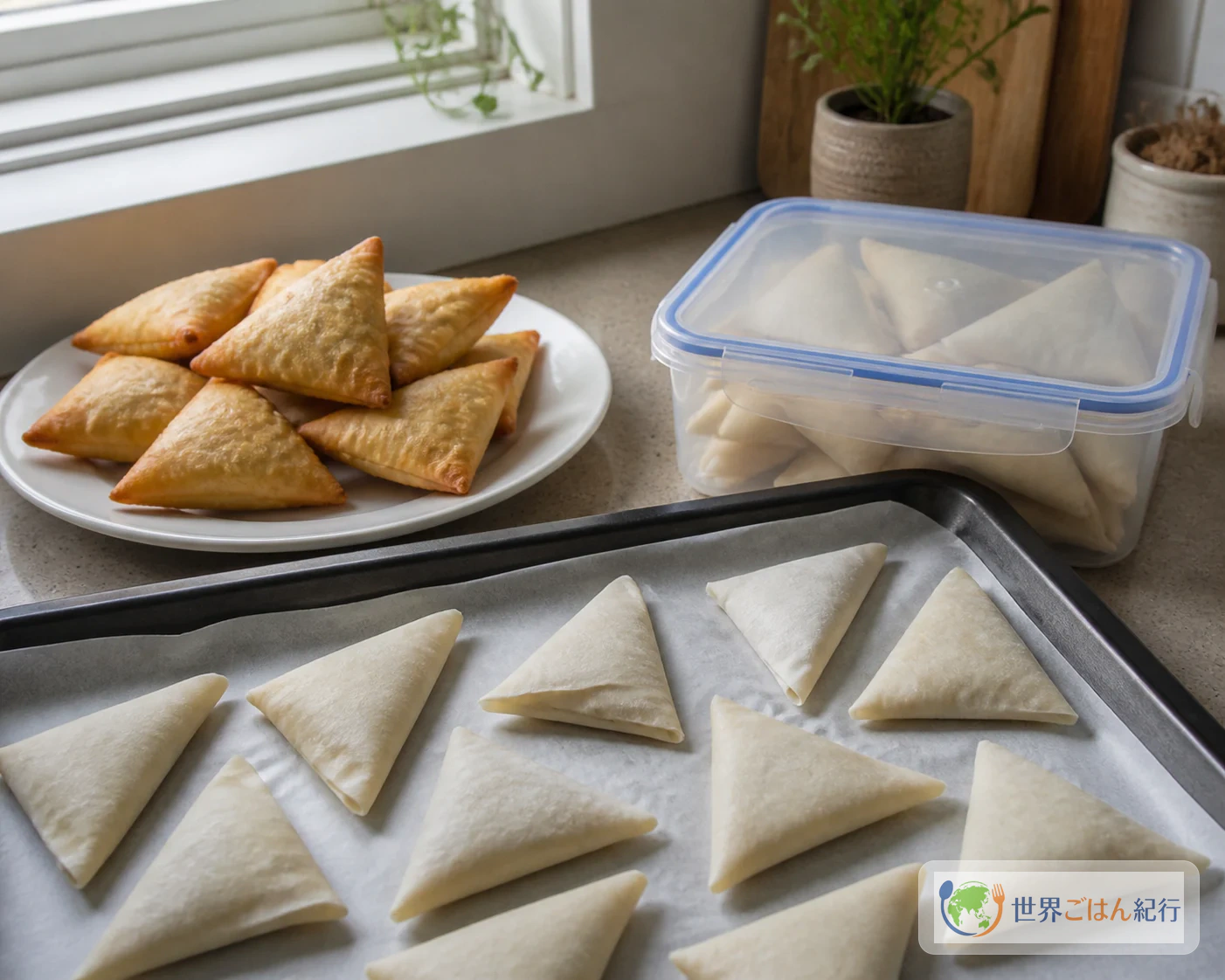
In the frying oil, a triangular wrapper puffs from its corners. When the small bubbles on the surface settle and the thin wrapper turns golden, the smell of meat and cumin fills the kitchen. Lift it onto a rack and leave it about two minutes, and the steam from the hot filling escapes, leaving a texture that crackles lightly right to the tip of the corner.
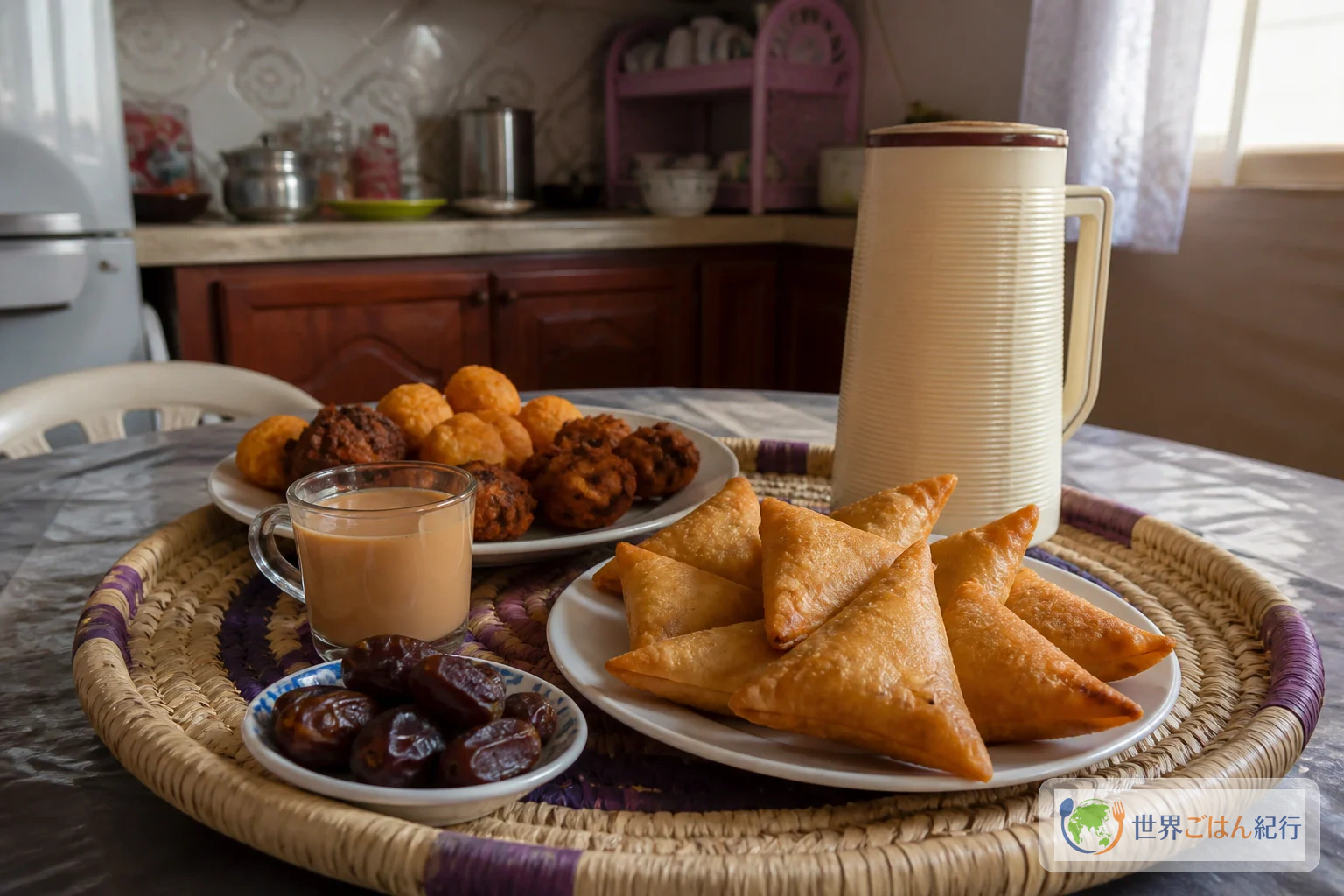
Sambuus (also written sambusa in English) is a triangular fried dish beloved in Somalia. On the table for "asariye," the afternoon tea hour, sambuus sits alongside sweets, fried pastries, and spiced milk tea. It is rich in aroma but not strongly hot with chile. A beef filling and the warm aromas of cumin, coriander, and cardamom are tucked inside a thin wrapper.
At iftar, the meal that breaks the Ramadan fast, the triangular sambusa is also an important plate. In Somali households, beef or tuna sambusa is made every Ramadan. The same dish appears at everyday tea and at iftar, so it is neither only a special-occasion food nor a snack that tastes the same every day.
What to keep when recreating it elsewhere is less about making the filling hot than the order of building the aroma first, cooking off the liquid, and only then folding the triangle. Store-bought spring roll wrappers are fine for the wrapper. Do not wrap the meat filling while it is still warm, and keep the oil at 175–185°C. The result comes close to the lightness of the thin local wrapper.
Choosing Ingredients and Wrappers
This amount makes 12 sambusa by cutting spring roll wrappers about 19 cm across into 12 long strips. Beef mince that is too fatty releases liquid after wrapping, so mince that is about 70–80% lean is easier to handle. If serving at a halal table, check the ingredient labels of not only the meat but also the seasonings and wrappers.
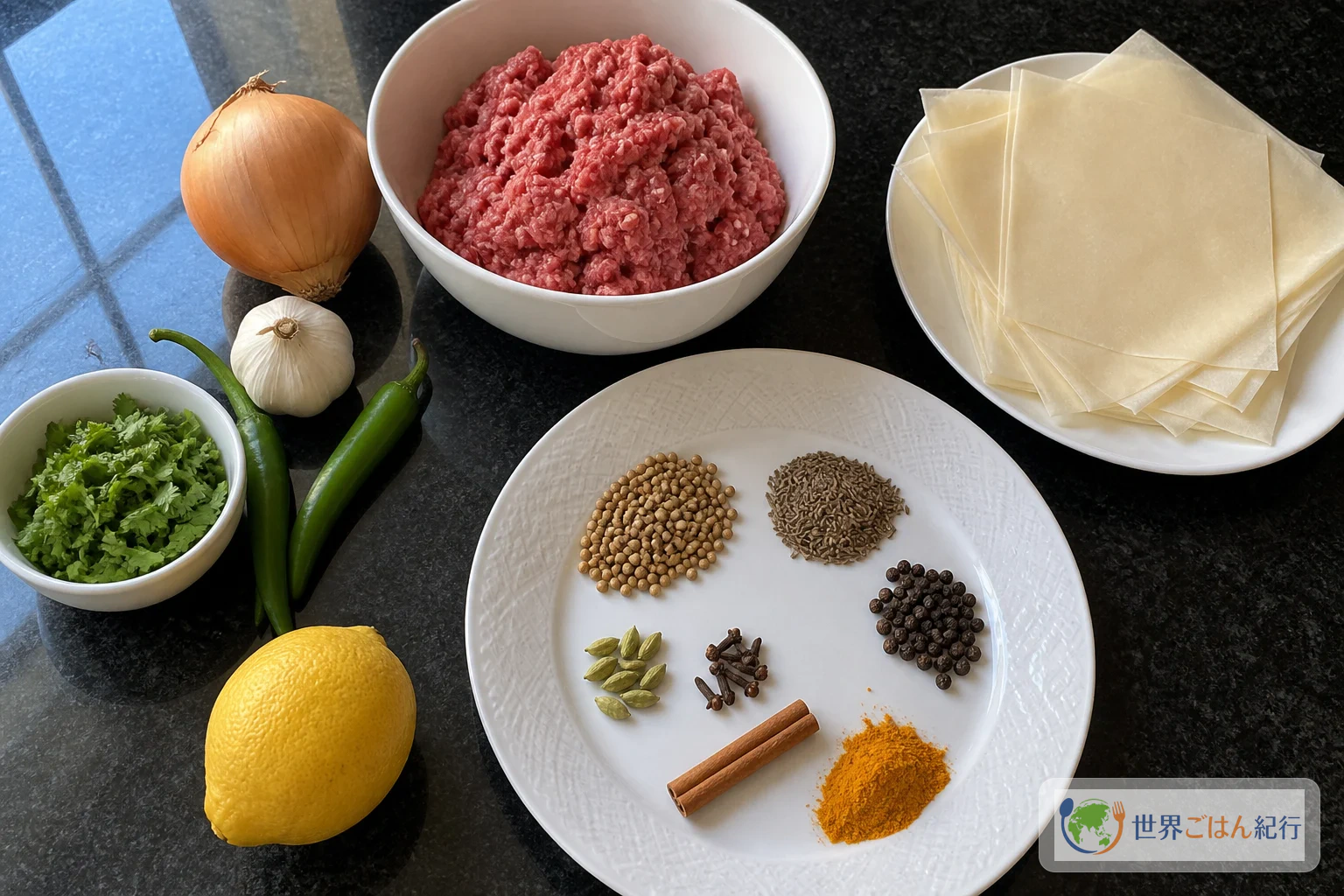
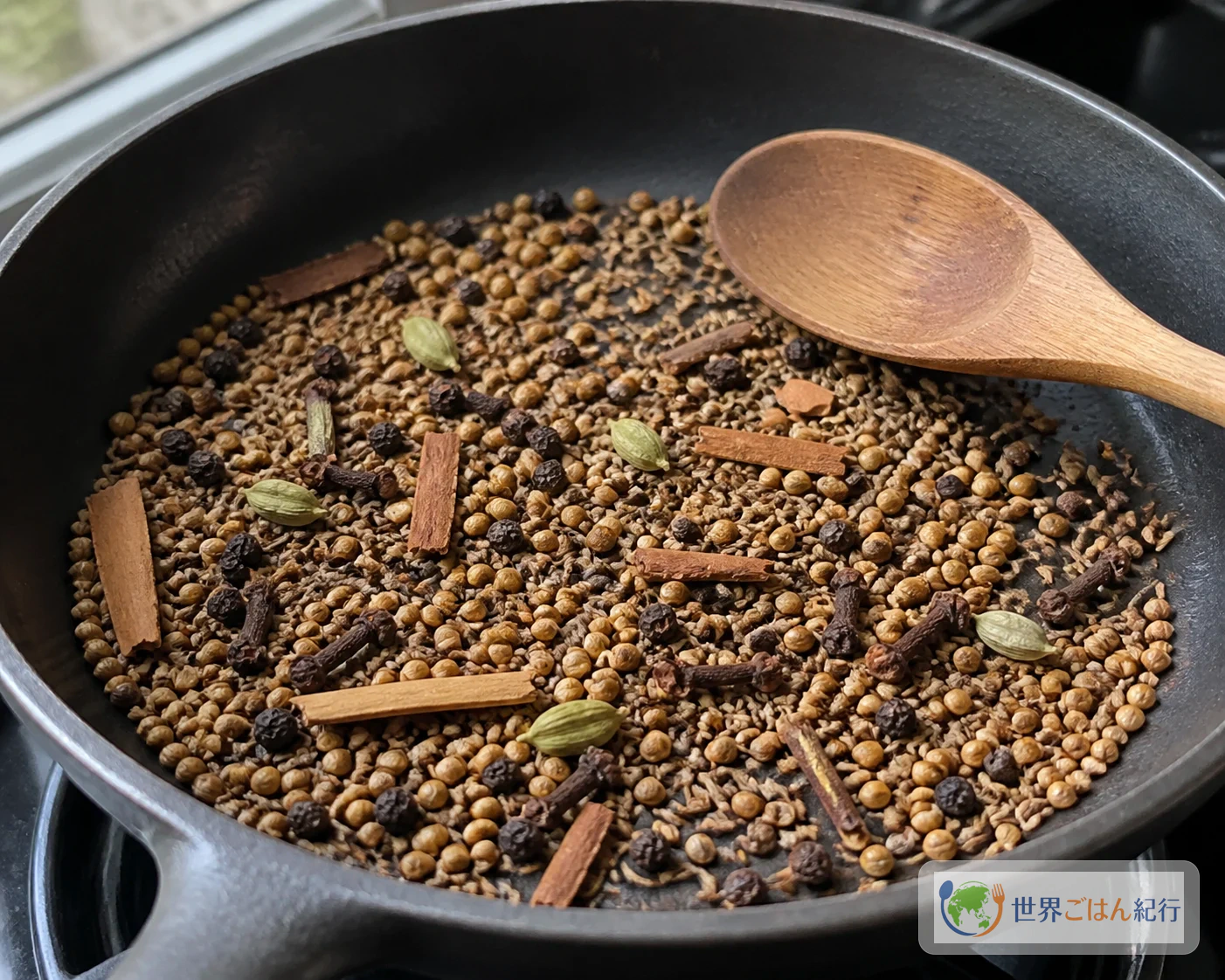
Xawaash is a spice mix, and every household blends it a little differently. Cumin, coriander, black pepper, and cardamom are common, and some blends add fenugreek, fennel, chile, nutmeg, and so on. The blend above is a home-scale guide, scaled down so the aroma is easy to read. Even using 6 g for 12 sambusa, the rest can go to rice dishes and stir-fried meat.
If you will use whole cumin several times, check that the product is labeled "whole" or "cumin seed" and check the quantity. For a one-time dish with ground cumin only, there is no need to buy more; you can build the xawaash from the ground spices you have.
Rather than looking for a finished "Somali-style spice mix," it is easier to adjust the blend if you first gather cumin and coriander by their ingredient labels. If you choose a mix that includes chile, you cannot adjust the heat of the sambusa separately, so check the first ingredients and whether it includes hot ingredients.
Method: Locking In the Aroma of Xawaash
Weigh everything out, and do not open the spring roll wrappers as soon as you take them out of the refrigerator; leave them in the bag for 10 minutes. Dry wrappers crack at the folds, and over-moist wrappers make the strips stick together, so keep the bag closed until just before wrapping. Before putting oil in the frying pot, prepare a plate and rack for cooling the filling.
Split a freshly fried one in half and the aroma of xawaash rises from inside the wrapper. If the center of the filling is too hot, steam makes the wrapper soft, so do not stack them on a plate right after lifting them off the rack; leave about 2 minutes of space between them. A drop of lemon lightens the fat of the meat, and when you alternate with sweet milk tea, the flavors do not pile up.
Choosing a Grinder by How Often You Will Use It
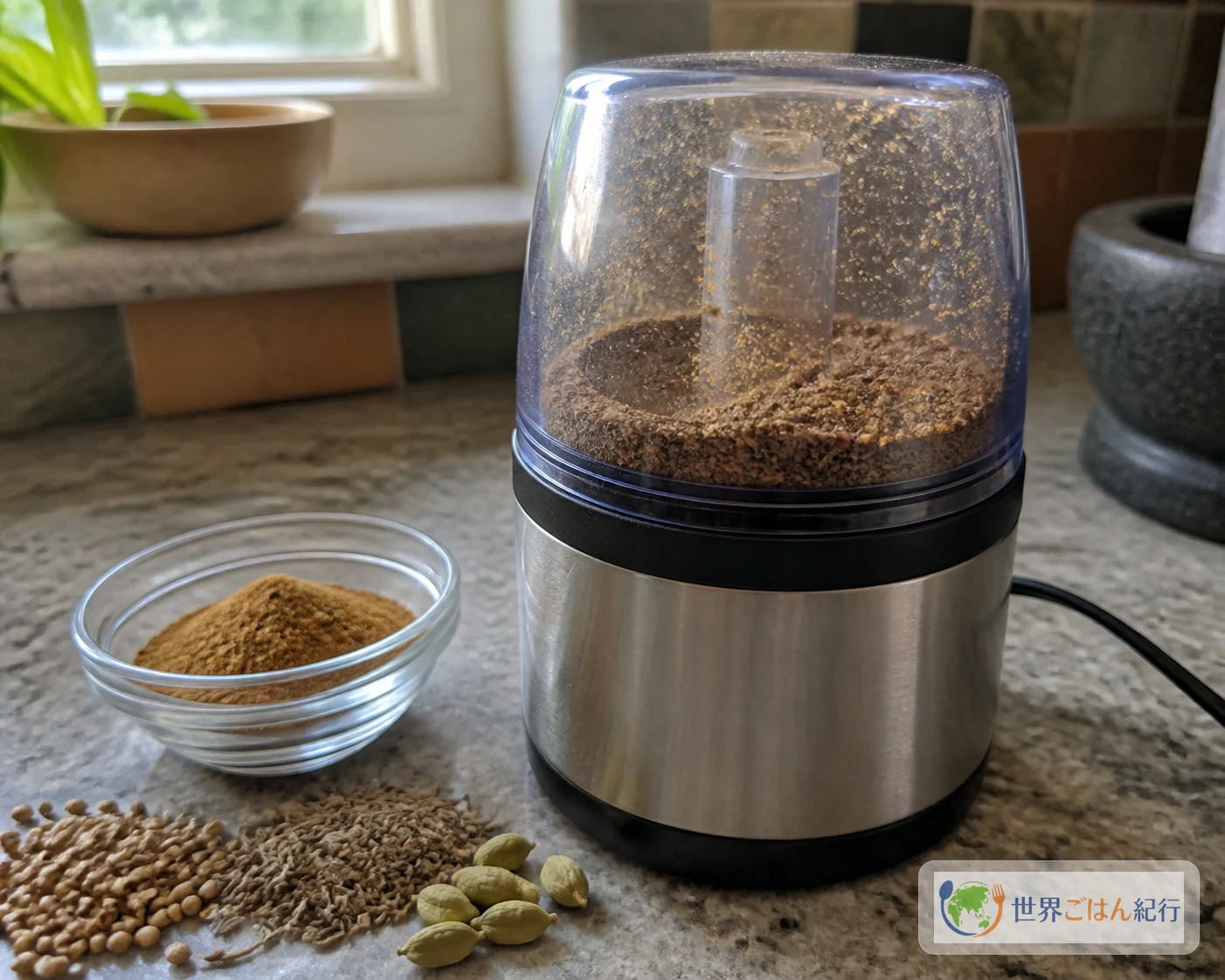
If you grind small amounts of whole xawaash spices each time, a small mill suits. A mortar can substitute, but it takes time to break down cinnamon and cardamom pods finely. When choosing a mill, check its mechanism, capacity, and how to clean it. People who will use only a ready-made powdered mix, or who will make this once a year, can manage with a mortar they already own.
Judgment Calls for Keeping the Wrapper Crisp
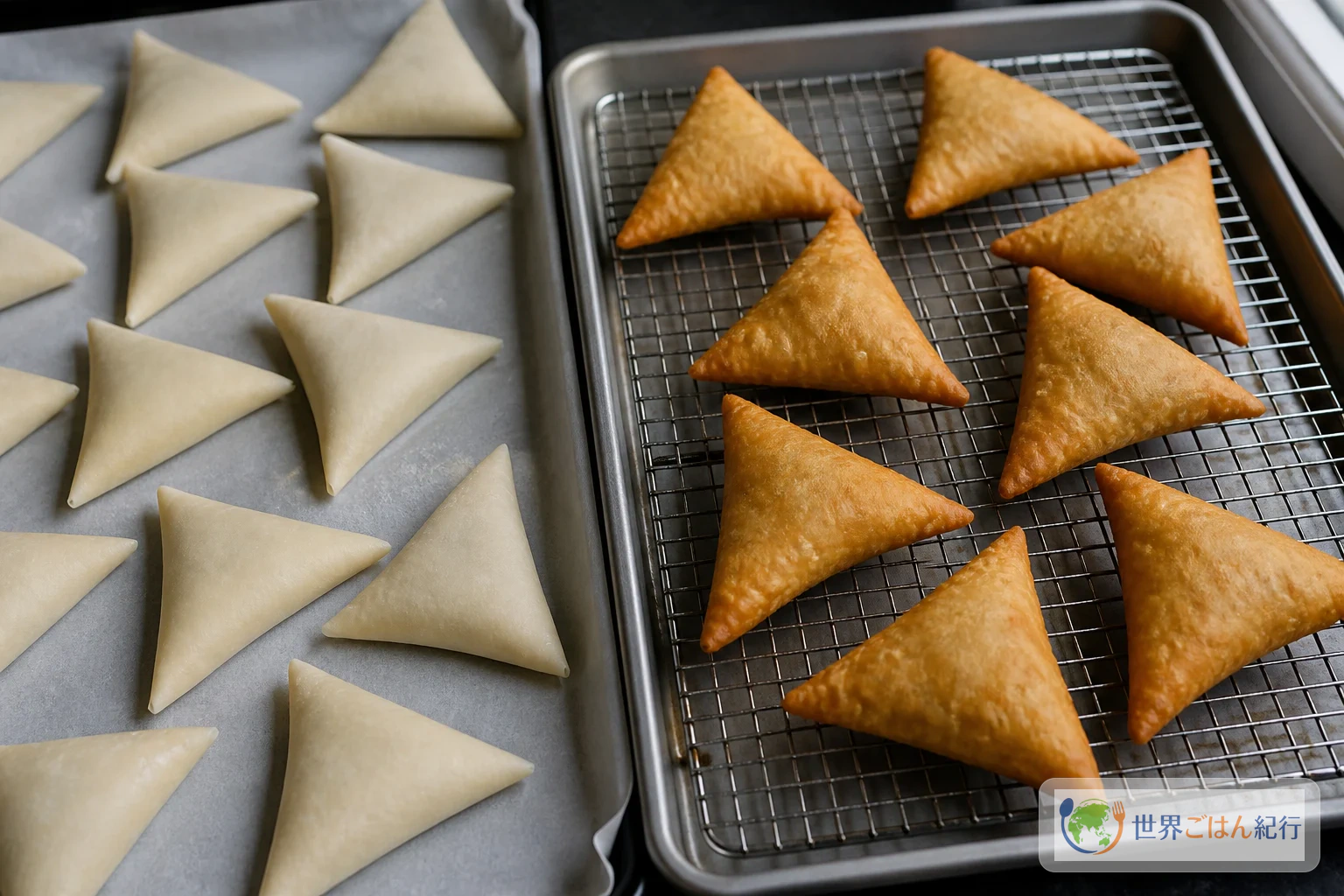
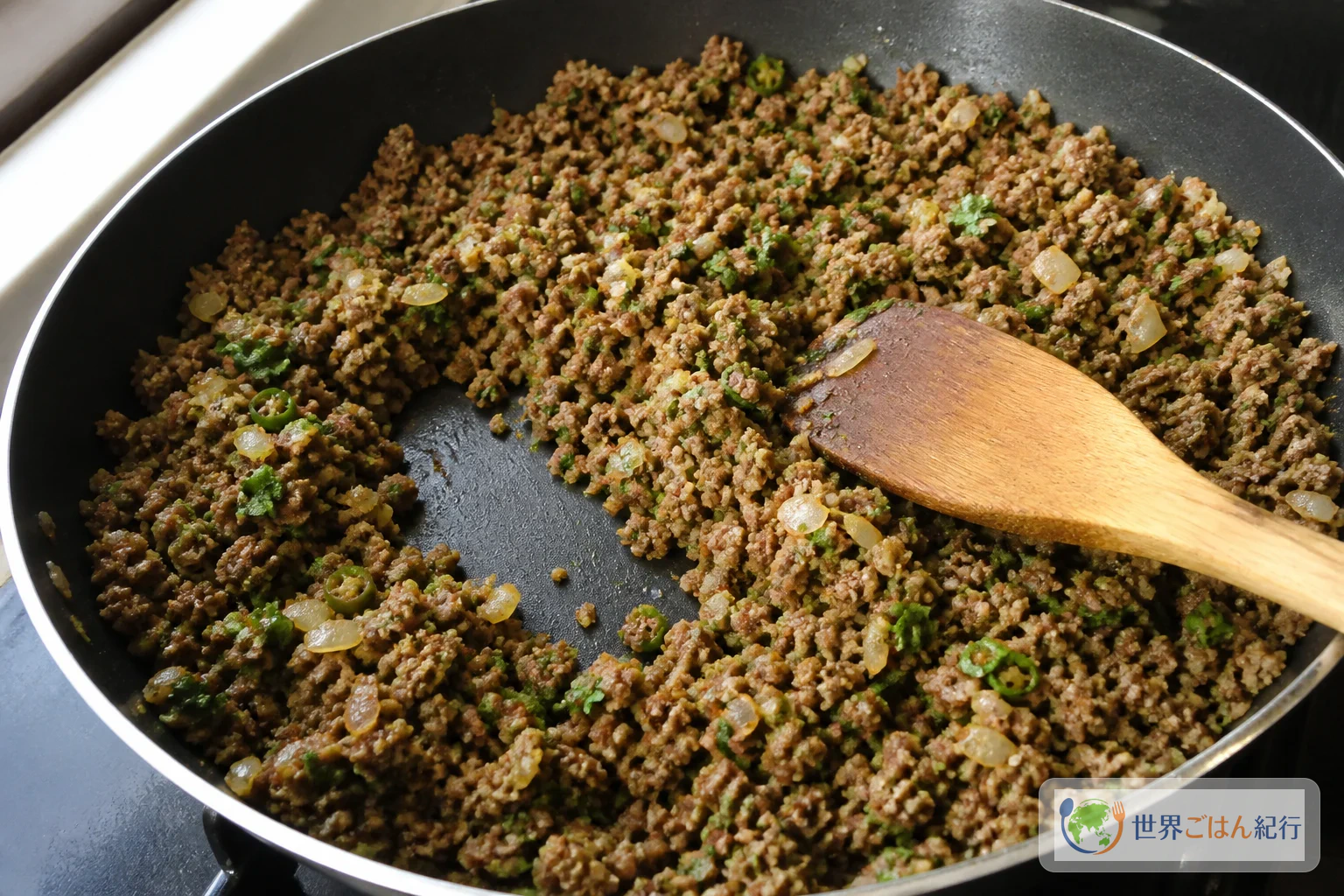
Even after spreading the cooked filling on a plate, if the meat juices gather in the center, do not start wrapping. Draw one line with the spatula, and if no liquid flows back, you can wrap. If liquid comes out after it has cooled, return it to the skillet, heat 2–3 minutes over medium heat, and cool again for 15 minutes. Putting hot filling in the freezer to chill it quickly wets the wrapper surface, so avoid it.
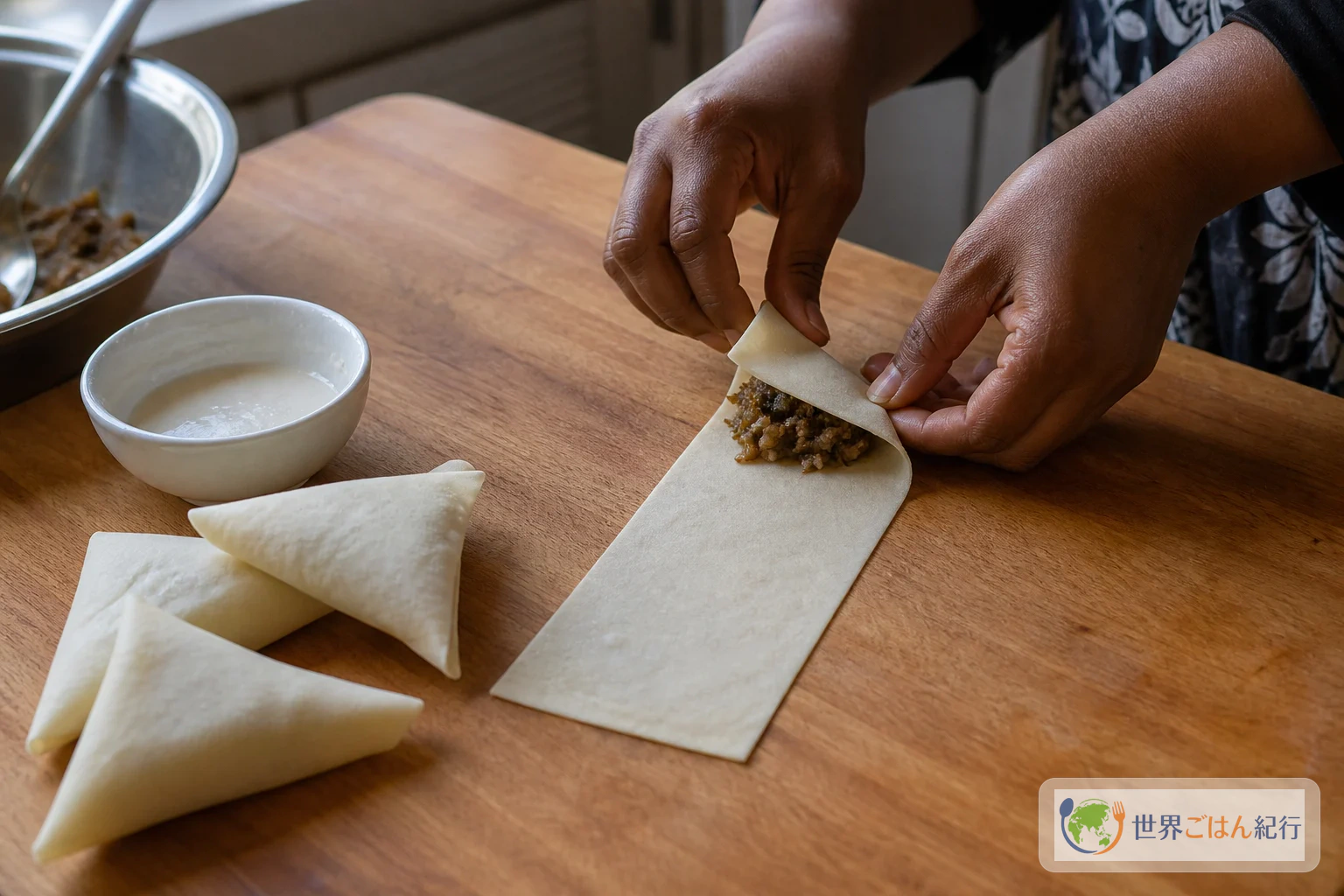
Sambusa wrappers split not only because of too much filling. Even if you close the end of the strip with paste, if meat juice touches the inside of the fold, the glued surface slips. Limit the filling to 25 g per piece, and press the edge once with a dry finger before applying the paste. If you stack the finished ones on a plate, the lower wrappers get damp, so arrange them without overlap.
With thin spring roll wrappers, double the strips. Layer another strip over each strip cut from one sheet into 3, then put the filling on, and the corners resist tearing. The wrapper gets thicker, so fry about 30–60 seconds longer per side. Store-bought samosa pastry is already thick, so a single layer is enough.
If you keep adding pieces while the oil is cool, fine air bubbles remain on the wrapper surface and the result drains poorly. Without a thermometer, drop in a scrap of wrapper: fine bubbles forming right away around it show the oil is ready. If the bubbles are violent and the color deepens in about 30 seconds, lower the heat. Still, measure the temperature with a thermometer when you can. If it scorches or smokes, turn off the heat and let the oil cool.
Unfried sambusa can be frozen without touching. Once completely frozen, move them to a bag and put them frozen into 175°C oil, frying 1–2 minutes longer than usual. If you thaw them before frying, the glued surfaces get wet and tear easily. After frying, it is best to eat them the same day; leftovers should be drained on a rack, cooled, and reheated the next day in a 180°C oven for 5–7 minutes. A microwave alone will not restore the wrapper.
Not Only Meat: Variations on the Triangle
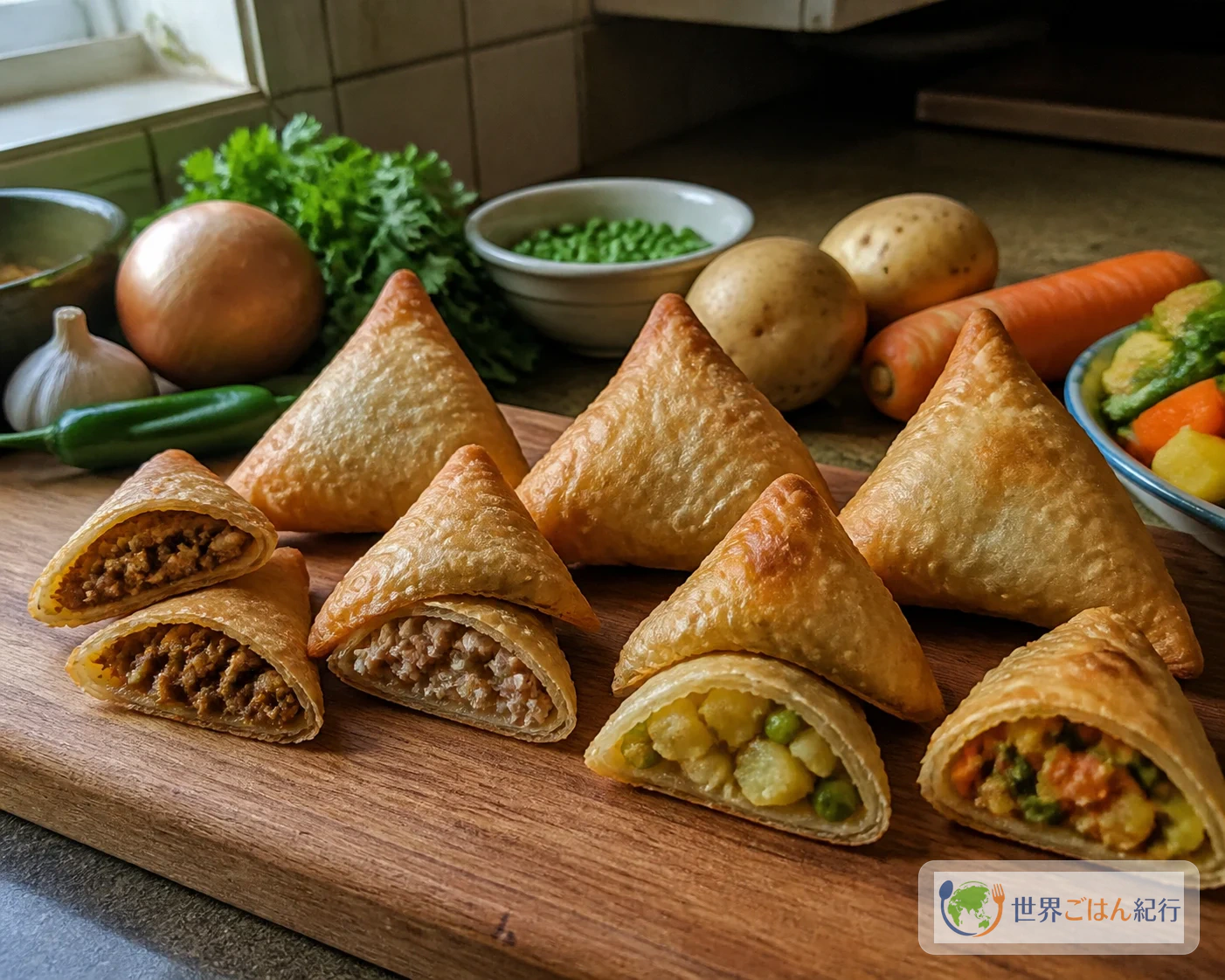
Somali sambusa fillings change among households, cafés, coastal tables, and Ramadan preparations. Using beef as the standard, you can branch out while keeping the axis of flavor. Whatever the filling, one thing is common: remove the moisture before wrapping.
- Lamb mince: Use 300 g, the same as the beef. If it is fatty, discard a little of the fat that floats after cooking, and increasing the xawaash to 7 g keeps it from being overpowered by the meat's aroma.
- Chicken mince: Use 300 g and cook it so no moisture from the onion remains. It tends to be mild, so add lemon just before eating and do not omit the green chile, which gives the outline.
- Tuna and onion: Combine 180 g drained tuna with 120 g cooked onion and mix in the cilantro after turning off the heat. Putting the liquid from the tuna can back into the filling makes the wrapper tear easily, so use it elsewhere.
- Potato and green peas: Use 250 g boiled potato in 1 cm cubes and 80 g boiled peas, and increase the cumin and turmeric a little. If crushed too much the steam does not escape easily, so leave the corners.
- Cabbage and carrot: Stir-fry 200 g shredded cabbage and 50 g carrot over medium-high heat, and add black pepper after the moisture is gone. It can also serve as a side dish on days you do not eat meat.
- White fish: To move toward coastal ingredients, use 250 g grilled and flaked white fish. Collect the juice from the fish separately and add a little lemon zest after the filling has cooled.
- Oven-baked: Brush the surface lightly with oil and bake at 220°C for 12–15 minutes. It will not puff with large bubbles like a fried wrapper; you trade some lightness for less oil, so the texture will differ from the traditional fried version.
Rather than adding more red chile to the filling, putting a hot sauce on a separate dish lets people who like heat and people who want it milder share the same sambusa. For children, leave out the green chile, halve the black pepper in the xawaash, and add lemon at the table for easy adjusting. Even if you reduce the heat, the outline of the dish does not fade as long as the aroma of cumin and coriander remains.
Regional Differences in Somalia, and the Triangle Across the Sea
Sambusa did not begin only in Somalia. Similar triangular fried dishes are made across a wide trading region, including East Africa, the Arabian Peninsula, and South Asia. At the same time, the combination used in Somali households of beef, xawaash, afternoon tea, and Ramadan iftar reflects the life of this land. Look at what the dish is eaten with, not only its shape: even in the same triangle, it is a different plate.
Somalia faces the Indian Ocean, the Red Sea, and the Gulf of Aden, and has long traded through its ports. Coastal cities took in African, Arab, Indian, and European influences. In pastoral regions, camel, goat, and sheep milk and meat join the table; in farming regions, corn, wheat, and beans; in cities, imported pasta and the like. Cinnamon, nutmeg, clove, cardamom, cumin, ginger, and black pepper are the spices here, and they are a clue to the aroma of xawaash.
Regional differences do not map one-to-one onto sambusa fillings. The ingredients available differ between the dry pastoral north, the farming belt in the south, and seaside towns, and recipes change further among urban households, restaurants, and immigrant communities. Tuna, fish, chicken, potato, and beans are wrapped even though beef is the standard, so the dish has taken in the ingredients of region and season.
For a generation scattered by war and migration, measured recipes like these are a way to trace the flavors of home. Blending a small amount of xawaash and judging the filling's moisture by numbers is not simply copying a dish from abroad. It turns household differences into a practical tool for making the dish again while keeping those differences.
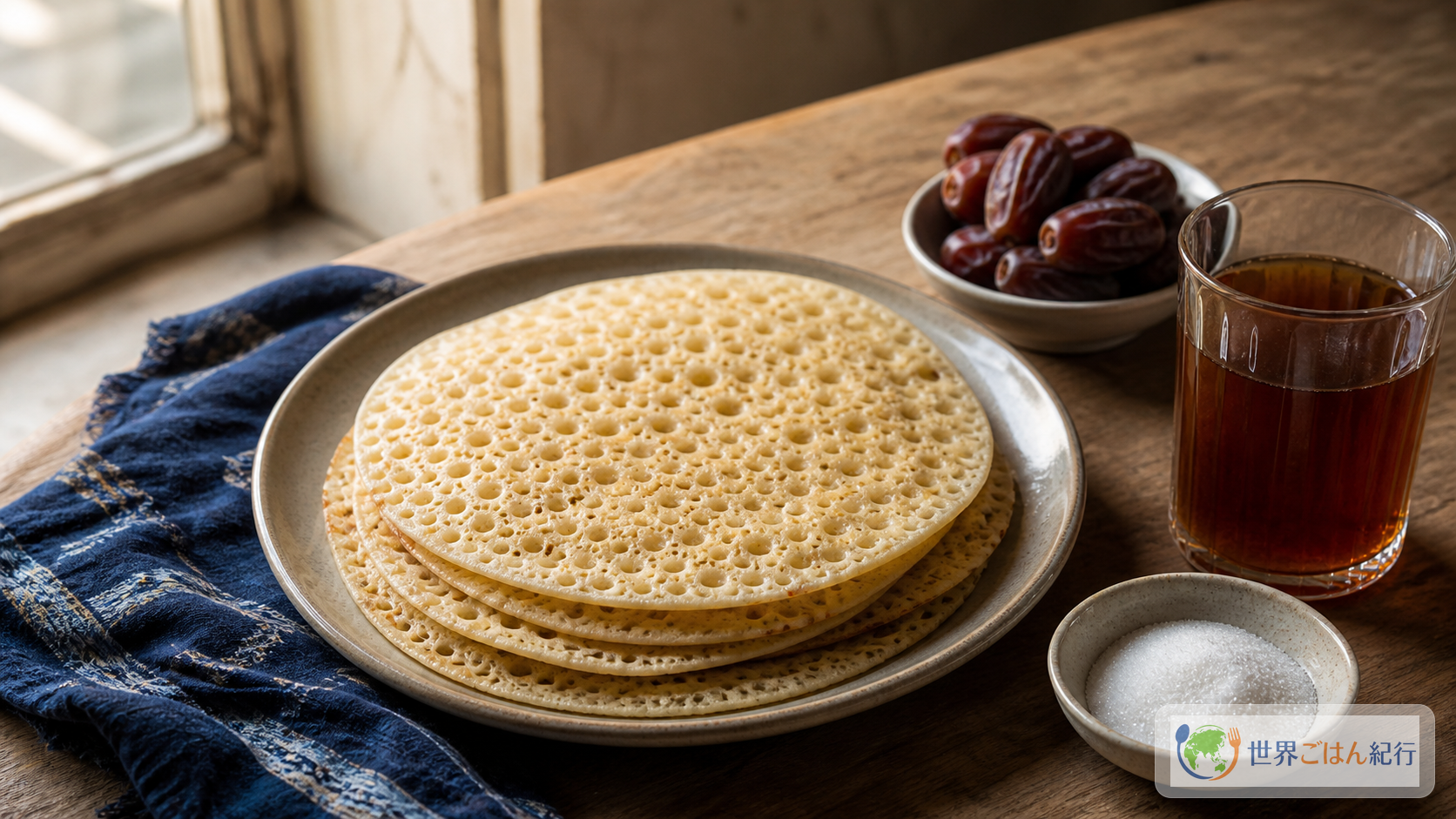
Layer canjeero (in Japanese) onto a Somali breakfast, and set out sambusa as an afternoon tea or after-sunset snack. Fermented batter and fried meat are different dishes, but the table connects around tea. Don't copy the plating exactly. Let eaters choose their own combinations: break the sambusa by hand, and set out fragrant tea, lemon, and heat separately.
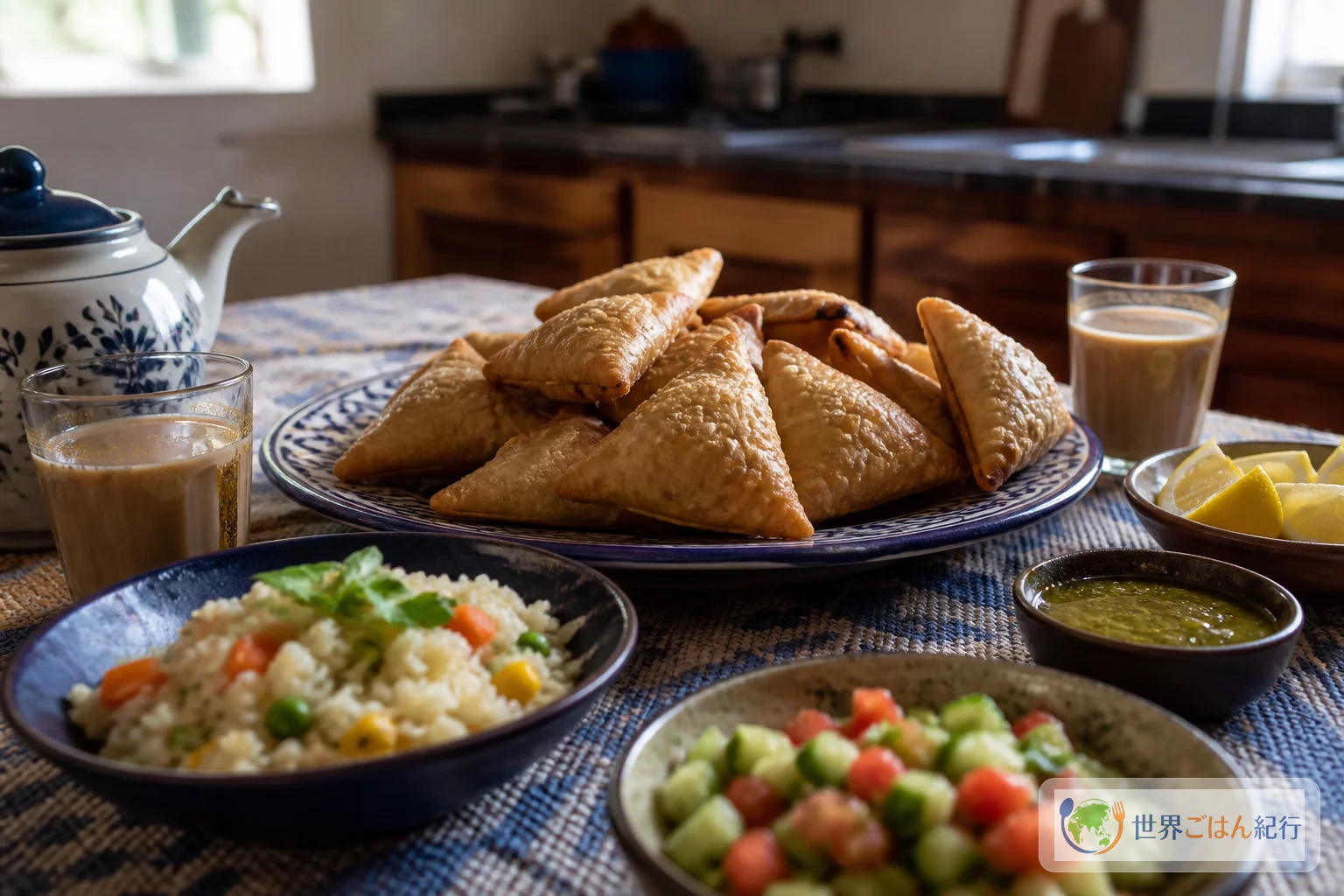
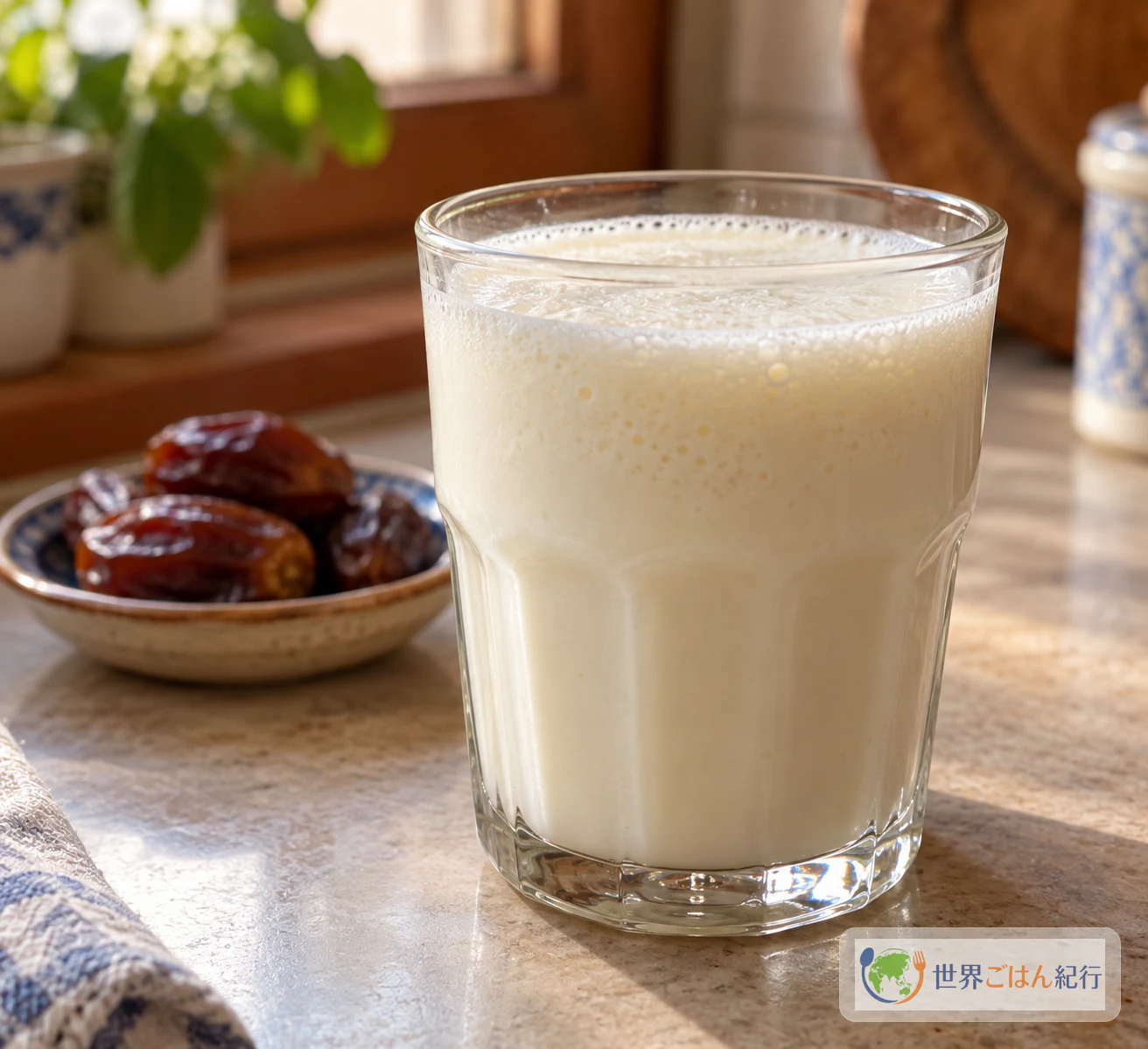
Rather than fixing portions on individual plates, serving sambusa from a large platter with lemon and hot sauce alongside makes it easier to compare fillings. If you pair it with tea, prepare sweet milk tea in small cups and use it as liquid to clear the oil of the fried food.
Frequently Asked Questions
What if I do not have xawaash?
Mix 1 tsp ground cumin, 1/2 tsp ground coriander, a little black pepper, and 1/4 tsp turmeric, and you can build the skeleton of the aroma for this dish. The sweet aroma of cardamom and clove will be weaker, but the combination of beef, onion, and green chile holds. If using powders, do not dry-toast; add them partway through cooking the meat.
Can I really wrap them with spring roll wrappers?
Yes. Cutting a 19 cm square wrapper into 3 strips makes each about 6 cm wide. If the wrappers dry out, the folds split, so cover what you are not using with a tightly wrung damp cloth. If you can get samosa pastry, look at its thickness, use a single layer, apply a thin layer of paste, and seal only the edge.
What if the filling comes out when frying?
Use less than 25 g of filling and dry it until no liquid flows after cooking. If meat juice gets on the fold, press lightly with a dry paper towel and reapply the paste. Wrapped pieces left for long turn damp, so once you have made 12, begin frying within 10 minutes.
Can I make it ahead?
You can freeze them unfried. Freeze them apart on a tray, then move them to a bag once solid. Fry without thawing, adding a few at a time to 175°C oil and cooking 1–2 minutes longer than usual. After frying, same-day eating is best; for the next day, drain on a rack, refrigerate, and reheat in a 180°C oven for 5–7 minutes.
What should I check for allergies and halal labeling?
Spring roll wrappers contain wheat. Some products contain sesame, soy, or dairy, so check the ingredient labels of the wrappers, spice mix, and oil. If serving at a halal table, check the certification or labeling of the beef, lamb, or chicken, and judge including how the store where you bought the meat handles it. If you have a wheat allergy, do not just swap the wrapper for another material; you need a blend and equipment that avoid cross-contact.
Sources
- Xawaash, “Sambuus (Somali Samosa)”. Consulted for the name of the dish, the asariye afternoon tea, a beef-based filling, a home method using spring roll wrappers, and a guide for how it should look when fried. (accessed and checked 2026-08-13). https://xawaash.com/?p=1267
- The Splendid Table, “Xawaash Spice Mix”. Consulted for the pronunciation of xawaash, that blends differ by household, and how it is used in Somali cooking. (accessed and checked 2026-08-13). https://www.splendidtable.org/story/2020/11/20/xawaash-spice-mix
- ABC News, “Ramadan eats from around the world”. Consulted for iftar, the context of Somali households making sambusa for Ramadan, and examples using beef or tuna. (accessed and checked 2026-08-13). https://www.abc.net.au/news/2019-05-22/ramadan-eats-from-around-the-world/11133188
- U.S. Government Publishing Office, “Somalia: Country Handbook”. Consulted for coastal trade in Somalia, regional livelihoods and ingredients, and descriptions of the spices that enter the table. (accessed and checked 2026-08-13). https://www.govinfo.gov/content/pkg/GOVPUB-D301-PURL-gpo93504/pdf/GOVPUB-D301-PURL-gpo93504.pdf
- Federal Government of Somalia, “About Somalia”. Consulted for the explanation of its geography facing the Indian Ocean, Red Sea, and Gulf of Aden and exchange through its ports. (accessed and checked 2026-08-13). https://www.somalia.gov.so/about-somalia
- We Eat At Last, “Xawaash Spice”. Consulted for household differences in xawaash, the method of toasting whole spices, cooling, then grinding, and the range of blends. (accessed and checked 2026-08-13). https://weeatatlast.com/xawaash/
- Taste Cooking, “Xawaash Is the Somali Food Blog That Taught a Generation of Somali Diaspora Kids How to Cook”. Consulted for the origins of Xawaash, recording recipes after migration, and the background of preserving cooking as a cultural clue. (accessed and checked 2026-08-13). https://tastecooking.com/xawaash-is-the-somali-food-blog-that-taught-a-generation-of-somali-diaspora-kids-how-to-cook/
- Yussuf, “Hilib Sambuus (Fried Beef Dumplings)”. Cross-checked against a different blend of beef, onion, and spices and a home method of frying at around 175°C. (accessed and checked 2026-08-13). https://yussuf.net/2025/04/hilib-sambuus-fried-beef-dumplings/