Fiteer Meshaltet: Layers of Butter Rolled into One Round
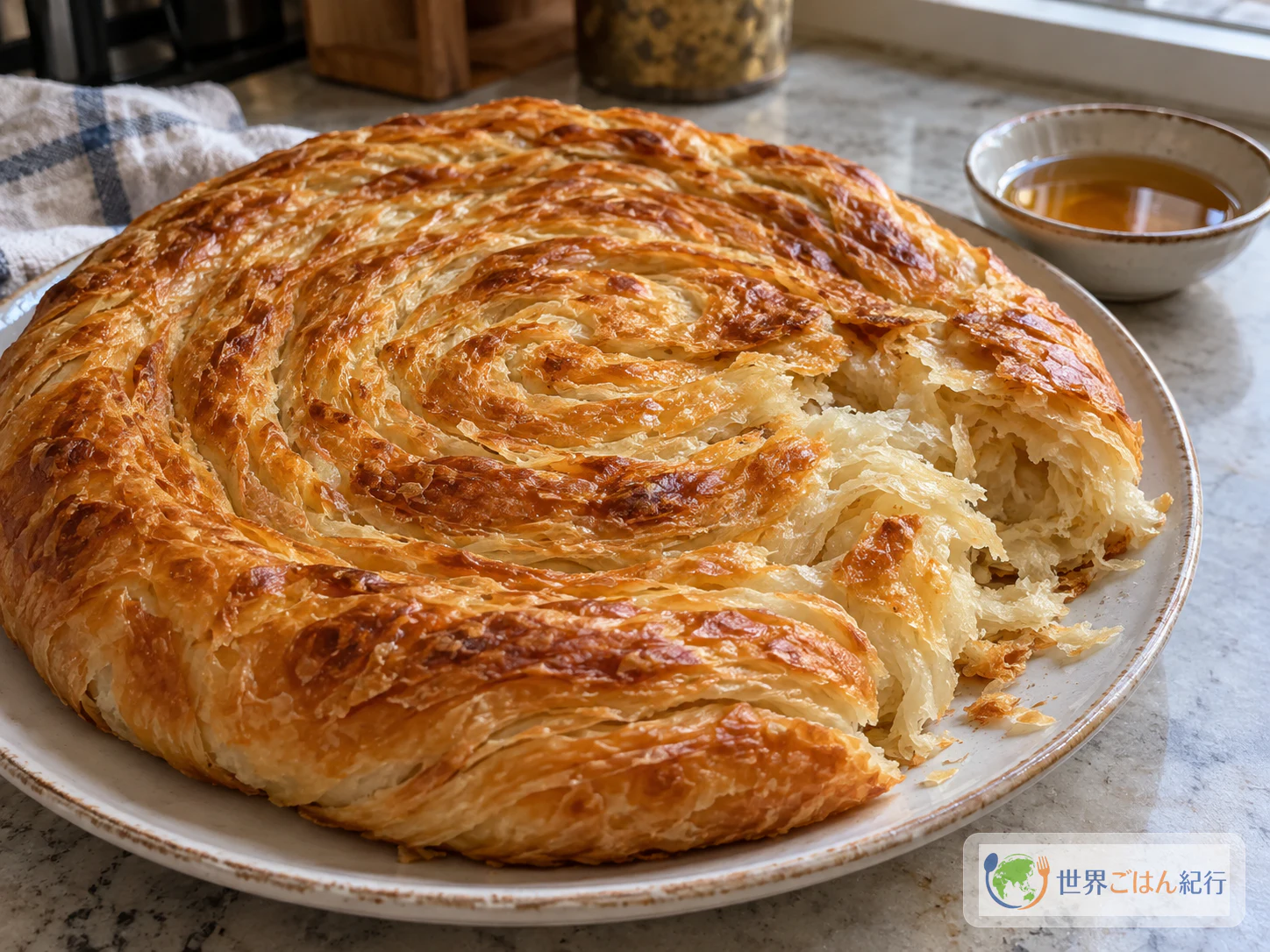
A plain dough of flour, water, salt and a little sugar, separated into layers by softened butter. The spiral you coil before baking is what lets the round pull apart into soft sheets.
Tear the edge of a golden round of fiteer meshaltet and it comes apart in layers rather than crumbs. On the table beside it there may be honey, thick cream, aged cheese or molasses, and each bite can go sweet or salty depending on which dish you reach for. That back-and-forth is how RAWI Publishing describes meshaltet being eaten: as a traditional breakfast made in village homes, with the accompaniments served alongside.
The work that produces those layers is simple but deliberate: a dough with no yeast, rolled into a large sheet, spread with butter, rolled into a cylinder, coiled into a spiral, and then rolled out once more into a wide round. This article follows one published Egyptian home recipe from start to finish, without mixing in amounts or methods from other versions.
Sekai Gohan has not test-baked this recipe. The amounts, times and the 230°C oven setting below come from the Tableya recipe by Aly Hassabelnaby. Home ovens vary, so judge the finish by color as well as by the clock.
For other dishes from the same country, see more Egyptian recipes.
What Fiteer Meshaltet Is, and How It Differs from Flying Feteer
In Arabic the dish is written فطير مشلتت, and English spellings vary: feteer meshaltet, fiteer meshaltet and others. The Tableya author explains feteer as a word for bread made from unleavened dough, and connects meshaltet to a word meaning "pillow," pointing to the pastry's soft texture. Treat this as the author's explanation rather than a settled etymology.
The same author writes about the dish with pride and nostalgia for the countryside of the Nile Delta. RAWI Publishing, writing on Google Arts & Culture, draws a useful line between two kinds of feteer. One is the "flying feteer" of street stalls, where the dough is stretched in the air until it is extremely thin. The other is meshaltet, described as a village-home breakfast whose dough sheets are comparatively thicker. RAWI also describes feteer-making as a skill passed down within families.
This recipe is the home-style version: one round, rolled and coiled on the counter. It does not use the air-stretching technique of the street stalls.
Home recipes also differ from one another. Other published versions use different amounts of water and fat, fold the dough instead of rolling it, or bake at a different temperature. Those are separate recipes; this article sticks to Tableya's.
On origins, some writers say the dish dates back to ancient Egypt or passed through the Mamluk era into the croissant. The sources consulted here present those claims only as hearsay, without evidence, so this article does not treat them as fact. Layered doughs exist in many parts of the world, and a single line of descent cannot be stated without support.
Ingredients: One Round, Five Components
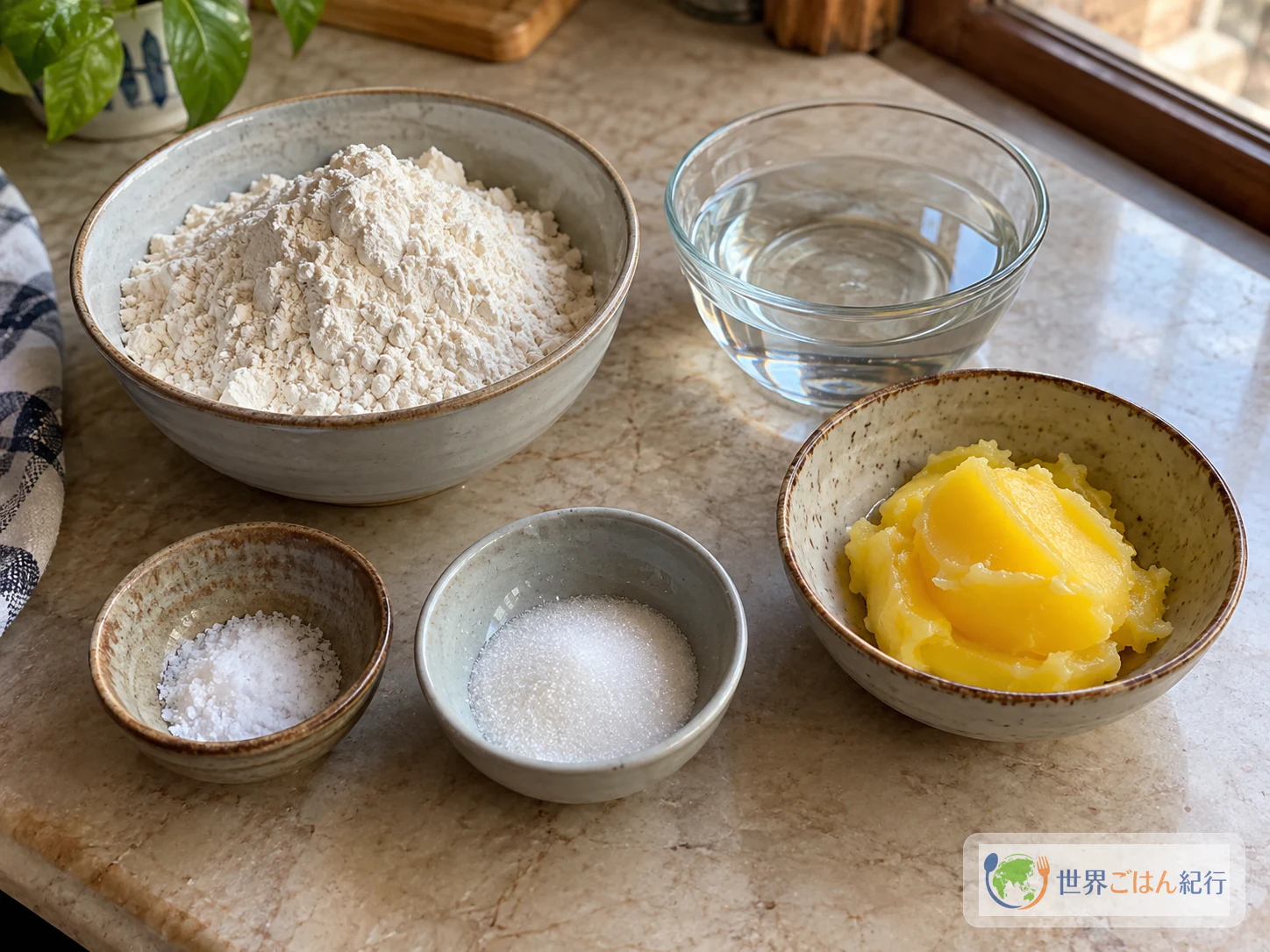
This makes one round. The recipe author suggests sharing one round among 2 to 4 people. That figure is the author's guide, not a measured yield. Don't scale the recipe down: the dough has to be large enough to roll to the sizes in the method.
Honey, cream, cheese and molasses are served on the side. They are not part of the dough. See the serving section below.
Equipment
- Digital kitchen scale (for the flour, water, salt, sugar and butter)
- Mixing bowl
- Large work surface
- Rolling pin
- Parchment paper (baking paper)
- Baking tray
- Heat-resistant oven gloves
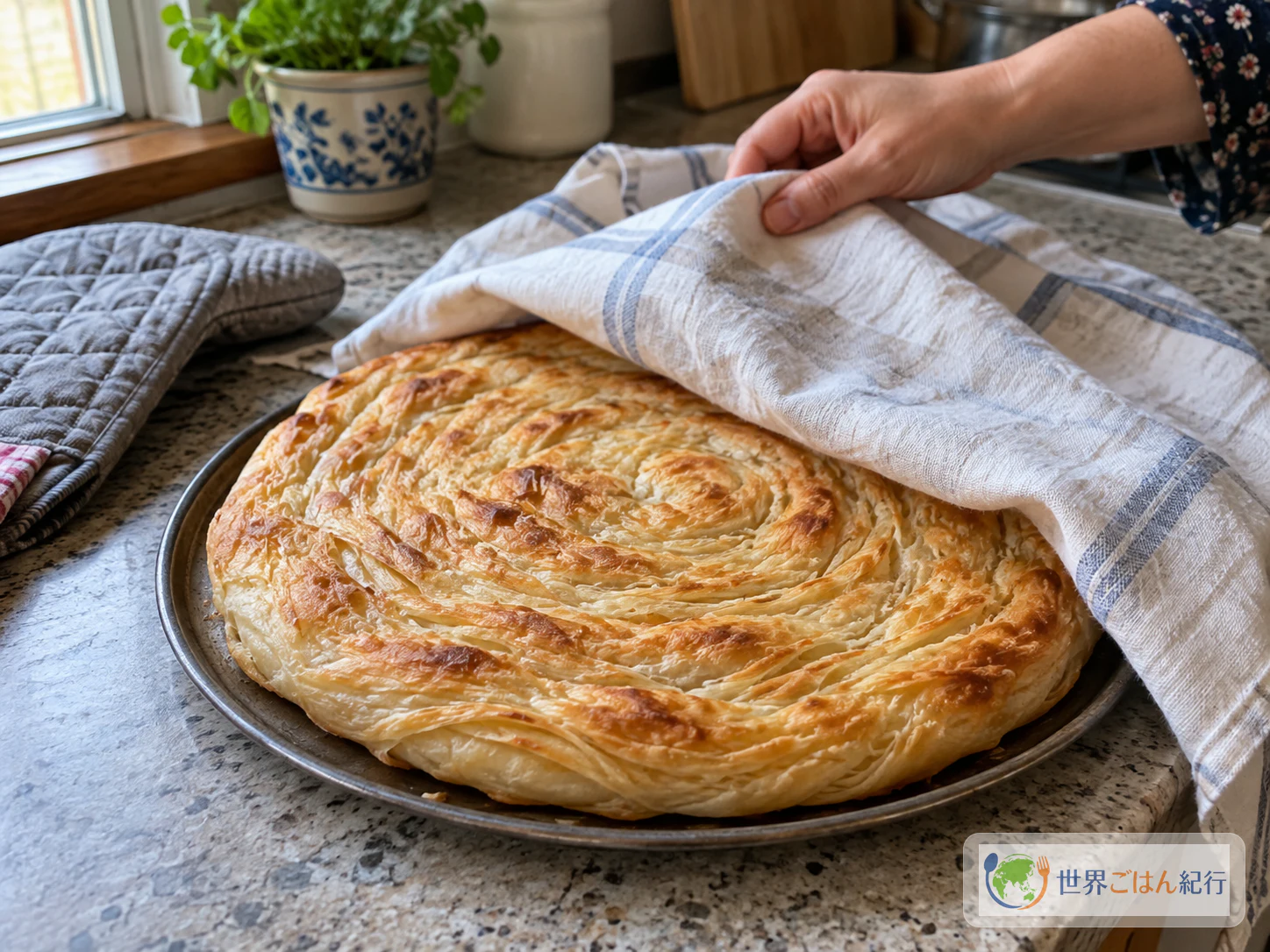
- Clean cloth, slightly damp, for cooling
Choosing the Butter and Flour
Clarified butter or regular butter. Clarified butter, sold in Egypt as samna, has less water and fewer milk solids than regular butter, and a more concentrated aroma. The Tableya author prefers it for its richer flavor but notes that regular butter also works for building the layers. If you can't find clarified butter, unsalted butter is a practical substitute. Expect a milkier aroma and a different water content. It still makes the layers, but it won't taste the same as samna.
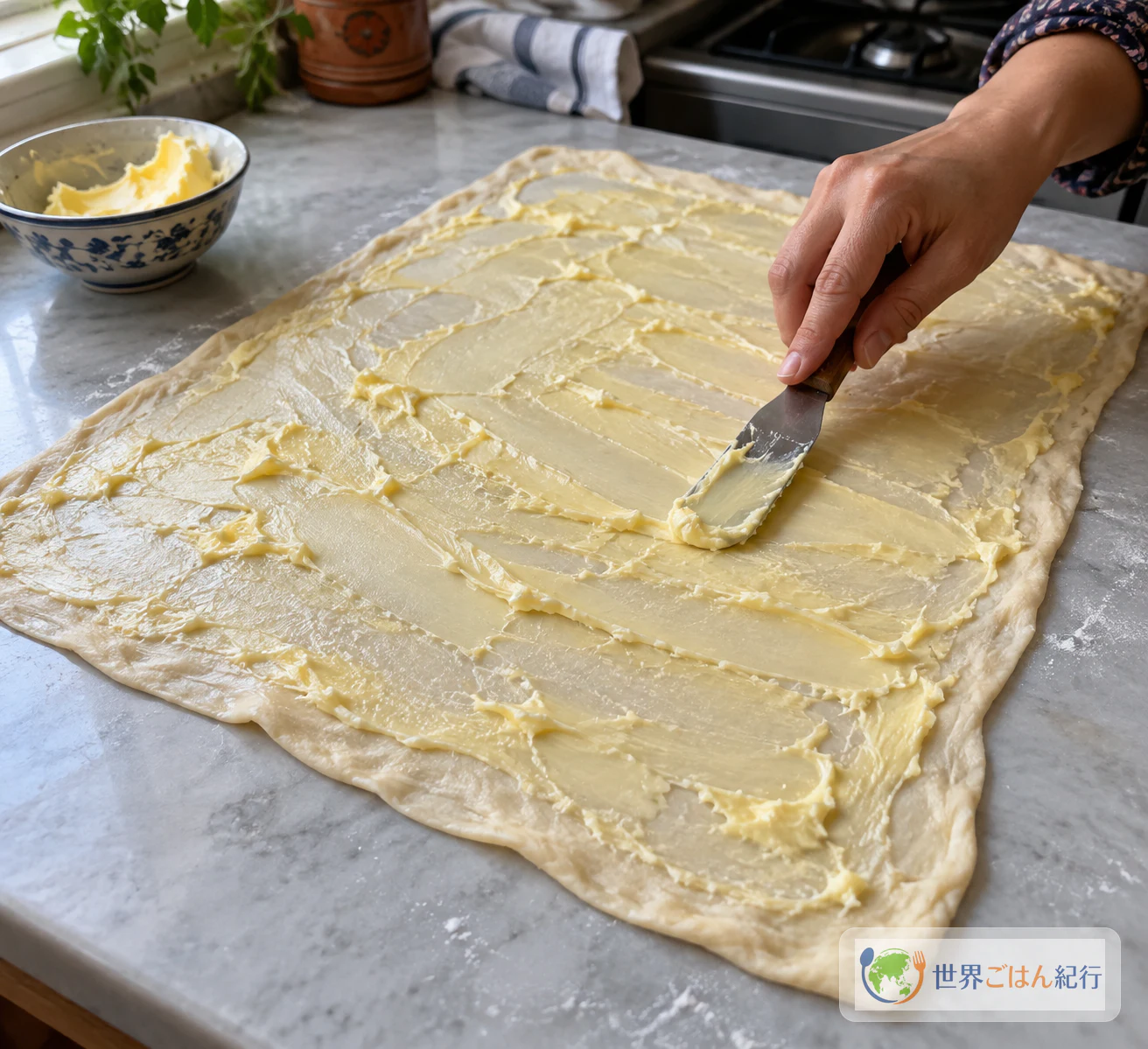
Soft, not melted. Leave the butter at room temperature until it spreads easily. Cold, hard butter tears the dough and won't spread thinly. Melted butter is not what the recipe calls for and behaves differently on the sheet.
Flour. The recipe specifies all-purpose flour, not bread flour. Flours differ in protein, and that can change how far the dough stretches before it springs back. Be ready to give it extra rest if it fights you.
Allergens. This pastry contains wheat, and milk when made with butter. Clarified butter is still a dairy product, so check the product label. This article cannot promise the recipe is safe for anyone with a strict allergy.
Method: Building Layers by Rolling and Coiling
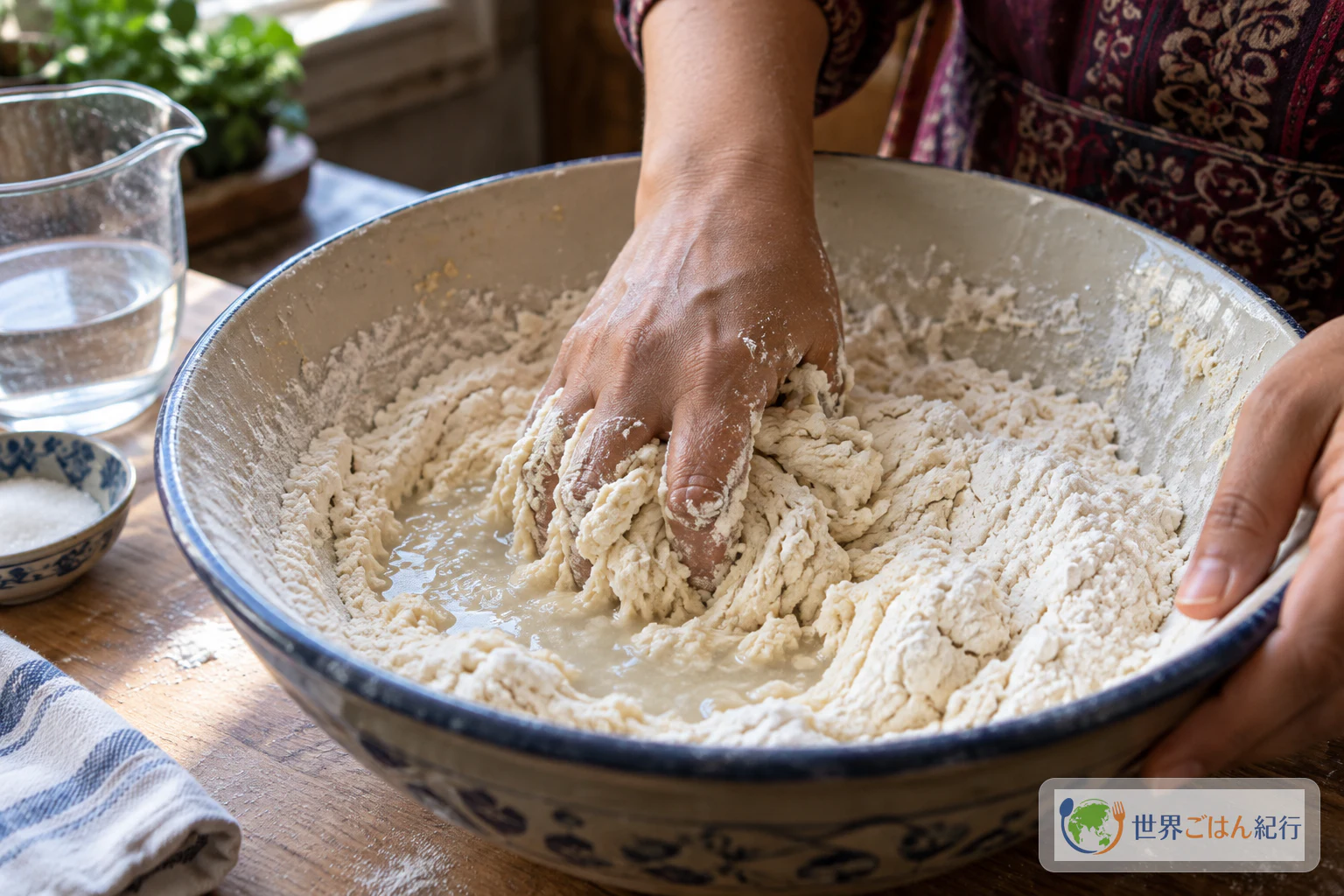
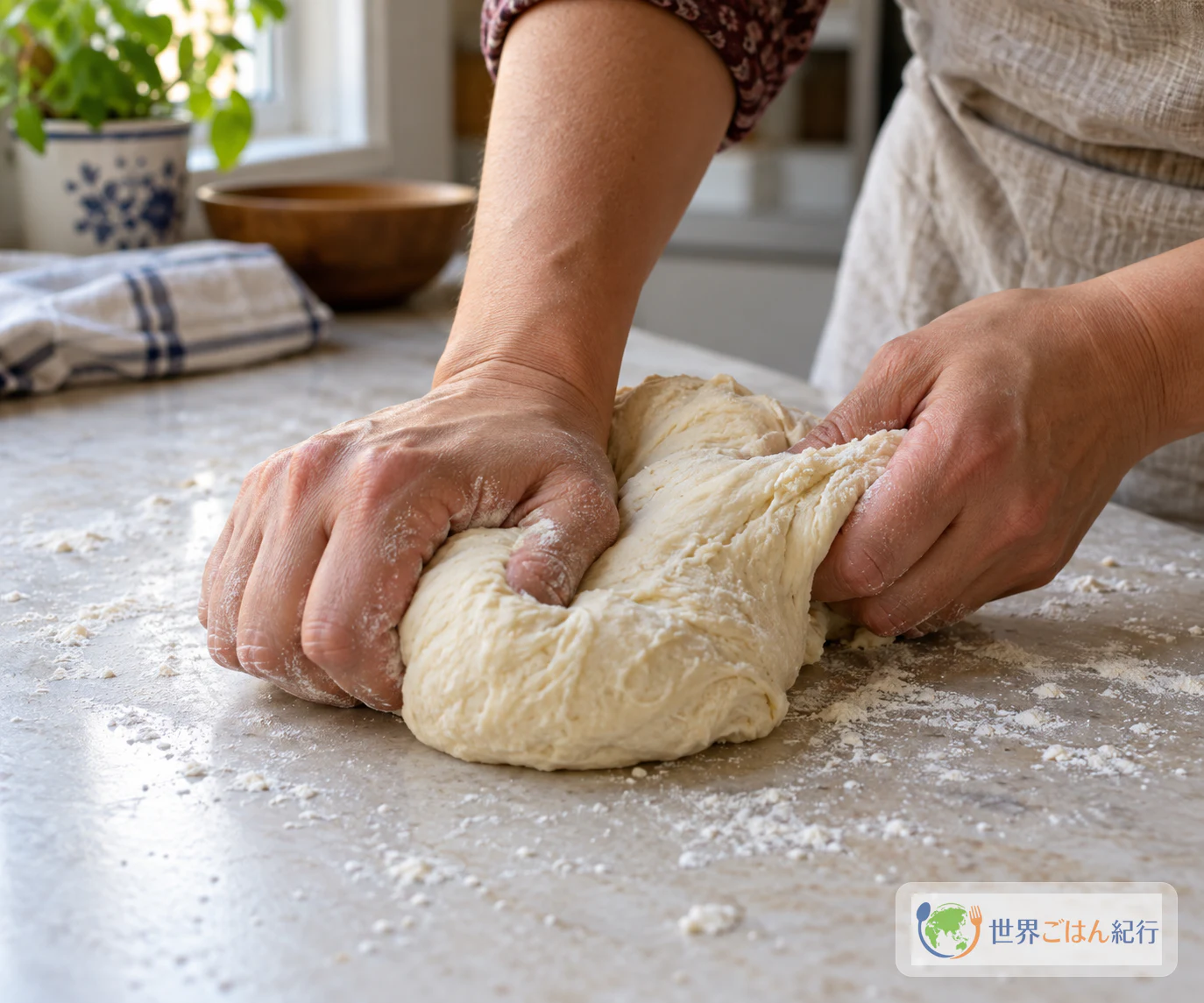
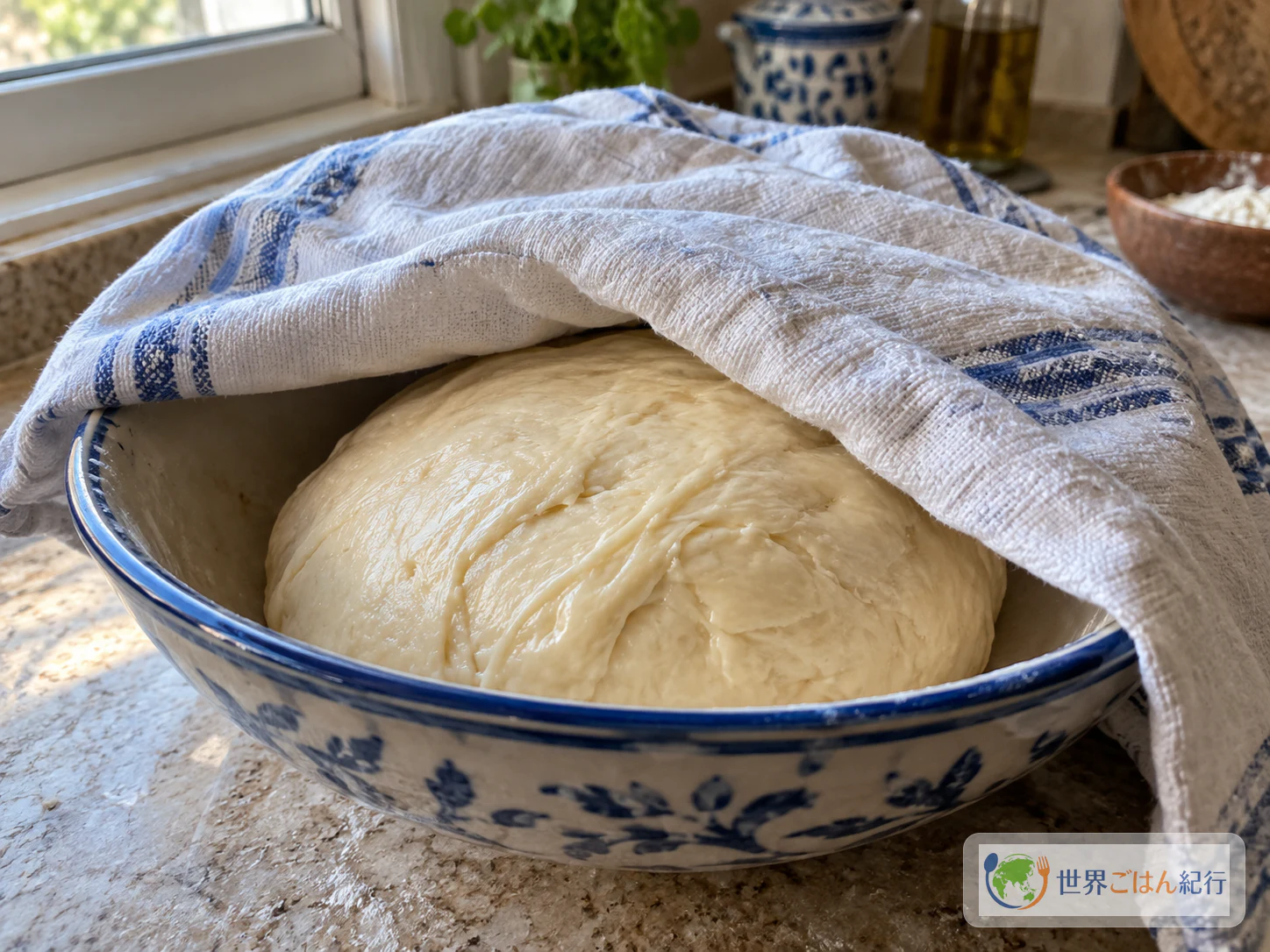
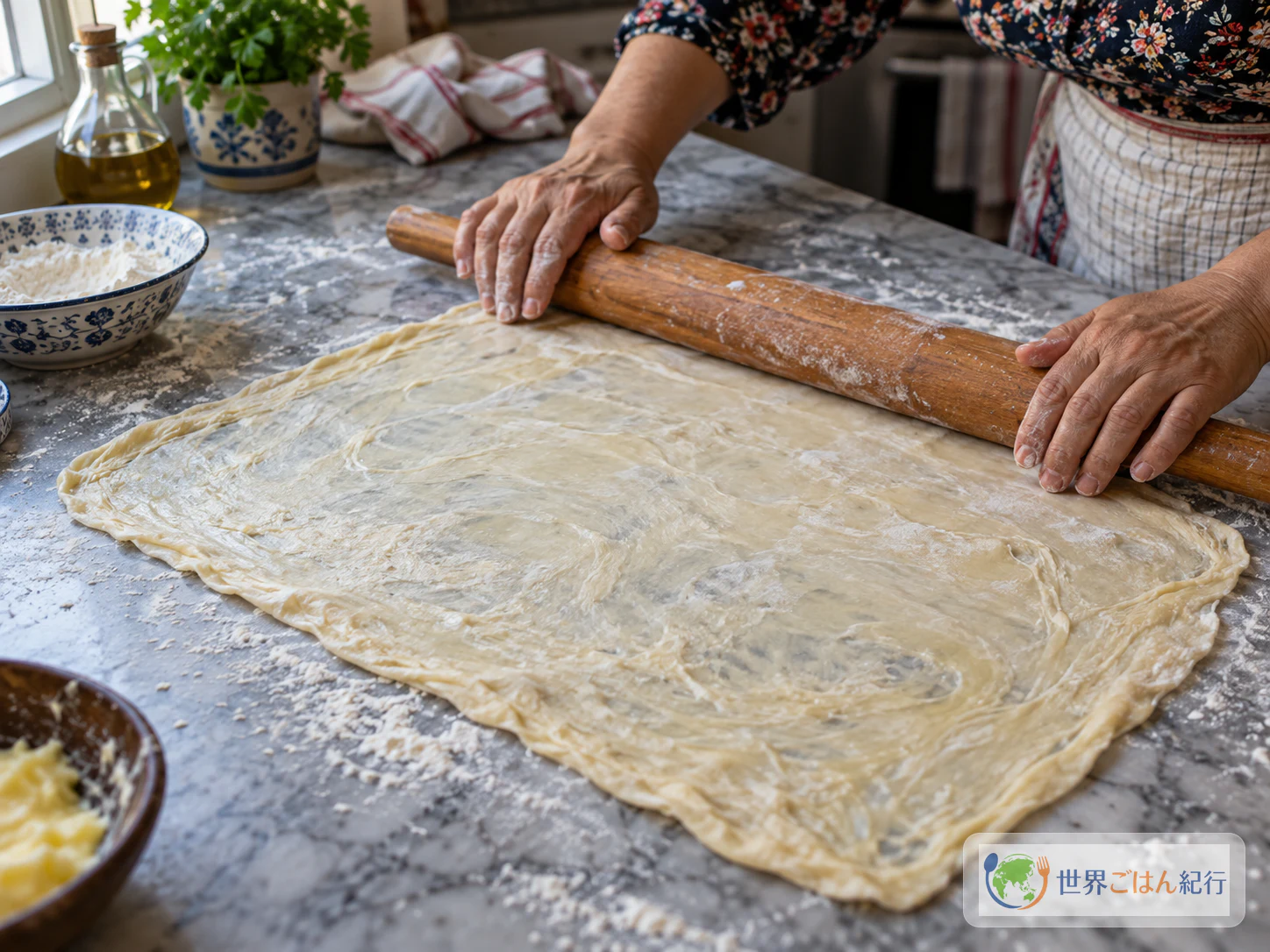
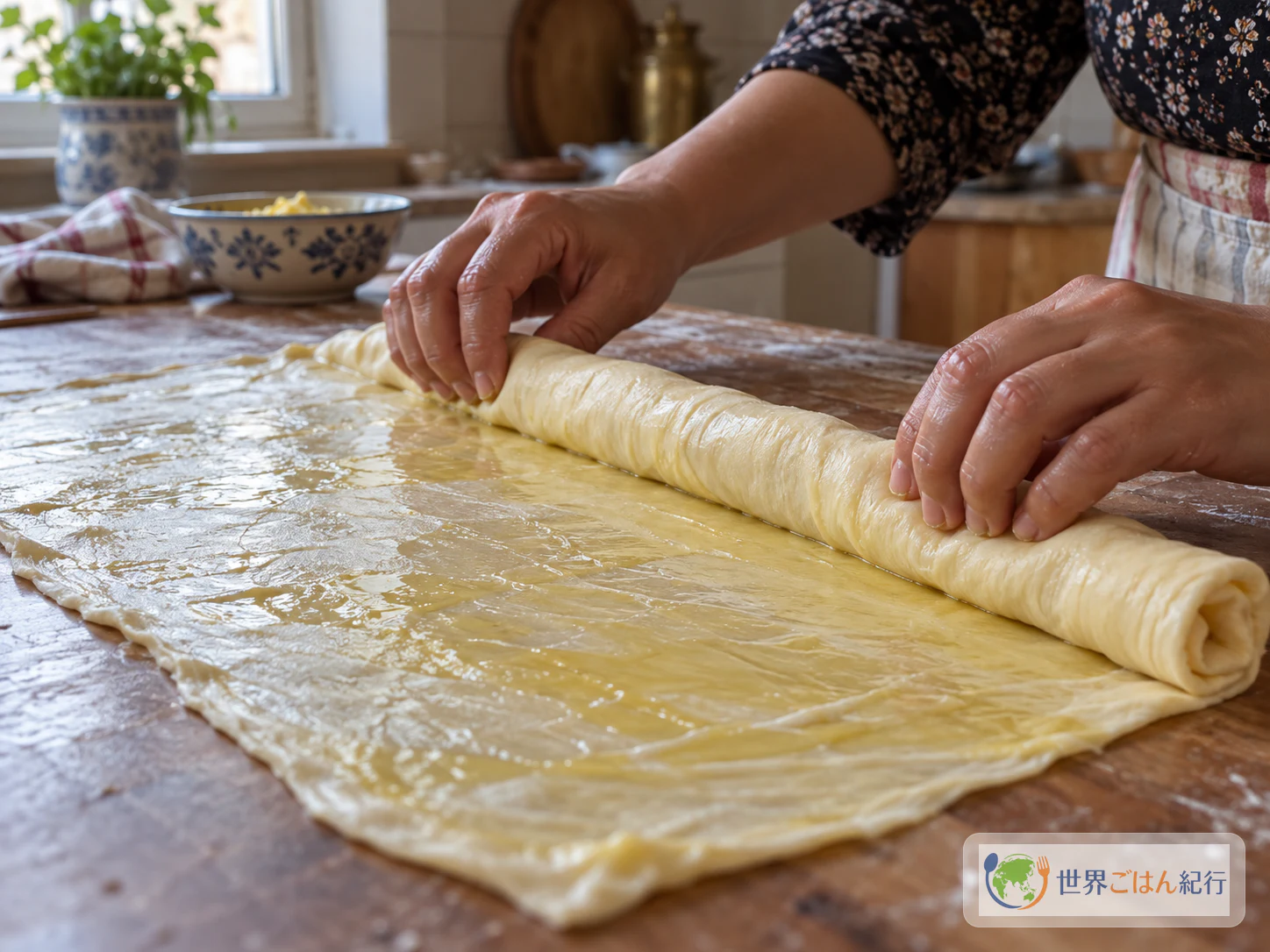
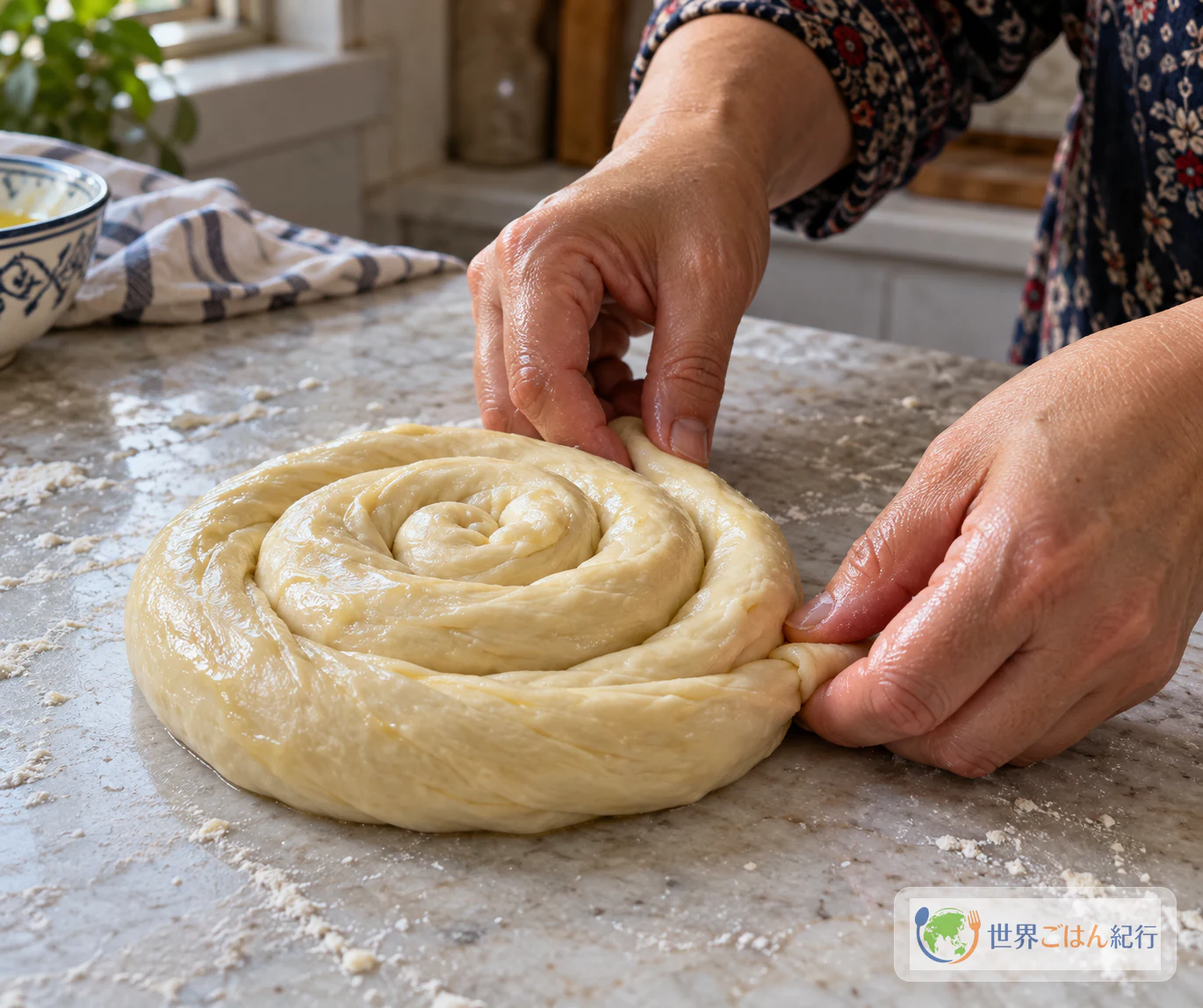
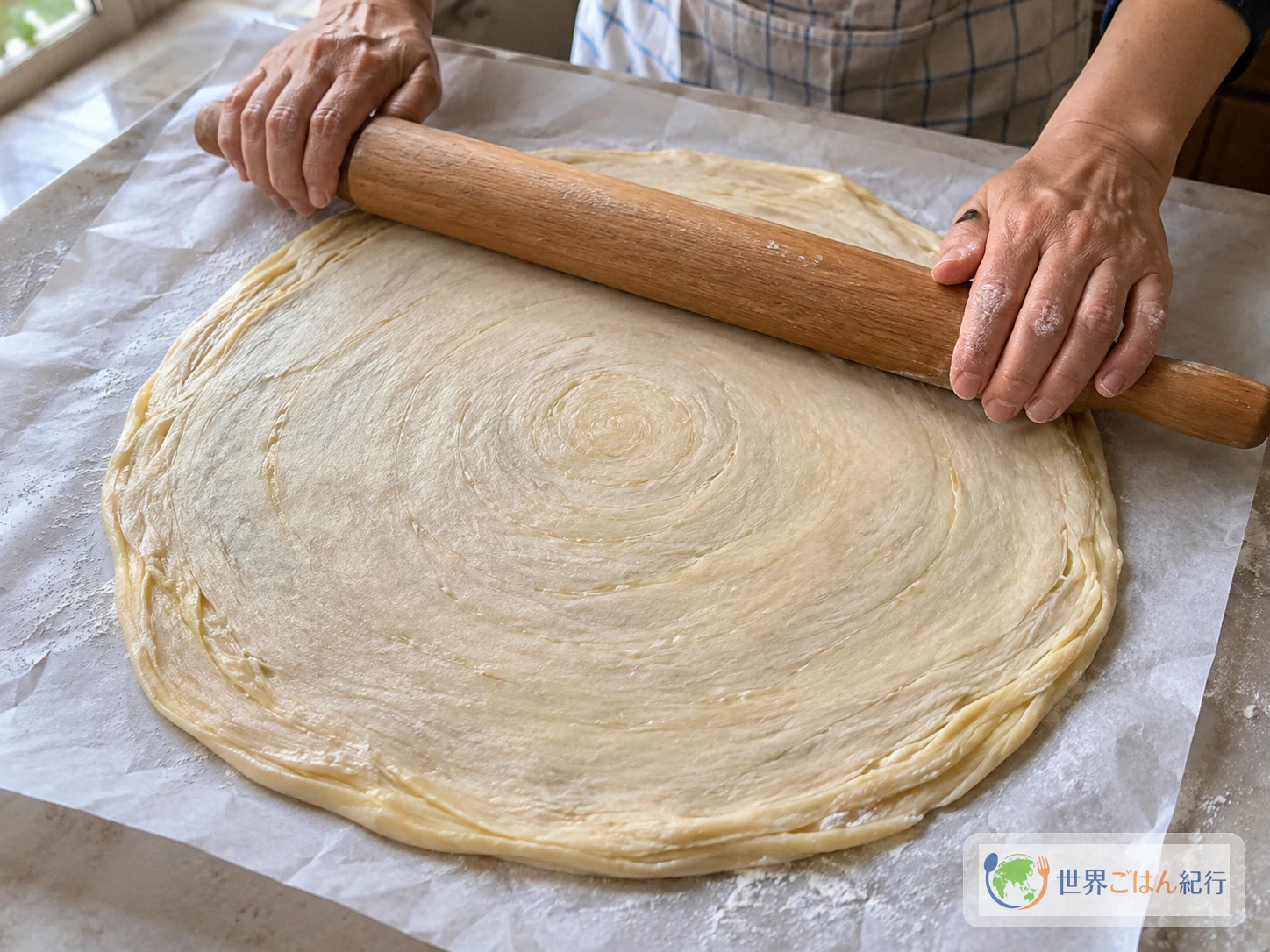
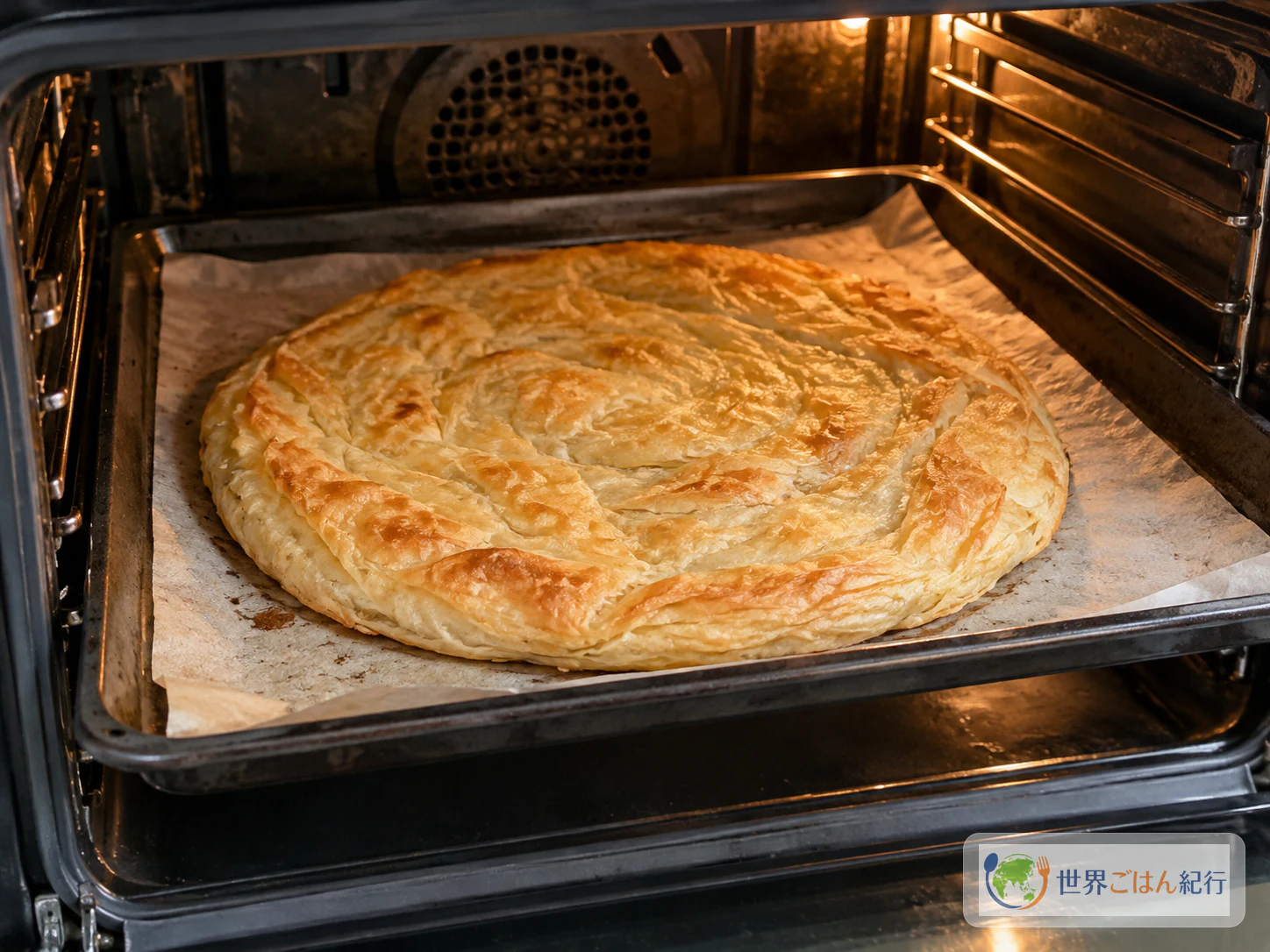
Mix, knead and rest the dough. Roll it into a rectangle, butter it, roll it into a cylinder, coil it into a spiral, rest it, then roll it into a wide round and bake it briefly on a very hot tray.
When Things Go Wrong
| Problem | Likely cause | What to do |
|---|---|---|
| The dough springs back as you roll | The dough is still tight | Rest it 5 to 10 minutes more, then roll again. Don't pull it by force |
| The layers bake into one solid piece | Bare patches without butter, or butter too cold to spread | Make sure the soft butter covers the whole sheet before rolling. Don't add extra fat beyond the 90g |
| Butter squeezes out when rolling the cylinder | Pressing too hard | Roll firmly but without crushing the cylinder |
| The top colors but the middle seems underdone, or the edges burn | Oven heat differs from the setting | Do not serve it while the center is underdone. The source’s 7 to 10 minutes and the surface color do not establish that the center is cooked. Check the underside where it lifts easily, using gloves; no fixed additional baking time is established here |
This untested version gives no validated adjustment for an oven that runs hot or cool. Do not treat the end of the stated time range as permission to serve an underdone pastry.
Serving: Honey, Salty Cheese and Molasses on the Side
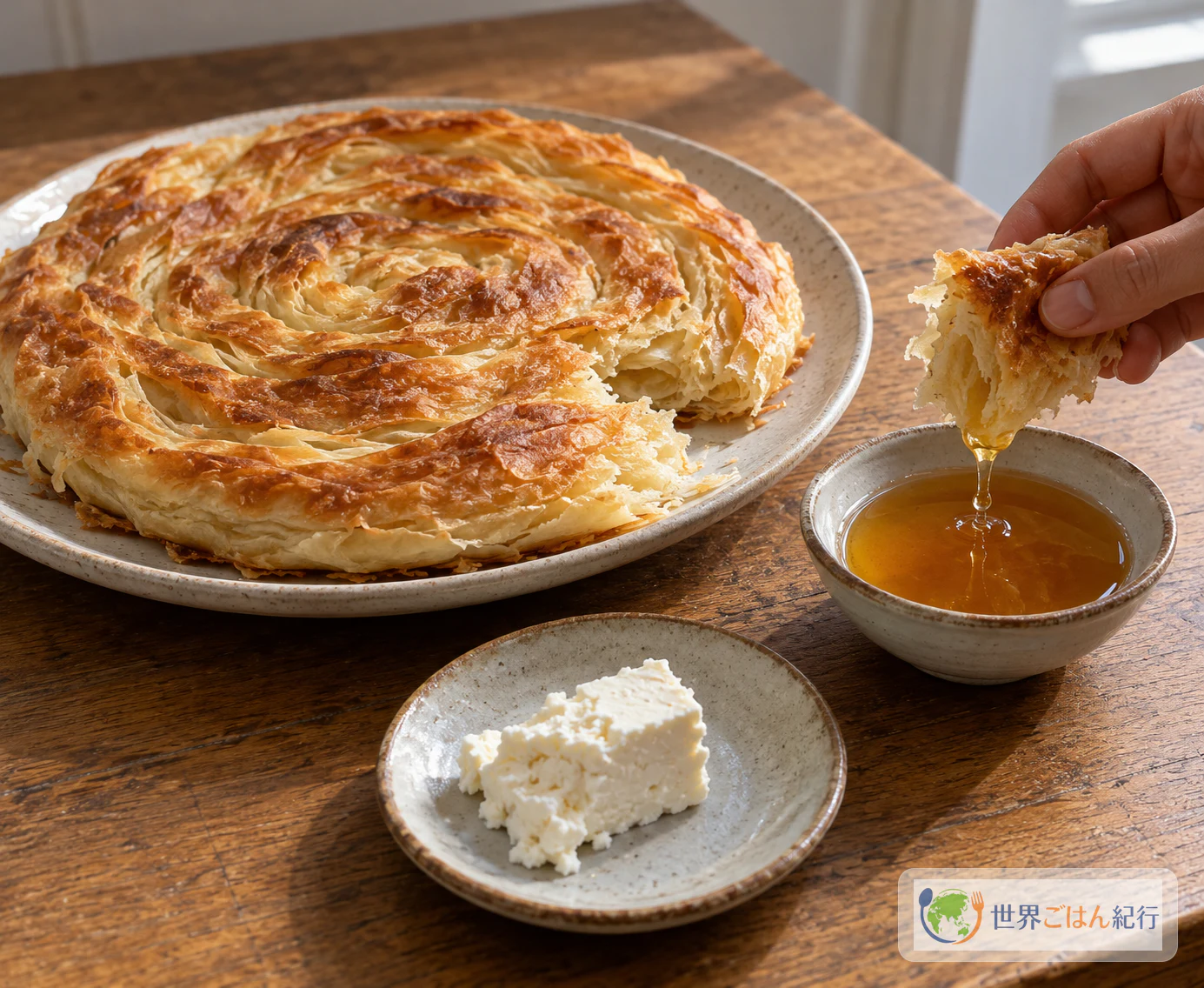
The dough itself tastes mild: wheat and salt, the aroma of the butter, and soft layers. RAWI Publishing describes meshaltet served with aged cheese, clotted cream, honey and molasses, so each torn piece can go in a different direction. Keep all of these in separate dishes on the table, not in the dough.
- Honey: the simplest sweet pairing.
- Thick cream: RAWI mentions clotted cream (qishta in Egypt). It is a side, not a dough ingredient.
- Salty cheese: the Amira's Pantry recipe author singles out mish, a traditional Egyptian cheese with a strong salty taste. A salty white cheese you can find locally will give the contrast, but it is not the same as Egyptian aged cheese or mish.
- Molasses: a darker, deeper sweetness than honey. Check what you buy is actually molasses rather than a different dark syrup.
Fillings exist too. RAWI describes feteer with sweet and savory fillings. Those are separate recipes. This one is plain meshaltet.
Leftovers: the source recipe gives no storage or reheating guidance, so this article gives no storage times.
Variations Within the Same Recipe
- Clarified butter (samna): the author's preferred choice, with a richer, more concentrated aroma.
- Unsalted butter: works for the layers. The flavor is milkier and the water content differs.
- Different sides each time: honey one day, salty cheese the next, or both on the table. The dough stays the same.
Don't swap in amounts or folding methods from other home recipes. They use different ratios of water and fat, so mixing them with this one won't give a reliable result.
Frequently Asked Questions
The dough keeps shrinking when I roll it. What should I do?
Let it rest for another 5 to 10 minutes, then roll again. Pulling harder only makes it spring back or tear.
I don't have clarified butter. Can I use regular butter?
Yes. The recipe author says regular butter also works for the layers. The flavor will be milkier and less concentrated than with samna.
Why is there sugar in the dough?
This particular recipe uses 10g. Other home versions use none, so sugar isn't a universal rule for meshaltet. Keep it in when following this recipe.
Does the dough need yeast or time to rise?
No. The recipe has no yeast. The 1-hour rest is for making the dough easier to roll, not for rising.
Should I stretch it paper-thin like street feteer?
Not for this version. RAWI describes the air-stretched, very thin dough as the street-stall flying feteer, and meshaltet as using thicker sheets. Here you roll on the counter to about 30 × 40 cm, then to about 35 cm across.
Can I add a filling?
Filled feteer exists, but it's a separate recipe. This one is plain, with sweet or salty accompaniments served alongside.
Sources
- Aly Hassabelnaby, "The Breads of Egypt: Feteer Meshaltet," Tableya. The recipe followed in this article: all ingredients, amounts, steps, oven temperature and finish. Also the author's explanation of the words feteer and meshaltet, the Nile Delta context, the comparison of clarified and regular butter, and the 2 to 4 person guide (the author's estimate, not a measured yield). https://tableya.net/recipes/the-breads-of-egypt-feteer-meshaltet
- RAWI Publishing, "Flying Feteer: The Story of a Beloved Pastry," Google Arts & Culture. Meshaltet as a traditional breakfast made in village homes, its thicker sheets compared with street-stall flying feteer, and serving with aged cheese, clotted cream, honey and molasses. A third-party article on the platform, not an official institutional statement. https://artsandculture.google.com/story/flying-feteer-rawi-egypts-heritage-review/EwUhrEn5ye9ypQ?hl=en
- Amira Ibrahim, "Egyptian Feteer meshaltet," Amira's Pantry. A different home version, used only to show how water, fat and shaping vary between recipes, and for serving with honey, molasses and salty mish cheese. Its amounts are not used here. https://amiraspantry.com/egyptian-feteer-meshaltet/
- "Feteer Meshaltet," Arabic flavour (English recipe attributed to Maha Shaltout). Another home version with different ingredients and folding, used only as background on household differences. Not used for amounts. https://arabicflavour.wordpress.com/2014/12/01/feteer-meshaltet/