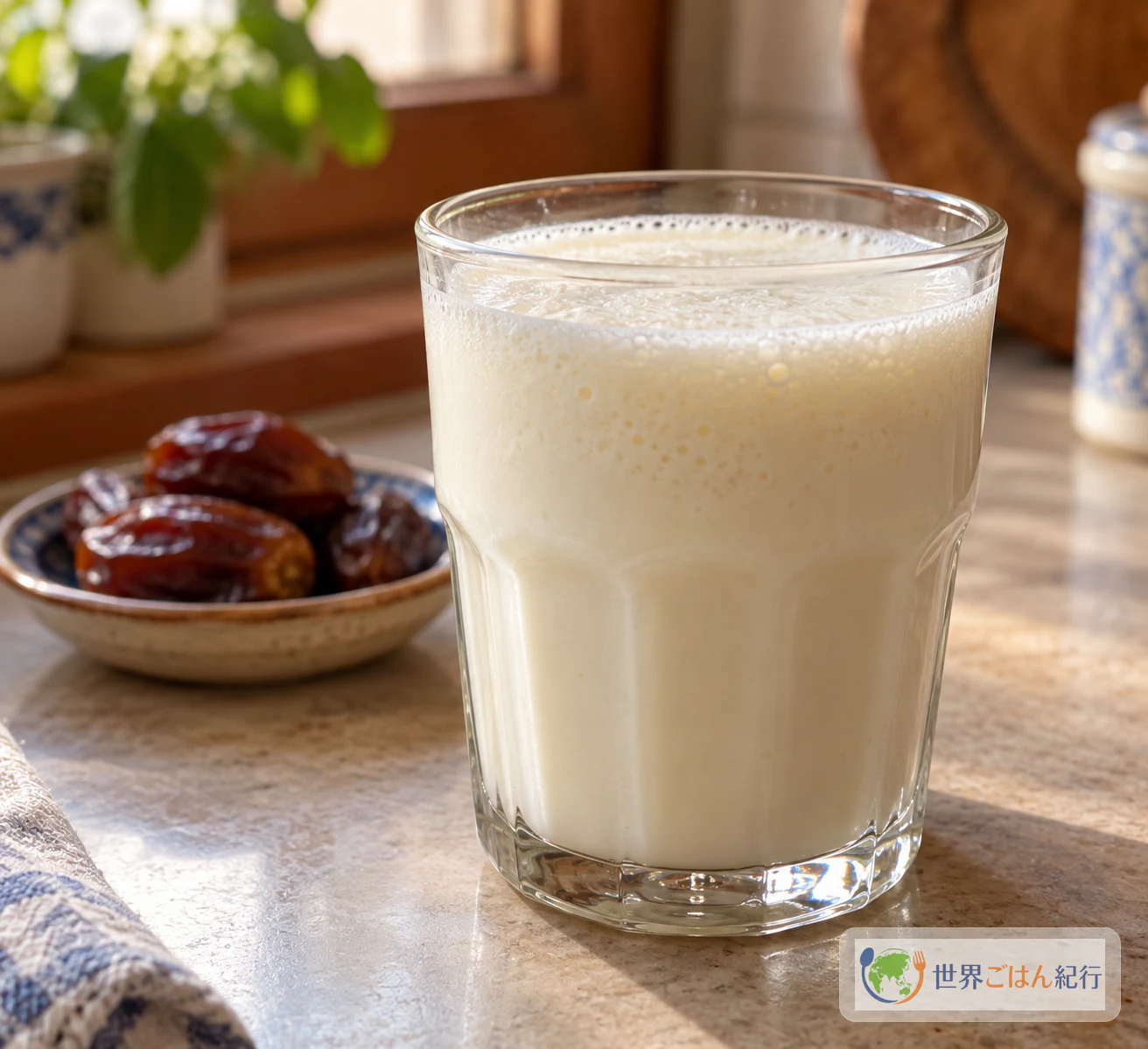
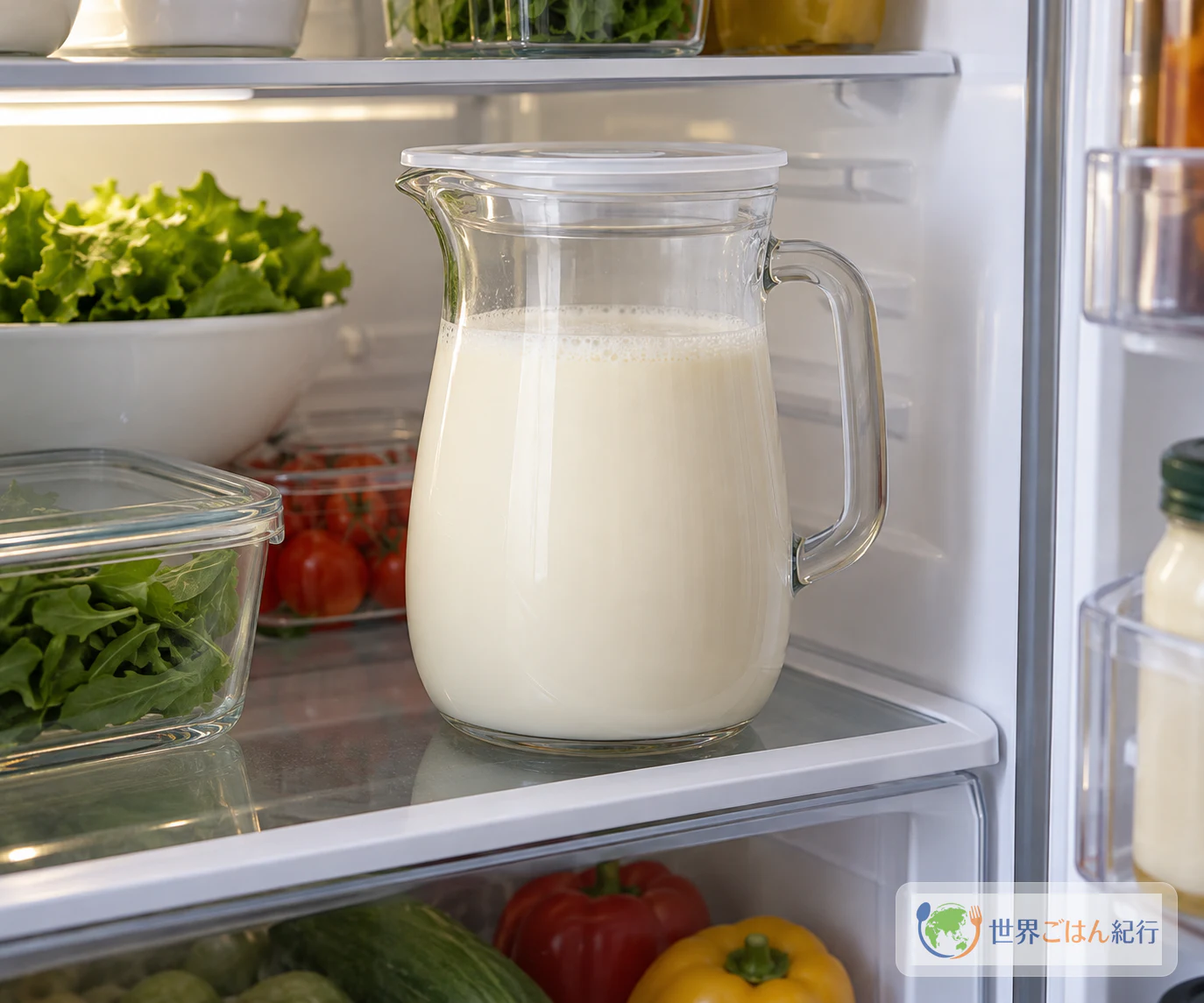
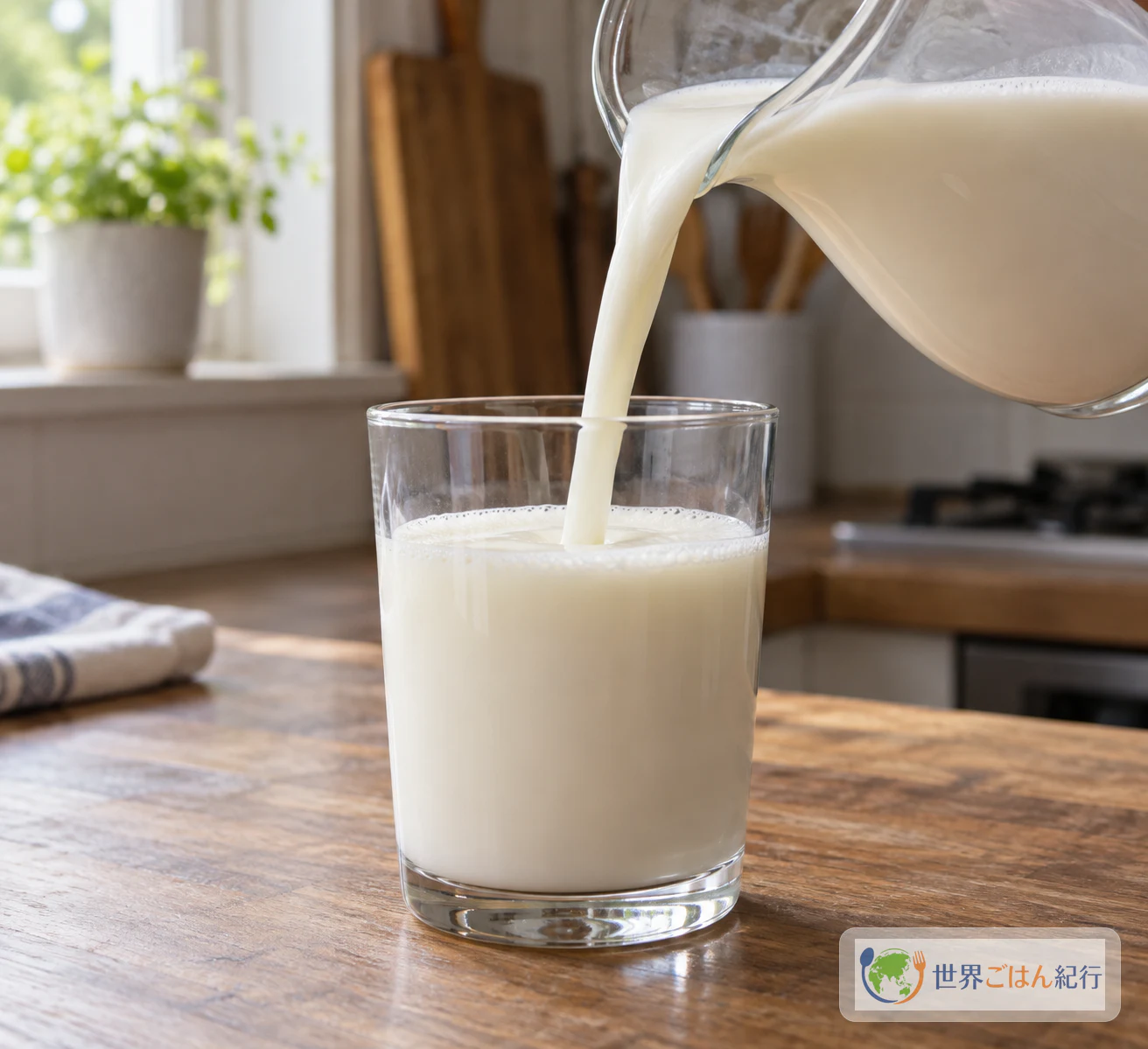
Zrig: A Glass of Soured Milk Waiting Beside the Dates
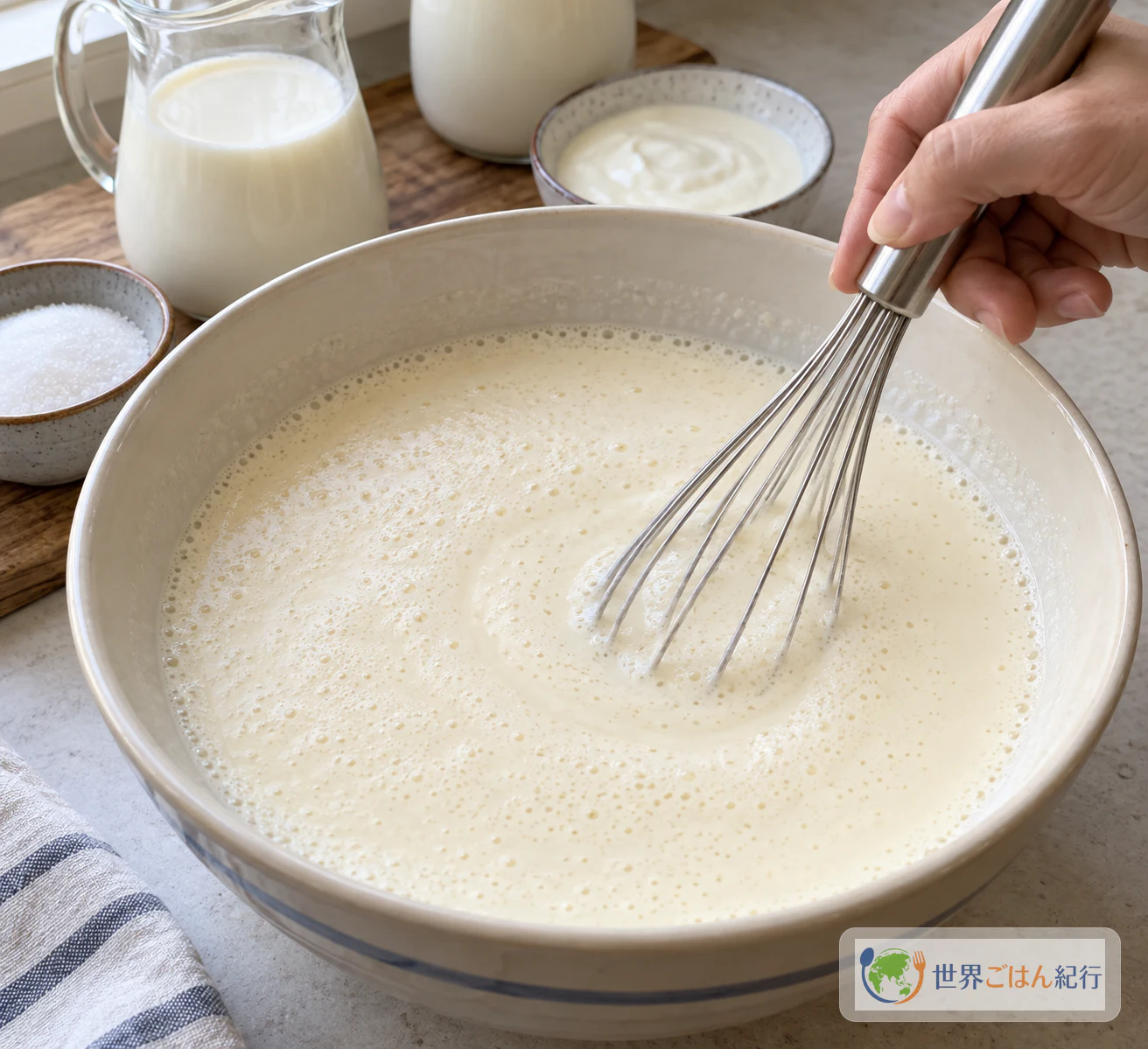
The tang of fermented milk, the softness of fresh milk, and only a gentle sweetness. Nothing is heated and nothing is fermented at home. Everything goes into one bowl and is whisked until smooth and lightly foamy.
When the fast breaks during Ramadan in Smara, the iftar table that a 2007 report in the Moroccan newspaper Le Matin described held dates and fresh milk, along with a drink called zrig: fresh milk to which sugar, or a store-bought cultured dairy product, is sometimes added. In 2015, the news site Alayam24 likewise reported that zrik is served at iftar in the southern desert regions, describing it as a milk-based drink made with milk such as cow's or camel's milk.
These reports record what their writers saw at particular tables. They are not a single fixed formula, and they do not say every household makes the drink the same way.
This article follows one measured home version: a recipe posted to Cookpad Maroc by a home cook, Samira Ou, titled "Sahrawi zrig." It is presented as one example, not as the only traditional recipe or proof of a single place of origin. This recipe has not been kitchen-tested by Sekai Gohan, so the taste, how long the foam lasts and how many glasses it actually makes have not been measured.
What Zrig Is: A Milk Drink Known by More Than One Name
The drink appears in writing as zrig and zrik (Arabic: الزريك). Across the reports, the common thread is a drink built on milk. Beyond that, the details move: fresh milk with sugar or a cultured dairy product in Smara, cow's or camel's milk in the southern desert regions, and, in a guide to hospitality in southern Morocco, milk with water, a little sugar and sometimes yogurt. Where the name comes from has not been confirmed, so this article does not offer an origin story.
The 2007 Smara report names a well-known dairy brand as one possible addition. That is one addition mentioned in the report, not a required ingredient in this version.
About This Version: Measured Amounts and One Sugar Question
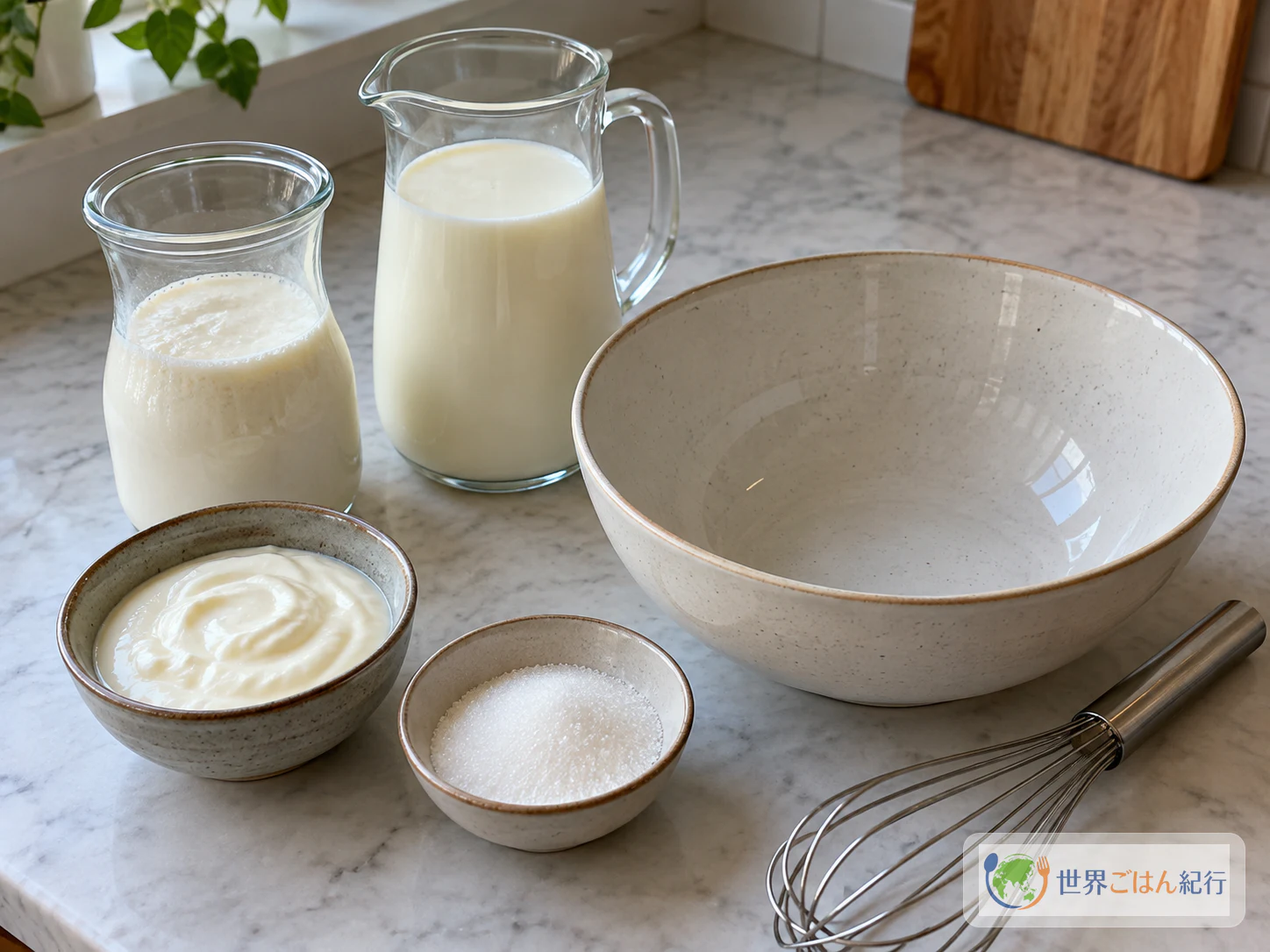
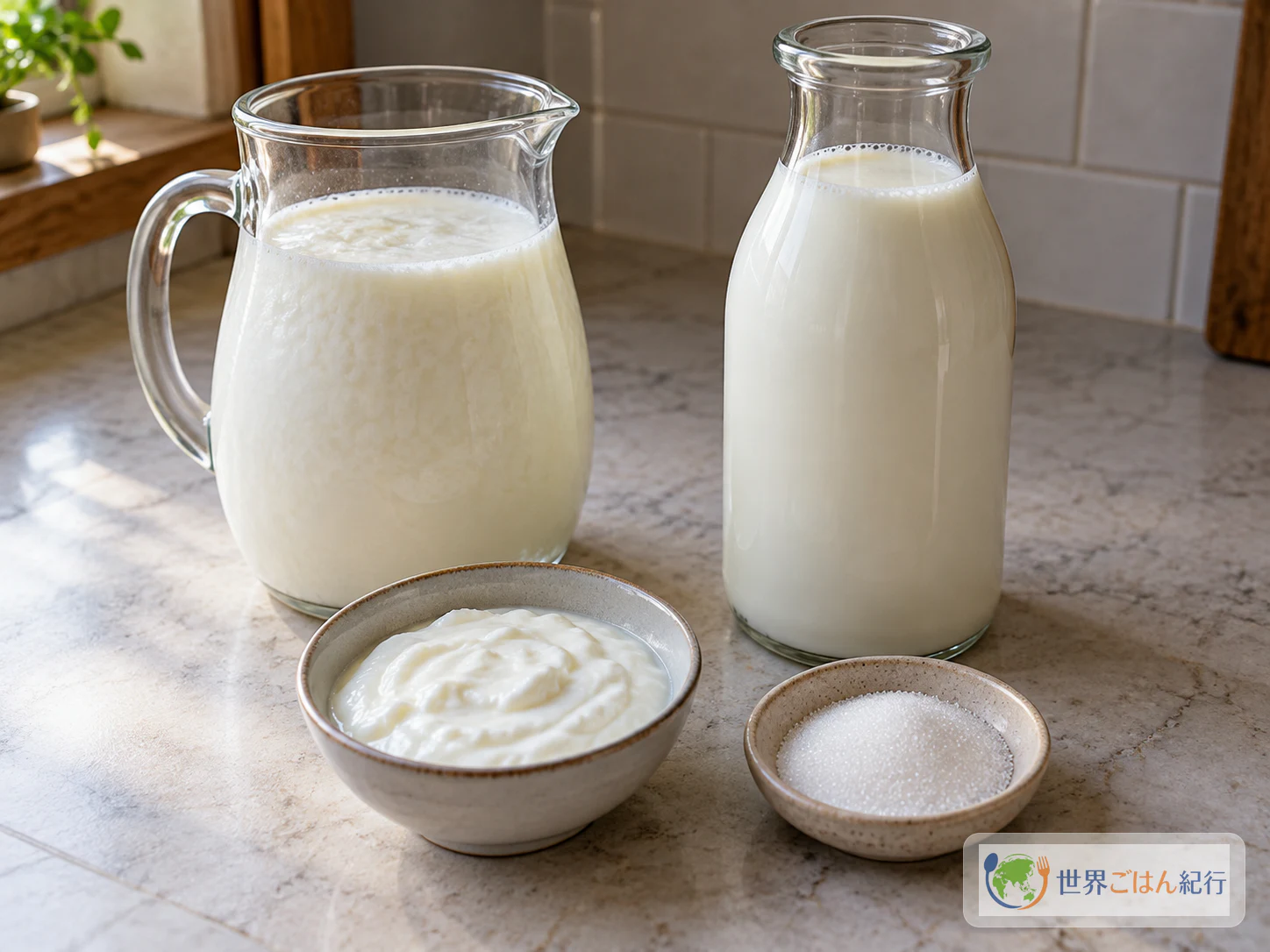
The Cookpad Maroc recipe lists 1 litre of lben (fermented milk), 1 litre of milk and 2 tablespoons of yogurt, and the poster labels it as 10 servings taking 10 minutes. Those are the poster's own figures; the actual number of glasses has not been measured.
One detail needs flagging. Sugar does not appear in the poster's ingredient list, but the method says to add 2 tablespoons of sugar and whisk. This article follows the method and includes 2 tablespoons of sugar as an ingredient. If you prefer, you can reduce or leave out the sugar, but that is a change to this version rather than a different "correct" recipe.
Other versions, such as those with water, nuts or cocoa, are kept separate in the variations section below rather than blended into this recipe.
Ingredients: Fermented Milk, Milk, Yogurt and Sugar
Equipment
- A large, clean bowl
- A whisk
- A pitcher or container with a cover
- Glasses for serving
A blender is not needed.
Choosing the Dairy: Lben, Drinkable Yogurt and Safe Milk
Lben is a sour fermented milk, and there is no exact one-to-one match for it on most supermarket shelves outside North Africa. If you cannot find it, plain unsweetened drinkable yogurt is a reasonable stand-in, but it is not the same product: its sourness and thickness can differ. Don't swap in the same volume of thick spoonable yogurt for the lben; that turns the drink into something else.
Plant-based milks or yogurts would change both the flavor and what the drink is. They have not been confirmed as a substitute, so this article does not recommend them.
Use only pasteurized milk and pasteurized fermented dairy products. Do not leave raw milk out to ferment on its own. Every ingredient except the sugar is a dairy product, so this drink is not suitable for anyone with a milk allergy. Keep the finished drink refrigerated and follow the storage directions on the products you used.
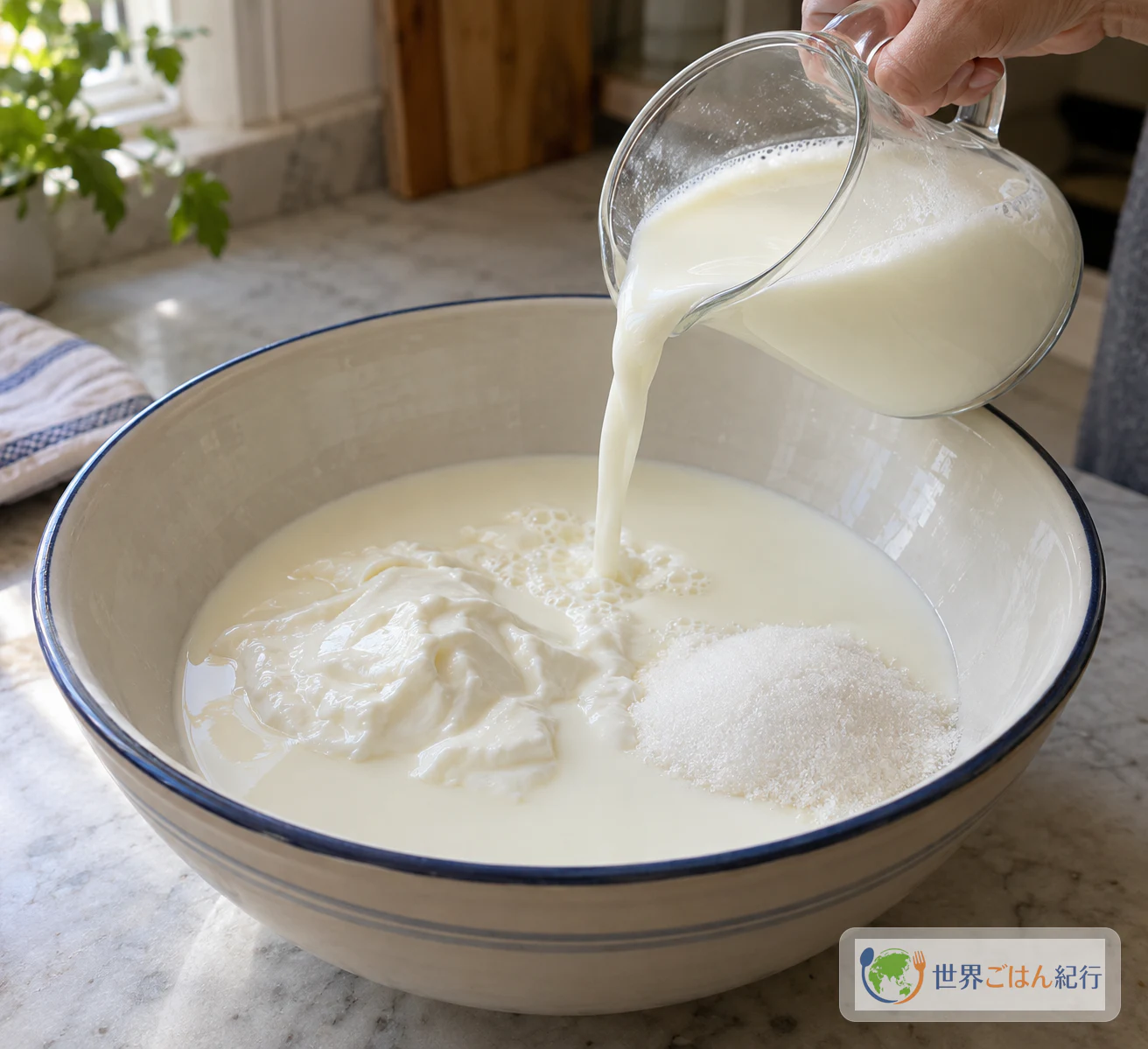
Method: Combine, Whisk, Chill, Pour
Every step happens in a bowl and the refrigerator. The fermented flavor comes entirely from the lben and yogurt you buy.
When the Glass Isn't Quite Right
This version has not been kitchen-tested, so the fixes below stay with what the method itself supports.
| Problem | What to do |
|---|---|
| Grainy sugar at the bottom of the bowl | Keep whisking until it is no longer visible before chilling |
| The drink has settled in the pitcher | Stir lightly just before pouring, as in step 5 |
| Too sweet for you | Next time, use less sugar. This changes the recipe, so note it |
| Too sour or too thick with drinkable yogurt | Drinkable yogurts vary; try a different plain, unsweetened product next time |
If the drink separates noticeably, no reliable fix has been confirmed, so this article does not suggest one.
Sweetness and Regional Differences
The balance this version aims for is the sharp tang of fermented milk, rounded by fresh milk, with sugar kept in the background. Some households may use less sugar or none; treat that as a personal adjustment rather than the standard.
Other places that use the same name make a different glass. A guide to hospitality in southern Morocco describes zrig as milk thinned with water and a little sugar, sometimes with yogurt. That is a regional comparison, not evidence of how the drink is made in Western Sahara.
The Lebanese newspaper An-Nahar published a separate "Sahrawi zrig" recipe made with lben and yogurt, with optional cocoa, almonds, hazelnuts and sesame, sweetened with sugar or honey. It is a different version, and none of those additions are needed for the basic drink here.
Zrig at the Iftar Table
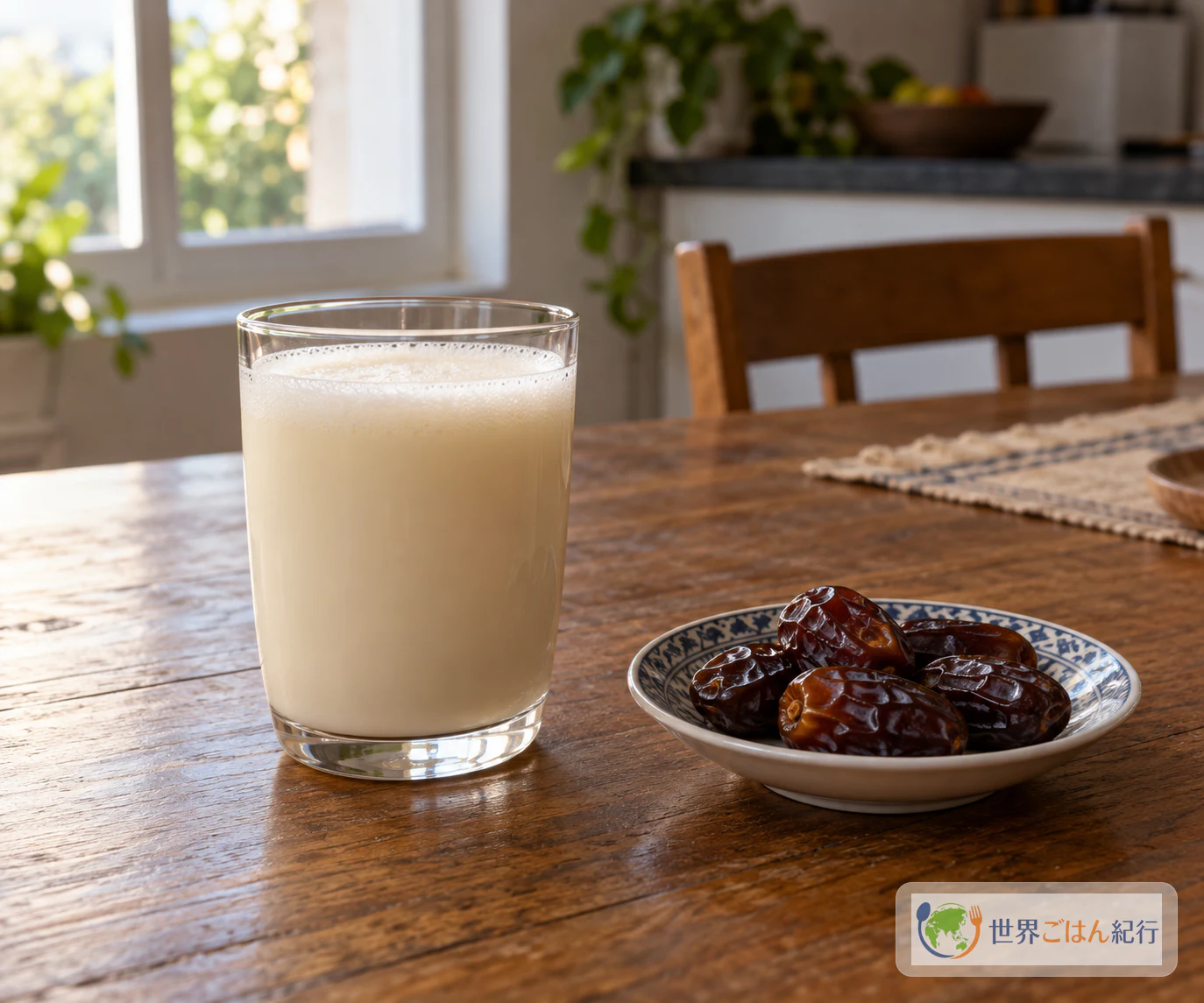
In the reports from Smara and the southern desert regions, zrig belongs to the moment the fast is broken, set out beside dates and other dishes at iftar. These are observations from specific reports, not a rule for every household or every evening of the year.
The 2007 Smara report also describes the place of camel herding and milk in everyday life there. The same article mentions popular beliefs about the health benefits of milk; those are folk beliefs, not medical evidence, and this article does not repeat them as claims.
Frequently Asked Questions
Do I need camel's milk?
No. The reports from Smara and the southern desert regions mention camel's milk alongside other milk, but this version uses fermented milk, milk and yogurt, and the Alayam24 report names cow's milk as well.
Are nuts or cocoa part of zrig?
Not in this version. The version with cocoa, almonds, hazelnuts and sesame published by An-Nahar is a separate recipe. The basic drink needs only fermented milk, milk, yogurt and sugar.
Should I ferment the milk myself?
No. The tang comes from store-bought pasteurized lben and yogurt. Do not leave raw milk out to ferment.
Can I make it without sugar?
Yes, but that changes this version. The method includes 2 tablespoons of sugar; reducing or omitting it is a personal adjustment.
How do I store leftovers?
Keep the zrig covered in the refrigerator and follow the storage directions on the dairy products you used. No specific keeping time is given here.
Is it safe for someone with a milk allergy?
No. Almost every ingredient is a dairy product.
Sources
- Le Matin, "Entre croyances et réalité" (Smara, 2007). Report from Smara describing dates and fresh milk at iftar, zrig as fresh milk sometimes mixed with sugar or a cultured dairy product, and the role of camel herding and milk in daily life. Its folk health claims are not used. https://lematin.ma/journal/2007/Smara_Entre-croyances-et-realite/75371.html
- Alayam24, "الكوفية و الزريك و لمريس.. أكلات تقليدية تزين مائدة الإفطار في الصحراء" (2015). Report that zrik is served at Ramadan iftar in the southern desert regions as a milk-based drink made with milk such as cow's or camel's milk. https://m.alayam24.com/articles-105438.html
- Cookpad Maroc / Samira Ou, "الزريك الصحراوي." A home cook's recipe listing 1 litre lben, 1 litre milk and 2 tablespoons yogurt, labeled 10 servings and 10 minutes; the method adds 2 tablespoons of sugar, whisks and chills. Sugar is missing from the ingredient list. One personal recipe, not a standard formula. https://cookpad.com/ma/%D9%88%D8%B5%D9%81%D8%A7%D8%AA/13603292
- Akka Nait Sidi, "Hospitality of southern Morocco population." Describes zrig as milk, water and a little sugar, sometimes with yogurt. Used only as a regional comparison. https://www.cans-akkanaitsidi.net/eng/hospitality.html
- Ministry of Health, Labour and Welfare (Japan), "カンピロバクターによる食中毒について" (On Campylobacter food poisoning). Explains the risks of drinking raw milk and that milk in Japan is heat-pasteurized before distribution. Food-safety reference only. https://www.mhlw.go.jp/stf/shingi/2r9852000001gr34-att/2r9852000001h6e6.pdf
- An-Nahar, "الزريك الصحراوي: مشروب مغربي لذيذ باللوز والبندق." A separate "Sahrawi" version with lben, yogurt, optional cocoa, almonds, hazelnuts, sesame, and sugar or honey. Used only to show that this variant exists. https://www.annahar.com/arabic/arts/200820204