Ablo: Small Fermented Cakes Lifted by Steam
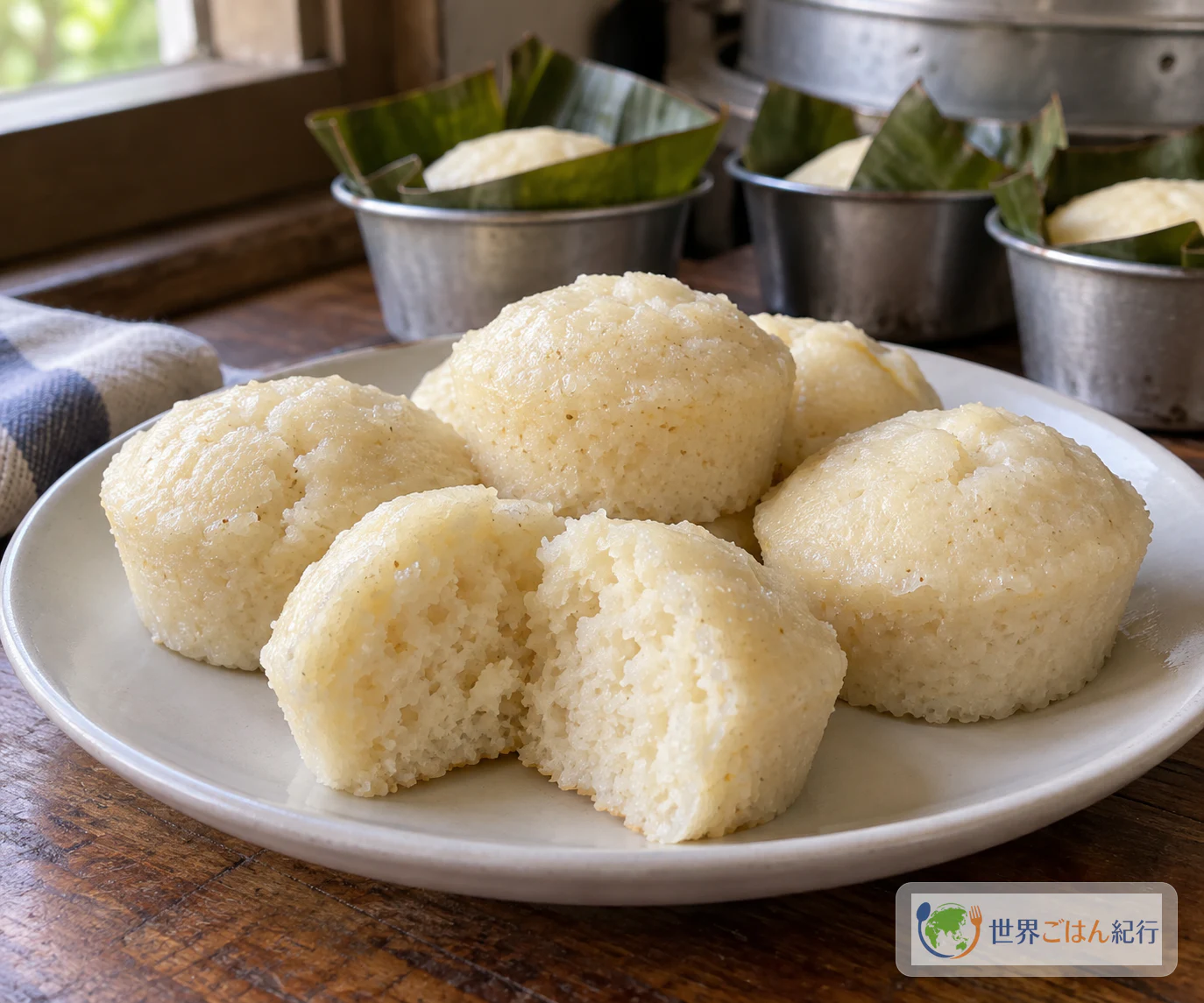
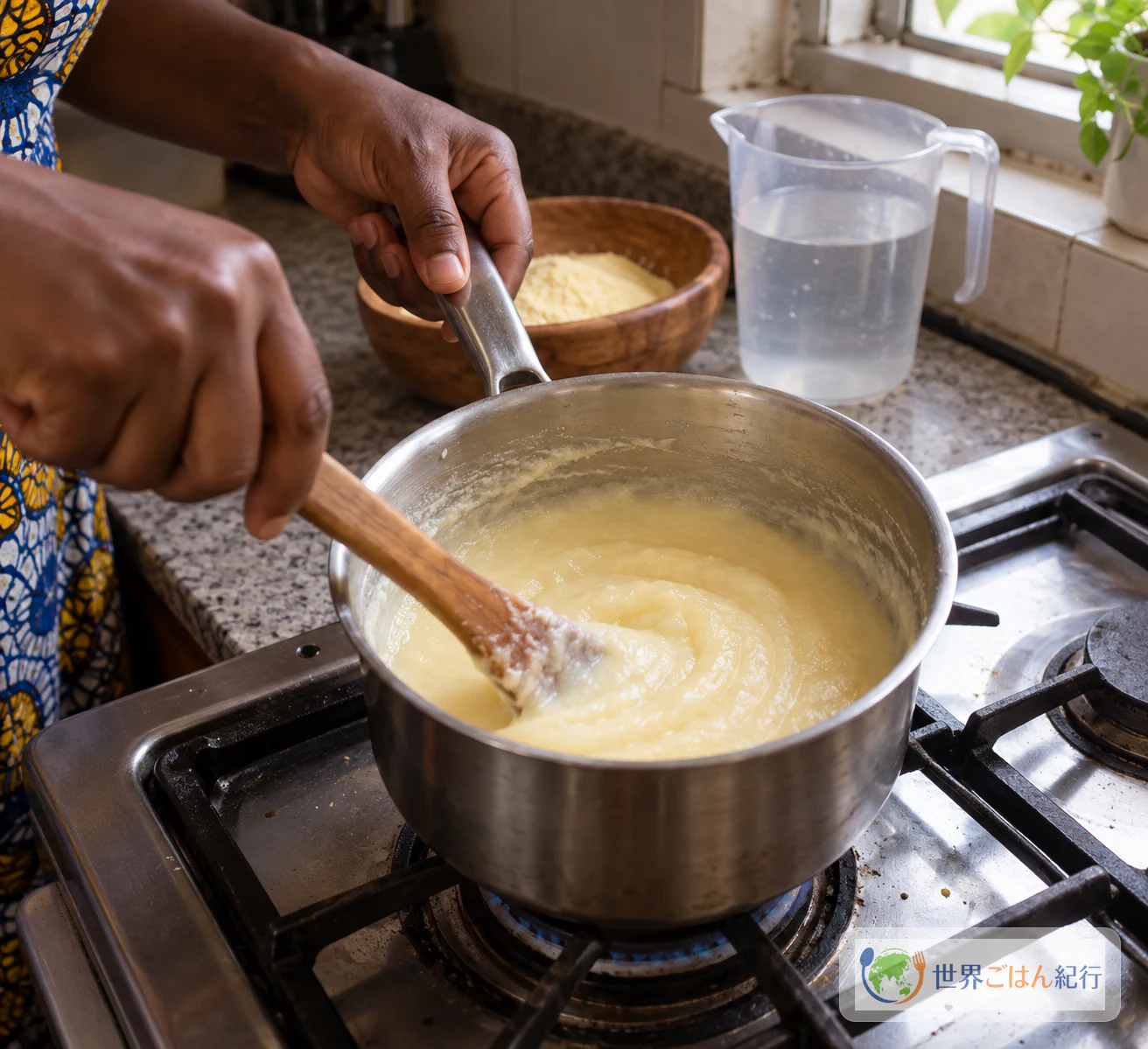
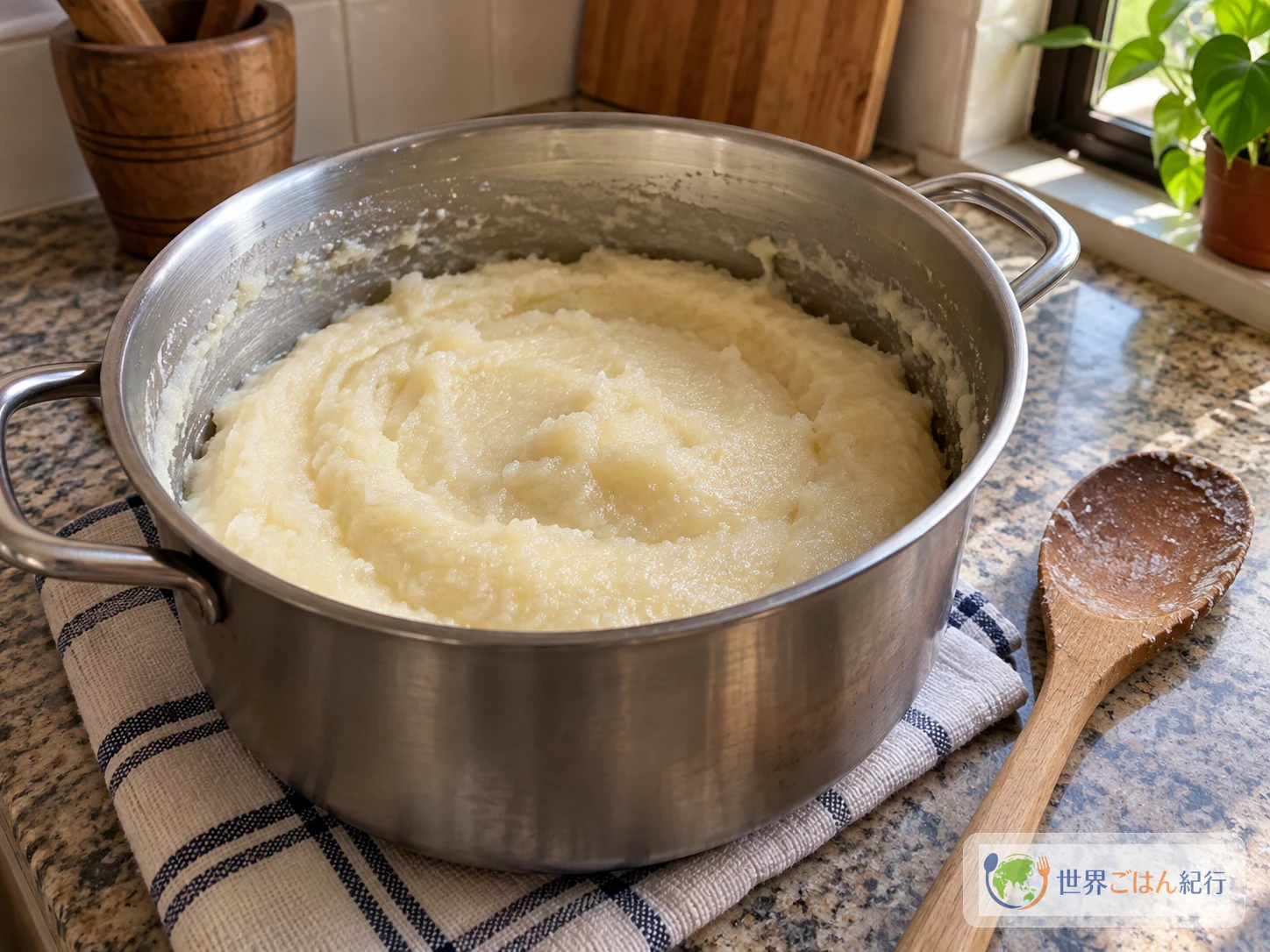
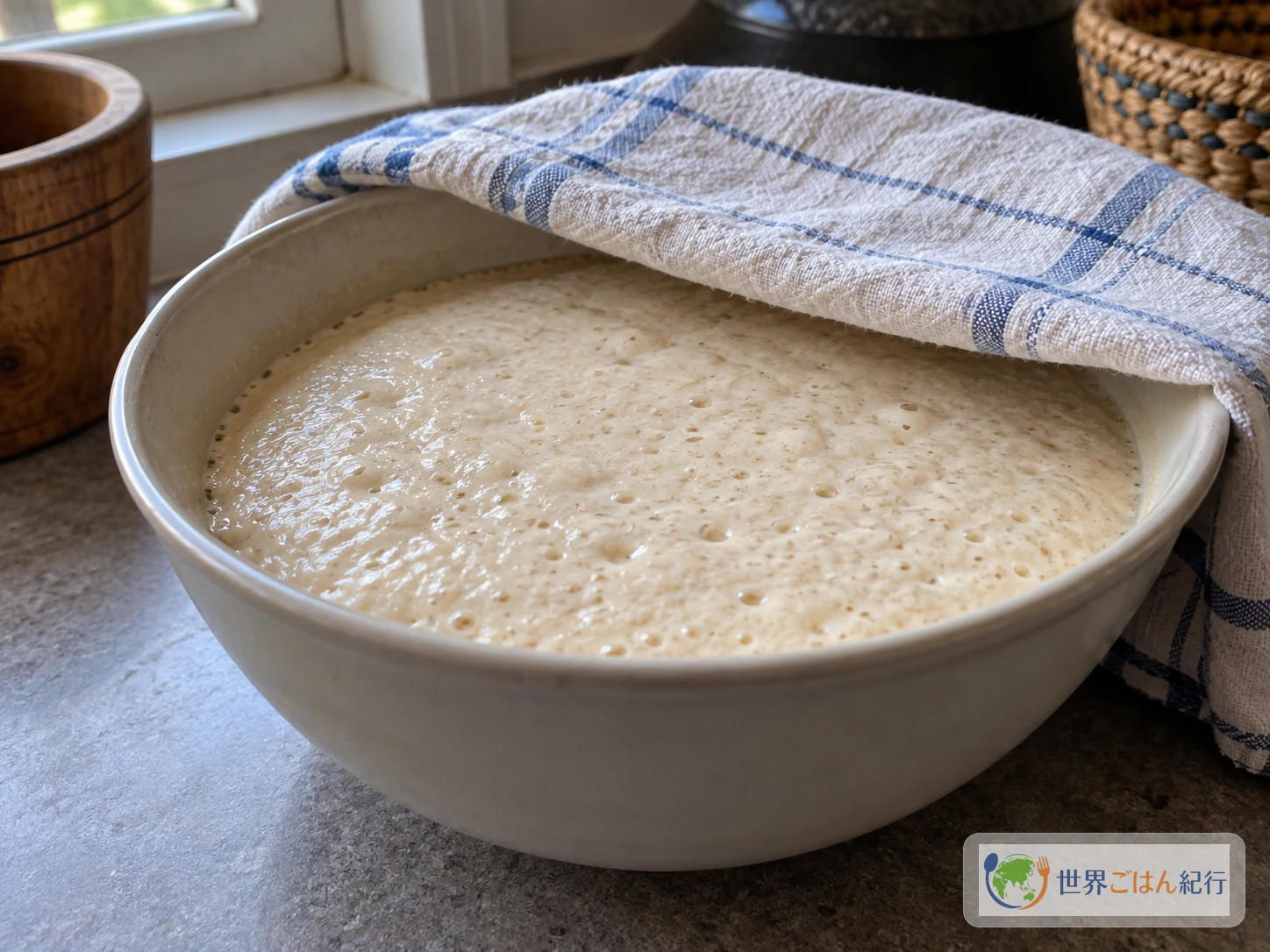
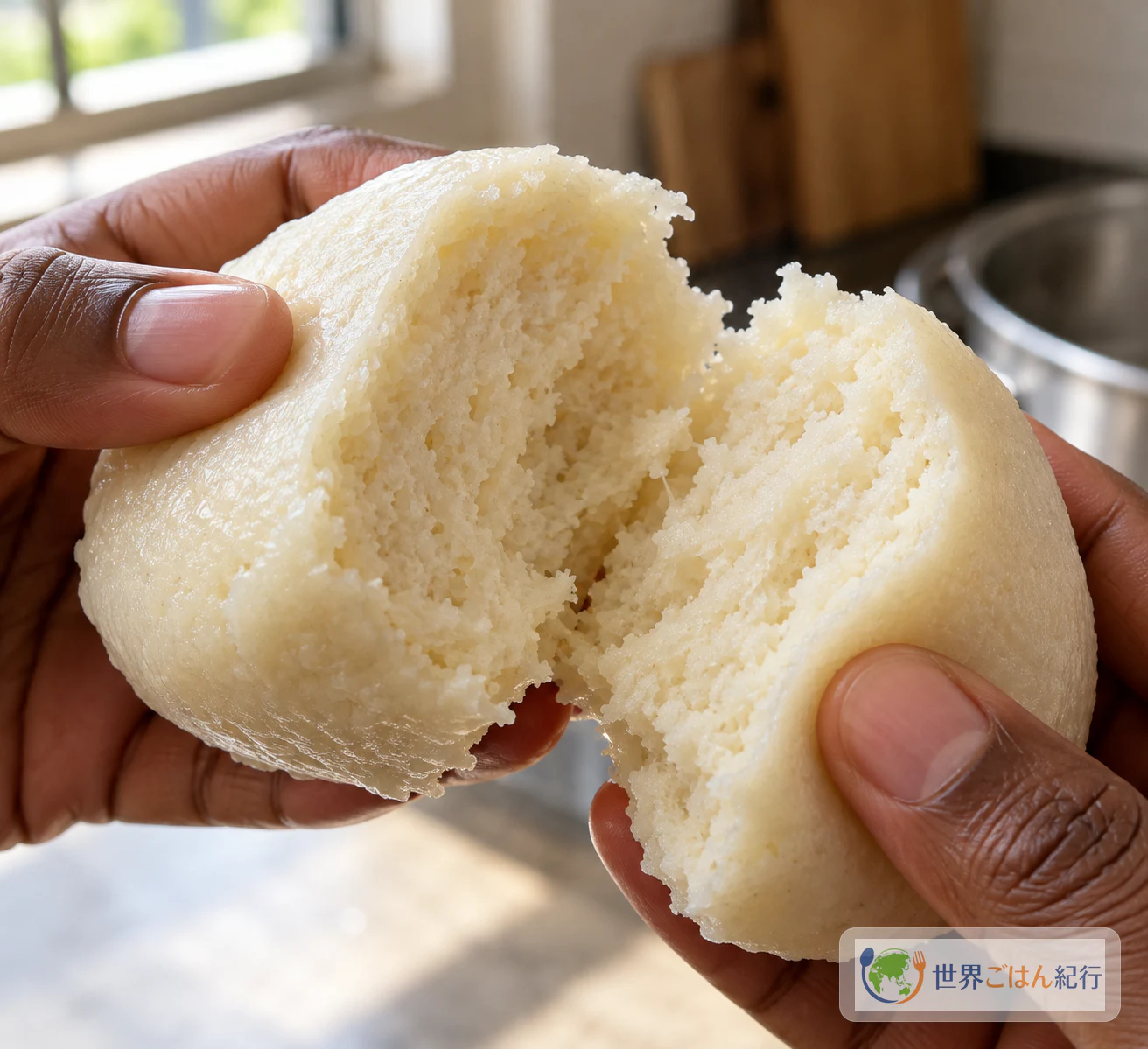
These cakes have a mild grain flavor, a light crumb from the yeast, gentle sweetness and a moist texture that comes from steaming. Cook the maize flour first, let it cool completely, and let the batter rise before it goes into the steamer.
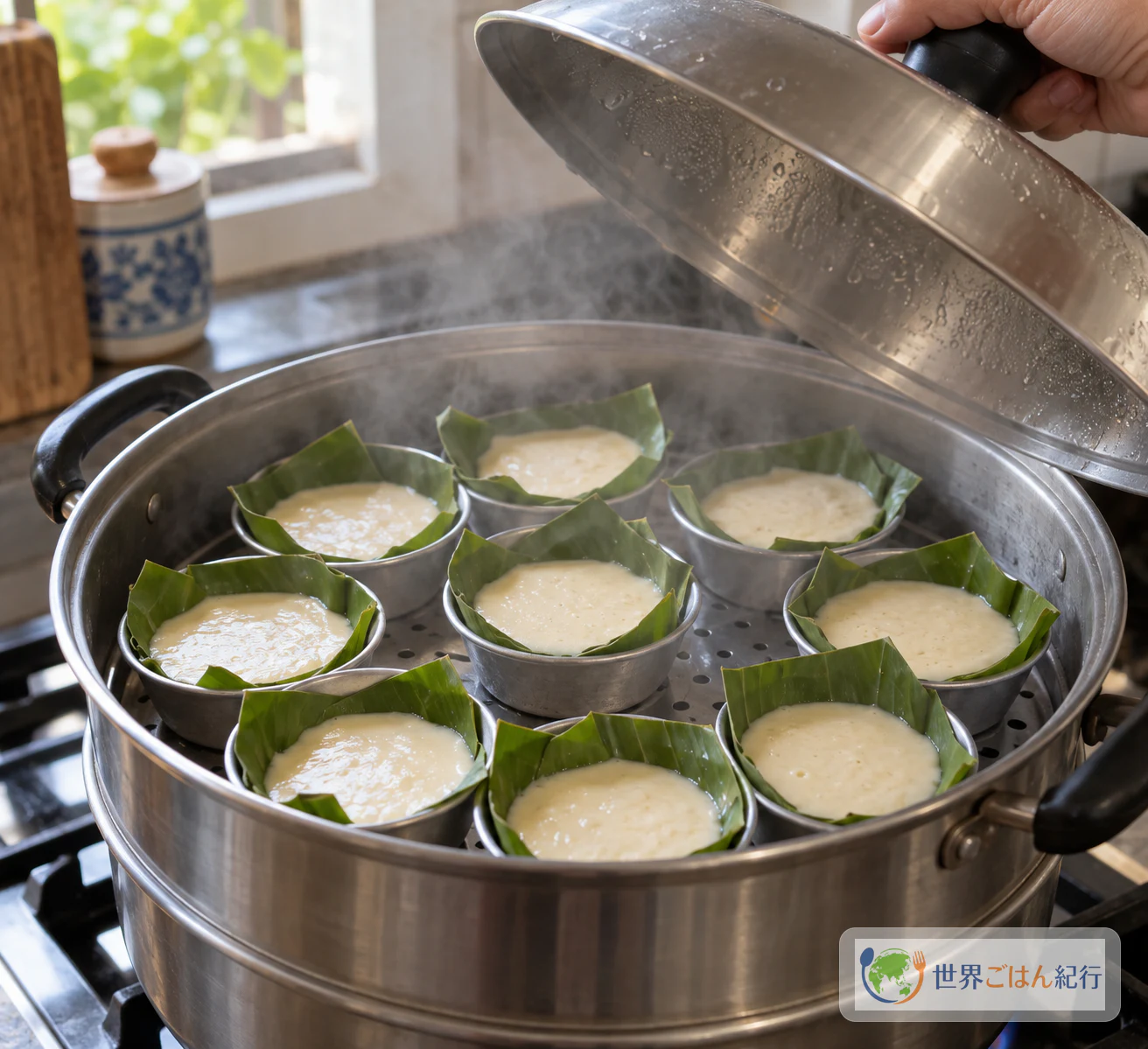
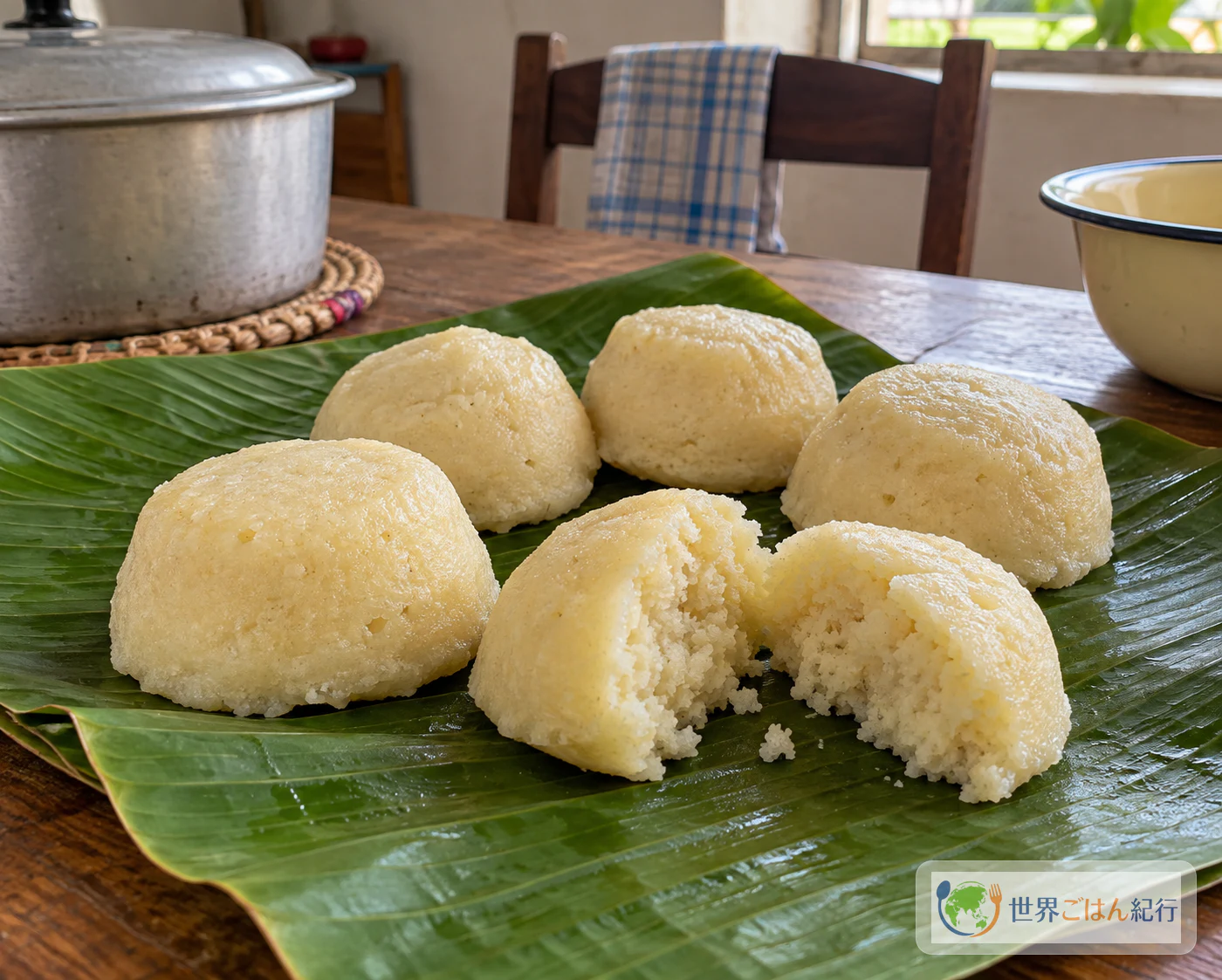
Picture a steamer lid coming off and small pale cakes rising out of the mist. Their tops are rounded and the crumb is soft. On the table they sit beside fried fish, onion, chili and a tomato or gboma sauce. This scene is not an eyewitness account. It is put together from the ways of eating described by the Beninese cultural association APPEL.Bénin and by the grocer NKOSI. Ablo is the bread that takes up those sauces.
Ablo (also written abolo) is a soft, springy steamed bread from southern Benin and coastal Togo, eaten as a staple or a snack. A grain batter is fermented, portioned into small molds and steamed. A study from the Université d'Abomey-Calavi records several ways of making it in southern Benin: one based on maize, one based on rice and one that mixes the two. No single formula is the authentic ablo for the whole country. This article follows one published home version and makes clear where it differs from the traditional methods.
Maize, Rice and Mixed: The Ways Ablo Is Made in Southern Benin
In the traditional maize method, the base is mawè, an intermediate dough of processed maize that ferments naturally. The study by Assogba and colleagues describes how ablo made this way goes through a further fermentation with baker's yeast before it is steamed. The fermentation acidifies the dough and produces CO2, which gives the cake its air cells. A research summary published by ACED treats the maize type as the original and the rice type as a later technical change. It lists three production types: maize, rice, and a mix of 2/3 maize and 1/3 rice.
The same study notes that rice ablo has become common in Cotonou and Porto-Novo, partly because the process is shorter. In Comè, the maize type has continued and mixed types also appear. The ACED summary adds that consumers in the study preferred the rice products.
Ablo also has a place in daily life. Drawing on earlier studies, Assogba and colleagues report that it is eaten at breakfast and as a snack. It also appears at baptisms, weddings and local festivals, and making and selling it is part of the livelihood of women producers. These are findings about the regions and periods the research covered, not a description of every table today. For more dishes from the country, see the Benin page.
APPEL.Bénin also tells a story that links ablo to Guin d'Aného and the Pierre Sacrée festival. The site presents this as oral tradition, and we have no independent historical source for it, so treat it as the site's account and not as the established origin of the dish.
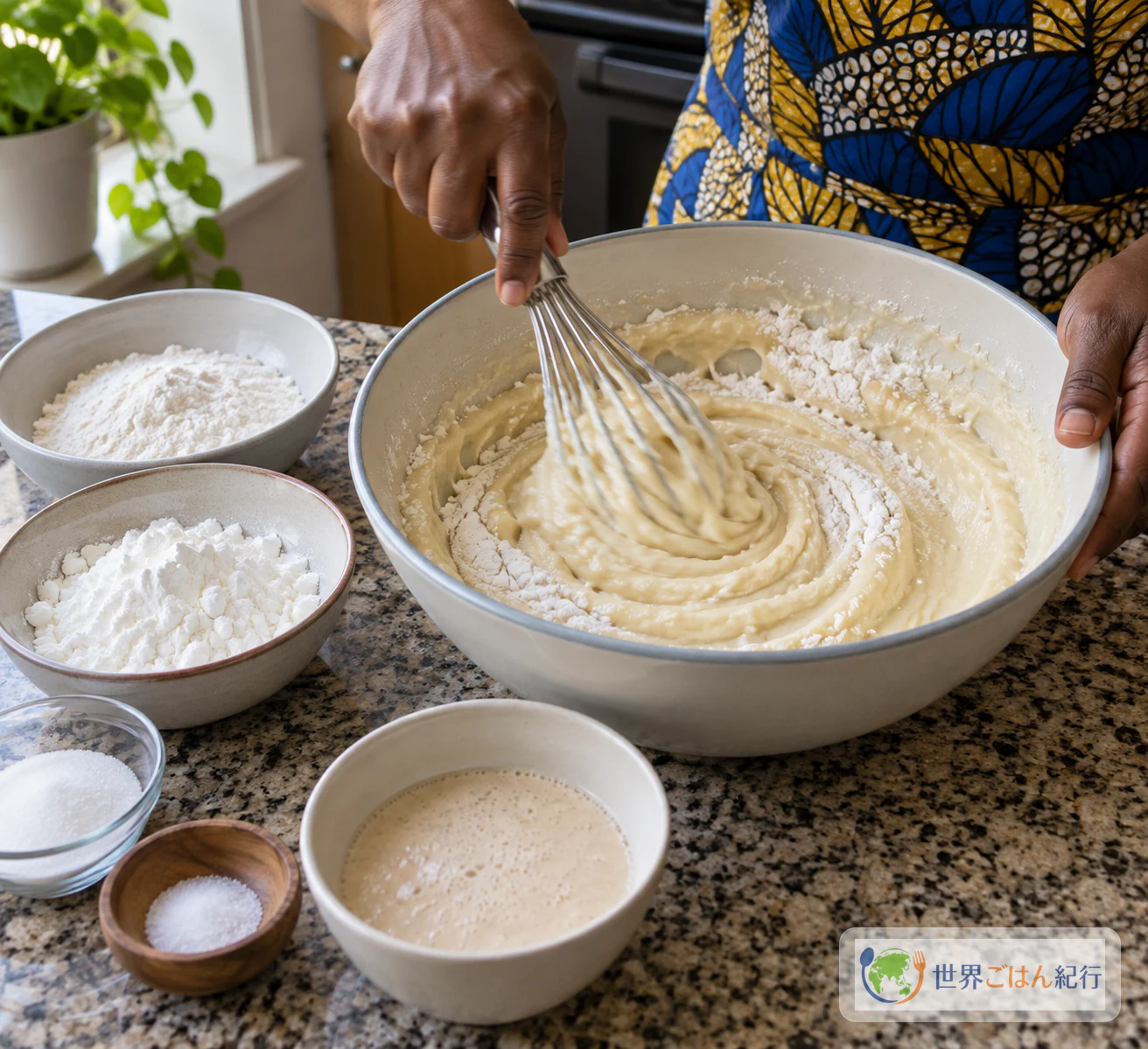
Ingredients for a Home Ablo of Rice Flour, Maize Flour and Cornstarch
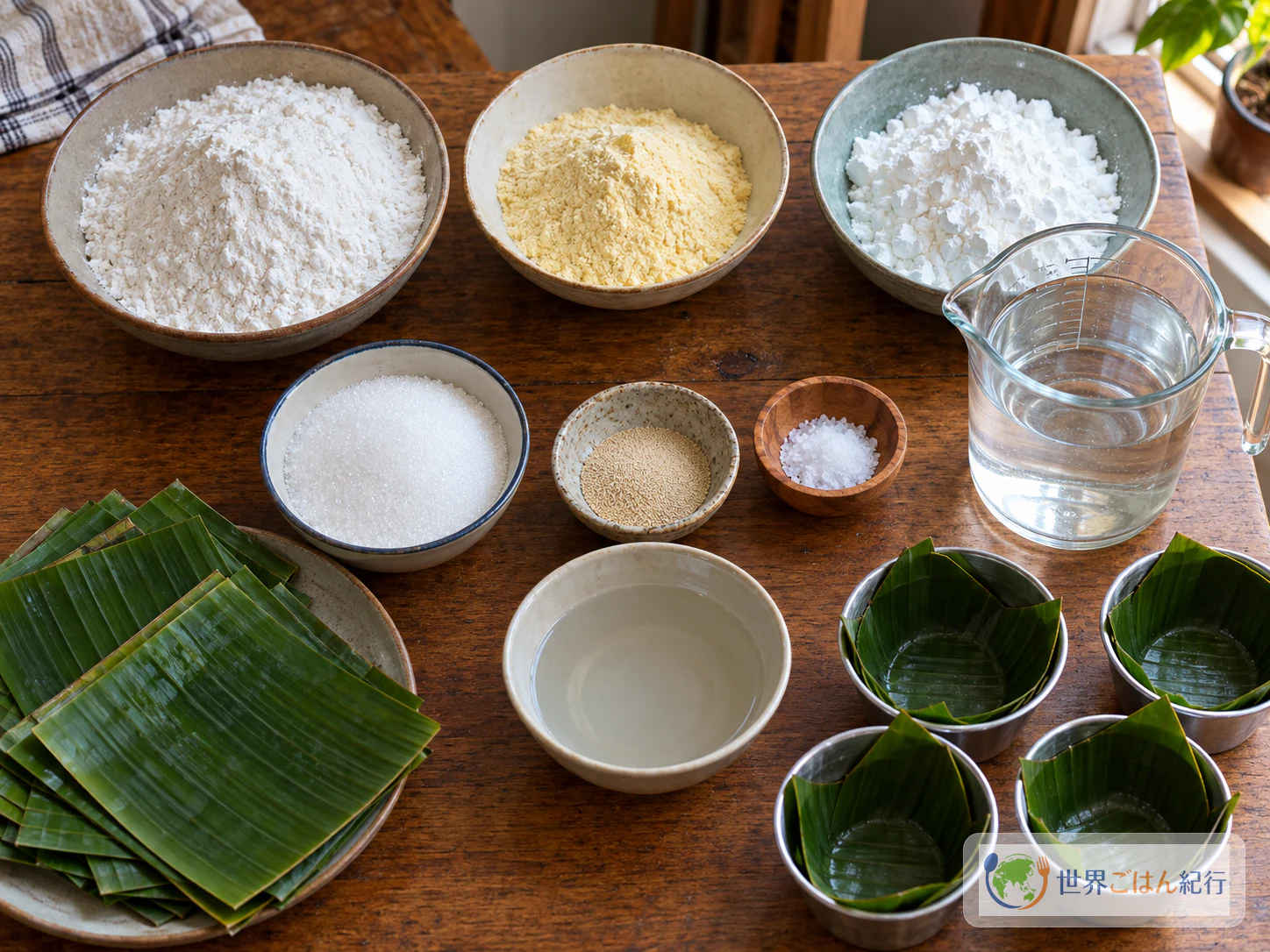
This is a mixed-flour home recipe. It is a shortened method that uses baker's yeast, not the mawè process. Serves 4.
Sekai Gohan has not kitchen-tested this recipe yet. The amounts, the "serves 4", the rise times and the roughly 20-minute steam are not results we measured, and they are not safety guarantees.
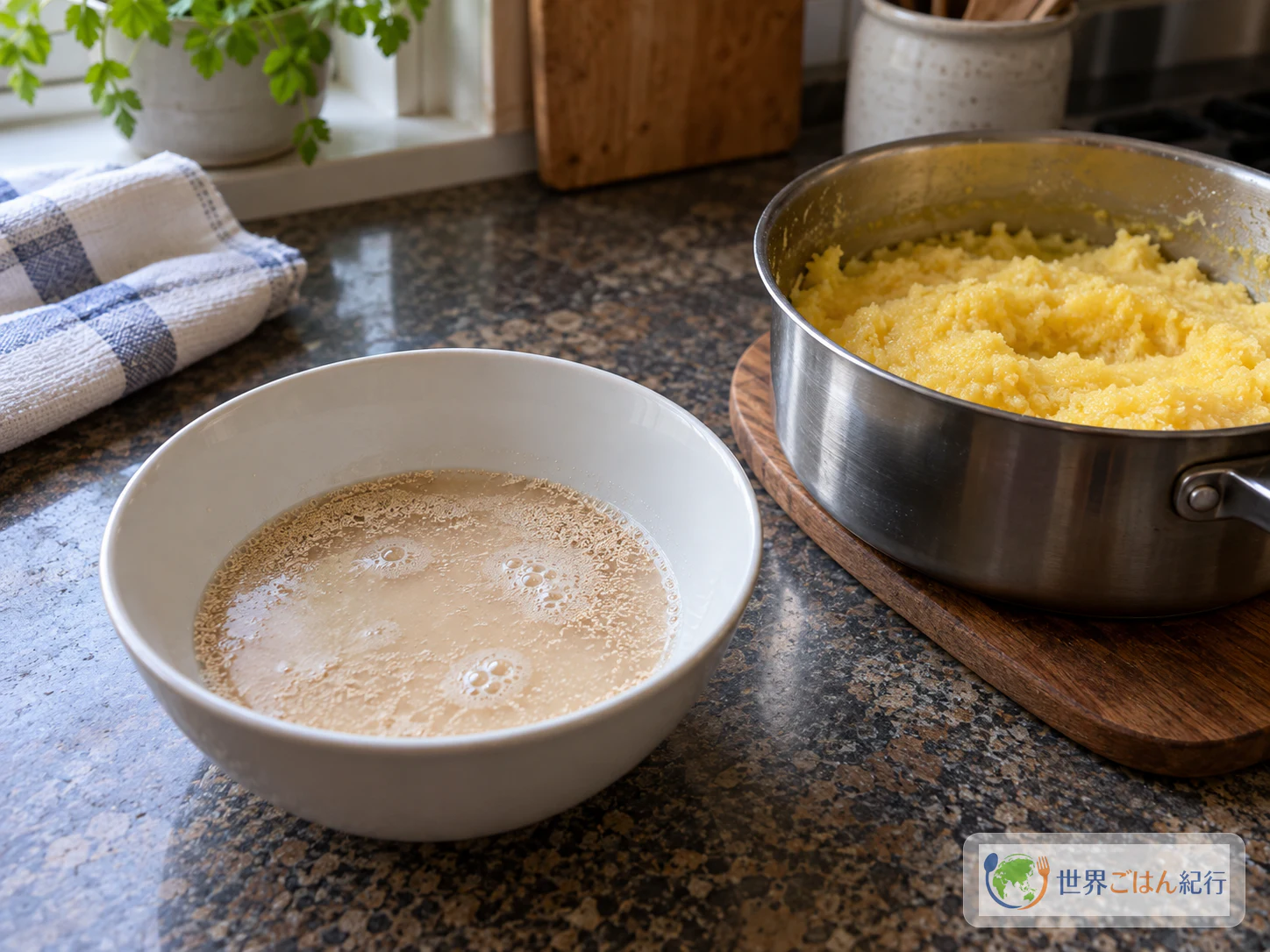
1 tsp = 5 ml. Cook the porridge in the 500 ml of water, and dissolve the yeast separately in a little warm water that is not taken from the 500 ml.
Equipment
- A large lidded pot for cooking the maize flour
- A whisk or wooden spatula
- A small bowl for the yeast
- A lidded container for the rise that lets gas escape (not a sealed glass jar)
- A steamer or couscoussier, plus water for it and boiling water for topping up
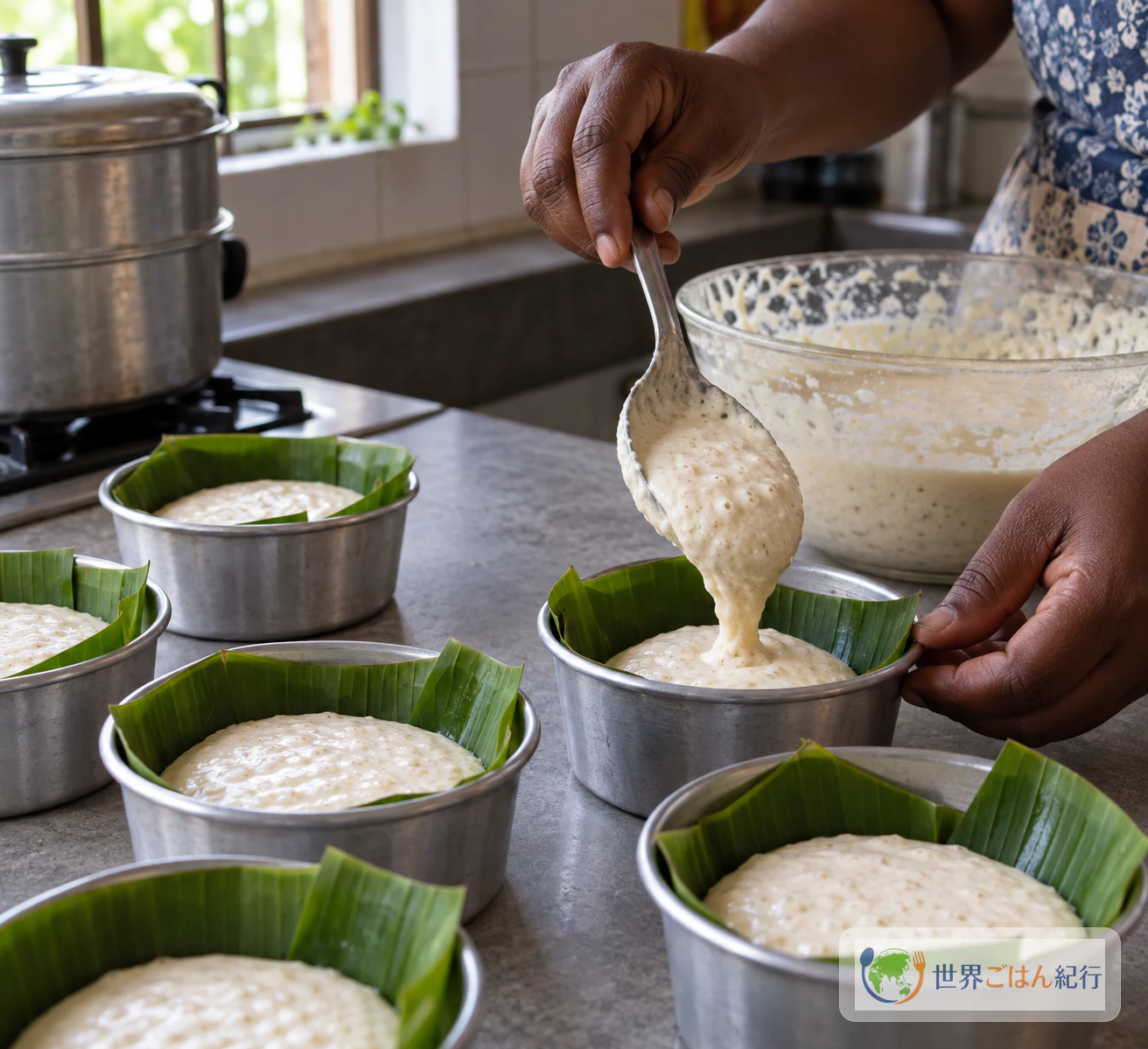
- Several small metal molds (small aluminum molds)
- Food-grade banana leaf or aluminum foil to line the molds. This version uses banana leaf and adds no oil
- A thin bamboo skewer
Choosing Flours and Yeast
Maize flour and cornstarch are not the same thing. In this recipe, farine de maïs is maize flour. It is cooked with water first. Fécule de maïs or Maïzena is cornstarch, which goes in later with the rice flour. Some countries sell cornstarch under the name "cornflour", so check the label. Maize flour products differ in how finely they are ground and how they thicken, so no single product is a guaranteed match. Don't automatically swap potato starch in for the cornstarch.
Use ordinary rice flour made from non-glutinous rice. Using wheat flour would take you away from this version, which contains none.
This article uses dry baker's yeast. Products differ, so follow your yeast's label for how to activate it and how warm the water should be.
This recipe uses rice, maize, yeast, sugar and salt, and the APPEL.Bénin version has no wheat flour. Ingredient lists and shared-facility statements vary by product, and some yeast products contain additives, so check every label.
Method: Cool the Porridge, Let It Rise, Then Steam
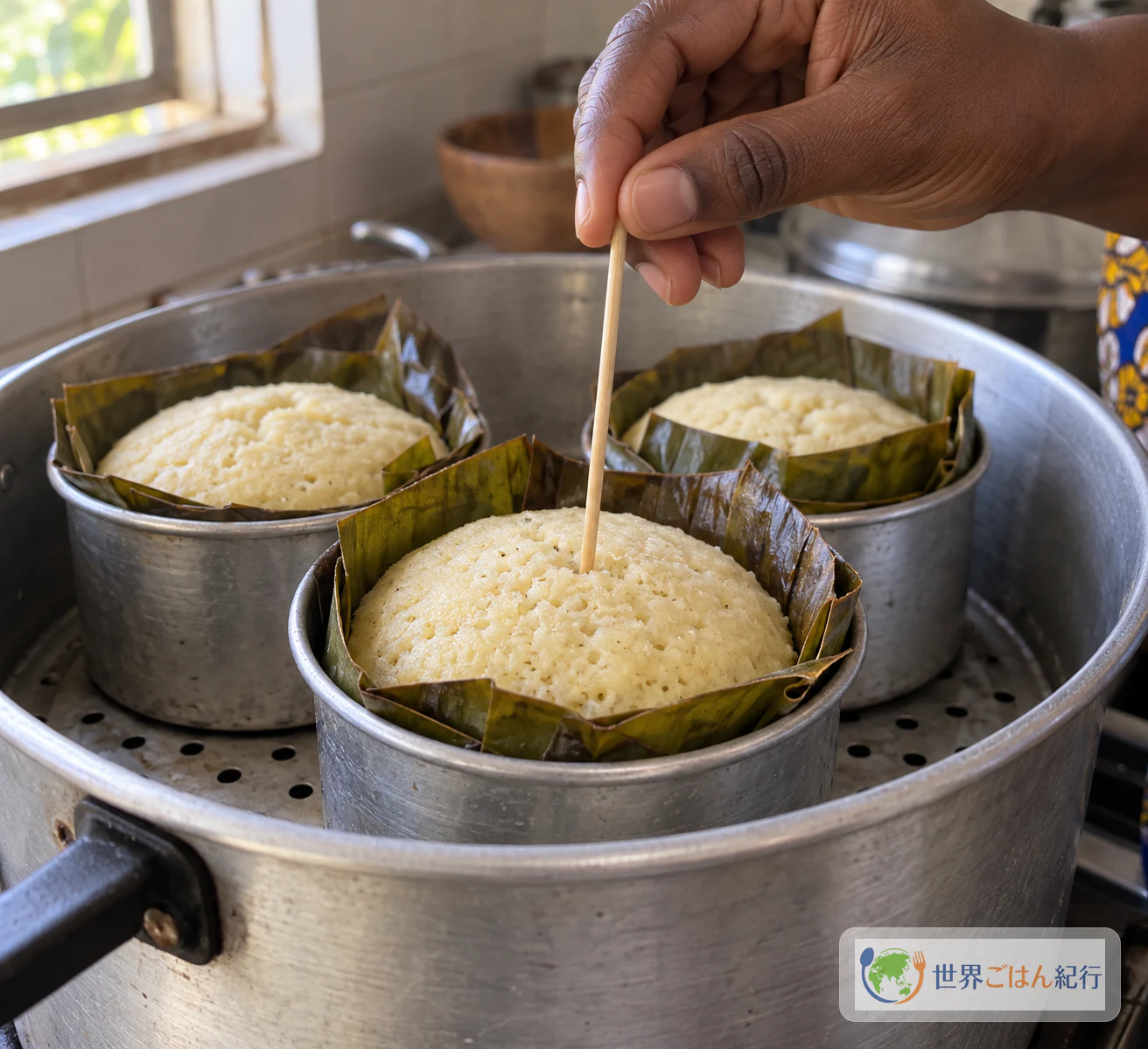
Wait until the porridge is completely cool before anything else goes in. The rise is done when the batter has grown in volume. The steaming time is a guide and changes with the size of your molds.
When It Won't Rise, Stays Sticky or Won't Leave the Mold
| Problem | What to look at | What to do |
|---|---|---|
| The batter barely rose | Whether the yeast went in while the porridge was still hot, the kitchen temperature, the yeast product, the grind of the flours | Next time, wait until the porridge is completely cool. Judge the rise by the growth in volume, not by time alone |
| The center is wet or sticky | Mold size, how full the molds are, whether steam is reaching every cake | Keep steaming and repeat the skewer check. Keep the molds in one layer and keep the water topped up |
| The cakes seem heavy | Lifting the lid often during steaming, molds packed too tightly | Avoid opening the lid early. Leave room between molds so steam can move |
| The cakes stick to the molds | Lining missing or incomplete | Let them cool, then loosen the edges. Line the molds with banana leaf or foil, the source's options, and don't swap them for oil or paper on your own |
The research studied artisanal production, not home kitchens, and its fermentation times and steaming conditions do not carry over to this mixed-flour recipe. Don't apply the long mawè fermentation to this version.
Variations
Each of these differs from the recipe above. None has been tested with these amounts, so treat them as separate versions.
- Less sugar, for eating with savory food: Reducing the sugar changes the flavor of the published recipe, and possibly how it rises. Untested, and not a fixed formula.
- Wrapped in banana leaf: Wrapping the batter in banana leaf instead of lining molds with it is mentioned in regional accounts such as NKOSI's. It has not been tried with this mix, and it would change the aroma, how the steam reaches the batter and the shape.
- Mainly rice: The Université d'Abomey-Calavi study confirms that a rice-based process exists. Its amounts are not given here and should not be mixed with this recipe.
- Mainly maize: The traditional maize type is built on mawè. Our materials include no complete home recipe for it, so you cannot get there just by swapping flours.
- Regional rice and maize ratios: ACED records a type made with 2/3 maize and 1/3 rice. That describes a separate production method. It does not mean you can recreate it by changing the flour ratio here.
Eating Ablo with Fish and Tomato-Chili Sauce
APPEL.Bénin lists fried fish, onion, chili, gboma sauce and tomato sauce as things to eat with ablo, and NKOSI also mentions tomato-chili sauce and fish. The cake's mild, grain-forward flavor is there to take up the sauce.
NKOSI calls the dish ablo or abolo and presents it as both Togolese and Beninese. How ablo is eaten, and which flours go into it, varies by place, so it should not be seen as belonging to Benin alone. A rice cake called abolo is also known in Ghana. The name alone does not show that the two are the same recipe or share an origin, and our sources do not settle the question.
Frequently Asked Questions
Are ablo and abolo different dishes?
Both spellings are used. No independent source we have covers the regional differences well enough to say more. A similar name alone does not make two recipes the same, especially across countries.
Can I make the naturally fermented maize version?
The mawè process recorded in the research is a different recipe that includes processing the grain and making an intermediate dough. Don't mix its ingredients or times with this shortened version. A home version of it would need more specialist sources.
Is ablo sweet, or is it a staple?
This version contains 100 g of sugar, and APPEL.Bénin also describes eating it with fish and sauces. If you want it less sweet, see the reduced-sugar variation, which has not been tested.
How should I store or reheat leftovers?
The source gives no storage period or reheating method, so we don't suggest one. Ablo is best eaten freshly made. If you keep leftovers, follow general household food-safety advice from Japan's Ministry of Health, Labour and Welfare. Divide them into small, shallow portions, cool them quickly and refrigerate promptly. When reheating, heat to 75°C or above. The same guidance gives 75°C at the center for at least 1 minute as a general target for home cooking. That is general hygiene advice and has not been checked against this recipe. A batter that has risen at room temperature comes with no guarantee about storage, so don't keep the batter for later.
Sources
- Assogba et al., "Effet des technologies de production traditionnelle sur qualité de Ablo: un pain cuit à la vapeur au Bénin," Annales des sciences agronomiques, Université d'Abomey-Calavi, 2016. Covers the maize, rice and mixed methods in southern Benin, mawè, fermentation and steaming, regional differences, and ablo's place in daily meals, celebrations and producers' livelihoods. The study looked at artisanal production, not home recipes. https://revues.uac.bj/index.php/asa/article/download/129/113/231
- ACED (African Centre for Evidence), "Evaluation des procédés traditionnels de production du ablo, un pain humide cuit à la vapeur, au Bénin." A summary of a 2011 study: maize as the original type, rice as a modification, the three production types including 2/3 maize and 1/3 rice, recontamination risk during handling, and consumer preference for rice products. https://acedafrica.org/evidences/evaluation-des-procedes-traditionnels-de-production-du-ablo-un-pain-humide-cuit-a-la-vapeur-au-benin-3/
- APPEL.Bénin (Yrédée B. Challa), "Art culinaire du Bénin: l'Ablo," 2020. The source of the recipe used here (all amounts, the order of steps, the rise guides and the roughly 20-minute steam), the ways of eating ablo, and the oral tradition about its origin, which is attributed to the site. https://appelbenincom.wordpress.com/2020/10/18/art-culinaire-du-benin-lablo/
- NKOSI, "Ablo, abolo : la recette togolaise et béninoise du pain de maïs vapeur." Used for the names ablo and abolo, the Togo and Benin context, and serving with tomato-chili sauce and fish. Its own recipe was not mixed into this one. https://www.nkosiagro.com/blogs/culture-africaine/recette-des-abolo-ablo
- Ministry of Health, Labour and Welfare (Japan), "家庭での食中毒予防" (Preventing food poisoning at home). General household advice on heating to 75°C at the center for at least 1 minute, avoiding cross-contamination, cooling leftovers in small shallow portions, and reheating to 75°C or above. https://www.mhlw.go.jp/stf/seisakunitsuite/bunya/kenkou_iryou/shokuhin/syokuchu/01_00008.html